3D FLIM Imaging: Advancing Biomedical Research with Quantitative Lifetime Analysis
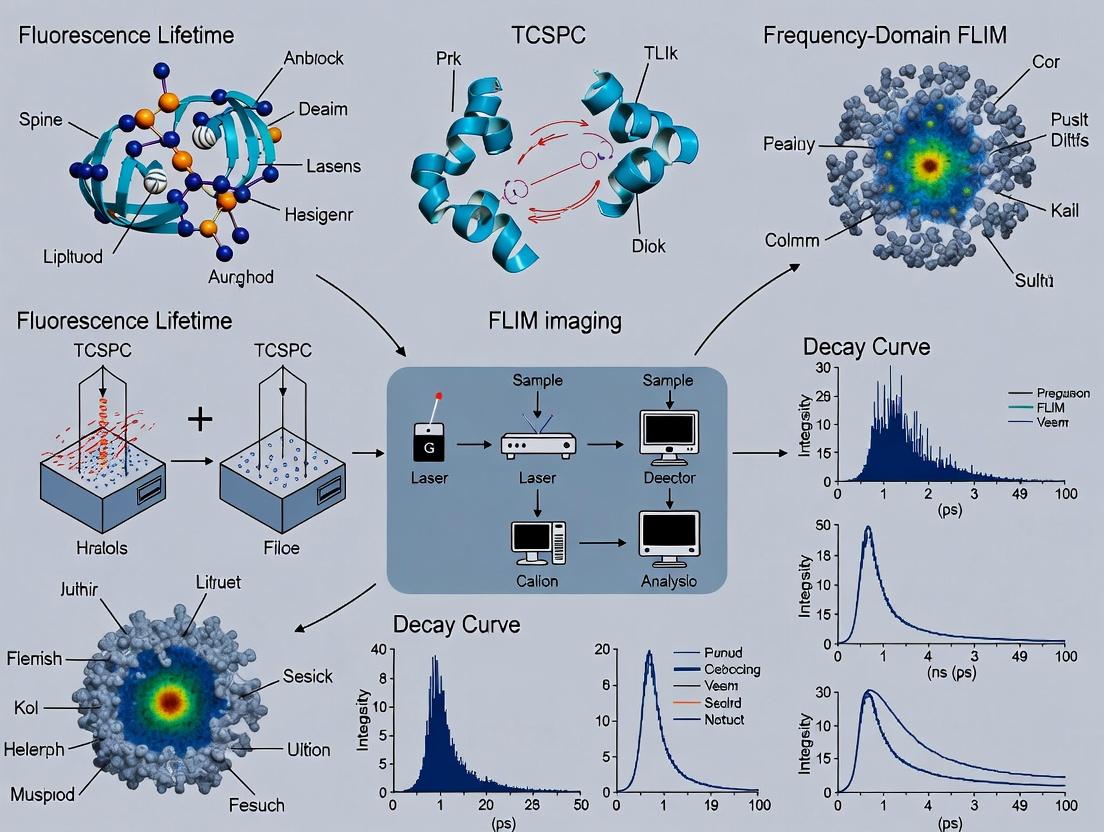
This comprehensive review explores the principles, methodologies, and cutting-edge applications of 3D Fluorescence Lifetime Imaging Microscopy (FLIM) in biomedical research and drug discovery.
3D FLIM Imaging: Advancing Biomedical Research with Quantitative Lifetime Analysis
Abstract
This comprehensive review explores the principles, methodologies, and cutting-edge applications of 3D Fluorescence Lifetime Imaging Microscopy (FLIM) in biomedical research and drug discovery. We begin by establishing the foundational concepts of FLIM and its evolution into 3D imaging. The article then details current methodologies for data acquisition and analysis, highlighting specific applications in cellular metabolism, protein-protein interactions, and drug response monitoring. A dedicated section addresses common challenges in sample preparation, system calibration, and data interpretation, offering practical troubleshooting and optimization strategies. Finally, we validate 3D FLIM against complementary techniques and discuss its unique advantages and limitations. This guide is tailored for researchers and pharmaceutical professionals seeking to implement or leverage 3D FLIM for quantitative, label-free, and functional imaging in complex biological systems.
What is 3D FLIM? Understanding the Core Principles and Evolution of Lifetime Imaging
This Application Note details the principles and protocols for exploiting fluorescence lifetime imaging microscopy (FLIM) as a quantitative molecular ruler. Within the context of 3D FLIM imaging techniques, we demonstrate how fluorescence lifetime (τ), being independent of fluorophore concentration and excitation intensity, provides a robust readout for molecular interactions, conformational changes, and micro-environmental sensing. This guide provides researchers and drug development professionals with actionable methodologies for implementing FLIM-FRET and environmentally sensitive probes.
Fluorescence lifetime is the average time a molecule spends in the excited state before emitting a photon. It is an intrinsic property sensitive to:
- Förster Resonance Energy Transfer (FRET): Non-radiative energy transfer shortens the donor lifetime.
- Microenvironment: Parameters like pH, ion concentration (Ca²⁺, Cl⁻), polarity, and oxygen presence can modulate τ.
- Molecular Conformation/State: Binding events or conformational shifts in fluorescent proteins (e.g., biosensors) alter lifetime.
This makes τ an ideal "molecular ruler" for distance measurements (via FRET, 1-10 nm) and for sensing local physicochemical conditions.
Key Research Reagent Solutions
| Item | Function/Description | Example Product/Chemical |
|---|---|---|
| FRET Pair: Donor | Fluorescent molecule that transfers energy to an acceptor. Requires good quantum yield and overlap with acceptor absorption. | mTurquoise2 (τ ~4.0 ns), EGFP (τ ~2.4 ns), CFP. |
| FRET Pair: Acceptor | Molecule that receives energy from the donor. Its emission is monitored or it acts as a dark quencher. | YFP, mCherry, Atto594, or non-fluorescent quenchers. |
| Lifetime Reference Dye | Dye with known, stable lifetime for instrument calibration and verification. | Coumarin 6 (τ ~2.5 ns in ethanol), Fluorescein (τ ~4.0 ns at pH>9). |
| Environment-Sensing Probe | Probe whose lifetime changes in response to specific microenvironmental parameters. | BCECF-AM (pH), FLIM-NADH (metabolic state), Ru(phen)3 (oxygen sensing). |
| Mounting Medium (Prolongs τ) | Low-fluorescence, oxygen-scavenging medium to reduce photobleaching and triplet-state quenching. | ProLong Glass, Vectashield with NPG. |
| Live-Cell Compatible Buffer | Physiologically balanced buffer without significant autofluorescence for live-cell FLIM. | Hanks' Balanced Salt Solution (HBSS), phenol red-free culture medium. |
| FLIM Analysis Software | Software for fitting lifetime decay curves and generating lifetime maps. | SPCImage, FLIMfit, TRI2, SimFCS. |
Core Protocols
Protocol 3.1: Calibration of FLIM System Using Reference Dyes
Objective: To verify instrument performance and calibrate the lifetime measurement channel. Materials: Time-Correlated Single Photon Counting (TCSPC) or frequency-domain FLIM system, microscope, reference dye (e.g., Coumarin 6 in ethanol). Procedure:
- Prepare a fresh 10 µM solution of Coumarin 6 in spectroscopic-grade ethanol.
- Place a small drop (10 µL) on a clean #1.5 coverslip and mount.
- Set imaging parameters: 405 nm pulsed laser (or appropriate excitation), low laser power to avoid pile-up (<1% of repetition rate count), acquire until peak counts reach ~10,000.
- Acquire decay data from a homogeneous region of the sample.
- Fit the decay curve to a single exponential model: I(t) = I₀ exp(-t/τ) + C.
- The fitted τ should match the known standard (e.g., Coumarin 6: ~2.5 ns in ethanol). Deviation >5% requires instrument check.
Protocol 3.2: FLIM-FRET Measurement in Live Cells
Objective: To quantify protein-protein interaction via donor lifetime reduction. Materials: Cells transfected with donor-only and donor-acceptor FRET pair constructs, live-cell imaging chamber, CO₂-independent medium. Procedure:
- Control Sample (Donor-only): Seed cells and transfect with the donor fluorophore-tagged construct of interest.
- Test Sample (FRET pair): Seed cells and co-transfect with both donor-tagged and acceptor-tagged constructs.
- Image Acquisition (24-48h post-transfection): a. Maintain cells at 37°C. b. Using a 60x/1.4 NA oil objective, locate expressing cells. c. Set TCSPC parameters: Laser repetition rate (e.g., 40 MHz), detection window (e.g., 0-25 ns), donor emission filter. d. Acquire images (256x256 pixels) until sufficient photons per pixel are collected (typically >500 for a usable fit).
- Data Analysis: a. Fit each pixel's decay curve to a double exponential model: I(t) = α₁ exp(-t/τ₁) + α₂ exp(-t/τ₂) + C. b. Calculate the amplitude-weighted mean lifetime: τₘ = (α₁τ₁ + α₂τ₂) / (α₁ + α₂). c. Generate false-color τₘ maps of donor-only and FRET samples. d. Calculate FRET efficiency: E = 1 - (τ_DA / τ_D), where τDA is the mean lifetime in the FRET sample and τD is the mean lifetime in the donor-only control.
Protocol 3.3: 3D FLIM for Metabolic Imaging via NAD(P)H
Objective: To map metabolic states in 3D tissue spheroids using the dual-exponential lifetime decay of NAD(P)H. Materials: 3D cell spheroid, two-photon FLIM system, NAD(P)H autofluorescence detection channel. Procedure:
- Sample Preparation: Fix spheroids in 4% PFA for 15 min, wash, and mount in ProLong Glass.
- Two-Photon FLIM Setup: Use a Ti:Sapphire pulsed laser tuned to 740 nm for NAD(P)H excitation. Set emission filter to 460/50 nm.
- 3D Z-Stack Acquisition: Define top and bottom of the spheroid. Acquire FLIM stacks with a step size of 1-2 µm.
- Phasor Analysis Workflow: a. Transform the lifetime decay at each pixel into a coordinate (G, S) in the phasor plot. b. For each z-plane, identify clusters in the phasor plot corresponding to free (long τ) and protein-bound (short τ) NAD(P)H. c. Calculate the ratio of bound/free fractions per voxel. d. Reconstruct a 3D volume rendering color-coded by the bound/free ratio, indicating glycolytic (higher free) vs. oxidative (higher bound) metabolism zones.
Table 1: Common FLIM-FRET Pairs and Typical Lifetime Values
| Donor | τ_D (ns) Donor-only | Acceptor | τ_DA (ns) High FRET | FRET Efficiency (E) Range |
|---|---|---|---|---|
| ECFP | ~3.9 | EYFP | ~2.4 | 0.2 - 0.4 |
| mTurquoise2 | ~4.0 | mVenus | ~2.5 | 0.3 - 0.45 |
| GFP | ~2.4 | mCherry | ~1.7 | 0.2 - 0.35 |
| Cerulean | ~3.5 | Citrine | ~2.1 | 0.3 - 0.45 |
Table 2: Environment-Sensing Probes and Lifetime Responses
| Probe | Target | Lifetime Change (Typical) | Application Context |
|---|---|---|---|
| BCECF | pH (Acidic) | τ decreases from ~3.1 ns (pH 9) to ~0.8 ns (pH 5) | Lysosomal pH, endosomal trafficking |
| NAD(P)H | Protein Binding | Free: ~0.4 ns; Bound: ~2.0 ns | Cellular metabolism, OXPHOS vs. Glycolysis |
| Ru(phen)₃²⁺ | Oxygen | τ decreases with increased [O₂] (Quenched) | Tumor hypoxia, cellular respiration |
| DAₓD | Chloride Ions | τ decreases with increased [Cl⁻] | Neuronal ion channel activity |
Visualizations
FLIM-FRET Experimental Workflow
FLIM as a Molecular Ruler Mechanisms
Within the context of advancing 3D FLIM imaging for biosensing, this application note details why fluorescence lifetime imaging (FLIM) provides superior quantitative data compared to intensity-based measurements. FLIM's independence from fluorophore concentration, excitation intensity, and photobleaching makes it an essential tool for measuring molecular microenvironment parameters such as pH, ion concentration, and molecular interactions via Förster Resonance Energy Transfer (FRET). This document provides protocols and data supporting FLIM's robustness in quantitative biosensing applications critical for drug development and basic research.
Fluorescence Intensity (FI) measurements are susceptible to artifacts from probe concentration, excitation light fluctuations, optical path variations, and photobleaching. Fluorescence Lifetime (τ), the average time a molecule spends in the excited state before emitting a photon, is an intrinsic property. It is highly sensitive to the local molecular environment (e.g., viscosity, pH, ion binding, temperature) and to FRET occurrence, but largely independent of the factors that plague intensity measurements. This makes FLIM a powerful quantitative method for biosensing within complex 3D biological systems like organoids, spheroids, and tissues.
Key Advantages: Lifetime vs. Intensity
Table 1: Quantitative Comparison of FLIM and Intensity-Based Biosensing
| Parameter | Intensity-Based Sensing | FLIM-Based Sensing | Implication for Biosensing |
|---|---|---|---|
| Probe Concentration | Directly proportional signal. Requires rationetric dyes or internal controls for quantification. | Largely independent. Enables quantification even with uneven cellular uptake or expression. | Enables reliable measurements in heterogeneous samples (e.g., 3D tissue). |
| Excitation Intensity | Signal scales linearly with intensity. Fluctuations create noise. | Independent of excitation power, as lifetime is a rate measurement. | Reduces artifacts from laser instability or uneven illumination in deep tissue. |
| Photobleaching | Causes irreversible signal loss, confounding long-term measurements. | Lifetime is typically constant during photobleaching until late stages. | Allows for longer time-lapse studies and measurements in high-light-dose scenarios. |
| Quantification of Microenvironment | Often requires calibration in situ. Signal can be affected by multiple factors simultaneously. | Directly reports on parameters like pH, [Ca²⁺], [Cl⁻] via lifetime change of specific dyes. | Provides more specific and absolute quantification of physiological parameters. |
| FRET Efficiency | Measured via acceptor photobleaching or emission ratio; prone to spectral bleed-through and concentration errors. | Directly calculated from donor lifetime shortening (E = 1 - τDA/τD). |
Provides a more robust, concentration-independent measure of molecular interactions. |
| Instrumentation Complexity | Lower (standard confocal microscope). | Higher (requires TCSPC or phasor systems). | FLIM requires specialized investment but yields superior quantitative data. |
Detailed Experimental Protocols
Protocol 3.1: FLIM-FRET Assay for Protein-Protein Interaction in Live Cells
Aim: To quantify the interaction between two putative protein partners (Protein A & B) using FLIM-FRET. Reagents: See Scientist's Toolkit below. Equipment: Time-Correlated Single Photon Counting (TCSPC) FLIM system coupled to a multiphoton or confocal microscope.
Procedure:
- Sample Preparation:
- Transfect cells with a construct expressing Protein A fused to a donor fluorophore (e.g., mEGFP).
- In a separate dish, co-transfect cells with donor-tagged Protein A and an acceptor-tagged Protein B (e.g., mCherry) construct.
- Include a donor-only control (Protein A-mEGFP alone).
- Culture cells on glass-bottom dishes for 24-48 hours.
FLIM Data Acquisition (TCSPC Method):
- Mount sample on microscope stage equilibrated to 37°C and 5% CO₂.
- Using a 40x or 60x oil immersion objective, locate cells expressing moderate levels of the fluorophores.
- For donor (mEGFP) excitation, use a 488 nm pulsed laser (repetition rate ~40 MHz). Set emission collection bandpass to 500-550 nm.
- Critical: Adjust laser power to achieve a peak photon counting rate below 1-5% of the laser repetition rate to avoid "pile-up" distortion.
- Acquire images (256x256 or 512x512 pixels) until the peak histogram count in the brightest region reaches 1000-2000 photons for sufficient fitting accuracy.
- Acquire identical data for donor-only and donor+acceptor samples.
Data Analysis (Lifetime Fitting):
- Using FLIM analysis software (e.g., SPCImage, SymPhoTime, FLIMfit), fit the fluorescence decay at each pixel to a double-exponential model:
I(t) = α₁ exp(-t/τ₁) + α₂ exp(-t/τ₂) + Cwhere α are amplitudes, τ are lifetimes, and C is background. - Calculate the amplitude-weighted mean lifetime:
τₘ = (α₁τ₁ + α₂τ₂) / (α₁ + α₂). - FRET Efficiency Calculation:
- From the donor-only sample, determine the mean donor lifetime (
τ_D). - From the donor+acceptor sample, determine the mean donor lifetime in the presence of the acceptor (
τ_DA). - Calculate pixel-wise FRET efficiency:
E = 1 - (τ_DA / τ_D).
- From the donor-only sample, determine the mean donor lifetime (
- Generate false-color lifetime and FRET efficiency maps.
- Using FLIM analysis software (e.g., SPCImage, SymPhoTime, FLIMfit), fit the fluorescence decay at each pixel to a double-exponential model:
Protocol 3.2: FLIM-based Metabolic Imaging via NAD(P)H Autofluorescence
Aim: To discriminate between free and protein-bound NAD(P)H as a quantitative readout of cellular metabolic state. Reagents: Live cells, culture media, metabolic modulators (e.g., 2-Deoxy-D-glucose, Oligomycin). Equipment: Multiphoton microscope with TCSPC FLIM capability, 740 nm femtosecond laser for excitation.
Procedure:
- Sample Preparation & Treatment:
- Seed cells in a glass-bottom dish.
- Prior to imaging, replace media with pre-warmed, phenol-red-free imaging media.
- For metabolic perturbation, treat one group with 100 mM 2-DG (glycolysis inhibitor) and 1 µM Oligomycin (ATP synthase inhibitor) for 1 hour. Keep a control group in normal media.
FLIM Data Acquisition:
- Use a multiphoton excitation wavelength of 740 nm to efficiently excite NAD(P)H.
- Collect emission using a bandpass filter 400-480 nm (NAD(P)H emission) and a >650 nm filter for second harmonic generation (SHG) from collagen (optional, for tissue context).
- Acquire FLIM data from multiple fields of view per condition, ensuring minimal laser exposure to avoid photodamage.
Data Analysis (Phasor Approach):
- Transform the time-domain decay at each pixel into phasor coordinates (G, S).
- Plot all pixels from a control sample on a phasor plot. The NAD(P)H signal will fall along the "universal semicircle" between the phasor positions for pure free (~0.4 ns) and pure protein-bound (~2-3 ns) NAD(P)H.
- Use the phasor plot to segment pixels based on the relative proportion of free vs. bound NAD(P)H.
- Calculate the mean fluorescence lifetime (τₘ) or the fractional contribution of the bound component for quantitative comparison between control and metabolically perturbed samples.
Visualization of Key Concepts and Workflows
Diagram Title: FLIM vs Intensity Sensing Factors
Diagram Title: FLIM-FRET Experimental Workflow
Diagram Title: FRET Mechanism and Lifetime Shortening
The Scientist's Toolkit: Key Reagents & Materials
Table 2: Essential Research Reagents for FLIM Biosensing
| Reagent/Material | Function/Description | Example Product/Category |
|---|---|---|
| FLIM-Compatible Fluorophores | Donors/Acceptors with mono-exponential decays and suitable lifetimes for FRET or environmental sensing. | mEGFP (donor), mCherry (acceptor), SNAP/CLIP-tag substrates with long-lifetime dyes (e.g., BG-ATTO 655). |
| Genetically Encoded Biosensors | Fusion proteins that change lifetime in response to specific ions or metabolites. | GCaMP variants (Ca²⁺), pHluorin (pH), ATP-snFRIT (ATP). |
| Small-Molecule Lifetime Dyes | Dyes whose lifetime is sensitive to microenvironment (O₂, viscosity, ions). | Ru(phen)³⁺ complexes (O₂ sensing), Molecular Rotors (viscosity, e.g., CCVJ). |
| TCSPC Detectors & Electronics | Critical hardware for time-resolved photon detection with picosecond resolution. | PMC-100/150 series detectors, SPC-150/830 modules (Becker & Hickl). Hybrid detectors (PicoQuant). |
| FLIM Analysis Software | For fitting lifetime decays, phasor analysis, and generating quantitative maps. | SPCImage (Becker & Hickl), SymPhoTime (PicoQuant), FLIMfit (Open Source). |
| Pulsed Laser Sources | Provide the excitation pulses needed for lifetime measurement. | Ti:Sapphire fs lasers (multiphoton), pulsed diode lasers (405nm, 485nm, 640nm), supercontinuum white light lasers. |
| Phenol-Red Free Medium | Reduces background fluorescence for live-cell FLIM imaging. | Gibco FluoroBrite DMEM, or other low-autofluorescence imaging media. |
| #1.5 High-Performance Coverslips | Ensure optimal optical clarity and correct working distance for high-NA objectives. | Schott D263M or equivalent, thickness 170 µm ± 5 µm. |
Application Notes
Volumetric Fluorescence Lifetime Imaging (FLIM) represents a paradigm shift from conventional 2D FLIM, enabling the quantitative mapping of molecular states, microenvironment parameters (e.g., pH, oxygen tension), and metabolic activity in three-dimensional space. This leap is critical for applications in thick tissues, organoids, and live animals, where spatial heterogeneity is lost in 2D projections. The transition is driven by advances in multiphoton excitation, specialized optics, high-speed time-correlated single photon counting (TCSPC) electronics, and advanced computational analysis.
Key Quantitative Comparisons: 2D vs. 3D FLIM
Table 1: Technical and Performance Parameters
| Parameter | 2D (Widefield/Confocal) FLIM | 3D (Multiphoton) Volumetric FLIM |
|---|---|---|
| Excitation Mode | Single-photon (e.g., 488 nm, 515 nm) | Multiphoton (e.g., 740-900 nm Ti:Sapphire) |
| Typical Penetration Depth | < 100 µm (scattering samples) | 500 - 1000 µm in tissue |
| Optical Sectioning | Mechanical (pinhole) or computational | Inherent due to non-linear excitation |
| Excitation Volume | Large, defined by diffraction limit | Highly confined femtoliter volume |
| Out-of-Focus Photobleaching | High | Negligible |
| Primary Lifetime Detection | gated/intensified CCD, or point TCSPC | Hybrid PMT/SPAD arrays with TCSPC |
| Photon Economy | Lower; surface-weighted | Higher; selective volumetric excitation |
| Typical Acquisition Speed (per voxel) | 0.1 - 10 ms | 1 - 50 µs |
| Key Application Focus | Cultured cell monolayers, smFRET | Tissue explants, organoids, in vivo imaging, 3D biosensors |
Detailed Experimental Protocols
Protocol 1: 3D FLIM of Metabolic Gradients in Tumor Spheroids This protocol details the acquisition of NAD(P)H lifetime maps to assess metabolic heterogeneity within 3D tumor models.
- Sample Preparation: Grow tumor spheroids (e.g., U87-MG) in ultra-low attachment plates to ~300-500 µm diameter. Transfer a single spheroid to a glass-bottom dish with phenol-red free culture medium. For fixation (optional), use 4% PFA for 20 min, followed by PBS washes.
- System Setup:
- Microscope: Inverted multiphoton microscope.
- Laser: Tunable Ti:Sapphire laser set to 740 nm for NAD(P)H excitation.
- Detector: High-sensitivity hybrid PMT or GaAsP PMT.
- Acquisition Electronics: Fast TCSPC module (e.g., SPC-150 or HydraHarp) synchronized to laser pulses and scanner.
- Acquisition Parameters:
- Set a 60x/1.2 NA water immersion objective.
- Define a 512 x 512 x 50 (x,y,z) voxel volume with a pixel dwell time of 10 µs.
- Set a 16-bit time resolution (e.g., 256 time bins).
- Adjust laser power to maintain photon count rates below 1-2% of laser repetition rate (typically 80 MHz) to avoid pile-up. Use ~5-20 mW at the sample.
- Acquire a Z-stack with 1.5 µm step size. Total acquisition time: ~15-25 minutes.
- Lifetime Analysis (Post-processing):
- Perform tail-fitting (e.g., bi-exponential model) on a voxel-by-voxel basis using specialized software (e.g., SPCImage, FLIMfit, or custom MATLAB/Python scripts).
- Calculate the amplitude-weighted mean lifetime (τₘ) for each voxel: τₘ = α₁τ₁ + α₂τ₂, where α are amplitudes.
- Generate false-color lifetime maps and histogram distributions for the entire volume.
- Segment spheroid into core, intermediate, and periphery zones to quantify spatial metabolic gradients.
Protocol 2: FRET-Based 3D FLIM for Protein-Protein Interactions in Live Organoids This protocol measures FRET efficiency via donor (e.g., CFP) lifetime shortening in 3D.
- Sample Preparation: Transduce intestinal or cerebral organoids with lentiviral constructs for donor-tagged and acceptor-tagged proteins of interest. Culture for 5-7 days post-transduction for expression. Mount in Matrigel or agarose in an imaging chamber.
- System Setup:
- Microscope & Laser: As in Protocol 1, but laser tuned to 860 nm for CFP excitation.
- Detection: Use a 483/32 nm bandpass filter to isolate CFP emission. A second channel for acceptor emission (e.g., 542/50 nm for YFP) can be added for ratiometric validation.
- Environmental Control: Maintain chamber at 37°C and 5% CO₂.
- Acquisition & Calibration:
- First, acquire a 3D FLIM stack of a donor-only control organoid to establish the unquenched donor lifetime (τ_D).
- Under identical settings, acquire a stack from the donor+acceptor (FRET) sample.
- Use low laser power and minimal averaging to minimize phototoxicity during time-lapse experiments.
- FRET Analysis:
- Fit lifetime decays per voxel to a bi-exponential model. The presence of a second, shorter lifetime component indicates FRET.
- Calculate the FRET efficiency (E) per voxel: E = 1 - (τDA / τD), where τ_DA is the donor lifetime in the presence of acceptor.
- Create volumetric renderings of FRET efficiency to visualize interaction hotspots in 3D.
Visualizations
Technical Evolution from 2D to 3D FLIM
3D FLIM Metabolic Imaging Workflow
The Scientist's Toolkit: Key Research Reagent Solutions
Table 2: Essential Materials for 3D FLIM Experiments
| Item | Function in 3D FLIM |
|---|---|
| Ultra-Low Attachment Plates (e.g., Corning Spheroid Microplates) | Promotes formation of consistent, free-floating 3D spheroids or organoids for volumetric analysis. |
| Phenol-Red Free Culture Medium | Eliminates background autofluorescence, crucial for detecting weak endogenous signals like NAD(P)H. |
| Matrigel / Basement Membrane Extract | Provides a physiological 3D extracellular matrix for embedding and imaging organoids or tissue slices. |
| Genetically Encoded FLIM Biosensors (e.g., pyronic, AKAR) | Target-specific probes (for metabolites, kinase activity) whose lifetime changes with analyte concentration, independent of probe concentration. |
| Lentiviral Vectors for FRET Pairs (e.g., CFP-YFP) | Enables stable, homogeneous expression of donor/acceptor fusion proteins in hard-to-transfect 3D models. |
| Mounting Media with Refractive Index Matching | Reduces spherical aberration during deep imaging, preserving signal and resolution in Z-stacks. |
| Annexin V-FITC / Propidium Iodide | FLIM-compatible viability stains; lifetime can report on binding status and local microenvironment. |
| Oxygen-Sensitive / pH-Sensitive Dyes (e.g., Ru(Phen)3, SNARF) | Lifetime-based reporters for mapping physiological gradients (hypoxia, acidosis) in 3D tissues. |
The precision of Fluorescence Lifetime Imaging Microscopy (FLIM) in three dimensions hinges on a rigorous understanding of fluorophore photophysics. The fluorescence lifetime (τ), an intrinsic property, is exquisitely sensitive to the nano-environment. Within a thesis on 3D FLIM, this sensitivity is not a complication but the primary mechanism for creating quantitative, spatially resolved maps of molecular interactions, pH, ion concentration, and metabolic state, independent of fluorophore concentration and excitation intensity.
Core Photophysical Principles & Environmental Interactions
The Jablonski Diagram and Fluorescence Lifetime
The fluorescence lifetime is the average time a molecule spends in the excited state before returning to the ground state with the emission of a photon. It is governed by the rates of radiative (k_r) and non-radiative (k_nr) decay processes: τ = 1 / (k_r + k_nr).
Mechanisms of Environmental Sensitivity
The lifetime is altered because environmental factors modulate k_nr and, to a lesser extent, k_r.
- Solvent Polarity & Refractive Index: Affects the energy of the excited state, shifting emission spectra (Stokes shift) and influencing radiative decay rates via the Strickler-Berg equation.
- Temperature: Increased temperature typically enhances vibrational relaxation and collisional quenching, increasing k_nr and shortening τ.
- pH: For pH-sensitive fluorophores (e.g., BCECF, pHluorins), protonation/deprotonation alters the electronic structure, creating distinct lifetime states.
- Molecular Binding/Conformation: Binding to a target (e.g., Ca²⁺ binding to GCaMP) induces a conformational change that can quench or enhance fluorescence, changing τ.
- Fluorescence Resonance Energy Transfer (FRET): The dominant application in 3D FLIM. Non-radiative energy transfer from a donor (D) to an acceptor (A) introduces a new, efficient decay pathway (k_FRET), shortening the donor's lifetime. The FRET efficiency E is directly related to the lifetime: E = 1 - (τDA / τD). 3D FLIM-FRET provides a spatial map of protein-protein interactions.
- Quenching (Static & Dynamic): Collisions with quenchers (e.g., O₂, halides) increase k_nr, shortening τ. The Stern-Volmer equation relates quenching efficiency to quencher concentration.
Table 1: Environmental Effects on Common FLIM Fluorophores
| Fluorophore | Primary Application | Lifetime Range (ns) in Reference Buffer | Key Environmental Sensor | Typical Lifetime Change (Δτ) |
|---|---|---|---|---|
| NAD(P)H | Metabolic Imaging (Free vs. Bound) | ~0.4 (free), ~2.0 (enzyme-bound) | Protein binding/conformation | +1.6 ns upon binding |
| FAD | Metabolic Imaging | ~2.3 (free), ~0.2 (protein-bound) | Protein binding/conformation | -2.1 ns upon binding |
| EGFP | FRET Donor, pH sensing | ~2.4 (neutral pH) | pH, Halide concentration, FRET | ~0.6 ns decrease at pH 6 vs 7.5 |
| mCherry | FRET Acceptor | ~1.4 | Maturation, Oxidation | Relatively stable |
| Cascade Yellow | Ion Sensing | ~3.8 | Cl⁻ concentration | ~1.5 ns decrease at 100 mM Cl⁻ |
| Rhodamine B | Viscosity/Temp Sensing | ~1.7 | Temperature, Microviscosity | ~0.15 ns/°C decrease |
Table 2: Key FLIM Measurements for Environmental Parameters
| Parameter Measured | Photophysical Principle | Typical Probe(s) | Readout in 3D FLIM |
|---|---|---|---|
| Protein-Protein Interaction | FRET (Donor Quenching) | EGFP/mCherry, CFP/YFP | Decrease in donor τ (τDA vs. τD) |
| Metabolic State (OxPhos vs. Glyco) | NAD(P)H Lifetime Components | NAD(P)H (endogenous) | Increase in mean τ & bound fraction |
| Intracellular pH | Protonation-State Lifetime Shift | BCECF, SypHer, pHluorin | Biexponential fit; τ₁, τ₂, α₁, α₂ |
| Calcium Ion Concentration | Binding-Induced Conformational Shift | GCaMP, Cameleon (FRET-based) | Donor τ decrease (FRET-based probes) |
| Oxygen Concentration | Dynamic Collisional Quenching | Ru(Phen)₃, Pt/Porphyrins | Decrease in τ (Stern-Volmer plot) |
| Membrane Microviscosity/Order | Rotational Restriction | DPH, TMA-DPH, Laurdan | Increase in τ (and anisotropy) |
Experimental Protocols for 3D FLIM Applications
Protocol 4.1: 3D FLIM-FRET for Protein Interaction in Live Cells
Aim: To quantify the spatial distribution of protein-protein interaction in a 3D cellular model (e.g., spheroid). Materials: See "The Scientist's Toolkit" below. Method:
- Sample Preparation: Transfect cells with constructs encoding fusion proteins: Protein-A-Donor (e.g., EGFP) and Protein-B-Acceptor (e.g., mCherry). Generate a 3D spheroid via hanging-drop or ultra-low attachment plate.
- System Calibration:
- Acquire a lifetime reference standard (e.g., coumarin 6 in ethanol, τ ≈ 2.5 ns).
- Acquire donor-only (DO) and acceptor-only (AO) control samples to measure τ_D and check for spectral bleed-through.
- 3D Data Acquisition (Time-Correlated Single Photon Counting - TCSPC):
- Mount spheroid in imaging chamber with controlled environment (37°C, 5% CO₂).
- Set up a two-channel detection: donor channel (e.g., 500-550 nm) and acceptor channel (e.g., 580-650 nm).
- Define a 3D stack (e.g., 50 z-planes, 1 μm step). Use high-speed galvo or resonant scanners.
- Acquire photons until sufficient counts per pixel are reached (typically 500-1000 for a biexponential fit). Use low laser power to minimize phototoxicity.
- Data Processing & Analysis:
- Perform biexponential or multi-exponential fitting pixel-wise across the 3D volume using software (e.g., SPCImage, SymPhoTime, FLIMfit).
- Calculate the donor lifetime in the presence of acceptor (τ_DA) for each voxel.
- Compute FRET efficiency maps: E = 1 - (τDA / τD). Apply thresholding based on AO and DO controls.
- Render 3D lifetime/FRET efficiency volume using iso-surface or volume rendering tools.
Protocol 4.2: 3D Metabolic Imaging via NAD(P)H FLIM
Aim: To map the metabolic heterogeneity within a tumor spheroid. Method:
- Sample Preparation: Use untagged, wild-type tumor cell spheroids. Serum-starve if necessary to reduce background fluorescence.
- Data Acquisition:
- Use two-photon excitation at ~740 nm to specifically excite NAD(P)H and minimize photodamage.
- Collect emission using a bandpass filter 440-490 nm.
- Acquire a 3D stack through the spheroid. Keep laser power constant across all samples.
- Lifetime Analysis:
- Fit the decay curve in each voxel to a biexponential model: I(t) = α₁ exp(-t/τ₁) + α₂ exp(-t/τ₂).
- Assign τ₁ (~0.4 ns) to free NAD(P)H and τ₂ (~2.0 ns) to enzyme-bound NAD(P)H.
- Calculate the bound fraction: α₂ / (α₁ + α₂). The mean lifetime is τmean = (α₁τ₁ + α₂τ₂).
- Generate 3D maps of τmean and bound fraction. Correlate regions of high bound fraction with glycolytic activity.
Diagrams
The Scientist's Toolkit
Table 3: Essential Research Reagent Solutions for 3D FLIM
| Item | Function in 3D FLIM Experiments |
|---|---|
| Fluorescent Lifetime Reference Standards (e.g., Coumarin 6, Fluorescein) | Calibrate the FLIM system, verify instrument response function (IRF), and enable cross-lab comparison. |
| Live-Cell Imaging Media (Phenol Red-Free) | Minimizes background autofluorescence during long-term 3D time-lapse FLIM acquisitions. |
| Matrigel or Synthetic Hydrogels | Provides a physiological 3D extracellular matrix for embedding organoids or spheroids during imaging. |
| FRET Control Plasmid Sets (Donor-only, Acceptor-only, Tandem) | Essential for calibrating FRET efficiency calculations and correcting for spectral bleed-through. |
| Environment-Sensing Dyes (e.g., BCECF-AM [pH], Rhod-2 AM [Ca²⁺]) | Chemical indicators for validating and complementing genetic biosensor FLIM measurements. |
| Two-Photon Compatible Mounting Medium | Maintains sample health and optical clarity during deep-tissue 3D FLIM, reducing spherical aberration. |
| TCSPC Detection Modules (e.g., Hybrid PMT, SPAD arrays) | High-sensitivity detectors required for capturing low-photon-count decays in each voxel of a 3D sample. |
| Multiexponential Fitting Software (e.g., FLIMfit, SPCImage) | Specialized software for deconvolving lifetime components from complex decays in heterogeneous samples. |
Application Notes: From 2D Lifetime Maps to 3D Volumetric Imaging
Fluorescence Lifetime Imaging Microscopy (FLIM) has evolved from providing 2D functional maps to enabling quantitative 3D volumetric analysis in living cells and tissues. This progression is central to a thesis on advanced 3D FLIM imaging techniques, offering researchers in drug development unparalleled insights into metabolic states, protein interactions, and microenvironments without intensity-based artifacts.
Key Evolutionary Milestones:
- 1980s-1990s: Point-Scanning & Widefield FLIM. Early time-domain systems used slow, single-point TCSPC. Frequency-domain widefield systems enabled faster 2D acquisition but lacked optical sectioning.
- 2000s: 2D Confocal & Multiphoton FLIM. Laser scanning microscopes coupled with TCSPC arrays enabled optical sectioning and lifetime imaging in deep tissue via multiphoton excitation, establishing FLIM as a tool for FRET and metabolic imaging (e.g., NAD(P)H).
- 2010s: High-Speed & Spectral FLIM. The introduction of fast FLIM (e.g., time-gated cameras, hybrid detectors) allowed live-cell imaging. Spectral FLIM (sFLIM) added a wavelength dimension for multiplexing.
- 2020s: 3D FLIM Systems. Integration of light-sheet microscopy (LS-FLIM), adaptive optics, and novel deconvolution algorithms now provides rapid, high-resolution 3D lifetime volumes. These systems minimize photodamage and enable long-term observation of 3D organoids and in vivo models.
Current 3D FLIM Applications in Drug Development:
- 3D Tumor Spheroid & Organoid Analysis: Mapping metabolic heterogeneity and drug-induced apoptosis in 3D microenvironments.
- In Vivo Preclinical Imaging: Longitudinal monitoring of therapy response via lifetime-based biomarkers (e.g., optical metabolic imaging).
- High-Content 3D Screening: Using 3D FLIM readouts (e.g., autophagic flux via FRET biosensors) in complex disease models.
Table 1: Evolution of FLIM System Performance Metrics
| Era | Typical System | Temporal Resolution | Spatial Resolution (XYZ) | Acquisition Speed (for 512x512) | Key Limitation Overcome |
|---|---|---|---|---|---|
| 1990s | Widefield FD-FLIM | ~Modulated Frequency | Diffraction-limited (2D only) | ~Seconds to minutes | Intensity-independent measurement |
| 2000s | Point-Scanning TCSPC | ~50-250 ps | ~250 nm lateral, ~500-800 nm axial | ~Minutes | Optical sectioning, deep tissue |
| 2010s | Multiphoton TCSPC Array | ~50-100 ps | ~250 nm lateral, ~500-800 nm axial | ~Seconds to minutes | Improved speed for live 2D/3D |
| 2020s | Modern 3D (LS-FLIM, AO-FLIM) | ~50-100 ps | ~250 nm lateral, ~300-500 nm axial | <1 sec per plane | High-speed volumetric imaging, reduced phototoxicity |
Table 2: Representative FLIM Probes & Their 3D Application Readouts
| Probe / Endogenous Fluorophore | Lifetime Range (τ in ns) | Primary 3D Application | Biological Parameter Measured |
|---|---|---|---|
| NAD(P)H (free/bound) | ~0.4 / ~2.0-3.0 | Metabolic imaging of spheroids | Glycolytic vs. Oxidative Phosphorylation |
| FAD | ~2.0-3.0 | Redox imaging in tumor models | Redox ratio, metabolic index |
| GFP-based FRET biosensor | Donor τ decrease | Signaling pathways in organoids | Kinase activity (e.g., AKT, ERK), Caspase activation |
| Acridine Orange | Dual (DNA/RNA) | Drug penetration in 3D models | Nucleic acid content, vesicle pH |
Experimental Protocols
Protocol 1: 3D FLIM of Metabolic Gradients in Tumor Spheroids (NAD(P)H)
Objective: Acquire volumetric fluorescence lifetime data to map metabolic heterogeneity within a live 3D tumor spheroid. Thesis Context: Demonstrates the capability of 3D FLIM to quantify spatial gradients in cellular metabolism, a key factor in drug resistance.
Materials: See "Scientist's Toolkit" below. Procedure:
- Spheroid Culture: Seed HT-29 cells in ultra-low attachment 96-well plates (500 cells/well). Culture for 5-7 days until spheroids reach 400-500 µm diameter.
- Sample Preparation: On day of imaging, transfer one spheroid to a glass-bottom dish with pre-warmed, phenol-red-free culture medium. Allow 30 min for settling.
- System Calibration:
- Turn on multiphoton/light-sheet FLIM system and lasers. Allow 30 min warm-up.
- Measure the instrument response function (IRF) using a second harmonic generation (SHG) standard (e.g., urea crystal) or a scattering solution.
- Acquisition Parameters (Typical):
- Excitation: 740 nm (Ti:Sapphire laser) for NAD(P)H.
- Emission Filter: 460/80 nm bandpass.
- Detection: GaAsP PMT or hybrid detector.
- TCSPC Settings: 256 time bins, 50-100 ps/bin, 1024 x 1024 pixel format.
- 3D Z-Stack: Set top/bottom of spheroid using brightfield. Acquire 50-60 optical sections with 2 µm Z-step size.
- Pixel Dwell Time: 10-20 µs. Total acquisition time: ~8-12 minutes per spheroid.
- Lifetime Analysis:
- Fit decay curves per pixel using a bi-exponential model:
I(t) = α₁exp(-t/τ₁) + α₂exp(-t/τ₂) + C. - Calculate the mean lifetime:
τₘ = (α₁τ₁ + α₂τ₂) / (α₁ + α₂). - Generate 2D maps and 3D volumetric renderings of τₘ and α₁/α₂ ratio (bound fraction).
- Fit decay curves per pixel using a bi-exponential model:
- Data Interpretation: Correlate shorter τₘ and lower bound fraction in the spheroid core with a more glycolytic phenotype, potentially indicating hypoxia.
Protocol 2: 3D FLIM-FRET for Kinase Activity Mapping in Live Organoids
Objective: Perform volumetric FRET efficiency mapping in a live intestinal organoid expressing an AKT kinase FRET biosensor. Thesis Context: Highlights 3D FLIM's unique ability to quantify signaling pathway activity with spatial context in near-physiological tissue models.
Materials: Stable organoid line expressing GFP-RFP FRET biosensor for AKT, Matrigel, advanced culture medium. Procedure:
- Organoid Preparation: Seed and culture biosensor-expressing organoids in Matrigel domes for 5 days. For imaging, gently transfer a dome to a glass-bottom dish.
- FLIM Acquisition:
- Excitation: 960 nm for two-photon excitation of GFP.
- Emission Detection: Channel 1 (Donor): 525/50 nm (GFP). Channel 2 (Acceptor): 600/50 nm (RFP) for ratiometric validation.
- Acquire a 3D Z-stack (1.5 µm steps) through the organoid using TCSPC.
- Lifetime & FRET Analysis:
- Fit donor (GFP) decays in each voxel with a mono- or bi-exponential model.
- Calculate FRET Efficiency (E):
E = 1 - (τ_DA / τ_D), where τDA is the donor lifetime in the presence of acceptor (biosensor), and τD is the donor-only lifetime (from control sample). - Generate a 3D map of FRET efficiency, where lower τ_DA (higher E) indicates higher AKT kinase activity.
- Stimulation Control: Acquire a baseline 3D FLIM volume, then perfuse with medium containing 100 ng/mL IGF-1 (AKT activator). Acquire subsequent volumes every 10 minutes for 60 minutes to observe spatial dynamics of AKT activation.
Diagrams
Title: Technological Convergence Enabling Modern 3D FLIM
Title: Protocol for 3D FLIM-FRET Activity Mapping
The Scientist's Toolkit
Table 3: Key Research Reagent Solutions for 3D FLIM Experiments
| Item | Function in 3D FLIM | Example Product/Type |
|---|---|---|
| Ultra-Low Attachment (ULA) Plates | Promotes formation of uniform, single spheroids for consistent 3D imaging. | Corning Spheroid Microplates |
| Phenol-Red Free Medium | Eliminates background fluorescence from phenol red during sensitive lifetime detection. | Gibco FluoroBrite DMEM |
| Extracellular Matrix (ECM) | Provides a 3D scaffold for organoid growth that mimics the in vivo microenvironment. | Corning Matrigel |
| FLIM Calibration Standard | Measures the Instrument Response Function (IRF) critical for accurate lifetime fitting. | Urea crystal (SHG) or Ludox (scatterer) |
| FRET Biosensor Constructs | Genetically encoded tools to visualize specific biochemical activities in live 3D samples. | AKAR (AKT sensor), CKAR (PKA sensor) |
| Metabolic Perturbation Agents | Positive controls for FLIM metabolic assays (e.g., NAD(P)H). | Oligomycin (OXPHOS inhibitor), 2-DG (Glycolysis inhibitor) |
| Mounting Media for Live Imaging | Maintains pH, humidity, and gas exchange during prolonged 3D acquisition. | Ibidi Mounting Medium |
| High NA Immersion Objective | Essential for high-resolution, high-signal collection in 3D. | 40x/1.1 NA water immersion objective |
This document details the core hardware and software components essential for a functional three-dimensional Fluorescence Lifetime Imaging Microscopy (3D FLIM) system, framed within a broader thesis on advanced 3D FLIM imaging techniques and their application in biomedical research and drug development. The integration of pulsed excitation sources, time-resolved detectors, and specialized analysis software enables the quantitative volumetric mapping of molecular microenvironment and interactions within biological samples.
Core Component Specifications and Quantitative Comparison
Excitation lasers must provide high-frequency, short-duration pulses. Key parameters are compared below.
Table 1: Comparison of Common Pulsed Lasers for 3D FLIM
| Laser Type | Typical Wavelength(s) (nm) | Pulse Width (FWHM) | Repetition Rate | Average Power (at sample) | Key Applications in FLIM |
|---|---|---|---|---|---|
| Ti:Sapphire (femtosecond) | 690 - 1050 (tunable) | < 150 fs | 80 - 100 MHz | 10 mW - 2 W | Multiphoton FLIM of NAD(P)H, FAD; deep tissue |
| Picosecond Diode Laser | 375, 405, 440, 470, 510, 640, etc. | 50 - 150 ps | 10 - 80 MHz | 0.1 - 10 mW | Confocal FLIM; standardized probes (e.g., CFP, GFP variants) |
| Supercontinuum White Light Laser | 400 - 2200 (selectable) | 1 - 50 ps | 1 - 80 MHz | 1 - 20 mW per nm | Broad-spectrum multiplexing; multiple fluorophore excitation |
| Pulsed UV/VIS Diode | 280, 375, 405 | < 100 ps | 10 - 50 MHz | 0.1 - 5 mW | UV FLIM of tryptophan, tyrosine; calcium indicators |
Time-Resolved Detectors
Detectors must capture photon arrival times with high temporal resolution.
Table 2: Comparison of Detector Technologies for 3D FLIM
| Detector Type | Temporal Resolution (FWHM) | Dead Time | Quantum Efficiency (peak) | Active Area / Pixel Count | Typical Readout Method |
|---|---|---|---|---|---|
| PMT + TCSPC Module | 200 - 300 ps | < 1 ns | 20 - 45% (GaAsP) | Single point | Single-channel TCSPC |
| Hybrid PMT (HPMT) | 30 - 50 ps | ~ 1 ns | 40 - 50% | Single point | Single-channel TCSPC |
| SPAD Array (Camera) | 50 - 150 ps | 10 - 100 ns | 50 - 70% | Up to 512 x 512 pixels | Time-gated or TCSPC imaging |
| gated ICCD/ICMOS | 200 ps - 5 ns (gate width) | N/A | 30 - 60% | Up to 2048 x 2048 pixels | Multi-gated intensity sampling |
FLIM Analysis Software
Software is required for lifetime calculation, visualization, and data interpretation.
Table 3: Key Features of FLIM Analysis Software Platforms
| Software Platform | Core Fitting Algorithms | 3D Visualization | Phasor Plot Analysis | FRET Analysis Module | Batch Processing & Automation |
|---|---|---|---|---|---|
| SPCImage NG (Becker & Hickl) | MLE, NLLS, IRF deconvolution | Yes (3D lifetime stack) | Yes | Yes (E% and distance maps) | Yes, with scripting |
| SymPhoTime 64 (PicoQuant) | MLE, NLLS, Tail-fit, Phasor | 3D Phasor Plots | Interactive | Comprehensive FRET/FLIM | Yes, workflow automation |
| TRI2 (ST Instruments) | NLLS, Global analysis | Yes | Yes | Built-in tools | Limited |
| FLIMfit (Imperial College) | MLE, NLLS, Bayesian, Phasor | 2.5D rendering | Yes | Advanced FRET models | Yes, via OMERO |
| Custom (Python/Matlab) | User-defined | Flexible | Implementable | Fully customizable | Fully scriptable |
Experimental Protocols
Protocol: Calibrating a Multiphoton 3D FLIM System for NAD(P)H Imaging
This protocol ensures accurate lifetime measurements for metabolic imaging.
Objective: To calibrate a Ti:Sapphire laser-based multiphoton FLIM system using a known standard and acquire a 3D FLIM stack of live cells stained with NAD(P)H.
Materials: See "The Scientist's Toolkit" section.
Procedure:
- System Warm-up: Turn on the Ti:Sapphire laser, scanner, and detectors. Allow 30 minutes for thermal stabilization.
- IRF Measurement:
- Place a saturated solution of Ludox (colloidal silica) or a reflective mirror on the stage.
- Set the Ti:Sapphire laser to 740 nm for two-photon excitation of the IRF.
- Adjust the detector gain to a non-saturating level.
- Acquire a decay curve for 10 seconds. This rapid, mono-exponential decay represents the Instrument Response Function (IRF). Save this file.
- Lifetime Standard Measurement:
- Prepare a slide with a drop of 0.01 mM Fluorescein in 0.1M NaOH (pH ~11).
- Move to a clean area of the slide.
- At 740 nm excitation, acquire a FLIM dataset for 60 seconds.
- Fit the decay curve using the saved IRF. The measured lifetime should be ~4.0 ns. Adjust TCSPC module settings if a significant deviation occurs.
- Sample Preparation & Mounting:
- Culture mammalian cells (e.g., HeLa, MEFs) on a 35mm glass-bottom dish.
- Wash with PBS and maintain in imaging medium (without phenol red).
- Mount the dish on the microscope stage equipped with a live-cell incubator (37°C, 5% CO₂).
- 3D FLIM Acquisition Parameters:
- Excitation: 740 nm (pulsed, 80 MHz).
- Detection: 455/50 nm bandpass filter (for NAD(P)H).
- Detector: GaAsP PMT connected to TCSPC module.
- Spatial: 512 x 512 pixels; 5-10 µs pixel dwell time.
- Z-stack: Set upper and lower focal limits. Use a step size of 1.0 µm (approx. half the optical section thickness).
- Temporal: Accumulate photons until the peak count reaches 10,000 in the brightest pixel of the central plane, or for a maximum of 180 seconds per plane.
- Data Acquisition: Initiate the automated z-stack acquisition. Monitor the first plane to ensure focus and signal quality.
- Post-acquisition Analysis:
- Load the 3D stack into FLIM analysis software (e.g., SPCImage NG).
- Apply the IRF and a bi-exponential decay model (
I(t) = α₁exp(-t/τ₁) + α₂exp(-t/τ₂)) to each pixel. - Calculate the amplitude-weighted mean lifetime:
τₘ = (α₁τ₁ + α₂τ₂) / (α₁ + α₂). - Generate 2D lifetime maps for each z-plane and a 3D rendered volume of
τₘ.
Protocol: 3D FLIM-FRET Analysis for Protein-Protein Interaction
This protocol details steps to quantify FRET efficiency in a volumetric sample.
Objective: To acquire and analyze a 3D FLIM dataset to detect FRET between donor (CFP) and acceptor (YFP) tagged proteins.
Procedure:
- Control Sample Preparation: Transfect cells with the donor-only plasmid (e.g., CFP-tagged Protein A).
- Experimental Sample Preparation: Co-transfect cells with plasmids for both donor (CFP-Protein A) and acceptor (YFP-Protein B).
- System Setup:
- Use a 440 nm picosecond diode laser for CFP excitation.
- Set detection with a 480/40 nm bandpass filter for donor emission.
- Calibrate the system using a CFP-only control sample as per Protocol 3.1, steps 1-3.
- Acquisition of 3D FLIM Stacks:
- Acquire a 3D FLIM stack for the donor-only control cells using parameters optimized for a good signal-to-noise ratio (e.g., peak photon count >5000).
- Acquire a 3D FLIM stack for the donor-acceptor co-expressing cells under identical settings.
- Lifetime and FRET Analysis:
- Fit donor-only decays to establish the donor's unquenched lifetime (
τ_D). - Fit decays from the co-expressing cells. A reduction in
τ_DAindicates FRET. - Calculate the FRET efficiency (
E) per pixel or per region of interest (ROI) using:E = 1 - (τ_DA / τ_D). - Generate 3D maps of
τ_DAandE. Colocalization of low-lifetime volumes with acceptor signal confirms specific interaction.
- Fit donor-only decays to establish the donor's unquenched lifetime (
Visualization Diagrams
Title: 3D FLIM System Data Acquisition and Analysis Workflow
Title: Interconnection of Core Components in a 3D FLIM System
The Scientist's Toolkit
Table 4: Essential Research Reagent Solutions for 3D FLIM Experiments
| Item Name | Function/Application in FLIM | Example Product/Specification |
|---|---|---|
| Fluorescein in 0.1M NaOH | Gold-standard lifetime reference solution for system calibration. Lifetime ~4.0 ns at pH >10. | Prepare fresh: 0.01 mM Fluorescein (free acid) in 0.1 M NaOH. Filter (0.2 µm). |
| Ludox (Colloidal Silica) | Scattering agent for measuring the Instrument Response Function (IRF) of the system. | Sigma-Aldrich, Ludox CL-X. Use a concentrated drop on a slide. |
| NAD(P)H / FAD | Endogenous metabolic co-factors for label-free metabolic imaging via FLIM. | Cellular autofluorescence is imaged directly; no exogenous reagent needed. |
| CFP/YFP FRET Pair Plasmids | Genetically encoded donor-acceptor pair for FLIM-FRET protein interaction studies. | e.g., pECFP-C1 & pEYFP-N1 vectors; or linked standards like CFP-YFP tandem. |
| Phenol Red-free Imaging Medium | Cell culture medium without fluorescent contaminants that interfere with detection. | Gibco FluoroBrite DMEM or Live Cell Imaging Solution. |
| #1.5 High-Performance Coverslips | Optimal thickness (0.17 mm) for high-NA oil immersion objectives to minimize spherical aberration. | Thorlabs #1.5H or Zeiss #1.5H, precision thickness, 170 ± 5 µm. |
| Immersion Oil (Type LDF) | Low-fluorescence, low-dispersion immersion oil matching objective design. | Cargille Type LDF or manufacturer-specific oil (e.g., Zeiss Immersol 518F). |
| Fiducial Beads (Multifluorescent) | For 3D spatial registration and alignment verification in multiview or time-series experiments. | TetraSpeck microspheres (0.1 µm), fluorescent from UV to far-red. |
How to Implement 3D FLIM: Methods and Breakthrough Applications in Biomedicine
Within the broader context of advanced 3D Fluorescence Lifetime Imaging Microscopy (FLIM) techniques, the choice of acquisition method is paramount for spatiotemporal resolution, photon efficiency, and data fidelity. Two predominant electronic techniques are Time-Correlated Single Photon Counting (TCSPC) and Time-Gating. This application note details their operational principles, comparative performance metrics, and specific protocols for implementation in life sciences research, particularly for applications in drug development and cellular pathway analysis.
Core Principles & Comparative Analysis
TCSPC: A statistical method that records the time between a laser excitation pulse and the detection of the first, single photon from the resulting fluorescence emission. By repeating this process millions of times, a highly accurate histogram of photon arrival times (the fluorescence decay) is built. Time-Gating: Employs a series of sequential, narrow temporal windows (gates) following excitation. The intensity is measured within each gate, and the decay curve is constructed from the intensity drop across these successive gates.
Quantitative Comparison Table
Table 1: Comparative performance metrics of TCSPC and Time-Gating for FLIM.
| Parameter | TCSPC | Time-Gating |
|---|---|---|
| Temporal Resolution | High (typically < 25 ps) | Moderate (200 - 500 ps per gate) |
| Photon Efficiency | Very High (theoretically ~100% at low count rates) | Lower (limited by gate width/duty cycle) |
| Acquisition Speed (for a given S/N) | Slower (due to pile-up limit) | Faster for bright samples |
| Dynamic Range | Very High (log-scale decay) | Limited by number of gates |
| Ideal Sample Type | Low to moderate fluorescence brightness | Bright, fast-dying samples |
| Suitability for Fast Imaging | Requires scanning; slower frame rates | Compatible with wide-field, high frame rates |
| System Cost & Complexity | High | Relatively Lower |
| Lifetime Precision (at optimal S/N) | Superior (single-photon timing precision) | Good |
| Main Artifact/ Limitation | Pulse pile-up at high count rates | Jitter in gate timing; lower time resolution |
Key Research Reagent Solutions
Table 2: Essential materials and reagents for 3D FLIM experiments.
| Item | Function in FLIM Experiment |
|---|---|
| FLIM Calibration Standard (e.g., Rose Bengal, Fluorescein) | Provides a sample with a known, single-exponential lifetime for system calibration and validation. |
| Specific Fluorophore-Tagged Antibodies or Biosensors (e.g., GFP, mCherry fusions) | Target-specific labeling of cellular structures or ions (e.g., Ca2+, pH) for functional lifetime imaging. |
| Metabolic or Pathway Probes (e.g., NAD(P)H, FAD) | Endogenous fluorophores used for autofluorescence-based metabolic imaging via lifetime changes. |
| Mounting Medium (Low-fluorescence, refractive-index matched) | Preserves sample integrity and optical properties during 3D stack acquisition. |
| Live-Cell Imaging Buffer | Maintains physiological conditions (pH, osmolality, temperature) for dynamic lifetime studies. |
| FRET Pair Constructs (e.g., CFP/YFP) | Enable monitoring of protein-protein interactions via donor fluorescence lifetime shortening. |
Experimental Protocols
Protocol A: TCSPC-FLIM for NAD(P)H Metabolic Imaging in 3D Spheroids
Objective: To map metabolic states in cancer spheroid models via NAD(P)H lifetime components.
- Sample Preparation: Culture cancer cells (e.g., U2OS) to form 3D spheroids using a hanging-drop or ultra-low attachment plate. Transfer to a glass-bottom dish for imaging.
- System Setup: Configure a multiphoton laser-scanning microscope coupled to a TCSPC module (e.g., Becker & Hickl SPC-150). Set excitation to 740 nm (two-photon for NAD(P)H). Use a 440/40 nm emission filter.
- Calibration: Image a Rose Bengal solution (lifetime ~0.15 ns) to confirm instrument response function (IRF).
- Acquisition Parameters: Set pixel dwell time to 20-50 µs, laser power to minimal levels ensuring count rate <1-5% of laser rep rate to avoid pile-up. Acquire a 3D z-stack (e.g., 50×50×20 µm, 1 µm z-step) until 100-200 photons per pixel are collected at the peak.
- Lifetime Analysis: Fit decay curves per pixel to a bi-exponential model using software (e.g., SPCImage, FLIMfit). Interpret the short (τ1 ~0.4 ns) and long (τ2 ~2.0 ns) lifetime components as free and protein-bound NAD(P)H, respectively. Calculate the fractional contribution (a2) as an indicator of metabolic activity.
Protocol B: Wide-Field Time-Gated FLIM for High-Throughput Drug Screening
Objective: To screen kinase inhibitor libraries using a FRET-based biosensor in live cells.
- Sample Preparation: Seed cells expressing a FRET-based Akt biosensor (e.g., CFP-YFP) in a 96-well plate. Treat wells with compounds or DMSO control.
- System Setup: Use a wide-field microscope with a gated intensifier (e.g., LaVision Picostar) and a fast CMOS camera. Use a 445 nm LED for pulsed CFP excitation.
- Calibration: Measure the system's gate delay accuracy using a short-lifetime reference dye.
- Acquisition Parameters: Set 8-16 temporal gates, with the first gate positioned at the rise of the fluorescence signal and gate width optimized for the expected donor lifetime (CFP, ~2.5 ns). Acquire a sequence of gated images per well with exposure times of 50-200 ms per gate.
- Lifetime Analysis: Apply a rapid phasor or rapid fitting approach to compute the CFP lifetime per pixel on-the-fly. Average lifetime per cell/well is calculated. A decrease in donor lifetime indicates FRET and thus Akt activation. Compare treated vs. control wells for compound efficacy.
Visualization of Methodologies & Pathways
TCSPC-FLIM Acquisition & Analysis Workflow
Time-Gated FLIM Acquisition Workflow
Metabolic States Probed by NAD(P)H FLIM
1. Introduction & Thesis Context Within the broader thesis of advancing 3D Fluorescence Lifetime Imaging (FLIM) for spatiotemporal analysis of cellular biochemistry, this document details the application notes and protocols for three core volumetric acquisition techniques. The integration of FLIM with 3D microscopy provides unmatched capability to quantify molecular interactions, metabolic states, and microenvironmental parameters (e.g., pH, oxygen tension) deep within living samples and tissues. This work systematically compares Z-stacking, Light Sheet, and Confocal 3D FLIM methodologies to guide researchers in selecting the optimal approach for their specific biological question in drug discovery and basic research.
2. Comparative Analysis of 3D FLIM Modalities The choice of 3D FLIM method involves critical trade-offs between speed, spatial resolution, photodamage, and implementation complexity. The following table summarizes key quantitative metrics derived from current literature and instrument specifications.
Table 1: Comparative Quantitative Metrics for 3D FLIM Techniques
| Parameter | Z-stacking (Point-Scanning Confocal) | Light Sheet 3D FLIM | Confocal (Spinning Disk) 3D FLIM |
|---|---|---|---|
| Typical Volumetric Acquisition Speed | Slow (seconds to minutes per stack) | Very Fast (milliseconds to seconds per stack) | Moderate to Fast (seconds per stack) |
| Lateral (XY) Resolution | High (~250 nm) | Moderate to High (~300-400 nm) | High (~250 nm) |
| Axial (Z) Resolution | High (~500-700 nm) | Moderate (~1-2 µm) | High (~500-700 nm) |
| Photobleaching & Phototoxicity | High | Very Low | Moderate |
| Optimal Sample Type | Fixed cells, thin tissues, small organisms | Large, live samples (embryos, spheroids, organoids) | Live cells, medium-sized 3D cultures |
| FLIM Compatibility | Widely available; sequential pixel acquisition | Emerging; requires gated camera(s) | Available; parallelized acquisition via disk |
| Key Advantage | High resolution, optical sectioning | Extreme speed & low photodamage | Balanced speed and resolution for live cells |
3. Detailed Application Notes & Protocols
Protocol 3.1: Z-stacking 3D FLIM for Fixed Cell Analysis of Protein Proximity (FRET) Application: Quantifying Förster Resonance Energy Transfer (FRET) via lifetime changes in fixed 3D cell cultures or tissue sections to map protein-protein interactions in 3D space. Principle: A point-scanning confocal microscope with time-correlated single-photon counting (TCSPC) acquires FLIM data sequentially for each pixel in a series of Z-planes.
- Sample Preparation: Seed cells in a 3D matrix (e.g., Matrigel). Transfect with donor and acceptor-labeled constructs of interest. Fix with 4% PFA.
- System Setup: Configure a Ti:sapphire multiphoton or confocal laser system. Set the donor excitation wavelength and appropriate emission filter. Calibrate the TCSPC system using a known standard (e.g., fluorescent dye with characterized lifetime).
- Acquisition Parameters:
- Pixel dwell time: 20-50 µs.
- Z-step size: 0.5 µm (to satisfy Nyquist sampling).
- Number of Z-planes: Dependent on sample depth (typically 20-50).
- Photon count target: >1000 photons per pixel for robust fitting.
- Data Acquisition: Acquire a reference donor-only sample stack first. Then, acquire the FRET sample stack using identical settings.
- Processing & Analysis: Use software (e.g., SPCImage, FLIMfit) to fit lifetime decays per pixel per plane. Generate 2D lifetime maps for each Z-plane. Calculate the mean donor lifetime (τ) reduction in the FRET sample relative to the donor-only control. Reconstruct a 3D lifetime volume for visualization.
Protocol 3.2: Light Sheet 3D FLIM for Live Metabolic Imaging Application: High-speed, longitudinal monitoring of metabolic changes (via NAD(P)H or FLIM-based oxygen sensors) in live, sensitive specimens like tumor spheroids or developing embryos. Principle: A thin light sheet illuminates only a single plane of the sample, which is imaged orthogonally by a gated, high-speed camera. The sample is translated through the light sheet to build a 3D volume.
- Sample Mounting: Embed the sample (e.g., tumor spheroid) in 1% low-melting-point agarose within a glass capillary or specialized chamber. Ensure mounting medium matches refractive index.
- System Setup: Align excitation light sheet and detection objective orthogonally. Synchronize the pulsed laser, sample translation stage, and the gated intensifier of the camera. Use a 740 nm multiphoton excitation for NAD(P)H imaging.
- Acquisition Parameters:
- Light sheet thickness: ~2-3 µm.
- Camera gate width: 200 ps steps across the decay curve.
- Stage translation speed: Adjusted for required Z-resolution (e.g., 0.5 µm/step).
- Volume rate: Aim for 1-5 volumes per minute.
- Data Acquisition: Acquire a time-series of 3D FLIM volumes. For each Z-plane, a stack of gated images across the decay is captured before moving to the next plane.
- Processing & Analysis: Fit the decay curve at each voxel using a rapid, GPU-accelerated fitting algorithm suitable for the lower photon counts typical of light sheet data. Analyze the free/bound NAD(P)H ratio (τ₂/α₂) across the entire 3D volume over time.
Protocol 3.3: Spinning Disk Confocal 3D FLIM for Live-Cell Kinase Activity Application: Dynamic imaging of biosensor activity (e.g., AKAR kinase activity biosensor) in live cells within a 3D environment. Principle: A spinning disk with multiple pinholes creates parallelized confocal excitation spots. A gated or modulated camera captures the time-resolved emission.
- Cell Culture & Transfection: Plate cells in a 3D collagen matrix. Transduce with a FRET-based FLIM biosensor (e.g., AKAR).
- System Setup: Use a 445 nm laser for CFP excitation. Equip spinning disk system with a frequency-domain FLIM module (modulated camera) or a pulsed laser with a gated camera.
- Acquisition Parameters:
- Disk rotation speed: High (5000 rpm).
- Modulation frequency: 40-80 MHz (for frequency domain).
- Z-stack interval: 0.8 µm.
- Temporal resolution: 30-60 seconds per 3D stack.
- Data Acquisition: Acquire a baseline 3D FLIM stack. Apply drug stimulus (e.g., Forskolin) directly to the medium and continue time-lapse 3D FLIM acquisition.
- Processing & Analysis: For frequency-domain data, calculate phase lifetime (τ_ϕ) at each voxel. Generate 3D maps of lifetime changes, which correlate directly with kinase activity. Track changes in specific subcellular compartments (e.g., nucleus vs. cytoplasm) in 3D.
4. The Scientist's Toolkit: Research Reagent Solutions
Table 2: Essential Reagents & Materials for 3D FLIM Experiments
| Item | Function & Application |
|---|---|
| Matrigel / Cultrex BME | Basement membrane extract for cultivating physiologically relevant 3D cell cultures (organoids, tumors). |
| Collagen I, High Concentration | Hydrogel for 3D cell embedding, providing a tunable mechanical microenvironment. |
| NAD(P)H (endogenous) | Key metabolic coenzyme; its fluorescence lifetime report on metabolic flux (free vs. protein-bound). |
| FLIM-Compatible FRET Biosensors (e.g., AKAR, CUTIE) | Genetically encoded probes that change donor lifetime upon biochemical activity (kinase activity, ion concentration). |
| Sytox Orange / Propidium Iodide | FLIM-compatible viability dyes; lifetime can report on binding state to nucleic acids. |
| Lifetime Reference Dye (e.g., Coumarin 6, Fluorescein) | Dye with a known, stable lifetime for daily system calibration and validation. |
| #1.5 High-Performance Coverslips (0.17 mm) | Essential for optimal resolution and correction in high-NA oil immersion objectives. |
| FBS-Charcoal Dextran Treated | For hormone/starvation studies in 3D cultures, reduces background autofluorescence from standard FBS. |
| Oxygen-Quenched FLIM Probe (e.g., PtPFPP) | Nanoparticle-based probe whose lifetime is inversely proportional to local oxygen concentration. |
| Mounting Medium with Anti-fade (for fixed samples) | Preserves fluorescence signal and lifetime characteristics during prolonged imaging of fixed 3D samples. |
5. Visualized Workflows and Pathways
Title: Z-stack FLIM Acquisition & Analysis Workflow
Title: NAD(P)H FLIM Reports Metabolic Pathway Activity
Title: Light Sheet 3D FLIM Volumetric Imaging Process
1. Introduction within 3D FLIM Thesis Context This document details the standardized data analysis workflow developed for 3D Fluorescence Lifetime Imaging (FLIM) within a broader thesis exploring advanced 3D FLIM techniques for applications in biomedical research and drug development. The transition from multi-exponential decay fitting to phasor plot visualization provides complementary quantitative and qualitative tools for analyzing molecular interactions, metabolic states, and microenvironmental changes in volumetric samples.
2. Quantitative Data Summary: Lifetime Components & Phasor Coordinates
Table 1: Common Fluorophores & Typical Lifetime Components in Biological Systems
| Fluorophore/Target | τ₁ (ns) | α₁ (%) | τ₂ (ns) | α₂ (%) | ⟨τ⟩ (ns) | Application Context |
|---|---|---|---|---|---|---|
| NAD(P)H (Free) | 0.3-0.5 | ~70 | 2.0-3.0 | ~30 | ~0.8 | Cellular Metabolism |
| NAD(P)H (Bound) | 0.3-0.5 | ~30 | 2.0-3.0 | ~70 | ~2.5 | Cellular Metabolism |
| FAD | 0.1-0.3 | ~20 | 2.2-2.8 | ~80 | ~2.3 | Cellular Metabolism |
| GFP (e.g., EGFP) | 2.4-2.6 | ~100 | - | - | ~2.5 | Protein Expression |
| Lipofuscin | 0.8-1.2 | ~50 | 3.5-5.5 | ~50 | ~2.8 | Autofluorescence |
Table 2: Phasor Plot Signatures for Common Lifetime Scenarios
| Scenario | Phasor Position (G, S) | Interpretation | Notes |
|---|---|---|---|
| Single Exponential | On the universal semicircle | Pure, homogeneous lifetime | Precise position depends on τ. |
| Multi-Exponential Mixture | Inside the universal semicircle | Heterogeneous population or environment | Lies on chord between component lifetimes. |
| FRET Occurrence | Shift towards shorter lifetime (right on semicircle) | Molecular interaction/proximity | Donor-only is reference point. |
| pH/Sensitivity Change | Movement along defined trajectory | Environmental parameter change | Requires calibration. |
3. Experimental Protocols
Protocol 1: Time-Correlated Single Photon Counting (TCSPC) Data Acquisition for 3D FLIM
- Objective: Acquire volumetric lifetime data with high photon efficiency.
- Materials: Pulsed laser source (e.g., Ti:Sapphire, 80 MHz), confocal or multiphoton microscope, TCSPC module, high-sensitivity detector (PMT or SPAD), FLIM-capable software.
- Steps:
- Sample Preparation: Mount 3D sample (e.g., spheroid, tissue section). Ensure use of appropriate immersion medium.
- System Calibration: Acquire a lifetime reference standard (e.g., fluorescein, rose bengal) to measure the Instrument Response Function (IRF).
- Spectral Selection: Set emission filters suitable for the fluorophore.
- Parameter Setup: Set laser power to avoid pile-up (<1% of laser repetition rate). Define pixel dwell time (e.g., 10-50 μs), image size (512x512), and Z-step size (e.g., 0.5-2 μm).
- Acquisition: Scan the volume. Ensure sufficient photon count per pixel (>1000 photons for reliable fitting).
- Data Export: Save decay histograms for each voxel and the IRF.
Protocol 2: Bi-Exponential Lifetime Decay Fitting
- Objective: Extract quantitative lifetime components from decay data.
- Materials: FLIM analysis software (e.g., SPCImage, FLIMfit, home-built MATLAB/Python code).
- Steps:
- Data Import: Load the 3D decay stack and IRF.
- Bin if Necessary: Apply spatial or temporal binning to increase SNR for weak signals.
- Select Model: Choose a bi-exponential decay model:
I(t) = α₁ exp(-t/τ₁) + α₂ exp(-t/τ₂) + C, where α are amplitudes, τ are lifetimes, C is background. - Constrained Fit: Apply physically meaningful constraints (e.g., τ₁, τ₂ between 0.1-10 ns).
- Perform Fitting: Execute iterative reconvolution (using IRF) fitting for all voxels.
- Quality Control: Assess χ² values (target 0.8-1.2) and residual plots. Generate maps of τ₁, τ₂, α₁/α₂, and amplitude-weighted mean lifetime ⟨τ⟩ = (α₁τ₁ + α₂τ₂)/(α₁+α₂).
Protocol 3: Phasor Transformation and Visualization
- Objective: Create model-free graphical representation of lifetime data.
- Materials: Same as Protocol 2.
- Steps:
- Fourier Transform: For each pixel's decay
I(t), calculate the sine (S) and cosine (G) transforms at the laser repetition angular frequency (ω = 2πf):G(ω) = ∫ I(t) cos(ωt) dt / ∫ I(t) dtS(ω) = ∫ I(t) sin(ωt) dt / ∫ I(t) dt - Plot: Create a 2D scatter plot (G, S) for all pixels or selected ROI.
- Add Reference: Draw the universal semicircle (G² + S² = G) for pure exponentials.
- Cluster Analysis: Identify populations via manual or automated clustering in phasor space.
- Back-Gating: Select a region in the phasor plot to highlight corresponding voxels in the 3D image.
- Fourier Transform: For each pixel's decay
4. Visualized Workflows & Relationships
Title: Dual-Path FLIM Data Analysis Workflow
5. The Scientist's Toolkit: Key Research Reagent Solutions
Table 3: Essential Materials for 3D FLIM Experiments
| Item | Function & Explanation |
|---|---|
| TCSPC FLIM Module (e.g., Becker & Hickl SPC-150, PicoQuant HydraHarp) | Core electronics for precise time-tagging of single photons relative to laser pulses, enabling lifetime calculation. |
| High-Sensitivity SPAD Array Detector | Enables faster 3D FLIM acquisition by collecting photons in parallel from multiple pixels, crucial for live volumetric imaging. |
| Tunable Femtosecond Laser (e.g., Ti:Sapphire, 680-1300 nm) | Provides multiphoton excitation for deep 3D sectioning and reduced out-of-plane photobleaching. |
| FLIM Calibration Standards (e.g., Fluorescein, Rose Bengal) | Solutions with known, single-exponential lifetimes for daily IRF measurement and system validation. |
| NAD(P)H & FAD Co-factors | Essential endogenous metabolic fluorophores. Used as benchmarks or in controlled in vitro systems. |
| FRET Reference Constructs (e.g., linked CFP-YFP) | Cell lines expressing known FRET pairs for positive/negative controls in interaction studies. |
| Metabolic Modulators (e.g., Oligomycin, 2-DG, FCCP) | Pharmacological tools to perturb cellular metabolism, generating expected shifts in NAD(P)H/FAD lifetime for assay validation. |
| Mounting Medium for FLIM (e.g., Low-fluorescence PBS, ProLong Diamond) | Preserves sample integrity and fluorescence properties without introducing background fluorescence that corrupts decay curves. |
| 3D Cell Culture Matrices (e.g., Matrigel, Collagen I) | Provides a physiologically relevant scaffold for growing spheroids or organoids suitable for 3D FLIM imaging. |
Introduction Within the broader thesis on 3D FLIM imaging techniques, the quantification of autofluorescent coenzyme lifetimes serves as a critical, non-invasive methodology for probing cellular metabolic states. NAD(P)H and FAD are endogenous fluorophores whose fluorescence lifetime parameters are sensitive to protein binding and microenvironment, providing a quantitative readout of the redox state and metabolic pathway activity (e.g., glycolysis vs. oxidative phosphorylation). This application note details protocols for acquiring and interpreting FLIM data for metabolic mapping.
Key Quantitative Parameters & Data Tables Fluorescence lifetime is typically reported as a mean lifetime (τₘ) or analyzed via a multi-exponential decay model, yielding free (τ₁) and protein-bound (τ₂) component lifetimes and their relative amplitudes (α₁, α₂). The redox ratio can be calculated from intensity or lifetime data.
Table 1: Characteristic FLIM Parameters of Metabolic Coenzymes
| Fluorophore | Excitation (nm) | Emission (nm) | Free Lifetime (τ₁) | Protein-bound Lifetime (τ₂) | Primary Metabolic Indicator |
|---|---|---|---|---|---|
| NAD(P)H | ~740 (2-photon) | 455 ± 35 | ~0.4 ns | ~2.0 - 3.4 ns | Binding to dehydrogenases; Shift toward τ₂ indicates increased oxidative metabolism. |
| FAD | ~900 (2-photon) | 550 ± 44 | - | ~2.3 - 2.9 ns (dominant) | Quenched upon binding; Decreased mean lifetime indicates increased binding to metabolic complexes. |
Table 2: Derived FLIM Metrics for Metabolic Analysis
| Metric Name | Calculation Formula | Physiological Interpretation |
|---|---|---|
| NAD(P)H τₘ | (α₁τ₁ + α₂τ₂) | Overall metabolic activity. Increase often correlates with a shift to oxidative phosphorylation. |
| NAD(P)H α₂ (%) | (α₂ / (α₁+α₂)) * 100 | Fraction of protein-bound NAD(P)H. Direct indicator of enzymatic activity. |
| FAD τₘ | Single or bi-exp. fit | Decrease indicates increased electron transport chain activity and FAD binding. |
| Optical Redox Ratio (Intensity-based) | FAD Intensity / (NAD(P)H + FAD Intensity) | Higher ratio suggests more oxidized state and active oxidative metabolism. |
| Lifetime Redox Ratio | NAD(P)H τₘ / FAD τₘ | A higher ratio indicates a more reduced cellular state. |
Experimental Protocols
Protocol 1: Sample Preparation for Cellular FLIM Objective: To culture and prepare live cells for NAD(P)H/FAD FLIM imaging with minimal background fluorescence.
- Cell Seeding: Seed cells (e.g., HeLa, MCF-7, primary fibroblasts) onto high-quality, 35mm glass-bottom dishes (#1.5 cover glass). Allow attachment for 24-48 hours.
- Serum Starvation/Optional: For synchronization or stress induction, incubate in low-serum (0.5-1% FBS) media 4-6 hours prior to imaging.
- Media Exchange: Immediately before imaging, replace culture media with pre-warmed, phenol-red-free imaging medium supplemented with 25mM HEPES buffer.
- Environmental Control: Maintain dish at 37°C and 5% CO₂ using a stage-top incubator throughout imaging.
Protocol 2: Two-Photon FLIM Data Acquisition Objective: To acquire time-resolved fluorescence decay curves for NAD(P)H and FAD.
- System Setup: Use a two-photon microscope equipped with a tunable Ti:Sapphire laser (e.g., 690-1040 nm) and time-correlated single photon counting (TCSPC) module.
- NAD(P)H Imaging:
- Set excitation wavelength to 740-750 nm.
- Collect emission using a 455/70 nm bandpass filter.
- Adjust laser power to achieve photon count rates of 10⁵-10⁶ counts/sec, avoiding pile-up.
- Acquire image stack (256x256 or 512x512) with a pixel dwell time of 10-50 µs, accumulating until the peak count in the decay histogram reaches ~10,000 counts.
- FAD Imaging:
- On the same field of view, switch excitation to 890-900 nm.
- Collect emission using a 550/88 nm bandpass filter.
- Acquire with similar settings as NAD(P)H, adjusting power as needed.
- Control Acquisition: Acquire a second-harmonic generation (SHG) signal from collagen or a uric acid crystal to calibrate the instrument response function (IRF).
Protocol 3: FLIM Data Analysis and Metabolic Index Calculation Objective: To fit fluorescence decay data and extract lifetime parameters for metabolic interpretation.
- IRF Deconvolution & Fitting: Use analysis software (e.g., SPCImage, FLIMfit, SimFCS).
- Load decay data and the IRF.
- Fit NAD(P)H decays to a bi-exponential model:
I(t) = α₁ exp(-t/τ₁) + α₂ exp(-t/τ₂). - Constrain τ₁ between 0.3-0.5 ns and τ₂ between 2.0-3.5 ns if necessary for stability.
- Fit FAD decays to a mono- or bi-exponential model.
- Parameter Mapping: Generate false-color lifetime maps (τₘ, α₂) for the entire image.
- Calculate Metrics: Use the fitted parameters to calculate the metrics in Table 2 for regions of interest (whole cell, cytoplasm, nucleus).
- Statistical Analysis: Compare lifetime parameters between experimental groups (e.g., control vs. drug-treated) using non-parametric tests (Mann-Whitney U test).
The Scientist's Toolkit: Key Research Reagent Solutions
| Item/Category | Example Product/ Specification | Function & Importance |
|---|---|---|
| Phenol-red-free Media | Gibco FluoroBrite DMEM | Eliminates background autofluorescence from phenol red, crucial for sensitive detection of weak NAD(P)H/FAD signals. |
| #1.5 Glass-bottom Dishes | MatTek P35G-1.5-14-C | Optimal thickness (0.17 mm) for high-resolution oil-immersion objectives and minimal spherical aberration in multiphoton imaging. |
| Stage-top Incubator | Tokai Hit STX / Chamlide TC | Maintains live cells at physiological temperature and CO₂ during prolonged FLIM acquisitions, ensuring metabolic stability. |
| FLIM Calibration Standard | Uric Acid Crystals or Coumarin 6 | Provides a reference lifetime for system validation and aids in accurate IRF determination. |
| Analysis Software | SPCImage (Becker & Hickl), FLIMfit (Imperial) | Specialized for TCSPC data deconvolution, multi-exponential fitting, and generation of parametric lifetime maps. |
| Multiphoton Laser | Coherent Chameleon Discovery | Provides tunable, ultrafast near-IR pulses for simultaneous two-photon excitation of NAD(P)H and FAD. |
Visualization Diagrams
Within the broader research on 3D FLIM imaging techniques, Förster Resonance Energy Transfer combined with Fluorescence Lifetime Imaging Microscopy (FRET-FLIM) in three dimensions represents a critical advancement for quantifying protein-protein interactions (PPIs) in their native, volumetric context. This application note provides updated methodologies and protocols for implementing 3D FRET-FLIM to study dynamic PPIs with high spatial and temporal resolution, directly applicable to drug discovery and fundamental biological research.
Key Principles & Quantitative Foundations
FRET efficiency (E) is inversely related to the sixth power of the distance (r) between donor (D) and acceptor (A) fluorophores, described by: E = 1 / (1 + (r/R₀)⁶), where R₀ is the Förster distance at which efficiency is 50%. FLIM measures the donor fluorescence lifetime (τ), which decreases in the presence of FRET: E = 1 - (τ_DA / τ_D).
Table 1: Key Fluorophore Pairs for 3D FRET-FLIM (Common Live-Cell Compatible Pairs)
| Donor | Acceptor | Förster Distance (R₀) (nm) | Donor Lifetime (τ_D) (ns) | Typical Application |
|---|---|---|---|---|
| EGFP | mCherry | 5.1 - 5.5 | ~2.4 - 2.6 | General PPI studies, cytosolic proteins |
| Cerulean | Venus | 5.0 - 5.4 | ~3.5 - 4.0 | High dynamic range interactions |
| mTurquoise2 | sYFP2 | 6.5 - 7.1 | ~3.8 - 4.1 | Sensitive, bright pair for low-expression targets |
| CFP | YFP | 4.9 - 5.2 | ~2.8 - 3.2 | Historical standard, used in many biosensors |
Table 2: Impact of 3D Imaging on FLIM Data Acquisition Parameters
| Parameter | Confocal Point-Scanning FLIM | Multiphoton FLIM | Light-Sheet FLIM (emerging) |
|---|---|---|---|
| Typical Z-resolution (µm) | 0.5 - 1.0 | 0.8 - 1.5 | ~2.0 - 5.0 |
| Volumetric Acquisition Speed (s/stack) | 30 - 300 | 60 - 600 | 5 - 30 |
| Optimal Sample Depth | < 50 µm | 100 - 500 µm | 100 - 1000 µm |
| Photobleaching Risk | Moderate-High | Low-Moderate | Very Low |
Detailed Application Protocol: 3D FRET-FLIM for Receptor Dimerization
This protocol outlines a study to investigate ligand-induced dimerization of a receptor tyrosine kinase (e.g., EGFR) in a 3D cell spheroid model.
A. Sample Preparation
- Cell Line Generation: Stably transduce your cell line (e.g., HeLa, MCF-10A) with lentiviral vectors encoding the receptor of interest fused to FRET donor (e.g., mTurquoise2) and acceptor (e.g., sYFP2) fluorescent proteins at the C-terminus. Create separate donor-only and acceptor-only control lines.
- 3D Spheroid Culture: Seed 5,000 cells per well in a 96-well ultra-low attachment plate. Centrifuge at 300 x g for 3 minutes to promote aggregation. Culture for 72-96 hours to form compact spheroids (~200-300 µm diameter).
- Staining (Optional): For reference, incubate spheroids with 1 µg/mL Hoechst 33342 in culture medium for 30 minutes at 37°C.
B. Microscope Setup & Calibration
- Microscope: Inverted multiphoton or confocal microscope equipped with:
- A pulsed laser (e.g., Ti:Sapphire for multiphoton, 880 nm for mTurquoise2; or 440 nm pulsed diode laser for confocal).
- High-sensitivity, time-correlated single-photon counting (TCSPC) detectors.
- A high-precision Z-piezo stage.
- Calibration Steps:
- Image donor-only control spheroids to measure the reference donor lifetime (τ_D). Use a 40x/1.2 NA water immersion objective.
- Set acquisition to collect 10-15 Z-slices with a step size of 2.0 µm, covering the entire spheroid.
- Adjust laser power and dwell time to achieve 1,000-2,000 peak photons per pixel in the central slice without saturating the detector.
- Acquire a lifetime reference standard (e.g., fluorescein at known pH) to verify system performance.
C. 3D FRET-FLIM Data Acquisition
- Transfer a spheroid to an imaging chamber with pre-warmed, CO₂-independent medium.
- Pre-treatment volume: Acquire a full 3D FLIM stack of the donor channel for the unstimulated spheroid.
- Ligand addition: Gently add ligand (e.g., 100 ng/mL EGF) directly to the chamber without moving the sample.
- Time-course: Acquire 3D FLIM stacks at 2, 5, 10, and 15-minute post-stimulation intervals. Maintain focus using hardware autofocus if available.
- Controls: Repeat the process for donor-only and acceptor-only spheroids.
D. Data Analysis Workflow
- Photon binning & Lifetime fitting: Use software (e.g., SPCImage, FLIMfit, or custom Python scripts) to perform a bi-exponential or stretched exponential fit on a per-pixel basis across the Z-stack: I(t) = α₁ exp(-t/τ₁) + α₂ exp(-t/τ₂) + C.
- FRET efficiency calculation: Calculate the amplitude-weighted mean lifetime (τmean = α₁τ₁ + α₂τ₂) for each pixel. Generate FRET efficiency maps using: *E = 1 - (τmeanDA / τmeanD)*, where τmean_D is from the donor-only control.
- 3D Reconstruction & Quantification: Segment individual cells or regions within the spheroid volume using the fluorescence intensity channel. Extract average FRET efficiency values for the entire volume, the outer proliferative zone, and the inner hypoxic core for comparison. Statistical analysis (e.g., ANOVA) should be performed across multiple spheroids (n ≥ 5).
3D FRET-FLIM Experimental Workflow
The Scientist's Toolkit: Essential Research Reagents & Materials
Table 3: Key Reagent Solutions for 3D FRET-FLIM Experiments
| Item | Function & Rationale | Example Product/Catalog |
|---|---|---|
| FRET-Optimized FP Pairs | Donor and acceptor FPs with high quantum yield, photostability, and large spectral overlap integral for sensitive detection. | mTurquoise2/sYFP2 (Addgene #s 54842, 117433); mNeonGreen/mScarlet-I. |
| Ultra-Low Attachment Plates | Facilitates formation of uniform, single spheroids for reproducible 3D imaging. | Corning Spheroid Microplates (Cat. # 4515). |
| Matrigel / Basement Membrane Extract | Provides a physiologically relevant 3D extracellular matrix for embedded organoid or cell culture. | Corning Matrigel Growth Factor Reduced (Cat. # 356231). |
| Live-Cell Imaging Medium | Phenol-red free, CO₂-buffered medium to maintain viability and minimize background during long acquisitions. | Gibco FluoroBrite DMEM (Cat. # A1896701). |
| TCSPC FLIM Module | The core hardware for precise (< 50 ps) photon arrival time measurement. Essential for lifetime quantification. | Becker & Hickl SPC-150 or PicoQuant PicoHarp 300. |
| High-NA Water Immersion Objective | Maximizes photon collection and provides optimal axial resolution for deep 3D imaging in aqueous samples. | Nikon CFI Apo LWD 40X WI NA 1.15 or Leica HC PL APO 63x/1.2 W CORR. |
| Lifetime Reference Dye | Standard for daily verification of FLIM system accuracy and calibration. | Fluorescein (0.01M NaOH, τ ~ 4.0 ns) or Coumarin 6. |
FRET-FLIM Detects Ligand-Induced Dimerization
Advanced Protocol: FLIM Phasor Analysis for 3D Heterogeneity
For complex samples, phasor analysis provides a model-free, graphical method to analyze lifetime data across a 3D volume.
- Transform Data: For each pixel (voxel), transform the lifetime decay into phasor coordinates: g(ω) = ∫ I(t) cos(ωt) dt / ∫ I(t) dt and s(ω) = ∫ I(t) sin(ωt) dt / ∫ I(t) dt, where ω = 2πf (laser repetition frequency).
- 3D Phasor Plot: Plot the g and s coordinates for all voxels in the acquired Z-stack on a universal semicircle. Pixels with single-exponential decays fall on the circle.
- Cluster Identification: Use clustering algorithms (e.g., k-means) on the phasor points to identify distinct lifetime populations within the 3D volume without pre-defined fitting models.
- Spatial Mapping: Color-code the original 3D image stack based on phasor cluster membership to visualize spatial domains of different molecular interactions or microenvironments.
Table 4: Advantages of 3D Phasor vs. Traditional Pixel Fitting
| Aspect | Traditional Pixel Fitting (Bi-exponential) | 3D Global Phasor Analysis |
|---|---|---|
| Processing Speed | Slow (iterative per pixel) | Very Fast (linear transformation) |
| Model Dependency | Requires prior model assumption | Model-Free |
| Handling Heterogeneity | Can be ambiguous | Excellent - Visual clustering |
| Suitability for Large Volumes | Computationally intensive | Highly Suitable |
Integrating FRET-FLIM with 3D imaging modalities is a powerful methodology within the expanding thesis of volumetric lifetime imaging. It moves PPI analysis beyond 2D approximations, enabling researchers and drug developers to quantify interaction dynamics in realistic tissue contexts, assess drug efficacy in complex models, and unravel spatially heterogeneous signaling events with unparalleled precision.
Application Notes
Within the context of advancing 3D Fluorescence Lifetime Imaging Microscopy (FLIM) techniques, monitoring drug behavior in three-dimensional in vitro models has become a critical paradigm shift. 3D models, such as spheroids, organoids, and bioprinted tissues, recapitulate the complex cell-cell interactions, extracellular matrix, and microenvironmental gradients found in vivo, offering a more physiologically relevant platform than traditional 2D cultures. A core thesis in modern imaging research posits that 3D FLIM, leveraging the inherent fluorescence decay properties of molecules, provides unparalleled quantitative insight into drug pharmacokinetics and pharmacodynamics without the photobleaching limitations of intensity-based methods.
Key Applications:
- Quantitative Drug Uptake & Retention: FLIM can distinguish a drug's fluorescent signature from background autofluorescence. The fluorescence lifetime (τ) is sensitive to the molecular microenvironment (e.g., pH, binding status, molecular crowding), allowing researchers to differentiate between free and bound drug fractions, or metabolized products, within different regions of a 3D model.
- Spatiotemporal Distribution Mapping: 3D FLIM enables the visualization of penetration gradients and compartmentalization (e.g., cytoplasmic vs. nuclear localization) of therapeutics. This is crucial for assessing the efficacy of drug delivery systems and for understanding diffusion barriers in models mimicking solid tumors or dense tissues.
- Efficacy & Cellular Response Readouts: FLIM of endogenous fluorophores (e.g., NAD(P)H, FAD) serves as a label-free indicator of cellular metabolic activity. A shift towards a more protein-bound NAD(P)H population (longer lifetime) often indicates heightened oxidative phosphorylation, which can be an early marker of drug-induced stress or efficacy. Similarly, FLIM-FRET (Förster Resonance Energy Transfer) between tagged proteins can monitor specific signaling pathway activation or inhibition in response to treatment.
Advantages Over Conventional Methods:
- Quantitative & Rationetric: Lifetime is an intrinsic property, providing absolute measurements independent of fluorophore concentration, excitation light intensity, or detection efficiency.
- Multiplexing Capability: Can resolve multiple fluorescent species with overlapping emission spectra but distinct lifetimes.
- Minimized Artifacts: Less susceptible to scattering and absorption effects inherent in thick 3D samples compared to intensity-based imaging.
Protocols
Protocol 1: 3D Spheroid Formation, Drug Treatment, and FLIM Sample Preparation for Uptake Studies
Objective: To generate uniform cancer spheroids, treat with a fluorescent chemotherapeutic agent (e.g., Doxorubicin), and prepare them for 3D FLIM imaging to analyze drug uptake and distribution.
Materials: (See "Research Reagent Solutions" table for details)
- U-bottom ultra-low attachment (ULA) 96-well plate
- Cell line of interest (e.g., HCT-116 colorectal carcinoma cells)
- Complete growth medium
- Fluorescent drug compound (e.g., Doxorubicin hydrochloride)
- Phosphate Buffered Saline (PBS)
- 4% Paraformaldehyde (PFA) in PBS
- Mounting medium with refractive index matching
- #1.5 High-precision coverslip bottom dish or chamber slide
Procedure:
- Spheroid Formation: Harvest cells in log phase. Seed 5,000 cells/well in 150 µL of complete medium into a U-bottom ULA plate.
- Centrifugal Aggregation: Centrifuge the plate at 300 x g for 3 minutes to aggregate cells at the well bottom. Incubate at 37°C, 5% CO₂ for 72-96 hours to form compact spheroids.
- Drug Treatment: Prepare a 2X solution of the fluorescent drug in pre-warmed medium. Carefully aspirate 75 µL of medium from each spheroid well and replace with 75 µL of the 2X drug solution to achieve the desired final concentration (e.g., 10 µM). Incubate for 4-24 hours (time-course dependent).
- Fixation (Optional, for endpoint): Carefully transfer spheroids to a microcentrifuge tube using a wide-bore pipette tip. Let spheroids settle by gravity, aspirate medium, and wash twice with 1 mL PBS. Fix with 4% PFA for 30 minutes at room temperature. Wash 3x with PBS.
- Mounting for Imaging: For live imaging, transfer spheroids to a coverslip-bottom dish with pre-warmed, drug-free, phenol-red-free imaging medium. For fixed samples, resuspend spheroids in a small volume of mounting medium. Pipette onto a coverslip and gently lower an imaging dish onto the drop. Allow to set in the dark at 4°C overnight.
Protocol 2: FLIM Data Acquisition for Drug Distribution and Metabolic Response
Objective: To acquire time-domain FLIM data for a drug's fluorescence and for endogenous metabolic cofactors (NAD(P)H) in treated 3D spheroids.
Materials:
- Confocal or multiphoton microscope with time-correlated single-photon counting (TCSPC) capability.
- Appropriate pulsed laser: e.g., 405 nm picosecond diode laser for NAD(P)H; 480 nm or multiphoton (e.g., 750 nm) for Doxorubicin.
- High-sensitivity detectors (e.g., PMT, hybrid detector).
- FLIM acquisition software (e.g., SPCImage, SymPhoTime).
Procedure:
- System Calibration: Measure the instrument response function (IRF) using a non-fluorescent scattering sample (e.g., diluted colloidal suspension) or a known instantaneously decaying fluorophore.
- Sample Positioning: Locate the central plane of the spheroid using brightfield or low-power confocal reflection mode.
- FLIM Acquisition Parameters:
- Laser Power: Minimize to avoid photodamage and photon pile-up (<1% of laser repetition rate).
- Scan Area/Resolution: 512 x 512 pixels, zoom adjusted to spheroid size.
- Pixel Dwell Time: 10-50 µs.
- Photons per Pixel: Acquire until the maximum pixel count reaches 100-1000 photons for sufficient fitting accuracy (typically 2-5 minutes per frame).
- Spectral Detection: Set appropriate emission filters: 450/50 nm bandpass for NAD(P)H; 590/50 nm bandpass for Doxorubicin.
- Sequential Scanning: Perform two sequential FLIM acquisitions: first for NAD(P)H (405 nm excitation), then for the drug channel. For multiphoton setups, simultaneous two-channel detection may be possible.
- Z-stack Acquisition: Acquire FLIM stacks with 2-5 µm step size to build a 3D lifetime dataset.
Protocol 3: FLIM Data Analysis for Drug Localization and Efficacy Correlation
Objective: To fit fluorescence decay data to extract lifetime components, create parametric maps, and correlate drug distribution with metabolic response.
Procedure:
- Decay Curve Fitting: Use dedicated software (e.g., SPCImage) to fit the photon decay histogram at each pixel to a multi-exponential model:
- I(t) = α₁ exp(-t/τ₁) + α₂ exp(-t/τ₂) + ... + C
- Where I(t) is intensity, α is amplitude, τ is lifetime, and C is background.
- For Drug Uptake: Fit the drug channel (e.g., Doxorubicin) to a bi-exponential model. The shorter lifetime component often represents the drug in a more restricted/quenched environment (e.g., intercalated in DNA), while the longer component may represent free drug.
- For Metabolic FLIM: Fit the NAD(P)H decay to a bi-exponential model. Assign τ₁ (~0.5 ns) to free NAD(P)H and τ₂ (~2.0-3.5 ns) to protein-bound NAD(P)H.
- Calculate Derived Parameters:
- Amplitude-weighted Mean Lifetime: τₘ = (α₁τ₁ + α₂τ₂) / (α₁ + α₂)
- Fraction of Protein-bound NAD(P)H: α₂ / (α₁ + α₂)
- Generate Parametric Maps: Create false-color images of τₘ, τ₁, τ₂, α₂ fraction, etc.
- Region of Interest (ROI) Analysis: Define ROIs for the spheroid core, mid-region, and periphery. Export all lifetime parameters and intensities for statistical comparison between control and treated samples.
Data Presentation
Table 1: Quantitative FLIM Parameters in HCT-116 Spheroids Treated with Doxorubicin (10 µM, 24h)
| Spheroid Region | Condition | Dox τₘ (ns) | Dox α₂ (Bound Fraction) | NAD(P)H τₘ (ns) | NAD(P)H α₂ (Bound Fraction) |
|---|---|---|---|---|---|
| Periphery | Control | N/A | N/A | 1.45 ± 0.10 | 0.28 ± 0.04 |
| Treated | 1.92 ± 0.15 | 0.65 ± 0.07 | 1.95 ± 0.12 | 0.41 ± 0.05 | |
| Core | Control | N/A | N/A | 1.60 ± 0.12 | 0.35 ± 0.05 |
| Treated | 1.15 ± 0.20 | 0.25 ± 0.10 | 2.30 ± 0.18 | 0.50 ± 0.06 |
Note: Data presented as mean ± SD (n=10 spheroids). Doxorubicin (Dox) lifetime indicates drug state. Increased NAD(P)H α₂ fraction in the core suggests a metabolic shift towards oxidative phosphorylation, potentially indicating drug resistance.
Diagrams
Experimental Workflow for 3D FLIM Drug Studies
FLIM Monitors Drug PK and PD in 3D Models
The Scientist's Toolkit
Table 2: Essential Research Reagent Solutions for 3D FLIM Drug Studies
| Item | Function & Relevance in 3D FLIM Studies |
|---|---|
| Ultra-Low Attachment (ULA) Plates | Promotes the formation of single, uniform spheroids or organoids by preventing cell adhesion to the plate surface. Essential for reproducible 3D model generation. |
| Phenol-Red Free Imaging Medium | Eliminates background fluorescence from phenol red, increasing signal-to-noise ratio for sensitive FLIM measurements of weakly fluorescent drugs or autofluorescence. |
| Refractive Index Matched Mounting Medium | Reduces spherical aberration and light scattering at the coverslip-sample interface, crucial for obtaining high-quality deep-tissue FLIM images in 3D samples. |
| TCSPC FLIM Module & Detectors | The core hardware for time-domain FLIM. Measures the time delay between a laser pulse and photon detection with picosecond precision to build fluorescence decay histograms. |
| Bi-exponential Fitting Software | Specialized software (e.g., SPCImage, Globals) required to accurately decompose complex fluorescence decays into distinct lifetime components, quantifying molecular states. |
| Metabolic FLIM Reference Dyes | Dyes with known, stable lifetimes (e.g., Fluorescein, Rose Bengal) used to calibrate and validate the FLIM system performance before measuring sensitive metabolic parameters like NAD(P)H. |
Application Note AN-2023-7-001: FLIM-Based Quantification of Metabolic Heterogeneity in Patient-Derived Organoids
Thesis Context: This note details the application of 3D Fluorescence Lifetime Imaging Microscopy (FLIM) to quantify metabolic phenotypes within the complex architecture of the tumor microenvironment (TME) using 3D organoid models. This work is a core application chapter of the broader thesis: "High-Content 3D FLIM: Technique Development and Applications in Oncological Research."
1. Introduction Tissue autofluorescence, primarily from metabolic co-enzymes NAD(P)H and FAD, provides a non-invasive, label-free readout of cellular metabolism. FLIM of these fluorophores separates free and protein-bound states, offering quantitative insight into the metabolic plasticity of cancer cells and stromal components within the TME. This protocol outlines the use of 3D FLIM to map metabolic heterogeneity in co-culture tumor organoids.
2. Key Experimental Protocols
Protocol 2.1: Generation of Fluorescently-Labeled, Patient-Derived Tumor Organoids for FLIM
- Aim: To establish 3D organoid models with labeled stromal components for spatial metabolic analysis.
- Materials: See "Research Reagent Solutions" table.
- Method:
- Dissociation & Sorting: Mechanically and enzymatically dissociate fresh tumor tissue (e.g., colorectal carcinoma) using a Tumor Dissociation Kit. Filter through a 70 µm strainer. Use FACS to isolate epithelial (EpCAM+/CD45-) and cancer-associated fibroblast (CAF) (FAP+/αSMA+/CD45-) populations.
- Viral Transduction: Suspend CAFs in transduction medium. Incubate with lentiviral particles encoding a far-red fluorescent protein (e.g., mCherry, 650nm+ emission) at an MOI of 20 for 24 hours. Include polybrene (8 µg/mL).
- Organoid Co-culture: Mix transduced CAFs with tumor epithelial cells at a 1:4 ratio (500 CAFs: 2000 epithelial cells). Embed in 30 µL domes of reduced-growth factor BME/Matrigel. Culture in advanced organoid growth medium, replacing media every 3 days.
- Maturation: Culture for 7-14 days until organoids reach 150-300 µm in diameter.
Protocol 2.2: 3D FLIM Image Acquisition for NAD(P)H Autofluorescence
- Aim: To acquire time-resolved fluorescence data for metabolic profiling.
- Instrumentation: Multiphoton microscope with time-correlated single-photon counting (TCSPC) module, Titanium:Sapphire pulsed laser (tuned to 750 nm for NAD(P)H excitation).
- Method:
- Sample Preparation: Transfer an organoid-BME dome to a glass-bottom dish. Maintain in imaging medium (phenol-red free, 10 mM HEPES).
- System Calibration: Record instrument response function (IRF) using second harmonic generation from urea crystals or a dedicated fluorescent reference.
- Image Acquisition: Use a 20x/1.0 NA water-immersion objective. Set laser power < 20mW at sample to minimize photodamage. Acquire FLIM images (256 x 256 pixels) with a pixel dwell time of 50 µs, collecting a minimum of 1000 photons at the peak pixel for a robust lifetime fit. Collect emission using a 460/50 nm bandpass filter for NAD(P)H.
- Spectral Separation: Acquire a sequential reflected light or far-red channel image to identify the spatial location of mCherry-labeled CAFs.
Protocol 2.3: FLIM Data Analysis and Phasor Segmentation
- Aim: To quantify metabolic shifts and segment distinct metabolic populations.
- Software: Custom scripts (Python/Matlab) or commercial FLIM analysis suites.
- Method:
- Lifetime Fitting: Fit decay curves per pixel to a bi-exponential model: I(t) = α1exp(-t/τ1) + α2exp(-t/τ2), where τ1 and τ2 represent the short (free) and long (protein-bound) NAD(P)H lifetimes, respectively. Calculate the mean lifetime τm = (α1τ1 + α2τ2) / (α1 + α2).
- Phasor Transformation: Transform the decay of each pixel into coordinates (g, s) in the phasor plot: g = (∫ I(t) cos(ωt) dt) / (∫ I(t) dt), s = (∫ I(t) sin(ωt) dt) / (∫ I(t) dt), where ω is the laser repetition angular frequency.
- Segmentation: Manually or automatically gate phasor clusters corresponding to distinct metabolic states (e.g., glycolytic vs. oxidative). Back-map these gates to the image to segment tumor cells, CAFs, and hypoxic regions.
3. Data Presentation
Table 1: FLIM Parameters of Metabolic Co-enzymes in Key TME Components
| Cell / Condition | NAD(P)H τm (ps) | NAD(P)H α2 (% Bound) | FAD τm (ps) | Optical Redox Ratio (FAD/(NAD(P)H+FAD)) |
|---|---|---|---|---|
| Cancer Cells (Normoxic Core) | 2100 ± 150 | 65 ± 5 | 2800 ± 200 | 0.40 ± 0.05 |
| Cancer Cells (Hypoxic Region) | 1650 ± 200 | 45 ± 8 | 3100 ± 250 | 0.25 ± 0.06 |
| CAFs (Activated, Labeled) | 1900 ± 100 | 58 ± 4 | 2600 ± 150 | 0.50 ± 0.04 |
| Tumor-Associated Macrophages | 1800 ± 180 | 50 ± 7 | 2900 ± 220 | 0.45 ± 0.07 |
| Control Fibroblasts (Quiescent) | 2300 ± 120 | 72 ± 3 | 2400 ± 100 | 0.30 ± 0.03 |
Table 2: Impact of Metabolic Inhibitors on Organoid FLIM Signatures
| Treatment (48h) | Concentration | Mean NAD(P)H τm Change vs. Control | α2 (% Bound) Change | Observed Morphological Effect (Organoid Area) |
|---|---|---|---|---|
| 2-Deoxy-D-Glucose (Glycolysis) | 10 mM | +22% | +15% | -30% |
| Oligomycin (Ox. Phosphorylation) | 1 µM | -18% | -20% | -15% |
| DMOG (HIF Stabilizer) | 1 mM | -25% | -28% | +10% (Edema) |
| Control (DMSO) | 0.1% | Baseline | Baseline | Baseline |
4. Visualization
3D FLIM-Phasor Workflow for Metabolism
TME Drivers & FLIM-Detectable Metabolic Shifts
5. The Scientist's Toolkit: Research Reagent Solutions
| Item / Reagent | Function in Protocol |
|---|---|
| Advanced DMEM/F-12 | Basal medium for organoid culture, supports 3D growth. |
| BME/Matrigel, Phenol Red-Free | Extracellular matrix scaffold for 3D organoid embedding; phenol-red free avoids imaging interference. |
| Tumor Dissociation Kit (e.g., Miltenyi) | Gentle enzymatic blend for viable single-cell suspension from patient tissue. |
| Recombinant Human EGF / Noggin / R-spondin-1 | Essential growth factors for maintaining stemness in epithelial-derived organoids. |
| Lentiviral Particles, EF1α-mCherry | For stable, high-expression fluorescent labeling of stromal cells (e.g., CAFs) for spatial registration. |
| Polybrene | Enhances viral transduction efficiency. |
| Oligomycin A | ATP synthase inhibitor; experimental control to shift metabolism and validate FLIM sensitivity. |
| Live-Cell Imaging Medium (No Phenol Red) | Maintains pH and health during extended FLIM acquisition. |
| TCSPC FLIM Analysis Software (e.g., SPCImage, FLIMfit) | For biexponential fitting, phasor analysis, and quantitative parameter extraction from lifetime data. |
Overcoming Challenges: A Practical Guide to Optimizing 3D FLIM Experiments
Common Pitfalls in Sample Preparation for 3D FLIM (Fixation, Mounting, Viability)
Within the broader thesis on advancing 3D Fluorescence Lifetime Imaging Microscopy (FLIM) for biological and pharmacological research, robust sample preparation is the critical foundation. This Application Note details common pitfalls encountered during fixation, mounting, and viability maintenance for 3D models (e.g., spheroids, organoids) and provides optimized protocols to ensure reliable, quantitative FLIM data.
Pitfall 1: Fixation-Induced FLIM Artifacts
Chemical fixation can dramatically alter the fluorescence lifetime of endogenous fluorophores (e.g., NAD(P)H, FAD) and fluorescent proteins. Aldehyde-based fixatives cross-link proteins, changing the molecular microenvironment and potentially introducing non-physiological autofluorescence.
Quantitative Impact of Fixation on Lifetime (τ)
Table 1: Effects of common fixatives on standard fluorophore lifetimes in 3D cell models.
| Fixative Protocol | Fluorophore/Probe | Average Lifetime Shift (vs. Live) | Key Artifact Introduced |
|---|---|---|---|
| 4% PFA, 20 min, RT | NAD(P)H | +0.2 to +0.4 ns | Altered protein-binding ratio |
| 10% Formalin, 24h, RT | EGFP | +0.1 to +0.15 ns | pH-dependent quenching |
| Methanol, -20°C, 10 min | FAD | -0.3 to -0.5 ns | Denaturation of protein complexes |
| 2% Glutaraldehyde | mCherry | > +0.6 ns | Over-fixation & non-specific binding |
Optimized Fixation Protocol for 3D FLIM
Objective: To preserve native molecular states for FLIM of metabolic co-factors in tumor spheroids.
- Culture: Grow spheroids to ~300µm diameter in ultra-low attachment plates.
- Wash: Gently rinse 2x with warm, serum-free culture medium or PBS.
- Fixative Preparation: Prepare fresh 2% Paraformaldehyde (PFA) in PBS, pH 7.4. Do not use glutaraldehyde.
- Fixation: Incubate spheroids in 2% PFA for 30 minutes at room temperature (20-25°C). Agitate gently.
- Quenching & Wash: Rinse 3x with 100mM Glycine in PBS (to quench unreacted aldehydes), then 3x with PBS.
- Storage: Store at 4°C in PBS with 0.05% sodium azide, protected from light. Image within 1 week.
Pitfall 2: Mounting Media & Refractive Index Mismatch
Mounting 3D samples in inappropriate media causes spherical aberration, scattering, and depth-dependent lifetime measurement errors. Aqueous media mismatch with immersion oil degrades resolution and photon collection efficiency in deep layers.
Protocol for Index-Matched Mounting of 3D Organoids
Objective: To enable high-resolution FLIM throughout a >200µm thick organoid.
- Clear and Mount (Optional): For deep imaging, clear samples using a refractive index (RI)-matched aqueous clearing agent (e.g., RIMS, RI~1.46) overnight.
- Mounting Chamber: Use a glass-bottom dish or chambered coverglass designed for high-NA objectives.
- Mounting Media Selection:
- For non-cleared samples: Use 87% Glycerol in Tris buffer (RI ~1.45) or commercial anti-fade mounting media with stated RI >1.4.
- For cleared samples: Mount directly in the RI-matched clearing solution.
- Secure Sample: Use a spacer or secure the sample with vacuum grease to prevent compression. Seal edges with nail polish or VALAP.
- Acclimatize: Allow the mounted sample to equilibrate for 15 minutes on the microscope stage before imaging.
Pitfall 3: Compromised Viability & Metabolic State in Live Imaging
FLIM of metabolic indicators (NAD(P)H/FAD) is exquisitely sensitive to environmental stress. Inadequate temperature, pH, and gas control during live imaging lead to non-physiological lifetimes.
Protocol for Live 3D FLIM of Metabolism
Objective: To acquire stable, physiologically relevant FLIM data from live tumor spheroids.
- Microscope Environmental Control: Employ a stage-top incubator with:
- Temperature control set to 37°C ± 0.5°C.
- Humidified 5% CO₂ mix for bicarbonate-buffered media.
- Pre-warm all objectives.
- Sample Chamber Preparation: Use a gas-permeable, optical-bottom microfluidic chamber or dish designed for live-cell imaging.
- Media & Dye Loading: Use pre-equilibrated (37°C, 5% CO₂) phenol-red-free medium. For labeling, use low concentrations of probes (< 1µM) for >4 hours.
- Viability Validation: Include a control spheroid stained with a viability marker (e.g., Calcein-AM/Propidium Iodide) at the end of the FLIM experiment to confirm health.
- Acquisition Speed Optimization: Use time-gated or frequency-domain FLIM systems to maximize acquisition speed, minimizing light dose and phototoxicity.
Title: Workflow for Live vs Fixed 3D FLIM Sample Prep
Title: Pitfalls & Solutions in 3D FLIM Sample Prep
The Scientist's Toolkit: Research Reagent Solutions
Table 2: Essential materials for robust 3D FLIM sample preparation.
| Item Name | Function & Rationale | Example Product/Composition |
|---|---|---|
| Ultra-Low Attachment (ULA) Plates | Promotes consistent 3D spheroid/organoid formation without forced aggregation. | Corning Spheroid Microplates, Nunclon Sphera |
| Mild Aldehyde Fixative | Preserves structure with minimal perturbation to fluorophore microenvironment. | Freshly prepared 2-4% Paraformaldehyde (PFA), pH 7.4 |
| Quenching Agent | Neutralizes unreacted aldehydes to reduce background autofluorescence. | 100-200mM Glycine in PBS |
| RI-Matched Mounting Media | Minimizes optical distortion for deep-tissue FLIM imaging. | 87% Glycerol/PBS, ProLong Glass, RIMS (Refractive Index Matching Solution) |
| Live-Cell Imaging Chamber | Maintains viability via gas, temperature, and humidity control on the microscope. | Ibidi µ-Slide, Tokai Hit Stage-Top Incubator |
| Phenol-Red Free Culture Medium | Eliminates medium-derived fluorescence background for sensitive detection. | Gibco FluoroBrite DMEM |
| Metabolic FLIM Validation Kit | Confirms instrument performance and sample preparation quality. | NADH/FAD standard solutions, reference fluorescent beads (e.g., TetraSpeck) |
Managing Photobleaching and Photodamage in Volumetric Time-Lapse Experiments
Within a broader thesis exploring the quantitative capabilities of 3D Fluorescence Lifetime Imaging (FLIM), managing photostability is paramount. Volumetric time-lapse experiments are critical for observing dynamic 3D biological processes but are inherently constrained by photobleaching and photodamage. This application note details protocols and strategies to maximize data yield and integrity in such experiments, with a focus on applications in live-cell research and drug development.
Key Quantitative Challenges and Mitigation Strategies
The primary quantitative trade-offs in volumetric imaging are summarized below.
Table 1: Key Parameters Influencing Photodamage and Data Quality
| Parameter | Impact on Photodamage/Bleaching | Impact on Data Quality (SNR, Resolution) | Optimization Strategy |
|---|---|---|---|
| Excitation Intensity | Linear increase in photobleaching; quadratic increase in photodamage. | Higher intensity improves SNR per pixel. | Use minimum intensity to achieve acceptable SNR. Implement adaptive exposure. |
| Exposure Time / Dwell Time | Longer exposure increases total photon dose, leading to cumulative damage. | Longer exposure improves SNR but reduces temporal resolution. | Balance with intensity; use just enough for quantifiable detection. |
| Temporal Resolution (Frame Rate) | Higher sampling increases cumulative dose over experiment. | Essential for capturing fast dynamics. | Sample at the minimum rate required by the biological process. |
| Spatial Resolution (Voxel Size) | Higher resolution (smaller voxels) requires more voxels per volume, increasing total scan time and dose. | Critical for structural detail. | Use optimal Nyquist sampling; avoid unnecessary oversampling. |
| Wavelength | Shorter wavelengths (UV, blue) carry higher energy, causing more damage. | Dependent on fluorophore excitation spectrum. | Use the longest wavelength compatible with the fluorophore (e.g., far-red dyes). |
| Z-stack Depth & Number of Slices | More slices increase total light dose per time point. | Required for accurate 3D representation. | Limit depth to region of interest; use optimal step size (e.g., 0.5 x optical slice thickness). |
Table 2: Comparison of Mitigation Techniques
| Technique | Principle | Reduction in Dose/Bleaching | Key Limitations |
|---|---|---|---|
| Reduced Illumination | Lower laser power or LED intensity. | Linear reduction. | Compromises SNR; requires sensitive detectors. |
| Spatial Restriction | Illuminate only the ROI (e.g., confocal pinhole, light sheet). | Up to 10-100x for light sheet vs. widefield. | Complex setup; may not suit all samples. |
| Temporal Restriction | Shutter control; only illuminate during acquisition. | Significant for long experiments. | Limited by camera readout speed or scanner duty cycle. |
| Spectral Optimization | Use longer excitation wavelengths. | 2-5x less damage vs. UV/blue. | Fluorophore availability and filter sets. |
| Optical Sectioning | Use confocal, 2-photon, or light sheet to avoid out-of-focus exposure. | Major reduction in out-of-focus bleaching. | Cost and complexity of specialized systems. |
| FLIM-Based Rationetric Sensing | Measure lifetime, which is intensity-independent and more photostable. | Reduces reliance on intensity metrics. | Requires FLIM capability; slower acquisition may be needed. |
Detailed Experimental Protocols
Protocol 1: Pre-Experiment Calibration for Dose Management
Objective: To determine the maximum permissible exposure (MPE) for a given cell line and fluorophore to maintain viability and signal over the planned experiment duration.
Materials:
- Live cells expressing the fluorophore of interest.
- Prepared imaging chamber (e.g., glass-bottom dish with appropriate media).
- Confocal or light sheet microscope with environmental control.
- Viability stain (e.g., propidium iodide, CellTox Green).
Methodology:
- Plate cells in the imaging chamber and allow to adhere/stabilize overnight in appropriate conditions.
- Define a test ROI containing multiple cells.
- Set up a time-series experiment with the exact planned imaging parameters (laser power, dwell time, Z-stack range, interval).
- Include a viability indicator in a separate channel, acquired less frequently (e.g., every 30 minutes).
- Run the experiment for 1.5x the intended total duration.
- Quantify fluorescence intensity (mean pixel intensity in ROI) and cell viability (percentage of non-viable cells) over time.
- Determine MPE: The exposure settings where fluorescence intensity decays <20% and viability remains >95% at the end of the intended experimental period are considered the MPE.
Protocol 2: Implementing Adaptive Exposure for 3D FLIM Time-Lapse
Objective: To acquire 3D FLIM data over time while dynamically adjusting excitation power to maintain a constant photon count per voxel, minimizing unnecessary dose.
Materials:
- Microscope equipped with FLIM capability (TCSPC or wide-field time-gated) and programmable laser power modulation.
- Sample with a fluorescent label of known lifetime.
- Control software with scripting/automation access (e.g., MATLAB, Python via microscope API).
Methodology:
- Initialization: Acquire a single reference Z-stack at a moderate, predefined laser power (Pref). Calculate the average photon count per voxel in a key region (Nref).
- Setpoint Definition: Define a target photon count (Ntarget) slightly lower than Nref but sufficient for accurate lifetime fitting (e.g., >500 photons for TCSPC).
- Time-Lapse Loop: For each time point (t): a. Preview Scan: Rapidly acquire a single optical slice from the center of the 3D volume at Pref. b. Calculate Adjustment: Measure the average photon count (Nt). Compute the required power: Pt = Pref * (Ntarget / Nt). c. Clamp Power: Limit Pt to a safe maximum (e.g., 1.5x Pref) to prevent sudden high-power exposure. d. Acquire Full Dataset: Acquire the complete 3D FLIM stack using the calculated power P_t.
- Data Logging: Record the used laser power for each time point for subsequent data correction or analysis.
Protocol 3: Light Sheet Microscopy for Gentle Long-Term Volumetric Imaging
Objective: To image large 3D specimens (e.g., spheroids, embryos) over extended periods with minimal photodamage.
Materials:
- Inverted or horizontal light sheet fluorescence microscope (LSFM).
- Sample mounted in low-melt agarose or compatible hydrogel within a capillary.
- Fluorophore-labeled sample (e.g., transgenic fluorescent protein expression).
- Environmentally controlled chamber.
Methodology:
- Sample Preparation: Embed the live sample in agarose within the imaging capillary. Ensure media is supplemented with inhibitors for phototoxicity (e.g., ascorbic acid, trolox).
- Mounting: Insert the capillary into the sample chamber filled with equilibrated imaging medium.
- Alignment: Precisely align the light sheet to the focal plane of the detection objective. Use beads for calibration. Ensure the sheet thickness matches the optical sectioning requirement.
- Acquisition Parameters:
- Use the longest suitable excitation wavelength.
- Set light sheet power to the minimum that provides adequate SNR on the camera.
- Define the Z-stack range to cover the sample with ~1μm steps.
- Set the time interval based on biological dynamics.
- Acquisition: Run the time-lapse experiment. The orthogonal illumination ensures only the imaged plane is exposed, dramatically reducing out-of-focus photobleaching.
The Scientist's Toolkit: Research Reagent Solutions
Table 3: Essential Materials for Managing Photodamage
| Item | Function/Benefit | Example Product/Type |
|---|---|---|
| Anti-Fading Agents | Scavenge reactive oxygen species (ROS) generated during imaging, reducing phototoxicity. | Trolox, Ascorbic Acid, Oxyrase. |
| Low-Autofluorescence Media | Reduces background, allowing lower excitation power to achieve required SNR. | Phenol-red free medium, FluoroBrite DMEM. |
| Environmental Control | Maintains cell health/viability, providing robustness against minor stress from imaging. | Stage-top incubator (temperature, CO2, humidity). |
| Far-Red/Long-Stokes Shift Dyes | Excited by longer, less damaging wavelengths; reduce autofluorescence. | Cy5, Alexa Fluor 647, mCherry (vs. GFP). |
| Glass-Bottom Dishes | Provide optimal optical clarity and stability for high-resolution 3D imaging. | #1.5 thickness (0.17mm) coverslip bottom dishes. |
| Mounting Media for Fixed Samples | Preserves fluorescence during 3D acquisition of fixed tissues. | ProLong Diamond, Vectashield Antifade. |
| Oxygen Scavenging Systems | Drastically reduces photobleaching in fixed samples by removing oxygen. | Glucose oxidase/catalase system. |
Visualization of Strategies and Workflows
Title: Optimization Workflow for Volumetric Time-Lapse Experiments
Title: Photophysical Pathways Leading to Bleaching and Damage
Title: Adaptive Exposure FLIM Protocol Flowchart
In the broader context of advancing 3D Fluorescence Lifetime Imaging (FLIM) techniques for applications in drug discovery and cellular biology research, optimizing the Signal-to-Noise Ratio (SNR) is paramount. 3D FLIM provides critical functional and metabolic information beyond intensity-based imaging but is inherently susceptible to low photon counts and noise. This application note details the systematic optimization of three interdependent acquisition parameters—laser power, acquisition time, and pixel dwell time—to maximize SNR while minimizing photodamage in live-cell and tissue samples. The principles outlined are essential for researchers and drug development professionals aiming to obtain reliable, quantitative data from complex biological systems.
Theoretical Framework and Parameter Interdependence
The SNR in time-correlated single photon counting (TCSPC)-based FLIM is primarily governed by the number of detected photons (N). The SNR scales with √N. The total number of collected photons per pixel is a function of:
- Laser Power (P): Directly influences excitation rate and fluorescence emission.
- Pixel Dwell Time (T_d): The time the laser spends per pixel.
- Total Acquisition Time (Tacq): Governed by Td and the number of pixels/frames.
- Fluorophore Properties & System Efficiency: Quantum yield, detector efficiency, and optical throughput.
The optimization challenge involves balancing these parameters to achieve sufficient photon statistics for accurate lifetime fitting without causing photobleaching or phototoxicity.
Quantitative Parameter Effects and Optimization Tables
The following tables summarize the quantitative relationships and recommended starting points for optimization in a typical 3D FLIM experiment (e.g., using NAD(P)H or a protein-based fluorophore).
Table 1: Parameter Impact on Key Experimental Metrics
| Parameter | Increase Effect on Signal | Increase Effect on Noise (Primary Source) | Effect on Photobleaching | Effect on Total Experiment Time |
|---|---|---|---|---|
| Laser Power | Linear Increase | Increase (Shot noise) | Severe Increase | Decrease (for fixed SNR) |
| Pixel Dwell Time | Linear Increase | Increase (Shot noise) | Moderate Increase | Linear Increase per image |
| Acquisition Time (# Frames) | Linear Increase | √(Increase) (Shot noise) | Linear Increase | Linear Increase |
Table 2: Recommended Optimization Protocol & Starting Parameters
| Step | Parameter to Adjust | Goal | Typical Starting Range (Confocal/2P-FLIM) | Monitoring Metric |
|---|---|---|---|---|
| 1 | Laser Power | Maximize signal without visible bleaching over 3 frames. | 2P: 5-15 mW at sample; Confocal: 1-10 µW. | Mean photon count/pixel; Bleaching rate. |
| 2 | Pixel Dwell Time | Achieve >100-200 photons/pixel for reliable lifetime fit. | 10 - 50 µs/pixel. | Photon count histogram. |
| 3 | Frame Averaging / Acquisition Time | Further improve SNR for dim or dynamic samples. | 3-10 frame averages. | SNR = (Mean Counts / Std Dev of Counts) in a uniform region. |
| 4 | Final Check | Verify viability in living samples. | N/A | Cell morphology/response over full experiment duration. |
Detailed Experimental Protocols
Protocol 1: Determining the Maximum Tolerable Laser Power
Objective: Establish the laser power threshold before onset of significant photobleaching or photodamage for your specific sample and fluorophore.
- Sample Preparation: Prepare a representative sample (e.g., live cells expressing your FP or stained with your dye).
- Initial Setup: Set a medium pixel dwell time (e.g., 20 µs) and a small image format (256 x 256). Disable frame averaging.
- Iterative Imaging:
- Begin at a very low laser power (e.g., 0.5 mW for 2P).
- Acquire 5 consecutive frames at the same plane.
- Gradually increase laser power in steps (e.g., 1 mW increments) and repeat the 5-frame acquisition.
- Analysis: Plot the mean photon count in a Region of Interest (ROI) against frame number for each power level.
- Threshold Determination: Identify the highest power where the photon count decay over 5 frames is <20%. Use 50-75% of this power as your "safe" working maximum.
Protocol 2: Optimizing Pixel Dwell Time for 3D FLIM
Objective: Set the dwell time to collect sufficient photons per voxel for accurate lifetime analysis across a Z-stack.
- Fix Laser Power: Use the "safe" maximum power determined in Protocol 1.
- Single XY Image Calibration: At a central Z-plane, acquire images at varying dwell times (e.g., 5, 10, 20, 40, 80 µs). Use a single frame.
- Photon Count Analysis: For each dwell time, measure the mean photon count in a feature of interest. Plot counts vs. dwell time to confirm linearity.
- Lifetime Fit Quality Assessment: For each dwell time image, fit the lifetime decay in your ROI. Plot the standard error (τ error) of the fitted lifetime vs. mean photon count.
- Dwell Time Selection: Choose the shortest dwell time that consistently yields >100-200 photons per pixel in your key structures and a lifetime error <5% of the lifetime value. This minimizes unnecessary scanning time and bleaching during 3D acquisition.
Protocol 3: Trading Acquisition Time for Final SNR
Objective: Use frame averaging to enhance final image SNR when dwell time and power are at their maxima.
- Apply Parameters: Use optimized power and dwell time from Protocols 1 & 2.
- Acquire Image Series: Collect a time-series (e.g., 20 frames) of the same XY plane or a small Z-stack.
- Cumulative Averaging: Perform a cumulative average of the photon count images and the lifetime maps.
- Determine Point of Diminishing Returns: Calculate the per-pixel lifetime fit error or the SNR of the intensity image for each step of the cumulative average. Plot this value against the total acquisition time.
- Protocol Decision: Identify the acquisition time (number of frames) where improvements in fit error/SNR become marginal (<10% relative improvement). This is your optimized total acquisition time for the required analytical precision.
Visualization of Optimization Logic and Workflow
Title: Sequential Optimization Workflow for 3D FLIM SNR
Title: Parameter Trade-Offs in FLIM SNR Optimization
The Scientist's Toolkit: Research Reagent Solutions
| Item/Category | Function in FLIM SNR Optimization | Example/Note |
|---|---|---|
| Photostable Fluorophores | Provide high signal yield with minimal bleaching during power/dwell time tests. | Sirius Dyes, ATTO 488/550; or proteins like mGreenLantern. |
| Mounting Media with Scavengers | Reduce photobleaching and phototoxicity in live samples, allowing higher power/dwell time. | ProLong Live Antifade Reagent or buffers with Trolox, Ascorbic Acid. |
| Fiducial Beads | Provide a stable, non-bleaching reference for system alignment and parameter testing. | TetraSpeck Microspheres (multiple colors for channel alignment). |
| FLIM Phasor Calibration Dye | Standard sample for verifying system response and lifetime accuracy under new parameters. | Fluorescein (known ~4.1 ns lifetime in pH 9 buffer). |
| Metabolic/ Viability Assay Kits | Validate that optimized parameters do not induce cellular stress. | MitoSOX Red (ROS), CellTiter-Glo (Viability). |
| High-Performance Objectives | Maximize photon collection efficiency (Numerical Aperture). Essential for low-power imaging. | Oil-Immersion, NA 1.4+ or Water-Immersion, NA 1.2+ for 3D samples. |
| TCSPC FLIM Module | The core detection system. High detection quantum efficiency and low timing jitter are critical. | Becker & Hickl SPC-150NG, PicoQuant HydraHarp. |
Within a broader thesis on 3D Fluorescence Lifetime Imaging Microscopy (FLIM) techniques and applications research, rigorous system calibration and validation are paramount. This protocol details the use of reference fluorophores and standard samples to ensure quantitative accuracy, reproducibility, and cross-platform comparability of FLIM data, which is critical for researchers, scientists, and drug development professionals.
The Scientist's Toolkit: Research Reagent Solutions
| Item | Function |
|---|---|
| Rhodamine B (in ethanol) | Lifetime reference (~1.68 ns). Chemically stable, solvent-dependent lifetime, used for basic temporal calibration. |
| Fluorescein (in pH 9 buffer) | Lifetime reference (~4.0 ns). pH-sensitive, used for validation under specific environmental conditions. |
| NADH (free & bound) | Biological reference. Distinguishes free (~0.4 ns) from protein-bound (~2-3 ns) states, crucial for metabolic imaging. |
| FAD (Flavin Adenine Dinucleotide) | Biological reference. Longer lifetime (~2.3-2.8 ns), used in redox state and metabolic ratio (NADH/FAD) studies. |
| PS-SPEC Test Slide | Physical standard with patterned fluorescent layers. Validates spatial resolution, uniformity, and sectioning ability in 3D. |
| Uniform Fluorescent Polymer Film | Homogeneous lifetime standard. Assesses temporal uniformity and corrects for spatial "warping" in lifetime maps. |
| Custom 3D Phantom (Agarose/Gelatin) | Tissue-mimicking standard. Embeds reference fluorophores at known concentrations/depths to validate 3D reconstruction fidelity. |
| Quenched Fluorescein (KI) | Reference for complex decays. Mixture with potassium iodide creates a multi-exponential decay for algorithm testing. |
Quantitative Reference Data Table
| Reference Fluorophore | Solvent/Condition | Expected Lifetime (τ, ns) | Primary Use in Calibration |
|---|---|---|---|
| Rhodamine B | Ethanol, 22°C | 1.68 ± 0.05 | Primary Instrument Response Function (IRF) check & temporal calibration. |
| Fluorescein | 0.1M NaOH (pH ~11) | 4.00 ± 0.10 | System linearity and lifetime dynamic range validation. |
| NADH (free) | PBS Buffer | 0.3 - 0.5 | Detection limit for short lifetimes. |
| NADH (bound) | In LDH enzyme | 2.0 - 3.0 | Validation of multi-exponential fitting algorithms. |
| FAD | PBS Buffer | 2.3 - 2.8 | Reference for common biological autofluorophores. |
| ATTO 425 | Water | 3.6 ± 0.2 | Blue-excitation reference standard. |
| Cyanine 5 (Cy5) | Water | ~1.0 | Near-IR excitation/emission channel calibration. |
Protocols
Protocol 1: Temporal Calibration Using Single-Exponential Reference
Objective: Record the Instrument Response Function (IRF) and verify basic system lifetime accuracy. Materials: Rhodamine B in ethanol (1 µM), quartz cuvette or calibrated glass slide, time-correlated single photon counting (TCSPC) FLIM system.
- Sample Preparation: Pipette 100 µL of Rhodamine B solution onto a clean #1.5 coverslip and mount with a second coverslip, sealing edges to prevent evaporation. Alternatively, use a sealed cuvette.
- System Setup: Configure the FLIM system for the appropriate excitation (e.g., 480 nm pulsed laser) and emission (e.g., 550/50 nm bandpass filter for Rhodamine B) wavelengths.
- Data Acquisition:
- Position the sample to maximize signal without saturation.
- Acquire a FLIM image stack with high photon count (>10,000 photons in the brightest pixel) to ensure a high signal-to-noise ratio for fitting.
- Acquire a second measurement of a non-fluorescent scatterer (e.g., diluted colloidal silica) under identical settings to directly capture the IRF.
- Analysis & Validation:
- Fit the decay curve from a uniform region of interest (ROI) in the Rhodamine B sample to a single-exponential model, convoluted with the measured IRF.
- The fitted lifetime should be within the expected range (1.68 ± 0.1 ns). Persistent deviation indicates potential system timing misalignment.
Protocol 2: 3D Spatial and Lifetime Uniformity Validation
Objective: Assess the spatial invariance of the lifetime measurement across the imaging volume. Materials: Uniform fluorescent polymer film (e.g., coumarin 6 doped), PS-SPEC slide, 3D FLIM system (e.g., confocal, multiphoton).
- Sample Mounting: Securely mount the uniform polymer film.
- Volumetric Acquisition:
- Define a 3D imaging volume (e.g., 512 x 512 x 50 µm³) centered on the sample.
- Acquire a z-stack FLIM dataset using the same laser power and detector settings throughout.
- Data Analysis:
- Generate a lifetime map for each z-plane.
- Calculate the mean lifetime (τmean) and its standard deviation (στ) across the entire 3D stack.
- Validation Criterion: The coefficient of variation (CV = στ / τmean) across the volume should be < 3% for a high-quality, calibrated system. Plot lifetime vs. Z-position to identify axial dependencies.
Protocol 3: Validation with Multi-Exponential Biological Phantoms
Objective: Test the system's ability to resolve complex, multi-exponential decays representative of biological samples. Materials: Custom 3D phantom (0.5% agarose gel with 100 µM NADH and 50 µM FAD), 3D FLIM system with multiphoton (e.g., 740 nm) excitation.
- Phantom Preparation: Prepare a molten 0.5% agarose solution in PBS. Cool to ~40°C and mix with NADH and FAD stock solutions. Pipette into a silicone mold and allow to set.
- Acquisition: Acquire a 3D FLIM dataset from within the phantom, ensuring adequate photon counts (>1,000 photons/pixel) for bi-exponential fitting.
- Analysis:
- Fit decay curves from multiple ROIs to a bi-exponential model: I(t) = α₁ exp(-t/τ₁) + α₂ exp(-t/τ₂), convoluted with the IRF.
- Calculate the amplitude-weighted mean lifetime: τm = (α₁τ₁ + α₂τ₂) / (α₁ + α₂).
- Validation: The retrieved τ₁ (short, ~0.4-0.5 ns), τ₂ (long, ~2.5-3.0 ns), and τm should be consistent with expected values for the NADH/FAD mixture across the entire 3D volume.
FLIM System Calibration and Validation Workflow
Principle of Lifetime Calibration with IRF
Within the broader thesis on advancing 3D FLIM (Fluorescence Lifetime Imaging Microscopy) imaging techniques, a significant challenge is the accurate analysis of complex, multi-exponential fluorescence decays. These decays are ubiquitous in biological and materials science applications, often arising from heterogeneous microenvironments, multiple fluorophores, or distinct molecular states. Proper deconvolution and artifact identification are critical for extracting reliable quantitative parameters, such as lifetime components and their fractional amplitudes, which inform on molecular interactions, conformational changes, and metabolic states in drug development research.
Core Principles of Multi-Exponential Decay Analysis
A fluorescence decay curve I(t) is typically described as a sum of n exponential components: I(t) = ∫ E(t') Σ αᵢ exp(-(t-t')/τᵢ) dt', where i=1 to n, αᵢ is the amplitude, and τᵢ is the lifetime of the i-th component. The instrument response function (IRF), E(t), must be deconvolved for accurate fitting. Key metrics include the amplitude-weighted lifetime <τ>_amp = Σ αᵢτᵢ and the intensity-weighted lifetime <τ>_int = Σ fᵢτᵢ, where fᵢ = (αᵢτᵢ)/(Σ αⱼτⱼ).
Misidentification of artefacts as genuine lifetime components can lead to erroneous biological conclusions.
Table 1: Common FLIM Artefacts and Identification Strategies
| Artefact Type | Primary Cause | Impact on Decay | Identification Check |
|---|---|---|---|
| IRF Misalignment | Temporal shift between signal and IRF measurement. | Systematic error in all τ; can create fake short components. | Fit residuals show structured pattern (e.g., "wings"). |
| Photon Starvation | Insufficient photons per pixel for robust fitting. | High uncertainty in τ and α; unreliable chi-squared (χ²). | χ² map correlates with low photon count regions. |
| Scatter/Laser Leakage | Unwanted prompt signal from scatter or direct laser light. | Introduces a very short (≈0 ns) artificial component. | Check decay near t=0; presence in non-fluorescent samples. |
| Pixel Binning Trade-off | Spatial binning increases photons but loses resolution. | Can mask true heterogeneity, averaging distinct lifetimes. | Compare fits from binned vs. single-pixel data. |
| Spectral Crosstalk | Bleed-through from other fluorophores in multiplexing. | Decay becomes a mixture, complicating component assignment. | Use spectral unmixing or control samples. |
| Photobleaching | Irreversible fluorophore loss during acquisition. | τ can appear to change over time as brighter species bleach. | Analyze decay parameters vs. frame number. |
Detailed Experimental Protocol: TCSPC-FLIM for Multi-Exponential Analysis
This protocol outlines a robust methodology for acquiring and analyzing multi-exponential decay data using Time-Correlated Single Photon Counting (TCSPC) in a 3D FLIM system.
Materials & Equipment:
- Confocal or multiphoton microscope with pulsed laser source (e.g., Ti:Sapphire).
- TCSPC electronics (e.g., SPC-150, HydraHarp).
- High-sensitivity detectors (e.g., PMT, Hybrid Detector).
- Standard fluorophores for IRF measurement (e.g, Rose Bengal, τ ~0.1 ns).
- Sample of interest (e.g., live cells expressing a FRET biosensor).
Procedure: A. System Calibration & IRF Acquisition:
- Prepare a 10 µM solution of a reference fluorophore with a known single-exponential decay shorter than the system resolution (e.g., Rose Bengal).
- Mount the sample and acquire decay data at the intended laser wavelength and power. Accumulate a high-count IRF decay (e.g., 1e5 photons at peak).
- Save the IRF decay curve. Ensure the same detector settings and collection path as for experimental samples.
B. Sample Data Acquisition:
- Mount the biological sample. Define the 3D imaging region (x, y, z).
- Set TCSPC parameters: Time range (e.g., 12.5 ns to cover decays), number of time channels (e.g., 256), and collection time per pixel/frame to achieve a peak photon count of ~100-1000 photons for adequate SNR.
- Acquire the FLIM stack. Save data in a structured format (e.g., .ptu, .sdt).
C. Data Pre-processing & Artefact Check:
- IRF Alignment: In analysis software, align the IRF peak with the sample decay peak. Check residuals.
- Photon Thresholding: Apply a minimum photon count mask (e.g., >500 photons per pixel) to exclude unreliable pixels.
- Scatter Check: Visually inspect the initial rise of the decay. A sharp peak preceding the IRF suggests scatter.
D. Multi-Exponential Fitting:
- Select a region of interest (ROI) with sufficient photons for global analysis (>10,000 photons).
- Perform iterative reconvolution fitting using the Levenberg-Marquardt algorithm.
- Fit first to a single-exponential model. Note the χ² value.
- Fit to a double-exponential model: I(t) = α₁exp(-t/τ₁) + α₂exp(-t/τ₂).
- Use an F-test or Akaike Information Criterion (AIC) to determine if the double-exponential model provides a statistically significant improvement (p < 0.05).
- Record values for τ₁, τ₂, α₁, α₂, and χ². Calculate fractional intensities f₁, f₂.
- Generate lifetime maps (τ₁, τ₂, <τ>) and amplitude ratio maps (α₁/α₂) for visualization.
The Scientist's Toolkit: Essential Reagents & Materials
Table 2: Key Research Reagent Solutions for FLIM
| Item | Function/Benefit | Example Product/Chemical |
|---|---|---|
| Lifetime Reference Dyes | Calibrate system, measure IRF, validate analysis. | Rose Bengal (τ~0.1 ns), Fluorescein (τ~4.0 ns in pH 9), Coumarin 6. |
| FRET Standards | Validate FLIM-FRET measurements, positive/negative controls. | CFP-YFP tandem constructs with/without protease site. |
| Mounting Media | Preserve fluorescence lifetime, reduce oxygen quenching. | ProLong Diamond with low fluorescence; deoxygenated buffers with PCA/PCD. |
| Metabolic Sensitive Dyes | Report on cellular state via lifetime changes (e.g., NADH). | NADH autofluorescence; Genetically encoded biosensors (e.g., SoNar). |
| TCSPC Calibration Kit | Characterize detector nonlinearity and afterpulsing. | Pulsed LED with known repetition rate. |
| FLIM Analysis Software | Perform multi-exponential fitting, phasor analysis, and artifact correction. | SPCImage, FLIMfit, SimFCS, custom Python/Matlab scripts. |
Visualizing Analysis Workflows and Pathway Impact
Diagram 1: Multi-Exponential FLIM Analysis & Validation Workflow
Diagram 2: Lifetime Change from Target Binding for Drug Screening
Data Management and Computational Challenges of Large 3D FLIM Datasets
This document serves as a detailed application note within a broader thesis on advancing 3D Fluorescence Lifetime Imaging (FLIM) for quantitative cell biology and drug discovery. The transition from 2D to volumetric FLIM, employing techniques like confocal, multi-photon, or light-sheet microscopy, generates exponentially larger, more complex datasets. This imposes significant bottlenecks in data handling, processing, and analysis, which must be addressed to unlock the full potential of 3D FLIM in research and development.
Table 1: Characteristic Scale of 3D FLIM Datasets
| Parameter | Typical Range (Current Systems) | Impact on Management |
|---|---|---|
| Spatial Dimensions (XYZ) | 512x512x50 voxels (~13.1M voxels/volume) | Determines raw data size per time point. |
| Temporal/Photon Bins | 256 - 1024 time channels per pixel | Increases dimensionality; crucial for lifetime fitting. |
| Number of Spectral Channels | 2 - 4 (e.g., donor, acceptor, FRET) | Multiplies total data volume per scan. |
| Data Size per 3D Stack (uncompressed) | 5 GB - 50+ GB | Challenges storage I/O and transfer. |
| Data Rate during Acquisition | 0.5 - 5 GB/min | Requires fast, sustained disk writing. |
| Lifetime Fitting Compute Time (per stack, CPU) | 10 minutes - several hours | Limits throughput and analysis speed. |
Table 2: Computational Approaches for Lifetime Analysis
| Method | Key Principle | Computational Load | Best For |
|---|---|---|---|
| Least Squares Iterative Reconvolu-tion (LSIR) | Iterative fitting to minimize χ². | Very High, precise. | High signal-to-noise ratio (SNR) data, complex multi-exponential decays. |
| Maximum Likelihood Estimation (MLE) | Poissonian noise model. Statistical fitting. | High, statistically rigorous. | Low-photon-count data, photon-efficient. |
| Rapid Lifetime Determination (RLD) | Calculates lifetime from integral ratios. | Very Low, approximate. | High-speed preview, high-SNR real-time imaging. |
| Photon Counting Histogram (PCH) + GPU Acceleration | Leverages parallel processing on GPU. | Medium-High (initial setup), very fast execution. | Large dataset batch processing, high-throughput screening. |
Experimental Protocol: High-Throughput 3D FLIM-FRET in Spheroids for Drug Screening
A. Sample Preparation & Imaging
- Objective: Quantify drug-induced changes in protein-protein interactions via FRET efficiency in 3D cancer spheroid models.
- Cell Line: HEK293T or relevant cancer cell line stably expressing FRET biosensor (e.g., CFP-YFP linked pair).
- Spheroid Formation: Seed 500-1000 cells/well in ultra-low attachment 96-well U-bottom plates. Centrifuge at 300xg for 3 min. Culture for 72h to form compact spheroids.
- Treatment: Add serially diluted drug candidate or DMSO control. Incubate for desired time (e.g., 24h).
- Mounting: Prior to imaging, transfer spheroid to glass-bottom dish with media containing 1µM SiR-DNA for nuclear counterstain.
- 3D FLIM Acquisition (Confocal/Multiphoton):
- System Calibration: Measure instrument response function (IRF) using scattering sample (e.g., colloidal silica).
- Spectral Setup: Configure excitation (e.g., 850 nm multiphoton for CFP) and emission filters (CFP: 460/80 nm; YFP: 535/30 nm).
- Volumetric Scan: Define Z-stack to encompass entire spheroid (~50-100 slices, 2 µm step size).
- Photon Counting: Set pixel dwell time to accumulate 500-1000 photons at the peak decay channel in the donor (CFP) channel for reliable fitting. Acquire time-correlated single-photon counting (TCSPC) data for each voxel.
B. Data Processing & Analysis Workflow
- Pre-processing & Storage:
- Raw Data Transfer: Immediately transfer
.ptu/.sdtfiles from microscope PC to centralized high-performance storage (NAS/SAN) with automated backup. - De-noising (Optional): Apply GPU-accelerated median filter or deep learning-based denoiser (e.g., Noise2Void) to photon count stacks.
- Raw Data Transfer: Immediately transfer
- Lifetime Analysis:
- GPU-Accelerated Fitting: Use software (e.g., FLIMfit, SimFCS) configured for GPU processing. Load entire 3D stack.
- Model: Fit to a double-exponential decay model at each voxel in the donor channel:
I(t) = α₁ exp(-t/τ₁) + α₂ exp(-t/τ₂) + background. - Output Maps: Generate spatial maps of τ₁, τ₂, α₁/(α₁+α₂) (amplitude-weighted mean lifetime, τₘ), and χ² goodness-of-fit.
- FRET Efficiency Calculation:
- Segmentation: Use nuclear stain (SiR) channel to segment individual cells within the 3D spheroid using Ilastik or Cellpose3D.
- ROI Analysis: For each cell, calculate the mean τₘ in the donor channel.
- Calculate E:
E = 1 - (τₘ_DonorSample / τₘ_DonorOnlyControl). Compute per cell and per spheroid.
- Data Visualization & Metadata: Save lifetime parameter maps, FRET efficiency values, and all processing parameters in an open, structured format (e.g., OME-TIFF with custom XML tags). Use tools like Napari for interactive 3D visualization of lifetime maps.
Visualizing the 3D FLIM Data Pipeline
Title: 3D FLIM Data Management and Analysis Pipeline
The Scientist's Toolkit: Key Research Reagent & Computational Solutions
Table 3: Essential Resources for 3D FLIM Experiments
| Item / Solution | Function / Purpose | Example / Note |
|---|---|---|
| FRET Biosensor Constructs | Genetically encoded reporters for specific protein interactions or kinase activity. | Cameleon (YC3.6), AKAR, or custom intramolecular biosensors. Critical for biological relevance. |
| SiR-DNA / HCS Nuclear Mask | Far-red live-cell nuclear stain for automated 3D cell segmentation. | Cytoskeleton/SirActin kits also available for cytoplasmic masking. |
| Ultra-Low Attachment (ULA) Plates | For consistent, reproducible 3D spheroid formation. | Corning Spheroid Microplates. |
| TCSPC FLIM Module | Hardware for precise photon arrival time measurement. | Becker & Hickl SPC-150, PicoQuant HydraHarp. |
| Multi-Photon Laser | Enables deep, low-phototoxicity 3D imaging in spheroids/tissue. | Coherent Chameleon Discovery. |
| High-Performance Storage (NAS/SAN) | Centralized, fast storage for massive raw dataset handling. | QNAP TS-h series; Dell EMC Isilon. RAID 6/10 configuration recommended. |
| GPU Computing Resources | Drastically accelerates lifetime fitting and image analysis. | NVIDIA RTX A6000 or data center GPUs (V100, A100). Essential for throughput. |
| FLIM Analysis Software (GPU-enabled) | Software capable of batch processing 3D stacks. | FLIMfit (Open Source), SimFCS (LFD), SPCM (Becker & Hickl). |
| OME-TIFF Data Format | Open standard for storing multidimensional image data + metadata. | Ensures data longevity, interoperability, and FAIR compliance. |
| Interactive Visualization Tool | For inspecting 3D lifetime parameter maps. | Napari (Python), Imaris (Bitplane). |
Best Practices for Reproducible and Quantitatively Accurate 3D FLIM
Within the broader thesis on advancing 3D Fluorescence Lifetime Imaging (FLIM) techniques, this document establishes standardized Application Notes and Protocols. The goal is to enable researchers, particularly in drug development, to achieve quantitatively accurate, reproducible volumetric lifetime data, which is critical for probing protein-protein interactions, metabolic states, and micro-environmental parameters in 3D systems like spheroids, organoids, and tissues.
Core Principles for Quantitative 3D FLIM
Pre-Imaging Calibration and System Validation
Accurate 3D FLIM requires rigorous calibration across all spatial dimensions (x, y, z) and the temporal dimension (τ).
Table 1: Mandatory System Calibration Steps
| Calibration Target | Protocol & Recommended Standard | Acceptance Criteria | Frequency |
|---|---|---|---|
| Spatial (XY) | Image sub-resolution fluorescent beads (100 nm). Measure PSF FWHM. | FWHM ≤ theoretical limit (e.g., ~250 nm for confocal). | Weekly/Before campaign |
| Spatial (Z) | Axial scan of bead sample. Measure axial FWHM. | Consistency across field of view. | Weekly/Before campaign |
| Temporal | Use a reference fluorophore with known, single-exponential decay (e.g., Coumarin 6, Rose Bengal). | Measured τ within <5% of published value (e.g., Coumarin 6 in EtOH: ~2.5 ns). | Daily |
| Instrument Response Function (IRF) | Measure scatter sample (e.g., colloidal silica, diluted dye). | IRF FWHM should be stable and recorded. | Per experiment session |
| Photon Counting Linearity | Image a stable, uniform fluorescent slide at increasing laser power/lower attenuation. | Count rate vs. power must be linear; identify saturation point. | Monthly |
| Spectral Crosstalk (for multiplexing) | Image single-label controls for each FLIM probe. | Verify no bleed-through into other lifetime detection channels. | When filter sets change |
Protocol 2.1.1: Daily Temporal Calibration
- Prepare a 10 µM solution of Coumarin 6 in absolute ethanol.
- Pipette 50 µL onto a clean glass slide, apply a coverslip.
- Set microscope to standard FLIM acquisition settings (e.g., 405 nm excitation, 500/50 nm emission).
- Acquire a lifetime image until the peak channel contains >10,000 counts.
- Fit the decay curve from the entire FOV with a single-exponential model, fixing the IRF from the scatter measurement.
- Record the fitted lifetime. If deviation >5% from expected value, investigate system alignment (e.g., laser pulse, detector timing).
Optimized 3D Acquisition Parameters
3D FLIM introduces challenges from light scattering and extended acquisition times. Parameters must balance signal-to-noise, resolution, and photodamage.
Table 2: Optimized Acquisition Parameters for 3D FLIM in Thick Samples
| Parameter | Recommended Setting | Rationale |
|---|---|---|
| Pixel Dwell Time | 10 - 50 µs | Compromises between sufficient photons per pixel and total scan time. |
| Pixel Size | ≤ 1/3 of XY PSF FWHM | Adequate spatial sampling; avoid undersampling. |
| Z-step Size | ≤ 1/2 of axial PSF FWHM | Proper Nyquist sampling in Z-dimension. |
| Number of Photons / Voxel | Aim for >500 photons for biexp. fitting | Crucial for fitting accuracy. May require frame binning. |
| Excitation Power | Start at <1% of laser max; increase only until count rate is linear. | Minimizes photobleaching and non-linear effects (e.g., SHG, saturation). |
| Spectral Detection Bandwidth | Wider bands (e.g., 80 nm) if possible. | Maximizes photon collection efficiency, critical for dim 3D samples. |
Experimental Protocol: 3D FLIM of a Live Spheroid for Metabolic Imaging
This protocol uses NAD(P)H autofluorescence to sense metabolic changes via lifetime shifts.
Aim: To acquire quantitatively accurate, reproducible 3D FLIM maps of NAD(P)H lifetime in a live cancer spheroid treated with a metabolic inhibitor.
Research Reagent Solutions:
| Item | Function & Key Detail |
|---|---|
| U2OS Cancer Spheroids | 3D cell model. Culture for 5 days to reach ~300 µm diameter. |
| NAD(P)H Autofluorescence | Endogenous metabolic coenzyme; free (short τ ~0.4 ns) vs. protein-bound (long τ ~2.0 ns) ratios shift with metabolism. |
| Rotenone (10 µM) | Mitochondrial Complex I inhibitor; positive control to increase bound NAD(P)H fraction. |
| Phenol Red-free Culture Medium | Eliminates background fluorescence from pH indicator. |
| #1.5 High-Precision Coverslip | Optimal thickness (170 µm) for high-NA oil immersion objectives. |
| Matrigel or Collagen I Matrix | For embedding spheroids to immobilize during imaging. |
| Two-Photon FLIM System | Recommended for deep (>100 µm) 3D imaging. 740 nm excitation for NAD(P)H. |
| Time-Correlated Single Photon Counting (TCSPC) Module | Enables precise photon timing for lifetime determination. |
| Low-Autofluorescence Immersion Oil | Matches refractive index; reduces background signal. |
Protocol Steps:
- Spheroid Preparation: Harvest one spheroid and embed in 50 µL of diluted Matrigel on a pre-warmed coverslip. Allow to solidify for 15 min at 37°C. Add 2 mL of pre-warmed, phenol-red free medium.
- System Setup:
- Mount sample on stage-top incubator (37°C, 5% CO₂).
- Use a 20x or 25x water-immersion, high-NA objective (e.g., NA 1.0).
- Set two-photon excitation to 740 nm.
- Configure emission bandpass filter: 440/80 nm for NAD(P)H.
- Place scatter sample (dilute fluorescent dye) to acquire the daily IRF.
- Acquisition:
- Locate spheroid center using low-power transmission light.
- Define a 3D stack: 300 x 300 x 150 µm (xyz), with pixel size 0.5 µm, z-step 2.0 µm.
- Adjust laser power to achieve a peak photon count rate <5% of the laser repetition rate to avoid "pile-up" distortion.
- Acquire the control stack.
- Treatment & Post-Treatment Imaging:
- Carefully add rotenone to dish for a final concentration of 10 µM. Incubate for 30 min.
- Re-acquire the 3D FLIM stack at the same XYZ coordinates using identical settings.
- Data Processing & Analysis:
- Process all raw decay data with the same IRF.
- Fit each pixel's decay curve using a bi-exponential model:
I(t) = α1 exp(-t/τ1) + α2 exp(-t/τ2). - Calculate the amplitude-weighted mean lifetime:
τm = (α1τ1 + α2τ2) / (α1 + α2). - Generate 3D renderings of
τmand the fraction of bound NAD(P)H (α2 / (α1+α2)). - Quantify by segmenting the entire spheroid volume and comparing average
τmpre- and post-treatment.
Data Analysis & Reporting Standards
Table 3: Essential Metadata to Report for Reproducibility
| Metadata Category | Specific Parameters to Document |
|---|---|
| Sample Prep | Fixation/embedding protocol, mounting medium, RI, probe concentration. |
| Microscope | Manufacturer, model, objective (mag, NA, RI), scan type (point, resonant). |
| Excitation | Wavelength, pulse width/frequency, average power at sample. |
| Detection | Filters (bandpass/SP), detector type (PMT, GaAsP), gating. |
| Acquisition | Software, pixel size, z-step, dwell time, stack dimensions, total acquisition time. |
| TCSPC | Module model, time per channel, number of channels, peak counts. |
| Calibration | IRF FWHM, reference standard used and its measured τ. |
| Fitting | Software, model (e.g., bi-exponential), fitting method (e.g., MLE, LR), binning, χ² range. |
Visualizations
(Title: 3D FLIM Experimental Workflow)
(Title: FLIM-FRET Drug Mechanism Pathway)
3D FLIM vs. Other Techniques: Validating Performance and Defining the Ideal Use Case
This application note, framed within a broader thesis on 3D FLIM imaging techniques and applications research, provides a comparative analysis of two advanced volumetric microscopy methods: Three-Dimensional Fluorescence Lifetime Imaging Microscopy (3D FLIM) and intensity-based Three-Dimensional Confocal/Structured Illumination Microscopy (3D Confocal/SIM). These techniques are pivotal for probing cellular biochemistry and morphology in three dimensions, yet they offer distinct advantages and trade-offs concerning functional information, spatial resolution, acquisition speed, and sample viability.
3D FLIM extends traditional FLIM into the z-dimension, mapping the exponential decay rate (lifetime, τ) of fluorophore emission at each volumetric pixel (voxel). The lifetime is an intrinsic property of a fluorophore that is sensitive to its molecular microenvironment (e.g., pH, ion concentration, molecular binding) but independent of fluorophore concentration and excitation intensity. Volumetric data is typically acquired via z-stacking with time-correlated single photon counting (TCSPC).
3D Confocal/SIM constructs 3D images based solely on fluorescence intensity. Confocal microscopy uses a pinhole to reject out-of-focus light, achieving optical sectioning. SIM uses patterned illumination to decode high-frequency information, enabling resolution beyond the diffraction limit (~2x improvement). 3D reconstruction is achieved via z-stacking.
Quantitative Comparison Table
Table 1: Head-to-Head Comparison of Key Parameters
| Parameter | 3D FLIM | 3D Confocal Microscopy | 3D SIM |
|---|---|---|---|
| Primary Readout | Fluorescence Lifetime (τ) | Fluorescence Intensity | Super-Resolved Intensity |
| Spatial Resolution (xy) | Diffraction-limited (~250 nm) | Diffraction-limited (~250 nm) | Super-resolution (~120 nm) |
| Optical Sectioning | Yes (via pinhole or computational) | Excellent (physical pinhole) | Good (computational) |
| Functional Sensing | Excellent (pH, Ca²⁺, FRET, molecular binding) | Poor (indirect via intensity) | Poor (indirect via intensity) |
| Quantitative Robustness | High (lifetime is concentration-independent) | Moderate (subject to intensity artifacts) | Moderate (subject to reconstruction artifacts) |
| Acquisition Speed | Slow (seconds to minutes per z-stack) | Fast (ms per optical slice) | Moderate (multiple patterns per plane) |
| Phototoxicity & Bleaching | High (long exposure for photon counting) | Moderate | High (high illumination dose) |
| Sample Viability | Lower for live-cell long-term imaging | Higher for live-cell imaging | Lower for live-cell imaging |
| Instrument Complexity & Cost | Very High | Moderate-High | High |
| Data Complexity | High (multiexponential fitting, phasor analysis) | Low | Moderate (reconstruction algorithms) |
Table 2: Typical Application Suitability
| Application | Recommended Technique | Rationale |
|---|---|---|
| Live-cell 3D FRET / Protein-Protein Interaction | 3D FLIM | Gold standard for quantitative, concentration-independent FRET efficiency mapping in 3D. |
| 3D Morphology & Co-localization (Fixed Cells) | 3D Confocal | Fast, high contrast, sufficient for diffraction-limited structural studies. |
| 3D Super-resolution Structure (Fixed Cells) | 3D SIM | ~120 nm xy-resolution reveals finer organelle structures (e.g., ER, nuclear pores). |
| Ion Concentration (e.g., Ca²⁺, pH) in 3D | 3D FLIM | Lifetime-based sensors provide rationetric, quantitative 3D maps. |
| Long-term 3D Live-cell Imaging | 3D Confocal (with care) | Speed and lower light dose per scan favor viability over long periods. |
| Metabolic State Imaging (e.g., NAD(P)H) | 3D FLIM | Unique ability to resolve free/bound NAD(P)H fractions via lifetime in 3D tissue. |
Detailed Experimental Protocols
Protocol 4.1: 3D FLIM for FRET in Fixed Cells using TCSPC
This protocol details acquiring a 3D FLIM dataset to quantify protein-protein interaction via FRET in a fixed cell sample.
I. Sample Preparation (HEK293T Cells)
- Transfection: Co-transfect cells with plasmids for donor (e.g., CFP-tagged Protein A) and acceptor (e.g., YFP-tagged Protein B) using a standard protocol (e.g., PEI).
- Fixation: 48h post-transfection, fix cells with 4% paraformaldehyde in PBS for 15 min at room temperature (RT).
- Mounting: Wash 3x with PBS and mount using a slow-fade, non-fluorescent mounting medium. Seal coverslip.
II. Instrument Setup (TCSPC-based Confocal FLIM System)
- Excitation: Select pulsed laser line appropriate for donor (e.g., 405 nm picosecond diode laser for CFP).
- Detection: Set emission bandpass filter for donor emission (e.g., 470/40 nm for CFP). Crucially, ensure no acceptor emission leaks into the channel.
- Pinhole: Set to 1 Airy Unit for optimal confocal sectioning and photon count.
- TCSPC Setup: Set time range to ~25 ns (covering 5x the expected donor lifetime). Adjust laser repetition rate and count rate to stay below 1% of the pulse rate to avoid pile-up distortion.
III. Data Acquisition
- Define Z-stack: In the acquisition software, set the top and bottom focal planes and a step size (e.g., 0.3 μm). Ensure the total stack is within the working distance of the objective.
- Set Acquisition Parameters: Adjust pixel dwell time and number of frame accumulations to achieve a minimum of 1,000-10,000 photons at the peak decay of the donor in the region of interest. This is critical for fitting accuracy.
- Acquire Control Samples: Acquire identical 3D stacks for:
- Donor-only control: Cells expressing only CFP-Protein A.
- Acceptor-only control: Cells expressing only YFP-Protein B (to check for direct excitation).
- Acquire FRET Sample: Acquire 3D stack for cells co-expressing CFP-Protein A and YFP-Protein B.
IV. Data Analysis (Lifetime and FRET Efficiency)
- Lifetime Decay Fitting: For each voxel in the 3D stack, fit the photon decay histogram to a multi-exponential model:
I(t) = ∑ αᵢ exp(-t/τᵢ). Use dedicated FLIM analysis software (e.g., SPCImage, SymPhoTime, or FLIMfit). - Calculate Average Lifetime: Compute amplitude-weighted average lifetime:
τ_avg = ∑ (αᵢ τᵢ) / ∑ αᵢ. - FRET Efficiency (E): Calculate on a per-voxel basis using the donor lifetime in the presence (
τ_DA) and absence (τ_D) of the acceptor (from donor-only control):E = 1 - (τ_DA / τ_D). - Generate 3D Maps: Visualize the 3D spatial distribution of τ_avg and FRET efficiency E. Threshold using the acceptor-only control to remove background.
Title: 3D FLIM-FRET Analysis Workflow (Fixed Cells)
Protocol 4.2: 3D SIM for Super-resolution Imaging of the Nuclear Lamina
This protocol details acquiring a super-resolution 3D SIM dataset of the nuclear lamina in a fixed cell.
I. Sample Preparation (U2OS Cells)
- Immunostaining: Fix, permeabilize, and block cells using standard immunofluorescence protocols.
- Primary Antibody: Incubate with anti-Lamin B1 antibody (1:500) overnight at 4°C.
- Secondary Antibody: Incubate with highly photostable, high-quantum-yield dye-conjugated antibody (e.g., Alexa Fluor 568, 1:1000) for 1h at RT. Protect from light.
- Mounting: Mount in a commercially available, high-refractive-index mounting medium specifically formulated for 3D SIM (e.g., refractive index ~1.518). This is critical for minimizing aberrations.
II. Instrument Setup (3D SIM Microscope)
- Objective: Use a high-NA oil immersion objective (e.g., 60x/1.42 NA or 100x/1.49 NA). Match immersion oil RI to the mounting medium.
- Calibration: Perform a grating calibration for each channel and z-position as per manufacturer instructions. This defines the pattern phase and orientation.
- Camera: Set EMCCD or sCMOS camera to a linear gain range. Cool to recommended temperature (e.g., -70°C).
- Excitation & Emission: Set appropriate laser power and emission filter for the dye (e.g., 561 nm laser, 590/50 nm emission).
III. Data Acquisition
- Define Z-stack: Set a total z-range (e.g., 3 μm) with a step size of 110-125 nm (consistent with the theoretical z-resolution of SIM).
- Per-Slice Acquisition: For each z-plane, the system will automatically acquire a sequence of images (typically 15): 3 pattern orientations rotated by 60°, each with 5 phase shifts.
- Parameters: Use the lowest laser power and shortest exposure time that yield a good signal-to-noise ratio to minimize bleaching during the 15-image sequence.
- Channel Sequencing: If multi-color, acquire channels sequentially to avoid cross-talk.
IV. Data Reconstruction & Visualization
- Reconstruction: Use the manufacturer's proprietary software (e.g., Nikon NIS-Elements, Zeiss ZEN, or OMX softWoRx) to reconstruct the raw 3D dataset. This involves Fourier transformation, pattern separation, and shifting of high-frequency information.
- Wiener Filter Tuning: Adjust the Wiener filter constant carefully. Too low introduces noise, too high reduces effective resolution.
- Alignment & 3D Rendering: Perform channel alignment if necessary. Use 3D rendering software to visualize the super-resolved nuclear lamina structure.
Title: 3D SIM Acquisition and Reconstruction Workflow
The Scientist's Toolkit: Essential Reagents & Materials
Table 3: Key Research Reagent Solutions for Featured Experiments
| Item | Application | Function & Rationale |
|---|---|---|
| FRET Pair Plasmids (e.g., CFP/YFP, mCerulean/mVenus) | 3D FLIM-FRET | Genetically encoded donor-acceptor pair for specific labeling of target proteins in live or fixed cells. |
| Lifetime-based Ion Indicator (e.g., FLIM-compatible Ca²⁺ dye Oregon Green BAPTA-1) | 3D FLIM Ion Imaging | Its lifetime changes with Ca²⁺ binding, enabling quantitative 3D concentration mapping independent of dye loading. |
| High-Photostability Dyes (e.g., Alexa Fluor 568, ATTO 647N) | 3D SIM | Resist bleaching during the multi-image acquisition sequence, crucial for successful reconstruction. |
| High-Refractive Index Mounting Medium (e.g., 1.518 RI) | 3D SIM | Matches immersion oil RI to minimize spherical aberration and maintain resolution deep into the sample. |
| Slow-Fade/ Antifade Mounting Medium | 3D FLIM (Fixed) | Reduces photobleaching during prolonged TCSPC acquisition, preserving signal for accurate lifetime fitting. |
| Pulsed Laser System (e.g., 405 nm picosecond diode) | 3D FLIM | Provides the time-gated excitation pulses required for time-domain lifetime measurements (TCSPC). |
| TCSPC Module & Detector (e.g., SPAD, Hybrid PMT) | 3D FLIM | Precisely times the arrival of individual photons relative to the laser pulse, building the decay histogram. |
| Precision Motorized Z-stage | Both (3D) | Enables precise, repeatable movement between focal planes for accurate z-stack acquisition. |
The advancement of 3D Fluorescence Lifetime Imaging (FLIM) represents a critical frontier in quantitative cell biology, moving beyond intensity-based measurements to capture the micro-environmental and molecular interaction states of fluorophores. This application note positions 3D FLIM within a broader thesis on volumetric, time-resolved imaging, emphasizing its powerful synergy with super-resolution microscopy for nanoscale mapping of molecular events and with multiphoton microscopy for deep-tissue, functional imaging. The correlation of these modalities provides a multi-scale, multi-parametric view of biological systems, invaluable for elucidating complex signaling pathways in basic research and for accelerating drug discovery and development.
Core Technology Synergies
1. 3D FLIM + Super-Resolution (STED/PALM/STORM): FLIM adds a functional, quantitative dimension to super-resolution's structural detail. At nanoscale resolutions, FLIM can report on Förster Resonance Energy Transfer (FRET) between interacting proteins, local pH, ion concentrations (e.g., Ca²⁺), or molecular conformation changes, even within sub-diffraction limit volumes.
2. 3D FLIM + Multiphoton Microscopy: Multiphoton excitation provides inherent optical sectioning and deeper penetration in scattering tissues. 3D FLIM applied in this context enables depth-resolved functional imaging of metabolic states (e.g., via NAD(P)H autofluorescence lifetime), drug pharmacokinetics, and hypoxia in live animal models or tissue explants.
Table 1: Representative Applications and Key Quantitative Parameters from Recent Studies (2023-2024)
| Application Area | Correlated Technologies | Primary FLIM Readout | Key Quantitative Findings (Representative) | Biological/Pharmacological Insight |
|---|---|---|---|---|
| Receptor Tyrosine Kinase (RTK) Activation & Dimerization | 3D FLIM + STED | FRET efficiency (%), τ donor (ns) | Dimer lifetime shift: 2.4 ns → 1.7 ns upon ligand binding. FRET efficiency increase from 5% to 32%. | Maps nanoscale clustering of EGFR in cell membranes pre- and post-inhibitor treatment. |
| Metabolic Imaging in 3D Tumor Spheroids | 3D FLIM + Multiphoton (NAD(P)H) | τ1 (free), τ2 (bound), α1/α2 ratio | Depth-dependent shift: τmean surface=1.8 ns, τmean core=2.4 ns. Bound fraction (α2) increases by 40% in hypoxic core. | Quantifies metabolic heterogeneity and response to glycolytic inhibitors at different depths. |
| Mitochondrial Membrane Potential & Dynamics | 3D FLIM (TMRM) + 2P | Lifetime τ (ns) | Δτ of 0.8 ns correlates with 80 mV depolarization. Cristae-specific dynamics resolved via FLIM- STED. | Sensitive, rationetric-free measure of drug-induced mitochondrial toxicity. |
| Protein-Protein Interactions in Neuronal Synapses | 3D FLIM-FRET + PALM | Apparent proximity (nm) from FRET, localization precision (nm) | Pre-synaptic PSD-95:Shank3 interaction distance mapped as 7.2 ± 0.8 nm. Lifetime heterogeneity reveals multiple complex states. | Elucidates nanoscale organization of the postsynaptic density and disruptions in disease models. |
Detailed Experimental Protocols
Protocol 1: Correlative 3D FLIM-FRET and STED Imaging for Receptor Clustering
Objective: To visualize and quantify ligand-induced nanoscale clustering and conformational changes of membrane receptors.
Materials & Sample Preparation:
- Cell Line: HEK293T or A431 cells expressing donor (e.g., SNAP-tag-EGFR labeled with SNAP-Cell 505) and acceptor (e.g., HaloTag-EGFR labeled with JF646-HaloTag ligand).
- Labeling: Follow manufacturer's protocol for SNAP/Halo tags. Use serum-free medium during labeling. Maintain low expression levels to avoid artifacts.
- Imaging Medium: Phenol-red free medium with 25 mM HEPES, supplemented with appropriate inhibitors/ligands.
Imaging Procedure:
- Widefield FLIM Acquisition (Pre-STED):
- Use a time-correlated single photon counting (TCSPC) system on an inverted microscope with a 40x/1.3 NA oil objective.
- Excite donor at 485 nm (pulsed laser, 40 MHz rep rate). Collect emission through a 525/50 nm bandpass filter.
- Acquire a Z-stack (0.3 µm steps) until the 3D cell morphology is captured. Accumulate photons until peak counts >10,000 per pixel for reliable lifetime fitting.
- Apply ligand (e.g., EGF, 100 ng/mL) and incubate for 5 min. Repeat FLIM acquisition.
- STED Imaging of Acceptor Channel:
- On the same or a dedicated STED system, image the acceptor (JF646) using 640 nm excitation and a 775 nm depletion laser.
- Acquire high-resolution 2D or 3D STED images in the same region of interest (ROI). Use fiduciary markers (e.g., TetraSpeck beads) for correlation.
- Data Processing & Correlation:
- Fit FLIM data (per pixel) to a double-exponential decay model:
I(t) = α1*exp(-t/τ1) + α2*exp(-t/τ2). - Calculate the amplitude-weighted mean lifetime:
τ_m = (α1*τ1 + α2*τ2) / (α1+α2). - Generate FRET efficiency maps:
E = 1 - (τ_DA / τ_D), where τDA is donor lifetime with acceptor, τD is donor alone control. - Co-register FLIM-FRET maps and STED images using fiduciary markers. Overlay quantitative FRET efficiency values onto nanoscale structural features.
- Fit FLIM data (per pixel) to a double-exponential decay model:
Protocol 2: Multiphoton 3D FLIM of Metabolic Coenzymes in Live Tissue
Objective: To acquire depth-resolved maps of cellular metabolism in 3D tissue constructs via NAD(P)H autofluorescence lifetime.
Materials & Sample Preparation:
- Sample: Live tumor spheroid (500-800 µm diameter) embedded in Matrigel or cleared tissue slice (200 µm thick).
- Mounting: Use glass-bottom dish with #1.5 coverslip. Maintain at 37°C/5% CO2 during imaging.
Imaging Procedure:
- System Setup:
- Use a multiphoton microscope equipped with a tunable femtosecond Ti:Sapphire laser (e.g., 740 nm for NAD(P)H) and a TCSPC module.
- Use a high-sensitivity, GaAsP PMT detector. Filter emission with a 460/80 nm bandpass.
- Use a 20x/1.0 NA water immersion objective for deep penetration.
- 3D FLIM Acquisition:
- Set laser power to the minimum required to achieve sufficient photon count (<5 mW at sample for spheroids).
- Define a Z-stack from top to bottom of the sample with 2 µm steps.
- Acquire TCSPC data at each plane. Aim for >500 photons per pixel at the peak of the decay for robust fitting.
- Repeat for different conditions (e.g., control, 1 hr after 10 mM glucose treatment).
- Lifetime Analysis & Phasor Approach:
- Process using the phasor method for intuitive visualization:
G(ω) = ∫ I(t) cos(ωt) dt / ∫ I(t) dt,S(ω) = ∫ I(t) sin(ωt) dt / ∫ I(t) dt, where ω is the laser repetition angular frequency. - Each pixel is plotted on a phasor plot. The position indicates the lifetime composition. Free and enzyme-bound NAD(P)H have distinct phasor locations.
- Segment the 3D volume into regions (e.g., spheroid rim vs. core) and calculate the bound NAD(P)H fraction from the phasor coordinates.
- Process using the phasor method for intuitive visualization:
Visualizations
Title: Correlative 3D FLIM-FRET and STED Workflow
Title: RTK Signaling & FLIM-FRET Detection
The Scientist's Toolkit: Research Reagent Solutions
Table 2: Essential Materials for Correlative 3D FLIM Experiments
| Item Name | Supplier Examples | Function in Experiment |
|---|---|---|
| SNAP-Cell 505, JF646-HaloTag Ligand | New England Biolabs, Promega | Self-labeling protein tags for specific, bright, and photostable labeling of target proteins for FLIM-FRET. |
| TCSPC FLIM Module (SPC-150, DCC-100) | Becker & Hickl, PicoQuant | Essential hardware for precise time-resolved photon counting, enabling fluorescence decay curve acquisition. |
| TetraSpeck Microspheres (0.1 µm) | Thermo Fisher Scientific | Multicolor fiduciary markers for accurate correlation and overlay of images from different microscopy modalities. |
| NAD(P)H (for autofluorescence controls) | Sigma-Aldrich | Pure biochemical for calibrating and validating multiphoton FLIM measurements of metabolic state. |
| Matrigel Matrix | Corning | For embedding and maintaining 3D cell culture models (e.g., spheroids) during live-cell imaging. |
| Phenol-red Free Imaging Medium | Gibco, FluoroBrite | Reduces background autofluorescence, crucial for sensitive FLIM measurements in live samples. |
| TMRM (Tetramethylrhodamine, Methyl Ester) | Invitrogen | Potentiometric dye for FLIM-based measurement of mitochondrial membrane potential (lifetime sensitive to environment). |
Application Notes: Comparative Analysis in Live-Cell Imaging
Thesis Context: Within the broader investigation of 3D Fluorescence Lifetime Imaging Microscopy (FLIM) techniques, this application note details its superiority over traditional rationetric dyes for quantifying dynamic ion concentrations (e.g., Ca²⁺, H⁺, Zn²⁺, Mg²⁺) in three-dimensional cellular environments and organoids.
Key Advantages of 3D FLIM:
- Inherent Rationetric Nature: FLIM measures the exponential decay rate of fluorescence, which is an intrinsic property of the fluorophore, independent of probe concentration, excitation intensity, and light scattering—critical for thick samples.
- 3D Spatial Resolution: Provides quantitative ion concentration maps with z-resolution, enabling study of subcellular ionic gradients and intercellular signaling in tissues.
- Multiplexing Capability: Lifetime is sensitive to the molecular environment, allowing simultaneous monitoring of multiple ions or combining ion sensing with Förster Resonance Energy Transfer (FRET) probes.
- Reduced Phototoxicity & Bleaching: FLIM often requires lower excitation power than intensity-based methods for rationetric calculation.
Quantitative Performance Comparison: Table 1: Comparative Metrics of 3D FLIM vs. Rationetric Dyes for Ion Sensing
| Metric | Rationetric Dyes (e.g., Fura-2, BCECF) | 3D FLIM with Ion-Sensitive Probes (e.g., FLIM-Ca²⁺) | Quantitative Edge |
|---|---|---|---|
| Measurement Basis | Ratio of emission/intensity at two wavelengths. | Exponential decay rate (τ) of fluorescence. | FLIM is independent of probe conc. & optical path artifacts. |
| Z-Resolution / 3D | Limited; confocal required, suffers from scattering. | Native optical sectioning via multi-photon or light sheet FLIM. | Enables accurate volumetric quantitation in scattering samples. |
| Temporal Resolution | High (ms scale for ratio imaging). | Moderate to High (ms to s scale per pixel). | FLIM provides robust data at lower sampling rates. |
| Dynamic Range | Good, but can be affected by dye loading. | Excellent, directly linked to ion binding constant. | Wider reliable quantification range in complex 3D samples. |
| Key Artifacts | Dye leakage, uneven loading, photobleaching ratio shifts. | Minimal; lifetime is intrinsic. Less prone to bleaching artifacts. | Eliminates calibration challenges in heterogeneous tissues. |
| Multiplexing Potential | Limited due to spectral overlap. | High; lifetimes can be distinguished even with spectral overlap. | Enables concurrent monitoring of ions & other FLIM reporters. |
Detailed Experimental Protocols
Protocol 1: 3D FLIM of Calcium Dynamics in a Live Spheroid
- Objective: Quantify spatial Ca²⁺ gradients and oscillations in a 3D tumor spheroid using a Ca²⁺-sensitive lifetime probe.
- Materials: See "The Scientist's Toolkit" below.
- Method:
- Spheroid Generation & Loading: Form U-87 MG glioblastoma spheroids using a hanging-drop plate. Incubate with 5 µM Calbryte 520 AM (or FLIM-optimized dye Rhod-2) and 0.02% Pluronic F-127 in serum-free medium for 60 min at 37°C.
- FLIM System Calibration: Calibrate a multi-photon FLIM system (e.g., Ti:Sapphire laser, TCSPC module) using a standard fluorophore with known lifetime (e.g., fluorescein, τ ~4.0 ns).
- 3D Image Acquisition: Mount spheroid in a heated chamber (37°C, 5% CO₂). Acquire a z-stack (e.g., 20 slices, 2 µm step) using 920 nm excitation. Collect photons until >500 counts at the peak per pixel for reliable lifetime fitting.
- Stimulation: Perfuse with medium containing 100 µM ATP to induce Ca²⁺ waves.
- Data Analysis: Fit lifetime decay curves per pixel to a double-exponential model:
I(t) = α₁exp(-t/τ₁) + α₂exp(-t/τ₂). Calculate the amplitude-weighted average lifetime:τ_avg = (α₁τ₁ + α₂τ₂) / (α₁ + α₂). Convert τ_avg to [Ca²⁺] using a pre-established in situ calibration curve (see Protocol 2).
Protocol 2: In Situ Calibration for FLIM-Ca²⁺ Quantification
- Objective: Generate a calibration curve linking fluorescence lifetime to absolute [Ca²⁺] within the experimental sample.
- Method:
- Ionophore Treatment: After the experiment, treat spheroids with 10 µM ionomycin and 5 µM nigericin in calibration buffers.
- Vary [Ca²⁺]: Use a series of buffers with precisely set [Ca²⁺] (e.g., 0 nM, 100 nM, 600 nM, 1 µM, 10 µM) containing Ca²⁺/EGTA buffers. Include mitochondrial inhibitors (e.g., 5 µM FCCP) to equilibrate intracellular Ca²⁺.
- Lifetime Measurement: Acquire FLIM data at each [Ca²⁺] buffer condition.
- Curve Fitting: Plot τavg vs. [Ca²⁺]. Fit data to the equation:
τ = τ_min + (τ_max - τ_min) / (1 + ([Ca²⁺]/K_d)^n), where τmin/max are lifetimes at minimal and saturating [Ca²⁺], K_d is the effective dissociation constant, and n is the Hill coefficient.
Protocol 3: Direct Comparison with Rationetric Dye (Fura-2)
- Objective: Directly compare 3D FLIM and rationetric intensity imaging on the same spheroid sample.
- Method:
- Co-Loading: Load spheroids with both Fura-2 AM (5 µM) and a FLIM-compatible Ca²⁺ dye (e.g., 2 µM Rhod-2 AM).
- Alternating Acquisition: On a system capable of both, first acquire a Fura-2 rationetric stack (ex: 340/380 nm, em: 510 nm). Immediately acquire a FLIM z-stack using 920 nm excitation (which excites Rhod-2 but not Fura-2).
- Correlative Analysis: Register the 3D [Ca²⁺] maps from both methods and compare gradient profiles, signal-to-noise ratio in deep layers, and response magnitudes to identical stimuli.
Visualizations
Title: FLIM Lifetime Depends on Ion Binding State
Title: Workflow Comparison: Rationetric vs 3D-FLIM
The Scientist's Toolkit: Key Research Reagent Solutions
Table 2: Essential Materials for 3D FLIM Ion Concentration Studies
| Item Name | Category | Function & Brief Explanation |
|---|---|---|
| Calbryte 520 AM | FLIM-Optimized Dye | Cell-permeable Ca²⁺ indicator with >10-fold FLIM lifetime change, ideal for multi-photon excitation. |
| Rhod-2 AM | FLIM-Compatible Dye | Classic Ca²⁺ indicator with good two-photon cross-section and measurable lifetime shift upon Ca²⁺ binding. |
| Ionomycin / Nigericin | Ionophores | Used in calibration protocols to clamp intracellular ion concentration to known extracellular buffer levels. |
| Ca²⁺/EGTA Buffers | Calibration Kits | Pre-mixed buffers for establishing precise free [Ca²⁺] levels (e.g., 0 nM to 50 µM) for in situ calibration. |
| Pluronic F-127 | Dispersing Agent | Non-ionic surfactant to aid in solubilization and cellular loading of hydrophobic AM-ester dyes. |
| Hanging-Drop Plates | 3D Culture Tool | For generating uniform, reproducible multicellular spheroids for 3D imaging studies. |
| Multi-Photon Laser | Excitation Source | Ti:Sapphire laser (~690-1040 nm) for deep-penetration, low-scatter 3D excitation in FLIM. |
| TCSPC Module | Detection Hardware | Time-Correlated Single Photon Counting electronics for precise measurement of fluorescence decay kinetics. |
| FLIM Analysis Software | Data Analysis | Software (e.g., SPCImage, TRI2) for fitting lifetime decay curves and generating lifetime maps. |
Within the broader research thesis on advancing 3D Fluorescence Lifetime Imaging Microscopy (FLIM) for metabolic profiling in complex tissue models, validation remains a critical pillar. While 3D FLIM of intrinsic cofactors (e.g., NAD(P)H, FAD) provides unparalleled spatial and functional insights into cellular metabolism, its findings on metabolic shifts (e.g., glycolytic vs. oxidative phosphorylation) require confirmation through established biochemical endpoint assays. This document details application notes and protocols for correlating and validating FLIM-derived metabolic parameters with standard biochemical assays, thereby strengthening the translational impact of 3D FLIM in areas like cancer research and drug development.
FLIM measures the fluorescence decay time of metabolic cofactors. A shift toward a longer NAD(P)H mean lifetime (τm) is often associated with a more protein-bound state, indicative of oxidative phosphorylation. Conversely, a shorter τm suggests a more free state, correlating with glycolysis. The following table summarizes key FLIM parameters and their correlative biochemical assays for validation.
Table 1: FLIM Parameters and Corresponding Validation Assays
| FLIM Parameter (NAD(P)H) | Proposed Metabolic State | Validating Biochemical Assay | Expected Correlation |
|---|---|---|---|
| Shortened Mean Lifetime (τm) | Increased glycolysis, "Warburg Effect" | Lactate Production Assay | Positive correlation: Shorter τm Higher extracellular lactate |
| Increased Free/Bound Ratio (a1/a2) | Increased glycolysis | Glucose Uptake Assay (2-NBDG) | Positive correlation: Higher a1/a2 ratio Increased 2-NBDG fluorescence |
| Longened Mean Lifetime (τm) | Increased oxidative phosphorylation (OXPHOS) | ATP Production Assay (Luminescent) | Positive correlation: Longer τm Higher cellular ATP under basal conditions |
| Decreased Free/Bound Ratio (a1/a2) | Increased OXPHOS | Mitochondrial Membrane Potential Assay (JC-1/TMRM) | Positive correlation: Lower a1/a2 Higher JC-1 aggregation (red/green ratio) |
| Increased Optical Redox Ratio (FAD/NAD(P)H) | Increased metabolic activity/OXPHOS | Mitochondrial Complex I/IV Activity Assays | Positive correlation: Higher ORR Elevated complex activity |
Detailed Experimental Protocols
Protocol 1: Validating Glycolytic Phenotype Post-FLIM
Objective: To biochemically confirm a FLIM-indicated glycolytic shift in a 3D spheroid model. Workflow:
- 3D FLIM Imaging: Acquire NAD(P)H FLIM data from control and treated (e.g., with a glycolytic inhibitor) spheroids. Calculate mean lifetime (τm) and fractional contributions (a1, a2).
- Parallel Sample Preparation: Plate and treat identical spheroids in a 96-well assay plate alongside imaging samples.
- Lactate Production Assay:
- Post-treatment, collect culture medium from each well.
- Use a commercial lactate dehydrogenase (LDH) enzymatic assay kit. Mix 50 µL of medium with 50 µL of reaction mix (containing LDH, NAD+, diaphorase, and INT dye).
- Incubate at 37°C for 30 min protected from light.
- Measure absorbance at 490 nm using a plate reader. Quantify lactate concentration against a standard curve.
- Glucose Uptake Assay (2-NBDG):
- After medium collection, incubate spheroids with 100 µM 2-NBDG in low-glucose buffer for 1 hour.
- Wash spheroids 3x with PBS. Lyse spheroids in 0.1% Triton X-100.
- Transfer lysate to a black-walled plate and measure fluorescence (Ex/Em: 485/535 nm).
- Correlation Analysis: Plot FLIM τm values against lactate concentration and 2-NBDG fluorescence intensity from matched experimental conditions.
Protocol 2: Validating Oxidative Phenotype Post-FLIM
Objective: To biochemically confirm a FLIM-indicated shift toward oxidative phosphorylation. Workflow:
- 3D FLIM Imaging: Acquire NAD(P)H and FAD FLIM data. Calculate τm and the Optical Redox Ratio (FAD intensity / NAD(P)H intensity).
- ATP Production Assay:
- Lyse parallel spheroids in ATP assay lysis buffer.
- Use a luciferase-based ATP assay kit. Combine 50 µL of lysate with 50 µL of luciferin/luciferase reagent.
- Measure luminescence immediately. Normalize ATP levels to total protein content (via BCA assay).
- Mitochondrial Membrane Potential (ΔΨm) Assay:
- Load parallel spheroids with 2 µM JC-1 dye in culture medium for 30 min at 37°C.
- Wash with PBS. For 3D samples, image using confocal microscopy: measure green (Ex/Em: 514/529 nm) and red (Ex/Em: 514/590 nm) fluorescence emission from JC-1 monomers and aggregates, respectively.
- Calculate the red/green fluorescence intensity ratio as an indicator of ΔΨm.
- Correlation Analysis: Plot FLIM-derived Optical Redox Ratio and NAD(P)H τm against normalized ATP levels and JC-1 red/green ratios.
Visualization of Workflows and Pathways
Title: FLIM-Guided Metabolic Validation Workflow
Title: Metabolic Pathways Linked to FLIM & Validation Assays
The Scientist's Toolkit: Research Reagent Solutions
Table 2: Essential Reagents and Kits for FLIM Validation Studies
| Item Name | Function in Validation | Key Application |
|---|---|---|
| NAD(P)H & FAD (Endogenous) | Primary FLIM metabolic probes. | FLIM imaging; no exogenous labeling required. |
| L-Lactate Assay Kit (Colorimetric/Fluorometric) | Quantifies extracellular lactate, a direct product of glycolysis. | Validating FLIM-indicated glycolytic flux. |
| 2-NBDG (2-(N-(7-Nitrobenz-2-oxa-1,3-diazol-4-yl)Amino)-2-Deoxyglucose) | Fluorescent glucose analog for tracking glucose uptake. | Confirming increased glycolytic demand. |
| ATP Determination Kit (Luminescent) | Measures cellular ATP concentration as a direct energy output. | Validating functional OXPHOS activity linked to long NAD(P)H lifetime. |
| JC-1 Dye (Mitochondrial Membrane Potential Probe) | Ratiometric dye indicating mitochondrial health and proton gradient. | Correlating with shifts toward bound NAD(P)H and OXPHOS. |
| MitoSOX Red / H2DCFDA | Measures mitochondrial superoxide and cellular ROS. | Additional validation of metabolic stress and altered ETC function. |
| Seahorse XF Cell Mito Stress Test Kit | Gold-standard for live-cell bioenergetic profiling (OCR/ECAR). | Direct, functional correlation and calibration of FLIM metabolic parameters. |
| Collagenase/Hyaluronidase (Tissue Dissociation) | Liberates cells from 3D models for downstream biochemical assays. | Preparing FLIM-imaged samples for lysate-based assays (ATP, etc.). |
| Matrigel / Basement Membrane Extract | For establishing physiologically relevant 3D cell culture models. | Foundation for in vivo-like 3D FLIM imaging and subsequent validation. |
Within the broader thesis on advancing 3D Fluorescence Lifetime Imaging Microscopy (FLIM) techniques, rigorous benchmarking of core performance parameters is essential for validating new instrumentation, optimizing acquisition protocols, and ensuring biological reproducibility. This application note details standardized protocols for quantifying spatial resolution, lifetime accuracy, and acquisition speed—three interdependent pillars defining the efficacy of 3D FLIM in research and drug development, particularly for applications like FRET-based protein interaction studies, metabolic imaging (e.g., NAD(P)H), and environmental sensing.
Table 1: Benchmarking Metrics for Representative 3D FLIM Modalities
| FLIM Modality | Spatial Resolution (XY, typical) | Lifetime Accuracy (Precision) | Typical Acquisition Speed (for 512x512 pixels) | Optimal Use Case |
|---|---|---|---|---|
| Time-Correlated Single Photon Counting (TCSPC) | ~250 nm (confocal) | Very High (<±50 ps) | Slow (1-10 minutes) | Quantitative kinetics, high photon economy. |
| Time-Gated / Widefield | ~250 nm (widefield) | Moderate to High | Fast to Moderate (seconds-minutes) | High-speed screening, live-cell dynamics. |
| Frequency Domain (FD) | ~250 nm (confocal) | High | Moderate (seconds-minutes) | Rapid lifetime determination, phase-based sensing. |
| Streak Camera | ~250 nm | High | Very Fast (single shot) | Ultrafast phenomena, single-shot imaging. |
| Single-Photon Avalanche Diode (SPAD) Array | Limited by array density | Very High | Very Fast (real-time potential) | High-speed, time-resolved single-photon imaging. |
Table 2: Factors Influencing Benchmarking Parameters
| Parameter | Key Influencing Factors | Impact on Benchmarking |
|---|---|---|
| Spatial Resolution | Numerical Aperture (NA), excitation wavelength, pinhole size (confocal), pixel sampling, detector PSF. | Defines smallest resolvable feature; affects lifetime heterogeneity measurement. |
| Lifetime Accuracy | Photon count (N), pile-up effect (TCSPC), instrument response function (IRF), fitting algorithm, background. | Determines confidence in distinguishing molecular states or FRET efficiency. |
| Acquisition Speed | Fluorophore brightness, scanning method (galvo/resonant), laser repetition rate, detector dead time, signal-to-noise required. | Limits temporal resolution for dynamic processes and sample throughput. |
Experimental Protocols
Protocol 1: Measuring Spatial Resolution in 3D FLIM
Objective: To determine the effective spatial resolution (XY and Z) of a 3D FLIM system using sub-diffraction limit fluorescent beads. Materials: Crimson beads (e.g., 100 nm diameter, ~640 nm excitation/680 nm emission), immersion oil, high-precision slide. Procedure:
- Prepare a dilute sample of beads immobilized on a coverslip.
- Acquire a 3D FLIM stack (XYT or XYλT for hyperspectral FLIM) with a Z-step size of 50-100 nm.
- For multiple beads, generate an intensity profile through the bead's center in XY and XZ planes.
- Fit the profile with a Gaussian function. The Full Width at Half Maximum (FWHM) is the measured resolution.
- Repeat for different excitation powers and pinhole settings (if confocal) to establish optimal conditions.
Protocol 2: Benchmarking Lifetime Accuracy and Precision
Objective: To assess the accuracy and precision of lifetime measurements using standards with known, single-exponential decays. Materials: Fluorescent lifetime reference standard (e.g., Coumarin 6 in ethanol, τ ~2.5 ns; Rose Bengal in water, τ ~0.85 ns). Procedure:
- Prepare a fresh sample of the reference fluorophore.
- Acquire FLIM data under conditions ensuring negligible photobleaching and photon pile-up (keep count rate <1-5% of laser rep rate for TCSPC).
- Fit the decay curves globally across the image using a single-exponential model:
I(t) = I0 * exp(-t/τ) + C. - Accuracy: Compare the mean measured lifetime (τmeasured) to the literature value (τknown). Calculate bias:
(τ_measured - τ_known). - Precision: Calculate the standard deviation of lifetimes across pixels within a homogeneous region. Report as ± value.
Protocol 3: Quantifying Acquisition Speed vs. Photon Economy
Objective: To establish the relationship between acquisition time, photon counts, and lifetime uncertainty for a given sample. Materials: Live cells expressing a fluorescent protein (e.g., EGFP, τ ~2.4 ns). Procedure:
- Define a Region of Interest (ROI) within a cell.
- Acquire a series of FLIM images with increasing dwell times/pixel (e.g., 1 µs to 50 µs).
- For each acquisition, record the total time and measure the mean photon count per pixel in the ROI.
- For each dataset, fit decays and record the mean lifetime and its standard deviation (precision).
- Plot: a) Lifetime Precision vs. Acquisition Time, b) Lifetime Precision vs. Total Photons Collected. This characterizes the system's photon economy and speed limits.
Visualization: Workflows and Relationships
Diagram 1: 3D FLIM Benchmarking Workflow
Diagram 2: Interdependence of Key FLIM Parameters
The Scientist's Toolkit: Research Reagent Solutions
Table 3: Essential Materials for FLIM Benchmarking & Application
| Item / Reagent | Function in FLIM Context | Example / Specification |
|---|---|---|
| Fluorescent Lifetime Reference Standards | Calibrate and validate system accuracy; provide known single- or multi-exponential decays. | Coumarin 6 (τ ~2.5 ns in ethanol), Rose Bengal (τ ~0.85 ns in water), proprietary polymer beads with certified lifetimes. |
| Sub-Resolution Fluorescent Beads | Measure the Point Spread Function (PSF) to quantify spatial resolution in XY and Z. | Crimson beads (100 nm, 640/680nm), TetraSpeck beads (multiple colors for channel alignment). |
| FLIM-Compatible Fluorophores | Target-specific labeling with suitable brightness and photostability for lifetime detection. | EGFP (τ ~2.4 ns), DAPI (τ ~2.0 ns bound to DNA), NAD(P)H (τ ~0.4/2.0 ns), Ru phenanthroline complexes (long τ, O2 sensing). |
| FRET Pair Standards | Validate FLIM-FRET sensitivity and calibration for protein-protein interaction studies. | Linked CFP-YFP or mCerulean3-mVenus constructs with known fixed distances. |
| Mounting Media (Prolong, etc.) | Preserve sample fluorescence and photophysics during extended acquisition; some are anti-fade. | ProLong Diamond (specified refractive index, low fluorescence background). |
| Metabolic Modulators (for live-cell) | Perturb cellular state to induce measurable lifetime changes in metabolic co-factors. | Sodium cyanide (inhibits oxidative phosphorylation, shifts NAD(P)H lifetime), 2-Deoxy-D-glucose (inhibits glycolysis). |
| Specialized Software | For lifetime fitting, phasor analysis, batch processing, and data visualization. | SPCImage, TRI2, FLIMfit, SimFCS, or manufacturer-specific suites. |
Three-dimensional Fluorescence Lifetime Imaging Microscopy (3D FLIM) provides quantitative spatial maps of fluorescence decay times within a volumetric sample. This technique is uniquely powerful for detecting molecular environment changes, such as pH, ion concentration, and molecular interactions (e.g., via FRET), independent of fluorophore concentration. The choice to use 3D FLIM hinges on specific experimental needs that cannot be met by intensity-based or 2D lifetime modalities.
Key Advantages of 3D FLIM:
- Quantitative 3D Microenvironment Sensing: Resolves spatial heterogeneity in metabolic or signaling states within tissues or organoids.
- Artifact Rejection: Lifetime is inherently resistant to artifacts from light scattering, photobleaching, and varying fluorophore concentration.
- Multiplexing Capability: Can distinguish multiple fluorophores with overlapping emission spectra based on lifetime signatures.
- FRET Quantification: The gold standard for visualizing and quantifying protein-protein interactions in 3D space.
The following table summarizes when 3D FLIM is the superior choice compared to other common imaging modalities.
Table 1: Modality Selection Guide for Key Application Areas
| Application Goal | Recommended Modality | Rationale for 3D FLIM Selection | Key Metric 3D FLIM Provides |
|---|---|---|---|
| Mapping metabolic gradients (e.g., NAD(P)H in tumor spheroids) | 3D FLIM | 2D FLIM misses axial heterogeneity; intensity-based methods cannot separate bound/unbound NAD(P)H fractions. | Lifetime (τ) and fractional contribution (α1, α2) maps in 3D. |
| Quantifying protein-protein interactions in 3D culture | 3D FLIM-FRET | Confocal FRET intensity is prone to bleed-through and concentration effects. 3D FLIM-FRET is quantitative and robust. | FRET efficiency (E%) and donor lifetime reduction maps in 3D. |
| Visualizing ion concentration (e.g., Ca²⁺, pH) in thick tissue | 3D Ratiometric or FLIM | FLIM wins if rationetric dyes are not available or if precise quantification deep in tissue is needed. | Lifetime shift (Δτ) calibrated to ion concentration. |
| High-speed, live-cell dynamic imaging | Confocal / Light-Sheet Microscopy | FLIM acquisition is slower. Choose only if the dynamic process directly alters lifetime. | N/A |
| Structural imaging of fixed, cleared tissue | 3D Confocal / Light-Sheet | For pure morphology, intensity-based methods are faster and sufficient. | N/A |
| Distinguishing multiple labels with similar spectra | Multispectral or 3D FLIM | FLIM enables unmixing based on lifetime, bypassing the need for spectral separation. | Discrete lifetime components (τ1, τ2...τn). |
Core Application Protocols
Protocol: 3D FLIM-FRET for Quantifying Receptor Dimerization in Tumor Organoids
Objective: To quantify EGFR dimerization activation states in response to ligand stimulation within a 3D colon cancer organoid model.
Research Reagent Solutions Toolkit
| Reagent / Material | Function / Rationale |
|---|---|
| HCT-116 colon cancer organoids | 3D disease model with native tissue architecture and heterogeneity. |
| EGFR-mEGFP (donor) & EGFR-mCherry (acceptor) | FRET pair for tagging EGFR; mEGFP has a mono-exponential decay ideal for FLIM. |
| Recombinant EGF ligand | To stimulate EGFR dimerization and activation. |
| EGFR Tyrosine Kinase Inhibitor (e.g., Gefitinib) | Negative control to inhibit dimerization. |
| Matrigel | Extracellular matrix for organoid embedding and growth. |
| Live-cell imaging medium | Phenol-red free, with HEPES buffer for stable pH during acquisition. |
| Two-photon microscope | Equipped with TCSPC module for 3D FLIM, tunable IR laser (~900 nm for GFP excitation). |
| FLIM analysis software (e.g., SPCImage, TauSense) | For fitting lifetime decays and calculating FRET efficiency per voxel. |
Experimental Workflow:
- Generate Stable Lines: Create HCT-116 organoid lines stably expressing EGFR-mEGFP and EGFR-mCherry (single or dual-labeled).
- Sample Preparation: Embed organoids in Matrigel droplets in a glass-bottom dish. Culture for 24-48 hours.
- Treatment: Divide into three cohorts: (A) Control (medium only), (B) +100 ng/mL EGF for 30 min, (C) +10 µM Gefitinib pre-treatment for 1 hr, then +EGF.
- Imaging Setup: Mount dish on pre-warmed stage (37°C). Use a 25x water immersion objective (NA 1.0). Set two-photon excitation to 900 nm. Configure TCSPC system: collection at 500-550 nm for GFP, ensure photon count rate <1% of laser rep rate to avoid pile-up.
- 3D FLIM Acquisition: Acquire a z-stack (e.g., 50 µm depth, 1 µm steps) for each organoid. Collect >1000 photons at the peak decay channel for sufficient fitting. Repeat for n>10 organoids per condition.
- Data Analysis:
- Fit decay curves per pixel using a bi-exponential model:
I(t) = α1 exp(-t/τ1) + α2 exp(-t/τ2). - Calculate amplitude-weighted average lifetime:
τ_avg = (α1τ1 + α2τ2). - Generate 2D and 3D pseudocolor maps of τavg.
- Calculate FRET efficiency:
E = 1 - (τ_DA / τ_D), where τDA is the donor lifetime in the presence of acceptor, and τD is the donor-only control lifetime. - Perform statistical analysis on population τavg and E values across conditions.
- Fit decay curves per pixel using a bi-exponential model:
Diagram Title: 3D FLIM-FRET Experimental Workflow for Organoids
Protocol: 3D Metabolic Imaging via NAD(P)H Lifetime
Objective: To spatially resolve metabolic heterogeneity (glycolysis vs. oxidative phosphorylation) within a live tumor spheroid.
Workflow Diagram:
Diagram Title: 3D FLIM Metabolic Mapping Pathway
Critical Considerations and Best Practices
Table 2: Technical Specifications and Requirements for 3D FLIM
| Parameter | Typical Requirement for 3D FLIM | Impact on Data Quality |
|---|---|---|
| Photon Count | >1000 photons at peak decay channel per pixel/voxel. | Lower counts increase fitting error and noise in lifetime maps. |
| Temporal Resolution | TCSPC bin width: 50-100 ps. | Finer bins improve decay curve resolution but increase data size. |
| Spatial Resolution (3D) | XY: Diffraction limit of microscope. Z: Step size (0.5-2 µm). | Smaller Z-steps improve 3D rendering at cost of acquisition time and photodamage. |
| Acquisition Time | Slower than intensity imaging. ~1-10 mins per 3D stack. | Limits temporal resolution for live dynamics. |
| Sample Preparation | Requires optimization for minimal autofluorescence. | High background complicates decay fitting and reduces accuracy. |
| Controls | Mandatory: Donor-only for FRET; untreated for metabolism. | Essential for establishing baseline lifetime values (τ_D). |
Decision Checklist: Proceed with 3D FLIM if the answer is YES to any of the following:
- Is the primary readout a change in molecular microenvironment (pH, ion binding, etc.)?
- Do you need to quantify molecular interactions (FRET) in a 3D structure?
- Is your sample morphologically complex and heterogeneous in the Z-plane?
- Are concentration artifacts (expression level, path length) a major concern?
- Can you achieve sufficient signal-to-noise and photon counts for robust fitting?
3D FLIM is not a general-purpose imaging tool but a specialized quantitative modality. Its ideal application is the volumetric, concentration-independent quantification of molecular states and interactions within complex biological systems, such as organoids, spheroids, and intact tissues. When the experimental question revolves around metabolism, proteomic signaling, or microenvironmental sensing in 3D, 3D FLIM provides unique insights unattainable by other imaging methods. The protocols and guidelines herein provide a framework for its effective application within advanced biomedical research and drug development.
Conclusion
3D FLIM has matured from a specialized biophysical tool into a powerful, quantitative imaging platform indispensable for modern biomedical research. By providing depth-resolved, environment-sensitive molecular information independent of concentration, it offers unique insights into metabolic states, protein interactions, and drug effects within physiologically relevant 3D contexts. While challenges in complexity, speed, and data analysis persist, ongoing advancements in detector technology, adaptive optics, and machine learning-based analysis are rapidly addressing these limitations. The future of 3D FLIM points towards higher-throughput screening for drug discovery, integration with multimodal imaging platforms for comprehensive system biology, and eventual translation into clinical diagnostic applications, such as in vivo endoscopic FLIM for precision oncology. For researchers and drug developers, mastering 3D FLIM techniques provides a critical competitive advantage in the quest to understand and intervene in complex biological processes.