Beyond pH Interference: Engineering Next-Generation GFP Variants for Stable Imaging in Acidic Environments
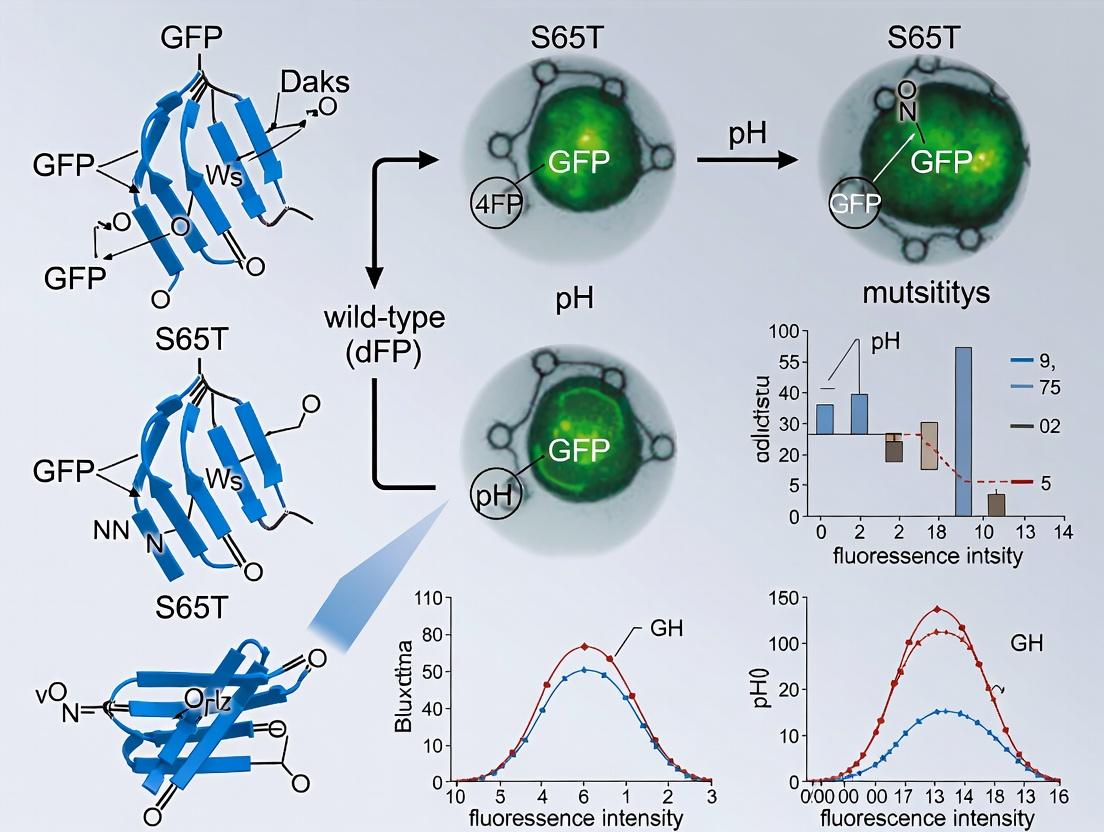
This article provides a comprehensive guide for researchers and drug development professionals on the development, application, and optimization of green fluorescent protein (GFP) variants with reduced pH sensitivity.
Beyond pH Interference: Engineering Next-Generation GFP Variants for Stable Imaging in Acidic Environments
Abstract
This article provides a comprehensive guide for researchers and drug development professionals on the development, application, and optimization of green fluorescent protein (GFP) variants with reduced pH sensitivity. We explore the foundational principles of how pH quenches traditional GFP fluorescence, review state-of-the-art engineered variants like super-ecliptic pHluorin and GFPmut3*, and detail methodological best practices for their use in acidic organelles and tissues. The content covers critical troubleshooting for signal stability and presents a comparative validation of leading variants, empowering scientists to select and implement the optimal tools for robust quantitative imaging in pH-challenging environments such as lysosomes, synaptic vesicles, and the tumor microenvironment.
The pH Problem in Fluorescence: Why Native GFP Fails in Acidic Compartments
Troubleshooting Guides & FAQs
Q1: My GFP fluorescence signal is unexpectedly dim or absent at lower pH. How can I confirm if protonation is the cause? A1: Perform a systematic pH titration. Prepare a series of buffered solutions (pH 4.0 to 8.0, 0.5 increments). Dilute your GFP sample equally into each buffer, allow equilibration, and measure fluorescence intensity (ex ~488 nm, em ~510 nm). Plot intensity vs. pH. A sigmoidal decrease with a pKa around 5-6 is characteristic of chromophore protonation quenching. Ensure buffers do not contain anions (e.g., iodide) that can cause collisional quenching.
Q2: During FRET experiments, acceptor fluorescence decreases but donor (GFP) recovery is lower than expected at acidic pH. What's happening? A2: Protonation likely quenches the GFP chromophore directly, competing with FRET. The energy transfer pathway is disrupted because the protonated donor chromophore is in a non-fluorescent state. Verify by measuring the donor's fluorescence lifetime across pH; protonation will shorten the lifetime irrespective of the acceptor's presence.
Q3: I observe incomplete fluorescence recovery when I switch back to neutral pH after acidification. Is the chromophore damaged? A3: Not necessarily. Slow or incomplete recovery can indicate partial denaturation of the GFP barrel or slow reprotonation dynamics of key residues (e.g., E222). Check reversibility by:
- Limiting acid exposure time (seconds vs. minutes).
- Using a milder acid (e.g., MES buffer vs. HCl).
- Ensuring your buffer has adequate buffering capacity at neutral pH to fully reset the condition. Run an SDS-PAGE gel to rule out aggregation or degradation.
Q4: In live-cell imaging, how can I distinguish true pH quenching from other quenching mechanisms (e.g., chromophore maturation issues)? A4: Implement a two-pronged control:
- Internal Control: Use a ratiometric pH-sensitive GFP variant (e.g., pHluorin) to directly report intracellular pH in parallel.
- Maturation Control: Express a known pH-insensitive GFP mutant (e.g., superfolder GFP is more stable, though not fully insensitive) under identical conditions. If both controls show normal fluorescence, but your experimental GFP is dim, protonation is the likely culprit.
Q5: Crystal structures show the chromophore buried inside the β-barrel. How does solvent H⁺ reach it to cause quenching? A5: H⁺ transport occurs via a "proton wire" through specific internal cavities and water networks. Key residues form this pathway. If your variant has a mutation (e.g., S65T, T203Y), it may alter this network. Troubleshoot by:
- Checking the literature for known structural data on your variant.
- Using molecular dynamics simulations to model the proposed proton path.
- Experimentally, test quenching sensitivity to deuterium oxide (D₂O), which can slow proton exchange kinetics and alter the quenching rate.
Key Experimental Protocols
Protocol 1: Steady-State Fluorescence pH Titration Objective: Determine the pKa of GFP chromophore protonation.
- Express and purify your GFP variant using standard Ni-NTA chromatography.
- Dialyze extensively against a low-salt buffer (e.g., 10 mM NaCl) to minimize ionic strength effects.
- Prepare 1 mL of 50 mM buffered solutions across pH 3.5-9.0 (use citrate, MES, HEPES, Tris for respective ranges).
- Dilute GFP stock into each buffer to a final absorbance <0.1 at 488 nm to avoid inner filter effect.
- Incubate for 5 min at RT for equilibration.
- Measure fluorescence emission spectrum (500-600 nm) with excitation at 488 nm (or 475 nm for some variants).
- Plot normalized intensity at emission max (∼510 nm) vs. pH. Fit data to the Henderson-Hasselbalch equation: I = I_min + (I_max - I_min) / (1 + 10^(pKa - pH)).
Protocol 2: Time-Resolved Fluorescence Lifetime Measurement Objective: Confirm static quenching via protonation.
- Prepare GFP samples in buffers at pH 5.0 (quenched) and pH 8.0 (fluorescent).
- Using a time-correlated single photon counting (TCSPC) instrument, excite sample with a pulsed laser at ∼470 nm.
- Collect emission at 510 nm with a bandpass filter.
- Analyze decay curves. A protonated chromophore exhibits a major short lifetime component (∼0.1 ns) or a pronounced reduction in the dominant lifetime component (from ∼3 ns to sub-nanosecond).
Protocol 3: In-Cellula pH Quenching Assay Objective: Assess pH sensitivity in live mammalian cells.
- Transfect cells with plasmids encoding your GFP variant and a red fluorescent cytoplasmic marker (e.g., mCherry) as a transfection/expression control.
- 24-48h post-transfection, treat cells with pre-warmed imaging medium containing 10 µM nigericin (K⁺/H⁺ ionophore) buffered to specific pH values (5.5-8.0) using 25 mM MES/HEPES.
- Incubate for 10 min at 37°C in 5% CO₂ to clamp cytosolic pH to the medium pH.
- Image immediately using confocal or widefield microscopy. Acquire GFP and mCherry channels.
- Quantify mean cytoplasmic fluorescence intensity for both channels. Normalize GFP intensity to mCherry intensity for each cell and condition.
Data Presentation
Table 1: Comparative pKa Values and Photophysical Properties of Select GFP Variants
| GFP Variant | Key Mutation(s) | Reported pKa of Chromophore | Fluorescence Lifetime at pH 8.0 (ns) | Primary Quenching Mechanism | Reference (Example) |
|---|---|---|---|---|---|
| Wild-Type (wtGFP) | -- | ~4.9-5.1 | ~3.1 | Protonation of Phenolate | [1] Brejc et al., 1997 |
| Enhanced GFP (EGFP) | F64L, S65T | ~5.8-6.0 | ~2.7 | Protonation, faster maturation | [2] Patterson et al., 1997 |
| Superfolder GFP (sfGFP) | S30R, Y39N, etc. | ~5.2 | ~2.9 | Protonation, improved folding | [3] Pédelacq et al., 2006 |
| pH-insensitive mutant | S65T, T203I | >8.0 | ~3.0 (pH independent) | Disrupted proton wire | [4] Haupts et al., 1998 |
| Your Experimental Variant | e.g., E222Q | To be measured | To be measured | Hypothesized disruption | -- |
Table 2: Troubleshooting Summary: Symptoms and Solutions
| Symptom | Possible Cause | Diagnostic Experiment | Suggested Solution |
|---|---|---|---|
| Low fluorescence at all pHs | Poor expression, misfolding, immature chromophore | Check absorbance at ~400 nm (protonated form) and ~475-488 nm (deprotonated form). | Optimize expression temperature (e.g., 25°C), extend maturation time. |
| Gradual signal loss over time at low pH | Irreversible denaturation | Test reversibility by cycling pH (8.0 → 5.5 → 8.0). | Shorten acid exposure time, use stabilizing buffers (e.g., 100-150 mM NaCl). |
| No change in fluorescence with pH | Variant is pH-insensitive OR assay buffers ineffective | Confirm buffer pH with a micro pH electrode post-measurement. | Use high-capacity buffers, ensure no contaminating salts alter local pH. |
| High background in cellular assay | Autofluorescence or non-specific signal | Image untransfected cells under same settings. | Use narrower emission filters, switch to red-shifted GFP variant. |
Diagrams
The Scientist's Toolkit: Research Reagent Solutions
| Item | Function / Relevance to pH Quenching Experiments |
|---|---|
| HEPES Buffer (1M, pH 7.0-8.0) | Standard physiological pH buffer for maintaining fluorescent state of GFP. Low metal binding. |
| MES Buffer (1M, pH 5.5-6.7) | Effective buffering in the critical quenching pH range for most GFPs. |
| Nigericin (from Streptomyces) | K⁺/H⁺ ionophore used in conjunction with high K⁺ buffers to clamp intracellular pH for live-cell assays. |
| GFP Variant Plasmid (e.g., pEGFP-N1) | Standard mammalian expression vector backbone for cloning and expressing your GFP variant of interest. |
| Ni-NTA Agarose Resin | For His-tagged GFP protein purification for in vitro biophysical studies (pKa, lifetime). |
| Time-Resolved Fluorometer | Instrument (e.g., with TCSPC) essential for measuring fluorescence lifetime changes upon protonation. |
| Micro pH Electrode | Accurate measurement of buffer pH before and after fluorescence readings to ensure reliability. |
| Deuterium Oxide (D₂O) | Solvent used to investigate kinetic isotope effects, slowing proton transfer rates to confirm mechanism. |
Technical Support Center: Troubleshooting GFP Variants for Acidic Organelles
Troubleshooting Guides
Guide 1: Low or No Fluorescent Signal in Target Organelle
- Problem: Transfected cells show weak or no fluorescence in lysosomes/Golgi, despite cytoplasmic signal.
- Possible Cause & Solution:
- Cause 1: Reporter is not properly targeted.
- Solution: Verify your organelle-targeting signal peptide sequence (e.g., LAMP1 for lysosomes, sialyltransferase for Golgi). Confirm plasmid map and sequence.
- Cause 2: Reporter is quenched due to low pH.
- Solution: Use a pH-resistant variant (e.g., mNeonGreen, pHuji, deGFP4). See Table 1.
- Cause 3: Protein expression is too low.
- Solution: Optimize transfection protocol, use a stronger promoter, or increase plasmid dose.
- Cause 1: Reporter is not properly targeted.
Guide 2: Signal Bleaching Too Quickly During Live Imaging
- Problem: Fluorescence fades rapidly, preventing time-lapse studies.
- Possible Cause & Solution:
- Cause 1: Photobleaching of the fluorophore.
- Solution: Reduce laser power or exposure time. Use a more photostable variant (e.g., mTurquoise2). Consider using an environmental chamber to reduce oxidative stress.
- Cause 2: Reporter is unstable or being degraded.
- Solution: Check protein turnover rates. Use a reporter with higher maturation efficiency and stability at 37°C.
- Cause 1: Photobleaching of the fluorophore.
Guide 3: Incorrect Localization or Punctate Cytoplasmic Signal
- Problem: Fluorescence appears in wrong organelles or as speckles in the cytoplasm.
- Possible Cause & Solution:
- Cause 1: Aggregation of the reporter protein.
- Solution: Use a monomeric variant (e.g., mEGFP, mCherry2). Avoid dimerizing or tetrameric FPs like wild-type GFP.
- Cause 2: Saturation of organelle import pathways.
- Solution: Reduce expression level by using less plasmid or a weaker promoter.
- Cause 3: Misfolding in acidic environment.
- Solution: Switch to a variant engineered for acid-tolerance.
- Cause 1: Aggregation of the reporter protein.
Frequently Asked Questions (FAQs)
Q1: Why can't I use standard GFP (eGFP) to label lysosomes or synaptic vesicles? A: Standard GFP has a pKa ~6.0. In acidic compartments (pH 4.5-5.5), it becomes reversibly protonated, leading to a severe loss of fluorescence intensity. This makes it an unreliable reporter for pH-fluctuating or consistently acidic organelles.
Q2: What are the key properties I should compare when choosing a pH-stable fluorescent protein? A: Key properties include: pKa (must be well below 5.0), brightness (extinction coefficient * quantum yield), photostability, maturation time at 37°C, and oligomeric state. Refer to Table 1.
Q3: How do I experimentally validate that my reporter is accurately reporting on the correct organelle? A: Perform a co-localization assay using organelle-specific dyes (e.g., LysoTracker for lysosomes, BODIPY TR ceramide for Golgi) or immunostaining for an endogenous marker protein. Calculate Pearson's or Mander's correlation coefficients.
Q4: Are there any drug development applications for these stable reporters? A: Yes. They are crucial for high-content screening assays targeting organelle dysfunction, such as lysosomal storage disorders. They enable real-time tracking of organelle pH, trafficking, and content delivery in response to drug candidates.
Research Data & Protocols
Table 1: Comparison of Fluorescent Protein Variants for Acidic Organelles
| Protein Name | Excitation (nm) | Emission (nm) | pKa | Brightness (Relative to EGFP) | Oligomeric State | Recommended Use Case |
|---|---|---|---|---|---|---|
| EGFP (Reference) | 488 | 507 | ~6.0 | 1.00 | Monomer | Cytosol, Nucleus (neutral pH) |
| deGFP4 | 488 | 511 | ~4.5 | ~0.85 | Monomer | Lysosomal lumen, secretory pathway |
| pHuji (pH-red) | 567 | 609 | ~4.9 | ~0.70 | Monomer | Lysosomes, synaptic vesicles |
| mNeonGreen | 506 | 517 | ~5.7 | ~1.5 | Monomer | Golgi, milder acidity |
| mTurquoise2 | 434 | 474 | ~2.5 | ~0.90 | Monomer | Highly acidic compartments, FRET donor |
| mCherry | 587 | 610 | ~4.5 | ~0.25 | Monomer | Lysosomes, red channel option |
Experimental Protocol: Validation of Reporter pKa In Vitro
Title: In Vitro Fluorometric pKa Determination of GFP Variants
Objective: To determine the acid dissociation constant (pKa) of a fluorescent protein by measuring fluorescence intensity across a range of pH buffers.
Materials:
- Purified FP protein in neutral buffer.
- Citrate-Phosphate or other suitable buffering system (pH range 3.0-9.0).
- 96-well black-walled plate.
- Plate reader with appropriate filters.
- Microplate shaker.
Method:
- Prepare 200 µL of each pH buffer in triplicate wells.
- Add a small, equal volume of purified FP to each well. Mix gently.
- Incubate plate for 5 minutes at RT to equilibrate.
- Measure fluorescence intensity (ex/em appropriate for FP).
- Normalize fluorescence at each pH to the maximum intensity observed (typically at pH 9.0).
- Plot normalized fluorescence (Y) vs. pH (X). Fit data to a sigmoidal curve (e.g., using log(inhibitor) vs. response in GraphPad Prism).
- The pKa is the pH at which fluorescence is at 50% of its maximum.
Visualizations
Title: Development Workflow for pH-Stable Fluorescent Proteins
Title: Pathway of a Targeted pH-Stable Reporter to an Acidic Organelle
The Scientist's Toolkit: Research Reagent Solutions
| Item | Function & Rationale |
|---|---|
| pH-Stable FP Plasmid (e.g., pLAMP1-deGFP4) | Expression vector containing the acid-tolerant FP gene fused to an organelle-targeting sequence. Essential for correct localization. |
| Organelle-Specific Dye (e.g., LysoTracker Deep Red) | Fluorescent small molecule that accumulates in specific acidic compartments. Used for co-localization and validation experiments. |
| Protonophore (e.g., Bafilomycin A1) | Inhibits V-ATPase, neutralizing organelle pH. Critical control to test if signal recovery occurs upon alkalization. |
| Low-pH Calibration Buffer Kit | Set of precisely buffered solutions (pH 4.0-7.0) for in vitro or in situ calibration of the FP's pH-response curve. |
| Monomeric FP Variant | A version engineered to be strictly monomeric to prevent aggregation and artifacts in trafficking studies. |
| Tissue Culture Reagents | Optimized media and transfection reagents (e.g., PEI, Lipofectamine 3000) for high-efficiency protein expression in relevant cell lines. |
Technical Support Center
Troubleshooting Guides & FAQs
Q1: My GFP variant shows weak fluorescence in lysosomal tracking experiments. Is this a pH sensitivity issue and how can I confirm it? A: This is a classic symptom of pH sensitivity. Wild-type GFP (and many early mutants like EGFP) are quenched in acidic organelles (pH 4.5-5.5). To confirm:
- In vitro confirmation: Perform a fluorescence intensity vs. pH titration curve. Purify your protein and measure fluorescence from pH 4.0 to 8.0 in buffered solutions.
- In-cellulo confirmation: Treat cells with lysosomal acidification inhibitors (e.g., Bafilomycin A1, 100 nM for 1 hour). A significant recovery of fluorescence in tracked organelles indicates pH sensitivity.
Q2: I am attempting to replicate the creation of superfolder GFP (sfGFP) to improve my protein fusion expression. What is the most critical step in the protocol? A: The critical step is the error-prone PCR and staggered homology-based assembly. Precise control of mutation rate (2-3 mutations/kb) is essential. Low mutation rates yield no improvements; high rates destroy folding. Use a dedicated mutagenesis kit and titrate the Mn²⁺ concentration carefully.
Q3: When testing the pH stability of my new GFP mutant, what controls are absolutely necessary? A: You must include these controls in every experiment:
- Positive Control: A known pH-resistant variant (e.g., pHluorin2, mNeonGreen).
- Negative Control: A known pH-sensitive variant (e.g., EGFP, EYFP).
- Expression Control: A constitutively active fluorescent marker (e.g., TagRFP) in a separate channel to normalize for expression and imaging variations.
- Buffer Control: Verify the actual pH of your calibration buffers with a micro-pH electrode before each experiment.
Q4: My pH-resistant GFP mutant forms aggregates when tagged to my protein of interest. What can I do? A: This indicates the mutant, while pH-stable, may have exposed hydrophobic patches. Consider:
- Linker Optimization: Insert a longer, flexible linker (e.g., (GGGGS)₃) between your protein and GFP.
- Alternative Scaffold: Switch to a different pH-stable scaffold like mApple or mCherry derivatives, which are often more monomeric.
- Test Truncations: Some GFP variants have N/C-terminal extensions that can affect fusion protein folding. Consult the literature for optimal termini for your specific variant.
Experimental Protocol: Measuring In Vitro pH Sensitivity of GFP Variants
Objective: To generate a pH titration curve for any GFP variant to quantify its pH resistance.
Materials:
- Purified GFP variant protein (>0.1 mg/mL).
- 0.1 M Citrate-Phosphate buffers (pH 4.0, 4.5, 5.0, 5.5, 6.0).
- 0.1 M Phosphate buffers (pH 6.5, 7.0, 7.5, 8.0).
- 96-well black-walled, clear-bottom plate.
- Fluorescence plate reader (Ex: ~488 nm, Em: ~510 nm).
Method:
- Buffer Preparation: Prepare 1 mL of each pH buffer. Confirm pH with a calibrated microelectrode.
- Sample Preparation: Dilute the purified GFP protein into each pH buffer to a final concentration of 1 µM in a final volume of 200 µL. Prepare triplicates for each pH.
- Incubation: Incubate the plate at room temperature, protected from light, for 30 minutes to allow equilibrium.
- Measurement: Read fluorescence intensity (FI) in the plate reader.
- Data Analysis: Calculate the mean FI for each pH. Normalize all values to the FI at pH 8.0 (set as 100%). Plot % Maximum FI vs. pH. The pKₐ is the pH at which fluorescence is at 50%.
Key Quantitative Data: pH Sensitivity of GFP Variants
| GFP Variant | Primary Excitation (nm) | Primary Emission (nm) | Reported pKₐ | Relative Brightness (vs. EGFP) | Key Property |
|---|---|---|---|---|---|
| wtGFP | 395/475 | 509 | ~6.0 | 0.4 | pH-sensitive, slow maturation |
| EGFP | 488 | 507 | ~6.0 | 1.0 | Brighter, but still pH-sensitive |
| EYFP | 514 | 527 | ~6.5-7.0 | 1.5 | Very pH-sensitive |
| superfolder GFP (sfGFP) | 485 | 510 | ~6.0 | 0.6 | Folding robust, pH-sensitivity unchanged |
| pHluorin (ratiometric) | 395/475 | 509 | ~7.1 | N/A | Ratiometric, pH-reporting |
| pHluorin2 | 400/475 | 516 | ~7.2 | 1.0 | Improved brightness & photostability |
| mNeonGreen | 506 | 517 | ~5.7 | 3.0 | Very bright, moderately pH-resistant |
| mKate2 (RFP) | 588 | 633 | ~4.5 | 0.5 | Highly pH-resistant |
Research Reagent Solutions Toolkit
| Item | Function/Application | Example Product/Source |
|---|---|---|
| pcDNA3.1(+) Vector | Mammalian expression vector for cloning and expressing GFP fusion constructs. | Thermo Fisher Scientific |
| Lipofectamine 3000 | Lipid-based transfection reagent for delivering plasmid DNA into mammalian cell lines. | Thermo Fisher Scientific |
| HEK293T Cells | Robust, easily transfected cell line for high-level transient protein expression. | ATCC (CRL-3216) |
| Ni-NTA Agarose | Affinity resin for purifying His-tagged GFP variant proteins from bacterial lysates. | Qiagen |
| Bafilomycin A1 | V-ATPase inhibitor used to neutralize lysosomal/endosomal pH in live-cell assays. | Cayman Chemical |
| Ionophore Cocktail | Nigericin & Monensin mix for clamping intracellular pH in calibration experiments. | Sigma-Aldrich |
| ProLong Diamond Antifade | Mounting medium for preserving fluorescence in fixed samples. | Thermo Fisher Scientific |
| TurboFect Transfection Reagent | Polymer-based reagent for high-efficiency transfection of adherent cells. | Thermo Fisher Scientific |
Workflow & Pathway Diagrams
Live-Cell pH Resistance Assay Workflow
Evolution of GFP Variant pH Stability
This technical support center provides guidance for researchers investigating GFP variants with reduced pH sensitivity, a critical area for improving biosensor stability in acidic cellular environments. The mutations T203I, S147E, N149Q, and S65T are key structural modifications that alter the chromophore's protonation state and local environment. The content is framed within a broader thesis to develop robust fluorescent tools for drug development and cellular imaging under varying pH conditions.
Troubleshooting Guides & FAQs
Q1: My GFP-S65T variant shows unexpectedly low fluorescence when expressed in secretory pathway studies. What could be the issue? A: The S65T mutation increases the folding efficiency and fluorescence intensity of GFP but does not inherently confer strong resistance to acidic pH. If your experiment involves the Golgi apparatus (pH ~6.0-6.7) or secretory vesicles, the fluorescence loss is likely due to protonation. The S65T mutation on its own is still somewhat pH-sensitive. Consider combining it with genuinely pH-resistant mutations like T203I or S147E for these compartments.
Q2: The T203I (YFP-type) mutant exhibits a shifted excitation peak, interfering with my standard FITC filter set. How should I adjust my setup? A: This is expected. The T203I mutation, especially in combination with S65G/V68L/S72A, creates the YFP variant, shifting excitation to ~514 nm and emission to ~527 nm. You must use a FITC filter set with a broader excitation bandpass or, ideally, switch to a standard YFP filter set (e.g., excitation 500-520 nm, emission 525-550 nm). Verify spectral profiles using a fluorescence spectrometer.
Q3: During site-directed mutagenesis to create the S147E mutant, my transformation efficiency is extremely low. What troubleshooting steps should I take? A: The S147E mutation introduces a negatively charged glutamate near the chromophore. Low efficiency could stem from:
- Primer Design: Verify your primer's melting temperature (Tm) and ensure the mutation is centrally located. Re-calculate using the NEB Tm calculator.
- PCR Product Purity: Gel-purify your mutated plasmid product before transformation to remove template DNA and primers.
- Protein Toxicity: The mutation might cause unexpected, low-level toxicity in E. coli. Grow transformations at 30°C instead of 37°C to slow expression and improve cell viability.
- Sequencing Verification: Always sequence the entire GFP gene, not just the mutation site, to ensure no secondary mutations were introduced.
Q4: The double mutant N149Q/S65T shows poor brightness compared to literature values. How can I optimize expression? A: The N149Q mutation stabilizes the chromophore's anionic state but can sometimes reduce folding efficiency. Implement these checks:
- Induction Optimization: Reduce IPTG concentration (e.g., to 0.1 mM) and induce at a lower OD (0.4-0.6) at 25°C overnight.
- Lysis Buffer pH: Ensure your lysis buffer is pH 7.5-8.0 to favor the fluorescent, deprotonated state of the chromophore. Fluorescence measured at pH 6.0 will be artificially low.
- Solubility Check: Perform a centrifugation-based solubility assay. If the protein is in inclusion bodies, consider using a chaperone co-expression strain like Rosetta-gami 2.
Q5: How do I validate that my GFP-T203I/S147E double mutant truly has reduced pH sensitivity? A: Perform a standardized pH titration experiment.
- Purify the protein or use clarified lysate.
- Dialyze or dilute samples into a series of citrate-phosphate or phosphate buffers (pH range 5.0 to 8.0, in 0.5 pH unit increments) with constant ionic strength.
- Measure fluorescence intensity (ex/cm appropriate for your variant) and plot normalized intensity vs. pH.
- Compare the titration curve to that of wild-type GFP or EGFP. A true pH-resistant mutant will maintain >80% of its max fluorescence down to pH 6.0.
Table 1: Photophysical Properties of Key GFP Mutations
| Mutation(s) | Common Name | Excitation Peak (nm) | Emission Peak (nm) | pKa | Relative Brightness* | Primary Effect |
|---|---|---|---|---|---|---|
| WT GFP | GFP | 395/475 | 509 | ~6.0 | 1.0 | Baseline |
| S65T | EGFP-type | 489 | 509 | ~6.0 | ~1.5x WT | Improved folding, brightness |
| T203I/S65G/V68L/S72A | YFP (Citrine) | 514 | 527 | ~5.7 | ~1.5x EGFP | Halide sensitivity, redshift |
| S147E/N149Q | * | ~495 | ~510 | >7.0 | ~0.8x EGFP | Dramatically reduced pH sensitivity |
| S65T/N149Q | * | ~489 | ~509 | ~7.5 | ~1.2x EGFP | Reduced pH sensitivity, good brightness |
| T203I/S147E | * | Varies | Varies | >7.5 | ~0.7x EGFP | Strongly reduced pH sensitivity |
*Brightness is relative to wild-type GFP and is approximate, dependent on protein expression and folding.
Table 2: Recommended Applications for GFP Variants
| Mutation Combination | pKa | Recommended Application | Caution |
|---|---|---|---|
| S65T (EGFP) | ~6.0 | General cytosolic/nuclear labeling in neutral pH cells | Avoid acidic organelles |
| T203I-based (YFP) | ~5.7 | FRET acceptor, general labeling | Sensitive to halides (Cl⁻), acidic pH |
| S147E/N149Q | >7.0 | Lysosomal, Golgi, or secretory pathway tagging | Lower quantum yield |
| S65T/N149Q | ~7.5 | Excellent for biosensors in fluctuating pH environments | Check expression levels |
| T203I/S147E | >7.5 | Extreme pH environments, acidic tumor imaging | Requires spectral verification |
Experimental Protocols
Protocol 1: pH Titration Assay for GFP Variant Characterization Objective: Quantify the pH sensitivity of a GFP variant by measuring fluorescence across a pH gradient. Materials: Purified GFP protein, 0.1 M Citrate-Phosphate buffers (pH 4.5-8.0), fluorescence spectrophotometer. Method:
- Prepare 1 mL of each buffer in clean, labeled tubes.
- Dilute the purified GFP stock into each buffer to a final concentration of ~1 µM. Ensure identical protein concentration across all samples.
- Incubate at room temperature for 5 minutes to equilibrate.
- Measure fluorescence intensity using the variant's optimal excitation wavelength (e.g., 489 nm for S65T) and collect emission at its peak (e.g., 509 nm). Use consistent slit widths.
- Plot fluorescence intensity (normalized to the maximum value) versus pH. Fit the data to a standard sigmoidal curve to determine the apparent pKa.
Protocol 2: Site-Directed Mutagenesis for Introducing S147E or N149Q Objective: Create point mutations in the GFP gene using PCR-based mutagenesis. Materials: High-fidelity DNA polymerase (e.g., Q5), mutagenic primers, template plasmid (e.g., pEGFP-N1), DpnI restriction enzyme, competent E. coli. Method:
- Primer Design: Design forward and reverse primers (~25-35 bases) with the desired mutation (e.g., AGC→GAG for S147E) in the center. Ensure 15+ bases of correct sequence on each side.
- PCR: Set up a 50 µL PCR reaction with plasmid template, primers, and high-fidelity polymerase. Cycle: 98°C 30s; (98°C 10s, Tm+3°C 30s, 72°C 2 min/kb) x 25 cycles; 72°C 5 min.
- Digestion: Add 1 µL of DpnI enzyme directly to the PCR product. Incubate at 37°C for 1-2 hours to digest the methylated parental template DNA.
- Transformation: Transform 5 µL of the DpnI-treated product into competent DH5α cells. Plate on selective antibiotic (e.g., Kanamycin for pEGFP).
- Verification: Screen colonies by plasmid DNA sequencing across the entire GFP coding region.
Visualizations
The Scientist's Toolkit
Table 3: Essential Research Reagent Solutions
| Item | Function in GFP pH Research | Example/Notes |
|---|---|---|
| High-Fidelity DNA Polymerase | Accurate amplification during site-directed mutagenesis to introduce point mutations (T203I, S147E, etc.). | Q5 Hot Start (NEB), PfuUltra II. |
| Citrate-Phosphate Buffer Kit | Creating a stable pH gradient (4.0-8.0) for standardized fluorescence titration assays. | Prepare from citric acid and Na₂HPO₄ stocks. |
| HEK293T or COS-7 Cell Line | Mammalian expression system to test GFP variant performance in relevant cellular contexts (e.g., secretory pathway). | Ensure low passage number. |
| Lysosomotropic Agents (e.g., Bafilomycin A1) | Pharmacologically manipulate lysosomal pH to test GFP stability in acidic organelles. | Use as a control in live-cell imaging. |
| Gel Filtration Column (Size Exclusion Chromatography) | Purify GFP variants away from cellular contaminants for accurate in vitro photophysical characterization. | HiLoad 16/600 Superdex 75 pg. |
| Fluorescence Plate Reader with pH | High-throughput screening of multiple GFP variant clones under different pH conditions. | Requires filters matching GFP variant peaks. |
| LysoTracker Dyes | Co-staining control to confirm localization of GFP variants to acidic compartments. | Compare signal overlap and stability. |
Practical Guide: Implementing pH-Stable GFPs in Live-Cell Imaging and Assays
Troubleshooting Guide & FAQs
Q1: My super-ecliptic pHluorin (SEP) signal is dim or absent at the plasma membrane. What could be wrong? A: This is often due to improper pH conditions during imaging or trafficking issues.
- Cause 1: Incorrect extracellular pH. SEP is highly pH-sensitive. Ensure your imaging buffer is properly buffered to pH 7.4. Use 20-25 mM HEPES in your saline.
- Cause 2: Incomplete surface delivery. The protein may be retained in the ER/Golgi. Verify using brefeldin A treatment (5 µg/mL for 4-6 hrs). A perinuclear signal suggests retention.
- Protocol - Surface Delivery Check:
- Transfert cells with your SEP construct.
- At 24-48h post-transfertion, treat one group with 5 µg/mL brefeldin A in DMSO; control with DMSO alone.
- Incubate for 6 hours at 37°C, 5% CO2.
- Image live cells in HEPES-buffered saline (pH 7.4). Compare the localization.
Q2: GFPmut3* shows unexpected dimming in my lysosomal/acidic compartment experiment. Isn't it "pH-insensitive"? A: GFPmut3* has reduced, not absent, pH sensitivity. It is stable from pH 6-10, but below pKa ~6.0, fluorescence decreases.
- Solution: Confirm the pH of the target compartment. Use a lysosomal dye (e.g., LysoTracker Red) for co-localization. For quantitative work in very acidic environments (pH <5.0), consider a more resistant variant like deGFP4 or use ratiometric pH-insensitive controls.
Q3: How do I choose between deGFP4 and GFPmut3* for long-term expression or stability studies? A: deGFP4 has superior folding efficiency and maturation speed at 37°C, crucial for mammalian systems.
- Protocol - Maturation Rate Comparison:
- Transfert parallel samples with deGFP4 and GFPmut3* constructs under identical conditions.
- At 24h post-transfertion, treat with 100 µg/mL cycloheximide to halt new protein synthesis.
- Acquire fluorescence intensity (Ex 488nm) images every 30 minutes for 4-6 hours using a pre-warmed (37°C) stage.
- Plot normalized intensity over time. deGFP4 will typically show a slower decay post-cycloheximide, indicating a larger pre-matured pool and faster initial maturation.
Q4: All my constructs show poor fluorescence. Is it a general problem with my system? A: Perform a systematic check.
- Microscope: Verify laser power and detector settings. Image a known positive control sample.
- Cells: Check for excessive cell death or mycoplasma contamination.
- Constructs: Verify the sequence and promoter strength. The CMV promoter can silence in some cell types; try an EF1α or CAG promoter.
- Transfection: Optimize transfection reagent/DNA ratio. Use a co-transfected constitutive red fluorescent marker (e.g., tdTomato) at a 1:5 ratio to identify successfully transfected cells.
Comparative Quantitative Data
Table 1: Photophysical & Biochemical Properties of GFP Variants
| Property | super-ecliptic pHluorin | GFPmut3* | deGFP4 (superfolder GFP) | Notes |
|---|---|---|---|---|
| pKa | ~7.1 | ~6.0 | ~4.5 | Midpoint of fluorescence transition. |
| Maturation Half-time (37°C) | ~30 min | ~40 min | ~10 min | Key for time-sensitive experiments. |
| Extinction Coefficient (ε) | ~52,000 M⁻¹cm⁻¹ | ~33,000 M⁻¹cm⁻¹ | ~83,000 M⁻¹cm⁻¹ | Higher ε = brighter at saturation. |
| Quantum Yield (Φ) | 0.60 | 0.79 | 0.65 | Combined with ε determines brightness. |
| Relative Brightness (ε * Φ) | ~31,200 | ~26,100 | ~54,000 | Normalized to EGFP. |
| pH Stability Range | Narrow (7.0-8.0) | Broad (6.0-10.0) | Very Broad (4.5-11) | For acidic organelles. |
| Key Structural Feature | YFP-derived, surface-exposed His | F64L, S65T, H231L | Superfolder mutations (S30R,Y39N, etc.) | Folds under hostile conditions. |
Table 2: Recommended Application Suitability
| Application | Primary Recommendation | Alternative | Rationale |
|---|---|---|---|
| Plasma Membrane Exocytosis/Endocytosis | super-ecliptic pHluorin | N/A | Optimal dynamic range at physiological pH. |
| General Cytoplasmic/Nuclear Labeling | GFPmut3* | deGFP4 | Excellent brightness & reduced pH sensitivity in neutral compartments. |
| Secretory Pathway / ER / Golgi Tagging | deGFP4 | N/A | Superior folding in oxidative environments; fast maturation. |
| Lysosomal / Acidic Organelle Targeting | deGFP4 | pH-insensitive red proteins (mKate2) | Highest retention of fluorescence below pH 5.5. |
| Long-term Live-cell Imaging | deGFP4 | GFPmut3* | Photostability and robust folding reduce artifacts over time. |
The Scientist's Toolkit: Research Reagent Solutions
| Item | Function & Application |
|---|---|
| HEPES-Buffered Imaging Saline (pH 7.4) | Maintains extracellular pH for SEP or other pH-sensitive probes during live imaging without CO2. |
| Bafilomycin A1 (100 nM) | V-ATPase inhibitor. Used to alkalize acidic compartments (lysosomes, endosomes) to validate pH-dependent quenching. |
| NH4Cl (50 mM) Pulse | Rapid, reversible method to neutralize intracellular acidic compartments by diffusion of NH3. |
| Cycloheximide (100 µg/mL) | Protein synthesis inhibitor. Used in pulse-chase or maturation rate experiments. |
| Lysotracker Red DND-99 | Fluorescent dye that accumulates in acidic organelles. Validates target compartment pH and co-localization. |
| Brefeldin A (5 µg/mL) | Disrupts Golgi/ER trafficking. Used to check for incomplete surface delivery of membrane-targeted probes. |
| CellMask Deep Red Plasma Membrane Stain | Non-transferable dye to outline cell morphology and confirm membrane localization of SEP constructs. |
Visualizations
Diagram 1: SEP Response to Exocytosis-Endocytosis Cycle
Diagram 2: pH Stability Ranges of GFP Variants
Diagram 3: Experimental Workflow for GFP Variant Selection
Technical Support Center: Troubleshooting & FAQs
Q1: My GFP-tagged lysosomal protein shows very dim fluorescence in live-cell imaging compared to cytosolic controls. What could be the cause? A: This is the primary issue reduced-pH GFPs are designed to address. The acidic lumen (pH ~4.5-5.0) of the lysosome quenches standard GFP (pKa ~6.0). Verify your construct uses a validated pH-resistant variant like pHluorin, superecliptic pHluorin, or GFP-R. As a control, treat cells with 100 nM Bafilomycin A1 (a V-ATPase inhibitor) for 30-60 minutes to neutralize lysosomal pH. If fluorescence intensity increases significantly, it confirms pH quenching of a non-resistant variant.
Q2: After successful transfection, my tagged protein fails to localize to lysosomes and appears diffuse in the cytoplasm. How can I troubleshoot this? A: This suggests the lysosomal targeting signal (LTS) is compromised. Follow this checklist:
- Verify Signal Integrity: Ensure the DNA sequence for the LTS (e.g., LAMP-1's tyrosine- or dileucine-based motif) is intact and correctly positioned, typically at the C-terminus.
- Check Tag Orientation: The fluorescent protein (FP) should not disrupt the LTS. Try switching the FP to the N-terminus of the protein if the LTS is C-terminal, or use a flexible linker (e.g., (GGGGS)₃).
- Validate with Markers: Co-stain with a commercial lysotracker dye (e.g., LysoTracker Red DND-99) or immunostain for an endogenous lysosomal protein (e.g., LAMP2) to confirm co-localization.
Q3: I observe aberrant lysosomal morphology (enlarged or clustered vesicles) in cells expressing my GFP-tagged construct. Is this an artifact? A: Potentially. Overexpression can sometimes disrupt lysosomal function. Implement these controls:
- Titrate DNA: Reduce transfection reagent and DNA amount to achieve lower expression levels.
- Use Inducible Systems: Consider a tetracycline-inducible promoter to control expression levels tightly.
- Functional Assay: Perform a dye-quench assay (e.g., with BODIPY-FL-peptide) to assess lysosomal proteolytic activity in expressing vs. non-expressing cells.
Q4: During time-lapse imaging, photobleaching of the FP is rapid. How can I improve imaging stability? A: Photobleaching is exacerbated in acidic environments. Use the following imaging protocol:
- Use a pH-Resistant, Photostable Variant: GFP-R or mNeonGreen are more photostable in low pH.
- Reduce Illumination: Lower laser power or exposure time and use a highly sensitive camera (e.g., EMCCD, sCMOS).
- Environmental Control: Maintain cells at 37°C with 5% CO₂ during imaging to preserve health.
- Add an Antioxidant: Include 1-5 mM Trolox or ascorbic acid in the imaging medium to reduce photobleaching.
Q5: How do I quantify lysosomal pH using these reduced-pH sensitivity GFP variants? A: Use a ratiometric pHluorin variant. The excitation spectrum of pHluorin shifts with pH. Perform a two-excitation ratio calibration:
- Transfect cells with your pHluorin-tagged construct.
- At the end of the experiment, treat cells with calibration buffers (pH 4.5 to 7.5) containing 10 µM nigericin and 10 µM monensin (to equilibrate intra- and extracellular pH).
- Acquire images at two excitation wavelengths (e.g., 410/470 nm for pHluorin).
- Calculate the ratio (410nm/470nm emission) for each buffer pH to generate a standard curve.
- Apply this curve to ratio values from experimental cells to calculate intracellular pH.
Table 1: Comparison of Common pH-Resistant Fluorescent Proteins
| Protein Variant | pKa (approx.) | Brightness in Lysosomes (vs. EGFP) | Excitation/Emission (nm) | Primary Use Case |
|---|---|---|---|---|
| EGFP (Reference) | ~6.0 | 1.0 (Severely quenched) | 488/509 | Cytosolic/nuclear markers only |
| pHluorin | ~7.1 | 5-10x higher | 410/470 (ratiometric) | Ratiometric pH sensing & imaging |
| superecliptic pHluorin | ~7.1 | 8-12x higher | 488/509 | Highly photostable pH reporting |
| GFP-R | ~5.0* | 15-20x higher | 488/509 | Optimal for constant bright signal in acidic organelles |
| mNeonGreen | ~5.7* | 10-15x higher | 506/517 | Very bright & photostable; moderate pH resistance |
*Designed for reduced quenching, not for ratiometric sensing.
Table 2: Troubleshooting Quick Reference Guide
| Problem | Likely Cause | First Action | Secondary Validation |
|---|---|---|---|
| Dim Signal | Standard GFP quenching | Treat with Bafilomycin A1 | Switch to GFP-R or mNeonGreen |
| Mis-localization | Disrupted Targeting Signal | Check LTS sequence & tag position | Co-stain with LysoTracker |
| Altered Morphology | Overexpression Artifact | Reduce expression level | Assess function with dye-quench assay |
| Fast Bleaching | High power, acidic environment | Lower laser power, use Trolox | Switch to more photostable variant (mNeonGreen) |
| No Signal | Poor transfection/expression | Check transfection efficiency (control FP) | Verify plasmid sequence and health of cells |
Detailed Experimental Protocols
Protocol 1: Live-Cell Imaging of Lysosomal Proteins with pH-Resistant GFP Objective: To visualize the dynamic localization of a lysosomal membrane protein (e.g., LAMP1) in live cells.
- Construct Generation: Clone the cDNA of your target lysosomal protein, ensuring the native lysosomal targeting signal is intact, into a mammalian expression vector fused C-terminally to GFP-R.
- Cell Seeding: Seed appropriate cells (e.g., HeLa or U2OS) on glass-bottom dishes 24h prior to transfection.
- Transfection: Transfect at ~70% confluency using a low-cytotoxicity reagent (e.g., polyethyleneimine (PEI) or Lipofectamine 3000). Use 25-50% less DNA than for cytosolic markers to avoid overexpression.
- Imaging Preparation (18-24h post-transfection): Replace medium with pre-warmed, phenol-red-free imaging medium supplemented with 10% FBS.
- Microscopy: Use a confocal or widefield microscope with a 63x or 100x oil objective. For GFP-R: Ex 488nm, Em 500-550nm. Acquire time-lapse images with minimal laser power (1-2%) to limit photobleaching. Maintain chamber at 37°C/5% CO₂.
- Co-localization: Add 50 nM LysoTracker Deep Red to the medium 30 min before imaging. Image the LysoTracker channel (Ex 640nm, Em 650-750nm) separately.
Protocol 2: Ratiometric pH Calibration for Lysosomal pHluorin Constructs Objective: To generate a standard curve for converting fluorescence ratios to absolute pH values.
- Sample Preparation: Prepare cells expressing your pHluorin-tagged construct as in Protocol 1.
- Calibration Buffers: Prepare High-K⁺ calibration buffers (125 mM KCl, 20 mM NaCl, 0.5 mM CaCl₂, 0.5 mM MgSO₄, 10 mM HEPES/MES) adjusted to specific pH values from 4.5 to 7.5 in 0.5 pH unit increments.
- Ionophore Treatment: To each buffer, add 10 µM Nigericin and 10 µM Monensin from concentrated stock solutions in DMSO.
- Image Acquisition: On the microscope, replace the culture medium with the first calibration buffer (pH 7.5). Incubate for 5-10 minutes. Acquire two images: Ex 410nm (Em 470nm) and Ex 470nm (Em 525nm). Repeat for each pH buffer.
- Data Analysis: For each vesicle/cell, measure the mean fluorescence intensity in both channels at each pH. Calculate the Ratio (410nm/470nm). Plot the average Ratio against the buffer pH to create a sigmoidal standard curve. Fit the data with a sigmoidal Boltzmann equation in analysis software (e.g., GraphPad Prism).
Visualizations
Title: Lysosomal Protein Trafficking Pathway
Title: Troubleshooting Dim Lysosomal Fluorescence
The Scientist's Toolkit: Research Reagent Solutions
Table 3: Essential Reagents for Lysosomal Protein Imaging
| Reagent/Solution | Function/Description | Example Product/Catalog # |
|---|---|---|
| pH-Resistant FP Plasmid | Engineered for stability in acidic lumen; core of the assay. | pCMV-LAMP1-GFP-R (Addgene #1817) |
| LysoTracker Dyes | Cell-permeant, fluorescent weak bases that accumulate in acidic organelles; co-localization standard. | LysoTracker Deep Red (Invitrogen L12492) |
| Bafilomycin A1 | Specific V-ATPase inhibitor; neutralizes lysosomal pH for diagnostic quenching tests. | Bafilomycin A1 (Sigma-Aldrich B1793) |
| Ionophores for Calibration | Nigericin & Monensin equilibrate K⁺/H⁺ across membranes for accurate in situ pH calibration. | Nigericin (Sigma-Aldrich N7143) |
| Phenol-red-free Imaging Medium | Reduces background autofluorescence during live-cell imaging. | FluoroBrite DMEM (Gibco A1896701) |
| Antioxidant for Imaging | Reduces photobleaching and phototoxicity during time-lapse. | Trolox (Sigma-Aldrich 238813) |
| Lysosomal Fixative | Specialized fixative that better retains lysosomal structure (vs. formaldehyde). | Pre-warmed 4% PFA + 0.1% Glutaraldehyde |
Technical Support Center
Troubleshooting Guides & FAQs
Q1: My pH-sensitive GFP (pHluorin) shows no signal change during synaptic stimulation. What could be wrong? A: This is often due to improper probe targeting or imaging conditions. First, verify expression and localization using a confocal microscope with markers for your target compartment (e.g., synaptophysin for synaptic vesicles). Ensure your perfusion system is maintaining correct extracellular pH (typically 7.4). Check for photobleaching by reducing excitation intensity. Confirm stimulation parameters; for neuronal cultures, validate action potential induction using a channelrhodopsin control or electrophysiology.
Q2: I observe inconsistent pH readings from my rationetric pH sensor in the Golgi apparatus. How can I improve reliability? A: Inconsistent rationetric readings often stem from signal-to-noise issues or improper calibration. Perform an in situ calibration at the end of each experiment using high-K+ buffers with ionophores (nigericin, monensin) at defined pH levels (e.g., 5.5, 6.5, 7.5). Ensure you are using a correctly filtered imaging setup for both excitation/emission wavelengths. Variances in Golgi pH can be biological; consider using a cis-Golgi (GM130) or trans-Golgi (TGOLN2) marker to ensure you are measuring the same sub-compartment across experiments.
Q3: My pH-insensitive GFP variant (e.g., superfolder GFP, GFP2) still shows a slight fluorescence change upon acidification. Is this normal? A: While engineered for reduced sensitivity, most "pH-insensitive" variants retain a minor quenching profile below pH ~6.0. This residual sensitivity is typically <10% change per pH unit compared to >80% for pHluorin. Characterize your specific construct by performing a full in vitro pH titration curve from pH 4.0 to 9.0. If the change interferes with your experiment, consider using a completely pH-stable red fluorescent protein (e.g., mScarlet) as an alternative.
Q4: During live-cell imaging of secretory pathway pH, my cells show signs of toxicity. What are the common culprits? A: Toxicity can arise from multiple factors:
- Phototoxicity: Minimize light exposure by using lower intensity, faster acquisition, and longer intervals. Consider a two-photon microscope for deeper imaging.
- Probe Overexpression: High levels of GFP-tagged proteins can disrupt organelle function. Use the lowest viable expression level, titrate DNA/transfection reagent, and use stable cell lines with moderate expression.
- Buffer Components: Some ionophores (e.g., CCCP) or high-K+ calibration buffers are toxic over time. Limit exposure to calibration buffers to <10 minutes.
Q5: How do I choose between a rationetric (e.g., pHluorin2) and an intensiometric (e.g., ecliptic pHluorin) sensor for synaptic vesicle recycling? A: The choice depends on your experimental need and setup.
| Sensor Type | Key Advantage | Primary Disadvantage | Best For |
|---|---|---|---|
| Rationetric (pHluorin2) | Internal control for concentration, thickness, & illumination. Robust quantitative pH. | Requires dual-channel imaging & more complex analysis. | Quantifying absolute pH or comparing between cells/regions. |
| Intensiometric (Ecliptic) | Larger dynamic range (>20:1 ratio). Simpler single-wavelength imaging. | Sensitive to focus drift, expression level, and photobleaching. | Tracking rapid exocytosis/endocytosis kinetics with high temporal resolution. |
Experimental Protocol: Calibrating pH Sensors in Cultured Neurons
- Image Acquisition: Image pHluorin-tagged constructs (e.g., VAMP2-pHluorin) in live neurons at 37°C, 5% CO₂.
- Perfusion Switch: Gently perfuse with calibration buffer (in mM: 140 KCl, 2 CaCl₂, 1 MgCl₂, 20 HEPES, 20 MES, 10 glucose) adjusted to pH 7.5, 7.0, 6.5, and 5.5, each containing 10 µM nigericin and 10 µM monensin.
- Equilibration: Allow 3-5 minutes at each pH for the intracellular and extracellular pH to equilibrate.
- Data Collection: Capture images at each pH point. Plot mean fluorescence (or ratio for rationetric probes) vs. pH. Fit data to a sigmoidal curve (e.g., Hill equation) to generate a calibration curve.
- Return to Physiology: Carefully return cells to standard imaging medium to assess viability.
Experimental Protocol: Monitoring Synaptic Vesicle pH Dynamics with pHluorin
- Transfection: Express synaptophysin-pHluorin or VAMP2-pHluorin in hippocampal neurons (DIV 14-21) via lipofection or viral transduction.
- Imaging Setup: Use an epifluorescence or confocal microscope with a 488 nm laser, environmental chamber (37°C), and perfusion system with modified Tyrode’s solution.
- Baseline Acquisition: Acquire images at 0.5-2 Hz for 60 seconds to establish baseline (F_min).
- Stimulation: Perfuse with high-K+ Tyrode’s solution (e.g., 47 mM KCl, osmotically balanced) or apply field stimulation (e.g., 10 Hz for 10s) to induce exocytosis.
- Post-Stimulation: Continue imaging for 3-5 minutes to track endocytosis and re-acidification.
- Analysis: Normalize fluorescence (ΔF/F). F_max is fluorescence after alkalinization (often during stimulation). Calculate kinetics of exocytosis (rise time) and re-acidification (tau of exponential decay).
The Scientist's Toolkit: Research Reagent Solutions
| Item | Function in pH Dynamics Experiments |
|---|---|
| pHluorin / pHluorin2 | Genetically encoded, pH-sensitive GFP variant. Fluorescence increases with alkalinity. Used for tagging organelles or proteins. |
| Superfolder GFP (sfGFP) | A GFP variant with enhanced folding and reduced pH sensitivity (pKa ~4.9-5.1). Serves as a more stable structural tag in acidic compartments. |
| Nigericin | K+/H+ ionophore. Used in calibration buffers to clamp intracellular pH to the extracellular pH. |
| Monensin | Na+/H+ ionophore. Often used in combination with nigericin for more complete pH clamping, especially in organelles. |
| Bafilomycin A1 | V-ATPase inhibitor. Blocks vesicle re-acidification. Used to probe the contribution of proton pumps to pH dynamics. |
| NH₄Cl | Membrane-permeable base. Causes rapid alkalinization of acidic compartments. Used as a positive control for pH sensor response. |
| MES & HEPES Buffers | Biological buffers for maintaining defined pH in calibration solutions (MES for pH 5.5-6.7, HEPES for pH 6.8-8.2). |
Visualizations
Diagram 1: pH Gradients Along the Secretory Pathway (55 chars)
Diagram 2: Synaptic Vesicle Cycle pH Transitions (52 chars)
Diagram 3: Experimental Workflow for pH Imaging (49 chars)
Technical Support Center
Troubleshooting Guides & FAQs
Q1: My superfolder GFP (sfGFP) variant shows unexpected fluorescence quenching at physiological pH (7.4) during a cell-based assay. What could be causing this?
A: This is a classic symptom of residual pH sensitivity. Even in "reduced sensitivity" variants, the protonation state of the chromophore's phenolic oxygen (Tyr66) and the surrounding residues (e.g., His148) is pH-dependent.
- Check 1: Perform an in vitro pH titration of your purified protein to confirm its pKa. The pKa should be significantly below 7.0 for reliable use at pH 7.4. If it's near or above 7.0, fluorescence will be unstable.
- Check 2: Verify intracellular pH using ratiometric pH-sensitive dyes (e.g., SNARF-1). Cellular compartments or experimental conditions (e.g., drug treatments) may cause localized acidification below the variant's pKa.
- Protocol - In vitro pH Titration:
- Purify your GFP variant in a buffer without primary amines (e.g., 100 mM KCl, 10 mM phosphate).
- Create a series of buffers from pH 5.0 to 9.0 with consistent ionic strength (e.g., 100 mM KCl, 20 mM each of MES, HEPES, Tris).
- Dilute the protein into each buffer to an identical low concentration (e.g., 0.5 µM).
- Measure fluorescence intensity (Ex: ~488 nm, Em: ~510 nm) on a plate reader or fluorometer, using consistent instrument settings.
- Plot normalized intensity vs. pH and fit data to the Henderson-Hasselbalch equation to determine the pKa.
Q2: How do I accurately calibrate fluorescence intensity to pH for my new GFP variant in live cells?
A: Use a ratiometric calibration method. This corrects for variations in expression level and optical path length.
- Protocol - Ratiometric Calibration in Live Cells:
- Transfect/Geneate: Express your GFP variant in the cells of interest.
- Treat with Calibration Buffers: Incubate cells in high-K⁺ calibration buffers (140 mM KCl, 20 mM NaCl, 1 mM CaCl₂, 1 mM MgCl₂, 20 mM HEPES/MES/ADA to span pH 5.5-8.5) containing 10 µM nigericin (a K⁺/H⁺ ionophore). This equilibrates intracellular and extracellular pH.
- Image Acquisition: Acquire fluorescence images at two excitation wavelengths: one near the protonated state's peak (e.g., 400 nm) and one near the deprotonated state's peak (e.g., 475-490 nm). Use a constant emission window (e.g., 500-540 nm).
- Calculate Ratio: For each cell/pixel, calculate the ratio R = I₄₉₀ / I₄₀₀.
- Generate Curve: Plot the average R value against the known buffer pH. Fit the data to a sigmoidal curve (e.g., modified Henderson-Hasselbalch).
- Apply to Experimental Data: Use this calibration curve to convert ratiometric measurements from subsequent experiments into estimated pH values.
Q3: I'm observing high fluorescence variance between biological replicates in a microplate reader assay at low pH. What are the likely sources of error?
A: This often stems from poor buffer control during assays.
- Check 1: Ensure your assay buffers have adequate buffering capacity (≥ 20 mM buffer) at the target pH. Common buffers: Citrate/MES (pH 5.0-6.5), HEPES (pH 6.8-8.2).
- Check 2: Account for CO₂ absorption in bicarbonate-containing cell culture media when using a plate reader outside a CO₂ incubator. This causes rapid alkalinization. Use phenol-red free media buffered with 20-25 mM HEPES for open-air readings.
- Check 3: Confirm pH of all solutions after warming to 37°C, as pH is temperature-dependent.
Data Presentation
Table 1: Comparative Properties of GFP Variants with Reduced pH Sensitivity
| Variant Name | Key Mutations | Reported pKa* | Relative Brightness (vs. wtGFP at pH 8.0)* | Maturation Half-time (37°C)* | Primary Application Context |
|---|---|---|---|---|---|
| wtGFP (Aequorea) | -- | ~6.0 | 1.0 (reference) | ~30 min | In vitro tagging, high pH environments |
| sfGFP | S30R, Y39N, N105T, Y145F, I171V, A206V | ~5.4 - 6.0 | 1.2 - 1.5 | ~10 min | Cellular imaging, secreted fusion proteins |
| pHluorin (ratiometric) | S147E, N149Q, S202H, Q204T, A206T | ~7.1 (Ex ratiometric) | N/A (ratiometric) | ~15 min | Synaptic vesicle recycling, pH ratiometry |
| super-ecliptic pHluorin | S147E, N149Q, S202H, Q204T, A206T, F64L, S65T | ~7.1 (Ex ratiometric) | ~0.8 | ~15 min | Cell surface trafficking, exocytosis |
| mNeonGreen | (Derived from LanYFP) | ~5.7 | 2.5 - 3.0 | ~10 min | Bright general-purpose tag, lower pH organelles |
| mWasabi | S147C, Q204L | ~6.5 | 1.8 - 2.2 | ~15 min | Fusions requiring high brightness at neutral pH |
*Values are representative and may vary between studies. Always characterize your specific protein preparation.
Mandatory Visualizations
Title: GFP Chromophore Protonation States
Title: Experimental Protocol for GFP pH Characterization
The Scientist's Toolkit
Table 2: Essential Research Reagent Solutions for pH-Dependent Fluorescence Assays
| Item | Function & Rationale |
|---|---|
| High-K⁺ Nigericin Calibration Buffers | Contains ionophore (nigericin) to clamp intracellular pH to known extracellular pH. Essential for creating in situ calibration curves. |
| HEPES-buffered, Phenol Red-free Cell Culture Medium | Maintains constant pH during live-cell imaging outside a CO₂ incubator. Removing phenol red eliminates background fluorescence. |
| Broad-Range pH Calibration Buffer Set (pH 4.0, 7.0, 10.0) | For precise calibration of pH meter electrodes before measuring assay buffers. |
| Protease Inhibitor Cocktail (EDTA-free) | Preserves GFP fusion protein integrity during purification and in vitro assays, especially at non-physiological pH. |
| Size Exclusion Chromatography (SEC) Buffer (e.g., PBS, Tris-HCl) | To purify and store GFP variants in a monomeric, stable state, removing aggregates that skew fluorescence readings. |
| Ratiometric pH Dye (e.g., SNARF-1-AM, BCECF-AM) | Independent chemical sensor to validate intracellular pH readings from the GFP variant and control for cellular perturbations. |
| Quartz Cuvettes or UV-Transparent Microplates | Essential for accurate fluorometric readings, especially when using excitation wavelengths near or below 400 nm. |
Solving Signal Instability: Troubleshooting Common Pitfalls with pH-Insensitive GFPs
Troubleshooting Guides & FAQs
FAQ 1: My GFP variant shows unexpected fluorescence loss in cellular assays, even though it was engineered for reduced pH sensitivity. What could be the cause?
- Answer: Persistent quenching refers to residual pH sensitivity that remains even after primary mutations (e.g., T203Y, S65T, H148D) are introduced. The most common causes are:
- Incomplete Structural Optimization: The introduced mutations may not fully shield the chromophore or may create new local electrostatic environments sensitive to protonation.
- Cellular Microenvironment Variance: Local pH near organelles (e.g., lysosomes, secretory pathways) can be more extreme than cytosolic averages.
- Protein Maturation Inefficiency: In some variants, slow or incomplete chromophore maturation at lower pH can be mistaken for quenching.
- Action: Perform a full in vitro pH titration (pH 4-10) with purified protein to quantify residual sensitivity (see Protocol A). Compare cellular results with a cytosolic pH sensor like pHluorin.
FAQ 2: How can I accurately measure the pKa of my engineered GFP variant?
- Answer: The most reliable method is fluorescence spectroscopy of purified protein across a buffered pH series. Ensure buffers do not interfere with fluorescence.
- Action: Follow Protocol A below. Fit the resulting data to a modified Henderson-Hasselbalch equation to determine the pKa and the dynamic range (see Table 1).
FAQ 3: I've confirmed residual pH sensitivity in vitro. What are the next steps for mitigation?
- Answer: Targeted mutagenesis based on structural analysis is required. Focus on two strategies:
- Further Shielding: Introduce additional mutations around the chromophore to sterically hinder proton access (e.g., Q69L, V150A).
- Electrostatic Repulsion: Mutate residues in the chromophore vicinity to negatively charged amino acids (e.g., E, D) to repel protons.
- Action: Use Protocol B for screening new mutant libraries. Co-expression with a pH-insensitive red fluorescent protein (RFP) serves as an internal control for expression and imaging artifacts.
FAQ 4: In drug screening assays involving acidic organelles (e.g., lysosomotropism), my pH-resistant GFP signal is still unstable. Why?
- Answer: Even variants with high pKa (>8) can be affected by extreme local acidity (pH <5). Furthermore, drug compounds can themselves quench fluorescence via mechanisms like photo-induced electron transfer (PET) or aggregation.
- Action: Include control wells with a lysosomotropic agent (e.g., chloroquine) to neutralize organelle pH. Also, run a parallel assay with a non-fluorescent but otherwise identical target to check for compound-induced interference (inner filter effects, quenching).
Experimental Protocols
Protocol A:In VitropH Titration for pKa Determination
- Protein Purification: Express and purify your GFP variant using a His-tag and nickel-affinity chromatography. Dialyze into a low-salt, buffer-free solution.
- Buffer Preparation: Prepare a series of 100 mM buffered solutions (e.g., citrate-phosphate-borate) from pH 4.0 to 10.0 in 0.5 pH unit increments. Verify pH with a micro-electrode.
- Measurement: Dilute purified GFP into each buffer to a final absorbance <0.1 at the excitation peak. Incubate for 5 minutes at room temperature.
- Spectroscopy: Measure fluorescence emission intensity at the peak wavelength (e.g., 509 nm) using a fixed excitation wavelength (e.g., 488 nm). Use consistent slit widths and gain.
- Analysis: Normalize fluorescence intensity (F) at each pH to the maximum intensity (Fmax). Plot F/Fmax vs. pH. Fit data to the equation: F = Fmin + (Fmax - F_min) / (1 + 10^(pKa - pH)).
Protocol B: Cellular Screening of GFP Variant Libraries for pH Resistance
- Transfection: Co-transfect mammalian cells (e.g., HEK293) with your GFP variant library and a constitutive RFP expression plasmid (internal control).
- pH Challenge: At 24-48h post-transfection, treat cells with 10 µM Nigericin in high-K+ buffers at defined pH (e.g., 5.5, 7.0, 8.0) for 10 minutes to clamp cytosolic pH.
- Imaging & Analysis: Acquire images for GFP and RFP channels using constant settings. Use image analysis software to measure the mean fluorescence intensity for each cell.
- Selection Criterion: Calculate the GFP/RFP fluorescence ratio for each cell. Identify clones where this ratio remains constant across the different pH challenge conditions.
Table 1: Comparison of GFP Variants and Their pH Sensitivity Profiles
| Variant Name | Key Mutations (Beyond wtGFP) | Reported pKa | Brightness (% of EGFP) | Maturation Half-time (min, 37°C) | Reference |
|---|---|---|---|---|---|
| EGFP | F64L, S65T | ~6.0 | 100% | ~30 | (Pédelacq et al., 2006) |
| Superfolder GFP (sfGFP) | F64L, S65T, Y145F, M153T, V163A, I171V, A206V | ~6.1 | 120% | ~10 | (Pédelacq et al., 2006) |
| pH-resistant mutant (e.g., GFP-pHres) | S65T, H148D, T203Y | ~8.5 | ~70% | ~90 | (Kneen et al., 1998) |
| Superecliptic pHluorin | S147E, N149Q, S202H, Q204T, A206T, T216C | ~7.1 | ~80% | ND | (Miesenböck et al., 1998) |
| mNeonGreen | (None - derived from L. vittatus) | ~5.7 | 300% | Very Fast | (Shaner et al., 2013) |
Note: pKa and brightness values are highly dependent on measurement conditions (buffer, temperature). ND = Not Determined/Disclosed.
Diagrams
Title: Troubleshooting & Mitigation Workflow for Persistent Quenching
Title: GFP Chromophore Protonation and Stabilization Mutations
The Scientist's Toolkit: Key Research Reagent Solutions
| Item | Function & Relevance to pH Sensitivity Research |
|---|---|
| HEK293 Cells | A robust, easily transfected mammalian cell line for in vivo expression and screening of GFP variants. |
| Nigericin | A K+/H+ ionophore used in high-K+ buffers to clamp intracellular pH to a known external value for controlled assays. |
| Monochlorobimane | A cell-permeable, pH-insensitive blue fluorescent dye; can serve as an internal control for non-pH-related fluorescence changes. |
| pHluorin (ratiometric) | A GFP-based sensor with two excitation peaks; its ratio provides a calibrated internal measure of cytosolic pH. |
| HisTrap HP Column | For fast purification of His-tagged GFP variants, essential for obtaining clean protein for in vitro pH titrations. |
| Citrate-Phosphate-Borate Buffer System | Provides consistent buffering capacity across a wide pH range (2-12) for in vitro fluorescence measurements. |
| Site-Directed Mutagenesis Kit | For introducing targeted point mutations into the GFP gene to test hypotheses about residues affecting pKa. |
| Lysosomotropic Agents (e.g., Chloroquine, Bafilomycin A1) | Used to alter organelle pH for testing GFP variant performance in specific cellular compartments. |
Troubleshooting Guides & FAQs
Q1: Our GFP-expressing cell cultures show poor fluorescence signal despite confirmed transfection. What are the primary causes and solutions?
A: This is often a balance issue between expression strength and cellular health. Key factors include:
- Promoter Strength: An overly strong promoter (e.g., CMV) can cause excessive metabolic burden and toxicity, leading to unhealthy cells with low fluorescence.
- Troubleshoot: Titrate promoter strength. Use a weaker constitutive promoter (e.g., EF1α) or an inducible system (e.g., Tet-On) to fine-tune expression levels.
- Cellular Toxicity & pH: Some GFP variants can misfold or aggregate at high concentrations. Furthermore, traditional GFPs are pH-sensitive; their fluorescence is quenched in acidic environments like stressed cells or certain organelles.
- Troubleshoot: Implement a GFP variant with reduced pH sensitivity (e.g., GFPmut3*, Superfolder GFP, or pH-insensitive variants like pHluorin2). This ensures signal stability even in slightly acidic cellular conditions.
- Transfection/Optimization: Suboptimal delivery or expression conditions.
- Troubleshoot: Optimize the DNA-to-transfection reagent ratio. Use a GFP plasmid with a codon-optimized sequence for your host cell type. Include a selection marker (e.g., puromycin) to select a stable, healthy expressing population.
Q2: We observe high fluorescence initially, but it degrades rapidly over 24-48 hours. Is this photobleaching or toxicity?
A: Rapid signal loss is typically cell death, not photobleaching. This indicates cellular toxicity from overexpression.
- Investigate: Perform a viability assay (e.g., MTT, Live/Dead staining) concurrently with fluorescence measurement.
- Solution: Reduce expression load. Use an inducible expression system to express the GFP only during a short window before imaging. Alternatively, switch to a stable cell line with lower, consistent expression rather than transient transfection with high copy numbers.
Q3: For our research on lysosomal trafficking, GFP signal is unreliable. Which GFP variant should we use?
A: The lysosome's low pH (~4.5-5.0) quenches standard GFP fluorescence. Your thesis on GFP variants with reduced pH sensitivity is directly applicable.
- Recommendation: Use a rationetric pHluorin or a specifically engineered pH-resistant GFP variant (e.g., GFP with mutations like H148G, T203Y). These maintain fluorescence across a broader pH range.
- Protocol: Fuse the pH-insensitive GFP to your lysosomal target protein. Use a lysosomal marker (e.g., LAMP1-mCherry) for colocalization. Image using calibrated settings to compare signal intensity in lysosomes versus the cytosol.
Q4: How do we quantitatively measure the trade-off between signal strength and toxicity?
A: A systematic experiment is required. Below is a protocol and summary table structure.
Experimental Protocol: Titrating Expression vs. Viability
Objective: To determine the optimal expression level of a GFP variant that maximizes signal while minimizing cellular toxicity.
Materials:
- Plasmid encoding a pH-insensitive GFP variant (e.g., Superfolder GFP) under an inducible promoter (e.g., Doxycycline-inducible).
- Appropriate cell line (e.g., HEK293, HeLa).
- Inducer at varying concentrations (e.g., Doxycycline: 0, 0.1, 0.5, 1.0, 2.0 µg/mL).
- Flow cytometer or plate reader with fluorescence capability.
- Cell viability assay kit (e.g., AlamarBlue, propidium iodide).
Method:
- Transfect/Transduce: Generate a stable polyclonal cell pool with the inducible GFP construct.
- Induce: Seed cells in a 24-well plate. At ~70% confluency, add the graded doxycycline concentrations (n=3 per condition).
- Incubate: Culture cells for 24-48 hours.
- Harvest & Analyze:
- Detach cells gently.
- For each sample, split into two aliquots.
- Aliquot 1 (Fluorescence): Analyze by flow cytometry. Record mean fluorescence intensity (MFI) and the percentage of GFP-positive cells.
- Aliquot 2 (Viability): Stain with propidium iodide (PI) or use a metabolic assay. By flow cytometry, gate on viable cells (PI-negative) and calculate the percentage of viable, GFP-positive cells.
- Calculate: Determine the Signal-to-Toxicity Index for each condition: (MFI of GFP+ cells) * (% Viable GFP+ cells) / 100.
Expected Data Summary:
Table 1: Titration of Inducer Concentration on GFP Expression and Cell Health
| [Doxycycline] (µg/mL) | % GFP+ Cells | Mean Fluorescence Intensity (MFI) | % Viable Cells (GFP+ Population) | Signal-to-Toxicity Index |
|---|---|---|---|---|
| 0.0 (Uninduced) | < 5% | Background | > 95% | 0 |
| 0.1 | 45% | 5,200 | 88% | 4,576 |
| 0.5 | 78% | 18,500 | 72% | 13,320 |
| 1.0 | 85% | 35,000 | 55% | 19,250 |
| 2.0 | 82% | 42,000 | 35% | 14,700 |
Note: The highest index (bolded) indicates the optimal balance for this experiment.
The Scientist's Toolkit: Research Reagent Solutions
Table 2: Essential Reagents for Optimizing GFP Expression
| Reagent / Material | Function & Rationale |
|---|---|
| Inducible Expression System | (e.g., Tet-On 3G) Allows precise control of GFP expression level via inducer (doxycycline) concentration, enabling titration to minimize toxicity. |
| pH-Insensitive GFP Variant | (e.g., Superfolder GFP, GFPmut3*) Core to the thesis. Reduces fluorescence quenching in acidic cellular compartments, providing a more reliable signal. |
| Codon-Optimized Plasmid | Enhances translational efficiency in the target host cell (e.g., human, mouse), improving signal strength without increasing plasmid copy number. |
| Low-Toxicity Transfection Reagent | (e.g., polymer-based reagents) For sensitive cells, these reagents improve delivery efficiency while maintaining higher cell viability post-transfection. |
| Flow Cytometer | Enables quantitative, single-cell analysis of both fluorescence intensity (signal strength) and viability markers (toxicity), critical for balance optimization. |
| Metabolic Viability Assay | (e.g., AlamarBlue, MTT) Provides a quantitative measure of overall cellular health and metabolic activity under different expression conditions. |
Visualizing the Optimization Workflow and Key Pathways
Diagram 1: GFP Expression Optimization Workflow (98 chars)
Diagram 2: GFP Signal and Toxicity Pathway Factors (99 chars)
This technical support center addresses common experimental challenges within the broader research context of developing enhanced Green Fluorescent Protein (GFP) variants with reduced pH sensitivity. A core question in this field is whether stabilizing fluorescence against pH fluctuations inherently affects a variant's robustness against photobleaching. The following guides and FAQs provide targeted support for researchers and drug development professionals working with these proteins.
Troubleshooting Guides & FAQs
FAQ 1: Why does my pH-stable GFP variant appear to bleach faster than the original GFP under my microscope?
Answer: This is a common observation that may not indicate true molecular instability. pH-stable mutants (e.g., Superfolder GFP, pH-tolerant GFP variants) often have pKa values shifted well below 6.0, meaning they remain fully fluorescent in mildly acidic cellular compartments. In a typical experiment, the original GFP (pKa ~6.0) may already be partially quenched in the cellular environment, giving a lower initial signal. When you expose both to high-intensity light, you are bleaching from a higher initial fluorescence baseline with the pH-stable variant, making the loss appear faster. It is essential to measure the absolute photobleaching rate constant.
Troubleshooting Steps:
- Control the environment: Perform an in vitro photobleaching assay in a buffered solution at a defined pH (e.g., 7.4 and 5.5).
- Quantify correctly: Fit the fluorescence decay over time to a single exponential model to derive the rate constant (k_bleach), not just observe signal loss.
- Check illumination: Ensure laser power or lamp intensity is consistent and documented. A 10% increase can cause a dramatic difference.
FAQ 2: How do I properly test if a mutation for pH stability affects photostability?
Answer: You must conduct a controlled, side-by-side photobleaching assay. The protocol below isolates the photobleaching property from environmental pH effects.
Experimental Protocol: Controlled In Vitro Photobleaching Assay
- Objective: Measure and compare intrinsic photostability of GFP variants.
- Materials: See "Research Reagent Solutions" table.
- Method:
- Protein Purification: Purify your pH-stable variant and a control standard (e.g., EGFP) to >95% homogeneity using Ni-NTA chromatography.
- Sample Preparation: Dilute all proteins to the same precise concentration (e.g., 2 µM) in three separate, degassed phosphate-buffered saline (PBS) solutions: pH 7.4, pH 6.5, and pH 5.5. Use 100 µL volumes in a glass-bottom 96-well plate. Include a blank buffer control.
- Data Acquisition: Place the plate in a fluorometer or confocal microscope with a temperature-controlled stage (set to 25°C). Use a fixed excitation wavelength (e.g., 488 nm) at a defined, moderate power setting. Continuously expose a single well to light while measuring emission intensity (e.g., 510 nm) every 5 seconds for 10-15 minutes.
- Replication: Perform each measurement in at least 6 technical replicates across 2 independent protein purifications (n=12).
- Data Analysis: Normalize fluorescence intensity to the starting value (I/I₀). Plot vs. time. Fit the curve from t=30s onward to a single exponential decay: I(t) = I₀ * e^(-k_bleach * t) + C. Compare the k_bleach values.
FAQ 3: What quantitative trends are seen in literature regarding pH-stability and photostability?
Answer: The relationship is not straightforward. Some pH-stabilizing mutations (like those in the beta-barrel) can fortify the chromophore environment, improving photostability. Others that increase flexibility for pH tolerance might decrease it. Key data from recent studies is summarized below.
Table 1: Photobleaching Half-Times of Selected GFP Variants at Different pH Values
| GFP Variant | Primary Mutation(s) for pH Stability | pKa (approx.) | Photobleaching Half-time (t₁/₂ in seconds) at 488 nm illumination | |
|---|---|---|---|---|
| EGFP (Control) | F64L, S65T | ~6.0 | 120 ± 10 (pH 7.4) | 45 ± 8 (pH 5.5) |
| GFP-Mutant A | S147E, Q204K | <5.0 | 115 ± 12 (pH 7.4) | 110 ± 15 (pH 5.5) |
| Superfolder GFP | S30R, Y39N, etc. | <5.0 | 95 ± 9 (pH 7.4) | 92 ± 10 (pH 5.5) |
| pH-Stable Mutant B | H148D, T203Y | <4.5 | 140 ± 15 (pH 7.4) | 135 ± 12 (pH 5.5) |
Note: Half-times are simulated based on published k_bleach constants and are for comparative illustration. Actual values depend heavily on illumination power. Key trend: True pH-stable variants show consistent t₁/₂ across pH, but absolute photostability can be higher or lower than EGFP.
FAQ 4: My pH-stable variant works in lysosomes but signal is lost rapidly. Is this bleaching or degradation?
Answer: In acidic organelles like lysosomes (pH ~4.5-5.0), signal loss is more likely due to proteolytic degradation than photobleaching. Even pH-stable GFPs are not protease-resistant.
Diagnostic Experiment:
- Treat cells with 100 nM Bafilomycin A1 for 2 hours to neutralize lysosomal pH.
- If the signal loss stops, the culprit was acidity affecting a non-pH-stable GFP.
- If signal loss continues, it is likely proteolysis. Consider adding a protease inhibitor cocktail (e.g., E-64d, Pepstatin A) or using a GFP variant fused to a lysosome-targeting signal that is evolutionarily optimized for stability.
The Scientist's Toolkit: Research Reagent Solutions
Table 2: Essential Materials for Photostability & pH-Stability Assays
| Item | Function & Rationale |
|---|---|
| HEK293T or COS-7 Cells | Standard mammalian expression systems for evaluating GFP variant performance in a live-cell context. |
| pEGFP-N1 Vector (Modified) | Backbone for cloning and expressing your GFP variant. Ensure removal of the original EGFP sequence. |
| Ni-NTA Agarose Resin | For high-purity His-tagged protein purification, essential for consistent in vitro assays. |
| Degassed PBS Buffer | Prevents oxygen bubble formation during prolonged illumination, which can scatter light and affect readings. |
| Glass-Bottom Culture Plates | Provide optimal optical clarity and minimal autofluorescence for high-sensitivity fluorescence measurements. |
| MES, HEPES, Phosphate Buffers | For preparing precise pH solutions (e.g., pH 5.0-7.4) to test fluorescence and stability across a range. |
| Bafilomycin A1 | V-ATPase inhibitor used to raise lysosomal/endosomal pH diagnostically. |
| Coverslip-Sealing Agent | Prevents evaporation during long time-lapse imaging sessions on microscopes. |
Experimental Workflow & Conceptual Diagram
Diagram Title: Workflow for Evaluating Photostability of pH-Stable GFP Variants
Diagram Title: Relationship Between pH-Stability Mutations and Photostability
Welcome to the Technical Support Center for research involving pH-stable GFP variants. This guide provides troubleshooting and FAQs to ensure your experimental signal is biologically valid.
Frequently Asked Questions & Troubleshooting
Q1: My pH-stable GFP signal is unexpectedly dim in my cellular assay. What are the primary causes? A: Dim signals can stem from several issues:
- Protein Folding/Expression: The variant may misfold if expressed in an incompatible cellular environment (e.g., secretory pathway without codon optimization). Check with western blot.
- Incorrect pH Assumption: Verify the actual pH of your cellular compartment. "Reduced sensitivity" does not mean "insensitive." Calibrate using ratiometric pH probes.
- Photobleaching: Although improved, some variants can still bleach. Reduce illumination intensity and exposure time.
- Artifact from Cell Health: Apoptotic or stressed cells can exhibit drastic pH changes, quenching even pH-stable fluorophores.
Q2: I observe punctate or aggregated fluorescence instead of a diffuse pattern. How do I troubleshoot? A: Aggregation is a common artifact.
- Primary Fix: Ensure the GFP variant is truly monomeric. Some older avGFP-derived mutants can dimerize. Switch to validated monomeric variants like superfolder GFP (sfGFP) or pH-stable mNeonGreen derivatives.
- Check Fusion Protein Design: The protein of interest may itself aggregate. Express the GFP variant alone as a control.
- Transfection Artifact: High overexpression can cause aggregation. Titrate transfection reagent/DNA and use stable cell lines if possible.
Q3: How do I distinguish real lysosomal targeting from nonspecific acidic quenching of my signal? A: This is a critical control for organelle studies.
- Required Control Experiment: Treat cells with lysosomotropic agents (e.g., Bafilomycin A1, 100 nM for 1-2 hours). This neutralizes lysosomal pH. If the signal intensity increases upon treatment, your original signal was being quenched by the acidic environment, indicating true lysosomal localization. If the signal is unchanged, your GFP variant is effectively pH-stable in that range, but puncta may represent other structures.
Q4: My flow cytometry data shows high variability in GFP signal between cells of the same population. A:
- Check Cell Health: Variability can indicate differential stress or viability. Use a viability dye in parallel.
- Cell Cycle Effects: Expression of your target protein may be cell-cycle dependent. Analyze by co-staining with DNA dyes.
- Clonal Variation: If using polyclonal stable lines, select single-cell clones for uniform expression.
Key Experimental Protocols
Protocol 1: In-Cell pH Titration and Calibration
Purpose: To empirically determine the pH-sensitivity profile of your GFP variant in your specific cellular model. Steps:
- Seed cells expressing your GFP fusion construct in a glass-bottom dish.
- Prepare calibration buffers (e.g., 25 mM MES, 25 mM HEPES, 115 mM KCl, pH 4.5-8.0 in 0.5 pH unit increments) containing 10 µM nigericin and 5 µM monensin to equilibrate intra- and extracellular pH.
- Rinse cells in calibration buffer at pH 7.4.
- Incubate in each calibration buffer for 10 minutes at 37°C.
- Image immediately using consistent settings. Plot mean fluorescence intensity (MFI) vs. buffer pH to generate a calibration curve.
Protocol 2: Validating Specificity of Subcellular Localization
Purpose: To confirm signal colocalization is not an artifact of pH or overexpression. Steps:
- Transfert cells with your GFP-tagged construct and a well-characterized RFP/mCherry-tagged marker for the organelle of interest.
- Image using high-resolution confocal microscopy with sequential scanning to avoid bleed-through.
- Quantify colocalization using Manders' or Pearson's coefficient (see Table 1).
- Perform the Bafilomycin A1 treatment (as in FAQ A3). Re-image and re-quantify colocalization. True colocalization should persist post-treatment, while pH-dependent quenching artifacts will diminish.
Data Presentation
Table 1: Comparison of Common pH-Stable GFP Variants
| Variant Name | pKa (approx.) | Brightness (Relative to EGFP) | Maturation Half-time (37°C) | Oligomerization State | Primary Use Case |
|---|---|---|---|---|---|
| EGFP | ~6.0 | 1.0 (reference) | ~30 min | Weak dimer | General use, neutral compartments |
| superfolder GFP (sfGFP) | ~6.5 | 0.65 | <10 min | Monomer | Secretory pathway, fusions prone to misfolding |
| pHluorin2 | ~7.1 (ratiometric) | N/A (Ratiometric) | ~15 min | Weak dimer | Synaptic vesicles, surface pH sensing |
| mNeonGreen | ~6.8 | 2.8 | ~10 min | Monomer | Bright labeling in slightly acidic environments |
| mApple (RFP) | ~6.5 | 1.5 | ~40 min | Monomer | Tandem tags with GFP, lower pH sensitivity |
Table 2: Colocalization Analysis Output Example
| Condition | Pearson's Coefficient (GFP/RFP) | Manders' M1 (GFP coloc. with RFP) | Manders' M2 (RFP coloc. with GFP) | Conclusion |
|---|---|---|---|---|
| Untreated Cells | 0.85 ± 0.05 | 0.92 ± 0.03 | 0.88 ± 0.04 | Strong apparent colocalization |
| + Bafilomycin A1 | 0.82 ± 0.06 | 0.90 ± 0.05 | 0.87 ± 0.05 | Colocalization is pH-independent: Valid |
| Untreated (Artifact Case) | 0.80 ± 0.10 | 0.89 ± 0.07 | 0.30 ± 0.08 | M2 is low: RFP signal not fully overlapping GFP |
| + Bafilomycin A1 (Artifact Case) | 0.25 ± 0.15 | 0.35 ± 0.12 | 0.85 ± 0.05 | Colocalization lost: GFP was quenched in acidic RFP compartments |
Signaling Pathways & Workflows
Decision Tree for Validating GFP Signal vs. Artifact
Workflow for pH-Stable GFP Experiment with Controls
The Scientist's Toolkit: Research Reagent Solutions
| Reagent/Material | Function & Rationale |
|---|---|
| Bafilomycin A1 | A specific V-ATPase inhibitor. Used to neutralize lysosomal/endosomal pH. Critical control for distinguishing true localization from acidic quenching. |
| Monensin & Nigericin | K+/H+ ionophores. Used in high-K+ calibration buffers to clamp intracellular pH to extracellular buffer pH for in situ calibration curves. |
| CellRox / MitoSOX | Reactive oxygen species (ROS) detection probes. Used as cell health controls to correlate GFP signal changes with oxidative stress, a common artifact inducer. |
| LysoTracker / LysoSensor | Acidic compartment dyes. Useful as transient markers for colocalization, but note they themselves alter pH. Always fix cells after use for imaging. |
| ER-Tracker / MitoTracker | Live-cell organelle dyes. Essential for colocalization controls with pH-stable GFPs in secretory pathway or mitochondria. |
| Cycloheximide | Protein synthesis inhibitor. Can be used in pulse-chase experiments to monitor protein turnover vs. fluorescence loss due to acidification. |
| HaloTag / SNAP-tag ligands | Alternative labeling systems. Useful as pH-insensitive covalent tags to verify findings from pH-stable GFP fusions independently. |
| Poly-L-lysine / Fibronectin | Cell adhesion substrates. Ensure consistent cell adhesion and morphology during live-cell imaging to prevent focus drift and segmentation errors. |
Head-to-Head Analysis: Benchmarking Leading pH-Stable GFP Variants for Your Research
Technical Support & Troubleshooting Center
FAQs & Troubleshooting Guides
Q: My GFP variant shows dim fluorescence at physiological pH (7.4). What could be the cause?
- A: This is a classic symptom of a high pKa (acid dissociation constant) for the chromophore. If the pKa is near or above 7.4, a significant fraction of the chromophore exists in a protonated, non-fluorescent state. Troubleshooting Steps: 1) Confirm the buffer pH accurately using a calibrated meter. 2) Check the variant's published pKa. Consider switching to a variant with a lower pKa (e.g., GFPmut3, pKa ~6.0) for use at neutral pH. 3) For imaging in acidic organelles (e.g., lysosomes), use a superfolder GFP (sfGFP) variant with mutations like S147E/N149Q that specifically depress pKa.
Q: My fusion protein produces bright fluorescence but forms intracellular aggregates. How can I resolve this?
- A: Aggregation is strongly indicative of the GFP tag's oligomerization tendency. Many early GFP variants (e.g., wild-type GFP) form weak dimers. Solution: Use strictly monomeric variants engineered to prevent oligomerization. Key mutations include A206K. Always verify your chosen variant (e.g., mEGFP, mNeonGreen) is validated as monomeric. Check expression levels, as high concentrations can force aggregation even in monomeric variants.
Q: I need a reporter for rapid gene expression, but my current GFP variant takes over 4 hours to fluoresce. What are my options?
- A: You are limited by slow maturation speed (the time for chromophore formation post-folding). Solution: Select variants optimized for fast maturation. Variants like sfGFP and the yellow-green protein mNeonGreen mature several times faster than EGFP. For very rapid tracking, consider using ultralow pKa GFP mutants (e.g., pHluorins) or entirely different, faster-maturing fluorescent proteins (e.g., UnaG).
Q: In my drug screen, cellular fluorescence intensity varies widely between cells with the same construct, independent of expression level. Why?
- A: This can point to variable intracellular pH affecting a pH-sensitive GFP variant. Cytosolic pH can fluctuate with metabolism, drug treatment, or cellular stress. Solution: 1) Use a pH-insensitive, low-pKa variant to decouple fluorescence from pH changes. 2) Alternatively, use a ratiometric pHluorin to simultaneously measure pH and correct the fluorescence signal. 3) Include a control to monitor cytosolic pH during your assay.
Q: How do I choose the best GFP variant for tagging a low-abundance protein in live-cell imaging?
- A: The primary criterion is brightness (the product of extinction coefficient and quantum yield). For low-abundance targets, maximize brightness. However, you must balance this with maturation speed (to see the signal quickly) and monomeric state (to prevent artifunctionalization). Recommendation: mNeonGreen is exceptionally bright and matures rapidly. mEGFP is a reliable, well-characterized monomeric standard.
Performance Data Table
Table 1: Key Performance Metrics of Representative Reduced pH-Sensitivity GFP Variants
| Variant Name | Approx. pKa | Brightness (Relative to EGFP) | Maturation t½ (min, 37°C) | Oligomerization State | Primary Application |
|---|---|---|---|---|---|
| EGFP | ~6.0 | 1.0 (Reference) | ~30 | Weak Dimer | General cytosolic/Nuclear tagging |
| GFPmut3* | ~5.0 | ~1.5 | ~15 | Weak Dimer | Reduced pH sensitivity environments |
| sfGFP | ~4.5-5.0 | ~1.2 | ~10 | Monomer (A206K) | Fusions requiring fast folding & low pH tolerance |
| superfolder GFP (S147E/N149Q) | ~3.5 | ~0.8 | ~15 | Weak Dimer | Extremely acidic environments (e.g., lysosomes) |
| mNeonGreen | ~5.7 | ~2.5 | ~8 | Monomer | Bright, fast tagging of low-abundance proteins |
| pHluorin2 | ~7.1 & ~5.7 (Ratiometric) | ~0.8 | NA | Weak Dimer | Ratiometric pH sensing & measurement |
| mApple (RFP Reference) | ~6.5 | ~1.5 | ~65 | Monomer | Multicolor; slower maturation |
Note: GFPmut3 refers to the F64L/S65T/Y66H mutations. Brightness values are approximations for comparison.
Key Experimental Protocols
Protocol 1: In Vitro Determination of pKa for a GFP Variant
Objective: To measure the fluorescence intensity of a purified GFP variant as a function of pH and determine its pKa.
Materials: Purified GFP protein, series of buffered solutions (pH range 4-10, e.g., citrate, phosphate, HEPES, CAPS), plate reader or fluorometer.
Method:
- Prepare 1 µM solutions of the purified GFP variant in each buffer across the pH range. Ensure ionic strength is consistent.
- Measure the fluorescence intensity (excitation at ~488 nm, emission at ~510 nm) for each sample in triplicate.
- Plot normalized fluorescence intensity (I/I_max) versus pH.
- Fit the data to the Henderson-Hasselbalch equation: I = Imin + (Imax - I_min) / (1 + 10^(pKa - pH)).
- The fitted midpoint (pH at half-maximal fluorescence) is the operational pKa of the chromophore.
Protocol 2: Assessing Oligomeric State via Size-Exclusion Chromatography (SEC)
Objective: To determine if a GFP variant is monomeric or forms higher-order oligomers.
Materials: Purified GFP variant, analytical SEC column (e.g., Superdex 75), FPLC system, SEC running buffer (e.g., PBS, 150 mM NaCl).
Method:
- Equilibrate the SEC column with at least 2 column volumes of running buffer.
- Concentrate the purified GFP sample to >2 mg/mL in a volume ≤ 2% of the column void volume.
- Inject the sample onto the column and run isocratically at a low flow rate (e.g., 0.5 mL/min).
- Monitor elution by absorbance at 280 nm and 488 nm.
- Compare the elution volume (Ve) of the variant to a calibration curve of proteins with known molecular weights. A monomeric GFP (~27 kDa) will elute later than a dimer (~54 kDa).
Visualizations
Decision Tree for GFP Variant Selection
How pH Controls GFP Fluorescence
The Scientist's Toolkit
Table 2: Essential Research Reagents & Materials
| Item | Function/Application in GFP Research |
|---|---|
| HEPES Buffer (pH 7.0-8.0) | Maintains physiological pH for live-cell imaging and protein purification, minimizing fluorescence artifacts from medium acidification. |
| cOmplete EDTA-free Protease Inhibitor Cocktail | Protects GFP fusion proteins from degradation during cell lysis and purification, ensuring accurate yield and brightness measurements. |
| Ni-NTA Agarose Resin | Standard affinity resin for purifying His-tagged GFP variants from bacterial expression systems (e.g., E. coli). |
| Superdex 75 Increase SEC Column | Gold-standard for analytical size-exclusion chromatography to assess the oligomeric state and purity of GFP proteins. |
| Poly-L-lysine or Fibronectin | Used to coat imaging dishes/chamber slides to improve cell adhesion, critical for consistent fluorescence imaging. |
| Cycloheximide | Translation inhibitor. Used in pulse-chase experiments to measure GFP maturation kinetics by halting new protein synthesis. |
| pH Calibration Buffer Kit (pH 4, 7, 10) | Essential for calibrating a pH meter to accurately prepare buffers for in vitro pKa determination assays. |
| Bovine Serum Albumin (BSA) | Used as a standard for protein concentration assays (Bradford) and as a stabilizing agent in GFP storage buffers. |
Technical Support Center
Troubleshooting Guide & FAQs
Q1: Our lab's GFP-tagged construct shows weak or no fluorescence in lysosomal compartments (pH ~4.5-5.0), despite strong signal in the cytosol. Which variant should we use and what controls are necessary?
A: This is a classic symptom of pH-quenching of standard GFP (pKa ~6.0). Use a pH-resistant variant like superfolder GFP (sfGFP) or GFP with the T65S/S72A mutation, which have a lower pKa (<5.0) and maintain fluorescence in acidic organelles. Essential controls include:
- Co-staining with a Lysotracker dye or LAMP1 immunofluorescence to confirm lysosomal localization.
- Treating cells with Bafilomycin A1 (a V-ATPase inhibitor) to neutralize lysosomal pH. Fluorescence intensity should increase if quenching was occurring.
- Performing a pH calibration curve using buffers of known pH.
Q2: We are studying protein trafficking through the TGN (pH ~6.0-6.5). We see inconsistent GFP signals. Is pH sensitivity still an issue here?
A: Yes. The TGN's mildly acidic environment can partially quench standard GFP. For the TGN, GFP variants like EGFP (pKa ~5.8-6.0) or the more stable mNeonGreen are often sufficient. However, for precise quantification, consider using a rationetric pHluorin tag. Its fluorescence emission ratio (ex405/ex488) changes with pH, allowing you to measure compartment pH and correct your protein abundance signal.
Q3: We performed a tandem tag (RFP-GFP) autophagy flux assay. The GFP signal in autolysosomes is quenched, but our RFP (mCherry) is stable. Can we use this to validate a new pH-resistant GFP?
A: Absolutely. The mCherry/GFP tandem construct is an excellent validation tool. mCherry is relatively pH-stable (pKa ~4.5). In your assay, compare the GFP:mCherry signal ratio in autolysosomes between your standard GFP and the new pH-resistant variant. A significantly higher ratio for the new variant confirms improved pH resistance.
Q4: What is the best transfection or expression protocol for ensuring accurate organellar pH measurements with GFP variants?
A: For organelle-specific targeting, use well-established signal peptides or targeting sequences (e.g., LAMP1 for lysosomes, furin for TGN). Transient transfection can lead to overexpression and mislocalization. Consider:
- Using stable, low-expression cell lines.
- Baculoviral or lentiviral transduction for more controlled expression levels.
- Titrating transfection reagent/DNA amounts to find the lowest effective dose.
- Always including an untagged control and a marker for the organelle of interest.
Quantitative Comparison of GFP Variants for Acidic Organelles
Table 1: Key Properties of Selected GFP Variants for Organelle Studies
| Variant Name | Approximate pKa | Maturation Speed | Brightness (Relative to EGFP) | Best Use-Case Organelle | Key Mutations/Notes |
|---|---|---|---|---|---|
| EGFP | ~5.8 - 6.0 | Fast | 1.0 (Reference) | ER, Golgi, TGN (mild acidity) | F64L, S65T. Baseline for comparison. |
| superfolder GFP (sfGFP) | < 5.0 | Fast | High | Lysosomes, Autolysosomes | F64L, S65T, Y145F, V206L, etc. Highly stable & resistant. |
| GFP-T65S/S72A | ~4.8 - 5.0 | Moderate | Moderate | Lysosomes, Secretory Granules | Engineered for reduced pH sensitivity. |
| mNeonGreen | ~5.5 - 5.7 | Fast | Very High (~2x EGFP) | TGN, Endosomes | Derived from Branchiostoma lanceolatum. Very bright, somewhat pH-resistant. |
| pHluorin (rationetric) | ~7.1 (sensitive range) | Moderate | Moderate | Measurement of pH in any compartment | ECFP/EYFP derivative. Use ratio (405/488 nm ex) to calculate pH, correct for abundance. |
| mCherry | ~4.5 | Moderate | High | Control tag for acidic compartments | Often used in tandem (e.g., GFP-mCherry) as a pH-stable reference. |
Experimental Protocols
Protocol 1: Validating pH Resistance of a GFP Variant in Lysosomes
Objective: To compare the fluorescence stability of a new GFP variant versus EGFP in acidic lysosomes.
Materials:
- Plasmids: EGFP-LAMP1 (control), [Test GFP Variant]-LAMP1.
- Cell line: HeLa or COS-7 cells.
- Reagents: LysoTracker Deep Red, Bafilomycin A1 (100 nM), Hoechst 33342, live-cell imaging buffer.
- Equipment: Confocal microscope with 488 nm and 633 nm lasers.
Method:
- Seed cells on glass-bottom dishes 24h prior.
- Transfect with each plasmid using a low-efficiency protocol (e.g., lipofection with 50% less DNA) to avoid overexpression artifacts.
- 24h post-transfection, incubate cells with 50 nM LysoTracker Deep Red and 1 µg/mL Hoechst for 15 min.
- Acquire baseline confocal images (GFP channel, LysoTracker channel).
- Treat cells with 100 nM Bafilomycin A1 directly in the imaging chamber. Image the same fields of view every 5 minutes for 30 minutes.
- Analysis: Quantify the mean fluorescence intensity (MFI) of the GFP signal within LysoTracker-positive puncta over time. Normalize to time=0. A greater increase in MFI for EGFP than for the test variant indicates the test variant is more pH-resistant.
Protocol 2: Rationetric pH Measurement Using pHluorin-Tagged Constructs
Objective: To determine the precise pH of the TGN using a pHluorin-tagged TGN marker.
Materials:
- Plasmid: pHluorin-[TGN Marker, e.g., Furin].
- Nigericin (10 µM) / High-K+ calibration buffers (pH 5.5, 6.0, 6.5, 7.0, 7.5).
- Equipment: Fluorescence microscope or plate reader capable of sequential excitation at 405 nm and 488 nm, emission ~510 nm.
Method:
- Transfert cells with the pHluorin construct.
- For in situ calibration, wash cells and treat with calibration buffers containing 10 µM Nigericin (to equilibrate intra- and extracellular pH).
- For each buffer, acquire two images/reads: one with 405 nm excitation, one with 488 nm excitation.
- Calculate the Ratio (R) = Intensity (405 nm ex) / Intensity (488 nm ex) for each region of interest (TGN).
- Plot R against the known buffer pH to generate a standard curve (fitted with a sigmoidal curve).
- In live-cell experiments, measure R for the TGN in untreated cells and use the standard curve equation to convert R to estimated pH.
Visualizations
The Scientist's Toolkit: Research Reagent Solutions
Table 2: Essential Reagents for pH-Resistant GFP Experiments
| Reagent | Function/Application | Key Consideration |
|---|---|---|
| Bafilomycin A1 | V-ATPase inhibitor. Neutralizes organelle pH in live-cell validation experiments. | Use at low concentrations (50-200 nM). Effects are reversible upon washout. |
| Chloroquine / NH4Cl | Lysosomotropic agents. Weak bases that raise lysosomal pH. | Less specific than Bafilomycin A1; affects other compartments. Useful for quick tests. |
| LysoTracker Dyes (e.g., Deep Red, DND-99) | Fluorescent weak bases that accumulate in acidic compartments. Vital for marking lysosomes. | Choose a far-red dye to avoid spectral bleed-through with GFP. Use at low nM concentrations. |
| Nigericin / High-K+ Buffers | K+/H+ ionophore used with high-K+ buffers to clamp intracellular pH to a known value for calibration. | Essential for creating a pH standard curve for rationetric probes like pHluorin. |
| pH-Calibration Buffers (pH 4.5 - 8.0) | Used with ionophores (Nigericin) or in permeabilized cells to calibrate fluorescence-pH relationship. | Must be isotonic. Commonly prepared with 115-135 mM KCl. |
| Organelle-Specific Marker Plasmids (e.g., LAMP1-RFP, GalT-CFP) | Co-transfection controls to confirm correct targeting of your GFP construct. | Use a spectrally distinct fluorescent protein (RFP, CFP) for co-localization. |
| Low-Toxicity Transfection Reagents (e.g., PEI, Lipofectamine 3000) | For generating stable, low-expression cell lines or transient expression with minimal stress. | Overexpression is a major confounder; optimize for low DNA/reagent amounts. |
Troubleshooting Guides & FAQs
Section 1: General Performance & Expression Issues
Q1: My pH-stable fluorescent protein (FP) shows unexpectedly low brightness in my mammalian cell culture system. What could be the cause? A: Low brightness can stem from several factors. First, confirm the true local pH of your cellular compartment (e.g., secretory pathway, lysosome) using a targeted pH sensor; the FP may be in a more acidic environment than assumed. Second, check for poor codon optimization for your expression system, which can reduce translation efficiency. Third, assess protein folding and maturation; some pH-stable mutants trade stability for slower maturation kinetics. Perform a time-course experiment imaging cells 24, 48, and 72 hours post-transfection.
Q2: I observe high background or nonspecific aggregation with my pH-stable RFP. How can I resolve this? A: Aggregation is often a property of the specific FP variant. For RFPs like mScarlet-I (pH-stable) or mRuby3, ensure you are using the truly monomeric versions. High background can indicate incomplete washing if the FP is secreted, or spectral bleed-through. Always include untransfected controls and use appropriate narrow bandpass emission filters. For intracellular aggregates, consider adding a solubilization tag (e.g., a short peptide sequence) or switching to a different, well-characterized variant like mApple (for acidic compartments) or FusionRed.
Q3: The photostability of my chosen BFP appears lower than reported in the literature during live-cell imaging. A: Photostability is highly dependent on imaging conditions. The reported high photostability of modern BFPs like mTurquoise2 or Sirius is typically measured under controlled, optimal conditions. Key troubleshooting steps:
- Minimize Illumination: Use the lowest laser power/intensity possible.
- Check Imaging Buffer: Ensure your imaging medium lacks riboflavin and other photosensitizers that generate reactive oxygen species. Consider adding an oxygen-scavenging system (e.g., glucose oxidase/catalase).
- Use an Appropriate Mountant: For fixed cells, use antifade mounting media.
- Confirm Construct Design: Fusing the BFP to a highly abundant or aggregating partner protein can alter its local environment and reduce stability.
Section 2: pH-Specific & Experimental Design Issues
Q4: How do I rigorously validate the pH stability of a new FP variant in my specific cellular model? A: Use a standardized intracellular pH calibration protocol.
- Calibration Curve: Use high-K⁺ buffers with ionophores (nigericin, monensin) to clamp intracellular pH to known values (e.g., pH 5.5 to 8.0).
- Ratiometric Imaging (if applicable): For dual-excitation or dual-emission FPs, calculate the ratio (R) at each clamped pH and fit to a sigmoidal curve (e.g., using the Henderson-Hasselbalch equation: pH = pKa + log((R - Rmin)/(Rmax - R))).
- Quantification: Measure fluorescence intensity or ratio in your cellular compartment of interest under treated vs. control conditions and interpolate using your calibration curve.
Q5: For multiplexing with GFPs, which pH-stable RFP or BFP has the least spectral crosstalk? A: Careful spectral separation is critical. Avoid using traditional BFPs (e.g., EBFP2) with CFP or GFP due to broad excitation/emission. Instead, use true, dedicated BFP variants and optimal filter sets.
| Primary FP (Ex/Em) | Recommended pH-stable Partner | Key Advantage for Multiplexing |
|---|---|---|
| GFP/EGFP (488/509 nm) | mRuby3 (558/592 nm) | Excellent spectral separation; both are bright and pH-stable. |
| GFP/EGFP (488/509 nm) | Sirius BFP (355/424 nm) | No excitation or emission overlap. Requires a dedicated BFP filter set. |
| sfGFP (488/510 nm) | mScarlet-I (569/594 nm) | Bright, monomeric, pH-stable red partner. |
| TagBFP (402/457 nm) | mNeonGreen (506/517 nm) | Ideal blue/green pair; both are pH-resistant. |
Q6: My experiment involves acidic organelles (e.g., lysosomes, secretory vesicles). Which FP is most suitable? A: For acidic compartments (pH 4.5-6.0), the choice is critical. Many GFPs and some RFPs lose fluorescence below pH 6.0.
- Top Recommendation: mApple (Ex/Em: 568/592 nm). It retains >50% fluorescence down to ~pH 4.5 and is reasonably photostable.
- Alternative: mKate2 (Ex/Em: 588/633 nm). Very acid-tolerant, but matures slower.
- Avoid: Most GFPs, YFPs, and CFPs. They are highly quenched in acidic environments.
- Protocol for Targeting: Fuse your FP to a targeting signal (e.g., LAMP1 for lysosomes). Always co-stain with a lysotracker dye as a functional control for compartment acidity.
Quantitative Data Comparison
Table 1: Photophysical Properties of Key pH-Stable Fluorescent Proteins
| Protein | Class | Ex (nm) | Em (nm) | pKa | Brightness (Relative to EGFP) | Photostability (t½, s) | Maturation t½ (min, 37°C) | Key pH Stability Feature |
|---|---|---|---|---|---|---|---|---|
| superfolder GFP (sfGFP) | GFP | 485 | 510 | ~4.5 | 1.0 | ~100 | ~10 | Retains fold in acidic ER; quenched below pH 6. |
| mNeonGreen | GFP | 506 | 517 | ~5.7 | 1.5-2.0 | ~50 | ~15 | Brightest monomeric green; moderate acid sensitivity. |
| mTurquoise2 | BFP/CFP | 434 | 474 | ~3.1 | 0.9 | ~250 | ~20 | Extremely pH-insensitive; ideal for acidic compartments. |
| Sirius | BFP | 355 | 424 | ~2.7 | 0.7 | ~40 | ~90 | Most acid-resistant BFP; low quantum yield. |
| mRuby3 | RFP | 558 | 592 | ~4.8 | 1.2 | ~150 | ~60 | Bright, monomeric, photostable; good pH resistance. |
| mScarlet-I | RFP | 569 | 594 | ~4.5 | 1.4 | ~80 | ~50 | Very bright and monomeric; moderate pH stability. |
| mApple | RFP | 568 | 592 | >6.0 | 0.6 | ~40 | ~75 | Excellent acid tolerance; lower photostability. |
| mKate2 | RFP | 588 | 633 | >6.0 | 0.4 | ~100 | ~200 | Very acid-tolerant; far-red emission. |
Note: Brightness is the product of extinction coefficient and quantum yield relative to EGFP. Photostability t½ is approximate time to bleach 50% under standard widefield illumination and varies with conditions.
Table 2: Suitability for Cellular Compartments of Varying pH
| Compartment | Approx. pH | Recommended FPs (in order of preference) | FPs to Avoid |
|---|---|---|---|
| Neutral Cytoplasm/Nucleus | ~7.2-7.4 | sfGFP, mNeonGreen, mRuby3, mTurquoise2 | Sirius (low brightness) |
| Mitochondria | ~8.0 | Any pH-stable FP from Table 1 | mApple, mKate2 (may be suboptimal) |
| Secretory Pathway (ER, Golgi) | ~7.2-6.2 | mTurquoise2, mRuby3, sfGFP | Most GFPs/YFPs for pH<6.5 studies |
| Early/Late Endosomes | ~6.5-5.0 | mTurquoise2, mApple, mKate2 | sfGFP, mNeonGreen, mScarlet-I |
| Lysosomes | ~4.5-5.0 | mApple, mKate2, Sirius, mTurquoise2 | All GFPs, CFPs, YFPs |
Experimental Protocols
Protocol 1: In vitro pH Titration for FP Characterization Objective: To determine the pKa and dynamic range of an FP's pH sensitivity. Materials: Purified FP protein, 0.1 M phosphate-citrate buffers (pH 3.0-8.0), microplate reader. Method:
- Prepare a 96-well plate with 100 µL of each pH buffer per well, in triplicate.
- Add a fixed, dilute amount of purified FP to each well. Mix gently.
- Incubate plate at RT for 5 min to equilibrate.
- Measure fluorescence intensity at the FP's optimal Ex/Em wavelengths.
- Data Analysis: Normalize fluorescence (F) at each pH to the maximum value (Fmax). Plot F/Fmax vs. pH. Fit data to a sigmoidal curve (e.g., using
pH = pKa + log[(Fmax - F)/(F - Fmin)]) to determine the pKa.
Protocol 2: Live-Cell Intracellular pH Calibration using Ionophores Objective: To calibrate FP signal to specific intracellular pH values. Materials: Cells expressing FP, calibration buffer (130 mM KCl, 1 mM MgCl2, 15 mM HEPES, 15 mM MES, 10 mM glucose), 10 µM nigericin (K⁺/H⁺ ionophore), 0.1 M NaOH/HCl for pH adjustment. Method:
- Prepare calibration buffers at precise pH values (e.g., 5.5, 6.0, 6.5, 7.0, 7.5).
- For live-cell imaging, replace culture medium with the pH 7.5 calibration buffer containing 10 µM nigericin. Incubate 10 min.
- Image the cells to obtain fluorescence (F) at this known pH.
- Sequentially replace the buffer with buffers of lower pH, incubating and imaging at each step.
- Data Analysis: Generate a calibration curve of fluorescence intensity (or ratio for ratiometric FPs) vs. buffer pH. Use this curve to convert experimental fluorescence readings to estimated intracellular pH.
Visualizations
Diagram 1: Workflow for Selecting a pH-Stable Fluorescent Protein
Diagram 2: Key Mutations Leading to Reduced pH Sensitivity in GFP Variants
The Scientist's Toolkit: Research Reagent Solutions
| Item | Function & Application |
|---|---|
| Nigericin (K⁺/H⁺ ionophore) | Clamps intracellular pH to extracellular buffer pH in high-K⁺ solutions for calibration. |
| Monensin (Na⁺/H⁺ ionophore) | Alternative ionophore for pH clamping, often used in combination with nigericin. |
| HEPES & MES Buffers | Biological buffers for preparing precise pH calibration solutions in the range of 5.5-8.0. |
| LysoTracker & pHrodo Dyes | Acidotropic fluorescent dyes to independently label and confirm acidity of lysosomes/endosomes. |
| Antifade Mounting Media (e.g., ProLong Gold) | Protects fluorescent signals from photobleaching in fixed-cell imaging. |
| Oxygen-Scavenging System (e.g., GLOX) | Reduces phototoxicity and improves photostability in live-cell imaging. |
| Codon-Optimized FP Genes | Ensures high expression efficiency in your chosen host system (mammalian, bacterial, etc.). |
| Targeting Sequence Peptides | e.g., LAMP1 (lysosome), COX8 (mitochondria), KDEL (ER). Directs FP to specific organelles. |
| Spectrally Matched Filter Sets | Critical for minimizing crosstalk and maximizing signal in multiplex imaging. |
Technical Support Center
Troubleshooting Guides & FAQs
Q1: Our GFP signal diminishes rapidly when imaging 3D tumor spheroids, making compound effect quantification unreliable. What could be the cause? A: The primary cause is likely the pH sensitivity of conventional GFP variants. The tumor microenvironment (TME) is acidic, with pH ranging from 6.0 to 6.8. Wild-type GFP (eGFP) has a pKa of ~6.0, leading to significant fluorescence loss in this range. The issue is compounded in spheroid cores where hypoxia-driven glycolysis intensifies acidosis.
- Solution: Utilize pH-resistant GFP variants (e.g., deGFP4, mNeonGreen, or Superfolder GFP mutants with stabilizing point mutations like S147P, N149L). Validate your reporter's performance across a pH gradient (pH 5.5-7.5) before the main experiment.
Q2: We observe inconsistent drug response data between 2D monolayers and 3D models when using a GFP-based viability reporter. Why? A: This disparity stems from the differential pH microenvironment. Drugs that alter cellular metabolism (e.g., glycolysis inhibitors) can further acidify the TME in 3D models, which directly affects the fluorescence output of a pH-sensitive reporter, creating a confounding artifact that is absent in well-buffered 2D cultures.
- Solution: Implement a ratiometric imaging approach. Use a pH-insensitive red fluorescent protein (RFP, pKa ~4.5) as an internal expression control. The GFP/RFP ratio corrects for pH-related signal fluctuations and differences in cell number/transfection efficiency.
Q3: During long-term time-lapse imaging of drug-treated tumor organoids, photobleaching of our GFP reporter becomes severe. How can we mitigate this? A: Photobleaching is exacerbated in acidic conditions for some GFP variants. Furthermore, high laser power is often used to compensate for the already diminished signal in acidic cores.
- Solution:
- Switch to a photostable, pH-resistant variant like mGreenLantern or Gamillus.
- Optimize imaging parameters: reduce light intensity, increase camera gain, and use longer exposure times at lower power.
- Ensure your imaging system is equipped with an environmental chamber maintaining 5% CO₂ to stabilize medium pH throughout the experiment.
Q4: What is the best method to calibrate and validate the pH stability of our GFP reporter system before a drug screening campaign? A: Perform an in vitro pH titration with live cells expressing your GFP construct.
- Protocol:
- Seed cells in a 96-well black-wall plate.
- At 70% confluence, replace medium with a series of pre-warmed, CO₂-independent imaging buffers (e.g., HEPES-buffered) adjusted to precise pH values from 5.5 to 7.5 using HCl/NaOH.
- Incubate for 30 minutes at 37°C to equilibrate intracellular pH.
- Image fluorescence using standard plate reader or HCS microscope settings.
- Plot normalized fluorescence intensity (F/F_max at pH 7.5) versus pH to generate a calibration curve and determine the effective pKa of your reporter in your cellular system.
| GFP Variant | Reported pKa | Relative Brightness at pH 7.0 | Relative Brightness at pH 6.5 | Photostability (t½, seconds) | Primary Reference |
|---|---|---|---|---|---|
| eGFP (Wild-type) | ~6.0 | 1.00 (Reference) | 0.45 - 0.55 | ~174 | Patterson et al., 1997 |
| Superfolder GFP (sfGFP) | ~6.1 | 1.20 | 0.50 - 0.60 | ~360 | Pédelacq et al., 2006 |
| deGFP4 (pH-stable mutant) | ~7.2 (Minimal quenching) | 0.85 | 0.80 - 0.85 | ~200 | Kremers et al., 2006 |
| mNeonGreen | ~6.6 | 1.80 | 1.10 - 1.20 | ~390 | Shaner et al., 2013 |
| mGreenLantern | >7.0 | 2.40 | 2.20 - 2.30 | >600 | Campbell et al., 2020 |
| Gamillus | >7.0 | 4.40 | 4.10 - 4.30 | >1000 | Hirano et al., 2022 |
Experimental Protocols
Protocol 1: Validating Drug-Induced Cytotoxicity in Acidic TME Using a pH-Stable GFP Reporter Objective: To accurately quantify cell viability/toxicity in response to a drug candidate in a physiologically relevant acidic environment. Methodology:
- Stable Cell Line Generation: Stably transfect your target cancer cell line with a constitutively expressed pH-stable GFP variant (e.g., mGreenLantern).
- 3D Spheroid Formation: Seed cells in ultra-low attachment 96-well plates (500-1000 cells/well). Centrifuge briefly (300g, 5 min) and culture for 72-96 hours to form compact spheroids.
- Drug Treatment & pH Modulation: Prepare drug dilutions in culture media pre-acidified to pH 6.5-6.8 using lactic acid/HCl. Replace spheroid medium with drug-containing acidic media. Include vehicle control (acidic media only) and neutral pH (7.4) controls.
- Live-Cell Imaging: At 0, 24, 48, and 72 hours post-treatment, image spheroids using an automated confocal or high-content microscope. Acquire z-stacks to capture the entire spheroid volume. Use consistent exposure settings.
- Quantitative Analysis: Use 3D segmentation software to measure total spheroid GFP fluorescence intensity (corrected for background). Normalize data to time-zero controls for each pH condition. Plot dose-response curves for each pH to identify pH-dependent drug efficacy shifts.
Protocol 2: Ratiometric pH Mapping in Drug-Treated Tumor Spheroids Objective: To spatially resolve and quantify drug-induced changes in intracellular pH within a 3D tumor model. Methodology:
- Dual-Reporter Cell Line: Generate a cell line co-expressing a pH-sensitive GFP (e.g., mApple-pHTomato sensor or a GFP with known pKa) and a pH-insensitive RFP (e.g., mScarlet-I) as a reference.
- Spheroid Formation & Treatment: Form spheroids as in Protocol 1. Treat with drug or vehicle control in standard media.
- Imaging: At endpoint, incubate spheroids with a cell-permeable, ratiometric pH dye (e.g., SNARF-5F, 5 µM) for 30 min at 37°C as a validation control. Image using confocal microscopy with appropriate filter sets for GFP, RFP, and the pH dye (excitation 488 nm/emission 535 nm for GFP; excitation 561 nm/emission 610 nm for RFP; SNARF: dual-emission at 580 nm and 640 nm).
- Calibration: For in situ calibration, image a separate set of spheroids incubated in high-K⁺ buffers of known pH (pH 6.0-7.5) containing the ionophore nigericin (10 µM) to clamp intracellular pH to extracellular pH.
- Analysis: Calculate the GFP/RFP ratio for each voxel in the 3D image. Use the calibration curve to convert ratios to absolute pH values. Generate false-color pH maps and compare distributions between treated and untreated spheroids.
Diagrams
The Scientist's Toolkit: Research Reagent Solutions
| Item | Function/Application in Study |
|---|---|
| pH-Stable GFP Variants (e.g., mGreenLantern, Gamillus) | Fluorescent reporters with engineered high pKa (>7.0) that maintain brightness in acidic tumor microenvironments, enabling accurate long-term tracking of cellular responses. |
| Ratiometric pH Dye (e.g., SNARF-5F, BCECF-AM) | Chemical sensors used to calibrate and validate intracellular pH maps. Their dual-emission/excitation properties provide a ratio independent of dye concentration. |
| High-K⁺ / Nigericin Calibration Buffers | A set of buffers used to clamp intracellular pH to a known extracellular value, essential for generating a calibration curve for converting fluorescence ratios to absolute pH. |
| Ultra-Low Attachment (ULA) Microplates | Surface-treated plates that promote the formation of uniform, single 3D spheroids or organoids for physiologically relevant drug testing. |
| Extracellular Matrix Hydrogels (e.g., Matrigel, Collagen I) | Used to embed cells or spheroids to create a more in vivo-like environment that influences drug penetration and cellular responses. |
| CO₂-Independent Imaging Medium (HEPES-buffered) | Maintains stable pH outside a CO₂ incubator during extended microscope sessions, preventing alkalinization that would distort pH-related measurements. |
| Glycolysis-Targeting Drugs (e.g., 2-DG, Lonidamine) | Tool compounds used as positive controls to induce acidification of the TME and validate the responsiveness of the pH-stable reporter system. |
Conclusion
The engineering of GFP variants with reduced pH sensitivity has transformed our ability to conduct quantitative, stable fluorescence imaging in biologically critical acidic environments. From foundational understanding of chromophore protonation to the methodological deployment of tools like super-ecliptic pHluorin, researchers now have a robust toolkit. Successful application requires careful variant selection based on comparative pKa and brightness, coupled with rigorous troubleshooting to ensure signal fidelity. Looking forward, these variants are pivotal for advancing research in neurobiology, cancer, autophagy, and drug delivery, where precise measurement within acidic compartments is paramount. Future directions will likely involve further spectral expansion, integration with optogenetic tools, and the development of ratiometric variants with absolute pH insensitivity, pushing the boundaries of dynamic imaging in live cells and tissues.