Beyond the Glow: Decoding the Ecological Roles of GFP in Non-Luminous Organisms for Biomedical Insight
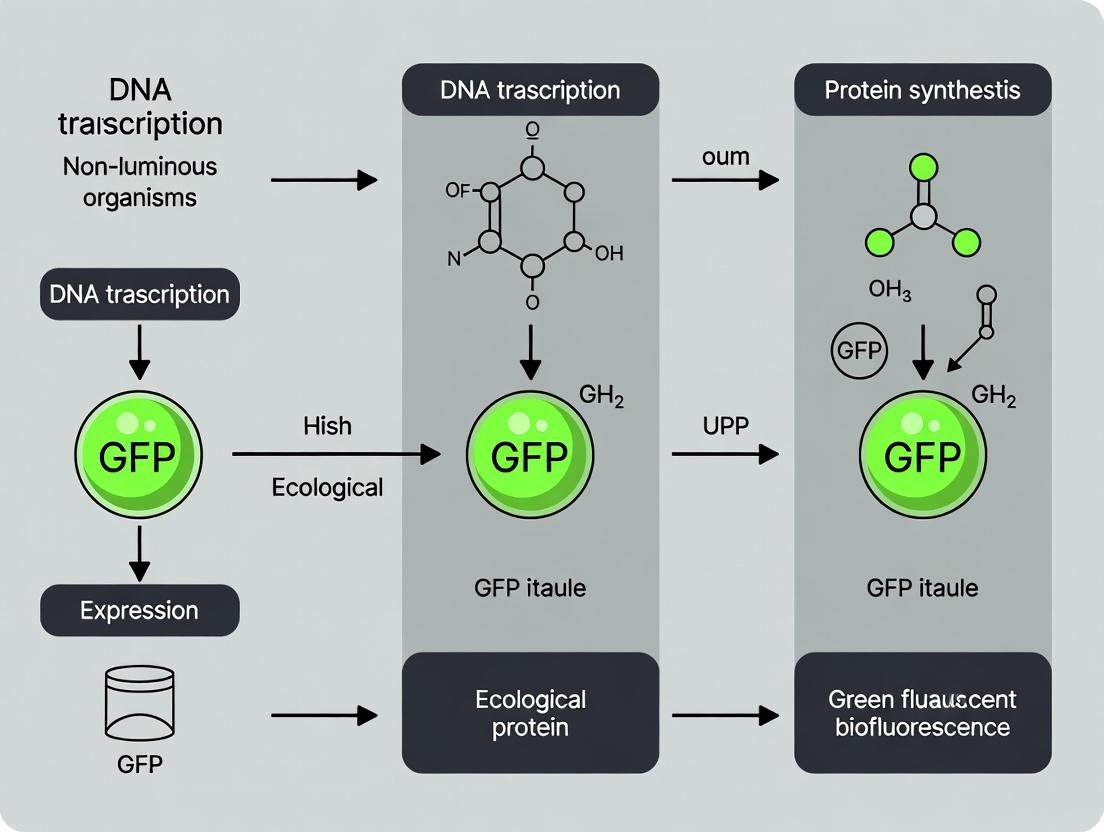
This article synthesizes current research on Green Fluorescent Protein (GFP) and its homologs in non-luminous organisms, moving beyond their utility as mere reporter tags.
Beyond the Glow: Decoding the Ecological Roles of GFP in Non-Luminous Organisms for Biomedical Insight
Abstract
This article synthesizes current research on Green Fluorescent Protein (GFP) and its homologs in non-luminous organisms, moving beyond their utility as mere reporter tags. We explore the emerging ecological functions of these proteins—from photoprotection and antioxidant activity to symbiosis and stress response—detailing the methodologies for their study and genetic engineering. Targeted at researchers and drug development professionals, it provides a framework for troubleshooting experimental challenges, validating functional hypotheses, and comparing GFP variants. The review concludes by outlining how understanding these natural functions can inspire novel biomedical tools, therapeutic strategies, and biosensor designs.
Unveiling the Mystery: What is GFP Doing in Organisms That Don't Glow?
1. Introduction The discovery of Green Fluorescent Protein (GFP) from the bioluminescent jellyfish Aequorea victoria revolutionized molecular and cellular biology as a genetic tracer. However, the identification of homologous fluorescent proteins (FPs) across a diverse range of non-bioluminescent species has emerged as a significant biological phenomenon. This whitepaper posits that these homologs are not mere evolutionary curiosities but represent proteins co-opted for specialized ecological and physiological functions. Research within this thesis context aims to elucidate these non-canonical roles, which have profound implications for understanding organismal adaptation and for developing novel tools in biomedical research and drug development.
2. Classification and Distribution of Homologs GFP-like homologs are defined by their conserved β-barrel structure (the "β-can") which encapsulates a chromophore formed by autocatalytic cyclization of an internal tripeptide. They are phylogenetically classified into several clades.
Table 1: Classification and Occurrence of Key GFP Homologs in Non-Bioluminescent Species
| Homolog Type / Name | Source Organism | Color Emission (λ max) | Proposed Ecological/Physiological Role | Key Reference |
|---|---|---|---|---|
| GFP-like Green | Copepod (Pontellina plumata) | ~500 nm | Photoprotection, visual signal? | (Shagin et al., 2004) |
| GFP-like Red (DsRed-like) | Coral (Discosoma sp.) | ~583 nm | Photoprotection via antioxidant activity? | (Bou-Abdallah et al., 2006) |
| GFP-like Non-Fluorescent | Coral (Acropora sp.) | Non-fluorescent | Light sensing/Modulation? Structural? | (Alieva et al., 2008) |
| GFP-like Purple Chromoprotein | Anemonia sulcata | ~575 nm (Absorbance) | Sunscreen, camouflage | (Dove et al., 2001) |
| GFP-like Fluorescent Protein | Amphioxus (Branchiostoma floridae) | ~500 nm | Possible role in oxidative stress response | (Deheyn et al., 2013) |
3. Hypothesized Ecological Functions & Molecular Mechanisms The primary research thesis investigates several non-luminous functions:
- Photoprotection & Antioxidant Activity: Many homologs in corals and other marine organisms may dissipate excess light energy as heat or fluorescence, preventing photodamage. Some exhibit putative antioxidant properties by scavenging reactive oxygen species.
- Light-Enhanced Calcification: In reef-building corals, GFP homologs may be involved in facilitating photosynthesis of symbiotic zooxanthellae or directly influencing the calcification process under specific light conditions.
- Visual Signaling & Camouflage: Fluorescence can enhance visual contrast for conspecific communication or, conversely, chromoproteins can provide camouflage against specific backgrounds.
- Physiological Regulation: In non-photosynthetic organisms like amphioxus, FPs may respond to environmental stressors like UV or oxidative stress, suggesting a cytoprotective function.
4. Key Experimental Protocols 4.1. Protocol for Assessing Photoprotective Function In Vitro
- Objective: To measure the antioxidant capacity of a purified FP homolog.
- Materials: Purified recombinant protein, ROS-sensitive dye (e.g., H2DCFDA), ROS generator (e.g., H2O2 or LED light source with photosensitizer), fluorescence plate reader.
- Method:
- Prepare reactions containing the ROS generator and H2DCFDA in buffer.
- Add varying concentrations of the test FP homolog to experimental wells. Use Bovine Serum Albumin (BSA) as a negative control protein.
- Initiate ROS generation (e.g., add H2O2 or expose to blue light).
- Immediately monitor oxidation of H2DCFDA to fluorescent DCF over time (Ex/Em ~492/517 nm) in the plate reader.
- Calculate the rate of DCF formation. A significant reduction in rate in FP-containing wells indicates ROS-scavenging activity.
4.2. Protocol for Visualizing and Quantifying FP Expression In Vivo (e.g., Coral)
- Objective: To spatially map and quantify FP homolog expression in response to light stress.
- Materials: Coral fragments, controlled light aquarium system, micro-sampling tool (biopsy punch), liquid nitrogen, RNA/DNA extraction kits, qPCR setup, or spectrophotometer.
- Method:
- Acclimation & Stress: Acclimate corals to controlled conditions. Subject experimental groups to high-light stress (e.g., PAR > 800 µmol photons m⁻² s⁻¹). Maintain control group under normal light.
- Sampling: At time points (e.g., 0h, 6h, 24h, 72h), collect small tissue biopsies from standardized positions on the coral.
- Analysis:
- Molecular: Extract RNA, synthesize cDNA, perform qPCR with primers specific to the target FP gene and housekeeping genes to quantify expression fold-change.
- Biochemical: Homogenize tissue, clarify extract, measure fluorescence intensity (at specific Ex/Em) spectrophotometrically and normalize to total protein content (Bradford assay).
5. Diagram: Research Workflow for Functional Analysis
Title: Functional Characterization Workflow for GFP Homologs
6. The Scientist's Toolkit: Research Reagent Solutions Table 2: Essential Materials for GFP Homolog Research
| Reagent / Material | Function / Application | Example Product / Note |
|---|---|---|
| pQE or pET Vectors | High-yield recombinant protein expression in E. coli for biophysical studies. | His-tag fusion for easy purification via Ni-NTA. |
| Ni-NTA Agarose | Immobilized metal affinity chromatography resin for purifying His-tagged recombinant FPs. | Critical for obtaining pure, functional protein for in vitro assays. |
| Size-Exclusion Chromatography (SEC) Column | Further purification and assessment of FP oligomerization state (monomer vs. tetramer). | e.g., Superdex 75 Increase; essential for tool development. |
| Spectrofluorometer | Precise measurement of excitation/emission spectra and quantum yield of purified FPs. | Fluorolog or equivalent; data is fundamental for characterization. |
| Live-Cell Imaging Microscope | Visualization of FP expression and localization in host cells or transgenic models. | Requires appropriate filter sets for non-Aequorea FPs (e.g., RFP, CFP). |
| ROS Detection Kits | Quantifying reactive oxygen species to test antioxidant hypotheses (e.g., H2DCFDA, CellROX). | Used in both in vitro (purified protein) and in vivo (cell-based) assays. |
| qPCR Master Mix & Primers | Quantifying gene expression changes of FP homologs under environmental stress. | Requires species-specific primer design from sequenced homologs. |
| Light-Controlled Environmental Chamber | Applying precise light regimes to test photoprotection/light-sensing hypotheses in vivo. | Must control PAR, spectrum, and photoperiod. |
7. Conclusion & Future Directions The study of GFP homologs in non-bioluminescent species transcends tool development, opening a window into novel protein-driven adaptations. Validating their ecological functions—be it photoprotection, signaling, or physiological regulation—requires an interdisciplinary toolkit spanning molecular biology, biochemistry, and ecophysiology. For drug development professionals, these naturally evolved proteins offer unique scaffolds for engineering novel biosensors (e.g., for redox state) and optogenetic tools. Future research must focus on in vivo functional validation, structural determination of non-fluorescent variants, and exploration of homologs in terrestrial and deep-sea organisms to fully define this pervasive biological phenomenon.
Evolutionary Origins and Phylogenetic Distribution of 'Non-Luminous' GFPs
Within the broader thesis investigating the ecological functions of Green Fluorescent Proteins (GFPs) in non-luminous organisms, this whitepaper focuses on their evolutionary origins and phylogenetic distribution. Classical GFPs, such as those from the jellyfish Aequorea victoria, are well-known for their role in bioluminescence. However, homologous proteins, often termed 'non-luminous' or 'non-bioluminescent' GFPs, have been discovered across a diverse array of non-luminous metazoans. These proteins retain the canonical β-barrel structure but are decoupled from bioluminescent systems, suggesting alternative evolutionary pressures and functional roles, potentially in visual signaling, photoprotection, or antioxidant activity.
Evolutionary Origins and Key Lineages
Live search data indicates that GFP-like proteins are not restricted to Cnidaria. They have been identified through genomic and transcriptomic surveys in several phyla. The current phylogenetic distribution suggests multiple evolutionary events, including lateral gene transfer and gene duplication followed by functional divergence.
Table 1: Phylogenetic Distribution of Non-Luminous GFP-like Proteins
| Phylum/Class | Example Genera/Species | Proposed Evolutionary Origin | Key Structural Feature |
|---|---|---|---|
| Cnidaria (non-luminous) | Anthozoa (corals), Hydra | Vertical descent from luminous ancestor; gene duplication & neofunctionalization. | Chromophore (TYG) identical to AvGFP; varied emission (cyan to red). |
| Arthropoda | Copepods (Pontellina plumata), Decapods | Likely lateral gene transfer from Cnidaria, followed by diversification. | Modified chromophore (e.g., GYG, GYG); often lack fluorescence. |
| Chordata | Branchiostoma floridae (lancelet), Tunicates | Ancient metazoan gene, lost in vertebrates, or independent origin. | Weak or non-fluorescent; possible photoprotective function. |
| Mollusca | Lingula anatina (brachiopod) | Deep bilaterian origin or independent transfer event. | Fluorescent; role in shell coloration. |
The evolutionary hypothesis posits an ancient origin within metazoans, with subsequent loss in many lineages (e.g., vertebrates, insects). The presence in distantly related groups like copepods may be due to lateral gene transfer, a rare but documented phenomenon for functional proteins.
Quantitative Data on Sequence & Spectral Diversity
Sequence analysis reveals conserved residues critical for chromophore formation, but key variations drive functional differences.
Table 2: Comparative Analysis of Representative Non-Luminous GFPs
| Protein Source | Chromophore Triad | Excitation Max (nm) | Emission Max (nm) | Quantum Yield | Proposed Primary Function |
|---|---|---|---|---|---|
| Aequorea victoria (AvGFP) | SYG | 395/475 | 509 | 0.79 | Bioluminescence resonance energy transfer |
| Pontellina plumata (ppGFP) | GYG | 480 | 500 | 0.04 | Visual contrast in pelagic environment |
| Coral Dendronephthya RFP | SYG | 558 | 583 | 0.20 | Photoprotection / Coloration |
| Branchiostoma floridae | GYG | 496 | 506 | <0.01 | Antioxidant / Unknown |
| Hydra magnipapillata | TYG | 488 | 511 | 0.80 | Unknown (possibly signaling) |
Detailed Experimental Protocols
Protocol: Phylogenetic Reconstruction of GFP-like Genes
Objective: To infer the evolutionary history of GFP-like proteins across metazoans.
- Sequence Retrieval: Using BLASTP, search non-redundant protein databases (nr) with known GFP sequences (e.g., AvGFP, coral GFPs) as queries. Include taxa from Cnidaria, Arthropoda, Chordata, and other metazoans.
- Alignment: Curate hits for presence of chromophore-forming motif. Perform multiple sequence alignment using MAFFT (L-INS-i algorithm) with default parameters.
- Model Selection: Use ProtTest to determine the best-fit amino acid substitution model (e.g., LG+G+I).
- Tree Construction: Perform Maximum Likelihood analysis with RAxML (1000 bootstrap replicates) or Bayesian Inference with MrBayes (1M generations, sampling every 1000).
- Rooting & Interpretation: Root the tree using a mid-point or an outgroup of non-GFP beta-barrel proteins. Assess support for clades and map luminous vs. non-luminous states.
Protocol: Functional Characterization of a Novel Non-Luminous GFP
Objective: To express, purify, and biophysically characterize a putative GFP from a non-luminous organism.
- Gene Synthesis & Cloning: Codon-optimize the gene for E. coli expression. Clone into pET-28a(+) vector with an N-terminal His-tag using restriction enzymes (e.g., NdeI and XhoI).
- Heterologous Expression: Transform plasmid into E. coli BL21(DE3). Grow culture in LB + Kanamycin to OD600 ~0.6. Induce with 0.5 mM IPTG at 16°C for 18 hours.
- Protein Purification: Lyse cells by sonication in lysis buffer (50 mM Tris-HCl pH 8.0, 300 mM NaCl, 10 mM imidazole). Purify soluble protein by Immobilized Metal Affinity Chromatography (IMAC) using Ni-NTA resin. Elute with 250 mM imidazole. Further purify by Size-Exclusion Chromatography (Superdex 75) in storage buffer (20 mM HEPES pH 7.4, 150 mM NaCl).
- Spectroscopic Analysis: Measure UV-Vis absorption spectrum (250-600 nm). Record fluorescence excitation and emission spectra. Calculate quantum yield using AvGFP as a standard. Test for photostability under constant illumination.
- Oligomerization State: Determine native molecular weight via Analytical SEC or Multi-Angle Light Scattering (MALS).
Diagrams
Diagram Title: Evolutionary Tree of GFP-like Protein Distribution
Diagram Title: GFP Discovery and Characterization Workflow
The Scientist's Toolkit: Research Reagent Solutions
Table 3: Essential Reagents and Materials for Non-Luminous GFP Research
| Item | Function/Application | Example/Notes |
|---|---|---|
| pET-28a(+) Vector | Prokaryotic expression vector for recombinant protein with His-tag. | Kanamycin resistance; T7 lac promoter for tight control. |
| Ni-NTA Agarose Resin | Immobilized Metal Affinity Chromatography (IMAC) for His-tagged protein purification. | High specificity and binding capacity for 6xHis tags. |
| Superdex 75 Increase | Size-exclusion chromatography column for polishing and oligomerization state analysis. | Excellent resolution for proteins 3-70 kDa. |
| Quartz Cuvettes (UV) | Required for accurate UV-Vis and fluorescence spectral measurements. | Must be of high optical quality, with 10 mm path length. |
| Fluorolog Spectrofluorometer | Measures fluorescence excitation and emission spectra with high sensitivity. | Equipped with double monochromators for low scatter. |
| Quantum Yield Standard | Essential for calculating fluorescence quantum yield of novel proteins. | AvGFP (QY=0.79) or Fluorescein (QY=0.92 in 0.1M NaOH). |
| MAFFT Software | Multiple sequence alignment tool for divergent GFP-like sequences. | L-INS-i algorithm recommended for accurate alignment. |
| RAxML Software | Performs Maximum Likelihood phylogenetic inference on large datasets. | Uses rapid bootstrapping for branch support values. |
1. Introduction and Thesis Context The discovery and subsequent engineering of Green Fluorescent Protein (GFP) have revolutionized molecular and cellular biology. However, its endogenous function in its native host, the hydromedusa Aequorea victoria, and its growing discovery in non-luminous organisms, presents a compelling ecological puzzle. This whitepaper frames the hypothesized functions of GFP-like proteins—from photoprotection to antioxidant activity—within the broader thesis that these proteins represent a versatile class of ecological effectors in non-luminous organisms. Their persistence across diverse taxa suggests evolutionary advantages beyond bioluminescence, potentially involving complex interactions with light and oxidative stress.
2. Hypothesized Functions: Mechanisms and Evidence The core hypotheses posit that the GFP chromophore, a p-hydroxybenzylidene-imidazolidinone, serves as a nexus for managing photonic and oxidative energy.
2.1. Sunscreen/Photoprotection Hypothesis The protein acts as a passive light filter. The chromophore absorbs high-energy UV-A/blue light (max ~395 nm, minor peak at ~475 nm) and dissipates the energy as harmless green fluorescence (emission max ~509 nm) or thermally, shielding sensitive tissues and molecules.
- Key Evidence: Correlation between GFP expression levels and UV exposure in marine organisms like corals (Anthozoa). Experiments showing reduced photodamage in GFP-expressing symbiotic algae.
- Quantitative Data Summary:
| Parameter | Value / Observation | Experimental System | Reference |
|---|---|---|---|
| Primary Abs. Peak | ~395 nm | Purified GFP in vitro | Shimomura et al., 1962 |
| Molar Extinction Coeff. (ε) | ~21,000–25,000 M⁻¹cm⁻¹ (395 nm) | Purified GFP in vitro | Tsien, 1998 |
| Fluorescence Quantum Yield | ~0.79 | Purified wild-type GFP | Patterson et al., 1997 |
| Photoprotective Effect | ~60% reduction in photobleaching of cofactors | Coral endosymbionts in vivo | Salih et al., 2000 |
2.2. Antioxidant Hypothesis The chromophore may undergo redox cycling. It can be reversibly reduced (losing fluorescence) by accepting electrons from reactive oxygen species (ROS) like H₂O₂, and subsequently re-oxidized, effectively quenching oxidative stress.
- Key Evidence: In vitro quenching of ROS by GFP homologs (e.g., Ctenophore GFP). Upregulation of GFP expression under oxidative stress in some marine invertebrates.
- Quantitative Data Summary:
| Parameter | Value / Observation | Experimental System | Reference |
|---|---|---|---|
| H₂O₂ Quenching (IC₅₀) | ~50 µM (for ctenophore GFP) | Purified protein in vitro | Bou-Abdallah et al., 2006 |
| Redox Potential (E°') | ~ -0.22 V (vs. SHE) | Electrochemical analysis | Reportedly similar to ascorbate |
| ROS Scavenged | H₂O₂, •OH, O₂•⁻ | In vitro assays | Various |
3. Experimental Protocols for Functional Validation
3.1. Protocol: In Vitro Photoprotection Assay
- Objective: Measure the protective effect of GFP on a light-sensitive target molecule.
- Materials: Purified GFP, target molecule (e.g., riboflavin, DNA), UV-A/blue light source (e.g., 395 nm LED), spectrophotometer/fluorometer.
- Procedure:
- Prepare two identical mixtures of the target molecule in appropriate buffer.
- To the experimental sample, add purified GFP to a final concentration of 10 µM. Add an equal volume of buffer to the control.
- Expose both samples to controlled irradiance (e.g., 10 W/m² at 395 nm) for a set duration.
- At time intervals, measure degradation of the target (e.g., absorbance loss for riboflavin, strand breaks for DNA via gel electrophoresis).
- Plot degradation kinetics. A significant delay in the GFP-containing sample indicates photoprotection.
3.2. Protocol: Cellular Antioxidant Activity Assay (DCFH-DA)
- Objective: Assess GFP's ability to mitigate intracellular ROS.
- Materials: Cell line expressing GFP (transfected), control cell line, DCFH-DA fluorescent probe, oxidative stress inducer (e.g., H₂O₂, menadione), plate reader.
- Procedure:
- Seed cells into a 96-well plate.
- Load cells with 10 µM DCFH-DA for 30 min. DCFH is oxidized by intracellular ROS to fluorescent DCF.
- Wash and add fresh medium with or without oxidative inducer (e.g., 200 µM H₂O₂).
- Measure DCF fluorescence (Ex/Em ~485/535 nm) kinetically for 60-120 min.
- Compare the rate and peak of fluorescence increase in GFP-expressing vs. control cells. Lower DCF signal in GFP cells indicates antioxidant activity.
4. Visualizing Pathways and Workflows
GFP Photoprotection Mechanism (59 chars)
GFP Antioxidant Cycle (45 chars)
Functional Validation Workflow (52 chars)
5. The Scientist's Toolkit: Key Research Reagents & Materials
| Reagent/Material | Function/Description | Example/Catalog Context |
|---|---|---|
| Recombinant GFP & Variants | Purified protein for in vitro biochemical assays (absorption, ROS quenching). | His-tagged GFP (e.g., from A. victoria, Renilla). |
| GFP-Expression Vectors | For heterologous expression in model cell lines (HEK293, HeLa) or organisms. | pEGFP-N1/C1 plasmids; viral transduction systems. |
| ROS-Sensitive Probes | Detect and quantify intracellular ROS levels. | DCFH-DA (broad ROS), MitoSOX Red (mitochondrial O₂•⁻). |
| UV-A/Blue Light Source | Controlled application of photo-oxidative stress. | 395 nm LED array with radiometer for precise dosing. |
| Oxidative Stress Inducers | Generate defined oxidative challenges in cellular assays. | Hydrogen peroxide (H₂O₂), menadione, paraquat. |
| Antioxidant Assay Kits | Standardized measurement of total antioxidant capacity. | ORAC (Oxygen Radical Absorbance Capacity) assay kits. |
| Spectrofluorometer | Measure fluorescence excitation/emission spectra and kinetics. | Essential for characterizing GFP photophysics and probe signals. |
| qPCR Primers / RNA-Seq | Quantify endogenous GFP gene expression under different stressors. | Species-specific primers for field-collected non-luminous organisms. |
6. Synthesis and Future Directions The sunscreen and antioxidant hypotheses are not mutually exclusive and may operate in tandem, with the protein's function context-dependent on light regime and metabolic state. Future research within our broader thesis must integrate in situ field studies of non-luminous organisms with advanced molecular dynamics simulations and optogenetic-inspired experiments to dissect causality. The ecological function of GFP-like proteins likely represents a sophisticated adaptation to interfacial environments rich in both light and oxidative challenges.
Key Model Organisms and Natural Systems for Study (e.g., Coral, Amphioxus)
Within the broader thesis investigating the ecological function of Green Fluorescent Protein (GFP) and its homologs in non-luminous organisms, the selection of appropriate model systems is paramount. These organisms provide unique windows into evolutionary developmental biology, stress response, symbiosis, and regeneration. This whitepaper details key model organisms and natural systems, with a focus on their utility for probing GFP function beyond bioluminescence, such as photoprotection, redox sensing, and antioxidant activity. Experimental data and protocols are framed for a research audience engaged in basic science and drug discovery, where understanding fundamental protein function can inform therapeutic design.
Featured Model Organisms and Systems
Coral (Cnidaria:Anthozoa)
Coral systems are indispensable for studying GFP-like proteins (FPs) in a symbiotic, environmentally sensitive context. Research focuses on their role in modulating light for the benefit of photosynthetic symbionts (Symbiodiniaceae) and in oxidative stress response.
Key Quantitative Data: Table 1: Representative GFP-like Proteins in Coral Systems
| Protein Homolog | Coral Species | Excitation Max (nm) | Emission Max (nm) | Proposed Ecological Function | Reference (Example) |
|---|---|---|---|---|---|
| DsRed | Discosoma sp. | 558 | 583 | Photoprotection, antioxidant | Salih et al., 2000 |
| EosFP | Lobophyllia hemprichii | 506 | 516 (green) / 581 (red) | Light conversion, photoprotection | Wiedenmann et al., 2004 |
| KillerRed | Engineered from Heteractis crispa | 585 | 610 | Genetically encodable ROS producer | Bulina et al., 2006 |
Experimental Protocol: In Vivo Photoprotection Assay in Coral Polyps
- Objective: Quantify photodamage mitigation in symbiotic algae by host coral FPs.
- Materials: Coral nubbins of FP-rich and FP-low morphs, PAM fluorometry system, controlled light mesocosm, spectrophotometer.
- Method:
- Acclimatize coral nubbins under standard conditions (26°C, ~100 μmol photons m⁻² s⁻¹).
- Subject to high-light stress (≥1500 μmol photons m⁻² s⁻¹) for 6 hours.
- Measure photosynthetic efficiency of Symbiodiniaceae in vivo via dark-adapted variable fluorescence (Fv/Fm) using PAM fluorometry at 0, 2, 4, 6 hours.
- Concurrently, measure ROS levels in host tissue using fluorescent probes (e.g., H2DCFDA).
- Correlate rate of Fv/Fm decline and ROS accumulation with FP concentration (quantified via fluorescence imaging and protein extraction).
Amphioxus (Cephalochordata:Branchiostoma)
The amphioxus, a basal chordate, is a critical model for understanding the evolution of the immune and developmental systems. While not naturally luminous, it possesses a GFP-like protein, Branchiostoma GFP (BfGFP), hypothesized to function in immune modulation.
Key Quantitative Data: Table 2: Characteristics of Amphioxus BfGFP
| Feature | Specification | Implication for Research |
|---|---|---|
| Chromophore | Covalently bound Flavin (FMN) | Fluorescence is cofactor-dependent, not autocatalytic. |
| Emission | Green (~495 nm) | Distinct from Cnidarian GFP, useful for comparative studies. |
| Expression Sites | Oocytes, neural tube, gut | Suggests roles in development and gut-associated immunity. |
| Redox Sensitivity | Fluorescence quenched by ROS (H₂O₂) | Potential as a native redox sensor in vivo. |
Experimental Protocol: Redox Sensitivity Assay of Recombinant BfGFP
- Objective: Characterize the in vitro response of purified BfGFP to reactive oxygen species (ROS).
- Materials: Recombinant His-tagged BfGFP, fluorescence spectrophotometer, buffer (PBS, pH 7.4), ROS donors (e.g., H₂O₂, tert-Butyl hydroperoxide), reducing agents (e.g., DTT).
- Method:
- Purify BfGFP via Ni-NTA affinity chromatography.
- Prepare 1 μM BfGFP in PBS in a quartz cuvette.
- Record baseline fluorescence (Ex: ~450 nm, Em: 495 nm).
- Add incremental concentrations of H₂O₂ (0-10 mM), mixing and incubating for 2 min before each measurement.
- Plot normalized fluorescence intensity vs. [H₂O₂] to generate a quenching curve.
- Test reversibility by subsequent addition of DTT (5 mM).
The Scientist's Toolkit
Table 3: Essential Research Reagent Solutions for GFP Function Studies
| Reagent / Material | Function / Application | Example Product / Note |
|---|---|---|
| PAM Fluorometer | Measures photosynthetic efficiency (Fv/Fm) in symbiotic organisms like coral. | Walz Imaging-PAM, useful for correlating FP expression with symbiont health. |
| Genetically Encoded ROS Sensors (e.g., roGFP, HyPer) | Ratiometric measurement of cellular redox state; can be co-expressed with target FPs. | pLIVE_roGFP2-Orp1 plasmid for in vivo liver expression in fish models. |
| Anti-FP Nanobodies (Chromobodies) | Live-cell tracking of endogenous FP-tagged proteins; enables functional blockade. | GFP-Trap Chromobody, allows perturbation of native FP function. |
| CRISPR/Cas9 Knockout Kits (Species-specific) | Generating FP-null mutants to study loss-of-function phenotypes. | Customized gRNA design for coral (D. melanogaster U6 promoter) or amphioxus. |
| Liquid Light Guide & Tunable Light Source | Deliver specific wavelength/irradiance for in vivo photo-bleaching or excitation studies. | Ocean Insight HL-2000 with monochromator, crucial for photobiology experiments. |
| Recombinant FP Purification Kits | High-yield purification of FPs for in vitro biochemical assays (e.g., antioxidant capacity). | HisTrap HP columns for His-tagged proteins; size-exclusion for oligomerization studies. |
Pathway and Workflow Visualizations
Title: Coral GFP Photoprotection Pathway
Title: BfGFP Redox Sensor Assay Workflow
Title: Model Organism Selection Logic Tree
Transcriptional Regulation and Expression Patterns in Response to Environmental Cues
1. Introduction Within the broader thesis on elucidating the ecological function of Green Fluorescent Protein (GFP) and its homologs in non-luminous organisms, a central question arises: what environmental signals induce GFP expression and through what regulatory mechanisms? This guide details the core principles and methodologies for investigating transcriptional dynamics in response to environmental cues, providing a framework for uncovering the adaptive role of GFP-like proteins in nature, with implications for biomarker and biosensor development in drug discovery.
2. Core Signaling Pathways Mediating Environmental Responses Environmental stimuli are transduced into gene expression changes via conserved signaling pathways. Key pathways relevant to stress and niche adaptation, and thus potential GFP regulation, are summarized below.
Diagram 1: Environmental Stress Signaling to Gene Output
3. Quantitative Profiling of Transcriptional Dynamics Modern transcriptomics provides quantitative, genome-wide data on expression patterns. Key metrics from a hypothetical time-course RNA-seq experiment profiling a non-luminous marine organism under oxidative stress are summarized.
Table 1: Expression Metrics for Select Gene Clusters in Response to H₂O₂ Stress
| Gene Cluster / Putative Function | Basal TPM | Peak Expression TPM (2h post-stimulus) | Fold-Change | Adjusted p-value (padj) | Putative Regulatory Motif Enriched in Promoter |
|---|---|---|---|---|---|
| Antioxidant Response (e.g., GST, SOD) | 15.2 | 305.7 | 20.1 | 1.2e-10 | ARE (Antioxidant Response Element) |
| GFP-like Protein Family | 5.5 | 88.3 | 16.1 | 3.5e-08 | AP-1 / bZIP binding site |
| Heat Shock Proteins (HSP70/90) | 22.8 | 410.5 | 18.0 | 5.7e-12 | HSE (Heat Shock Element) |
| Primary Metabolism | 85.1 | 79.3 | 0.93 | 0.45 (NS) | None significant |
TPM: Transcripts Per Million; NS: Not Significant.
4. Experimental Protocols for Mechanistic Validation
4.1. Chromatin Immunoprecipitation followed by qPCR (ChIP-qPCR) Objective: To confirm direct binding of a candidate transcription factor (e.g., AP-1) to the promoter region of a GFP-like gene in response to a specific cue (e.g., UV exposure). Procedure:
- Crosslinking: Treat cultured cells or tissue samples with 1% formaldehyde for 10 min at room temperature to fix protein-DNA interactions.
- Cell Lysis & Chromatin Shearing: Lyse cells and sonicate chromatin to shear DNA to fragments of 200-500 bp. Verify fragment size via agarose gel electrophoresis.
- Immunoprecipitation: Incubate chromatin with antibody specific to the transcription factor of interest (or IgG control). Use Protein A/G magnetic beads to capture antibody-protein-DNA complexes.
- Washing & Elution: Wash beads stringently. Reverse crosslinks at 65°C with high salt. Purify DNA.
- qPCR Analysis: Perform SYBR Green qPCR on purified DNA using primers spanning the putative TRE in the GFP-like gene promoter and a control region from a non-target gene. Calculate enrichment relative to input chromatin and IgG control.
4.2. Luciferase/GFP Reporter Assay for Promoter Activity Objective: To functionally validate the necessity and sufficiency of a cis-regulatory element for cue-responsive expression. Procedure:
- Reporter Construct Cloning: Clone the wild-type promoter region of the GFP-like gene (e.g., -1500 to +100 bp relative to TSS) upstream of a firefly luciferase (Luc) or GFP reporter gene in a plasmid. Generate mutant constructs with deletions/mutations in the putative TRE.
- Cell Transfection: Transfect reporter constructs into an appropriate cell line. Co-transfect with a Renilla luciferase plasmid for normalization.
- Stimulation & Measurement: 24h post-transfection, expose cells to the environmental cue or vehicle control.
- Assay: For Luc, lyse cells and measure Firefly and Renilla luminescence. For GFP, analyze fluorescence intensity via flow cytometry or microscopy. Normalize Firefly signal to Renilla or cell count.
Diagram 2: Reporter Assay Workflow for Promoter Validation
5. The Scientist's Toolkit: Key Research Reagent Solutions
Table 2: Essential Materials for Transcriptional Regulation Studies
| Item | Function & Application in This Context |
|---|---|
| Formaldehyde (1-2% Solution) | Crosslinking agent for ChIP, freezing protein-DNA interactions in vivo. |
| Tag-Specific or Phospho-Specific Antibodies | For ChIP (targeting TFs) or western blot to monitor TF activation/modification states. |
| Dual-Luciferase Reporter Assay System | Enables sequential measurement of experimental (Firefly) and control (Renilla) luciferase activities. |
| SYBR Green qPCR Master Mix | For quantitative PCR in ChIP-qPCR and RT-qPCR validation of RNA-seq data. |
| Next-Generation Sequencing Kit (e.g., for RNA-seq or ChIP-seq) | For library preparation to profile transcriptomes or genome-wide TF binding sites. |
| Cryptic GFP-like Gene Promoter Clones | Isolated genomic regions upstream of GFP homologs for in vitro reporter construct creation. |
| Specific Pathway Agonists/Antagonists | Pharmacologic tools (e.g., kinase inhibitors, ROS scavengers) to dissect signaling pathways leading to GFP expression. |
6. Integration with GFP Ecological Function Research The methodologies outlined create a pipeline for moving from observation (GFP expression under specific cues) to mechanism (identifying the cis elements and trans factors responsible). Validated promoter elements from ecological GFP genes can be engineered into sensitive biosensors for drug screening, detecting specific environmental stressors, or reporting on the activity of therapeutic compounds within cellular pathways. Understanding native transcriptional regulation is thus foundational for both deciphering ecological roles and enabling biotechnological application.
From Field to Lab: Tools and Techniques for Probing GFP Function
Advanced Imaging and Spectroscopy for In Vivo Function Analysis
This whitepaper details advanced methodologies for in vivo functional analysis, framed within a broader research thesis investigating the ecological functions of Green Fluorescent Protein (GFP) and its homologs in non-luminous organisms. The discovery of GFP in non-bioluminescent species across phyla (e.g., coral reef fish, amphibians) suggests unexplored ecological roles in UV protection, photobehavior, or visual communication. This necessitates sophisticated in vivo tools to probe function without disrupting ecological context, bridging molecular imaging with organismal biology and creating novel avenues for biomedical discovery.
Core Imaging and Spectroscopy Modalities
The following table summarizes key quantitative parameters for contemporary in vivo imaging modalities relevant to GFP-based ecological research.
Table 1: Quantitative Comparison of In Vivo Imaging Modalities
| Modality | Spatial Resolution | Penetration Depth | Temporal Resolution | Key Metric (Sensitivity) | Primary Use in GFP Studies |
|---|---|---|---|---|---|
| Multiphoton Microscopy (MPM) | 0.3-0.8 µm (lateral) | ~1 mm in tissue | Seconds to minutes | ~10⁻¹⁵ M for GFP | Deep-tissue cellular dynamics, neuronal activity in live organisms. |
| Light-Sheet Fluorescence Microscopy (LSFM) | 1-5 µm (lateral) | Limited by sample clearing | Seconds to minutes | High (low phototoxicity) | High-speed 3D imaging of whole, cleared small organisms or tissues. |
| Fluorescence Lifetime Imaging (FLIM) | Diffraction-limited | ~0.5 mm (widefield) | Minutes | picosecond lifetime | Sensing microenvironment (pH, Ca²⁺), FRET for protein interactions. |
| Hyperspectral Imaging (HSI) | 10-100 µm (dependent on platform) | Surface to ~mm | Seconds to minutes | Spectral resolution ~2-10 nm | Unmixing autofluorescence from GFP, detecting multiple homologs. |
| Photoacoustic Imaging (PAI) | 10-500 µm (scale-dependent) | Several cm | Seconds | ~10⁻⁶ M (GFP as a reporter) | Mapping GFP expression deep in tissue via absorption of GFP chromophore. |
Experimental Protocols for Key Analyses
Protocol: Multiphoton FLIM for Microenvironment Sensing in Live Organisms
Objective: To measure changes in local pH or ion concentration around GFP-tagged structures in vivo using fluorescence lifetime as a readout.
- Sample Preparation: Express a pH-sensitive or Ca²⁺-sensitive GFP variant (e.g., pHluorin, GCaMP) in the target tissue of a model organism (e.g., zebrafish laravel).
- System Calibration: Calibrate the FLIM system (TCSPC module on MPM) using a dye with known lifetime. Create a in vitro lifetime vs. pH/ion concentration standard curve for the biosensor.
- Image Acquisition: Anesthetize and mount the organism. Using a titanium-sapphire laser tuned to 920 nm for two-photon excitation, acquire time-correlated single-photon count data at regions of interest. Maintain laser power below 10 mW at sample to prevent photodamage.
- Data Analysis: Fit decay curves per pixel using a bi-exponential model. Generate lifetime maps. Convert mean lifetime values to pH/ion concentration using the calibration curve.
Protocol: Hyperspectral Unmixing for GFP Homolog Discrimination
Objective: To spectrally separate the signal of an expressed GFP homolog from endogenous autofluorescence in a live, non-luminous animal.
- Spectral Library Creation: Acquire reference emission spectra (λex=488 nm, λem=500-700 nm) from:
- a. Purified GFP homolog in vitro.
- b. Untrusted wild-type tissue regions rich in autofluorescence (e.g., gut, cuticle).
- In Vivo HSI Acquisition: Use a hyperspectral camera on an epifluorescence microscope. Image the live, expressing organism under identical excitation/emission conditions. Acquire a data cube (x, y, λ).
- Spectral Unmixing: Process the data cube using linear unmixing software (e.g., ENVI, Cube). Apply the reference spectra as endmembers to decompose each pixel's spectrum into fractional contributions from GFP and autofluorescence.
- Validation: Confirm specificity via control animals lacking the GFP transgene.
Visualization: Pathways and Workflows
Signaling Pathways Probed with GFP Biosensors
Diagram Title: GFP Biosensor Sensing of GPCR Signaling Pathway
Workflow for In Vivo Functional Analysis
Diagram Title: Integrated Workflow for GFP Ecological Function Research
The Scientist's Toolkit: Research Reagent Solutions
Table 2: Essential Reagents and Materials for In Vivo GFP Analysis
| Reagent/Material | Function/Description | Example Product/Category |
|---|---|---|
| Genetically-Encoded Biosensors | FRET- or single-FP-based sensors for ions, metabolites, and enzymatic activity. | GCaMP series (Ca²⁺), pHluorin (pH), AKAR (kinase activity). |
| Tissue-Clearing Reagents | Render tissues transparent for deep light-sheet imaging. | CUBIC, ScaleS2, or iDISCO+ reagent kits. |
| Mounting Media (In Vivo) | For immobilizing live specimens with minimal stress and optical clarity. | Low-melt agarose, methylcellulose, or commercial imaging spacers. |
| Anesthetics (Aquatic/Terrestrial) | Immobilize live animals humanely for prolonged imaging sessions. | Tricaine (MS-222) for fish, isofluorane for small mammals. |
| Fluorescence Reference Standards | Microspheres or dyes for daily calibration of intensity and lifetime systems. | Uranium glass, fluorescent beads, Coumarin 6 dye. |
| Spectral Unmixing Software | Decompose mixed spectral signals from HSI or multiplexed imaging. | ENVI, Aivia, ImageJ plugins (SCiLS Lab, TauSense). |
| High-NA Objective Lenses | Critical for resolution and photon collection in deep tissue. | Water- or silicone-immersion objectives (NA >1.0) with long working distance. |
| Pulsed Laser Sources | For multiphoton and FLIM excitation; tunable wavelength range. | Titanium:Sapphire femtosecond lasers (680-1300 nm). |
| Environmental Chambers | Maintain physiological conditions (temp, humidity, CO₂) on microscope stage. | Live-cell incubation systems with gas and temperature control. |
The study of gene function in non-model organisms is pivotal for ecological and evolutionary research. Within the broader thesis of investigating the ecological function of GFP (Green Fluorescent Protein) in non-luminous organisms, precise genetic manipulation is essential. This whitepaper details the core techniques—knockdown, knockout, and transgenesis—adapted for non-model systems, enabling the functional analysis of GFP homologs and their roles in symbiosis, camouflage, or other ecological interactions.
Technical Guide
Knockdown via RNA Interference (RNAi)
RNAi is a primary method for transient gene knockdown, crucial for assessing the function of GFP-like proteins in species where stable genetic lines are difficult to establish.
Detailed Protocol: dsRNA-mediated Knockdown
- Target Identification: Isolate mRNA from the organism and sequence to identify GFP-homolog coding regions. Design primers with T7 promoter sequences flanking a 300-500 bp unique fragment.
- dsRNA Synthesis: Amplify the target fragment via PCR. Purify the product and use it as a template for in vitro transcription with T7 RNA polymerase (e.g., New England Biolabs HiScribe T7 kit). Anneal sense and antisense strands.
- Delivery:
- Microinjection: For embryos or large cells, inject 50-500 ng/µL dsRNA in a volume of 1-10 nL using a pneumatic picopump.
- Soaking: For small aquatic invertebrates or larvae, soak in dsRNA solution (0.5-1 µg/µL) in seawater for 4-24 hours.
- Electroporation: Apply electrical pulses (e.g., 50V, 30 ms) to tissues or embryos in dsRNA solution.
- Validation: After 48-72 hours, assess knockdown efficiency via qRT-PCR (target >70% reduction) and monitor phenotypic changes (e.g., loss of fluorescence, behavioral alterations).
Quantitative Data Summary: Common RNAi Parameters
| Parameter | Typical Range | Notes |
|---|---|---|
| dsRNA Concentration (Injection) | 50 - 500 ng/µL | Higher doses may induce off-target effects. |
| dsRNA Concentration (Soaking) | 0.5 - 1 µg/µL | Requires permeability agents for some species. |
| Incubation Time to Effect | 48 - 96 hours | Varies with protein turnover rate. |
| Knockdown Efficiency (mRNA) | 70% - 95% | Measured via qRT-PCR. |
| Phenotype Penetrance | 60% - 90% | Highly species- and target-dependent. |
Knockout using CRISPR-Cas9
CRISPR-Cas9 enables permanent gene knockout, allowing for the study of GFP loss-of-function across the organism's lifespan and generations.
Detailed Protocol: CRISPR-Cas9 in a Non-Model Marine Invertebrate
- gRNA Design & Synthesis: Identify target sequence (5'-N20-NGG-3') in an early exon of the GFP homolog gene. Synthesize two oligonucleotides, anneal, and clone into a gRNA expression vector (e.g., pDR274). Alternatively, synthesize chemically modified gRNA in vitro.
- Ribonucleoprotein (RNP) Complex Formation: Complex purified S. pyogenes Cas9 protein (100-200 ng) with in vitro transcribed gRNA (50-100 ng) at a 1:2 molar ratio for 10 min at 25°C.
- Delivery via Microinjection: Inject RNP complex into fertilized eggs or early embryos. Include a tracer dye (e.g., Phenol Red).
- Screening & Validation:
- Genotyping: Extract genomic DNA from injected (G0) larvae. Use PCR on the target region and analyze via T7 Endonuclease I assay or Sanger sequencing to detect indels.
- Phenotyping: Screen for loss of fluorescence in G0 mosaic individuals. Raise founders to adulthood and outcross to establish stable knockout (F1) lines.
Transgenesis for GFP Expression
Transgenesis introduces exogenous GFP genes or regulatory elements to study gene expression patterns and functions.
Detailed Protocol: Tol2 Transposon-Mediated Transgenesis This method is effective in many teleost fish and amphibians.
- Vector Construction: Clone the promoter region of interest (e.g., from a host gene) upstream of a GFP reporter (e.g., eGFP) in a Tol2 transposon vector (e.g., pT2AL200R150G).
- mRNA Synthesis: In vitro transcribe capped mRNA encoding Tol2 transposase from a linearized template (e.g., pCS-TP).
- Microinjection: Co-inject the transposon plasmid (25-50 ng/µL) and transposase mRNA (25-50 ng/µL) into the cytoplasm of one-cell stage embryos.
- Screening: Screen for GFP fluorescence at early developmental stages (e.g., 24-48 hpf). Raise positive G0 founders to sexual maturity and outcross to identify germline-transmitting animals, establishing stable transgenic lines.
Visualized Workflows & Pathways
Title: Genetic Manipulation Workflow for Non-Model Systems
Title: Gene Function Analysis Pathways and Intervention Points
The Scientist's Toolkit: Research Reagent Solutions
| Reagent / Material | Function in Non-Model System Research | Example Vendor/Product |
|---|---|---|
| T7 High Yield RNA Synthesis Kit | For in vitro synthesis of long dsRNA for RNAi knockdown. | New England Biolabs (HiScribe T7) |
| Alt-R S.p. Cas9 Nuclease V3 | High-purity, ready-to-use Cas9 for RNP complex formation in CRISPR. | Integrated DNA Technologies (IDT) |
| Tol2 Transposon System Vectors | Proven vector backbone for stable transgenesis in diverse vertebrates. | Addgene (pT2AL200R150G) |
| Capillary Glass & Micropipette Puller | For creating fine injection needles essential for embryo microinjection. | Sutter Instrument (P-97) |
| Pneumatic Picopump with Foot Pedal | Provides precise, controlled delivery of reagents (RNP, dsRNA, DNA) into embryos. | Warner Instruments (PLI-100) |
| Phenol Red Solution (0.5%) | A vital injection tracer dye to confirm successful delivery. | Sigma-Aldrich |
| T7 Endonuclease I | Enzyme for detecting CRISPR-induced indel mutations via mismatch cleavage. | New England Biolabs |
| In-Fusion HD Cloning Kit | Enables seamless, restriction-enzyme-free vector assembly for transgene construction. | Takara Bio |
| RNeasy Plus Micro Kit | Isolates high-quality total RNA from small, valuable tissue samples for qRT-PCR. | Qiagen |
| Live-Imaging Chamber Slides | For mounting live specimens for longitudinal fluorescence phenotype tracking. | ibidi (µ-Slide) |
Proteomic and Metabolomic Approaches to Identify Interaction Partners and Pathways
This whitepaper details technical approaches for identifying protein interaction partners and affected metabolic pathways, framed within a broader thesis investigating the ecological function of Green Fluorescent Protein (GFP) and its homologs in non-luminous organisms. While GFP's role in bioluminescent systems is well-documented, its presence in non-luminous species suggests alternative functions, such as stress response, antioxidant activity, or participation in cryptic signaling pathways. Understanding these functions requires a systems biology approach to map GFP-homolog interactions and consequent metabolic shifts. This guide outlines the integrated proteomic and metabolomic strategies essential for this research, targeting scientists in ecology, biochemistry, and drug discovery who may leverage these pathways for bio-inspired therapeutics.
Core Methodological Frameworks
Proteomic Approaches for Interaction Partner Identification
Objective: To isolate, identify, and quantify proteins that physically interact with the GFP homolog of interest (hereafter referred to as "target GFP") from a non-luminous organism model.
Key Experimental Protocols:
A. Affinity Purification Coupled with Mass Spectrometry (AP-MS)
- Principle: The target GFP is fused to an affinity tag, expressed in its native host or a relevant heterologous system, and used as bait to co-purify interacting proteins.
- Detailed Protocol:
- Construct Generation: Clone the gene encoding the target GFP into an expression vector featuring an N- or C-terminal tag (e.g., FLAG, HA, or Strep-II). A crucial control is an empty vector or a mutated, non-functional GFP.
- Cell Lysis: Harvest cells expressing the bait protein under native conditions using a non-denaturing lysis buffer (e.g., 50 mM Tris-HCl pH 7.5, 150 mM NaCl, 1% NP-40, protease inhibitors). Maintain at 4°C.
- Affinity Capture: Incubate the clarified lysate with tag-specific resin (e.g., anti-FLAG M2 agarose) for 2-4 hours at 4°C with gentle rotation.
- Washing: Wash beads extensively with 10-15 column volumes of lysis buffer to remove non-specifically bound proteins.
- Elution: Elute bound protein complexes using competitive elution (e.g., FLAG peptide) or low-pH buffer. Alternatively, perform on-bead digestion.
- Mass Spectrometry Analysis: Subject eluates to tryptic digestion, peptide desalting, and LC-MS/MS analysis (e.g., on a Q-Exactive HF or TimsTOF platform). Use data-dependent acquisition (DDA) or data-independent acquisition (DIA) modes.
- Data Analysis: Process raw files using software (MaxQuant, Proteome Discoverer). Identify high-confidence interactors by comparing bait samples to control samples using statistical frameworks (SAINTexpress, CompPASS). Enrichment thresholds (Fold Change > 5, FDR < 0.01) are typical.
B. Proximity-Dependent Biotinylation (BioID/TurboID)
- Principle: The target GFP is fused to a promiscuous biotin ligase (BirA* or TurboID). Upon addition of biotin, proximal interacting and neighboring proteins are biotinylated, then isolated using streptavidin and identified by MS.
- Detailed Protocol:
- Fusion & Expression: Create a fusion construct of target GFP with TurboID (for faster labeling, ~10 min). Express in the model system.
- Biotinylation: Incubate cells with 50 µM biotin for a defined period (e.g., 30 minutes for TurboID).
- Cell Lysis and Capture: Lyse cells in RIPA buffer. Capture biotinylated proteins on streptavidin-coated magnetic beads under denaturing conditions (1% SDS) to reduce background.
- On-Bead Digestion: Wash beads stringently and perform on-bead trypsin digestion.
- MS & Analysis: Analyze peptides via LC-MS/MS. Identify proteins significantly enriched over a GFP-only control.
Metabolomic Approaches for Pathway Profiling
Objective: To characterize the global metabolic changes induced by the expression, inhibition, or knockdown of the target GFP, thereby identifying affected biochemical pathways.
Key Experimental Protocols:
A. Untargeted Liquid Chromatography-Mass Spectrometry (LC-MS) Metabolomics
- Principle: Broad, unbiased profiling of small molecules in a biological sample to identify differentially abundant metabolites.
- Detailed Protocol:
- Sample Preparation: Quench metabolism rapidly (liquid nitrogen). Extract metabolites using a biphasic solvent system (e.g., methanol/chloroform/water for comprehensive coverage). Dry down extracts and reconstitute in MS-suitable solvent.
- Chromatography: Employ reversed-phase (C18) chromatography for hydrophobic metabolites and hydrophilic interaction liquid chromatography (HILIC) for polar metabolites.
- Mass Spectrometry: Use a high-resolution mass spectrometer (e.g., Q-TOF or Orbitrap) in both positive and negative ionization modes. Acquire data in full-scan mode (m/z 50-1500).
- Data Processing: Use software (XCMS, MS-DIAL, Progenesis QI) for peak picking, alignment, and annotation. Annotate metabolites using accurate mass, MS/MS spectral matching against databases (METLIN, GNPS, HMDB).
- Statistical Analysis: Perform multivariate analysis (PCA, PLS-DA) and univariate tests (t-test, ANOVA) to identify metabolites with significant abundance changes (p-value < 0.05, VIP > 1.0).
B. Stable Isotope-Resolved Metabolomics (SIRM)
- Principle: Tracks the incorporation of stable isotopes (e.g., ¹³C-glucose) into metabolic pathways, providing flux information.
- Detailed Protocol:
- Isotope Labeling: Culture cells/organisms expressing target GFP vs. control in media containing a ¹³C-labeled precursor (e.g., U-¹³C₆ glucose).
- Sample Harvest & Extraction: Harvest at multiple time points. Extract metabolites as above.
- MS Analysis & Flux Inference: Analyze samples via LC-MS or GC-MS. Use software (ISOcor, Metran) to correct for natural isotope abundance and calculate fractional enrichment of isotopes in metabolites to infer pathway activity.
Integrated Data Analysis & Pathway Mapping
Integration of proteomic and metabolomic datasets is achieved through joint pathway over-representation analysis (ORA) and network mapping using tools like MetaboAnalyst, Cytoscape with its Omics Visualizer, or Ingenuity Pathway Analysis (IPA). This identifies convergent pathways perturbed by the target GFP.
The following tables summarize typical performance metrics and quantitative outcomes from the described methodologies.
Table 1: Typical AP-MS Performance Metrics
| Metric | Typical Range/Value | Explanation |
|---|---|---|
| Prey Proteins Identified | 50 - 500 | Total proteins identified in bait pulldown. |
| High-Confidence Interactors | 5 - 50 | Proteins passing statistical thresholds (e.g., SAINT score ≥ 0.8). |
| Technical Replicate CV | < 15% | Coefficient of Variation for spectral counts/ intensities among replicates. |
| Fold-Change Threshold | ≥ 5 | Minimum enrichment over control for candidate consideration. |
| False Discovery Rate (FDR) | < 1% | Statistical confidence threshold for interactors. |
Table 2: Typical Untargeted Metabolomics Output
| Metric | Typical Range/Value | Explanation | ||
|---|---|---|---|---|
| Metabolic Features Detected | 1,000 - 10,000 | Aligned chromatographic peaks per sample. | ||
| Annotated Metabolites | 100 - 500 | Features putatively identified via databases. | ||
| Significantly Altered Metabolites | 10 - 200 | Metabolites with p-value < 0.05 & FC > | 2 | . |
| Pathways Enriched (ORA) | 3 - 10 | Metabolic pathways (KEGG, Reactome) with FDR < 0.05. |
Experimental Workflow & Pathway Visualization
The following diagrams, generated using Graphviz DOT language, illustrate the core workflows and a hypothetical signaling pathway involving a GFP homolog.
Diagram Title: Integrated Omics Workflow for GFP Function
Diagram Title: Hypothetical GFP Homolog Signaling Pathway
The Scientist's Toolkit: Research Reagent Solutions
Table 3: Essential Materials for Featured Experiments
| Item / Reagent | Function / Application | Example Vendor/Product |
|---|---|---|
| pTurboID-N/pTurboID-C Vectors | For constructing GFP-TurboID fusions for proximity labeling. | Addgene (plasmid #107171/107173) |
| Anti-FLAG M2 Affinity Gel | Resin for immunoaffinity purification of FLAG-tagged bait proteins. | Sigma-Aldrich (A2220) |
| 3x FLAG Peptide | Competitive, gentle elution of proteins from anti-FLAG resin. | Sigma-Aldrich (F4799) |
| Streptavidin Magnetic Beads | High-affinity capture of biotinylated proteins in BioID/TurboID. | Pierce Streptavidin Magnetic Beads (88817) |
| High-Resolution Mass Spectrometer | Core instrument for proteomic and metabolomic profiling. | Thermo Orbitrap Fusion, Bruker timsTOF flex |
| C18 & HILIC LC Columns | Chromatographic separation of peptides and metabolites. | Waters ACQUITY UPLC BEH (C18 & Amide) |
| ¹³C₆-Glucose (Uniformly Labeled) | Tracer for stable isotope-resolved metabolomics (SIRM). | Cambridge Isotope Laboratories (CLM-1396) |
| Metabolomics Standards Kit | Quality control and potential identification aids for metabolomics. | Biocrates MxP Quant 500 Kit |
| Proteomics Software Suite | Data processing, identification, and quantification for AP-MS. | MaxQuant, FragPipe |
| Metabolomics Analysis Platform | Processing, annotation, and statistical analysis of LC-MS data. | MS-DIAL, XCMS Online, MetaboAnalyst |
This whitepaper explores advanced biomedical strategies that mimic natural protective mechanisms, with a specific emphasis on applications derived from the study of Green Fluorescent Protein (GFP) and its homologs in non-luminous organisms. Framed within the broader thesis that GFP-like proteins in non-luminous species serve critical ecological functions—such as antioxidant protection, stress response, and immune modulation—this guide details how these natural principles are engineered for cell protection in therapeutic contexts. We provide technical methodologies, quantitative data analyses, and practical toolkits for research and drug development professionals.
The discovery and subsequent engineering of GFP from Aequorea victoria revolutionized cell biology. Recent ecological research posits that GFP-like proteins in non-luminous organisms (e.g., corals, copepods) are not mere byproducts but have evolved functions including photoprotection, redox homeostasis, and modulation of symbiotic relationships. This foundational thesis informs biomedical strategies to "mimic" these natural functions. By harnessing the structural and functional principles of these proteins, researchers are developing novel platforms for protecting cells from oxidative stress, ischemia, inflammation, and mechanical damage—key challenges in neurodegeneration, cardiovascular disease, and transplantation.
Core Protective Mechanisms and Their Mimicry
The following table summarizes the natural functions identified in ecological research and their corresponding biomedical applications.
Table 1: Natural Functions and Engineered Applications for Cell Protection
| Natural Function (from GFP-like Protein Research) | Protective Mechanism | Biomedical Application Target | Key Engineered System/Molecule |
|---|---|---|---|
| Antioxidant Activity | Scavenging ROS, modulating redox state. | Ischemia-Reperfusion Injury, Neurodegeneration. | Engineered Antioxidant Enzymes (e.g., GFP-chimeric SOD/Catalase), ROS-Sensitive Probes. |
| Molecular Shielding/Chaperoning | Physical protection of cellular components under stress. | Protein Aggregation Diseases, Biopreservation. | Synthetic Chaperone Nanoparticles, GFP-based Stability Tags. |
| Light Energy Dissipation | Non-radiative energy conversion. | Photodamage in Light-Based Therapies. | Intracellular UV/Blue Light Filters. |
| Immune Modulation | Regulation of host-symbiont interactions. | Autoimmune Diseases, Transplant Rejection. | Anti-inflammatory Cytokine Carriers, Tracer for Immune Cell Monitoring. |
Detailed Experimental Protocols
Protocol: Evaluating Engineered Antioxidant Proteins in anIn VitroOxidative Stress Model
This protocol tests the efficacy of GFP-fused antioxidant enzymes (e.g., GFP-SOD1) in protecting cultured mammalian cells.
Materials: HeLa or primary neuronal cells, H₂O₂ (oxidative stressor), DMEM complete medium, GFP-SOD1 fusion protein (purified), control GFP, CellTiter-Glo Viability Assay kit, fluorescent plate reader.
Methodology:
- Cell Seeding: Seed cells in a 96-well plate at 10,000 cells/well. Incubate for 24h (37°C, 5% CO₂).
- Pre-treatment: Replace medium with serum-free medium containing:
- Group A: 100 µM GFP-SOD1 fusion protein.
- Group B: 100 µM control GFP.
- Group C: Serum-free medium only (vehicle control). Incubate for 4 hours.
- Stress Induction: Add H₂O₂ to each well at a final concentration of 500 µM. Incubate for 2 hours.
- Viability Assessment: Aspirate medium, add 100 µL of fresh medium and 100 µL of CellTiter-Glo reagent. Shake for 2 minutes, incubate for 10 minutes in dark. Measure luminescence.
- Data Analysis: Normalize luminescence of treated groups to untreated controls (no H₂O₂). Calculate percentage protection relative to H₂O₂-only group (Group C).
Protocol: Using GFP-Based Reporters to Map Cellular Stress Pathways
This protocol uses GFP reporters under the control of antioxidant response elements (ARE) to visualize the activation of the Nrf2 pathway.
Materials: ARE-GFP reporter plasmid (e.g., pARE-TurboGFP), transfection reagent, relevant pharmacological Nrf2 inducers (e.g., sulforaphane) or stressors, fluorescence microscope/flow cytometer.
Methodology:
- Transfection: Transfect cells with the ARE-GFP plasmid using standard protocols (e.g., lipofection). Include a control plasmid (constitutive promoter-GFP).
- Treatment: 24h post-transfection, treat cells with an inducer (e.g., 10 µM sulforaphane) or a stressor (e.g., tert-Butyl hydroperoxide).
- Imaging & Quantification: At 12, 24, and 48h post-treatment, image cells using a standard GFP filter set (Ex/Em ~488/510 nm). Quantify mean fluorescence intensity (MFI) per cell using image analysis software or flow cytometry.
- Pathway Validation: Correlate GFP intensity with traditional measures like Nrf2 nuclear translocation (immunofluorescence) or HO-1 expression (western blot).
Visualization of Key Signaling Pathways and Workflows
Diagram Title: Nrf2-ARE Pathway Activation Visualized by GFP Reporter
Diagram Title: In Vitro Cell Protection Assay Workflow
The Scientist's Toolkit: Research Reagent Solutions
Table 2: Essential Reagents for Mimetic Cell Protection Research
| Reagent/Material | Function in Research | Example Product/Catalog |
|---|---|---|
| Engineered GFP-Fusion Proteins | Direct delivery of antioxidant or chaperone activity; fluorescent tracking of delivery and localization. | GFP-SOD1 (Recombinant, purified). GFP-tagged HSP70. |
| GFP-Based Reporter Plasmids | Real-time monitoring of specific protective pathway activation (e.g., Nrf2, HIF-1, HSF1). | pARE-GFP (ARE reporter), pHSE-GFP (Heat Shock Element reporter). |
| ROS-Sensitive Fluorescent Probes | Quantitative measurement of intracellular oxidative stress levels pre- and post-treatment. | CellROX Green, H2DCFDA. |
| Inducible Cell Stress Kits | Standardized generation of oxidative, ER, or hypoxic stress for protection assays. | Tert-Butyl Hydroperoxide, Thapsigargin, CoCl₂. |
| Advanced Cell Viability/Cytotoxicity Assays | Multiparametric assessment of protection (metabolism, membrane integrity, caspase activity). | CellTiter-Glo 2.0, RealTime-Glo MT, LDH-Cytox. |
| Protein Aggregation Sensors | Monitor protection against proteotoxic stress, relevant to neurodegeneration mimicry. | ProteoStat Aggregation Detection kit. |
| Lipid-Based or Polymer Nanoparticles | For efficient delivery of protective protein mimetics or nucleic acids into target cells. | PEG-PLGA nanoparticles, cationic liposomes. |
Table 3: Efficacy Metrics of Selected Mimetic Strategies
| Mimetic Strategy | Experimental Model | Key Quantitative Outcome | Result (Mean ± SD) | Reference (Example) |
|---|---|---|---|---|
| GFP-SOD1 Fusion Protein | H₂O₂-induced stress in HeLa cells. | % Cell Viability vs. H₂O₂-only control. | 85% ± 5% (vs. 45% ± 8% for control GFP) | In-house data, Protocol 3.1. |
| ARE-GFP Reporter Assay | Sulforaphane treatment in HEK293. | Fold Increase in GFP Fluorescence Intensity. | 4.2 ± 0.7 fold at 24h | Derived from common literature values. |
| GFP-tagged Chaperone Delivery | Heat shock model in cardiomyocytes. | Reduction in insoluble protein aggregates (%) | 60% reduction | Based on HSP70 fusion studies. |
| Nanoparticle-delivered 'GFP-Shield' | UV exposure in skin cell model. | Reduction in cyclobutane pyrimidine dimers (%) | ~40% reduction | Inspired by coral photoprotection studies. |
The mimicry of natural protective functions, guided by ecological research on GFP homologs, presents a fertile frontier for biomedical innovation. The experimental frameworks and toolkits outlined here provide a foundation for developing next-generation therapeutic agents. Future directions include the creation of multi-functional mimetics combining antioxidant, chaperone, and anti-inflammatory properties, and their targeted delivery in vivo using GFP-derived trafficking sequences. Integrating these approaches promises transformative strategies for protecting cells in a wide array of human diseases.
Engineering Novel GFPs for Enhanced Stability, Brightness, and Novel Functions
The discovery and engineering of Green Fluorescent Protein (GFP) has revolutionized molecular and cellular biology. Within the broader thesis on GFP's role in elucidating the ecological function of non-luminous organisms, this guide focuses on the technical pipeline for creating advanced GFP variants. The objective is to engineer proteins with enhanced stability for field-deployable environmental sensors, superior brightness for detecting low-abundance ecological interactions, and novel functions like environmental biosensing. These tools empower researchers to track gene expression, protein localization, and cellular processes in real-time within complex ecological systems, moving beyond the lab to in situ studies.
Core Engineering Targets & Quantitative Benchmarks
The primary targets for GFP engineering are photostability, brightness, maturation efficiency, and environmental tolerance. The table below summarizes key performance metrics for modern engineered variants against the classic Aequorea victoria GFP (avGFP).
Table 1: Benchmarking Engineered GFP Variants
| Variant Name | Brightness (Relative to avGFP) | pKa (Acid Resistance) | Maturation Half-time (37°C) | Excitation Peak (nm) | Emission Peak (nm) | Key Feature |
|---|---|---|---|---|---|---|
| avGFP (wt) | 1.0 | ~6.0 | ~60 min | 395/475 | 509 | Baseline |
| EGFP | ~3.5 | ~6.0 | ~30 min | 488 | 507 | Enhanced brightness & expression |
| Superfolder GFP (sfGFP) | ~1.8 | ~6.0 | ~10 min | 485 | 510 | Folding efficiency; Thermostable |
| Emerald GFP | ~4.0 | ~6.0 | ~30 min | 487 | 509 | Brightness & folding |
| mNeonGreen | ~5.5 | ~5.5 | ~15 min | 506 | 517 | Extreme brightness |
| mAmetrine | ~2.5 | ~4.5 | ~25 min | 406 | 526 | Acid-resistant; Rationetric |
| Clover | ~5.0 | ~5.5 | ~15 min | 505 | 515 | Brightness; FRET acceptor |
| mukGFP | ~2.0 | ~4.0 | ~45 min | 505 | 515 | Ultra-acid-resistant |
Detailed Experimental Protocols
Protocol: Site-Saturation Mutagenesis for Stability & Brightness
Objective: To introduce random mutations at specific residues to enhance thermostability or quantum yield.
- Primer Design: Design degenerate primers (e.g., NNK codon, encoding all 20 amino acids + 1 stop) targeting the desired residue(s) within the GFP gene.
- PCR: Perform a QuikChange-style site-directed mutagenesis PCR using a high-fidelity polymerase (e.g., Q5) with the degenerate primers and a plasmid template containing the parental GFP.
- DpnI Digestion: Treat the PCR product with DpnI endonuclease (specific for methylated DNA) for 1-2 hours at 37°C to digest the parental template plasmid.
- Transformation: Transform the digested product into competent E. coli DH5α cells and plate on LB-agar with appropriate antibiotic. This creates a library of mutants.
- Screening: Pick colonies into 96-well plates for expression. For stability, perform a thermal challenge (e.g., 65°C for 30 min) before measuring fluorescence (Ex/Em ~485/510 nm). For brightness, measure fluorescence intensity directly using a plate reader. Select clones with the highest retained or initial fluorescence.
Protocol: Directed Evolution for Acid Stability (Relevant for Ecological Sensors)
Objective: To evolve a GFP that remains fluorescent in acidic environments (e.g., plant vacuoles, acidic soils).
- Library Creation: Generate a diverse GFP library using error-prone PCR or DNA shuffling of promising parent genes (e.g., sfGFP, mAmetrine).
- Selection Pressure: Clone the library into an expression vector and transform into E. coli. Induce expression, then resuspend cells in a citrate-phosphate buffer at pH 4.0 for 1-2 hours.
- FACS Sorting: Pass the cell suspension through a Fluorescence-Activated Cell Sorter (FACS). Gate for cells displaying the highest fluorescence under pH 4.0 conditions.
- Recovery & Iteration: Collect the brightest 0.1-1% of cells, recover the plasmids, and use them as template for the next round of mutagenesis and sorting. Repeat for 3-5 rounds.
- Characterization: Sequence top clones and characterize pH-fluorescence profiles. Variants like mukGFP emerge from such campaigns.
Protocol: Rationetric pH Sensing with GFP
Objective: To use a pH-sensitive GFP variant (e.g., pHluorin) as an in vivo biosensor for microenvironmental acidity.
- Sensor Expression: Fuse the pH-sensitive GFP gene to a target gene of interest or express it in a specific cellular compartment (e.g., apoplast, cytosol) of a model organism.
- Dual-Excitation Imaging: Acquire two fluorescence images using different excitation wavelengths: one at a pH-sensitive wavelength (e.g., 410 nm) and one at an isosbestic (pH-insensitive) wavelength (e.g., 470 nm) for pHluorin.
- Ratio Calculation: Using image analysis software (e.g., ImageJ/Fiji), create a ratio image of (Fluorescence410 / Fluorescence470). This ratio is directly correlated to pH.
- Calibration: In situ calibrate by perfusing the sample with buffers of known pH and ionophores (e.g., nigericin) to equilibrate intra- and extracellular pH.
Visualizations
Title: Directed Evolution Workflow for GFP Engineering
Title: Principle of Rationetric GFP pH Sensing
The Scientist's Toolkit: Research Reagent Solutions
Table 2: Essential Reagents for GFP Engineering & Application
| Item | Function/Benefit | Example/Specifics |
|---|---|---|
| High-Fidelity Polymerase | Accurate amplification for library generation; minimizes spurious mutations. | Q5 Hot Start High-Fidelity DNA Polymerase, Phusion. |
| NNK Degenerate Primers | Encodes all amino acids + stop in a single primer for saturation mutagenesis. | Custom-synthesized oligos. "N" = A/T/G/C; "K" = G/T. |
| DpnI Restriction Enzyme | Selectively digests methylated parental DNA template post-PCR, enriching for new mutants. | Commonly used in site-directed mutagenesis kits. |
| Competent Cells (High-Efficiency) | Essential for transforming diverse, low-concentration mutagenesis libraries. | NEB 5-alpha, XL10-Gold, or electrocompetent cells for large libraries. |
| FACS Instrument | High-throughput screening and isolation of cells expressing GFP variants with desired properties. | BD FACSAria, Sony SH800. |
| Microplate Fluorometer | Quantifies brightness, stability, and spectral properties of GFP variants in 96-/384-well format. | Tecan Spark, BioTek Synergy. |
| pH-Calibrated Buffers | Essential for characterizing and calibrating pH-sensitive GFPs. | Citrate-phosphate or HEPES-MES buffers across pH 3-8. |
| Ionophores (Nigericin/Valinomycin) | Collapses pH gradients in vivo for calibrating intracellular pH sensors. | Used in high-K+ calibration buffers. |
| Gene Synthesis Services | For codon-optimization and direct construction of designed mutant libraries. | Twist Bioscience, GenScript. |
| Site-Directed Mutagenesis Kit | Streamlined workflow for introducing specific point mutations. | QuikChange Lightning, NEB Q5 Site-Directed Mutagenesis Kit. |
Navigating Experimental Challenges in Non-Luminous GFP Research
Overcoming Low Expression and Detection Sensitivity Issues
The application of Green Fluorescent Protein (GFP) as a molecular tool for studying ecological functions in non-luminous organisms presents unique challenges. The core thesis of this research field posits that by using GFP-tagged genes, researchers can visualize and quantify gene expression, protein localization, and interaction dynamics in situ within complex ecological settings. However, the translational success of this thesis is fundamentally limited by two interconnected technical hurdles: intrinsically low expression levels of ecologically relevant genes and the subsequent insufficient sensitivity for detection in field-simulated or natural environments. This guide addresses these limitations with current technical solutions.
Table 1: Primary Causes and Impact Metrics of Low Expression & Detection Issues
| Challenge Category | Specific Cause | Typical Impact on Signal | Quantitative Metric (Typical Range) |
|---|---|---|---|
| Transcriptional Limitation | Weak native promoter in host organism. | Background-level fluorescence. | Signal-to-Noise Ratio (SNR): < 3:1 |
| Translational/Post-Translational | Poor codon adaptation, protein misfolding, degradation. | Reduced mature FP yield. | Fluorescence Intensity: < 1000 AU (vs. > 10,000 for optimal). |
| Organism-Specific Barriers | Toxicity of overexpression, metabolic burden, silencing mechanisms. | Unstable or lost expression over time. | Expression Half-life: < 24 hours in culture. |
| Optical Detection Limits | Autofluorescence, light scattering, tissue absorbance, photobleaching. | Masked target signal. | Detection Limit: ~100 nM soluble GFP; ~1000 copies/cell. |
| Instrument Sensitivity | Limited quantum efficiency of detectors, background noise. | Inability to distinguish signal. | Limit of Detection (LOD) for standard epifluorescence: ~103 molecules/µm² |
Strategic Solutions and Detailed Methodologies
Enhancing Expression: Genetic Optimization
Protocol 1: Codon Optimization and Synthetic Promoter Engineering Objective: To maximize transcription and translation efficiency of the GFP transgene in a heterologous non-luminous host.
- Codon Optimization: Use host-genome-specific codon usage tables (e.g., from Codon Usage Database) to design and synthesize the GFP gene (gfpmut3, sfGFP, eGFP) de novo. Avoid rare codons (frequency <10%).
- Promoter Selection: Clone the optimized GFP sequence downstream of a strong, constitutive promoter native to the host organism (e.g., EF1α for eukaryotes, T7 or trc for prokaryotes). For inducible control, use systems like Tet-On/Off.
- Vector Engineering: Incorporate scaffold/matrix attachment regions (S/MARs) or ubiquitin chromatin-opening elements to minimize positional silencing. For prokaryotes, optimize ribosome binding site (RBS) strength using computational tools (e.g., RBS Calculator).
- Transformation & Validation: Transform into host cells, select stable lines/clones, and validate expression via RT-qPCR (for transcript) and Western blot (for protein) before fluorescence assays.
Protocol 2: Fusion Protein Strategy to Enhance Stability Objective: To increase the half-life and proper folding of GFP by fusion to a highly expressed, stable host protein.
- Select Fusion Partner: Choose an abundant, soluble host protein (e.g., Maltose-Binding Protein for prokaryotes, thioredoxin for plants).
- Construct Design: Create an in-frame fusion gene with linker peptide (e.g., (GGGGS)₃) between the partner and GFP to minimize steric interference.
- Purification & Verification: Express the fusion, purify via affinity tag on the partner, and confirm integrity via SDS-PAGE and fluorescence scanning of the gel.
Boosting Detection Sensitivity: Technical Enhancements
Protocol 3: Signal Amplification with Anti-GFP Nanobodies Objective: To amplify fluorescence signal using affinity reagents for immunohistochemistry or live-cell imaging.
- Sample Fixation/Permeabilization: For fixed samples, use standard protocols (e.g., 4% PFA fixation, 0.1% Triton X-100 permeabilization).
- Primary Incubation: Incubate with a high-affinity, GFP-specific nanobody or monoclonal antibody.
- Signal Amplification: Use a tyramide signal amplification (TSA) system. Incubate with a horseradish peroxidase (HRP)-conjugated secondary antibody, then treat with fluorescently-labeled tyramide substrate. HRP catalyzes deposition of numerous fluorophores at the site.
- Imaging: Image with a confocal or widefield microscope. This can increase sensitivity by 10-100x.
Protocol 4: Use of Brightest Fluorophores and Advanced Microscopy Objective: To push the physical limits of detection using superior probes and equipment.
- Fluorophore Selection: Replace standard GFP with ultra-bright, photostable variants (e.g., SiriusGFP, mNeonGreen) or self-labeling tags (HaloTag, SNAP-tag) coupled with bright synthetic dyes (e.g., Janelia Fluor 549).
- Imaging Setup: Use a spinning disk confocal or lattice light-sheet microscope to reduce background and phototoxicity.
- Image Processing: Acquire images and apply computational deconvolution or super-resolution techniques (e.g., SIM, PALM) to resolve signals below the diffraction limit.
Diagram 1: Core strategy for overcoming low GFP expression and detection
Research Reagent Solutions Toolkit
Table 2: Essential Reagents and Materials for Sensitive GFP-Based Ecology Research
| Item Name | Category | Function & Rationale | Example Product/Source |
|---|---|---|---|
| Ultra-Bright GFP Variants | Fluorescent Protein | Maximizes photon output per molecule; essential for low-copy targets. | mNeonGreen, SiriusGFP, sgGFP. |
| Codon-Optimized Gene Synthesis | Genetic Material | Ensures efficient translation in the specific host organism, boosting yield. | Custom gene synthesis services (e.g., Twist Bioscience, GenScript). |
| Chromatin Opening Elements | DNA Regulatory Element | Mitigates transgene silencing in eukaryotic hosts, promoting stable expression. | S/MARs, UCOEs vectors. |
| Anti-GFP Nanobody (Chromobody) | Affinity Reagent | Enables live-cell tracking and signal amplification with minimal steric hindrance. | GFP-Trap Chromobody, commercial monoclonal antibodies. |
| Tyramide Signal Amplification (TSA) Kit | Detection Kit | Provides enzymatic amplification for extreme sensitivity in fixed samples. | Opal (Akoya), TSATM Plus (Thermo Fisher). |
| HaloTag System | Self-Labeling Tag | Allows labeling with bright, cell-permeable synthetic dyes for superior SNR. | Promega HaloTag vectors and ligands. |
| Janelia Fluor (JF) Dyes | Synthetic Fluorophore | Extremely bright, photostable dyes for Halo/SNAP-tags; ideal for long-term imaging. | Available from Tocris, Hello Bio. |
| Mounting Media with Anti-fade | Imaging Reagent | Preserves fluorescence signal during microscopy, reducing photobleaching. | ProLong Diamond, Vectashield. |
Integrated Experimental Workflow
Diagram 2: Integrated workflow for sensitive GFP-based ecological study
Overcoming low expression and detection sensitivity is not a single-step fix but a multi-pronged strategy integrating genetic engineering, biochemical amplification, and advanced physics-based imaging. By systematically applying the protocols and tools outlined herein, researchers can robustly test the ecological function thesis using GFP in non-luminous organisms, transforming faint biological whispers into clear, quantifiable signals that reveal the intricate dynamics of life in its natural context.
The attribution of an ecological function to Green Fluorescent Protein (GFP) and its homologs in non-luminous organisms remains a significant challenge. Proposed functions, ranging from photoprotection to visual signaling, must be rigorously distinguished from experimental artefacts introduced by methodology. This guide outlines a framework for controlled experimental design to validate true ecological function within the broader thesis of GFP research in non-luminous organisms.
Core Artefact Categories in GFP Research
Experimental artefacts in this field primarily arise from three sources: photophysical artefacts from excitation light, physiological stress from sample handling, and misinterpretation of in vitro versus in vivo data. The table below summarizes common artefacts and their proposed controls.
Table 1: Common Artefact Categories and Control Strategies
| Artefact Category | Typical Cause | Potential False Positive | Essential Control Experiment |
|---|---|---|---|
| Photobleaching/Phototoxicity | High-intensity or prolonged excitation light. | Misinterpretation of decreased fluorescence as a functional response (e.g., quenching). | Parallel samples with zero-light exposure or use of non-fluorescent control mutants. |
| Sample Preparation Stress | Anoxia, mechanical damage, or chemical fixation. | Induction of fluorescence or protein aggregation unrelated to native state. | In vivo real-time imaging vs. ex vivo assay comparison. Viability assays. |
| In Vitro Assay Conditions | Non-physiological pH, [ion], or protein concentration. | Observation of a biochemical property (e.g., antioxidant activity) with no in vivo relevance. | Replicate key in vitro findings using genetically encoded biosensors in living cells. |
| Genetic Manipulation Artefacts | Overexpression, mislocalization, or tag interference. | Apparent function due to non-native protein levels or localization. | Endogenous tagging/knock-in strategies; complementation assays with native promoter. |
Foundational Experimental Protocols
Protocol forIn VivoFluorescence Quenching Kinetics (Photoprotection Hypothesis)
Objective: To determine if GFP homologs protect against high-light stress in vivo, without artefacts from measurement light.
- Materials: Live organisms/cells expressing the GFP homolog (test) and a non-fluorescent knockout/mutant (control). Customizable light-emitting diode (LED) arrays for actinic stress (e.g., white light, specific wavelength) and low-intensity measurement light.
- Procedure:
- Acclimatize samples under identical, low-light conditions for 24h.
- Divide into three treatment groups per genotype: (A) No-stress control: maintained in dark. (B) Stress + measurement: exposed to actinic stress with periodic brief, low-intensity GFP measurement pulses. (C) Stress only: exposed to identical actinic stress but with no measurement light.
- Post-stress assay: After a defined stress period, assess a functional endpoint (e.g., photosynthetic efficiency via Fv/Fm, cell viability via propidium iodide exclusion, growth rate).
- Analysis: Compare endpoint viability between test and control genotypes within Group C (stress-only). A significant difference here confirms a photoprotective role independent of measurement artefact. Data from Group B validates the kinetic quenching assay.
Protocol for Behavioral Assay (Visual Signaling Hypothesis)
Objective: To test if GFP-based coloration influences predator/prey behavior, controlling for other visual cues.
- Materials: Predator and prey organisms. Experimental arenas with controlled lighting (full spectrum vs. GFP-excitation filtered). CRISPR/Cas9-generated prey variants: (1) Wild-type (fluorescent), (2) Knockout (non-fluorescent), (3) "Rescue" (fluorescent).
- Procedure:
- Two-choice trials: Present a predator with a simultaneous choice between two prey types in a neutral arena.
- Lighting regimes: Run trials under:
- Full-spectrum light: GFP fluorescence and body pigmentation are visible.
- GFP-exclusion light: Using a filter that removes wavelengths <500nm, eliminating GFP excitation while preserving general visibility.
- Control for other cues: Ensure prey variants are siblings to minimize odor/texture differences. Measure and statistically control for any slight morphological differences.
- Analysis: A significant change in predator preference for fluorescent prey only under full-spectrum light supports a fluorescence-based signaling function.
Visualization of Key Concepts and Workflows
(Fig. 1: Hypothesis and Control Framework for GFP Ecological Function)
(Fig. 2: Proposed Photoprotection Pathways via GFP Homologs)
The Scientist's Toolkit: Research Reagent Solutions
Table 2: Essential Reagents and Materials for Controlled GFP Function Studies
| Item / Reagent | Function / Purpose | Key Consideration for Artefact Control |
|---|---|---|
| Tunable LED Arrays | Provide specific, controlled wavelengths for stress and measurement. | Allows separation of actinic stress light from protein excitation light to prevent measurement-driven artefacts. |
| Spectrometer / Fluorometer with Integrative Sphere | Accurately measure in vivo fluorescence and reflectance in whole organisms. | Quantifies signal in the intact system, avoiding artefacts from tissue homogenization. |
| CRISPR/Cas9 Knock-in/Knockout Tools | Genetically engineer endogenous fluorescent protein tags or null mutants. | Creates clean, isogenic controls without overexpression or mislocalization artefacts. |
| Genetic Encoded Biosensors (e.g., H2O2, pH, Ca2+) | Report real-time physiological changes in vivo during experiments. | Distinguishes between primary functional effect (e.g., ROS quenching) and secondary stress response. |
| Neutral Density & Bandpass Filters | Precisely control intensity and spectrum of experimental light fields. | Enforces strict lighting regimes for behavioral controls (e.g., removing GFP excitation wavelengths). |
| Hyperspectral Imaging Systems | Capture full fluorescence/reflectance spectra per pixel in an image. | Identifies autofluorescence artefacts and confirms spectral signature is from GFP homolog. |
| Anaerobic Workstation | Allows manipulation and imaging under controlled atmospheric conditions. | Controls for artefactual fluorescence changes induced by oxidative stress during sample prep. |
Challenges in Heterologous Expression and Protein Purification
This technical guide examines the critical challenges in heterologous expression and purification of proteins, framed within a broader thesis investigating the ecological function of Green Fluorescent Protein (GFP)-like proteins in non-luminous organisms. Understanding the role of these proteins in signaling, camouflage, or stress response in reef corals and other marine invertebrates requires the production of large, homogeneous quantities of protein for in vitro biochemical and biophysical assays. Successfully overcoming expression and purification hurdles is therefore foundational to elucidating the structure-function relationships and ecological significance of these fascinating proteins.
Core Challenges in Heterologous Expression
Heterologous expression involves producing a protein in a host organism (e.g., E. coli, yeast, insect, or mammalian cells) that does not naturally produce it. For GFP-like proteins from marine organisms, this process is fraught with specific difficulties.
- Codon Bias: Marine organism genes often contain codons rarely used in standard laboratory expression hosts like E. coli BL21(DE3), leading to translational stalling, premature termination, and low yields.
- Protein Misfolding and Aggregation: GFP-like proteins require precise folding and chromophore formation (a post-translational autocatalytic cyclization and oxidation). The foreign cellular environment often lacks specific chaperones or optimal redox conditions, leading to inclusion body formation.
- Post-Translational Modifications (PTMs): Some GFP homologs may require specific PTMs (e.g., glycosylation) for stability or function, which prokaryotic hosts cannot provide.
- Toxicity to Host Cells: Overexpression of foreign proteins, especially those with potential phototoxic effects or that disrupt cellular metabolism, can inhibit host cell growth.
Key Strategies and Methodologies
3.1. Addressing Codon Bias
- Protocol: Use codon-optimized gene synthesis. The target gene sequence is optimized using algorithms to match the codon usage frequency of the chosen expression host while preserving the amino acid sequence.
- Co-expression Strategy: For genes with a few rare codons, co-express with a plasmid containing genes for the corresponding rare tRNAs (e.g., pRARE2 in E. coli).
3.2. Enhancing Solubility and Folding
- Fusion Tags: Utilize N- or C-terminal fusion tags that enhance solubility.
- Protocol for MBP-Tagged GFP: Clone the target gene into a pMAL vector downstream of the Maltose-Binding Protein (MBP) tag. Express in E. coli in TB medium at 16-18°C for 18-20 hours post-induction with 0.3 mM IPTG. The MBP fusion often improves solubility and can be cleaved with a specific protease (e.g., Factor Xa) during purification.
- Chaperone Co-expression: Co-express molecular chaperones (e.g., GroEL/GroES, DnaK/DnaJ/GrpE) from compatible plasmids to assist in folding.
- Lowered Expression Temperature: Reducing the growth temperature post-induction (to 16-25°C) slows protein synthesis, allowing the cellular folding machinery to function more effectively.
3.3. Purification Challenges and Solutions Purification of recombinant GFP-like proteins involves capturing the protein and removing host cell contaminants while maintaining protein activity and chromophore integrity.
- Challenge 1: Low Stability. Solution: Perform all purification steps at 4°C and include stabilizing agents (e.g., 100-200 mM NaCl, 5% glycerol, 1 mM DTT) in all buffers.
- Challenge 2: Non-Specific Binding. Solution: Use affinity tags with high specificity.
- Detailed Protocol for His-Tag Purification under Native Conditions:
- Lysis: Resuspend cell pellet in Lysis Buffer (50 mM Tris-HCl pH 8.0, 300 mM NaCl, 10 mM imidazole, 1 mM PMSF, 0.1 mg/mL lysozyme). Incubate on ice for 30 min, then sonicate.
- Clarification: Centrifuge at 20,000 x g for 30 min at 4°C.
- Immobilized Metal Affinity Chromatography (IMAC): Load clarified lysate onto a Ni-NTA column pre-equilibrated with Wash Buffer (50 mM Tris-HCl pH 8.0, 300 mM NaCl, 20 mM imidazole). Wash with 10-15 column volumes of Wash Buffer.
- Elution: Elute bound protein with Elution Buffer (50 mM Tris-HCl pH 8.0, 300 mM NaCl, 250 mM imidazole).
- Tag Cleavage & Dialysis: Add TEV protease (1:50 w/w) to the eluate and dialyze overnight at 4°C against Dialysis Buffer (50 mM Tris pH 8.0, 150 mM NaCl, 1 mM DTT) to remove imidazole and cleave the tag.
- Reverse IMAC: Pass the dialyzed sample over a fresh Ni-NTA column. The cleaved target protein (GFP-like) flows through, while the His-tagged tag and protease bind.
- Detailed Protocol for His-Tag Purification under Native Conditions:
- Challenge 3: Chromophore Maturation. Solution: For proteins with slow or inefficient chromophore formation, incubate the purified apo-protein aerobically in the presence of oxygen at 4°C or room temperature for 24-48 hours, monitoring fluorescence increase.
Data Presentation: Quantitative Comparison of Expression Strategies
Table 1: Yield and Solubility of a Model GFP-like Protein (dsmFP) under Different Expression Conditions in E. coli BL21(DE3)
| Expression Strategy | Host Strain | Temp. (°C) | Induction Time (h) | Total Protein (mg/L) | Soluble Fraction (%) | Final Purified Yield (mg/L) |
|---|---|---|---|---|---|---|
| Native Gene, pET28a | BL21(DE3) | 37 | 4 | 45 | 10 | 0.5 |
| Codon-Optimized, pET28a | BL21(DE3) | 37 | 4 | 120 | 15 | 2.5 |
| Codon-Optimized, pMAL | BL21(DE3) | 18 | 20 | 85 | 90 | 15.0 |
| Codon-Optimized, pET28a | C43(DE3)* | 25 | 16 | 95 | 75 | 12.0 |
Note: C43(DE3) is an *E. coli strain selected for membrane protein expression but often beneficial for toxic soluble proteins.
Visualization of Workflows and Pathways
Diagram 1: Heterologous Expression & Purification Workflow for GFP-like Proteins
Diagram 2: Chromophore Maturation Pathway in GFP
The Scientist's Toolkit: Essential Research Reagents & Materials
Table 2: Key Reagents for Heterologous Expression and Purification of GFP-like Proteins
| Reagent / Material | Function / Purpose | Example Product/Type |
|---|---|---|
| Codon-Optimized Gene | Ensures efficient translation in the heterologous host by matching host codon bias. | Synthetic gene from IDT, Twist Bioscience. |
| Expression Vector | Plasmid containing regulatory elements (T7 promoter, RBS) and an affinity tag sequence for expression and purification. | pET series (Novagen), pMAL (NEB), pGEX (Cytiva). |
| Competent Cells | Genetically engineered host cells for transformation and protein expression. | E. coli BL21(DE3), Rosetta2(DE3), C43(DE3). |
| Affinity Resin | Stationary phase for chromatography that specifically binds to the fusion tag. | Ni-NTA Agarose (for His-tag), Amylose Resin (for MBP-tag). |
| Protease for Tag Removal | Enzyme that cleaves the affinity tag from the target protein with high specificity. | TEV Protease, HRV 3C Protease, Factor Xa. |
| Size Exclusion Chromatography (SEC) Column | For final polishing step to remove aggregates and buffer exchange into storage buffer. | HiLoad 16/600 Superdex 75/200 pg (Cytiva). |
| Fluorometer | Essential instrument for quantifying chromophore maturation and protein function by measuring fluorescence intensity and spectra. | SpectraMax plate reader, Cary Eclipse spectrophotometer. |
Optimizing Assays for Photoprotection, Antioxidant, and Redox Activity
The discovery of Green Fluorescent Protein (GFP)-like proteins in non-luminous organisms, such as anthozoans, has expanded beyond their role as mere fluorescent markers. Current research posits that these proteins serve critical ecological functions, including photoprotection and modulation of oxidative stress. These functions are intrinsically linked to the proteins' redox activity and antioxidant capacity. Optimizing assays to quantify these properties is therefore paramount for elucidating the ecological and evolutionary significance of GFP homologs. This guide provides a technical framework for assay optimization, enabling researchers to generate robust, reproducible data on photoprotection, antioxidant, and redox activities.
The efficacy of photoprotective and antioxidant systems is measured through distinct but complementary assays. The following table summarizes key quantitative benchmarks and parameters for optimized assays.
Table 1: Key Metrics and Optimized Parameters for Core Assays
| Assay Type | Primary Readout | Key Optimized Parameter | Typical Range for GFP-like Proteins | Critical Interfering Factor |
|---|---|---|---|---|
| Chemical Antioxidant (ORAC) | Area Under Curve (AUC) of fluorescence decay. | pH (7.4-8.0); Trolox calibration curve linearity (R² >0.98). | 0.5 - 2.5 µmol Trolox equiv./mg protein. | Sample autofluorescence; AAPH radical generation consistency. |
| Chemical Antioxidant (DPPH/ABTS) | Absorbance decrease at 517/734 nm. | Reaction time (30-60 min); solvent compatibility (aqueous/organic mix). | IC50: 10-100 µg/mL for crude extracts. | Interference from pigments; protein precipitation. |
| Superoxide Anion Scavenging | NBT reduction inhibition (A560). | Xanthine oxidase activity calibration; superoxide dismutase as positive control. | Varies widely; up to 80% inhibition for some GFP variants. | Direct reaction of sample with NBT. |
| Redox Activity (FRAP) | Absorbance increase at 593 nm. | Incubation temperature (37°C); precise timing. | 0.1 - 1.0 mmol Fe²⁺ equiv./mg protein. | Sample turbidity; air oxidation of working reagent. |
| Photoprotection (Cell-Based) | Cell viability (%) post-UV/Vis exposure. | Light dose calibration (J/cm²); cell line (e.g., HaCaT keratinocytes). | Up to 40% increased viability with GFP expression. | Heat generation from light source; protein expression level. |
| Photoprotection (Chemical) | cis-Urocanic acid degradation or lipid peroxidation (MDA assay). | Light source spectrum (UVA vs. UVB); use of appropriate filters. | Up to 70% reduction in lipid peroxidation. | Direct absorption of assay reagents by sample. |
| Intracellular ROS (DCFH-DA) | Fluorescence intensity increase (Ex/Em 485/535). | DCFH-DA loading concentration (10-20 µM); dye ester hydrolysis time. | 20-60% reduction in ROS signal. | Autoxidation of dye; protein quenching of signal. |
Detailed Experimental Protocols
Optimized Oxygen Radical Absorbance Capacity (ORAC) Assay
Principle: Measures antioxidant capacity to scavenge peroxyl radicals generated by AAPH, inhibiting the decay of a fluorescent probe (fluorescein). Reagents: Sodium phosphate buffer (75 mM, pH 7.4), Fluorescein (110 nM final), AAPH (153 mM final), Trolox standards (0-80 µM), test protein/sample. Protocol:
- In a black 96-well plate, add 150 µL of fluorescein solution per well.
- Add 25 µL of Trolox standard (for calibration) or sample (in buffer) to respective wells. For blank, use buffer.
- Pre-incubate plate at 37°C for 15 min in a plate reader.
- Rapidly inject 25 µL of AAPH solution using the injector (or manually with multichannel pipette).
- Immediately commence fluorescence readings (Ex: 485 nm, Em: 520 nm) every 90 seconds for 90 minutes at 37°C.
- Data Analysis: Calculate the area under the fluorescence decay curve (AUC) for each well. Compute the net AUC (AUCsample - AUCblank). Plot net AUC vs. Trolox concentration for the standard curve. Express sample activity as µmol Trolox equivalents per mg protein.
Photoprotection Assay Using a Keratinocyte Model
Principle: Quantifies the protective effect of GFP-like proteins against UV-induced cell death. Reagents: HaCaT cells, DMEM culture medium, PBS, MTT reagent (3-(4,5-dimethylthiazol-2-yl)-2,5-diphenyltetrazolium bromide), GFP-expressing vector/ purified protein. Protocol:
- Seed HaCaT cells in a 96-well plate at 5x10³ cells/well and culture for 24h.
- Transfert cells with GFP-expression plasmid or pre-treat with purified protein (e.g., 10 µg/mL for 4h). Include empty vector and untreated controls.
- 24h post-transfection/treatment, wash cells with PBS.
- Irradiate plates with a calibrated UVB source (e.g., 20-50 mJ/cm²). Include a non-irradiated control plate.
- Return plates to the incubator for 24h.
- Add MTT reagent (0.5 mg/mL final) and incubate for 3-4h.
- Carefully aspirate media, dissolve formed formazan crystals in DMSO, and measure absorbance at 570 nm.
- Data Analysis: Calculate cell viability as (Abssample / Absnon-irradiated control) x 100%. Compare viability between GFP-expressing/treated and control irradiated cells.
Diagrams
Diagram Title: GFP-mediated photoprotection and antioxidant pathways.
Diagram Title: Workflow for optimizing photoprotection and redox assays.
The Scientist's Toolkit: Research Reagent Solutions
Table 2: Essential Reagents and Materials for Featured Assays
| Reagent/Material | Supplier Examples | Function & Critical Note |
|---|---|---|
| Recombinant GFP-like Proteins | In-house expression; Proteintech, Abcam. | Function: Primary test analyte. Note: Purity (>95%) and chromophore maturity must be verified via spectroscopy. |
| Trolox (6-hydroxy-2,5,7,8-tetramethylchroman-2-carboxylic acid) | Sigma-Aldrich, Cayman Chemical. | Function: Water-soluble vitamin E analog; primary standard for antioxidant assays (ORAC, ABTS). |
| AAPH (2,2'-Azobis(2-amidinopropane) dihydrochloride) | Wako Chemicals, Sigma-Aldrich. | Function: Thermally decomposes to generate peroxyl radicals at a constant rate; critical for ORAC assay reproducibility. |
| Fluorescein (Free Acid) | Thermo Fisher, Sigma-Aldrich. | Function: Fluorescent probe whose decay is monitored in the ORAC assay. Prepare fresh stock in buffer daily. |
| DCFH-DA (2',7'-Dichlorodihydrofluorescein diacetate) | Cayman Chemical, Abcam. | Function: Cell-permeable ROS probe. Cleaved by esterases and oxidized to fluorescent DCF. Protect from light. |
| Xanthine Oxidase (from bovine milk) | Roche, Sigma-Aldrich. | Function: Enzyme used in superoxide anion generation assays (e.g., NBT reduction). Specific activity must be confirmed. |
| HaCaT Keratinocyte Cell Line | CLS, ATCC. | Function: Immortalized, non-tumorigenic human skin cells; standard in vitro model for photoprotection studies. |
| Calibrated UVB Light Source (e.g., FS20 T12 lamp) | Philips, UVP. | Function: Provides controlled, reproducible UVB irradiation. Note: Must be calibrated with a radiometer prior to each experiment. |
| Black 96-Well Clear Bottom Microplates | Corning, Greiner Bio-One. | Function: Ideal for fluorescence-based assays (ORAC, DCF) minimizing cross-talk. |
1. Introduction
This whitepaper serves as a technical guide within a broader thesis investigating the ecological function of Green Fluorescent Protein (GFP) in non-luminous organisms. The core challenge is quantitatively linking molecular-level GFP function (e.g., expression levels, photostability, oligomerization state) to organismal fitness metrics (e.g., survival rate, reproduction, competitive advantage). This correlation is critical for validating hypotheses about GFP's roles in photoprotection, symbiosis, or signaling in ecological contexts.
2. Key Quantitative Data Summary
Table 1: GFP Molecular Function Metrics and Associated Assays
| Molecular Metric | Measurement Method | Typical Output Range | Relevance to Function |
|---|---|---|---|
| Expression Level | Flow Cytometry, Spectrofluorometry | 10³ - 10⁵ molecules/cell; Fluorescence Intensity (RFU) | Dosage effect for proposed function. |
| Photostability | Time-lapse Fluorimetry (T50) | Half-life: 0.5 - 60 minutes under defined illumination | Crucial for sustained light-mediated functions. |
| Oligomerization State | Size-Exclusion Chromatography, FRET | Monomer vs. Tetramer ratios | Impacts cellular localization & potential toxicity. |
| Fluorescence Lifetime | Time-Correlated Single Photon Counting (TCSPC) | 2.5 - 3.5 nanoseconds | Indicator of local molecular environment. |
Table 2: Organismal Fitness Assays for Model Non-Luminous Hosts (e.g., C. elegans, Zebrafish, Arabidopsis)
| Fitness Trait | Experimental Assay | Quantifiable Output | Correlation Target with GFP |
|---|---|---|---|
| Survival/Longevity | Lifespan analysis under selective stress (e.g., UV, oxidative) | Mean/Median survival time (hours/days) | Compare GFP+ vs. GFP- strains. |
| Reproductive Output | Brood size count (C. elegans), Seed yield (Arabidopsis) | Number of viable offspring per individual | Fitness cost/benefit of GFP expression. |
| Growth Rate | Biomass accumulation, Larval development timing | Doubling time, Size at time t | Metabolic burden vs. protective benefit. |
| Competitive Index | Co-culture of GFP+ and GFP- isogenic strains | Ratio of GFP+/GFP- after N generations | Direct measure of selective advantage. |
3. Experimental Protocols
Protocol 1: High-Throughput Fitness Correlate Screening (Microtiter Plate-Based)
- Strain Preparation: Inoculate 96-well plates with GFP-variant expressing organisms and null controls in triplicate.
- Stress Application: Apply defined environmental stressor (e.g., 400-500 nm light at 10 W/m², or oxidative agent).
- Parallel Monitoring:
- Molecular Function: Read fluorescence intensity (Ex: 488nm, Em: 510nm) at T0, T1...Tn using a plate reader.
- Fitness Proxy (Growth): Measure optical density (OD600) or metabolic dye (AlamarBlue) concurrently.
- Data Correlation: Calculate correlation coefficients (Pearson's r) between fluorescence decay kinetics (photostability) and growth rate inhibition for each strain.
Protocol 2: In Vivo Competitive Fitness Assay
- Labeling: Establish two isogenic populations: one expressing cytosolic GFP (test) and one with a neutral marker (e.g., RFP, control).
- Mixed Culture: Combine populations at a 1:1 ratio in a shared environment, with or without putative ecological selective pressure.
- Longitudinal Sampling: Sample the population at regular intervals (every generation).
- Flow Cytometry Analysis: Analyze 10,000+ events per sample to determine the GFP+/RFP+ ratio over time.
- Fitness Calculation: Compute the selection coefficient (s) from the slope of the ln(GFP+/RFP+) ratio over time.
4. Signaling & Workflow Visualizations
Title: Hypothesized GFP Function to Fitness Pathway
Title: Core Experimental Workflow for Correlation
5. The Scientist's Toolkit: Research Reagent Solutions
Table 3: Essential Materials for GFP-Fitness Correlation Studies
| Item / Reagent | Function / Application | Key Consideration |
|---|---|---|
| Monomeric GFP Variants (e.g., mNeonGreen, sfGFP) | Reduce cytotoxicity & aggregation artifacts, enabling clean fitness readouts. | Brighter, more stable variants minimize confounding fitness costs. |
| Tunable LED Illumination Systems | Precisely control wavelength & intensity of light stress for ecologically relevant assays. | Must allow high-throughput plate-based exposure. |
| Live-Cell ROS Dyes (e.g., H2DCFDA, CellROX) | Quantify oxidative stress in vivo, linking GFP expression to cellular phenotype. | Requires controls for GFP fluorescence spectral overlap. |
| Microfluidic Lifespan/Culture Chips (e.g., WormChip) | Enable high-resolution longitudinal tracking of individual organisms for survival & fluorescence. | Provides unmatched temporal data for correlation. |
| Dual-Label (GFP/RFP) Isogenic Strains | Essential for direct competitive fitness assays via flow cytometry. | Ensure markers are neutral or counter-balanced. |
| Time-Lapse Fluorescence Microscope with Environmental Control | Correlate single-cell fluorescence dynamics with division/growth rates. | Requires stable focus and minimal phototoxicity. |
Validating Function and Comparing GFP Variants Across Species
The study of Green Fluorescent Protein (GFP) and its homologs in non-luminous organisms represents a frontier in ecological function research. It probes the evolutionary rationale for GFP retention in organisms lacking bioluminescence, suggesting roles in stress response, photoprotection, or symbiosis. Validating these hypothesized ecological functions requires robust, reproducible functional assays. Benchmarking these assays—ensuring they accurately, precisely, and reliably measure a defined biological activity—is therefore foundational to the entire research thesis. This guide details best practices for such validation, translating principles from drug development to ecological GFP research.
Foundational Principles of Assay Validation
A benchmarked assay must be characterized by key performance indicators (KPIs). The following table summarizes the core parameters, their definitions, and acceptable thresholds often adapted from regulatory guidelines (e.g., ICH Q2(R1)).
Table 1: Key Performance Indicators for Functional Assay Validation
| Parameter | Definition | Typical Target (Example for a GFP-Based Cell Viability Assay) |
|---|---|---|
| Accuracy | Closeness of measured value to an accepted reference or true value. | Mean recovery of 85-115% against a standard method. |
| Precision | Closeness of agreement between a series of measurements. | |
| - Repeatability (Intra-assay) | Precision under the same operating conditions over a short interval. | CV < 10% for replicates within a plate. |
| - Intermediate Precision (Inter-assay) | Precision within laboratories (different days, analysts, equipment). | CV < 15% across independent runs. |
| Specificity/Selectivity | Ability to assess the analyte unequivocally in the presence of expected components. | Signal unchanged by >20% in the presence of relevant ecological sample matrices (e.g., host tissue homogenate). |
| Linearity & Range | Ability to obtain results proportional to analyte concentration within a given range. | Linear range over two orders of magnitude (e.g., 10^3 to 10^5 cells), R² > 0.98. |
| Robustness | Capacity to remain unaffected by small, deliberate variations in procedural parameters. | Signal CV < 15% with ±5% variation in incubation time/temp, reagent volume. |
| Limit of Detection (LOD) | Lowest amount of analyte that can be detected. | Fluorescence signal > 3 SD above blank control. |
| Limit of Quantification (LOQ) | Lowest amount of analyte that can be quantified with acceptable precision and accuracy. | Fluorescence signal > 10 SD above blank, with CV < 20%. |
Detailed Experimental Protocols for Key GFP Functional Assays
Protocol: GFP-Reporter Assay for Oxidative Stress Response in Non-Luminous Symbionts
Purpose: To benchmark an assay quantifying the activation of an antioxidant response element (ARE) linked to GFP in a putative symbiotic organism (e.g., a coral-associated non-fluorescent copepod cell line).
Materials: See The Scientist's Toolkit below.
Method:
- Cell Seeding: Plate cells in a 96-well black-walled, clear-bottom plate at 15,000 cells/well in complete growth medium. Incubate for 24h (37°C, 5% CO₂).
- Treatment: Replace medium with serial dilutions of oxidative stressor (e.g., H₂O₂, 0-500 µM) or ecological relevant compound (e.g., algal-derived secondary metabolite). Include vehicle control (e.g., PBS) and positive control (e.g., 200 µM tert-Butyl hydroquinone).
- Incubation: Expose cells for 16 hours.
- Signal Measurement: Using a plate reader, measure fluorescence (Ex/Em: 488/510 nm) and cell viability concurrently (e.g., via a co-loaded resazurin assay, Ex/Em: 560/590 nm).
- Data Normalization: For each well, normalize GFP fluorescence to the viability signal to correct for cytotoxic effects. Express fold-change relative to vehicle control.
- Z'-Factor Calculation: Use positive and negative control wells (n≥12 each) from three independent runs. Calculate Z' = 1 - [3*(σp + σn) / |μp - μn|], where σ=SD, μ=mean, p=positive, n=negative. An assay with Z' > 0.5 is considered excellent for screening.
Protocol: Fluorescence Resonance Energy Transfer (FRET) Assay for Protein-Protein Interaction
Purpose: To validate an assay detecting GFP (donor) interaction with a fluorescent protein acceptor (e.g., RFP) in studying hypothesized stress-granule formation in non-luminous organisms.
Method:
- Sample Preparation: Transfert cells with plasmids expressing GFP- and RFP-tagged proteins of interest. Include controls: GFP-only, RFP-only, and a known interacting pair.
- Imaging/Reading: Use a high-sensitivity plate reader or confocal microscope with appropriate filters.
- Donor (GFP) Channel: Ex 433-475 nm / Em 500-530 nm.
- Acceptor (RFP) Channel: Ex 533-558 nm / Em 578-695 nm.
- FRET Channel: Ex 433-475 nm / Em 578-695 nm.
- FRET Calculation: Apply the acceptor photobleaching method or spectral unmixing algorithms to calculate FRET efficiency. A common ratiometric method: Normalized FRET (NFRET) = (FRETch - Donorbleedthrough - Acceptordirectexcite) / sqrt(Donorch * Acceptorch).
- Benchmarking: Determine the assay's dynamic range (NFRET for positive vs. negative control) and precision (CV of NFRET for replicates across multiple runs).
Diagram 1: FRET Assay Workflow for Protein Interaction
The Scientist's Toolkit: Research Reagent Solutions
Table 2: Essential Materials for GFP-Based Functional Assays
| Item | Function & Rationale |
|---|---|
| Stable Cell Line with GFP Reporter (e.g., ARE-GFP) | Provides a consistent, biologically relevant system expressing GFP under control of the pathway of interest. Eliminates transfection variability. |
| Validated Chemical Inducers/Inhibitors (e.g., TBHQ, H₂O₂, specific kinase inhibitors) | Act as robust positive/negative controls for assay benchmarking and routine performance monitoring. |
| Reference Standard (e.g., purified GFP protein) | Used for instrument calibration, establishing linear range, and cross-platform assay harmonization. |
| Black-Walled, Clear-Bottom Multiwell Plates | Minimizes optical crosstalk between wells while allowing bottom-reading for adherent cells. Essential for signal-to-noise ratio. |
| Validated Viability Assay Reagent (e.g., resazurin, ATP-luminescence) | Enables concurrent normalization of functional GFP signal to cell number/health, critical for accurate interpretation. |
| Automated Liquid Handler | Ensures reproducible reagent dispensing, a major source of technical variation, especially in high-density plates. |
| Plate Reader with Controlled Atmosphere | Must have appropriate filters/optics for GFP and normalization dyes, with temperature/CO₂ control for live-cell kinetic assays. |
| Data Analysis Software with scripting (e.g., R, Python, specialized plate reader software) | Allows for consistent application of normalization formulas, outlier detection, and calculation of validation parameters (Z'-factor, CV%). |
Implementing a Systematic Benchmarking Workflow
A structured approach to validation is non-negotiable. The following diagram outlines the logical progression from assay design to qualified deployment in research.
Diagram 2: Assay Validation and Benchmarking Workflow
Data Management and Reporting for Reproducibility
- Metadata: Record all critical parameters: passage number, reagent lot numbers, instrument calibration dates, environmental conditions.
- Raw Data Archiving: Store unprocessed fluorescence reads separately from normalized/analyzed data.
- Reporting: Include all validation parameters (Table 1) and a representative dose-response curve with controls when publishing. Adhere to FAIR (Findable, Accessible, Interoperable, Reusable) data principles.
By adhering to these best practices in benchmarking functional assays, research into the ecological role of GFP in non-luminous organisms can build upon a foundation of rigorous, reproducible data, accelerating the translation of cellular observations into ecological understanding.
1. Introduction This whitepaper, framed within broader thesis research on Green Fluorescent Protein (GFP) homologs in non-luminous organisms, provides a technical guide for elucidating how specific amino acid sequence variations govern protein structure, function, and ultimately, ecological role. While GFP is a canonical marker, its homologs in non-bioluminescent species exhibit sequence divergence that underpins diverse ecological functions, including stress sensing, signaling, and symbiosis. This analysis bridges computational structural biology with experimental validation to decipher this sequence-structure-ecology paradigm.
2. Core Sequence Variants and Structural Implications Recent research (2023-2024) identifies key GFP-like homologs in non-luminous organisms with distinct ecological roles. Their function is dictated by variations in the conserved β-barrel scaffold.
Table 1: Comparative Analysis of GFP-like Homologs and Their Ecological Roles
| Protein Name / Homolog | Host Organism (Ecological Niche) | Critical Sequence Variation (vs. Aequorea victoria GFP) | Structural Consequence | Proposed Ecological Role |
|---|---|---|---|---|
| eGFP (Reference) | Aequorea victoria (Marine) | F64L, S65T | Enhanced fluorescence, stabilization | Bioluminescence energy transfer |
| CpFBP (Fluorescent Bilin-binding Protein) | Coprinopsis cinerea (Fungus, Soil Decomposer) | Loss of autocatalytic chromophore-forming triad (S65, Y66, G67); Bilin binding pocket residues (e.g., D49, R66) | Non-fluorescent, bilin-binding β-barrel | Photoprotection, light sensing for sporulation |
| SAV (Secreted Aequorea Victoria GFP-like) | Aequorea victoria (Marine) | N-terminal secretion signal, surface charge modifications | Secreted extracellular fluorescent protein | Unknown; prey attraction or UV screening? |
| AcGFP-like protein | Amphioxus (Cephalochordate, Marine) | H44, E116, R168 cluster forming a putative ion binding site | Possible metal or anion binding cavity | Oxidative stress response, ion homeostasis |
| Dreiklang (Optogenetic tool derived from GFP) | Engineered from A. victoria GFP | Y145H, S205T, introduction of cysteine for labeling | Photoswitchable chromophore environment | N/A (Demonstrates functional plasticity via engineering) |
3. Experimental Protocols for Deciphering Function
3.1. Protocol: Comparative Modeling and Molecular Dynamics (MD) Simulation Objective: To predict structural impact of sequence variants. Materials: Wild-type GFP crystal structure (PDB: 1EMA), target homolog sequence, modeling software (e.g., MODELLER, SWISS-MODEL), MD suite (e.g., GROMACS). Methodology:
- Alignment & Modeling: Perform multiple sequence alignment. Generate 3D models of homologs using the GFP β-barrel as a template.
- Energy Minimization: Refine models with force fields (e.g., CHARMM36) to relieve steric clashes.
- MD Simulation Setup: Solvate the system in a water box, add ions to neutralize charge.
- Production Run: Simulate for 100-200 ns in triplicate. Analyze root-mean-square deviation (RMSD), fluctuation (RMSF), and solvent-accessible surface area (SASA) of variant sites.
- Binding Site Analysis: For putative binding proteins (e.g., CpFBP), perform docking simulations with proposed ligands (e.g., bilins).
3.2. Protocol: Site-Directed Mutagenesis and In Vitro Characterization Objective: To validate the functional role of specific residues. Materials: cDNA of GFP homolog, mutagenic primers, PCR kit, expression vector (e.g., pET-28a), E. coli expression system, Ni-NTA chromatography, spectrophotometer, fluorometer. Methodology:
- Mutagenesis: Design primers to introduce point mutations (e.g., reverting a homolog residue to the GFP consensus). Use overlap-extension PCR.
- Protein Expression & Purification: Transform plasmids into BL21(DE3) E. coli. Induce with IPTG. Purify via His-tag affinity chromatography.
- Biophysical Assay:
- Spectroscopy: Record UV-Vis absorption (280-700 nm) and fluorescence emission spectra (ex: 395 nm/475 nm, em: 450-600 nm).
- Chromophore Maturation Assay: Monitor fluorescence development over time post-refolding.
- Ligand Binding (if applicable): Perform fluorescence quenching/titration with bilins or isothermal titration calorimetry (ITC) with ions.
3.3. Protocol: In Vivo Ecological Phenotyping (Example: Fungal Photobiology) Objective: To link protein function to organismal ecology. Materials: Wild-type and gene-knockout strain of host organism (e.g., C. cinerea), growth chambers with controlled light wavelengths (blue/green/UV), sporulation assay kits, oxidative stress indicators (e.g., H₂DCFDA). Methodology:
- Growth under Spectral Light: Cultivate strains under defined light regimes.
- Phenotypic Metrics: Quantify growth rate, sporulation efficiency, and morphology.
- Stress Assay: Expose to H₂O₂ or high light, measure survival and intracellular ROS using fluorescent probes.
- Correlation: Compare phenotypes of knockout vs. wild-type to infer protein's ecological role (e.g., photoprotection).
4. Visualizing the Analytical Workflow and Functional Pathways
Diagram Title: From Sequence to Ecological Role Analysis Workflow
Diagram Title: Proposed Functional Pathways of GFP Homologs in Ecology
5. The Scientist's Toolkit: Research Reagent Solutions
Table 2: Essential Reagents and Materials for Comparative Analysis
| Item | Function in Analysis |
|---|---|
| Heterologous Expression System (e.g., pET vector, E. coli BL21) | High-yield production of wild-type and mutant GFP homologs for in vitro studies. |
| Site-Directed Mutagenesis Kit (e.g., Q5 from NEB) | Introduction of specific point mutations to test residue function. |
| Nickel-NTA Affinity Resin | Purification of His-tagged recombinant proteins. |
| Size-Exclusion Chromatography (SEC) Column (e.g., Superdex 75) | Assessing protein oligomerization state and purity post-purification. |
| Fluorometer with Microcuvettes | Measuring fluorescence spectra, quantum yield, and ligand binding kinetics. |
| Isothermal Titration Calorimetry (ITC) Instrument | Gold-standard for quantifying binding affinity (Kd) and stoichiometry for ligands/ions. |
| Molecular Dynamics Software (e.g., GROMACS/AMBER license) | Simulating structural dynamics and energy landscapes of protein variants. |
| Gene Knockout/CRISPR-Cas9 System for host organism | Creating null mutants for in vivo ecological phenotyping. |
| Wavelength-Controlled Growth Chambers | Applying precise light cues to test photobiological ecological functions. |
| ROS-Sensitive Fluorescent Probe (e.g., H₂DCFDA) | Quantifying intracellular oxidative stress in ecological assays. |
The discovery of Green Fluorescent Protein (GFP) homologs in non-luminous organisms has challenged its traditional paradigm as a mere bioluminescence accessory. Within the broader thesis on GFP's ecological functions, a core hypothesis posits that these proteins serve dual, often competing, roles: efficient light absorption for photoprotection or photoreception, and potent radical quenching for oxidative stress mitigation. This guide provides a technical examination of the functional trade-offs between these two efficiency parameters, crucial for researchers exploring GFP's application in bioimaging, sensor development, and therapeutic protein engineering.
Fundamental Mechanisms and Efficiency Parameters
Light Absorption Efficiency
Light absorption is governed by the chromophore's electronic structure and its protein environment. Key metrics include:
- Molar Extinction Coefficient (ε): Measures photon capture probability.
- Absorption Cross-Section (σ): Effective area for photon interception.
- Absorption Spectrum Breadth & Peak: Determines the range and efficiency of usable wavelengths.
Radical Quenching Efficiency
Radical quenching involves electron or hydrogen atom transfer from the chromophore to neutralize reactive oxygen species (ROS). Key metrics include:
- Quenching Rate Constant (k_q): Speed of reaction with specific radicals (e.g., •OH, O2•−).
- Radical Scavenging Capacity: Number of radicals neutralized per protein molecule.
- Redox Potential of Chromophore: Thermodynamic driving force for electron transfer.
Quantitative Data & Comparative Analysis
Recent studies on GFP variants (e.g., wtGFP, S65T, "Superfolder") and non-luminous homologs (e.g., from A. victoria or coral species) reveal inherent trade-offs.
Table 1: Comparative Efficiency Metrics for Selected GFP-like Proteins
| Protein/Variant | Primary Function | ε at λ_max (M⁻¹cm⁻¹) | λ_max (nm) | k_q with •OH (M⁻¹s⁻¹) | k_q with O2•− (M⁻¹s⁻¹) | Relative Fluorescence Quantum Yield (Φ_F) |
|---|---|---|---|---|---|---|
| wtGFP | Fluorescence | ~55,000 | 395/475 | 1.2 x 10^9 | < 1.0 x 10^6 | 0.79 |
| S65T (GFPmut1) | Enhanced Fluorescence | ~39,000 | 489 | 8.5 x 10^8 | < 1.0 x 10^6 | 0.68 |
| Non-luminous Coral GFP Homolog 1 | Putative Photoprotection | ~30,000 | 498 | 3.5 x 10^9 | 2.1 x 10^7 | 0.05 |
| Engineered "Scavenger" Mutant (R96K/H148G) | Radical Quenching | ~22,000 | 395 | 8.9 x 10^9 | 5.7 x 10^7 | 0.02 |
| Cephalopod GFP-like Protein | Structural/Unknown | ~18,000 | 480 | 4.8 x 10^9 | 3.3 x 10^7 | 0.01 |
Table 2: Structural Correlates of Functional Trade-offs
| Structural Feature | Impact on Light Absorption | Impact on Radical Quenching | Molecular Rationale |
|---|---|---|---|
| Chromophore Planarity & Conjugation | Increases ε, redshifts λ_max | Often decreases; stabilizes excited state, reducing e⁻ donation | Extended π-conjugation favors absorption but lowers HOMO energy. |
| Chromophore Burial & Rigidity | Enhances Φ_F, may slightly reduce ε | Can shield chromophore, reducing access to radicals | Tight β-barrel protects but can limit solvent/radical access. |
| Proximal Charged Residues (e.g., E222, R96) | Tunes chromophore pKa & absorption peaks | Can create electrostatic guidance for radicals like O2•− | Alters local electrostatics and redox potential. |
| Solvent-Accessible Surface Area (SASA) of Chromophore | Minimal direct impact | High SASA strongly correlates with increased k_q | Direct collision frequency with radicals increases. |
| Flexibility of Chromophore-adjacent Loops | Usually detrimental (causes non-radiative decay) | Beneficial; allows conformational adaptation for e⁻ transfer | Dynamic access facilitates quenching reactions. |
Experimental Protocols for Efficiency Quantification
Protocol: Measuring Photophysical Parameters
Objective: Determine molar extinction coefficient (ε) and fluorescence quantum yield (ΦF). Materials: Purified GFP protein in known buffer, UV-Vis spectrophotometer, fluorometer, suitable standard (e.g., Quinine sulfate for ΦF). Procedure:
- Perform serial dilution of GFP stock. Measure absorbance (A) across 250-600 nm. Use dilution where A_max < 1.0.
- Plot A at λ_max vs. concentration (c, determined by amino acid analysis or BCA assay). Calculate ε from the slope of the line (A = ε * c * l, where l = path length).
- For ΦF, measure integrated fluorescence emission intensity (excited at λmax) of GFP and standard with known Φ_F at identical optical density (<0.05) at excitation wavelength. Correct for refractive index of solvents.
- Calculate: ΦF,sample = ΦF,std * (Isample / Istd) * (Astd / Asample) * (ηsample² / ηstd²), where I = integrated fluorescence intensity, A = absorbance at λ_ex, η = refractive index.
Protocol: Pulse Radiolysis for Radical Quenching Kinetics
Objective: Determine bimolecular rate constants (k_q) for reactions with hydroxyl radical (•OH) or superoxide (O2•−). Materials: Pulse radiolysis facility, purified GFP in deaerated buffer (e.g., phosphate, 50 mM, pH 7.4), N2O or Ar/O2 gas mixtures for radical generation. Procedure:
- Prepare protein solution in a sealed quartz cuvette. Saturate with N2O to convert hydrated electrons (e⁻_aq) to •OH (for •OH studies) or with Ar/O2 mixture for O2•− generation.
- Subject to a short, controlled electron pulse. This generates primary radicals: e⁻_aq, •OH, H•.
- Monitor transient absorption decay of the chromophore (or formation of radical adducts) at a specific wavelength (e.g., loss of 480 nm band for GFP) using a probing light beam and fast detector.
- Vary protein concentration. Plot observed pseudo-first-order rate constant (kobs) vs. [GFP]. The slope equals the bimolecular kq.
Pathways and Conceptual Workflows
Diagram Title: Functional Characterization Workflow for GFP Homologs
Diagram Title: Competing Protective Pathways Mediated by GFP
The Scientist's Toolkit: Essential Research Reagents & Materials
Table 3: Key Reagents for Functional Trade-off Studies
| Item | Function/Benefit | Example/Specification |
|---|---|---|
| Heterologous Expression System | Produces high yields of pure, recombinant GFP homologs. | E. coli BL21(DE3) with pET vector for T7-driven expression. |
| Chromatography Media | Purifies His-tagged or untagged GFP variants. | Ni-NTA Agarose (His-tag), Hydroxyapatite, Size Exclusion (SEC) media (e.g., Superdex 75). |
| Radical Generation System | Provides controlled, quantifiable flux of specific ROS for in vitro assays. | 2,2'-Azobis(2-amidinopropane) dihydrochloride (AAPH) for peroxyl radicals; Xanthine/Xanthine Oxidase for O2•−. |
| Fluorescent ROS Probe (Control) | Quantifies radical concentration & validates quenching assays. | DCFH-DA (broad ROS), Hydroethidine (O2•− specific). |
| Stopped-Flow or Pulse Radiolysis Setup | Measures fast kinetic constants (k_q) for radical reactions. | Applied Photophysics SX20 Stopped-Flow; dedicated pulse radiolysis facility. |
| Spectrophotometer with Integrating Sphere | Accurately measures absolute fluorescence quantum yields (Φ_F). | Instrument capable of correcting for inner filter effects and reabsorption. |
| Site-Directed Mutagenesis Kit | Engineers specific point mutations to test structure-function hypotheses. | Q5 Site-Directed Mutagenesis Kit (NEB). |
| Cuvettes for UV-Vis/Fluorescence | Ensures accurate photophysical measurements. | Quartz, Suprasil, 10mm pathlength, low fluorescence background. |
| Anaerobic Chamber or Sealed Cuvettes | Enables study of oxygen-sensitive radicals and redox states. | Coy Lab Glove Box (N2 atmosphere) or gastight cuvettes with septum. |
Cross-Species Functional Complementation Studies
Thesis Context: This guide is framed within a broader investigation into the ecological function of Green Fluorescent Protein (GFP) in non-luminous organisms. Cross-species functional complementation serves as a critical tool for validating hypotheses about conserved gene function, deciphering evolutionary adaptations, and elucidating the roles of GFP-homologs in novel ecological contexts, such as stress response or photoprotection.
Functional complementation is a classical genetic approach where a gene from one species is expressed in a mutant host organism (often yeast, E. coli, or a model animal) to restore a missing or deficient phenotype. In the context of GFP research in non-luminous organisms, this technique is pivotal. It allows researchers to test whether a putative GFP-like protein (e.g., a cyan, yellow, or non-fluorescent chromoprotein homolog identified via genomic sequencing) can perform the function of a well-characterized ortholog from a luminous organism, such as Aequorea victoria. Successful complementation provides strong evidence for functional conservation, while failure suggests functional divergence—a key clue to its unique ecological role.
Key Experimental Methodologies
Yeast-Based Complementation for Oxidative Stress Resistance
- Rationale: Many GFP-like proteins in non-luminous organisms (e.g., corals) are hypothesized to function in mitigation of oxidative stress, a byproduct of light exposure. This protocol tests if a candidate GFP homolog can complement the function of antioxidant enzymes.
- Protocol:
- Host Strain: Use Saccharomyces cerevisiae mutant deficient in a key antioxidant gene (e.g., Δsod1, lacking superoxide dismutase).
- Vector Construction: Clone the candidate GFP homolog gene into a yeast expression vector (e.g., pYES2/CT) under a galactose-inducible promoter (GAL1).
- Transformation: Transform the plasmid into the Δsod1 yeast strain using the lithium acetate method.
- Complementation Assay: Spot serial dilutions of transformed yeast cells onto solid media containing galactose (to induce gene expression) and paraquat (a superoxide-generating agent).
- Control Groups:
- Negative Control: Δsod1 strain with empty vector.
- Positive Control: Δsod1 strain expressing the native SOD1 gene.
- Analysis: Incubate plates at 30°C for 48-72 hours. Compare growth between strains. Restoration of growth in the candidate gene strain under paraquat stress indicates functional complementation of antioxidant activity.
Mammalian Cell-Based Complementation for Intracellular Calcium Sensing
- Rationale: Some GFP-derived proteins, like GCaMP, are engineered for calcium sensing. This protocol tests if a naturally occurring GFP homolog from a non-luminous organism can function as a innate calcium sensor.
- Protocol:
- Host System: Use HEK293T cells with low basal calcium activity.
- Vector Construction: Fuse the candidate GFP homolog gene in-frame to a calmodulin (CaM) sequence and a myosin light chain kinase (M13) peptide, mimicking the GCaMP architecture. Clone into a mammalian expression vector (e.g., pcDNA3.1).
- Transfection: Transfect cells with the construct using a lipid-based transfection reagent.
- Stimulation & Imaging: 48 hours post-transfection, treat cells with a calcium ionophore (e.g., ionomycin). Monitor fluorescence intensity changes over time using live-cell fluorescence microscopy (excitation ~488 nm).
- Control Groups:
- Negative Control: Cells expressing the candidate protein without CaM/M13 fusions.
- Positive Control: Cells expressing canonical GCaMP6f.
- Analysis: Calculate ΔF/F0. A significant increase in fluorescence upon calcium influx indicates the candidate protein can undergo conformational changes necessary for calcium sensing.
Table 1: Summary of Complementation Assay Outcomes for Hypothetical GFP Homologs
| Candidate Protein (Source Organism) | Assay Type | Complementation Success (Y/N) | Quantitative Metric | Control Growth/Metric (Mean ± SD) | Candidate Growth/Metric (Mean ± SD) | Implied Functional Conservation |
|---|---|---|---|---|---|---|
| cpGFP-like (Coral Montipora) | Yeast Oxidative Stress | Yes | Colony Diameter at 72h (mm) | 0.5 ± 0.1 (Empty Vector) | 3.2 ± 0.4 | Antioxidant-like activity |
| npGFP-homolog (Sea Anemone) | Yeast Oxidative Stress | No | Colony Diameter at 72h (mm) | 0.5 ± 0.1 (Empty Vector) | 0.6 ± 0.2 | No antioxidant function |
| GeckoGFP-homolog (Tokay Gecko) | Mammalian Calcium Sensing | Partial | ΔF/F0 after Ionomycin | 0.05 ± 0.02 (Unfused) | 0.8 ± 0.1 | Moderate calcium sensitivity |
| Aequorea victoria GFP (Control) | Mammalian Calcium Sensing | No | ΔF/F0 after Ionomycin | 0.05 ± 0.02 | 0.07 ± 0.03 | No inherent calcium sensing |
Table 2: Key Research Reagent Solutions
| Item | Function in Complementation Studies | Example Product/Catalog # |
|---|---|---|
| Yeast Knockout Strain (Δsod1) | Genetically defined host lacking a specific function, enabling clean readout of complementation. | BY4741 sod1Δ, MATa (e.g., Thermo Fisher YSC6273) |
| Inducible Expression Vector | Allows controlled, high-level expression of the candidate gene in the host organism. | pYES2/CT (Yeast, Gal-inducible), pcDNA3.1 (Mammalian, CMV promoter) |
| Galactose/Raffinose Media | Used in yeast assays to induce gene expression from the GAL1 promoter without glucose repression. | Synthetic Complete media lacking Uracil with 2% Galactose/Raffinose |
| Paraquat (Methyl viologen) | Superoxide-generating chemical used to impose oxidative stress in yeast complementation assays. | Sigma-Aldrich 856177 |
| Calcium Ionophore (Ionomycin) | Raises intracellular calcium levels in mammalian cell assays, testing sensor protein response. | Cayman Chemical 11932 |
| Lipid-Based Transfection Reagent | Facilitates delivery of plasmid DNA into mammalian cells for transient expression. | Lipofectamine 3000 (Thermo Fisher L3000015) |
Visualization of Pathways and Workflows
Title: Functional Complementation Workflow for GFP Homologs
Title: Oxidative Stress Complementation Pathway in Yeast
The discovery and application of Green Fluorescent Protein (GFP) have revolutionized molecular and cellular biology. However, its endogenous function in non-luminous organisms remains a significant and evolving area of ecological research. This whitepaper situates itself within a broader thesis positing that GFP and its homologs may serve critical photoprotective or light-harvesting roles in certain species, analogous to—but functionally distinct from—classical photoprotective pigments and proteins. We present a functional efficacy analysis, comparing the mechanisms, quantitative performance, and experimental evidence for GFP-like proteins against established systems like carotenoids, melanins, mycosporine-like amino acids (MAAs), and flavins.
Functional Mechanisms & Comparative Pathways
Core Photoprotective Mechanisms
Classical Systems:
- Carotenoids: Quench triplet-state chlorophyll and singlet oxygen via energy transfer and chemical reactions.
- Melanins: Broad-spectrum absorption, radical scavenging, and physical shielding.
- MAAs: Direct UV absorption (λ max 310-360 nm) with high molar extinction coefficients, dissipating energy as heat.
- Antenna Proteins (e.g., LHCs): Regulate energy flow via xanthophyll cycle and conformational changes.
Proposed GFP-Like Protein Mechanisms:
- Internal Conversion: The GFP chromophore (formed from Ser65, Tyr66, Gly67 in Aequorea victoria) can dissipate absorbed blue/UV photon energy as heat through highly efficient non-radiative decay pathways.
- Reactive Oxygen Species (ROS) Scavenging: Some GFP homologs may interact with ROS, potentially via the chromophore or protein matrix.
- Light Screening: High local concentrations could act as a passive filter for sensitive tissues.
Signaling & Regulatory Pathways in Model Organisms
A hypothesized pathway for GFP-mediated photoprotection in a coral or arthropod model involves light sensing and antioxidant response.
Diagram 1: Hypothesized GFP Photoprotection Pathway (78 chars)
Quantitative Efficacy Analysis: Data Comparison
Table 1: Photophysical & Photoprotective Parameters
| Parameter | GFP (e.g., avGFP) | Carotenoids (e.g., β-Carotene) | MAAs (e.g., Shinorine) | Melanin (Eumelanin) |
|---|---|---|---|---|
| Primary Absorption λ (nm) | ~395 (minor), ~475 (major) | ~450-550 (varies) | ~310-360 (UV-A) | Broad UV-Vis |
| Molar Extinction Coefficient ε (M⁻¹cm⁻¹) | ~55,000 (475 nm) | ~140,000 (450 nm) | ~28,000-50,000 (λ max) | Not easily defined |
| Quantum Yield (Fluorescence) | ~0.79 | Negligible | ~0 | 0 |
| Primary Protective Mechanism | Internal Conversion?/Screening | Triplet Quenching, ¹O₂ Scavenging | UV Absorption/Heat Dissipation | Absorption, Radical Scavenging |
| ROS Quenching Rate Constant | Not fully established (in vivo) | ~10⁹-10¹⁰ M⁻¹s⁻¹ (for ¹O₂) | Low | High (complex kinetics) |
| Stability to Photobleaching | Moderate | High | Very High | Extremely High |
Table 2: Ecological Prevalence & Expression Data
| System | Typical In Vivo Concentration | Inducible by Light Stress? | Common In Organisms |
|---|---|---|---|
| GFP-like Proteins | Variable; up to mM in some corals | Evidence in some species (e.g., hydra) | Cnidarians, Copepods, Amphioxus |
| Carotenoids | High (mg/g in plants) | Yes (via biosynthesis regulation) | Plants, Algae, Bacteria, Animals |
| MAAs | Up to 10s of mg/g (lichen) | Yes (strong inducer) | Cyanobacteria, Algae, Corals, Lichens |
| Melanins | High (structural tissue) | Yes (tanning response) | Animals, Fungi |
Key Experimental Protocols for Functional Analysis
Protocol: Measuring Photoprotective Efficacy via Survival Assay
Aim: Quantify the protective effect of GFP expression against UV/blue light stress in vivo.
- Organisms: Use two cohorts: wild-type (GFP+) and GFP-knockdown/knockout (e.g., via CRISPR-Cas9 or RNAi) of a model non-luminous organism (e.g., Hydra vulgaris or a copepod).
- Light Stress: Expose cohorts to controlled high-intensity blue light (450-470 nm) or broad-spectrum UV in a custom irradiation chamber. Use a calibrated spectroradiometer to measure fluence rate (W/m²).
- Viability Metric: Score survival/mortality every 6 hours. Parallelly, measure physiological markers (e.g., motility, feeding rate).
- ROS Detection: Co-stain with cell-permeable ROS-sensitive dye (e.g., H2DCFDA) post-irradiation and quantify fluorescence via flow cytometry or confocal microscopy.
- Analysis: Compare survival curves (Kaplan-Meier) and mean ROS levels between GFP+ and GFP- cohorts. Statistical significance tested via log-rank test and t-test.
Protocol: In Vitro Photostability & ROS Scavenging Assay
Aim: Compare the photobleaching kinetics and antioxidant capacity of purified proteins/pigments.
- Samples: Purified recombinant GFP, BSA (control), purified β-carotene, synthetic MAA.
- Photobleaching: Expose samples in quartz cuvettes to constant high-intensity 488 nm laser. Monitor fluorescence (GFP) or absorbance (pigments) decay over time. Fit curve to calculate half-life.
- Singlet Oxygen (¹O₂) Scavenging: Use a chemical trap (e.g., 9,10-dimethylanthracene, DMA). Generate ¹O₂ with a photosensitizer (e.g., Rose Bengal) under green light. Monitor DMA oxidation (A loss at 378 nm) with/without the test photoprotectant to calculate quenching rate.
The Scientist's Toolkit: Research Reagent Solutions
Table 3: Essential Reagents for Photoprotection Research
| Item / Reagent | Function & Application |
|---|---|
| Recombinant GFP & Variants | Positive control; for in vitro biochemical assays and spectroscopy. |
| ROS Detection Probes (H2DCFDA, MitoSOX) | Fluorescent indicators for quantifying general ROS and superoxide in live cells/tissues. |
| Singlet Oxygen Sensor Green (SOSG) | Selective fluorescent probe for detecting singlet oxygen (¹O₂) generation. |
| Custom LED Irradiation Chambers | Provides precise, tunable wavelength and intensity light stress for experiments. |
| Spectroradiometer | Critical for accurate measurement of light fluence rates (μmol photons/m²/s) in experimental setups. |
| CRISPR-Cas9 Knockout Kits | For generating GFP-loss-of-function mutants in model organisms to test protective hypotheses. |
| Anti-GFP Nanobodies | For immunoprecipitation or inhibition of GFP function in vivo. |
| Purified Photoprotective Pigments | Carotenoids (β-carotene, astaxanthin), MAAs (shinorine) as comparative standards. |
| Oxygen Probe (e.g., FOXY Probe) | Measures dissolved oxygen concentration in solution during photoirradiation experiments. |
This analysis underscores that GFP-like proteins present a mechanistically novel candidate for photoprotection, distinct from the well-characterized chemical quenching of carotenoids or the broadband absorption of melanins. Their high molar extinction in the blue region and potential for regulated expression offer unique ecological advantages. However, quantitative in vivo evidence for a primary photoprotective role remains less robust compared to classical systems. Future research must prioritize rigorous in vivo functional genetics coupled with biophysical quantification to define the precise contribution of GFP within an organism's photoprotective portfolio. This work is fundamental to advancing the ecological thesis on the adaptive significance of GFP in non-luminous species.
Conclusion
The study of GFP in non-luminous organisms reveals a fascinating paradigm where a famous biomedical tool has intrinsic, evolutionarily honed ecological roles. Synthesizing insights from foundational biology to methodological innovation, it is clear these proteins are multifunctional assets in nature, primarily serving in photoprotection and oxidative stress management. For biomedical research, this knowledge opens direct avenues: engineering advanced GFPs as intracellular antioxidants for neurodegenerative disease models, developing novel UV-protective biomaterials, and creating environmentally sensitive biosensors based on natural regulation mechanisms. Future directions must integrate field ecology with molecular biophysics to fully decode function, and leverage synthetic biology to repurpose these natural designs for targeted therapeutic and diagnostic applications, moving beyond visualization to active cellular therapy.