Biofluorescence in Coral Reef Ecosystems: From Evolutionary Origins to Biomedical Innovation
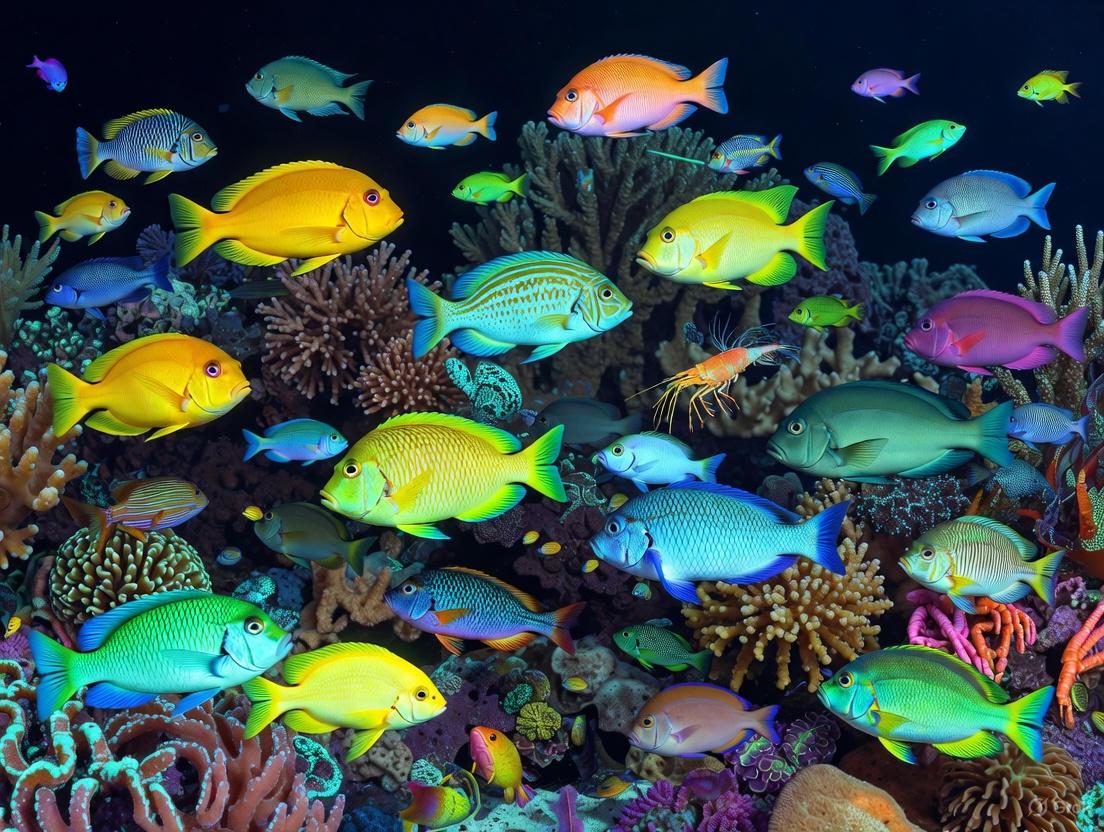
This article synthesizes the latest research on biofluorescence in coral reef ecosystems, detailing its 112-million-year evolutionary history, diverse ecological functions from prey attraction to communication, and its direct applications in...
Biofluorescence in Coral Reef Ecosystems: From Evolutionary Origins to Biomedical Innovation
Abstract
This article synthesizes the latest research on biofluorescence in coral reef ecosystems, detailing its 112-million-year evolutionary history, diverse ecological functions from prey attraction to communication, and its direct applications in drug discovery and biomedical technology. Aimed at researchers and drug development professionals, it explores the methodological frameworks for studying fluorescence, analyzes challenges in optimizing fluorescent proteins for research, and provides a comparative validation of their utility against other luminescent systems. The discussion underscores how reef-derived fluorescent proteins are revolutionizing high-throughput screening and disease diagnosis, positioning biofluorescence as a critical tool at the intersection of marine biology and clinical science.
The Evolutionary History and Ecological Significance of Reef Biofluorescence
Biofluorescence, the absorption of high-energy light and its re-emission at longer, lower-energy wavelengths, represents a widespread adaptive phenomenon in marine ecosystems. Recent phylogenetic investigations reveal this trait evolved repeatedly in marine teleosts, with the earliest origins dating to approximately 112 million years ago in Anguilliformes (true eels). This comprehensive analysis synthesizes current understanding of biofluorescence's evolutionary history, molecular mechanisms, and functional significance within coral reef ecosystems. We present quantitative data on the distribution of biofluorescence across teleost lineages, detailed methodologies for its documentation and quantification, and emerging applications in biomedical research. The evidence indicates coral reef environments served as evolutionary hotspots for biofluorescence diversification, with reef-associated species evolving this trait at rates ten times greater than non-reef species. These findings establish an ancient evolutionary foundation for biofluorescence and highlight its continued significance for both ecological function and biomedical innovation.
Biofluorescence occurs when organisms absorb higher-energy light and re-emit it at longer wavelengths through fluorescent compounds, creating visible glows that contrast with their environment [1]. Unlike bioluminescence, which generates light through chemical reactions, biofluorescence requires an external light source [2]. In marine environments, where water filters sunlight to create a monochromatic blue environment, biofluorescence enables organisms to produce additional colors for camouflage, communication, and predation [1].
The discovery of biofluorescence in marine vertebrates accelerated significantly after a 2011 accidental observation of a fluorescing eel during coral reef research [3]. Subsequent investigations have identified numerous biofluorescent fish species, yet the evolutionary origins and phylogenetic patterns of this trait remained poorly understood until recent comprehensive analyses. This technical review synthesizes current knowledge regarding the ancient origins of piscine biofluorescence, with particular emphasis on its emergence in Cretaceous eels and subsequent diversification in coral reef ecosystems.
Evolutionary History and Timeline
Phylogenetic Distribution
Comprehensive phylogenetic surveys have documented biofluorescence across 459 teleost species spanning 87 families and 34 orders [1] [4]. The phenomenon exhibits remarkable evolutionary lability, having originated independently numerous times across disparate lineages. Analysis of emission colors reveals substantial diversity, with species exhibiting red-only (261 species), green-only (150 species), or both red and green fluorescence (48 species) [1].
Table 1: Evolutionary Origins of Biofluorescence in Major Teleost Lineages
| Taxonomic Group | Estimated Origin (mya) | Predominant Emission Colors | Reef Association |
|---|---|---|---|
| Anguilliformes (true eels) | ~112 | Green | Mixed |
| Syngnathiformes | ~104 | Red, Green | High |
| Perciformes | ~87 | Red, Green | High |
| Lophiiformes (anglerfish) | ~65 | Red | Moderate |
| Scorpaeniformes (scorpionfish) | ~50 | Red, Green | High |
Ancient Origins in Anguilliformes
Stochastic character mapping and ancestral state reconstruction place the earliest emergence of biofluorescence in teleosts approximately 112 million years ago during the Early Cretaceous period, with the most recent common ancestor of Anguilliformes [1] [4]. This origin predates the establishment of modern coral reef ecosystems, suggesting initial evolution in other marine habitats. The fluorescent properties in ancient eels likely involved green fluorescent proteins, which represent the evolutionarily most basal form of biofluorescence [2].
The evolutionary trajectory shows subsequent origins in Syngnathiformes (~104 mya) and Perciformes (~87 mya), with multiple additional independent emergences across teleost lineages [1]. The majority of these evolutionary events occurred in reef-associated species, with coral reefs providing ecological conditions that strongly favored the development and diversification of biofluorescent capabilities.
Coral Reefs as Evolutionary Hotspots
Analysis of evolutionary rates demonstrates that reef-associated teleost species evolve biofluorescence at approximately ten times the rate of non-reef species [1] [4]. This pattern coincides temporally with the rise of modern coral-dominated reefs following the end-Cretaceous mass extinction approximately 66 million years ago. The correlation suggests that the structural and chromatic complexity of coral reefs created selective pressures that drove the repeated evolution and diversification of biofluorescence.
The chromatic conditions of coral reefs—particularly the blue-shifted light environment—provided ideal conditions for biofluorescence to function effectively for camouflage, communication, and predation [1]. Additionally, the presence of fluorescent corals and other substrates may have created ecological opportunities for biofluorescence to enhance organismal contrast and visibility in complex reef environments.
Molecular Mechanisms and Diversity
Fluorescent Biomolecules
Biofluorescence in marine fishes is achieved through diverse molecular mechanisms that vary across lineages:
- Green Fluorescent Proteins (GFPs): First isolated from hydrozoans, GFP-like proteins have been identified in Anguilliformes and other teleost lineages [1]. These proteins typically exhibit a conserved beta-barrel structure that protects the chromophore [2].
- Brominated Tryptophan-Kynurenine Metabolites: Catsharks and some teleosts utilize small aromatic compounds rather than proteins to generate fluorescent emissions [2]. These metabolites are present in specific skin regions and are optically enhanced by dermal structures.
- Bilirubin-Binding Proteins: The Japanese eel (Anguilla japonica) produces UnaG, a unique fluorescent protein that requires bilirubin binding for fluorescence emission [2]. This mechanism differs fundamentally from GFP-like proteins.
- Biliverdin-Binding Proteins: Walleye (Sander vitreus) produces sandercyanin, a blue fluorescent protein that binds biliverdin and provides UV protection [2].
Table 2: Molecular Bases of Biofluorescence in Marine Organisms
| Biomolecule | Organism Examples | Excitation/Emission Maxima | Function |
|---|---|---|---|
| GFP-like proteins | Eels, Corals | ~395,475nm/~508nm | Signaling, Camouflage |
| Brominated metabolites | Catsharks | ~480-500nm/~520-540nm | Camouflage |
| UnaG-bilirubin complex | Japanese eel | ~498nm/~527nm | Unknown |
| Sandercyanin-biliverdin | Walleye | ~375nm/~675nm | UV Protection |
| Non-GFP coral proteins | Corals | Varies widely | Prey attraction |
Evolution of Fluorescent Proteins
Molecular evolutionary analyses indicate that the ancestral fluorescent protein was likely green, with more complex red fluorescent proteins evolving later through gene duplication and accumulation of mutations that gradually altered autocatalytic functions and chromophore structure [2]. Red fluorescent proteins require the most complex biosynthetic pathway with extra maturation steps, while green fluorescent proteins represent the simplest and evolutionarily most basal form [2].
The evolution of color diversity in fluorescent proteins follows a general pattern from simple to complex: cyan and red emission colors require higher functional complexity and evolved later than green fluorescence [5]. This pattern is observed across multiple independent evolutionary origins of biofluorescence in different lineages.
Research Methodologies and Protocols
Documentation and Quantification
Standardized methodologies for documenting and quantifying biofluorescence have been developed to minimize observational bias and enable cross-study comparisons:
Imaging Protocol:
- Equipment Setup: Use ultraviolet (370-400nm) or blue (450-495nm) excitation lights with appropriate emission filters to isolate fluorescent signals [6].
- White Balance Calibration: Perform careful white balance adjustment to reduce bias from illumination sources or camera color sensitivity [6].
- Consistent Exposure: Maintain standardized exposure settings across imaging sessions to enable quantitative comparisons.
- Reference Standards: Include color and intensity standards when possible to normalize measurements across different equipment.
Quantitative Analysis:
- Color Quantization: Apply K-means clustering algorithms within CIELAB color space to identify dominant color spectra in biofluorescent emissions [6].
- Spectral Measurement: Use spectrometry to precisely quantify emission peaks across the visible spectrum, with recent studies revealing exceptional variation with some families exhibiting at least six distinct fluorescent emission peaks [4].
- Statistical Comparison: Implement generalized linear mixed models (GLMM) to test for significant differences in fluorescence attraction or emission characteristics [7].
Figure 1: Experimental workflow for documenting and quantifying biofluorescence, incorporating both photographic and analytical phases [6].
Behavioral Assay Protocols
Experimental protocols for testing ecological functions of biofluorescence include:
Prey Attraction Assays [7]:
- Experimental Chamber: Establish a choice test apparatus with target placement on opposite sides.
- Stimulus Presentation: Position fluorescent targets (green/orange) versus control targets (clear/reflective/colored non-fluorescent).
- Lighting Conditions: Illuminate with blue light (470-480nm) to naturally excite fluorescence.
- Organism Introduction: Introduce test organisms (e.g., Artemia salina, mysids, fish larvae) to the central chamber.
- Data Collection: Record distribution patterns and preferential swimming behavior over defined intervals.
- Statistical Analysis: Apply generalized linear mixed models (GLMM) with Cohen's d effect size calculations.
In Situ Plankton Attraction Experiments [7]:
- Trap Design: Deploy plankton traps containing different colored targets (orange fluorescent, green fluorescent, clear control).
- Depth Standardization: Position traps at ecologically relevant depths (e.g., 40m) where fluorescence is naturally excited.
- Exposure Period: Allow sufficient duration for plankton accumulation under natural currents.
- Sample Processing: Enumerate and classify captured plankton.
- Data Analysis: Perform ANOVA followed by linear mixed models to test for significant attraction differences.
The Scientist's Toolkit: Research Reagent Solutions
Table 3: Essential Materials for Biofluorescence Research
| Research Tool | Specification/Function | Application Examples |
|---|---|---|
| UV Excitation Light | 370-400nm wavelength range | Field observation, laboratory imaging |
| Blue Excitation Light | 450-495nm wavelength range | Marine environment simulation |
| Long-Pass Emission Filters | Blocks excitation wavelengths, transmits fluorescence | Signal isolation in imaging |
| Spectrometer | Measures precise emission spectra | Molecular characterization, quantification |
| CIELAB Color Space | Device-independent color representation | Standardized color quantification |
| K-means Clustering | Algorithm for color quantization | Objective color analysis from images |
| GFP Antibodies | Immunodetection of fluorescent proteins | Localization, expression studies |
| CRISPR-Cas9 Systems | Gene editing for functional studies | Manipulating fluorescent protein expression |
Ecological Functions in Coral Reef Ecosystems
Biofluorescence serves multiple ecological functions within coral reef ecosystems, with particular significance in mesophotic zones (30-150m depth) where light becomes limited and blue-shifted:
Prey Luring Mechanisms
Experimental evidence demonstrates that plankton exhibit preferential swimming toward green fluorescent cues compared to non-fluorescent targets [7]. This attraction mechanism significantly enhances predation rates in fluorescing corals, suggesting biofluorescence functions as a prey-lure strategy, particularly in mesophotic environments where photosynthetic energy production becomes limited [7]. The prey-lure effect is specifically wavelength-dependent, with green fluorescence attracting significantly more plankton than orange fluorescence or reflective controls [7].
Intraspecific Communication
Biofluorescence facilitates species recognition and mate selection in numerous reef fish lineages. For example, the Pacific spiny lumpsucker (Eumicrotremus orbis) exhibits sexually dichromatic fluorescent emissions that may enhance mate identification [1]. Similarly, closely related species of reef lizardfishes (Synodontidae) appear nearly identical under white light but exhibit significant variation in fluorescent patterning, suggesting a role in species recognition [1].
Camouflage and Crypsis
Many reef fishes use biofluorescence for background matching on fluorescing corals and substrates. Scorpionfishes (Scorpaenidae) and threadfin breams (Nemipteridae) have been observed residing on or near backgrounds with similar fluorescent emission wavelengths to their bodies, effectively concealing themselves from predators and prey [1]. This form of fluorescent crypsis represents an important adaptation to the complex visual environment of coral reefs.
Figure 2: Ecological functions of biofluorescence in coral reef ecosystems, demonstrating multiple selective advantages [1] [7].
Applications in Biomedical Research
The unique properties of biofluorescent molecules from marine organisms have enabled numerous biomedical applications:
- Molecular Tags and Reporters: Green fluorescent protein (GFP) and its variants serve as invaluable visual markers for tracking gene expression, protein localization, and cellular dynamics [2].
- Disease Diagnosis: Fluorescent proteins enable fluorescence-guided disease diagnosis and therapy, particularly in oncology for visualizing tumor margins [4].
- Cellular Process Monitoring: Specialized fluorescent proteins like UnaG from Japanese eels, which requires bilirubin binding, provide tools for investigating bilirubin-dependent cellular processes [2].
- Drug Development: Novel fluorescent molecules from marine fishes offer potential for developing new imaging agents and therapeutic monitoring tools [4].
The exceptional variation in fluorescent emission spectra discovered across marine fishes—with some families exhibiting at least six distinct emission peaks—suggests substantial potential for identifying novel fluorescent molecules with unique biomedical applications [4].
The evolutionary history of biofluorescence in marine fishes reveals a remarkable story of convergent adaptation spanning 112 million years, with ancient origins in Cretaceous eels preceding the diversification of modern coral reefs. The trait has evolved independently on more than 100 occasions, with coral reef environments serving as primary catalysts for its diversification. Functional studies demonstrate that biofluorescence serves multiple ecological roles including prey attraction, camouflage, and communication, particularly in the blue-shifted light environments of mesophotic reefs.
From a biomedical perspective, fish biofluorescence represents an invaluable resource of novel fluorescent molecules with diverse applications in disease diagnosis, cellular imaging, and drug development. The continued investigation of biofluorescence in marine fishes promises to yield both fundamental insights into evolutionary processes and practical applications for human health. Future research directions should focus on elucidating the complete biosynthetic pathways of fluorescent molecules, understanding their functional roles in natural ecosystems, and harnessing their unique properties for biomedical innovation.
Fluorescence, the ability of organisms to absorb light and re-emit it at longer wavelengths, represents a quintessential example of evolutionary convergence, having emerged independently in diverse lineages across the tree of life. This phenomenon is particularly pronounced in reef-building corals (order Scleractinia), where proteins homologous to the green fluorescent protein (GFP) have evolved a spectacular array of colors—including cyan, green, red, and non-fluorescent chromoproteins—on numerous independent occasions over evolutionary history [8]. The evolution of novel fluorescent phenotypes, such as the transition from green to red fluorescence, requires a complex sequence of multiple amino acid substitutions (on the order of 12 mutations), some of which exhibit strong epistatic interactions [9]. Beyond their ecological significance in marine environments, where they function in prey attraction [10] and thermal stress response [11] [12], these proteins have revolutionized biomedical research, providing essential tools for drug development and cellular imaging [13] [14]. This review synthesizes current understanding of the molecular mechanisms, evolutionary pathways, and functional implications of the repeated emergence of fluorescence, with particular emphasis on its context within coral reef ecosystems.
Principles of Biological Fluorescence
Biological fluorescence occurs when specialized proteins, known as fluorescent proteins (FPs), absorb high-energy light and subsequently emit lower-energy light. This process is driven by an internal chromophore—a group of atoms within the protein that can absorb and emit photons [15]. When light of a specific wavelength strikes the chromophore, electrons become excited to a higher energy state. As these electrons return to their ground state, they release energy in the form of fluorescent light at a longer wavelength, a phenomenon known as the Stokes shift [16] [15]. In reef-building corals, this family of GFP-like proteins can constitute up to 14% of the total soluble protein content, highlighting their biological importance [11].
Evolutionary Convergence in Fluorescent Proteins
Evolutionary convergence refers to the independent emergence of similar traits in distantly related lineages. In the case of fluorescence, this convergence is remarkably widespread. GFP-like proteins have evolved multiple distinct chromophore types through independent evolutionary pathways, leading to the emergence of fluorescent proteins with different spectral properties across numerous coral families [8]. For instance, the red fluorescent phenotype has originated multiple times independently within the Scleractinia, with at least two distinct types of red chromophores identified: the DsRed-type and the Kaede-type [9] [8]. This repeated emergence of similar functions from homologous proteins represents a powerful natural experiment for studying the molecular mechanisms of evolutionary innovation.
Molecular Mechanisms and Evolutionary Pathways
Chromophore Diversity and Color Determination
The dazzling color diversity of coral fluorescence stems from molecular variations in chromophore structure and its protein environment. The table below summarizes the key chromophore types and their characteristics identified in GFP-like proteins:
Table 1: Chromophore Types in GFP-like Fluorescent Proteins
| Chromophore Type | Color Class | Key Characteristics | Example Proteins |
|---|---|---|---|
| GFP-type | Green & Cyan | Basic structure, identical in both colors despite spectral differences [8] | Native GFP, Various coral GFPs |
| DsRed-type | Red | Extended p-orbital conjugation via additional autocatalytic step [9] [8] | DsRed |
| Kaede-type | Red | Narrow orange-red fluorescence, photo-induced color conversion with violet light [9] [8] | Kaede, R1-2 from Montastrea cavernosa [9] |
| Chromoprotein-type | Purple-Blue (non-fluorescent) | Isomerized DsRed-like chromophore, high extinction coefficient but virtually no fluorescence [8] | Various pocilloporins |
The precise color emitted by a fluorescent protein depends on both the chemical structure of its chromophore and the microenvironment created by the surrounding protein fold. Mutations affecting residues not in direct contact with the chromophore can still dramatically alter fluorescent output by inducing structural adjustments throughout the protein [9].
Genetic Trajectories to Novel Fluorescence
The evolutionary transition between color states requires coordinated multiple mutations. Research on the origin of Kaede-like red fluorescent proteins in Faviina corals demonstrates that approximately 12 amino acid substitutions are necessary to fully recapitulate the evolution of red fluorescence from an ancestral green protein [9]. Key aspects of this transition include:
- Epistatic Interactions: Many of these mutations interact epistatically, where the functional effect of one mutation depends on the presence of others [9].
- Ancral State Influence: The common ancestor of green and red fluorescent proteins likely possessed an intermediate orange phenotype, following an "escape from adaptive conflict" model where gene duplication allowed subsequent specialization [9].
- Role of Neutral Mutations: Seven of the 12 necessary mutations affect residues not in close contact with the chromophore, suggesting they exert their effects indirectly through adjustments of the overall protein fold [9].
Table 2: Mutational Requirements for Green-to-Red Fluorescence Transition
| Mutation Category | Number of Mutations | Functional Role | Identification Method |
|---|---|---|---|
| Chromophore-proximal | 5 | Direct interaction with chromophore formation | Comparative analysis of extant proteins [9] |
| Chromophore-distal | 7 | Indirect effects through protein fold adjustments | Ancestral reconstruction required [9] |
| Positively selected | 3 | Necessary but insufficient alone | Positive selection analysis [9] |
Experimental Approaches for Studying Fluorescence Evolution
Ancestral Protein Reconstruction
A powerful approach for studying protein evolution involves reconstructing ancestral proteins and experimentally characterizing their properties. This "vertical" comparative analysis between extant and resurrected ancestral proteins is more efficient than classical "horizontal" comparisons between extant proteins, as it minimizes the confounding effect of neutral mutations accumulated along multiple lineages [9]. For fluorescent proteins, this approach has revealed that the common ancestor of all coral FPs was likely green fluorescent, as are fluorescent proteins found outside the Anthozoa class [8].
Transitional Library Methodology
To overcome the combinatorial challenge of testing all possible evolutionary pathways, researchers have developed a transitional library approach [9]. This methodology involves:
- Ancestral Gene Synthesis: Resurrecting ancestral protein sequences as combinatorial libraries of probable variants.
- Degenerate Gene Synthesis: Incorporating all amino acid differences between ancestral and extant proteins in all possible combinations.
- High-Throughput Screening: Expressing the library in bacterial systems and screening thousands of colonies for fluorescent phenotypes.
- Association Analysis: Identifying specific amino acid states associated with emergent fluorescent capabilities using statistical approaches like Fisher's exact test [9].
This approach enabled researchers to identify functional combinations of mutations from a vast possibility space (e.g., >100 billion combinatorial mutants) that would be impossible to test comprehensively [9].
The following diagram illustrates the experimental workflow for studying fluorescence evolution through ancestral protein reconstruction and transitional library screening:
Ecological Functions and Evolutionary Drivers
Proposed Biological Roles
The repeated independent emergence of fluorescence across coral lineages suggests strong selective pressures maintaining these metabolically expensive traits. Multiple, non-exclusive functions have been proposed and experimentally supported:
Prey Attraction: In mesophotic coral ecosystems (30-150 m depth), green fluorescent proteins function as a prey-lure mechanism. Experimental evidence demonstrates that planktonic prey (e.g., Artemia salina and mysids) show significant preference for green fluorescent targets over reflective or non-fluorescent controls [10]. This function may be particularly important in deeper habitats where light-limited conditions reduce photosynthetic energy production [10].
Photoprotection: In shallow-water environments with high light intensity, fluorescent proteins may serve as a sunscreen by converting harmful short-wavelength radiation (UV and blue light) into longer, less damaging wavelengths [15] [12].
Thermal Stress Response: Fluorescence phenotypes correlate with thermal tolerance. The green fluorescent morph of Galaxea fascicularis shows significantly greater resistance to bleaching at elevated temperatures (32°C) compared to its brown conspecific, maintaining higher symbiont density and reduced pathogenic bacteria abundance [11]. Under thermal stress, corals may reorganize their fluorescence patterns, suggesting potential as a biomarker for coral health [12].
Antioxidant Activity: Some GFP-like proteins, particularly red fluorescent proteins, exhibit significant H₂O₂ scavenging activity, providing protection from oxidative stress in compromised coral tissue [12].
Symbiosis Regulation: Fluorescent proteins may facilitate the attraction of symbiotic algal partners (Symbiodiniaceae) to the coral host, helping to establish this critical mutualism [12].
Environmental Modulation of Fluorescence
The expression and distribution of fluorescent proteins in corals is dynamically regulated by environmental conditions:
- Light Regulation: FP expression is strongly regulated by light intensity, particularly blue light [11] [12].
- Temperature Sensitivity: Elevated temperatures (up to 32°C) can significantly suppress FP production [11].
- Spatial Patterning: Fluorescence patterns within coral colonies are non-random, often concentrating in areas with high photon flux such as growing tips, damaged zones, or specific anatomical structures like tentacles and oral regions [12].
Research Reagent Solutions and Methodologies
The study of fluorescent proteins and their evolution relies on specialized reagents and methodologies, many of which have been adapted for pharmaceutical and biomedical applications:
Table 3: Essential Research Reagents and Methods for Fluorescence Studies
| Reagent/Method | Function/Application | Key Features | Research Context |
|---|---|---|---|
| Transitional Library | Screening evolutionary intermediates | Tests millions of mutational combinations; identifies epistatic interactions [9] | Experimental evolution studies |
| Ancestral Protein Reconstruction | Resurrecting ancient protein states | Enables "vertical" comparative analysis; reveals historical mutational paths [9] | Evolutionary trajectory mapping |
| iDrugSnFRs (intensity-based Drug-Sensing Fluorescent Reporters) | Detecting drug permeation in living cells | Visualizes subcellular pharmacokinetics; measures membrane crossing rates [14] | Pharmaceutical neuroscience, drug development |
| Fluorescence Microscopy | Spatial imaging of fluorescence patterns | Enables quantitative analysis of distribution and intensity [17] | Ecological studies, cellular imaging |
| Spectral LED Lighting | Exciting specific fluorescent proteins | Covers "Wide-Band-Blue" (390-510 nm) for full FP excitation [15] | Aquarium studies, phenotypic screening |
| Bacterial Expression Systems | High-throughput protein screening | Allows rapid phenotypic screening of FP libraries [9] | Mutational studies, protein engineering |
Discussion and Research Implications
Convergence and Constraint in Protein Evolution
The repeated emergence of fluorescence provides profound insights into fundamental evolutionary principles. The independent evolution of similar fluorescent phenotypes across distant coral lineages demonstrates that historical contingency may be less constraining than often presumed—evolution can find multiple genetic paths to similar functional outcomes. However, the identification of specific, necessary mutations (including epistatically interacting residues) indicates that these paths are nonetheless constrained by biophysical principles [9].
The observation that the common ancestor of coral fluorescent proteins possessed a chromophore apparently locked in a non-fluorescent neutral state may represent a transitional stage that facilitated the rapid color diversification observed in contemporary corals [8]. This highlights the potential importance of permissive intermediates in the evolution of novel protein functions.
Applications in Biomedical Research and Drug Development
Fluorescent proteins and their engineered derivatives have become indispensable tools in biomedical research. The development of intensity-based drug-sensing fluorescent reporters (iDrugSnFRs) enables real-time visualization of drug permeation across cellular membranes [14]. These tools allow researchers to:
- Measure membrane crossing rates of pharmaceutical compounds, which can differ by more than 30-fold among related drugs [14].
- Track drug movements in subcellular compartments, including the endoplasmic reticulum, which is particularly relevant for understanding nicotine addiction mechanisms [14].
- Develop structure-activity relationships through crystallographic studies of drug-sensor complexes, illuminating the structural basis of fluorescence activation [14].
Future Research Directions
Despite significant advances, numerous questions remain unresolved. Future research should focus on:
- Environmental Modulation: Understanding how changing ocean conditions (warming, acidification) affect the evolutionary trajectory of fluorescent proteins and their ecological functions.
- Structural Predictivity: Developing improved computational models that can predict the spectral consequences of multiple mutations, particularly those involving epistatic interactions.
- Biomedical Applications: Engineering next-generation fluorescent reporters with enhanced sensitivity, photostability, and spectral characteristics for advanced imaging applications [16].
- Coral Health Assessment: Validating fluorescence-based biomarkers for non-invasive monitoring of coral health and stress responses in changing climate conditions [12].
The independent emergence of fluorescence over 100 times represents one of nature's most spectacular examples of evolutionary convergence. Continued study of this phenomenon will undoubtedly yield further insights into evolutionary mechanisms, while simultaneously providing valuable tools for addressing pressing challenges in biomedical research and environmental conservation.
The Cretaceous–Palaeogene (K–Pg) mass extinction event, which occurred approximately 66 million years ago, represents a pivotal turning point in the evolutionary history of marine life. While this event caused the devastation of rudist bivalve-dominated reef ecosystems, it also created ecological opportunity that facilitated the rise of modern coral reef ecosystems. This establishment of a new ecological framework subsequently influenced the evolutionary trajectory of numerous marine lineages, including the emergence of complex biological traits such as biofluorescence [18] [1].
The evolutionary assembly of the modern reef fish fauna remained poorly understood until recent phylogenetic approaches illuminated the patterns of reef colonization. These analyses reveal that the broad framework of the modern reef fish fauna was established within 10 million years of the end-Cretaceous extinction, coinciding with major alterations in reef composition, distribution, and abundance [18]. This paper examines the critical evolutionary link between the post-extinction reef expansion and the accelerated diversification of reef-associated organisms, with specific focus on the repeated evolution of biofluorescence in marine teleosts as a case study of functional adaptation within these new ecosystems.
Analytical Methods for Reconstructing Evolutionary History
Phylogenetic Comparative Approaches
Understanding the patterns of reef colonization and trait evolution requires sophisticated analytical methods that can reconstruct historical processes from contemporary data.
- Time-Calibrated Phylogenies: Researchers utilized recently developed time-calibrated phylogenies of major acanthomorph lineages, built using 10 protein-coding genes comprising 8,577 base pairs. Divergence times were estimated using 37 fossil calibrations with an uncorrelated lognormal model of molecular evolutionary rate heterogeneity implemented in BEAST v. 1.6.1 [18].
- Ancestral State Reconstruction: For biofluorescence evolution, scientists employed Mk models for stochastic character mapping, averaging models proportional to their Akaike weights. The root node of the teleost tree (192.8 mya) was estimated to have an absence of fluorescence with 33.6% posterior probability for biofluorescence presence [1].
- Morphospace Analysis: Researchers generated morphological datasets of 12 traits summarizing body shape and size, reflecting functional properties of feeding and locomotor systems. Phylogenetic principal components analysis (PCA) of all traits was used to produce multivariate estimates of morphology and reconstruct disparity through time [18].
Habitat Classification and Phylogenetic Uncertainty
To address the challenge of habitat classification across diverse fish families:
- Binary Habitat Coding: A binary habitat variable ("Reef" or "Non-Reef") was implemented, using the percentage of extant species in each family that are reef-associated as given by FishBase [18].
- Phylogenetic Uncertainty Incorporation: All analyses were run across a random sample of trees from the posterior distribution of time-calibrated trees to incorporate phylogenetic uncertainty. Between 35 and 53 families were recognized as "reef" across different habitat datasets [18].
The Post-K-Pg Reef Revolution: A New Evolutionary Arena
Reef Ecosystem Transformation
The K-Pg extinction fundamentally reshaped marine reef ecosystems, creating new evolutionary opportunities:
- Pre-Extinction Reef Systems: Late Cretaceous reefs (ca 100–66 Myr ago) were primarily single-layer beds or mounds formed by corals, skeletal sponges, and rudist bivalves, with coral reef volume declining throughout much of the Cretaceous [18].
- Extinction Impact: The K-Pg extinction resulted in the loss of rudist bivalves and an estimated 45% of all scleractinian coral species, although reef volume itself did not decline [18].
- Recovery and Expansion: Coral diversity recovered fairly rapidly from the K-Pg, with coral formations becoming more geographically widespread in the earliest Palaeogene than in the Late Cretaceous. From the mid-Eocene (ca 45 Ma) onwards, coral-dominated framework reefs became the most common reef type [18].
Waves of Reef Colonization
Phylogenetic analyses of acanthomorph fishes reveal a clear pattern of successive reef colonization:
Table 1: Waves of Reef Colonization by Modern Fishes
| Time Period | Evolutionary Pattern | Morphological Consequences |
|---|---|---|
| Late Cretaceous (90–72 Ma) | First wave of invasion | Increasing morphological convergence |
| Immediately post-K-Pg | Second wave of invasion | Accelerated morphological diversification |
| First 10 Myr post-K-Pg | Surge in reef invasions | Rapid niche filling by distinct lineages |
| After 10 Myr post-K-Pg | Slowed pace of transitions | Saturation of morphospace |
This pattern matches a classic niche-filling scenario: early transitions to reefs were made rapidly by morphologically distinct lineages, followed by a decrease in invasion rate and eventual saturation of morphospace [18]. The K-Pg boundary thus served as an evolutionary bottleneck and subsequent diversification pump, resetting ecological relationships and creating opportunities for novel adaptations.
Biofluorescence: A Case Study in Reef-Mediated Adaptation
Evolutionary History of Biofluorescence in Marine Fishes
The phenomenon of biofluorescence—where organisms absorb high-energy light and reemit it at lower energy wavelengths—provides an excellent model system for studying reef-mediated diversification:
Table 2: Evolutionary History of Biofluorescence in Marine Teleosts
| Evolutionary Parameter | Finding | Significance |
|---|---|---|
| First appearance | ~112 million years ago in Anguilliformes (true eels) | Predates K-Pg extinction, demonstrates ancient origin |
| Number of independent origins | More than 100 independent evolutionary events | Indicates strong selective advantage and convergent evolution |
| Reef association | 459 known biofluorescent teleost species, majority reef-associated | Strong correlation with reef habitat |
| Differential diversification rate | Reef species evolve biofluorescence at 10x the rate of non-reef species | Reef environment specifically promotes this adaptation |
Biofluorescence is phylogenetically pervasive across teleost fishes, spanning 87 families and 34 orders. Of the 459 known biofluorescent teleosts, fluorescent emissions are red only in 261 species, green only in 150 species, and both red and green in 48 species [1].
Correlation with Reef Expansion
The evolutionary timeline of biofluorescence shows remarkable correspondence with reef development:
- Cretaceous Origins: Biofluorescence first evolved in marine teleosts during the Middle Cretaceous (~112 mya) in Anguilliformes, with subsequent appearances in Syngnathiformes (~104 mya) and Perciformes (~87 mya) [1].
- Post-K-Pg Acceleration: The increase in biofluorescence diversification coincides with the recovery of coral reefs following the K-Pg extinction approximately 66 million years ago [1] [19].
- Modern Prevalence: Recent observations have significantly increased our understanding of biofluorescence diversity, with reef-associated species dominating the documented cases [1].
The correlation between reef recovery and fluorescence diversification suggests that the emergence of modern coral reefs facilitated the evolutionary innovation and diversification of this trait in reef-associated teleost fishes [1] [19].
Experimental Protocols in Biofluorescence Research
Documentation and Characterization of Biofluorescence
Objective: To document and characterize biofluorescence in marine organisms across diverse taxonomic groups and habitats.
Methodology:
- Field Documentation: Researchers use specialized photography setups with ultraviolet and blue excitation lights and emission filters to document biofluorescence in situ during scientific expeditions [19].
- Spectral Analysis: The full range of biofluorescent emissions is characterized using spectrophotometric equipment to determine exact wavelengths and intensities [1].
- Species-Level Survey: Comprehensive surveys compile all known biofluorescent teleosts from peer-reviewed literature and new observations, resulting in taxonomically broad datasets [1].
Applications: This protocol enabled the documentation of 48 previously unreported biofluorescent teleost species and the compilation of a total of 459 biofluorescent teleost species for phylogenetic analysis [1].
Prey Attraction Experiments
Objective: To test the hypothesis that fluorescence in mesophotic corals functions as a prey-lure mechanism.
Methodology:
- Experimental Setup: Laboratory chambers with fluorescent targets (green or orange fluorescent vs. clear control targets) illuminated by blue light to excite fluorescence [10].
- Test Organisms: Use of Artemia salina as a model crustacean, followed by tests with native crustaceans (Anisomysis marisrubri) and fish larvae (Sparus aurata) [10].
- Control Conditions: Multiple control conditions including fluorescent vs. reflective targets, fluorescent vs. colored non-fluorescent targets, and identical target comparisons [10].
- In Situ Validation: Deployment of plankton traps with fluorescent targets at depth (40 m) under natural conditions to test attraction of heterogeneous natural plankton assemblages [10].
Key Findings: Plankton exhibited preferential swimming toward green fluorescent cues, and higher predation rates were recorded in green fluorescing morphs of the mesophotic coral Euphyllia paradivisa compared to other morphs [10].
Thermal Tolerance in Fluorescent Corals
Objective: To investigate the relationship between coral fluorescence phenotypes and thermal bleaching tolerance.
Methodology:
- Phenotype Selection: Collection of two fluorescence phenotypes (green and brown) of Galaxea fascicularis associated with the thermotolerant symbiont Durusdinium trenchii [11].
- Experimental Design: 14-day cultivation with control (29°C) and heat stress (32°C) treatments, with temperature gradually increased over 3 days [11].
- Response Measurements: Monitoring of Symbiodiniaceae cell density, photosynthetic performance, pathogenic bacteria abundance, and metatranscriptomic profiles [11].
- Gene Expression Analysis: Comparison of transcriptional levels of genes encoding green fluorescent protein-like and chromosome-associated proteins, as well as genes related to oxidative phosphorylation, cell growth and death [11].
Key Findings: The green form of G. fascicularis demonstrated better tolerance to ocean warming and defense against pathogenic bacteria, likely due to higher gene transcription levels and defense ability [11].
The Scientist's Toolkit: Essential Research Materials
Table 3: Key Research Reagent Solutions for Reef Evolution and Biofluorescence Studies
| Research Tool | Application | Function and Significance |
|---|---|---|
| Time-calibrated phylogenies | Macroevolutionary analysis | Reconstruct historical patterns of diversification and trait evolution using molecular data and fossil calibrations [18] |
| Specialized photography systems | Biofluorescence documentation | Equipped with UV/blue excitation lights and emission filters to detect and characterize fluorescent emissions [19] |
| Morphological trait datasets | Ecomorphological analysis | Quantify functional morphology through linear measurements of body shape and size relevant to feeding and locomotion [18] |
| Green Fluorescent Protein (GFP) | Molecular labeling | Originally isolated from hydrozoans; serves as visual marker and potential target for gene expression studies [1] [11] |
| Binary habitat coding | Ecological classification | Classify species as reef or non-reef associated based on percentage of reef-dwelling species per family [18] |
| Stochastic character mapping | Ancestral state reconstruction | Model evolutionary transitions between character states (e.g., presence/absence of biofluorescence) across phylogenies [1] |
The evolutionary expansion of modern coral reefs following the K-Pg mass extinction created a new ecological theater that profoundly influenced the diversification of marine life. The successive waves of reef colonization by fishes throughout the Late Cretaceous and early Palaeogene established the broad framework of the modern reef fish fauna within 10 million years of the extinction [18]. This newly formed ecosystem served as an evolutionary crucible that accelerated the diversification of novel traits, as evidenced by the repeated evolution of biofluorescence in marine teleosts [1].
The functional significance of biofluorescence extends beyond mere visual phenomena, potentially serving roles in prey attraction [10], thermal tolerance [11], and communication in the spectrally constrained light environments of marine habitats. The concentration of biofluorescent lineages in reef ecosystems, and their accelerated diversification following reef recovery, underscores the importance of ecological context in shaping evolutionary innovation.
Understanding this reef connection provides not only insight into historical evolutionary processes but also critical context for contemporary conservation challenges. As modern reefs face unprecedented threats from climate change and anthropogenic stressors [20], the deep evolutionary history linking reefs and their associated biodiversity highlights the urgency of preserving these ecosystems and the evolutionary processes they support.
Biofluorescence, the phenomenon where organisms absorb high-energy light and reemit it at longer, lower-energy wavelengths, serves critical and multifaceted roles in coral reef ecosystems [21] [22]. Research conducted within the past decade has significantly expanded our understanding of its prevalence and functional significance, particularly in marine teleost fishes, with over 450 species identified to date [22]. The unique light environment of coral reefs, where water filters sunlight to a predominantly blue, monochromatic spectrum, provides an ideal setting for biofluorescent signals to operate with high efficacy [22]. This whitepaper synthesizes current research to detail the core functional roles of biofluorescence—camouflage, communication, and prey attraction—framed within the context of advanced research methodologies and experimental protocols for the scientific community.
Biofluorescence has evolved repeatedly and is phylogenetically widespread across teleosts. A comprehensive 2025 survey documented 459 biofluorescent teleost species across 87 families and 34 orders, with the majority associated with coral reefs [22]. Reef-associated species are estimated to evolve biofluorescence at ten times the rate of non-reef species [22].
Table 1: Distribution of Biofluorescent Emissions Across Teleost Fishes
| Emission Color | Number of Species | Percentage of Total | Noteworthy Example Taxa |
|---|---|---|---|
| Red only | 261 | 56.9% | Antennariidae (Frogfishes) [22] |
| Green only | 150 | 32.7% | Anguilliformes (True eels), Nemipteridae (Threadfin breams) [22] |
| Both Red and Green | 48 | 10.4% | Synodus (Lizardfishes), Cyclopteridae + Liparidae (Lumpfishes & Snailfishes) [22] |
Ancestral state reconstruction indicates that biofluorescence first evolved in marine teleosts approximately 112 million years ago in the Anguilliformes (true eels) [22]. The phenomenon is characterized by substantial evolutionary lability, with stochastic character mapping indicating an estimated ~101 independent gains of biofluorescence across the teleost tree of life [22].
Core Functional Roles in the Reef Ecosystem
The functional roles of biofluorescence are diverse and are often linked to the visual capabilities of signal receivers, which can include conspecifics, predators, and prey [22].
Camouflage
Biofluorescence can function as a highly effective form of camouflage, allowing organisms to blend into their fluorescent backgrounds.
- Background Matching: The scorpionfish (Scorpaenidae) fluoresces a bright orange-red that closely matches the coloration of the biofluorescent corals and algae upon which it rests, causing the fish to virtually disappear from view and aiding in both eluding predators and ambushing prey [21].
- Disruptive Coloration: Threadfin breams (Nemipteridae) have been observed residing on or near substrates with fluorescent emission wavelengths similar to their bodies, suggesting a camouflage strategy that breaks up their body outline [22].
Communication
Intraspecific communication is a primary driver for the evolution of biofluorescence, serving functions in species identification and mating.
- Species Recognition: Closely related species of reef lizardfishes (Synodontidae) can appear nearly identical under white light but exhibit significant and distinguishable variation in their biofluorescent patterning, suggesting a role in species recognition [22].
- Mate Attraction and Sexual Dimorphism: Sexual dimorphism in biofluorescence is documented in several groups. In the Pacific spiny lumpsucker (Eumicrotremus orbis), males and females exhibit dichromatic fluorescent emissions from the body, which may enhance mate identification [22]. Behavioral experiments with budgerigars have demonstrated that individuals with visible cheek and crown biofluorescence are more attractive to the opposite sex than those whose fluorescence is blocked [21]. Similarly, in the fairy wrasse (Cirrhilabrus solorensis), behavioral tests support the use of fluorescent patterns for sex identification [22].
Prey Attraction
Some organisms leverage biofluorescence to lure prey, a function more commonly associated with bioluminescence.
- Aggressive Mimicry: While direct evidence in teleosts is still emerging, the principle is well-established in other biofluorescent organisms. For instance, carnivorous pitcher plants fluoresce along the pitcher lip to attract insect prey [22]. This mechanism could be operational in some biofluorescent fishes that employ a "sit-and-wait" predatory strategy.
- Prey Luring in the Deep Sea: Although not a coral reef fish, the dragonfish provides a compelling parallel. It produces red bioluminescence that is invisible to most deep-sea prey but visible to itself, illuminating prey without alerting them [23]. This demonstrates how specialized light production can be harnessed for predation.
Table 2: Functional Roles of Biofluorescence with Representative Taxa
| Functional Role | Specific Mechanism | Example Organisms | Proposed Visual Receiver |
|---|---|---|---|
| Camouflage | Background matching | Scorpionfishes (Scorpaenidae), Threadfin breams (Nemipteridae) | Predators, Prey [21] [22] |
| Communication | Species recognition | Reef Lizardfishes (Synodontidae) | Conspecifics [22] |
| Mate attraction & Sexual identification | Fairy Wrasses (Cirrhilabrus spp.), Pacific Spiny Lumpsucker (Eumicrotremus orbis) | Potential Mates [22] | |
| Prey Attraction | Aggressive mimicry (proposed) | Pitcher Plants (analogous system) | Prey [22] |
Experimental Protocols for Field and Behavioral Research
Field Observation and Spectral Documentation
Objective: To identify, document, and quantify biofluorescence in situ or from freshly collected specimens.
Materials:
- High-intensity blue light source (440–470 nm)
- Barrier filter (long-pass, >500 nm) for the camera lens
- Full-spectrum modified digital camera
- Spectrometer for precise emission wavelength measurement
- Low-fluence green light for nocturnal surveys to minimize disturbance
Methodology:
- Site Selection & Preparation: Conduct surveys during night-time or in dark environments to maximize signal-to-noise ratio. For lab-based work, anesthetize specimens humanely to minimize stress.
- Illumination and Filtration: Illuminate the subject with the blue light source. Attach the barrier filter to the camera lens to block reflected blue light and capture only the fluorescent emissions.
- Image and Data Acquisition: Capture standardized photographs and video under both white light and blue light with barrier filtration for comparison. For quantitative analysis, use a spectrometer to measure the peak excitation and emission wavelengths of the fluorescent signals.
- Substrate Analysis: Document the fluorescent properties of the immediate background substrate to assess potential camouflage efficacy.
This protocol is derived from methodologies used in recent studies that have expanded the known diversity of biofluorescent fishes, including the 48 new species reported in 2025 [22].
Behavioral Assays for Signal Function
Objective: To determine the behavioral relevance of biofluorescence for communication or prey attraction.
Materials:
- Controlled aquarium system with appropriate lighting
- Customizable LED panels capable of simulating reef light fields and isolating specific wavelength bands
- Real-time animal tracking software
- 3D-printed or robotic stimulus models with controlled fluorescent patterning
Methodology:
- Stimulus Preparation: Create realistic models of conspecifics or heterospecifics that either display their natural biofluorescent patterns or have these patterns digitally removed or altered.
- Experimental Setup: Place a subject animal (e.g., a wrasse) in the test aquarium. Use the LED panels to recreate the ambient blue light field of a coral reef at depth.
- Choice Trial: Introduce two stimulus models simultaneously into sections of the tank: one with accurate biofluorescence and one without. Record the subject's interaction times, approaches, and display behaviors using tracking software.
- Data Analysis: Compare the behavioral responses to the fluorescent versus non-fluorescent stimuli. A statistically significant preference (e.g., for the fluorescent model in mate choice contexts) indicates the biological relevance of the signal. This approach is based on behavioral experiments conducted with species like the fairy wrasse [22].
The Scientist's Toolkit: Key Research Reagents and Materials
Table 3: Essential Research Reagents and Equipment for Biofluorescence Studies
| Item | Function/Application | Relevance to Biofluorescence Research |
|---|---|---|
| Green Fluorescent Protein (GFP) | Native or engineered protein used as a fluorescent marker and for studying protein expression and dynamics [16]. | Serves as a model for understanding fluorescent molecules in marine organisms. Has been isolated and characterized in true eels [22]. |
| BODIPY Dyes (e.g., BODIPY-FL) | Synthetic fluorescent dyes with high quantum yields and photostability [16]. | Used as fluorescent tags in histological studies to label tissues or as analogs for small fluorescent metabolites found in some fishes [16]. |
| Indocyanine Green (ICG) | FDA-approved fluorescent dye for near-infrared imaging [16]. | Used in biomedical imaging; its application principles inform the development of in vivo imaging techniques for marine organisms. |
| qMaLioffG | A genetically encoded green fluorescence lifetime-based indicator for quantitative imaging of intracellular ATP [24]. | Represents the cutting-edge in fluorescent indicator technology, illustrating the potential for developing similar tools to study metabolic states in fluorescent marine life. |
| Antibodies (e.g., Trastuzumab) | Monoclonal antibodies conjugated to fluorescent dyes for highly specific molecular targeting [16]. | Can be adapted to isolate and characterize novel fluorescent proteins or metabolites from fish tissues by targeting unique epitopes. |
| Confocal/Multiphoton Microscope | Advanced imaging systems that provide high-resolution, optical sectioning of fluorescent samples. | Essential for detailed morphological analysis of fluorescent structures in skin, scales, and eyes of marine specimens [16]. |
| Fluorescence Lifetime Imaging Microscopy (FLIM) | Measures the exponential decay rate of fluorescence, which is independent of concentration and photobleaching [24]. | Allows for quantitative imaging and can differentiate between fluorophores with overlapping emission spectra but different lifetimes, useful for characterizing new marine fluorescent compounds. |
Research Workflow and Signaling Pathways
The following diagrams outline the core research workflow for characterizing biofluorescence and the photophysical signaling pathway underlying the phenomenon.
Research Workflow for Biofluorescence
Biofluorescence Photophysical Pathway
Biofluorescence in marine fishes is a widespread and phylogenetically pervasive phenomenon that involves the absorption of higher-energy (shorter-wavelength) light and its re-emission at lower-energy (longer-wavelength) light by living organisms [25]. In the marine environment, this phenomenon is particularly significant as it allows organisms to produce longer wavelength colors like green, orange, and red in the predominantly blue-shifted light environment of deeper waters [25] [26]. The chromatic and biotic conditions of coral reef ecosystems have provided an ideal environment to facilitate the evolution and diversification of biofluorescence in teleost fishes, with reef-associated species evolving biofluorescence at ten times the rate of non-reef species [25].
Recent research has revealed that the phenotypic diversity in fluorescent emission wavelengths among marine fishes is far more complex than previously understood. This technical guide synthesizes current methodologies for documenting this spectral diversity, presents quantitative data on emission ranges across taxa, and provides experimental protocols for researchers investigating biofluorescence in marine environments, with particular emphasis on coral reef ecosystems where this phenomenon is most prevalent and diverse.
The Evolutionary and Ecological Context of Biofluorescence
Biofluorescence has evolved numerous times in marine teleosts, with the earliest origins dating back approximately 112 million years in Anguilliformes (true eels) [25]. The subsequent evolution of biofluorescence across teleost lineages demonstrates remarkable convergence, particularly in coral reef environments where the phenomenon appears to provide significant adaptive advantages.
The potential functions of biofluorescence in marine fishes are diverse and context-dependent. Research suggests fluorescent emissions may serve in:
- Intraspecific signaling and communication: Facilitating species identification and mate recognition [25] [26]
- Prey attraction: Enhancing the ability of predatory species to locate prey [26]
- Camouflage and background matching: Allowing species to blend into fluorescent backgrounds provided by corals and other organisms [25] [26]
- Visual enhancement: Increasing contrast in the dim, monochromatic light environment at depth [25]
These functional hypotheses are supported by observations that fluorescent emissions often lie within the spectral sensitivity ranges of relevant signal receivers, including conspecifics, predators, and prey [25]. Many reef fishes possess visual adaptations such as long-wavelength sensitivity opsins and yellow intraocular filters that may enhance their perception of fluorescent emissions [25] [27].
Quantitative Analysis of Emission Color Diversity
Documented Range of Biofluorescent Emissions
Recent studies have significantly expanded our understanding of the taxonomic distribution and spectral diversity of biofluorescence in marine fishes. Comprehensive surveys have documented biofluorescence in 459 teleost species spanning 87 families and 34 orders [25].
Table 1: Distribution of Biofluorescence Emission Colors Across Marine Teleosts
| Emission Color Type | Number of Species | Percentage of Total | Key Taxonomic Groups |
|---|---|---|---|
| Red only | 261 | 56.9% | Antennariidae, Labridae (some genera) |
| Green only | 150 | 32.7% | Anguilliformes, Nemipteridae, Cheilinus |
| Both red and green | 48 | 10.5% | Some Synodontidae, mixed-pattern species |
Analysis of emission spectra across 18 teleost families has revealed remarkable diversity in fluorescent emissions, with members of the families Gobiidae, Oxudercidae, and Bothidae exhibiting at least six distinct, non-overlapping fluorescent emission peaks [27]. Nine of the 18 families examined showed at least four distinct and non-overlapping emission peaks, demonstrating substantial spectral variation at multiple taxonomic levels.
Table 2: Spectral Emission Peaks Documented Across Teleost Families
| Spectral Region | Wavelength Range | Distinct Peaks Documented | Representative Taxa |
|---|---|---|---|
| Green | ~510-570 nm | Multiple discrete peaks | Chlopsidae, Cheilinus |
| Yellow-Orange | ~571-590 nm | Limited documentation | Mixed patterns in some species |
| Red | >590 nm | Near red, deep red, far red | Antennariidae, Cirrhilabrus |
Intra-Specific and Intra-Individual Variation
Beyond variation among species and families, significant spectral diversity exists within individual organisms. Studies have documented variation in fluorescent emissions across different body regions within individual fish, suggesting complex patterning potentially serving multiple functions [27]. Some species exhibit multiple discrete emission peaks within a single fluorescent color category (e.g., multiple distinct peaks within the green spectrum), further expanding the potential for complex visual signaling [27].
Experimental Protocols for Documenting Spectral Diversity
Fluorescence Imaging Methodology
Proper documentation of biofluorescence in marine fishes requires standardized imaging protocols to ensure comparable results across studies. The following methodology has been successfully employed in recent research [27]:
Equipment Requirements:
- DSLR or mirrorless camera (e.g., Nikon D800/D4, Sony A7SII/A7RV) with macro lens (60-105 mm)
- Blue interference bandpass excitation filters (490 nm ± 5 nm) mounted on flash units
- Long-pass emission filters (514 nm and 561 nm) attached to camera lens
- Photographic tank with thin glass front
- Dark room environment to eliminate ambient light
Imaging Protocol:
- Place live or freshly frozen specimens in photographic tank against glass front
- Position flash units with excitation filters at approximately 45-degree angles to specimen
- Use 514 nm long-pass filter initially to capture green-red fluorescence
- For specimens with multiple fluorescent colors, use 561 nm long-pass filter to isolate longer-wavelength emissions
- Maintain consistent distance and angle of excitation sources across imaging sessions
- Capture images in RAW format for post-processing analysis
Fluorescent Spectra Measurements
Accurate characterization of emission spectra requires spectrophotometric analysis following this experimental workflow [27]:
Spectrophotometry Protocol:
- Excitation Source: Use Royal Blue LED lights collimated through 490 nm (±5 nm) interference filters or Sola NightSea lights set on full power flood mode
- Instrumentation: Ocean Optics USB2000+ portable spectrophotometer with hand-held fiber optic probe
- Setup: Position excitation lights 15-20 cm from specimen at 45-degree angles
- Measurement: Place fiber optic probe proximate to specific anatomical regions exhibiting fluorescence
- Replication: Take multiple readings for each specimen and anatomical region to ensure accuracy and repeatability
- Data Extraction: Identify emission peaks (lambda-max) as wavelengths corresponding to highest intensity values; document multiple distinct emission peaks when present
The Scientist's Toolkit: Essential Research Reagents and Equipment
Table 3: Essential Equipment for Biofluorescence Research in Marine Fishes
| Equipment Category | Specific Examples | Function | Key Specifications |
|---|---|---|---|
| Imaging Systems | Nikon D800/D4, Sony A7SII/A7RV | High-resolution fluorescence documentation | DSLR/mirrorless with macro lens capability |
| Excitation Filters | Omega Optical 490±5 nm bandpass | Precisely control excitation wavelength | Blue interference bandpass filters |
| Emission Filters | Semrock 514 nm LP, 561 nm LP | Block excitation light, capture fluorescence | Long-pass filters for specific wavelength ranges |
| Spectrophotometers | Ocean Optics USB2000+ | Quantify emission spectra | Portable with fiber optic probe attachment |
| Excitation Sources | Royal Blue LEDs, Sola NightSea | Provide appropriate light to excite fluorescence | 490 nm optimized LED systems |
| Aquatic Housing | Custom photographic tanks | Maintain specimens during imaging | Thin glass front for minimal distortion |
Data Analysis and Interpretation
Spectral Data Processing
Raw spectral data requires careful processing to accurately characterize emission properties:
- Peak Identification: Determine local maxima in emission spectra corresponding to specific fluorescent emissions
- Intensity Normalization: Account for variation in excitation source strength and distance between probe and specimen
- Spectral Classification: Categorize emissions by wavelength ranges (green: 510-570 nm; red: >580 nm)
- Pattern Analysis: Document distribution of emissions across body regions and potential pattern variations
Comparative Framework for Spectral Diversity
Interpretation of spectral data should consider phylogenetic, ecological, and behavioral contexts:
Future Research Directions and Methodological Advancements
While significant progress has been made in documenting biofluorescence in marine fishes, several areas require further investigation:
- Molecular Basis: The biochemical compounds responsible for red fluorescence remain largely uncharacterized, unlike green fluorescent proteins which have been isolated from several eel species [25]
- Behavioral Experiments: Controlled experiments testing specific functional hypotheses are needed to establish the biological relevance of fluorescent signals
- Visual Modeling: Integration of detailed spectral data with information on fish visual systems to model signal detection and discrimination
- Temporal Patterns: Investigation of how fluorescence may change with diel cycles, reproductive states, or environmental conditions
Standardized methodologies for documenting spectral diversity will enable more meaningful comparisons across studies and taxonomic groups, advancing our understanding of the evolution and function of this widespread phenomenon in coral reef ecosystems and beyond. The continued discovery of new biofluorescent species and emission patterns suggests that the full extent of spectral diversity in marine fishes remains to be documented.
From Reef to Lab: Methodologies and Biomedical Applications of Fluorescent Proteins
Advanced imaging techniques utilizing UV and blue excitation lights have revolutionized the study of biofluorescence in coral reef ecosystems. These methods leverage the fundamental property of fluorescent pigments in marine organisms to absorb high-energy light and re-emit it at longer, lower-energy wavelengths. In coral reef research, this phenomenon provides critical insights into physiological processes, species distribution, and ecosystem health that are not visible through standard reflectance imaging alone. Biofluorescence is phylogenetically pervasive across marine lineages, with studies documenting 459 known biofluorescent teleost species spanning 87 families and 34 orders, the majority associated with coral reefs [1].
The chromatic and biotic conditions of coral reefs have facilitated an remarkable evolutionary diversification of biofluorescence, with reef-associated species evolving biofluorescence at 10x the rate of non-reef species [1]. Functionally, fluorescent pigments in corals include Green Fluorescent Protein (GFP)-like proteins with cyan, green, or orange-red emission bands, and chlorophyll-a found in photosynthetic organisms with red emission [28]. These pigments serve multiple biological roles from photoprotection to light-harvesting in mesophotic reefs, making them valuable targets for both ecological monitoring and biomedical discovery [29].
Fundamental Principles of Fluorescence Imaging
Physical Basis of Biofluorescence
Biofluorescence occurs when photons of higher energy (shorter wavelength) are absorbed by fluorescent molecules (fluorophores) and re-emitted as photons of lower energy (longer wavelength). This Stokes shift between excitation and emission wavelengths enables separation of the signal from reflected ambient light through optical filtering. In marine environments, this phenomenon is particularly valuable because vast portions of the photic ocean are characterized by a relatively monochromatic, blue-shifted environment where longer wavelengths are rapidly absorbed [1].
The underwater light field changes dramatically with increasing water depth, with ultraviolet and red wavelengths gradually removed from the spectrum, resulting in a blue-green environment at greater depths [29]. This creates ideal conditions for fluorescence imaging, as the ability to absorb ambient blue light and reemit it as longer wavelengths through fluorescent compounds may provide advantages for marine organisms in increasing visibility and contrast amidst the monochromatic blue environment [1].
Key Fluorophores in Coral Reef Ecosystems
Table 1: Primary Fluorophores in Coral Reef Organisms and Their Spectral Properties
| Fluorophore Type | Organisms | Excitation Max (nm) | Emission Max (nm) | Biological Function |
|---|---|---|---|---|
| GFP-like Proteins | Hard corals, other cnidaria | 450-490 (Blue) | 482-609 (Green-Red) | Photoprotection, light enhancement [28] |
| Chlorophyll-a | Photosynthetic organisms | ~450 (Blue) | 683, 730 (Red) | Photosynthesis [28] |
| Phycobiliproteins | Red macroalgae, CCA, cyanobacteria | 490-570 (Green) | 570-660 (Orange-Red) | Accessory photosynthetic pigments [28] |
| Fluorescent Chromatophores | Mesophotic corals (e.g., Leptoseris) | 365-410 (UV-Violet) | 430-500 (Blue-Turquoise) | Light-harvesting in low light [29] |
The spectral diversity of these fluorophores enables functional differentiation of reef organisms. For instance, GFP-like proteins can be distinguished from chlorophyll-a based on their emission spectra, while different algal groups present distinct excitation spectra due to coupling of accessory pigments [28]. This forms the basis for classification approaches in benthic surveys.
Imaging System Configuration and Components
Core System Architecture
Modern fluorescence imaging systems for reef surveys typically comprise three essential components: (1) an excitation source emitting specific wavelengths, (2) a camera with adequate sensitivity to detect weak fluorescence signals, and (3) optical filters to separate emission from excitation light [30]. The Fluorescence Imaging System (FluorIS) represents an advanced implementation using modified consumer-grade equipment to maximize accessibility and performance [30].
Figure 1: Workflow of a fluorescence imaging system showing the pathway from excitation to image capture
Research Reagent Solutions and Essential Materials
Table 2: Essential Components for Fluorescence Imaging Systems
| Component | Specification | Function | Example Products/Implementation |
|---|---|---|---|
| Excitation Source | High-power LEDs (450nm, 530nm) or filtered strobes | Provide specific wavelength light to excite fluorophores | Luxeon Rebel LEDs (450nm Royal Blue, 530nm Green) [28] |
| Excitation Filters | Narrow-band blue (420-480nm) or UV (355nm) | Limit excitation to optimal wavelengths for target fluorophores | NightSea blue filters, Schott BG39 (IR blocking) [30] |
| Barrier Filter | Long-pass yellow (#12) | Block reflected excitation light, transmit fluorescence | Tiffen #12 yellow filter [31] |
| Camera | Modified DSLR/mirrorless (IR filter removed) | Capture both visible and chlorophyll fluorescence >650nm | Modified Canon 5D Mark II, Nikon D810 [31] [30] |
| Lens | Wide-angle (17-40mm) | Enable large field-of-view for ecological surveys | Canon 17-40mm f/4L, Sigma 20mm f/1.8 [30] |
| Housing | Underwater housing with dome port | Protect equipment, correct for underwater optics | Sea&Sea underwater housing, Fisheye Dome Port 240 [30] |
The camera modification to remove the internal IR filter is particularly critical for coral reef surveys, as it increases sensitivity to chlorophyll-a fluorescence in the red spectrum (>650nm) by approximately 20 times compared to standard cameras [30]. This enables simultaneous imaging of GFP-like proteins and chlorophyll-a fluorescence with a single excitation source.
Experimental Protocols and Methodologies
The Multi-Excitation Fluorescence (MEF) imaging method utilizes sequential imaging with different excitation wavelengths to discriminate between functional groups of benthic organisms based on their fluorescent pigment composition [28]. This approach exploits the fact that different algal groups present distinct excitation spectra due to coupling of accessory pigments.
Protocol:
- System Configuration: Configure two high-power LEDs (Royal Blue λ=450nm, Green λ=530nm) coupled to a fiber optic ring light mounted on an imaging platform [28].
- Sequential Imaging: Acquire images of the same scene under each excitation wavelength separately, using a consistent camera position.
- Emission Capture: Use an RGB camera to capture fluorescence emission in green and red channels for each excitation.
- Image Combination: Combine information into three-channel pseudocolour images representing fluorescence response to different excitations.
- Classification: Apply a priori rules based on relative pixel intensity across channels to categorize organisms by dominant fluorescent pigment [28].
This method successfully classifies organisms into three categories based on dominant fluorescent pigment expression, facilitating discrimination of traditionally problematic groups like crustose coralline algae (CCA) from other photosynthetic organisms [28].
Daytime Fluorescence Imaging with Ambient Light Subtraction
Daytime fluorescence imaging presents significant challenges due to ambient light contamination, but enables safer and more practical surveying. The FluorIS system addresses this through a computational approach to separate fluorescence from ambient light signals [31] [30].
Protocol:
- Co-located Image Pairs: Capture two images of the same scene in rapid succession:
- Fluorescence image: Strobes on with excitation filters, camera with barrier filter
- Ambient image: Same settings but strobes off [31]
- Image Registration: Precisely align the two images to account for any camera movement.
- Signal Separation: Subtract the ambient image from the fluorescence image to isolate the fluorescence signal.
- Validation: Verify signal integrity through correlation with in situ spectrometer measurements, which has shown high spectral correlation (R²>0.9) [30].
This method enables effective surveys during daylight hours while maintaining the ability to detect coral recruits as small as 1 mm in diameter within a 20×20 cm quadrat [31].
Fluorescence LIDAR for Large-Area Surveys
For reef-scale mapping, fluorescence LIDAR (Light Detection and Ranging) systems provide an alternative approach capable of covering kilometer scales [32].
Protocol:
- System Configuration: Install a pulsed UV laser (355nm), gated ICCD camera, and associated optics in a towable buoy.
- Pulsed Excitation: Emit short duration laser pulses (9ns) to excite fluorescence while minimizing motion blur.
- Gated Detection: Synchronize ICCD camera exposure (~100ns) with the return signal using the time-of-flight equation:
t = t₀ + 2Dn/c + tƒwhere D is distance, n is refractive index, c is light speed [32]. - Spatial Mapping: Combine fluorescence data with GPS positioning to create geo-referenced fluorescence maps.
- Data Analysis: Identify living corals based on fluorescence signatures distinct from dead coral skeleton and abiotic substrates [32].
This approach enables continuous fluorescent imaging of the seabed during daytime operations with positioning accuracy of approximately 1 meter [32].
Figure 2: Multi-Excitation Fluorescence (MEF) image analysis workflow for classifying benthic organisms
Applications in Coral Reef Research and Monitoring
Coral Health and Physiological Monitoring
Fluorescence imaging serves as a valuable tool for assessing coral health and physiological status. Changes in GFP fluorescence can indicate heat stress and manifest as early signs of coral bleaching prior to visible paling of the tissue [30]. Furthermore, fluorescence signatures have been linked to coral resiliency to bleaching stress, with FP levels directly related to light levels and photoacclimation [30].
In mesophotic reefs (50-60m depth), fluorescence imaging has revealed distinct spectral signatures, with some corals displaying yellow or orange-red fluorescence essentially absent in shallow-water counterparts [29]. Experimental studies demonstrate that in some coral species, fluorescent pigment production is independent of light exposure, while in others, the fluorescence signature is altered or lost when kept in darkness [29].
Coral Recruitment Studies
Fluorescence imaging has revolutionized studies of coral recruitment by enabling detection of newly settled corals that are nearly impossible to identify using traditional reflectance imaging. The method exploits the fact that most scleractinian corals and their symbiotic algae contain fluorescent pigments, including GFP-like fluorescent proteins and chlorophyll [31].
Implementation:
- Survey random quadrats monthly to track settlement, mortality and survival rates
- Identify coral recruits as small as 1mm in diameter within 20×20cm quadrats
- Achieve precision in survival rate quantification (e.g., 83% survival in first month) [31]
This approach has revealed relative stability in coral recruit populations in the Gulf of Aqaba, with approximately 2 new coral recruit settlements (<2cm) per quadrat (40cm²) per month [31].
Benthic Cover Classification and Automated Annotation
Fluorescence imaging significantly improves automatic image annotation for benthic surveys by providing spectral signatures that differentiate functionally distinct groups. The MEF method achieves successful classification of organisms into three categories based on dominant fluorescent pigment expressed [28].
Classification Rules:
- Category 1: Dominant GFP-like proteins - high intensity in green channel under blue excitation
- Category 2: Dominant chlorophyll-a - high intensity in red channel under both excitations
- Category 3: Phycobiliprotein-rich organisms (CCA, red macroalgae) - distinct response to green excitation
This approach addresses a critical limitation in traditional surveys, where the lowest classification accuracy is often found within algal groups, particularly between turf and crustose coralline algae [28].
Implementation Considerations and Technical Challenges
System Optimization and Deployment
Successful implementation of fluorescence imaging techniques requires careful consideration of several technical factors:
Light Source Selection: The choice between LEDs and filtered strobes involves trade-offs between power efficiency, spectral purity, and portability. High-power LEDs (e.g., Luxeon Rebel) provide precise spectral control, while commercial strobes with filters offer higher intensity for larger survey areas [28] [30].
Depth Adaptation: Imaging system configuration must account for the changing underwater light field with depth. In mesophotic environments (>40m), where ultraviolet wavelengths are absent, green-to-red photoconversion of fluorescent pigments can still occur through mechanisms involving short-wavelength blue light [29].
Field Deployment: Practical deployment for ecological surveys requires robust mounting systems, precise camera positioning, and standardized protocols to ensure data comparability across surveys and time periods [31].
Limitations and Future Directions
Current limitations in fluorescence imaging technology include the need for relatively close proximity to the substrate (typically 0.5-1m for cm-scale resolution), the challenge of completely eliminating ambient light contamination during daytime imaging, and the difficulty in quantifying absolute fluorophore concentrations from image intensities.
Future developments are likely to focus on improved sensor sensitivity, multi-spectral imaging capabilities, and advanced computational methods for signal extraction and classification. Additionally, the integration of fluorescence imaging with other sensing modalities such as hyperspectral imaging and photogrammetry holds promise for comprehensive reef assessment.
As these technologies continue to evolve, fluorescence imaging with UV and blue excitation lights will play an increasingly important role in understanding and conserving coral reef ecosystems in the face of global climate change and local anthropogenic stressors.
High-Throughput Screening (HTS) represents a foundational approach in modern drug discovery, enabling the rapid testing of thousands of compounds for biological activity. Within this field, luciferase reporter assays have emerged as a premier technology due to their exceptional sensitivity, broad dynamic range, and suitability for automation. These assays utilize luciferase enzymes—originally isolated from light-producing organisms like fireflies and sea pansies—which produce light through biochemical reactions with specific substrates. The integration of luciferase reporters into HTS workflows provides researchers with a powerful tool for investigating gene expression regulation, protein-protein interactions, and cellular signaling pathways in miniaturized format assays [33].
The relevance of these systems extends beyond conventional pharmaceutical settings into ecological and environmental health research. Studies of biofluorescence in coral reef ecosystems, for instance, have revealed numerous fluorescent proteins with unique biochemical properties. While not directly utilizing bioluminescent reporters, this research shares a common foundation in light-based biological phenomena and has contributed to understanding molecular stress responses [1] [11]. The exploration of these natural systems continues to inspire novel assay designs and applications in drug discovery.
Technical Foundations of Luciferase Reporter Systems
Fundamental Principles of Bioluminescence
Bioluminescence, the production and emission of light by living organisms, occurs through a biochemical reaction catalyzed by luciferase enzymes. These enzymes facilitate the oxidative decarboxylation of substrate molecules (luciferins) in the presence of oxygen, co-factors, and occasionally other specific conditions, resulting in light emission [33]. This process differs fundamentally from fluorescence, which involves the absorption of light at one wavelength and its re-emission at a longer wavelength, and from chemiluminescence, which encompasses light-emitting chemical reactions not of biological origin [33].
A key advantage of bioluminescent systems for HTS is their enzymatic nature, which provides signal amplification not possible with fluorescent reporters. Each luciferase enzyme molecule can process thousands of substrate molecules, generating substantial light output from minimal biological material. Additionally, biological samples exhibit virtually no endogenous bioluminescence, resulting in exceptionally low background signals and high signal-to-noise ratios compared to fluorescent detection methods where cellular autofluorescence can interfere with measurements [33].
Luciferase Variants and Their Characteristics
Numerous luciferase enzymes have been isolated from different species, each with distinct biochemical properties suited to various experimental needs. The table below summarizes key luciferase variants and their characteristics:
Table 1: Characteristics of Commonly Used Luciferase Enzymes in Research
| Organism Source | Luciferase Name | Size (kDa) | Substrate | Cofactor Requirements | Secreted | Emission Kinetics |
|---|---|---|---|---|---|---|
| Photinus pyralis | Firefly luciferase | 61 | D-luciferin | Mg²⁺, ATP | No | Flash |
| Renilla reniformis | Renilla luciferase | 36 | Coelenterazine | None | No | Flash |
| Gaussia princeps | Gaussia luciferase | 20 | Coelenterazine | None | Yes | Glow |
| Cypridina noctiluca | Cypridina luciferase | 62 | Vargulin | None | Yes | Glow |
| Metridia longa | Metridia luciferase | 23.8 | Coelenterazine | None | Yes | Glow |
The kinetic properties of different luciferases significantly impact their application in HTS. Luciferases with "flash" kinetics (e.g., firefly luciferase) produce intense but short-lived signals that require rapid measurement, while those with "glow" kinetics (e.g., Gaussia luciferase) generate stable signals lasting up to several hours, allowing more flexible measurement timelines [33]. For HTS applications where large numbers of plates must be processed, glow kinetics are generally preferred as they reduce timing constraints and improve reproducibility across plates.
Luciferase Reporter Assay Methodologies
Core Protocol for Dual Luciferase Reporter Assays
Dual luciferase reporter systems represent a sophisticated advancement that enables simultaneous monitoring of two distinct biological activities within a single sample. These assays typically employ firefly luciferase as the primary experimental reporter and Renilla luciferase as an internal control reporter for normalization. The following protocol outlines the standard workflow for dual luciferase reporter assays:
1. Cell Lysis
- Aspirate cell culture medium and wash cells twice with phosphate-buffered saline (PBS)
- Add appropriate volume of 1× Cell Lysis Buffer (typically 20-500 μL depending on culture vessel size)
- Incubate or shake for 5-15 minutes at room temperature to complete lysis
- Transfer cell lysate to a microcentrifuge tube and centrifuge at 12,000 × g for 2 minutes
- Collect supernatant for subsequent analysis [34]
2. Firefly Luciferase Activity Detection
- Aliquot 100 μL of Luciferase Substrate Solution (equilibrated to room temperature) into detection tube or microplate well
- Carefully add 20 μL of cell lysate to the substrate solution
- Mix rapidly by pipetting and immediately measure luminescence using a luminometer or full-spectrum microplate reader
- The measurement duration is typically 1-10 seconds, depending on signal intensity [34]
3. Renilla Luciferase Activity Detection
- Prepare Renilla Substrate Solution fresh by mixing Stop & Reaction Buffer with Renilla Substrate in a 50:1 ratio
- Add 100 μL of this solution directly to the completed firefly luciferase reaction
- Mix rapidly and immediately measure luminescence using the same instrument [34]
This sequential measurement approach capitalizes on the specific substrate requirements of each luciferase and specialized buffer formulations that quench the firefly reaction while activating the Renilla reaction. The ratio of firefly to Renilla luminescence normalizes for variations in cell number, transfection efficiency, and general cell health, providing more reliable data than single-reporter systems [34].
Advanced HTS Implementation and Automation
For high-throughput applications, the basic dual luciferase protocol can be adapted and automated to handle hundreds or thousands of samples daily. Key considerations for HTS implementation include:
Automated Liquid Handling: Integration with robotic liquid handling systems enables precise, reproducible reagent dispensing across 96-, 384-, or 1536-well plate formats. Automated systems can process multiple plates simultaneously, dramatically increasing throughput while minimizing human error [35].
Miniaturization and Optimization: Reaction volumes can be scaled down to 5-10 μL in 1536-well formats to reduce reagent costs. Optimal cell seeding density, lysis duration, and substrate concentrations should be empirically determined for each cell type and experimental context [34].
Integration with AI and Data Analytics: Advanced HTS platforms incorporate machine learning algorithms to identify potential false positives/negatives, optimize assay conditions, and interpret complex signal patterns. This synergy between wet-lab chemistry and computational analysis enhances both throughput and data quality [35].
Applications in Drug Discovery and Development
Case Study: ASGR1 Inhibitor Screening
A recent innovative application of luciferase reporter technology appears in the development of a high-throughput screening platform for ASGR1 (asialoglycoprotein receptor 1) inhibitors. ASGR1 represents a promising therapeutic target for cardiovascular diseases and certain cancers, as its deficiency is associated with reduced cholesterol levels and decreased cardiovascular risk [36].
Researchers employed CRISPR-Knockin technology to insert a firefly luciferase reporter gene downstream of exon 9 in the ASGR1 gene of HepG2 cells, creating a system where luciferase expression directly correlates with ASGR1 protein activity [36]. This engineered cell line (HepG2-luc-6B) was validated through PCR amplification and Sanger sequencing before implementation in screening campaigns.
The screening process encompassed:
- Primary Screening: Testing 517 compounds from a microbial metabolite library at 10 μM concentration
- Hit Selection: Identifying 49 initial hits showing >50% inhibition of luciferase activity with >80% cell viability
- Secondary Screening: Confirming activity of selected compounds in parallel assays
- Validation: Four promising inhibitors (Ansamitocin P-3, Glaucocalyxin A, Oligomycin A, and Brefeldin A) were validated through Western blotting, demonstrating significant ASGR1 protein suppression in both HepG2 and Huh1 cells [36]
This case exemplifies how luciferase reporter systems enable rapid identification of potential therapeutic compounds with robust downstream validation.
Environmental Toxicity Screening
Luciferase reporter systems also find application in environmental health research, including the study of chemical toxins with potential pulmonary fibrosis effects. PPARγ-responsive luciferase reporter systems have been developed for high-throughput screening of chemicals that might disrupt normal biological pathways, drawing parallels to ecological stress responses observed in marine environments [37].
Connecting Coral Reef Biofluorescence Research to Drug Discovery
Molecular Insights from Coral Ecosystem Studies
Research on biofluorescence in coral reef ecosystems provides valuable insights into molecular adaptation and stress responses that have implications for drug discovery approaches. Coral fluorescence, primarily mediated by GFP-like proteins, serves multiple potential functions including photoprotection, antioxidant activity, and modulation of the coral microbiome [11] [38]. These natural systems demonstrate how light-based phenomena can indicate physiological status and environmental adaptation.
Recent studies have identified specific peptide biomarkers that predict coral survival under thermal stress conditions. Corals that withstand bleaching events display distinct protein signatures related to carbon acquisition, algal symbiont maintenance, and pathogen resistance before stress exposure [39]. This biomarker discovery approach mirrors how luciferase reporters identify compounds that modulate specific cellular pathways in drug discovery.
Fluorescent Proteins as Molecular Tools
The discovery and characterization of Green Fluorescent Protein (GFP) from jellyfish and subsequent identification of similar proteins in corals have revolutionized molecular biology and drug discovery. While distinct from bioluminescent luciferase systems, fluorescent proteins share complementary applications in cellular imaging and reporter systems. These proteins can constitute up to 14% of the total soluble protein in corals and exhibit diverse spectral properties [38].
In coral systems, fluorescent proteins demonstrate antioxidant capabilities, effectively scavenging reactive oxygen species like hydrogen peroxide [38]. This functional diversity in nature inspires the development of multifunctional reporter systems in pharmaceutical research, where a single assay might simultaneously report on multiple biological parameters.
Table 2: Biomarkers of Stress Response in Coral Systems with Parallels to Drug Discovery Applications
| Biomarker Category | Function in Coral Systems | Drug Discovery Parallel |
|---|---|---|
| Green Fluorescent Protein (GFP)-like proteins | Photoprotection, antioxidant activity, modulation of symbiosis | Reporter gene products, indicators of cellular stress |
| Heat Shock Proteins (HSP) | Molecular chaperones induced by thermal stress | Markers of compound-induced cellular stress in toxicity screening |
| Antioxidant Enzymes (SOD, catalase) | Detoxification of reactive oxygen species | Indicators of oxidative stress in compound profiling |
| Cytochrome P450 isoforms | Biotransformation of xenobiotic compounds | Metabolic stability assessment in ADME screening |
| Symbiosis-specific genes | Maintenance of coral-algal symbiotic relationship | Pathway-specific reporter gene constructs |
Essential Research Reagents and Tools
Successful implementation of luciferase reporter assays requires specific reagents and instrumentation. The following table outlines core components and their functions:
Table 3: Essential Research Reagents for Luciferase Reporter Assays
| Reagent/Instrument | Function | Application Notes |
|---|---|---|
| Luciferase Reporter Vectors | Plasmid constructs containing luciferase gene under control of regulatory elements | Choice depends on experimental goals (constitutive vs. inducible) |
| Cell Lysis Buffer | Disrupts cell membranes to release intracellular contents | Should be compatible with luciferase enzyme activity |
| Luciferase Substrate | Luciferin compound oxidized by luciferase to produce light | Specific to luciferase type (e.g., D-luciferin for firefly) |
| Cofactors (Mg²⁺, ATP) | Essential for catalytic activity of specific luciferases | Required for firefly but not Renilla luciferase |
| Stop & Glo Reagent | Quenches firefly reaction while activating Renilla reaction | Critical for sequential dual luciferase assays |
| Luminometer/Microplate Reader | Detects and quantifies light emission | Sensitivity and dynamic range vary between instruments |
| Automated Liquid Handling Systems | Enables reproducible reagent dispensing in HTS | Essential for screening large compound libraries |
The integration of luciferase reporter technology into high-throughput screening continues to evolve, driven by advances in automation, detection methodologies, and computational analysis. The ongoing market growth for luciferase assays—projected to expand at a compound annual growth rate of approximately 7.9%—reflects their increasing importance in biomedical research and drug discovery [35].
Future developments will likely focus on several key areas:
- Multiplexing Capabilities: Integration of additional reporter systems to simultaneously monitor multiple pathways
- Advanced Detection Platforms: Enhanced sensitivity and miniaturization for increased throughput
- AI Integration: Deeper implementation of machine learning for assay optimization and data interpretation
- In Vivo Applications: Expanded use of luciferase reporters for whole-animal imaging in preclinical studies
The parallel research on biofluorescence in coral reef ecosystems continues to provide insights into molecular adaptation and environmental stress responses that can inform drug discovery approaches. As with coral systems that develop resilience to environmental stressors through molecular adaptations, luciferase reporter systems help identify compounds that induce protective cellular responses against disease processes.
In conclusion, luciferase reporter assays represent a versatile, sensitive, and robust platform for high-throughput screening in drug discovery. Their continued refinement and application, inspired in part by natural light-based phenomena in marine ecosystems, will undoubtedly contribute to the identification and development of novel therapeutic agents for human disease.
The study of biofluorescence in coral reef ecosystems has revolutionized our understanding of how biological systems manipulate light for communication, camouflage, and survival. Over 459 teleost fish species across 87 families have evolved biofluorescent capabilities, primarily absorbing high-energy blue light (470–480 nm) and re-emitting it at longer wavelengths in the more monochromatic marine environment [1]. This sophisticated natural phenomenon provides a conceptual framework for developing advanced bioluminescent indicators in neuro-oncology. The chromatic adaptations of reef organisms occur in environments where precise light detection is critical, mirroring the technical challenges of creating sensitive optical tools for monitoring drug efficacy in the complex, protected environment of the brain.
The blood-brain barrier (BBB) represents the most significant obstacle in developing effective treatments for brain cancers like glioblastoma (GBM), excluding over 98% of small-molecule drugs and nearly all biologics from entering the central nervous system [40]. This review explores how principles derived from coral reef biofluorescence can inform the development of sophisticated bioluminescent tools to visualize and quantify drug delivery across the BBB, ultimately accelerating therapeutic development for one of oncology's most challenging malignancies.
Bioluminescent Indicator Design Principles from Marine Biofluorescence
Spectral Lessons from Reef Ecosystems
Marine biofluorescence operates on fundamental principles of light absorption and emission that directly inform bioluminescent probe design for biomedical applications. In reef environments, organisms absorb the predominant ambient blue light and re-emit it at longer wavelengths (green to red), creating high visual contrast against the monochromatic background [1]. This spectral shifting principle can be applied to bioluminescent indicator design by developing probes that emit at wavelengths with optimal tissue penetration and minimal autofluorescence in biological systems.
Table 1: Key Optical Principles from Marine Biofluorescence and Their Biomedical Applications
| Marine Principle | Mechanism | Neuro-Oncology Application |
|---|---|---|
| Spectral Separation | Absorption of ambient blue light and emission at longer wavelengths | Design of probes with large Stokes shifts for background rejection |
| Environmental Contrast Maximization | Emission tuning to stand against monochromatic background | Wavelength selection for optimal contrast against brain tissue |
| Visual Sensitivity Matching | Alignment with reef fish visual sensitivity (up to 600 nm) | Matching probe emission to detector sensitivity and tissue transmission windows |
| Multi-Chromatic Signaling | Independent red and green fluorescence in single organisms | Multi-parameter tracking of different biological processes |
Molecular Design Strategies for BBB Penetration
Effective bioluminescent indicators for brain cancer drug development must overcome the same BBB challenges as the therapeutics they aim to monitor. The BBB is formed by specialized endothelial cells with tight junctions, efflux transporters, and metabolic enzymes that collectively exclude most foreign substances [40]. Successful probe design incorporates specific molecular strategies to enhance BBB penetration:
- Lipid Solubility Optimization: Incorporating hydrophobic groups (alkyl chains, aromatic rings) to improve lipophilicity and membrane interactions [41]
- Molecular Size Control: Maintaining molecular weight below 500 Da or utilizing nanocarriers (10-100 nm) for endothelial uptake [41]
- Polarity Reduction: Minimizing hydrogen bond donors and topological polar surface area (tPSA) to avoid BBB exclusion [41]
- Charge Modulation: Employing neutral or weakly positive surface charges to reduce non-specific binding [41]
Advanced BBB Penetration Strategies for Bioluminescent Tools
Receptor-Mediated Transcytosis Platforms
Receptor-mediated transcytosis (RMT) represents the most promising approach for transporting bioluminescent indicators across the BBB. This strategy hijacks natural nutrient transport pathways to facilitate brain entry:
Transferrin Receptor (TfR) Targeting: The TfR is highly expressed on both BBB endothelial cells and GBM cells, providing a dual-targeting opportunity. Research has demonstrated the effectiveness of TfR-targeted aptamer-drug conjugates (ApDCs) in crossing the BBB and accumulating in brain tumors [42]. The ApDC HG1-9-MMAE showed a 3.2-fold higher BBB transport rate compared to free drugs, with significant tumor growth inhibition in GBM models [42].
Low-Density Lipoprotein Receptor (LDLR) Family Targeting: Members of the LDLR family, including LRP1 and LRP8, offer additional pathways for BBB penetration. Angiopep-2 peptide-functionalized nanoparticles have demonstrated enhanced brain accumulation through interaction with LRP1 receptors [43].
Table 2: Receptor Systems for Bioluminescent Indicator Delivery Across BBB
| Receptor System | Targeting Ligand | Indicator Payload Options | Efficiency Metrics |
|---|---|---|---|
| Transferrin Receptor (TfR) | TfR aptamer (HG1-9), OX26 antibody | Luciferase-enzyme conjugates, Luciferin analogs | 3.2x higher transport vs. free drug [42] |
| Low-Density Lipoprotein Receptor-Related Protein 1 (LRP1) | Angiopep-2 peptide | Protein-based biosensors, Nano-luciferases | Significant brain accumulation in GBM models [43] |
| Insulin Receptor | Insulin-mimetic peptides | BRET sensors, Split-luciferase systems | Preclinical validation ongoing |
| Glucose Transporter 1 (GLUT1) | Glucose analog conjugates | Small molecule luciferins | Competitive transport inhibition observed |
Biomimetic Nanoplatforms
Biomimetic approaches represent a cutting-edge strategy for BBB penetration, drawing inspiration from natural biological processes:
Cell Membrane-Coated Nanoparticles: Camouflaging nanoparticles with cell membranes creates biomimetic particles that evade immune clearance and enhance target affinity. Glioma cell membrane-camouflaged copper selenide nanoparticles (CS@CM) have demonstrated efficient BBB penetration and tumor targeting through homologous binding mechanisms [44]. These platforms leverage natural homing capabilities for targeted accumulation.
Engineered Bacterial Membrane Vectors: Bacterial membranes functionalized with targeting peptides (e.g., Angiopep-2 E. coli membrane) create stable nanocarriers that can transport imaging payloads across the BBB [43]. These systems combine the stability of bacterial membranes with the targeting precision of receptor-specific peptides.
Experimental Protocols for Bioluminescent BBB Penetration Assessment
In Vitro BBB Transwell Models
Protocol Objective: Quantify transport efficiency of bioluminescent indicators across an in vitro BBB model.
Materials:
- bEnd.3 mouse brain microvascular endothelial cells [42] [43]
- Transwell permeable supports (3.0 μm pore size)
- Bioluminescent indicators of interest
- Luminometer or plate reader with photon detection capability
Methodology:
- Culture bEnd.3 cells on Transwell inserts until full confluency and tight junction formation (typically 5-7 days)
- Verify barrier integrity by measuring transendothelial electrical resistance (TEER) ≥ 200 Ω·cm²
- Apply bioluminescent indicators to the donor (apical) compartment
- Collect samples from the receiver (basolateral) compartment at predetermined intervals (0.5, 1, 2, 4, 8, 24 h)
- Quantify transported indicators using luminescence measurements
- Calculate apparent permeability (Papp) using the formula: Papp = (dQ/dt) / (A × C₀), where dQ/dt is the transport rate, A is the membrane area, and C₀ is the initial concentration
Validation: Compare transport rates against positive (caffeine) and negative (dextran) controls [42].
In Vivo Bioluminescent Imaging of Brain Distribution
Protocol Objective: Non-invasively monitor bioluminescent indicator distribution in orthotopic GBM models.
Materials:
- Orthotopic GBM mouse models (e.g., GL261-Luc cells implanted stereotactically) [43]
- Bioluminescent indicators
- In vivo imaging system (IVIS) with sensitive CCD camera
- Isoflurane anesthesia system
Methodology:
- Administer bioluminescent indicators via tail vein injection
- Anesthetize mice using isoflurane (2-3% in oxygen)
- Acquire sequential whole-body images at predetermined time points (5 min, 30 min, 1 h, 2 h, 4 h, 8 h, 24 h post-injection)
- Quantify signal intensity in the brain region using region-of-interest (ROI) analysis
- Express results as total photon flux (photons/s) or signal-to-background ratio
- For substrate-based systems, administer luciferin substrate (if required) 10-15 minutes before imaging
Validation: Confirm brain distribution post-mortem through ex vivo organ imaging and histological correlation [43].
The Scientist's Toolkit: Essential Research Reagents and Materials
Table 3: Key Reagents for Bioluminescent BBB and Drug Development Research
| Research Tool | Function/Application | Example Specifications | Key References |
|---|---|---|---|
| bEnd.3 Cell Line | In vitro BBB model formation | Mouse brain microvascular endothelial cells, TEER ≥ 200 Ω·cm² | [42] [43] |
| GL261-Luc Cell Line | Orthotopic GBM model creation | Luciferase-expressing mouse glioma cells, bioluminescent tracking | [43] |
| Transwell Permeable Supports | BBB transport quantification | 3.0 μm pore size, 12-well or 24-well format | [42] |
| TfR-Targeting Aptamers | Receptor-mediated transcytosis | HG1-9 sequence, Kd ~nM range | [42] |
| Angiopep-2 Peptide | LRP1 receptor targeting | 19-amino acid sequence, enhances brain uptake | [43] |
| IVIS Imaging System | In vivo bioluminescence quantification | CCD camera, luminescence mode, living image software | [43] |
| Copper Selenide Nanoparticles | Photothermal/biomimetic platform | Cu₂₋ₓSe, ~133 nm, NIR absorption | [44] |
| PEI-CpG Complex | Nucleic acid delivery vehicle | N/P ratio 5-7, stable polyplex formation | [43] |
Signaling Pathways and Molecular Mechanisms
Understanding the molecular pathways involved in GBM pathogenesis and BBB interaction is essential for designing effective bioluminescent indicators. Several key pathways present opportunities for indicator targeting and therapeutic intervention:
Reactive Oxygen Species (ROS) Pathways: GBM cells exhibit altered redox homeostasis, making ROS pathways attractive for both therapy and monitoring. Copper selenide nanoparticles (CS@CM) can catalyze ROS production in the tumor microenvironment while serving as photothermal agents [44]. Bioluminescent indicators for ROS species like peroxynitrite (ONOO⁻) have been developed using boronate-based recognition groups that undergo oxidative cleavage to produce luminescent signals [41].
Neuroinflammation Pathways: Glioblastoma progression involves complex neuroinflammatory processes with elevated nitric oxide (NO) production. NO-sensitive bioluminescent probes have been designed using ortho-diamino aromatic recognition groups that form triazole derivatives upon NO reaction, generating luminescent signals [41]. These probes enable real-time monitoring of therapy-induced neuroinflammatory responses.
Quantitative Assessment of Bioluminescent Indicators
Performance Metrics for BBB Penetration
Rigorous quantitative assessment is essential for evaluating bioluminescent indicator performance. Key metrics include:
BBB Penetration Efficiency: Measured as the percentage of injected dose per gram of brain tissue (%ID/g) or the brain-to-plasma ratio. Effective TfR-targeted systems achieve 2-5% ID/g in GBM models [42].
Pharmacokinetic Parameters: Critical parameters include maximum concentration (Cmax), time to maximum concentration (Tmax), and area under the curve (AUC) for both plasma and brain compartments.
Target-to-Background Ratio: The ratio of signal in target tissue (tumor) versus non-target tissue (normal brain), with effective indicators achieving ratios >3:1.
Table 4: Quantitative Performance Metrics for Bioluminescent Indicators in GBM Models
| Performance Metric | Calculation Method | Benchmark Values | Technical Considerations |
|---|---|---|---|
| BBB Penetration Efficiency | (Brain signal / Injected dose) × 100 | 2-5% ID/g for targeted systems [42] | Normalize to brain weight; account for vascular volume |
| Brain-to-Plasma Ratio | AUCbrain / AUCplasma | >0.5 for effective CNS penetration | Measure at multiple time points for accurate AUC |
| Target-to-Background Ratio | Tumor ROI / Contralateral ROI | >3:1 for useful contrast | Coregister with MRI for anatomical accuracy |
| Signal-to-Noise Ratio | Peak signal / Background fluctuation | >10:1 for reliable detection | Background = non-brain regions |
| Limit of Detection | Lowest measurable concentration in brain | ~nM range for luciferase systems | Dependent on reporter strength and substrate delivery |
The sophisticated light-manipulating systems of coral reef organisms provide valuable design principles for developing advanced bioluminescent indicators in neuro-oncology. The parallel between maximizing visual contrast in monochromatic marine environments and achieving measurable signal-to-background ratios in deep brain tissue underscores the translational potential of these biological models. As in reef ecosystems where biofluorescence evolved independently multiple times to solve similar environmental challenges [1], the field of bioluminescent indicator development must embrace multiple complementary strategies to overcome the formidable BBB obstacle.
The convergence of receptor-targeting approaches, biomimetic nanoplatforms, and sensitive optical detection methods creates an unprecedented opportunity to visualize and quantify drug delivery in the brain with spatiotemporal precision previously unimaginable. By applying these sophisticated tools within rigorous experimental frameworks, researchers can accelerate the development of effective therapies for glioblastoma and other neurological disorders, ultimately improving outcomes for patients facing these devastating diagnoses.
Coral reef ecosystems are a rich, yet underexplored, source of novel fluorescent proteins with significant potential for biomedical applications. Recent research has uncovered that biofluorescence in marine fishes is an ancient trait, originating at least 112 million years ago and having evolved independently more than 100 times [45]. This evolutionary phenomenon is particularly concentrated in coral reef species, which evolve biofluorescence at approximately ten times the rate of non-reef species [45]. The subsequent expansion of modern coral reefs following the Cretaceous-Paleogene extinction event provided an ecological theater for the rapid diversification of these fluorescent properties, resulting in a spectacular array of emission colors spanning green, yellow, orange, and red wavelengths [45].
This technical guide provides a comprehensive framework for discovering and characterizing novel fluorescent proteins from reef organisms, contextualized within the broader study of coral reef biofluorescence. It is designed to equip researchers and drug development professionals with the experimental methodologies and analytical tools necessary to tap into this valuable natural resource for biomedical innovation, including the development of novel fluorescence-based assays and imaging tools.
Biological Context and Functional Roles of Reef Fluorescence
Fluorescent proteins in reef organisms are not merely passive optical phenomena; they play critical functional roles in the survival and ecology of these species. In corals, GFP-like and RFP-like proteins serve diverse functions including photoprotection (acting as a sunscreen against intense light), prey capture (via the "light trap hypothesis"), and algal symbiont attraction [12]. These proteins are part of the broader GFP-like family, which includes not only fluorescent proteins (FPs) with emissions in the green, red, and cyan spectra but also non-fluorescent chromoproteins [12].
The distribution of these proteins within coral colonies is highly organized and non-random. Studies of Porites species from the Great Barrier Reef have identified six broad fluorescence patterns: star, uniform, absent, tentacles, oral region, and tentacle tips [12]. This patterned expression is functionally significant; for instance, concentration in tentacle tips may enhance prey capture, while reorganization to a uniform pattern under thermal stress suggests a potential role as a biomarker for environmental stress [12]. Understanding these natural functions and expression patterns provides valuable insight for researchers seeking to identify organisms with potentially novel fluorescent proteins.
Quantitative Analysis of Known Fluorescent Proteins
The systematic discovery of new fluorescent molecules requires an understanding of the existing diversity. Comprehensive surveys have identified 459 biofluorescent teleost species, including 48 previously unknown to science, revealing exceptional variation in biofluorescent emission spectra [45]. The table below summarizes the key characteristics of emission diversity observed across marine fishes.
Table 1: Diversity of Biofluorescent Emission in Marine Fishes
| Emission Color | Wavelength Range | Evolutionary Occurrence | Primary Habitat Association |
|---|---|---|---|
| Green | Not Specified | Multiple independent gains | Coral reefs |
| Yellow | Not Specified | Multiple independent gains | Coral reefs |
| Orange | Not Specified | Multiple independent gains | Coral reefs |
| Red | Not Specified | Multiple independent gains | Coral reefs |
This remarkable variation across a wide array of fluorescent fishes suggests these animals utilize diverse and elaborate signaling systems based on species-specific fluorescent emission patterns [45]. For drug development researchers, this diversity represents a vast natural library of optical biomarkers with potential for specialized applications in disease diagnosis and therapy.
Experimental Workflow for Novel Protein Discovery
The process of discovering novel fluorescent proteins from reef organisms involves a multi-stage workflow from specimen collection to functional characterization. The following diagram illustrates this comprehensive pipeline.
Field Collection and Initial Screening
The discovery pipeline begins with the strategic collection of reef organisms. Museum expeditions to biodiverse regions such as the Solomon Islands, Thailand, and other reef systems have proven highly successful for acquiring specimens with novel fluorescent properties [45]. Field screening should utilize specialized photography setups with ultraviolet and blue excitation lights and appropriate emission filters to preliminarily identify fluorescent emissions [45].
Table 2: Field Collection and Screening Protocol
| Step | Equipment | Parameters | Documentation |
|---|---|---|---|
| Specimen Collection | Underwater photography equipment, sample containers | Depth, water temperature, habitat type | GPS coordinates, habitat photographs |
| Initial Fluorescence Screening | UV and blue excitation lights, emission filters | Multiple excitation/emission wavelength pairs | Reference scale in images, standardized camera settings |
| Tissue Sampling | Cryogenic vials, liquid nitrogen | Multiple tissue types from each specimen | Tissue preservation method, storage temperature |
| Metadata Recording | Field notebook, digital database | Species identification, morphological notes | Associated symbionts, collection date |
Laboratory Protein Characterization
Following field identification, laboratory analysis characterizes the spectral properties and identifies the protein sequences responsible for fluorescence. The diagram below details the core laboratory workflow for protein characterization.
Detailed Spectral Analysis Protocol:
- Sample Preparation: Homogenize tissue samples in cold buffer solution to preserve protein integrity
- Chromatographic Separation: Use FPLC or HPLC systems to separate protein fractions based on size or charge
- Spectral Scanning: Excite fractions across multiple wavelengths (e.g., 350-500 nm) and measure emission spectra (e.g., 450-650 nm)
- Peak Identification: Identify fractions with unique emission peaks indicating novel fluorescent properties
- Protein Purification: Isolate fluorescent fractions using affinity chromatography or preparative gel electrophoresis
- Sequence Analysis: Digest purified proteins and analyze via mass spectrometry to determine amino acid sequences
This process has revealed that marine fishes exhibit at least six distinct fluorescent emission peaks corresponding to wavelengths across multiple colors, far exceeding previously reported diversity [45].
Research Reagent Solutions and Tools
Successful discovery and application of novel fluorescent proteins requires specialized research reagents and tools. The following table details essential materials for fluorescent protein research.
Table 3: Essential Research Reagents and Tools for Fluorescent Protein Discovery
| Reagent/Tool | Function | Example Application | Key Characteristics |
|---|---|---|---|
| Qubit Protein BR Assay | Protein quantification | Rapid quantitation of small sample numbers | Range: 100 µg/ml-20 mg/ml; 10 min incubation [46] |
| NanoOrange Protein Quantification | Detection of dilute samples | Quantification of limited volume samples | Range: 10 ng/mL-10 µg/mL; requires 90-95°C incubation [46] |
| Enhanced Green Fluorescent Protein (EGFP) | Fusion tag for PPI assays | Tracking protein-protein interactions | Used in FluorIA for detecting PPI inhibitors [47] |
| QUEL-QAL Python Library | Quantitative fluorescence image analysis | Standardized performance evaluation of fluorescence imaging | Open-source; extracts metrics like response linearity, limit of detection [48] |
| TDAExplore | Topology-based image analysis | Machine learning classification of fluorescence microscopy images | Based on topological data analysis and persistence landscapes [49] |
| Black High-Binding Microplates | Protein binding for assays | FluorIA protein-protein interaction studies | High protein binding capacity for assay development [47] |
Fluorescence-Based Protein-Protein Interaction Assays
The FluorIA (Fluorescence-based protein-protein Interaction Assay) protocol provides a robust method for studying protein-protein interactions (PPIs) that can be adapted for characterizing novel fluorescent proteins and their interactions [47]. This assay is particularly valuable for drug development professionals screening for small molecule inhibitors that target specific PPIs.
FluorIA Protocol Optimization
The FluorIA protocol was systematically optimized for high-throughput screening through parameter analysis:
Table 4: Optimized Parameters for FluorIA Protocol
| Parameter | Optimized Condition | Impact on Assay Performance |
|---|---|---|
| Protein Levels | 15 pmol RPA + 20 pmol EGFP-tagged protein | Z-factor ~0.7 (excellent for HTS) [47] |
| Temperature | Room temperature (22°C) | Higher temperatures (28°C) caused signal reduction [47] |
| Solvent Tolerance | Up to 5% DMSO | No significant effect on fluorescence signal [47] |
| Buffer System | 1x PBS | Larger Δ inhibition than EDTA-containing buffers [47] |
| Reaction Volume | 75 µL/well (384-well plate) | Optimal coverage for signal detection [47] |
Detailed FluorIA Protocol:
- Plate Coating: Bind purified protein (e.g., RPA at 15 pmol/well) to black, high-binding microtiter plates
- Washing: Remove excess protein with appropriate buffer
- Blocking: Block exposed plastic with milk or other blocking agent
- Interaction Detection: Add fluorescently-tagged binding partner (e.g., EGFP-RAD52 at 20 pmol/well)
- Inhibitor Screening: For HTS, add test compounds after the fluorescent-tagged protein
- Incubation and Washing: Incubate plates, wash to remove unbound protein
- Signal Detection: Read fluorescence signal with appropriate instrumentation
This protocol design avoids the need for antibodies, reducing non-specificity concerns and simplifying the detection process [47]. The flexibility of this system allows researchers to adapt it for characterizing novel fluorescent proteins discovered from reef organisms by substituting the protein components while maintaining the same fundamental workflow.
Biomedical Applications and Future Directions
Novel fluorescent proteins discovered from reef organisms have significant potential in biomedical applications. These natural molecules are routinely used in fluorescence-guided disease diagnosis and therapy [45]. The diverse emission spectra of reef-derived fluorescent proteins enable multiplexed imaging approaches where multiple biological processes can be visualized simultaneously using different colored proteins.
The quantitative analysis of fluorescence imaging systems is essential for translating these discoveries into clinical applications. Tools like the QUEL-QAL Python library provide standardized methods for evaluating key performance metrics including response linearity, limit of detection, depth sensitivity, and spatial resolution in accordance with AAPM TG311 and FDA guidelines [48]. This standardization is particularly important for regulatory approval of fluorescence-guided surgical systems and diagnostic tools.
Future directions in the field include expanding the color palette of available fluorescent proteins, improving their brightness and stability, and developing more sophisticated computational tools for analyzing fluorescence data. The integration of machine learning approaches, such as topological data analysis in TDAExplore, represents a promising avenue for extracting more nuanced information from fluorescence imaging data [49]. As climate change and other stressors threaten reef ecosystems, the discovery and characterization of novel fluorescent proteins from these environments becomes both more urgent and more challenging, highlighting the importance of continued research in this field.
This technical guide explores the transformative role of NanoLuc luciferase (NLuc) in advancing sensitive biomedical assays, with specific implications for biofluorescence research in coral reef ecosystems. As an engineered bioluminescent enzyme derived from the deep-sea shrimp Oplophorus gracilirostris, NLuc offers exceptional properties including superior brightness, small molecular size, and enhanced stability. These characteristics position NLuc as a powerful tool for developing highly sensitive assays that can be adapted to study symbiotic relationships, stress responses, and metabolic activities in coral organisms. This review provides a comprehensive analysis of NLuc technology, detailed experimental methodologies, and its potential applications in marine bioscience.
NanoLuc luciferase (NLuc) represents a significant advancement in bioluminescence technology, addressing multiple limitations associated with traditional luciferase systems. Derived from the deep-sea shrimp Oplophorus gracilirostris, NLuc is a 19.1 kDa enzyme that utilizes the synthetic substrate furimazine to produce high-intensity, glow-type luminescence [50]. This engineered luciferase exhibits several superior properties including enhanced thermodynamic stability, small size, and dramatically increased luminescence output—reportedly >150-fold brighter than traditional systems like Firefly (FLuc) or Renilla luciferase (RLuc) [50]. These characteristics have established NLuc as an invaluable tool for diverse biomedical applications, from highly sensitive cellular assays to molecular imaging.
The relevance of NLuc technology to coral reef ecosystem research stems from the critical need for highly sensitive detection systems capable of monitoring subtle biological processes in marine organisms. Coral biofluorescence, driven by fluorescent proteins similar to those used in bioluminescence resonance energy transfer (BRET) systems with NLuc, represents a key area of physiological interest. The exceptional brightness and stability of NLuc enable the development of sophisticated reporter assays that can track gene expression patterns, protein-protein interactions, and metabolic activities in coral systems under various environmental conditions, potentially providing new insights into coral health, stress responses, and resilience mechanisms.
Key Properties and Advantages of NanoLuc
Comparative Analysis of Luciferase Systems
Table 1: Comparative Properties of Common Luciferase Systems
| Luciferase | Organism | Size (kDa) | Brightness | Substrate | Cofactors | Emission Wavelength | Protein Half-life |
|---|---|---|---|---|---|---|---|
| NanoLuc | Oplophorus gracilirostris | 19.1 | ++++ | Furimazine | O₂ | 460 nm | >6 hours* |
| Firefly | Photinus pyralis | 61 | + | D-luciferin | ATP, Mg²⁺, O₂ | 560 nm | ~3 hours* |
| Renilla | Renilla reniformis | 36 | + | Coelenterazine | O₂ | 480 nm | ~3 hours |
| Gaussia | Gaussia princeps | 20 | ++ | Coelenterazine | O₂ | 470 nm | N/A |
*Destabilized versions available [51]
Technical Advantages for Biomedical and Marine Applications
The quantitative data in Table 1 illustrates NLuc's superior characteristics, which offer distinct advantages for coral research applications:
Enhanced Brightness and Sensitivity: NLuc produces >150-fold greater luminescence intensity compared to traditional luciferases [50], enabling detection of low-abundance molecular targets in complex coral samples. This exceptional brightness is particularly valuable for monitoring faint biological signals in coral tissues or tracking the behavior of specific microbial symbionts.
Small Molecular Size: At only 19.1 kDa [50], NLuc minimizes structural and functional disruption when fused to proteins of interest, making it ideal for studying delicate interactions in coral systems, such as those between corals and their photosynthetic zooxanthellae.
ATP Independence: Unlike Firefly luciferase, NLuc functions without ATP requirements [51], allowing applications in extracellular environments and ATP-fluctuating conditions common in stressed coral ecosystems. This enables reliable monitoring of biological processes during coral bleaching events when cellular energy status may be compromised.
Superior Stability: NLuc exhibits high thermostability and an extended protein half-life (>6 hours) [51], supporting longitudinal studies of coral metabolic processes over extended timeframes without signal degradation.
Flexible Emission Profiles: While native NLuc emits blue light (460 nm) [50], fusion with fluorescent proteins like CyOFP1 in Antares creates red-shifted emission (589 nm) [52] for improved tissue penetration, which is advantageous for imaging through coral skeletons and tissues.
Experimental Methodologies and Protocols
NanoLuc-Based Reporter Assay for Gene Expression Monitoring
Table 2: Common NLuc Detection Systems and Their Applications
| Assay System | Luciferase Detected | Ideal For | Signal Half-Life | Sensitivity | Workflow Steps |
|---|---|---|---|---|---|
| Nano-Glo Luciferase Assay System | NanoLuc | Homogenous detection with bright, stable signal | 2 hours | +++++ | 1 |
| Nano-Glo Dual-Luciferase Reporter (NanoDLR) | NanoLuc, Firefly | Dual-reporter detection with flexibility | 2 hours each | +++++ (Nluc), ++ (Fluc) | 2 |
| Nano-Glo Live Cell Assay System | NanoLuc | Live cell detection for single timepoint analysis | Up to 2 hours | ++++ | 1 |
| Nano-Glo Vivazine | NanoLuc | Kinetic analysis lasting multiple hours | Up to 24 hours | +++ | 1 |
| Nano-Glo Endurazine | NanoLuc | Multi-day kinetic analysis | Up to 72 hours | ++ | 1 |
Protocol: Dual-Luciferase Reporter Assay for Transcriptional Regulation Studies
This protocol adapts NLuc technology for studying gene regulation in coral systems under environmental stressors.
Materials:
- Nano-Glo Dual-Luciferase Reporter Assay System [51]
- Coral cell cultures or larval extracts
- NLuc-tagged reporter construct for target promoter
- Firefly luciferase control vector for normalization
- Luminometer compatible with multiwell plates
- Cell lysis buffer (if using non-homogenous format)
Procedure:
- Transfection: Introduce NLuc reporter construct under control of a coral gene promoter of interest (e.g., stress-responsive gene) into target cells. Co-transfect with Firefly luciferase control vector under constitutive promoter.
- Treatment: Apply experimental conditions (e.g., temperature stress, pH change, pathogen exposure) for predetermined duration.
- Lysis: For non-homogenous formats, lyse cells using specialized buffer. For homogenous formats, proceed directly to detection.
- Detection: Add ONE-Glo EX Reagent to measure Firefly luciferase activity, followed by Nano-Glo Reagent to quench Firefly signal and activate NLuc detection [51].
- Measurement: Record luminescence signals using luminometer. Normalize NLuc values to Firefly internal control to account for transfection efficiency and cellular viability.
Applications in Coral Research: This assay enables precise quantification of gene expression changes in corals responding to environmental stressors such as ocean acidification, thermal stress, or pathogen exposure, providing insights into molecular mechanisms of coral resilience.
BRET-Based Protein-Protein Interaction Assay
Protocol: Monitoring Protein Interactions in Coral Symbiosis Using NanoBRET
This methodology employs Bioluminescence Resonance Energy Transfer (BRET) to study protein-protein interactions in coral systems, particularly relevant for understanding symbiosis establishment and maintenance.
Materials:
- NanoLuc fusion constructs (NLuc-tagged protein of interest)
- HaloTag-fluorescent ligand system
- Nano-Glo Substrate (furimazine)
- Microplate reader capable of detecting emission spectra
- Coral cell cultures or protein extracts
Diagram 1: NanoBRET Protein-Protein Interaction Mechanism
Procedure:
- Construct Design: Create genetic fusions between NLuc and protein of interest (bait) and between fluorescent acceptor (e.g., HaloTag) and potential interaction partner (prey).
- Expression: Co-express fusion constructs in appropriate coral cell system.
- Substrate Addition: Apply furimazine substrate to initiate bioluminescence.
- Spectral Measurement: Simultaneously detect emission at 460 nm (NLuc donor) and at longer wavelength specific to fluorescent acceptor (e.g., 618 nm for CyOFP1 in Antares system) [52].
- Data Analysis: Calculate BRET ratio as acceptor emission divided by donor emission. Increased BRET ratio indicates molecular proximity and potential interaction.
Applications in Coral Research: This technique can elucidate interaction networks between coral host proteins and symbiont-derived factors, revealing molecular mechanisms underlying the establishment and maintenance of coral-zooxanthellae symbiosis.
Advanced In Vivo Imaging with Optimized Substrates
Protocol: Non-Invasive Imaging of Coral Organisms Using Optimized NLuc Substrates
Recent substrate engineering has addressed initial limitations of NLuc for in vivo applications, particularly regarding tissue penetration and background signal.
Table 3: Evolution of NLuc Substrates for Enhanced Applications
| Substrate | Key Features | Optimal Applications | Brain Brightness (Relative to Fz) | Solubility |
|---|---|---|---|---|
| Furimazine (Fz) | Original optimized substrate | In vitro assays, cell-based studies | 1x | Limited |
| Hydrofurimazine (HFz) | Improved water solubility | Whole-body imaging | 0.1x | Moderate |
| Fluorofurimazine (FFz) | Enhanced bioavailability | Body imaging, peripheral tissues | Variable | Good |
| Cephalofurimazine (CFz) | Superior brain penetration | CNS imaging, deep tissue applications | 2.5x | Moderate |
| Cephalofurimazine-9 (CFz9) | Improved solubility, reduced toxicity | Longitudinal studies, sensitive tissues | Comparable to CFz | High |
Materials:
- NLuc-expressing coral samples (e.g., transgenic coral larvae)
- Optimized substrates (CFz, CFz9) formulated with Poloxamer-407 [53]
- In vivo imaging system with sensitive CCD camera
- Anesthetic solutions appropriate for marine organisms
Procedure:
- Substrate Preparation: Reconstitute CFz or CFz9 with Poloxamer-407 in Tris (pH 8.0) buffer for optimal stability [53].
- Substrate Administration: Apply substrate to water column or use microinjection for precise delivery to coral specimens.
- Image Acquisition: Capture time-series bioluminescence images using appropriate filters (e.g., 589 nm for Antares system) [52].
- Quantitative Analysis: Measure signal intensity from regions of interest to track spatial and temporal dynamics of biological processes.
Applications in Coral Research: This approach enables non-invasive monitoring of metabolic activity, pathogen spread, or stress response pathways in live coral organisms over time, providing crucial insights into coral health and resilience without destructive sampling.
The Scientist's Toolkit: Essential Research Reagents
Table 4: Key Research Reagent Solutions for NLuc-Based Coral Research
| Reagent/Category | Specific Examples | Function/Application | Relevance to Coral Research |
|---|---|---|---|
| NLuc Reporters | NanoLuc luciferase, Antares, eNLs | Primary bioluminescent reporter | Tracking gene expression in response to environmental stressors |
| Detection Systems | Nano-Glo Assay Systems | Detect NLuc activity with various formats | Adaptable to different coral sample types (cells, fragments, larvae) |
| Live Cell Substrates | Vivazine, Endurazine | Extended kinetic monitoring in live cells | Long-term tracking of coral cell responses under gradual stress |
| Dual Reporter Systems | NanoDLR System | Normalization with internal control | Account for variability in coral sample viability and transfection efficiency |
| Optimized Substrates | CFz, CFz9 | Enhanced performance in challenging environments | Improved signal from coral tissues and skeletons |
| BRET Components | HaloTag systems, fluorescent acceptors | Protein-protein interaction studies | Elucidating symbiosis mechanisms in coral-zooxanthellae relationships |
| Formulation Excipients | Poloxamer-407, HPβCD | Improve substrate solubility and delivery | Enable efficient substrate penetration into coral tissues |
Applications in Coral Reef Ecosystem Research
The integration of NLuc technology into coral reef research addresses several methodological challenges in marine bioscience:
Monitoring Coral Health and Stress Responses: NLuc-based transcriptional reporters can track expression of stress-responsive genes (e.g., heat shock proteins, antioxidant enzymes) in corals exposed to elevated temperatures, ocean acidification, or pollution. The system's sensitivity allows detection of early molecular signs of stress before visible bleaching occurs.
Studying Coral-Microbe Interactions: BRET assays using NLuc can characterize molecular interactions between coral hosts and their microbial symbionts (zooxanthellae) or pathogens. Understanding these interactions at the molecular level is crucial for predicting coral resilience and developing conservation strategies.
Tracking Coral Larval Dispersal and Settlement: NLuc-tagged coral larvae enable non-invasive tracking of dispersal patterns and settlement behaviors using sensitive bioluminescence imaging, providing valuable data for reef restoration efforts.
High-Throughput Screening for Coral Protectants: The robustness and simplicity of NLuc assays facilitate screening of chemical libraries for compounds that enhance coral thermal tolerance or disease resistance, supporting development of interventions for reef protection.
Nanoparticle Delivery Systems for Coral Therapeutics: Drawing inspiration from nanotechnology approaches [54], NLuc can serve as a reporter for developing targeted delivery systems to coral tissues, potentially enabling precise interventions for stressed corals.
NanoLuc luciferase represents a transformative technology for biomedical research with significant potential applications in coral reef ecosystem studies. Its superior properties—exceptional brightness, small size, stability, and versatility—address critical limitations of traditional bioluminescence systems. The ongoing development of optimized substrates like CFz and CFz9 further enhances its utility for challenging applications, including non-invasive imaging of biological processes in complex organisms.
For coral research specifically, NLuc technology offers unprecedented opportunities to investigate molecular mechanisms underlying coral health, stress responses, and symbiotic relationships at high sensitivity and temporal resolution. As conservation needs for coral reefs become increasingly urgent, these advanced bioluminescence tools provide researchers with powerful methods to understand and ultimately protect these vital ecosystems. The integration of NLuc-based assays with emerging technologies like nanotechnology [54] promises even greater capabilities for coral reef science and conservation in the future.
Optimizing Fluorescent Systems: Overcoming Technical and Biological Challenges
In the study of delicate biological systems like coral reef ecosystems, where organisms are highly sensitive to light, photobleaching and phototoxicity present significant challenges for traditional fluorescence imaging. Bioluminescence emerges as a powerful alternative, enabling sustained, high-fidelity observation without light-induced damage. This technical guide details the core advantages and methodologies of bioluminescence imaging, with specific considerations for research on photosensitive corals.
Core Mechanisms and the Fundamental Advantage
Bioluminescence and fluorescence are distinct phenomena with different mechanisms of light production, which directly impacts their effects on living samples.
- Fluorescence requires an external light source to excite a fluorophore. This excitation light can be energetically stressful, leading to photobleaching (the permanent loss of fluorescence) and phototoxicity, where generated free radicals damage cellular structures, altering physiology and even causing cell death [55] [56]. This is particularly problematic for long-term imaging of sensitive specimens like coral polyps [57].
- Bioluminescence is the production of light through an enzymatic reaction, typically the oxidation of a substrate (luciferin) by an enzyme (luciferase). This process does not require an excitation light source, thereby eliminating the root cause of photobleaching and phototoxicity [58] [59]. The signal persists as long as the substrate is available, allowing for gentle, long-term imaging.
The diagram below illustrates this fundamental difference in mechanism and its consequence for live-cell imaging.
Quantitative Comparison: Bioluminescence vs. Fluorescence
The theoretical advantage of bioluminescence translates into concrete, quantifiable benefits for experimental assays, particularly in complex biological environments.
Table 1: Key Characteristics of Bioluminescence and Fluorescence
| Feature | Bioluminescence | Fluorescence |
|---|---|---|
| Signal Source | Enzymatic reaction (Luciferase + Luciferin) [55] | External excitation light [55] |
| Background Signal | Inherently low [55] [56] | Moderate to high (autofluorescence, scatter) [55] |
| Photobleaching | Not applicable [55] | Can occur, limiting signal duration [55] |
| Phototoxicity | Negligible [58] [59] | Significant risk with prolonged exposure [58] [57] |
| Sensitivity | High (due to low background) [55] [56] | Moderate to high [55] |
| Spatial Resolution | Lower (typically macroscale) | Excellent (suited for microscopy) [55] |
| Multiplexing | Yes (Limited) [55] | Yes (Broad) [55] |
Table 2: Common Bioluminescence Systems and Their Properties
| Luciferase | Source | Substrate | Emission Peak | Key Features |
|---|---|---|---|---|
| Firefly Luciferase (FLuc) | Photinus pyralis [60] | D-Luciferin [58] | ~560 nm [58] | Requires ATP, high quantum yield [60] [61] |
| Renilla Luciferase (RLuc) | Renilla reniformis [58] | Coelenterazine [58] | ~480 nm [58] | ATP-independent, smaller size [58] [60] |
| Gaussia Luciferase (GLuc) | Gaussia princeps [58] | Coelenterazine [58] | ~480 nm [58] | Secreted enzyme, very bright signal [60] |
| NanoLuc (NLuc) | Oplophorus gracilirostris [60] | Furimazine [60] | ~460 nm [60] | Small size, high intensity, excellent stability [60] |
Practical Application: Gentle Imaging for Photosensitive Corals
The problem of phototoxicity is acutely realized in coral research. A 2020 study highlighted that exposing photosensitive corals to standard microscope light changes their growth rates and symbiotic interactions [57]. To address this, researchers developed a Large Selective Plane Illuminator (L-SPI), a light-sheet fluorescence microscope (LSFM) that significantly reduces light exposure by only illuminating the focal plane [57].
However, for the ultimate reduction in phototoxicity, bioluminescence is the superior choice. The following workflow integrates bioluminescence as a reporter within a coral research context, leveraging the gentle imaging principles of light-sheet microscopy where applicable.
Experimental Protocol: Bioluminescence Imaging of Live Cells
The following methodology, adapted from studies on neuronal cultures, is a foundational protocol that can be tailored for various research models [58].
- Cell Preparation and Transfection: Culture cells (e.g., HEK293 cells or primary neurons) on glass coverslips. Introduce a luciferase reporter gene (e.g., membrane-localized Gaussia or Renilla luciferase) via transfection or viral transduction [58].
- Microscope Setup: An inverted fluorescence microscope can be optimized for bioluminescence. Key components include:
- High-sensitivity cameras: Electron-multiplying CCD (EMCCD) or scientific CMOS (sCMOS) cameras are essential for detecting low-light signals [58].
- Objectives: Use high-numerical-aperture (NA) objectives (e.g., 60x oil, NA 1.4) to collect as much light as possible [58].
- The microscope room must be completely darkened. Cover all background light sources from electronics, windows, and doors with blackout material [58].
- Image Acquisition: Switch the microscope to an empty filter position to collect the full spectrum of bioluminescent light. Apply the substrate (e.g., coelenterazine) in phenol-free media. Acquire images with long exposure times (ranging from 1 to 40 seconds) using software like Micromanager. For long-term time-lapse imaging (up to several hours), use a perfusion system to maintain substrate levels [58].
The Scientist's Toolkit: Key Reagents and Materials
Table 3: Essential Research Reagents for Bioluminescence Imaging
| Item | Function | Example & Notes |
|---|---|---|
| Luciferase Reporter Vector | Genetically encoded source of light production. | pGL4 vectors (codon-optimized, enhanced dynamics); can be fused to promoters or proteins of interest [56]. |
| Luciferin Substrate | Chemical fuel for the bioluminescent reaction. | D-Luciferin for firefly systems; Coelenterazine for Renilla/Gaussia/NanoLuc. Protect from light, prepare in aqueous solvents like β-cyclodextrin to reduce toxicity [58]. |
| Sensitive Camera | Detects low-light bioluminescent signals. | EMCCD or sCMOS cameras. Cool the chip to minimize dark current and maximize gain [58]. |
| Phenol-Free Media | Reduces light absorption during imaging. | Essential for maximizing signal transmission, especially with upright microscopes [58]. |
| Light-Sheet Microscope | Reduces phototoxicity for fluorescence imaging where needed. | L-SPI system: Allows gentle, extended imaging of large, photosensitive samples like coral polyps [57]. |
Discussion and Future Perspectives
Bioluminescence imaging offers a powerful solution to the pervasive challenges of photobleaching and phototoxicity. Its unparalleled signal-to-noise ratio and biocompatibility make it indispensable for longitudinal studies in sensitive models, from neuronal networks to coral symbioses. While fluorescence remains superior for high-resolution, multiplexed imaging, the ideal approach often involves leveraging the strengths of both techniques.
Future directions include the development of brighter and longer-wavelength bioluminescent systems for deeper tissue imaging, and the creation of more sophisticated, coral-specific genetic tools to non-invasively monitor physiological processes. By adopting bioluminescence, researchers can uncover biological truths in their most native, unperturbed state, ensuring that the act of observation does not destroy the phenomenon being studied.
The study of coral reef ecosystems relies heavily on advanced molecular tools to understand symbiosis, stress responses, and resilience mechanisms. Protein engineering of fluorescent proteins (FPs) has emerged as a cornerstone technology in this research, enabling real-time visualization of biological processes at the molecular level. Engineered FPs serve as critical biomarkers for tracking coral health, identifying resilient genotypes, and monitoring responses to environmental stressors such as thermal bleaching [62] [63]. The development of FPs with enhanced brightness, improved stability, and red-shifted emission spectra directly addresses key challenges in coral research, including deep-tissue imaging, reduced phototoxicity, and spectral multiplexing. This technical guide explores recent advances in protein engineering strategies within the context of coral reef research, providing researchers with methodologies and tools to advance our understanding of reef resilience in a changing climate.
Core Engineering Strategies for Fluorescent Proteins
Chromophore Engineering for Spectral Shifting
Chromophore modification represents a primary strategy for altering the spectral properties of fluorescent proteins. Significant red-shifting has been achieved through rational design approaches that expand the conjugated π-system of the chromophore.
Naphthol-Based Chromophores: Replacement of the native tyrosine-derived phenol group with 2-amino-3-(6-hydroxynaphthalen-2-yl)propanoic acid (naphthol-Ala) creates a much larger conjugated π-system, forming a novel naphthol-imidazolinone (NapI) chromophore. This modification resulted in absorbance and emission spectral maxima red-shifted by more than 60 nm and 130 nm, respectively, compared to wild-type green fluorescent protein (GFP) [64].
Computational Design: Time-dependent density functional theory (TDDFT) calculations with long-range-corrected (LRC) exchange-correlation functionals provide reliable prediction of spectral properties. These calculations guide the selection of appropriate unnatural amino acids (UAAs) by modeling vertical absorption and emission energies of chromophore variants, enabling rational design rather than dependence on high-throughput screening [64].
Flavin-Binding Proteins: For flavin-binding fluorescent proteins (FbFPs), spectral tuning is achieved through strategic mutations that alter chromophore interaction rather than modifying the flavin chromophore itself. A single lysine introduction within the flavin-binding pocket, stabilized by secondary mutations, can generate both blue-shifted and red-shifted variants from the same template [65].
Enhancing Brightness in Near-Infrared Fluorescent Proteins
Cellular brightness depends on multiple factors including molecular brightness, expression level, folding efficiency, and chromophore binding affinity. Systematic comparison of near-infrared (NIR) FPs reveals substantial variation in performance:
Table 1: Comparison of Near-Infrared Fluorescent Proteins in Mammalian Cells
| NIR FP | Ex (nm) | Em (nm) | Extinction Coefficient (M⁻¹cm⁻¹) | Quantum Yield (%) | Relative Brightness in HeLa Cells (%) |
|---|---|---|---|---|---|
| miRFP670 | 642 | 670 | 87,400 | 14 | 100 (reference) |
| smURFP | 642 | 670 | 180,000 | 18 | 1.9 |
| miRFP703 | 674 | 703 | 92,000 | 10 | 50 |
| mIFP | 683 | 703 | 82,000 | 8 | 11 |
Data adapted from Shemetov et al. [66]
Key findings from comparative studies include:
- miRFP670 demonstrates superior brightness in mammalian cells, outperforming smURFP by approximately 53-fold and mIFP by 9-fold without exogenous chromophore supplementation [66].
- Chromophore Binding Efficiency: Monomeric miRFP670 and miRFP703 exhibit high binding affinity for endogenous biliverdin (BV) chromophore, making them particularly suitable for straightforward applications without additional supplementation requirements [66].
- Exogenous Chromophore Effects: While added chromophore substantially increases smURFP brightness (which has low specificity for BV), it only slightly enhances brightness of optimized FPs like miRFP670 with already efficient BV binding [66].
Stability Enhancements for Coral Research Applications
Field deployment of fluorescent biomarkers in coral research demands exceptional protein stability under varying environmental conditions. Several strategies contribute to enhanced FP stability:
Coral-Derived FPs: Native GFP-like proteins from corals demonstrate remarkable stability and have been engineered for various applications. These include photoconvertible red fluorescent proteins (pcRFPs) that enhance photosynthesis in mesophotic habitats via wavelength conversion, and chromoproteins (CPs) that provide photoprotection to symbionts in shallow water through light absorption [67].
Holoformation Optimization: Efficient binding of endogenous chromophores ensures consistent fluorescence in long-term monitoring studies. Engineering approaches focus on improving chromophore affinity and specificity while reducing competition from non-fluorescent tetrapyrroles like protoporphyrin IX (PPIX) [66].
Structural Stabilization: Introduction of stabilizing mutations through directed evolution enhances FP resistance to environmental challenges such as pH fluctuations, proteolytic degradation, and photobleaching – essential characteristics for prolonged coral health monitoring [16].
Experimental Protocols for Protein Evaluation
Chromophore Incorporation and Brightness Enhancement
Objective: To maximize effective brightness of NIR FPs in live cells through optimized chromophore availability.
Materials:
- Mammalian cell lines (HeLa, HEK293, U87, COS-7, U-2 OS)
- Expression plasmids encoding NIR FPs (miRFP670, smURFP, miRFP703, mIFP)
- Biliverdin (BV) and biliverdin dimethyl ester (BVMe2) stocks
- 5-aminolevulinic acid (5-ALA)
- Heme oxygenase (HO1) expression plasmid
- Fluorescence imaging system with NIR capability
Methodology:
- Transfection: Transfect cells with NIR FP plasmids using standard protocols.
- Chromophore Supplementation:
- Add BV (10-50 µM) or BVMe2 (5-20 µM) to culture media 4-24 hours pre-imaging [66].
- For enhanced heme synthesis, supplement with 5-ALA (0.1-1 mM) and iron ions (FeSO₄, 10-100 µM).
- HO1 Co-expression:
- Utilize T2A peptide or IRES2 sequences for bicistronic expression of NIR FP and human HO1 [66].
- Alternatively, co-transfect with separate HO1 expression plasmid.
- Imaging and Quantification:
- Image cells using appropriate NIR excitation/emission filters.
- Quantify fluorescence intensity per cell and normalize to control conditions.
- Account for potential increases in cellular autofluorescence with 5-ALA treatment.
Expected Outcomes: Effective brightness enhancement varies by FP type, with smURFP showing the most dramatic improvement with exogenous chromophore, while miRFP670 variants demonstrate high brightness with endogenous chromophore alone [66].
Coral Protein Biomarker Identification for Resilience Prediction
Objective: To identify protein signatures predictive of thermal resilience in reef-building corals.
Materials:
- Coral specimens (Montipora capitata recommended)
- Mass spectrometry system for quantitative proteomics
- 16S rRNA sequencing reagents for microbiome analysis
- Lipid extraction and analysis kits
- Symbiodiniaceae density measurement tools
- Controlled temperature stress tanks
Methodology:
- Experimental Setup:
- Collect and tag healthy coral specimens.
- Acclimate corals in controlled tanks for two weeks.
- Collect baseline (T1) samples for proteomics, microbiome, lipid, and symbiont analysis [63].
Thermal Stress Application:
- Gradually increase temperature to 30°C over several days.
- Maintain elevated temperature for three weeks to simulate bleaching conditions.
- Maintain control tanks at ambient temperatures (27-28°C) [63].
Post-Stress Monitoring:
- Return tanks to ambient temperature over four days.
- Collect post-bleaching (T2) samples for comparative analysis.
- Outplant corals to natural reef environment.
- Monitor survival and recovery for eight months to classify corals as "resilient" (recovered) or "susceptible" (died) [63].
Biomarker Identification:
- Compare proteomic profiles between resilient and susceptible corals at T1 and T2.
- Correlate protein abundance patterns with long-term survival outcomes.
- Validate candidate biomarkers through statistical analysis of protein expression differences.
Expected Outcomes: Resilient corals typically show pre-stress abundance of proteins essential for carbon acquisition, symbiont retention, and pathogen resistance, while susceptible corals exhibit markers of early symbiont rejection and alternative carbon utilization pathways [63].
Diagram Title: Coral Resilience Biomarker Workflow
Research Reagent Solutions for Coral Fluorescence Studies
Table 2: Essential Research Reagents for Coral Fluorescence and Resilience Studies
| Reagent/Category | Specific Examples | Function/Application | Relevance to Coral Research |
|---|---|---|---|
| Near-Infrared FPs | miRFP670, miRFP703, smURFP, mIFP | Deep-tissue imaging, spectral multiplexing | Monitoring coral health in situ, tracking symbiont dynamics [66] |
| Chromophores | Biliverdin (BV), Biliverdin dimethyl ester (BVMe2), Phycocyanobilin (PCB) | FP chromophore supplementation | Enhancing FP brightness for prolonged monitoring [66] |
| Chromophore Pathway Modulators | 5-aminolevulinic acid (5-ALA), Heme oxygenase (HO1) | Increase endogenous BV production | Optimizing NIR FP performance in live coral systems [66] |
| Fluorescent Dyes & Probes | FITC, Rhodamine, Cyanine dyes (Cy3, Cy5), Alexa Fluor dyes, BODIPY dyes | General fluorescence labeling, cellular imaging | Staining coral tissues, symbionts, and microbial associates [16] |
| Coral-Derived FPs | pcRFPs, Chromoproteins (CPs) | Internal light environment optimization, photoprotection | Studying photoacclimation, light management in holobiont [67] |
| Proteomics Tools | Mass spectrometry, Protein extraction kits | Protein biomarker identification | Predicting coral thermal resilience, stress response [63] |
| Microbiome Analysis | 16S rRNA sequencing reagents | Bacterial/archaeal community profiling | Coral holobiont characterization, dysbiosis detection [63] |
Applications in Coral Reef Ecosystem Research
Light Environment Optimization in Corals
Coral-derived GFP-like pigments play crucial roles in optimizing the internal light environment for symbiotic partners:
Photoconvertible Red Fluorescent Proteins (pcRFPs): In mesophotic habitats, pcRFPs can contribute to >50% of orange-red light available to photosynthetic symbionts through wavelength conversion, enhancing photosynthesis in light-limited environments [67].
Chromoproteins (CPs): In shallow-water corals, upregulation of pink CPs during bleaching reduces orange light exposure by 10-20%, mitigating the light-enhancing effect of coral tissue scattering and skeletal reflection during vulnerable periods [67].
Symbiont Attraction: GFP-like fluorescence from cnidarian hosts serves to attract symbiotic algae, facilitating symbiont acquisition and recovery after bleaching events [67].
Biomarkers for Resilience and Survival Prediction
Protein engineering enables development of diagnostic tools for coral conservation:
Pre-Stress Predictive Signatures: Resilient Montipora capitata corals exhibit pre-stress abundance of proteins involved in carbon acquisition, symbiont retention, and pathogen resistance, while susceptible corals show markers of early symbiont rejection and urea utilization for carbon and nitrogen [63].
Microbiome Interactions: A more diverse microbiome prior to thermal stress correlates with resilience, highlighting the importance of holobiont-level assessment [63].
Field-Deployable Diagnostics: Point-of-care (POC) diagnostic tools using colorimetric dipsticks, lateral flow assays, and colorimetric LAMP (loop-mediated isothermal amplification) are in development for rapid assessment of coral health status in field conditions [62].
Diagram Title: Coral FP Light Optimization
Future Directions and Challenges
The field of protein engineering for coral research continues to evolve with several promising avenues for advancement:
Multi-Omics Integration: Combining proteomics with transcriptomics, metabolomics, and microbiome data provides a systems-level understanding of coral stress responses [62]. This integrated approach facilitates identification of robust biomarker panels for predicting resilience.
Field-Deployable Tools: Translation of laboratory findings to affordable, point-of-care diagnostic tools represents a critical frontier [62]. Development of colorimetric dipsticks and lateral flow assays based on protein biomarkers will enable real-time monitoring of coral health by restoration practitioners.
Spectral Multiplexing: Engineered FPs with distinct spectral properties enable simultaneous monitoring of multiple biological processes [66] [65]. This capability is particularly valuable for understanding complex holobiont interactions during stress events.
Deep-Tissue Imaging: Continued development of bright, stable NIR FPs will enable non-invasive monitoring of physiological processes in thick coral tissues [66] [16]. Addressing challenges of tissue penetration, background autofluorescence, and photobleaching remains a priority.
Climate Resilience Prediction: Validated protein signatures of thermal resilience will transform coral restoration by enabling selective propagation of resilient genotypes [63] [68]. Translation of these molecular discoveries to practical conservation tools represents an urgent research priority.
As coral reefs face increasing threats from climate change, engineered fluorescent proteins and molecular tools will play an indispensable role in understanding resilience mechanisms, guiding conservation efforts, and potentially identifying corals capable of withstanding future ocean conditions.
Fluorescence-based detection is a cornerstone technique in both drug discovery and coral reef ecosystem research. However, the accuracy of these assays is frequently compromised by two principal forms of interference: autofluorescence and the inner-filter effect (IFE). Within the context of coral reef studies, these challenges are particularly pronounced. The complex biological matrices of coral tissues, their symbiotic algae (zooxanthellae), and the surrounding reef water contain numerous endogenous fluorophores, such as green fluorescent proteins (GFPs) and fluorescent metabolites [1] [69]. Furthermore, the optical density of coral skeletons and the presence of dissolved organic matter in reef waters can lead to significant IFE [70]. Understanding and mitigating these sources of interference is critical for accurately measuring biological signals, such as the health status of corals through their fluorescent protein expression or the metabolic activity of symbiotic relationships [71] [72].
This guide provides an in-depth technical overview of the mechanisms behind autofluorescence and IFE, alongside structured strategies and detailed protocols to mitigate them. The objective is to equip researchers with the knowledge to design robust assays, ensuring that data collected in both laboratory and field settings—such as for monitoring coral bleaching or reef fish biofluorescence—is of the highest fidelity [1] [69].
Autofluorescence
Autofluorescence is the fluorescent signal emitted by intrinsic components of a biological sample when illuminated. It is a background signal that can obscure the specific fluorescence from introduced probes or proteins of interest.
- Endogenous Biological Sources: In coral reef organisms, common sources include collagen, riboflavins, NADH, and elastin [73]. The heme groups in hemoglobin from red blood cells are also strongly autofluorescent and can be a significant concern in studies involving fish physiology or tissue vascularization [73]. In corals, various fluorescent proteins (FPs) and the photosynthetic pigments of zooxanthellae are inherent fluorophores [69].
- Exogenous / Process-Induced Sources: Aldehyde-based fixatives like formalin and glutaraldehyde are major contributors, as they form fluorescent Schiff bases upon reacting with amine groups in tissues [73]. Additionally, some components of cell culture media, notably phenol red and fetal bovine serum (FBS), can generate substantial background noise, especially in the blue-green spectral region [74].
Inner-Filter Effect (IFE)
The inner-filter effect is a radiative phenomenon that causes an apparent quenching of fluorescence due to the absorption of light either by the fluorophore itself or by other chromophores in the solution [70]. Unlike chemical quenching, IFE is a physical artifact of light attenuation.
- Primary IFE: This occurs when compounds in the sample, including the fluorophore at high concentrations, absorb the excitation light before it reaches the fluorophores within the observation volume of the detector. This reduces the effective light intensity available for excitation [75] [70].
- Secondary IFE: This happens when the emitted fluorescence light is re-absorbed by other molecules in the sample (including the fluorophore itself) before it can escape and be detected [70]. This re-absorption can also lead to a distortion of the emission spectrum, often manifesting as a concentration-dependent red-shift [70].
The combined effect of primary and secondary IFE leads to a non-linear relationship between the fluorophore concentration and the observed fluorescence intensity, which can severely compromise quantitative measurements [70].
Strategic Mitigation Approaches
A multi-pronged strategy is essential for effective mitigation of fluorescence interference. The following table summarizes the core approaches.
Table 1: Core Strategies for Mitigating Fluorescence Interference
| Strategy | Primary Application | Key Mechanism | Considerations |
|---|---|---|---|
| Spectral Red-Shifting [75] [73] [74] | Assay Design | Using fluorophores with excitation/emission in red/NIR regions (>600 nm) to avoid common autofluorescence in blue-green spectrum. | Requires detectors sensitive to longer wavelengths; may not be feasible for all biological models (e.g., GFP-expressing corals). |
| Counterassay & Pre-reads [75] | Hit Confirmation (HTS) / Sample Screening | Running control assays without fluorescent probes to measure intrinsic compound/sample fluorescence. | Adds a step to workflow; essential for validating hits in screening campaigns. |
| Optical Path Optimization [74] | Cell-based & Microplate Assays | Using bottom optics to avoid exciting autofluorescent media components in the supernatant. | Most effective for adherent cells; requires appropriate microplate readers. |
| Sample Pre-treatment [73] | Histology / Fixed Samples | Chemical or photonic treatment (e.g., sodium borohydride, TrueVIEW kit) to quench aldehyde-induced autofluorescence. | May not be compatible with all antigens or fluorescent proteins. |
| Mathematical Correction [70] | Spectroscopy / Quantitative Analysis | Applying algorithms to correct observed fluorescence intensity for attenuation calculated from sample absorbance. | Relies on accurate absorbance measurements; can be computationally intensive. |
| Media & Buffer Optimization [74] | Live-cell Imaging | Using phenol red-free, low-FBS media or specialized buffers (e.g., FluoroBrite, PBS) to reduce background. | Crucial for maintaining cell health during long-term live imaging. |
Application in Coral Reef Research
The strategies in Table 1 can be directly adapted for biofluorescence research on coral reefs. For instance:
- Spectral Red-Shifting: When designing probes to study coral health, selecting dyes like Cy5.5 (emitting in the near-infrared) instead of fluorescein (green) can drastically improve the target-to-background ratio by avoiding the strong green autofluorescence of many corals and algae [76].
- Optical Path Optimization: In in situ monitoring systems like the fluorescence imaging lidar used to map live coral cover, the active laser illumination and gated detection are specifically designed to suppress the background signal from scattered sunlight, effectively enhancing the specific fluorescent signal from corals [69].
- Counterassays: In studies measuring the recovery of symbiotic algae in bleached corals [71], establishing baseline autofluorescence from the coral skeleton and tissue without algae is a critical control for accurately quantifying the fluorescence signal from returning zooxanthellae.
Detailed Experimental Protocols
Protocol 1: Mitigating Autofluorescence in Fixed Coral or Fish Tissue for Microscopy
This protocol is adapted for processing histological samples from reef organisms to preserve fluorescent protein signals while minimizing fixative-induced autofluorescence [73].
Materials:
- Sodium Borohydride (NaBH4): Prepared fresh in phosphate-buffered saline (PBS).
- Vector TrueVIEW Autofluorescence Quenching Kit (or equivalent).
- Aldehyde-free fixative: Ice-cold ethanol or methanol.
- PBS (pH 7.4).
Procedure:
- Fixation: Fix tissue samples (e.g., coral polyp or fish skin biopsies) in ice-cold 70% ethanol for 24 hours at 4°C instead of aldehyde-based fixatives. For samples that must be fixed with aldehydes, use the lowest effective concentration of paraformaldehyde (e.g., 2%) for the shortest possible time (e.g., 4-6 hours) [73].
- Washing: Rinse fixed tissues three times with PBS to remove residual fixative.
- Red Blood Cell Lysis (if applicable): For highly vascularized fish tissues, perfuse with PBS prior to fixation or incubate the fixed tissue in a red blood cell lysis buffer post-fixation, followed by thorough washes with PBS [73].
- Chemical Quenching:
- Option A (Sodium Borohydride): Incubate tissues in a 1 mg/mL solution of NaBH4 in PBS for 30 minutes at 4°C. Perform this step twice. Caution: This reaction produces hydrogen gas bubbles; ensure containers are vented. [73]
- Option B (Commercial Kit): Follow the manufacturer's instructions for the TrueVIEW kit. Typically, this involves incubating the tissue sections with the quenching solution for 5-10 minutes after deparaffinization and antigen retrieval [73].
- Final Washes: Wash the tissues extensively with PBS (3 x 10 minutes) before proceeding to immunostaining or mounting for imaging.
Protocol 2: Implementing an IFE Correction Algorithm for Spectroscopic Data
This protocol provides a methodology to correct fluorescence emission spectra for the inner-filter effect using absorbance data, which is vital for quantitative analysis of concentrated samples like coral homogenates or water column extracts [70].
Materials:
- Fluorescence spectrophotometer with a cuvette holder.
- UV-Vis spectrophotometer.
- Matched quartz cuvettes (1 cm path length recommended).
- Software for data analysis (e.g., Python, R, MATLAB).
Procedure:
- Sample Preparation: Prepare the sample of interest (e.g., a solution of extracted fluorescent proteins or filtered reef water). Record the fluorescence emission spectrum (
F_obs) and the UV-Vis absorbance spectrum (A_exat excitation wavelength,A_emat emission wavelength) for the same sample. - Calculate Path Lengths: For a standard 1 cm cuvette in a right-angle fluorometer, the average path length for the excitation light to reach the center of the observation field is 0.5 cm. Similarly, the emitted light travels an average of 0.5 cm from the center to the cuvette wall [70].
- Apply Correction Formula: Use the following equation to calculate the corrected fluorescence intensity (
F_corr) for each point in the emission spectrum [70]:F_corr = F_obs * antilog[(A_ex + A_em) / 2]Where:F_obsis the observed fluorescence intensity.A_exis the absorbance of the sample at the excitation wavelength.A_emis the absorbance of the sample at the emission wavelength. This formula corrects for the average attenuation of both the excitation and emission light.
- Validation: Validate the correction by measuring a dilution series of the fluorophore. The
F_corrshould show a linear relationship with concentration over a wider range than theF_obs.
Protocol 3: Red-Shifted Live-Cell Imaging of Coral Symbiont Dynamics
This protocol is designed for live imaging of coral coelenteron or cultured zooxanthellae to track symbiont recruitment with minimal interference from host and media autofluorescence [74] [71].
Materials:
- Red-shifted fluorescent dye (e.g., Cy5.5, DyLight 649) conjugated to a molecule of interest, or a red fluorescent protein (RFP) tag.
- Phenol red-free, low-fluorescence imaging medium (e.g., FluoroBrite DMEM) or plain PBS+ for short-term imaging.
- Microplate reader or microscope with bottom-reading optics and filters suitable for the red-shifted dye.
Procedure:
- Sample Preparation: If using a dye, introduce it to the coral system (e.g., microinjection into the coelenteron or addition to zooxanthellae culture) according to experimental requirements.
- Media Exchange: Prior to imaging, carefully replace the standard culture medium with the pre-warmed, phenol red-free, low-fluorescence imaging medium. Reduce the concentration of FBS to ≤2% if necessary for cell viability [74].
- Optical Configuration: Configure your imaging system for bottom-reading to avoid exciting autofluorescent components in the medium above the cells [74].
- Image Acquisition: Acquire images or kinetic data using the appropriate excitation/emission settings for your red-shifted fluorophore (e.g., Ex/Em: 640/670 nm). The signal-to-blank ratio will be significantly higher compared to a green channel (e.g., GFP) [74].
The Scientist's Toolkit: Research Reagent Solutions
The following table lists key reagents and materials essential for implementing the mitigation strategies discussed in this guide.
Table 2: Essential Reagents and Materials for Mitigating Fluorescence Interference
| Reagent / Material | Function | Example Application |
|---|---|---|
| Sodium Borohydride (NaBH4) [73] | Reduces fluorescent Schiff bases formed by aldehyde fixatives. | Quenching autofluorescence in formalin-fixed coral or fish tissue sections. |
| Vector TrueVIEW Kit [73] | Commercial kit that chemically binds to and quenches autofluorescent elements. | Suppressing background in immunohistochemistry of complex reef organism tissues. |
| Low-Fluorescence Media (e.g., FluoroBrite) [74] | Culture medium formulated without phenol red and with low autofluorescent components. | Live-cell imaging of zooxanthellae dynamics and coral cell cultures. |
| Red-Shifted Fluorophores (e.g., Cy5.5, DyLight 649) [73] [76] | Fluorophores excited and emitting in the red/NIR spectrum to avoid common autofluorescence. | Conjugating to antibodies or peptides for molecular imaging in optically dense tissues. |
| Spectral Viewer Software [75] | Online tool to visualize and compare excitation/emission spectra of fluorophores. | Planning multiplexed assays to avoid spectral overlap when studying multiple targets. |
| Black/Wall Plates [75] | Microplates with black walls to absorb scattered light and prevent cross-talk between wells. | HTS of small molecules for drugs that modulate fluorescent protein expression. |
| Viability Dyes [73] | dyes to label dead cells in a sample. | Gating out dead and highly autofluorescent cells in flow cytometry of cell suspensions from reef organisms. |
Workflow and Conceptual Diagrams
Experimental Workflow for Validating Fluorescent Hits in Coral Symbiont Studies
This workflow diagrams a process for confirming that an observed fluorescent signal in a screening assay is due to a biological effect and not an artifact.
Diagram 1: Hit validation workflow to distinguish genuine bioactivity from artifacts.
Mechanisms of Fluorescence Interference and Mitigation Pathways
This diagram illustrates the core mechanisms of autofluorescence and inner-filter effects, linking them directly to the primary mitigation strategies.
Diagram 2: Interference mechanisms and corresponding mitigation pathways.
The reliable detection and quantification of fluorescence signals are paramount in advancing our understanding of complex biological systems, from high-throughput drug discovery to the intricate symbioses within coral reef ecosystems. Autofluorescence and the inner-filter effect present significant, yet manageable, challenges. As detailed in this guide, a comprehensive strategy—incorporating careful assay design, spectroscopic corrections, and sample preparation optimizations—can effectively mitigate these sources of interference. The adoption of red-shifted probes, the implementation of robust counterassays, and the application of mathematical corrections are not merely technical fixes but are foundational practices for ensuring data integrity. By systematically applying these strategies, researchers can enhance the accuracy and reproducibility of their findings, thereby accelerating the development of diagnostic tools and conservation strategies for vulnerable marine ecosystems.
Within the burgeoning field of marine biodiscovery, coral reef ecosystems represent a prolific source of novel bioactive compounds with significant therapeutic potential. The framing of this research within the context of biofluorescence in coral reef ecosystems introduces a unique layer of complexity, as the biological role of fluorescence itself may be intrinsically linked to organismal physiology and chemical ecology [7]. This connection necessitates a critical, deliberate approach to selecting appropriate animal models, a choice that profoundly influences the quality, applicability, and translational value of resultant drug penetration and efficacy data. This whitepaper provides an in-depth technical guide for researchers and drug development professionals, outlining the criteria, methodologies, and practical considerations for model system selection in this specialized domain.
Coral Reef Organisms as Models in Drug Discovery
Coral reef organisms, particularly soft corals, are a rich source of terpenoids and cembrane diterpenoids, which exhibit a broad spectrum of pharmacological activities, including potent anticancer effects [77]. The sustainable utilization of these resources for drug development is increasingly reliant on aquaculture systems, which provide a controlled and reproducible supply of biomass while protecting natural populations [77]. Selecting the right model organism from this vast biodiversity is the first critical step in ensuring research is both biologically relevant and technically feasible.
Table 1: Key Coral Reef Model Organisms in Biomedical Research
| Organism | Type | Key Bioactive Compounds | Reported Activities | Research Advantages |
|---|---|---|---|---|
| Lobophytum crassum | Soft Coral | 13-Acetoxysarcocrassolide (13-AC), Cembrane Diterpenoids | Tubulin polymerization inhibition, Topoisomerase II inhibition, HDAC inhibition, Apoptosis induction [77] | Aquaculture-established, potent broad-spectrum cytotoxicity, well-characterized extract (LCE) |
| Montipora digitata & M. capricornis | Hard Coral | Not Specified in Study | Model for host-associated bacterial communities (holobiont) [78] | Represents stony corals, suitable for microbial and environmental stress studies |
| Sarcophyton glaucum | Soft Coral | Not Specified in Study | Model for host-associated bacterial communities [78] | Common in aquaculture, used for microbial community studies |
| Euphyllia paradivisa | Hard Coral | Green Fluorescent Protein (GFP) homologs | Prey-luring fluorescence in mesophotic zones [7] | Model for studying trophic ecology and fluorescence function |
The choice of model directly impacts the biochemical pathway being investigated. For instance, research on microtubule disruption as an anticancer strategy would be well-served by models like Lobophytum crassum, whose extract LCE demonstrates significant inhibition of tubulin polymerization [77]. In contrast, studies focusing on the coral holobiont—the complex consortium of the host and its symbiotic microbes—would require robust models like Montipora or Porites species, which are used in large-scale omics studies to understand how microbial dynamics influence coral health and metabolomics [79].
Experimental Model Systems and Protocols
Moving from whole organisms to controlled experimental systems is essential for mechanistic studies and standardized drug testing. The Experimental Life Support System (ELSS) represents a sophisticated approach to creating a controlled reef microcosm [78].
The Experimental Life Support System (ELSS) Protocol
The following workflow details the establishment and validation of a coral reef ELSS for investigating bacterial communities or drug effects, based on a validated scientific protocol [78].
Key System Parameters and Maintenance:
- Water Quality: Maintained at 28°C, with daily renewal of 1L of synthetic seawater (35 ppt concentration prepared with Coral Pro Salt) [78].
- Lighting: Programmable luminaire systems simulate a 12-hour diurnal cycle, delivering a total light energy of 256 J cm⁻² day⁻¹, with control over UVB exposure using polyester films [78].
- Monitoring: Daily measurement of temperature, pH, dissolved oxygen, and salinity. Nutrients (NO₃⁻, NO₂⁻, NH₄⁺, PO₄³⁻) are measured weekly [78].
This system's validation confirmed that sediment bacterial communities stabilized after 29-34 days, and host-associated communities adapted to the altered environment, making it suitable for controlled, multi-factorial experiments [78].
In Vitro and In Vivo Efficacy Testing Protocol
Once bioactive compounds are identified from model organisms, their drug penetration and efficacy must be evaluated through a standardized pipeline.
Table 2: Standardized Experimental Protocols for Efficacy Assessment
| Assay Type | Protocol Summary | Key Measured Endpoints | Model System Link |
|---|---|---|---|
| Cell-Free Target Engagement | Incubate coral extract with target enzyme (e.g., Topoisomerase II, HDAC) and substrate. Measure inhibition of enzymatic activity [77]. | IC₅₀ value for enzyme inhibition; e.g., Level of supercoiled DNA for Topo II [77]. | Confirms the molecular target of a compound derived from a specific coral model. |
| In Vitro Cytotoxicity (MTT) | Treat cancer cell lines (e.g., prostate PC3, Du145) with serially diluted coral extracts for 72 hours. Measure cell viability [77]. | IC₅₀ value (concentration inhibiting 50% of cell growth) [77]. | Determines potency and selectivity of extracts from aquaculture corals. |
| Mechanistic In Vitro Analysis | Use flow cytometry for apoptosis (Annexin V/PI), Western blotting for protein expression (e.g., cleaved caspase-3, E-cadherin), confocal microscopy for tubulin polymerization [77]. | Apoptotic cell populations; protein expression levels; inhibition of TGF-β-induced EMT [77]. | Elucidates the mechanism of action of a compound, such as LCE from L. crassum. |
| In Vivo Xenograft Models | Implant human cancer cells (e.g., prostate PC3, Du145) into immunodeficient mice. Treat with active compound and monitor tumor growth [77]. | Tumor volume and weight reduction compared to control groups [77]. | Provides critical in vivo data on drug penetration, efficacy, and toxicity. |
The Scientist's Toolkit: Research Reagent Solutions
Successful research in this field depends on a suite of specialized reagents and tools. The following table details essential materials for working with coral reef models and fluorescence imaging.
Table 3: Essential Research Reagents and Materials
| Item | Function/Application | Example Use Case |
|---|---|---|
| Pulse Amplitude Modulation (PAM) Fluorometry | Measures in vivo chlorophyll fluorescence in corals/zoanthids to assess photosynthetic efficiency of symbionts, a key health indicator [78]. | Non-invasive monitoring of coral holobiont stress in ELSS [78]. |
| Synthetic Sea Salt (e.g., CORAL PRO SALT) | Provides a standardized, consistent, and contaminant-free water medium for aquarium and ELSS maintenance [78]. | Creating synthetic seawater (35 ppt) for controlled microcosm experiments [78]. |
| Akalumine & Akaluc | A synthetic luciferin-luciferase pair (Akalumine/Akaluc) engineered for high-intensity, near-infrared bioluminescence (λmax = 675 nm) [80]. | High-sensitivity, deep-tissue bioluminescence imaging for tracking in freely moving animal models [80]. |
| 13-Acetoxysarcocrassolide (13-AC) | The primary bioactive cembrane diterpenoid isolated from Lobophytum crassum, identified as a multi-target inhibitor [77]. | Serves as a reference standard for bioactivity-guided fractionation and mechanistic studies in anticancer research [77]. |
| Multi-omics Kits (e.g., for Metabarcoding, RNA-Seq) | Kits for DNA/RNA extraction, 16S/18S/ITS amplification, and library preparation for high-throughput sequencing [79]. | Characterizing the coral holobiont's taxonomic and functional profile in projects like Tara Pacific [79]. |
The path from discovering a fluorescent coral to developing a clinically relevant therapeutic is long and complex, with the selection of an appropriate animal model serving as a foundational decision that echoes throughout all subsequent data generation. A deep understanding of the model's biology—including the potential role of its fluorescent properties—is not merely an academic exercise but a critical component of experimental design. By leveraging established model systems like Lobophytum crassum for compound discovery, robust microcosms like the ELSS for controlled experimentation, and advanced imaging and omics tools for deep phenotyping, researchers can significantly enhance the predictive value of drug penetration and efficacy data. This rigorous, model-aware approach is paramount for successfully translating the incredible chemical diversity of coral reefs into the next generation of pharmaceutical agents.
{Abstract} In coral reef ecosystems, biofluorescence is not merely a visual phenomenon but a functional trait intricately linked to the coral's health and symbiotic stability. This whitepaper explores the physiological and molecular trade-offs that can lead to the loss of fluorescence in certain coral lineages. Framed within contemporary research on coral stress responses, we detail how the reallocation of energy and resources during thermal stress, the activation of programmed cell death pathways, and the imperative to mitigate oxidative damage can compromise fluorescent protein production. Supported by experimental data and protocols, this guide provides researchers and scientists with a technical framework for investigating these trade-offs, which are critical for understanding coral resilience and developing targeted conservation strategies.
{1 Introduction: Fluorescence and Coral Holobiont Fitness} Biofluorescence in reef-building corals is primarily produced by host-derived fluorescent proteins (FPs) and is considered a component of the coral's stress response apparatus. These proteins may contribute to photoprotection by dissipating excess light energy or acting as antioxidants. However, the synthesis and maintenance of FPs are metabolically costly processes. Within the context of the coral holobiont—a complex entity comprising the coral animal, photosynthetic dinoflagellates of the family Symbiodiniaceae, and a suite of associated microbes—resources must be allocated efficiently among competing physiological demands. Under optimal conditions, a balance is maintained; however, under severe or prolonged environmental stress, such as the elevated sea temperatures that trigger mass bleaching events, this balance is disrupted [81] [82].
The "functional trade-off" hypothesis posits that to survive acute stress, corals may downregulate or sacrifice certain non-essential functions to divert energy toward core survival mechanisms, such as cellular repair, antioxidant defense, and the maintenance of the symbiotic partnership. The loss of fluorescence can be a visible manifestation of this strategic reallocation. This whitepaper synthesizes current research to elucidate the molecular pathways and physiological mechanisms underpinning this trade-off, providing a scientific basis for interpreting fluorescence loss as an indicator of underlying metabolic switching and stress adaptation [83].
{2 Molecular Mechanisms and Experimental Evidence} The loss of fluorescence is not an isolated event but is often a consequence of broader cellular processes activated during stress. Key mechanisms include the orchestration of programmed cell death pathways and the management of oxidative stress.
2.1 Programmed Cell Death Pathways and Symbiosis Stability The breakdown of the coral-algal symbiosis, evident as bleaching, is a primary driver behind the loss of coral color and fluorescence. Recent research has identified pro-death proteins like BAK as central regulators of this process. In the reef-building coral Pocillopora acuta, the knockdown of the pa-BAK gene has been shown to significantly delay bleaching during acute heat stress [84].
Experimental Protocol: siRNA-Mediated Knockdown and Bleaching Assessment [84]
- Coral Preparation: Freshly cut fragments (~3 cm) of Pocillopora acuta are placed in cultivation vials and acclimated in flow-through seawater tanks.
- siRNA Transfection: A transfection mix containing 20 µl of 10 nM siRNA (designed to target pa-BAK mRNA) and 16 µl INTERFERin reagent in 400 µl of 0.2 µm filtered seawater is pipetted directly onto the coral. A non-targeting siRNA (siNTC) serves as a negative control.
- Incubation and Stress Induction: Corals are incubated in the transfection mix for 6 hours at ambient temperature with gentle aeration. After 24 hours from the start of transfection, a heat stress regimen is applied, ramping the temperature to 32°C over 2.5 hours and maintaining it.
- Bleaching Quantification: Bleaching is assessed at 48-hour and 96-hour post-stress initiation using confocal microscopy. The bleaching rate is determined by measuring the fluorescence of chlorophyll a (from symbionts) normalized to the host's green fluorescent protein (GFP) signal, which serves as a proxy for symbiont density within the coral tissue.
Trade-off Identification: While BAK knockdown stabilizes the symbiosis and preserves chlorophyll fluorescence, it initiates a cascading molecular response. This manipulation impacts the expression of gene clusters involved in antioxidant defense and metabolic signaling (AMPK/mTOR pathways), suggesting a potential long-term cost to the coral's ability to fine-tune its stress response [84]. This illustrates a direct trade-off where inhibiting one cell death pathway to preserve symbiosis alters the coral's broader molecular defense network.
2.2 Oxidative Stress and DNA Damage The production of reactive oxygen species (ROS) during heat stress is a key driver of bleaching. Fluorescent proteins may act as part of the antioxidant system, and their depletion could reflect an overwhelmed defense mechanism. The same BAK knockdown experiment revealed a critical secondary benefit: the alleviation of oxidative DNA damage.
Experimental Protocol: Quantifying Oxidative DNA Damage [84]
- DNA Extraction: Coral samples are collected and flash-frozen at the desired timepoint (e.g., 48 hours post-heat stress). Total genomic DNA is extracted using a commercial kit (e.g., Quick-DNA/RNATM Microprep Plus Kit).
- DNA Digestion: 500 ng of the extracted DNA is denatured and digested into single nucleotides using a sequential enzymatic treatment with Nuclease P1 and Shrimp Alkaline Phosphatase.
- ELISA Assay: The digested DNA is diluted and analyzed using a DNA Damage Competitive ELISA Kit specific for 8-Hydroxy-2’-deoxyguanosine (8-OHdG), a biomarker for oxidative DNA damage.
Trade-off Identification: Corals with stabilized symbiosis (via pa-BAK knockdown) exhibited significantly lower levels of 8-OHdG, indicating reduced oxidative DNA damage [84]. This suggests that under severe stress, the preservation of core cellular integrity (e.g., genome stability) may be prioritized, potentially at the expense of producing energetically costly molecules like fluorescent proteins. The loss of fluorescence could thus be a visible sign of a shift in resource allocation toward critical DNA repair mechanisms.
{3 Quantitative Data on Thermal Tolerance and Physiological Trade-offs} The following tables summarize key quantitative findings from recent studies, highlighting the physiological costs associated with enhanced thermal tolerance.
Table 1: Experimental Outcomes of pa-BAK Knockdown in Pocillopora acuta under Acute Heat Stress (32°C) [84]
| Parameter | siNTC (Control) | siBAK (Knockdown) | Measurement Technique |
|---|---|---|---|
| Symbiont Density (48h) | Significant decrease | Stabilized | Confocal microscopy (Chl a fluorescence normalized to host GFP) |
| Bleaching Rate (96h) | High | Significantly delayed | Confocal microscopy (Chl a fluorescence normalized to host GFP) |
| Oxidative DNA Damage (8-OHdG) | High | Significantly alleviated | DNA Damage Competitive ELISA |
| Expression of pa-BAK | High | Efficiently downregulated | Gene expression analysis |
Table 2: Documented Mass Bleaching Events on the Great Barrier Reef and Associated Thermal Stress [81]
| Year | Noteworthy Features | Impact |
|---|---|---|
| 2025 | 6th mass event since 2016; first simultaneous bleaching of GBR and Ningaloo reefs. | Less severe than 2024, but unprecedented geographic spread. |
| 2024 | Part of the 4th global bleaching event; occurred during an El Niño year. | Widespread severe bleaching confirmed. |
| 2022 | Occurred during a La Niña summer, which typically cools waters. | Extreme bleaching in Northern and Central regions. |
| 2017 | Unprecedented back-to-back bleaching with 2016. | Collectively affected two-thirds of the Great Barrier Reef. |
| 1998 | One of the hottest summers of the 20th century on the reef. | High mortality (up to 70%) on most severely affected reefs. |
{4 Signaling Pathways in Coral Stress and Fluorescence Trade-offs} The molecular decision-making process that potentially leads to the loss of fluorescence involves an integrated network of stress signaling pathways. The diagram below illustrates the key pathways and their interactions based on current research.
Diagram 1: Stress pathways leading to fluorescence loss. This diagram outlines the proposed signaling network. Heat stress induces reactive oxygen species (ROS) production in symbionts, which activates host programmed cell death (PCD) pathways via pro-death proteins like pa-BAK/BAX [84]. Concurrently, stress sensors like AMPK can be activated, leading to upregulation of antioxidant defenses. The knockdown of pa-BAK directly inhibits PCD and reduces oxidative DNA damage, but it also forces a metabolic switch where cellular resources are reallocated from non-critical functions, such as fluorescent protein (FP) production, toward survival-critical processes like antioxidant defense and cellular repair. This resource reallocation manifests as a loss of fluorescence.
{5 The Scientist's Toolkit: Key Research Reagents and Methods} The following table catalogs essential reagents and methodologies used in the cited experiments for studying fluorescence and stress trade-offs in corals.
Table 3: Research Reagent Solutions for Coral Fluorescence and Stress Studies
| Reagent / Tool | Function / Application | Specific Example / Citation |
|---|---|---|
| siRNA for Gene Knockdown | Targeted downregulation of specific coral genes to study function. | siBAK targeting pa-BAK mRNA in Pocillopora acuta [84]. |
| Transfection Reagent | Facilitates delivery of nucleic acids (e.g., siRNA) into coral tissues. | INTERFERin reagent [84]. |
| Confocal Microscopy | High-resolution imaging to quantify symbiont density and host fluorescence. | Zeiss LSM-710; Chl a and GFP fluorescence as proxies for symbiont density and host condition [84]. |
| DNA Damage ELISA Kit | Quantifies oxidative DNA damage as a measure of cellular stress. | DNA Damage Competitive ELISA Kit for 8-Hydroxy-2’-deoxyguanosine (8-OHdG) [84]. |
| Chlorophyll Fluorometry | Assesses photosynthetic efficiency of symbionts as a health indicator. | Measurement of Fv/Fm (maximum quantum yield of PSII) [85]. |
| Controlled Aquaria Systems | Simulates environmental stressors (heat, nutrients) to observe biofilm and coral responses. | Used to test effects of benthic organisms and nutrients on biofilm succession [86]. |
{6 Discussion and Future Research Directions} The evidence indicates that the loss of fluorescence in certain coral lineages is a phenotypic signature of profound physiological trade-offs. Under existential threat, corals appear to prioritize the stabilization of essential processes—such as genome integrity and core metabolism—over the production of functionally secondary, high-cost molecules like fluorescent proteins. This paradigm reframes fluorescence loss not as a passive symptom of decline but as an active, and potentially adaptive, survival strategy.
Future research should focus on longitudinal studies that track fluorescent protein expression and genetic regulation in corals with known thermal histories, such as those involved in long-term acclimation studies [83]. Furthermore, integrating advanced imaging tools, like the photolabeling techniques used in cell biology [87], could allow for precise tracking of protein turnover and stress granule formation in coral cells under stress. Finally, understanding how the surrounding microbiome and biofilm communities [86] influence these host-centric trade-offs will provide a more holistic view of coral resilience. For drug development professionals, the molecular players in these pathways, such as BAK, represent potential targets for interventions aimed at boosting coral stress resilience, though a deep understanding of the associated trade-offs is crucial to avoid unforeseen detrimental effects.
Validating Function and Comparing Luminescent Technologies for Research
The ecological role of coral fluorescence, particularly in mesophotic coral ecosystems (MCEs), has been a subject of extensive scientific debate. While multiple hypotheses exist, including photoprotection and photosynthesis enhancement, recent experimental evidence has validated a prey-lure function for fluorescence in deeper, low-light habitats. This whitepaper synthesizes current research demonstrating that mesophotic corals utilize green fluorescent proteins to attract zooplankton, providing a critical heterotrophic nutritional supplement in light-limited environments. We present quantitative data from controlled ex situ and in situ experiments, detailed methodological protocols for replication, and analytical frameworks for data interpretation. This mechanistic understanding of fluorescence-driven prey attraction not only resolves long-standing questions about coral adaptation in MCEs but also opens new avenues for exploring bioactive compounds with potential pharmaceutical applications.
The Enigma of Coral Fluorescence in Deep Habitats
Coral fluorescence, attributed to the green fluorescent protein (GFP) family, has been documented across diverse reef environments [7]. Historically, proposed functions have included photoprotection against harmful radiation, enhancement of photosynthetic efficiency in symbiotic algae, antioxidant activity, and attraction of symbiotic algae to coral hosts [7] [12]. However, these hypotheses fail to fully explain the prevalence and diversity of fluorescence in mesophotic coral ecosystems (MCEs), which exist at depths of 30-150 meters with limited, blue-shifted light conditions [7]. In these deep habitats, light availability restricts photosynthesis, forcing corals to rely more heavily on heterotrophic feeding to meet their metabolic needs [7]. This ecological context has prompted researchers to investigate alternative functions for fluorescence, particularly its potential role in prey attraction.
Nutritional Strategies Along Depth Gradients
Corals exhibit a dual nutritional strategy, obtaining energy from both photosynthetic symbionts (autotrophy) and captured plankton (heterotrophy) [7]. While shallow-water corals primarily rely on photosynthates from their symbiotic algae, MCEs experience only 1-10% of surface irradiance, centered around the blue region of the spectrum [7]. This light limitation impairs the ability of corals to acquire energy solely through photosynthesis, creating selective pressure for enhanced prey-capture mechanisms [7]. Notably, many mesophotic coral species display fully extended tentacles during daytime hours, contrary to the nocturnal tentacle extension observed in most shallow-water species, indicating adaptation for continuous feeding readiness [7].
Experimental Validation of Prey-Lure Hypothesis
Ex Situ Attraction Experiments with Model Organisms
Initial experimental validation of the prey-lure hypothesis employed ex situ attraction chambers to test plankton behavioral responses to fluorescent cues under controlled laboratory conditions [7].
Table 1: Experimental Results with Artemia salina
| Target Comparison | Statistical Significance (p-value) | Effect Size (Cohen's d) | Preferential Swimming Direction |
|---|---|---|---|
| Fluorescent Green vs. Clear | 2e-16 | 4.13 | Toward fluorescent green |
| Fluorescent Orange vs. Clear | 5.6e-07 | 2.03 | Toward fluorescent orange |
| Clear vs. Clear | 0.88 | -0.17 | Random distribution |
| Fluorescent Green vs. Fluorescent Orange | 0.002 | -1.44 | Toward fluorescent green |
| Fluorescent Green vs. Reflective | 3.7e-07 | -2.09 | Toward fluorescent green |
| Fluorescent Orange vs. Reflective | 1.4e-09 | -1.19 | Toward fluorescent orange |
| Fluorescent Green vs. Non-fluorescent Green | 1.75e-07 | -1.52 | Toward fluorescent green |
| Fluorescent Orange vs. Non-fluorescent Orange | 5.8e-08 | -1.49 | Toward fluorescent orange |
The brine shrimp Artemia salina demonstrated significant preference for fluorescent targets over clear, reflective, or colored non-fluorescent targets when illuminated by blue light that excited fluorescence [7]. This preference was particularly strong for green fluorescence, with the highest effect size observed (Cohen's d = 4.13) [7]. Control experiments with two clear targets confirmed random distribution, eliminating positional bias in the experimental setup [7].
Further validation with native crustaceans revealed similar trends. The mysid Anisomysis marisrubri, a potential coral prey species in the Red Sea, exhibited preferential swimming toward green fluorescent targets over both reflective targets (p = 0.03) and non-fluorescent green targets (p = 0.007) [7]. Interestingly, mysids avoided orange fluorescent targets, indicating wavelength-specific responses in different plankton species [7]. Control experiments with fish larvae (Sparus aurata), organisms not considered coral prey, showed no attraction to fluorescent cues, further supporting the hypothesis that fluorescence specifically targets potential prey organisms [7].
In Situ Validation with Natural Plankton Assemblages
To complement laboratory findings, researchers conducted field experiments at 40-meter depth in natural reef environments where fluorescence is naturally excited by ambient blue light [7]. The experimental design deployed three plankton traps containing orange fluorescent, green fluorescent, or clear (control) targets to quantify attraction of heterogeneous natural plankton assemblages under actual environmental conditions [7].
Table 2: In Situ Plankton Attraction Results
| Trap Type | Plankton Attraction Relative to Control | Statistical Significance (p-value) | Effect Size (Cohen's d) |
|---|---|---|---|
| Green Fluorescent | Significantly higher | 0.02 | 1.88 |
| Orange Fluorescent | Significantly higher | 0.02 | Not specified |
| Clear (Control) | Baseline | - | - |
The color of the trap significantly influenced plankton attraction (ANOVA, p = 0.03), with both fluorescent traps capturing higher plankton concentrations than control traps across all trials [7]. This in situ evidence confirms that the attraction behavior observed in laboratory settings translates to natural ecosystems, validating the ecological relevance of fluorescence as a prey-lure mechanism [7].
Predation Rate Validation in Fluorescent Coral Morphs
Direct evidence of the prey-lure function comes from comparative studies of coral morphs. Research on the mesophotic coral Euphyllia paradivisa demonstrated that the green fluorescing morph recorded higher predation rates compared to other morphs [7]. This finding provides the crucial link between plankton attraction to fluorescent cues and enhanced feeding success in fluorescent corals, completing the mechanistic pathway for this ecological adaptation.
Methodological Framework
Experimental Design for Prey Attraction Studies
The experimental validation of prey-lure mechanisms requires integrated approaches combining controlled laboratory studies with field verification.
Detailed Experimental Protocols
Dual-Choice Attraction Chamber Setup
The ex situ attraction experiments utilized a dual-choice chamber designed to quantify preferential swimming behavior of plankton species [7]. The standardized protocol includes:
- Chamber Configuration: A rectangular aquarium (60×20×20 cm) divided into two equal sections with targets placed at opposite ends.
- Lighting Conditions: Blue light excitation (470-480 nm) provided by LED arrays to simulate mesophotic light conditions and excite fluorescence.
- Target Placement: Experimental targets (fluorescent, reflective, or colored non-fluorescent) positioned at each end.
- Organism Introduction: Test organisms (e.g., Artemia salina, mysids) introduced at the chamber center.
- Behavioral Monitoring: Recording of organism distribution at 30-second intervals over 15-minute trials using overhead cameras.
- Data Analysis: Statistical comparison of time spent in each chamber section using generalized linear mixed models (GLMM).
In Situ Plankton Trap Deployment
Field validation employed specially designed plankton traps to quantify attraction under natural conditions [7]:
- Trap Design: Cylindrical traps (20 cm diameter × 40 cm height) with 500μm mesh sides and fluorescent or control targets mounted internally.
- Deployment Protocol: Triplicate traps (green fluorescent, orange fluorescent, clear control) deployed simultaneously at 40m depth on mesophotic reefs.
- Exposure Period: 2-hour deployment during daytime hours to coincide with maximal plankton activity.
- Sample Collection: Preservation of captured plankton in 4% formalin-seawater solution for laboratory analysis.
- Quantification: Microscopic identification and counting of plankton taxa to assess community composition differences between trap types.
Predation Rate Assessment in Coral Morphs
Direct measurement of feeding enhancement in fluorescent corals requires controlled feeding experiments:
- Coral Collection: Sampling of fluorescent and non-fluorescent morphs of the same species (e.g., Euphyllia paradivisa).
- Acclimation Period: Maintenance in flow-through aquaria under mesophotic-simulated light conditions for 48 hours.
- Prey Introduction: Addition of known concentrations of artemia or natural plankton assemblages to experimental tanks.
- Feeding Observation: Recording of tentacle capture events and prey ingestion over 60-minute periods.
- Gut Content Analysis: Sacrifice of subset specimens for microscopic examination of prey items in gastrovascular cavities.
- Statistical Comparison: Calculation of capture rates per polyp and comparison between morphs using t-tests or ANOVA.
Research Reagent Solutions and Essential Materials
Table 3: Essential Research Materials for Prey-Lure Experiments
| Item Category | Specific Examples | Function/Application |
|---|---|---|
| Model Organisms | Artemia salina (brine shrimp), Anisomysis marisrubri (mysids) | Behavioral response quantification to fluorescent cues |
| Fluorescent Targets | GFP-like protein extracts, fluorescent acrylic filters | Simulation of coral fluorescence in experimental setups |
| Light Sources | Blue LED arrays (470-480 nm), full-spectrum adjustable systems | Excitation of fluorescence and simulation of mesophotic light conditions |
| Imaging Systems | DSLR cameras with appropriate filters, confocal laser scanning microscopy | Documentation of fluorescence patterns and quantification of organism behavior |
| Field Deployment Equipment | Plankton traps, remotely operated vehicles (ROVs), moored instruments | In situ validation and environmental parameter monitoring |
| Molecular Biology Tools | DNA/RNA extraction kits, PCR reagents, sequencing platforms | Phylogenetic analysis and fluorescent protein characterization |
Signaling Pathways and Mechanistic Framework
The prey-lure mechanism operates through a sophisticated visual ecology pathway that exploits the sensory capabilities of planktonic organisms and the unique light environment of MCEs.
Visual Ecology of Plankton-Coral Interactions
The efficacy of the prey-lure mechanism depends on the alignment between coral fluorescence emissions and the visual capabilities of potential prey [7]. Planktonic crustaceans, including artemia and mysids, possess compound eyes capable of detecting green wavelengths, making them particularly susceptible to green fluorescent cues [7]. The preference for green over orange fluorescence observed in multiple species suggests wavelength-specific optimization of this visual signaling system [7].
In the blue-shifted light environment of MCEs, where longer wavelengths (yellow, orange, red) are rapidly absorbed, green fluorescence creates high visual contrast against the background [1]. This enhanced visibility likely explains the prevalence of green fluorescent proteins in mesophotic corals compared to their shallow-water counterparts, representing an evolutionary adaptation to depth-specific ecological constraints [7].
Implications and Future Research Directions
Ecological Significance in Coral Adaptation
The validation of fluorescence as a prey-lure mechanism provides a compelling explanation for the persistence and diversity of fluorescent proteins in MCEs. This adaptation represents a sophisticated nutritional strategy that complements diminished photosynthesis in light-limited environments [7]. By enhancing heterotrophic feeding capacity, fluorescence contributes to the metabolic resilience of corals along depth gradients, potentially extending their distribution into deeper habitats [7].
The prey-lure function may also explain the observed daytime tentacle extension in many mesophotic species, as the visual signal would be most effective when paired with exposed feeding structures [7]. This contrasts with shallow-water corals that typically retract tentacles during daylight hours to avoid radiation damage and predation [7].
Applications in Pharmaceutical Discovery
Mesophotic coral ecosystems represent largely unexplored reservoirs of bioactive compounds with potential pharmaceutical applications [88]. The chemical compounds produced by corals, including fluorescent proteins, may serve defensive functions or facilitate prey capture [88]. Research initiatives such as the TASCMAR project are specifically targeting MCEs for discovery of novel chemical compounds active against age-related illnesses including Alzheimer's, Parkinson's, cancer, and aging diseases related to muscles and skin [88].
The understanding of fluorescence functions provides ecological context for bioprospecting efforts, as the same molecular mechanisms that enhance prey capture may yield compounds with therapeutic potential [88]. Sustainable cultivation technologies and in situ isolation methods are being developed to access these resources without destructive harvesting [88].
Methodological Innovations and Monitoring Applications
Recent technological advances are revolutionizing the study of coral fluorescence and its ecological functions. The Benthic Underwater Microscope (BUMP) and other high-resolution imaging systems enable detailed characterization of fluorescence patterns at previously unattainable resolutions [89]. These tools facilitate non-invasive monitoring of coral health and physiological responses to environmental stressors [89].
Emerging evidence suggests that fluorescence patterns may serve as biomarkers of thermal stress in corals [12]. Studies on Porites species from the Great Barrier Reef demonstrate that heat stress triggers reorganization of fluorescence distributions to uniform patterning, potentially providing an early warning system for coral bleaching events [12]. This application aligns with the need for non-invasive monitoring tools to assess reef health in the context of climate change-driven stress events [12].
Experimental evidence has conclusively demonstrated that fluorescence in mesophotic corals functions as a prey-lure mechanism, enhancing heterotrophic feeding capacity in light-limited environments. Through integrated laboratory and field approaches, researchers have quantified plankton attraction to fluorescent cues and documented increased predation rates in fluorescent coral morphs. The methodological framework presented here provides a standardized approach for further investigating this ecological adaptation across different coral taxa and oceanographic contexts. Understanding these mechanisms not only resolves fundamental questions about coral ecology but also informs conservation strategies and bioprospecting efforts in vulnerable mesophotic ecosystems. As technological advances continue to improve our capacity to study these deep habitats, fluorescence-based prey attraction represents a compelling example of ecological adaptation to extreme environments.
The study of coral reef ecosystems is critical in understanding the impacts of climate change and other anthropogenic stressors. With coral reefs experiencing rapid global decline, non-invasive monitoring tools are urgently needed to understand physiological changes in corals at a molecular level [90]. Bioluminescence imaging using luciferase reporters has emerged as an indispensable method for the noninvasive visualization of cell populations and biochemical events, a technology that can be adapted for tracking genetically labeled coral cells or monitoring molecular processes in vivo [91]. Luciferase systems enable researchers to study gene expression, transcriptional regulation, and cellular responses to environmental stressors with high sensitivity and quantitative precision [92]. This technical guide provides a comprehensive comparative analysis of four principal luciferase systems—Firefly (FLuc), Renilla (RLuc), Gaussia (GLuc), and NanoLuc (NLuc)—framed within the context of advancing coral reef ecosystem research, offering scientists a foundation for selecting appropriate reporter systems for studying biofluorescent and bioluminescent marine organisms.
Luciferase System Fundamentals and Coral Research Applications
Core Principles of Bioluminescence
Luciferases are enzymes that catalyze the oxidation of substrate molecules known as luciferins, resulting in light emission through a chemical reaction [93]. This bioluminescence phenomenon shares mechanistic parallels with the biofluorescence observed in coral reefs, where corals absorb light and re-emit it at longer wavelengths [94] [95]. While biofluorescence is a passive process that requires an external light source, bioluminescence generates light de novo through enzymatic reactions. Both phenomena involve the emission of light at specific wavelengths, making optical imaging techniques valuable for monitoring coral health and function [90] [30].
The applications of luciferase reporters in coral research are multifaceted. They can be engineered as biological sensors to report on cellular stress responses in corals experiencing temperature fluctuations or ocean acidification [91]. Luciferase assays enable the study of gene expression patterns in coral symbionts under various environmental conditions, potentially identifying early warning signs of bleaching events [90]. Furthermore, the development of secreted luciferases like GLuc allows for non-destructive monitoring of physiological changes by detecting enzymes released into the surrounding water [93].
Comparative Technical Specifications
The table below summarizes the key characteristics of the four primary luciferase systems discussed in this review:
Table 1: Fundamental Properties of Luciferase Systems
| Luciferase | Organism Source | Substrate | Size (kDa) | Peak Emission (nm) | Cofactors Required |
|---|---|---|---|---|---|
| FLuc | Photinus pyralis (Firefly) | D-Luciferin | 61 | 560 [93] (578 [51]) | ATP, Mg2+, O2 [96] |
| RLuc | Renilla reniformis (Sea pansy) | Coelenterazine | 36 | 480 [93] | O2 [96] |
| GLuc | Gaussia princeps (Copepod) | Coelenterazine | 20 | 470 [93] | O2 |
| NLuc | Engineered from Oplophorus gracilirostris (Shrimp) | Furimazine | 19 | 460 [93] | O2 [51] |
Table 2: Performance Characteristics of Luciferase Systems
| Luciferase | Brightness | Protein Half-life | Secreted | Primary Advantages | Primary Limitations |
|---|---|---|---|---|---|
| FLuc | + [51] | ~3 hours* [51] | No | High sensitivity, established protocols | ATP-dependent, requires cell lysis [96] |
| RLuc | + [51] | ~3 hours [51] | No | ATP-independent, compatible with FLuc | Blue emission poor for tissue imaging [91] |
| GLuc | Not specified | Not specified | Yes [93] | Naturally secreted, small size | Rapid signal decay, blue emission [91] |
| NLuc | +++ [51] | >6 hours* [51] | Yes [51] | Extreme brightness, small size, high stability | Blue emission, substrate limitations [91] |
*Destabilized versions available. Secreted versions available.
Experimental Protocols for Luciferase Assays in Marine Research
Single Luciferase Reporter Assay
The fundamental luciferase assay involves transecting cells with a promoter-reporter construct where the regulatory region of a target gene is fused to a luciferase reporter gene [93]. For coral research, this could involve stress-responsive promoters from coral or symbiont genes. After transfection (typically 2-3 days), cells are lysed and the lysate is combined with the appropriate substrate. Light production is quantified using a luminometer, with intensity correlating with promoter activity [93].
Key Reagents:
- Cell Lysis Buffer: Passive Lysis Buffer for DLR Assay or integrated lysis components in homogeneous systems [96]
- Luciferase-Specific Substrate: D-Luciferin for FLuc, Coelenterazine for RLuc/GLuc, or Furimazine for NLuc [51]
- Stop Solution: Quenches primary reaction in dual-assay systems [96]
Dual-Luciferase Reporter Assay
Dual-reporter systems enable simultaneous measurement of two distinct luciferases, typically for normalizing experimental reporter activity to a control reporter [96]. This is particularly valuable in coral studies where environmental variables might affect transfection efficiency or cell viability.
Workflow:
- Cell Preparation: Transfert cells with both experimental and control reporter constructs
- Lysis: Use Passive Lysis Buffer (DLR Assay) or direct addition of homogeneous reagent [96]
- Primary Measurement: Add firefly luciferase reagent, measure luminescence
- Secondary Measurement: Add Stop & Glo Reagent to quench firefly signal and activate Renilla reaction, measure luminescence [96]
Protocol Considerations for Coral Studies:
- Homogeneous vs. Non-homogeneous: Homogeneous assays (e.g., Dual-Glo) add reagent directly to cells, while non-homogeneous assays (e.g., DLR) require separate lysis steps [51]
- Signal Kinetics: Flash-type assays (DLR) offer higher sensitivity but require immediate measurement, while glow-type assays (Dual-Glo, NanoDLR) provide stable signals suitable for high-throughput processing [96]
- Coral-specific Adaptations: For studies involving coral cell cultures, substrate permeability may require optimization, and temperature should be maintained at reef-relevant conditions (typically 24-28°C)
Dual-Luciferase Assay Workflow
Advanced Luciferase Technologies and Imaging Applications
In Vivo Bioluminescence Imaging for Deep-Tissue Analysis
Bioluminescence imaging (BLI) with luciferase reporters allows noninvasive visualization of biological processes in live organisms [91]. This technology has significant potential for coral research, enabling tracking of symbiont dynamics or stress responses in laboratory-maintained coral fragments. However, BLI in biological tissues faces constraints from photon absorption and scattering, with hemoglobin impairing transmission of wavelengths below 600 nm [91]. This limitation is particularly relevant for coral imaging, as many fluorescent corals emit in the blue-green spectrum [30].
Wavelength Optimization Strategies:
- Emission Shifting: RLuc8.6-535 exhibits a 50 nm peak wavelength shift to 535 nm with 2.6-fold brighter emission than RLuc8 at 1-2 mm tissue depth [91]
- Synthetic Substrate Analogs: Chemical alteration of luciferin molecules can red-shift emission; AkaLuc-AkaLumine emits at 677 nm, enabling superior tissue penetration [93]
- Bioluminescence Resonance Energy Transfer (BRET): Coupling luciferases with fluorescent proteins to shift emission spectra toward more tissue-penetrant wavelengths [91]
Specialized Luciferase Assay Formats
Split Luciferase Complementation (SLC): This method studies protein-protein interactions by fusing two inactive luciferase fragments to interacting proteins. Interaction brings fragments together, restoring activity [93]. This could be applied to study symbiont-coral interactions.
Multicolor Luciferase Assays: These systems use multiple luciferase genes emitting distinct colors (green, orange, red) with a single substrate, enabling simultaneous monitoring of several genes or pathways [93]. This multiplexing capability is valuable for complex coral stress response studies.
Table 3: Advanced Luciferase Applications in Coral Research
| Application | Technology | Relevance to Coral Research | Recommended System |
|---|---|---|---|
| Gene Expression Profiling | Single Luciferase Reporter | Study stress-responsive gene regulation in corals | FLuc (high sensitivity) [93] |
| Normalized Reporter Studies | Dual-Luciferase Assay | Account for variability in coral cell transfection | NanoDLR (stable signals) [51] |
| Protein Interaction Mapping | Split Luciferase Complementation | Study coral-symbiont protein interactions | NLuc (bright signal) [93] |
| In Vivo Imaging | Red-Shifted Luciferases | Deeper tissue penetration for coral imaging | AkaLuc/AkaLumine (677 nm) [93] |
| High-Throughput Screening | Multicolor Assays | Simultaneous monitoring of multiple stress pathways | NLuc with color variants [93] |
The Scientist's Toolkit: Essential Research Reagents
Table 4: Key Research Reagent Solutions for Luciferase Assays
| Reagent / System | Function | Application Context |
|---|---|---|
| Dual-Luciferase Reporter (DLR) Assay | Sequential quantification of firefly and Renilla luciferases with high sensitivity | Optimal for small sample numbers requiring maximum sensitivity [96] |
| Dual-Glo Luciferase Assay | Homogeneous assay with stabilized luminescent signals (~2 hr half-life) | High-throughput processing in multiwell plates without injectors [96] |
| Nano-Glo Dual-Luciferase Reporter (NanoDLR) | Combines FLuc with brighter NLuc for enhanced sensitivity | Ideal when both high sensitivity and signal stability are required [51] |
| Nano-Glo Live Cell Assay System | Enables live-cell NLuc detection without lysis | Kinetic studies of gene expression in live coral cells [51] |
| AkaLuc/AkaLumine System | Engineered luciferase/substrate pair with NIR emission (677 nm) | Deep-tissue imaging of coral organisms or structures [93] |
| Coelenterazine Derivatives | Modified substrates for marine luciferases (RLuc, GLuc) | Improved stability and brightness for marine organism studies [91] |
Luciferase Detection Systems and Workflow Integration
Detection Platform Considerations
Choosing appropriate detection instrumentation is critical for successful luciferase assays in coral research. The selection depends on several factors:
Luminometer Requirements:
- Injector Systems: Necessary for flash-type assays like DLR with rapid signal decay [96]
- Filter Capabilities: Dual-color assays require wavelength-specific filters for distinguishing reporter signals [93]
- Sensitivity Range: Must accommodate expected signal intensity from chosen luciferase system
Signal Kinetics and Processing:
- Flash-Type Signals: DLR Assay produces bright but rapidly decaying signals (FLuc: ~12-15 min half-life; RLuc: <3 min half-life) requiring immediate measurement [96]
- Glow-Type Signals: Systems like Dual-Glo and NanoDLR provide stable signals (~2 hr half-life) enabling batch processing of multiwell plates [51] [96]
Luciferase Detection Principle
Workflow Integration for Coral Studies
Implementing luciferase assays in coral research requires special considerations for marine samples:
Sample Preparation Adaptations:
- Coral Cell Cultures: Optimize transfection protocols for non-model marine organisms
- Symbiont Studies: Develop dual-reporter systems that distinguish coral and symbiont gene expression
- Temperature Control: Maintain reef-relevant temperatures throughout assays (24-28°C)
Data Normalization Strategies:
- Internal Controls: Use constitutive promoters from housekeeping genes for normalization
- Viability Metrics: Combine with metabolic assays to account for cell health variations
- Environmental Parameters: Record and account for temperature, pH, and light conditions
Luciferase reporter systems continue to evolve with significant implications for coral reef research. Emerging developments include further wavelength shifting toward near-infrared spectra for improved tissue penetration in intact coral structures [91] [93], engineered luciferases with enhanced stability and brightness for detecting subtle gene expression changes in stressed corals [51], and multiplexed imaging systems capable of simultaneously tracking multiple biological processes in coral-symbiont holobionts [93]. The integration of luciferase technology with coral reef monitoring represents a powerful synergy between molecular biology and marine ecology, potentially enabling earlier detection of stress responses and more precise assessment of conservation intervention effectiveness. As these tools become more sophisticated and accessible, they will undoubtedly illuminate previously opaque aspects of coral biology and contribute to preserving these vital ecosystems.
Biofluorescence and bioluminescence are two distinct natural phenomena that enable organisms to produce visible light. While both result in light emission, they operate through fundamentally different mechanisms. Biofluorescence involves the absorption and re-emission of external light at different wavelengths, while bioluminescence generates light through an internal chemical reaction [97] [98]. These capabilities have evolved independently numerous times across the tree of life, serving critical functions in communication, camouflage, prey attraction, and predator defense [2] [99]. In recent years, the molecular machinery behind these phenomena has been co-opted for groundbreaking applications in biomedical research and drug discovery, offering powerful tools for visualizing biological processes with exceptional sensitivity [100] [101]. This review examines their distinct mechanisms, ecological significance, and transformative research applications, with particular focus on biofluorescence in coral reef ecosystems.
Fundamental Mechanisms and Differences
The Biofluorescence Process
Biofluorescence is a physical process, not a chemical reaction. It occurs when a living organism absorbs high-energy, shorter-wavelength light (such as blue or ultraviolet light) and immediately re-emits it as lower-energy, longer-wavelength light (typically green, red, or orange) [97] [2]. This process requires an external light source and involves fluorescent biomolecules, most commonly proteins like Green Fluorescent Protein (GFP) first isolated from the jellyfish Aequorea victoria [2] [98].
The mechanism involves electrons in the fluorescent molecule absorbing photon energy, jumping to an excited state, and then releasing this energy as a photon of light as they return to their ground state. The emitted light has less energy and a longer wavelength than the absorbed light [97]. This process is instantaneous and ceases when the external light source is removed. In marine environments, where blue light dominates, biofluorescence allows organisms to transform the ambient monochromatic blue light into various colors, creating visual contrast [1].
The Bioluminescence Process
Bioluminescence is a form of chemiluminescence that occurs within a living organism. It involves a biochemical reaction where chemical energy is converted into light energy with remarkable efficiency, producing minimal heat [99] [102]. The reaction typically involves a light-emitting pigment called luciferin and an enzyme catalyst called luciferase [99].
In this reaction, luciferase catalyzes the oxidation of luciferin in the presence of oxygen (and sometimes co-factors like ATP or calcium ions), resulting in an excited intermediate (oxyluciferin) that releases a photon of light as it decays to its ground state [99] [102]. Unlike biofluorescence, bioluminescence does not require an external light source and can occur in complete darkness. The genes encoding luciferases and the metabolic pathways for luciferins vary significantly across different organisms, indicating multiple evolutionary origins [99] [100].
Key Differences Summarized
Table 1: Fundamental Differences Between Biofluorescence and Bioluminescence
| Aspect | Biofluorescence | Bioluminescence |
|---|---|---|
| Light Source | Requires external light absorption [97] [2] | Internal chemical reaction [99] [102] |
| Energy Requirement | External photons | Chemical energy from luciferin oxidation [99] |
| Key Molecules | Fluorescent proteins (e.g., GFP) or other fluorescent biomolecules [2] | Luciferin (substrate) and luciferase (enzyme) [99] |
| Representative Organisms | Corals, certain fish, sharks, platypus [2] [1] [23] | Fireflies, anglerfish, dinoflagellates, glow worms [99] [102] [23] |
| Primary Measurement | Fluorescence spectrophotometer (RFU) [97] | Luminometer (RLU) [97] |
Figure 1: Fundamental mechanisms of biofluorescence and bioluminescence. Biofluorescence requires external light, while bioluminescence generates light internally via a chemical reaction.
Biofluorescence in Coral Reef Ecosystems
Prevalence and Evolutionary Patterns
Coral reefs represent a hotspot for biofluorescence diversity. A comprehensive 2025 study documented 459 biofluorescent teleost species across 87 families and 34 orders, with the majority being reef-associated [1]. This study revealed that biofluorescence has evolved repeatedly and independently in marine fishes, with the earliest origins dating back approximately 112 million years in true eels (Anguilliformes) [1]. Reef-associated species were found to evolve biofluorescence at ten times the rate of non-reef species, indicating that the unique chromatic conditions of coral reefs have served as a critical evolutionary driver for this trait [1].
The phenomenon is phylogenetically widespread, with fluorescent emissions occurring in red only (261 species), green only (150 species), or both red and green (48 species) [1]. Ancestral state reconstructions suggest that green biofluorescence evolved first in the ancestor of Anguilliformes, with multiple subsequent transitions to red and combined red-green fluorescence across different lineages [1].
Proposed Functions and Ecological Significance
The high prevalence of biofluorescence in reef ecosystems suggests several potential adaptive functions:
- Intraspecific Communication and Mate Selection: Biofluorescent patterns may facilitate species identification and mate selection, particularly in species that appear similar under white light [1]. Sexual dimorphism in fluorescence has been observed in species like the Pacific spiny lumpsucker (Eumicrotremus orbis), where differences in emission colors may enhance mate identification [1].
- Camouflage and Crypsis: Many reef fishes, including scorpionfishes (Scorpaenidae) and threadfin breams (Nemipteridae), have been observed residing on or near substrates with similar fluorescent emission wavelengths to their bodies, suggesting a role in background matching [1]. Corals themselves also fluoresce, which may provide visual cues for other reef organisms [1].
- Enhanced Visual Contrast: In the monochromatic blue environment of deeper reefs (where longer wavelengths are rapidly absorbed), the ability to transform ambient blue light into green or red emissions may increase visual contrast against the background, aiding in communication and predator-prey interactions [1].
Table 2: Documented Biofluorescent Marine Teleosts and Proposed Functions
| Taxonomic Group | Number of Biofluorescent Species | Predominant Emission Color(s) | Proposed Primary Function(s) |
|---|---|---|---|
| Anguilliformes (Eels) | Ancient origin (~112 mya) [1] | Green (ancestral) [1] | Communication, species recognition [2] |
| Scorpaenidae (Scorpionfishes) | Multiple species | Red, Green | Background matching, camouflage [1] |
| Synodontidae (Lizardfishes) | Multiple species | Red, Green | Intraspecific signaling [1] |
| Labridae (Wrasses) | Multiple species (e.g., Cirrhilabrus) | Red, Green | Mate identification, communication [1] |
| Antennariidae (Frogfishes) | Multiple species | Red | Prey attraction, camouflage [1] |
Research Applications and Methodologies
Measurement Techniques and Instrumentation
The distinct mechanisms of biofluorescence and bioluminescence necessitate different measurement approaches:
Biofluorescence Measurement utilizes a fluorescence spectrophotometer (fluorometer), which detects fluorescent light emitted by a sample at various wavelengths [97]. The instrument employs a photon source (laser, xenon lamp, or LED) to emit ultraviolet or visible light, which is passed through a monochromator to select a specific wavelength before being directed at the sample [97]. The detector is typically positioned at a 90-degree angle to minimize interference from the excitation light, and the emission spectrum reveals which wavelengths the sample emits, measured in Relative Fluorescence Units (RFU) [97].
Bioluminescence Measurement employs a luminometer to monitor photons released by bioluminescent reactions [97]. This equipment features a light-tight read chamber where a photomultiplier tube (PMT) detects light from each sample well, converting photons into electrons and generating a current proportional to the light quantity [97]. The signal is quantified using Relative Light Units (RLU) by integrating the area under the chemical reaction's light emission curve over a specific period [97].
Figure 2: Instrumentation workflows for measuring biofluorescence and bioluminescence. Fluorescence measurement requires an external light source and detects emitted light at 90°, while bioluminescence measurement occurs in a light-tight chamber to detect photons from chemical reactions.
The Scientist's Toolkit: Key Research Reagents
The molecular components of light-emitting systems have become invaluable tools in biomedical research:
Table 3: Essential Research Reagents Derived from Light-Emitting Systems
| Research Reagent | Source Organism | Key Characteristics | Primary Research Applications |
|---|---|---|---|
| Green Fluorescent Protein (GFP) | Aequorea victoria jellyfish [2] [98] | Absorbs blue/UV, emits green light; requires oxygen for chromophore formation [2] | Protein tagging, gene expression monitoring, cell tracing [2] [101] |
| Firefly Luciferase (FLuc) | Photinus pyralis firefly [100] | 62 kDa; emits 550-570 nm light; ATP-dependent [100] | Reporter assays, cell viability, in vivo imaging [100] [101] |
| Renilla Luciferase (RLuc) | Renilla reniformis sea pansy [100] | 36 kDa; emits ~480 nm light; ATP-independent [100] | Dual-reporter assays, BRET, high-throughput screening [100] |
| NanoLuc Luciferase (NLuc) | Engineered from Oplophorus gracilirostris shrimp [100] | 19 kDa; 150x brighter than FLuc/RLuc; uses furimazine substrate [100] | Protein-protein interactions, sensitive reporter assays [100] |
| Coelenterazine | Various marine organisms (substrate for RLuc, GLuc) [100] | Imidazopyrazinone structure; oxidizes to emit blue light [100] | Substrate for marine luciferases, calcium imaging [100] |
| D-Luciferin | Fireflies (substrate for FLuc) [100] | Benzothiazole structure; requires ATP for oxidation [100] | Substrate for firefly and click beetle luciferases [100] |
Applications in Drug Discovery and Biomedical Research
Bioluminescence and biofluorescence have become indispensable in pharmaceutical research:
High-Throughput Screening (HTS): Luciferase-based reporters are widely used in HTS due to their high sensitivity, broad dynamic range, and minimal background interference [100]. Bioluminescence is estimated to be 10-1,000 times more sensitive than fluorescence-based detection methods, as it requires no external excitation light and thus avoids autofluorescence issues [101]. NanoLuc luciferase, with its small size and exceptional brightness, has enabled particularly sensitive assays for quantifying gene expression and protein-protein interactions [100].
Bioluminescence Imaging (BLI): Luciferase reporters allow non-invasive, longitudinal monitoring of biological processes in live cells and whole animals [101]. This approach is ideal for tracking tumor progression, gene expression dynamics, and treatment response over time, as the same subject can be repeatedly imaged without phototoxicity or signal bleaching [101]. The technique benefits from a high signal-to-noise ratio and the ability to detect signals through tissue [101].
Epigenetic Research: Endogenous bioluminescent reporters provide sensitive, quantitative read-outs of gene expression in its native epigenetic context [101]. These systems enable researchers to monitor epigenetic changes, such as DNA methylation and histone modifications, and screen for "epidrugs" that can therapeutically alter gene expression patterns [101].
Bioluminescence Resonance Energy Transfer (BRET): This technique uses energy transfer between a luciferase and a fluorescent protein to monitor protein-protein interactions in real-time without external illumination, making it superior to FRET for certain applications in live cells and animals [100].
Biofluorescence and bioluminescence represent distinct evolutionary solutions to light production in biological systems, with the former relying on light transformation and the latter on chemical energy conversion. In coral reef ecosystems, biofluorescence has evolved repeatedly, offering potential advantages in communication, camouflage, and predation within the dominant blue-light environment. The molecular machinery underlying these phenomena—particularly fluorescent proteins and luciferase enzymes—has revolutionized biomedical research, enabling unprecedented sensitivity in imaging, reporter assays, and drug discovery. As our understanding of these natural light-producing systems continues to grow, so too will their applications in addressing fundamental biological questions and developing novel therapeutic strategies.
The integration of phylogenetic methods with biofluorescence research provides a powerful framework for tracing the evolutionary history and functional significance of fluorescent traits in coral reef ecosystems. This technical guide details the application of phylogenetic validation to map fluorescence traits across lineages, employing statistical reconstructions to decipher evolutionary patterns from molecular and phenotypic data. By synthesizing current methodologies—from the sequencing of fluorescent proteins to the phylogenetic comparative analysis of their distribution—this whitepaper serves as a comprehensive resource for researchers aiming to elucidate the evolutionary dynamics of fluorescence in corals and their symbiotic communities. The protocols and analytical frameworks outlined herein are designed to facilitate rigorous, reproducible research that can inform broader conservation and drug discovery initiatives.
Phylogenetic validation uses statistical methods to reconstruct evolutionary relationships, or phylogenies, to test hypotheses about the evolution of specific traits. In the context of coral reef ecosystems, this approach allows scientists to map the distribution of fluorescence traits—such as the presence and type of green fluorescent protein (GFP)-like proteins—onto a statistically inferred tree of life to understand their origin, diversification, and potential functional roles [7]. This phylogenetic framework provides an evolutionary context for interpreting experimental data and can distinguish between traits that are evolutionarily conserved and those that are convergent adaptations.
The study of biofluorescence in corals is particularly suited for phylogenetic analysis. Fluorescence in corals is attributed to a family of GFP-like proteins, which can convert light wavelength and are responsible for the vivid colors observed in many corals [7]. Hypotheses regarding the functional role of these proteins are diverse; they have been proposed to act as sunscreens (the photoprotection hypothesis), to enhance photosynthesis for their symbiotic algae (Symbiodiniaceae), or, as more recent evidence suggests, to lure planktonic prey [7]. Phylogenetic mapping can help validate or refute these hypotheses by testing for correlated evolution between fluorescence traits and ecological factors, such as depth or trophic strategy.
Core Concepts and Terminology
A firm grasp of the concepts and terminology from phylogenetics and fluorescence biology is essential for interdisciplinary research. Table 1 defines key terms used throughout this guide.
Table 1: Core Terminology in Phylogenetic Validation and Fluorescence Research
| Term | Definition |
|---|---|
| Phylogenetic Tree / Phylogeny | A graphical representation of the evolutionary relationships among a set of organisms or genes, depicting a hypothesis about their historical patterns of descent. |
| Phylogenetic Inference | The process of using statistical methods on character or distance data to reconstruct a phylogenetic tree. |
| Taxon (pl. Taxa) | A named group of organisms or patterns (e.g., a species, a script, a fluorescent protein type) used as a unit in phylogenetic analysis [103]. |
| Character | A heritable trait or feature (e.g., the amino acid at a specific position in a protein, the presence of a specific fluorescence emission peak) used to build a phylogeny. |
| Phenogram | A type of phylogenetic tree where branch lengths represent the degree of similarity between taxa, typically resulting from phenetic analysis [103]. |
| Cladistics | A method of phylogenetic inference that uses shared, derived character states (synapomorphies) to group taxa and determine ancestor-descendant relationships [103]. |
| Symbiodiniaceae | The family of dinoflagellate algae that live in endosymbiosis with reef-building corals, providing them with energy via photosynthesis [104]. |
| GFP-like Proteins | A family of fluorescent proteins, first discovered in corals and their relatives, that are responsible for biofluorescence by converting shorter-wavelength light to longer wavelengths [7]. |
In pattern evolution research, which includes the study of scripts and biological traits, the term "taxon" can refer to any pattern system, such as a specific script or a type of fluorescent protein. The basic units analyzed in multivariate methods are "objects" or "data points," which can be assigned to a taxon or another entity like a graph sequence for analysis [103].
Quantitative Data and Fluorescence Phenotyping
The phenotypic characterization of fluorescence is a critical first step in generating data for phylogenetic analysis. Advanced fluorometry allows for the measurement of numerous photophysiological metrics that can serve as quantitative traits.
Table 2: Key Photophysiological Metrics for Fluorescence Phenotyping
| Metric | Symbol | Description | Relevance to Phylogenetic Analysis |
|---|---|---|---|
| Quantum Yield of PSII | ΦPSII | The efficiency with which absorbed light is used for photosynthesis. | A second-order trait that can be correlated with underlying primary cellular traits and symbiont type [104]. |
| Functional Absorption Cross-Section | σPSII | The effective target area of a photosynthetic unit for capturing photons. | Can cluster into light-response phenotypes, revealing functional differences across genetic lineages [104]. |
| Non-Photochemical Quenching | NPQ | The mechanism for dissipating excess light energy as heat. | Differences in NPQ mechanisms can be mapped to specific symbiont genera (e.g., Cladocopium vs. Durusdinium) [104]. |
| Photochemical Quenching | qP | A measure of the proportion of open Photosystem II reaction centers. | Correlated with primary cellular traits like carbon-to-phosphorus (C:P) ratio, serving as a potential biomarker [104]. |
Studies have successfully used suites of such metrics—over 1,360 individual photophysiological metrics in one study—to cluster coral colonies into unique light-response phenotypic variants. These phenotypes can then be linked to the genetically identified species of their algal symbionts (e.g., Cladocopium C15 vs. Durusdinium D1), providing a tractable way to categorize functional diversity for evolutionary studies [104]. Furthermore, strong correlations have been established between these second-order photophysiological traits and first-order cellular traits, such as atomic carbon:nitrogen:phosphorus (C:N:P) ratios and chlorophyll-a content. This allows researchers to use non-invasive fluorescence measurements as proxies for underlying cellular biochemistry, enriching the character set available for phylogenetic analysis [104].
Experimental Protocols for Lineage Mapping
Phylogenetic Reconstruction of Lineages Using Somatic Mutations
Principle: This approach, termed "phylogenetic fate mapping," exploits the inevitable mutations that occur during mitotic cell division to retrospectively reconstruct the lineage relationships of individual cells within a multicellular organism [105]. Similar to how DNA sequence differences infer evolutionary relationships between species, somatic mutations serve as a record of cellular ancestry.
Detailed Protocol:
- Marker Selection and Genotyping: Select a set of highly mutable genetic loci, such as polyguanine mononucleotide repeats or other microsatellites, which are abundant in the genome and have a high mutation rate. In a study on mouse fibroblasts, 126 diploid markers were used [105].
- Single-Cell Sampling: Harvest individual cells from different tissues or anatomical locations of an organism. For example, to map fibroblast origins, cells can be collected from various organs of an adult mouse [105].
- Fragment-Length Analysis: Genotype each cell by performing fragment-length analysis (e.g., capillary electrophoresis) on the selected markers. Record the length of the repeat tracts for each allele in every cell.
- Data Parsimony Processing: Account for the limitations of genotyping by assuming parsimony. If mutational events on different alleles result in identical tract lengths, assume the fewest number of mutations possible have occurred [105].
- Phylogenetic Tree Construction: Use distance-based or Bayesian phylogenetic algorithms to reconstruct the cellular lineage tree.
- Bayesian Method (Recommended): Use software like MrBayes 3.1.1. Set priors for the evolutionary model (e.g., "statefreq" and "shape") to default parameters for equal probability of transition between states. Do not constrain topology or branch length priors. Run at least two parallel analyses until the average standard deviation of split frequencies falls below 0.02, indicating convergence. The final phylogeny should be calculated from a minimum of 200 trees after convergence [105].
- Distance-Based Method: As an exploratory alternative, use neighbor-joining methods implemented in software like SplitsTree4 [105].
- Statistical Validation of the Fate Map: Employ computer simulations to determine the fidelity of the phylogenetic fate map. Using a tool like "SiMouse" (a Perl-based simulator), model mitotic cell division with user-defined parameters for the number of cells, mutation rate, and number of markers. Compare the simulated and inferred phylogenies to assess accuracy. Statistical analysis can then confirm whether the inferred relationships reflect biological origins, such as the anatomical source of fibroblasts [105].
In Situ Fluorescence Imaging and Tracking of Coral Recruits
Principle: This non-invasive method uses fluorescence imaging to monitor the settlement, survival, and growth of coral recruits (young corals <2 cm in diameter) over time in their natural environment. The inherent fluorescence of corals and their symbiotic algae allows for high-resolution detection during daytime [31].
Detailed Protocol:
- Imaging System Setup: Use a fluorescence imaging system such as the FluorIS. This consists of a modified consumer camera (e.g., Nikon D810 with its IR filter replaced) and excitation sources (e.g., four INON Z240 strobes fitted with blue filters). A yellow barrier filter (e.g., Tiffen #12) must be mounted on the camera lens to block reflected blue light from the strobes [31].
- Field Deployment: Deploy the system on a custom frame that holds the camera and strobes 30 cm above the substrate, yielding a 20 x 20 cm field of view. The frame should be placed permanently at random quadrats at the study site (e.g., 20 quadrats at two different reef sites) [31].
- Image Acquisition: At each survey interval (e.g., monthly), capture co-located image pairs for each quadrat:
- Ambient Image: Capture an image with the blue excitation strobes turned off.
- Fluorescence Image: Capture an image with the blue excitation strobes turned on.
- Image Processing: Subtract the ambient image from the fluorescence image to isolate the pure fluorescence signal, removing the additive component of ambient light. This enables daytime fluorescence imaging [31].
- Coral Recruit Identification and Tracking: Use custom software (e.g., "RecruitTracker") to automatically identify fluorescent coral recruits as small as 1 mm in diameter from the processed images. The software allows for tracking the same individuals across multiple time points to record settlement, mortality, and survival rates [31].
- Data Integration for Phylogenetics: The long-term data on recruit survival and distribution can be layered onto phylogenetic trees of coral species to investigate evolutionary patterns in recruitment success and resilience.
Experimental Workflow for Phylogenetic Validation
The following diagram illustrates the integrated workflow for phylogenetic validation of fluorescence traits, from data collection to evolutionary inference.
Figure 1: Integrated workflow for the phylogenetic validation of fluorescence traits.
The Scientist's Toolkit: Research Reagent Solutions
Successful implementation of the protocols described above requires a suite of specific materials and analytical tools. The following table details key research reagents and their applications.
Table 3: Essential Research Reagents and Tools for Phylogenetic Fluorescence Studies
| Item | Function/Application | Example Use Case |
|---|---|---|
| Polyguanine Repeat Markers | Highly mutable genetic loci used as molecular markers for somatic lineage tracing. | Phylogenetic fate mapping of cell lineages in a multicellular organism [105]. |
| Modified Camera System (e.g., FluorIS) | For acquiring high-resolution, wide-field fluorescence images during daytime by filtering excitation light and isolating the fluorescence signal. | In situ monitoring of coral recruit settlement and survival via their natural fluorescence [31]. |
| Multi-Spectral Fluorometer | A single-turnover fluorometer capable of measuring chlorophyll-a fluorescence kinetics at multiple excitation wavelengths. | Characterizing photophysiological trait diversity in Symbiodiniaceae symbionts across coral species [104]. |
| Bayesian Phylogenetic Software (e.g., MrBayes) | Software for inferring phylogenetic trees using Bayesian statistical methods, which provides posterior probabilities for tree topologies. | Reconstructing cellular lineage trees from somatic mutation data or evolutionary relationships of fluorescent proteins [105]. |
| Confocal Microscope | Provides high-resolution, 3D imaging of fluorescent structures and can be used to visualize the cellular basis of fluorescence. | Imaging the shape and spatial organization of fluorescent cells, such as oberhautchen cells in snake skin [106]. |
| Syto9 Green Fluorescent Nucleic Acid Stain | A fluorescent dye that penetrates cell membranes and binds to nucleic acids, useful for visualizing cell morphology. | Confocal microscopy of embryonic skin cells to analyze cell shape and borders [106]. |
Analytical Framework: From Data to Phylogenetic Inference
The core of phylogenetic validation lies in the analytical transformation of raw data into an evolutionary hypothesis. The process involves careful data preparation, followed by the application of statistical models to infer relationships.
Data Preparation and Evolutionary Model Selection
The first step is to format the collected data—whether genetic sequences, fluorescence character states, or photophysiological measurements—into a data matrix. For sequence data, this involves multiple sequence alignment. For phenotypic data, this involves scoring character states (e.g., presence/absence of a specific fluorescence emission, or categorical states for nanostructures) for each taxon.
Choosing an appropriate evolutionary model is critical. For discrete character data (e.g., presence/absence of a fluorescence trait), models like the Markov k-state model are used. The choice between phenetic and cladistic approaches depends on the research question and data. Phenetic analysis (e.g., using UPGMA, WPGMA, or Neighbor-Joining) is based on overall similarity and is suitable when the direction of evolutionary change (polarity) of traits is unknown or when clear ancestor-descendant relationships are absent [103]. Cladistic analysis is more powerful for inferring evolutionary pathways but requires knowledge of character polarity and aims to identify shared, derived traits.
Phylogenetic Mapping and Statistical Validation
Once a phylogenetic tree is inferred, fluorescence traits are mapped onto it using software such as MEGA or Mesquite. This visual representation allows for hypothesizing the evolutionary history of the traits. To statistically validate these patterns, researchers use methods like phylogenetic independent contrasts or employ phylogenetic generalized least squares (PGLS) models to test for correlations between traits while accounting for shared evolutionary history.
A specific measure for validating traditional classifications through phylogenetic trees is the holophyletic index. This index, which includes script-specific and joint holophyletic indices, evaluates how well the groupings in a phylogenetic tree match a prior classification of objects (e.g., inscriptions into scripts). A high holophyletic index provides statistical support for the traditional assignment of samples into specific groups based on their evolutionary relationships [103]. This method is directly applicable to validating the classification of fluorescence types or symbiont associations in coral lineages.
Phylogenetic validation provides an indispensable statistical framework for moving beyond the simple observation of fluorescence to understanding its evolutionary drivers and functional significance in coral reef ecosystems. The integration of detailed phenotypic protocols—from somatic cell lineage tracing to in-situ fluorescence phenotyping—with robust phylogenetic comparative methods allows researchers to test long-standing hypotheses about the role of fluorescence in photoprotection, photosynthesis, and prey-luring. As these methods become more accessible and are integrated with other 'omics' technologies, they hold the promise of not only advancing fundamental knowledge but also of identifying evolutionarily informed traits for coral conservation and restoration. This will be critical for guiding interventions aimed at boosting reef resilience in an era of rapid environmental change.
The precise correlation between the spectral properties of biological molecules and their diagnostic and therapeutic efficacy is foundational to advancing modern medicine. This principle is acutely relevant in the study of complex biological systems, such as coral reef ecosystems, where in situ monitoring presents significant challenges. Corals, with their innate fluorescent proteins and photosymbiotic relationships, serve as natural models for understanding how spectral signatures can reflect physiological status. The diagnostic utility of spectral properties lies in their ability to provide non-invasive, quantitative readouts of health, from the molecular to the ecosystem level. Concurrently, their therapeutic utility is emerging in applications like photodynamic therapy and targeted drug delivery, where specific light-matter interactions enable spatially controlled biological effects. This whitepaper provides an in-depth technical examination of how spectral characteristics—including absorption, emission, lifetime, and brightness—directly dictate the performance of biomedical tools, with a specific focus on translating these principles to monitor and conserve coral reef health.
Spectral Properties Dictating Biomedical Utility
The performance of any fluorescent agent in diagnostic or therapeutic applications is governed by a core set of quantifiable photophysical properties. Understanding these properties is essential for selecting the right probe for a given application, particularly in challenging environments like coral reef research.
Photon Count and Signal-to-Background Ratio (SBR) are the primary determinants of localization precision in imaging. A high photon count (>10,000 photons) combined with a high SBR (>5) yields superior localization precision of 2 nm or better, which is critical for super-resolution techniques like DNA-PAINT [107]. Fluorescence Lifetime, the average time a molecule remains in an excited state before emitting a photon, provides a robust, intensity-independent metric for quantitative imaging. For instance, the qMaLioffG ATP indicator exhibits a lifetime shift of 1.1 ns, enabling quantitative monitoring of intracellular ATP concentrations without artifacts from variations in probe concentration or excitation light amplitude [24]. Photostability—a dye's resistance to photobleaching—is vital for prolonged imaging sessions and accurate data collection. Blinking Kinetics, or the stochastic on/off switching behavior of fluorophores, is a key parameter in single-molecule localization microscopy (SMLM). Furthermore, Docking Site Damage, a phenomenon in DNA-PAINT where excitation light, particularly at shorter wavelengths, can destroy the DNA docking strands, reduces sampling and compromises quantitative analysis [107].
Table 1: Key Spectral Properties and Their Impact on Diagnostic Efficacy
| Spectral Property | Impact on Diagnostic Utility | Quantitative Target for High Performance | Primary Application |
|---|---|---|---|
| Photon Count | Determines localization precision; higher counts enable super-resolution imaging | >10,000 photons | DNA-PAINT, STORM [107] |
| Signal-to-Background Ratio (SBR) | Impacts contrast and ability to distinguish signal from noise | >5 [107] | All fluorescence imaging |
| Fluorescence Lifetime | Enables quantitative, artifact-free imaging; insensitive to probe concentration | Dynamic range (Δτ) of ~1.1 ns [24] | FLIM, intracellular metabolite sensing |
| Photostability | Allows for longer duration imaging without signal degradation | Minimal bleaching over 1-hour time-lapse [24] | Long-term live-cell imaging |
| Blinking Kinetics | Governs temporal separation of single molecules in SMLM | Governed by DNA hybridization kinetics [107] | DNA-PAINT, STORM |
| Docking Site Damage | Affects quantitative sampling and resolution in DNA-PAINT | Minimized with lower laser power [107] | Quantitative DNA-PAINT |
Diagnostic Applications: From Cellular Imaging to Coral Health Monitoring
Advanced Molecular Imaging and Biomarker Detection
Fluorescence molecular imaging (FMI) is a powerful technique for visualizing cellular processes, relying on fluorophores that absorb light at one wavelength and emit at a longer wavelength. The choice of fluorophore is critical and depends on brightness, stability, and the specific wavelength required. Key categories of materials include small-molecule dyes (e.g., Cy3B, Alexa Fluor dyes), genetically encoded indicators, and labeled antibodies [16]. A performance analysis of 18 fluorescent dyes for DNA-PAINT identified top performers for different excitation wavelengths, providing guidelines for dye selection based on the key parameters of brightness, SBR, docking site damage, and off-target signal [107].
Genetically encoded indicators are revolutionizing quantitative imaging. The qMaLioffG indicator, for example, is a single green fluorescent protein-based sensor for ATP that exhibits a substantial fluorescence lifetime shift (1.1 ns) within physiologically relevant ATP concentrations. This allows for quantitative imaging of ATP levels in the cytoplasm and mitochondria under steady-state conditions, providing insights into ATP distribution across various cell types and even in multicellular systems like Drosophila brains [24]. This principle of detecting biochemical changes via spectral shifts is directly translatable to coral health monitoring, where analogous indicators could report on the metabolic state of the coral holobiont.
Early Disease Detection via Reflectance Spectroscopy in Corals
The diagnostic power of spectral analysis extends beyond controlled laboratory settings into field-based ecology. Reflectance spectroscopy has emerged as a promising tool for the early detection of coral disease before visible symptoms appear. In situ spectroscopy of Montiporid corals at ‘Anini Reef, Kaua‘i, revealed that live tissue on colonies with black-band disease (BBD) was spectrally distinct from healthy live tissue, even though they appeared visually identical. Discriminant analysis classified these tissue health conditions with a misclassification rate of only 12.8%, exceeding 85% accuracy [108].
This capability for early detection is transformative for coral conservation. Diseases like BBD can cause tissue loss at a rate of up to 5.7 cm² per day, often leading to partial or full colony mortality. Conventional monitoring, which relies on visual identification of lesions, acts too late for effective intervention. Integrating spectroscopy into monitoring frameworks enables earlier detection and targeted intervention, supporting rapid-response treatment, improved nursery screening, and stronger reef resilience strategies [108]. The spectral properties of the coral, influenced by the biochemical makeup of its tissue and symbiotic algae, thus serve as a direct diagnostic biomarker for physiological stress.
Diagram 1: Spectral Workflow for Coral Disease Detection. This workflow outlines the process from in-situ spectral measurement to actionable health assessment, enabling early intervention.
Therapeutic Applications and Sensor Development
Fluorescence Lifetime-Based Quantitative Sensing
Therapeutic utility often depends on the ability to quantitatively monitor biochemical environments and therapeutic agents in real-time. Fluorescence lifetime imaging microscopy (FLIM) offers significant advantages here, as it is less susceptible to artifacts common in intensity-based measurements, such as variations in indicator concentration, excitation light amplitude, and photobleaching [24]. The development of qMaLioffG demonstrates this principle for monitoring ATP, a critical metabolite. The indicator's lifetime change enables precise quantification of ATP concentration in different cellular compartments, revealing, for instance, that mitochondrial ATP levels were significantly lower in fibroblasts from a patient with a DNM1L mutation compared to normal cells [24]. This quantitative capability is essential for diagnosing metabolic dysfunction and for monitoring the efficacy of therapeutic interventions designed to restore cellular energy balance.
Point-of-Care Diagnostic Tools for Coral Reef Conservation
The translation of spectral and molecular principles into field-deployable tools is a critical step for therapeutic and conservation interventions. For coral reefs, there is a pressing need for low-cost, rapid, point-of-care (POC) diagnostic tools to provide real-time health data. The integration of multi-omics data (transcriptomics, proteomics, metabolomics) is guiding the development of such tools. By identifying biomarkers of coral health and adaptive capacity, researchers are working to create cost-effective, field-ready diagnostics for monitoring coral disease, reproduction, and thermal stress [62].
These emerging tools include colorimetric dipsticks, lateral flow assays, and colorimetric LAMP (loop-mediated isothermal amplification) assays. When fully developed, these tools will empower local communities and restoration practitioners to make informed, proactive decisions about reef management. For example, a rapid test could identify the onset of disease or thermal stress in a restored coral population before widespread mortality occurs, allowing managers to deploy mitigation strategies or apply targeted treatments [62]. This represents a direct therapeutic application of diagnostic spectral and molecular principles.
Table 2: Performance Analysis of Selected Fluorescent Dyes for Super-Resolution Imaging [107]
| Dye Name | Excitation Wavelength | Relative Brightness | Signal-to-Background Ratio | Docking Site Damage | Key Characteristic |
|---|---|---|---|---|---|
| CF488A | 488 nm | High | High | Low | One of the best-performing blue-excited dyes |
| Cy3B | 560 nm | High | High | Low | Gold standard for DNA-PAINT; high photon output |
| Atto565 | 560 nm | High | High | Low | Performance comparable to Cy3B |
| Atto643 | 640 nm | High | High | Low | Top performer for red excitation |
| Alexa Fluor 647 | 640 nm | Moderate | Moderate | Moderate | Commonly used, but performance is outperformed by others |
Experimental Protocols for Key Applications
Objective: To measure the spectral reflectance of coral tissue health categories for the early detection of black-band disease.
- Site Selection & Sampling: Identify coral colonies (e.g., Montipora capitata) in a shallow fringing reef (e.g., 1.4 m to 2.6 depth). Select both healthy colonies and those with visible BBD lesions.
- Tissue Health Categorization: Visually categorize tissue types on BBD-affected colonies: "disease" (black band lesion), "transition" (tissue immediately adjacent to lesion), and "liveD" (live tissue on a diseased colony). Categorize "liveL" (live tissue from a colony without BBD) as a healthy control.
- Spectral Measurement: Use a handheld spectroradiometer (e.g., Analytical Spectral Devices HH2-Pro) with a calibrated tungsten halogen light source. In situ measurements should be taken by divers.
- Data Collection: Hold the reflectance probe at a constant distance (e.g., 3 cm) from the target coral tissue, with a sampling area of 1.39 cm². Ensure lighting conditions are uniform.
- Calibration: Calculate reflectance as the ratio between the radiance of the sample and the incident radiance measured from a calibration panel (e.g., Spectralon).
- Data Analysis: Process spectra and perform a linear discriminant analysis to investigate spectral separability of the pre-defined tissue health categories.
Objective: To quantitatively image intracellular ATP levels in live cells using the qMaLioffG indicator and fluorescence lifetime imaging microscopy (FLIM).
- Indicator Expression: Transfect or transduce target cells (e.g., HeLa cells, fibroblasts, mESCs) with a plasmid encoding qMaLioffG, targeted to either the cytoplasm or mitochondria.
- Microscope Setup: Use a FLIM-capable microscope system equipped with a conventional 488 nm laser for excitation and a time-correlated single-photon counting (TCSPC) module.
- Image Acquisition: Capture fluorescence lifetime images of the cells under steady-state conditions and/or following pharmacological treatment (e.g., application of sodium fluoride (NaF) and oligomycin to inhibit ATP production).
- Lifetime Analysis: Fit the fluorescence decay curves for each pixel to extract the average fluorescence lifetime.
- Calibration (for absolute quantification): To quantify absolute ATP concentration, prepare a calibration curve. Permeabilize cells to control cytosolic ATP levels and measure the fluorescence lifetime at known ATP concentrations at room temperature.
- Data Interpretation: Map the lifetime values to ATP concentrations using the calibration curve. Compare ATP levels between different cellular compartments (cytosol vs. mitochondria) or between different cell states (e.g., healthy vs. diseased).
The Scientist's Toolkit: Research Reagent Solutions
Table 3: Essential Materials for Fluorescence-Based Diagnostics and Sensing
| Item/Category | Specific Examples | Function and Application |
|---|---|---|
| Small-Molecule Fluorophores | Cy3B, CF488A, Atto643, Alexa Fluor dyes [107] | Emit fluorescence upon light excitation; used as labels for antibodies, DNA, and other probes in detection and imaging. |
| Genetically Encoded Indicators | qMaLioffG (ATP) [24], GCaMP (Calcium) | Enable real-time, quantitative imaging of specific ions, metabolites, and signaling molecules in live cells. |
| Antibodies & Targeting Moieties | Trastuzumab (anti-HER2), polyclonal antibodies, Fab fragments [16] | Provide high specificity to target proteins or antigens; can be conjugated to fluorophores for molecular imaging. |
| Biosensors & Point-of-Care Platforms | Colorimetric dipsticks, Lateral flow assays, LAMP assays [62] | Provide low-cost, field-deployable tools for rapid diagnostic testing, such as for coral disease biomarkers. |
| In-situ Spectroscopy Systems | Handheld spectroradiometer (e.g., ASD HH2-Pro) with calibrated light source [108] | Allow for non-invasive, in-field spectral measurement of organism health, as used in early coral disease detection. |
Diagram 2: POC Diagnostic Development Pipeline. This pipeline shows the translation from molecular biomarker discovery to deployable point-of-care diagnostic tools for coral reef management.
The direct correlation between spectral properties and biomedical efficacy is a cross-cutting principle that drives innovation from single-molecule analysis to ecosystem-scale conservation. Quantitative parameters such as photon count, fluorescence lifetime, and SBR are not mere technical details; they are the definitive factors that determine the success of diagnostic imaging and the precision of therapeutic monitoring. The translation of these principles into the coral reef ecosystem, through techniques like in-situ reflectance spectroscopy for early disease detection and the development of omics-based point-of-care diagnostics, demonstrates the universal power of this approach. As fluorescent materials and imaging technologies continue to advance—with improvements in brightness, photostability, and multiplexing capabilities—their diagnostic and therapeutic utility will expand, offering ever more powerful tools to researchers and clinicians dedicated to preserving human and environmental health.
Conclusion
The study of biofluorescence in coral reef ecosystems reveals a profound narrative of evolutionary innovation, culminating in powerful tools for modern science. The independent evolution of this trait over 100 times underscores a powerful convergence of function and form, driven by ecological pressures. For the biomedical field, reef-derived fluorescent and bioluminescent proteins have already revolutionized diagnostic and drug discovery processes, offering unparalleled sensitivity in high-throughput screening and novel approaches to complex challenges like crossing the blood-brain barrier. Future research directions should focus on the continued discovery and engineering of new fluorescent proteins from the vast, untapped diversity of reef life, further optimizing their spectral properties for deeper tissue imaging, and expanding their application into new therapeutic areas. The synergy between ecological discovery and biomedical innovation promises to yield even greater rewards, positioning biofluorescence as a持续发光 (continuously shining) beacon of scientific progress.
References
- 1. Repeated and widespread evolution of biofluorescence in ... [https://www.nature.com/articles/s41467-025-59843-7]
- 2. Biofluorescence [https://en.wikipedia.org/wiki/Biofluorescence]
- 3. Move Over, Glowing Turtle—Meet the Glowing Eels [https://www.nationalgeographic.com/animals/article/151111-glowing-eels-science-animals-turtles-oceans]
- 4. Two New Studies Shed Light on Ancient Origins of ... [https://www.sci.news/biology/fish-biofluorescence-13994.html]
- 5. Why do corals glow in the dark? [https://www.barrierreef.org/news/news/why-do-corals-glow-in-the-dark]
- 6. Techniques for documenting and quantifying ... [https://www.sciencedirect.com/science/article/pii/S2666469022000422]
- 7. Coral fluorescence: a prey-lure in deep habitats - PMC [https://pmc.ncbi.nlm.nih.gov/articles/PMC9163160/]
- 8. Diversity and Evolution of Coral Fluorescent Proteins [https://journals.plos.org/plosone/article?id=10.1371/journal.pone.0002680]
- 9. Retracing Evolution of Red Fluorescence in GFP-Like ... [https://pmc.ncbi.nlm.nih.gov/articles/PMC2877551/]
- 10. Coral fluorescence: a prey-lure in deep habitats [https://www.nature.com/articles/s42003-022-03460-3]
- 11. Linking coral fluorescence phenotypes to thermal ... [https://pmc.ncbi.nlm.nih.gov/articles/PMC10902222/]
- 12. Green fluorescent proteins show divergent patterns among ... [https://link.springer.com/article/10.1007/s00338-025-02781-z]
- 13. Fluorescence-based methods for studying activity and drug ... [https://pubmed.ncbi.nlm.nih.gov/36758706/]
- 14. Fluorescence activation mechanism and imaging of drug ... [https://elifesciences.org/articles/74648]
- 15. The Science Behind Coral Fluorescence: Understanding ... [https://www.aquariumcomputer.com/the-science-behind-coral-fluorescence-understanding-the-wide-band-blue/]
- 16. An update on recent advances in fluorescent materials for ... [https://pubs.rsc.org/en/content/articlehtml/2025/ra/d5ra03102h]
- 17. Quantitative Fluorescence Microscopy 2025 [https://mdibl.org/course/qfm-2025/]
- 18. Two waves of colonization straddling the K–Pg boundary ... [https://pmc.ncbi.nlm.nih.gov/articles/PMC3996619/]
- 19. Studies Reveal Fish Biofluorescence Dates Back 112 ... [https://www.amnh.org/explore/news-blogs/fish-biofluorescence]
- 20. Restoring Coral Reefs [https://www.fisheries.noaa.gov/national/habitat-conservation/restoring-coral-reefs]
- 21. Biofluorescence: A hidden form of communication in nature [https://www.pathmakers.org.uk/biofluorescence-a-hidden-form-of-communication-in-nature/]
- 22. Repeated and widespread evolution of biofluorescence in marine fishes [https://www.nature.com/articles/s41467-025-59843-7?error=cookies_not_supported&code=e23e065c-6a4c-4355-9a1a-c85c61bacf39]
- 23. understanding bioluminescence and biofluorescence [https://museumsvictoria.com.au/article/glowing-animals-understanding-bioluminescence-and-biofluorescence/]
- 24. qMaLioffG: a genetically encoded green fluorescence ... [https://www.nature.com/articles/s41467-025-64946-2]
- 25. Repeated and widespread evolution of biofluorescence in ... [https://pmc.ncbi.nlm.nih.gov/articles/PMC12103494/]
- 26. Diversity and Ecological Correlates of Red Fluorescence in ... [https://www.frontiersin.org/journals/ecology-and-evolution/articles/10.3389/fevo.2016.00126/full]
- 27. Marine fishes exhibit exceptional variation in biofluorescent ... [https://pmc.ncbi.nlm.nih.gov/articles/PMC12169565/]
- 28. Development of a multi-excitation fluorescence (MEF) imaging method to improve the information content of benthic coral reef surveys | Coral Reefs [https://link.springer.com/article/10.1007/s00338-021-02101-1]
- 29. Spectral Diversity and Regulation of Coral Fluorescence in a Mesophotic Reef Habitat in the Red Sea - PMC [https://pmc.ncbi.nlm.nih.gov/articles/PMC4479885/]
- 30. Wide Field-of-View Fluorescence Imaging of Coral Reefs | Scientific Reports [https://www.nature.com/articles/srep07694]
- 31. In situ Analysis of Coral Recruits Using Fluorescence ... [https://www.frontiersin.org/journals/marine-science/articles/10.3389/fmars.2017.00273/full]
- 32. Development of a Regional Coral Observation Method by a ... [https://www.mdpi.com/2072-4292/8/1/48]
- 33. Luciferase Reporters | Thermo Fisher Scientific - US [https://www.thermofisher.com/us/en/home/life-science/protein-biology/protein-biology-learning-center/protein-biology-resource-library/pierce-protein-methods/luciferase-reporters.html]
- 34. Dual Luciferase Reporter Assay Protocol [https://www.assaygenie.com/dual-luciferase-reporter-assay-protocol?srsltid=AfmBOoo80lVxu-AjM2qVir9wCOHaUD82aCcY47IkEAbqZ7_XcdGrVQr2]
- 35. Luciferase Assays Market 2025: Artificial Intelligence ... [https://www.linkedin.com/pulse/luciferase-assays-market-2025-artificial-intelligence-djyhf/]
- 36. A High-Throughput Cell-Based Luciferase Reporter Assay ... [https://pmc.ncbi.nlm.nih.gov/articles/PMC12111582/]
- 37. PPARγ-responsive luciferase reporter system for high- ... [https://www.sciencedirect.com/science/article/pii/S0147651325017786]
- 38. Biomonitoring of Coral Bleaching - A Glimpse on ... [https://www.intechopen.com/chapters/49660]
- 39. Peptide biomarkers predict coral survival from heat stress [https://newsroom.uw.edu/news-releases/peptide-biomarkers-predict-coral-survival-from-heat-stress]
- 40. Overcoming the Blood–Brain Barrier: Advanced Strategies in ... [https://pmc.ncbi.nlm.nih.gov/articles/PMC12388969/]
- 41. 探针穿越血脑屏障策略和脑动力学荧光成像的进展 [https://www.muhn.edu.cn/ecmd/info/1512/20275.htm]
- 42. 药物偶联物突破血脑屏障实现胶质母细胞瘤强效治疗 [https://www.ebiotrade.com/newsf/2025-5/20250523113505695.htm]
- 43. 工程化细菌膜仿生纳米药物递送系统的建立及在脑胶质瘤治疗中 ... [https://pmc.ncbi.nlm.nih.gov/articles/PMC11334265/]
- 44. Biomimetic Cu2−xSe nanoplatforms for efficient glioblastoma ... [https://jnanobiotechnology.biomedcentral.com/articles/10.1186/s12951-025-03696-1]
- 45. The secret 112-million-year saga of glowing fish [https://www.sciencedaily.com/releases/2025/06/250617014149.htm]
- 46. Fluorescent Protein Assays [https://www.thermofisher.com/us/en/home/life-science/protein-biology/protein-assays-analysis/protein-assays/fluorescent-protein-assays.html]
- 47. A simple fluorescent assay for the discovery of protein- ... [https://pmc.ncbi.nlm.nih.gov/articles/PMC7968734/]
- 48. Fluorescence Reference Target Quantitative Analysis Library [https://pmc.ncbi.nlm.nih.gov/articles/PMC12045395/]
- 49. Article TDAExplore: Quantitative analysis of fluorescence ... [https://www.sciencedirect.com/science/article/pii/S2666389921002294]
- 50. NanoLuc: A Small Luciferase is Brightening up the Field of ... [https://pmc.ncbi.nlm.nih.gov/articles/PMC4871753/]
- 51. Choosing a Luciferase Reporter Assay [https://www.promega.com/resources/guides/cell-biology/choosing-a-luciferase-reporter-assay/]
- 52. An optimized bioluminescent substrate for non-invasive ... [https://www.nature.com/articles/s41589-023-01265-x]
- 53. An optimized luciferin formulation for NanoLuc-based in ... [https://www.nature.com/articles/s41598-025-97366-9]
- 54. Leveraging nanotechnology to save coral reefs - ASU News [https://news.asu.edu/20230612-solutions-leveraging-nanotechnology-save-coral-reefs]
- 55. Bioluminescence vs. Fluorescence: Choosing the Right ... [https://www.promegaconnections.com/bioluminescence-fluorescence-choosing-the-right-assay-for-your-experiment/]
- 56. The Bioluminescence Advantage [https://www.promega.com/resources/pubhub/enotes/the-bioluminescence-advantage/]
- 57. Imaging Photosensitive Corals [https://www.optica-opn.org/home/newsroom/2020/july/imaging_photosensitive_corals/]
- 58. Bioluminescence imaging in live cells and animals - PMC [https://pmc.ncbi.nlm.nih.gov/articles/PMC4874058/]
- 59. Using Bioluminescence Imaging in Behavioral Studies [https://maze.conductscience.com/using-bioluminescence-imaging-in-behavioral-studies/]
- 60. A Comprehensive Exploration of Bioluminescence Systems ... [https://pmc.ncbi.nlm.nih.gov/articles/PMC10861286/]
- 61. Applications of bioluminescence in biotechnology and beyond [https://pubs.rsc.org/en/content/articlehtml/2021/cs/d0cs01492c]
- 62. Coral Restoration in the Omics Era: Development of Point‐of ... [https://pmc.ncbi.nlm.nih.gov/articles/PMC12101048/]
- 63. Protein signatures predict coral resilience and survival to ... [https://www.nature.com/articles/s43247-025-02167-7]
- 64. Significant expansion and red-shifting of fluorescent ... [https://pmc.ncbi.nlm.nih.gov/articles/PMC6245237/]
- 65. and red-shifted flavin-binding fluorescent proteins [https://www.sciencedirect.com/science/article/pii/S0021925821004506]
- 66. How to Increase Brightness of Near-Infrared Fluorescent ... [https://pmc.ncbi.nlm.nih.gov/articles/PMC5519290/]
- 67. Green fluorescent protein-like pigments optimise the ... [https://pubmed.ncbi.nlm.nih.gov/35801683/]
- 68. New molecular tools for reef conservation and climate resilience [https://fish.uw.edu/2025/04/new-molecular-tools-for-reef-conservation-and-climate-resilience/]
- 69. Monitoring the viability of coral reefs [https://www.spie.org/news/5101-monitoring-the-viability-of-coral-reefs]
- 70. Inner filter effect in fluorescence spectroscopy: As a ... [https://www.sciencedirect.com/science/article/pii/S1389556719300875]
- 71. How algae help corals bounce back after bleaching | UCR News [https://news.ucr.edu/articles/2025/11/03/how-algae-help-corals-bounce-back-after-bleaching]
- 72. Bio-Fluorescence on Coral Reefs as a Measure of ... [https://experiment.com/projects/bio-fluorescence-on-coral-reefs-as-a-measure-of-reef-health]
- 73. Tips to Minimize Autofluorescence - FluoroFinder [https://fluorofinder.com/autofluorescence/]
- 74. How to reduce autofluorescence in cell-based assays [https://www.bmglabtech.com/en/howto-notes/how-to-reduce-autofluorescence-in-cell-based-assays/]
- 75. Interference with Fluorescence and Absorbance - NCBI - NIH [https://www.ncbi.nlm.nih.gov/sites/books/NBK343429/]
- 76. Target-to-background enhancement in multispectral endoscopy with... [https://pmc.ncbi.nlm.nih.gov/articles/PMC4098034/]
- 77. From Sea to Science: Coral Aquaculture for Sustainable ... [https://www.mdpi.com/1660-3397/22/7/323]
- 78. Development and validation of an experimental life support ... [https://www.nature.com/articles/s41598-024-69514-0]
- 79. Integrative omics framework for characterization of coral ... [https://pmc.ncbi.nlm.nih.gov/articles/PMC10235121/]
- 80. Emerging Synthetic Bioluminescent Reactions for Non ... [https://pmc.ncbi.nlm.nih.gov/articles/PMC11242611/]
- 81. Coral Bleaching 2025: What It Means for the Reef [https://www.barrierreef.org/the-reef/threats/coral-bleaching]
- 82. Overview of Coral Bleaching [https://coral.org/en/coral-bleaching/overview/]
- 83. Trade-offs in a reef-building coral after six years of thermal ... [https://www.sciencedirect.com/science/article/pii/S0048969724047387]
- 84. BAK knockdown delays bleaching and alleviates oxidative ... [https://www.nature.com/articles/s42003-025-08671-y]
- 85. Fluorescence Analysis of Biocide Efficiency in Antifouling ... [https://www.mdpi.com/1422-0067/24/5/4972]
- 86. Coral reef biofilm bacterial diversity and successional ... [https://pmc.ncbi.nlm.nih.gov/articles/PMC8636626/]
- 87. 基于硅罗丹明的近红外光控邻近标记技术(SeeID)- ... [https://www.med.tsinghua.edu.cn/info/1076/6711.htm]
- 88. Exploration of mesophotic coral ecosystems for new ... [https://www.frontiersin.org/news/2017/10/16/exploration-of-mesophotic-coral-ecosystems-for-new-medicines/]
- 89. Jaffe Laboratory for Underwater Imaging [https://jaffeweb.ucsd.edu/]
- 90. A Review of Current and New Optical Techniques for Coral ... [https://www.mdpi.com/2673-1924/3/1/3]
- 91. Brightening up Biology: Advances in Luciferase Systems ... [https://pmc.ncbi.nlm.nih.gov/articles/PMC8689642/]
- 92. An Easy Guide to Choosing a Luciferase Reporter Assay [https://bitesizebio.com/85774/choosing-a-uciferase-reporter-assay/]
- 93. Luciferase: A Powerful Bioluminescent Research Tool [https://www.the-scientist.com/luciferase-a-powerful-bioluminescent-research-tool-72013]
- 94. Tide Bite – August 2025 - Friday Harbor Laboratories [https://fhl.uw.edu/about/news-and-events/2025/07/25/tide-bite-august-2025/]
- 95. Why corals glow even in the depths of the sea [https://www.sciencedaily.com/releases/2022/07/220718094501.htm]
- 96. Dual-Luciferase or Dual-Glo Luciferase Assay System? ... [https://www.promegaconnections.com/dual-luciferase-or-dual-glo-luciferase-assay-system-which-one-should-i-choose-for-my-reporter-assays/]
- 97. The Difference Between Biofluorescence and ... [https://www.hunterlab.com/blog/biofluorescence-vs-bioluminescence/]
- 98. Biofluorescence Vs Bioluminescence: What's The ... [https://www.iflscience.com/biofluorescence-vs-bioluminescence-whats-the-difference-78046]
- 99. - Wikipedia Bioluminescence [https://en.wikipedia.org/wiki/Bioluminescence]
- 100. Advances in luminescence-based technologies for drug ... [https://pmc.ncbi.nlm.nih.gov/articles/PMC9892298/]
- 101. Harnessing bioluminescence for drug discovery and ... [https://www.frontiersin.org/journals/drug-discovery/articles/10.3389/fddsv.2023.1249507/full]
- 102. - GeeksforGeeks Bioluminescence [https://www.geeksforgeeks.org/biology/bioluminescence-examples/]
- 103. Validation of graph sequence clusters through multivariate ... [https://www.nature.com/articles/s40494-024-01211-7]
- 104. Cellular traits regulate fluorescence-based light-response ... [https://pmc.ncbi.nlm.nih.gov/articles/PMC10598705/]
- 105. Phylogenetic Fate Mapping: Theoretical and Experimental ... [https://pmc.ncbi.nlm.nih.gov/articles/PMC2248350/]
- 106. Phylogenetic mapping of scale nanostructure diversity in snakes [https://bmcecolevol.biomedcentral.com/articles/10.1186/s12862-019-1411-6]
- 107. a comprehensive performance analysis of fluorescent dyes [https://www.nature.com/articles/s41592-024-02374-8]
- 108. Reflections: Spectral Investigation of Black Band Disease ... [https://www.mdpi.com/2072-4292/17/18/3241]