From Theory to Lab: A Complete Guide to Designing, Optimizing, and Validating FLIM-FRET Biosensors
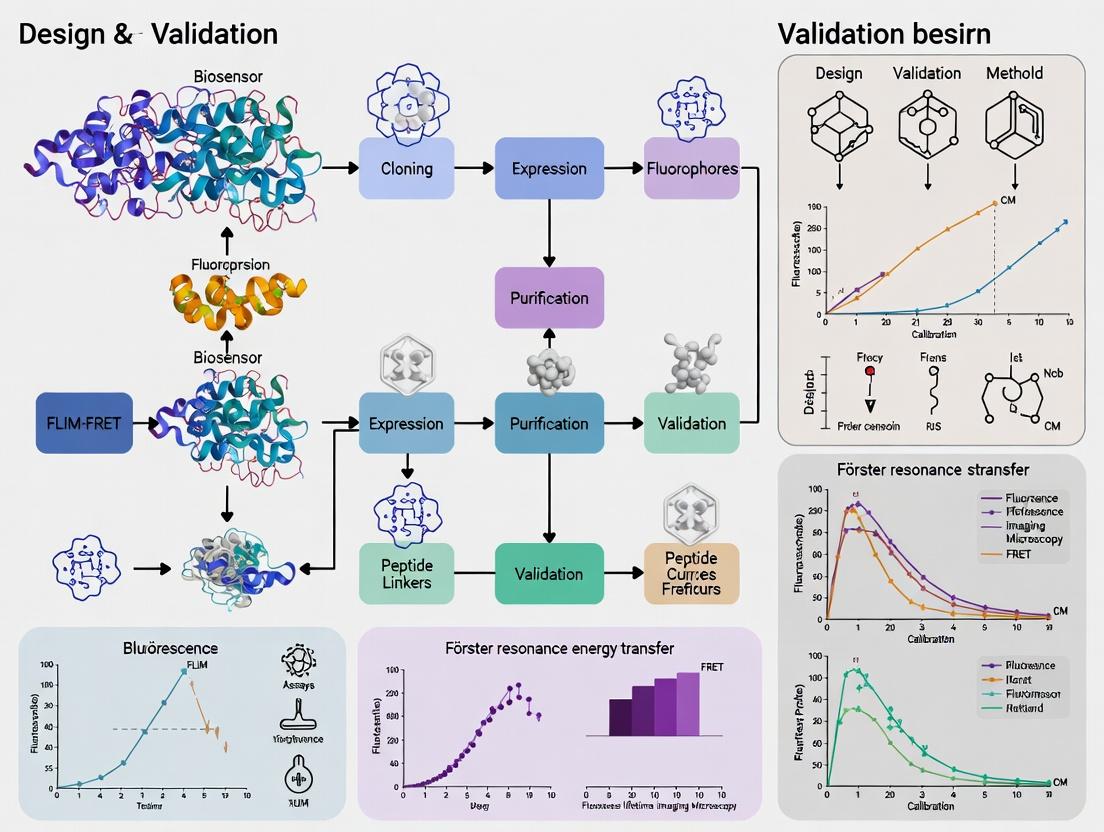
This comprehensive guide provides researchers and drug development professionals with a detailed roadmap for FLIM-FRET biosensor projects.
From Theory to Lab: A Complete Guide to Designing, Optimizing, and Validating FLIM-FRET Biosensors
Abstract
This comprehensive guide provides researchers and drug development professionals with a detailed roadmap for FLIM-FRET biosensor projects. It covers foundational principles of FRET and FLIM, step-by-step sensor design and experimental methodology, advanced troubleshooting for data quality, and rigorous validation techniques. By integrating the latest best practices, this article equips scientists to reliably measure molecular interactions and conformational changes in live cells, advancing research in cell signaling, drug discovery, and disease mechanisms.
FLIM-FRET 101: Core Principles and Why It's the Gold Standard for Live-Cell Biosensing
Förster Resonance Energy Transfer (FRET) is a non-radiative, distance-dependent physical process where an excited donor fluorophore transfers energy to a proximal acceptor fluorophore. This phenomenon serves as a powerful "molecular ruler" for probing interactions and conformational changes within 1-10 nm. Traditional intensity-based FRET measurements, while useful, are confounded by variables such as fluorophore concentration, excitation intensity, and optical path length. Fluorescence Lifetime Imaging Microscopy (FLIM)-FRET overcomes these limitations by measuring the donor fluorescence decay rate, a parameter intrinsically sensitive to FRET efficiency but independent of fluorophore concentration and excitation light intensity. This Application Note details the physics underpinning FRET, contrasts readout methodologies, and provides protocols for FLIM-FRET biosensor validation within a research thesis focused on advanced biosensor design.
The Physical Principles of FRET
FRET efficiency ((E)) is governed by the Förster equation: [ E = \frac{1}{1 + (r/R0)^6} ] where (r) is the donor-acceptor distance and (R0) is the Förster radius (distance at which (E=50\%)). (R0) depends on the spectral overlap ((J)), donor quantum yield ((\PhiD)), dipole orientation factor ((\kappa^2)), and refractive index ((n)).
Table 1: Key Parameters Governing FRET Efficiency
| Parameter | Symbol | Typical Influence/Value | Notes for Experimental Design |
|---|---|---|---|
| Donor-Acceptor Distance | (r) | 1-10 nm | Steep 1/r⁶ dependence makes FRET exquisitely distance-sensitive. |
| Förster Radius | (R_0) | 3-6 nm | Specific to each donor-acceptor pair. Maximizing (R_0) improves signal. |
| Spectral Overlap Integral | (J) | Larger is better | Requires careful fluorophore selection (e.g., CFP/YFP, GFP/mCherry). |
| Donor Quantum Yield | (\Phi_D) | Higher is better | Choose bright, photostable donors. |
| Orientation Factor | (\kappa^2) | Assumed 2/3 for dynamic averaging | Can be a major source of error if fluorophores are rigidly fixed. |
| FRET Efficiency | (E) | 0-100% | Measured quantity reporting on molecular proximity/association. |
The critical dependency on (r^{-6}) makes FRET a highly sensitive probe for molecular interactions and intramolecular conformational shifts, forming the basis for numerous biosensors.
FLIM-FRET: The Superior Readout
In FLIM-FRET, the presence of an acceptor shortens the donor's excited-state lifetime ((\tau)). The lifetime ((\tau)) is an intrinsic property of the fluorophore in its specific microenvironment.
FRET efficiency from lifetime measurements is calculated as: [ E = 1 - \frac{\tau{DA}}{\tauD} ] where (\tau{DA}) is the donor lifetime in the presence of acceptor, and (\tauD}) is the donor lifetime alone.
Table 2: Comparison of FRET Readout Modalities
| Aspect | Intensity-Based FRET (Ratiometric) | FLIM-FRET |
|---|---|---|
| Primary Measurement | Donor & Acceptor Emission Intensities | Donor Fluorescence Decay Rate |
| Concentration Dependency | Highly Dependent | Independent |
| Excitation Intensity Dependency | Highly Dependent | Independent |
| Photobleaching Sensitivity | High (ratios distorted) | Low (lifetime often unaffected) |
| Quantitative Accuracy | Moderate (requires controls) | High (direct measure of (E)) |
| Spatial Mapping in Cells | Possible with corrected ratios | Robust and quantitative |
| Instrument Complexity | Lower (standard microscope) | Higher (TCSPC or phasor) |
| Key Advantage | Accessibility, speed | Quantitative rigor, reliability in complex samples |
FLIM removes ambiguities from intensity-based measurements, providing a direct, quantitative map of FRET efficiency within a cell or tissue sample.
Application Note: Validating a FLIM-FRET Biosensor for Kinase Activity
Thesis Context: This protocol outlines the critical validation steps for a unimolecular, genetically encoded FRET biosensor designed to report on specific kinase activity (e.g., PKA, AKT). Validation ensures that observed lifetime shifts are due to the intended biological event.
Protocol 3.1: In Vitro Characterization of Biosensor Lifetime Parameters
Objective: Determine the donor-only lifetime ((\tauD)) and the fully FRETing (acceptor-bound) lifetime ((\tau{DA})) of the biosensor under controlled biochemical conditions.
Materials:
- Purified biosensor protein (donor-acceptor linked).
- Cleaved biosensor (acceptor fluorophore removed enzymatically or via construct) as donor-only control.
- Appropriate kinase (active/inactive), ATP, phosphatase, specific activators/inhibitors.
- FLIM-compatible buffer (e.g., PBS, phenol-red free).
- Time-Correlated Single Photon Counting (TCSPC) FLIM system or confocal with time-gated detection.
Procedure:
- Prepare samples: Aliquot purified biosensor into three reaction tubes:
- Tube 1: Biosensor + Kinase Buffer (Inactive state).
- Tube 2: Biosensor + Active Kinase + ATP (Active/FRET state).
- Tube 3: Cleaved donor-only biosensor.
- Incubate for 30 minutes at 30°C to allow complete phosphorylation/dephosphorylation.
- Transfer samples to glass-bottom dishes or cuvettes for microscopy/spectroscopy.
- Acquire FLIM data: Using a 440nm or 475nm pulsed laser for CFP/GFP donors, collect photon decay histograms until sufficient counts (>1000 at peak) are achieved.
- Fit decay curves: Use a bi-exponential or stretched exponential model to extract amplitude-weighted mean lifetimes ((\tau_m)).
- Calculate expected dynamic range: (\Delta\tau = \tauD - \tau{DA}). The FRET efficiency in the active state can be calculated as (E = 1 - (\tau{DA}/\tauD)).
Protocol 3.2: Cellular FLIM-FRET Experiment & Data Analysis
Objective: Quantify spatiotemporal kinase activity dynamics in live cells expressing the biosensor.
Materials:
- Mammalian cell line (e.g., HEK293, HeLa).
- Validated FRET biosensor plasmid DNA.
- Transfection reagent.
- Pharmacological agents: Kinase activator (e.g., Forskolin for PKA), inhibitor (e.g., H-89).
- Live-cell imaging medium.
- Confocal microscope equipped with TCSPC or time-gated FLIM module, environmental chamber.
Procedure:
- Cell seeding & transfection: Seed cells onto 35mm glass-bottom dishes. At 60-70% confluency, transfert with the biosensor plasmid using standard protocols.
- Microscope setup: Equilibrate environmental chamber to 37°C and 5% CO₂. Set imaging parameters: 440/475 nm pulsed laser at low power to minimize photobleaching, appropriate donor emission filter (e.g., 470/40 nm for CFP), 512x512 pixel resolution.
- Acquire baseline FLIM: For each cell, acquire a pre-stimulus FLIM image (collect for 60-90 seconds to build a sufficient decay histogram per pixel).
- Stimulate and monitor: Without moving the field of view, add the activating drug directly to the dish. Acquire sequential FLIM images over a 15-30 minute period.
- Inhibitor control: In separate experiments, pre-treat cells with a specific kinase inhibitor for 30 mins before acquiring baseline and post-stimulus FLIM images.
- Data Analysis:
- Fit lifetime decays per pixel using software (e.g., SPCImage, SymPhoTime, or open-source tools).
- Generate false-color lifetime maps and calculate mean lifetime ((\taum)) for regions of interest (ROI), such as the cytosol or nucleus.
- Plot (\taum) over time to visualize kinetic activity.
- Calculate FRET efficiency maps: (E = 1 - (\tau{m}/\tau{D})), where (\tau_{D}) is the donor-only lifetime from control cells or an in-cell donor-only reference construct.
The Scientist's Toolkit: Essential Research Reagent Solutions
Table 3: Key Reagents and Materials for FLIM-FRET Biosensor Research
| Item | Function in FLIM-FRET Research | Example/Notes |
|---|---|---|
| Genetically Encoded FRET Pairs | Donor and acceptor fluorophores for biosensor construction. | CFP/YFP (e.g., Cerulean/Venus): Classic pair. GFP/mCherry: Reduced spectral bleed-through. Optimized pairs: mTurquoise2/sYFP2 (higher brightness, pH stability). |
| FLIM-Optimized Microscope System | To measure fluorescence decay kinetics. | TCSPC System: Gold standard for accuracy. Time-Gated Systems: Faster acquisition. Multi-photon FLIM: For deep tissue. |
| Lifetime Reference Standard | To calibrate and check instrument performance. | Fluorescein (τ ~4.0 ns in pH 9 buffer) or proprietary dyes with known, single-exponential decays. |
| Live-Cell Imaging Medium | To maintain cell health during time-lapse FLIM. | Phenol-red free, with stable pH buffer (e.g., HEPES), suitable for environmental control. |
| Specific Pharmacological Modulators | To activate/inhibit the target pathway for biosensor validation. | Kinase activators (e.g., Forskolin), inhibitors (e.g., Wortmannin), ionophores (e.g., Ionomycin). Must be of high purity. |
| Transfection/Expression Reagents | To deliver biosensor DNA into mammalian cells. | Chemical: PEI, Lipofectamine 3000. Viral: Lentivirus for stable lines. Physical: Electroporation for difficult cells. |
| Data Fitting & Analysis Software | To extract lifetimes and generate FRET efficiency maps from raw decay data. | Commercial: SPCImage (Becker & Hickl), SymPhoTime. Open-Source: FLIMfit (OMERO), PicoQuant's software. |
| Donor-Only Control Construct | Critical to determine τ_D in the specific cellular environment. | A biosensor variant with the acceptor fluorophore mutated/deleted. Expressed under identical conditions. |
Application Notes
Biosensors based on Förster Resonance Energy Transfer (FRET) quantified by Fluorescence Lifetime Imaging Microscopy (FLIM) offer robust, rationetric, and quantitative readouts of biological activity in live cells. Their design archetypes fall into two primary categories, each with distinct applications and validation requirements within drug discovery and basic research.
1. Intramolecular Conformational Reporters: These are single-chain biosensors where donor and acceptor fluorophores are linked by a sensing domain that undergoes a conformational shift upon activation (e.g., kinase substrate domains, protease cleavage sites, ligand-binding domains). Activation alters the distance/orientation between the fluorophores, changing FRET efficiency. FLIM-FRET measures the decrease in donor fluorescence lifetime upon increased FRET.
- Primary Application: Measuring activity of specific enzymes (kinases, proteases, GTPases) or second messengers (cAMP, Ca²⁺) in real-time, with high spatial resolution. They are cell-autonomous and ideal for tracking signaling dynamics.
- Validation Focus: Ensuring the sensor responds specifically to the intended target and not to off-target activities or expression levels. Requires careful calibration in vitro and in cells using known activators/inhibitors.
2. Intermolecular Interaction Probes: These are two-component systems where donor and acceptor fluorophores are attached to separate molecules (e.g., two proteins). FRET occurs only upon ligand-induced dimerization or direct binding.
- Primary Application: Quantifying protein-protein interactions (PPIs), complex formation, and receptor dimerization. Critical for pathway mapping and screening for PPI inhibitors.
- Validation Focus: Demonstrating specificity of interaction and establishing that FRET signal is not due to random collisions or overexpression artifacts. Controls include co-immunoprecipitation and use of interaction-disrupting mutants.
FLIM provides a decisive advantage over intensity-based FRET for both archetypes, as the donor lifetime is an absolute physical parameter independent of sensor concentration, excitation light intensity, and spectral bleed-through, enabling more reliable quantification, especially in complex tissues or during long-term experiments.
Quantitative Data Summary
Table 1: Comparison of FLIM-FRET Biosensor Archetypes
| Characteristic | Intramolecular Conformational Reporter | Intermolecular Interaction Probe |
|---|---|---|
| Molecular Format | Single polypeptide chain | Two separate polypeptides |
| FRET Change Upon Event | Conformational shift alters distance/orientation | Binding reduces intermolecular distance |
| Key Quantitative Readout (FLIM) | Decrease in donor lifetime (τ) upon activation | Decrease in donor lifetime (τ) upon binding |
| Typical Baseline Donor τ (e.g., GFP) | ~2.4 ns | ~2.4 ns |
| Typical Δτ upon Positive Signal | 0.2 – 0.8 ns | 0.1 – 0.6 ns |
| Pros | Consistent expression ratio (D:A = 1:1); cell-autonomous; good for dynamics | Reports endogenous proteins if tagged; can survey multiple partners |
| Cons | Engineering-intensive; may perturb native biology | Expression level variance affects interaction probability; can report non-specific proximity |
| Primary Use Case | Enzyme activity, metabolite levels | Protein-protein interactions, complex assembly |
Table 2: Example FLIM-FRET Biosensors and Their Parameters
| Sensor Name | Archetype | Target | Donor | Acceptor | Reported Δτ (Activated-Baseline) |
|---|---|---|---|---|---|
| AKAR3 | Intramolecular | PKA Kinase Activity | ECFP | YPet | -0.52 ns |
| Cameleon D3 | Intramolecular | Ca²⁺ | ECFP | Citrine | -0.71 ns |
| EGFR-Grb2 | Intermolecular | EGFR/Grb2 Interaction | SGFP2 | mScarlet-I | -0.35 ns |
| BimBH3-Bcl2 | Intermolecular | Apoptotic PPI | mTurquoise2 | mVenus | -0.28 ns |
Experimental Protocols
Protocol 1: Validating an Intramolecular Kinase Sensor (e.g., AKAR) in Live Cells using FLIM-FRET
Objective: To measure and quantify PKA activity changes in response to Forskolin/IBMX.
Materials: See "The Scientist's Toolkit" below.
Procedure:
- Cell Preparation: Plate HEK293T cells in a 35mm glass-bottom dish. Transfect with the AKAR3 biosensor plasmid using a suitable transfection reagent.
- Microscope Setup: 24-48h post-transfection, place dish on a confocal microscope equipped with a TCSPC FLIM module. Use a 405 nm pulsed laser for donor (ECFP) excitation.
- Baseline FLIM Acquisition: Select fields with moderately expressing cells. Acquire donor fluorescence lifetime images. Collect sufficient photons for a biexponential fit (typical minimum: 1000 photons at peak). Fit decay curves per pixel to obtain the mean donor lifetime (τ) map.
- Stimulation: Without moving the field of view, add a pre-mixed solution of Forskolin (final 50 µM) and 3-isobutyl-1-methylxanthine (IBMX, final 100 µM) directly to the culture medium to elevate cAMP and activate PKA.
- Post-Stimulation FLIM Acquisition: 10-15 minutes after stimulation, re-acquire FLIM images of the same cells using identical settings.
- Data Analysis:
- Using FLIM analysis software, generate pseudocolored lifetime maps.
- Draw regions of interest (ROIs) over the cytosol of individual cells.
- Export the mean τ values for each cell, pre- and post-stimulation.
- Perform a paired t-test to assess significance. Calculate the mean Δτ.
Protocol 2: Quantifying a Protein-Protein Interaction using an Intermolecular FLIM-FRET Probe
Objective: To measure ligand-induced interaction between EGFR and the adaptor protein Grb2.
Materials: See "The Scientist's Toolkit" below.
Procedure:
- Construct Design & Expression: Create expression plasmids for EGFR-SGFP2 (Donor) and Grb2-mScarlet-I (Acceptor).
- Control Samples: Prepare two critical control samples:
- Donor Only: Cells transfected with EGFR-SGFP2 only.
- Acceptor Bleed-Through: Cells co-transfected with EGFR-SGFP2 and untagged Grb2 (to check for acceptor emission from donor excitation).
- Experimental Sample: Co-transfect cells with both EGFR-SGFP2 and Grb2-mScarlet-I at a 1:2 plasmid mass ratio to favor acceptor incorporation.
- FLIM Acquisition (Serum Starved): 24h post-transfection, serum-starve cells for 4-6h. Acquire donor (SGFP2) FLIM images as in Protocol 1.
- Stimulation: Add EGF (final 100 ng/mL) to the medium. Incubate for 10 minutes.
- FLIM Acquisition (Post-EGF): Re-acquire FLIM images of the same field.
- Data Analysis & Validation:
- Compare lifetime distributions (histograms) from Donor Only vs. Experimental samples. A left-shift (shorter τ) indicates FRET.
- For each condition (starved, stimulated), calculate the mean τ for cells co-expressing both constructs.
- Validate the specific interaction by treating a parallel sample with an EGFR tyrosine kinase inhibitor (e.g., Gefitinib, 1 µM, 1h pre-treatment) before EGF stimulation. This should abrogate the τ decrease.
The Scientist's Toolkit
Table 3: Essential Research Reagents and Materials for FLIM-FRET Experiments
| Item | Function / Rationale |
|---|---|
| FLIM-Compatible Microscope | Confocal or widefield system with Time-Correlated Single Photon Counting (TCSPC) or gated detection for nanosecond lifetime measurement. |
| Pulsed Laser (405 nm, 440 nm) | Provides picosecond-pulsed light for exciting donor fluorophores (e.g., CFP, mTurquoise2, SGFP2). |
| High-N.A. Oil Immersion Objective (60x/63x) | Maximizes photon collection efficiency, critical for fast and accurate FLIM. |
| Low-Fluorescence Immersion Oil | Reduces background autofluorescence from the immersion medium. |
| Glass-Bottom Culture Dishes | Provides optimal optical clarity for high-resolution live-cell imaging. |
| Validated FRET Biosensor Plasmids | Source from reputable repositories (Addgene). Sequence-verify before use. |
| Transfection Reagent (e.g., PEI, Lipofectamine 3000) | For efficient delivery of biosensor plasmids into mammalian cells. |
| Phosphate-Buffered Saline (PBS), FluoroBrite DMEM | Low-fluorescence imaging medium to reduce background during acquisition. |
| Specific Agonists/Antagonists | Well-characterized pharmacological agents (e.g., Forskolin, EGF, Staurosporine) for validating sensor response. |
| FLIM Data Analysis Software | Software (e.g., SPCImage, FLIMfit, SymPhoTime) for fitting decay curves and calculating lifetime maps. |
Visualization
Intramolecular Conformational Biosensor Mechanism
Intermolecular Interaction Biosensor Mechanism
General FLIM-FRET Experimental Workflow
Within the broader thesis on FLIM-FRET biosensor design and validation, the selection of optimal donor-acceptor pairs is a foundational step that dictates the sensitivity, dynamic range, and reliability of the biosensor. Förster Resonance Energy Transfer (FRET) efficiency is critically dependent on the spectral properties of the fluorophores, their molecular separation, and orientation. This guide synthesizes current best practices for selecting fluorophores to maximize FRET signal for quantitative Fluorescence Lifetime Imaging (FLIM) applications in live-cell research and drug discovery.
Key Considerations for Pair Selection
Spectral Overlap
The overlap integral (J(λ)) between donor emission and acceptor absorption spectra is paramount. A larger J(λ) increases the Förster distance (R₀), the distance at which FRET efficiency is 50%.
Förster Distance (R₀)
Pairs with a larger R₀ are more tolerant to variations in linker length and orientation, providing a more robust signal. R₀ is calculated from the donor quantum yield, acceptor extinction coefficient, spectral overlap, and dipole orientation factor.
Donor-Acceptor Orientation (κ²)
The orientation factor can vary between 0 and 4. For freely rotating fluorophores linked via flexible polypeptides, κ² is often assumed to be 2/3. Rigid fusion requires careful consideration.
Acceptor Molar Extinction Coefficient
A high extinction coefficient increases the probability of acceptor absorption, enhancing FRET efficiency.
Quantum Yield of the Donor
A higher donor quantum yield increases both fluorescence intensity and R₀.
Fluorescent Protein Maturation & Photostability
For live-cell FLIM-FRET, maturation efficiency and resistance to photobleaching are crucial for quantitative measurements over time.
Quantitative Comparison of Common FRET Pairs
The following table summarizes key parameters for widely used genetically encoded FP pairs and organic dye pairs suitable for FLIM-FRET biosensor design.
Table 1: Genetically Encoded Fluorescent Protein Pairs
| Donor | Acceptor | R₀ (nm) | Donor QY | Acceptor EC (M⁻¹cm⁻¹) | Best For (Application) | Notes for FLIM |
|---|---|---|---|---|---|---|
| ECFP | Venus | 4.9 - 5.2 | 0.40 | 92,200 | Ratiometric FRET, general biosensors | Moderate lifetime change (~0.4-0.6 ns). Prone to pH sensitivity. |
| mTurquoise2 | Venus | 6.2 | 0.93 | 92,200 | High dynamic range biosensors | Bright donor, excellent photostability, large lifetime shift. |
| mCerulean3 | mNeonGreen | 5.8 | 0.87 | 116,000 | High-sensitivity intramolecular sensors | High quantum yield and brightness enhance R₀ and signal. |
| mTFP1 | mKate2 | 5.3 | 0.85 | 62,500 | Red-shifted FRET, reduced autofluorescence | Good spectral separation, advantageous for deep-tissue/multiplexing. |
| Clover | mRuby3 | 5.8 | 0.76 | 112,000 | High-performance red-shifted pair | Very bright pair; excellent for FLIM due to long donor lifetime. |
| EGFP | mCherry | 5.1 | 0.60 | 72,000 | Common, readily available pairs | Moderate R₀; acceptor can be sensitive to photobleaching. |
Table 2: Organic Dye/Synthetic Fluorophore Pairs (for Labeled Biomolecules)
| Donor | Acceptor | R₀ (nm) | Donor QY | Acceptor EC (M⁻¹cm⁻¹) | Excitation Laser (nm) | Notes for FLIM |
|---|---|---|---|---|---|---|
| Alexa Fluor 488 | Alexa Fluor 568 | ~6.0 | 0.92 | 91,300 | 488 nm | High brightness, well-characterized for fixed-cell/surface assays. |
| Cy3 | Cy5 | ~5.4 - 6.0 | 0.15 | 250,000 | 532/561 nm | Classic small molecule pair; Cy3 has short lifetime, good for intensity-based FRET. |
| ATTO 550 | ATTO 647N | 6.5 | 0.80 | 150,000 | 532/561 nm | High R₀, excellent photostability, ideal for single-molecule FLIM-FRET. |
| CF568 | CF670 | ~6.2 | 0.88 | 210,000 | 561 nm | Bright, photostable, suitable for super-resolution FLIM. |
| HaloTag JF549 | SNAP-tag JF646 | ~6.3 | 0.88 | 152,000 | 561 nm | Self-labeling tag system; high specificity for live-cell FLIM. |
Experimental Protocol: Validating FRET Pair Efficiency via FLIM
Protocol 1: In Vitro Characterization of FRET Constructs Using Time-Correlated Single Photon Counting (TCSPC)-FLIM
Objective: To measure the fluorescence lifetime of a donor fluorophore in the presence and absence of the acceptor to calculate FRET efficiency for a purified biosensor protein.
I. Materials & Reagent Solutions
- Research Reagent Solutions:
- Purified Biosensor Constructs: Donor-only (D-only) and donor-acceptor (D-A) fusion proteins in FRET buffer (e.g., 50 mM Tris-HCl, pH 7.4, 150 mM NaCl, 1 mM DTT).
- FRET Buffer: Provides stable physiological pH and ionic strength.
- Ligand/Modulator Solutions: Purified activating/inhibiting compounds for biosensor validation.
- Reference Dye: A solution of Fluorescein (lifetime ~4.0 ns in 0.1 M NaOH) or Rose Bengal for instrument response function (IRF) measurement and calibration.
II. Procedure
- Sample Preparation:
- Dilute D-only and D-A protein constructs to an OD280 < 0.1 in FRET buffer to avoid inner filter effects.
- For activation studies, incubate the D-A sample with the appropriate ligand/modulator for 15 minutes at room temperature.
- Transfer 100 µL of each sample to an 8-well chambered coverglass or a quartz cuvette.
TCSPC-FLIM Data Acquisition:
- Mount the sample on a confocal or multiphoton microscope equipped with a TCSPC module and a pulsed laser matching the donor excitation wavelength (e.g., 440 nm pulsed diode for CFP/mTurquoise2).
- Set the laser repetition rate appropriately (typically 20-40 MHz).
- Acquire photon counts until a peak of >10,000 counts is achieved in the decay histogram for a representative ROI. Maintain count rates below 1-2% of the laser frequency to avoid pulse pile-up.
- Repeat for all samples (D-only, D-A unstimulated, D-A stimulated) under identical laser power and detector settings.
Data Analysis & FRET Efficiency Calculation:
- Fit the fluorescence decay curve, I(t), using a multi-exponential reconvolution model with the measured IRF:
- I(t) = IRF(t) ⊗ [∑ᵢ αᵢ exp(-t/τᵢ)]
- where αᵢ is the amplitude and τᵢ is the lifetime of component i.
- For a mono-exponential D-only sample, extract the donor lifetime in the absence of acceptor (τ_D).
- For the D-A sample, fit the decay. The presence of FRET will introduce a shorter lifetime component (τDA). Calculate the amplitude-weighted mean lifetime (τm = ∑ᵢ αᵢτᵢ / ∑ᵢ αᵢ).
- Calculate the FRET efficiency (E) using:
- E = 1 - (τDA / τD) where τ_DA is the mean lifetime of the donor in the presence of the acceptor.
- Fit the fluorescence decay curve, I(t), using a multi-exponential reconvolution model with the measured IRF:
Protocol 2: Live-Cell FLIM-FRET Imaging of a Biosensor
Objective: To quantify the spatiotemporal dynamics of a biosensor's activity in live cells via donor fluorescence lifetime changes.
I. Materials & Reagent Solutions
- Research Reagent Solutions:
- Cell Line: HEK293T or relevant cell line expressing the FLIM-FRET biosensor.
- Transfection Reagent: Polyethylenimine (PEI) or Lipofectamine 3000.
- Imaging Medium: Phenol-red free medium, buffered with HEPES.
- Stimulus: Drug candidate or physiological agonist (e.g., Forskolin for cAMP biosensors).
- Control Inhibitor: Specific inhibitor for the pathway under study.
II. Procedure
- Cell Seeding & Transfection:
- Seed cells onto 35-mm glass-bottom dishes 24 hours prior.
- Transfect with the biosensor plasmid using standard protocols. Include a D-only construct control.
- Culture for 24-48 hours to allow for biosensor expression and maturation.
Microscope Setup:
- Use a confocal or multiphoton microscope with TCSPC-FLIM capability, environmental chamber (37°C, 5% CO₂).
- Select appropriate donor excitation (e.g., 440 nm laser) and emission filter (e.g., 470/40 nm for CFP derivatives).
Image Acquisition:
- Locate a field of moderately expressing cells. High expression can cause artifacts.
- Acquire a donor intensity image to define the cell ROI.
- Acquire a FLIM image stack until sufficient photons are collected per pixel (>500 photons for a reasonable fit).
- Stimulation: Without moving the field of view, carefully add the stimulus to the dish. Acquire sequential FLIM images over the desired time course (e.g., every 30 seconds for 15 minutes).
Data Processing:
- Process FLIM data with software (e.g., SPCImage, SymPhoTime, or FLIMfit). Fit each pixel's decay to a bi-exponential model to extract the mean donor lifetime (τ_m).
- Generate pseudocolor lifetime maps.
- Quantify the mean τm within the cytoplasmic or nuclear ROI over time. A decrease in τm indicates increased FRET (biosensor activation).
Visualization Diagrams
Title: Generic FLIM-FRET Biosensor Activation Pathway
Title: FLIM-FRET Biosensor Development & Validation Workflow
The Scientist's Toolkit: Key Research Reagents & Materials
| Item | Function/Application in FLIM-FRET |
|---|---|
| mTurquoise2-Venus Plasmid Kit | Gold-standard FRET pair for high dynamic range biosensors; optimized for live-cell FLIM. |
| HaloTag & SNAP-tag Vectors | Enables specific, covalent labeling with bright, photostable organic dyes for superior signal-to-noise in FLIM. |
| Polyethylenimine (PEI) Max | High-efficiency, low-cost transfection reagent for delivering biosensor plasmids into mammalian cells. |
| Phenol-Red Free Imaging Medium | Reduces background fluorescence and autofluorescence, critical for clean lifetime measurements. |
| Fluorescein Reference Standard | Used to measure the Instrument Response Function (IRF) for accurate TCSPC-FLIM decay fitting. |
| TCSPC-FLIM Module (e.g., PicoHarp, SPC-150) | Essential hardware for time-resolved photon counting to measure nanosecond fluorescence lifetimes. |
| FLIM Data Analysis Software (e.g., FLIMfit, SPCImage) | Specialized software for fitting lifetime decay curves and generating quantitative lifetime maps. |
| Chambered #1.5 Coverglass | High-precision glass-bottom dishes for optimal optical clarity and resolution during live-cell imaging. |
Within the framework of a thesis on FLIM-FRET biosensor design and validation, the foundational step is the precise definition of the biological question. This dictates every subsequent design parameter. This Application Note outlines the rationale and methodology for aligning biosensor architecture with specific dynamic processes in living cells, focusing on three canonical pathways: kinase activity, caspase activation, and GPCR signaling. FLIM-FRET provides a quantitative, ratiometric, and concentration-independent readout, making it ideal for monitoring these molecular events.
Pathway-Specific Sensor Design Considerations
The core design principle is the linkage of a target-induced conformational change to a change in FRET efficiency between a donor and acceptor fluorophore.
Table 1: Target Pathway Characteristics and Corresponding Biosensor Design Strategies
| Target Pathway | Key Dynamic Event | Typical Sensor Architecture | Conformational Trigger | Primary Validation Method |
|---|---|---|---|---|
| Kinase Activity | Phosphorylation of substrate peptide/protein. | Phosphorylation-sensitive FHA2 domain) inserted between donor and acceptor. | Phospho-binding domain docking, inducing compression. | In vitro kinase assay; site-directed mutagenesis (Ala) of target residue. |
| Caspase Activation | Proteolytic cleavage at specific aspartic acid sequence (e.g., DEVD). | Caspase cleavage sequence linker between donor and acceptor. | Cleavage of linker, leading to physical separation of FRET pair. | In vitro cleavage with recombinant caspase; treatment with pan-caspase inhibitor (e.g., Z-VAD-FMK). |
| GPCR Signaling | Ligand-induced conformational change; activation of downstream effectors (e.g., cAMP/PKA, Ca²⁺). | Full-length GPCR or downstream effector domain (e.g., EPAC for cAMP) fused to FRET pair. | Ligand binding-induced intramolecular rearrangement. | Agonist/antagonist dose-response; use of pathway-specific inhibitors (e.g., H-89 for PKA). |
Experimental Protocols
Protocol 1: General Workflow for FLIM-FRET Biosensor Validation
Objective: To express and validate a genetically encoded FRET biosensor in live cells using FLIM. Materials:
- HEK293T or HeLa cells
- Plasmid DNA encoding the FRET biosensor (e.g., CKAR for PKA, SCAT3 for Caspase-3)
- Lipofectamine 3000 transfection reagent
- Imaging medium: FluoroBrite DMEM + 2% FBS
- Confocal or multiphoton microscope with time-correlated single photon counting (TCSPC) FLIM capability
- 35 mm glass-bottom imaging dishes
Procedure:
- Cell Seeding & Transfection: Seed cells at 50-70% confluency 24h prior. Transfect with 1-2 µg biosensor plasmid using manufacturer's protocol.
- Expression & Preparation: Incubate for 24-48h. Replace medium with pre-warmed imaging medium 1h before imaging.
- FLIM Data Acquisition: Image at 37°C, 5% CO₂. Use a 40x or 60x oil immersion objective. Excite the donor (e.g., CFP, mTurquoise2) with a pulsed laser (e.g., 440 nm). Acquire donor fluorescence lifetime decays in a defined region of interest (ROI) within expressing cells.
- Stimulation & Kinetics: Acquire a 2-5 minute baseline. Add pathway agonist (e.g., Forskolin for PKA, Staurosporine for apoptosis) directly to the dish and continue time-lapse FLIM acquisition.
- Data Analysis: Fit fluorescence decay curves to a double- or triple-exponential model using specialized software (e.g., SPCImage, Globals). The amplitude-weighted mean lifetime (τₘ) is inversely proportional to FRET efficiency. Plot τₘ vs. time.
Protocol 2: In Vitro Validation of a Caspase-3 FRET Sensor
Objective: To confirm specific cleavage and resultant loss of FRET. Materials:
- Purified recombinant FRET sensor protein (e.g., mCerulean3-DEVD-mVenus)
- Recombinant active Caspase-3 enzyme
- Cleavage buffer: 50 mM HEPES, 100 mM NaCl, 0.1% CHAPS, 10% sucrose, pH 7.4
- 10 mM DTT (fresh)
- Pan-caspase inhibitor Z-VAD-FMK (10 mM stock in DMSO)
- Plate reader capable of fluorescence intensity measurements (FRET channel).
Procedure:
- Reaction Setup: In a 96-well plate, mix 100 nM sensor protein in cleavage buffer with 2 mM DTT.
- Inhibitor Control: Pre-incubate one reaction with 20 µM Z-VAD-FMK for 15 min at 25°C.
- Cleavage Reaction: Initiate reaction by adding recombinant Caspase-3 to a final concentration of 50 nM to both treated and untreated samples.
- Kinetic Readout: Immediately monitor fluorescence emission at 525 nm (acceptor) with excitation at 433 nm (donor) every 30 seconds for 1 hour.
- Analysis: The FRET ratio (YFP/CFP emission) will decrease over time in the active Caspase-3 sample due to cleavage and donor-acceptor separation. The inhibitor control should show minimal change.
Diagrams
Diagram 1: FLIM-FRET Sensor Design Logic for Three Pathways
Title: Design Logic for Pathway-Specific Biosensors
Diagram 2: Key Signaling Pathways Monitored by FLIM-FRET Biosensors
Title: Three Core Pathways for Biosensor Design
The Scientist's Toolkit: Research Reagent Solutions
Table 2: Essential Reagents for FLIM-FRET Biosensor Development & Validation
| Reagent / Material | Function & Role in Validation |
|---|---|
| mTurquoise2 (donor) | Optimized cyan fluorescent protein with long fluorescence lifetime, ideal for FLIM-FRET. |
| mNeonGreen / mVenus (acceptor) | Bright yellow/green fluorescent proteins with high quantum yield and acceptor extinction coefficient. |
| Lipofectamine 3000 | High-efficiency, low-toxicity transfection reagent for plasmid delivery into mammalian cell lines. |
| Forskolin (agonist) | Direct adenylate cyclase activator; used to stimulate cAMP/PKA pathway for kinase sensor validation. |
| Staurosporine | Broad-spectrum kinase inducer used to trigger apoptosis and caspase activation in validation assays. |
| Z-VAD-FMK (inhibitor) | Cell-permeable, irreversible pan-caspase inhibitor; critical negative control for caspase sensor experiments. |
| Recombinant Active Caspase-3 | Essential for in vitro validation of cleavage-based biosensors (Protocol 2). |
| H-89 dihydrochloride | Potent and selective PKA inhibitor; used for pathway blockade and control experiments in kinase signaling. |
| TCSPC FLIM Module | Hardware (e.g., Becker & Hickl, PicoQuant) enabling precise time-domain fluorescence lifetime measurement. |
| SPCImage / Globals Software | Specialized software for fitting fluorescence decay curves and calculating lifetime maps from TCSPC data. |
Building and Applying Your Biosensor: A Step-by-Step Protocol from DNA to Data
Within the context of a broader thesis on FLIM-FRET (Fluorescence Lifetime Imaging - Förster Resonance Energy Transfer) biosensor design, molecular cloning is the foundational step that dictates the functionality and reliability of the final probe. The strategic design of linkers, precise control of domain orientation, and robust assembly of constructs are critical for creating biosensors that accurately report on cellular biochemical events. This document provides detailed application notes and protocols for these key steps, tailored for researchers developing quantitative, live-cell biosensors.
Part 1: Linker Design for FLIM-FRET Biosensors
Linkers are not merely passive connectors; they modulate the distance, orientation, and flexibility between the donor and acceptor fluorophores, directly impacting FRET efficiency. For FLIM, which measures the donor fluorophore's lifetime quenching upon FRET, linker properties are paramount for signal dynamic range.
Key Considerations & Quantitative Data
The following table summarizes critical parameters for linker design in FRET biosensors.
Table 1: Linker Design Parameters for FRET Biosensors
| Parameter | Optimal Range / Type | Impact on FRET/FLIM | Rationale |
|---|---|---|---|
| Length | 5-20 amino acids (AA) or 10-60 base pairs (bp) | Directly affects fluorophore separation (R0 typically 4-6 nm). | Must position fluorophores within 1-2x R0 distance. Shorter linkers reduce background FRET but may hinder folding. |
| Flexibility | (GGS)n, (GGGGS)n (n=1-4) common. | High flexibility increases sampling space, can increase background FRET. | Flexible linkers allow biosensor domains to interact without steric hindrance. |
| Rigidity | (EAAAK)n, α-helical linkers. | Reduces unwanted conformational noise, provides fixed distance. | Useful for constraining fluorophore orientation or separating domains precisely. |
| Cleavage Site | Protease-specific (e.g., TEV, 3C) sequences. | Enables post-assembly verification of FRET change. | Validation control: cleavage should abolish FRET, confirming biosensor mechanism. |
| Secondary Structure | Avoid unintentional β-sheet/helix formation. | Unpredicted structure can alter distance/orientation. | Use prediction tools (e.g., JPred, PEP-FOLD) to screen designs. |
Protocol 1.1: In Silico Linker Screening and Design
Materials:
- Software: PyMOL, ChimeraX, or RosettaFold for structural modeling.
- Web Tools: LINKER (https://linker.mbu.iisc.ac.in), PEP-FOLD 4.
- Sequence Analysis: SnapGene or Geneious.
Method:
- Define Constraints: Based on the known or homology-modeled structures of your biosensor's donor and acceptor domains (e.g., CFP and YFP, or specific ligand-binding domains), identify the C- and N-termini that will be connected.
- Generate Linker Candidates: Design a library of DNA sequences encoding linkers of varying lengths (e.g., 5, 10, 15 AA) and compositions (flexible: (GGS)3; rigid: EAAAK).
- Model the Full Construct: Use coarse-grained or ab initio structure prediction (e.g., via ColabFold) to generate models of the full biosensor with each linker. Pay particular attention to the distance and orientation vector between the fluorophores' chromophores.
- Calculate Predicted FRET Efficiency: Using the modeled distance (R) and assuming κ² = 2/3 (dynamic averaging), calculate predicted FRET efficiency: E = R0⁶ / (R0⁶ + R⁶). The Förster radius (R0) for common pairs (e.g., CFP-YFP) is ~4.9-5.2 nm.
- Select for Testing: Prioritize 2-3 linkers that model a resting-state fluorophore distance close to 0.8-1.2 x R0 for maximum dynamic range upon biosensor activation.
Part 2: Domain Orientation and Vector Selection
The order of domains (e.g., fluorophore N- or C-terminal to the sensing domain) and their reading frame alignment are crucial for proper folding and function.
Logical Decision Workflow
Protocol 2.1: Modular Cloning via Golden Gate Assembly
This method allows rapid, seamless testing of multiple domain orientations.
Research Reagent Solutions & Essential Materials
| Item | Function in Experiment | Example Product/Kit |
|---|---|---|
| Type IIS Restriction Enzymes | Cut outside recognition site, creating unique 4-6 bp overhangs for seamless assembly. | BsaI-HFv2, BsmBI-v2 (NEB). |
| Modular Entry Vector (e.g., Level 0) | Holds individual parts (promoter, FP, linker, domain) flanked by standardized Type IIS sites. | pGGAentry (Addgene #135038) or homemade. |
| Empty Destination Vector (Level 1) | Accepts assembled transcription units; contains selection marker & backbone. | pGGC (Addgene #135040). |
| DNA Ligase (High-Concentration) | Joins complementary overhangs in a single pot reaction with Type IIS enzymes. | T7 DNA Ligase (NEB). |
| Chemically Competent E. coli | For transformation of assembled plasmids. | NEB 5-alpha or DH5α. |
| Sequence Verification Service | Confirms correct assembly and reading frame. | Plasmidsaurus, Eurofins. |
Method:
- Prepare Parts: Clone each biosensor component (Fluorophore 1, Linker A, Sensing Domain, Linker B, Fluorophore 2) into separate Level 0 entry vectors using standard cloning. Each part is flanked by BsaI sites with designed overhangs.
- Design Assembly: Define the order of parts. Assign unique, complementary overhangs between parts (e.g., FP1 end AATG + Linker start CATG).
- Set Up Golden Gate Reaction:
- In a 20 µL reaction, combine:
- 50 ng of each Level 0 plasmid (or 10-20 fmol of each PCR fragment).
- 1 µL BsaI-HFv2 (or BsmBI-v2).
- 1 µL T7 DNA Ligase (NEB).
- 2 µL 10X T4 DNA Ligase Buffer (provides ATP).
- Nuclease-free water to 20 µL.
- Thermocycler program: (37°C for 2-5 min → 16°C for 5 min) x 25-30 cycles, then 50°C for 5 min, 80°C for 5 min.
- In a 20 µL reaction, combine:
- Transform and Verify: Transform 2 µL of reaction into competent E. coli, plate on appropriate antibiotic. Screen colonies by colony PCR and validate by Sanger sequencing across all junctions.
Part 3: Multi-Fragment Construct Assembly and Validation
Final assembly often requires combining the biosensor with specific promoters, tags, or selection markers into a mammalian expression vector.
Experimental Workflow for Biosensor Construction & Validation
Protocol 3.1: Functional Validation of FLIM-FRET Biosensor in Live Cells
Objective: To confirm that the cloned biosensor exhibits a change in donor fluorescence lifetime (τ) upon activation, indicative of FRET change.
Materials:
- Purified biosensor plasmid DNA.
- Mammalian cell line (e.g., HEK293T, HeLa).
- Transfection reagent (e.g., Lipofectamine 3000, polyethylenimine).
- FLIM microscope equipped with time-correlated single photon counting (TCSPC) and appropriate lasers/filters (e.g., 405 nm laser for CFP, 480/40 emission).
- Positive control (known active stimulus, e.g., ionomycin for Ca²⁺ biosensor, PMA for kinase biosensor).
- Negative control (biosensor with dead sensing domain or FRET-incompetent FP pair).
Method:
- Cell Culture and Transfection: Seed cells onto 35mm glass-bottom dishes. At 60-80% confluency, transfect with 1-2 µg of biosensor plasmid using standard protocols.
- Microscope Preparation: Incubate cells 24-48 hours post-transfection. Pre-warm the microscope stage to 37°C with 5% CO₂ supplementation.
- FLIM Acquisition:
- Select cells expressing moderate levels of the biosensor.
- Using a 405 nm pulsed laser and a 480/40 nm bandpass emission filter, acquire lifetime images until sufficient photon counts are reached (>1000 photons at peak for reliable fitting).
- Fit the fluorescence decay curve at each pixel to a double-exponential model: I(t) = α1 exp(-t/τ1) + α2 exp(-t/τ2) + C. The amplitude-weighted mean lifetime is calculated as: τ_m = (α1τ1 + α2τ2) / (α1 + α2).
- Stimulation and Repeat Acquisition: Without moving the field of view, perfuse cells with buffer containing the activating stimulus. Re-acquire FLIM images at defined time points (e.g., 0, 1, 5, 10 minutes).
- Data Analysis:
- Generate pseudocolor lifetime maps.
- Quantify the mean donor lifetime (τ) within regions of interest (ROI) covering the cytoplasm of individual cells before and after stimulation.
- Calculate the change in lifetime (Δτ). A decrease in τ indicates increased FRET (biosensor activation).
- Validation Control: Cleave the linker in situ using co-expressed or delivered protease (if a cleavage site was incorporated). This should maximize τ (abolish FRET), confirming the specificity of the signal.
Expected Quantitative Outcome: A high-quality biosensor will show a clear, statistically significant shift in τ. For a CFP-YFP pair, typical τ_CFP alone is ~2.7 ns. In a FRET-positive state, τ may drop to 2.2-2.4 ns. A strong stimulus should cause a further Δτ of -0.2 to -0.5 ns.
The meticulous application of these linker design principles, orientation strategies, and assembly protocols is fundamental to generating robust FLIM-FRET biosensors. A rational, modular cloning approach enables rapid iteration and optimization, which is essential for developing reliable tools to probe biochemical dynamics in live cells, a core requirement for advanced drug development research.
Within the broader context of FLIM-FRET biosensor design and validation, achieving reliable quantitative data hinges on optimal expression of the biosensor in a relevant cellular environment. This protocol details the critical steps of cell line selection and transfection to ensure biosensors are expressed at appropriate levels and localize correctly for Fluorescence Lifetime Imaging-Förster Resonance Energy Transfer (FLIM-FRET) experiments. Inconsistent or excessive expression can lead to aggregation, mislocalization, and aberrant biological activity, compromising FRET sensitivity and biological relevance.
Cell Line Selection: Criteria and Considerations
The choice of cell line forms the biological foundation of any FLIM-FRET experiment. Key selection criteria are summarized below.
Table 1: Cell Line Selection Criteria for FLIM-FRET Biosensor Expression
| Criterion | Considerations for FLIM-FRET | Recommended Examples | Rationale |
|---|---|---|---|
| Biological Relevance | Does the cell line express the pathway/target of interest? Does it have appropriate subcellular structures? | HEK293T (overexpression), HeLa (general cytology), Primary neurons (synaptic signaling), MCF-7 (breast cancer signaling). | Ensures biosensor reports on physiologically relevant processes. |
| Proliferation & Adherence | Fast-dividing vs. post-mitotic; strong adherence for stable imaging. | HEK293 (easy, fast growth), U2OS (flat, adherent), iPSC-derived cells (disease models). | Facilitates transfection and provides stable imaging conditions over time. |
| Autofluorescence | Low intrinsic fluorescence in donor/acceptor emission channels is critical. | CHO-K1 (low autofluorescence), HeLa (moderate; requires control). | Minimizes background noise, improving signal-to-noise ratio (SNR) in FLIM. |
| Transfection Efficiency | Must be highly transferable with standard methods (e.g., lipofection, electroporation). | HEK293T (>90% efficiency), COS-7 (high efficiency). | Enables high yield of expressing cells for robust statistical analysis. |
| Ploidy & Gene Expression | Diploid lines often provide more consistent expression than aneuploid lines. | hTERT-RPE1 (diploid, stable), MDCK (polarized, diploid). | Promotes uniform biosensor expression levels across the cell population. |
Protocol 1.1: Assessing Cell Line Suitability
- Culture Candidate Lines: Maintain at least two candidate cell lines in recommended media under standard conditions (37°C, 5% CO₂).
- Quantify Autofluorescence: Seed cells in imaging-compatible plates (e.g., glass-bottom 35 mm dishes). Acquire fluorescence images using your FLIM system's typical donor (e.g., 458/480 nm for CFP) and acceptor (e.g., 514/535 nm for YFP) filter sets. Use identical laser power, gain, and acquisition time.
- Analyze Intensity: Measure mean cytoplasmic fluorescence intensity from at least 20 untransfected cells per line. Calculate the mean ± SD.
- Decision Point: Select the line with the lowest autofluorescence that also meets biological relevance criteria. Autofluorescence should be <5% of the expected biosensor signal.
Transfection Optimization for Controlled Expression
The goal is to achieve a low, uniform expression level that maximizes FRET dynamic range while minimizing cellular perturbation.
Table 2: Transfection Method Comparison for FLIM-FRET Biosensors
| Method | Typical Efficiency | Expression Onset | Optimal Use Case | Key Consideration for FLIM |
|---|---|---|---|---|
| Lipofection (Chemical) | 70-95% in amenable lines | 24-48 hours | General use, plasmid co-transfection. | Can cause toxicity; requires [DNA] optimization. |
| Electroporation | 80-95% | 12-24 hours | Hard-to-transfect lines (e.g., primary cells). | Higher cell mortality; expression levels can be very high. |
| Nucleofection | 50-90% | 12-24 hours | Very hard-to-transfect lines (neurons, immune cells). | Specialized equipment needed; optimized for specific cells. |
| Lentiviral Transduction | >90% (with selection) | 48-72 hours (initial) | Stable cell line generation; in vivo applications. | Biosafety Level 2+; allows for very low, stable expression. |
Protocol 2.1: Optimizing Lipofection for HEK293 Cells Objective: To identify the plasmid DNA amount yielding optimal expression for FLIM. Materials: HEK293 cells, Opti-MEM, transfection reagent (e.g., Lipofectamine 3000), biosensor plasmid (e.g., CFP-YFP FRET pair). Procedure:
- Seed cells at 70% confluency in a 24-well glass-bottom plate 24 hours prior.
- Prepare transfection complexes in separate tubes for each condition:
- Tube A (DNA): Dilute 0.1 µg, 0.25 µg, 0.5 µg, and 1.0 µg of plasmid in 25 µL Opti-MEM. Include P3000 reagent if using Lipofectamine 3000.
- Tube B (Reagent): Dilute an appropriate volume of transfection reagent (per manufacturer's ratio) in 25 µL Opti-MEM.
- Combine Tube A and B, mix gently, incubate 10-15 min at RT.
- Add 50 µL of complex drop-wise to respective wells. Gently swirl plate.
- Imaging & Analysis (24-48h post-transfection): a. Using a widefield or confocal microscope, acquire CFP (donor) intensity images. b. In image analysis software, draw ROIs around the cytoplasm of transfected cells. c. Calculate the mean donor fluorescence intensity per cell. d. Plot intensity vs. DNA amount. The optimal condition is the lowest DNA amount yielding clear, non-saturating signal above autofluorescence, typically in the linear range of the camera/PMT. This often corresponds to 0.25-0.5 µg for a 24-well in HEK293.
Validation of Biosensor Expression and Localization
Before FLIM-FRET, confirm that the biosensor is expressed correctly and localizes to the intended subcellular compartment.
Protocol 3.1: Co-localization and Expression Check
- Fixation (Optional): 48h post-transfection, fix cells with 4% PFA for 15 min at RT.
- Immunostaining: Perform immunofluorescence against a known marker of your target compartment (e.g., Tom20 for mitochondria, Lamin B1 for nucleus) using a far-red fluorescent secondary antibody (e.g., Alexa Fluor 647).
- Imaging: Acquire high-resolution z-stacks of the donor channel (CFP), acceptor channel (YFP), and compartment marker channel (Far-red).
- Analysis: Calculate the Pearson's Correlation Coefficient (PCC) or Mander's Overlap Coefficient (MOC) between the biosensor (donor or acceptor) and the compartment marker using ImageJ/Fiji with coloc2 or similar plugin. A PCC > 0.7 indicates strong co-localization.
The Scientist's Toolkit: Research Reagent Solutions
Table 3: Essential Materials for FLIM-FRET Cell Preparation
| Item | Function/Description | Example Product/Catalog # |
|---|---|---|
| Glass-Bottom Dishes | Provides optimal optical clarity for high-resolution microscopy. | MatTek P35G-1.5-14-C |
| Low-Autofluorescence Media | Reduces background fluorescence during live-cell imaging. | FluoroBrite DMEM (Thermo Fisher) |
| Transfection Reagent (Lipid) | Facilitates plasmid DNA delivery into mammalian cells. | Lipofectamine 3000 (Thermo Fisher) |
| Validated Biosensor Plasmid | The DNA construct encoding the FRET-based biosensor. | e.g., AKAR3-NES (CFP/YFP PKA sensor) |
| Organelle-Specific Marker | Fluorescent protein or antibody for localization validation. | MitoTracker Deep Red (Thermo Fisher) |
| Fluorescent Beads | For daily calibration of the FLIM system alignment and PSF. | TetraSpeck Microspheres (Thermo Fisher) |
| Phenol Red-Free Buffer | Imaging buffer without interfering absorbance/fluorescence. | Hanks' Balanced Salt Solution (HBSS) |
Visualizations
FLIM-FRET Cell Prep Workflow
Biosensor Mechanism in Signaling Pathway
Expression Level Impact on FLIM-FRET Data
This application note, framed within a broader thesis on FLIM-FRET biosensor design and validation, details the essential hardware configurations and settings for a robust Fluorescence Lifetime Imaging-Förster Resonance Energy Transfer (FLIM-FRET) microscope. FLIM-FRET is a quantitative technique for monitoring molecular interactions in living cells, critical for biosensor validation and drug discovery. The configuration requires precise integration of excitation sources, detectors, and software to measure nanosecond-scale fluorescence decay.
Essential Microscope Configuration
A FLIM-FRET setup is typically based on an inverted laser scanning confocal microscope. The core requirement is a pulsed laser source and time-correlated single photon counting (TCSPC) electronics.
1. Laser System: A tunable, pulsed Ti:Sapphire laser (e.g., 80 MHz repetition rate) with a mode-locker is standard for multiphoton FLIM. For single-photon confocal FLIM, pulsed diode lasers (e.g., 405 nm, 485 nm, 640 nm) at 20-80 MHz are used. The pulse width must be <100 ps.
2. Detector: High-speed, high-sensitivity photomultiplier tubes (PMTs) or hybrid detectors (GaAsP) are essential. A dedicated, fast detector channel for the acceptor emission is required for spectral cross-talk correction.
3. TCSPC Module: This is the core electronic component. It records the time between a laser pulse and the arrival of a detected photon, building a histogram of photon arrival times per pixel.
4. Objective Lens: High numerical aperture (NA ≥1.2) oil- or water-immersion objectives are required to maximize photon collection efficiency.
5. Environmental Control: A live-cell chamber for temperature (37°C), CO₂ (5%), and humidity control is mandatory for dynamic biosensor studies.
Laser and Detector Settings Table
| Parameter | Recommended Setting | Rationale & Impact |
|---|---|---|
| Laser Repetition Rate | 20 - 40 MHz | Must be lower than the inverse of the longest fluorescence lifetime (~20 ns) to avoid "pile-up" distortion. |
| Laser Power | 0.1 - 1% of maximum (μW range at sample) | Minimizes photobleaching and photon pile-up while maintaining sufficient signal. Must be calibrated per biosensor. |
| Pixel Dwell Time | 10 - 50 μs | Balances spatial resolution, signal-to-noise ratio (SNR), and acquisition speed. Longer dwell times improve lifetime fitting accuracy. |
| Image Resolution | 256 x 256 or 512 x 512 | Lower resolution allows faster acquisition or more photon counts per pixel for robust lifetime fitting. |
| TCSPC Time Resolution | 256 time bins per decay | Standard setting providing sufficient detail for bi-exponential fitting without excessive data size. |
| PMT Voltage / Gain | Set to keep count rate < 1-5% of laser rep. rate | Prevents detector saturation and maintains linearity of TCSPC system. Critical for accurate lifetime measurement. |
| Spectral Detection Bands | Donor channel: Em. max of donor (e.g., 475±20 nm). Acceptor channel: Em. max of acceptor (e.g., 535±20 nm). | Must be optimized to minimize spectral bleed-through (SBT) while maximizing FRET signal collection. |
| Number of Photons per Pixel | Target > 1,000 photons for a reliable fit | The key determinant of lifetime precision. Acquisition continues until this threshold is met. |
Experimental Protocol: Calibration and Acquisition for FLIM-FRET Biosensor Validation
Protocol 1: System Calibration with Reference Fluorophores Objective: To calibrate the FLIM system and verify lifetime measurement accuracy.
- Prepare samples: Create slides with known fluorescence lifetime standards (e.g., Coumarin 6 in ethanol: τ ~2.5 ns; Fluorescein in 0.1 M NaOH: τ ~4.0 ns).
- Configure acquisition: Set laser to appropriate wavelength (e.g., 900 nm Ti:Sapphire for Coumarin 6 two-photon excitation, or 488 nm diode for Fluorescein). Configure donor emission channel.
- Optimize settings: Adjust laser power and PMT voltage to achieve a stable count rate of 10⁵ - 10⁶ photons/second over the entire field of view.
- Acquire data: Acquire a FLIM image stack (10-20 frames) until >10,000 photons per pixel are collected in bright regions.
- Analyze & Validate: Fit the decay curve to a single exponential model. The measured lifetime must match the published value within ±0.1 ns.
Protocol 2: FLIM-FRET Measurement of a Living Cell Biosensor Objective: To measure the basal and activated FRET state of a biosensor (e.g., a protease biosensor with CFP donor and YFP acceptor).
- Cell Preparation: Plate cells expressing the biosensor in a glass-bottom dish. For activation, include a positive control (e.g., add ionomycin for a Ca²⁺ biosensor).
- Microscope Setup:
- Use a 40x/1.3 NA or 63x/1.4 NA oil objective.
- Set environmental chamber to 37°C, 5% CO₂.
- Configure two detection channels: Channel 1 (Donor: 475/30 nm), Channel 2 (Acceptor: 535/30 nm).
- Laser & TCSPC Configuration:
- Select 405 nm pulsed diode laser (for CFP excitation).
- Set repetition rate to 40 MHz.
- Set TCSPC module to 256 time bins.
- Acquisition:
- Find a cell with moderate expression.
- Set laser power to the minimum level that yields a donor channel count rate of ~1-2 x 10⁵ cps.
- Define a region of interest (ROI).
- Acquire a FLIM image series (256x256 pixels) with a pixel dwell time of 32 μs until the donor-only control cells reach >1,000 photons in the brightest pixel.
- Repeat for at least 10 cells per condition.
- Data Analysis:
- Fit donor fluorescence decays on a per-pixel basis to a bi-exponential model:
I(t) = a₁ exp(-t/τ₁) + a₂ exp(-t/τ₂). - Calculate the amplitude-weighted mean lifetime:
τₘ = (a₁τ₁ + a₂τ₂) / (a₁ + a₂). - Compare
τₘin unstimulated vs. stimulated cells. A decrease inτₘindicates FRET and biosensor activation.
- Fit donor fluorescence decays on a per-pixel basis to a bi-exponential model:
Diagrams
FLIM-FRET Microscope Optical Path Diagram
FLIM-FRET Biosensor Validation Workflow
The Scientist's Toolkit: Essential Research Reagent Solutions
| Item | Function in FLIM-FRET Experiment |
|---|---|
| Fluorescence Lifetime Standards (e.g., Coumarin 6, Fluorescein, Rose Bengal) | Used for daily calibration of the FLIM system to ensure lifetime measurement accuracy and reproducibility. |
| Donor-Only & Acceptor-Only Constructs | Critical controls for determining spectral bleed-through (SBT) coefficients and validating the specificity of the FRET signal. |
| Positive Control FRET Construct (e.g., CFP-YFP tandem with known linker) | Provides a reference FRET efficiency value to verify system sensitivity and experimental protocols. |
| Live-Cell Imaging Medium (Phenol-red free, with HEPES) | Minimizes background fluorescence and maintains pH stability during imaging without a CO₂ incubator. |
| Transfection Reagent or Viral Particles | For efficient and consistent delivery of the FRET biosensor DNA into target mammalian cells. |
| Specific Agonists/Antagonists/Inhibitors | Used to activate or inhibit the target pathway, demonstrating the dynamic response of the biosensor. |
| Fixative Solution (e.g., 4% PFA) | For endpoint fixation of samples, allowing correlation of FLIM data with other microscopy techniques. |
| Mounting Medium with Anti-fade | For preserving fixed samples if subsequent epifluorescence verification is needed. |
This application note, framed within a broader thesis on FLIM-FRET biosensor design and validation, provides a detailed practical workflow for conducting Fluorescence Lifetime Imaging-Förster Resonance Energy Transfer (FLIM-FRET) experiments. FLIM-FRET is a powerful quantitative technique for monitoring protein-protein interactions and conformational changes in biosensors within their native cellular environment, with applications from basic research to drug discovery.
Core Principles & Quantitative Benchmarks
FLIM measures the exponential decay time (τ) of a fluorescent molecule's excited state. FRET causes a measurable decrease in the donor fluorophore's lifetime when in close proximity (<10 nm) to an acceptor. Key quantitative parameters are summarized below.
Table 1: Key FLIM-FRET Quantitative Parameters & Benchmarks
| Parameter | Symbol | Typical Range/Value | Interpretation |
|---|---|---|---|
| Donor Lifetime (No FRET) | τ_D | 2.0 - 4.0 ns (e.g., EGFP ~2.6 ns) | Baseline lifetime in absence of acceptor. |
| Donor Lifetime (With FRET) | τ_DA | < τ_D | Reduced lifetime indicates FRET occurrence. |
| FRET Efficiency | E | 0% - 100% | E = 1 - (τ_DA / τ_D) |
| Apparent FRET Efficiency (Fixed Cell) | E_app | Slightly lower than live-cell E | May be affected by fixation. |
| Required Photon Count per Pixel | - | >1000 photons | For statistically reliable lifetime fitting. |
| Typical Acquisition Time (Live-Cell) | - | 30 - 120 seconds | Balances signal-to-noise with viability. |
| Förster Radius (e.g., GFP-RFP pair) | R_0 | ~5.4 nm | Distance at which E=50%. |
Experimental Protocols
Protocol 2.1: Sample Preparation for Live-Cell FLIM-FRET
Aim: To prepare cells expressing FRET biosensors for lifetime imaging. Materials: See "The Scientist's Toolkit" below. Procedure:
- Cell Seeding: Plate appropriate cells (e.g., HEK293, HeLa) on high-quality glass-bottom dishes 24-48 hours prior.
- Transfection: Transfect with plasmids encoding the donor-only construct and the donor-acceptor FRET biosensor pair using a suitable method (e.g., lipofection, electroporation). Include untransfected controls for autofluorescence assessment.
- Expression Time: Allow 24-48 hours for optimal expression. Avoid overexpression to minimize artifacts.
- Media Exchange: Prior to imaging, replace growth medium with phenol-red-free, CO₂-independent imaging medium pre-warmed to 37°C.
- Environmental Control: Maintain dish at 37°C using a stage-top incubator for the duration of live imaging.
Protocol 2.2: Fixed-Cell Sample Preparation & Mounting
Aim: To preserve cellular states for subsequent FLIM analysis. Procedure:
- Fixation: At the desired experimental time point, aspirate medium and add 4% formaldehyde in PBS (pre-warmed to 37°C) for 15 minutes at room temperature.
- Washing: Rinse cells 3x with PBS.
- Mounting: Apply a drop of ProLong Diamond or similar hard-set, low-fluorescence mounting medium.
- Curing: Place a coverslip, seal edges with nail polish if needed, and allow to cure protected from light for 24 hours at room temperature before imaging. Store at 4°C.
Protocol 2.3: FLIM Data Acquisition on a Time-Correlated Single Photon Counting (TCSPC) System
Aim: To acquire robust lifetime data for FRET analysis. Procedure:
- System Warm-up: Power on lasers and TCSPC electronics at least 30 minutes prior.
- Donor Channel Setup: Select excitation (e.g., 470 nm pulsed laser) and emission filters (e.g., 520/40 nm bandpass) appropriate for the donor (e.g., GFP).
- Parameter Optimization:
- Adjust laser power to achieve a photon count rate <1% of laser repetition rate to avoid pile-up.
- Set acquisition time to collect >1000 photons per pixel in the brightest region.
- Define imaging region (ROI) to minimize photodamage in live cells.
- Reference Acquisition: Image cells expressing the donor-only construct to establish τ_D.
- Experimental Acquisition: Image cells co-expressing donor and acceptor under identical settings.
- Control Acquisition: Image untransfected cells to record background/autofluorescence.
- Data Saving: Save time-resolved data in manufacturer's native format (e.g., .sdt, .ptu).
Protocol 2.4: Data Analysis & FRET Efficiency Calculation
Aim: To fit lifetime decays and calculate FRET efficiency. Procedure:
- Pre-processing: Subtract background counts from images using the untransfected control.
- Lifetime Fitting: Use dedicated software (e.g., SPCImage, SymPhoTime, FLIMfit) to fit decay curves per pixel. Employ a biexponential or multi-exponential model:
I(t) = α₁ exp(-t/τ₁) + α₂ exp(-t/τ₂) + C. The shorter lifetime component (τ₁) often corresponds to FRETing donors. - Calculate τ_DA: Generate a lifetime histogram or amplitude-weighted mean lifetime map:
τ_avg = (α₁τ₁ + α₂τ₂) / (α₁ + α₂). - Compute FRET Efficiency: Using the donor-only lifetime (τD) and the mean lifetime from the FRET sample (τDA), calculate pixel-wise or ROI-average FRET efficiency:
E = 1 - (τ_DA / τ_D). - Statistical Analysis: Compare E between treatment groups or over time using appropriate tests (e.g., t-test, ANOVA).
Visualizing Workflows & Pathways
FLIM-FRET Experimental Workflow
Biosensor Activation Triggers FRET & Alters Lifetime
The Scientist's Toolkit
Table 2: Essential Research Reagent Solutions for FLIM-FRET Experiments
| Item | Function & Importance | Example Product/Brand |
|---|---|---|
| FRET-Optimized Fluorophore Pair | Donor and acceptor with spectral overlap and suitable R₀. Critical for FRET sensitivity. | mEGFP/mEYFP, mTurquoise2/sYFP2, CFP/YFP. |
| Validated FRET Biosensor Plasmid | Encodes proteins of interest linked to fluorophores. Ensures specific biological readout. | AKAR (PKA activity), Cameleon (Ca²⁺). |
| Glass-Bottom Imaging Dishes | Provides optimal optical clarity and minimal background for high-resolution microscopy. | MatTek dishes, Ibidi µ-Dishes. |
| Phenol-Red Free Imaging Medium | Reduces background autofluorescence during live-cell acquisition. | FluoroBrite DMEM, Live Cell Imaging Solution. |
| Prolong Diamond Antifade Mountant | Preserves fluorescence intensity and minimizes photobleaching in fixed samples. | ProLong Diamond Antifade Mountant. |
| TCSPC FLIM Module & Software | Hardware/software for time-resolved photon counting and lifetime fitting. | Becker & Hickl SPC-150, PicoQuant SymPhoTime. |
| High-NA Objective Lens | Collects maximum emitted photons, essential for fast and accurate FLIM. | 60x or 63x Oil, NA 1.4. |
| Pulsed Laser Diode | Provides excitation pulses for lifetime measurement at donor's wavelength. | 470 nm or 485 nm LDH-D-C series. |
| Lifetime Reference Standard | Provides a known lifetime for instrument calibration and validation. | Coumarin 6 (≈2.5 ns in ethanol), Fluorescein. |
Within the broader thesis on FLIM-FRET biosensor design and validation, accurate quantification of Förster Resonance Energy Transfer (FRET) via Fluorescence Lifetime Imaging Microscopy (FLIM) is paramount. FLIM measures the donor fluorophore's excited-state lifetime, which is reduced in the presence of FRET, providing a robust, concentration-independent metric of molecular interaction or conformational change. This application note details the workflow from raw time-correlated single-photon counting (TCSPC) data to FRET efficiency, focusing on critical fitting methodologies and software implementations essential for validating biosensor function in live-cell research and drug screening.
Core Data Fitting Methodologies
TCSPC data for each pixel is a histogram of photon arrival times, representing the fluorescence decay. Fitting this decay extracts the lifetime(s). The intensity decay is modeled as a sum of exponential components: I(t) = ∑ᵢ αᵢ exp(-t/τᵢ), where αᵢ is the amplitude and τᵢ is the lifetime of component i. The average lifetime is calculated as <τ> = ∑ᵢ αᵢ τᵢ / ∑ᵢ αᵢ. FRET efficiency (E) is derived from the donor lifetime in the presence (τ_Dₐ) and absence (τ_D) of the acceptor: E = 1 - (τ_Dₐ / τ_D).
Key fitting approaches include:
- Pixel-wise Fitting: Fits each pixel's decay independently. Robust but computationally intensive.
- Binning: Spatial or temporal binning to increase photons per decay, improving fit reliability at the cost of resolution.
- Global Analysis: Links lifetime components across multiple pixels or datasets, assuming shared lifetimes but varying amplitudes, dramatically improving precision.
- Phasor Approach: A non-fitting, graphical method representing each decay as a vector on a polar plot. FRET appears as a shift along an arc.
Table 1: Comparison of FLIM Data Analysis Software
| Feature | SPCImage (Becker & Hickl) | Globals (Laboratory for Fluorescence Dynamics) | FLIMfit (Imperial College London) |
|---|---|---|---|
| Core Fitting Method | Pixel-wise, Binned, Rapid Lifetime Determination (RLD) | Global Analysis (linked across decays) | Pixel-wise, Binned, Global Analysis |
| Primary Use Case | Integrated with BH TCSPC systems; user-friendly workflow. | High-precision multi-decay analysis for complex systems. | Open-source (MATLAB); highly flexible, supports OMERO. |
| FRET Efficiency Mapping | Direct calculation from donor lifetime maps. | Derived from globally fitted donor lifetimes. | Integrated tools for population analysis and E calculation. |
| Strengths | Real-time fitting, hardware integration, robust default settings. | Unparalleled accuracy for complex decays, resolves heterogeneous FRET. | Customizable, scriptable, free, handles large datasets well. |
| Ideal for Thesis Validation | Routine, high-speed validation of known biosensor constructs. | Characterizing biosensors with heterogeneous populations or intermediate states. | Flexible, reproducible analysis pipelines for novel biosensor research. |
Protocol 1: Standard FLIM-FRET Acquisition & Analysis Workflow for Biosensor Validation
Objective: To acquire and process FLIM data of a FRET biosensor (e.g., a kinase activity reporter) to calculate pixel-wise FRET efficiency maps.
Materials & Reagents:
- Biosensor: Live cells expressing the donor-acceptor FRET biosensor of interest.
- Controls: Cells expressing donor-only (mTurquoise2, mEGFP) and acceptor-only (mVenus, mScarlet) constructs.
- Imaging Medium: Phenol-red free medium with HEPES buffer.
- Microscope: Confocal or multiphoton microscope equipped with a TCSPC module (e.g., Becker & Hickl SPC-150NX, PicoHarp 300).
- Pulsed Laser: 470-485 nm (for EGFP derivatives) or ~800 nm (for multiphoton excitation of suitable donors).
- Software: Microscope control software and TCSPC acquisition software (e.g., SPCM, SymPhoTime).
Procedure:
- Sample Preparation: Plate cells on imaging dishes and transfert with appropriate biosensor and control constructs. Incubate for 24-48 hours.
- System Calibration: Acquire a lifetime reference (e.g., fluorescein in pH 11 buffer, τ ~4.0 ns) to measure the Instrument Response Function (IRF). Align laser repetition rate to avoid pulse pile-up.
- Acquisition (Donor Channel):
- Set excitation and emission filters for the donor fluorophore.
- For TCSPC, adjust laser power and acquisition time to keep peak count rate below 1-3% of the laser repetition rate to avoid photon pile-up artifacts.
- Acquire a minimum of 1000 photons at the peak decay for a reliable fit in control samples. Collect images for donor-only, biosensor-expressing, and acceptor-only (for bleed-through check) samples.
- Data Export: Save the raw decay data (typically .sdt files for BH systems) and corresponding intensity images.
Table 2: Research Reagent Solutions & Essential Materials
| Item | Function in FLIM-FRET Biosensor Validation |
|---|---|
| Genetically-Encoded FRET Biosensor | Molecular tool that changes conformation upon target activation, altering FRET efficiency. The object under validation. |
| Donor-Only Plasmid Control | Provides the reference lifetime (τ_D) in the absence of FRET for efficiency calculation. Critical for calibration. |
| Acceptor-Only Plasmid Control | Allows quantification of spectral bleed-through (acceptor emission in donor channel) for correction. |
| Fluorescein (pH 11) Solution | Lifetime reference standard for IRF measurement and system calibration. |
| Phenol-Red Free Imaging Medium | Minimizes background fluorescence and autofluorescence, crucial for clean TCSPC data. |
| TCSPC Detector (e.g., HPM-100) | High-sensitivity detector that records single-photon arrival times with picosecond resolution. |
Protocol 2: Data Analysis in SPCImage for Rapid FRET Efficiency Mapping
Objective: To generate a FRET efficiency map from TCSPC data using a streamlined, commercial software pipeline.
Procedure:
- Load Data: Open the .sdt file stack in SPCImage.
- Set IRF and Shift: Load the measured IRF file. Use the "Decay Shift" tool to align the IRF with the start of the experimental decay.
- Define Fitting Region: Set the time range for fitting, typically starting a few channels after the IRF peak and ending where the decay reaches background.
- Select Fitting Model: Choose a multi-exponential model (e.g., 2 or 3 components). For initial biosensor validation, a bi-exponential fit is often sufficient.
- Perform Fitting: Execute a "Binned" or "Pixel" fit. Use donor-only sample data to determine the donor's unquenched lifetime (τ_D). Apply this fit to all images.
- Calculate FRET Efficiency Map: Use the built-in "τ Mean" or "FRET Efficiency" calculation tool. Input the reference τD value. The software calculates *E = 1 - (τDₐ / τ_D)* for each pixel.
- Threshold and Display: Apply an intensity threshold to exclude background pixels. Display the pseudo-colored FRET efficiency map overlaid on the intensity image.
Protocol 3: Global Analysis in FLIMfit for Resolving Heterogeneous Biosensor States
Objective: To apply global analysis across multiple cells/conditions to precisely resolve lifetime components and quantify subpopulations in a biosensor experiment.
Procedure:
- Import Data: Load all decay data stacks (e.g., donor-only, biosensor under different treatment conditions) into FLIMfit.
- Data Region of Interest (ROI): Define ROIs for individual cells across all datasets.
- Configure Global Fitting Model: In the "Global Fitting" panel, select a multi-exponential model. Choose to "Share" specific τ values (τ₁, τ₂) across all selected ROIs/datasets, while allowing the amplitudes (α₁, α₂) to vary independently for each ROI.
- Execute Global Fit: Run the fit. The algorithm will find the set of shared lifetimes that best describe all selected decay curves simultaneously.
- Interpret Output: The globally-fixed τ₁ typically represents the quenched donor (high FRET state), and τ₂ the unquenched donor (low FRET state). The fractional amplitude (α₁/(α₁+α₂)) for each ROI quantifies the proportion of biosensor in the active (or bound) state.
- Statistical Export: Export fitted parameters for statistical analysis and graphing in external software.
Visualization of Workflows and Concepts
Title: FLIM Data Analysis Pathway to FRET Efficiency
Title: Biosensor States and Corresponding FLIM Metrics
Solving Common Pitfalls: Expert Tips to Enhance Signal-to-Noise and Data Reproducibility
Förster Resonance Energy Transfer (FRET) measured by Fluorescence Lifetime Imaging Microscopy (FLIM) is a powerful tool for quantifying molecular interactions and conformational changes in live cells. However, a common and frustrating challenge is obtaining a weak or absent FRET signal. This application note provides a systematic troubleshooting framework within the context of FLIM-FRET biosensor design and validation. We dissect whether a poor signal originates from the biological system, the sensor design, or the instrumentation.
Systematic Diagnostic Workflow
A logical, stepwise approach is required to isolate the source of a poor FRET signal. The following diagram outlines the primary decision pathway.
Diagram 1: Diagnostic workflow for poor FRET.
Detailed Investigation Protocols
Instrumentation & Acquisition Verification Protocol
Objective: To rule out technical issues related to the FLIM system and image acquisition parameters.
Materials: See "The Scientist's Toolkit" (Section 5).
Procedure:
- Laser & Detector Calibration:
- Perform daily alignment using a stable fluorescent reference standard (e.g., Fluorescein, Rhodamine B).
- Acquire a lifetime decay curve. The measured lifetime should match the known value within ±5%.
- Check the instrument response function (IRF). A sharp, narrow IRF is critical for accurate fitting.
Control Sample Measurement:
- Prepare and image a positive FRET control (e.g., a tandem fusion of mCerulean3 and mVenus with a 5-10 AA linker).
- Prepare and image a negative FRET control (e.g., separate mCerulean3 and mVenus plasmids co-transfected).
- Analysis: Fit the lifetime decay curves (e.g., using a bi-exponential model). The positive control should show a significant reduction in donor lifetime compared to the negative control.
Acquisition Parameter Optimization:
- Photon Count: Acquire images until the peak photon count in the donor channel is >10,000 for reliable fitting.
- Spectral Bleed-Through (SBT) Checks: Image donor-only and acceptor-only samples to set up correct spectral unmixing or to verify the absence of significant cross-talk.
- Pixel Dwell Time: Ensure sufficient time per pixel for photon collection without causing excessive photobleaching.
Data Interpretation Table:
| Checkpoint | Expected Result for Valid Instrument | Action if Failed |
|---|---|---|
| Reference Standard Lifetime | Within 5% of published value | Re-calibrate laser alignment; service PMT/SPAD detectors. |
| Positive Control FRET Efficiency | Clearly detectable (e.g., >15%) | Verify control sample integrity; check filter sets. |
| Negative Control Donor Lifetime | Mono-exponential decay, stable value | Check for acceptor direct excitation; adjust detection bands. |
| Peak Photon Count | >10,000 in region of interest | Increase laser power or acquisition time. |
Biosensor Validation Protocol
Objective: To confirm the sensor is correctly expressed, folded, and exhibits a dynamic FRET response in vitro or in a controlled cellular environment.
Materials: Purified biosensor protein, relevant enzymatic activator/inhibitor, microplate reader or cuvette fluorimeter.
Procedure:
- In Vitro Characterization:
- Purify the biosensor protein from a heterologous expression system (e.g., E. coli).
- Measure the emission spectrum (excite donor) of the purified sensor in its basal state and after maximal activation (e.g., add saturating cAMP for a cAMP sensor, or protease for a cleavage sensor).
- Calculate the emission ratio (Acceptor Emission / Donor Emission). A robust sensor should show a >50% change in this ratio.
In Cellulo Baseline Validation:
- Transfect cells with the biosensor construct.
- Perform FLIM measurement on a population of cells.
- Analysis: Plot the donor lifetime histogram. A single peak suggests a homogeneous sensor population. A broad or bimodal distribution may indicate improper folding or aggregation.
- Perform acceptor photobleaching FRET (pbFRET) on a confocal microscope as an orthogonal validation method.
Dynamic Range Test:
- Treat cells expressing the biosensor with a stimulus known to maximally activate the target pathway (e.g., Forskolin for cAMP, PMA for PKC).
- Perform FLIM before and after treatment.
- Calculate the change in mean donor lifetime (Δτ) and FRET efficiency.
Key Validation Metrics Table:
| Validation Step | Quantitative Metric | Acceptable Range |
|---|---|---|
| In Vitro Dynamic Range | Emission Ratio Change (Max/Basal) | ≥ 1.5 |
| Cellular Baseline Homogeneity | FWHM of Donor Lifetime Histogram | < 20% of mean τ |
| Cellular Dynamic Range (FLIM) | Δ FRET Efficiency upon stimulation | ≥ 5 percentage points |
| Orthogonal Validation (pbFRET) | FRET Efficiency (pbFRET vs FLIM) | Difference < 3 percentage points |
Biological Context Interrogation Protocol
Objective: To determine if the biological environment is preventing the expected molecular interaction or conformational change.
Procedure:
- Expression Level Titration:
- Transfert cells with a range of biosensor DNA amounts (e.g., 0.5 µg – 2.0 µg per 35mm dish).
- Image and correlate mean donor lifetime with expression level (acceptor intensity).
- Interpretation: FRET efficiency that decreases with very high expression suggests non-specific crowding or aggregation.
- Localization and Co-localization:
- Co-express the biosensor with a fluorescent marker for the intended subcellular compartment (e.g., mito-RFP, nuclear histone-mCherry).
- Perform confocal imaging to verify correct targeting.
- Diagram: A generic pathway showing sensor activation and translocation.
Diagram 2: Biosensor activation and localization logic.
- Pathway Activity Control Experiment:
- Use pharmacological or genetic tools to clamp the target pathway in "ON" and "OFF" states.
- Example for Kinase Sensor: Treat with a potent kinase inhibitor (OFF) and a constitutively active form of the kinase (ON).
- Measure the donor lifetime under these clamped conditions. If no difference is observed, the sensor may not be accessible to the endogenous kinase.
Case Study: Diagnosing a Poor cAMP FRET Signal
Scenario: A new Epac-based cAMP FLIM-FRET sensor shows a <2% change in donor lifetime upon Forskolin stimulation.
Diagnostic Application:
- Instrumentation: Measured a positive control tandem sensor. Result: Clear FRET efficiency of 25%. Verdict: Instrument OK.
- Sensor Validation: Purified sensor showed a 200% emission ratio change in vitro. Verdict: Sensor design is fundamentally functional.
- Biology:
- Expression: High overexpression correlated with abnormally long basal donor lifetime, suggesting aggregation.
- Localization: Sensor was mislocalized to the ER, not the cytosol.
- Action: Switched to a lower-expression vector and added a cytosolic export signal. Result: Robust, forskolin-responsive FRET signals were observed.
The Scientist's Toolkit
| Research Reagent / Material | Function in FLIM-FRET Diagnostics |
|---|---|
| Fluorescent Lifetime Reference Standards (e.g., Fluorescein, Rose Bengal) | Calibrate and verify the temporal accuracy of the FLIM system. |
| Tandem FRET Constructs (e.g., CFP-linker-YFP) | Serve as positive (short linker) and negative (long/linkerless) FRET controls for instrumentation. |
| Acceptor Photobleaching Module | Enables pbFRET measurement on a confocal microscope for orthogonal validation of FRET signals. |
| Spectrally Matched Fluorophore Pairs (e.g., mCerulean3/mVenus, mClover3/mRuby3) | Optimized pairs with high quantum yield, good overlap, and photostability for biosensor design. |
| Modular Cloning System (e.g., Gibson Assembly, Golden Gate) | Allows rapid iteration and testing of different linkers, targeting sequences, and fluorophores in the sensor. |
| Cellular Pathway Modulators (Specific agonists, antagonists, CRISPRi/a) | Clamp biological pathways in defined states to test sensor responsiveness in the cellular context. |
| Advanced Fitting Software (e.g., SPCImage, TRI2, FLIMfit) | Enables robust lifetime decay analysis, including multi-exponential fitting and phasor approaches. |
Within FLIM-FRET biosensor design, a core challenge is achieving accurate, physiologically relevant measurements. Overexpression of fluorescent protein-tagged donor and acceptor constructs is a primary source of experimental artefacts, including false-positive FRET signals from non-specific intermolecular interactions, molecular crowding, and sensor saturation. This application note, framed within a thesis on robust biosensor validation, details protocols to identify and mitigate overexpression artefacts, ensuring data reliability for fundamental research and drug discovery.
Key Artefacts and Quantitative Benchmarks
Overexpression artefacts manifest in measurable deviations from expected biosensor behavior. The following table summarizes critical artefacts and their diagnostic signatures.
Table 1: Artefacts from Donor-Acceptor Overexpression and Diagnostic Signatures
| Artefact Type | Cause | Diagnostic Signature in FLIM-FRET | Target Acceptable Range |
|---|---|---|---|
| Non-Specific Aggregation | High local concentration promotes random collisions. | Donor lifetime (τ) decrease uncorrelated with biological activity; high acceptor-donor ratio (>5:1) sensitivity. | Acceptor:Donor Expression Ratio ≤ 3:1 (ideally ~1:1). |
| Crowding-Induced FRET | Excluded volume effect forces proximity. | Lifetime decrease in control (unstimulated) cells vs. low-expression cells. | Donor Intensity < 50% of detector saturation in control region. |
| Saturation of Effector/Binding Sites | Biosensor exceeds available endogenous interaction partners. | Loss of dynamic range; plateaued response despite titration of stimulus. | Titration curve must show linear response at low expression. |
| Acceptor Bleed-Through & Direct Excitation | High acceptor concentration excited by donor laser line. | False shortening of donor lifetime; measurable signal in "donor-only" channel with acceptor filter. | Acceptor signal in donor channel < 5% of donor signal. |
| Donor-Only Population | Incomplete complex formation due to mismatched expression. | Bi-exponential decay with a major component matching donor-only lifetime. | Fraction of donor-only population < 20% (for intramolecular biosensors). |
Core Experimental Protocols
Protocol 3.1: Determining Optimal Transfection Conditions for Expression Titration
Objective: To generate a cell population with a wide, continuous range of biosensor expression levels for analysis. Materials: Biosensor plasmid(s), low-cytotoxicity transfection reagent (e.g., PEI, lipofectamine), serum-free medium, complete growth medium.
- Seed cells at 50-60% confluency in an imaging-appropriate dish 24 hours pre-transfection.
- Prepare a master mix of biosensor plasmid(s). For a 1:1 donor:acceptor construct, use a single plasmid. For two-part systems, mix plasmids at a 1:1 molar ratio.
- Critical: Set up a dilution series of the plasmid master mix (e.g., 0.1, 0.25, 0.5, 1.0, 2.0 µg total DNA per 35mm dish) while keeping transfection reagent volume constant.
- Perform transfection according to reagent-specific protocol.
- Replace with complete medium 4-6 hours post-transfection.
- Image 24-48 hours post-transfection to capture a population with varying expression levels.
Protocol 3.2: FLIM-FRET Acquisition for Expression Analysis
Objective: To acquire donor fluorescence lifetime data correlated with donor and acceptor intensity. Materials: Confocal or wide-field time-correlated single photon counting (TCSPC) FLIM system, 37°C/5% CO2 incubation chamber.
- Channel Setup: Configure three detection channels:
- Donor Channel: Donor excitation, donor emission collection.
- FRET Channel: Donor excitation, acceptor emission collection.
- Acceptor Channel: Acceptor excitation, acceptor emission collection.
- Acquisition Parameters: Use low laser power to minimize photobleaching. Set acquisition to collect sufficient photons for a robust fit (typically >1000 photons at peak for decay curve).
- Image Cells: Randomly image fields containing multiple transfected cells. Do not pre-select for brightness.
- Data Output: For each cell, export mean donor lifetime (τ) and raw intensity values (Donor Id, Acceptor Ia) from regions of interest (e.g., whole cell cytoplasm).
Protocol 3.3: Data Analysis to Identify the "Sweet Spot"
Objective: To plot donor lifetime against expression level to identify the plateau of valid measurements.
- Calculate the Acceptor-to-Donor Ratio (ADR): Ia / Id (corrected for bleed-through if necessary).
- Plot donor lifetime (τ) vs. donor intensity (Id) and vs. ADR.
- Identification: The valid "sweet spot" is the range of donor intensities where the lifetime is stable and independent of intensity. A decreasing lifetime with increasing intensity indicates crowding/aggregation artefacts.
- Quantify: Set expression threshold for all analysis at the point where lifetime deviates >5% from the stable plateau value.
Visualizing Workflows and Relationships
Diagram 1: Workflow for Identifying Valid Expression Range
Diagram 2: Specific vs. Non-Specific Interactions at Different Expression Levels
The Scientist's Toolkit: Key Research Reagents & Materials
Table 2: Essential Reagents for Optimizing FLIM-FRET Biosensor Expression
| Item / Solution | Function & Role in Avoiding Artefacts | Example Product/Type |
|---|---|---|
| Low-Toxicity Transfection Reagent | Enables generation of expression gradient without cell stress, critical for Protocol 3.1. | Polyethylenimine (PEI), Lipofectamine 3000. |
| Validated FLIM-FRET Biosensor Plasmid | Intramolecular biosensors reduce artefacts from mismatched donor:acceptor ratios. | pRaichu-Rac1, AKAR-based kinase sensors. |
| Fluorescent Protein Matched Pair | Optimized for FRET with high quantum yield and photostability. | mCerulean3/mVenus, mTurquoise2/sYFP2. |
| Cell Line with Low Autofluorescence | Reduces background noise, improving photon count efficiency at lower biosensor expression. | HEK293T, CHO-K1 (selected clones). |
| Serum-Free Transfection Medium | Provides consistent conditions for complex formation during transfection. | Opti-MEM, other proprietary serum-free media. |
| Reference Donor-Only Plasmid | Essential for measuring the donor-only lifetime component and bleed-through correction. | Donor-FP cloned into same backbone as biosensor. |
| FLIM Calibration Standard | Verifies instrument performance and lifetime accuracy across experiments. | e.g., Fluorescein (τ ~4.0 ns), Rose Bengal. |
| Mounting Medium for Live Imaging | Maintains pH, humidity, and reduces photobleaching during prolonged acquisition. | Phenol-red free medium with HEPES, commercial live-cell seals. |
Introduction Within the framework of FLIM-FRET biosensor design and validation, achieving robust lifetime measurements is paramount. The signal-to-noise ratio and accuracy of fluorescence lifetime imaging microscopy (FLIM) data are critically undermined by two interrelated factors: photobleaching of the fluorophore and high background fluorescence. This application note details acquisition strategies and protocols to mitigate these issues, ensuring reliable quantification of molecular interactions via FRET efficiency.
1. The Impact of Acquisition Parameters on Signal Integrity
Optimizing acquisition parameters is a balance between sufficient photon collection for accurate lifetime fitting and minimizing photodamage. Key parameters and their effects are summarized below.
Table 1: Key FLIM Acquisition Parameters and Their Impact on Photobleaching & Background
| Parameter | Primary Effect on Photobleaching | Primary Effect on Background | Recommendation for Robust Lifetime |
|---|---|---|---|
| Laser Power | Directly proportional; higher power accelerates bleaching. | Increases background proportionally. | Use the minimum power to achieve adequate photon counts (100-1000 photons/pixel). |
| Exposure Time / Pixel Dwell Time | Longer exposure increases total dose, promoting bleaching. | Increases background linearly. | Optimize for photon statistics, not image brightness; consider time-gating in TCSPC. |
| Number of Accumulations / Frames | More repetitions increase total light dose. | Averages and can reduce stochastic background. | Determine minimum frames needed for reproducible fit (e.g., χ² ~1.0-1.2). |
| Spectral Detection Window | No direct effect. | Narrower emission bands reduce autofluorescence and scattered light background. | Use bandpass filters matched to fluorophore emission, not donor excitation. |
| Temporal Resolution (TCSPC) | Lower if using more counts to fill more time bins. | Enables rejection of early Raman/reflectance scatter. | Use sufficient time bins (e.g., 256-512) for model fitting; apply temporal thresholding. |
| Scanning Resolution (Pixel Size) | Smaller pixels concentrate dose, increasing local bleaching. | Smaller pixels may collect less background per pixel. | Use pixel size ≥ optical resolution; bin pixels post-acquisition if needed. |
2. Protocol: Systematic Optimization of FLIM Acquisition for Live-Cell FRET Biosensors
Objective: To establish acquisition settings that minimize photobleaching and background while obtaining statistically valid lifetime data from a live cell expressing a FRET biosensor.
Materials & Equipment:
- Confocal or multiphoton microscope with TCSPC or time-gated FLIM capability.
- Cells expressing the FRET biosensor of interest.
- Appropriate immersion oil, culture medium, and environmental chamber.
Procedure:
- Initial Setup: Choose the donor emission channel filter. Set the FLIM system to standard, moderate settings (e.g., 5% laser power, 50 µs pixel dwell, 256 time bins).
- Photon Count Calibration: Focus on a region of interest (ROI) expressing the biosensor. Acquire a single frame. Adjust laser power until the maximum pixel intensity in the donor channel reaches a level that avoids detector saturation but where the average photon count in the ROI is >100 photons/pixel.
- Bleaching Rate Assessment: Perform a time-series acquisition (e.g., 50 frames) at the calibrated power. Plot the total photon count per frame versus frame number. Fit a single exponential decay. The decay constant (τbleach) quantifies the bleaching rate. Target: τbleach should be significantly longer than the total acquisition time for a single image (e.g., by a factor of 10).
- Lifetime Stability Check: Using the photon counts from the first and last 5 frames of the time-series, calculate the average lifetime (τ). A significant decrease (>5%) in τ from start to end indicates acquisition-induced artifacts. If observed, reduce laser power or pixel dwell time and repeat from step 2.
- Background Measurement: Move the scan area to a cell-free region or an untransfected cell. Acquire an image with identical settings. Record the average photon count/pixel as Background (B).
- Signal-to-Background Calculation: From the main ROI in step 2, record the average photon count/pixel as Signal (S). Calculate S/B ratio. Target: S/B > 10 for robust mono-exponential fitting.
- Final Parameter Locking: If S/B is low, consider narrowing the emission bandpass filter (if background is optical) or increasing pixel dwell time (if background is stochastic). Re-check bleaching rate after any increase in dose. Lock the final parameters.
3. The Scientist's Toolkit: Research Reagent Solutions
Table 2: Essential Reagents for Mitigating Photobleaching & Background in FLIM-FRET
| Reagent / Material | Function & Rationale |
|---|---|
| Oxygen Scavenging Systems (e.g., Oxyrase, Glucose Oxidase/Catalase) | Reduces photobleaching by removing molecular oxygen, a key reactant in photobleaching pathways. Critical for prolonged live-cell imaging. |
| Triplet State Quenchers (e.g., Trolox, Ascorbic Acid) | Facilitates relaxation of fluorophores from long-lived triplet states, reducing bleaching and blinking. |
| Mountain Media with Anti-fade Agents (e.g., ProLong Diamond, Vectashield) | For fixed samples, these reagents slow photobleaching via chemical reducing environments. |
| Low-Autofluorescence Culture Medium (Phenol Red-free) | Minimizes background signal originating from the culture medium itself. |
| High-Quality, Low-Fluorescence Immersion Oil | Reduces background from non-sample sources in the optical path. |
| FLIM Calibration Standard (e.g., Fluorescein, Rose Bengal) | A dye with a known, single-exponential lifetime used to verify system performance and de-convolve instrument response function (IRF). |
4. Visualization of Key Concepts
Title: Causes & Mitigation of Photobleaching and Background in FLIM
Title: FLIM Acquisition Optimization Protocol Workflow
Within the broader thesis on FLIM-FRET biosensor design and validation, a central challenge is accurate lifetime quantification in biologically complex systems. Fluorescence lifetime imaging microscopy (FLIM) of FRET biosensors in live cells often yields decays that deviate from a single exponential due to molecular heterogeneity, microenvironment variations, and mixed cell populations. This application note details protocols for robust multi-exponential analysis and strategies to disentangle lifetime heterogeneity, critical for validating biosensor performance and interpreting pharmacological interventions.
Theoretical Framework: Multi-Exponential Decay Models
The fluorescence decay intensity I(t) at a pixel is modeled as a sum of n exponential components: I(t) = ∑ᵢ αᵢ exp(-t/τᵢ), where αᵢ is the amplitude and τᵢ is the lifetime of the i-th component. The fractional intensity contribution of each component is: fᵢ = (αᵢ τᵢ) / ∑ⱼ (αⱼ τⱼ). For a FRET biosensor, multi-exponential analysis can resolve coexisting biosensor conformations (e.g., donor-only, FRET-ing populations).
Table 1: Common FLIM Decay Models and Their Biological Interpretation
| Model | Equation | Typical Use Case in FRET Biosensor Research | Key Parameters |
|---|---|---|---|
| Mono-exponential | I(t) = α₁ exp(-t/τ₁) | Ideal, homogeneous sensor population in vitro. | τ₁ (lifetime) |
| Bi-exponential | I(t) = α₁ exp(-t/τ₁) + α₂ exp(-t/τ₂) | Resolving free donor (τ₁) and FRETing donor (τ₂) populations. | τ₁, τ₂, α₁, α₂, f₁, f₂ |
| Stretched Exponential | I(t) = α exp[-(t/τ)^β] | Continuous distribution of lifetimes due to microenvironment heterogeneity. | τ (characteristic lifetime), β (stretching factor, 0<β≤1) |
| Tri-exponential | I(t) = α₁ exp(-t/τ₁) + α₂ exp(-t/τ₂) + α₃ exp(-t/τ₃) | Complex systems: e.g., donor-only, intermediate-FRET, high-FRET states. | τ₁, τ₂, τ₃, α₁, α₂, α₃, f₁, f₂, f₃ |
Protocols for Multi-Exponential FLIM Analysis
Protocol 2.1: TCSPC Data Acquisition for Multi-Exponential Fitting
Objective: Acquire FLIM data with sufficient photon counts and signal-to-noise for reliable multi-exponential fitting.
- Instrument Setup: Use a time-correlated single photon counting (TCSPC) system coupled to a multiphoton microscope. Set laser repetition rate appropriately for expected lifetimes (e.g., 20 MHz for ~2-4 ns decays).
- Photon Counting: Adjust laser power and acquisition time to achieve a minimum of 10,000 photons at the peak decay channel for pixels/regions of interest. For global analysis, aim for >1,000 photons per decay in each bin.
- Control Samples: Include donor-only (e.g., GFP-transfected) cells for reference lifetime (τ_D) and a known FRET-positive control (e.g., biosensor with constitutive FRET).
- Data Export: Save decay histograms for each pixel in standard formats (.sdt, .ptu, .bin) for subsequent analysis.
Protocol 2.2: Global Analysis of FLIM Data in Heterogeneous Populations
Objective: Improve fitting accuracy by simultaneously analyzing multiple decays from related pixels.
- Segment the Image: Using a secondary channel (e.g., morphology), create masks for distinct cell subpopulations or compartments (e.g., nucleus vs. cytoplasm).
- Bin Pixels: For each region, bin pixels with similar photon counts to generate high-SNR decay curves.
- Global Fitting: Use software (e.g., FLIMfit, SPCImage NG) to fit all decays simultaneously. Link specific parameters across datasets (e.g., hold τ_D constant across all cells from donor-only sample).
- Validation: Assess fit quality using reduced chi-squared (χ²_R ~1-1.1), residuals distribution, and parameter error estimates.
Protocol 2.3: Phasor Approach for Visualizing Heterogeneity
Objective: Rapid, fit-free visualization of lifetime heterogeneity within cell populations.
- Transformation: Calculate the phasor coordinates (g, s) for each pixel: g = (∫ I(t) cos(ωt) dt) / (∫ I(t) dt), s = (∫ I(t) sin(ωt) dt) / (∫ I(t) dt), where ω is the laser angular frequency.
- Plot: Create a phasor plot (s vs. g). Single-exponential decays lie on the "universal semicircle." Complex decays appear inside the semicircle.
- Clustering: Apply clustering algorithms (e.g., k-means) to phasor points to identify distinct lifetime subpopulations without prior model assumptions.
- Back-Gating: Map clustered phasor populations back to the image to visualize spatial distribution.
The Scientist's Toolkit: Research Reagent Solutions
Table 2: Essential Reagents and Materials for FLIM-FRET Biosensor Studies
| Item | Function & Application |
|---|---|
| Genetically-Encoded FRET Biosensor Plasmid (e.g., AKAR, Cameleon) | Reports biochemical activity via conformation change and altered FRET efficiency. |
| Control Plasmid: Donor-Only Fluorophore (e.g., GFP, mTurquoise2) | Provides reference fluorescence lifetime (τ_D) for calculating FRET efficiency. |
| Transfection Reagent (PEI or Lipofectamine 3000) | For efficient biosensor delivery into mammalian cell lines. |
| Phenol Red-Free Imaging Medium | Minimizes background fluorescence and absorption during live-cell FLIM. |
| FLIM Calibration Standard (e.g., Coumarin 6 in ethanol, τ ~2.5 ns) | Verifies instrument performance and time-axis calibration. |
| Pharmacological Activators/Inhibitors (e.g., Forskolin, Staurosporine) | Used to validate biosensor dynamic range and specificity in functional assays. |
| Matched Coverslip-Bottom Dishes (No. 1.5, 35 mm) | Optimal for high-NA oil immersion objectives and minimal spherical aberration. |
| Immersion Oil (Type F, NF, or LS) | Specified for the microscope objective; critical for maintaining point spread function. |
Visualizing Pathways and Workflows
Title: FLIM Data Analysis Decision Workflow
Title: Resolving Heterogeneous Cell Populations via FLIM
Data Interpretation and Validation
Table 3: Example FLIM Analysis Output from a Simulated cAMP Biosensor (AKAR) Experiment
| Cell Group / Condition | Mono-exp. τ (ns) | Bi-exp. τ₁ (ns) (Donor) | Bi-exp. τ₂ (ns) (FRET) | Fraction f₂ (%) | Global χ²_R | Interpretation |
|---|---|---|---|---|---|---|
| Donor-Only (GFP) Control | 2.65 ± 0.05 | 2.65 (fixed) | N/A | 0 | 1.05 | Reference lifetime. |
| Biosensor, Unstimulated | 2.45 ± 0.15 | 2.62 ± 0.08 | 1.85 ± 0.20 | 32 ± 8 | 1.30 | Basal activity, mixed population. |
| Biosensor + Forskolin (cAMP ↑) | 2.10 ± 0.20 | 2.60 ± 0.07 | 1.55 ± 0.15 | 78 ± 5 | 1.08 | High FRET population dominates. |
| Biosensor + Inhibitor (PKI) | 2.58 ± 0.06 | 2.63 ± 0.06 | 2.00 ± 0.30* | 8 ± 5* | 1.15 | Low FRET; predominantly donor state. |
*Large error indicates poor fit component definition; mono-exponential may be sufficient.
Conclusion: Effective handling of complex FLIM decays through multi-exponential and global analysis is indispensable for validating FLIM-FRET biosensors in physiologically relevant, heterogeneous environments. The protocols outlined enable researchers to extract quantitatively accurate population fractions and lifetimes, forming a robust foundation for downstream pharmacological and biochemical inference in drug development research.
Within the broader thesis on FLIM-FRET biosensor design and validation, the implementation of rigorous control experiments is non-negotiable. Förster Resonance Energy Transfer (FRET) measured by Fluorescence Lifetime Imaging Microscopy (FLIM) is a powerful tool for quantifying molecular interactions and conformational changes in live cells. However, accurate quantification and interpretation are entirely dependent on control samples that account for fluorescence bleed-through, direct acceptor excitation, environmental effects on fluorophore lifetime, and biosensor functionality. This document details the essential control constructs—Donor-Only, Acceptor-Only, Positive FRET, and Negative FRET—and provides standardized protocols for their use in FLIM-FRET validation.
The Essential Control Constructs: Purpose and Design
Donor-Only Control: This construct expresses the donor fluorophore (e.g., EGFP, mCerulean3) fused to the protein of interest or biosensor scaffold, but without the acceptor. It establishes the baseline fluorescence lifetime (τ_D) of the donor in the absence of FRET. Any shortening of the lifetime in experimental samples relative to this control indicates FRET.
Acceptor-Only Control: This construct expresses the acceptor fluorophore (e.g., mCherry, mVenus) alone. It is critical for spectral bleed-through correction and for verifying that the acceptor is being properly expressed and that its excitation does not contribute to the donor emission channel.
Positive FRET Control: A construct where the donor and acceptor are linked by a short, flexible peptide (e.g., 5-20 amino acids) to ensure high, constitutive FRET efficiency. This control validates that the microscope system is capable of detecting FRET and provides a reference for maximum expected lifetime shortening.
Negative FRET Control: A construct where donor and acceptor are fused to proteins known not to interact or are separated by a long, rigid linker that prevents FRET. This establishes the lifetime value expected in the complete absence of interaction, which may differ from the donor-only due to local environmental effects.
Quantitative Reference Data for Common Fluorophore Pairs
Table 1: Typical Fluorescence Lifetimes and FRET Efficiencies for Control Constructs
| Fluorophore Pair (Donor-Acceptor) | Donor-Only Lifetime (τ_D, ns) | Positive Control Lifetime (τ_DA, ns) | Calculated FRET Efficiency (E) | Notes |
|---|---|---|---|---|
| EGFP - mCherry | ~2.4 - 2.6 | ~1.8 - 2.0 | ~20-25% | Flexible (GGGGS)_3 linker. |
| mCerulean3 - mVenus | ~3.5 - 3.7 | ~2.2 - 2.5 | ~30-40% | High dynamic range pair. |
| mTurquoise2 - mVenus | ~4.0 - 4.2 | ~2.4 - 2.8 | ~33-40% | Bright donor, excellent for FLIM. |
| EGFP - EGFP (Homotransfer) | ~2.4 - 2.6 | ~1.9 - 2.1 | ~15-20% | Used as positive control for oligomerization. |
Table 2: Key Properties of Control Constructs
| Control Type | Primary Function | Expected FLIM Outcome | Critical Validation Step |
|---|---|---|---|
| Donor-Only | Define τ_D, check donor behavior. | Single exponential decay, lifetime τ_D. | Confirm no acceptor emission in donor channel. |
| Acceptor-Only | Correct for bleed-through/direct excitation. | No donor signal; acceptor bleeds into donor channel. | Quantify bleed-through coefficient for correction. |
| Positive FRET | Verify system sensitivity & maximum E. | Shortened lifetime (τDA << τD), high E. | Confirm construct links donor & acceptor. |
| Negative FRET | Define non-FRET baseline in full construct. | Lifetime ≈ τ_D (may be slightly shorter). | Confirm no interaction between fused moieties. |
Detailed Experimental Protocols
Protocol 1: Preparation and Expression of Control Constructs
Objective: To generate and express the four essential control constructs in your cellular model system.
- Molecular Cloning:
- Donor-Only: Clone the donor fluorophore into your expression vector, maintaining the same fusion partner or biosensor backbone as your experimental construct, but omit the acceptor.
- Acceptor-Only: Clone the acceptor fluorophore into the same vector backbone.
- Positive Control: Clone the donor and acceptor fluorophores separated by a short, flexible linker (e.g., (GGGGS)_2-3) into a single vector.
- Negative Control: Clone the donor and acceptor fluorophores separated by a long, rigid spacer (> 50 aa) or fused to non-interacting protein domains (e.g., FKBP and FRB without rapamycin).
- Cell Transfection: Use a consistent transfection method (e.g., lipofection, electroporation) for all constructs. Aim for low to moderate expression levels to avoid artifacts like aggregation or crowding.
- Incubation: Culture cells for 18-48 hours post-transfection to allow for protein expression and maturation. Acceptor maturation time (especially for mCherry variants) must be considered.
Protocol 2: FLIM Data Acquisition for Control Samples
Objective: To acquire robust fluorescence lifetime data for each control.
- Microscope Setup: Use a time-correlated single-photon counting (TCSPC) FLIM system coupled to a multiphoton or confocal microscope.
- Donor Channel Imaging:
- Excite the donor at its optimal wavelength (e.g., 800 nm multiphoton for EGFP, 440 nm pulsed laser for mTurquoise2).
- Collect emission using a bandpass filter matching the donor emission peak (e.g., 460/50 nm for Cerulean, 525/50 nm for EGFP).
- Acquire images until peak photon counts in the region of interest reach 1,000-10,000 for a reliable fit.
- Acceptor Channel Check (for Acceptor-Only Control):
- Image the acceptor-only sample using the donor excitation wavelength and the acceptor emission filter (e.g., 580/50 nm for mCherry). This quantifies direct acceptor excitation and bleed-through.
- Acceptor Expression Verification: Capture a reference image of acceptor fluorescence (using acceptor excitation) for all samples expressing the acceptor to confirm expression and localization.
Protocol 3: Data Analysis and Validation
Objective: To calculate lifetimes and validate the experimental setup.
- Lifetime Fitting: Fit the fluorescence decay histogram in each pixel (or region of interest) to a single or double exponential model using specialized software (e.g., SPCImage, FLIMfit).
- Donor-Only: Should fit well to a single exponential. Record the mean τ_D.
- Acceptor-Only (Donor Channel): Analyze the decay to determine if any detectable "donor-like" signal is present from bleed-through.
- Calculate FRET Efficiency (Positive Control): Use the formula: E = 1 - (τDA / τD), where τ_DA is the lifetime of the donor in the positive control. This value should be consistently high (see Table 1).
- System Validation: The positive control must show a significantly shortened lifetime compared to the donor-only. The negative control lifetime should be statistically indistinguishable or very close to the donor-only. If not, reconsider linker designs or expression conditions.
Visualizing Control Experiment Logic and Workflow
Diagram Title: Control Experiment Workflow for FLIM-FRET Validation
Diagram Title: FLIM Decay Signatures of Essential Control Constructs
The Scientist's Toolkit: Research Reagent Solutions
Table 3: Essential Materials for FLIM-FRET Control Experiments
| Item / Reagent | Function in Control Experiments | Example Product / Specification |
|---|---|---|
| FRET Standard Plasmids | Ready-to-use positive & negative control vectors for calibration. | mTurquoise2-linker-mVenus (Pos), mTurquoise2-linker-mCherry (Neg) kits. |
| Live-Cell Imaging Media | Phenol-red free medium to minimize background fluorescence during FLIM. | FluoroBrite DMEM, Leibovitz's L-15 Medium. |
| High-Efficiency Transfection Reagent | For consistent, low-toxicity expression of control constructs. | Lipofectamine 3000, JetPrime, or nucleofection kits for primary cells. |
| #1.5 High-Precision Coverslips | Optimal thickness for high-resolution microscopy objectives. | 0.170 mm ± 0.005 mm thickness, uncoated or poly-D-lysine coated. |
| Immersion Oil (Type F/FHF) | Correct refractive index for oil immersion objectives in live imaging. | n_D = 1.5180 at 23°C, low fluorescence. |
| TCSPC FLIM Module | Hardware for precise lifetime measurement. | Becker & Hickl SPC-150, PicoQuant HydraHarp. |
| Fluorophore-Specific Filter Sets | Optimized for donor/acceptor separation with minimal bleed-through. | BrightLine or Semrock filters matched to fluorophore pairs. |
| Lifetime Reference Standard | Substance with known, stable lifetime to calibrate the FLIM system. | Fluorescein in pH 11 buffer (τ ≈ 4.05 ns), Coumarin 6. |
| FLIM Analysis Software | To fit decay curves, calculate lifetimes, and generate lifetime maps. | SPCImage, FLIMfit (open-source), SymPhoTime. |
Proving Your Sensor Works: Validation Strategies and Comparative Analysis with Other Techniques
Within the broader thesis on FLIM-FRET biosensor design and validation, establishing a quantitative dynamic range is a critical step that bridges molecular engineering and biological application. This protocol details a two-phase strategy: first, rigorous in vitro characterization of the purified biosensor to define its intrinsic biophysical limits, followed by systematic in cellulo calibration to determine its operational range within the complex cellular milieu. This approach is fundamental for transforming a biosensor from a qualitative reporter into a tool for precise, quantitative biochemical measurement, directly applicable to drug discovery and basic research.
Key Concepts and Rationale
- Dynamic Range: The ratio between the biosensor's signal in the fully active ("ON") and fully inactive ("OFF") states. A high dynamic range maximizes sensitivity to changes in the target analyte or activity.
- In Vitro Characterization: Provides a "gold standard" measurement of the biosensor's maximum theoretical performance under controlled, buffer-based conditions, free from cellular variables like expression level, compartmentalization, or off-target interactions.
- In Cellulo Calibration: Translates the in vitro data to a living system. It determines the achievable signal window, establishes a calibration curve for quantifying endogenous activity, and identifies potential cellular interferences (e.g., pH, crowding).
Experimental Protocols
Protocol 3.1: In Vitro Characterization of Purified FLIM-FRET Biosensor
Objective: To determine the intrinsic FRET efficiency (E) and lifetime (τ) values for the biosensor's OFF and ON states. Materials: Purified biosensor protein, assay buffer (e.g., 50 mM Tris-HCl, 100 mM NaCl, pH 7.4), recombinant activating enzyme/ligand, inhibitor (if available), fluorescence spectrometer, time-correlated single-photon counting (TCSPC) FLIM system. Procedure:
- Sample Preparation: Dilute purified biosensor to a final concentration of 1 µM in assay buffer. Prepare three 100 µL samples:
- Sample A (OFF state): Biosensor only.
- Sample B (ON state): Biosensor + saturating concentration of activating enzyme/ligand (determined empirically).
- Sample C (Control): Biosensor + activator + a known inhibitor (to confirm reversibility).
- Acquisition: Incubate samples for 30 minutes at room temperature. Load into a glass-bottom dish or cuvette.
- FLIM Data Collection: Using a TCSPC-FLIM system (e.g., 480 nm pulsed laser excitation, 500-540 nm donor emission filter, 560-600 nm acceptor emission filter), acquire lifetime images or point measurements for each sample. Collect a minimum of 10⁴ photons per pixel/measurement.
- Data Analysis: Fit fluorescence decay curves to a double- or triple-exponential model. Calculate the amplitude-weighted mean lifetime (τmean). The FRET efficiency (E) is calculated as: E = 1 - (τDA / τD), where τDA is the donor lifetime in the presence of acceptor, and τ_D is the donor-only lifetime (from a separate construct).
Protocol 3.2: In Cellulo Calibration via Titration and Clamping
Objective: To establish a calibration curve within live cells, linking FLIM measurements to known levels of target activity. Materials: Cell line (e.g., HEK293T), biosensor expression plasmid, transfection reagent, pharmacological activators/inhibitors, mutant cell lines (e.g., kinase-dead), FLIM-optimized live-cell imaging medium, confocal/FLIM microscope. Procedure:
- Cell Preparation: Seed cells onto 35-mm glass-bottom dishes. Transfect with the biosensor plasmid using a standard protocol (e.g., lipofection). Incubate for 24-48 hours to allow expression.
- Activity Clamping: Prior to imaging, treat cells to create a defined activity state:
- Full OFF State: Treat with a potent, specific inhibitor of the target for 1 hour.
- Full ON State: Treat with a potent, specific activator (e.g., growth factor, ionophore) for 30 minutes.
- Intermediate States: Use a titration of inhibitor/activator or employ genetically defined cell lines (e.g., expressing constitutively active or dominant-negative regulators).
- Live-Cell FLIM Imaging: Image cells in phenol-red-free medium at 37°C/5% CO₂. Acquire FLIM data (as in Protocol 3.1) for a minimum of 20 cells per clamped condition. Ensure low expression levels to avoid artifacts.
- Calibration Analysis: Plot the mean donor lifetime (τ_mean) from each cell population against the known clamped activity state (e.g., 0% for OFF, 100% for ON with activator). Fit the data with a sigmoidal or linear curve. This curve allows conversion of lifetime values from experimental samples into quantitative activity units.
Data Presentation
Table 1: In Vitro vs. In Cellulo Dynamic Range Comparison for a Generic Kinase FRET Biosensor
| State | Condition | In Vitro τ_mean (ps) | In Vitro FRET Efficiency (E) | In Cellulo τ_mean (ps) | In Cellulo FRET Efficiency (E) |
|---|---|---|---|---|---|
| Donor Only | Biosensor lacking acceptor | 2800 ± 50 | 0 | 2650 ± 150 | 0 |
| OFF State | No kinase/ + inhibitor | 2750 ± 30 | 0.02 ± 0.01 | 2600 ± 100 | 0.02 ± 0.04 |
| ON State | + saturating active kinase | 1750 ± 40 | 0.38 ± 0.02 | 1950 ± 120 | 0.26 ± 0.05 |
| Dynamic Range (ΔE) | EON - EOFF | 0.36 | 0.24 | ||
| Lifetime Shift (Δτ) | τOFF - τON | 1000 ps | 650 ps |
Table 2: Research Reagent Solutions Toolkit
| Item | Function/Explanation |
|---|---|
| TCSPC FLIM Module | Essential hardware for precise measurement of fluorescence lifetime decays with picosecond resolution. |
| High-Quality Objective Lens (e.g., 60x, NA 1.4) | Maximizes photon collection efficiency, critical for accurate and fast FLIM measurements. |
| Live-Cell Environmental Chamber | Maintains cells at 37°C and 5% CO₂ during imaging to ensure physiological relevance. |
| Biosensor Purification Kit (His-tag/Ni-NTA) | For obtaining pure, concentrated biosensor protein for in vitro characterization. |
| Validated Pharmacological Activators/Inhibitors | Used for "clamping" cellular activity states during in cellulo calibration (e.g., Staurosporine, Forskolin). |
| Genetically Encoded Activity Clamps | Plasmids expressing constitutively active or dominant-negative signaling proteins for creating defined cellular states. |
| FLIM-Fit Software or Similar | Specialized software for fitting lifetime decay curves and calculating FRET efficiencies. |
Pathway and Workflow Visualizations
Title: FLIM-FRET Biosensor Validation Workflow
Title: Biosensor Operation in a Signaling Pathway
Within FLIM-FRET biosensor design and validation, establishing biological relevance requires rigorous specificity controls. Non-specific interactions, sensor aggregation, or off-target pathway activation can yield false-positive FRET changes. This document details application notes and protocols for employing pharmacological and genetic controls to validate that observed FLIM-FRET signals originate from the intended molecular event within a defined biological pathway.
Application Notes: Control Strategies
1. Pharmacological Inhibition: Small molecule inhibitors are used to disrupt the specific kinase, phosphatase, or protease activity the biosensor targets. A significant reduction in the biosensor's response (e.g., FRET efficiency shift) upon inhibitor treatment confirms the signal's dependence on the intended enzymatic activity. 2. Genetic Perturbation: RNA interference (RNAi) or CRISPR-Cas9 mediated knockout of the target enzyme or its upstream activators provides a genetic confirmation. Rescue experiments with wild-type, but not catalytically dead, enzyme restore the biosensor response, cementing specificity. 3. Orthogonal Validation: Correlating FLIM-FRET data with established biochemical methods (e.g., phospho-specific immunoblotting) using the same cell lysates or treatment conditions provides external validation.
Table 1: Summary of Common Control Agents for FLIM-FRET Biosensor Validation
| Control Type | Target Class | Example Reagent | Expected Outcome on Biosensor Response | Key Consideration |
|---|---|---|---|---|
| Pharmacological Inhibitor | Kinases | Staurosporine (broad-spectrum) | Abolishes or reduces kinase activity-induced FRET change. | Specificity of inhibitor must be considered; use selective inhibitors if available. |
| Pharmacological Inhibitor | Phosphatases | Calyculin A (PP1/PP2A inhibitor) | Enhances or sustains phosphorylation-induced FRET change. | Toxicity with prolonged exposure. |
| Pharmacological Activator | GPCR Pathways | Forskolin (adenylyl cyclase activator) | Induces expected PKA activation FRET response in cAMP/PKA sensors. | Validates sensor functionality upstream of direct target. |
| Genetic Perturbation | Various | siRNA vs. Target Gene | Attenuated dynamic range of biosensor response. | Monitor knockdown efficiency via qPCR/Western blot. |
| Genetic Rescue | Various | Co-expression of Wild-Type Target Enzyme | Restores biosensor response in knockout cells. | Expression levels of rescue construct must be physiological. |
| Negative Control | - | Catalytically Dead Mutant (e.g., K72M Src) | Fails to rescue response in knockout cells. | Critical for confirming activity-dependence. |
Detailed Protocols
Protocol 1: Pharmacological Validation of a Kinase Activity Biosensor
Objective: To confirm that a FLIM-FRET phosphorylation biosensor signal is specifically modulated by its target kinase using small molecule inhibitors. Materials: Cells expressing the FLIM-FRET biosensor; culture medium; target kinase inhibitor (e.g., BI-D1870 for RSK); inactive analog/vehicle control (e.g., DMSO); agonist (e.g., EGF for RSK activation); FLIM-capable confocal microscope. Procedure:
- Seed and Transfect: Seed cells onto 35mm glass-bottom dishes. Transfect with the biosensor plasmid using a standard method (e.g., lipofection).
- Treatment Groups (Prepare in triplicate):
- Group A: Vehicle control (pre-incubate for 30 min) → + Agonist.
- Group B: Specific inhibitor (pre-incubate for 30 min) → + Agonist.
- Group C: Inactive analog (pre-incubate for 30 min) → + Agonist.
- FLIM-FRET Acquisition:
- Acquire baseline FLIM images for each dish (minimum 5 fields).
- Add treatments directly to the dish without moving it. Acquire FLIM images at defined intervals post-stimulation (e.g., 5, 15, 30 min).
- Data Analysis:
- Fit fluorescence decays per pixel to calculate the donor's lifetime (τ).
- Generate pseudocolor lifetime maps and calculate mean donor lifetime in the cytosol/nucleus.
- Plot mean τ (or FRET efficiency) vs. time for each group. Compare the amplitude and kinetics of the response between Group A (control) and Group B (inhibited).
Protocol 2: Genetic Validation via CRISPR-Cas9 Knockout and Rescue
Objective: To genetically validate biosensor specificity by eliminating the target gene and rescuing the response with wild-type enzyme. Materials: Wild-type and target gene knockout cell lines; biosensor plasmid; rescue plasmids (WT and catalytically dead mutant); transfection reagents. Procedure:
- Generate Knockout Line: Use CRISPR-Cas9 to create a clonal knockout (KO) cell line of the biosensor's target enzyme. Validate by sequencing and Western blot.
- Transfections:
- Transfect the biosensor into: (a) Parental (WT) cells, (b) KO cells, (c) KO cells + WT rescue construct, (d) KO cells + catalytically dead rescue construct.
- Stimulate and Image:
- For activity biosensors, treat all groups with a relevant pathway agonist.
- Acquire FLIM-FRET images 24-48h post-transfection.
- Data Analysis:
- Quantify the mean donor lifetime/FRET efficiency for each population.
- The biosensor response should be absent or minimal in KO cells (b), present in parental cells (a), restored in WT-rescue cells (c), and not restored in dead-mutant-rescue cells (d). Present data as a bar chart of mean FRET efficiency ± SEM.
Visualizations
Diagram Title: Specificity Control Logic for FLIM-FRET Biosensor Validation
Diagram Title: Pharmacological Inhibition FLIM Experiment Workflow
The Scientist's Toolkit: Research Reagent Solutions
| Item | Function in Specificity Validation | Key Consideration |
|---|---|---|
| Selective Small Molecule Inhibitors | To pharmacologically disrupt the specific target activity, establishing cause-and-effect for the FRET signal. | Use well-characterized inhibitors with known IC50 and specificity profiles. Include inactive analogs as controls. |
| CRISPR-Cas9 Knockout Cell Lines | To provide a genetic null background, proving the biosensor's absolute dependence on the target protein. | Generate clonal lines and validate knockout at protein level. |
| Wild-Type & Catalytically Dead Rescue Constructs | To confirm the observed phenotype is due to loss of the target's function and can be rescued by its activity. | Use endogenous or regulated promoters to avoid overexpression artifacts. |
| Validated siRNA/shRNA Pools | For transient knockdown of the target or upstream regulators, useful for rapid validation. | Include non-targeting siRNA controls and confirm knockdown efficiency. |
| Pathway-Specific Agonists/Antagonists | To positively or negatively modulate the upstream pathway, testing biosensor response dynamics. | E.g., Forskolin, PMA, Ionomycin, specific receptor ligands. |
| FLIM-FRET Calibration Standards | Fixed samples or constructs with known FRET efficiency (high/zero) to ensure instrument performance. | Critical for comparing data across experimental days and groups. |
| Phospho-specific Antibodies | For orthogonal validation via Western blot from parallel-treated samples. | Correlate bulk biochemical changes with single-cell FLIM-FRET data. |
1. Introduction Within the broader thesis on FLIM-FRET biosensor design, benchmarking against established modalities is essential. This application note provides a quantitative comparison of Förster Resonance Energy Transfer (FRET) detection methods—Fluorescence Lifetime Imaging (FLIM) versus intensity-based ratiometric techniques—and contextualizes them against other biosensor classes. The focus is on performance parameters critical for drug discovery: sensitivity, quantification robustness, and suitability for live-cell, high-content applications.
2. Performance Benchmarking: Quantitative Comparison
Table 1: Comparative Analysis of Biosensor Modalities
| Parameter | Intensity-Based FRET | FLIM-FRET | BRET | Single FP Biosensors |
|---|---|---|---|---|
| Quantitative Output | Donor/Acceptor Emission Ratio | Donor Fluorescence Lifetime (τ) | Donor/Acceptor Luminescence Ratio | Fluorescence Intensity |
| Absolute Quantification | No (ratio is relative) | Yes (τ is absolute) | No (ratio is relative) | No |
| Independent of Sensor Concentration | No (affected by expression levels) | Yes | No | No |
| Sensitivity to Spectral Cross-talk | High (requires correction) | Low (inherently immune) | Low | N/A |
| Temporal Resolution | High (ms) | Moderate (seconds-minutes) | High (ms) | High (ms) |
| Throughput (HC Screening) | High | Moderate (improving with fast detectors) | High | Very High |
| Instrument Complexity/Cost | Moderate (standard confocal) | High (TCSPC/FLIM modules) | Low (plate reader) | Low |
| Key Advantage | Fast kinetics, accessible | Quantitative, robust in complex cells | Low autofluorescence, in vivo friendly | Simple, bright, high throughput |
| Primary Limitation | Artifact-prone (pH, concentration) | Slower acquisition, cost | Lower signal, donor bleaching | Mostly qualitative, pH/Cl- sensitive |
Table 2: FLIM-FRET vs. Intensity FRET in Live-Cell Studies
| Experimental Challenge | Intensity-Based FRET Performance | FLIM-FRET Performance | Implication for Drug Screening |
|---|---|---|---|
| Variable Biosensor Expression | Introduces false-positive/negative ratios. | Unaffected. τ is concentration-independent. | FLIM data is more reliable across a cell population. |
| Cell Morphology/Autofluorescence | Alters local intensity, corrupting ratio. | Robust. Lifetime is largely insensitive to these factors. | Higher confidence in heterogeneous tissues or primary cells. |
| Direct Acceptor Excitation | Requires mathematical unmixing, adds error. | No correction needed. Only donor lifetime is measured. | Simplified protocol, reduced post-processing artifacts. |
| Measuring Small FRET Changes | Limited by dynamic range of ratio. | High precision. Small Δτ can be statistically significant. | Better for detecting partial inhibition or weak modulator effects. |
3. Experimental Protocols
Protocol 1: Side-by-Side Validation of a FRET Biosensor using FLIM and Intensity Methods
Objective: To compare the performance of a caspase-3 activity biosensor (e.g., SCAT3) using intensity-based FRET ratio and FLIM-FRET in apoptotic cells.
Materials: See "The Scientist's Toolkit" below.
Procedure:
- Cell Preparation & Transfection:
- Plate HeLa cells in 35mm glass-bottom dishes.
- Transfect with the SCAT3 (or equivalent) FRET biosensor construct using a standard lipid-based protocol (e.g., Lipofectamine 3000). Use a low DNA concentration (0.5 µg/dish) to minimize overexpression artifacts.
- Incubate for 24-48h to achieve moderate expression.
Apoptosis Induction & Control:
- Divide dishes into two groups: (i) Control: Add vehicle (e.g., DMSO). (ii) Treated: Induce apoptosis with 1 µM Staurosporine for 3-4 hours.
- Include an untransfected control for autofluorescence assessment.
Image Acquisition on a Confocal/FLIM System:
- Microscope Setup: Use an inverted microscope equipped with a 60x oil immersion objective (NA 1.4), 405nm or 440nm pulsed laser for FLIM, and standard 458nm/514nm lasers for intensity FRET.
- Intensity-Based FRET Imaging:
- Acquire three images: Donor channel (ex: 458nm, em: 475/50nm), FRET channel (ex: 458nm, em: 535/50nm), Acceptor channel (ex: 514nm, em: 535/50nm).
- Use identical laser power, gain, and exposure time across samples.
- FLIM-FRET Imaging:
- Switch to time-correlated single-photon counting (TCSPC) mode.
- Excite the donor (e.g., CFP) with the 440nm pulsed laser.
- Collect donor emission through a 475/50nm bandpass filter.
- Acquire photons until a sufficient number of counts per pixel are reached (typically 1000-2000 at the peak) or for a fixed time (e.g., 90 seconds).
Data Analysis:
- Intensity FRET: Calculate corrected FRET efficiency using the sensitized emission method:
FRET Ratio = (FRET_channel - Background) / (Donor_channel - Background). Apply cross-talk correction factors determined from singly labeled controls. - FLIM-FRET: Fit the fluorescence decay curve for each pixel to a double-exponential model:
I(t) = α₁ exp(-t/τ₁) + α₂ exp(-t/τ₂). The shorter lifetime component (τ₂) represents the FRETing population. Calculate the amplitude-weighted average lifetime:τ_avg = (α₁τ₁ + α₂τ₂) / (α₁ + α₂). FRET efficiency:E = 1 - (τ_avg, sample / τ_avg, donor-only control).
- Intensity FRET: Calculate corrected FRET efficiency using the sensitized emission method:
Validation & Comparison:
- Plot FRET Ratio vs. FLIM-derived E for individual cells from both control and treated groups.
- Calculate the Z'-factor for each method using control and strongly apoptotic cells to assess assay robustness for screening.
Protocol 2: Establishing a FLIM-FRET Biosensor Calibration Curve
Objective: To generate a quantitative relationship between FLIM lifetime and the concentration of an analyte (e.g., cAMP using Epac-based biosensor) in vitro or in situ.
Procedure:
- Generate a Donor-Only Control: Create a construct with the donor fluorescent protein (e.g., mTurquoise2) linked to the acceptor-binding domain without the acceptor (mVenus). Express and measure its lifetime (τ_D). This is the "zero FRET" reference.
Create a Saturated FRET Control: For a unimolecular biosensor, a point mutation (e.g., in the sensing domain) that locks it in the active/FRET state can serve as a "100% FRET" control. Alternatively, fuse donor and acceptor directly (e.g., mTurquoise2-linker-mVenus). Measure its lifetime (τ_DA).
In Vitro or In Cellulo Titration:
- In vitro: Purify the biosensor protein. Acquire FLIM data in cuvettes or droplets with buffers containing known concentrations of the target analyte (e.g., 0, 1, 5, 10, 50, 100 µM cAMP).
- In cellulo: Express biosensor in cells. Use membrane-permeable analogs (e.g., 8-Br-cAMP) or pharmacological agents (e.g., Forskolin/IBMX for max cAMP, inhibitors for min) to clamp cellular analyte levels. Use ionophores for ion sensors.
Data Fitting:
- Plot the average lifetime (τ_avg) or FRET efficiency (E) against the log of analyte concentration.
- Fit the data to a sigmoidal (logistic) curve or a binding isotherm (e.g., Hill equation) using software like GraphPad Prism.
- The resulting curve serves as a calibration standard to convert future lifetime measurements into absolute analyte concentrations.
4. Visualizations
Title: Decision Tree for Selecting a Biosensor Modality
Title: Lifetime Change Due to FRET in Biosensor States
5. The Scientist's Toolkit: Research Reagent Solutions
| Reagent/Tool | Function & Importance in FLIM-FRET Experiments |
|---|---|
| mTurquoise2 / mCerulean3 | Optimal donor FPs. High quantum yield, mono-exponential decay, and long lifetime for sensitive FLIM detection. |
| mVenus / mNeonGreen | Bright, stable acceptor FPs with high absorption at donor emission, maximizing FRET efficiency. |
| FLIM Calibration Dye | (e.g., Coumarin 6, Rose Bengal). Solutions with known, single-exponential lifetimes to verify system performance. |
| TCSPC Module | (e.g., Becker & Hickl, PicoQuant). Essential hardware for precise photon arrival time measurement. |
| FLIM Analysis Software | (e.g., SymPhoTime, SPCImage, FLIMfit). For lifetime fitting, phasor analysis, and FRET efficiency calculation. |
| Membrane-permeable Analogs | (e.g., 8-Br-cAMP, cGMP). To clamp intracellular second messenger levels for biosensor calibration. |
| Ionophores / Inhibitors | (e.g., Ionomycin, Thapsigargin). To control intracellular ion (Ca²⁺) or analyte levels for positive/negative controls. |
| Glass-bottom Dishes | High-quality #1.5 coverslip bottom for optimal optical resolution and minimal background in lifetime imaging. |
Within the broader thesis on FLIM-FRET biosensor design and validation, establishing a direct, correlative link between molecular function and nanoscale structural context is paramount. FLIM-FRET provides a robust, quantitative readout of protein-protein interactions or conformational changes via biosensors, independent of concentration and excitation intensity. However, its spatial resolution is diffraction-limited. Integrating FLIM-FRET with super-resolution microscopy or electron microscopy (EM) bridges this gap, allowing the mapping of dynamic molecular events onto ultrastructural landscapes. This Application Note details protocols and considerations for such correlative workflows, essential for validating biosensor readouts in precise subcellular locales.
Application Notes
1. FLIM-FRET with Super-Resolution (STED/PALM): This integration correlates nanoscale protein proximity/activity with organization beyond the diffraction limit. FLIM-FRET confirms biosensor engagement, while super-resolution reveals the spatial distribution of the interacting partners. A key application is validating that a biosensor's FRET change occurs specifically within distinct nanodomains, such as synaptic clefts or plasma membrane clusters.
2. FLIM-FRET with Electron Microscopy (CLEM): This powerful correlation links quantitative biosensor activity to high-resolution cellular ultrastructure. FLIM is performed on live or fixed cells, followed by sample processing for EM (e.g., resin embedding, sectioning). The same region is relocated, allowing biosensor activity hotspots (e.g., high FRET efficiency) to be visualized alongside organelle morphology or membrane details.
Quantitative Comparison of Integrated Modalities:
| Parameter | FLIM-FRET + STED | FLIM-FRET + SMLM (PALM/STORM) | FLIM-FRET + CLEM (EM) |
|---|---|---|---|
| Lateral Resolution | ~50-80 nm | ~20-30 nm | ~2-5 nm |
| Key FLIM Contribution | Quantifies FRET efficiency; avoids intensity artifacts. | Validates interaction before localization; reduces false positives. | Provides functional map for correlation with ultrastructure. |
| Sample Compatibility | Live or fixed cells. | Typically fixed cells (for SMLM). | Fixed cells, correlative workflow required. |
| Primary Challenge | STED depletion laser can affect fluorophore lifetime. | Fluorophores must be compatible with both FLIM and blinking kinetics. | Sample preparation for EM often quenches fluorescence. |
| Throughput | Medium-High | Medium | Low |
Detailed Protocols
Protocol 1: Sequential FLIM-FRET and STED Imaging for Nanoscale Clustering Analysis
Objective: To image the distribution and interaction status of a FRET biosensor at sub-diffraction resolution. Materials: Cells expressing the FLIM-FRET biosensor; poly-D-lysine coated glass-bottom dishes; FLIM-STED compatible microscope (e.g., with TCSPC detection and 592 nm or 775 nm depletion laser); immersion oil. Procedure:
- Sample Preparation: Seed cells and transfert with the biosensor construct 24-48 hours before imaging. Use fluorophore pairs compatible with STED (e.g., SNAP-tag with SiR dye as donor, Alexa Fluor 594 as acceptor) and FLIM.
- FLIM Acquisition: On the STED system, first perform FLIM in confocal mode. Use a pulsed 640 nm laser for SiR excitation. Collect donor emission (660-700 nm) with a TCSPC module. Acquire until 100-1000 photons per pixel are collected in the peak channel for sufficient fitting.
- Lifetime Analysis: Fit lifetime decays per pixel (e.g., bi-exponential) to generate a lifetime map and calculate mean lifetime (τ).
- FRET Efficiency Calculation: Calculate FRET efficiency E = 1 - (τD⁺A / τD), where τD⁺A is donor lifetime in the presence of acceptor, and τD is donor-alone control lifetime.
- STED Imaging: Immediately switch to STED mode on the same region. Use a 775 nm depletion laser (donut shape) and collect the acceptor emission (e.g., Alexa Fluor 594, 600-630 nm) to visualize the nanoscale distribution of the interacting partner.
- Correlative Analysis: Overlay the FLIM-FRET efficiency pseudocolor map with the STED grayscale image using fiduciary markers. Analyze FRET efficiency values within identified nanoclusters.
Protocol 2: Correlative FLIM-FRET and ssTEM Workflow
Objective: To correlate a region of biosensor activity with detailed ultrastructure using serial-section Transmission EM (ssTEM). Materials: Cells expressing a GFP-based FRET biosensor; fiducial markers (e.g., 100 nm gold particles); aldehyde-based fixative (4% PFA + 2% Glutaraldehyde); DAB substrate; osmium tetroxide; resin embedding kit; ultramicrotome; TEM. Procedure:
- FLIM Imaging & Fiducial Marking: Perform FLIM on live or fixed cells expressing the biosensor. Identify and capture a region of interest (ROI) with a distinct FRET efficiency. Add diluted gold fiducial markers to the medium and capture a final fluorescence image with the fiducials in focus.
- Photo-oxidation (DAB Conversion): For samples with a GFP donor, incubate with DAB. Illuminate the precise ROI with 488 nm light in the presence of DAB, which polymerizes into an electron-dense precipitate at the site of GFP fluorescence.
- EM Sample Processing: Fix the sample further with 2.5% glutaraldehyde. Post-fix with 1% osmium tetroxide, dehydrate in an ethanol series, and embed in EPON resin. Polymerize at 60°C for 48 hours.
- Relocation & Sectioning: Using the fiduciary markers and the DAB mark under a stereomicroscope, trim the resin block to the ROI. Cut 70 nm serial sections using an ultramicrotome and collect on EM grids.
- TEM Imaging: Stain sections with uranyl acetate and lead citrate. Image the serial sections at 80-120 kV. Correlate the FLIM-FRET map with the TEM micrographs using the fiduciary gold beads and DAB deposit as landmarks.
Visualizations
Title: Correlative FLIM-FRET Imaging Workflow Decision Tree
Title: FLIM-FRET Biosensor Principle & Correlation Logic
The Scientist's Toolkit: Essential Research Reagents & Materials
| Item | Function in Correlative FLIM-FRET Workflow |
|---|---|
| TCSPC FLIM Module | Essential for precise lifetime measurement, providing photon arrival times for quantitative FRET calculation. |
| STED-Compatible Fluorophores | Dyes like Abberior STAR ORANGE/RED or SNAP-SiR that withstand depletion lasers and have suitable lifetimes. |
| Fiducial Markers (Gold Beads) | Critical for relocating the same region between light and electron microscopy. |
| DAB (3,3'-Diaminobenzidine) | Used in photo-oxidation to convert GFP fluorescence into an electron-dense precipitate for EM correlation. |
| High-Pressure Freezer (HPF) | Enables cryo-fixation for CLEM, preserving ultrastructure and fluorescence better than chemical fixation. |
| Resin Embedding Kit (e.g., EPON) | For embedding samples for ultrathin sectioning and TEM imaging post-FLIM. |
| FLIM Analysis Software | (e.g., SPCImage, FLIMfit, TauSense) for fitting lifetime decays and generating FRET efficiency maps. |
| Correlative Software Suite | (e.g., MAPS, ec-CLEM) to align and overlay multimodal images using fiduciary markers. |
This application note is framed within a broader thesis research on FLIM-FRET biosensor design and validation. It details the comprehensive validation of a novel FLIM-FRET biosensor for real-time monitoring of active K-Ras conformation in live cells. Validation ensures the biosensor reliably reports on target activity without perturbing endogenous signaling, a critical step for its use in basic research and drug discovery.
Key Validation Experiments & Quantitative Data
The validation process involves characterizing the biosensor's sensitivity, specificity, dynamic range, and biological functionality.
Table 1: Photophysical and In Vitro Characterization of the Novel K-Ras FLIM-FRET Biosensor
| Parameter | Assay Description | Result | Implication |
|---|---|---|---|
| FRET Efficiency (E%) | Fluorescence lifetime measurement of purified biosensor in buffer. Donor-alone (mCerulean3) vs. full biosensor. | Donor-alone τ: 3.8 ns ± 0.1. Biosensor (+GTP) τ: 2.5 ns ± 0.2. Calculated E: ~34%. | Confirms functional FRET pair integration and significant energy transfer upon target activation. |
| Dynamic Range (R) | Ratio of donor fluorescence lifetime (or intensity) in inactive (GDP-bound) vs. active (GTP-bound) states in vitro. | τ (GDP) / τ (GTP) = 3.2 ns / 2.5 ns = 1.28. Intensity-based ratio (Acceptor/Donor): 1.9-fold change. | Quantifies the magnitude of signal change upon Ras activation. |
| Dissociation Constant (Kd) | Fluorescence polarization assay using purified biosensor titrated with non-hydrolyzable GTP analog (GTPγS). | Apparent Kd for GTPγS: 120 nM ± 15 nM. | Indicates high-affinity binding to the active-state GTP, consistent with physiological Ras-GTP affinities. |
| Specificity (Cross-Reactivity) | In vitro FRET response to other nucleotide triphosphates (ATP, CTP) at physiological millimolar concentrations. | <5% change in FRET efficiency vs. GTP response. | Biosensor is selective for GTP over other nucleotides. |
Table 2: Cellular Validation of the K-Ras Biosensor in Live HEK293T Cells
| Experiment | Stimulus/Intervention | FLIM-FRET Readout (Mean τ ± SD) | Conclusion |
|---|---|---|---|
| Baseline Activity | Serum starvation (0.1% FBS, 18h). | 3.65 ns ± 0.15 | Biosensor reports low basal K-Ras activity. |
| Acute Activation | Stimulation with 100 ng/mL EGF. | τ decrease to 2.82 ns ± 0.10 within 3 min. | Biosensor dynamically responds to physiological upstream signals. |
| Inhibition Control | Pre-treatment with 10 µM K-Ras inhibitor (e.g., MRTX1133) for 1h, then EGF. | τ remains at 3.58 ns ± 0.12 post-EGF. | Response is specific to K-Ras activity and can be pharmacologically inhibited. |
| Expression Level Check | Correlation of donor lifetime with biosensor expression level (donor intensity). | No correlation (R² < 0.1) across cells. | FLIM measurement is robust and independent of biosensor concentration. |
| Co-localization | Confocal imaging with organelle markers (e.g., mCherry-CAAX for plasma membrane). | Pearson's coefficient >0.85 with PM marker. | Biosensor correctly localizes to the plasma membrane, site of native K-Ras function. |
Experimental Protocols
Protocol 1: In Vitro FLIM-FRET Characterization of Purified Biosensor Objective: Determine the baseline FRET efficiency and dynamic range of the purified biosensor protein.
- Protein Purification: Express the His-tagged biosensor in E. coli BL21(DE3). Induce with 0.5 mM IPTG at 18°C for 18h. Purify via Ni-NTA affinity chromatography in buffer (50 mM Tris pH 7.4, 150 mM NaCl, 1 mM DTT).
- Sample Preparation: Divide purified protein into two aliquots (~1 µM each). To one, add 1 mM GTP and 10 mM EDTA to chelate Mg2+ and promote nucleotide exchange. To the other (inactive control), add 1 mM GDP and 10 mM MgCl2. Incubate for 30 min on ice.
- FLIM Acquisition: Load samples into a quartz cuvette. Use a time-correlated single-photon counting (TCSPC) FLIM system equipped with a 440 nm picosecond pulsed laser. Collect donor (mCerulean3) emission using a 480/40 nm bandpass filter.
- Data Analysis: Fit fluorescence decay curves to a bi-exponential model. Calculate the amplitude-weighted mean lifetime (τ). Compute FRET efficiency: E = 1 – (τDA / τD), where τDA is the lifetime of the biosensor and τD is the lifetime of the donor-alone construct.
Protocol 2: Live-Cell FLIM-FRET for Monitoring K-Ras Activation Dynamics Objective: Measure real-time changes in K-Ras activity in response to growth factor stimulation.
- Cell Culture & Transfection: Seed HEK293T cells on 35 mm glass-bottom dishes. At 60-70% confluency, transiently transfect with the biosensor plasmid using a lipid-based transfection reagent optimized for low cytotoxicity.
- Serum Starvation: 24-48h post-transfection, replace medium with low-serum (0.1% FBS) medium for 18 hours to reduce basal signaling.
- FLIM Imaging Setup: Use a confocal microscope with TCSPC FLIM capability. Maintain cells at 37°C and 5% CO2. Use a 440 nm laser for excitation and a 480/40 nm emission filter. Set acquisition to achieve ~1000 photons at the peak for reliable fitting.
- Time-Course Experiment: Acquire a 2-minute baseline FLIM image. Without moving the field of view, carefully add pre-warmed EGF (from a 1000x stock) to a final concentration of 100 ng/mL. Continue acquiring FLIM images every 30 seconds for 15-20 minutes.
- Data Processing: Analyze FLIM data using software (e.g., SPCImage, FLIMfit). Generate lifetime maps. Define regions of interest (ROIs) for individual cells and plot mean donor lifetime (τ) versus time.
Diagrams
The Scientist's Toolkit: Research Reagent Solutions
| Item / Reagent | Function in Validation | Key Consideration |
|---|---|---|
| FLIM-FRET Biosensor Plasmid | Encodes the K-Ras sensor (e.g., mCerulean3-K-Ras binding domain-linker-superfolder YFP-Raf RBD). | Use a mammalian expression vector (e.g., pcDNA3.1) with a weak promoter (e.g., CMV) to avoid overexpression artifacts. |
| TCSPC FLIM System | Measures nanosecond fluorescence lifetime decays with high precision. Essential for quantifying FRET efficiency. | Must have picosecond pulsed laser (440 nm), fast detector, and dedicated software for lifetime fitting. |
| Non-hydrolyzable GTP Analog (GTPγS) | Locks purified Ras/biosensor in the active conformation for in vitro characterization. | Critical for determining maximal FRET response and binding affinity (Kd). |
| Specific K-Ras Inhibitor (e.g., MRTX1133) | Pharmacologically inhibits active K-Ras(G12D) or pan-K-Ras. Serves as a critical negative control in cellular assays. | Validates that the observed FRET signal is specifically due to K-Ras activity. |
| EGF (Recombinant Human) | Physiological agonist that activates the EGFR→Ras signaling pathway. Used to stimulate biosensor response in live cells. | Must be high-quality, carrier-free, and used at defined concentrations for reproducible stimulation. |
| Low-Serum Media | Reduces basal activity of growth factor pathways (like Ras) to achieve a low signal-to-noise baseline before stimulation. | Typically 0.1-0.5% FBS. Starvation time (12-18h) must be optimized per cell line. |
| Nickel-NTA Agarose Resin | For affinity purification of His-tagged biosensor protein from E. coli lysates for in vitro studies. | Ensures a homogeneous, clean protein sample for accurate photophysical measurements. |
| Lipid-Based Transfection Reagent | For efficient, low-toxicity delivery of biosensor plasmid into mammalian cells for live-cell imaging. | Cytotoxicity can affect cell health and signaling; choose reagents validated for sensitive cell types. |
Conclusion
Successful FLIM-FRET biosensor projects require a synergistic integration of thoughtful design, meticulous execution, rigorous validation, and critical data interpretation. By mastering the principles and methods outlined—from selecting the right fluorophore pair to implementing essential controls—researchers can transform FLIM-FRET from a technically challenging tool into a robust and reliable window into live-cell molecular dynamics. The future of the field lies in the development of brighter, red-shifted biosensors for deeper tissue imaging, multiplexed FLIM-FRET to monitor several pathways simultaneously, and the integration of automated analysis and machine learning to handle complex datasets. These advances will further solidify FLIM-FRET's pivotal role in fundamental biomedical discovery and in accelerating the development of targeted therapies by providing precise, quantitative readouts of drug action in physiologically relevant environments.