GFP Tagging for Protein Localization in Live Cells: A Modern Guide for Researchers & Drug Discovery
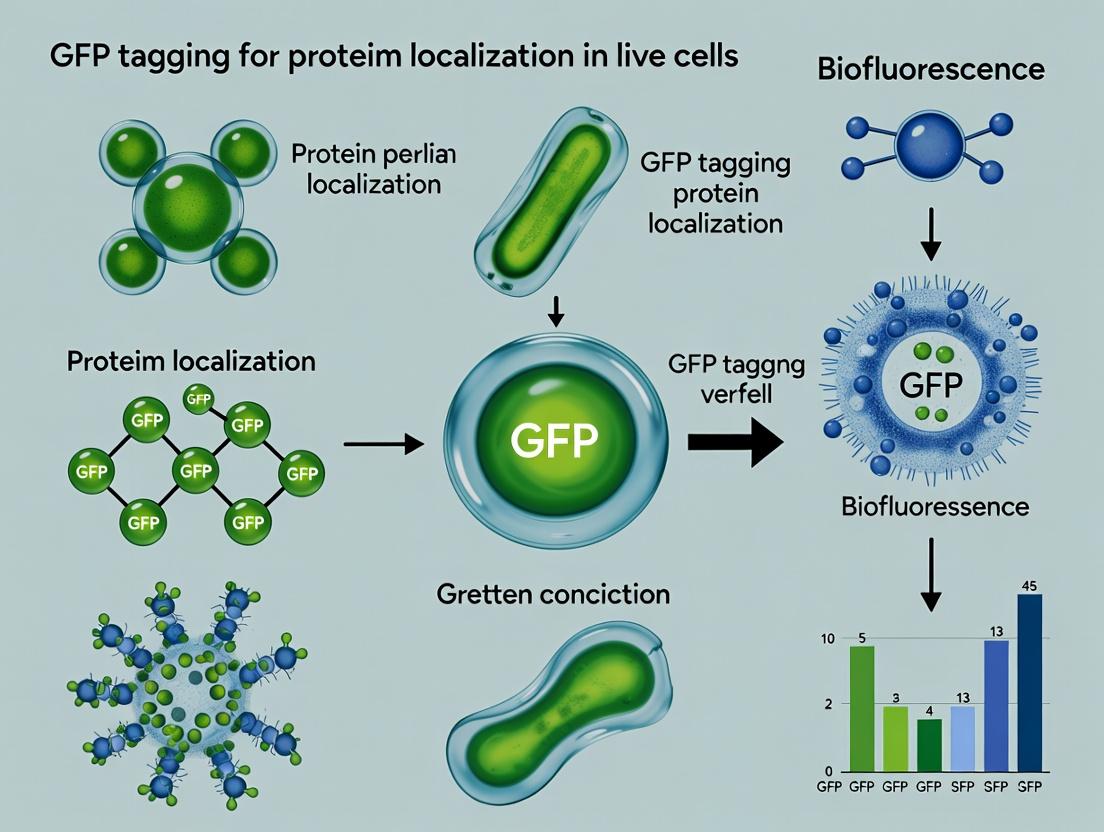
This comprehensive guide explores GFP tagging as an indispensable tool for visualizing protein dynamics in living systems.
GFP Tagging for Protein Localization in Live Cells: A Modern Guide for Researchers & Drug Discovery
Abstract
This comprehensive guide explores GFP tagging as an indispensable tool for visualizing protein dynamics in living systems. It begins with foundational concepts, including the evolution of fluorescent proteins from GFP to modern variants like mNeonGreen and mScarlet, and their key photophysical properties. The article then details practical methodologies for constructing and delivering fusion proteins, from plasmid design to CRISPR/Cas9 knock-in strategies. A dedicated troubleshooting section addresses common pitfalls such as mislocalization, photobleaching, and cytotoxicity, offering solutions for optimizing experimental outcomes. Finally, the guide provides frameworks for validating fusion protein functionality and comparing GFP tagging with alternative techniques like SNAP-tags and HaloTags. Aimed at researchers and drug development professionals, this resource synthesizes current best practices to enable robust, reproducible live-cell imaging studies that can accelerate discovery in cell biology and therapeutics.
GFP and Beyond: The Fluorescent Protein Toolkit for Live-Cell Imaging
This article is framed within a thesis on GFP tagging for protein localization in live cells research, emphasizing the transformation of a natural fluorophore into a suite of precision tools for dynamic cellular imaging.
Application Notes: Modern GFP Variants & Quantitative Performance
The original Aequorea victoria GFP has been extensively engineered for enhanced brightness, photostability, and expression in mammalian systems. The following table summarizes key quantitative parameters of commonly used variants in live-cell protein localization studies.
Table 1: Spectral and Photophysical Properties of Key GFP Variants
| Variant | Ex Max (nm) | Em Max (nm) | Extinction Coefficient (M⁻¹cm⁻¹) | Quantum Yield | Relative Brightness* | Maturation t½ (37°C) | Primary Application Notes |
|---|---|---|---|---|---|---|---|
| eGFP | 488 | 507 | 56,000 | 0.60 | 33.6 | ~30 min | Standard; optimal for most localization studies. |
| Superfolder GFP | 485 | 510 | 83,300 | 0.65 | 54.1 | ~10 min | Rapid folding; resistant to aggregation & misfolding. |
| mNeonGreen | 506 | 517 | 116,000 | 0.80 | 92.8 | ~15 min | Very bright; ideal for detecting low-abundance proteins. |
| mEmerald | 487 | 509 | 57,500 | 0.68 | 39.1 | ~50 min | Highly photostable for long-term time-lapse. |
| Clover | 505 | 515 | 111,000 | 0.76 | 84.4 | ~15 min | High brightness; good for FRET acceptor (with mRuby2). |
| TagGFP2 | 483 | 506 | 56,200 | 0.64 | 36.0 | ~40 min | Fast-maturing; acid-resistant for vesicular trafficking. |
| Azami-Green | 492 | 505 | 55,000 | 0.74 | 40.7 | ~15 min | Monomeric green protein from stony coral. |
*Relative Brightness = (Extinction Coefficient x Quantum Yield) / 1000.
Protocol: Live-Cell Confocal Imaging of GFP-Tagged Protein Localization
Aim: To visualize the subcellular localization and dynamics of a protein of interest (POI) fused to GFP in living mammalian cells.
I. Key Research Reagent Solutions
| Item | Function & Key Notes |
|---|---|
| Expression Vector (e.g., pEGFP-N1/C1) | Plasmid encoding POI-GFP fusion; contains mammalian promoter (e.g., CMV) and antibiotic resistance. |
| Cell Line (e.g., HeLa, HEK293, COS-7) | Mammalian cells suitable for transfection and imaging. Select based on relevance to POI biology. |
| Transfection Reagent (e.g., Lipofectamine 3000, PEI) | Facilitates plasmid DNA delivery into cells with minimal cytotoxicity. |
| Live-Cell Imaging Medium | Phenol-red free medium, buffered with HEPES (25 mM) or CO₂-independent formulation. |
| Glass-Bottom Culture Dishes (e.g., 35 mm, No. 1.5 coverglass) | Provides optimal optical clarity for high-resolution microscopy. |
| Nuclear Stain (e.g., Hoechst 33342, 1 µg/mL) | Live-cell permeable dye to label nuclei for spatial reference. |
| Confocal Microscope | Equipped with 488 nm laser line, appropriate filters (e.g., 500-550 nm BP), and environmental chamber (37°C, 5% CO₂). |
II. Detailed Protocol
Day 1: Cell Seeding
- Seed appropriate mammalian cells into a glass-bottom dish at 50-70% confluency in complete growth medium. Incubate overnight (37°C, 5% CO₂).
Day 2: Transfection
- Dilute 1-2 µg of purified POI-GFP plasmid DNA in 100 µL of serum-free medium (or recommended buffer).
- Dilute the recommended amount of transfection reagent (e.g., 3 µL Lipofectamine 3000) in a separate 100 µL of serum-free medium.
- Combine the diluted DNA and transfection reagent. Mix gently and incubate at room temperature for 15-20 minutes to form complexes.
- Add the DNA-lipid complex dropwise to the cells in the dish containing 1.8 mL of fresh complete medium. Gently swirl the dish.
- Return cells to the incubator for 18-24 hours.
Day 3: Live-Cell Staining and Imaging
- Preparation: Pre-warm live-cell imaging medium and microscope environmental chamber to 37°C.
- Staining: Replace transfection medium with 2 mL of warm imaging medium. Add Hoechst 33342 to a final concentration of 1 µg/mL. Incubate for 15-20 minutes at 37°C.
- Wash: Gently replace medium with 2 mL of fresh, pre-warmed imaging medium (without Hoechst).
- Microscopy Setup:
- Place dish on the microscope stage within the environmental chamber.
- Using a low-intensity 405 nm laser, focus on Hoechst-stained nuclei.
- Switch to the 488 nm laser line. Adjust laser power (use minimal power to reduce phototoxicity, typically 1-5%) and detector gain to obtain a clear GFP signal.
- Set up acquisition parameters: 512x512 or 1024x1024 resolution, 1-2 µs pixel dwell time, sequential scanning to avoid bleed-through.
- Image Acquisition: Capture Z-stacks (0.5 µm steps) or time-lapse series (e.g., every 30 seconds for 30 minutes). Always include control images of untransfected cells to assess autofluorescence.
III. Diagram: Experimental Workflow for Live-Cell GFP Imaging
Title: Live-Cell GFP Tagging and Imaging Workflow
Protocol: Co-localization Analysis with Organelle Markers
Aim: To quantify the degree of co-localization between a GFP-tagged POI and a specific organelle marker (e.g., mCherry-tagged marker) using Pearson's Correlation Coefficient (PCC).
I. Detailed Methodology
- Dual-Color Transfection: Co-transfect cells with the POI-GFP plasmid and a plasmid encoding an organelle-specific marker fused to mCherry (e.g., mCherry-Sec61β for ER). Use a 1:1 molar ratio of plasmids.
- Image Acquisition: Acquire high-quality, sequential images of both channels (GFP: Ex488/Em500-550; mCherry: Ex561/Em570-620) under identical settings. Ensure no pixel shift between channels.
- Image Processing: Subtract background from both images. Apply a threshold to exclude background noise.
- Quantitative Analysis (Using Fiji/ImageJ with JACoP plugin):
- Open the two thresholded, background-subtracted images.
- Run the "Colocalization Test" tool in JACoP.
- Calculate Pearson's Correlation Coefficient (PCC). PCC values range from -1 to +1, where +1 indicates perfect correlation, 0 indicates random distribution, and -1 indicates perfect exclusion.
- Calculate Manders' Overlap Coefficients (M1 & M2), which represent the fraction of GFP signal overlapping with mCherry and vice versa, independent of signal intensity.
- Statistical Validation: Analyze at least 15-20 cells from three independent experiments. Present data as mean ± SEM.
II. Diagram: Logic of Co-localization Analysis
Title: Co-localization Analysis Logic Flow
Within the broader thesis on using fluorescent proteins (FPs) for protein localization in live-cell research, selecting the optimal variant is a critical foundational step. This guide details the properties and applications of three widely used, spectrally distinct variants: the classic Enhanced Green Fluorescent Protein (eGFP), the bright green-yellow mNeonGreen, and the red fluorescent mScarlet. Understanding their quantitative photophysical properties and providing robust protocols for their use is essential for generating reliable, reproducible data in cell biology and drug discovery.
Quantitative Properties of Selected Fluorescent Proteins
The choice of FP hinges on precise photophysical and biochemical characteristics. The following table summarizes key metrics for the three featured variants, enabling direct comparison for experimental design.
Table 1: Photophysical and Biochemical Properties of eGFP, mNeonGreen, and mScarlet
| Property | eGFP | mNeonGreen | mScarlet |
|---|---|---|---|
| Excitation Peak (nm) | 488 | 506 | 569 |
| Emission Peak (nm) | 507 | 517 | 594 |
| Molar Extinction Coefficient (ε; M⁻¹cm⁻¹) | 56,000 | 116,000 | 100,000 |
| Quantum Yield (Φ) | 0.60 | 0.80 | 0.70 |
| Brightness (ε × Φ relative to eGFP) | 1.0 | 2.7 | 1.9 |
| pKa | ~6.0 | ~5.7 | ~4.7 |
| Maturation Half-time (37°C) | ~30 min | ~15 min | ~10 min |
| Oligomeric State | Monomer | Monomer | Monomer |
| Primary Applications | General tagging, co-localization, expression reporting | High-sensitivity live-cell imaging, super-resolution | Multicolor imaging, FRET acceptor, deeper tissue imaging |
Brightness is calculated as (ε × Φ) relative to eGFP's value. Data sourced from FPbase and recent literature.
Research Reagent Solutions Toolkit
Table 2: Essential Reagents for Live-Cell FP Tagging Experiments
| Item | Function/Explanation |
|---|---|
| High-Fidelity DNA Polymerase | For error-free amplification of FP and gene-of-interest fragments for fusion construction. |
| Gateway or In-Fusion Cloning Kits | Enables efficient, seamless construction of FP-protein fusion expression vectors. |
| HEK293T or HeLa Cell Lines | Common, easily transfectable mammalian cell lines for initial fusion protein validation. |
| Lipofectamine 3000 or Polyethylenimine (PEI) | High-efficiency transfection reagents for plasmid DNA delivery into live cells. |
| Live-Cell Imaging Medium | Phenol-red free medium with buffering agents (e.g., HEPES) to maintain pH during microscopy without CO₂. |
| Hoechst 33342 or DAPI | Cell-permeable nuclear counterstain for defining cellular architecture. |
| Paraformaldehyde (4%) | For fixed-cell imaging controls; crosslinks and preserves cellular structures. |
| Mounting Medium with Antifade | Preserves fluorescence and prevents photobleaching in fixed samples. |
| Cycloheximide | Protein synthesis inhibitor used in pulse-chase experiments to study protein turnover. |
| Proteasome Inhibitor (MG132) | Used to investigate if the FP-fusion protein is subject to proteasomal degradation. |
Core Protocols for Live-Cell Protein Localization
Protocol 3.1: Constructing N-Terminal FP Fusion Vectors via Gibson Assembly
Objective: To generate a mammalian expression vector encoding your protein of interest (POI) fused to the N-terminus of your chosen FP (e.g., mScarlet).
- Design Primers: Design forward (Fw) and reverse (Rv) primers to amplify your POI cDNA. The Fw primer must include a 5' overhang homologous to your vector's upstream sequence (e.g., after the promoter). The Rv primer must exclude the POI's stop codon and add a 15-25 bp overhang homologous to the 5' sequence of the FP gene.
- Amplify Fragments: Perform PCR using a high-fidelity polymerase to generate:
- POI Insert: Using your POI template and designed primers.
- FP Insert: Using the FP template (from an existing plasmid) with primers containing 5' overhangs homologous to the 3' end of the POI (Fw) and the vector's downstream region (Rv).
- Linearized Vector: Amplify your destination vector backbone with primers containing 5' overhangs homologous to the 5' end of the POI (Fw) and the 3' end of the FP (Rv).
- Purify & Assemble: Gel-purify all three PCR fragments. Use a Gibson Assembly Master Mix, mixing ~100 ng of vector with a 2:1 molar ratio of each insert fragment in a total volume of 10-20 µL. Incubate at 50°C for 15-60 minutes.
- Transform & Verify: Transform 2-5 µL of the assembly reaction into competent E. coli. Screen colonies by colony PCR and validate the final plasmid by Sanger sequencing across all fusion junctions.
Protocol 3.2: Transient Transfection and Live-Cell Confocal Imaging
Objective: To express the FP-fusion construct in mammalian cells and visualize protein localization in living cells.
- Day 1: Cell Seeding: Seed appropriate cells (e.g., HeLa) in a 35-mm glass-bottom dish at 50-70% confluence in complete growth medium. Allow to adhere overnight.
- Day 2: Transfection: For each dish, prepare two solutions in Opti-MEM:
- Solution A: 2.5 µg plasmid DNA + 5 µL P3000 reagent.
- Solution B: 3.75 µL Lipofectamine 3000 reagent. Combine A and B, mix gently, incubate 15 min at RT. Add dropwise to cells in 1.5 mL fresh complete medium. Incubate at 37°C, 5% CO₂.
- Day 3: Imaging (24-48h post-transfection):
- Replace medium with pre-warmed, phenol-red-free live-cell imaging medium.
- Mount dish on a confocal microscope stage with environmental control (37°C, 5% CO₂).
- For eGFP/mNeonGreen: Use a 488 nm laser line; collect emission at 500-550 nm.
- For mScarlet: Use a 561 nm laser line; collect emission at 580-620 nm.
- Use low laser power and minimal exposure time to avoid phototoxicity and bleaching.
- Acquire z-stacks (0.5 µm slices) for 3D localization.
Protocol 3.3: Validation of Fusion Protein Integrity and Localization
Objective: To confirm the FP-fusion protein is full-length and localizes correctly compared to endogenous protein or validated markers.
- Western Blot Analysis:
- Lyse transfected cells (from Protocol 3.2) in RIPA buffer + protease inhibitors.
- Separate 20-30 µg total protein by SDS-PAGE.
- Transfer to PVDF membrane and probe with primary antibodies against your POI and the FP (if available), followed by HRP-conjugated secondary antibodies.
- Expected Result: A single predominant band at the predicted molecular weight (POI + FP), confirming fusion integrity and lack of significant degradation.
- Co-localization with Marker Proteins (Fixed-Cell Validation):
- Transfect cells as in Protocol 3.2 on coverslips.
- At 24h post-transfection, fix cells with 4% PFA for 15 min, permeabilize with 0.1% Triton X-100, and block with 5% BSA.
- Immunostain using a well-characterized primary antibody against an organelle marker (e.g., LAMP1 for lysosomes, Calnexin for ER) and a spectrally distinct secondary antibody (e.g., Alexa Fluor 488 for a mScarlet fusion).
- Image using sequential scanning to avoid bleed-through. Calculate Mander's or Pearson's co-localization coefficients using image analysis software (e.g., ImageJ, Coloc2).
Visualizing Experimental Workflows and Signaling Context
Workflow for FP Fusion Protein Live-Cell Imaging
Monitoring Signaling-Driven TF Translocation with FPs
For researchers employing GFP tagging for protein localization in live cells, selecting the optimal fluorescent protein (FP) is critical. This decision hinges on three interdependent photophysical parameters: Brightness, Photostability, and Maturation Time. These parameters directly influence the signal-to-noise ratio, the duration of viable imaging, and the ability to track rapid biological processes. This application note details their importance, provides quantitative comparisons, and outlines protocols for empirical assessment within a live-cell imaging workflow.
Quantitative Parameter Comparison of Common FPs
The table below summarizes key parameters for commonly used FPs in live-cell protein localization. Values are approximations as they can vary with expression system and imaging conditions.
Table 1: Photophysical Properties of Selected Fluorescent Proteins
| FP Variant | Excitation (nm) | Emission (nm) | Brightness* (Relative to EGFP) | Photostability (t½, s) | Maturation Time (t½, min) | Primary Use Case |
|---|---|---|---|---|---|---|
| EGFP | 488 | 507 | 1.0 | 174 | ~30 | General standard |
| mNeonGreen | 506 | 517 | ~2.5 | 180 | ~10 | Bright, fast tagging |
| mCherry | 587 | 610 | ~0.5 | 96 | ~15 | Red channel option |
| mScarlet-I | 569 | 594 | ~1.5 | 256 | ~5 | Bright, fast red FP |
| mTagBFP2 | 399 | 454 | ~0.6 | 350 | ~7 | Blue channel, FRET |
| Dendra2 | 488 | 507 (Green) | ~0.75 (Green) | 360 (Green) | ~15 (Green) | Green-to-Red photoconversion |
| Brightness = Extinction Coefficient x Quantum Yield. *Photobleaching half-time under constant illumination (e.g., 488nm @ 25 W/cm²). |
Experimental Protocols for Parameter Assessment
Protocol 2.1: Assessing FP Maturation Time in Live Cells
Objective: Determine the time required for a newly synthesized FP to fold and form its functional chromophore. Materials: Cell line expressing FP-tagged protein of interest, cycloheximide, live-cell imaging system with environmental control. Procedure:
- Seed cells expressing the FP construct in a glass-bottom dish. Incubate until 60-70% confluent.
- Pre-treatment: Replace medium with fresh medium containing 100 µg/mL cycloheximide to halt de novo protein synthesis. Incubate for 15 min.
- Image Acquisition: Using a confocal or widefield microscope with temperature/CO₂ control, select a field of view with healthy, expressing cells.
- Bleach & Monitor: Use a high-intensity laser/pulse to completely photobleach the mature FP signal in the region of interest (ROI).
- Immediately begin time-lapse imaging at low excitation intensity (to avoid bleaching) every 2-5 minutes for 2-4 hours.
- Analysis: Plot mean fluorescence intensity in the bleached ROI over time. Fit the recovery curve (excluding photobleaching effects) to a single-exponential function: F(t) = F_max(1 - e^{-kt}). The maturation half-time is t½ = ln(2)/k.
Protocol 2.2: Comparative Photostability Assay
Objective: Measure the resistance of different FPs to photobleaching under identical imaging conditions. Materials: Cells expressing different FP-tagged constructs (e.g., EGFP, mNeonGreen, mScarlet-I) plated in multi-well dishes. Procedure:
- Seed cells to express comparable levels of each FP (confirmed by initial fluorescence intensity).
- Image Setup: Use identical imaging parameters on a widefield or confocal microscope: exposure time, light intensity (e.g., 488nm laser at 25%), gain, and interval (e.g., 5s intervals for 5-10 min).
- Acquisition: Perform continuous time-lapse imaging of multiple cells for each FP variant.
- Analysis: For each cell, plot normalized fluorescence intensity (I/I₀) over time. Fit the decay curve to a single-exponential decay function: I(t) = I₀e^{-kt}. The photobleaching half-time is t½ = ln(2)/k. Compare average t½ values across FP variants.
The Scientist's Toolkit: Research Reagent Solutions
Table 2: Essential Reagents for FP-Based Live-Cell Localization Studies
| Reagent / Material | Function & Importance |
|---|---|
| Gene Cloning Vector (e.g., pEGFP-N1/C1, pmNeonGreen-N1) | Backbone for creating FP-fusion constructs with appropriate linkers and multiple cloning sites. |
| Transfection Reagent (e.g., Lipofectamine 3000, PEI) | For delivering FP plasmid DNA into mammalian cells; critical for achieving optimal expression levels. |
| Live-Cell Imaging Medium (Phenol-red free, with HEPES) | Reduces background autofluorescence and maintains pH without CO₂ control during short imaging. |
| Cycloheximide | Protein synthesis inhibitor; essential for controlled maturation time experiments (Protocol 2.1). |
| Glass-Bottom Dishes (No. 1.5 Coverslip) | Provides optimal optical clarity and high-resolution imaging for live cells. |
| Mounting Medium with Anti-fade (for fixed samples) | Preserves fluorescence signal post-fixation for validation studies. |
| Validated FP-Tagged Biosensor (e.g., Lifeact-FP) | Positive control for assessing proper localization and FP performance in your cellular system. |
Visualizing Relationships and Workflows
Title: How Key FP Parameters Determine Localization Data Quality
Title: Experimental Workflow for Measuring FP Maturation Time
Within the broader thesis on employing fluorescent proteins, particularly Green Fluorescent Protein (GFP) and its variants, for real-time protein localization and dynamics studies in live cells, the design of the fusion construct is a critical foundational step. The decision to place the tag at the N-terminus or C-terminus, along with the strategic inclusion of a linker sequence, profoundly influences the experimental outcome. These choices directly impact the fusion protein's expression, stability, solubility, biological activity, and ultimately, the fidelity of the observed localization.
Core Design Principles: N-terminal vs. C-terminal Tagging
The placement of the fluorescent protein tag is a primary design consideration, each with distinct advantages and potential pitfalls.
N-terminal Tagging:
- Advantages: Often preferred when the C-terminus of the target protein is critical for function, localization (e.g., possesses a C-terminal localization signal like a peroxisomal targeting signal -PTS1), or interactions. It can also be beneficial if the target protein has an N-terminal signal peptide for secretion, as the tag can be placed after this peptide.
- Disadvantages: May interfere with protein translation initiation or N-terminal post-translational modifications (e.g., myristoylation, acetylation). The large GFP moiety could also sterically hinder folding or function if the N-terminal domain is functionally important.
C-terminal Tagging:
- Advantages: Commonly used as it frequently preserves protein function, especially if the N-terminus is involved in regulatory or localization signals. It is the default choice for many standard expression vectors.
- Disadvantages: Can disrupt C-terminal localization signals, protein-protein interaction domains, or prenylation motifs (e.g., CAAX box). May also be problematic for proteins with a C-terminal transmembrane domain.
Table 1: Comparative Analysis of Tag Placement
| Parameter | N-terminal Tag | C-terminal Tag |
|---|---|---|
| Typical Success Rate | ~65-75% (context-dependent) | ~70-80% (context-dependent) |
| Impact on Translation Initiation | Potentially high | Negligible |
| Signal Peptide Compatibility | High (tag after peptide) | Low (tag may be cleaved) |
| C-terminal Motif Disruption | Low | High |
| N-terminal PTM Disruption | High | Low |
| Recommended When: | C-terminus is functional; protein has N-terminal signal peptide | N-terminus is functional; no C-terminal localization signal |
Linker Design Considerations
A flexible peptide linker between the fluorescent protein and the target protein is often essential to ensure proper folding and function of both moieties. Key principles include:
- Length: Typical linkers range from 5 to 25 amino acids. Longer linkers (>15 aa) can reduce steric interference but may increase protease susceptibility.
- Composition: Rich in small, polar, and flexible amino acids (Glycine (G), Serine (S), Threonine (T)). Common motifs include (GGGGS)n, where n=2-5.
- Functionality: May include specific protease cleavage sites (e.g., TEV, 3C) for tag removal, or specialized sequences like α-helical or rigid linkers for controlling orientation.
Table 2: Common Linker Sequences and Properties
| Linker Sequence | Type | Approx. Length (Å) | Common Use Case |
|---|---|---|---|
| GGGGS | Flexible | ~15 | Standard, general-purpose spacer |
| (GGGGS)₃ | Flexible, Long | ~45 | Reducing significant steric hindrance |
| EAAAK | α-Helical, Rigid | ~20 | Maintaining fixed distance/orientation |
| LEVLFQ/GP (TEV site) | Cleavable | N/A | For post-purification tag removal |
Application Notes and Experimental Protocols
Protocol 4.1: Design and Cloning of GFP Fusion Constructs
Objective: To generate mammalian expression vectors for N- and C-terminal GFP fusions of your protein of interest (POI), including a flexible linker.
Materials: See "The Scientist's Toolkit" below.
Procedure:
- Sequence Analysis: Use bioinformatics tools (e.g., SignalP, TMHMM) to identify signal peptides, transmembrane domains, and known localization motifs at the N- and C-termini of your POI.
- Primer Design:
- For C-terminal GFP fusions: Design a forward primer that adds a 5' restriction site (e.g., AgeI) before the POI start codon (without STOP). Design a reverse primer that removes the native STOP codon, adds the linker sequence (e.g.,
GGTGGTGGATCTfor GGGGS), and a 3' restriction site (e.g., BamHI). - For N-terminal GFP fusions: Design a forward primer that adds a 5' restriction site and linker sequence to the 5' end of the POI (without its start codon). Design a reverse primer that includes the native STOP codon and a 3' restriction site.
- For C-terminal GFP fusions: Design a forward primer that adds a 5' restriction site (e.g., AgeI) before the POI start codon (without STOP). Design a reverse primer that removes the native STOP codon, adds the linker sequence (e.g.,
- PCR Amplification: Amplify the POI cDNA using high-fidelity polymerase.
- Digestion & Ligation: Digest both the PCR product and the destination GFP vector (e.g., pEGFP-N1 or pEGFP-C1) with the chosen restriction enzymes. Purify fragments and ligate.
- Transformation & Verification: Transform ligation mix into competent E. coli. Isolate plasmid DNA from colonies and verify the construct by diagnostic digest and Sanger sequencing across the fusion junctions.
Protocol 4.2: Validation of Fusion Protein Localization in Live Cells
Objective: To transiently express and validate the correct subcellular localization of the GFP fusion protein in mammalian cells.
Procedure:
- Cell Seeding: Seed appropriate mammalian cells (e.g., HEK293, HeLa) into poly-D-lysine-coated 35-mm glass-bottom imaging dishes 24 hours prior to transfection (reach ~70% confluency).
- Transfection: Transfect cells with 1-2 µg of verified plasmid DNA using a lipid-based transfection reagent optimized for live-cell imaging. Include controls: GFP-only vector and untagged POI (if antibody available).
- Expression & Incubation: Incubate cells for 18-24 hours at 37°C, 5% CO₂ to allow for protein expression.
- Live-Cell Imaging:
- Replace medium with pre-warmed, phenol-red-free imaging medium.
- Use a confocal or widefield fluorescence microscope with environmental control (37°C, 5% CO₂).
- Image GFP using a 488 nm laser/excitation filter and a standard FITC/GFP emission filter.
- Co-stain with organelle-specific dyes (e.g., MitoTracker for mitochondria, Hoechst for nucleus) to confirm localization. Ensure emission spectra are separable.
- Analysis: Compare the localization pattern of the N- and C-terminal fusions to each other, the GFP control, and established markers for the expected cellular compartment.
Visualization Diagrams
Title: Decision Workflow for Tag Placement
Title: Fusion Construct Architecture
The Scientist's Toolkit
Table 3: Essential Reagents and Materials for GFP Fusion Protein Studies
| Item | Function/Description | Example/Note |
|---|---|---|
| Fluorescent Protein Vectors | Mammalian expression plasmids with GFP variants. | pEGFP-N1/C1 (Clontech), pmNeonGreen-N/C (Allele). |
| High-Fidelity DNA Polymerase | Accurate PCR amplification of the insert. | Phusion (NEB), Q5 (NEB). |
| Restriction Enzymes | For directional cloning into the vector. | AgeI, BamHI, EcoRI, XhoI (Thermo Fisher, NEB). |
| DNA Ligation Kit | Joining of insert and vector fragments. | T4 DNA Ligase (NEB). |
| Competent E. coli | For plasmid propagation. | DH5α, Stbl3 (Thermo Fisher). |
| Lipid-based Transfection Reagent | For efficient DNA delivery into mammalian cells. | Lipofectamine 3000 (Thermo Fisher), Fugene HD (Promega). |
| Live-Cell Imaging Medium | Phenol-red-free medium to reduce background fluorescence. | FluoroBrite DMEM (Gibco). |
| Organelle-Specific Dyes | To confirm subcellular localization. | MitoTracker Deep Red (mitochondria), Hoechst 33342 (nucleus). |
| Confocal/Live-Cell Microscope | Essential for high-resolution, time-lapse imaging. | System with 488 nm laser, environmental chamber, and high-QE detector. |
From Plasmid to Phenotype: A Step-by-Step Protocol for GFP Tagging Experiments
Within a broader thesis investigating protein subcellular localization dynamics via live-cell imaging, precise construct design is paramount. The fusion of a protein of interest (POI) to a fluorescent reporter like Green Fluorescent Protein (GFP) must not perturb the POI's native localization, expression, or function. This application note details the strategic selection of molecular components—vectors, promoters, and fusion configurations—and provides optimized protocols for modern, seamless cloning methods (Gibson Assembly and In-Fusion Cloning) to generate reliable localization constructs.
Core Component Selection
Vector Backbone Selection
The choice of vector dictates experimental possibilities. For mammalian live-cell imaging, key considerations include origin of replication, antibiotic resistance, fluorescent reporter, and additional features like purification tags or inducible systems.
Table 1: Common Vector Backbones for Mammalian GFP Tagging
| Vector Name/Type | Key Features | Best For | Common Reporter |
|---|---|---|---|
| pEGFP-N1/N2/N3 | CMV promoter, Neomycin (G418) resistance, MCS at N- or C-terminus of GFP. | General C-terminal or N-terminal tagging; stable line selection. | EGFP |
| pmCherry-C1 | CMV promoter, Kanamycin/Neomycin resistance, MCS at N-terminus of mCherry. | Red fluorescent tagging; multi-color imaging. | mCherry |
| pLVX-EF1α | Lentiviral, EF1α promoter (stable expression), Puromycin resistance. | Generating stable cell lines, difficult-to-transfect cells. | User-inserted |
| pcDNA3.1(+) | CMV promoter, Ampicillin/Neomycin resistance, high-copy in E. coli. | High-level transient expression, versatile MCS. | User-inserted |
| pInducer20 | Doxycycline-inducible (Tet-On), lentiviral. | Studying essential proteins; controlled expression. | User-inserted |
Promoter Selection
Promoter strength and cell-type specificity critically affect expression levels and potential toxicity.
Table 2: Promoter Characteristics for Live-Cell Imaging
| Promoter | Strength | Context | Consideration |
|---|---|---|---|
| CMV (Cytomegalovirus) | Very High | General mammalian expression. | May cause overexpression artifacts; toxic for some proteins. |
| EF1α (Elongation Factor 1-alpha) | High | Constitutive, many mammalian cells. | Often provides more consistent, moderate expression than CMV. |
| CAG | Very High | Composite (CMV enhancer + chicken β-actin). | Robust expression across diverse cell types, including primary. |
| PGK (Phosphoglycerate Kinase) | Moderate | Constitutive, mammalian. | Weaker, often used for more physiological expression levels. |
| Tissue/Cell-Specific | Variable | e.g., SYN1 (neurons), ACTA2 (smooth muscle). | For targeted expression in specific cell types within heterogeneous cultures. |
Fusion Configuration & Linker Design
- C-terminal vs. N-terminal Tagging: Choice depends on POI knowledge. Tag the end furthest from known functional domains. If unknown, test both.
- Linker: A flexible glycine-serine linker (e.g., GGGGS x 2-4) between the POI and GFP is essential to minimize steric hindrance.
- Fluorescent Protein Variants: Consider photostability (e.g., mNeonGreen > EGFP), maturation time, and brightness for your application.
Cloning Strategy: Gibson Assembly vs. In-Fusion Cloning
Both are seamless, ligation-independent cloning methods that assemble multiple DNA fragments with 15-30 bp homologous overlaps.
Table 3: Comparison of Seamless Cloning Methods
| Parameter | Gibson Assembly | In-Fusion Cloning |
|---|---|---|
| Core Enzyme Mix | T5 exonuclease, DNA polymerase, DNA ligase. | Proprietary enzyme (DNA polymerase with exonuclease activity). |
| Reaction Time | 15-60 minutes (at 50°C). | 15 minutes (at 37°C). |
| Fragment Number | Efficient for 2-6 fragments. | Efficient for 2+ fragments. |
| Insert:Vector Molar Ratio | 2:1 (typical). | 2:1 (typical). |
| Background | Very low with linearized vector. | Very low with linearized vector. |
| Commercial Provider | NEB, others. | Takara Bio. |
| Cost per Reaction | ~$15-20 (NEB HiFi). | ~$20-25 (Takara). |
Protocol: Gibson Assembly for GFP-POI Construct
A. Primer Design for Amplification
- Identify the POI coding sequence (CDS) without its stop codon for C-terminal GFP fusions.
- Design primers to amplify the POI CDS. Add 20-30 bp homology arms to the 5' ends that match the linearized vector ends and the GFP sequence.
- Forward Primer (for POI):
[5' Homology to Vector] + [POI Start Codon + CDS Seq (first 18-25 bp)] - Reverse Primer (for POI):
[5' Homology to Linker/GFP] + [Reverse Complement of POI CDS end (no stop)]
- Forward Primer (for POI):
B. Vector Preparation
- Linearize the acceptor vector (e.g., pEGFP-N1) by PCR or restriction digest to remove its MCS, creating ends homologous to your inserts.
- Gel-purify the linearized vector.
C. PCR Amplification & Purification
- Amplify the POI fragment using high-fidelity polymerase (e.g., Q5, KAPA HiFi).
- Run PCR product on an agarose gel, excise the correct band, and purify using a gel extraction kit. Quantify DNA (ng/µL).
D. Gibson Assembly Reaction Reagent Setup (NEB HiFi Gibson Assembly Master Mix):
| Component | Volume | Notes |
|---|---|---|
| Linearized Vector (50-100 ng) | X µL | Calculate based on concentration. |
| POI Insert Fragment | Y µL | Use 2:1 molar ratio (Insert:Vector). |
| Gibson Assembly Master Mix | 10 µL | Contains all enzymes/buffers. |
| Nuclease-Free Water | To 20 µL |
- Mix components gently in a 0.2 mL PCR tube.
- Incubate in a thermal cycler at 50°C for 15-60 minutes.
- Place on ice or store at -20°C for later use.
E. Transformation & Screening
- Transform 2-5 µL of the assembly reaction into competent E. coli (e.g., NEB Stable or DH5α).
- Plate on LB agar with appropriate antibiotic (e.g., Kanamycin for pEGFP-N1).
- Screen colonies by colony PCR or restriction digest. Sequence the entire insert and fusion junctions.
Protocol: In-Fusion Cloning for POI-GFP Construct
The workflow is nearly identical to Gibson Assembly, with key differences in the reaction mixture and incubation.
Reagent Setup (Takara In-Fusion Snap Assembly Master Mix):
| Component | Volume |
|---|---|
| Linearized Vector (up to 100 ng) | X µL |
| Insert Fragment(s) | Y µL (2:1 molar ratio) |
| In-Fusion Snap Assembly Master Mix | 2 µL |
| Nuclease-Free Water | To 10 µL |
- Mix gently.
- Incubate in a thermal cycler at 37°C for 15 minutes.
- Transform, plate, and screen as described above.
Validation & Transfection
Prior to large-scale experiments, validate constructs:
- Sequencing: Confirm full POI and GFP sequence, reading frame, and linker.
- Transfection: Transfert into a relevant cell line (e.g., HEK293, HeLa) using a standard method (PEI, lipofectamine).
- Microscopy: Image 24-48 hours post-transfection. Assess localization against known markers, expression level, and cell viability.
Diagram 1: Overall workflow for GFP construct design and validation.
Diagram 2: Seamless cloning fragment homology design.
The Scientist's Toolkit
Table 4: Essential Research Reagent Solutions
| Reagent/Material | Function & Key Features | Example Product/Brand |
|---|---|---|
| High-Fidelity DNA Polymerase | Error-free PCR amplification of inserts and vector backbones. | NEB Q5, KAPA HiFi, Platinum SuperFi II. |
| Gibson Assembly Master Mix | All-in-one enzyme mix for seamless assembly of multiple fragments. | NEB HiFi Gibson Assembly Mix. |
| In-Fusion Snap Assembly Master Mix | Proprietary enzyme mix for fast, seamless cloning. | Takara Bio In-Fusion Snap Assembly Master Mix. |
| Competent E. coli | High-efficiency cells for transformation of large, complex plasmids. | NEB Stable, NEB DH5α, Stbl3. |
| Gel Extraction Kit | Purification of DNA fragments from agarose gels. | QIAquick Gel Extraction Kit (Qiagen), Monarch Gel Extraction Kit (NEB). |
| Plasmid Miniprep Kit | Rapid isolation of plasmid DNA from bacterial cultures for screening. | QIAprep Spin Miniprep Kit (Qiagen), Monarch Plasmid Miniprep Kit (NEB). |
| Transfection Reagent | For delivering plasmid DNA into mammalian cells for expression. | Lipofectamine 3000, polyethylenimine (PEI), FuGENE HD. |
| Fluorescent Cell Marker | Organelle-specific dyes to validate GFP-POI localization. | MitoTracker (mitochondria), ER-Tracker, LysoTracker. |
Application Notes
For live-cell imaging of protein localization via GFP tagging, selecting the optimal delivery method is critical. Each technique offers distinct advantages and limitations concerning efficiency, stability, and cell viability. The primary goal is to achieve specific, stable genomic integration of the GFP sequence with minimal cellular perturbation to allow for accurate, long-term protein localization studies. Recent advancements in CRISPR/Cas9 tools and viral vector engineering have significantly improved the precision and efficiency of knock-in strategies.
The following table summarizes key performance metrics for each delivery method in the context of GFP knock-in for protein localization studies.
Table 1: Comparison of GFP Knock-In Delivery Methods
| Parameter | Chemical/Lipid Transfection | Viral Transduction (Lentivirus) | CRISPR/Cas9-Mediated HDR |
|---|---|---|---|
| Typical Knock-In Efficiency | Low (1-5% of transfected cells) | Moderate (10-30% of transduced cells) | Variable; High with optimized conditions (10-60%) |
| Stable Integration Rate | Very Low (mostly transient) | High (random genomic integration) | High (targeted, site-specific integration) |
| Cargo Capacity | Very High (>10 kb) | Moderate (~8 kb for lentivirus) | Limited by HDR template (~1-3 kb optimal) |
| Cellular Toxicity | Moderate to High | Low to Moderate | Moderate (dependent on Cas9 delivery & DSBs) |
| Primary Cell Suitability | Poor (low efficiency, high toxicity) | Good (efficient for many cell types) | Good but requires optimization |
| Time to Stable Expression | Slow (weeks of selection) | Fast (days post-transduction) | Slow (weeks for clone isolation/selection) |
| Key Advantage for Localization | Simplicity, large constructs | Broad cell tropism, stable expression | Endogenous tagging, precise genomic control |
| Key Disadvantage for Localization | Random integration, overexpression artifacts | Random integration, potential insertional effects | Technical complexity, off-target integration |
Detailed Protocols
Protocol 1: Lipid-Mediated Transfection for Plasmid-Based GFP Tagging
Objective: To transiently or stably express a GFP-tagged protein from an exogenous plasmid construct.
- Day 0: Seed HeLa or HEK293T cells in a 24-well plate at 70-90% confluency in complete growth medium without antibiotics.
- Day 1 (Transfection): a. Dilute 0.5 µg of plasmid DNA (e.g., pEGFP-N1-target gene) in 50 µL of Opti-MEM Reduced Serum Medium. Vortex gently. b. Dilute 1.5 µL of a commercial lipid transfection reagent (e.g., Lipofectamine 3000) in a separate 50 µL of Opti-MEM. Incubate for 5 minutes at room temperature. c. Combine the diluted DNA with the diluted lipid reagent. Mix by gentle pipetting. Incubate the complex for 15-20 minutes at room temperature. d. Add the 100 µL DNA-lipid complex dropwise to the cell culture well. Gently rock the plate.
- Day 2 (Analysis/Selection): a. For transient expression, replace medium with fresh complete medium 6-24 hours post-transfection. Image live cells after 24-48 hours. b. For stable cell line generation, begin selection with appropriate antibiotic (e.g., 500 µg/mL G418) 48 hours post-transfection. Change selection medium every 3-4 days for 2-3 weeks until resistant foci appear.
Protocol 2: Lentiviral Transduction for Stable GFP Expression
Objective: To generate a polyclonal cell population stably expressing GFP-tagged protein via random genomic integration.
Part A: Lentivirus Production (in HEK293T cells)
- Seed HEK293T cells in a 6-well plate.
- Co-transfect cells with three plasmids:
- 0.75 µg psPAX2 (packaging plasmid)
- 0.25 µg pMD2.G (envelope plasmid)
- 1.0 µg Transfer plasmid (e.g., pLV-EF1a-target gene-GFP-Puro) using a lipid transfection method as in Protocol 1.
- After 6 hours, replace transfection medium with fresh complete medium.
- Harvest viral supernatant at 48 and 72 hours post-transfection. Filter through a 0.45 µm PVDF filter. Aliquot and store at -80°C.
Part B: Target Cell Transduction
- Seed target cells (e.g., primary fibroblasts) in a 24-well plate.
- Thaw viral supernatant quickly. Mix with fresh growth medium containing 8 µg/mL Polybrene.
- Remove medium from target cells and add the virus-containing medium.
- Centrifuge the plate at 800 x g for 30 minutes at 32°C (spinoculation) to enhance infection.
- After 24 hours, replace medium with fresh complete medium.
- Begin puromycin selection (e.g., 1-2 µg/mL) 48 hours post-transduction to select for stable integrants.
Protocol 3: CRISPR/Cas9-Mediated Homology-Directed Repair (HDR) for Endogenous GFP Tagging
Objective: To insert a GFP sequence at the N- or C-terminus of an endogenous gene locus via precise genome editing.
- gRNA Design & Cloning: Design two gRNAs flanking the desired insertion site (e.g., just before the STOP codon for C-terminal tag) using an online tool (e.g., CRISPick). Clone the selected gRNA sequence into a Cas9/gRNA expression plasmid (e.g., pSpCas9(BB)-2A-Puro).
- HDR Donor Template Construction: Synthesize a single-stranded DNA (ssODN) or double-stranded DNA donor template containing the GFP sequence flanked by ~800 bp homology arms homologous to the genomic regions surrounding the cut site. Include a flexible linker (e.g., GGSGGS) between the target gene and GFP.
- Co-transfection: Seed cells (~70% confluent) in a 6-well plate. Co-transfect with:
- 1 µg Cas9/gRNA plasmid
- 200 pmol of ssODN donor template or 1 µg of plasmid donor using a high-efficiency transfection reagent suitable for the cell line.
- Enrichment & Screening: 48 hours post-transfection, apply puromycin selection for 3-5 days to enrich for transfected cells. Allow recovery and clonal expansion for 2-3 weeks. Screen clones by genomic PCR across both homology arms and confirm by western blot for GFP fluorescence and target protein size.
- Validation: Sequence the modified locus from positive clones. Perform live-cell imaging to confirm correct protein localization.
Visualizations
CRISPR/Cas9 Knock-In Experimental Workflow
Method Selection for GFP Tagging
The Scientist's Toolkit: Key Reagent Solutions
Table 2: Essential Reagents for GFP Knock-In Experiments
| Reagent/Material | Primary Function in GFP Tagging | Example Product/Catalog |
|---|---|---|
| High-Efficiency Transfection Reagent | Delivers plasmid DNA or RNP complexes into difficult cell lines. | Lipofectamine 3000, FuGENE HD |
| Lentiviral Packaging Mix (2nd/3rd Gen) | Provides gag/pol and rev genes in a separate, safer system for virus production. | psPAX2 & pMD2.G plasmids, Lenti-X Packaging System |
| Cas9 Nuclease (WT or HiFi) | Creates a double-strand break at the target genomic locus to initiate HDR. | Alt-R S.p. Cas9 Nuclease V3, HiFi Cas9 |
| Synthetic crRNA & tracrRNA | Guides Cas9 to the specific genomic target site with high specificity. | Alt-R CRISPR-Cas9 crRNA & tracrRNA |
| Single-Stranded DNA Donor (ssODN) | Serves as the repair template for HDR; ideal for short insertions (<100 nt). | Ultramer DNA Oligos, Custom ssODN |
| AAV Donor Template Plasmid | Provides a large homology-arm donor template for high-efficiency knock-in via AAV delivery. | Custom AAVS1 donor, pAAV-HR vectors |
| HDR Enhancer (Small Molecule) | Improves HDR efficiency relative to NHEJ by modulating DNA repair pathways. | RS-1 (Rad51 stimulator), SCR7 (DNA Ligase IV inhibitor) |
| CloneDetect Imaging Dye | Allows rapid visualization of clonal colonies for efficient picking during cell line generation. | CloneDetect Fluorescent Cell Colony Stain |
| Puromycin or Geneticin (G418) | Selects for cells that have stably integrated the resistance gene from the delivered construct. | Puromycin Dihydrochloride, Geneticin Selective Antibiotic |
| Long-Range Genomic PCR Kit | Amplifies across homology arms to screen for correctly targeted knock-in clones. | KAPA HiFi HotStart ReadyMix, PrimeSTAR GXL DNA Polymerase |
Within the broader thesis investigating GFP-tagged protein dynamics for elucidating cellular localization and function, selecting the appropriate live-cell imaging modality is paramount. The choice directly impacts data quality, temporal resolution, and cell viability. This application note details the operational principles, quantitative performance metrics, and specific experimental protocols for three cornerstone techniques: Confocal Laser Scanning Microscopy (CLSM), Total Internal Reflection Fluorescence (TIRF), and Spinning Disk Confocal (SDC) microscopy, framed within the context of GFP-based live-cell research.
Comparative Performance Metrics
Table 1: Quantitative Comparison of Live-Cell Imaging Modalities for GFP-Tagged Protein Studies
| Parameter | Confocal (Point-Scanning) | Spinning Disk Confocal | TIRF |
|---|---|---|---|
| Axial Resolution (Z) | ~0.5 - 0.8 µm | ~0.8 - 1.0 µm | ~0.1 µm (evanescent field) |
| Lateral Resolution (XY) | ~0.2 - 0.25 µm | ~0.25 - 0.3 µm | ~0.2 - 0.25 µm |
| Typical Imaging Depth | Full cell/cell volume | Full cell/cell volume | ~100 - 200 nm from coverslip |
| Excitation Efficiency | Moderate (pinhole rejects light) | High (multi-point parallel scan) | Very High (selective illumination) |
| Photobleaching/Phototoxicity | High (slower scan) | Low (fast scan) | Moderate (confined excitation) |
| Maximum Acquisition Speed | ~1 - 5 fps (512x512) | ~100 - 1000 fps | ~10 - 100 fps |
| Best Application in GFP Studies | 3D volume rendering, co-localization in thick cells | Fast cytosolic/nuclear dynamics, 4D imaging (XYZt) | Basal membrane events (vesicle trafficking, adhesion) |
Detailed Experimental Protocols
Protocol 1: Spinning Disk Confocal Microscopy for GFP-Tagged Cytosolic Protein Dynamics Objective: Capture rapid diffusion and translocation of a GFP-tagged kinase (e.g., GFP-PKC) in response to a pharmacological stimulus.
- Cell Preparation: Seed HeLa or COS-7 cells expressing GFP-tagged protein of interest in a glass-bottom 35 mm dish at 60-70% confluence 24h prior.
- Imaging Medium: Replace growth medium with phenol-red free Leibovitz's L-15 medium supplemented with 10% FBS and 25mM HEPES for pH stability.
- Microscope Setup:
- Mount dish on stage pre-warmed to 37°C.
- Use a 60x or 100x oil-immersion objective (NA ≥ 1.4).
- Laser & Filter Set: 488 nm laser line. Emission filter: 525/50 nm bandpass.
- SDC Head Settings: Use a Yokogawa CSU-W1 or similar. Select appropriate disk pattern (e.g., 50 µm pinholes for optimal sectioning vs. light throughput).
- Camera: Use a back-illuminated EM-CCD or sCMOS camera.
- Acquisition Parameters:
- Exposure time: 50 - 200 ms.
- Camera gain: Set to minimize read noise without saturating.
- Acquire time-lapse series with 1-5 second intervals for 10-15 minutes.
- Stimulation: After 5 frames of baseline acquisition, carefully add stimulus (e.g., 100nM PMA in DMSO) directly to the medium and mix gently.
- Analysis: Quantify fluorescence intensity changes in user-defined cytosolic and membrane regions of interest (ROIs) over time.
Protocol 2: TIRF Microscopy for GFP-Tagged Vesicle Trafficking at the Plasma Membrane Objective: Visualize the docking and fusion of GFP-tagged secretory vesicles (e.g., GFP-VAMP2) at the basal plasma membrane.
- Cell & Coverslip Preparation:
- Use high-precision #1.5H glass coverslips (170 ± 5 µm thickness).
- Coat coverslips with appropriate extracellular matrix (e.g., poly-L-lysine or fibronectin).
- Transfect cells with low expression levels of GFP-tagged construct 18-24h prior to prevent overexpression artifacts.
- Sample Mounting: Assemble coverslip in a magnetic chamber with imaging medium (as in Protocol 1).
- Microscope Setup & TIRF Alignment:
- Use a 100x or 60x TIRF-specific objective (NA ≥ 1.49).
- Align the 488 nm laser for through-objective TIRF. Critical: Adjust the incident laser angle manually or via software until a sharp, thin excitation field is achieved (evanescent wave). Confirm by observing immediate disappearance of background cytosolic fluorescence.
- Acquisition Parameters:
- Use very low laser power (0.5-5%) to minimize GFP photobleaching in the evanescent field.
- Exposure time: 50 - 500 ms.
- Acquire a high-speed time series (10-30 fps) for 1-2 minutes to capture rapid vesicle events.
- Analysis: Use spot detection and tracking algorithms (e.g., in FIJI/ImageJ) to track individual vesicle trajectories, residence times, and fusion events.
Protocol 3: Confocal Laser Scanning for 3D Nuclear Protein Localization Objective: Generate a 3D reconstruction of a GFP-tagged transcription factor (e.g., GFP-p53) within the nucleus under stress conditions.
- Cell Preparation: As in Protocol 1. Consider using a nuclear marker (e.g., H2B-mCherry) for co-localization if dual-color imaging is available.
- Microscope Setup:
- Use a 63x oil-immersion objective (NA 1.4).
- Pinhole Setting: Set to 1 Airy Unit (AU) for optimal balance of optical sectioning and signal intensity.
- Z-stack Acquisition:
- Define top and bottom of the nucleus using the fine focus.
- Set step size (Z-increment) to 0.3 µm (approximately half the axial resolution).
- Use slower scan speed (e.g., 400 Hz) and line averaging (2-4x) to improve signal-to-noise ratio.
- Acquire the Z-stack.
- Deconvolution & Rendering: Process the acquired Z-stack using 3D deconvolution software (e.g., Huygens, AutoQuant) to reduce out-of-focus light. Render the 3D volume using maximum intensity projection or isosurface rendering.
Visualizations: Workflow & Pathway Diagrams
Title: Live-Cell Imaging Modality Selection Workflow
Title: Membrane-Proximal Signaling Visualized by TIRF
The Scientist's Toolkit: Essential Research Reagents & Materials
Table 2: Key Reagents for GFP-Based Live-Cell Imaging
| Reagent/Material | Function/Application | Critical Notes |
|---|---|---|
| Glass-Bottom Dishes/Coverslips (#1.5H) | Provides optimal optical clarity and correct thickness for high-NA objectives. | Thickness tolerance (±5 µm) is crucial for TIRF and high-resolution confocal. |
| Phenol Red-Free Medium | Eliminates background autofluorescence from phenol red dye. | Essential for maximizing GFP signal-to-noise ratio. |
| HEPES Buffer (20-25 mM) | Maintains physiological pH outside a CO₂ incubator. | Critical for long-term live imaging on non-environmental stages. |
| Low-Autofluorescence Fetal Bovine Serum (FBS) | Supplies nutrients and growth factors without increasing background fluorescence. | Must be tested and qualified for sensitive imaging. |
| Expression Vector (e.g., pEGFP-N1/C1) | Plasmid for generating GFP fusion protein. | Use low-CMV or inducible promoters to avoid protein overexpression artifacts. |
| Transfection Reagent (e.g., PEI, Lipofectamine 3000) | Delivers plasmid DNA into cells. | Optimize for high efficiency with low cytotoxicity for each cell line. |
| Live-Cell Imaging-Compatible Mounting Medium/Sealant | Seals imaging chamber to prevent evaporation during long experiments. | Must be non-toxic and gas-permeable (e.g., based on silicone grease or commercial seals). |
| Anti-Fade Reagents (e.g., Ascorbic Acid) | Scavenges free radicals to reduce photobleaching. | Use with caution, as some reagents (e.g., commercial mountain) are not compatible with live cells. |
The advent of genetically-encoded fluorescent proteins, most notably GFP and its variants, revolutionized live-cell imaging by enabling specific protein tagging. This thesis explores methodologies for elucidating protein localization, interaction, and mobility dynamics in vivo. While initial tagging confirms subcellular distribution, deeper functional insights require quantitative interrogation of protein kinetics, stability, and molecular associations. Fluorescence Recovery After Photobleaching (FRAP), Fluorescence Loss in Photobleaching (FLIP), and Förster Resonance Energy Transfer (FRET) constitute a critical triumvirate of techniques built upon GFP technology. These methods transform the stable fluorescence signal into a dynamic readout, allowing researchers to dissect protein turnover, binding equilibria, diffusion coefficients, and conformational changes within the native cellular milieu—data essential for validating drug targets and understanding pathological mechanisms.
Quantitative Techniques: Principles and Applications
Fluorescence Recovery After Photobleaching (FRAP)
Principle: A high-intensity laser pulse irreversibly bleaches GFP fluorescence in a defined region of interest (ROI), creating a dark zone. The subsequent time-dependent recovery of fluorescence into the bleached area, due to the influx of mobile, unbleached molecules from the surrounding cytoplasm, is monitored. The recovery curve yields quantitative parameters of protein mobility and binding.
Primary Applications:
- Determining diffusion coefficients.
- Measuring binding half-times and mobile/immobile fractions.
- Assessing protein turnover and exchange kinetics at specific structures (e.g., nuclear pores, focal adhesions).
Protocol: FRAP Experiment for Nuclear Protein Mobility
- Cell Preparation: Plate cells expressing the GFP-tagged protein of interest on glass-bottom dishes. Maintain in appropriate, phenol-red free medium for imaging.
- Microscope Setup: Use a confocal laser scanning microscope equipped with a 488 nm laser, a high-sensitivity detector (e.g., PMT or HyD), and a software-controlled bleaching module.
- Image Acquisition Settings:
- Use lowest possible laser power (0.5-2%) for pre-bleach imaging to minimize scan bleaching.
- Set a high resolution (e.g., 512x512) and a zoom to focus on the nucleus.
- Define three ROIs: a bleach ROI (e.g., a circle within the nucleus), a reference ROI (in an unbleached nucleus for normalization), and a background ROI.
- Bleaching Protocol:
- Acquire 5-10 pre-bleach frames at 0.5-1 sec intervals.
- Trigger a single, high-intensity bleach pulse (100% laser power, 488 nm, 5-20 iterations) on the bleach ROI.
- Immediately resume time-lapse acquisition (0.5-2 sec intervals) for 1-5 minutes, capturing fluorescence recovery.
- Data Analysis:
- Extract mean fluorescence intensity over time for all ROIs.
- Normalize data:
I_norm(t) = (I_bleach(t) - I_background) / (I_reference(t) - I_background). - Normalize pre-bleach average to 100%.
- Fit normalized recovery curve to an appropriate diffusion/binding model (e.g., single exponential, anomalous diffusion) to extract the halftime of recovery (t½) and mobile fraction (Mf).
Fluorescence Loss in Photobleaching (FLIP)
Principle: A specific cellular ROI is repeatedly photobleached, while the loss of fluorescence in a distant, unbleached ROI is monitored over time. Continuous bleaching depletes the mobile pool of fluorescent molecules as they diffuse into the bleach zone, causing overall fluorescence loss in connected compartments. This reveals connectivity and continuity between cellular compartments.
Primary Applications:
- Probing continuity between cellular compartments (e.g., between nucleoplasm and cytoplasm, across ER membranes).
- Measuring protein flux through a compartment.
- Distinguishing between separate and interconnected pools of a protein.
Protocol: FLIP Experiment for Nucleocytoplasmic Continuity
- Cell & Microscope Setup: As per FRAP protocol.
- ROI Definition: Define a bleach ROI in the cytoplasm and a monitoring ROI in the nucleus. Include reference and background ROIs.
- Image Acquisition & Bleaching:
- Acquire pre-bleach images (5 frames, 2 sec intervals).
- Initiate a FLIP series: bleach the cytoplasmic ROI with a high-intensity pulse (100% laser, 1-5 iterations), then immediately acquire an image of the entire cell at low laser power.
- Repeat the bleach-acquire cycle 30-50 times with a consistent delay (e.g., 5-10 sec) between cycles.
- Data Analysis:
- Measure fluorescence intensity in the nuclear monitoring ROI over time.
- Normalize to pre-bleach intensity and reference ROI.
- Plot normalized nuclear fluorescence vs. time. A rapid decline indicates high mobility and direct connectivity. A plateau indicates a separate, immobile nuclear pool or a barrier to diffusion.
Förster Resonance Energy Transfer (FRET)
Principle: Non-radiative energy transfer from a donor fluorophore (e.g., CFP) to an acceptor fluorophore (e.g., YFP) occurs when they are in close proximity (typically 1-10 nm). Efficient FRET requires spectral overlap and proper dipole alignment. A change in FRET efficiency signals a change in molecular interaction or conformation.
Primary Applications:
- Detecting and quantifying protein-protein interactions in real time.
- Measuring conformational changes within a single protein.
- Creating biosensors for signaling molecules (e.g., Ca²⁺, cAMP, kinase activity).
Protocol: Acceptor Photobleaching FRET for Interaction Validation
- Construct Design: Create fusion constructs of the putative interacting partners with donor (CFP, mCerulean) and acceptor (YFP, mVenus) tags.
- Cell Preparation: Co-transfect cells with donor- and acceptor-tagged constructs.
- Microscope Setup: Use a confocal microscope with 405/458 nm (CFP excitation) and 514 nm (YFP excitation) lasers, and appropriate emission filters (CFP: 470-500 nm; YFP: 525-550 nm).
- Image Acquisition:
- Acquire a donor channel image (excite CFP, collect CFP emission) and an acceptor channel image (excite YFP, collect YFP emission) pre-bleach.
- Select an ROI on a structure showing co-localization.
- Bleach the acceptor fluorophore in the ROI using high-intensity 514 nm laser light (100%, 5-15 iterations) until YFP signal is >80% depleted.
- Immediately re-acquire donor and acceptor channel images post-bleach.
- Data Analysis (FRET Efficiency Calculation):
- Measure mean donor fluorescence intensity in the bleached ROI pre-bleach (
D_pre) and post-bleach (D_post). - Calculate FRET efficiency:
E = 1 - (D_pre / D_post). - A significant increase in donor fluorescence post-bleach (E > 5-10%) indicates positive FRET and thus molecular proximity.
- Measure mean donor fluorescence intensity in the bleached ROI pre-bleach (
Table 1: Key Quantitative Parameters from FRAP/FLIP/FRET
| Technique | Primary Measurable Parameters | Typical Range | Biological Interpretation |
|---|---|---|---|
| FRAP | Recovery Half-time (t½) | Seconds to minutes | Speed of protein mobility/exchange. |
| Mobile Fraction (Mf) | 0 to 100% | Proportion of protein that is freely diffusing or exchanging. | |
| Diffusion Coefficient (D) | 1-50 µm²/s (cytoplasmic) | Intrinsic rate of Brownian motion. | |
| FLIP | Fluorescence Loss Rate | Variable, time constant | Rate of protein flux and connectivity between compartments. |
| Equilibrium Plateau Level | 0 to 100% | Size of an immobile or sequestered pool. | |
| FRET | FRET Efficiency (E) | 0 to 100% | Distance between donor and acceptor (~1-10 nm). High E indicates interaction. |
| Donor-Acceptor Ratio | >0.5 to <2.0 | Optimal stoichiometry for reliable FRET measurement. |
Table 2: Comparison of FRAP, FLIP, and FRET
| Feature | FRAP | FLIP | FRET |
|---|---|---|---|
| Primary Readout | Fluorescence recovery into bleached zone. | Fluorescence loss in unbleached zone. | Change in donor/acceptor fluorescence ratio. |
| Information Gained | Mobility, binding kinetics, local dynamics. | Connectivity, global flux, compartment continuity. | Molecular proximity, interaction, conformation. |
| Spatial Resolution | High (localized bleach). | Moderate (global effect from local bleach). | Very High (nanometer-scale). |
| Temporal Resolution | Moderate to High (sec-min). | Low to Moderate (min). | High (sub-second to sec). |
| Key Requirement | Photostable fluorophore; mobile protein fraction. | Continuous bleaching without cell damage. | Properly paired fluorophores; appropriate controls. |
Visualization: Experimental Workflows
Diagram 1: FRAP and FLIP Experimental Workflows
Diagram 2: Acceptor Photobleaching FRET Protocol Logic
The Scientist's Toolkit: Research Reagent Solutions
Table 3: Essential Materials for Quantitative GFP Dynamics Studies
| Item/Category | Specific Example(s) | Function & Critical Notes |
|---|---|---|
| Fluorescent Protein Variants | GFP, mEGFP (FRAP/FLIP); CFP/mCerulean & YFP/mVenus (FRET); photostable mutants (mEos, mMaple). | Optimal tags for specific techniques. mEGFP is brighter/more photostable for FRAP. CFP/YFP pairs are standard for FRET. |
| Expression Vectors | pcDNA3.1, pEGFP-N1/C1; lentiviral/retroviral vectors for stable lines; inducible systems (Tet-On). | Control expression level, which is critical for avoiding artifacts (e.g., overcrowding). |
| Live-Cell Imaging Media | Leibovitz's L-15, FluoroBrite DMEM, CO₂-independent medium. Phenol-red free. | Maintains cell health during imaging without background fluorescence or requiring CO₂. |
| Glass-Bottom Dishes/Plates | MatTek dishes, Ibidi μ-Slides. | High optical clarity, #1.5 cover glass thickness (0.17 mm) for optimal objective performance. |
| Fiducial Markers | Fluorescent microspheres (Tetraspeck). | For alignment correction in multi-channel or time-lapse imaging. |
| Positive Control Plasmids | CFP-YFP tandem fusion (for FRET); GFP-tagged free diffuser (e.g., GFP-nucleoplasmin for FRAP). | Essential for validating experimental setup and analysis pipeline. |
| Analysis Software | ImageJ/Fiji with FRAP/FRET plugins; commercial packages (Imaris, Metamorph, Zeiss ZEN). | For data extraction, normalization, curve fitting, and statistical analysis. |
| Immobilization Reagents | Cell-Tak, Poly-D-Lysine, Fibronectin. | Gently adhere cells to prevent movement during time-lapse, crucial for FRAP/FLIP. |
The fusion of proteins with Green Fluorescent Protein (GFP) and its spectral variants has revolutionized live-cell research, providing a direct window into dynamic cellular processes. Within the broader thesis of GFP tagging for protein localization, this application note focuses on its pivotal role in modern drug discovery. Specifically, we detail how fluorescent protein tagging enables the quantitative, real-time tracking of receptor trafficking and the direct visualization of drug target engagement—two critical parameters for understanding drug mechanism of action (MoA), pharmacokinetics, and efficacy.
Application Notes
Note 1: Quantifying GPCR Endocytosis and Recycling for Lead Compound Profiling
G protein-coupled receptors (GPCRs) are major drug targets. Upon agonist binding, they undergo clathrin-mediated endocytosis, which regulates signal desensitization and resensitization. Tagging GPCRs with GFP (e.g., at the C-terminus) allows for live-cell imaging of this cycle. Using high-content imaging and fluorescence quantification, researchers can screen compounds for their ability to induce, inhibit, or modulate receptor internalization and recycling, distinguishing full agonists, biased agonists, and antagonists.
Note 2: Direct Visualization of Target Engagement via Fluorescence Resonance Energy Transfer (FRET)
Direct confirmation that a drug binds its intended target in live cells is a key challenge. GFP tagging enables FRET-based target engagement assays. By tagging the drug target (e.g., a kinase) with GFP (donor) and using a fluorescently-labeled drug analog (acceptor), binding-induced FRET serves as a proximity readout. Displacement by unlabeled competitive inhibitors results in loss of FRET, allowing for the determination of IC₅₀ values in a physiologically relevant context.
Note 3: Monitoring Drug-Induced Protein Degradation via PROTACs
Proteolysis-Targeting Chimeras (PROTACs) induce targeted protein degradation. Tagging the protein of interest (POI) with GFP allows real-time monitoring of its degradation kinetics upon PROTAC treatment. Using fluorescently-labeled ligands for the E3 ubiquitin ligase can further visualize the ternary complex formation, linking initial target engagement to downstream degradation efficacy.
Table 1: Quantitative Metrics from GPCR Trafficking Assays
| Parameter | Control (Vehicle) | Full Agonist (1 µM) | Biased Agonist (1 µM) | Antagonist + Agonist |
|---|---|---|---|---|
| % Receptor Internalized (30 min) | 5.2 ± 1.1% | 89.5 ± 4.3% | 45.2 ± 3.8% | 8.9 ± 2.1% |
| Recycling T₁/₂ (min) | N/A | 45.2 ± 5.6 | 22.4 ± 3.1 | N/A |
| pERK/Internalization Bias Index | 1.0 | 1.0 | 3.7 | 0.1 |
Table 2: FRET-Based Target Engagement Assay Data
| Compound | FRET Efficiency (%) @ 1 µM | IC₅₀ (nM) [FRET Displacement] | Cellular EC₅₀ (nM) [Functional Assay] |
|---|---|---|---|
| Reference Inhibitor | 28.5 ± 2.1 | 10.2 ± 1.5 | 12.5 ± 2.0 |
| Test Compound A | 26.8 ± 3.0 | 15.8 ± 2.4 | 18.3 ± 3.1 |
| Test Compound B | 5.1 ± 1.8 | >10,000 | >10,000 |
Experimental Protocols
Protocol 1: Live-Cell Imaging and Quantification of GPCR Trafficking
Materials: See "The Scientist's Toolkit" below. Method:
- Cell Preparation: Seed HEK293 or HeLa cells stably expressing GFP-tagged GPCR (e.g., β2-adrenergic receptor-GFP) into a 96-well glass-bottom imaging plate.
- Serum Starvation: Incubate in serum-free medium for 2 hours prior to assay.
- Compound Treatment & Fixation:
- Add pre-warmed compound solutions (agonists/antagonists) using a multichannel pipette.
- For internalization: Incubate for 30 min at 37°C, 5% CO₂. Terminate by fixing with 4% PFA for 15 min.
- For recycling: After 30 min agonist treatment, wash 3x with assay buffer, add antagonist-containing medium, and image live over 60 minutes.
- Imaging: Acquire images using a high-content confocal imager (40x or 60x objective). Capture multiple fields per well.
- Quantification (Image Analysis Software):
- Internalization: Define the cell boundary (cytosol) and a peripheral region (plasma membrane). Calculate the Cytosol/Membrane fluorescence intensity ratio.
- Recycling: Track the ratio over time. Fit curve to calculate recycling half-time (T₁/₂).
Protocol 2: Intracellular FRET Assay for Target Engagement
Materials: See "The Scientist's Toolkit" below. Method:
- Cell Preparation: Seed cells transiently or stably expressing the GFP-tagged target protein (e.g., Akt1-GFP) into a 96-well plate.
- Dye Loading: Permeabilize cells with digitonin (10 µg/mL) for 5 min. Wash and incubate with the TAMRA-labeled tracer compound (e.g., ATP-competitive kinase probe) for 1 hour.
- Compound Challenge: Add a dose-response series of the unlabeled test compound. Incubate for 1 hour to reach equilibrium.
- FRET Measurement: Using a plate reader with FRET capability, excite the donor (GFP) at 433 nm and measure acceptor (TAMRA) emission at 580 nm. Also measure direct GFP emission at 535 nm for normalization.
- Data Analysis: Calculate the FRET ratio (580 nm / 535 nm). Plot ratio vs. compound concentration. Fit a sigmoidal curve to determine IC₅₀ for displacement.
Visualizations
Title: GPCR Trafficking Pathways After Agonist Binding
Title: FRET-Based Competitive Target Engagement Assay
The Scientist's Toolkit: Research Reagent Solutions
| Item | Function in Experiment |
|---|---|
| GFP-Tagged Expression Vectors (e.g., pEGFP-N1/C1, lentiviral vectors) | Stable, bright fluorophore for genetically encoding fusion proteins to the target of interest. |
| Fluorescent Ligand Tracers (e.g., TAMRA-conjugated kinase inhibitors) | High-affinity, cell-permeable probes for direct target binding and FRET acceptor function. |
| Live-Cell Imaging Dyes (e.g., HCS CellMask Deep Red) | Cytoplasmic or membrane stains for segmenting cell regions and defining regions of interest (ROI). |
| HDAC Fluorescent Substrate (e.g., CellEvent Caspase-3/7 Green) | To measure downstream apoptotic effects when tracking drug-induced protein degradation. |
| Cryo-EM Grids (Quantifoil R1.2/1.3) | For high-resolution structural analysis of drug-target complexes identified via trafficking studies. |
| Polyclonal Anti-GFP Antibody (Alexa Fluor 647 conjugate) | For super-resolution imaging (STORM/dSTORM) of tagged protein nanoscale organization. |
Solving Common GFP Tagging Problems: A Troubleshooting Handbook
Diagnosing and Preventing Protein Mislocalization or Loss of Function
Introduction Within the broader thesis of utilizing GFP tagging for protein localization in live-cell research, a critical challenge is the assurance that the fluorescent tag does not induce artifacts, primarily protein mislocalization or loss of function. This application note provides protocols and strategies for diagnosing these issues and designing robust constructs to prevent them, ensuring experimental fidelity.
Diagnosing Mislocalization and Loss of Function: Key Assays and Data The following assays are essential for validating a GFP-tagged protein construct.
Table 1: Diagnostic Assays for GFP-Tagged Protein Validation
| Assay | Purpose | Key Quantitative Readout | Acceptance Criterion |
|---|---|---|---|
| Co-localization (Confocal Microscopy) | Compare localization of GFP-tagged protein vs. endogenous protein or organelle markers. | Pearson's Correlation Coefficient (PCC) or Mander's Overlap Coefficient (MOC). | PCC > 0.7 (strong correlation with known marker). |
| Functional Rescue | Assess if the GFP-tagged protein can replace the function of a depleted endogenous protein. | % Recovery of normal phenotype (e.g., cell growth, reporter activity, morphology). | ≥ 80% recovery compared to wild-type control. |
| FRAP (Fluorescence Recovery After Photobleaching) | Measure protein dynamics and binding kinetics in its target compartment. | Half-time of recovery (t₁/₂) and mobile fraction (%). | t₁/₂ and mobile fraction should match known dynamics of the native protein. |
| Biochemical Fractionation | Determine distribution of tagged protein across cellular compartments biochemically. | % Distribution in cytosolic vs. membrane/organelle fractions. | Pattern must match untagged protein (by Western blot). |
| Interaction Proximity Ligation (PLA) | Verify retention of key protein-protein interactions. | # of PLA foci per cell. | No significant difference from endogenous protein interaction control. |
Protocol 1: Functional Rescue Assay Objective: To determine if an exogenously expressed GFP-tagged protein can compensate for the loss of function of the endogenous gene.
- Cell Preparation: Seed appropriate cell line (e.g., HeLa, HEK293) in a 24-well plate.
- Knockdown/Knockout: Using siRNA, shRNA, or CRISPR-Cas9, deplete the endogenous target protein. Include a non-targeting control (NTC).
- Transfection: Co-transfect cells with:
- Experimental: Plasmid expressing the GFP-tagged protein of interest.
- Positive Control: Plasmid expressing an untagged, wild-type protein.
- Negative Control: Empty vector or a non-functional mutant.
- Use a consistent, relevant reporter construct if applicable (e.g., luciferase under a pathway-specific promoter).
- Incubation: Culture cells for 48-72 hours to allow for protein expression and functional assessment.
- Analysis:
- Microscopy: Image to confirm GFP expression and localization.
- Viability/Phenotype: Perform MTT assay, colony formation, or morphological scoring.
- Reporter Assay: Quantify luminescence/fluorescence from the co-transfected reporter.
- Western Blot: Confirm knockdown and equal expression of rescue constructs.
- Quantification: Normalize all data (viability, reporter signal) to the NTC + wild-type rescue condition (set as 100%). Calculate percentage recovery.
Protocol 2: Quantitative Co-localization Analysis Objective: To numerically assess the localization fidelity of the GFP-tagged protein.
- Sample Preparation:
- Transfert cells with the GFP-tagged construct.
- For comparison, perform immunofluorescence (IF) against the endogenous protein (using a different host species antibody) or a well-characterized organelle marker (e.g., Tom20 for mitochondria, Lamin B1 for nuclear envelope).
- Image Acquisition:
- Acquire high-resolution z-stacks using a confocal microscope under non-saturating conditions.
- Use sequential scanning to avoid bleed-through between channels (GFP and the IF stain, e.g., Alexa Fluor 568).
- Image Processing & Analysis (using ImageJ/Fiji):
- Apply consistent background subtraction to all channels.
- Use the "Coloc 2" or "JACoP" plugin.
- Define a region of interest (ROI) encompassing the cells.
- Calculate Pearson's Correlation Coefficient (PCC). PCC values range from -1 to 1, with >0.7 indicating strong positive correlation.
- Calculate Mander's Overlap Coefficients (M1 & M2) to determine the fraction of each channel overlapping with the other.
- Interpretation: Compare the PCC from the GFP/endogenous protein pair to the PCC from a positive control pair (e.g., two different antibodies for the same protein). A significantly lower PCC suggests mislocalization.
Preventative Construct Design Strategies To minimize the risk of artifacts during cloning for your thesis:
- Tag Position: Test both N- and C-terminal fusions. The optimal position is protein-dependent.
- Linker Design: Incorporate a long (e.g., 15-20 aa), flexible glycine-serine (GGGGS) linker between the protein and GFP to minimize steric interference.
- Use Smaller Tags: Consider using smaller fluorescent proteins (e.g., mNeonGreen, smFP) or epitope tags (HA, FLAG) followed by immunofluorescence.
- Endogenous Tagging: Utilize CRISPR-Cas9 to insert GFP directly into the genomic locus, preserving native expression regulation. Always include a self-cleaving P2A peptide or a flexible linker to ensure the tag is in-frame.
- Functional Validation: Always design cloning strategies with the subsequent diagnostic assays (Protocols 1 & 2) in mind from the outset.
The Scientist's Toolkit: Research Reagent Solutions Table 2: Essential Reagents for GFP-Tagging Validation Studies
| Reagent / Material | Function & Importance |
|---|---|
| CRISPR-Cas9 Knock-in Tools | For precise, endogenous tagging under native regulatory control, the gold standard for localization studies. |
| Flexible GSG Linker Peptide-Encoding Sequences | To minimize steric hindrance between the protein of interest and the GFP tag, preserving folding and function. |
| Validated Organelle-Specific Markers (RFP/mCherry-tagged) | For definitive co-localization analysis in live cells (e.g., ER, Golgi, mitochondria markers). |
| Site-Specific Protease Recognition Sites (e.g., TEV) | Engineered between tag and protein to allow tag cleavage for post-validation functional biochemistry. |
| Mammalian Codon-Optimized GFP Variants (e.g., sfGFP, mEGFP) | Provide brighter, more stable fluorescence with reduced aggregation propensity. |
| FRAP-Compatible Live-Cell Imaging Medium | Phenol-red-free, HEPES-buffered medium to maintain cell health during dynamic imaging protocols. |
| Validated siRNA/shRNA Libraries | For efficient knockdown of the endogenous gene in functional rescue experiments. |
| Proteasome Inhibitor (MG132) | Used in pulse-chase or localization studies to determine if mislocalization leads to destabilization. |
Visualizations
Diagram Title: Diagnostic Workflow for GFP-Tagged Protein Validation
Diagram Title: Strategies to Prevent Tagging Artifacts
Application Notes
Within the context of GFP-tagging for protein localization in live-cell studies, phototoxicity and photobleaching present formidable barriers to obtaining accurate, high-fidelity temporal and spatial data. Phototoxicity, the light-induced damage to cellular components, alters normal physiology and can confound localization studies. Photobleaching, the irreversible destruction of the fluorophore, limits observation windows and signal-to-noise ratios. This document outlines current strategies centered on imaging buffer optimization and the use of protective chemical agents to mitigate these effects, enabling longer, more physiologically relevant live-cell imaging.
The Role of Oxidative Stress
The primary mechanism of both phototoxicity and photobleaching involves the generation of reactive oxygen species (ROS). Upon excitation, fluorophores like GFP can interact with molecular oxygen, producing singlet oxygen and superoxide radicals. These ROS damage cellular structures (phototoxicity) and chemically degrade the fluorophore's chromophore (photobleaching). Strategies therefore focus on scavenging these reactive species.
Imaging Buffer Optimization
Standard cell culture media are suboptimal for prolonged imaging due to the presence of riboflavin and other photosensitizers that exacerbate ROS production. Specialized imaging buffers replace these components and include additives to maintain physiological pH, osmolarity, and health in the absence of CO₂.
Protective Chemical Agents
Exogenous protective agents can be added to imaging buffers. These fall into two main categories:
- Oxygen Scavenging Systems: Enzymatic systems that rapidly deplete dissolved oxygen, the substrate for ROS generation.
- Triplet State Quenchers & ROS Scavengers: Molecules that accept energy from or react with the excited fluorophore or ROS directly, preventing damaging reactions.
Quantitative Comparison of Protective Strategies
The efficacy of different systems is measured by the fold-increase in fluorophore survival (e.g., time for signal to decay to half its initial intensity, T½) and the maintenance of cell viability (e.g., proliferation post-imaging).
Table 1: Performance of Common Imaging Buffer Additives
| Additive / System | Mechanism of Action | Typical Concentration | Reported Fold-Increase in GFP T½* | Key Advantages | Key Limitations |
|---|---|---|---|---|---|
| Trolox | Triplet state quencher, antioxidant | 1-2 mM | 2-5x | Easy to use, inexpensive, broad efficacy. | Can be cell permeant and affect biology. |
| Ascorbic Acid | ROS scavenger, reduces oxidized species | 0.5-1 mg/mL | 2-4x | Inexpensive, effective scavenger. | Acidic; requires careful pH adjustment, can be pro-oxidant. |
| Pyranose Oxidase + Catalase (POC) | Enzymatic oxygen scavenging | 0.5 mg/mL Pox, 20 µg/mL Cat | 5-10x+ | Very effective O₂ removal, long-duration imaging. | System complexity, buffer acidification, requires glucose. |
| Glucose Oxidase + Catalase (GOC) | Enzymatic oxygen scavenging | 0.5 mg/mL GO, 40 µg/mL Cat | 5-10x+ | Standard, highly effective O₂ removal. | Produces H₂O₂ if unbalanced, can acidify buffer. |
| Oxyrase EC | Membrane fragment-based O₂ scavenger | 0.3-1.2 U/mL | 4-8x | Very effective, works in varied buffers. | Cost, batch variability, contains undefined components. |
| Nitrobenzyl alcohol (NBA) | Triplet state quencher | 1-10 mM | 3-6x | Highly effective for specific dyes like GFP. | Cell toxicity at higher concentrations. |
*Values are approximate and depend on specific illumination intensity and cell type.
Detailed Experimental Protocols
Protocol 1: Preparation of a Standard Antioxidant Imaging Buffer
This buffer is suitable for many GFP localization experiments requiring up to 1-2 hours of imaging.
Research Reagent Solutions:
- Hanks' Balanced Salt Solution (HBSS), HEPES-buffered: Maintains ion balance and pH.
- Trolox (6-hydroxy-2,5,7,8-tetramethylchroman-2-carboxylic acid): Triplet state quencher.
- Ascorbic Acid (Vitamin C): ROS scavenger.
- Pyruvate (Sodium): Alternative energy source, mild antioxidant.
Procedure:
- Begin with 50 mL of pre-warmed (37°C) HBSS, pH 7.4.
- Add solid components directly and vortex to dissolve:
- Trolox: To a final concentration of 1 mM.
- Sodium L-ascorbate: To a final concentration of 0.5 mg/mL.
- Sodium pyruvate: To a final concentration of 1 mM.
- Filter sterilize the buffer using a 0.22 µm syringe filter into a sterile container.
- Important: Prepare this buffer fresh on the day of the experiment, as ascorbic acid oxidizes in solution over time.
- For imaging, replace the cell culture medium completely with this imaging buffer.
Protocol 2: Preparation of a Glucose Oxidase/Catalase (GOC) System for Hypoxic Imaging
This protocol is for experiments requiring very long-term (multi-hour) imaging with minimal photobleaching and phototoxicity.
Research Reagent Solutions:
- Phenol Red-Free Leibovitz's L-15 Medium: Formulated for air equilibrium, no CO₂ required.
- Glucose Oxidase (from Aspergillus niger): Enzyme that consumes O₂ and glucose.
- Catalase (from bovine liver): Enzyme that decomposes H₂O₂ produced by glucose oxidase.
- D-Glucose: Substrate for the system.
- Trolox: Added for combined protection.
Procedure:
- Prepare a 10x GOC Stock Solution in a clean tube:
- Dissolve 5 mg of Glucose Oxidase (GO) and 0.4 mg of Catalase (Cat) in 1 mL of sterile 1x PBS or your imaging buffer base. Gently mix by inversion. Keep on ice. (Final 10x conc.: ~50 U/mL GO, ~2000 U/mL Cat).
- Prepare 50 mL of the Complete Imaging Buffer:
- To 49.5 mL of pre-warmed, phenol red-free L-15 medium, add:
- D-Glucose: To a final concentration of 10 mM (if not already present).
- Trolox: To a final concentration of 1 mM (from a 100 mM aqueous stock).
- Just before use, add 500 µL of the 10x GOC Stock Solution and mix gently. Avoid vortexing to prevent enzyme denaturation.
- To 49.5 mL of pre-warmed, phenol red-free L-15 medium, add:
- Replace cell culture medium with the Complete Imaging Buffer and seal the imaging chamber (e.g., use grease or a gasket) to limit oxygen diffusion back into the buffer.
- Note: The system will gradually acidify the medium. For very long experiments (>4 hours), monitor pH if possible or include a non-CO₂ buffering agent.
Protocol 3: Quantifying Photobleaching in a GFP-Localization Experiment
This protocol provides a method to empirically test the efficacy of different buffers for your specific system.
Procedure:
- Cell Preparation: Plate cells expressing your GFP-tagged protein of interest in a multi-well glass-bottom dish. Include untagged cells for background subtraction.
- Buffer Testing: Prepare at least two buffers: a control (e.g., standard HBSS) and your test buffer (e.g., HBSS + Trolox/Ascorbate or GOC buffer).
- Image Acquisition Setup:
- Use a widefield or confocal microscope with stable laser/LED intensity.
- Define a single focal plane containing cells.
- Set up a time-series experiment with constant, moderate illumination intensity (e.g., 5-10% laser power for confocal) and acquire images at fixed intervals (e.g., every 10 seconds) for 5-10 minutes.
- Data Acquisition: For each buffer condition, image 5-10 different fields of view. Record all acquisition parameters (exposure time, power, interval).
- Data Analysis:
- Using image analysis software (e.g., ImageJ/FIJI), define regions of interest (ROIs) over cells and measure mean fluorescence intensity over time.
- Subtract the background intensity from an area without cells.
- Normalize the data so that the intensity at time point 1 = 100%.
- Plot normalized fluorescence intensity vs. time.
- Fit a single-exponential decay curve:
I(t) = I₀ * exp(-t/τ), where τ is the decay constant. - Calculate the half-life (T½) for each condition:
T½ = ln(2) * τ.
- Interpretation: Compare the T½ values between the control and test buffers. A higher T½ in the test buffer indicates effective reduction of photobleaching.
Diagrams
Title: Mechanisms of Photodamage and Protection in GFP Imaging
Title: Workflow for Quantifying Photobleaching of GFP
The Scientist's Toolkit
Table 2: Essential Research Reagent Solutions for Imaging Buffer Optimization
| Item | Function in Combating Photodamage |
|---|---|
| HEPES-buffered Saline (e.g., HBSS) | Maintains physiological pH (7.2-7.4) during imaging outside a CO₂ incubator, preventing acidosis stress. |
| Phenol Red-Free Medium | Removes phenol red, a potential photosensitizer that can generate ROS under illumination. |
| Trolox | A water-soluble vitamin E analog that quenches the triplet excited state of fluorophores, preventing ROS generation. |
| Sodium Ascorbate (Vitamin C) | A reducing agent and direct ROS scavenger that neutralizes free radicals in the aqueous buffer environment. |
| Glucose Oxidase | Enzyme that catalyzes the consumption of dissolved oxygen and glucose, creating a local hypoxic environment. |
| Catalase | Critical companion to Glucose Oxidase. Decomposes hydrogen peroxide (H₂O₂) produced by GO, preventing its toxic accumulation. |
| Oxyrase EC | A commercial preparation of bacterial membrane fragments that catalyze the reduction of O₂ using various substrates (e.g., lactate). |
| Cysteamine (MEA) | A thiol-based reducing agent that acts as an oxygen scavenger and triplet state quencher, commonly used in STORM buffers. |
| Mounting Media with Anti-fade Agents | For fixed samples, commercial mounting media contain agents like p-phenylenediamine (PPD) or DABCO to retard photobleaching. |
The use of Green Fluorescent Protein (GFP) and its spectral variants has revolutionized live-cell biology, enabling the direct visualization of protein localization, dynamics, and interactions in real time. This capability is central to modern theses in cell biology, drug discovery, and functional genomics. However, the fusion of a fluorescent tag to a protein of interest is not a neutral act; it can introduce significant artifacts that compromise experimental validity. Within the broader thesis of using GFP tagging for protein localization, three primary classes of artifacts must be actively minimized: Aggregation (non-native protein clustering), Overexpression Cytotoxicity (cellular stress or death from excessive protein levels), and Steric Hindrance (disruption of native protein function or interactions due to the tag's physical bulk).
This document provides application notes and detailed protocols to identify, mitigate, and control for these critical tag-induced artifacts.
Core Artifacts: Mechanisms and Detection
Aggregation
GFP itself is a beta-barrel structure that can promote misfolding or non-specific interactions, especially when fused to metastable or aggregation-prone proteins. Artifactual puncta can be mistaken for genuine organelles or protein complexes.
Quantitative Indicators of Aggregation:
- Coefficient of Variation (CV) Analysis: High cell-to-cell variance in fluorescence intensity within a supposed uniform population.
- Number & Brightness (N&B) Analysis: Fluorescence fluctuation analysis to determine oligomeric state.
- FRAP (Fluorescence Recovery After Photobleaching) Immobile Fraction: A high immobile fraction (>30-40%) can indicate aggregation.
Overexpression Cytotoxicity
Transient or stable overexpression of a tagged protein can overwhelm cellular synthesis, folding, or degradation machinery, leading to proteotoxic stress, activation of unfolded protein response (UPR), and altered cell viability or morphology.
Quantitative Indicators of Cytotoxicity:
- Cell Viability Assays (e.g., MTT, ATP-lite): Reduced metabolic activity.
- Proliferation Rate: Slower doubling times compared to untransfected controls.
- Activation Markers: Upregulation of stress pathway reporters (e.g., CHOP for UPR, cleaved Caspase-3 for apoptosis).
Steric Hindrance
The ~27 kDa GFP tag can block interaction interfaces, access to modification sites, or proper subcellular targeting, leading to loss-of-function or mislocalization phenotypes.
Quantitative Indicators of Steric Hindrance:
- Functional Rescue Assay: Inability of the tagged protein to rescue a null phenotype, unlike the untagged version.
- Interaction Studies (Co-IP, FRET): Reduced binding affinity to known partners.
- Localization Fidelity: Comparison with immunofluorescence of the endogenous protein or a different epitope tag.
Table 1: Comparative Analysis of Tagging Strategies for Minimizing Artifacts
| Tagging Strategy | Aggregation Risk | Cytotoxicity Risk (at endogenous-like expression) | Steric Hindrance Risk | Ideal Application |
|---|---|---|---|---|
| N-terminal GFP | Moderate-High | Low-Moderate | High for N-terminal signals | Cytosolic proteins, no N-terminal modifications |
| C-terminal GFP | Moderate-High | Low-Moderate | High for C-terminal signals | Proteins without C-terminal localization motifs (e.g., PDLI) |
| Tandem Dimer Tomato (tdTomato) | High (obligate dimer) | Moderate | Very High | Bright, photostable tracking of vesicles/structures |
| mNeonGreen / mScarlet | Low (monomeric, stable) | Low | Moderate | General-purpose, high-fidelity fusion |
| Self-labelling Tags (SNAP, Halo) | Low | Low | Low (small ligand) | Pulse-chase, super-resolution, minimal tag size |
| Split GFP | Low (complementation) | Low | Lowest (small fragments) | Detection of protein-protein interactions |
| GFP with Long Linker (e.g., 15xG-S) | Moderate | Low-Moderate | Low | Proteins where tag orientation is critical |
Table 2: Key Assays for Artifact Detection & Quantification
| Artifact | Primary Assay | Readout | Threshold for Concern | Protocol Reference |
|---|---|---|---|---|
| Aggregation | Confocal Microscopy + Particle Analysis | Number/cell & size of puncta vs. diffuse signal | >10% cells show large, irregular puncta | Section 4.1 |
| Aggregation | FRAP | Immobile fraction (%) | >40% immobile fraction in diffuse area | Section 4.2 |
| Cytotoxicity | Incucyte Live-Cell Analysis | Confluence over time (% vs. control) | >20% reduction in growth rate | Section 4.3 |
| Cytotoxicity | Caspase-3/7 Glo Assay | Luminescence (RLU) | >2-fold increase vs. empty vector | Section 4.4 |
| Steric Hindrance | Functional Complementation | Phenotypic rescue score (0-100%) | <50% rescue by tagged vs. untagged | Section 4.5 |
| Steric Hindrance | Proximity Ligation Assay (PLA) | PLA foci/cell | >50% reduction vs. endogenous interaction | - |
Detailed Experimental Protocols
Protocol 4.1: Detecting Aggregation via Quantitative Image Analysis
- Objective: Distinguish true biological puncta from aggregation artifacts.
- Materials: Cells expressing GFP-tagged protein, confocal microscope, Fiji/ImageJ.
- Steps:
- Image live cells under physiological conditions using consistent settings (low laser power to avoid artifacts).
- Acquire a z-stack to capture full cell volume.
- In Fiji, create a maximum intensity projection.
- Set a threshold to identify puncta. Use "Analyze Particles" to quantify number, area, and circularity of puncta per cell.
- Control: Compare to cells expressing free GFP (should be uniformly diffuse) and a known aggregated positive control (e.g., GFP with an aggregation-prone domain).
- Interpretation: Irregularly shaped, overly bright puncta that vary greatly in size between cells suggest aggregation. Co-localization with an aggressome marker (e.g., p62/SQSTM1) confirms aggregation.
Protocol 4.2: FRAP to Assess Protein Mobility and Immobile Fraction
- Objective: Quantify the mobile vs. immobile fraction of the GFP-tagged protein.
- Materials: Cells expressing GFP-tagged protein, confocal microscope with FRAP module.
- Steps:
- Select a region of interest (ROI) in a diffuse cytoplasmic/nuclear area (avoid obvious structures).
- Pre-bleach: Acquire 5-10 frames.
- Bleach: Apply high-intensity laser to the ROI for a brief interval.
- Post-bleach: Acquire images every 0.5-1 sec for 60-120 sec.
- Normalize fluorescence intensity in the bleached ROI to a non-bleached reference region and the pre-bleach intensity.
- Fit recovery curve to determine mobile fraction (Mf) and half-time of recovery (t1/2). Immobile fraction = 1 - Mf.
- Interpretation: A high immobile fraction not seen in the untagged protein's behavior (by alternative labeling) suggests tag-induced aggregation or trapping.
Protocol 4.3: Live-Cell Monitoring of Proliferation for Cytotoxicity
- Objective: Objectively measure growth inhibition due to protein overexpression.
- Materials: Incucyte or similar live-cell imaging system, 96-well plate, cells, transfection reagent.
- Steps:
- Seed cells in a 96-well plate. Transfect with: a) GFP-tagged construct, b) Untagged construct, c) Empty vector control, d) Non-transfected control.
- Place plate in Incucyte. Set program to take phase-contrast images every 2 hours for 72-96 hours.
- Use integrated software to calculate percent confluence per well over time.
- Plot growth curves. Calculate population doubling times or area under the curve (AUC) for each condition.
- Interpretation: A statistically significant decrease in growth rate or final confluence for the GFP-tagged condition indicates overexpression cytotoxicity.
Protocol 4.4: Assessing Stress Pathway Activation via Luminescent Assay
- Objective: Quantitatively measure apoptosis induction.
- Materials: Caspase-Glo 3/7 Assay, white-walled 96-well plate, luminometer.
- Steps:
- 24-48 hours post-transfection, equilibrate plate and Caspase-Glo reagent to room temperature.
- Add an equal volume of reagent to each well. Mix on an orbital shaker for 30 sec, incubate at RT for 30-60 min.
- Measure luminescence in a plate-reading luminometer.
- Normalize luminescence of each sample to total protein concentration (via BCA assay) or cell number.
- Interpretation: A significant increase in caspase activity for the GFP-tagged sample versus the empty vector and untagged controls indicates apoptosis due to overexpression stress.
Protocol 4.5: Functional Complementation Assay
- Objective: Test if the GFP-tagged protein retains native function.
- Materials: Cell line with knockout (KO) or knockdown of the target protein, rescue constructs (GFP-tagged, untagged, catalytic dead mutant).
- Steps:
- Transfect the KO cell line with the different rescue constructs.
- Subject cells to the relevant functional assay (e.g., migration, signaling response, enzymatic activity, metabolic output).
- Quantify the rescue efficiency as a percentage of the wild-type function (or untagged rescue).
- Interpretation: If the GFP-tagged protein fails to rescue while the untagged version succeeds, steric hindrance or folding disruption is likely.
Visualization Diagrams
Diagram 1: Pathways Leading to Major Tag-Induced Artifacts
Diagram 2: Workflow to Minimize Artifacts in GFP Tagging Experiments
The Scientist's Toolkit: Essential Research Reagents & Materials
Table 3: Key Reagents for Artifact Minimization
| Reagent / Material | Function / Purpose | Key Consideration |
|---|---|---|
| Monomeric Fluorescent Proteins (mNeonGreen, mScarlet-I) | Bright, stable, monomeric tags to reduce aggregation & steric issues. | Prefer over classic GFP/RFP (e.g., EGFP, mCherry) for new constructs. |
| Self-Labelling Tags (SNAP-tag, HaloTag) | Small protein tag labelled with cell-permeable fluorescent ligands. Minimizes steric bulk. | Enables pulse-chase, superior for super-resolution. Requires ligand addition. |
| CRISPR-Cas9 Knock-in Tools | For endogenous tagging, ensuring physiological expression levels to avoid cytotoxicity. | Gold standard for localization studies. Requires careful gRNA design. |
| Tetracycline-Inducible (Tet-On) Systems | Allows precise control over expression levels to find non-toxic, functional levels. | Enables dose-response expression titration. |
| Endoplasmic Reticulum (ER) Stress Kits | Quantify UPR activation (e.g., XBP1 splicing, CHOP expression) due to overexpression. | Early indicator of proteotoxic stress. |
| Live-Cell Imaging-Compatible Incubators | Maintain physiology during long-term time-lapse for proliferation/toxicity assays. | Essential for kinetic data on health and localization. |
| Linker Peptide Sequences (e.g., (GGGGS)n) | Flexible spacers between protein and tag to reduce steric hindrance. | Typical n=2-5. Longer linkers may increase protease risk. |
| Proteasome Inhibitor (MG132) | Positive control for aggregation; inhibits clearance of misfolded proteins. | Use to test if puncta are aggressomes/proteasome-associated. |
| Cell Viability Assay (Real-Time, e.g., Incucyte Cytotox Dye) | Quantify dead cells in population over time in same well as GFP expression. | More informative than endpoint assays. |
| Anti-GFP Nanobodies (for IP/IF) | Validate expression and size of full fusion protein via Western; pull down interactors. | Confirms integrity of the fusion construct in cells. |
In live-cell imaging for protein localization using GFP tags, the Signal-to-Noise Ratio (SNR) is the critical determinant of image quality and data fidelity. Optimizing SNR involves a delicate balance between maximizing the specific fluorescent signal from the GFP-tagged protein and minimizing noise from various sources, including cellular autofluorescence, shot noise, and camera read noise. This protocol details the interdependent optimization of three core components: camera settings, laser/excitation power, and optical filter selection, framed within typical confocal or widefield microscopy setups.
The Scientist's Toolkit: Key Research Reagent Solutions
| Item | Function in GFP Live-Cell Imaging |
|---|---|
| Cell Culture Vessel (Glass-bottom dish) | Provides optimal optical clarity for high-resolution imaging with minimal background fluorescence. |
| Phenol Red-Free Culture Medium | Eliminates background fluorescence from phenol red, a common medium component that increases noise. |
| Low-Autofluorescence Fetal Bovine Serum (FBS) | Reduces background signal originating from fluorescent compounds in standard serum. |
| HEPES-buffered Medium | Maintains physiological pH outside a CO₂ incubator during imaging sessions, preserving cell health and fluorescence. |
| Anti-fade Reagents (e.g., Ascorbic Acid) | For longer timelapses, reduces photobleaching of GFP, helping maintain signal over time. |
| High-Efficiency Transfection Reagent | Ensures robust expression of the GFP-tagged protein of interest without requiring excessive promoter strength that could alter biology. |
| Precision GFP-Tagged Plasmid | Vector with GFP (e.g., mEGFP, sfGFP) fused in-frame to the target protein, ideally using a flexible linker sequence. |
Core Optimization Parameters & Quantitative Guidelines
Table 1: Camera Setting Optimization for sCMOS/EMCCD Cameras
| Parameter | Goal | Recommended Starting Point | Rationale & Trade-off |
|---|---|---|---|
| Gain | Maximize signal amplification without excessive noise. | sCMOS: Unity Gain (1x-2x). EMCCD: 100-300. | Higher gain amplifies both signal and read noise. EMCCD gain mitigates read noise but adds multiplicative noise. |
| Readout Speed | Balance speed with noise. | Moderate speed (100-200 MHz). | Slower speeds reduce read noise but increase acquisition time and potential photobleaching. |
| Bit Depth | Maximize dynamic range. | 16-bit. | Captures a wide range of intensity values (0-65535), preventing signal saturation and preserving quantitative data. |
| Exposure Time | Maximize photon collection without motion blur or bleaching. | 100-500 ms (live cell). | Longer exposure collects more signal photons but increases risk of blur from cellular movement and photodamage. |
| Binning | Increase SNR for dim samples at the cost of resolution. | 1x1 (high res). 2x2 for very dim signals. | Binning groups pixels, increasing signal per "super-pixel" and reducing read noise, but decreases spatial resolution. |
Table 2: Laser Power & Filter Selection Guidelines
| Component | Parameter | Recommendation | Impact on SNR |
|---|---|---|---|
| Laser/ Light Source | Excitation Power | Start at 0.5-2% on a confocal; use minimum power to obtain a clear signal. | Linear increase in signal, but quadratic increase in photobleaching and cellular toxicity. Major source of noise if too high. |
| Excitation Filter | Bandwidth (BP) | Match GFP peak (e.g., 488/10 nm). Narrower bandwidth reduces autofluorescence. | Reduces out-of-band excitation, lowering background noise from other cellular fluorophores. |
| Emission Filter | Bandwidth (BP) | Capture full GFP emission (e.g., 510/20 nm or 525/50 nm). | Must capture majority of GFP photons while blocking scattered excitation light and background. |
| Dichroic Mirror | Cut-on Wavelength | Precise cut at ~495 nm for GFP. | High-efficiency reflection of 488 nm and transmission of >500 nm is critical for signal collection efficiency. |
Experimental Protocol: Integrated SNR Optimization Workflow
Objective: To acquire a high-SNR timelapse of a GFP-tagged protein (e.g., Histone H2B-GFP) in live HeLa cells to monitor nuclear dynamics.
Materials:
- HeLa cells stably expressing H2B-GFP
- Phenol red-free, low-fluorescence imaging medium
- Glass-bottom 35 mm culture dish
- Confocal or epifluorescence microscope with 488 nm laser/LED and appropriate filters
- sCMOS or EMCCD camera
- Environmental chamber (37°C, 5% CO₂)
Procedure:
A. Sample Preparation (Day Before Imaging):
- Plate HeLa H2B-GFP cells in a glass-bottom dish at ~70% confluency in complete medium.
- Incubate overnight at 37°C, 5% CO₂.
B. Microscope Setup & Initial Configuration (Day of Imaging):
- Switch to Imaging Medium: Aspirate growth medium, wash gently with 1x PBS, and add 2 mL of pre-warmed, phenol red-free imaging medium.
- Filter Cube Selection: Install a high-quality GFP filter set (Ex: 470/40, DM: 495, Em: 525/50).
- Camera Initialization: Power on the camera and set cooling to -20°C (if available). Set to 16-bit, moderate readout speed, and unity gain.
- Locate Cells: Using transmitted light (DIC or phase contrast) with very low illumination intensity, locate a field of view with well-spread, healthy cells.
C. Sequential Optimization Routine:
- Set Baseline Exposure: Set laser power to 0.5%. Set exposure time to 100 ms.
- Find Focus: Take a single scan/image. Adjust focus minimally. The signal will be very dim.
- Optimize Emission Collection:
- Gradually widen the emission filter bandwidth or confirm the 525/50 nm filter is optimal. Do not change yet.
- Increase Laser Power Iteratively:
- Increase laser power in small increments (e.g., 0.5% → 1% → 2%).
- After each increase, acquire a new image. Stop when the brightest pixel in the nucleus is at ~70% of the camera's full well capacity (check pixel histogram). Never saturate.
- Optimize Exposure Time:
- If the signal is still weak at a "safe" laser power (<5% on most systems), increase exposure time (e.g., 100 ms → 200 ms → 500 ms).
- Acquire an image after each adjustment. Monitor for motion blur.
- Fine-Tune Camera Gain:
- Only after maximizing signal via laser and exposure, if the image is still too dim for analysis, increase the camera gain slightly. For sCMOS, avoid exceeding 2x unity gain.
- Set up Timelapse:
- Input the optimized parameters (Laser Power: X%, Exposure: Y ms, Gain: Z).
- Set acquisition interval (e.g., 2 minutes for 2 hours).
- Define the number of time points.
- Acquire Data: Start the timelapse, ensuring environmental control is active.
D. Post-Acquisition Analysis (SNR Calculation):
- Select ROIs: Draw a Region of Interest (ROI) over a cell nucleus (Signal) and an area of empty background (Noise).
- Measure Intensities: Record the mean pixel intensity (Isignal) and standard deviation (SDbackground) from the background ROI.
- Calculate SNR: SNR = (Isignal – Ibackground) / SD_background. Aim for SNR > 20 for robust qualitative analysis, and higher for quantification.
Visualizing the Optimization Workflow and Key Relationships
Short Title: SNR Optimization Workflow (100 chars)
Short Title: Factors Influencing Signal and Noise (86 chars)
Ensuring Fidelity and Choosing the Right Tool: GFP vs. Alternative Tagging Technologies
Within a thesis focused on GFP tagging for protein localization in live-cell research, validation is the critical bridge between observation and biological insight. The expression of a GFP-tagged construct must be rigorously validated to ensure that the fusion protein is correctly localized, fully functional, and stable. This document outlines essential application notes and protocols for three core validation pillars: co-localization microscopy, functional rescue assays, and Western blot verification.
Co-localization Analysis
Application Note: Co-localization quantitatively confirms the subcellular localization of your GFP-tagged protein by assessing its spatial overlap with known organelle markers.
Quantitative Co-localization Metrics
| Metric | Formula/Description | Interpretation | Ideal Value for Validation |
|---|---|---|---|
| Pearson's Correlation Coefficient (PCC) | PCC = Σ(Ri - R_avg)(Gi - G_avg) / sqrt[Σ(Ri - R_avg)² Σ(Gi - G_avg)²] |
Measures linear dependence of intensity between channels. | >0.7 (Strong positive correlation) |
| Manders' Overlap Coefficients (M1 & M2) | M1 = ΣRi_coloc / ΣRi; M2 = ΣGi_coloc / ΣGi |
Fraction of signal in one channel overlapping with signal in the other. | >0.8 for primary channel. |
| Costes' Threshold | Iterative algorithm setting thresholds based on random pixel reassignment. | Validates significance of PCC; p-value > 95% indicates non-random co-localization. | p-value ≥ 0.95 |
Protocol: Confocal Microscopy Co-localization
- Cell Preparation: Co-transfect cells with your GFP-tag construct and an RFP/mCherry-tagged organelle-specific marker (e.g., mCherry-Sec61β for ER).
- Imaging: Acquire z-stacks (0.3-0.5 µm steps) using a confocal microscope with sequential scanning to avoid bleed-through.
- GFP: Ex/Em 488/510-540 nm.
- RFP/mCherry: Ex/Em 561/570-620 nm.
- Image Processing: Deconvolve images. Set thresholds using Costes' method or based on untransfected control cells.
- Analysis: Use software (e.g., ImageJ/Fiji with JACoP plugin, or Imaris) to calculate PCC and M1/M2 coefficients across at least 15 cells from three independent experiments.
Functional Rescue Assays
Application Note: The gold standard for validating a GFP-tagged protein is its ability to rescue the loss-of-function phenotype of the endogenous protein, proving it is biologically active.
Protocol: siRNA Knockdown/Rescue Experiment
- Knockdown: Seed cells in 24-well plates. Transfect with siRNA targeting the 3' UTR of your gene of interest (to avoid degrading the GFP-tag mRNA).
- Rescue: 24 hours post-siRNA, transfect cells with your GFP-tagged construct (which lacks the native 3' UTR).
- Control Groups: Include: a) Non-targeting siRNA, b) siRNA + empty vector, c) siRNA + untagged wild-type protein.
- Functional Readout (48-72h later):
- Quantitative: Measure a specific cellular function (e.g., ligand-induced calcium flux via FLIPR, reporter gene activity, cell migration in scratch assay).
- Qualitative: Assess phenotype via microscopy.
- Validation: Statistically significant recovery of function in the GFP-tagged rescue group versus the siRNA+vector control confirms functionality.
Western Blot Verification
Application Note: Western blotting confirms the expression, predicted size, and stability of the GFP-fusion protein and can check for cleavage or aggregation.
Protocol: Western Blot Analysis of GFP-Fusion Proteins
- Lysate Preparation: Harvest transfected cells in RIPA buffer with protease inhibitors. Resolve 20-30 µg of total protein on a 4-12% Bis-Tris gradient gel.
- Transfer: Use semi-dry transfer to PVDF membrane for 1 hour.
- Blocking & Probing: Block in 5% BSA/TBST for 1h. Probe with:
- Primary Antibodies: Anti-GFP (mouse monoclonal, 1:5000) AND an antibody against the endogenous protein (rabbit polyclonal, 1:1000). Co-probing validates identity.
- Secondary Antibodies: Anti-mouse IgG-HRP (1:5000) and anti-rabbit IgG-HRP (1:5000).
- Imaging: Develop with ECL reagent. Expected results:
- GFP-only blot: A single band at the predicted molecular weight (Protein MW + ~27 kDa for GFP).
- Co-probe: The anti-endogenous protein antibody should detect both the endogenous band and the higher molecular weight GFP-fusion band.
Common Western Blot Results Table
| Observed Band Pattern | Interpretation | Action for Validation |
|---|---|---|
| Single band at predicted size (~Protein MW + 27 kDa) | Ideal. Correct expression. | Proceed. |
| Band at lower size (e.g., ~27 kDa) | Cleavage/Degradation. GFP tag may be detached. | Optimize expression time/lysis; use protease inhibitors. |
| High molecular weight smears/aggregates | Aggregation/Ubiquitination. Protein misfolding. | Check protein solubility; reduce expression level. |
| No band or very faint band | Poor Expression/Instability. | Verify transfection, use stronger promoter, check sequence. |
The Scientist's Toolkit: Research Reagent Solutions
| Item | Function & Rationale |
|---|---|
| Live-Cell Imaging Chamber | Maintains pH, temperature, and CO2 for physiological imaging during time-course experiments. |
| Validated Organelle Markers (RFP/mCherry) | Commercial or validated plasmids for specific organelles (e.g., Mito-DsRed, LAMP1-RFP) serve as co-localization standards. |
| 3' UTR-Targeting siRNA | Enables specific knockdown of endogenous mRNA without affecting the exogenously expressed GFP-tagged rescue construct. |
| Protease Inhibitor Cocktail (EDTA-free) | Preserves full-length GFP-fusion protein during lysis for Western blot, preventing artefactual cleavage. |
| HRP-Conjugated Anti-GFP Antibody | Highly sensitive, direct detection of GFP-fusion protein on Western blots, minimizing background. |
| Cell Line with Endogenous Gene Knockout | Provides a clean background for rescue assays without need for simultaneous knockdown, strengthening functional data. |
| Turbofect or Polyethylenimine (PEI) | High-efficiency transfection reagents for hard-to-transfect primary or stem cells used in functional assays. |
Visualized Workflows and Pathways
Title: Three-Pillar Validation Workflow for GFP-Tagged Proteins
Title: Logic Flow of a Functional Rescue Assay
Within the broader thesis on fluorescent protein tagging for live-cell protein localization research, this application note provides a critical comparison between classical Green Fluorescent Protein (GFP) tags and engineered self-labeling tag systems. While GFP and its variants (e.g., EGFP) enable direct genetic encoding of fluorescence, self-labeling tags like SNAP-tag, HaloTag, and CLIP-tag are enzymes that covalently bind to exogenously added, cell-permeable fluorescent ligands. This document details their operational principles, quantitative performance metrics, and standardized protocols to guide researchers and drug development professionals in selecting the optimal tool for dynamic live-cell imaging.
Quantitative Comparison Table
Table 1: Key Characteristics of GFP vs. Self-Labeling Tag Systems
| Feature | GFP/EGFP | SNAP-tag | HaloTag | CLIP-tag |
|---|---|---|---|---|
| Tag Size (kDa) | ~27 kDa | 20 kDa | 33 kDa | 20 kDa |
| Labeling Mechanism | Direct fluorophore expression | Covalent bond to O⁶-benzylguanine (BG) substrates | Covalent bond to chloroalkane (CA) ligands | Covalent bond to O²-benzylcytosine (BC) substrates |
| Maturation Time | ~30-90 min (at 37°C) | ~10-30 min (post-substrate addition) | ~10-30 min (post-substrate addition) | ~10-30 min (post-substrate addition) |
| Brightness (Relative) | 1.0 (reference) | 0.8 - 1.2 (depends on substrate) | 1.0 - 1.5 (depends on substrate) | 0.8 - 1.2 (depends on substrate) |
| Photostability | Moderate | High (with dye-conjugated substrates) | High (with dye-conjugated substrates) | High (with dye-conjugated substrates) |
| Labeling Specificity | High | High (orthogonal to CLIP-tag) | High | High (orthogonal to SNAP-tag) |
| Multicolor Imaging | Limited by FP spectra | Excellent (flexible dye choice) | Excellent (flexible dye choice) | Excellent (flexible dye choice) |
| Pulse-Chase/STED Compatibility | Poor | Excellent | Excellent | Excellent |
Table 2: Common Substrates & Applications
| Tag | Common Fluorescent Substrates (Examples) | Primary Application in Live Cells |
|---|---|---|
| GFP | N/A (genetically encoded) | Long-term localization, low-background tracking |
| SNAP-tag | Cell-permeable BG conjugates of TMR, Alexa Fluor 488, SiR, JF dyes | Protein turnover studies, dual-color imaging with CLIP, super-resolution (STED) |
| HaloTag | Cell-permeable CA conjugates of TMR, Oregon Green, Janelia Fluor dyes | Protein-protein interaction probes (e.g., HaloTag PCA), single-molecule tracking, covalent immobilization |
| CLIP-tag | Cell-permeable BC conjugates of Coumarin, Alexa Fluor 647 | Orthogonal dual-color imaging with SNAP-tag on same protein, FRET studies |
Detailed Protocols
Protocol 1: Live-Cell Protein Localization using GFP Tagging
Objective: To visualize the subcellular localization of a protein of interest (POI) by fusing it to EGFP.
- Molecular Cloning: Clone the cDNA of your POI into an appropriate mammalian expression vector, in-frame with EGFP at either the N- or C-terminus.
- Cell Seeding & Transfection: Seed HeLa or HEK293 cells in a glass-bottom imaging dish. At 60-70% confluency, transfect with the POI-EGFP construct using a suitable transfection reagent (e.g., PEI or lipofectamine).
- Expression & Maturation: Incubate cells at 37°C, 5% CO₂ for 24-48 hours to allow for protein expression and fluorophore maturation.
- Imaging: Prior to imaging, replace medium with pre-warmed, phenol-red free imaging medium. Image using a standard GFP filter set (Ex/Em ~488/510 nm) on a confocal or epifluorescence microscope.
Protocol 2: Pulse-Chase Labeling for Protein Turnover Studies using SNAP-tag
Objective: To measure the degradation rate of a newly synthesized POI-SNAP-tag fusion.
- Cell Preparation: Generate a stable cell line expressing your POI-SNAP-tag fusion. Seed cells in imaging dishes.
- Pulse Labeling: Incubate cells with 1-5 µM cell-permeable SNAP-Cell substrate (e.g., SNAP-Cell TMR-Star) in complete growth medium for 30 minutes at 37°C.
- Chase Phase: Remove labeling medium and wash cells 3x with fresh, pre-warmed medium. Add medium containing 5-10 µM of the non-fluorescent SNAP-Cell Block reagent to block any unlabeled tag.
- Time-Course Imaging: Return cells to the incubator. Acquire images at the TMR/TRITC channel at defined time points (e.g., 0, 2, 4, 8, 24h). Quantify fluorescence loss over time to calculate half-life.
Protocol 3: Orthogonal Two-Color Labeling with SNAP-tag and CLIP-tag
Objective: To simultaneously label two different proteins or two pools of the same protein with different colors.
- Construct Design: Create fusions of Protein A with SNAP-tag and Protein B with CLIP-tag (or a single protein with both tags in tandem).
- Transfection: Co-transfect both constructs into cells.
- Dual Labeling: Incubate cells with a mixture of two spectrally distinct, cell-permeable substrates (e.g., SNAP-Cell 488 (BG-488) and CLIP-Cell 647 (BC-647)) at recommended concentrations for 1 hour at 37°C.
- Washing & Imaging: Wash cells 3x with medium. Allow 30 min for substrate clearance. Image using standard FITC and Cy5 filter sets. Ensure controls for spectral cross-talk.
Diagrams
Title: GFP Tagging Experimental Workflow
Title: Self-Labeling Tag Covalent Mechanism
Title: Decision Logic for Tag Selection
The Scientist's Toolkit
Table 3: Essential Research Reagent Solutions
| Item | Function & Description | Example Product/Brand |
|---|---|---|
| pEGFP-N1/C1 Vectors | Standard mammalian expression vectors for creating C- or N-terminal GFP fusions. | Clontech/Takara Bio |
| SNAP-tag Mammalian Vectors | Expression plasmids for generating SNAP-tag fusions under CMV promoter. | New England Biolabs (NEB) |
| HaloTag CMV-neo Vector | Vector for generating HaloTag fusions in mammalian cells. | Promega |
| CLIP-tag Vector | Vector for generating CLIP-tag fusions, orthogonal to SNAP-tag. | New England Biolabs (NEB) |
| Cell-Permeable SNAP/CLIP Substrates | Fluorescent BG/BC ligands (e.g., TMR, 488, 647) for live-cell labeling. | NEB (SNAP-Cell), Monta Bio |
| HaloTag Ligands | Fluorescent chloroalkane (CA) ligands for labeling HaloTag fusions. | Promega (Janelia Fluor dyes), Click Chemistry Tools |
| SNAP/CLIP-Cell Block | Non-fluorescent blocking agent to quench unreacted tags post-labeling. | New England Biolabs (NEB) |
| Phenol-Red Free Imaging Medium | Medium that reduces autofluorescence for sensitive live-cell imaging. | Gibco FluoroBrite |
| Polyethylenimine (PEI) | High-efficiency, low-cost transfection reagent for plasmid DNA. | Polysciences, linear PEI 25K |
| Glass-Bottom Culture Dishes | Dishes with #1.5 coverslip bottom for high-resolution microscopy. | MatTek, CellVis |
Within the broader thesis advocating for GFP and its spectral variants as the premier tools for live-cell protein localization dynamics, this application note critically examines the appropriate contexts for employing smaller epitope tags like HA and FLAG. While indispensable for specific biochemical applications, their utility in live-cell research is constrained, serving as complementary rather than primary tools for dynamic localization studies.
Quantitative Comparison of Epitope Tags vs. Fluorescent Proteins
The table below summarizes key characteristics, underscoring the core trade-off between size and functionality for live imaging.
Table 1: Comparison of Common Tags for Protein Labeling
| Tag Name | Size (aa) | Primary Detection Method | Live-Cell Compatible? | Key Advantage | Key Limitation for Live Cells |
|---|---|---|---|---|---|
| GFP/mNeonGreen | ~238 | Intrinsic Fluorescence | Yes | Direct visualization of dynamics; no additives. | Larger size may perturb some proteins. |
| HA (YPYDVPDYA) | 9 | Immunofluorescence (IF), IHC, WB | No (fixed cells only) | Minimal steric interference; excellent for biochemistry. | Requires cell fixation/permeabilization; no real-time data. |
| FLAG (DYKDDDDK) | 8 | Immunofluorescence (IF), IHC, WB | No (fixed cells only) | High-affinity, high-specificity antibodies. | Requires cell fixation/permeabilization; no real-time data. |
| Snapshot Tags (e.g., SNAP, Halo) | ~180-300* | Chemical labeling with cell-permeable fluorophores | Yes | Smaller fluorophores; pulse-chase labeling. | Requires exogenous ligand addition; background concerns. |
*Size of the protein tag itself; the synthetic fluorophore ligand is small.
Application Protocols
Protocol 1: Validating Protein Expression and Initial Localization with Epitope Tags This protocol is recommended for preliminary, fixed-cell validation before committing to a larger fluorescent protein (FP) construct.
- Cloning: Clone your gene of interest (GOI) in-frame with a C- or N-terminal HA or FLAG tag into your mammalian expression vector.
- Transfection: Seed HeLa or HEK293T cells on poly-D-lysine-coated coverslips in a 24-well plate. At 60-80% confluency, transfert with 0.5-1 µg of plasmid DNA using your preferred reagent (e.g., PEI, lipofectamine).
- Fixation: 24-48 hours post-transfection, aspirate media and fix cells with 4% paraformaldehyde (PFA) in PBS for 15 minutes at room temperature (RT).
- Permeabilization & Blocking: Wash 3x with PBS. Permeabilize with 0.1% Triton X-100 in PBS for 10 minutes. Block with 3% Bovine Serum Albumin (BSA) in PBS for 1 hour at RT.
- Immunostaining: Incubate with primary antibody (e.g., mouse anti-HA, 1:1000) in blocking buffer for 1-2 hours at RT. Wash 3x with PBS. Incubate with fluorescent secondary antibody (e.g., Alexa Fluor 594 goat anti-mouse, 1:500) and DAPI (1:5000) in blocking buffer for 1 hour at RT in the dark.
- Imaging: Wash 3x with PBS, mount coverslips, and image using a widefield or confocal fluorescence microscope. This provides a static snapshot of protein localization.
Protocol 2: Transitioning from Epitope Tag to Live-Cell GFP Imaging Once expression and approximate localization are confirmed, this protocol guides the shift to live-cell analysis.
- Construct Design: Subclone your GOI into a vector containing GFP (or mNeonGreen, mScarlet, etc.) at the same terminus used for the epitope tag. Consider using a linker (e.g., GSG or (GGGGS)2) between the GOI and FP.
- Validation of Function: Perform a functional assay (e.g., rescue of a knockdown phenotype, enzymatic activity assay) to ensure the GFP fusion protein is functional compared to the untagged or epitope-tagged version.
- Live-Cell Imaging Preparation: Seed cells expressing the GFP construct in a glass-bottom live-cell imaging dish. Allow to adhere and express for 24 hours.
- Environmental Control: Prior to imaging, replace media with pre-warmed, CO2-independent, phenol red-free imaging medium. Place dish on a microscope equipped with an environmental chamber maintained at 37°C.
- Acquisition: Use a confocal or widefield microscope with a sensitive camera (e.g., sCMOS). Use low laser power and short exposure times to minimize phototoxicity. Acquire time-lapse images at intervals appropriate for your biological process (seconds to minutes).
Visualizing the Decision Pathway for Tag Selection
Tag Selection Decision Workflow
The Scientist's Toolkit: Essential Reagents for Epitope Tag & Live-Cell Imaging
Table 2: Research Reagent Solutions
| Reagent / Material | Function & Application | Example Product/Catalog |
|---|---|---|
| Anti-HA High Affinity Antibody | Mouse monoclonal for highly specific detection of HA-tagged proteins in IF, IP, and WB. | Roche, clone 3F10, #11867423001 |
| Anti-FLAG M2 Antibody | Mouse monoclonal for specific detection of FLAG-tagged proteins; works in IF, IP, and WB. | Sigma-Aldrich, #F3165 |
| Live-Cell Imaging Medium | Phenol red-free, CO2-independent medium to maintain pH and health during time-lapse imaging. | Gibco FluoroBrite DMEM |
| Poly-D-Lysine | Coats glass surfaces to enhance cell adhesion, crucial for live-cell imaging dishes and coverslips. | Millipore Sigma, #A-003-E |
| Transfection Reagent | For plasmid delivery into mammalian cells for transient expression of tagged constructs. | Mirus Bio TransIT-LT1, or PEI Max. |
| Glass-Bottom Culture Dishes | Provides optimal optical clarity for high-resolution live-cell fluorescence microscopy. | MatTek, #P35G-1.5-14-C |
| Mounting Medium with DAPI | For preserving and counterstaining fixed samples on slides after immunofluorescence. | Vector Laboratories, VECTASHIELD with DAPI |
| Paraformaldehyde (PFA), 4% | Standard fixative for preserving cellular architecture prior to immunostaining. | Thermo Scientific, #28906 |
The limitations of GFP tagging for protein localization—including tag size, photostability, and temporal resolution—have driven the development of advanced methodologies. This article details two emerging alternatives: site-specific incorporation of unnatural amino acids (UAAs) for minimal perturbation and CRISPR-based SunTag/MoonTag systems for high-signal amplification, framed within the ongoing thesis of optimizing live-cell protein imaging.
Application Notes
Unnatural Amino Acid (UAA) Incorporation for Protein Labeling
Site-specific UAA incorporation utilizes an orthogonal aminoacyl-tRNA synthetase/tRNA pair to introduce bio-orthogonal chemical handles (e.g., azide or alkyne groups) into a protein of interest (POI) in response to a blank codon, typically the amber stop codon (UAG). This enables subsequent labeling with small, bright, and photostable synthetic dyes via click chemistry (e.g., copper-free strain-promoted alkyne-azide cycloaddition). This approach minimizes tag size to a single amino acid, reducing potential functional disruption of the POI compared to GFP.
CRISPR-Based Imaging: SunTag and MoonTag Systems
These systems decouple protein targeting from signal amplification. A nuclease-dead Cas9 (dCas9) is fused to a peptide array (SunTag: 24x GCN4; MoonTag: 10x ORF1P). Co-expression of single-chain variable fragment (scFv) antibodies fused to fluorescent proteins (e.g., scFv-sfGFP for SunTag, scFv-Nanobody for MoonTag) results in multivalent binding and high fluorescence signal amplification at genomic loci or on the POI when dCas9 is guided by specific sgRNAs.
Quantitative Comparison of Technologies
Table 1: Comparison of Protein Labeling Technologies
| Feature | GFP Fusion | UAA Labeling | SunTag/dCas9 | MoonTag/dCas9 |
|---|---|---|---|---|
| Genetic Perturbation | Large (~27 kDa) | Minimal (single aa) | Large (dCas9 + array) | Large (dCas9 + array) |
| Label Size (Final) | ~27 kDa | < 1 kDa (dye) | ~27 kDa + 24x scFv-sfGFP | ~27 kDa + 10x scFv-Nb-FP |
| Temporal Resolution | Seconds-minutes | Minutes (for labeling) | Minutes (for binding) | Minutes (for binding) |
| Typical S/N Ratio | Moderate | High (after click) | Very High | Extremely High (reported) |
| Primary Application | General localization | Super-res, dynamics | Locus imaging, weak POIs | Locus imaging, weak POIs |
| Live-Cell Compatible | Yes | Yes (after pulse) | Yes | Yes |
Table 2: Example Performance Metrics from Recent Studies
| System | Reported Signal Amplification (vs. single FP) | Photostability (t1/2 bleach) | Reference (Example) |
|---|---|---|---|
| GFP | 1x | ~10-30 s | Standard |
| UAA-Azide + Cy5 | N/A (1 dye) | > 60 s (Cy5) | [Recent ChemBio] |
| SunTag (24x) | ~24x | Limited by sfGFP | [Recent Cell] |
| MoonTag (10x) | ~120x (avidity) | Limited by FP | [Recent Nature] |
Detailed Protocols
Protocol 1: Site-Specific UAA Labeling for Live-Cell Imaging
Aim: To label a POI with a fluorescent dye via amber suppression and click chemistry. Materials: See "Research Reagent Solutions" below. Procedure:
- Genetic Engineering: Clone your POI gene into a mammalian expression vector. Introduce the amber stop codon (TAG) at the desired site via site-directed mutagenesis.
- Co-transfection: Co-transfect mammalian cells (e.g., HEK293) with:
- The POI-TAG plasmid.
- Plasmid encoding the orthogonal pyrrolysyl-tRNA synthetase/tRNAPyl pair (specific for your UAA, e.g., Azidohomoalanine).
- Include a positive control (e.g., a known UAA-containing reporter).
- UAA Incorporation: Grow transfected cells in medium supplemented with the chosen UAA (e.g., 1 mM Azidohomoalanine) for 24-48 hours.
- Click Chemistry Labeling:
- Prepare a fresh labeling solution: 5 µM fluorescent dye (e.g., DBCO-Cy5) in PBS + 0.1% BSA.
- Wash cells 3x with warm PBS.
- Incubate cells with labeling solution for 30-60 minutes at 37°C, protected from light.
- Wash cells thoroughly 5x with PBS + 0.1% BSA to remove unreacted dye.
- Imaging: Image live cells in fluorophore-appropriate imaging medium using standard fluorescence microscopy.
Protocol 2: CRISPR-SunTag for Imaging Genomic Loci
Aim: To visualize a specific genomic locus (e.g., telomere) in live cells. Procedure:
- Construct Assembly:
- Express dCas9-24xGCN4 (SunTag scaffold).
- Express scFv-sfGFP (amplifier).
- Express sgRNA targeting the locus of interest (e.g., telomeric repeats:
GGGTTTA).
- Cell Line Generation: Co-transfect all three constructs into your cell line. For stable expression, use lentiviral transduction and antibiotic selection.
- Live-Cell Imaging:
- Seed stable cells on imaging dishes.
- Before imaging, change to pre-warmed, CO₂-independent imaging medium.
- For time-lapse, maintain temperature at 37°C.
- Use a confocal or widefield microscope with a 488 nm laser/excitation for sfGFP.
- Use low laser power and short exposure times to minimize photobleaching of the amplified signal.
- Analysis: Identify bright, punctate signals colocalizing with FISH validation or expected spatial patterns.
Visualizations
Title: Workflow for Unnatural Amino Acid Protein Labeling
Title: CRISPR SunTag/MoonTag Signal Amplification Mechanism
The Scientist's Toolkit
Table 3: Key Research Reagent Solutions
| Item | Function & Description | Example Vendor/Identifier |
|---|---|---|
| Amber Suppressor RS/tRNA Pair | Orthogonal pair for incorporating specific UAAs into proteins in response to TAG codon. | PylRS/tRNAPyl variants |
| Azidohomoalanine (Aha) | UAA bearing an azide group for bio-orthogonal click chemistry labeling. | Sigma, 900481 |
| DBCO-Cy5 Dye | Fluorescent dye with strained alkyne (DBCO) for fast, copper-free click reaction with azides. | Click Chemistry Tools, A1330-10 |
| dCas9-24xGCN4 Plasmid | Mammalian expression vector for the SunTag scaffold protein. | Addgene, #60903 |
| scFv-sfGFP Plasmid | Mammalian expression vector for the SunTag signal amplifier. | Addgene, #60904 |
| dCas9-10xORF1P Plasmid | Mammalian expression vector for the MoonTag scaffold protein. | Addgene, #166067 |
| scFv-Nanobody-FP Plasmid | Mammalian expression vector for the MoonTag signal amplifier. | Addgene, #166068 |
| Lipofectamine 3000 | High-efficiency transfection reagent for mammalian cells. | Thermo Fisher, L3000015 |
| CO₂-Independent Medium | Imaging medium for maintaining pH during live-cell microscopy without CO₂ control. | Thermo Fisher, 18045088 |
Conclusion
GFP tagging remains a cornerstone technology for visualizing protein localization and dynamics in live cells, providing unparalleled insights into cellular function. This guide has synthesized the journey from selecting the optimal fluorescent protein and constructing functional fusions to troubleshooting artifacts and rigorously validating results. The comparative analysis highlights that while GFP fusions offer simplicity and brightness, newer self-labeling tags provide smaller size and multiplexing advantages, necessitating a strategic choice based on experimental goals. For the future, the integration of CRISPR/Cas9 for endogenous tagging, combined with advancements in super-resolution microscopy and AI-powered image analysis, promises to unlock even more precise quantitation of protein behavior. In biomedical and clinical research, these evolving techniques will be critical for elucidating disease mechanisms at the molecular level, validating drug targets in physiologically relevant live-cell models, and ultimately accelerating the development of novel therapeutics. Mastering GFP tagging and its alternatives is therefore not just a technical skill, but a fundamental capability for modern discovery science.