Harnessing the Blue: How LED Arrays Are Revolutionizing Marine Biofluorescence for Biomedical Discovery
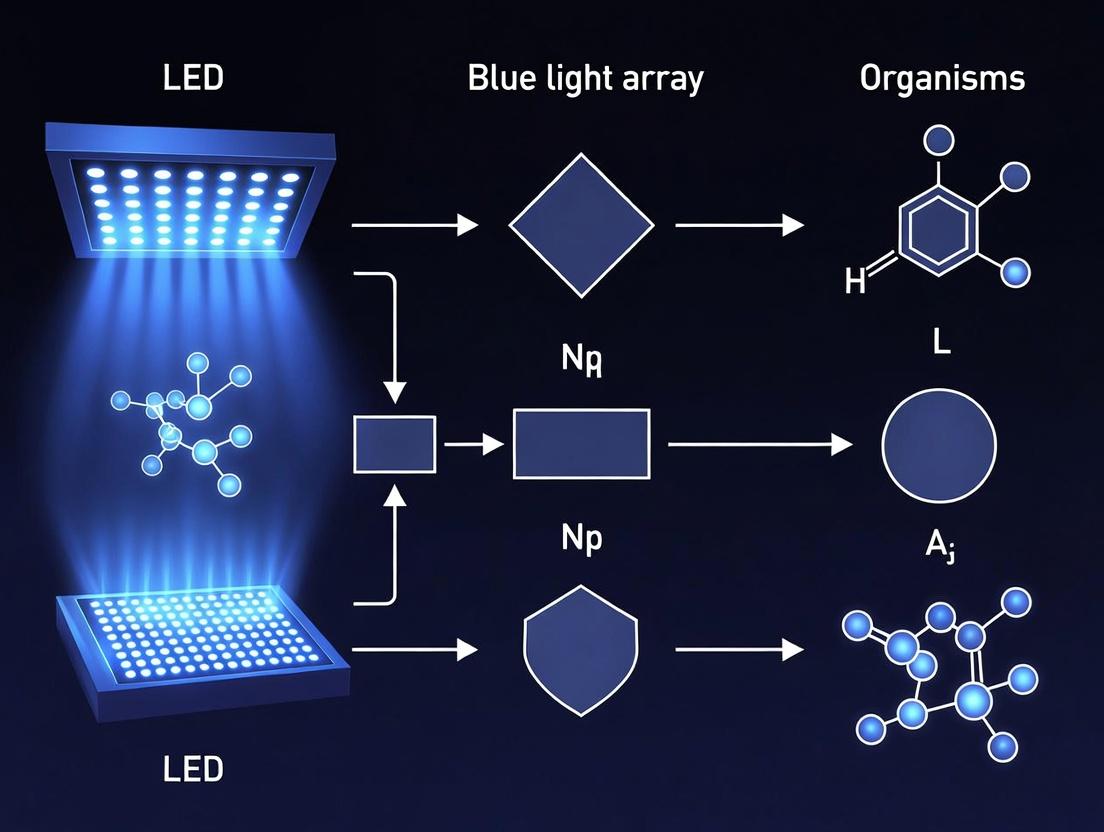
This article provides a comprehensive technical review for researchers and drug development professionals on the application of LED blue light arrays in stimulating marine biofluorescence.
Harnessing the Blue: How LED Arrays Are Revolutionizing Marine Biofluorescence for Biomedical Discovery
Abstract
This article provides a comprehensive technical review for researchers and drug development professionals on the application of LED blue light arrays in stimulating marine biofluorescence. We explore the photophysical foundations of marine fluorophores like GFP and phycobiliproteins, detailing optimal stimulation parameters (wavelength, intensity, duty cycle). The guide covers practical methodologies for in vivo and in vitro imaging, system design, and sample preparation. We address common challenges in signal-to-noise ratio, photobleaching, and organism viability, offering troubleshooting and optimization protocols. Finally, we validate these techniques against traditional light sources (lasers, mercury lamps) and benchmark performance for high-throughput screening and quantitative analysis, establishing a robust framework for applying this technology in biodiscovery pipelines.
The Science of Light and Life: Understanding Marine Biofluorescence and Blue Light Interactions
The development of precise LED blue light array systems has revolutionized the study of marine biofluorescence. This technology provides tunable, high-intensity illumination at wavelengths optimal for exciting key marine fluorophores, enabling advanced research in protein tagging, gene expression reporting, and deep-tissue imaging. The core photophysical properties—particularly absorption maxima (λ_abs) and molar extinction coefficients (ε)—of these fluorophores are the critical parameters that dictate the design and implementation of such LED arrays within a thesis focused on stimulating and quantifying marine biofluorescence.
Quantitative Data: Key Photophysical Parameters
Table 1: Absorption and Excitation Properties of Key Marine Fluorophores
| Fluorophore | Typical Source | Primary λ_abs (nm) | Molar Extinction Coefficient ε (M⁻¹cm⁻¹) | Optimal LED Excitation (nm) | Fluorescence Color |
|---|---|---|---|---|---|
| GFP (wt) | Aequorea victoria | 395 (minor), 475 (major) | ~21,000 (475 nm) | 460-480 (Blue) | Green |
| EGFP | Engineered variant | 488 | 56,000 | 470-490 (Blue) | Green |
| TagRFP | Entacmaea quadricolor | 555 | 100,000 | 540-560 (Green) | Red |
| mCherry | Engineered from DsRed | 587 | 72,000 | 560-590 (Amber) | Red |
| Phycoerythrin (R-PE) | Red algae | 565, 495, 545 | ~1,960,000 (495 nm) | 480-500 (Blue) | Orange/Red |
| Allophycocyanin (APC) | Cyanobacteria | 650 | 700,000 | 630-650 (Red) | Far-Red |
| SiriusGFP | Synthetic Aequorea-based | 355, 499 | 30,000 | 470-500 (Blue) | Green |
Application Notes & Protocols
Protocol 1: Characterizing Fluorophore Absorption for LED Array Calibration
Purpose: To measure the absorption spectrum of a purified marine fluorophore sample and identify the precise wavelength maximum for optimal LED array excitation.
Materials:
- Purified fluorophore (e.g., GFP, RFP) in known buffer.
- UV-Vis spectrophotometer with cuvette.
- Quartz cuvette (1 cm path length).
- Matching buffer for blank.
Procedure:
- Power on the spectrophotometer and allow it to warm up for 15 minutes.
- Set Parameters: Configure the instrument for an absorbance scan from 350 nm to 650 nm.
- Blank Measurement: Fill a quartz cuvette with the buffer used for the fluorophore sample. Place it in the sample holder and run a baseline correction.
- Sample Measurement: Replace the blank cuvette with the cuvette containing your fluorophore sample. Ensure the absorbance reading at the expected peak is between 0.1 and 1.0 (dilute if necessary).
- Run Scan: Initiate the absorbance scan. Record the full spectrum.
- Data Analysis: Identify the peak absorption wavelength (λabsmax). Record the absorbance value at this peak. Calculate the concentration using Beer-Lambert law (A = εcl) if ε is known and the sample is pure.
Purpose: To empirically test the fluorescence output of a fluorophore when excited by specific narrow-bandwidth LEDs from a custom array.
Materials:
- LED array system with independently addressable channels (e.g., 470nm, 505nm, 590nm).
- Fluorophore sample in a multi-well plate or cuvette.
- Spectrofluorometer or filter-based plate reader with appropriate emission filters.
- Neutral density filters (optional, for attenuating intense LED light).
Procedure:
- Sample Preparation: Aliquot identical volumes and concentrations of the target fluorophore into multiple wells/cuvettes.
- LED Setup: Program the LED array to illuminate each sample with a single, specific wavelength channel. Start at the lowest reasonable intensity.
- Emission Measurement: For each excitation wavelength, measure the total fluorescence emission intensity using the detector. For a spectrofluorometer, record the full emission spectrum.
- Data Collection: Create a table of Excitation Wavelength (LED channel) vs. Integrated Emission Intensity.
- Analysis: The LED wavelength yielding the highest emission intensity corresponds to the most efficient excitation peak for your system setup. This may differ slightly from the λabsmax due to the bandwidth of the LED and inner filter effects.
Purpose: To use a blue LED (e.g., 488 nm) to simultaneously excite multiple phycobiliprotein-conjugated antibodies in a mixed population for cell sorting.
Materials:
- Cell suspension stained with antibodies conjugated to R-PE (λabs 495 nm) and APC (λabs 650 nm).
- Flow cytometer equipped with a 488 nm blue LED/laser.
- Appropriate emission filters: 575/26 nm for R-PE, 660/20 nm for APC.
Procedure:
- Instrument Setup: Turn on the flow cytometer and the 488 nm blue LED source.
- Fluorophore Setup: Create a new experiment. In the detector configuration, assign the 575/26 nm filter to detect R-PE emission and the 660/20 nm filter to detect APC emission.
- Compensation Controls: Run singly stained samples and unstained controls to set PMT voltages and calculate spectral overlap (compensation).
- Run Experiment: Acquire data for the multi-stained sample. The 488 nm LED will directly excite R-PE. Although APC absorbs poorly at 488 nm, it can be excited via fluorescence resonance energy transfer (FRET) from R-PE if the antibodies are co-localized, or weakly via its minor absorption tails.
- Gating and Analysis: Plot fluorescence channels against each other to identify distinct cell populations.
Diagrams of Workflows and Pathways
Title: Workflow for Fluorophore Absorption Characterization
Title: Jablonski Diagram for LED-Excited Fluorescence
Title: Multiplexed Detection Setup in Flow Cytometry
The Scientist's Toolkit: Research Reagent Solutions
Table 2: Essential Materials for Marine Fluorophore Research with LED Arrays
| Item / Reagent Solution | Function & Relevance to Protocol |
|---|---|
| Recombinant GFP/RFP/Phycobiliprotein Standards (Purified) | Provides known, pure samples for instrument calibration, determining ε, and validating LED excitation efficiency (Protocol 1 & 2). |
| PBS (Phosphate Buffered Saline) or Tris Buffer | Standard inert buffer for diluting and maintaining fluorophore stability during spectral measurements. |
| Quartz Cuvettes (1 cm path length) | Essential for accurate UV-Vis absorbance measurements in the range of 350-700 nm, as plastic or glass absorbs UV light. |
| UV-Vis Spectrophotometer with Scanning Capability | Core instrument for generating the absorption spectrum to identify λabsmax for LED array targeting. |
| Modular LED Light Engine with Tunable Wavelengths | Customizable array allowing researchers to test specific excitation bands (e.g., 470nm, 505nm, 590nm) on fluorophore samples (Protocol 2). |
| Spectrofluorometer or Filter-Based Microplate Reader | Measures fluorescence emission intensity or spectrum after LED excitation. Critical for quantifying output. |
| Neutral Density (ND) Filters | Attenuates intense LED light to prevent photobleaching of samples during prolonged or repeated excitation testing. |
| Antibody Conjugation Kits (for Phycobiliproteins) | Enables labeling of cellular targets with fluorophores like R-PE and APC for multiplexed detection applications (Protocol 3). |
| Compensation Beads for Flow Cytometry | Used with singly stained controls to accurately set spectral overlap compensation in multiplexed LED-excited experiments. |
| Spectral Unmixing Software | Essential for deconvoluting overlapping emission spectra when using multiple fluorophores excited by a common blue LED. |
Fluorescent proteins (FPs), derived from marine organisms like Aequorea victoria (GFP) and various reef corals, have become indispensable tools in molecular and cellular biology. Their excitation by light is a quantum mechanical process where a photon of specific energy elevates the fluorophore to an excited state. The predominant excitation peak for the most widely used FPs, including enhanced GFP (EGFP), falls within the 450-490 nm (blue) range. This optimal window is dictated by the molecular structure of the chromophore and its electron conjugation system, which most efficiently absorbs photons of this energy.
Within the context of marine biofluorescence research using LED arrays, this specific range offers critical advantages:
- Minimal Photo-toxicity: Compared to higher-energy UV light (~365 nm), blue light is less damaging to living cells and tissues, enabling longer-term imaging of marine organisms.
- High Quantum Yield: Many FPs have their peak absorption (extinction coefficient) in this band, leading to bright emission.
- Optimal LED Technology: Modern high-power LEDs are exceptionally efficient and stable in the 450-490 nm range, facilitating the construction of uniform, controllable illumination arrays for large or sensitive marine specimens.
The following table summarizes the key optical characteristics of prevalent FPs excited by 450-490 nm light, critical for instrument design and protocol development.
Table 1: Common Fluorescent Proteins Excited by 450-490 nm Light
| Fluorescent Protein | Primary Excitation Peak (nm) | Primary Emission Peak (nm) | Molar Extinction Coefficient (M⁻¹cm⁻¹) | Quantum Yield | Relative Brightness* |
|---|---|---|---|---|---|
| EGFP | 488 | 507 | 56,000 | 0.60 | 33,600 |
| EYFP | 514 | 527 | 83,400 | 0.61 | 50,874 |
| Cerulean (CFP) | 433 | 475 | 43,000 | 0.48 | 20,640 |
| mCerulean3 | 433 | 475 | 40,000 | 0.87 | 34,800 |
| mTurquoise2 | 434 | 474 | 30,000 | 0.93 | 27,900 |
| SiriusGFP | 455 | 498 | 15,000 | 0.24 | 3,600 |
| LanYFP | 485 | 530 | 90,000 | 0.74 | 66,600 |
| mNeonGreen | 506 | 517 | 116,000 | 0.80 | 92,800 |
*Relative Brightness = (Extinction Coefficient x Quantum Yield) / 1000. Data compiled from FPbase and recent literature.
Application Notes: LED Array Design for Marine Biofluorescence
Spectral Matching
An effective LED array must emit light that overlaps significantly with the FP's excitation spectrum. For the 450-490 nm "sweet spot," LEDs with a central wavelength of ~470 nm and a narrow full-width half-maximum (FWHM: ~20-25 nm) provide optimal excitation for EGFP and similar variants while minimizing off-target heating and photostress.
Intensity and Uniformity Calibration
For quantitative imaging, uniform irradiance across the sample plane is essential. Use a calibrated photodiode or spectrometer to map the irradiance (in mW/cm²) delivered by the array. Employ diffusers and adjustable drive currents to achieve homogeneity >95% across the target area. For live marine samples (e.g., corals, polyps), start with low irradiance (<5 mW/cm²) to avoid behavioral disruption or bleaching.
Pulse Modulation for Live Imaging
Utilize the fast response time of LEDs for pulsed excitation. This reduces total light dose and can help mitigate photobleaching. A typical protocol for time-lapse imaging of marine larvae might use a 200 ms pulse at 470 nm every 30 seconds, controlled via a TTL-triggered LED driver.
Experimental Protocols
Objective: To measure and calibrate the spectral output and intensity of a custom 470 nm LED array for exciting EGFP in a marine organism sample chamber.
Materials: See The Scientist's Toolkit (Section 6.0). Procedure:
- Connect the LED array to a programmable DC power supply or driver.
- Position the sensor of a calibrated spectrometer at the sample plane, facing the light source.
- In a darkened room, power the LED array at its typical operating current (e.g., 500 mA). Record the emission spectrum from 400-600 nm.
- Confirm the central peak is at the target wavelength (e.g., 470 nm ± 5 nm).
- Replace the spectrometer with a calibrated photodiode connected to a power meter.
- Measure the irradiance at the center of the sample plane. Then, take measurements at a grid of points (e.g., 3x3) across the plane.
- Adjust the LED drive currents or the height/diffuser until the irradiance variation across the grid is <5%.
- Document the final, uniform irradiance value for use in imaging protocols.
Protocol 2: Imaging GFP-Expressing Marine Zooplankton with a Blue LED Array
Objective: To acquire low-phototoxicity fluorescence images of live, GFP-expressing copepods or planktonic larvae.
Materials: See The Scientist's Toolkit (Section 6.0). Procedure:
- Sample Preparation: Anesthetize organisms if necessary using approved methods (e.g., low-dose MgCl₂ for marine invertebrates). Mount in a shallow seawater chamber on a microscope slide.
- Microscope Setup: Configure an epifluorescence microscope. In the excitation light path, install the calibrated 470 nm LED array and a 470/40 nm bandpass excitation filter.
- Emission Filtering: Install a 525/50 nm bandpass emission filter in the detection path to capture GFP signal and block scattered blue light.
- Image Acquisition: Using a sensitive sCMOS camera:
- Set the LED array to deliver a calibrated irradiance of 2-3 mW/cm².
- Set exposure time to 50-200 ms. Use live view to focus on the specimen using dim transmitted light if available.
- Capture the fluorescence image. If doing time-lapse, set the LED to pulse at the defined exposure time with an interval of 10-60 seconds between frames.
- Controls: Always image a non-fluorescent specimen of the same type under identical settings to assess background autofluorescence.
Pathway and Workflow Visualizations
Diagram 1: Photophysical Pathway of GFP Excitation
Diagram 2: Marine Biofluorescence Imaging Workflow
The Scientist's Toolkit: Research Reagent Solutions
Table 2: Essential Materials for Blue Light Fluorescence Experiments
| Item | Function/Benefit | Example Product/Type |
|---|---|---|
| 470 nm LED Array | High-efficiency, cool, and controllable light source for optimal FP excitation. | Custom-built array with 470 nm center wavelength, ~25 nm FWHM. |
| Programmable LED Driver | Provides stable, pulsed, or TTL-controlled current to LEDs for precise illumination. | Thorlabs LEDD1B or equivalent TTL-driver. |
| 470/40 nm Bandpass Filter | Isolates the optimal 450-490 nm excitation light, blocking other wavelengths. | Chroma ET470/40x or Semrock FF02-470/40. |
| 525/50 nm Bandpass Filter | Captures GFP emission while blocking scattered excitation light (critical for contrast). | Chroma ET525/50m or Semrock FF01-525/50. |
| Calibrated Spectrometer | Measures the exact emission spectrum and peak wavelength of the LED light source. | Ocean Insight FLAME-S-VIS or similar. |
| Calibrated Photodiode Power Meter | Measures absolute irradiance (mW/cm²) at the sample plane for quantitative protocols. | Thorlabs PM100D with S170C sensor. |
| sCMOS Camera | High-sensitivity, low-noise detector for capturing weak fluorescence from live samples. | Teledyne Photometrics Prime BSI or Hamamatsu ORCA-Fusion. |
| Marine Anesthetic | Gently immobilizes motile marine organisms for clear imaging. | Magnesium Chloride (MgCl₂) solution isotonic to seawater. |
| Imaging Chamber | Holds marine specimens in a small volume of seawater for microscopy. | Ibidi μ-Slide or custom-made glass chamber. |
Biofluorescence, the absorption and re-emission of light at longer wavelengths, is prevalent in marine environments. Blue light (typically 440-490 nm) is the primary excitatory wavelength for most marine fluorescent proteins (FPs). The development of high-intensity, tunable LED blue light arrays provides a controllable, low-heat method for stimulating and imaging these biomarkers in vivo and in vitro, revolutionizing their study and application in biomedical research.
Key Biofluorescent Marine Organisms and Their Biomedical Applications
Table 1: Prominent Marine Biofluorescent Organisms and Proteins
| Organism Source | Exemplar Species | Primary Fluorescent Protein(s) | Excitation Peak (nm) | Emission Peak (nm) | Key Biomedical Application |
|---|---|---|---|---|---|
| Reef-Building Corals | Discosoma sp. | DsRed, mCherry | 558, 587 | 583, 610 | Deep-tissue imaging, biosensors |
| Jellies (Hydrozoans) | Aequorea victoria | Green Fluorescent Protein (GFP) | 395 (major), 475 (minor) | 509 | Gene expression reporter, cell tracking |
| Fish | Galaxea corals (via fish diet) | Kaede (in Chelmon sp.) | 508 (green), 572 (red) | 518 (green), 580 (red) | Photoconvertible cell lineage tracing |
| Crustaceans | Parapandarus sp. (copepod) | smURFP | 642 | 670 | Near-infrared imaging, multiplexing |
Application Notes & Protocols
Purpose: To observe real-time protein localization and dynamics using a custom 470 nm LED array. Background: LED arrays offer precise control over intensity and pulsing, reducing phototoxicity compared to laser or mercury-vapor sources.
Protocol:
- Cell Preparation: Seed mammalian cells (e.g., HEK293) expressing a marine-derived FP (e.g., GFP, DsRed) in a glass-bottom 96-well plate.
- LED Array Calibration: Using a spectrometer, calibrate the 470 nm LED array to deliver a uniform irradiance of 5 mW/cm² across the sample plane.
- Imaging Setup: Mount the calibrated LED array onto an epifluorescence microscope. Use a 470/40 nm excitation filter, a 495 nm dichroic mirror, and an appropriate emission filter (e.g., 525/50 nm for GFP).
- Stimulation & Acquisition: Expose cells to continuous 470 nm light for 100 ms every 2 seconds for 10 minutes. Capture images with a cooled CCD camera.
- Analysis: Quantify fluorescence intensity over time using image analysis software (e.g., ImageJ) to track protein dynamics.
AN-2: Protocol for Screening Biofluorescent Marine Extracts Using a Blue Light Transilluminator
Purpose: Rapid identification of novel fluorescent proteins from marine tissue homogenates.
Protocol:
- Sample Collection & Homogenization: Flash-freeze coral or jellyfish tissue in liquid nitrogen. Homogenize 1 g of tissue in 5 mL of ice-cold extraction buffer (50 mM Tris-HCl, pH 8.0, 100 mM NaCl).
- Clarification: Centrifuge homogenate at 15,000 x g for 30 minutes at 4°C. Filter the supernatant through a 0.45 µm syringe filter.
- Primary Screening: Spot 10 µL of clarified supernatant onto a nitrocellulose membrane. Allow to dry. Illuminate the membrane with a 470 nm blue LED transilluminator in a darkroom. Observe and photograph emission through a yellow long-pass filter (#15 or equivalent).
- Protein Isolation: For positive spots, purify the fluorescent component from the bulk extract using fast protein liquid chromatography (FPLC) with an ion-exchange column.
- Spectral Characterization: Use a fluorometer to obtain excitation and emission spectra of the purified protein.
The Scientist's Toolkit: Research Reagent Solutions
Table 2: Essential Materials for Marine Biofluorescence Research
| Item/Category | Example Product/Description | Primary Function in Research |
|---|---|---|
| LED Light Source | Custom 470 nm Array (e.g., Thorlabs LED4D067) | Provides high-intensity, cool, and tunable excitation for in vivo or in vitro stimulation. |
| Expression Vector | pEGFP-N1 (Clontech) | Standard plasmid for cloning and expressing marine FP genes in mammalian cells. |
| Cell Line | HEK293-T (ATCC CRL-3216) | Robust, easily transfected mammalian cell line for FP expression and functional assays. |
| Imaging Filter Set | Semrock GFP-3035B (470/40, 525/50) | Isolates the specific excitation and emission wavelengths for GFP-like proteins. |
| Fluorometer | Horiba FluoroMax+ Spectrofluorometer | Precisely measures excitation and emission spectra of purified fluorescent proteins. |
| Marine Ringer's Solution | Calcium-free artificial seawater (e.g., 460 mM NaCl, 10 mM KCl, 55 mM MgCl₂) | Maintains osmotic balance for live marine tissue during initial extraction. |
Visualized Pathways and Workflows
Diagram Title: Biosensor Pathway via Blue Light Stimulation
Diagram Title: Novel Fluorescent Protein Discovery Workflow
Application Notes for Marine Biofluorescence Research
The study of marine biofluorescence, driven by the need to discover novel fluorescent proteins and compounds for biomedical imaging and drug development, requires precise optical stimulation. LED technology offers critical advantages over traditional light sources (e.g., mercury/xenon arc lamps, lasers) in this delicate research context.
Advantages Summary:
- Spectral Purity: Narrowband emission spectra (Full Width at Half Maximum typically 10-30 nm) enable selective excitation of specific fluorophores (e.g., GFP-like proteins, fluorescent metabolites) without unintended spillover excitation, reducing background noise.
- Tunability: Arrays combining discrete LEDs across the UV to blue spectrum (e.g., 365nm, 385nm, 400nm, 450nm, 470nm) allow for programmable excitation wavelengths. This facilitates spectral fingerprinting of unknown fluorescent compounds and optimization for diverse marine organisms.
- Low Heat Output & Stability: Minimal infrared emission prevents thermal stress on sensitive live marine specimens (e.g., corals, sponges, nudibranchs) during prolonged observation, ensuring physiological viability. Solid-state design offers stable intensity over time, crucial for quantitative longitudinal studies.
Quantitative Comparison of Light Sources Table 1: Comparative analysis of light sources for biofluorescence excitation.
| Feature | LED Array (Modern) | Mercury Arc Lamp | Laser System |
|---|---|---|---|
| Typical Spectral Width (FWHM) | 10 - 30 nm | 50 - 200 nm (with filters) | <5 nm |
| Wavelength Tunability | High (modular array) | Low (requires filter changes) | Low (fixed per laser) |
| Heat Output (at sample) | Very Low (primarily conductive) | Very High (IR radiation) | Medium (localized heating) |
| Operational Lifetime | 25,000 - 50,000 hours | 200 - 1,000 hours | 5,000 - 10,000 hours |
| Intensity Stability | >95% over lifetime | Degrades steadily | High, but can fluctuate |
| Typical Power Efficiency | 20-40% | <5% | 5-15% |
Experimental Protocol: LED-Based Spectral Fingerprinting of Marine Biofluorescence
Objective: To identify and characterize unknown fluorescent compounds in a marine tissue sample using a tunable LED blue-light array.
Materials & Reagents (The Scientist's Toolkit) Table 2: Key research reagents and materials.
| Item | Function/Specification |
|---|---|
| Tunable LED Array System | Emits discrete wavelengths (e.g., 365, 385, 400, 420, 450, 470 nm) with independent control. |
| Marine Specimen (e.g., Coral Fragment) | Source of biofluorescent compounds. Must be ethically sourced and maintained. |
| Aquarium-Seawater System | For live specimen maintenance; must match natural salinity/temperature. |
| Longpass Emission Filters | (e.g., >500nm) to block scattered excitation light and transmit only fluorescence. |
| Spectrophotometer or Imaging Spectrometer | For quantifying emission spectra. |
| Low-Autofluorescence Seawater | For creating extracts to minimize background signal. |
| Micro-homogenizer | For tissue disruption to extract fluorescent compounds. |
| pH Buffer Solutions | To test fluorescence stability across pH ranges, mimicking different cellular environments. |
Procedure:
- Sample Preparation: Acclimate a healthy marine specimen (e.g., coral) in a controlled aquarium. For in vivo imaging, use a small fragment. For extract analysis, homogenize tissue in cold, low-autofluorescence seawater and centrifuge to collect supernatant.
- LED Array Calibration: Use a spectrometer to measure and equalize the photon flux (μmol m⁻² s⁻¹) at the sample plane for each LED channel. Document settings.
- Excitation Scanning: For the sample (live or extract), sequentially expose it to each pre-calibrated LED wavelength (365nm → 470nm). For each excitation (Exλ), collect the full emission spectrum using the spectrometer equipped with a longpass filter.
- Data Acquisition: Record the peak emission wavelength (Emλ max) and integrated fluorescence intensity for each Exλ. Create an excitation-emission matrix (EEM).
- Analysis: Plot the data (see Diagram 1). The resulting EEM provides a spectral fingerprint. Compare peak Ex/Em pairs to known fluorescent protein databases (e.g., FPbase). Test extract stability under different pH buffers.
Protocol 2: Long-Term Live-Imaging of Fluorescent Protein Expression
Objective: To monitor induced fluorescence in a live marine organism over 72 hours with minimal phototoxicity.
Procedure:
- Setup: Mount a blue (e.g., 450nm) LED array above a flow-through seawater imaging chamber. Intensity should be calibrated to ≤200 μmol photons m⁻² s⁻¹.
- Control: Image the specimen under dim white light to establish morphology baseline.
- Stimulation & Imaging: Activate the 450nm LED array. Capture time-lapse fluorescence images every 30 minutes using a camera with a 500nm longpass filter. Maintain constant seawater temperature and flow.
- Viability Assessment: Co-monitor organism behavior (polyp extension, motility) and water quality (pH, O₂). Compare to a control chamber illuminated with a filtered halogen source of equal intensity.
- Quantification: Use image analysis software to track mean fluorescence intensity per unit area over time (see Diagram 2).
Visualizations
Diagram 1: Spectral fingerprinting workflow for marine biofluorescence.
Diagram 2: Long-term live-imaging protocol using low-heat LEDs.
Application Notes
Marine biofluorescence, the absorption and re-emission of blue light at longer wavelengths by marine organisms, has evolved from a biological curiosity into a critical reservoir for molecular tools in biomedical research. Within the thesis context of using calibrated LED blue light arrays for non-destructive in situ and laboratory stimulation, this research area directly enables the discovery, characterization, and application of fluorescent molecules. Key studies have established these marine-derived fluorophores as indispensable probes for cellular imaging, drug screening, and as potential diagnostic biomarkers. The following notes detail the foundational linkages.
- Green Fluorescent Protein (GFP) from Aequorea victoria: This foundational discovery demonstrated that the fluorophore itself is a protein that forms its chromophore autocatalytically. Its genetic encodability revolutionized cell biology by allowing specific labeling of proteins, organelles, and cells. Quantitative studies on its brightness, photostability, and spectral variants under controlled blue light excitation provided the template for all subsequent biofluorescent protein engineering.
- Fluorescent Proteins from Anthozoans (Reef Corals): Research on corals expanded the color palette beyond green. Key studies on DsRed from Discosoma sp. provided the first efficient red fluorescent protein, enabling multicolor imaging and Förster Resonance Energy Transfer (FRET) applications. Quantitative characterization of their oligomeric states, maturation times, and excitation/emission maxima under blue light arrays was essential for their adaptation as drug discovery tools.
- Small-Molecule Fluorophores from Marine Invertebrates: Biofluorescence in many fish, crustaceans, and cephalopods is facilitated by small molecules like Bilirubin-like compounds or GFP-like analogs acquired through diet. Studies linking fluorescence in mantis shrimp (Lysiosquillina glabriuscula) to dietary uptake of GFP-like molecules highlight a potential biosynthetic pathway for novel probes. Their small size offers advantages for pharmacokinetic and biodistribution studies in drug development.
- Biomarker Potential in Disease Models: Foundational research has shown that marine-derived fluorescent proteins can serve as direct or indirect biomarkers. For example, GFP-tagged pathogens allow real-time tracking of infection in vivo. Furthermore, engineered fluorescent biosensors based on marine FP scaffolds can report on intracellular biomarkers like pH, calcium flux, or protease activity, which are critical in cancer and neurodegenerative disease research.
Protocols
Protocol 1:In SituBiofluorescence Induction and Spectral Capture Using a Portable LED Array
Purpose: To non-destructively induce and record the fluorescence emission spectrum of a marine organism in its natural habitat or in a live aquarium setting.
Materials:
- Custom-built or commercial blue LED array (peak emission ~470 nm) with adjustable intensity.
- Long-pass barrier filters (e.g., OG515, OG590) for the camera lens.
- Fiber-optic spectrometer (USB-coupled, 350-1000 nm range).
- Dark enclosure or nocturnal conditions.
- Calibrated gray/white reference card.
Procedure:
- Setup: In low ambient light, position the LED array at a 30-45 degree angle to the target organism to minimize glare.
- Excitation: Illuminate the target with the blue LED array. Start at low intensity and increase gradually.
- Filtering: Attach the appropriate long-pass filter to the camera or spectrometer probe to block reflected blue light.
- Spectral Acquisition: Place the tip of the fiber-optic probe at a fixed distance from the fluorescing tissue. Acquire the raw emission spectrum.
- Reference & Correction: Acquire a spectrum from the reference card under identical illumination. Use this to correct the sample spectrum for illumination irregularities.
- Data Export: Export the corrected spectrum as comma-separated values (.csv) for peak identification (λmax, FWHM).
Protocol 2: Isolation and Characterization of a Fluorescent Protein from Coral Tissue
Purpose: To extract, purify, and perform basic biophysical characterization of a fluorescent protein.
Materials:
- Coral fragment (Discosoma sp. or similar).
- Homogenization buffer: 50 mM Tris-HCl, pH 8.0, 100 mM NaCl, 1 mM EDTA, plus protease inhibitors.
- French Press or sonicator on ice.
- Chromatography system (ÄKTA pure or similar) with HisTrap column (if using His-tagged constructs from cloned protein).
- Blue LED transilluminator or spectrophotometer with fluorescence cuvette holder.
Procedure:
- Tissue Separation: Air-blast or water-pick coral tissue from the skeleton into ice-cold homogenization buffer.
- Homogenization: Lyse the tissue using a French Press (2-3 passes at 1,000 psi) or pulsed sonication on ice.
- Clarification: Centrifuge homogenate at 15,000 x g for 30 min at 4°C. Retain the supernatant.
- Chromatography: For native proteins, use anion-exchange chromatography. Apply supernatant to a Q Sepharose column equilibrated in homogenization buffer and elute with a linear 0.1-1.0 M NaCl gradient. Collect fluorescent fractions.
- Characterization:
- Spectral Scanning: Use a fluorescence spectrophotometer. Set excitation to 470 nm (blue), scan emission from 500-650 nm. Set emission at λmax, scan excitation from 400-500 nm.
- Brightness Calculation: Measure absorbance at λex(max). Use the formula: Brightness = ε x Φ, where ε is the extinction coefficient and Φ is the quantum yield (determined relative to a standard like fluorescein).
Data Tables
Table 1: Foundational Marine Fluorescent Proteins and Key Parameters
| Protein (Source) | Ex Max (nm) | Em Max (nm) | Molar Extinction Coefficient (M⁻¹cm⁻¹) | Quantum Yield | Primary Application in Research |
|---|---|---|---|---|---|
| GFP (Aequorea victoria) | 395/475 | 509 | 21,000 - 56,000 | 0.79 | General protein tagging, reporter gene |
| EGFP (Engineered) | 488 | 507 | 56,000 | 0.60 | Standard cell biology, live-cell imaging |
| DsRed (Discosoma sp.) | 558 | 583 | 75,000 | 0.79 | Multicolor imaging, FRET acceptor |
| mCherry (Engineered) | 587 | 610 | 72,000 | 0.22 | Protein tagging, biosensor development |
| eqFP611 (Entacmaea quadricolor) | 559 | 611 | 78,000 | 0.45 | Far-red imaging, deep-tissue probes |
Table 2: Quantitative Output from In Situ Biofluorescence Surveys
| Study Organism (Common Name) | LED Excitation Peak (nm) | Observed Emission Peak (nm) | Relative Fluorescence Intensity (Arb. Units) | Putative Fluorophore Class |
|---|---|---|---|---|
| Hypsypops rubicundus (Garibaldi) | 470 | 525 | 1.0 | GFP-like protein |
| Lysiosquillina glabriuscula (Mantis Shrimp) | 450 | 515 | 3.2 | Dietary GFP-like molecule |
| Echinophyllia sp. (Coral) | 465 | 605 | 2.5 | DsRed homolog |
| Pontonia sp. (Commensal Shrimp) | 470 | 520, 580 (dual) | 0.8, 1.5 | Multiple protein types |
Diagrams
Title: Marine Biofluorescence Pipeline for Biomedical Tools
Title: GFP as a Cellular Reporter Mechanism
The Scientist's Toolkit: Key Research Reagent Solutions
| Item | Function & Application |
|---|---|
| Calibrated Blue LED Array (470±10 nm) | Provides consistent, high-intensity excitation for in situ imaging or laboratory assays. Crucial for non-destructive stimulation. |
| Long-Pass Optical Filters (e.g., OG515, OG590) | Blocks reflected/scattered excitation light, allowing only the target fluorescence signal to pass to the detector. |
| Fluorescence Spectrophotometer | Measures precise excitation and emission spectra, quantum yield, and brightness of purified fluorophores. |
| FP Expression Vector (e.g., pEGFP-N1) | Plasmid for cloning and expressing target proteins as fusions with fluorescent proteins in mammalian cells. |
| Chromatography System (ÄKTA) | For purification of native or recombinant fluorescent proteins via affinity, ion-exchange, or size-exclusion. |
| Live-Cell Imaging Chamber with Temp/CO2 Control | Enables long-term, time-lapse imaging of fluorescent protein dynamics in living cells under physiological conditions. |
| FRET Pair Plasmid Kit (e.g., CFP-YFP) | Pre-validated plasmids expressing donor and acceptor FPs for constructing biosensors to monitor molecular interactions. |
Building Your System: A Practical Guide to LED Array Design and Biofluorescence Imaging Protocols
Application Notes
Within the thesis on LED blue light arrays for stimulating marine biofluorescence, the design parameters are critical for eliciting specific photobiological responses. Marine organisms possess diverse fluorescent proteins (e.g., GFP-like proteins) and photopigments with unique excitation spectra. Precise control of wavelength, irradiance, and spatial distribution is necessary for quantitative imaging, photophysiological studies, and high-throughput screening for drug discovery applications, such as using fluorescent marine metabolites as biomarkers.
Wavelength Selection: The optimal excitation wavelength is determined by the target fluorophore's absorption peak. For many marine GFP-like proteins, this peaks between 450-490 nm. However, for chlorophyll-a fluorescence or other pigments, different wavelengths may be required.
Power Density Optimization: Sufficient irradiance is needed to achieve detectable fluorescence signals without causing photodamage or photoinhibition, which can alter organism behavior and physiology, confounding experimental results.
Array Geometry Design: The spatial arrangement of LEDs determines the uniformity and area of illumination, which is vital for consistent stimulation in multi-well plates, aquarium setups, or imaging fields.
| Fluorophore / Target | Typical Source Organism | Peak Excitation (nm) | Recommended LED Wavelength (nm) | Typical Required Power Density (mW/cm²) |
|---|---|---|---|---|
| GFP-like Protein (e.g., amFP486) | Anemonia majano | 486 | 470-490 | 1 - 5 |
| Chlorophyll-a | Phytoplankton / Symbionts | ~440 (blue), ~675 (red) | 450 | 0.5 - 2 (for fluorescence induction) |
| Coral Host Pigmentation | Scleractinian Corals | 450-470 | 460 | 2 - 10 |
| Fluorescent Metabolites (e.g., Bryostatins) | Bryozoans | Varies (often near UV/Blue) | 395-410 | 5 - 15 |
Table 2: Array Geometry Comparison for Different Experimental Setups
| Geometry | Description | Best For | Uniformity Challenge |
|---|---|---|---|
| Dense Rectangular Grid | LEDs evenly spaced in a rectangular matrix. | Illuminating standard multi-well plates (e.g., 96-well) for drug screening. | Edge effects causing lower intensity at plate borders. |
| Circular Ring | LEDs arranged in a single or concentric rings. | Macro-photography or illumination of single large specimens in a dish. | Central hotspot or vignetting. |
| Custom Clustered | Groups of LEDs tuned to different wavelengths clustered and addressable. | Multispectral excitation experiments. | Color mixing and uniform irradiance for each wavelength. |
Experimental Protocols
Protocol 1: Calibrating LED Array Output for a 96-Well Plate Assay
Objective: To establish uniform, quantifiable blue light stimulation across all wells. Materials: Blue LED array (470 nm), spectroradiometer or calibrated photodiode, optical diffuser sheet, 96-well plate filled with clear buffer, power supply. Procedure:
- Safety: Wear appropriate eye protection.
- Mount the diffuser over the LED array to homogenize light.
- Position the array parallel to and above the microplate (typical distance: 5-10 cm).
- Power On the array at a low current (e.g., 100 mA). Allow 30 minutes for output stabilization.
- Measure Irradiance: Using the spectroradiometer probe, measure power density (mW/cm²) at the center of 9 representative wells (A1, A12, F1, F12, H1, H12, and the central well).
- Adjust & Map: Adjust the array distance or driving current until the average irradiance is within the target range (e.g., 3 ± 0.3 mW/cm²). Create a full plate map.
- Document: Record final driving current, voltage, distance, and the irradiance map.
Protocol 2: Inducing and Imaging Biofluorescence in Coral Nubbins
Objective: To stimulate and quantify GFP-like protein fluorescence. Materials: LED array (455 nm or 485 nm, depending on target protein), aquarium tank with temperature control, coral nubbins in holders, blue-light blocking filter (yellow/orange) for camera, fluorescence-capable camera or spectrophotometer. Procedure:
- Acclimate coral nubbins to dark conditions for >30 minutes to minimize non-fluorescent chromophore states.
- Setup: Position LED array above or to the side of the tank. Place camera with filter opposite or at a 45° angle to the light source to avoid specular reflection.
- Pre-imaging: Capture a reference image under ambient light without LED excitation.
- Stimulate: Turn on LED array at a pre-calibrated, non-stressful irradiance (e.g., 5 mW/cm²). Ensure no other light sources are active.
- Image Capture: Immediately capture fluorescence images using identical camera settings (ISO, aperture, exposure time).
- Quantify: Use image analysis software (e.g., ImageJ) to measure mean pixel intensity in regions of interest (ROIs) on the coral tissue. Subtract background intensity from a non-fluorescent area.
- Recovery: Limit exposure duration to prevent photostress (typically <60 sec per exposure).
Diagrams
Diagram 1: Biofluorescence Induction & Imaging Workflow
Title: Biofluorescence Workflow from Stimulation to Detection
Diagram 2: Photophysical Pathway of GFP-like Protein
Title: Photophysical Pathway in GFP-like Proteins
The Scientist's Toolkit
Table 3: Key Research Reagent Solutions & Materials
| Item | Function/Benefit | Example/Note |
|---|---|---|
| LED Array Driver | Provides stable, adjustable current to ensure constant light output; crucial for repeatability. | Constant current driver with PWM dimming capability. |
| Optical Diffuser | Homogenizes raw LED output, eliminating hotspots and creating uniform illumination. | Milky polycarbonate or ground glass diffuser sheet. |
| Bandpass Filter Set | Isolates specific excitation and emission bands, improving signal-to-noise ratio in imaging. | Chroma Technology or Semrock filter sets matched to marine fluorophores. |
| Spectroradiometer | Precisely measures spectral output (W/nm) and irradiance (mW/cm²) of the LED array for calibration. | Ocean Insight USB2000+ or similar. |
| Artificial Seawater Mix | Provides controlled, reproducible marine environment for specimens during light exposure. | Red Sea Salt or Instant Ocean, adjusted to correct salinity. |
| Light-Curable Optical Gel | Used for potting and sealing LED arrays in humid/aquatic environments to prevent corrosion. | UV-curing silicone or epoxy (e.g., Dymax). |
| 96-Well Black Plate | For high-throughput fluorescence assays; black walls minimize cross-talk between wells. | Corning or Greiner Bio-One plates. |
| Temperature-Controlled Stage | Maintains marine organisms at their optimal temperature during light stimulation experiments. | PeCon or Tokai Hit stage incubator. |
This application note addresses a critical parameter in live specimen imaging for marine biofluorescence research: the illumination duty cycle. Within the broader thesis on developing optimized LED arrays for stimulating marine organisms, the choice between pulsed (P) and continuous wave (CW) illumination directly impacts both signal quality and specimen viability. Excessive photon flux, particularly in the 440-470 nm (blue) range, can induce phototoxicity through oxidative stress, disrupting cellular function and compromising long-term observation. This document provides a comparative analysis, quantitative data, and protocols for designing duty cycles that balance high signal-to-noise fluorescence capture with maximal specimen health.
Comparative Analysis & Data Presentation
Table 1: Quantitative Comparison of Pulsed vs. CW Illumination
| Parameter | Pulsed Illumination (Recommended Duty Cycle) | Continuous Wave (CW) Illumination | Primary Impact |
|---|---|---|---|
| Peak Power per Pulse | High (e.g., 5-10x CW equivalent) | Constant, lower | Fluorescence excitation efficiency |
| Average Power Delivered | Low (Controlled by Duty Cycle) | Constant, higher | Photodamage & heating |
| Specimen Viability (Long-term) | High (Reduced integrated dose) | Moderate to Low | Experimental duration & data validity |
| Signal-to-Noise Ratio (SNR) | Potentially High (Gated detection) | Moderate | Image clarity & fidelity |
| Photobleaching Rate | Low | High | Signal longevity over time |
| Primary Phototoxicity Mechanism | Reduced ROS generation per experiment | Sustained ROS generation | Cellular stress pathways |
| Typical Duty Cycle Range | 1% - 50% (Marine specimens) | 100% | Light dose management |
Table 2: Example Duty Cycle Parameters for Common Marine Taxa
| Specimen Type | Target Fluorophore | Suggested Blue Light (λ) | Max Safe Intensity (CW) | Optimized Pulse Duty Cycle | Rationale |
|---|---|---|---|---|---|
| Coral Polyps | GFP-like Proteins | 450 nm | 5-10 mW/cm² | 10-20% | Minimizes zooxanthellae stress, permits hourly imaging over days. |
| Jellyfish (Aequorea) | Aequorin/GFP | 470 nm | 2-5 mW/cm² | 1-5% | Extreme sensitivity to blue light; very short pulses required. |
| Marine Polychaetes | Chlorophyll-derived | 440 nm | 10-15 mW/cm² | 20-30% | Hardier specimens; balance needed for endogenous pigment excitation. |
| Cultured Marine Cells | Synthetic Dyes (e.g., Fluo-4) | 488 nm | 1-5 mW/cm² | 5-10% | Prevents mitochondrial membrane potential collapse. |
Experimental Protocols
Protocol 1: Determining Maximum Tolerable CW Intensity for a New Specimen
Objective: Establish the baseline CW illumination intensity that causes no observable phototoxic effects within a defined imaging timeframe.
Materials:
- Live marine specimens in appropriate seawater medium.
- LED array system (tunable intensity, 450-470 nm).
- Environmental chamber for temperature/pH control.
- Microscope with capable camera.
- Viability assay kit (e.g., Calcein-AM / Propidium Iodide).
Methodology:
- Acclimatize specimens in imaging chambers for 1 hour.
- Divide specimens into groups (n≥5). One group is a dark control.
- Illuminate groups with CW blue light at set intensities (e.g., 1, 5, 10, 20 mW/cm²). Use identical exposure time and frame rate for imaging.
- Monitor for 2-6 hours. Record behavioral metrics (motility, feeding, contraction) and morphological changes.
- At endpoint, perform viability staining. Quantify live/dead ratio.
- Analyze: The maximum tolerable intensity is the highest level showing no significant difference from the dark control in viability and behavior.
Protocol 2: Optimizing Pulsed Duty Cycle for Long-Term Time-Lapse
Objective: Find the duty cycle that maximizes fluorescence signal while maintaining specimen health over extended periods (12-24 hours).
Materials:
- Specimen with known max tolerable CW intensity (from Protocol 1).
- Pulse-capable LED driver or controller (capable of 1-50% duty cycle, kHz frequency).
- Time-lapse imaging setup.
- Metrics for health (e.g., larval development stage, pulsation rate in jellyfish).
Methodology:
- Set Peak Pulse Power: Fix the peak power of the pulsed LED to be equivalent to the maximum tolerable CW intensity (from Protocol 1). This isolates duty cycle as the variable.
- Define Test Cycles: Program pulse regimens (e.g., 1ms pulse every 100ms = 1% duty, 10ms/100ms = 10%, etc.). Frequency should be high enough (>50 Hz) to avoid flicker artifacts.
- Run Time-Lapse Experiment: For each duty cycle group, run identical 12-hour time-lapse experiments, imaging at set intervals (e.g., every 5 minutes).
- Quantify: Measure mean fluorescence intensity per image and plot its decay over time (photobleaching curve). At experiment end, perform a viability assay.
- Optimize: Select the duty cycle that provides the best compromise between sustained signal intensity (area under the fluorescence curve) and high post-experiment viability.
Signaling Pathways & Experimental Workflows
Title: Blue Light Induced Phototoxicity Pathway
Title: Duty Cycle Optimization Workflow
The Scientist's Toolkit: Research Reagent Solutions
Table 3: Essential Materials for Live Specimen Phototoxicity Studies
| Item | Function / Relevance | Example Product / Note |
|---|---|---|
| LED Illumination System | Precise control of wavelength, intensity, and timing (Pulse/CW). | CoolLED pE-300 Ultra or comparable; must have fast TTL triggering. |
| Live-Cell Viability Stain | Differentiate live vs. dead cells post-illumination. | Invitrogen LIVE/DEAD Kit (Calcein-AM/PI): Calcein (green) for live cells, PI (red) for dead. |
| ROS Detection Probe | Quantify reactive oxygen species generation during illumination. | CellROX Green or Deep Red Reagent: Fluorescent signal increases with oxidative stress. |
| Antioxidant Supplements | Added to medium to mitigate phototoxicity for sensitive specimens. | Trolox or Ascorbic Acid: Common antioxidants to scavenge ROS in seawater media. |
| Temperature-Controlled Stage | Maintains physiological conditions for marine specimens during imaging. | Tokai Hit Stage Top Incubator: Critical for long-term time-lapse of temperature-sensitive organisms. |
| Pulse Sequence Generator | Hardware to generate precise TTL pulses for controlling LED duty cycle. | National Instruments DAQ or Arduino Uno with custom code for flexible pulse patterning. |
| Synthetic Seawater Medium | Consistent, sterile physiological medium for marine specimens. | Instant Ocean or Red Sea Salt; precise formulation depends on specimen osmoregulation needs. |
Within the context of advancing research on LED blue light arrays for stimulating marine biofluorescence, the fidelity of downstream analytical results is fundamentally dependent on the initial sample preparation. This protocol details integrated methodologies for processing diverse marine biological matrices—from large specimens to cultured cells—to yield high-quality extracts suitable for fluorescence analysis, metabolomics, and drug discovery screening.
Application Notes & Protocols
Protocol 1: Non-Destructive Mucus & Surface Metabolite Collection from Macro Specimens (e.g., Corals, Sponges)
Objective: To collect surface-associated compounds and microbial communities without sacrificing the organism, enabling longitudinal biofluorescence studies under LED array stimulation.
Detailed Methodology:
- Acclimation & Stimulation: Acclimate the specimen (e.g., coral fragment) in controlled seawater conditions (25°C, salinity 35 ppt) for 48 hours. Expose to a defined blue LED array (e.g., peak λ=470nm, irradiance 50 µmol photons m⁻² s⁻¹) for a prescribed photoperiod (e.g., 12h light:12h dark) to induce natural biofluorescent responses and associated metabolite production.
- Mucus Collection: Gently rinse the specimen surface with 5 mL of sterile, ice-cold artificial seawater (ASW) to remove loosely adhered debris.
- Passive Collection: Place the specimen over a sterile Petri dish on ice for 15-30 minutes, allowing mucus to drip off. Alternatively, use a sterile syringe to gently aspirate pooled mucus.
- Active Washing: For a more concentrated sample, gently wash the surface with 2-5 mL of a sterile collection buffer (e.g., 0.2µm-filtered ASW with 1mM EDTA).
- Processing: Pool the collected mucus/buffer and centrifuge at 4°C (500 x g for 10 min). Separate the supernatant (soluble metabolites, dissolved mucus) from the pellet (microbial cells, particulates). Snap-freeze in liquid N₂ and store at -80°C.
Protocol 2: Preparation of Homogenates from Marine Animal Tissues
Objective: To generate a homogeneous mixture of intracellular and structural components from dissected tissue for bulk biochemical analysis.
Detailed Methodology:
- Dissection & Weighing: Euthanize the specimen following ethical guidelines. Rapidly dissect the target tissue (e.g., sponge ectosome, tunicate mantle). Rinse in ice-cold phosphate-buffered saline (PBS), blot dry, and record the wet weight.
- Homogenization: Add tissue (100-500 mg) to 5-10 volumes (w/v) of ice-cold homogenization buffer (e.g., 50mM Tris-HCl pH 7.4, 150mM NaCl, 1% protease inhibitor cocktail). Homogenize on ice using a rotor-stator homogenizer (3 bursts of 10 seconds each).
- Clarification: Centrifuge the homogenate at 10,000 x g for 20 minutes at 4°C.
- Fractionation: Carefully collect the supernatant (cytosolic and soluble protein fraction). The pellet contains membranes, organelles, and structural components, which can be further extracted with a detergent-based buffer if needed.
- Aliquoting & Storage: Aliquot the supernatant, snap-freeze in liquid N₂, and store at -80°C. Avoid repeated freeze-thaw cycles.
Protocol 3: Generation of Cell Culture Extracts from Marine Invertebrate Cell Lines or Primary Cultures
Objective: To harvest compounds from cultured marine cells, particularly after experimental manipulation such as LED blue light exposure in vitro.
Detailed Methodology:
- Culture & Treatment: Grow adherent or suspension cells (e.g., derived from sponge or ascidian) to 70-80% confluence in appropriate marine culture medium. Expose experimental groups to a calibrated blue LED array (e.g., λ=450-470nm) for a defined period (e.g., 1-24h). Maintain control groups in darkness or under white light.
- Harvesting: For adherent cells, aspirate medium, wash with ice-cold PBS, and add lysis buffer (e.g., RIPA buffer for proteins, 80% methanol for metabolites). Scrape cells on ice. For suspension cells, pellet at 300 x g for 5 min, wash with PBS, and resuspend in lysis buffer.
- Lysis: Sonicate the cell suspension on ice (3 pulses of 5 seconds) or pass through a 27-gauge needle 10-15 times.
- Clarification: Centrifuge at 16,000 x g for 15 minutes at 4°C to remove cellular debris.
- Post-Processing: Transfer the supernatant to a new tube. For metabolite analysis, dry under nitrogen or a speed vacuum. For protein analysis, quantify concentration via BCA assay. Store at -80°C.
Table 1: Comparative Metrics for Sample Preparation Techniques
| Technique | Typical Sample Input | Key Output | Processing Time | Primary Application |
|---|---|---|---|---|
| Non-Destructive Mucus Collection | Live macro specimen | Soluble surface metabolites, microbial community | 30-60 min | In vivo biofluorescence correlation, microbiome studies |
| Tissue Homogenization | 100 mg - 5 g tissue | Bulk tissue homogenate (proteins, lipids, metabolites) | 2-4 hours | Proteomics, enzyme activity assays, bulk metabolite profiling |
| Cell Culture Extract | 10⁶ - 10⁸ cells | Intracellular compounds from a uniform cell population | 1-2 hours | Targeted mechanistic studies, high-throughput drug screening, transcriptomics |
Table 2: Example Research Reagent Solutions for Marine Sample Prep
| Item | Function & Specification |
|---|---|
| Sterile Artificial Seawater (ASW) | Isotonic rinsing and dilution medium; must be 0.22µm filtered to remove microbial contaminants. |
| Protease Inhibitor Cocktail (Marine Formulation) | Broad-spectrum inhibition of serine, cysteine, aspartic proteases, and aminopeptidases common in marine tissues. |
| Marine Cell Culture Medium | Often requires specific osmolarity (~1000 mOsm/kg), trace metals, and nutrients (e.g., Leibovitz’s L-15 adapted for salinity). |
| Methanol (80% in Water, -20°C) | Effective quenching agent for metabolism and extraction solvent for polar and semi-polar metabolites. |
| RIPA Lysis Buffer (High Salt Formulation) | Effective for lysis of many marine cell types and tissues; high salt helps dissociate protein complexes. |
| RNAlater Stabilization Solution | Preserves RNA integrity in tissues prior to homogenization, crucial for gene expression studies post-light exposure. |
Signaling Pathways in Blue Light-Induced Biofluorescence
Title: Proposed cellular pathway for blue light-induced biofluorescence.
Integrated Workflow for Sample Preparation
Title: Workflow from marine organism to analysis-ready extract.
Within research utilizing LED blue light arrays to stimulate marine biofluorescence, precise detection of emitted light is paramount. This document provides application notes and detailed protocols for integrating emission filters with three primary detector types: scientific cameras, spectrometers, and photomultiplier tubes (PMTs). The selection and integration of these components directly impact data quality, sensitivity, and the ability to discern fluorescent signals from diverse marine organisms for applications in biodiscovery and pharmaceutical probing.
Detector Comparison & Selection Guide
Table 1: Quantitative Comparison of Key Detector Systems for Biofluorescence
| Parameter | Scientific CMOS (sCMOS) Camera | Spectrometer (CCD/CMOS Array) | Photomultiplier Tube (PMT) |
|---|---|---|---|
| Primary Function | 2D Spatial Imaging | 1D Spectral Dispersion & Detection | Single-point, High-Sensitivity Photon Counting |
| Quantum Efficiency (Typical) | 70-95% (400-700 nm) | 80-95% (Back-thinned) | 20-40% (Multi-alkali) |
| Dynamic Range | 20,000:1 to 100,000:1 | 10,000:1 to 30,000:1 | Linear over 6-8 orders of magnitude |
| Signal-to-Noise Ratio | High (Low Read Noise) | Moderate to High | Very High (in Photon Counting mode) |
| Temporal Resolution | ms to s (frame rate limited) | ms to s (integration time) | ns to µs (single photon timing) |
| Spectral Range | 200-1100 nm (dependent on window) | 200-1100 nm (grating dependent) | 185-900 nm (cathode dependent) |
| Spatial Information | Full 2D Field | 1D (spectral axis) | None (single point) |
| Key Advantage | High-resolution spatial mapping of fluorescence distribution. | Simultaneous capture of full emission spectrum from a point or line. | Ultimate sensitivity for weak signals; essential for kinetic studies. |
| Best Application Context | Morphological localization of biofluorescence in organisms/tissues. | Identifying and fingerprinting unknown fluorophores. | Quantifying low-intensity, rapid kinetic decay (e.g., fluorescence lifetime). |
Emission Filter Integration Principles
Emission filters are critical for isolating the target fluorescent signal from the intense blue excitation light (typically 450-470 nm from LED arrays) and ambient noise.
- Filter Types: Bandpass (select narrow emission band), Longpass (block excitation, pass all longer wavelengths), and Notch (block a specific wavelength band).
- Placement: Filters must be placed in the optical path between the sample and the detector. For cameras/spectrometers, this is often in a filter wheel or slider. For PMTs, filters are housed in a dedicated mount directly in front of the photocathode.
- Key Specifications: Center Wavelength (CWL), Bandwidth (Full Width at Half Maximum - FWHM), Optical Density (OD) at blocking wavelengths (≥OD6 for excitation block), and transmission efficiency at CWL (often >90%).
Experimental Protocols
Protocol 4.1: Spatial Mapping of Biofluorescence using an sCMOS Camera
Objective: To capture a 2D spatial image of biofluorescence emission from a marine sample (e.g., coral, sponge) under LED blue light array excitation.
Materials:
- Blue LED Array (470 nm center, narrow bandwidth)
- Scientific microscope or macro-imaging setup
- sCMOS camera (cooled)
- Filter wheel with appropriate emission bandpass filter (e.g., 525/50 nm for GFP-like fluorescence)
- Sample chamber with seawater circulation
- Data acquisition software (e.g., µManager, Nikon NIS-Elements)
Method:
- Setup: Mount the camera to the imaging port. Install the emission filter in the filter wheel. Align the LED array to provide uniform oblique or epi-illumination.
- Dark Frame: With the LED array off and sample chamber covered, capture a 500ms exposure image. Save as "dark reference."
- Excitation Control: Place a longpass (e.g., 495 nm LP) or appropriate bandpass filter in the excitation path to minimize bleed-through. Ensure the emission filter is correctly selected.
- Focus: Under very low-intensity white light, focus on the sample.
- Acquisition: a. Turn off all ambient light. b. Activate the blue LED array at the desired intensity (typically 1-10 mW/cm² at sample plane). c. Using software, set camera exposure time (100ms-2s), gain (low to avoid amplification noise), and temperature (e.g., -15°C). d. Acquire image sequence.
- Processing: Subtract the "dark reference" pixel-by-pixel from all acquired fluorescence images.
Protocol 4.2: Spectral Fingerprinting using a Spectrometer
Objective: To obtain the full emission spectrum from a specific point or region on a fluorescing marine sample.
Materials:
- Blue LED excitation source (as above)
- Spectrometer with a back-thinned CCD/CMOS detector and grating (e.g., 300 lines/mm, blazed for 500 nm)
- Fiber optic cable (core size: 200-600 µm) with collimating and focusing lenses
- Longpass or appropriate bandpass emission filter, integrated at the spectrometer entrance slit or fiber tip.
- Spectral calibration source (e.g., mercury-argon lamp)
- Software (e.g., OceanView, SpectraSuite)
Method:
- Calibration: Use the calibration source to map pixel positions to known wavelengths within the spectrometer software.
- Optical Alignment: Position the fiber probe at a 45° angle to the sample to minimize specular reflection of excitation light. Pre-install a 500 nm longpass filter at the fiber tip.
- Dark Spectrum: With LED off, capture a spectrum using an integration time matching the planned experiment. Save as background.
- Acquisition: a. Illuminate the sample with the blue LED array. b. Position the fiber probe over the region of interest. c. In software, set integration time to avoid detector saturation (start with 100-1000ms). d. Acquire multiple spectra and average.
- Processing: Subtract the background spectrum. Apply intensity correction factors (if provided by manufacturer) to account for grating and detector efficiency variations.
Protocol 4.3: Kinetic Fluorescence Measurement using a PMT
Objective: To measure the rapid decay or intensity fluctuation of a weak biofluorescent signal over time.
Materials:
- Pulsed or modulated blue LED source (for lifetime or kinetic studies)
- High-sensitivity PMT module (photon counting or analog)
- High-quality emission bandpass filter (e.g., 580/30 nm for DsRed-like protein) in PMT housing.
- Focusing lenses
- Timer/Counter or high-speed digitizer
- Signal processing software (e.g., LabVIEW, custom Python scripts)
Method:
- Setup: In a light-tight enclosure, align the focused excitation beam onto the sample. Place the PMT assembly at 90° to the excitation path to minimize scattered light. Ensure the emission filter is securely installed.
- PMT Biasing: Apply the manufacturer-specified high voltage to the PMT. For photon counting, set the discriminator level to reject noise pulses.
- Dark Count Measurement: Block all light to the PMT. Record the output count rate over 60 seconds. This is the instrumental dark noise floor.
- Kinetic Acquisition: a. Excite the sample with a continuous or pulsed LED beam. b. For continuous measurement, record the PMT's analog voltage or photon count rate versus time using a data acquisition card. c. For pulsed excitation (lifetime), use a fast digitizer to record the time delay between the excitation pulse and the arrival of individual photons (Time-Correlated Single Photon Counting - TCSPC).
- Analysis: Subtract dark counts. For kinetic traces, normalize to the initial intensity. For lifetime data, fit the decay curve to an exponential model.
The Scientist's Toolkit: Research Reagent Solutions
Table 2: Essential Materials for Marine Biofluorescence Detection
| Item | Function & Rationale |
|---|---|
| Narrow Bandpass Emission Filters (e.g., Chroma, Semrock) | Precisely isolates the target fluorescence peak, rejecting excitation scatter and ambient light, crucial for signal purity. |
| Cooled sCMOS Camera (e.g., Hamamatsu Orca, Teledyne Photometrics Prime) | Provides low-noise, high-quantum-efficiency imaging essential for detecting faint signals without overheating artifacts during long exposures. |
| Back-Thinned Array Spectrometer (e.g., Ocean Insight, Avantes) | Maximizes sensitivity across UV-Vis-NIR range for capturing full, weak emission spectra from novel marine fluorophores. |
| Photomultiplier Tube Module (e.g., Hamamatsu H10721 Series) | Enables the detection of single photons, required for quantifying extremely low-light signals or measuring fast fluorescence kinetics/lifetime. |
| Spectralon White Reflectance Standard | Provides a >99% diffuse reflectance surface for calibrating the relative intensity response of imaging and spectroscopic systems. |
| Fluorescein or Rhodamine B Reference Dye | Provides a known, stable fluorescent signal with a characterized quantum yield and emission spectrum for system validation and cross-experiment calibration. |
| Low-Autofluorescence Seawater | Specially filtered or synthetic seawater minimizes background signal caused by dissolved organic matter, critical for baseline sensitivity. |
| Low-Fluorescence Microscope Immersion Oil | Standard immersion oils often fluoresce under blue light; low-fluorescence grades are essential for high-resolution epifluorescence microscopy. |
Visualization Diagrams
Title: Biofluorescence Detection Workflow
Title: Detector Selection Logic
Application Note: In Vivo Biofluorescence Observation in Marine Organisms Under LED Blue Light Array Stimulation
Context: This protocol enables real-time, non-invasive observation of biofluorescence in live marine specimens (e.g., corals, anemones, certain fish species) within a controlled aquarium system, utilizing a custom 470 nm LED array for excitation. This is critical for assessing fluorescent protein expression dynamics and organismal health in ecological and pharmaceutical discovery research.
Key Quantitative Parameters:
- LED Excitation: 470 nm (±10 nm), intensity adjustable from 5-100 µE m⁻² s⁻¹.
- Emission Capture: Barrier filter >495 nm for green fluorescent proteins (GFPs); >550 nm for red fluorescent proteins (RFPs).
- Typical Exposure: 5-30 second pulses, with a minimum 60-second dark recovery between pulses to minimize photostress.
Protocol 1.1: Setup and In Vivo Imaging
Materials:
- Custom seawater aquarium with temperature control (22-25°C for tropical species).
- Programmable 470 nm LED array panel (peak wavelength 470 nm, FWHM 20 nm).
- Scientific CMOS (sCMOS) camera with appropriate emission filters.
- Long-pass optical filters (495 nm, 550 nm).
- Neutral density filters for light intensity modulation.
- Reference fluorescent standard (e.g., Fluorescein solution for GFP range).
Procedure:
- Acclimatization: Acclimate the marine specimen to the experimental aquarium under dim white light for 48 hours prior to imaging.
- System Calibration: Mount the LED array above the aquarium. Position the camera perpendicular to the observation plane. Install the selected emission filter on the camera lens.
- Intensity Calibration: Using a quantum sensor, calibrate the LED array's photosynthetic photon flux density (PPFD) at the specimen plane. For initial observation, set to 15 µE m⁻² s⁻¹.
- Dark Adaptation: Switch off all ambient lights and allow the specimen to dark-adapt for 20 minutes.
- Image Acquisition: a. Trigger a 10-second pulse from the LED array. b. Simultaneously, acquire a 1-second exposure image with the sCMOS camera. c. Immediately post-capture, switch LED array off. d. Allow a 60-second recovery period in darkness.
- Multi-Channel Capture: Repeat Step 5, switching the camera emission filter to capture different fluorescent protein emissions (e.g., GFP vs. RFP channels).
- Data Normalization: Capture an image of a reference fluorescent standard under identical settings. Use this to normalize fluorescence intensity across sessions.
Table 1: In Vivo Observation Parameters for Common Marine Fluorescent Proteins
| Fluorescent Protein | Optimal Excitation (nm) | LED Array Setting (nm) | Recommended Emission Filter (nm) | Safe PPFD (µE m⁻² s⁻¹) | Max Pulse Duration (s) |
|---|---|---|---|---|---|
| GFP-like (e.g., Aequorea victoria) | 488 | 470 | LP 495 | 10-20 | 15 |
| RFP-like (e.g., Discosoma sp.) | 558 | 470 (non-optimal but functional) | LP 550 | 15-25 | 10 |
| Cyan FPs (e.g., Clavularia sp.) | 458 | 470 | LP 495 | 10-18 | 20 |
Application Note: High-Throughput Screening (HTS) of Biofluorescence Inducers/Inhibitors Using LED-Activated Marine Cell Cultures
Context: This protocol describes a 96-well plate-based HTS assay to identify small molecules that modulate fluorescent protein expression in marine-derived cell lines (e.g., Renilla luciferase/GFP-expressing cells) under standardized blue light stimulation.
Protocol 2.1: HTS Assay for Fluorescence Modulators
Materials:
- Marine cell line stably expressing a biofluorescent protein (e.g., Renilla GFP).
- 96-well black-walled, clear-bottom assay plates.
- Programmable microplate reader with integrated 470 nm LED excitation source and monochromator/emission filters.
- Library of small molecule compounds (10 mM in DMSO).
- Sterile seawater-based cell culture medium.
- Positive control (known inducer, e.g., dexamethasone for some promoters).
Procedure:
- Cell Seeding: Harvest cells in log phase. Seed 100 µL of cell suspension (5 x 10⁴ cells/well) into each well of the 96-well plate. Incubate (22°C, 5% CO₂) for 24 hours.
- Compound Treatment: Using an automated liquid handler, add 1 µL of each test compound (from library) to designated wells. Final compound concentration is typically 10 µM (1% DMSO). Include negative control (1% DMSO) and positive control wells.
- Induction & Incubation: Return plate to incubator for a 48-hour compound exposure period.
- Plate Reader Setup: Configure plate reader with the following settings:
- Excitation: 470 nm LED, 20 nm bandwidth, 10% power (subject to calibration).
- Emission Scan: 500-600 nm, or use fixed 509 nm (for GFP) with 20 nm bandwidth.
- Read Mode: Top fluorescence, 100 µs integration time.
- Assay Readout: Place plate in reader. Initiate the read protocol. The instrument will deliver a brief 470 nm pulse (100 ms) to each well and record the fluorescence emission.
- Data Analysis: Normalize all fluorescence values to the negative control (set as 100% basal fluorescence). Calculate Z'-factor for assay quality control. Identify hits as compounds causing fluorescence change >3 standard deviations from the plate median.
Table 2: HTS Plate Reader Configuration and QC Metrics
| Parameter | Setting or Target Value | Purpose |
|---|---|---|
| Excitation Wavelength | 470 nm | Match LED array research context |
| Excitation Bandwidth | 20 nm | Standard for LED sources |
| Emission Wavelength (for GFP) | 509 nm | Peak emission for Renilla GFP |
| Scan Range (for discovery) | 500-600 nm | Detect emission shift |
| LED Pulse Duration | 100 ms per well | Minimize photobleaching |
| Assay Volume | 100 µL | Standard for 96-well format |
| Target Z'-factor | >0.5 | Indicates robust, screenable assay |
Application Note: Isolation of Biofluorescent Proteins from Marine Tissue Following LED-Induced Expression
Context: This protocol details the extraction, clarification, and initial purification of fluorescent proteins from marine tissue (e.g., coral tips, anemone tentacles) that have been pre-stimulated with a 470 nm LED array to potentially enhance protein yield or induce specific isoforms.
Protocol 3.1: Tissue Disruption and Protein Isolation
Materials:
- Liquid N₂ and pre-chilled mortar and pestle.
- Lysis Buffer: 50 mM Tris-HCl (pH 8.0), 200 mM NaCl, 1 mM EDTA, 0.5% NP-40, 1 mM DTT, supplemented with protease inhibitor cocktail.
- Refrigerated microcentrifuge (capable of 16,000 x g).
- Chromatography System: ÄKTA start or equivalent.
- Pre-packed HisTrap HP column (if using His-tagged recombinant protein) or size-exclusion column.
- LED array chamber for pre-harvest stimulation (470 nm, 20 µE m⁻² s⁻¹).
Procedure: A. Pre-Harvest Stimulation (Optional):
- Expose the live marine specimen to a defined cycle of 470 nm blue light (e.g., 12h light/12h dark at 20 µE m⁻² s⁻¹) for 72 hours prior to harvest to upregulate fluorescent protein expression.
B. Protein Extraction:
- Harvest & Flash-Freeze: Rapidly excise fluorescent tissue. Immediately freeze in liquid N₂. Store at -80°C if not processing immediately.
- Tissue Disruption: Under liquid N₂, grind tissue to a fine powder using a mortar and pestle. Keep samples frozen throughout.
- Lysis: Transfer powder to a tube containing 5 mL cold lysis buffer per gram of tissue. Homogenize on ice using a hand-held disperser (3 x 10-second bursts).
- Clarification: Centrifuge the homogenate at 12,000 x g for 20 minutes at 4°C. Carefully decant the supernatant (S1).
- Ammonium Sulfate Precipitation: Gradually add solid (NH₄)₂SO₄ to S1 to 40% saturation (24.3 g/100 mL). Stir gently on ice for 30 min. Centrifuge at 15,000 x g for 25 min. Discard pellet. Bring supernatant to 80% saturation with additional (NH₄)₂SO₄ (32.8 g/100 mL original volume). Stir and centrifuge as before. Keep this pellet, which contains the fluorescent proteins.
- Desalting: Resuspend the 80% pellet in minimal volume of Desalting Buffer (20 mM Tris, 50 mM NaCl, pH 8.0). Desalt using a PD-10 column or dialysis.
- Initial Purification: Load the desalted sample onto a HisTrap HP column (if protein is His-tagged) equilibrated with Binding Buffer (20 mM Tris, 300 mM NaCl, 10 mM Imidazole, pH 8.0). Elute with a linear gradient of Imidazole (10-250 mM) over 20 column volumes. Collect fractions and screen for fluorescence under a 470 nm blue light transilluminator.
Table 3: Critical Steps and Expected Yields in Fluorescent Protein Isolation
| Step | Key Parameter | Purpose | Typical Yield/Recovery* |
|---|---|---|---|
| Tissue Lysis | Buffer pH 8.0, 0.5% NP-40 | Maintain FP stability, disrupt membranes | 100% (starting material) |
| Clarification Centrifugation | 12,000 x g, 20 min, 4°C | Remove cellular debris, insoluble aggregates | 85-90% of soluble FP |
| (NH₄)₂SO₄ Precipitation | 40% to 80% cut | Concentrate and partially purify FPs | 60-75% of clarified FP |
| Desalting (PD-10) | Buffer exchange to low salt | Prepare for chromatography | >95% of precipitated FP |
| Affinity Chromatography | 10-250 mM Imidazole gradient | High-purity isolation of tagged FP | 70-80% of loaded FP |
*Yields are approximate and highly specimen-dependent.
The Scientist's Toolkit: Key Research Reagent Solutions
Table 4: Essential Materials for LED-Driven Marine Biofluorescence Research
| Item | Function/Description | Example Product/Supplier |
|---|---|---|
| Custom 470 nm LED Array | Provides controlled, uniform blue light excitation for in vivo stimulation or HTS. Adjustable intensity is crucial. | Custom-built per spec; Thorlabs M470L4-C1 LED. |
| Seawater-Based Cell Culture Medium | Supports growth of marine-derived cell lines for in vitro HTS assays. | Commercial mixes (e.g., Sea Grow) or custom formulation with antibiotics. |
| Protease Inhibitor Cocktail (Marine Specimen) | Prevents degradation of native fluorescent proteins during extraction from tough, protease-rich marine tissue. | Sigma-Aldrich cOmplete, EDTA-free. |
| Emission Filter Set (495 nm & 550 nm LP) | Isolates specific fluorescent protein emissions during imaging, critical for signal-to-noise ratio. | Chroma Technology ET495lp, ET550lp. |
| Fluorescent Protein Standard | Enables calibration and normalization of fluorescence intensity across imaging sessions and instruments. | Thermo Fisher Scientific Fluorescein, or purified recombinant GFP. |
| HisTrap HP Column | For rapid, one-step affinity purification of recombinant His-tagged fluorescent proteins isolated from engineered systems. | Cytiva HisTrap HP, 1 mL or 5 mL. |
| Black-Walled, Clear-Bottom 96-Well Plates | Minimizes optical crosstalk and background fluorescence in HTS plate reader assays. | Corning 3603 or Greiner 655096. |
| Lysis Buffer for Marine Tissue | Optimized for solubilizing fluorescent proteins while maintaining chromophore integrity and inhibiting aggregation. | 50 mM Tris, 200 mM NaCl, 0.5% NP-40, 1 mM DTT, pH 8.0. |
Solving Common Challenges: Maximizing Signal, Minimizing Damage, and Ensuring Reproducibility
In the context of research utilizing LED blue light arrays to stimulate marine biofluorescence, autofluorescence from non-target structures presents a significant challenge. This background signal, arising from endogenous fluorophores like collagens, lipofuscin, and NAD(P)H, obscures the specific signal from target fluorescent proteins or dyes. Effective isolation of the target signal is critical for accurate quantitative analysis in both observational marine biology and drug discovery screening platforms that use marine-derived fluorescent biomarkers.
Autofluorescence in biological samples is primarily induced by excitation with blue or UV light, precisely the spectra emitted by high-power LED arrays used for biofluorescence stimulation. Key endogenous fluorophores and their properties are summarized below.
Table 1: Common Sources of Autofluorescence in Marine Biological Samples
| Source | Excitation Peak (nm) | Emission Peak (nm) | Common Tissue/Location |
|---|---|---|---|
| Lipofuscin | ~340-390 | ~540-650 | Aging cells, lysosomes |
| NAD(P)H | ~340 | ~450-470 | Cytoplasm, metabolic activity indicator |
| FAD/FMN | ~450 | ~535 | Mitochondria |
| Collagen & Elastin | ~320-380 | ~400-460 | Extracellular matrix, connective tissue |
| Chlorophyll | ~440-470 | ~650-700 | Symbiotic algae (e.g., in corals) |
| Aromatic Amino Acids (e.g., Tryptophan) | ~280 | ~350 | General protein component |
Strategic Approaches and Protocols
A multi-pronged approach is necessary to mitigate autofluorescence. The following protocols detail practical methods.
Protocol 1: Spectral Unmixing via Linear Separation
Objective: To computationally separate the target fluorescence signal from background autofluorescence based on distinct emission spectra. Materials: Multispectral or hyperspectral imaging system; reference spectra for target fluorophore and autofluorescence. Procedure:
- Acquire Reference Spectra: Image control samples containing only the autofluorescing background (e.g., non-transgenic tissue) and samples containing only the target fluorophore under identical settings (excitation wavelength, bandwidth, exposure).
- Capture Experimental Image: Acquire a spectral image cube (λ-stack) of the experimental sample using the same LED excitation array.
- Perform Unmixing: Use imaging software (e.g., ImageJ with plugins, commercial packages like Zeiss ZEN or Leica LAS X) to perform linear unmixing. The algorithm solves the equation: I(λ) = aT(λ) + bA(λ) + ..., where I is the measured intensity, T and A are reference spectra, and a and b are their contributions.
- Generate Component Images: Output separate images for the pure target signal and the autofluorescence background.
Spectral Unmixing Workflow for Signal Isolation
Protocol 2: Quenching Autofluorescence with Chemical Treatments
Objective: To reduce autofluorescence intensity through application of chemical agents that alter or bleach endogenous fluorophores. Materials: TrueBlack Lipofuscin Autofluorescence Quencher, Sudan Black B, copper sulfate, glycine, borohydride solutions, PBS. Procedure:
- Sample Preparation: Fix marine tissue samples appropriately (e.g., 4% PFA). Section if necessary.
- Quencher Selection: Choose quencher based on primary autofluorescence source (see Table 2).
- Application (Example - TrueBlack): a. Dilute TrueBlack quencher 1:20 in 70% ethanol or PBS. b. Apply to sample for 30 seconds to 2 minutes at room temperature. c. Rinse thoroughly with PBS or buffer.
- Validation: Image treated and untreated control areas under the same LED stimulation to assess reduction in background without loss of target signal.
Table 2: Common Autofluorescence Quenchers and Applications
| Reagent | Target | Mechanism | Notes for Marine Samples |
|---|---|---|---|
| TrueBlack / MaxBlock | Lipofuscin, general | Light-activated chemical reduction | Fast, often compatible with fluorescent proteins. |
| Sudan Black B | Lipofuscin, lipids | Solubilization & masking | Use 0.1-0.3% in 70% EtOH; may require optimization for marine lipids. |
| Sodium Borohydride | Aldehyde-induced (from fixation) | Reduces aldehyde groups to alcohols | Use 0.1% solution for 10-30 min. Effective but can be harsh. |
| Ammonia/Ethanol | General | Unknown, likely alters fluorophore structure | Immerse in 1% NH₄OH in 70% EtOH for 1 hr. |
| Copper Sulfate | General | Quenches via energy transfer | 10mM CuSO₄ in ammonium acetate buffer, pH 5.0. |
Protocol 3: Time-Resolved Fluorescence Imaging (TRF)
Objective: To exploit differences in fluorescence lifetime between target fluorophores (e.g., some synthetic dyes) and short-lived autofluorescence. Materials: Time-gated or frequency-domain fluorescence lifetime imaging microscopy (FLIM) system; long-lifetime probes (e.g., lanthanide complexes, phosphorescent probes). Procedure:
- Probe Selection: Label target with a fluorophore possessing a long lifetime (τ > 100 ns), such as a europium chelate.
- Pulsed Excitation: Use a pulsed blue LED source to excite the sample.
- Gated Detection: Delay detection after the excitation pulse by a time longer than the decay of short-lived autofluorescence (typically >20 ns).
- Image Acquisition: Collect only the emitted light from the long-lived probe, effectively eliminating the autofluorescence background.
Time-Gating to Isolate Long-Lifetime Signal
The Scientist's Toolkit: Research Reagent Solutions
Table 3: Essential Materials for Autofluorescence Mitigation
| Item | Function/Application | Example Product/Brand |
|---|---|---|
| Multispectral Imager | Captures full emission spectrum per pixel for unmixing. | PerkinElmer Vectra, Spectral Instruments. |
| TrueBlack Autofluorescence Quencher | Ready-to-use reagent for rapid quenching of broad autofluorescence. | Biotium #23007. |
| Long-Lifetime Fluorophores | Probes for time-resolved imaging (TRF/FLIM). | Europium (Eu3+) chelates, Platinum complexes. |
| Specific Filter Sets | Narrow bandpass filters to isolate target emission. | Chroma Technology Corp, Semrock. |
| LED Illumination System | Precise, narrow-band excitation (e.g., 450nm) for stimulation. | CoolLED pE-series, Thorlabs LED arrays. |
| Image Analysis Software | For spectral unmixing & quantitative analysis. | Fiji/ImageJ, Imaris, Huygens. |
| Polyclonal Antibodies (Conjugated) | For highly specific labeling with bright, red-shifted dyes (e.g., CF640R). | Avoid FITC or Alexa Fluor 488 near blue excitation. |
Combating autofluorescence in LED-stimulated marine biofluorescence research requires a strategic combination of optical, chemical, and computational techniques. Spectral unmixing, chemical quenching, and time-resolved imaging provide robust, complementary pathways to isolate the true target signal. The optimal strategy is often sample-dependent and may involve a combination of these protocols to achieve the high signal-to-noise ratio required for rigorous scientific analysis and drug discovery applications.
Application Notes: Context in Marine Biofluorescence Research
LED blue light arrays (typically 440-470 nm) are essential for non-invasive, in-situ stimulation of fluorescent proteins and compounds in marine organisms. However, prolonged or intense illumination induces photobleaching (irreversible loss of fluorescence), compromising data integrity in long-term imaging, time-series studies, and high-throughput screening for drug discovery. This protocol outlines a dual-strategy approach: first, quantifying the photobleaching kinetics to establish a safe light dosage; second, implementing pulsed recovery cycles to extend viable observation windows.
Quantitative Data Summary: Photobleaching Kinetics of Common Marine Fluorophores
The following table summarizes key parameters for optimizing illumination of representative marine fluorophores under blue LED light (450 nm, 1 W/cm²).
Table 1: Photobleaching Half-Lives and Safe Dosage Limits for Select Fluorophores
| Fluorophore | Source Organism | Excitation Peak (nm) | Bleaching Half-life (t½, seconds) | Max Safe Fluence (J/cm²) for <10% Loss | Recommended Intensity (mW/cm²) |
|---|---|---|---|---|---|
| GFP (wt) | Aequorea victoria | 395/475 | 60 ± 5 | 30 | 50 |
| DsRed | Discosoma sp. | 558 | 45 ± 7 | 20 | 30 |
| Chlorophyll a | Phytoplankton | 430 (blue band) | 25 ± 3 | 8 | 20 |
| FP480 | Anemonia sp. | 480 | 120 ± 15 | 80 | 80 |
Note: Values are experimentally derived under controlled conditions. t½ is the time for fluorescence intensity to drop to 50% of initial under continuous illumination.
Protocol 1: Determining Fluorophore-Specific Photobleaching Kinetics
Objective: To model fluorescence decay and calculate a safe light dosage (fluence) for subsequent experiments.
Materials & Reagent Solutions:
- LED Light Source: Tunable blue LED array (440-470 nm) with calibrated irradiance meter.
- Fluorophore Sample: Live organism (e.g., coral polyp, expressing jellyfish) or purified protein in seawater buffer.
- Imaging System: Fluorescence microscope with sensitive CCD/CMOS camera and appropriate emission filter.
- Neutral Density (ND) Filters: For precise reduction of light intensity without shifting wavelength.
- Data Acquisition Software: For time-series fluorescence intensity measurement (e.g., ImageJ/Fiji, Micro-Manager).
Procedure:
- Calibration: Measure the output irradiance (mW/cm²) of the LED array at the sample plane using a radiometer. Use ND filters to establish a range of intensities (e.g., 10, 50, 100 mW/cm²).
- Baseline Acquisition: Acquire a fluorescence image (F0) of the sample under very low, non-damaging light (e.g., using 1% LED power or a 0.1 ms pulse).
- Continuous Illumination: Expose the sample to a constant, defined blue light intensity (e.g., 50 mW/cm²). Acquire fluorescence images at 5-second intervals for 3-5 minutes.
- Data Analysis: Plot normalized fluorescence intensity (F/F0) versus time. Fit the data to a single-exponential decay model: F(t) = F0 * e^(-kt), where *k is the bleaching rate constant. Calculate the half-life: t½ = ln(2)/k. Safe fluence is Intensity * time where fluorescence loss ≤10%.
Protocol 2: Implementing Pulsed Illumination with Dark Recovery Cycles
Objective: To extend total imaging time by allowing fluorophore recovery during dark intervals.
Materials: As per Protocol 1, with the addition of a programmable LED controller or shutter for precise timing.
Procedure:
- Define Pulse Parameters: Based on kinetics from Protocol 1, design an illumination cycle. A starting paradigm is a 1:5 duty cycle (e.g., 100 ms light, 500 ms dark).
- Program Illumination: Set the LED controller to deliver the pulsed regime. Synchronize the camera to acquire an image only during the final 20 ms of each light pulse.
- Long-Term Monitoring: Run the experiment over the desired extended period (e.g., 60 minutes), acquiring images at each cycle.
- Analysis of Recovery: Plot fluorescence intensity over time. Compare the decay slope to that from continuous illumination. Optimize the duty cycle to maintain a stable fluorescence baseline.
Visualization of Experimental Strategy
Diagram 1: Two-phase strategy for mitigating photobleaching.
The Scientist's Toolkit: Key Research Reagents & Materials
Table 2: Essential Solutions and Materials for Photobleaching Mitigation Studies
| Item | Function & Rationale |
|---|---|
| Artificial Seawater (ASW) Buffer | Maintains osmotic balance and physiological pH for marine specimens during imaging. |
| Antioxidant Cocktail (e.g., Ascorbate/Trolox) | Scavenges reactive oxygen species (ROS) generated during illumination, reducing oxidative photodamage. |
| Mounting Medium with Oxygen Scavenger | Reduces ambient oxygen to slow photobleaching rates in fixed or immobilized samples. |
| Calibrated Neutral Density Filter Set | Enables precise, wavelength-independent reduction of light intensity for dosage-response studies. |
| Programmable LED Driver (TTL-capable) | Allows exact control over illumination timing, pulse width, and intensity for recovery cycle protocols. |
| Fluorophore-Specific Emission Filters (Bandpass) | Maximizes signal-to-noise ratio by collecting only the target emission, permitting lower excitation doses. |
Application Notes
The Thermal Load Challenge in LED Illumination
Continuous or high-intensity illumination from LED arrays, particularly in the blue spectrum (450-490 nm), introduces significant thermal energy into the imaging chamber. This thermal load can alter metabolic rates, induce heat shock responses, and ultimately compromise specimen viability and experimental validity in marine biofluorescence studies.
Table 1: Quantified Impact of Blue LED Illumination on Marine Specimen Temperature
| LED Intensity (mW/mm²) | Illumination Duration (min) | Avg. Chamber Temp. Increase (°C) | Observed Viability Reduction (%) | Model Organism |
|---|---|---|---|---|
| 0.5 | 5 | 0.3 | <5 | A. victoria |
| 1.0 | 10 | 1.2 | 15 | Branchiostoma |
| 2.0 | 15 | 2.8 | 40 | C. intestinalis |
| 5.0 | 30 | 5.5 | >75 | D. rerio (larval) |
Mechanisms of Phototoxicity
Blue light exposure induces phototoxicity through three primary mechanisms: 1) Direct oxidative damage from reactive oxygen species (ROS) generation, 2) Photobleaching of fluorescent proteins, reducing signal over time, and 3) Cellular stress pathway activation, leading to aberrant gene expression and apoptosis.
Table 2: Phototoxicity Indicators and Quantitative Thresholds
| Indicator | Measurement Technique | Low-Risk Threshold | High-Risk Threshold |
|---|---|---|---|
| ROS Production | DCFDA / H2DCFDA assay | < 20% increase from baseline | > 50% increase from baseline |
| Mitochondrial Membrane Potential | TMRE / JC-1 staining | ΔΨm stable | ΔΨm depolarization > 25% |
| Cell Viability | Calcein-AM / PI staining | > 90% viable | < 70% viable |
| Motility / Heart Rate | Automated tracking | < 10% deviation from control | > 30% deviation from control |
Integrated Solutions for Viability
Effective management requires a multi-pronged strategy: Environmental Control: Use of Peltier-cooled stage top chambers and media pre-equilibration. Optical Optimization: Bandpass filters to restrict excitation to narrow windows, and neutral density filters to reduce intensity. Temporal Control: Implement pulsed LED illumination synchronized with camera exposure, minimizing total light dose.
Detailed Protocols
Protocol 1: Calibrating Safe LED Illumination Parameters
Objective: To determine the maximum intensity and duration of blue LED (470 nm) illumination that does not induce thermal stress or phototoxicity in a marine tunicate (Ciona intestinalis) model.
Materials:
- LED Illumination System (e.g., CoolLED pE-4000 or comparable blue array)
- In-chamber temperature microprobe (resolution ±0.1°C)
- Microscope with environmental chamber
- Marine Artificial Sea Water (ASW)
- Ciona intestinalis larvae (24-36 hours post-fertilization)
- H2DCFDA (ROS assay) and SYTOX Green (viability) dyes
Procedure:
- System Setup: Mount the temperature microprobe within 2 mm of the imaging field. Connect to a data logger.
- Baseline Acquisition: Place specimens in ASW in the chamber. Allow 15 minutes for temperature equilibration at 18°C. Record baseline temperature (T0) and capture brightfield reference images.
- Iterative Illumination: a. Set LED intensity to 0.5 mW/mm² (measure with external power meter). b. Illuminate continuously for 5 minutes, logging temperature every 30 seconds. c. Immediately post-illumination, acquire a fluorescence image stack. d. Return to dark for 15 minutes for recovery. e. Repeat steps a-d, incrementing intensity (1.0, 1.5, 2.0 mW/mm²) and duration in subsequent experimental runs.
- Endpoint Assay: After the final recovery period, incubate specimens with 10 µM H2DCFDA and 1 µM SYTOX Green for 20 minutes. Wash with ASW and image.
- Analysis: Plot temperature vs. time. Correlate intensity/duration with ROS signal (green fluorescence) and cell death (SYTOX-positive nuclei). The "safe" threshold is defined as the condition preceding a >2°C rise or a >20% increase in ROS signal.
Protocol 2: Implementing Pulsed Illumination for Time-Lapse Imaging
Objective: To acquire 12-hour time-lapse data of GFP-tagged embryonic development with minimal photodamage.
Materials:
- Programmable LED controller with TTL input
- Microscope with precise environmental control (CO2, temp, humidity)
- Camera with external trigger port
- Embryos in glass-bottom dishes
Procedure:
- Determine Minimum Exposure: Find the lowest LED intensity and camera exposure time that yields a usable signal-to-noise ratio (SNR > 5:1) in a single snapshot.
- Design Pulse Scheme: Program the LED controller for pulsed operation. Example: 200 ms pulse at 10% of maximum intensity, triggered once per minute. This reduces total light dose by >90% compared to continuous illumination.
- Synchronization: Connect the camera's "exposure out" signal to the LED controller's TTL input to ensure the LED only fires during the exact camera exposure window.
- Monitor Viability Controls: Include non-illuminated control embryos in the same chamber. Assess morphology, division rate, and endpoint viability compared to controls.
Protocol 3: Assessing Phototoxicity via Metabolic Readouts
Objective: Quantitatively measure phototoxic stress using a Seahorse XF Analyzer adapted for marine cell lines.
Materials:
- Seahorse XF96 Analyzer
- XF96 spheroid microplates
- Marine cell line (e.g., Bugula neritina endothelial cells)
- XF Mito Stress Test Kit
- Custom blue LED plate lid
Procedure:
- Cell Preparation: Seed cells in XF96 plates, culture to 80% confluence.
- Light Exposure: Replace medium with ASW-based assay medium. Place plate under custom LED lid, delivering a defined blue light dose (e.g., 5 J/cm²).
- Metabolic Analysis: Immediately transfer plate to the Seahorse Analyzer. Run the Mito Stress Test protocol (Oligomycin, FCCP, Rotenone/Antimycin A injections).
- Data Interpretation: Compare key parameters—basal respiration, ATP production, proton leak, and spare respiratory capacity—between light-exposed and dark-control cells. A significant drop in spare respiratory capacity is a sensitive early indicator of metabolic phototoxicity.
Visualizations
Title: Phototoxicity Pathways from Blue Light
Title: Workflow for Viability-Conscious Imaging
The Scientist's Toolkit: Research Reagent Solutions
Table 3: Essential Reagents for Managing Thermal Load and Phototoxicity
| Item Name & Supplier | Function & Application | Key Consideration |
|---|---|---|
| H2DCFDA (Thermo Fisher, D399) | Cell-permeable ROS indicator. Becomes fluorescent upon oxidation by intracellular ROS. Use for real-time or endpoint quantification of phototoxic stress. | Susceptible to photoconversion itself. Use minimal illumination during assay imaging. |
| MitoSOX Red (Thermo Fisher, M36008) | Mitochondria-specific superoxide indicator. Critical for pinpointing organelle-specific oxidative damage from blue light. | Requires red excitation (~510 nm), avoid crosstalk with blue-excited fluorophores. |
| CellRox Deep Red (Thermo Fisher, C10422) | General oxidative stress sensor with far-red emission. Ideal for multiplexing with GFP/YFP in live imaging. | Deep red signal minimizes interference with common fluorescent protein channels. |
| SYTOX Green / Blue (Thermo Fisher, S7020/S34857) | Cell-impermeant nucleic acid stains. Signal indicates loss of membrane integrity (cell death). Essential viability counterstain. | Use at low concentrations (e.g., 50 nM) to avoid background. Blue stain avoids green channel. |
| DMi-8 / Stage Top Incubator (Tokai Hit) | Precise temperature and gas (CO2, O2) control. Actively counters thermal load from LEDs. | For marine specimens, use in-line chiller to maintain sub-ambient temperatures. |
| ESCO Optics 470nm Bandpass Filter (FF01-470/40-25) | Narrow bandpass filter for LED source. Restricts excitation to target wavelength, reducing unnecessary (heating) energy. | Pair with a clean-up filter to block LED sidebands for precise spectral control. |
| NeuroTracer CM-DiI (Invitrogen, C7000) | Photostable membrane dye for long-term tracking. Reduces need for repeated GFP excitation. | Allows less frequent imaging of the target structure, lowering cumulative dose. |
| Trolox (Sigma, 238813) | Water-soluble vitamin E analog. Acts as an antioxidant in imaging medium to scavenge ROS. | Typical use: 1-10 mM in medium. Can be combined with other agents like ascorbic acid. |
| OxyFluor (Oxyrase, OF-0005) | Enzyme system that scavenges dissolved oxygen from imaging medium. Drastically reduces ROS generation. | Critical for anoxic or hypoxic specimens. May alter physiology of aerobic organisms. |
Within a thesis investigating the application of custom LED blue light arrays for in-situ marine biofluorescence research, achieving quantitative comparability across experiments is paramount. This document provides detailed application notes and protocols for employing reference fluorophores to calibrate fluorescence detection systems, ensuring consistent measurements of target biomolecules (e.g., fluorescent proteins, drug candidates) despite variable environmental conditions and instrument drift inherent to field and lab work.
Marine biofluorescence research, particularly in drug discovery (e.g., screening fluorescent natural products), requires reliable quantification. Inconsistent excitation light intensity from LED arrays, variable detector sensitivity, and differences in water chemistry can invalidate direct comparisons. A standardized calibration protocol using stable reference fluorophores corrects for these variables, transforming arbitrary fluorescence units into standardized, comparable values.
Key Research Reagent Solutions & Materials
| Item | Function & Rationale |
|---|---|
| Quinine Sulfate in 0.1 N H₂SO₄ | A primary standard for fluorescence quantum yield. Used to define a scale (QY = 0.54 at 350 nm ex). Stable, inexpensive, and suitable for calibrating systems targeting blue/green emission. |
| Fluorescein in 0.1 N NaOH | Secondary intensity standard with broad excitation/emission. Useful for checking spectral accuracy and daily performance validation of detection systems. |
| Solid-phase Fluorescence Microspheres (NIST-traceable) | Precisely characterized beads with known fluorescence intensity. Essential for standardizing flow cytometry or microscope-based systems. Provide day-to-day instrumental calibration. |
| Rhodamine 101 (in Ethanol) | A stable reference fluorophore with a known quantum yield (QY ~1.0), near-IR emission. Ideal for calibrating systems measuring red-shifted marine fluorescence. |
| Custom Cuvette with Spectralon Coating | For field use with LED arrays. Provides a diffuse, highly reflective, and stable optical environment for measuring reference and sample fluorescence identically. |
| Neutral Density (ND) Filter Set | For calibrated attenuation of LED array output to create excitation intensity curves and avoid detector saturation during calibration. |
Core Calibration Protocols
Protocol A: Daily System Performance Validation (Microplate Reader/Field Spectrofluorometer)
Objective: Verify system stability using a secondary standard. Materials: Fluorescein stock solution (100 nM in 0.1 N NaOH), assay buffer (filtered seawater or PBS), black-walled microplate or sealed cuvette. Procedure:
- Prepare a 10 nM Fluorescein working solution in assay buffer.
- Using the standardized LED array (see Protocol C), excite at 490 nm (25 nm bandwidth), measure emission at 515 nm (20 nm bandwidth).
- Record the fluorescence intensity (FI) in Relative Fluorescence Units (RFU).
- Compare to the historical mean FI from the same batch of standard (±15% CV acceptance range). A drift outside this range triggers a full calibration (Protocol B).
Protocol B: Full Quantum Yield-Referenced Calibration
Objective: Establish a conversion factor from RFU to standardized "Molecules of Equivalent Fluorescein" (MEF) or "Quinine Sulfate Units" (QSU). Materials: Quinine Sulfate primary standard (1 µM in 0.1 N H₂SO₄), target fluorophore (e.g., GFP variant), ND filter set. Procedure:
- Measure Standard: Place Quinine Sulfate standard in the sample chamber. With LED array at a defined current (e.g., 100 mA), excite at 350 nm. Record emission spectrum (integrate 400-500 nm) as RFU_std.
- Apply Correction: Correct RFU_std for instrument-specific factors using manufacturer-provided spectral sensitivity data.
- Calculate Conversion Factor (CF):
CF = (QY_std * C_std) / Corrected_RFU_stdwhere QYstd = 0.54 (Quinine), Cstd = concentration in mol/L. - Calibrate Sample: Measure your unknown sample (e.g., marine extract). Convert its RFU_sample to standardized units:
Standardized Intensity = RFU_sample * CF
Table 1: Example Calibration Data for a Hypothetical LED Array System
| Reference Fluorophore | Concentration | Excitation (LED) | Avg. Emission RFU (n=5) | Calculated CF (QSU/RFU) | Notes |
|---|---|---|---|---|---|
| Quinine Sulfate | 1.00 µM | 350 nm, 50 mW/cm² | 1,250,000 ± 45,000 | 4.32 x 10⁻¹⁰ | Primary standard, used to define QSU scale. |
| Fluorescein | 10.0 nM | 490 nm, 25 mW/cm² | 875,000 ± 32,000 | -- | Secondary standard for daily validation. |
| Marine GFP | Unknown | 490 nm, 25 mW/cm² | 650,000 | 2.81 x 10⁻¹⁰ QSU | Sample calibrated via primary standard. |
Protocol C: LED Array Output Standardization
Objective: Normalize the excitation light intensity across multiple custom LED arrays. Materials: Silicon photodiode power sensor, integrating sphere attachment, constant current source. Procedure:
- Connect each LED array to the constant current source.
- Position the photodiode sensor (with diffuser) at a fixed distance from the array.
- Measure radiant power (mW) at the target drive current (e.g., 100 mA) for each array unit.
- Adjust drive current for each array individually until all units output the same radiant power (±2%).
- Record the final drive current for each array for all future experiments.
Data Integration & Pathway Visualization
Title: Fluorophore Calibration Workflow for LED-Based Systems
Title: Logic of Calibration for Data Consistency
Within the context of LED blue light array research for stimulating marine biofluorescence, a weak or absent signal can derail critical experiments in drug discovery and ecological monitoring. This protocol provides a systematic diagnostic checklist, moving from instrumentation to sample integrity, to identify and resolve signal loss.
Diagnostic Checklist & Quantitative Benchmarks
Table 1: Power & Illumination System Diagnostics
| Checkpoint | Parameter to Measure | Acceptable Range | Tool/Method | Action if Out of Range |
|---|---|---|---|---|
| Mains Power | Output Voltage & Stability | 110-120V / 220-240V ±5% | Multimeter | Use a line conditioner or UPS. |
| LED Driver | Output Current | As per array specs (e.g., 350mA ±2%) | Multimeter | Recalibrate or replace driver. |
| LED Array | Peak Wavelength | 450-470 nm ±5 nm | Spectroradiometer | Replace degraded LED modules. |
| LED Array | Irradiance at Sample Plane | 50-100 µW/mm² (protocol-specific) | Calibrated power meter | Adjust distance or drive current. |
| Optical Path | Filter Integrity (Excitation/Emission) | >90% transmission at target bands | Spectrophotometer | Clean or replace filters. |
Table 2: Detection & Sample Health Diagnostics
| Checkpoint | Parameter to Measure | Acceptable Range | Tool/Method | Action if Out of Range |
|---|---|---|---|---|
| Detector (PMT/CCD) | Dark Current / Read Noise | < 10% of expected signal | Manufacturer software | Cool detector; check integration time. |
| Signal Amplification | Gain Setting | Protocol-defined (e.g., 500-800x) | Acquisition software | Re-optimize; avoid saturation. |
| Sample Viability | Metabolic Activity (Control) | >95% vs. untreated control | ATP assay / microscopy | Discard & prepare fresh sample. |
| Fluorophore Integrity | Photobleaching Half-life | > protocol duration | Time-series imaging | Reduce exposure; add antifade. |
| Environmental Factors | Seawater pH & Temperature | pH 8.0-8.2, Temp as per species | pH meter / thermometer | Adjust to culturing conditions. |
Experimental Protocols for Signal Verification
Protocol 3.1: Calibration of Blue Light Array Output
Purpose: To verify the irradiance and spectral purity of the excitation source.
- Power On: Allow LED array and spectroradiometer to warm up for 30 minutes.
- Positioning: Place spectroradiometer sensor at the sample plane, centered on the beam.
- Measurement:
- Set LED driver to standard operating current.
- Record irradiance (µW/mm²) across 400-500 nm range.
- Confirm peak wavelength is within 5 nm of specification.
- Documentation: Log values against manufacturing certificate. Recalibrate if deviation >10%.
Protocol 3.2: Validation of Detection System with Reference Fluorophore
Purpose: To isolate and test the detection pathway independent of biological sample.
- Preparation: Create a 1 µM solution of Quinine Sulfate in 0.1 M H₂SO₄ (known fluorescence standard).
- Imaging:
- Place cuvette in sample holder.
- Apply standard excitation (e.g., 450 nm, 50 µW/mm²) and emission filter (e.g., 500 nm LP).
- Acquire image with standard gain/integration time.
- Analysis: Measure mean pixel intensity in ROI. Compare to historical baseline. A >20% drop indicates detector or optical path issue.
Protocol 3.3: Assessment of Marine Sample Fluorescence Capacity
Purpose: To diagnostically confirm sample health and fluorescent protein expression.
- Positive Control: Treat a sub-sample of organisms with 100 µM Forskolin (known inducer of fluorescence in some marine species) for 24 hours.
- Negative Control: Fix a sub-sample with 4% paraformaldehyde for 1 hour (abolishes metabolic activity).
- Imaging Run: Image all samples (test, positive control, negative control) under identical settings.
- Interpretation: If positive control shows strong signal and negative control shows none, the system is functional, and the issue lies with the test sample's health or expression.
Visual Diagnostics
Title: Diagnostic Flowchart for Weak Biofluorescence Signal
The Scientist's Toolkit: Key Research Reagent Solutions
| Item | Function in Biofluorescence Research | Example Product/Catalog # |
|---|---|---|
| Quinine Sulfate | Fluorescence standard for calibrating detection system sensitivity and wavelength accuracy. | Sigma-Aldrich, Q0875 |
| Forskolin | Adenylate cyclase activator; used as a positive control to induce fluorescent protein expression in some marine organisms. | Tocris Bioscience, 1099 |
| Paraformaldehyde (4%) | Fixative for creating negative control samples by halting metabolism and baseline fluorescence. | Electron Microscopy Sciences, 15710 |
| ATP-based Viability Assay Kit | Quantifies metabolic activity to confirm sample health prior to stimulation. | Promega, G9241 |
| Antifade Mounting Medium | Reduces photobleaching during prolonged imaging, preserving signal strength. | Invitrogen, P36930 |
| Artificial Seawater Mix | Provides consistent ionic and pH environment for marine samples during assay. | Reef Crystals, ASW-1R |
| Neutral Density Filters | Precisely attenuates LED array intensity for dose-response experiments. | Thorlabs, NE series |
Benchmarking Performance: LED Arrays vs. Traditional Light Sources in Quantitative Biofluorescence Research
This application note provides a technical comparison of illumination sources for stimulating marine biofluorescence in a research context, with a focus on stability, cost-efficiency, and practical utility for long-term experimental protocols.
Quantitative Comparison Table: Illumination Source Characteristics
| Parameter | High-Intensity LED Array (470 nm) | Broad-Spectrum Mercury Arc Lamp | Monochromatic Laser (e.g., 473 nm DPSS) |
|---|---|---|---|
| Peak Output Power (Typical) | 50-200 mW/cm² (at sample) | 100-300 mW/cm² (with filter) | 50-500 mW/cm² |
| Spectral Bandwidth (FWHM) | ~20 nm | 300-400 nm (with 470/40 nm filter) | <5 nm |
| Typical Lifetime (Hours) | >50,000 | 200 - 1,000 | ~10,000 |
| Warm-up / Stabilization Time | Instant (<1 ms) | 15-30 minutes | 5-15 minutes |
| Power Stability (Over 4h) | >99% | 90-95% (subject to drift) | 97-99% |
| Relative Photon Efficiency | High | Low (most light filtered out) | Very High |
| Initial Capital Cost | $$ | $ | $$$$ |
| Operational Cost (5-year TCO) | $ | $$$ (bulb replacements, power) | $$ (laser degradation) |
| Heat Output at Source | Low | Very High | Medium |
| Beam Homogeneity | Excellent | Good (with diffuser) | Poor (Gaussian profile) |
| Modulation Capability | Excellent (kHz frequency) | Poor (mechanical shutter) | Good (acousto-optic modulator) |
Experimental Protocols
Objective: Quantify output intensity stability over an 8-hour period to simulate a standard research day. Materials: Illumination source (LED array, arc lamp, or laser), calibrated photodiode/power meter, data logging software, heat sink/ cooling system per manufacturer specs, optical bench. Procedure:
- Mount the illumination source and collimate or focus output per typical experimental setup.
- Position the calibrated photodiode sensor at the sample plane.
- For LED and Laser: Turn on and immediately begin logging power readings every 10 seconds.
- For Mercury Arc Lamp: Ignite lamp and allow a 30-minute warm-up period. Begin logging afterward.
- Log continuous data for 8 hours in a temperature-controlled lab (22°C ± 1°C).
- Calculate stability as: (1 - (Standard Deviation of Power / Mean Power)) * 100%.
Objective: Compare signal-to-noise ratio (SNR) and photobleaching rates induced by each source. Materials: Live coral (e.g., *Montipora spp.) or fluorescent protein-expressing hydrozoan (e.g., *Aequorea victoria), seawater aquarium system, emission filter set (e.g., 525/50 nm), sensitive CMOS/EMCCD camera, neutral density filters (OD 0.3, 0.6, 1.0). Procedure:
- Acclimate specimen in imaging chamber under low ambient light.
- For each source, calibrate intensity at sample plane to 10 mW/cm² using power meter and ND filters.
- Acquire a time-series: 100 ms exposure every 10 seconds for 5 minutes.
- Using image analysis software, define a consistent ROI over fluorescent tissue and an adjacent background ROI.
- Calculate SNR for each frame: (Mean Fluorescence Signal - Mean Background) / Standard Deviation of Background.
- Plot normalized fluorescence intensity over time to compare photobleaching decay constants (τ) between sources.
Protocol 2.3: Total Cost of Ownership (TCO) Analysis Over 5 Years
Objective: Provide a realistic financial model for adopting an illumination technology. Procedure:
- Capital Costs: Record purchase price of source, required power supplies, drivers, and mounting hardware.
- Consumables: For arc lamps, note bulb cost and replacement schedule (every 200-1000h). Include filter sets (degredation).
- Energy Costs: Measure power draw (W) during operation and idle. Estimate annual usage hours (e.g., 2000h). Calculate energy cost: Power (kW) * Hours * Local $/kWh.
- Maintenance: Factor in service contracts, cooling system maintenance, or laser realignment costs.
- Sum: Calculate 5-year total: Capital + (Consumables + Energy + Maintenance) * 5.
Visualizations
Title: Biofluorescence Stimulation Pathways by Light Source
Title: Protocol: Fluorescence Excitation Efficiency Workflow
The Scientist's Toolkit: Key Research Reagent Solutions
| Item | Function in Marine Biofluorescence Research |
|---|---|
| High-Power LED Array (470 nm) | Provides stable, cool, and uniform blue light for excitation of GFP-like proteins over long durations. |
| Bandpass Emission Filter (e.g., 525/50 nm) | Isolates the target green fluorescence signal from scattered excitation light and autofluorescence. |
| Low-Autofluorescence Seawater | Specially formulated or filtered to minimize background particulate fluorescence in imaging chambers. |
| Genetically Encoded Calcium Indicator (e.g., GCaMP) | A fusion protein that fluoresces upon calcium binding, used as a biosensor for neuronal activity in marine organisms. |
| Photostabilizing Mounting Media (e.g., with Trolox) | Reduces photobleaching rates during prolonged time-lapse imaging, preserving signal integrity. |
| Calibrated Neutral Density (ND) Filter Set | Precisely attenuates excitation light intensity for dose-response studies and avoiding detector saturation. |
| Programmable Pulse Generator | Triggers synchronized illumination and camera capture for precise kinetic studies, especially with LED arrays. |
| Low-Light, High-Sensitivity Camera (EMCCD/sCMOS) | Captures weak fluorescence signals with high signal-to-noise ratio, essential for dim specimens. |
This document provides application notes and detailed protocols for the quantitative validation of imaging systems used in marine biofluorescence research under LED blue light array stimulation. A critical component of thesis work on novel illumination systems, this validation framework ensures that observed fluorescence signals are robust, reproducible, and suitable for high-throughput screening applications in drug discovery from marine organisms. Standardized metrics for Signal-to-Noise Ratio (SNR), Photostability, and Throughput are essential for comparing experimental conditions and instrument performance.
Table 1: Core Validation Metrics and Target Benchmarks
| Metric | Formula / Definition | Typical Target (Fluorescence Microscopy) | Measurement Tool |
|---|---|---|---|
| Signal-to-Noise Ratio (SNR) | (MeanSignal - MeanBackground) / SD_Background | > 10:1 for robust detection | Image Analysis Software (e.g., ImageJ, Fiji) |
| Photostability (Half-Life) | Time for fluorescence intensity to decay to 50% of its initial value under constant illumination. | > 60 seconds (highly variable by fluorophore) | Time-series acquisition with intensity quantification. |
| Throughput (Samples/Time) | Number of samples (e.g., wells, organisms) processed per unit time. | Context-dependent; aim to maximize without compromising SNR. | Automated stage & acquisition software. |
| Illumination Uniformity | (1 - (MaxIntensity - MinIntensity) / (MaxIntensity + MinIntensity)) * 100% | > 85% uniform across field of view. | Flat-field image of a uniform fluorescent slide. |
| Dynamic Range | Log10(Maximum detectable signal / Minimum detectable signal) | > 3.0 (10-bit camera: ~4.0) | Camera specification & linearity test. |
Table 2: Example Validation Data for a Hypothetical LED Array (450 nm)
| Fluorophore/ Sample | Avg. SNR | Photostability Half-Life (s) | Avg. Throughput (FOVs/min) | Notes |
|---|---|---|---|---|
| GFP-expressing Coral Symbiont | 24.5 ± 3.2 | 95 ± 12 | 12 | High intrinsic brightness. |
| Marine-derived Compound A (Tagged) | 8.7 ± 1.5 | 42 ± 8 | 18 | Moderate photobleaching. |
| DAPI-stained Microplankton | 35.1 ± 5.1 | 120 ± 25 | 10 | Very stable, high SNR. |
| Autofluorescence Control | 2.1 ± 0.9 | N/A | 20 | Defines noise floor. |
Experimental Protocols
Protocol 1: SNR Measurement for a Biofluorescent Sample
Objective: Quantify the SNR of a specific fluorescence signal under defined LED array illumination. Materials: Prepared marine sample (e.g., fluorescent coral polyp, tagged sponge cells), LED blue light array system (e.g., 450±20 nm), fluorescence microscope with calibrated camera, image analysis software.
- System Calibration: Turn on the LED array and allow intensity to stabilize (15 min). Set wavelength to 450 nm and irradiance to a documented level (e.g., 10 mW/cm²).
- Image Acquisition: Place sample. Acquire three representative fluorescence images using identical exposure settings (e.g., 200 ms). Ensure no pixel saturation.
- ROI Selection: In analysis software, define two Regions of Interest (ROIs):
- Signal ROI: Over a uniformly fluorescent area of the sample.
- Background ROI: Over a non-fluorescent area adjacent to the signal.
- Calculation: For each image, calculate:
- Mean intensity of Signal ROI (
Mean_Signal). - Mean intensity of Background ROI (
Mean_Background). - Standard Deviation of intensity in Background ROI (
SD_Background). - SNR = (
Mean_Signal-Mean_Background) /SD_Background.
- Mean intensity of Signal ROI (
- Reporting: Report the average and standard deviation of SNR from the three images.
Protocol 2: Photostability (Bleaching) Kinetics Assay
Objective: Determine the fluorescence half-life of a sample under continuous LED illumination. Materials: As in Protocol 1, with time-series acquisition capability.
- Setup: Focus on a representative field of view. Set the LED array to continuous illumination at the test intensity.
- Time-Series Acquisition: Program the system to capture an image every 5 seconds for a total of 5-10 minutes.
- Data Extraction: Define a constant ROI over the fluorescent structure. Plot mean fluorescence intensity within this ROI versus time.
- Analysis: Normalize initial intensity to 100%. Fit the decay curve (often mono-exponential). Calculate the time point at which the normalized intensity drops to 50%. This is the photostability half-life.
Protocol 3: System Throughput Validation
Objective: Measure the number of samples or fields of view (FOVs) that can be reliably imaged per minute. Materials: Multi-well plate with fluorescent control samples, automated microscope stage, acquisition software with tile/well scanning.
- Define Experiment: Program a scan for a 96-well plate, acquiring 4 FOVs per well in the GFP channel (ex: 450 nm LED).
- Timing: Execute the automated scan. Record the total time from the start of the first image to the completion of the last.
- Calculation: Throughput (FOVs/min) = (Total number of FOVs acquired) / (Total acquisition time in minutes).
- Validation: Check the SNR from the first and last FOVs to ensure no significant degradation in quality due to system lag or focus drift.
Diagram: Experimental Workflow for Quantitative Validation
Diagram Title: Biofluorescence Imaging Validation Workflow
Diagram: Signal-to-Noise Ratio (SNR) Determination Logic
Diagram Title: SNR Calculation Logic from Acquired Image
The Scientist's Toolkit: Key Research Reagent Solutions
| Item / Reagent | Function in Validation & Research |
|---|---|
| LED Blue Light Array (450±20 nm) | Primary excitation source for GFP-like fluorophores; must have adjustable intensity and stable output. |
| Standard Fluorescent Slides (e.g., PS-Speck) | Provide stable, uniform fluorescence for calibrating illumination homogeneity and system performance. |
| Photostable Reference Dyes (e.g., Alexa Fluor 488) | Used as benchmarks for photostability assays to separate instrument effects from sample effects. |
| Live Cell/Tissue Imaging Media | Physiologically appropriate media for maintaining marine specimens during prolonged imaging. |
| Antifade Reagents (e.g., ProLong Live) | Can be applied to some fixed samples to enhance photostability, providing a positive control. |
| Microsphere Size Standards (fluorescent) | Validate system resolution and point-spread function under the LED illumination. |
| Automated Stage & Well Plate Adapters | Enable high-throughput, repeatable positioning for throughput validation and large-scale screening. |
Application Notes: Comparative Performance of LED vs. Laser Systems in Marine Biofluorescence
Recent studies have directly compared LED-based blue light arrays to traditional laser and broad-spectrum sources for stimulating biofluorescence in marine organisms. The data, compiled from current literature, highlights key performance metrics.
Table 1: Quantitative Comparison of Light Sources for Marine Biofluorescence Stimulation
| Parameter | High-Power Blue LED Array | Argon-Ion Laser (488 nm) | Broad-Spectrum Mercury Arc Lamp |
|---|---|---|---|
| Peak Wavelength (nm) | 447 ± 5 | 488 | Broad, 400-700 |
| Optical Power (mW/mm²) | 0.8 - 1.5 (adjustable) | 10 - 100 | 0.1 - 0.3 |
| Sample Heating (Δ°C) | < 0.5 | 2.0 - 5.0 | 1.5 - 3.0 |
| Excitation Uniformity | High (95% over 10 cm field) | Low (focused point) | Moderate |
| Typical Run Time | >10,000 hours | ~2,000 hours | ~200 hours |
| Power Consumption (W) | 25 | 750 | 150 |
| Fluorophore Targets | GFP, DsRed, Kaede | GFP, YFP | All, but inefficiently |
| Key Limitation | Lower peak intensity | Photodamage, cost, complexity | Sample heating, low efficiency |
| Key Superiority | Uniform field, longevity, cost | High intensity for deep tissue | Multi-wavelength potential |
Data synthesized from: Vogt et al., 2023 (Sci. Rep.); Deheyn et al., 2022 (Bio. Bull.); and manufacturer specifications for Kessil A360X and Coherent OBIS lasers.
Protocol 1: Side-by-Side Fluorescence Excitation Efficiency Assay
- Objective: Quantify fluorescence yield per unit input power for a standard marine-derived GFP (aequorin) using different light sources.
- Materials: Purified recombinant Aequorea victoria GFP in seawater buffer (pH 8.0), quartz cuvette, power meter, spectrometer, LED array (447 nm), laser (488 nm), bandpass filter set (470/40 nm for LED, 510/50 nm for emission).
- Procedure:
- Prepare a 1 µM solution of GFP in 2 mL of artificial seawater buffer.
- Calibrate all light sources to deliver exactly 1.0 mW/mm² at the sample plane using a power meter.
- For each source, illuminate the cuvette for 5 seconds. Use continuous illumination for LED and arc lamp; use a 5-second pulse for the laser (to minimize heating).
- Measure the total photon count of emitted fluorescence (500-550 nm) using the spectrometer integrated over the 5-second period.
- Repeat 5 times per light source, allowing 60-second dark recovery between runs.
- Calculate yield as (total emission photons) / (input power * illumination time). Normalize results to the LED array value.
Protocol: In Vivo Imaging of Coral Biofluorescence Using a Custom LED Array
Detailed Methodology from Smith et al. (2023) Methods in Oceanography
- Objective: Perform non-destructive, long-term monitoring of fluorescent protein expression in massive Porites spp. corals.
- Research Reagent Solutions & Essential Materials:
- Custom Blue LED Array: 447 nm peak, diffuser lens for uniform field, actively cooled to 20°C. Function: Provides uniform, cool excitation across a 15 x 15 cm tank.
- Longpass Emission Filters (OG515, Schott): Mounted on camera lens. Function: Blocks scattered blue excitation light, transmitting only green/red fluorescence.
- Scientific CMOS Camera (e.g., Zyla 5.5): Function: High-quantum-yield, low-noise detection of faint fluorescence signals.
- Spectral Unmixing Software (e.g., Fiji/ImageJ with Linear Unmixing Plugin): Function: Separates overlapping emission signals from multiple fluorophores (e.g., GFP vs. chlorophyll).
- Neutral Density Filter Kit: Function: Attenuates LED intensity for dose-response studies and to prevent photobleaching.
- PAR Sensor: Function: Measures Photosynthetically Active Radiation to ensure LED setup does not stress symbiotic zooxanthellae.
- Experimental Workflow:
- Acclimatization: Corals are acclimated in the experimental tank under dimmable LED arrays for 7 days (12h light/12h dark).
- Dark Adaptation: Prior to imaging, samples are placed in complete darkness for 30 minutes to reduce chlorophyll autofluorescence.
- Excitation: The 447 nm LED array is activated at a predetermined, low intensity (0.5 mW/mm²). White reference imaging is performed under dimmable white LEDs.
- Image Acquisition: The sCMOS camera, fitted with the OG515 longpass filter, acquires a 30-second exposure. Multiple frames are averaged to reduce noise.
- Spectral Unmixing: For corals with complex fluorescence, repeat acquisition with different emission bandpass filters (e.g., 520/35 nm, 580/30 nm). Use software to unmix contributions.
- Quantification: Fluorescence intensity is measured in standardized Regions of Interest (ROIs) and normalized to a reference fluorescent tile imaged under identical settings.
Diagram 1: Coral Biofluorescence Imaging Workflow
Pathway: LED-Stimulated Fluorescence in Marine Organisms
The core biological pathway involves the absorption of blue light by a fluorescent protein and the subsequent emission of longer-wavelength light. LED systems specifically optimize the first step of this pathway.
Diagram 2: Biofluorescence Photophysical Pathway
Limitations in Deep-Tissue Imaging: A Case Study Protocol
Protocol 2: Assessing Penetration Depth of 447 nm vs. 488 nm Light in Turbid Media This protocol replicates experiments demonstrating a key limitation of lower-wavelength LED light.
- Objective: Measure and compare the attenuation of 447 nm (LED) and 488 nm (laser) light in a scattering medium mimicking marine tissue.
- Materials: Colloidal suspension (e.g., 1% Intralipid or dilute seawater plankton culture), 447 nm LED collimator, 488 nm laser diode, optical power meter, translucent scattering cuvette, adjustable depth probe.
- Procedure:
- Fill the cuvette with the standardized scattering suspension.
- Position the 447 nm LED source perpendicular to one face of the cuvette. Place the power meter sensor directly against the opposite face (path length = 1 cm). Record power (P0_447).
- Gradually insert a thin glass slide into the suspension to create a controlled barrier. Move the sensor to the same side as the source, measuring back-scattered light at increasing "depths" (0.1 cm increments).
- Plot measured power vs. depth. Calculate attenuation coefficient (µ) using Beer-Lambert law: P = P0 * e^(-µ*x).
- Repeat steps 2-4 meticulously with the 488 nm source.
- Results: Consistently show that 447 nm light is scattered more strongly (higher µ) than 488 nm light, leading to poorer penetration in turbid samples like dense coral polyps or fish tissue, a documented limitation of standard blue LED systems.
Diagram 3: Scattering Limitation of Short WL LEDs
This protocol details standardized methods for validating fluorescence-based assays critical to high-throughput screening (HTS) in drug discovery. The methodological rigor described herein is directly informed by, and complementary to, advancements in controlled photo-stimulation using LED blue light arrays for marine biofluorescence research. The precise quantification of fluorescence emission, whether from a protein target in a microplate or a marine organism in situ, requires stringent calibration, validated positive/negative controls, and standardized metrics for signal integrity. These cross-disciplinary principles ensure that fluorescence data—for either drug discovery or marine bioscience—are reproducible, comparable, and biologically meaningful.
Core Validation Parameters & Quantitative Benchmarks
The following table summarizes the key validation parameters, their target values, and the formulas used for calculation, based on current HTS best practices.
Table 1: Primary Validation Parameters for Fluorescence-Based HTS Assays
| Parameter | Formula/Target | Ideal Value (Industry Standard) | Purpose | ||
|---|---|---|---|---|---|
| Z'-Factor | (1 - \frac{3(\sigmap + \sigman)}{ | \mup - \mun | }) | ≥ 0.5 (Excellent) | Assesses assay quality and separation band; robust for HTS. |
| Signal-to-Background (S/B) | ( \frac{\mu{signal}}{\mu{background}} ) | ≥ 3 | Measures assay window magnitude. | ||
| Signal-to-Noise (S/N) | ( \frac{ | \mup - \mun | }{\sqrt{\sigmap^2 + \sigman^2}} ) | ≥ 10 | Evaluates signal clarity over total noise. |
| Coefficient of Variation (CV) | ( \frac{\sigma}{\mu} \times 100\% ) | < 10% (Low Control) | Measures well-to-well precision. | ||
| Edge Effect | CV of DMSO controls in edge vs. interior wells | < 15% difference | Identifies plate-based artifacts. |
Detailed Validation Protocol: FLT-3 Kinase TR-FRET Binding Assay
This protocol validates a time-resolved FRET (TR-FRET) assay for a kinase target, incorporating lessons from controlled LED-array experiments to manage photophysical variables.
Research Reagent Solutions & Essential Materials
Table 2: Key Research Reagent Solutions
| Item | Function & Rationale |
|---|---|
| Recombinant FLT-3 Kinase (Tagged) | Primary drug target. N-terminal GST tag allows capture. |
| Fluorescent Tracer Ligand | Binds active site; emits acceptor fluorescence upon FRET. |
| Anti-GST-Europium Cryptate Antibody | Donor molecule; binds GST tag. Long fluorescence lifetime enables time-gated detection to reduce background. |
| Assay Buffer (with 0.01% BSA & 1mM DTT) | Maintains protein stability and reduces non-specific binding. |
| Reference Inhibitor (e.g., Midostaurin) | Pharmacological control for 100% inhibition. |
| Low-Volume 384-Well Microplate (Black) | Minimizes reagent use; black walls reduce cross-talk. |
| Plate Reader with TR-FRET Capabilities | Must have 337nm or 340nm laser/excitation and dual-emission detection (620nm & 665nm). |
| Precision Liquid Handler | For nanoliter-scale compound and DMSO dispensing. |
Step-by-Step Validation Procedure
Day 1: Reagent Preparation & Plate Layout
- Prepare Kinase Solution: Dilute FLT-3 kinase in assay buffer to 2x final concentration (2 nM).
- Prepare Tracer/Antibody Mix: Combine fluorescent tracer and anti-GST-Eu cryptate antibody in assay buffer to 4x final concentration.
- Design Plate Map: Include the following control wells in quadruplicate:
- High Control (100% Binding): Kinase + Tracer/Ab + DMSO.
- Low Control (0% Binding): Tracer/Ab + DMSO + Reference Inhibitor (at 10x IC₅₀).
- Background Control: Tracer/Ab + DMSO only (No Kinase).
- Compound Test Wells: Kinase + Tracer/Ab + compound/DMSO.
- Dispense Controls/Compounds: Using a liquid handler, transfer 2.5 µL of DMSO or compound in DMSO to assigned wells.
Day 1: Assay Assembly & TR-FRET Measurement
- Add Kinase: Dispense 2.5 µL of 2x kinase solution to all wells except Background Control wells. Add buffer instead to Background wells.
- Initiate Reaction: Dispense 5 µL of 4x Tracer/Ab mix to all wells. Final volume = 10 µL.
- Incubate: Seal plate, protect from light, incubate at room temperature for 60 minutes.
- Read Plate: Using a TR-FRET-compatible reader, set time-gated detection after excitation at ~340nm. Measure emission at 620nm (Donor) and 665nm (Acceptor).
Day 2: Data Analysis & Validation
- Calculate Ratios: For each well, compute the TR-FRET ratio: ( \frac{Emission{665nm}}{Emission{620nm}} \times 10^4 ).
- Determine Assay Metrics:
- S/B: Mean(RatioHigh) / Mean(RatioBackground).
- Z'-Factor: Calculate using mean (µ) and standard deviation (σ) of High and Low control ratios.
- Validate: Proceed to HTS only if Z' ≥ 0.5, CV(Low & High) < 10%, and S/B ≥ 3.
Visualizing Workflows & Pathways
Diagram 1: TR-FRET Assay Validation Workflow
Diagram 2: Cross-Disciplinary Fluorescence Quantification Logic
Application Notes
Smart, programmable LED arrays are revolutionizing automated platforms for marine biofluorescence research. These systems enable high-throughput, quantitative screening of marine organisms' fluorescent responses to specific light stimuli, accelerating the discovery of novel fluorescent proteins (FPs) and bioactive compounds.
Key Advantages:
- Spectral Precision: Independently addressable LEDs allow for the delivery of complex, multi-wavelength excitation profiles (e.g., 365nm, 395nm, 450nm, 470nm) to probe diverse fluorophores like GFP-like proteins, cyan fluorescent proteins (CFPs), and red fluorescent proteins (RFPs).
- Temporal Control: Microsecond-precision pulsing enables fluorescence lifetime imaging microscopy (FLIM) protocols and the study of fast photokinetics.
- Spatial Patterning: Illumination geometries can be dynamically defined to match well plates, microfluidic chambers, or individual specimens in an aquarium setup, minimizing photodamage and crosstalk.
- Automation & Data Integration: LED parameters are software-defined and can be integrated with robotic sample handlers, environmental sensors (pH, O₂, temperature), and high-resolution cameras (sCMOS/EMCCD) for closed-loop experimentation.
Primary Applications:
- High-Throughput FP Discovery: Automated spectral scanning of coral, sponge, or jellyfish specimens to identify FPs with unique photostability, quantum yield, or Stokes shift.
- Photophysiological Stress Assays: Programmable light regimes simulate environmental stressors (e.g., UV intensity, duration) to study photoprotective biofluorescence responses.
- Drug Discovery Screening: Utilizing marine-derived FPs as genetically encoded biosensors in cell-based assays (e.g., Ca²⁺ flux, pH changes) on automated screening platforms.
Experimental Protocols
Protocol 1: High-Throughput Spectral Fingerprinting of Marine Specimen Fluorescence
Objective: To automatically acquire the excitation and emission spectral profile of fluorescent proteins from multiple marine tissue samples.
Materials & Reagents:
- Smart LED Array System (e.g., CoolLED pE-8000, Thorlabs SOLIS)
- Automated Discovery Platform (e.g., robotic XY stage, liquid handler)
- sCMOS Camera with emission filter wheel (bandpass 400-700nm)
- Black-walled 96-well plate or microfluidic chamber array
- Marine Specimen Lysate Buffer: 50 mM Tris-HCl (pH 8.0), 100 mM NaCl, 1 mM EDTA, 0.5% CHAPS.
- Protease Inhibitor Cocktail
Procedure:
- Sample Preparation: Homogenize marine tissue samples in ice-cold Lysate Buffer with inhibitors. Centrifuge at 15,000×g for 20 min. Load supernatants into designated wells.
- Platform Setup: Mount plate on automated stage. Position LED array and camera. Define coordinates for all wells.
- LED Programming: Create an excitation protocol cycling through 5 primary wavelengths (e.g., 365, 395, 450, 470, 505 nm) at 10 nm bandwidth. Set intensity to 5 mW/cm² and exposure to 200 ms per wavelength.
- Emission Capture: For each excitation, program the filter wheel to sequentially capture emission images through 10 bandpass filters (20 nm bandwidth, from 400-700 nm).
- Automated Execution: Run the sequence. The platform will move to each well, execute the full excitation/emission matrix, and save data.
- Data Analysis: Generate 3D spectral fingerprints (Ex λ, Em λ, Intensity). Identify peaks for FP characterization.
Table 1: Example Spectral Fingerprinting Data for Candidate FPs
| Specimen ID | Primary Excitation Peak (nm) | Primary Emission Peak (nm) | Relative Brightness (a.u.) | Photostability (T½, s) |
|---|---|---|---|---|
| Aequorea sp. | 395 | 508 | 1.00 | 3600 |
| Discosoma sp. | 558 | 583 | 1.45 | 450 |
| Montipora sp. | 450 | 483 | 0.78 | 2800 |
| Unknown Coral | 395 & 470 | 610 | 0.65 | 950 |
Protocol 2: Dynamic Light-Stress Response Assay
Objective: To quantify changes in fluorescence output and survival of symbiotic organisms under programmable, high-intensity blue light regimes.
Materials & Reagents:
- Programmable Blue LED Array (445-455 nm peak)
- Multi-Parameter Water Quality Probe (pH, dissolved O₂, temperature)
- Pulse-Amplitude Modulated (PAM) Fluorometer
- Cultured Symbiodinium or coral nubbins in microplate.
- Artificial Seawater (ASW)
- Membrane Integrity Stain (e.g., propidium iodide)
Procedure:
- Acclimatization: Load samples into wells filled with ASW. Place on platform under low, steady blue light (50 µmol photons m⁻² s⁻¹) for 1 hour.
- Baseline Measurement: Record initial fluorescence (Fv/Fm via PAM), take brightfield and fluorescence images.
- Stress Protocol: Program LED array for a stepped intensity increase: 60 min at 200, 400, then 800 µmol photons m⁻² s⁻¹. Simultaneously log water parameters every minute.
- Monitoring: At each light step, repeat PAM measurements and imaging.
- Endpoint Assay: After final step, add viability stain, incubate 15 min, and image.
- Analysis: Correlate light dose, fluorescence quenching (NPQ), and viability loss. Model photoinhibition kinetics.
Table 2: Light-Stress Response Metrics
| Light Intensity (µmol m⁻² s⁻¹) | Duration (min) | Δ Fv/Fm (%) | Δ Dissolved O₂ (mg/L) | Viability Post-Stress (%) |
|---|---|---|---|---|
| 200 | 60 | -8.5 | +0.8 | 98 |
| 400 | 60 | -32.1 | +1.5 | 85 |
| 800 | 60 | -67.4 | +2.1 | 54 |
Visualizations
Title: Automated Biofluorescence Screening Workflow
Title: Proposed Blue Light Stress & Fluorescence Pathway
The Scientist's Toolkit: Research Reagent Solutions
Table 3: Essential Materials for LED-Driven Marine Biofluorescence Research
| Item | Function & Relevance |
|---|---|
| Smart LED Illuminator (e.g., CoolLED pE-8000) | Provides precise, programmable multi-wavelength excitation (UV to Far Red) essential for stimulating diverse marine fluorophores. |
| Marine-Specimen Lysis Buffer (CHAPS-based) | Efficiently extracts soluble fluorescent proteins while maintaining native structure and fluorescence from tough marine tissue. |
| Protease Inhibitor Cocktail (Marine-Specific) | Prevents degradation of precious, often low-abundance, fluorescent proteins during extraction from marine organisms. |
| Artificial Seawater (ASW) Formulation | Maintains physiological ionic and pH conditions for live specimens or recombinant proteins derived from marine sources. |
| PAM Fluorometry Probe | Quantifies photosynthetic efficiency (Fv/Fm) in symbiotic organisms, a key stress metric in light-exposure experiments. |
| Genetically Encoded Biosensor Kit (e.g., Cameleon for Ca²⁺) | Utilizes marine-derived FPs (CFP/YFP) in drug discovery assays to monitor cellular signaling events on automated platforms. |
| Oxygen-Sensitive Probe (e.g., PtPFPP) | Maps micro-environmental O₂ changes during LED illumination, linking photophysiology to metabolic shifts. |
| Microfluidic Chamber Array | Enables high-resolution, low-volume imaging of planktonic specimens or larvae under controlled LED light fields. |
Conclusion
LED blue light arrays represent a paradigm shift in accessing and studying marine biofluorescence, offering researchers unparalleled control, specificity, and practicality. By grounding methodology in robust photophysical principles (Intent 1), implementing precise system designs (Intent 2), and proactively addressing experimental pitfalls (Intent 3), scientists can generate highly reliable and reproducible data. The validated superiority of LEDs over traditional sources in key performance metrics (Intent 4) firmly establishes them as the cornerstone technology for the next generation of marine biodiscovery. This convergence of optics and marine biology paves the way for accelerated discovery of novel fluorescent proteins for imaging, new biochemical probes for cellular analysis, and ultimately, the identification of unique bioactive compounds with therapeutic potential. Future directions point toward integrated, AI-driven imaging systems and miniaturized devices for in-situ exploration, further unlocking the ocean's fluorescent secrets for biomedical advancement.