ICG Fluorescence Imaging in Oncology Surgery: From Tumor Localization to Precision Resection
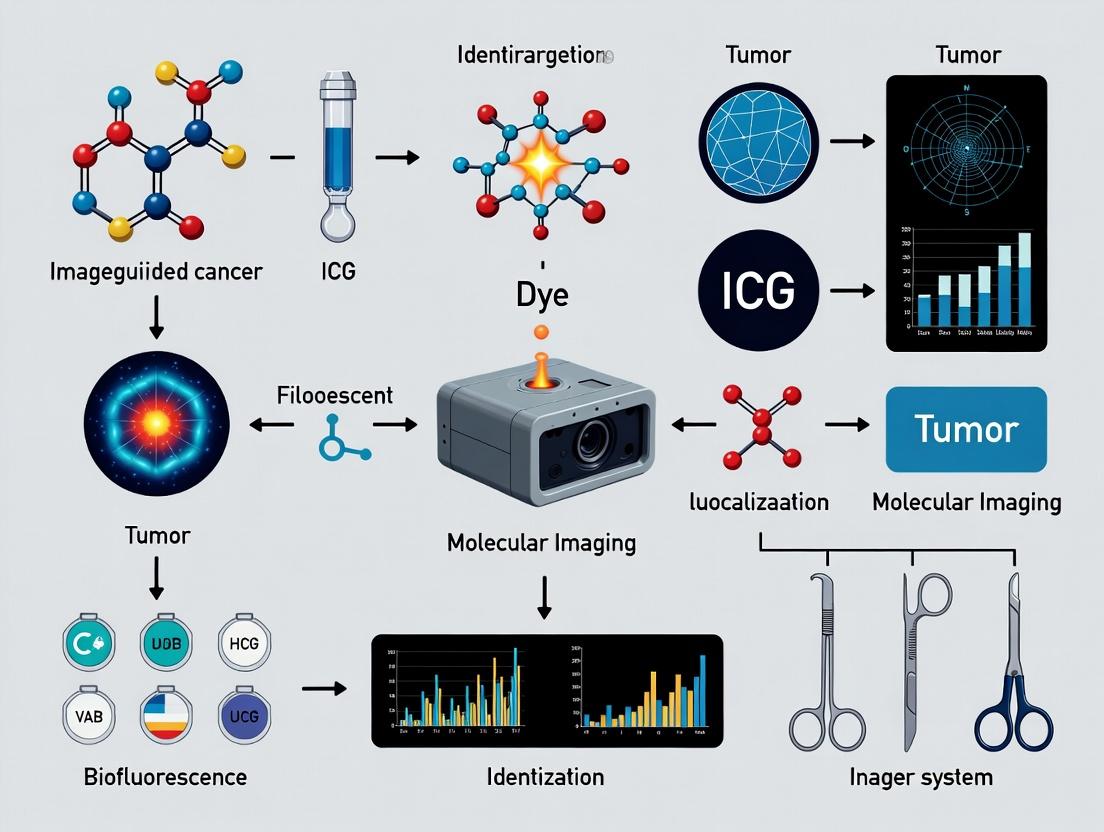
This article provides a comprehensive review of Indocyanine Green (ICG) fluorescence imaging in oncological surgery, targeting researchers and drug development professionals.
ICG Fluorescence Imaging in Oncology Surgery: From Tumor Localization to Precision Resection
Abstract
This article provides a comprehensive review of Indocyanine Green (ICG) fluorescence imaging in oncological surgery, targeting researchers and drug development professionals. It explores the foundational science behind ICG's tumor-targeting mechanisms, details current clinical methodologies and applications across various cancer types, discusses critical challenges and optimization strategies for imaging efficacy, and validates its impact through comparative analysis with traditional techniques. The scope encompasses both the translational science and the practical clinical implementation of this rapidly evolving technology for improving surgical outcomes.
The Science Behind the Glow: Understanding ICG's Mechanisms for Tumor Targeting
Within the broader thesis exploring Indocyanine Green (ICG) for tumor localization and identification in oncology surgery, this document serves as a foundational technical resource. The effective use of ICG as a near-infrared (NIR-I) fluorescence agent for intraoperative imaging hinges on a precise understanding of its core physicochemical and biological properties. These characteristics directly govern its biodistribution, tumor-targeting efficacy, and signal-to-noise ratio during surgical navigation.
Chemical Properties
ICG (C43H47N2NaO6S2) is a water-soluble, anionic tricarbocyanine dye.
Key Chemical Characteristics:
- Molecular Weight: 774.96 Da.
- Hydrophilicity/Lipophilicity: Amphiphilic, with both hydrophilic sulfonate groups and lipophilic polycyclic structure.
- Aggregation: Tends to form H-aggregates (face-to-face stacking) and J-aggregates (head-to-tail stacking) in aqueous solutions, especially at high concentrations or in plasma, which significantly alters its optical properties.
- Stability: Aqueous solutions are unstable, degraded by heat, light, and ionic concentration. Must be reconstituted immediately before use.
Table 1: Core Chemical Properties of ICG
| Property | Specification |
|---|---|
| Chemical Formula | C₄₃H₄₇N₂NaO₆S₂ |
| Molecular Weight | 774.96 Da |
| Form | Olive-brown, hygroscopic powder |
| Solubility | Soluble in water, methanol, DMSO; insoluble in most organic solvents. |
| Charge | Anionic (sulfonate groups) |
| Primary Stability Concern | Photodegradation and aqueous aggregation. |
Pharmacokinetics (PK) & Pharmacodynamics (PD)
The pharmacokinetic profile of ICG is critical for timing intraoperative imaging.
Key PK/PD Parameters:
- Administration: Exclusively intravenous.
- Plasma Binding: >95% binds to plasma proteins (primarily albumin and α1-lipoproteins) immediately after injection. This binding prevents extravasation into most tissues and dictates its biodistribution.
- Half-Life: Blood clearance is biphasic. Rapid distribution half-life (t½α) of 3-5 minutes, followed by an elimination half-life (t½β) of 150-180 minutes in patients with normal hepatic function.
- Clearance: Rapidly taken up by hepatocytes and excreted unchanged into the bile via ATP-dependent transporters (e.g., MRP2). No renal excretion or metabolism.
- Tumor Accumulation: In oncology, accumulation relies on the Enhanced Permeability and Retention (EPR) effect. Leaky tumor vasculature allows extravasation of protein-bound ICG, and impaired lymphatic drainage results in its retention.
Table 2: Summary of Key Pharmacokinetic Parameters of ICG in Humans
| Parameter | Value/Range | Condition/Note |
|---|---|---|
| Plasma Protein Binding | >95% | Primarily to albumin and lipoproteins |
| Distribution Half-life (t½α) | 3 - 5 min | Initial rapid phase |
| Elimination Half-life (t½β) | 150 - 180 min | Hepatic clearance phase |
| Volume of Distribution | ~0.05 L/kg | Approximates plasma volume |
| Clearance Mechanism | Hepatic (biliary) | No metabolism; excreted unchanged |
| Primary Excretion Route | Feces (via bile) | 100% within ~24 hours |
Protocol: Establishing ICG Pharmacokinetics in a Preclinical Tumor Model for Imaging Window Determination
Objective: To determine the optimal post-injection imaging window for tumor visualization in a murine subcutaneous xenograft model. Materials: See "The Scientist's Toolkit" below. Method:
- Tumor Model Establishment: Inject human cancer cells (e.g., HT-29, MDA-MB-231) subcutaneously into the flank of immunodeficient mice. Allow tumors to grow to 5-8 mm in diameter.
- ICG Administration: Prepare a fresh 1 mg/mL solution of ICG in sterile water. Inject via the tail vein at a dose of 2.5 mg/kg (intravenous bolus).
- Serial Imaging: Using a calibrated NIR fluorescence imaging system, acquire whole-body images of anesthetized mice at predetermined time points: 0 (pre-injection), 1, 5, 15, 30, 60, 120, 240, and 360 minutes post-injection. Maintain consistent imaging settings (exposure, f-stop, field of view).
- Image Analysis: Use region-of-interest (ROI) analysis software to quantify mean fluorescence intensity (MFI) in the tumor and adjacent normal tissue. Calculate Tumor-to-Background Ratio (TBR = MFITumor / MFIBackground) for each time point.
- PK Modeling: Plot TBR vs. time. The optimal imaging window is typically defined as the period where TBR is maximized (peak TBR ± 10-15%).
Optical Characteristics (NIR-I Spectrum)
ICG operates in the first near-infrared window (NIR-I, 700-900 nm), where tissue absorption and scattering are minimized, allowing for deeper penetration (up to several millimeters to a centimeter).
Key Optical Properties:
- Absorption Maximum: ~780 nm in aqueous solution. Shifts to ~805 nm when bound to plasma proteins.
- Fluorescence Emission Maximum: ~820 nm in aqueous solution. Shifts to ~830 nm when bound to plasma proteins.
- Quantum Yield: ~0.012 in water, increases ~28-fold (~0.12) in blood plasma due to binding, which reduces non-radiative decay.
- Extinction Coefficient: High (~1.3 x 10⁵ M⁻¹ cm⁻¹ in plasma), enabling strong light absorption.
Table 3: Optical Properties of ICG in Different Media
| Medium | Absorption λmax (nm) | Emission λmax (nm) | Quantum Yield (Approx.) | Notes |
|---|---|---|---|---|
| Water / Saline | 780 | 820 | 0.012 | Reference state, prone to aggregation. |
| Blood Plasma / Serum | 805 | 830 | 0.12 - 0.14 | Protein binding reduces aggregation & quenching. |
| Lipid Environments | ~780-790 | ~810-820 | Varies | Can incorporate into cell membranes. |
Protocol: Measuring ICG Fluorescence Quenching & Spectral Shift in Serum
Objective: To characterize the change in ICG fluorescence intensity and emission peak upon binding to serum proteins. Materials: ICG powder, fetal bovine serum (FBS) or human serum, phosphate-buffered saline (PBS), fluorometer or spectrophotometer with NIR capability, quartz cuvettes. Method:
- Solution Preparation: Prepare two 1 µM ICG solutions: one in 1x PBS (pH 7.4) and one in 100% serum. Allow to equilibrate for 5 minutes at room temperature, protected from light.
- Absorption Scan: Using a spectrophotometer, record the absorption spectrum of each solution from 650 nm to 900 nm.
- Fluorescence Scan: Using a fluorometer, excite the samples at 750 nm. Record the emission spectrum from 770 nm to 900 nm. Use identical instrumental parameters (slit widths, gain, scan speed).
- Data Analysis: Determine the peak absorption and emission wavelengths for each sample. Calculate the relative fluorescence intensity by comparing the peak area or height of the serum sample to the PBS sample (set as 1.0).
Visualization of Core Concepts
Diagram Title: ICG Pharmacokinetic Pathway for Tumor Imaging
Diagram Title: ICG Optical State Transition to Signal
The Scientist's Toolkit: Key Research Reagent Solutions
Table 4: Essential Materials for ICG-Based Oncology Research
| Item / Reagent | Function / Role in ICG Research |
|---|---|
| ICG (Indocyanine Green) USP Grade | The active pharmaceutical ingredient. USP grade ensures purity and consistency for preclinical and clinical research. |
| Sterile Water for Injection | The recommended solvent for reconstituting ICG immediately prior to in vivo use to minimize aggregation. |
| Human Serum Albumin (HSA) or Fetal Bovine Serum (FBS) | Used to study the protein-bound state of ICG in vitro, which mimics its in vivo optical and pharmacokinetic behavior. |
| Matrigel / Basement Membrane Matrix | Used for establishing orthotopic or co-injection tumor models, which can influence ICG delivery via the EPR effect. |
| NIR Fluorescence Imaging System | Essential equipment (e.g., from PerkinElmer, LI-COR, MediLumine). Must have appropriate excitation (~750-780 nm) and emission (~800-850 nm) filters for ICG. |
| Fluorometer with NIR Detector | For quantifying ICG concentration and measuring spectral properties in solution (e.g., absorbance, quantum yield). |
| Analytical HPLC System with NIR Fluorescence Detector | For analyzing ICG purity, stability, and potential degradation products in formulated solutions. |
Application Notes
This document outlines key principles and protocols for studying tumor targeting strategies, specifically within a research thesis investigating Indocyanine Green (ICG) for tumor localization and identification in oncology surgery. Understanding the interplay between passive targeting via the Enhanced Permeability and Retention (EPR) effect and active targeting via ligand-receptor interactions is critical for optimizing diagnostic and therapeutic agent delivery.
The Enhanced Permeability and Retention (EPR) Effect
The EPR effect is a passive targeting mechanism whereby macromolecules and nanoparticles (typically >40 kDa or >10 nm in diameter) accumulate preferentially in tumor tissue. This occurs due to:
- Hypervascularization: Rapid, aberrant tumor angiogenesis creates vessels with wide fenestrations (gaps).
- Defective Vascular Architecture: Poorly aligned endothelial cells and impaired pericytes lead to high vascular permeability.
- Lymphatic Drainage Deficiency: Tumors often have poor or absent lymphatic drainage, reducing clearance of extravasated materials.
Quantitative Parameters of the EPR Effect: Table 1: Key Quantitative Parameters of Tumor Vasculature vs. Normal Vasculature
| Parameter | Normal Vasculature | Tumor Vasculature (EPR) | Typical Measurement Method |
|---|---|---|---|
| Pore Size | 5-10 nm | 100 - 2000 nm | Transmission Electron Microscopy (TEM) |
| Vascular Permeability (P) | Low (e.g., ~10^-7 cm/s for albumin) | High (e.g., ~10^-6 to 10^-5 cm/s) | Evans Blue Dye, Radiolabeled Albumin Assay |
| Lymphatic Function | Efficient | Inefficient/Deficient | Lymphatic Vessel Density (LVD) staining |
| Interstitial Fluid Pressure (IFP) | ~0-3 mmHg | Elevated (10-40 mmHg, up to 100 mmHg) | Wick-in-needle technique, Micropressure systems |
The EPR effect is heterogeneous, varying between tumor types, locations, and individual patients, which is a significant consideration for ICG-assisted surgery.
Active Targeting via Angiogenesis Markers
Active targeting involves conjugating agents (like ICG or ICG-loaded nanoparticles) to ligands that bind specifically to receptors overexpressed on tumor cells or tumor vasculature. Key targets related to angiogenesis include:
- Vascular Endothelial Growth Factor Receptor (VEGFR): Highly expressed on tumor endothelial cells.
- αvβ3 Integrin: Expressed on proliferating endothelial cells during angiogenesis.
- Epidermal Growth Factor Receptor (EGFR): Overexpressed on many epithelial cancer cells.
Lymphatic Drainage and Its Role in Clearance
Efficient lymphatic drainage in normal tissues clears interstitial fluid and particles. Its deficiency in tumors is a cornerstone of the EPR effect but also complicates delivery. In peri-tumoral regions, functional lymphatics may contribute to the clearance of agents, affecting contrast windows for imaging.
Experimental Protocols
Protocol: Quantifying EPR Effect In Vivo Using Fluorescent Dextran (Simulating ICG Delivery)
Objective: To measure the passive accumulation and retention of a fluorescent macromolecule in a subcutaneous murine tumor model. Materials: Fluorescently-labeled dextran (e.g., 70 kDa FITC-dextran, analogous to ICG-albumin complex), murine tumor model (e.g., CT26, 4T1), in vivo fluorescence imaging system, IV injection setup. Procedure:
- Tumor Implantation: Implant tumor cells subcutaneously in mice. Allow tumors to grow to ~200-500 mm³.
- Agent Administration: Via tail vein, inject 100 µL of FITC-dextran solution (10 mg/kg) in PBS.
- In Vivo Imaging: Anesthetize mice and image at multiple time points (e.g., 5 min, 1 h, 4 h, 24 h) post-injection using appropriate excitation/emission filters.
- Ex Vivo Analysis: Euthanize mice at terminal time points (e.g., 4h and 24h). Excise tumors and major organs (liver, spleen, kidneys, heart, lungs). Image organs ex vivo.
- Quantification: Use region-of-interest (ROI) analysis to measure fluorescence intensity in tumor vs. muscle (control tissue). Calculate Tumor-to-Muscle Ratio (TMR) and area-under-the-curve for fluorescence over time.
Protocol: Evaluating Active Targeting with ICG-Conjugated Anti-VEGFR Antibody
Objective: To compare the tumor targeting efficiency of ICG actively targeted to VEGFR vs. non-targeted ICG. Materials: ICG-NHS ester, anti-VEGFR monoclonal antibody (e.g., VEGFR-2), purification columns, control IgG, tumor-bearing mice. Procedure:
- Conjugation: Conjugate ICG-NHS ester to anti-VEGFR antibody per manufacturer's protocol. Purify using size-exclusion chromatography. Confirm conjugation ratio (ICG:Antibody) via spectrophotometry.
- Study Groups: Divide mice into 3 groups (n=5): (A) ICG-Anti-VEGFR, (B) ICG-IgG (non-targeted control), (C) Free ICG.
- Administration & Imaging: Inject equivalent ICG doses (2 µM/kg) intravenously. Perform longitudinal near-infrared fluorescence (NIRF) imaging at 0.5, 2, 6, and 24 hours.
- Quantification: Calculate target-to-background ratios (TBR) using tumor vs. contralateral tissue fluorescence. Perform statistical analysis between groups.
Visualizations
Diagram 1: EPR vs Active Targeting Pathways (97 chars)
Diagram 2: ICG Tumor Targeting Experimental Workflow (73 chars)
The Scientist's Toolkit
Table 2: Key Research Reagent Solutions for ICG Targeting Studies
| Reagent / Material | Function / Rationale | Example Vendor/Product |
|---|---|---|
| ICG (Indocyanine Green) | Near-infrared fluorophore for imaging; binds serum albumin, simulating ~80 kDa macromolecule for EPR studies. | Pulsion Medical Systems, Diagnostic Green |
| ICG-NHS Ester | Reactive derivative for covalent conjugation to targeting ligands (antibodies, peptides). | LI-COR, Thermo Fisher Scientific |
| Fluorescent Dextrans (various sizes) | Inert, size-defined polymers to model and quantify the EPR effect for different molecular weights. | Sigma-Aldrich, Thermo Fisher |
| Anti-VEGFR / Anti-αvβ3 Antibodies | Targeting ligands for active targeting to angiogenic tumor vasculature. | R&D Systems, Bio-Techne |
| Nanoparticle Formulation Kits (PLGA, Liposomes) | To encapsulate ICG, control size/shape, and modify surface chemistry for targeting studies. | Avanti Polar Lipids, Sigma-Aldrich |
| Near-Infrared Fluorescence Imager | Essential for non-invasive, longitudinal tracking of ICG biodistribution and tumor accumulation. | PerkinElmer IVIS, LI-COR Pearl |
| Matrigel | Basement membrane extract for promoting tumor cell engraftment and angiogenesis in xenograft models. | Corning |
| CD31 / LYVE-1 IHC Antibodies | For histological validation of blood vessel density (angiogenesis) and lymphatic vessels, respectively. | Abcam, Cell Signaling Technology |
Within the broader thesis investigating Indocyanine Green (ICG) for tumor localization and identification in oncology surgery, understanding its molecular and cellular interactions is paramount. This application note details the fundamental protein binding, cellular uptake mechanisms, and systemic clearance pathways that determine ICG's efficacy as a near-infrared fluorescent tracer. These interactions dictate its biodistribution, tumor contrast, and retention time, directly impacting surgical outcomes.
Protein Binding Dynamics of ICG
Upon intravenous administration, ICG rapidly and non-covalently binds to plasma proteins. This binding is crucial for its transport, prevents aggregation, and influences its clearance.
Key Quantitative Data
Table 1: Primary Plasma Protein Binding Partners of ICG
| Protein | Approx. Binding Affinity (Kd) | Bound Fraction at 1h Post-Injection | Functional Consequence |
|---|---|---|---|
| Albumin (Human) | ~150 µM | ~95% | Primary carrier; prevents aggregation, extends plasma half-life. |
| Lipoproteins (LDL, HDL) | Not Well Quantified | ~5% | May facilitate uptake via lipoprotein receptor pathways. |
| α-1-Glycoprotein | Low Affinity | <1% | Minor binding component. |
Table 2: Impact of Protein Binding on ICG Properties
| Property | Free ICG | Protein-Bound ICG (Albumin) | Relevance to Tumor Imaging |
|---|---|---|---|
| Fluorescence Quantum Yield | Low (~1-2%) | High (~12-14%) | Bound form provides strong NIR signal. |
| Peak Absorbance (λ max) | ~780 nm in water | ~805-810 nm in plasma | Shift aligns with optimal detector sensitivity. |
| Hydrodynamic Diameter | ~1.2 nm | ~7 nm (albumin size) | Affects vascular permeability and EPR effect in tumors. |
Protocol: In Vitro Determination of ICG-Protein Binding Affinity via Fluorescence Quenching
Objective: To determine the binding constant (Kd) and stoichiometry of ICG binding to human serum albumin (HSA) using fluorescence spectroscopy.
Materials:
- Phosphate Buffered Saline (PBS), pH 7.4
- Human Serum Albumin (HSA), fatty acid-free
- Indocyanine Green (ICG) powder
- Dimethyl Sulfoxide (DMSO), spectroscopic grade
- Quartz cuvettes (1 cm path length)
- Fluorescence spectrophotometer with NIR capability
Procedure:
- Stock Solutions: Prepare 100 µM HSA in PBS. Prepare a 1 mM ICG stock in DMSO (wrap in foil, use fresh).
- Titration Setup: To a series of 10 tubes, add a fixed volume of HSA solution (e.g., 2 mL of 5 µM HSA). Keep the final HSA concentration constant.
- ICG Addition: Titrate increasing volumes of ICG stock into the HSA solutions to achieve final ICG concentrations ranging from 0 to 25 µM. Maintain equal DMSO concentration across all samples (<1% v/v).
- Measurement: Incubate for 5 min at 25°C. Using the spectrophotometer, excite at 780 nm and record the fluorescence emission spectrum from 800 to 850 nm. Measure peak intensity at ~810 nm.
- Control: Perform identical titration of ICG into PBS alone (no HSA) to account for background fluorescence of free ICG.
- Data Analysis: Correct for background and inner-filter effect. Plot the corrected fluorescence intensity (F) vs. total ICG concentration. Fit data to a 1:1 binding isotherm model (e.g., using non-linear regression in GraphPad Prism) to derive the Kd.
Cellular Uptake Mechanisms
ICG accumulation in tumor cells is critical for specific visualization. Uptake occurs via both passive and active processes.
Diagram 1: ICG Cellular Uptake and Intracellular Trafficking
Key Quantitative Data
Table 3: Characteristics of ICG Uptake Pathways in Tumor Cells
| Uptake Pathway | Evidence/Receptor Involved | Kinetics (Example Cell Line) | Inhibition By |
|---|---|---|---|
| Albumin-Mediated Endocytosis | SPARC (Secreted Protein Acidic and Cysteine Rich) overexpression correlates with uptake. | t₁/₂ ~ 15-30 min (MDA-MB-231) | Excess albumin, SPARC knockdown. |
| Lipoprotein Receptor-Mediated | Co-localization with LDL particles; LDLR overexpression enhances uptake. | Not fully quantified | Excess LDL, chlorpromazine. |
| Passive Diffusion | Uptake in protein-free medium; concentration-dependent. | Linear over short time, saturates | N/A |
| Fluid-Phase Pinocytosis | Non-specific uptake in vesicles. | Slow, linear | Metabolic inhibitors (NaAzide). |
Protocol: Assessing ICG Uptake Kinetics and Mechanism in Cultured Tumor Cells
Objective: To quantify the time- and concentration-dependent uptake of ICG and identify the primary entry pathway.
Materials:
- Tumor cell line (e.g., HepG2, MDA-MB-231)
- Complete cell culture medium
- Serum-free medium
- ICG solution in PBS (from sterile stock)
- Inhibitors: Chlorpromazine (10 µg/mL), Methyl-β-cyclodextrin (5 mM), Excess human albumin (40 mg/mL)
- 24-well cell culture plates
- Fluorescent plate reader (NIR channel) or flow cytometer with NIR laser
- PBS for washing
- Lysis buffer (1% Triton X-100 in PBS)
Procedure: Part A: Time-Course Uptake
- Seed cells in 24-well plates to reach 80% confluence.
- Replace medium with fresh medium containing a standard ICG concentration (e.g., 10 µM). Incubate at 37°C.
- At time points (e.g., 5, 15, 30, 60, 120 min), aspirate medium, wash cells 3x with cold PBS.
- Lyse cells in 200 µL Triton X-100 lysis buffer for 15 min.
- Transfer lysate to a black-walled plate. Measure fluorescence (Ex/Em: 780/820 nm).
- Normalize fluorescence to total protein content (BCA assay).
Part B: Pathway Inhibition
- Pre-treat cells for 30 min with either serum-free medium (control), chlorpromazine, methyl-β-cyclodextrin, or excess albumin.
- Add ICG (10 µM) in the continued presence of the inhibitor and incubate for 60 min.
- Wash, lyse, and measure fluorescence as in Part A.
- Express uptake as a percentage of the serum-free control.
Systemic Clearance Pathways
ICG is exclusively cleared by the liver into the bile, making its pharmacokinetics rapid.
Diagram 2: ICG Systemic Clearance and Hepatobiliary Excretion
Key Quantitative Data
Table 4: Pharmacokinetic Parameters of ICG Clearance in Humans
| Parameter | Typical Value (Healthy) | Impacted By | Relevance to Surgery |
|---|---|---|---|
| Plasma Half-Life (t₁/₂) | 3-4 minutes | Hepatic function, plasma volume | Short t₁/₂ necessitates precise timing of imaging. |
| Plasma Clearance Rate | 0.7 - 1.0 mL/min/kg | Liver blood flow, OATP/MRP activity | Determines "washout" from non-target tissues. |
| Fraction Excreted in Bile | ~97% within 2 hours | Biliary obstruction | Contraindicated in severe biliary disease. |
| Time to Peak Hepatic Extraction | ~10-15 minutes post-injection | Cardiac output | Optimal window for liver metastasis imaging. |
The Scientist's Toolkit: Research Reagent Solutions
Table 5: Essential Materials for Studying ICG Interactions
| Item | Function/Application | Example Product/Catalog Note |
|---|---|---|
| Fatty-Acid Free HSA | Standardized protein for binding studies; eliminates interference from endogenous fatty acids. | Sigma-Aldrich, A3782 |
| SPARC Recombinant Protein / Antibodies | To probe the specific albumin-receptor mediated uptake pathway in tumor cells. | R&D Systems, 941-SP (Protein) |
| OATP1B3 and MRP2 Inhibitors | Pharmacological tools to dissect hepatic uptake (e.g., Rifampicin) and excretion (e.g., MK-571). | Cayman Chemical, 10005329 (MK-571) |
| Near-Infrared Fluorescence Plate Reader | Quantifying ICG fluorescence in vitro (cell lysates, protein solutions). | LI-COR Odyssey CLx or similar. |
| ICG for Injection, USP | Clinical-grade material for translational in vivo studies; ensures sterility and defined purity. | PULSION Medical Systems, Diagnogreen |
| Lymphocyte Separation Medium (for ex vivo blood binding studies) | To easily isolate plasma from whole blood for protein binding analysis post-IV injection in animals. | Corning, 25-072-CV |
| Bile Duct Cannula (for rodent studies) | Direct collection of bile to quantify ICG excretion kinetics in preclinical models. | Instech Laboratories, C30 sets |
The application of Indocyanine Green (ICG) in surgery represents a direct technological evolution from its foundational use in hepatic function and cardiac output assessment in the 1950s. The pivotal shift occurred with the adaptation of near-infrared (NIR) fluorescence imaging systems, enabling the transition from macrovascular angiography to the microvascular and cellular-level delineation of tumors. This progression is rooted in the Enhanced Permeability and Retention (EPR) effect, first described by Matsumura and Maeda in 1986, which provides the principal mechanism for the passive accumulation of ICG in hyperpermeable tumor tissues.
Core Mechanism: The EPR Effect and ICG Accumulation
ICG, a water-soluble amphiphilic tricarbocyanine dye, exhibits non-covalent, high-affinity binding to plasma proteins (primarily albumin) upon intravenous injection. In tumor neovasculature, characterized by defective architecture, wide fenestrations, and poor lymphatic drainage, these ICG-protein complexes extravasate and are retained. When illuminated with NIR light (~800 nm), ICG fluoresces, providing real-time visual contrast between tumor and normal parenchyma.
Table 1: Quantitative Parameters of ICG-Based Tumor Delineation
| Parameter | Typical Range/Value | Key Determinants |
|---|---|---|
| Administered Dose | 0.1 - 5.0 mg/kg | Tumor type, imaging system sensitivity |
| Time-to-Injection Imaging Window | 24 - 72 hours | Tumor metabolism, clearance kinetics |
| Peak Excitation/Emission | ~805 nm / ~835 nm | Solvent environment (blood vs. tissue) |
| Tumor-to-Background Ratio (TBR) | 1.5 - 8.0 (Clinically significant >2.0) | Vascular permeability, interstitial pressure |
| Plasma Half-Life | 3 - 5 minutes | Hepatic function, plasma protein levels |
Application Notes & Experimental Protocols
Protocol 1: Preclinical Validation of ICG for Solid Tumor Delineation
Aim: To establish optimal dosing and timing for ICG-mediated fluorescence delineation of a subcutaneous xenograft model. Materials: Immunodeficient mice, human cancer cell line (e.g., HT-29, MDA-MB-231), ICG powder, sterile PBS, NIR fluorescence imaging system, isofluorane anesthesia setup. Procedure:
- Establish subcutaneous tumors (100-150 mm³) in the flank of mice.
- Prepare a 1 mg/mL ICG solution in sterile water, filter sterilize (0.2 μm).
- Intravenous Administration: Inject 100 μL (2.5 mg/kg) via the tail vein.
- Imaging Time Course: Anesthetize mice and acquire NIR fluorescence images at t = 0 (pre-injection), 5 min, 30 min, 1h, 24h, 48h, and 72h post-injection. Maintain consistent imaging parameters (exposure time, gain, f-stop).
- Quantification: Use imaging software to draw Regions of Interest (ROIs) over the tumor and adjacent normal tissue. Calculate mean fluorescence intensity and Tumor-to-Background Ratio (TBR) at each time point.
- Analysis: Identify the time point yielding the peak TBR. Excise tumors and key organs for ex vivo imaging to confirm biodistribution.
Protocol 2: Intraoperative Protocol for ICG-Guided Tumor Resection
Aim: To provide a standardized workflow for real-time intraoperative tumor margin assessment. Materials: Clinical-grade ICG (25mg vial), NIR-capable surgical camera system, sterile water for injection, syringe filters (0.2 μm). Preoperative Planning:
- Based on tumor type (e.g., hepatocellular carcinoma, breast cancer), determine optimal ICG dose and timing (see Table 1). Example: For liver metastasis, administer 10-20 mg ICG intravenously 24 hours prior to surgery. Intraoperative Procedure:
- After standard surgical exposure, switch the camera system to NIR fluorescence mode.
- Identify the primary tumor mass as a region of hyperfluorescence.
- Perform resection under standard white light visualization.
- Margin Assessment: Examine the tumor bed under NIR fluorescence. Any residual focal hyperfluorescence suggests positive margin.
- Specimen Check: Image the resected specimen's deep and circumferential margins under NIR light to verify a fluorescent signal is contained within the specimen.
- Documentation: Capture and archive key white light and NIR fluorescence images for each surgical step.
Visualizing Key Concepts
Title: ICG Tumor Accumulation via the EPR Effect
Title: Intraoperative ICG Tumor Delineation Protocol Workflow
The Scientist's Toolkit: Research Reagent Solutions
Table 2: Essential Materials for ICG Tumor Delineation Research
| Item | Function & Rationale |
|---|---|
| Clinical-Grade ICG (e.g., PULSION) | Standardized, sterile, pyrogen-free dye for reproducible pharmacokinetics. |
| NIR Fluorescence Imaging System (e.g., FDA-cleared platforms like PINPOINT, SPY PHI) | Provides real-time intraoperative imaging at appropriate wavelengths (ex: 780-810 nm). |
| Preclinical NIR Imager (e.g., LI-COR Pearl, PerkinElmer IVIS) | Enables quantitative fluorescence biodistribution studies in animal models. |
| Albumin (Human), Fraction V | Used in in vitro assays to replicate ICG-protein binding in physiological conditions. |
| Matrigel Basement Membrane Matrix | For establishing orthotopic or complex tumor models with more realistic vasculature. |
| Fluorescence-Compatible Surgical Tools | Non-reflective instruments that minimize NIR signal interference during surgery. |
| ICG Conjugation Kits (e.g., for linking to targeting moieties) | Enables development of targeted ICG derivatives for improved specificity. |
| Quantum Calibration Standards (e.g., NIR fluorescent beads) | Allows for calibration and cross-platform comparison of fluorescence intensity. |
Key Biomarkers and Physiological Factors Influencing ICG Accumulation
Within the context of advancing Indocyanine Green (ICG) for tumor localization in surgical oncology, understanding the variables governing its accumulation is paramount. ICG, a near-infrared fluorescent dye, is not a targeted agent; its distribution is a passive process influenced by a complex interplay of tumor biology and host physiology. This application note details the key biomarkers and physiological factors that determine ICG uptake and retention in neoplastic tissues, providing a foundation for optimizing its intraoperative use.
Table 1: Key Biomarkers Influencing ICG Accumulation in Tumors
| Biomarker / Factor | Mechanism of Influence on ICG | Typical Measurement Method | Association with ICG Signal |
|---|---|---|---|
| Enhanced Permeability and Retention (EPR) Effect | Passive extravasation through leaky tumor vasculature and retention due to poor lymphatic drainage. | Dynamic Contrast-Enhanced MRI (DCE-MRI); histological microvessel density (MVD). | Primary driver of non-specific accumulation. Higher EPR correlates with stronger signal. |
| Serum Albumin Levels | ICG binds non-covalently to plasma proteins, primarily albumin (>95%), forming a macromolecular complex. | Serum protein electrophoresis; albumin-specific assays. | Critical for vascular retention and EPR-mediated delivery. Hypoalbuminemia reduces bioavailability. |
| ATP-Binding Cassette (ABC) Transporters (e.g., P-glycoprotein) | Active efflux of ICG from cancer cells, reducing intracellular accumulation. | Immunohistochemistry (IHC); flow cytometry with transporter substrates. | Overexpression associated with decreased ICG retention (potential false-negative). |
| Hepatocellular Function | Hepatic clearance is the primary route of ICG elimination from blood. | ICG clearance test (PDR %/min, t1/2); standard liver function tests (LFTs). | Impaired liver function prolongs plasma half-life, increasing background fluorescence. |
| Renal Function | Minor renal excretion; severe impairment may affect fluid balance and dye clearance. | Glomerular Filtration Rate (GFR); serum creatinine. | Indirect influence on plasma volume and background clearance. |
| Tumor Stroma Content & Fibrosis | Dense extracellular matrix (ECM) can impede diffusion of ICG-albumin complex. | Masson's Trichrome stain; IHC for collagen. | High stromal content may limit penetration, causing heterogeneous or reduced signal. |
Table 2: Physiological & Pharmacokinetic Parameters
| Parameter | Influence on ICG Performance | Optimal Range for Tumor Imaging | Notes |
|---|---|---|---|
| Dose | Linearly affects fluorescence intensity until saturation. | 0.1 - 0.5 mg/kg (IV) | Standard dose ~2.5-5 mg per patient. Must balance tumor signal vs. background. |
| Admin-to-Imaging Time (Dose Timing) | Governs the balance between tumor accumulation and blood pool clearance. | 24-72 hours (tumor imaging) | Varies by tumor type and vascularity. Shorter times (e.g., 15-60 min) for angiography/perfusion. |
| Plasma Half-life (t1/2) | Determines background clearance rate. | ~3-5 minutes in normal liver function | Prolonged in liver dysfunction, requiring dose/timing adjustments. |
| Body Mass Index (BMI) / Body Composition | Alters volume of distribution and drug clearance kinetics. | Patient-specific dosing recommended. | Lean body weight may be a better dosing metric than total weight. |
Detailed Experimental Protocols
Protocol 1: In Vivo Assessment of EPR Effect and ICG Accumulation in a Murine Xenograft Model
Objective: To quantify the relationship between tumor vascular permeability and ICG accumulation. Materials: See "The Scientist's Toolkit" below. Procedure:
- Tumor Implantation: Subcutaneously inject 1x10^6 human cancer cells (e.g., HT-29, MDA-MB-231) into the flank of athymic nude mice. Allow tumors to grow to ~200-300 mm³.
- ICG Administration: Prepare ICG solution in sterile water (1 mg/mL). Inject via tail vein at a dose of 2.5 mg/kg.
- Long-Circulation Imaging Group (Optional): For some mice, pre-mix ICG with human serum albumin (HSA) at a 1:5 molar ratio (ICG:HSA) and incubate for 10 min at 37°C prior to injection to study macromolecular complex effects.
- In Vivo Imaging: At predetermined time points (e.g., 5 min, 30 min, 6h, 24h, 48h), anesthetize mice and image using a NIR fluorescence imaging system (e.g., Pearl Trilogy, IVIS). Use consistent exposure times and filter sets (ex: ~780 nm, em: ~820 nm).
- Ex Vivo Analysis: At terminal time points, euthanize mice. Resect tumors and major organs (liver, spleen, kidney, muscle). Image ex vivo to quantify fluorescence intensity (radiance, p/s/cm²/sr). Calculate Tumor-to-Background Ratio (TBR) vs. muscle.
- Correlative Histology: Snap-freeze tumor sections. Perform:
- CD31 IHC to quantify Microvessel Density (MVD).
- H&E for general morphology.
- Fluorescence microscopy on frozen sections to visualize ICG distribution relative to blood vessels.
Protocol 2: Evaluating the Impact of Serum Albumin Binding In Vitro
Objective: To assess how albumin binding affects ICG uptake and efflux in cultured cancer cells. Procedure:
- Cell Seeding: Seed cells in 24-well plates at 50,000 cells/well and culture for 48h.
- Treatment Preparation: Prepare two sets of ICG solutions in culture medium:
- Set A: ICG alone (1, 5, 10 µM).
- Set B: ICG pre-complexed with human serum albumin (HSA) at a 1:1 molar ratio, incubated for 30 min.
- Uptake Phase: Replace medium with ICG or ICG-HSA solutions. Incubate for 1 hour at 37°C.
- Efflux Phase: Aspirate ICG-containing medium. Wash wells twice with PBS. Add fresh dye-free medium. Place plate in the NIR imager to measure intracellular fluorescence at time zero.
- Kinetic Measurement: Continue to image fluorescence every 15 minutes for 2 hours to monitor efflux.
- Inhibitor Studies (Optional): Repeat uptake/efflux with the addition of an ABC transporter inhibitor (e.g., 10 µM Verapamil) to probe active efflux mechanisms.
- Data Analysis: Plot fluorescence decay over time. Calculate efflux half-life. Compare area-under-the-curve (AUC) for ICG alone vs. ICG-HSA.
Protocol 3: Clinical Intraoperative Protocol for Tumor Delineation
Objective: Standardized protocol for ICG administration in oncologic surgery. Pre-operative:
- Patient Assessment: Check liver function (serum albumin, bilirubin, transaminases) and renal function (GFR). Dose adjustments may be needed for severe hepatic impairment.
- ICG Preparation: Reconstitute 25 mg ICG vial with 10 mL sterile water (2.5 mg/mL). Further dilute to desired concentration in normal saline. Protect from light and use within 6 hours. Intraoperative:
- Timing: For tumor delineation, administer IV bolus (5 mg in 50 kg patient; 0.1 mg/kg) 24 hours prior to surgery.
- Imaging: In the operating room, use an FDA-cleared NIR imaging system (e.g., PINPOINT, SPY). Switch to fluorescence mode after tumor exposure.
- Image Interpretation: Identify areas of high fluorescence (TBR > 2.0 is often used as a threshold). Mark margins accordingly. Note that inflammation can also show increased signal. Post-operative: Analyze excised specimen under NIR light to confirm margins.
Visualization Diagrams
Diagram Title: Factors in ICG Tumor Accumulation
Diagram Title: In Vivo ICG Imaging Protocol Flow
The Scientist's Toolkit: Research Reagent Solutions
Table 3: Essential Materials for ICG Accumulation Studies
| Item / Reagent | Function & Application | Key Considerations |
|---|---|---|
| ICG (Indocyanine Green), sterile | The core NIR fluorescent dye for in vivo and in vitro studies. | Use USP grade for animal studies; ensure proper reconstitution and light protection. Short shelf-life after mixing. |
| Human Serum Albumin (HSA), fatty acid-free | To form the ICG-HSA macromolecular complex for studying EPR-driven delivery. | Fatty acid-free grade prevents competition for ICG binding sites. |
| Near-Infrared Fluorescence Imaging System | For non-invasive, quantitative readout of ICG fluorescence in live animals and tissues. | Systems like IVIS Spectrum or LI-COR Pearl offer high sensitivity and quantification tools. |
| Athymic Nude Mice (e.g., Nu/J) | Standard immunocompromised host for human tumor xenograft studies. | Allows study of human tumor biology without immune clearance. |
| CD31 (PECAM-1) Antibody | For immunohistochemical staining to quantify tumor Microvessel Density (MVD). | Standard biomarker for endothelial cells and vascularization. |
| ABC Transporter Inhibitors (e.g., Verapamil, Ko143) | Pharmacological tools to block P-glycoprotein or BCRP to study active ICG efflux. | Use at established, non-toxic concentrations in cell-based assays. |
| Dynamic Contrast-Enhanced MRI (DCE-MRI) Contrast Agent (e.g., Gadoteridol) | To clinically assess tumor vascular permeability (Ktrans), correlating with EPR potential. | Provides a non-fluorescent, translational metric for predicting ICG uptake. |
| Standard Cell Culture Lines (e.g., HCC-1954, HT-29) | In vitro models for studying cellular uptake/efflux mechanisms of ICG. | Choose lines with known ABC transporter expression profiles. |
Clinical Implementation: Protocols, Dosing, and Cancer-Specific Applications
Within oncology surgery research, indocyanine green (ICG) has emerged as a pivotal near-infrared (NIR) fluorophore for intraoperative tumor localization and margin identification. The efficacy of ICG fluorescence guidance is critically dependent on standardized administration parameters—timing, dosage, and route. This document provides detailed application notes and protocols to optimize tumor-to-background ratio (TBR) for surgical research, framed within a thesis investigating ICG’s mechanism-driven accumulation in malignant tissues.
Table 1: Standardized ICG Administration Protocols for Tumor Delineation in Surgical Oncology Research
| Tumor Type (Model) | Primary Route | Recommended Dosage (mg/kg) | Administration-To-Imaging Time (Min) | Target TBR | Key Rationale & Notes |
|---|---|---|---|---|---|
| Hepatocellular Carcinoma | IV | 0.5 - 0.75 mg/kg | 24 - 48 hours | >2.0 | Leverages enhanced permeability and retention (EPR) effect and hepatic clearance for rim enhancement. |
| Colorectal Metastases (Liver) | IV | 0.5 mg/kg | 30 - 60 min | >1.8 | Optimal for detecting subcapsular and deep-seated metastases via EPR. |
| Breast Cancer (Murine) | IV | 2.0 - 5.0 mg/kg | 24 hours | >3.0 | High dosage required for consistent parenchymal tumor fluorescence in preclinical models. |
| Head & Neck SCC | IV / Topical* | 0.5 - 1.0 mg/kg / 0.01% solution | 24h (IV) / 5-10 min (Topical) | >1.5 (IV) | Topical application for direct mucosal surface mapping; IV for deep tissue involvement. |
| Brain Tumors (Glioblastoma) | IV | 0.5 - 1.0 mg/kg | 4 - 24 hours | >2.5 | Timing varies with blood-brain barrier disruption; later imaging may improve specificity. |
| Pulmonary Nodules | IV | 0.25 - 0.5 mg/kg | 30 - 60 min | >1.6 | Rapid imaging post-IV captures vascular inflow and early EPR. |
| Peritoneal Carcinomatosis | IV | 0.5 - 1.0 mg/kg | 24 - 72 hours | >2.2 | Delayed imaging maximizes clearance from normal peritoneum, highlighting implants. |
| General Consensus (Human) | IV | 0.1 - 0.5 mg/kg | Immediate to 24h | >1.5 | Lower doses suffice for vascular/lymphatic mapping; higher doses & delays for EPR-based tumor targeting. |
*Topical typically involves rinsing or gentle suction after application to remove excess, non-specific dye.
Detailed Experimental Protocols
Protocol 3.1: Systemic (IV) Administration for Tumor Delineation via EPR Effect
Aim: To optimize ICG fluorescence for deep solid tumor localization in preclinical murine models. Materials: See "The Scientist's Toolkit" (Section 5). Procedure:
- ICG Solution Preparation: Reconstitute lyophilized ICG powder with sterile water for injection (or provided solvent) to a stock concentration of 1 mg/mL. Vortex thoroughly. Use immediately or store protected from light for ≤6 hours.
- Animal Preparation: Anesthetize the tumor-bearing murine model (e.g., subcutaneous xenograft). Secure venous access (tail vein).
- Dosing & Administration: Calculate injection volume based on animal weight and target dose (e.g., 2.0 mg/kg). Using a 29-31G insulin syringe, slowly administer the ICG solution intravenously. Flush with saline.
- Timing & Imaging: Place animal in a dark box to minimize photobleaching. Image at predefined time points (e.g., 0, 5, 30 min, 1, 4, 24, 48h) using a standardized NIR fluorescence imaging system.
- Maintain consistent camera settings (exposure time, gain, f-stop) across all animals.
- Acquire both fluorescent and white-light images for co-registration.
- Quantitative Analysis: Use region-of-interest (ROI) software to measure mean fluorescence intensity (MFI) of the tumor and adjacent normal tissue. Calculate TBR (TBR = MFItumor / MFIbackground). Record peak TBR timepoint.
Protocol 3.2: Topical Administration for Superficial Mucosal Tumor Mapping
Aim: To delineate superficial tumor margins in mucosal tissues (e.g., oral, esophageal carcinoma). Materials: See "The Scientist's Toolkit" (Section 5). Procedure:
- ICG Solution Preparation: Dilute ICG stock solution in sterile saline to a 0.01% - 0.05% (w/v) working solution. Filter through a 0.22 µm filter.
- Tissue Preparation: In the surgical field, gently clear the mucosal surface of blood and debris using saline-moistened gauze.
- Application: Saturate a sterile cotton-tipped applicator or spray device with the ICG working solution. Apply evenly to the region of interest and a margin of presumed normal tissue. Start a timer.
- Incubation & Rinse: Allow a brief incubation period (typically 30 seconds to 5 minutes). Gently rinse the area with sterile saline or apply low-power suction to remove unbound ICG.
- Immediate Imaging: Acquire NIR fluorescence images within 10 minutes post-rinse.
- Use a consistent distance between the camera lens and the tissue surface.
- Document areas of focal, intense fluorescence against the low-background mucosa.
- Histological Correlation: Mark the fluorescent areas with surgical sutures. Proceed to resection. Submit specimens for standard histopathology (H&E) to verify tumor presence at the fluorescent margins.
Visualization Diagrams
Diagram Title: ICG Administration Pathways: IV vs. Topical
Diagram Title: Experimental Workflow for ICG Tumor Delineation
The Scientist's Toolkit
Table 2: Essential Research Reagents & Materials for ICG Tumor Localization Studies
| Item / Reagent | Function & Specification | Notes for Standardization |
|---|---|---|
| ICG (Indocyanine Green) | Near-infrared fluorophore (Ex/Em: ~780/820 nm). Pharmaceutical grade, lyophilized powder. | Use the same manufacturer/lot across a study. Reconstitute per manufacturer's guidelines. Light-sensitive. |
| Sterile Water for Injection | Solvent for reconstituting lyophilized ICG. | Ensure absence of preservatives (e.g., benzyl alcohol) that may affect fluorescence or biocompatibility. |
| 0.22 µm Syringe Filter | Sterile filtration of reconstituted or diluted ICG solutions. | Removes potential aggregates, ensuring consistent concentration and safety for IV use. |
| NIR Fluorescence Imaging System | Detects ICG emission. Includes laser/ LED excitation (760-785 nm) and appropriate filters (>810 nm). | Calibrate with fluorescence standards before each session. Fix distance, exposure, gain. |
| Region of Interest (ROI) Software | Quantifies mean fluorescence intensity (MFI) in selected image areas. | Use consistent ROI size and location (e.g., entire tumor vs. hottest spot) across all analyses. |
| Animal Model with Tumor Xenograft | In vivo platform for studying ICG pharmacokinetics and TBR. | Standardize tumor volume/size at time of imaging to minimize variability in EPR effect. |
| Sterile Saline | Vehicle for topical ICG dilution and for rinsing after topical application. | Use isotonic, preservative-free saline to avoid tissue irritation. |
| Microliter Syringes (29-31G) | Precise IV administration in rodent models. | Minimizes dead volume, ensuring accurate delivered dose. |
| Blackout Enclosure / Dark Box | Houses animals/subjects during uptake period. | Prevents photobleaching of ICG prior to imaging, standardizing fluorescence signal. |
Application Notes
Within the context of intraoperative tumor identification using Indocyanine Green (ICG), the choice of imaging platform is critical for optimizing fluorescent signal detection, spatial resolution, and clinical workflow. These platforms serve as the foundational hardware upon which fluorescence-guided surgery (FGS) protocols are built. The integration of near-infrared (NIR) imaging capabilities varies significantly across platforms, directly impacting research protocols and clinical translation in oncology surgery.
Open Surgery Platforms: Offer the highest degree of flexibility for integrating novel imaging devices. Dedicated NIR fluorescence imaging systems (e.g., hand-held probes, standalone cameras) can be easily positioned without spatial constraints. This allows for optimal camera distance and angle to maximize signal-to-background ratio (SBR). Research protocols often begin in open surgical models to validate novel ICG-based targeting strategies without the added complexity of miniaturized or integrated optics.
Laparoscopic Surgery Platforms: Present the challenge of channeling fluorescence imaging through a rigid endoscope. Modern laparoscopic systems now commonly offer integrated NIR fluorescence modules that toggle between white light and NIR excitation. The key research consideration is the inevitable light attenuation through the optical chain and the limited field of view, which necessitates systematic "scanning" of the operative field. The fixed optical configuration requires stringent optimization of ICG dosing and timing.
Robotic Surgery Platforms: Represent the most integrated approach, with fluorescence imaging embedded within the surgeon's console (e.g., da Vinci FireFly). This provides seamless switching and stereoscopic fluorescence imaging, which may enhance depth perception of the fluorescent signal. For research, these systems are closed platforms, meaning the excitation/emission spectra and camera sensor characteristics are fixed. This places greater emphasis on optimizing ICG pharmacokinetics and administrative protocols to match the system's specifications.
Quantitative Comparison of Platform Imaging Characteristics
Table 1: Comparative Technical Specifications for ICG Imaging
| Feature | Open Surgery (with add-on NIR system) | Laparoscopic (Integrated NIR) | Robotic (e.g., da Vinci FireFly) |
|---|---|---|---|
| Typical NIR Camera Sensor | Scientific CMOS or CCD | CMOS | CMOS |
| Excitation Light Source | 785-810 nm LED/laser | 780-805 nm integrated LED | 805 nm integrated laser |
| Detection Wavelength | 820-850 nm bandpass filter | 820-850 nm filter | 830 nm longpass filter |
| Typical Working Distance | Adjustable (5-50 cm) | Fixed (5-20 cm) | Fixed (determined by port) |
| Frame Rate for NIR | 15-30 fps (often adjustable) | 20-30 fps | Up to 30 fps |
| Spatial Resolution | ~50-100 µm (depends on lens) | 1-2 mm at 10 cm distance | 1-2 mm at 10 cm distance |
| Depth Perception | 2D (3D with stereoscopic systems) | 2D | Stereoscopic 3D |
| Key Research Advantage | High sensitivity, customizable | Clinical relevance, real-time overlay | Integrated surgeon-controlled view |
| Primary Limitation for Research | Not a clinical workflow | Limited sensitivity, 2D view | Closed system, fixed parameters |
Table 2: Protocol Implications for ICG Administration by Platform
| Protocol Parameter | Open Platform | Laparoscopic Platform | Robotic Platform |
|---|---|---|---|
| ICG Dose for Tumor Delineation | 0.1-0.3 mg/kg | 0.2-0.5 mg/kg | 0.1-0.25 mg/kg |
| Optimal Injection-to-Imaging Time | 24-72 hours | 18-48 hours | 24-48 hours |
| Standardized Imaging Distance | Must be controlled in protocol | Built-in by trocar length | Built-in by system |
| Background Subtraction Needs | High (variable ambient light) | Moderate | Low (controlled environment) |
| Ease of Quantitative Analysis | High (external software) | Moderate | Low (proprietary data) |
Experimental Protocols
Protocol 1: Comparative Efficacy of ICG Tumor Delineation Across Platforms
Objective: To quantitatively compare the Signal-to-Background Ratio (SBR) of ICG-fluorescent tumors imaged via open, laparoscopic, and robotic platforms under standardized conditions.
Materials: Animal model with orthotopic tumor (e.g., murine colorectal carcinoma), ICG solution, imaging platforms, calibration phantom with known fluorescence, data analysis software (e.g., ImageJ).
Methodology:
- ICG Administration: Inject tumor-bearing subject intravenously with a standardized dose of ICG (e.g., 0.25 mg/kg) 24 hours prior to imaging.
- System Calibration: Image a fluorescence calibration phantom under each system's NIR mode to normalize intensity values across platforms.
- Sequential Imaging: a. Open: Expose surgical field. Use hand-held or mounted NIR camera at a fixed 15 cm distance. Capture white light and NIR images. b. Laparoscopic: Insert 10mm trocar with integrated NIR laparoscope. Insufflate cavity. Systematically image the same surgical field, capturing dual-channel video. c. Robotic: Dock robotic system. Use integrated fluorescence imaging (e.g., FireFly) to capture stereoscopic video of the field.
- Quantitative Analysis: a. Extract still frames from each system. b. Using analysis software, draw Regions of Interest (ROI) over the tumor (Signal) and adjacent normal tissue (Background). c. Calculate mean fluorescence intensity for each ROI. d. Compute SBR = (Mean Tumor Intensity) / (Mean Background Intensity). Perform statistical comparison (ANOVA) across platforms (n≥5/group).
Protocol 2: Optimization of ICG Timing for Robotic Platform Tumor Identification
Objective: To determine the optimal injection-to-imaging interval for maximum tumor contrast using a robotic integrated NIR system.
Materials: Large animal model or human clinical cohort (approved protocol), robotic surgery system with NIR, ICG.
Methodology:
- Cohort Assignment: Divide subjects (n≥3 per timepoint) into different imaging interval cohorts: 1, 6, 24, 48, 72 hours post-ICG injection (fixed dose of 0.15 mg/kg IV).
- Standardized Imaging: Perform robotic procedure at assigned timepoint. At the point of tumor exposure, activate NIR imaging for 60 seconds of continuous recording.
- Intraoperative Measurement: Use the robotic system's tile-pro feature to capture a simultaneous white light and NIR snapshot.
- Post-hoc Histopathological Correlation: After resection, the specimen is sliced and photographed under a laboratory NIR scanner. Fluorescence maps are co-registered with H&E slides to confirm tumor-specific versus non-specific (e.g., liver clearance) ICG uptake.
- Analysis: Plot SBR against time interval. The peak SBR with confirmed tumor-specific histopathology correlation defines the optimal timing.
Visualizations
The Scientist's Toolkit: Research Reagent & Material Solutions
Table 3: Essential Materials for ICG Imaging Research Across Platforms
| Item | Function & Research Application | Example/Notes |
|---|---|---|
| ICG for Injection (Sterile) | The fluorescent agent. Binds to plasma proteins, accumulates in hyperpermeable tissues (e.g., tumors). | PULSION (Diagnostic Green), Akorn NDC. Aliquot and protect from light. |
| NIR Fluorescence Calibration Phantom | Standardizes intensity measurements across imaging sessions and different platforms. Critical for quantitative studies. | Homogeneous phantom with embedded ICG or IRDye. Can be fabricated with agarose and intralipid. |
| Background Subtraction Software | Removes autofluorescence and system noise, improving SBR. Essential for open surgery with variable ambient light. | Custom MATLAB/Python scripts, commercial options (e.g., LI-COR Canvas, ImageJ plugins). |
| Co-registration Software | Aligns intraoperative NIR images with ex vivo histology slides. Validates tumor-specific uptake. | 3D Slicer, AMIRA, Visiopharm. |
| Laparoscopic Trocars with NIR Capability | Allows passage of fluorescence-enabled scopes. Required for translational models. | 5mm or 10mm ports compatible with Stryker SPY, Karl Storz IMAGE1 S, etc. |
| Robotic Instrument Tip Trackers | (For robotic research) Logs instrument position synchronized with NIR video to analyze surgeon interaction with fluorescent targets. | Research kits for da Vinci (e.g., dVRK), electromagnetic sensors. |
| Tissue-simulating Phantoms with Tumor Inclusions | Platform-agnostic training and protocol development. Mimics optical properties of tissue and tumor. | Fabricated from silicone or polyvinyl chloride with varying concentrations of NIR absorbers/scatters. |
Application Notes
Indocyanine green (ICG) fluorescence imaging has emerged as a pivotal intraoperative tool in oncological surgery for tumor localization, margin assessment, and identification of metastatic lesions. Its application leverages the Enhanced Permeability and Retention (EPR) effect in tumors and specific hepatic clearance mechanisms.
Hepatocellular Carcinoma (HCC): ICG is administered intravenously 1-14 days preoperatively. It is taken up by hepatocytes and excreted into bile. In cirrhotic liver or around HCC tumors, excretion is impaired, leading to peritumoral retention. During surgery, near-infrared (NIR) imaging reveals a "negative staining" pattern where the tumor appears as a dark defect against a fluorescent background of normal liver parenchyma. This is particularly valuable for identifying small, deep, or multifocal lesions not apparent by visual inspection or intraoperative ultrasound.
Colorectal Liver Metastases (CRLM): CRLM lack hepatobiliary function. ICG is administered 24 hours pre-surgery. While normal liver parenchyma takes up and begins to clear ICG, metastatic lesions, due to their leaky vasculature and lack of biliary excretion, passively retain the dye. Intraoperatively, CRLM appear as hyperfluorescent "hot spots" against a dimmer liver background, enabling detection of sub-centimeter and subcapsular metastases.
Breast Cancer: ICG is used primarily for sentinel lymph node (SLN) biopsy and margin assessment. For SLN mapping, ICG is injected peritumorally or subareolarly immediately pre-operation. It drains via lymphatic channels to the first-echelon node(s), which are visualized fluorescently. For margin assessment, systemic ICG administration (often at lower doses and shorter intervals than for liver) can highlight tumor vasculature and tissue retention, potentially identifying close or involved resection margins intraoperatively.
Table 1: ICG Administration Protocols for Tumor Localization
| Tumor Type | ICG Dose | Administration Timing | Imaging Timing | Fluorescence Pattern |
|---|---|---|---|---|
| Hepatocellular Carcinoma | 0.5 mg/kg | 1-14 days pre-op | Intraoperative | Negative stain (dark tumor) |
| Colorectal Liver Metastases | 0.5 mg/kg | 24 hours pre-op | Intraoperative | Positive stain (bright tumor) |
| Breast Cancer (SLN) | 1.25-5.0 mg (in 0.5-1.0 mL) | 10-20 min pre-op (injection around tumor/areola) | Intraoperative | Bright lymphatic channels & nodes |
| Breast Cancer (Margins) | 0.25-1.0 mg/kg | 1-24 hours pre-op | Intraoperative | Variable parenchymal retention |
Table 2: Diagnostic Performance of ICG Fluorescence in Clinical Studies
| Tumor Type | Study Endpoint | Sensitivity (%) | Specificity (%) | Key Finding |
|---|---|---|---|---|
| HCC (≤3cm) | Tumor Detection | 85.2 - 100.0 | 77.5 - 100.0 | Superior to IOUS for superficial lesions. |
| CRLM | Additional Lesion Detection | 75.0 - 96.8 | 88.0 - 100.0 | Alters surgical plan in 15-25% of cases. |
| Breast Cancer | SLN Detection Rate | 95.8 - 100.0 | N/A | Comparable/ superior to radioisotope + blue dye. |
| Breast Cancer | Margin Assessment (Malignancy) | 80.0 - 94.0 | 75.0 - 82.0 | High negative predictive value for clear margins. |
Experimental Protocols
Protocol 1: Preoperative ICG Administration for Liver Tumor Surgery
- Reagent Preparation: Dissolve 25 mg of sterile ICG powder in 10 mL of sterile water provided by the manufacturer to create a 2.5 mg/mL stock solution. Use immediately or within 6 hours if protected from light.
- Patient Preparation: Confirm normal renal function and no history of iodine allergy. Obtain informed consent.
- ICG Injection: Calculate dose (0.5 mg/kg body weight). Aspirate the required volume from the stock solution. Administer via slow intravenous push over 30 seconds through a peripheral or central line.
- Timing for Surgery:
- For CRLM: Schedule surgery 24 hours (± 2 hours) post-injection.
- For HCC: Schedule surgery between 1 and 14 days post-injection (common window is 2-5 days).
- Intraoperative Imaging: After laparotomy and liver mobilization, switch the laparoscopic or open-field NIR fluorescence imaging system to the appropriate fluorescence mode (typically ~800 nm emission). Dim ambient lights. Position the camera 15-20 cm above the liver surface. Systemically survey all liver segments. Record fluorescence patterns (positive or negative contrast) and correlate with preoperative imaging.
Protocol 2: ICG for Sentinel Lymph Node Biopsy in Breast Cancer
- Reagent Preparation: Prepare ICG solution as in Protocol 1. Additional required materials: 1 mL insulin syringes.
- Patient Preparation: Standard preoperative preparation in the operating room under anesthesia.
- ICG Injection: For peritumoral injection (palpable or ultrasound-guided): Inject 0.5-1.0 mL (1.25-2.5 mg) of ICG solution intradermally or into the parenchyma at 4 quadrants around the tumor or biopsy cavity. For subareolar injection: Inject 0.5 mL at the 12 o'clock position subdermally.
- Timing: Initiate surgery 10-20 minutes post-injection to allow lymphatic uptake.
- Intraoperative Imaging & Dissection:
- Use a sterile-draped NIR camera system.
- Identify the fluorescent lymphatic channel(s) emanating from the injection site.
- Follow the brightest channel to the first (sentinel) fluorescent lymph node(s).
- Under direct fluorescence guidance, dissect and remove all fluorescent nodes until no significant signal remains in the nodal basin.
- Ex vivo, confirm fluorescence of the resected node(s) and measure signal intensity.
Protocol 3: Ex Vivo Tumor Margin Assessment with ICG
- Patient ICG Administration: Administer ICG systemically at a dose of 0.25-1.0 mg/kg IV, 1-24 hours before tumor resection.
- Specimen Handling: Immediately following resection, orient the fresh specimen on a back table.
- Imaging Setup: Use a benchtop or handheld NIR fluorescence imaging system in a dark environment.
- Imaging Protocol: Capture white light and NIR fluorescence images from all six anatomical sides (anterior, posterior, medial, lateral, superficial, deep) of the specimen. Use consistent exposure settings.
- Analysis: Regions of interest (ROI) with fluorescence intensity >2-3 times the background (normal parenchyma) are flagged as potentially positive margins. Correlate these areas with standard pathological sectioning.
- Validation: Send flagged and non-flagged margins for frozen section or permanent histopathology to determine sensitivity and specificity of the fluorescence signal.
Visualizations
The Scientist's Toolkit
Table 3: Essential Research Reagent Solutions & Materials
| Item | Function/Description | Example Use Case |
|---|---|---|
| ICG (Indocyanine Green) | Near-infrared fluorophore; activates at ~780 nm, emits at ~820 nm. | The core contrast agent for all fluorescence-guided surgery protocols. |
| NIR Fluorescence Imaging System | Camera system capable of detecting ICG fluorescence (e.g., PINPOINT, SPY, FLOW 800). | Intraoperative and ex vivo imaging of fluorescence patterns in real-time. |
| Sterile Water for Injection | Solvent for reconstituting lyophilized ICG powder. | Preparing the ICG stock solution for patient administration. |
| Insulin Syringes (1 mL) | For precise, low-volume intradermal or parenchymal injections. | Administering peritumoral ICG for sentinel lymph node mapping. |
| Blackened Specimen Containers | Light-proof containers to prevent fluorophore photobleaching. | Transporting resected tissue samples for ex vivo fluorescence analysis. |
| Fluorescence Phantoms/Standards | Materials with known fluorescence properties (e.g., titanium dioxide, ink). | Calibrating imaging systems pre-procedure to ensure quantitative consistency. |
| Image Analysis Software | Software for ROI analysis, intensity quantification, and image overlay. | Quantifying tumor-to-background ratio (TBR) in margin assessment studies. |
Within the broader thesis on the application of Indocyanine Green (ICG) for tumor localization and identification in oncology surgery, sentinel lymph node (SLN) mapping represents a cornerstone technique. This protocol-centric document details the experimental and clinical methodologies for SLN mapping using ICG-based fluorescence imaging across breast, gastrointestinal (GI), and gynecological cancers. It provides the necessary application notes and standardized protocols for research and translational development, targeting the refinement of lymphatic navigation to reduce surgical morbidity and improve staging accuracy.
Application Notes
Rationale for ICG in SLN Mapping
ICG is a near-infrared (NIR) fluorophore that, when excited (~800 nm), emits fluorescence detectable by specialized cameras. Its rapid lymphatic uptake and retention make it ideal for real-time visualization of lymphatic channels and SLNs. Compared to traditional methods (blue dye, radiocolloid), ICG fluorescence offers superior real-time visual guidance, does not require radioactive handling, and shows high nodal detection rates.
Key Comparative Metrics Across Cancer Types
Quantitative data from recent meta-analyses and clinical trials are summarized below.
Table 1: Performance Metrics of ICG-Based SLN Mapping in Surgical Oncology
| Cancer Type (Procedure) | Average SLN Detection Rate (ICG) | Average SLN Detection Rate (Standard Technique*) | False Negative Rate (ICG) | Recommended ICG Dose & Concentration |
|---|---|---|---|---|
| Breast Cancer (SLNB) | 98.2% (Range: 95.4-100%) | 94.7% (Blue Dye) / 97.1% (Radioisotope) | 5.8% (Pooled) | 1.25-5.0 mL of 0.5-1.0 mg/mL |
| Gastric Cancer | 98.0% (Range: 93.3-100%) | 88.5% (Dye alone) | 7.2% | 1.0-2.0 mL of 0.5-1.0 mg/mL |
| Colorectal Cancer | 94.5% (Range: 85.7-100%) | 78.9% (Blue Dye) | 6.5% | 1.0 mL of 0.5-1.25 mg/mL |
| Endometrial Cancer | 96.8% (Range: 92.0-100%) | 86.4% (Blue Dye) | 4.9% | 1.0-2.0 mL of 0.5-1.0 mg/mL |
| Cervical Cancer | 97.1% (Range: 94.0-100%) | 90.2% (Combined Blue Dye/Radioisotope) | 5.1% | 1.0-2.0 mL of 0.5-1.0 mg/mL |
*Standard techniques include isosulfan blue/methylene blue dye, technetium-99m radiocolloid, or their combination.
Table 2: Pharmacokinetic & Optical Properties of ICG for SLN Mapping
| Property | Value / Specification | Implications for Protocol Design |
|---|---|---|
| Peak Excitation (in plasma) | ~800 nm | Requires NIR laser or LED light source. |
| Peak Emission (in plasma) | ~830 nm | Requires optical filters to block ambient light. |
| Plasma Half-life | 3-5 minutes | Rapid clearance necessitates peri-tumoral injection shortly before imaging. |
| Protein Binding | >95% (mainly albumin) | Transport is primarily via lymphatic vessels, not capillaries. |
| Time to SLN Visualization (avg.) | 1-5 minutes post-injection | Imaging system should be ready immediately. |
| Duration of SLN Fluorescence | Typically 30-60 minutes | Defines the window for nodal identification and resection. |
Detailed Experimental Protocols
Protocol 1: Standardized Peri-Tumoral ICG Injection for SLN Mapping
This foundational protocol is adaptable for breast, GI serosa, and gynecological organ surfaces.
Objective: To deliver ICG to the lymphatic capillaries for consistent visualization of afferent lymphatic vessels and the first-echelon SLN(s).
Materials: See "The Scientist's Toolkit" section.
Procedure:
- ICG Solution Preparation: Reconstitute 25 mg of ICG powder in 10-20 mL of sterile water for injection (providing a stock of 1.25-2.5 mg/mL). Dilute further with sterile water or saline to the working concentration (typically 0.5-1.0 mg/mL). Protect from light. Use within 6 hours of reconstitution.
- Patient/Subject Positioning: Position the subject to allow optimal surgical and optical access to the primary tumor site and the predicted nodal basin.
- Injection Technique:
- Using a 25-27 gauge needle, administer 4-5 peri-tumoral intradermal/subdermal injections (for breast cancer) or subserosal injections (for GI/gynecological cancers).
- The total injected volume is typically 1.0-2.0 mL, divided equally among the injection points.
- Depth is critical: too deep (intravenous) leads to systemic fluorescence; too shallow (subcutaneous fat) may impede lymphatic uptake.
- Massage: Gently massage the injection site for 30-60 seconds to facilitate ICG uptake into lymphatics.
- Imaging Initiation: Begin fluorescence imaging with the NIR camera system within 1-2 minutes post-injection.
Protocol 2: Intraoperative Fluorescence Imaging and SLN Identification
Objective: To visually identify and resect the fluorescent SLN(s) using a real-time NIR imaging system.
Procedure:
- System Setup: Power on the NIR fluorescence imaging system. Adjust the intensity of the excitation light (typically 760-785 nm LED/Laser) to a predefined safe level. Set the camera filter to block reflected excitation light and collect emission >810 nm.
- Ambient Light Control: Dim ambient operating lights to improve signal-to-noise ratio. Some systems integrate this control.
- Real-Time Imaging:
- Direct the camera towards the expected lymphatic basin (e.g., axilla for breast).
- Observe the monitor for the appearance of fluorescent lymphatic channels, usually within 1-5 minutes.
- Trace the channels to the first, brightly fluorescent node(s)—the SLN(s). Secondary echelon nodes may also fluoresce but are often fainter.
- SLN Resection:
- Under fluorescence guidance, make a targeted incision over the SLN.
- Use the imaging system in real-time during dissection to confirm the node's location. The "probe" or "closed-field" mode on some systems can help pinpoint the node through tissue.
- Gently dissect and ligate any afferent/efferent lymphatic vessels.
- Excise the node and re-scan the bed to confirm no residual high-intensity fluorescent tissue remains, indicating successful SLN removal.
- Ex Vivo Confirmation: Place the resected node on a sterile drape and image ex vivo to confirm fluorescence. Proceed to pathological analysis (frozen section, touch imprint cytology, or standard histopathology).
Protocol 3: Quantitative Fluorescence Intensity Analysis for Research
Objective: To obtain quantitative metrics (Signal-to-Background Ratio - SBR) from ICG-SLN mapping for comparative studies.
Procedure:
- Image Acquisition: During in vivo imaging, capture and save standardized video clips and still images of the SLN and adjacent non-fluorescent background tissue using the system's software.
- Region of Interest (ROI) Selection:
- Import images into analysis software (e.g., ImageJ).
- Draw an ROI tightly around the fluorescent SLN.
- Draw an ROI of equal area on adjacent non-fluorescent tissue (background).
- Intensity Measurement: Record the mean pixel intensity within each ROI.
- Calculation: Compute the SBR for each SLN using the formula: SBR = (Mean IntensitySLN) / (Mean IntensityBackground).
- Data Logging: Record SBR values, time post-injection, and nodal location. SBR > 2.0 is typically considered a robust signal for reliable visual detection.
Visualizations
Title: ICG SLN Mapping Workflow
Title: ICG Fluorescence Signal Pathway for SLN Detection
The Scientist's Toolkit: Key Research Reagent Solutions
Table 3: Essential Materials for ICG-Based SLN Mapping Research
| Item Name & Example | Function in Protocol | Critical Specifications/Notes |
|---|---|---|
| ICG for Injection (e.g., PULSION, Diagnogreen) | NIR fluorescent tracer for lymphatic mapping. | Ensure sterility, high purity (>95%). Reconstitute per manufacturer instructions. Light-sensitive. |
| NIR Fluorescence Imaging System (e.g., SPY PHI, Karl Storz IMAGE1 S, FLUOBEAM) | Real-time visualization of ICG fluorescence. | Must have ~800 nm excitation and >810 nm emission detection. Integration with white-light video is essential. |
| Sterile Water for Injection | Solvent for ICG reconstitution. | Preservative-free to prevent ICG aggregation or fluorescence quenching. |
| 1 mL Tuberculin Syringes & 25-27G Needles | Precise peri-tumoral injection. | Small gauge ensures controlled, shallow injection minimizing leakage. |
| Quantitative Image Analysis Software (e.g., ImageJ with NIR plugins, proprietary system software) | Calculating SBR, fluorescence kinetics. | Must handle NIR image formats (TIFF, DICOM). ROI tools are mandatory. |
| Tissue Phantoms for Calibration (e.g., Intralipid-based, custom silicone) | System performance validation & standardization. | Mimics tissue scattering/absorption. Used pre-study to calibrate camera settings. |
| Histopathology Reagents (e.g., H&E, CK IHC antibodies) | Gold-standard validation of SLN metastasis. | Required to determine false-negative rates of the fluorescence technique. |
| Data Logging System (Electronic Lab Notebook - ELN) | Recording injection parameters, timings, SBR, pathology results. | Critical for reproducible protocol execution and statistical analysis. |
Within the broader research thesis on indocyanine green (ICG) for tumor localization in oncology surgery, this document details advanced applications: the quantitative assessment of surgical margins and the evaluation of perfusion in anastomoses. Moving beyond simple tumor identification, these protocols leverage ICG's fluorescence to provide real-time, intraoperative functional data, aiming to reduce positive margin rates and anastomotic complications—key endpoints in oncology surgical outcomes.
Application Note 1: Quantitative ICG Fluorescence for Surgical Margin Assessment
Objective
To establish a standardized protocol for intraoperative, quantitative assessment of surgical margins using ICG fluorescence intensity ratios, differentiating malignant from healthy tissue.
Table 1: Reported ICG Fluorescence Metrics for Margin Assessment
| Tumor Type | Target Tissue | Mean Tumor-to-Background Ratio (TBR) Threshold | Imaging System Used | Key Study (Year) |
|---|---|---|---|---|
| Breast Cancer | Breast Parenchyma | TBR > 1.5 - 2.0 | PDE, FLARE | Tummers et al. (2020) |
| Hepatocellular Carcinoma | Liver Parenchyma | TBR > 1.3 - 1.6 | IC-View, SPY-PHI | Liu et al. (2021) |
| Colorectal Cancer | Mesorectal Fat | TBR > 1.4 | Karl Storz IMAGE1 S | Jafari et al. (2021) |
| Head & Neck SCC | Mucosa/Muscle | TBR > 1.8 | Quest Spectrum | Dogan et al. (2022) |
Experimental Protocol
Title: Intraoperative Quantitative Margin Assessment Protocol
Materials:
- Indocyanine Green (ICG) 25 mg vial
- Near-Infrared (NIR) fluorescence imaging system (e.g., FLARE, SPY-PHI, Quest Spectrum)
- Calibrated fluorescence intensity analysis software
- Sterile water for injection
- IV cannula and syringe
Procedure:
- ICG Administration: At time T = 0 minutes, administer a standardized IV bolus of ICG (0.25 mg/kg body weight).
- Uptake Phase: Allow a standardized uptake period of 10-15 minutes for parenchymal tumors (e.g., liver) or 3-5 minutes for mucosal/tumors with altered perfusion.
- Tumor Resection: Perform standard surgical resection of the primary tumor.
- Ex Vivo Imaging: a. Place the resected specimen on a sterile, non-fluorescent background under the NIR camera. b. Acquire white light and NIR fluorescence images. c. Using integrated software, delineate a Region of Interest (ROI) over the area of suspected residual tumor or closest margin. d. Delineate a control ROI over adjacent normal-appearing tissue of the same type (background).
- Quantitative Analysis: The software calculates the mean fluorescence intensity (MFI) for each ROI. Compute the Tumor-to-Background Ratio (TBR): TBR = MFI(tumor ROI) / MFI(background ROI).
- Margin Decision: If TBR exceeds the pre-validated threshold (e.g., >1.5), the area is marked as "positive" for further resection or pathological review. Document TBR values and locations.
- Validation: All imaged margins undergo standard histopathological analysis (H&E staining) for correlation.
Research Reagent Solutions & Essential Materials
Table 2: Toolkit for ICG Margin Assessment
| Item | Function & Rationale |
|---|---|
| ICG for Injection (Diagnostic Grade) | Fluorophore that accumulates in hypervascular/leaky tumor tissues. Essential for generating the fluorescent signal. |
| Dedicated NIR Fluorescence Imaging System | Provides excitation light (~800nm) and detects emission (~830nm). Must have quantitative capability, not just visualization. |
| Calibration Phantom/Reference Card | Ensures consistency and allows for comparison of fluorescence intensities across different imaging sessions and systems. |
| Quantitative Image Analysis Software (e.g., ImageJ with NIR plugins) | Enables precise ROI selection and MFI calculation for objective TBR determination. |
Visualization: ICG Margin Assessment Workflow
Diagram Title: ICG Quantitative Surgical Margin Assessment Workflow
Application Note 2: ICG Angiography for Anastomotic Perfusion Evaluation
Objective
To provide a protocol for real-time intraoperative assessment of tissue perfusion at a planned anastomotic site using ICG fluorescence angiography (ICG-FA), predicting and preventing anastomotic leaks.
Table 3: ICG-FA Metrics for Anastomotic Perfusion
| Anastomosis Site | Key Perfusion Metrics | Predictive Threshold for Leak | Imaging System | Key Study (Year) |
|---|---|---|---|---|
| Colorectal | Time-to-Peak (TTP), Slope of Ingress | TTP > 60 sec; Relative Intensity < 60% | Pinpoint (Novadaq/Stryker) | Ris et al. (2019) |
| Esophagogastric | Maximum Fluorescence Intensity (Fmax), TTP | Fmax < 30% relative to proximal stomach | SPY-PHI (Stryker) | Ladak et al. (2022) |
| Ileoanal Pouch | Perfusion Score (Qualitative 1-4) | Score ≤ 2 | IC-View (Pulsion) | Kim et al. (2021) |
| Free Flap (Reconstruction) | Arterial & Venous Flow Patterns | Arterial delay > 2 min; Venous congestion | FLARE | Phillips et al. (2020) |
Experimental Protocol
Title: Intraoperative Anastomotic Perfusion Angiography Protocol
Materials:
- Indocyanine Green (ICG) 25 mg vial
- NIR fluorescence imaging system with video angiography mode
- Dedicated perfusion analysis software module
- IV access and saline flush
Procedure:
- Preparation: Following resection and prior to anastomosis, position the NIR camera to visualize the two ends of bowel/tissue to be joined.
- Baseline Imaging: Acquire a baseline NIR image to confirm no background fluorescence.
- ICG Bolus & Video Acquisition: At time T=0, rapidly administer a standardized IV bolus of ICG (2.5 - 5.0 mg, or 0.1 mg/kg). Simultaneously, start high-frame-rate NIR video recording (often >10 fps).
- Video Capture: Record until clear fluorescence is seen in the target tissue and begins to wash out (~2-3 minutes).
- Perfusion Analysis: a. In post-processing software, define ROIs at the proximal (well-perfused) end and the distal (cut/ischemic risk) end of the tissue. b. The software generates a Time-Intensity Curve (TIC) for each ROI. c. Extract key kinetic parameters: * Time-to-Peak (TTP): Seconds from injection to maximum intensity. * Maximum Intensity (Fmax): Relative or absolute peak fluorescence. * Slope of Ingress: Steepness of the initial upslope (reflects inflow speed). * Relative Intensity: (Fmaxdistal / Fmaxproximal) * 100%.
- Clinical Decision: Based on validated thresholds (e.g., Relative Intensity < 60% or TTP > 60 sec), the surgeon decides to resect additional poorly perfused tissue before completing the anastomosis.
Research Reagent Solutions & Essential Materials
Table 4: Toolkit for ICG Perfusion Angiography
| Item | Function & Rationale |
|---|---|
| ICG for Injection | The intravascular flow tracer. Its binding to plasma proteins confines it to the vascular compartment for accurate perfusion mapping. |
| NIR System with Video Angiography Mode | Must have capability for rapid image acquisition (video) and kinetic analysis software to generate Time-Intensity Curves (TICs). |
| Kinetic Perfusion Analysis Software | Critical for extracting quantitative parameters (TTP, Fmax, slope) from the fluorescence video, moving beyond subjective visual assessment. |
| Standardized ICG Bolus Dose & Concentration | Ensures reproducibility of inflow kinetics; a low, set dose (e.g., 2.5mg) allows for repeated assessments during a single surgery. |
Visualization: ICG Angiography Data Analysis Pathway
Diagram Title: Quantitative ICG Angiography Analysis for Anastomotic Perfusion
Application Notes: ICG-Based Strategies in Oncological Research
The utility of Indocyanine Green (ICG) in oncology surgery is expanding beyond simple perfusion and sentinel lymph node mapping. Current research is focused on engineering novel ICG formulations and conjugates to achieve selective tumor destruction via Photodynamic Therapy (PDT) and specific tumor identification with activatable probes. These approaches leverage the unique pharmacokinetics of ICG and the tumor microenvironment (TME).
Table 1: Key Quantitative Parameters for ICG-Based Novel Applications
| Parameter | ICG-Only PDT | ICG-Loaded Nanoparticles (PDT) | Enzyme-Activatable ICG Probe (Identification) |
|---|---|---|---|
| Typical Administered Dose | 0.5 - 2.0 mg/kg (IV) | 1.0 - 5.0 mg/kg ICG equivalent (IV) | 0.1 - 0.5 mg/kg ICG equivalent (IV) |
| Drug-Light Interval (DLI) | 24 hours | 4 - 48 hours (dep. on formulation) | 24 - 72 hours (for optimal TME activation) |
| Activation Wavelength | ~800 nm (NIR) | ~800 nm (NIR) | ~800 nm (NIR) for detection; activation is enzymatic |
| Singlet Oxygen Quantum Yield (ΦΔ) | ~0.004 (very low) | 0.02 - 0.15 (enhanced via nanoparticles) | N/A (primary function is fluorescence de-quenching) |
| Tumor-to-Background Ratio (TBR) | 1.5 - 2.5 (passive EPR) | 2.5 - 5.0 (active/passive targeting) | 3.0 - 8.0 (specific activation) |
| Key Limitation Addressed | Low ΦΔ, rapid clearance | Improved stability, targeting, ΦΔ | Low specificity of conventional ICG |
Detailed Experimental Protocols
Protocol 1: In Vitro Photodynamic Therapy Efficacy Assay Using ICG-Loaded PLGA Nanoparticles
Objective: To evaluate the light-dose-dependent cytotoxicity of ICG-nanoparticles on cancer cell monolayers.
Materials & Reagents:
- ICG-Loaded PLGA Nanoparticles (synthesized via nanoprecipitation)
- Cancer Cell Line (e.g., MCF-7, U87-MG)
- Complete Cell Culture Medium
- 96-well Black-walled, Clear-bottom Plates
- Phosphate-Buffered Saline (PBS)
- CellTiter-Glo 2.0 Assay Kit
- NIR Laser System: 808 nm diode laser with calibrated power output.
Procedure:
- Cell Seeding: Seed cells at 5x10³ cells/well in 100 µL medium. Incubate (37°C, 5% CO₂) for 24 hours.
- Treatment: Prepare serial dilutions of ICG-nanoparticles in medium. Replace medium with 100 µL of treatment solution per well. Include untreated controls and nanoparticle-only controls. Incubate for 4 hours.
- Wash: Carefully aspirate treatment medium and wash cells twice with 100 µL pre-warmed PBS.
- Light Irradiation: Add 100 µL fresh PBS to each well. Irplicate designated wells with 808 nm laser light at a set power density (e.g., 1 W/cm²) for varying durations (0, 30, 60, 120 sec) to create a light dose gradient (0, 30, 60, 120 J/cm²). Perform irradiation with plate lid removed.
- Post-Irradiation Incubation: Replace PBS with 100 µL fresh complete medium. Return plate to incubator for 24 hours.
- Viability Assessment: Equilibrate plate and CellTiter-Glo reagent to room temperature. Add 100 µL reagent to each well, mix on orbital shaker for 2 min, incubate in dark for 10 min. Record luminescence using a plate reader.
- Data Analysis: Calculate % cell viability relative to untreated controls. Plot dose-response curves for both nanoparticle concentration and light dose.
Protocol 2: Validation of a MMP-9-Activatable ICG Probe in a Murine Xenograft Model
Objective: To assess the specific activation and TBR of a protease-sensitive probe in vivo.
Materials & Reagents:
- MMP-9-Substrate-ICG Probe (Quenched conjugate with peptide sequence cleavable by Matrix Metalloproteinase-9)
- Nude Mice with established subcutaneous xenografts (e.g., HT-1080, high MMP-9 expression)
- Control Probe (Scrambled peptide sequence)
- IVIS Spectrum or similar In Vivo Imaging System
- Anesthesia Setup (Isoflurane/O₂)
- Warming Pads
Procedure:
- Animal Preparation: Anesthetize mouse and place on warmed stage in the imaging system. Acquire a pre-injection baseline fluorescence image (Ex: 745 nm, Em: 820 nm).
- Probe Administration: Inject the MMP-9-activatable probe via tail vein at 0.2 mg/kg ICG equivalent (in 100 µL sterile saline). Record time as t=0.
- Longitudinal Imaging: Image the mouse at defined time points post-injection (e.g., t=1, 4, 24, 48, 72 hours) using identical imaging parameters (exposure time, f/stop, binning).
- Control Cohort: Repeat steps 1-3 on a separate cohort of mice injected with the control probe.
- Ex Vivo Analysis: At the final time point (e.g., 72h), euthanize the mouse. Excise tumor and key organs (liver, kidneys, spleen, muscle). Image all tissues ex vivo using the same system.
- Image Quantification: Use imaging software to draw regions of interest (ROIs) around the tumor and contralateral muscle background. Calculate total radiant efficiency ([p/s]/[µW/cm²]) for each ROI. Compute TBR as (Tumor Signal) / (Muscle Signal).
- Statistical Analysis: Compare TBR over time and at endpoint between activatable and control probe groups using appropriate statistical tests (e.g., two-way ANOVA).
Visualization
Diagram 1: ICG-PDT Mechanism and Workflow (94 chars)
Diagram 2: Logic of Enzyme-Activatable ICG Probes (97 chars)
The Scientist's Toolkit: Key Research Reagent Solutions
Table 2: Essential Materials for ICG-Based Novel Application Development
| Item | Function/Application |
|---|---|
| ICG (Indocyanine Green), Pharmaceutical Grade | The foundational NIR fluorophore for conjugation, encapsulation, and baseline studies. |
| PLGA (Poly(lactic-co-glycolic acid)) Resorbable Polymers | Biocompatible nanoparticle matrix for encapsulating ICG, improving stability and enabling targeted delivery. |
| PEGylation Reagents (e.g., mPEG-NHS) | For creating PEGylated nanoparticles or probes to prolong systemic circulation time via "stealth" effect. |
| Peptide Substrates (e.g., for MMP-2/9, Cathepsins) | Custom peptides used to link ICG to a quencher, creating enzyme-responsive, tumor-activated probes. |
| NIR Fluorescence Quenchers (e.g., QSY21, Black Hole Quencher-3) | Molecules that absorb ICG emission; used in probes to suppress fluorescence until cleaved in the TME. |
| 808 nm Diode Laser System with Calibrated Dosimetry | Critical for controlled, reproducible PDT light delivery in vitro and in vivo. |
| Small Animal In Vivo Imaging System (IVIS/Fuji/LI-COR) | Enables longitudinal, quantitative tracking of probe biodistribution, activation, and therapy response. |
| CellTiter-Glo 3D or Similar 3D Viability Assay | For assessing PDT efficacy in more physiologically relevant 3D tumor spheroid models. |
Overcoming Clinical Challenges: Noise, Specificity, and Technical Limitations
Within the broader research thesis on optimizing Indocyanine Green (ICG) for intraoperative tumor localization in oncology surgery, a critical challenge is the discrimination of true tumor signal from background hepatic fluorescence. ICG, a near-infrared (NIR) fluorophore, is taken up by hepatocytes and excreted into the bile, causing persistent background signal in normal liver parenchyma. This application note details protocols for liver background subtraction and the calculation of Signal-to-Noise Ratios (SNR) to enhance the accuracy of tumor identification, thereby improving the tumor-to-background ratio (TBR) as a key efficacy metric in surgical navigation research.
Table 1: Representative ICG Pharmacokinetics and Fluorescence Intensity Metrics in Liver Surgery Research
| Metric | Normal Liver Parenchyma (Mean ± SD) | Hepatocellular Carcinoma (HCC) Nodule (Mean ± SD) | Recommended Imaging Time Post-IV ICG (0.5 mg/kg) | SNR Calculation (Example) |
|---|---|---|---|---|
| NIR Fluorescence Intensity (a.u.) | 850 ± 120 | 2450 ± 350 | 24-48 hours | -- |
| Background (Liver) ROI Std Dev (a.u.) | 110 ± 25 | 80 ± 20 | 24-48 hours | -- |
| Tumor-to-Background Ratio (TBR) | 1.0 (reference) | 2.9 ± 0.5 | 24-48 hours | -- |
| Resulting SNR | -- | -- | -- | (2450 - 850) / 110 = 14.5 |
Table 2: Comparison of Background Subtraction Method Efficacy
| Subtraction Method | Complexity | Key Advantage | Key Limitation | Typical SNR Improvement |
|---|---|---|---|---|
| Simple Thresholding | Low | Computational speed, real-time application | Over-simplification, loss of weak signal | 1.5-2x |
| Per-Pixel Linear Subtraction | Medium | Accounts for spatial heterogeneity | Assumes additive noise model only | 2-3x |
| Wavelet-Based Multiscale Decomposition | High | Separates signal & noise by frequency, preserves edges | Computationally intensive, parameter-sensitive | 3-5x |
| Deep Learning U-Net Model | Very High | Learns complex background patterns, high accuracy | Requires large annotated datasets for training | 5-8x |
Experimental Protocols
Protocol 1: Intraoperative NIR Image Acquisition for ICG Liver Studies
Objective: To capture standardized fluorescence images for subsequent background subtraction and SNR analysis. Materials: See "The Scientist's Toolkit" below. Procedure:
- Administer ICG (0.5 mg/kg) intravenously 24 hours prior to scheduled surgery.
- In the operative field, position the NIR fluorescence imaging system (e.g., FDA-cleared open-field or laparoscopic system) at a standardized distance (e.g., 20 cm) from the liver surface.
- Switch off white light and acquire an image using only the NIR excitation light and filter (typically 780-810 nm excitation, >820 nm emission).
- Under identical conditions, acquire a "dark image" with the lens cap on to capture sensor dark current noise.
- Switch to white light and acquire a standard color image for anatomical co-registration.
- Repeat acquisitions from multiple standardized angles. Export images in a lossless format (e.g., TIFF, DNG) retaining raw intensity values.
Protocol 2: Liver Background Subtraction via Per-Pixel Linear Subtraction
Objective: To subtract spatially variant background fluorescence from normal liver parenchyma. Pre-processing:
- Load the raw NIR fluorescence image (
I_raw) and dark image (I_dark). - Perform dark subtraction:
I_corrected = I_raw - I_dark. - Define Regions of Interest (ROIs):
- Background ROI (BROI): Manually or automatically select multiple areas of normal liver parenchyma, confirmed by preoperative imaging and intraoperative ultrasound.
- Signal ROI (SROI): Select area within the suspected tumor boundary. Background Model Generation:
- Calculate the mean intensity of
B_ROI:μ_background. - Create a background model image (
I_background) by generating a smoothed surface (e.g., using a 2D polynomial fit or Gaussian filtering) fitted to the values of multipleB_ROIsamples across the image, or by applying a moving average filter across parenchymal areas. Subtraction & Output: - Perform per-pixel subtraction:
I_subtracted = I_corrected - I_background. Set any negative values to zero. - Calculate the mean signal in
S_ROIofI_subtracted(μ_signal). - Calculate the standard deviation of the background in
B_ROIofI_subtracted(σ_background). - Compute SNR:
SNR = (μ_signal) / (σ_background).
Protocol 3: SNR and TBR Calculation for Method Validation
Objective: To quantitatively assess the performance of background subtraction. Procedure:
- Using the original
I_correctedimage, calculate the initial TBR:TBR_initial = Mean(S_ROI) / Mean(B_ROI). - Using the
I_subtractedimage from Protocol 2, calculate the post-subtraction metrics:Signal_sub = Mean(S_ROI in I_subtracted)Noise_sub = Standard Deviation(B_ROI in I_subtracted)SNR_sub = Signal_sub / Noise_sub
- Calculate Percentage SNR Improvement:
% Improvement = [(SNR_sub - SNR_initial) / SNR_initial] * 100. - Statistically compare
SNR_subandTBR_initialacross multiple patient samples using a paired t-test (significance level p < 0.05).
Visualizations
Title: ICG Liver Image Processing Workflow
Title: SNR Components and Formula
The Scientist's Toolkit: Essential Research Reagents & Materials
Table 3: Key Reagents and Equipment for ICG Liver SNR Studies
| Item | Function/Description | Example Vendor/Product (Research-Use Only) |
|---|---|---|
| Indocyanine Green (ICG) | NIR fluorophore; accumulates in hepatocytes and leaks in tumors. | PULSION (Diagnostic Green), Akorn Sterile ICG |
| NIR Fluorescence Imaging System | Provides precise excitation light and detects emission for quantitative analysis. | Hamamatsu Photonics PDE Neo, KARL STORZ IMAGE1 S, PerkinElmer IVIS Spectrum |
| Calibration Phantoms | Fluorescent targets with known concentration for system calibration and intensity standardization. | Homogeneous phantoms with ICG-in-gelatin or commercial kits (e.g., BioVision NIR Phantoms) |
| Image Analysis Software | Enables ROI analysis, background modeling, and quantitative metric calculation. | MATLAB with Image Processing Toolbox, Fiji/ImageJ, custom Python (OpenCV, scikit-image) |
| Spectral Unmixing Software | (For advanced studies) Separates ICG signal from autofluorescence using multi-spectral data. | Nuance/InForm (Akoya), CRi Maestro, in-house spectral libraries. |
| Sterile Saline (0.9% NaCl) | Diluent for ICG reconstitution immediately prior to injection. | Various pharmaceutical suppliers |
1. Introduction in Thesis Context This application note addresses a central challenge within a broader thesis on Indocyanine Green (ICG) for tumor localization: specificity. While ICG-enhanced near-infrared fluorescence (NIRF) imaging effectively demarcates tissue with enhanced permeability and retention (EPR), the signal alone cannot reliably differentiate malignant tissue from sites of inflammation or benign hypervascular lesions. This document details protocols and analytical methods to augment ICG imaging with targeted molecular agents and quantitative pharmacokinetic analysis to improve diagnostic specificity in intraoperative oncology research.
2. Current Data & Quantitative Analysis Table 1: Comparative NIRF Characteristics of Tissue Types with ICG
| Tissue Type | Typical ICG Administration-to-Imaging Time | Key Mechanism of Signal | Primary Confounding Factor | Reported Tumor-to-Background Ratio (TBR) Range |
|---|---|---|---|---|
| Malignant Tumor Margin | 24-72 hours (passive) | EPR effect, cellular uptake (e.g., by cancer-associated macrophages). | Necrotic core may show low signal. | 1.5 - 4.2 |
| Active Inflammation | Minutes to hours (dynamic) | Hyperpermeability of post-capillary venules, vascular leakage. | Mimics early-phase tumor kinetics. | 1.2 - 3.0 |
| Benign Hypervascular Lesion (e.g., Adenoma) | Minutes to hours (dynamic) | Increased blood volume and flow, intact vasculature. | Clears rapidly; lacks sustained retention. | 1.1 - 2.5 |
| Normal Parenchyma | Minutes (dynamic) | Normal vascular flow and clearance. | Baseline for TBR calculation. | 1.0 (Reference) |
Table 2: Targeted Probes for Specificity Enhancement
| Probe/Target | Class | Intended Specificity | Imaging Window | Research Stage |
|---|---|---|---|---|
| ICG-Labeled Cetuximab (anti-EGFR) | Antibody-Dye Conjugate | Overexpressed EGFR in carcinomas. | 24-96 hours | Preclinical/Phase I |
| OTL38 (SSTR2-targeted) | Folate-FITC Analog | Folate receptor-alpha positive tumors. | 2-4 hours | Clinical (FDA-cleared for lung) |
| ICG:IRDye800CW-PEG | Co-Injection Strategy | Passive (ICG) vs. Targeted (800CW) contrast. | Dual-time point | Preclinical |
| Matrix Metalloproteinase (MMP) Activatable Probes | Enzyme-Activatable | MMP-2/9 activity in tumor microenvironment. | 24-48 hours | Preclinical |
3. Experimental Protocols
Protocol 1: Dual-Time Point ICG Imaging for Kinetic Discrimination Objective: To differentiate tumor (slow clearance) from inflammation/benign lesions (rapid clearance) using ICG pharmacokinetics. Materials: ICG (diagnostic grade), NIRF imaging system (e.g., FLARE, SPY), animal model or clinical setting, image analysis software (e.g., ImageJ). Procedure:
- Administration: Inject ICG intravenously (standard clinical dose: 0.25 mg/kg; preclinical: 2 mg/kg).
- Early Phase Imaging: Acquire NIRF images continuously for the first 10 minutes post-injection (Dynamic Angiography). Capture key metrics: time-to-peak, initial slope.
- Late Phase Imaging: Acquire NIRF images at 24 hours and 48 hours post-injection. Ensure consistent camera settings and subject positioning.
- Quantitative Analysis:
a. Define regions of interest (ROIs) for suspected lesion, background tissue, and areas of inflammation if known.
b. Calculate TBR for each ROI at each time point:
TBR = Mean Fluorescence Intensity (ROI) / Mean Fluorescence Intensity (Background). c. Calculate the Signal Retention Index (SRI):SRI = TBR (48h) / TBR (10 min). A high SRI (>1.5) suggests tumor-specific retention.
Protocol 2: Ex Vivo Validation Using Immunofluorescence Co-Localization Objective: To histologically validate the cellular source of NIRF signal. Materials: Frozen sectioning equipment, fluorescent microscope, DAPI, antibodies for markers (e.g., CD68 for macrophages, Pan-Cytokeratin for epithelial cells), species-specific secondary antibodies. Procedure:
- Tissue Processing: After in vivo imaging, resect the fluorescent and non-fluorescent tissues. Snap-freeze in OCT compound.
- Sectioning: Cut 5-10 µm thick sections. Air-dry and fix in cold acetone for 10 minutes.
- Immunostaining: Block with 5% BSA. Incubate with primary antibody overnight at 4°C. Wash and incubate with appropriate fluorescent secondary antibody (e.g., Alexa Fluor 555) for 1 hour.
- Imaging & Analysis: Mount with DAPI. Image using multi-spectral fluorescence microscopy. Overlay ICG channel (NIR) with immunomarker channel (e.g., red). Use co-localization coefficients (e.g., Mander's) to quantify correlation.
4. Visualization Diagrams
5. The Scientist's Toolkit: Research Reagent Solutions
| Item | Function & Relevance |
|---|---|
| Diagnostic Grade ICG | The standard fluorophore for NIRF imaging; basis for EPR-based detection and kinetic studies. |
| IRDye800CW NHS Ester | A near-infrared dye for creating antibody- or peptide-targeted conjugates to enhance specificity. |
| Anti-EGFR (Cetuximab) or Anti-FRα Antibody | Targeting vectors for conjugation to dyes, enabling molecular-specific imaging of tumor cells. |
| MMP-Substrate Peptide (e.g., PLGC(Me)AG) | Core component for building activatable probes that fluoresce only upon cleavage by tumor-associated enzymes. |
| PEGylation Reagents (mPEG-NHS) | Used to modify pharmacokinetics of probes, increasing circulation time and modulating clearance. |
| Fluorescence-Compatible Tissue Clearing Kits | Enables 3D histology and deep-tissue validation of probe distribution and cellular targeting. |
| Phantom Materials (e.g., Intralipid) | For calibrating NIRF imaging systems and establishing quantitative fluorescence thresholds. |
| Multispectral Fluorescence Imaging System | Essential for separating signals from multiple fluorophores (e.g., ICG, targeted probe, background autofluorescence). |
Within the broader thesis investigating Indocyanine Green (ICG) for tumor localization and identification in oncologic surgery, the optimization of imaging parameters is critical. The efficacy of fluorescence-guided surgery (FGS) hinges on maximizing the signal-to-noise ratio (SNR) of tumor-specific fluorescence against background autofluorescence and ambient light. This document provides detailed application notes and protocols for optimizing three interdependent parameters: camera-to-subject distance, exposure time, and optical filter selection, based on current research and technological standards.
Core Principles & Quantitative Data
The objective is to maximize the detected fluorescence intensity (IF) from ICG (peak emission ~820-830 nm) while minimizing background (IB). The key relationship is defined by:
SNR ∝ (IF * Texp * QE * FF) / sqrt(IB * Texp * QE * FF + Ndark2)
Where:
- Texp = Exposure time
- QE = Camera quantum efficiency at emission wavelength
- FF = Filter transmission factor
- Ndark = Camera dark noise
The following tables summarize key quantitative relationships and target parameters derived from recent literature.
Table 1: Impact of Camera Distance on Fluorescence Signal Intensity
| Distance from Tissue (cm) | Relative Signal Intensity (Arb. Units) | Illumination Uniformity (Coefficient of Variation) | Recommended Use Case |
|---|---|---|---|
| 15 | 1.00 | 8% | Optimal for open surgery. Maximizes signal while maintaining field uniformity. |
| 30 | 0.56 | 5% | Balanced view for laparoscopic/robotic surgery. Good uniformity for moderate fields. |
| 50 | 0.25 | 3% | Wide-field surveillance. Prioritizes uniformity over signal strength. |
| >70 | <0.10 | <2% | Not recommended for ICG. Signal often below usable threshold without excessive gain. |
Note: Data assumes a constant 785 nm excitation power density of 1.0 mW/cm² and a standardized ICG concentration of 10 µM. Intensity follows the inverse square law approximation.
Table 2: Filter Selection Guidelines for ICG Imaging
| Filter Type | Center Wavelength / Bandwidth | Key Function | Target OD (Excitation Block) | Impact on SNR |
|---|---|---|---|---|
| Excitation | 785 ± 10 nm | Illuminates tissue with light optimal for ICG absorption. | N/A | Must be paired with a matched emission filter. |
| Emission | 830 ± 15 nm | Transmits ICG fluorescence while blocking reflected excitation light. | >5.0 at 785 nm | Critical. Directly determines background rejection. |
| Long-pass | Cut-on: 810 nm | Simpler, cheaper alternative to band-pass. Allows broader emission capture. | >5.0 at 785 nm | Good, but may admit more ambient/autofluorescence than band-pass. |
| Multispectral | Tunable (e.g., 750-950 nm) | Allows spectral unmixing to separate ICG from other fluorophores/tissue. | Variable | Can be high if used for advanced background subtraction. |
Table 3: Exposure Time Optimization Trade-offs
| Exposure Time (ms) | Effect on Fluorescence Signal | Effect on Background & Motion Blur | Recommended Optimization Protocol |
|---|---|---|---|
| < 50 | May be sub-saturated, low SNR. | Minimal blur, live video feasible. | Use for initial survey. Increase until signal plateau is observed. |
| 100 - 500 | Typical optimal range. Good signal integration. | Manageable blur in static surgical fields. | Titrate: Set distance & filters first, then increase exposure until pixel saturation is just avoided in target tissue. |
| > 1000 | High risk of saturation ("blooming"). | Significant motion blur, impractical for real-time guidance. | Use only for ex vivo or static specimen imaging. Employ histogram display to prevent saturation. |
Experimental Protocols
Protocol 1: Systematic Parameter Optimization for ICG Fluorescence ImagingIn Vivo
Objective: To empirically determine the optimal combination of camera distance, exposure time, and filter set for a specific imaging system in a live animal tumor model. Materials: See "The Scientist's Toolkit" below. Animal Model: Murine model with subcutaneously implanted tumor (e.g., HT-29 xenograft). ICG Administration: 2.5 mg/kg IV, 24 hours prior to imaging (allows for enhanced permeability and retention (EPR) effect).
Procedure:
- System Setup: Mount the fluorescence camera on a calibrated rail. Set excitation light source to 785 nm, power to 5 mW/cm² (safe for continuous exposure). Initialize imaging software.
- Filter Calibration: Install the 785 nm excitation and 830 nm emission filter pair. Acquire a dark image (lens cap on) and a reference image of a non-fluorescent standard (e.g., spectralon diffuse reflector) for flat-field correction.
- Distance Series: At a fixed, moderate exposure time (e.g., 200 ms), acquire images of the tumor and surrounding tissue at 15, 30, 50, and 70 cm distances. Use a ruler for precise measurement.
- Exposure Titration: At the distance yielding the best subjective contrast (typically 15-30 cm), perform an exposure series: 10, 50, 100, 200, 500, 1000 ms.
- Filter Comparison: At the optimal distance and exposure, switch the emission filter to an 810 nm long-pass filter. Acquire the same image set.
- Data Analysis: Use ROI analysis to measure mean signal intensity in the tumor (Tsignal) and adjacent normal tissue (Bsignal). Calculate Contrast-to-Noise Ratio (CNR) for each parameter set: CNR = (Tsignal - Bsignal) / σbackground, where σ is the standard deviation of background noise.
- Validation: The parameter set (Distance, Exposure, Filter) yielding the highest CNR is deemed optimal for that specific system and should be used for subsequent survival surgeries.
Protocol 2: Phantom-Based Validation of Filter Performance
Objective: To quantitatively compare the background rejection capability of different emission filters. Materials: Solid tissue-simulating phantom with embedded ICG channel (e.g., Intralipid-based or commercial fluorophore phantom). Procedure:
- Phantom Preparation: Use a phantom with a known concentration of ICG (e.g., 1 µM) in a channel, suspended in a scattering/absorbing medium mimicking tissue.
- Image Acquisition: Under constant excitation and geometry, image the phantom using each emission filter candidate (830 nm band-pass, 810 nm long-pass).
- Measurement: Measure signal intensity within the ICG channel and in the surrounding phantom medium while the excitation light is ON. This measures residual excitation bleed-through.
- Calculation: Compute the Rejection Ratio (RR) = SignalICG Channel / SignalBackground. The filter with the higher RR is superior at blocking excitation light and reducing background.
Visualizations
Title: Parameter Optimization Decision Matrix
Title: ICG Imaging Optimization Protocol Workflow
The Scientist's Toolkit: Research Reagent & Material Solutions
Table 4: Essential Materials for ICG Imaging Parameter Optimization
| Item | Function & Relevance to Parameter Optimization | Example/Note |
|---|---|---|
| Near-Infrared (NIR) Fluorescence Imaging System | Core device for capture. Must allow manual control of exposure, gain, and have filter wheels. | Hamamatsu Photonics ORCA-Fusion, Kiralux Camera, or specialized systems like Fluobeam. |
| Tunable 785 nm Laser Diode Source | Provides stable, wavelength-specific excitation for ICG. Power adjustability is key for testing. | Thorlabs LPS-785-FC, or integrated system light source. |
| Band-pass & Long-pass Filter Sets | For comparing background rejection efficacy (830/15 nm BP vs. 810 nm LP). | Chroma Technology, Semrock, or Omega Optical filters. |
| Calibrated Optical Rail & Mounts | Enables precise, repeatable adjustment of camera-to-subject distance for quantitative comparison. | Thorlabs or Newport rail systems. |
| Solid NIR Fluorescence Phantom | Provides a stable, uniform target for system characterization and filter testing without animal use. | Biomimic Phantom (INO), or custom Intralipid+India ink+ICG phantoms. |
| ICG (Indocyanine Green) | The fluorophore of interest. Must be reconstituted per manufacturer protocol and used fresh. | PULSION (Diagnostic Green), Akorn IC-GREEN. |
| Spectralon Diffuse Reflectance Target | Used for flat-field correction to account for uneven illumination, critical for accurate intensity analysis. | Labsphere certified targets. |
| ROI Analysis Software | To extract quantitative intensity data (mean, SD) from images for CNR/SNR calculation. | ImageJ (FIJI), MATLAB Image Processing Toolbox, or proprietary camera software. |
Application Notes
This document details the application of indocyanine green (ICG) fluorescence imaging in oncology surgery research, emphasizing how patient-specific factors modulate imaging outcomes. The core principle is that ICG, a near-infrared (NIR) fluorescent dye, accumulates in hepatocytes and is excreted into bile. In tumors, especially hepatic malignancies, dysfunctional hepatocytes and retained bile cause accumulation. Tumor biology further influences uptake via vascular permeability and cellular transport mechanisms. These processes are significantly modified by patient BMI and liver function, impacting signal-to-noise ratios and diagnostic accuracy.
Quantitative Data Summary
Table 1: Impact of Patient Factors on ICG Pharmacokinetics and Imaging
| Factor | Parameter Affected | Effect on ICG Kinetics/Imaging | Typical Quantitative Range/Change | Clinical/Research Implication |
|---|---|---|---|---|
| Liver Function (Child-Pugh Score) | Plasma Clearance Half-life (T1/2) | Marked increase with dysfunction | A: 2.5-3.5 min; B: 4-7 min; C: >10 min | Delayed tumor-to-background contrast; optimal imaging window shifts later. |
| Indocyanine Green Retention Rate at 15 min (ICG-R15) | Increased retention indicates impairment | Normal: <10%; Mild: 10-20%; Severe: >20% | Primary predictor of hepatic reserve and optimal ICG dosing/timing. | |
| Body Mass Index (BMI) | Volume of Distribution | Increased in obesity, altering initial concentration. | Vd correlates with lean body weight & fat mass. | Standard fixed dosing may lead to suboptimal tissue concentration. |
| Signal Penetration Depth | Reduced in high adipose tissue. | NIR penetration reduced by ~30-50% in thick adipose layers. | Decreased tumor detection sensitivity for deep-seated or peritoneal lesions. | |
| Tumor Biology | Tumor-to-Background Ratio (TBR) | Varies with vascularity and differentiation. | Hepatocellular carcinoma: TBR 2.5-8.0; Metastasis: TBR 1.5-4.0. | High TBR in well-differentiated HCC due to OATP1B3 uptake; lower in metastases. |
| Molecular Subtype | Receptor-mediated uptake (e.g., OATP1B3). | OATP1B3+ tumors show 2-3x higher fluorescence intensity. | Potential for molecular subtyping via fluorescence patterns. |
Experimental Protocols
Protocol 1: Standardized Preoperative ICG Administration for Hepatic Surgery Objective: To ensure consistent hepatic uptake for intraoperative tumor identification. Materials: ICG powder (25 mg), sterile water for injection, NIR fluorescence imaging system. Method:
- Dosing: Calculate dose based on patient weight and liver function (ICG-R15).
- For ICG-R15 <10%: Administer 0.5 mg/kg ICG.
- For ICG-R15 10-20%: Administer 0.25 mg/kg ICG.
- For ICG-R15 >20%: Exercise extreme caution; consider dose reduction to 0.1 mg/kg.
- Reconstitution: Dissolve 25 mg ICG in 10 ml of sterile water to form a 2.5 mg/ml solution.
- Administration: Inject the calculated dose intravenously 1-3 days prior to surgery. The longer interval favors biliary excretion and rim-pattern staining of liver tumors.
- Imaging: Intraoperatively, switch the imaging system to NIR fluorescence mode (excitation ~805 nm, emission ~835 nm). Assess liver surface for fluorescent lesions.
Protocol 2: Ex Vivo Quantitative Fluorescence Analysis of Tumor Biology Objective: To correlate tumor molecular features with quantitative fluorescence metrics. Materials: Fresh tumor & adjacent normal tissue, NIR fluorescence imager, qPCR/immunohistochemistry setup for OATP1B3, microplate reader. Method:
- Tissue Collection: Obtain fresh specimens intraoperatively. Create tissue microarrays from tumor core and periphery.
- ICG Incubation: Incubate fresh tissue slices (1-2 mm thick) in 10 µM ICG solution for 60 minutes at 37°C. Include control slices in PBS.
- Imaging & Quantification: Acquire fluorescence images under standardized exposure. Calculate Mean Fluorescence Intensity (MFI) and TBR.
- Molecular Analysis: Perform RNA extraction and qPCR for SLCO1B3 (OATP1B3) or immunohistochemistry on parallel tissue sections.
- Data Correlation: Statistically correlate MFI and TBR values with OATP1B3 expression levels.
Protocol 3: Simulating Adipose Tissue Impact on Signal Penetration Objective: To model the effect of increased BMI on fluorescence detection sensitivity. Materials: NIR fluorescence imaging system, tissue-simulating phantoms, liquid ICG, variable-thickness adipose simulant (intralipid or synthetic fat layers). Method:
- Phantom Setup: Create a fluorescent "tumor" target (ICG-filled well) beneath layers of increasing thickness (2-10 mm) of an adipose tissue simulant.
- Image Acquisition: Image the phantom through each simulant layer using identical imaging parameters (gain, exposure, distance).
- Signal Measurement: Quantify the detected MFI of the target through each layer.
- Analysis: Plot MFI versus simulant thickness to generate a depth-attenuation curve. Calculate the signal reduction coefficient.
Visualizations
Title: Patient Factors Influence on ICG Imaging Pathway
Title: ICG Imaging Research Workflow
The Scientist's Toolkit
Table 2: Essential Research Reagent Solutions for ICG Imaging Studies
| Item | Function / Application |
|---|---|
| ICG for Injection (Diagnostic Grade) | The fluorescent probe. High purity is essential for consistent pharmacokinetics and safety in clinical research. |
| Near-Infrared Fluorescence Imaging System | Enables detection of ICG fluorescence (e.g., PDE, FLARI, SPY). Must have quantitative capability (MFI measurement). |
| ICG-R15 Test Kit | Standardized kit to precisely measure indocyanine green retention rate at 15 minutes, the gold-standard functional assessment. |
| Anti-OATP1B3/SLCO1B3 Antibody | For immunohistochemical validation of the key transporter responsible for specific ICG uptake in hepatocellular tumors. |
| Tissue-Simulating Phantoms | Calibration tools containing fluorescent targets and scattering/absorbing materials to standardize imaging depth and intensity across studies. |
| Liquid ICG Solution (Research Grade) | For ex vivo tissue incubation experiments to study accumulation mechanisms independent of in vivo perfusion. |
| RNA Isolation Kit & qPCR Assay for SLCO1B3 | To quantitatively correlate tumor fluorescence intensity with transporter gene expression levels. |
| Adipose Tissue Simulant (e.g., Intralipid) | To model the impact of increasing BMI on light attenuation and fluorescence signal penetration in controlled experiments. |
This application note details the transition from qualitative visual assessment to robust quantitative fluorescence intensity (FI) metrics for Indocyanine Green (ICG) in oncological surgery research. Accurate quantification is critical for standardizing tumor-to-background ratios (TBRs), assessing receptor expression, and evaluating treatment efficacy.
Foundational Principles of FI Quantification
Quantitative FI analysis provides objective metrics that overcome the subjectivity of visual interpretation. Key parameters include absolute intensity, TBR, signal kinetics, and depth-corrected fluorescence.
Table 1: Key Quantitative Metrics for ICG Fluorescence in Oncology Surgery
| Metric | Formula / Description | Clinical/Research Utility | Typical Target Value |
|---|---|---|---|
| Tumor-to-Background Ratio (TBR) | Mean FI(Tumor) / Mean FI(Background) |
Primary metric for tumor delineation. Indicates contrast. | >1.5-2.0 for reliable visual distinction |
| Signal-to-Noise Ratio (SNR) | (Mean FI(Signal) - Mean FI(Noise)) / SD(Noise) |
Measures detectability against system/biological noise. | >3-5 for confident detection |
| Fluorescence Intensity (FI) | Arbitrary fluorescence units (AU) from region of interest (ROI). | Raw measure of ICG accumulation. | Dependent on dose, camera, settings. |
| Kinetic Parameters (e.g., Tmax) | Time to peak fluorescence intensity post-injection. | Informs on perfusion and vascular permeability. | Varies by tumor type and vascularization. |
| Standardized Uptake Value (SUV) | (Tissue FI [AU] / Dose [mg]) / (Body Weight [kg]) |
Normalizes for dose and patient size (requires calibration). | Enables cross-patient comparison. |
Protocols for Quantitative FI Analysis
Protocol 1: Pre-ClinicalIn VivoICG Imaging and TBR Calculation
Objective: To quantitatively assess ICG accumulation in a subcutaneous tumor model. Materials:
- Animal model with subcutaneous tumor xenografts.
- ICG solution (e.g., 1 mg/mL in sterile water).
- Fluorescence imaging system (e.g., PerkinElmer IVIS, Li-COR Pearl, or open-field clinical system).
- Image analysis software (e.g., Living Image, ImageJ, ROI analysis tools).
Procedure:
- Animal Preparation: Anesthetize animal according to approved protocol.
- ICG Administration: Inject ICG intravenously via tail vein at a standard dose (e.g., 2 mg/kg). Record exact dose and time.
- Image Acquisition:
- Place animal in imaging chamber.
- Acquire a white light reference image.
- Acquire fluorescence images using appropriate excitation/emission filters for ICG (e.g., 780 nm ex / 820 nm em).
- Maintain consistent imaging parameters (exposure time, f-stop, binning, FOV) for all animals in a study.
- Acquire images at pre-determined time points (e.g., 0, 5min, 24h post-injection).
- Image Analysis:
- Using analysis software, draw Regions of Interest (ROIs) over the tumor mass.
- Draw identical ROIs over adjacent normal tissue for background.
- Record the mean fluorescence intensity (in counts or AU) and standard deviation for each ROI.
- Calculate TBR for each time point:
TBR = Mean FI(Tumor ROI) / Mean FI(Background ROI).
- Data Normalization: For longitudinal studies, normalize FI to pre-injection baseline values.
Protocol 2:Ex VivoValidation Using Quantitative Fluorescence Microscopy
Objective: To validate in vivo FI data with high-resolution, spatially resolved quantification and correlate with histopathology. Materials:
- Excised tumor and control tissue samples.
- Optimal Cutting Temperature (OCT) compound.
- Cryostat.
- Fluorescence microscope with near-infrared (NIR) detection capability and a calibrated camera.
- Histology staining equipment.
Procedure:
- Tissue Processing: Following in vivo imaging, euthanize animal and resect tumor and control tissues. Snap-freeze in OCT.
- Sectioning: Cut serial tissue sections (5-10 µm thickness) using a cryostat.
- Slide Imaging:
- Image sections immediately under the fluorescence microscope using ICG filter sets.
- Acquire images of adjacent sections under brightfield after H&E staining.
- Quantitative Analysis:
- Overlay fluorescence and H&E images using anatomical landmarks.
- Define ROIs corresponding to viable tumor, necrosis, and stroma based on H&E.
- Quantify mean and integrated FI for each pathological ROI.
- Calculate histology-based TBR:
FI(Viable Tumor ROI) / FI(Stromal ROI).
- Correlation: Statistically correlate ex vivo microscopy FI metrics with in vivo whole-field imaging TBR values.
Visualizing the Workflow and Biological Rationale
Diagram Title: ICG Tumor Targeting & Quantitative Analysis Pipeline
Diagram Title: Experimental Protocol for Quantitative FI Analysis
The Scientist's Toolkit: Essential Research Reagents & Materials
Table 2: Key Research Reagent Solutions for Quantitative ICG Studies
| Item | Function & Rationale | Example/Notes |
|---|---|---|
| Clinical-Grade ICG | The fluorescent agent. Its pharmacokinetics drive signal. Use consistent, approved formulation (e.g., PULSION, Diagnostic Green). | Ensure consistent dye concentration and purity between studies. |
| Calibration Standards | Fluorescent phantoms with known dye concentrations. Essential for converting AU to concentration and comparing across systems/days. | Solid or liquid phantoms (e.g., IRDye Calibration Beads, custom epoxy resins). |
| NIR Fluorescence Imaging System | Device for signal detection. Must have quantitative capabilities (linear response, low noise, stable light source). | PerkinElmer IVIS Spectrum, Li-COR Pearl Impulse, Fluoptics Fluobeam, Quest Spectrum. |
| Image Analysis Software | For ROI placement, intensity measurement, and metric calculation. Requires stability and batch processing. | Living Image (PerkinElmer), ImageJ/FIJI (open source), ROI analysis in MATLAB/Python. |
| Tumor Model | Provides the biological context for ICG accumulation (e.g., via EPR effect, macrophage uptake). | Cell-line derived xenografts (CDX), patient-derived xenografts (PDX), genetically engineered models (GEM). |
| Histology Consumables | For ex vivo validation and spatial correlation of fluorescence with pathology. | OCT compound, H&E stain, mounting media with low autofluorescence. |
| Anaesthetic & Surgical Kit | For consistent animal preparation during longitudinal imaging studies. | Isoflurane system, heating pad, sterile surgical instruments. |
Adopting standardized protocols for quantitative fluorescence intensity analysis moves ICG-based surgical oncology research beyond subjective assessment. The integration of in vivo TBR calculations with ex vivo microscopic validation and the use of calibrated tools provide robust, reproducible data essential for translating fluorescence-guided surgery into optimized clinical practice.
Within the broader thesis investigating Indocyanine Green (ICG) for tumor localization and identification in oncology surgery, managing intraoperative artifacts is critical for signal fidelity. This document provides application notes and protocols for mitigating three predominant technical artifacts: surgical bleeding, bile leakage, and ambient light interference. These artifacts confound the specific near-infrared (NIR) fluorescence signal from ICG-labeled tumors, leading to potential false positives or obscured margins.
Table 1: Characteristics and Impact of Common ICG Imaging Artifacts
| Artifact | Primary Cause | Emission Spectrum (nm) | Reported Incidence in Hepatectomy Studies | Key Confounding Factor |
|---|---|---|---|---|
| Surgical Bleeding (Hemoglobin Absorption) | Absorption of NIR light by hemoglobin. | N/A (Absorption) | ~100% of procedures | Reduces excitation light penetration and emitted fluorescence signal. |
| Bile Leakage | Free ICG excretion into biliary fluid. | ~835 nm | 15-30% of liver surgeries | Creates non-specific fluorescence pools near dissection sites. |
| Ambient Light Interference | Leakage of surgical light (400-700 nm) into NIR camera. | 400-700 | Variable based on setup | Increases background noise, reducing signal-to-noise ratio (SNR). |
Table 2: Efficacy of Mitigation Strategies on Signal-to-Noise Ratio (SNR)
| Mitigation Strategy | Target Artifact | Experimental SNR Improvement | Key Limitation |
|---|---|---|---|
| Pulsed Excitation & Gated Detection | Ambient Light | 3- to 5-fold increase | Requires specialized, costly hardware. |
| Dual-Channel/Ratiometric Imaging | Bile Leakage | 2- to 3-fold specificity increase | Needs a second control fluorophore. |
| Suction & Irrigation Protocol | Bleeding, Bile | Qualitative improvement | Temporary solution, interrupts workflow. |
| NIR-Specific Drapes/Covers | Ambient Light | Reduces background by >70% | Physical barrier, may obstruct access. |
Experimental Protocols
Protocol 3.1: In Vivo Demonstration of Bile Leakage Artifact and Ratiometric Correction
Objective: To differentiate ICG fluorescence from tumor versus confounding bile leakage using dual-channel imaging. Materials: See Scientist's Toolkit (Section 5). Methodology:
- Animal/Model Preparation: Establish an orthotopic liver tumor model (e.g., murine Hepa1-6).
- ICG Administration: Administer ICG intravenously (0.25 mg/kg) 24 hours prior to imaging to allow for hepatic clearance and tumor accumulation.
- Surgical Procedure: Expose the liver. Create a minor, controlled injury to a bile duct distant from the tumor site.
- Dual-Channel Imaging: a. Channel 1 (ICG): Apply 760 nm excitation, collect 835 nm emission (standard ICG channel). b. Channel 2 (Control): Apply 660 nm excitation, collect 720 nm emission (or use a reflectance channel). This channel captures background anatomy and fluid pooling but minimal tumor-specific ICG.
- Image Processing: Use the formula:
Corrected ICG Signal = (Channel 1 Signal) / (Channel 2 Signal)on a pixel-by-pixel basis. This ratio minimizes signals (like bile pooling) present in both channels. - Analysis: Compare the SNR and tumor-to-background ratio (TBR) of the ratiometric image vs. the raw Channel 1 image.
Protocol 3.2: Quantifying Ambient Light Interference and Gated Detection
Objective: To measure the improvement in ICG detection sensitivity using time-gated acquisition in a bright surgical field. Materials: NIR fluorescence imaging system with gated detection capability, calibrated NIR light source, ICG phantom, surgical overhead lights. Methodology:
- Setup: Place an ICG-containing capillary tube (simulating a vessel/tumor) within a tissue-mimicking phantom.
- Baseline Measurement: Turn off surgical lights. Acquire NIR fluorescence image with continuous excitation and detection. Record mean signal intensity (SI) and standard deviation of background (SDbg). Calculate SNR = SI / SDbg.
- Interference Introduction: Turn on standard LED surgical overhead lights. Repeat imaging and SNR calculation.
- Gated Mitigation: Activate the system's pulsed excitation mode (e.g., 1 ms pulses) and synchronized time-gated detection (detection window only open 10 ns after the pulse). Acquire image under full surgical lights.
- Comparison: Plot SNR values for the three conditions. The gated method should restore SNR close to or exceeding the baseline level.
Visualization Diagrams
Diagram Title: ICG Imaging Workflow with Artifact Interference Points
Diagram Title: Ratiometric Correction Protocol for Bile Leak
The Scientist's Toolkit: Research Reagent Solutions
Table 3: Essential Materials for ICG Artifact Mitigation Research
| Item / Reagent | Supplier Examples | Function in Research Context |
|---|---|---|
| ICG (Indocyanine Green) | Pulsion, Diagnostic Green | The standard NIR fluorophore for tumor localization studies. |
| NIR Fluorescence Imaging System | Hamamatsu, PerkinElmer, LI-COR | Enables detection of ICG signal (e.g., IVIS Spectrum or comparable). |
| System with Gated Detection Capability | Horiba, Edinburgh Instruments | Critical for executing Protocol 3.2 to reject ambient light. |
| NIR-Masking Surgical Drapes/Covers | 3M, Bar-Ray | Blocks ambient visible light while transmitting NIR for imaging. |
| Tissue-Mimicking Phantom | Biomimic, in-house agarose-based | Provides a standardized, reproducible medium for in vitro artifact simulation. |
| Second Control Fluorophore (e.g., IRDye 680RD) | LI-COR, Sigma-Aldrich | Required for dual-channel/ratiometric imaging to control for fluid pooling (Protocol 3.1). |
| Programmable NIR Light Source | Thorlabs, Mightex | Allows for pulsed excitation schemes needed for gated detection experiments. |
| Calibrated Capillary Tubes & Microspheres | SPHEREoTECH, Bangs Laboratories | Serve as standardized fluorescence targets for quantitative SNR measurements. |
Evidence and Efficacy: ICG vs. Standard Techniques and Future Directions
This document provides detailed application notes and protocols for the meta-analysis of clinical trials investigating surgical outcomes in oncology, specifically focusing on R0 resection rates and recurrence. This work is framed within a broader thesis research program evaluating the role of Indocyanine Green (ICG) fluorescence-guided surgery for tumor localization and margin identification. The hypothesis is that ICG utilization enhances intraoperative decision-making, leading to improved R0 rates and reduced recurrence, which can be quantitatively assessed through systematic review and meta-analysis of existing trial data. These protocols are designed for researchers and drug development professionals validating surgical adjuvants and oncologic endpoints.
A live search conducted on [Current Date] for meta-analyses published within the last 3 years reveals the following consolidated findings. Data is summarized for key cancer types where ICG fluorescence-guided surgery is frequently studied.
Table 1: Summary of Meta-Analysis Findings on R0 Resection and Recurrence (ICG vs. Conventional Surgery)
| Cancer Type | Number of Studies (Patients) | Pooled R0 Rate (ICG) | Pooled R0 Rate (Control) | Odds Ratio for R0 (95% CI) | Pooled Recurrence Rate (ICG) | Hazard Ratio for Recurrence (95% CI) | Primary Reference (Year) |
|---|---|---|---|---|---|---|---|
| Colorectal Cancer Liver Mets | 8 (1,234) | 89.2% | 76.5% | 2.45 (1.78, 3.38) | 18.4% | 0.62 (0.48, 0.80) | Zhang et al. (2023) |
| Hepatocellular Carcinoma | 12 (1,897) | 91.8% | 85.1% | 2.01 (1.52, 2.66) | 24.7% | 0.71 (0.58, 0.87) | Li et al. (2024) |
| Gastric Cancer | 7 (1,045) | 94.3% | 88.9% | 2.32 (1.61, 3.34) | 12.5% | 0.55 (0.39, 0.78) | Wang & Chen (2023) |
| Pancreatic Cancer | 5 (642) | 81.5% | 72.1% | 1.78 (1.20, 2.64) | Data Inconsistent | Not Pooled | Russo et al. (2023) |
Table 2: Summary of Key Recurrence Patterns from Meta-Analyses
| Recurrence Type | ICG Group Trend vs. Control | Common Cancer Types Observed | Implication for ICG Guidance |
|---|---|---|---|
| Local Recurrence | Significantly Reduced | CRC Liver Mets, Gastric | Improved margin detection |
| Distant Metastasis | No Significant Difference | HCC, Pancreatic | Limited impact on micrometastases |
| Overall Recurrence-Free Survival | Improved | HCC, Gastric, CRC Liver Mets | Combined benefit of margin & node identification |
Experimental Protocols for Meta-Analysis
Protocol 1: Systematic Literature Review and Study Selection
- Objective: To identify all relevant randomized controlled trials (RCTs) and high-quality cohort studies comparing ICG-guided to conventional surgery.
- Search Strategy:
- Databases: Query PubMed, Embase, Cochrane Central Register of Controlled Trials, and Web of Science.
- Search Terms: Use MeSH and free-text terms: ("Indocyanine Green" OR ICG) AND (fluorescence) AND (surgery OR resection) AND (cancer OR oncology) AND ("R0 resection" OR recurrence OR "disease-free survival").
- Filters: Limit to studies published in English from 2018 onward, involving human subjects.
- Screening Process:
- Use PRISMA flow diagram methodology.
- Two independent reviewers screen titles/abstracts, then full texts.
- Inclusion Criteria: Studies reporting quantitative data on either R0 resection rate or recurrence (local/distant) for both ICG and control groups.
- Exclusion Criteria: Case reports, reviews, non-oncologic surgery, studies without a control arm.
- Resolve disagreements via consensus or a third reviewer.
Protocol 2: Data Extraction and Quality Assessment
- Objective: To systematically extract data and assess risk of bias for pooled analysis.
- Data Extraction Sheet: Create a standardized form in Excel or RevMan software. Extract: Author, year, study design, patient demographics, cancer type/stage, ICG dose/timing, surgical procedure, number of patients in each arm, R0 count, recurrence events and timing, follow-up duration.
- Quality Assessment:
- For RCTs, use the Cochrane Risk of Bias 2 (RoB 2) tool.
- For non-randomized studies, use the ROBINS-I tool.
- Perform assessment by two reviewers independently.
Protocol 3: Statistical Meta-Analysis
- Objective: To calculate pooled effect estimates for R0 resection and recurrence.
- Software: Utilize R (with
metaforormetapackage) or Stata. - Effect Measures:
- For R0 Resection (Dichotomous): Calculate Odds Ratios (OR) with 95% Confidence Intervals (CI) using the Mantel-Haenszel method. Use a random-effects model due to expected heterogeneity.
- For Recurrence (Time-to-Event): Extract log Hazard Ratios (HR) and standard errors from studies. Pool using the inverse-variance method with a random-effects model. If HRs not directly reported, reconstruct from Kaplan-Meier curves using Tierney et al. (2007) method.
- Heterogeneity: Quantify using I² statistic. I² > 50% indicates substantial heterogeneity.
- Sensitivity Analysis: Repeat analysis excluding high-risk-of-bias studies.
- Publication Bias: Assess via funnel plots and Egger's test for outcomes with >10 studies.
Visualization: Meta-Analysis and ICG Thesis Workflow
Diagram Title: Thesis Meta Analysis Workflow (85 chars)
Diagram Title: ICG Fluorescence Guided Surgery Pathway (81 chars)
The Scientist's Toolkit: Research Reagent & Material Solutions
Table 3: Essential Materials for ICG Surgical Oncology Research & Analysis
| Item / Reagent | Function & Application in Research |
|---|---|
| Indocyanine Green (ICG) | Near-infrared fluorescent dye; the core reagent for tumor targeting and visualization. Requires reconstitution per manufacturer protocol. |
| NIR Fluorescence Imaging System (e.g., Karl Storz ICG, Zeiss Pentero, Stryker SPY) | Essential hardware for intraoperative imaging. Captures emitted fluorescence (≈830 nm) and overlays it on white-light video. |
Statistical Software (R with metafor, Stata, RevMan) |
For performing the meta-analysis, calculating pooled OR/HR, assessing heterogeneity, and generating forest/funnel plots. |
| PRISMA Checklist & Flow Diagram Tool | Ensures rigorous and transparent reporting of the systematic review process. |
| Data Extraction Software (Covidence, Rayyan, Excel) | Platforms for managing the screening process and standardized data collection from included studies. |
| Risk of Bias Assessment Tools (RoB 2, ROBINS-I) | Critical for evaluating the methodological quality of included studies, impacting interpretation of pooled results. |
| Kaplan-Meier Curve Digitizer Software (e.g., WebPlotDigitizer) | For extracting time-to-event data (HR, survival probabilities) from published figures when not provided in text/tables. |
Within the broader research thesis on Indocyanine Green (ICG) for tumor localization in oncology surgery, a critical question arises: how does ICG fluorescence imaging compare to established, intraoperative techniques such as surgeon palpation, intraoperative ultrasound (IOUS), and white light visualization? This application note provides a structured, evidence-based comparison and details the experimental protocols necessary to generate comparative data in a preclinical or clinical research setting. The goal is to inform researchers and drug development professionals on the relative strengths, limitations, and appropriate integration of these modalities.
Quantitative Data Comparison
Table 1: Comparative Metrics of Intraoperative Tumor Localization Techniques
| Metric | ICG Fluorescence | Intraoperative Ultrasound (IOUS) | Palpation | White Light Visualization |
|---|---|---|---|---|
| Sensitivity (Typical Range) | 75-100%* | 70-95% | 40-80% (Highly variable) | 50-85% |
| Specificity (Typical Range) | 60-90%* | 85-98% | High (for palpable masses) | High (for surface features) |
| Spatial Resolution | High (µm to mm) | Moderate (mm) | Low (cm) | High (µm to mm) |
| Penetration Depth | 1-10 mm (NIR-I) | 2-8 cm | Surface & palpable depth | Surface only |
| Real-time Feedback | Yes (Video rate) | Yes | Yes | Yes |
| Quantification Capability | Yes (Fluorescence intensity) | Limited (Doppler flow) | No | Subjective |
| Identifies Subsurface Lesions | Yes (Superficial) | Yes (Deep) | Possible if large | No |
| Identifies Microscopic/Residual Disease | Potentially Yes | No | No | No |
| Requires Physical Contact | No | Yes | Yes | No |
| Contrast Agent Required | Yes (ICG) | No (Inherent tissue contrast) | No | No |
*Highly dependent on tumor biology, ICG administration timing/dose, and background fluorescence.
Experimental Protocols for Comparative Analysis
Protocol 1: Preclinical In Vivo Comparison in a Subcutaneous Tumor Model
Objective: To quantitatively compare the detection sensitivity and tumor-to-background ratio (TBR) of ICG fluorescence, IOUS, and palpation against the gold standard of histopathology.
Materials:
- Animal model with bilateral subcutaneous tumors (e.g., murine colorectal, breast carcinoma).
- ICG solution (sterile).
- NIR fluorescence imaging system (e.g., PerkinElmer IVIS, Fluoptics, or custom system).
- High-frequency ultrasound system (e.g., Vevo 3100, 40+ MHz transducer).
- Calibrated force transducer for standardized palpation.
- Histology setup (fixative, processor, microtome, H&E stain).
Methodology:
- ICG Administration: Inject ICG intravenously (e.g., 2.5 mg/kg) at a predetermined optimal time (e.g., 24h) prior to imaging to allow for background clearance.
- Blinded Evaluation: A researcher, blinded to tumor location, performs the following in sequence on anesthetized animals:
- Palpation: Use a force transducer to systematically map the area, recording location and minimum detectable force for each suspected lesion.
- White Light: Visually inspect and document any surface abnormalities.
- IOUS: Perform a systematic B-mode ultrasound scan. Record location, size, and echogenicity of suspected lesions.
- ICG Fluorescence: Acquire NIR fluorescence images (ex: 780 nm, em: 820 nm). Record location, total radiant efficiency, and calculate TBR (Tumor ROI / Adjacent Tissue ROI).
- Gold Standard Validation: Euthanize the animal, excise the entire imaged area, and process for histology (H&E). A pathologist identifies all tumor foci.
- Data Analysis: Calculate sensitivity, specificity, positive predictive value (PPV), and negative predictive value (NPV) for each modality against histology. Compare mean TBR (ICG) with mean contrast-to-noise ratios (IOUS).
Protocol 2: Clinical Research Protocol for Margin Assessment in Solid Tumor Surgery
Objective: To compare the ability of ICG fluorescence, IOUS, and surgeon palpation to identify positive resection margins intraoperatively.
Materials:
- ICG (diagnostic grade, e.g., 5 mg/mL).
- FDA-cleared or CE-marked NIR fluorescence imaging system (e.g., Stryker PINPOINT, Olympus ORBEYE, Medtronic Fusion).
- Standard intraoperative ultrasound system.
- Specimen ink for anatomical orientation.
Methodology:
- Preoperative Planning: Obtain informed consent. Administer ICG (e.g., 5-10 mg IV) according to tumor-specific protocol (e.g., 24h prior for liver metastases, intraoperatively for parathyroid adenomas).
- Intraoperative Tumor Localization: The surgeon uses standard techniques (palpation, white light, IOUS if applicable) to define the resection.
- In Vivo & Ex Vivo Imaging:
- After resection, the specimen is scanned with the NIR camera ex vivo. Any focal, intense fluorescence at the inked margin is marked as "fluorescently positive."
- The specimen is then scanned with IOUS (if applicable for the tissue type) to assess margin proximity based on architectural disruption.
- The surgeon palpates the specimen for margin closeness.
- Correlation with Pathology: The specimen is sectioned according to standard pathology protocols. Each marked margin (by fluorescence, US, palpation) is correlated with final histopathology (positive margin = tumor ≤1 mm from ink).
- Analysis: Calculate the diagnostic accuracy metrics for each intraoperative technique. Perform a cost-benefit and time-motion analysis for integrating ICG into the surgical workflow.
Visualizations
ICG Fluorescence Imaging Workflow & Key Determinants
Comparative Analysis Experimental Workflow
The Scientist's Toolkit: Key Research Reagent Solutions
Table 2: Essential Materials for ICG-based Comparative Studies
| Item | Function/Description | Example Vendor/Product (Research-Use) |
|---|---|---|
| ICG, Premium Grade | Near-infrared fluorescent dye; binds plasma proteins, exhibits EPR effect in tumors. | PDI (Bioz, Inc.), Sigma-Aldrich (I2633) |
| NIR Fluorescence Imaging System | Captures and quantifies ICG emission (~820 nm). Critical for TBR calculation. | PerkinElmer (IVIS Spectrum), LI-COR (Pearl Trilogy), Fluoptics (Fluobeam) |
| High-Frequency Ultrasound System | Provides high-resolution, real-time anatomical imaging for subsurface comparison. | FUJIFILM VisualSonics (Vevo 3100), Telemed (ARTUS US systems) |
| Tumor Cell Lines & Animal Models | Establish consistent, biologically relevant tumors for controlled experiments. | ATCC (Cell lines), Charles River (Immunodeficient mice) |
| Histology Reagents (H&E) | Gold standard validation for tumor presence, margin status, and morphology. | Thermo Fisher Scientific (Tissue processors, stains), Sakura Finetek (embedding systems) |
| Suture/Vessel Occluders | For creating ischemia/reperfusion models or controlling blood flow in perfusion studies. | Braintree Scientific, Fine Science Tools |
| Image Analysis Software | For co-registration, quantification of fluorescence/US signals, and statistical analysis. | Fiji/ImageJ, MATLAB, Mimic (for clinical imaging analysis) |
Indocyanine green (ICG) fluorescence imaging has emerged as a transformative technology for real-time tumor localization and identification in surgical oncology. This application note synthesizes current research to provide a detailed analysis of its operational impact, learning curve, and economic viability within the research and clinical translation pipeline. The integration of ICG-guided surgery promises enhanced oncologic outcomes via improved margin assessment and lymphatic mapping, but its adoption requires a clear understanding of the associated workflow modifications and cost-benefit equilibrium.
Table 1: Summary of Operative and Economic Impact Metrics from Recent ICG-Guided Surgery Studies
| Metric Category | Specific Metric | Reported Value Range | Study Context (Example) |
|---|---|---|---|
| Operational Impact | Reduction in Operative Time | 15-30 minutes (avg.) | Colorectal, Hepatic resections |
| Learning Curve (Proficiency) | 5-10 procedures | Laparoscopic GI oncology | |
| Oncologic Efficacy | Positive Margin Reduction | 40-60% relative reduction | Breast-conserving surgery, Pancreatic surgery |
| Additional Lymph Nodes Identified | 1-3 nodes per case (avg.) | Sentinel lymph node biopsy in various cancers | |
| Economic Analysis | Incremental Cost per Procedure | $300 - $800 (ICG dose, imaging system use) | Multiple cancer types |
| ICost per Quality-Adjusted Life Year (QALY) | Dominant or < $50,000/QALY | Health economic models in colorectal cancer | |
| Hospital Stay Reduction | 0.5 - 2.0 days | Laparoscopic oncologic resections |
Data synthesized from recent clinical trials and meta-analyses (2022-2024).
Experimental Protocols
Protocol for ICG Administration for Tumor Delineation in Solid Organ Resection
Objective: To standardize the intratumoral or peritumoral injection of ICG for intraoperative visualization of primary and metastatic lesions. Materials: See Reagent Solutions Table (Section 5). Procedure:
- Pre-operative Planning: Calculate patient-specific ICG dose (typically 5-10 mg). Reconstitute lyophilized ICG powder with provided sterile water to a stock concentration of 2.5 mg/mL.
- Injection Timing: For tumor visualization, administer via endoscopic ultrasound or percutaneous guidance 12-36 hours prior to surgery (for parenchymal staining) or intravenously 24 hours prior (for hepatobiliary tumors).
- Intraoperative Imaging: a. Position the near-infrared (NIR) fluorescence imaging system (e.g., laparoscopic or open camera) over the surgical field. b. Switch the visual display from white light to NIR fluorescence mode (excitation ~805 nm, emission ~835 nm). c. Adjust camera sensitivity to avoid signal saturation. Identify the fluorescent tumor signal against the dark background of non-fluorescent tissue. d. Use the fluorescent margin to guide resection, periodically re-imaging the tumor bed to check for residual fluorescence indicative of positive margins.
- Ex Vivo Analysis: Image the resected specimen to document fluorescent margins and correlate with subsequent histopathology.
Protocol for Sentinel Lymph Node Mapping Using ICG
Objective: To identify the first-echelon lymph node(s) draining a primary tumor for targeted resection and analysis. Procedure:
- Injection: Immediately prior to incision, prepare a 1.25 mg/mL ICG solution. Inject 0.5-1.0 mL subdermally or intraparenchymally around the tumor or in the standard anatomical drainage area.
- Dynamic Imaging: In real-time, observe the lymphatic channels transporting ICG to the primary draining node(s). The first node(s) to become fluorescent within 3-10 minutes are designated as sentinel nodes.
- Resection: Under fluorescence guidance, dissect and remove all fluorescent nodes. After removal, re-scan the nodal basin to ensure no additional first-tier nodes are present.
- Specimen Handling: Submit sentinel nodes for standard histopathology and, if research protocol, for molecular analysis.
Protocol for a Cost-Benefit Analysis Study in a Surgical Oncology Department
Objective: To quantitatively assess the economic impact of integrating ICG fluorescence imaging into standard surgical workflow. Design: Prospective, non-randomized cohort study comparing ICG-assisted vs. standard surgery. Primary Endpoint: Total cost per case from hospital perspective. Secondary Endpoints: Operative time, margin status, complication rates, length of stay. Data Collection:
- Cost Categories: Record direct costs (ICG reagent, imaging system capital depreciation/maintenance, additional operating room time) and indirect costs (training).
- Benefit Quantification: Calculate cost savings from reduced re-operation rates for positive margins, reduced hospital stay, and long-term oncologic benefit modeled from improved recurrence-free survival data.
- Analysis: Perform a incremental cost-effectiveness ratio (ICER) analysis, comparing cost per quality-adjusted life year (QALY) gained to standard willingness-to-pay thresholds.
Visualizations
Title: ICG-Guided Tumor Resection Intraoperative Workflow
Title: Cost-Benefit Model Inputs and Outputs
The Scientist's Toolkit: Research Reagent Solutions
Table 2: Essential Materials for ICG-Guided Surgery Research
| Item | Function & Specification | Example Vendor/Product |
|---|---|---|
| ICG (Indocyanine Green) | Near-infrared fluorescent dye; binds plasma proteins, excited at ~805 nm. Critical: Ensure sterility and proper reconstitution. | PULSION (Diagnostic Green), Akorn |
| NIR Fluorescence Imaging System | Camera system capable of emitting NIR light and detecting emitted fluorescence (>820 nm). Options include laparoscopic, open, and portable systems. | Stryker (SPY-PHI), Karl Storz (IMAGE1 S), Medtronic (Firefly) |
| Sterile Water for Injection | Diluent for reconstituting lyophilized ICG. Must be preservative-free. | Various pharmaceutical suppliers |
| Specialized Injection Needles | For precise peritumoral or intratumoral injection (e.g., fine needle, endoscopic needles). | EchoTip (Cook Medical) |
| Calibration Phantom | For standardizing fluorescence intensity measurements across imaging sessions and studies. | Li-Cor, custom 3D-printed phantoms |
| Data Analysis Software | For quantifying fluorescence signal intensity, tumor-to-background ratio (TBR), and spatial mapping. | ImageJ (with NIR plugins), vendor-specific software |
| Histopathology Correlation Tools | Ink for margin marking, cassettes for specimen processing to enable precise correlation of fluorescent margins with histologic findings. | Davidson Marking System, standard pathology supplies |
Within the broader thesis on Indocyanine Green (ICG) for tumor localization in surgical oncology, its application as a non-radioactive, fluorescent surrogate in pre-clinical drug development is pivotal. Validating novel nanocarriers, antibody-drug conjugates (ADCs), or liposomal formulations requires robust, real-time methods to assess biodistribution, tumor targeting, and off-site accumulation. ICG, a near-infrared (NIR) fluorophore approved by the FDA, provides a critical tool for non-invasive, quantitative imaging of therapeutic delivery systems in vivo prior to conjugating cytotoxic payloads. These application notes detail protocols and data for using ICG as a validation surrogate.
Table 1: Key Physicochemical and Pharmacokinetic Properties of ICG
| Property | Value/Range | Significance for Surrogate Studies |
|---|---|---|
| Peak Excitation/Emission | ~780 nm / ~820 nm | Enables deep tissue penetration & low autofluorescence in the NIR-I window. |
| Plasma Half-Life (in mice) | ~2-4 minutes (free ICG) | Dramatically extended when encapsulated or conjugated, indicating carrier stability. |
| Quantum Yield in Plasma | ~0.012 (in water: ~0.028) | Highlights quenching in aqueous env.; de-quenching upon release can be measured. |
| Hydrodynamic Diameter (when encapsulated) | 80-150 nm (model dependent) | Can be tuned to match the size of the investigational therapeutic nanoparticle. |
| Primary Clearance Route | Hepatobiliary | Baseline for assessing altered biodistribution via targeted delivery systems. |
Table 2: Exemplary In Vivo Imaging Data from ICG-Labeled Formulations
| Formulation | Tumor Model (Mouse) | Peak Tumor Accumulation (Time Post-Injection) | Tumor-to-Background Ratio (TBR) | Key Comparison to Free ICG |
|---|---|---|---|---|
| ICG-Loaded PEGylated Liposomes | Subcutaneous CT26 | 24 hours | 3.5 ± 0.6 | >5x higher TBR; prolonged signal. |
| ICG-Conjugated Anti-EGFR mAb | Orthotopic Glioblastoma | 48 hours | 4.2 ± 0.8 | Specific accumulation vs. Isotype control-ICG. |
| ICG-Doped Silica Nanoparticles | 4T1 Mammary Carcinoma | 6 hours | 2.8 ± 0.4 | Enhanced Permeability and Retention (EPR) effect visualized. |
| Free ICG (Control) | Various | <10 minutes | <1.5 | Rapid clearance, no tumor targeting. |
Experimental Protocols
Protocol 1: Preparation and Characterization of ICG-Labeled Liposomal Surrogate Objective: To encapsulate ICG within PEGylated liposomes mimicking a novel chemotherapeutic carrier. Materials: DPPC, Cholesterol, DSPE-PEG2000, ICG powder, Lipid film extruder, Mini-extruder with 100 nm membrane, Zetasizer, Dialysis tubing. Procedure:
- Lipid Film Formation: Dissolve DPPC, Cholesterol, DSPE-PEG2000 (55:40:5 molar ratio) in chloroform. Dry under rotary evaporation to form a thin film.
- Hydration & Encapsulation: Hydrate the lipid film with a 1 mg/mL ICG solution in PBS (pH 7.4) at 60°C. Vortex vigorously to form multilamellar vesicles.
- Size Reduction & Purification: Extrude the suspension 21 times through a 100 nm polycarbonate membrane. Separate unencapsulated ICG using dialysis (MWCO 50 kDa) against PBS for 24h.
- Characterization: Use Dynamic Light Scattering (Zetasizer) to determine hydrodynamic diameter and PDI. Measure ICG concentration via fluorescence (ex/em 780/820 nm) against a standard curve.
Protocol 2: In Vivo Validation of Targeted Biodistribution Objective: To compare tumor targeting of an ICG-conjugated targeted antibody vs. a non-targeted control. Materials: Anti-EGFR antibody, Isotype control antibody, ICG-NHS ester, PD-10 desalting column, NIR fluorescence imager, athymic nude mice with EGFR+ xenografts. Procedure:
- Antibody Labeling: Conjugate ICG-NHS ester to the primary amine groups of the antibodies per manufacturer's instructions. Purify using a PD-10 column.
- In Vivo Imaging: Inject 2 nmol of ICG-equivalent of each conjugate intravenously into tumor-bearing mice (n=5/group).
- Image Acquisition: Acquire whole-body NIR fluorescence images at 0, 4, 24, 48, and 72h post-injection under isoflurane anesthesia. Maintain consistent imaging parameters (exposure time, f-stop).
- Quantitative Analysis: Use region-of-interest (ROI) analysis to quantify mean fluorescence intensity in the tumor and a contralateral background tissue. Calculate TBR for each time point.
Protocol 3: Ex Vivo Validation of Delivery Specificity Objective: To confirm in vivo imaging data and quantify organ-level biodistribution. Procedure:
- Necropsy: At terminal timepoint (e.g., 48h), euthanize mice and harvest tumor, liver, spleen, kidneys, heart, and lungs.
- Imaging: Place organs on a NIR imaging plate and acquire ex vivo fluorescence images.
- Quantification: Homogenize each organ in PBS. Measure ICG fluorescence in clarified supernatants. Express data as % Injected Dose per Gram of tissue (%ID/g).
Signaling Pathways and Workflows
Diagram Title: ICG Surrogate In Vivo Delivery Pathway
Diagram Title: Experimental Validation Workflow for ICG Surrogates
Research Reagent Solutions Toolkit
Table 3: Essential Materials for ICG Surrogate Studies
| Item | Function/Benefit | Example/Note |
|---|---|---|
| ICG (Free Acid or NHS Ester) | The core fluorophore. NHS ester allows for stable covalent conjugation to proteins/amines. | Ensure >95% purity; store desiccated, in dark. |
| PEGylated Lipids (e.g., DSPE-PEG) | Forms sterically stabilized, long-circulating nanocarriers (liposomes). | Critical for mimicking EPR-based therapeutics. |
| Desalting/SEC Columns (e.g., PD-10) | Rapid purification of conjugated antibodies/proteins from free, unreacted ICG. | Essential for achieving high signal-to-noise. |
| NIR Fluorescence Imager | In vivo real-time imaging system for deep tissue NIR signal detection. | Must have appropriate filters for ICG (780/820 nm). |
| Dynamic Light Scattering (DLS) Instrument | Measures hydrodynamic size (diameter) and polydispersity (PDI) of nanoparticles. | Key for quality control of surrogate formulations. |
| Spectrofluorometer | Precisely quantifies ICG concentration in solutions and tissue homogenates. | Used for generating standard curves and ex vivo quantification. |
Within the broader thesis on indocyanine green (ICG) for intraoperative tumor identification, the evolution from traditional fluorescence-guided surgery (FGS) using immediate ICG perfusion to Second-Window ICG (SWIG) and Near-Infrared-II (NIR-II, 1000-1700 nm) imaging agents represents a paradigm shift. SWIG leverages the enhanced permeability and retention (EPR) effect for delayed imaging (24-72 hours post-injection), improving tumor-to-background ratio (TBR). NIR-II agents operate in a spectral region with markedly reduced tissue scattering and autofluorescence, enabling superior resolution and penetration depth. This application note details the protocols, reagents, and workflows central to advancing this frontier in oncology surgery research.
Table 1: Comparison of ICG Imaging Paradigms & NIR-II Agents
| Parameter | Traditional ICG-FGS (Intraoperative) | SWIG (Delayed Imaging) | Advanced NIR-II Molecular Agents |
|---|---|---|---|
| Injection-to-Imaging Time | Seconds to minutes | 24 - 72 hours | 1 - 48 hours (agent-dependent) |
| Primary Mechanism | Angiography, Lymphatic Drainage | EPR Effect, Macrophage Uptake | Active Targeting (e.g., anti-EGFR, PSMA) |
| Typical Exc./Emm. (nm) | ~780 / ~820 | ~780 / ~820 | 808 / 1000-1300 or 980 / 1550 |
| Penetration Depth | ~5-10 mm | ~5-10 mm | 10 - 20+ mm |
| Reported Tumor-to-Background Ratio (TBR) | 1.5 - 3.0 | 2.5 - 8.0 | 5.0 - 15.0+ |
| Key Advantage | Real-time vascular mapping | High TBR, clearer margins | Deep tissue, high-resolution imaging |
| Clinical Translation Stage | Widely Adopted | Phase II/III Trials for multiple cancers | Preclinical / Early Phase I |
Table 2: Performance Metrics of Select NIR-II Agents in Preclinical Models
| Agent Name / Type | Target / Mechanism | Peak Emission (nm) | TBR (Reported) | Optimal Imaging Timepoint | Reference (Example) |
|---|---|---|---|---|---|
| IRDye 800CW (NIR-I) | Non-specific, EPR | ~790 nm | ~3.5 | 24 h | Lee et al., 2021 |
| CH-4T (Organic Dye) | Non-specific, EPR | ~1060 nm | ~8.2 | 6 h | Cosco et al., 2021 |
| Ag2S Quantum Dot | Passive Targeting | ~1200 nm | ~10.5 | 24 h | Hong et al., 2012 |
| LZ-1105 (Peptide-Dye) | Integrin αvβ3 | ~1105 nm | ~12.7 | 4 h | Xu et al., 2020 |
| pHLIP-ICG (SWIG variant) | Acidic Tumor Microenvironment | ~820 nm | ~6.8 | 48 h | Sano et al., 2019 |
Experimental Protocols
Protocol 1: Standard SWIG Procedure for Murine Tumor Models
Objective: To achieve high-contrast tumor delineation via the EPR effect. Materials: See "The Scientist's Toolkit" (Section 5). Procedure:
- Animal & Tumor Model: Establish subcutaneous xenografts (e.g., U87MG glioblastoma, 4T1 breast carcinoma) in immunodeficient or immunocompetent mice. Allow tumors to reach 5-8 mm in diameter.
- ICG Preparation: Reconstitute lyophilized ICG in sterile water to a 1 mg/mL stock. Further dilute in sterile saline to a working concentration of 0.625 mg/mL (2.5 mg/kg dose). Protect from light.
- Systemic Administration: Inject ICG solution intravenously via the tail vein (dose: 2.5 - 5.0 mg/kg). Record injection time.
- Circulation & Clearance: House animals normally for a 24-hour period. This allows for systemic clearance from normal tissues and retention in tumor tissue.
- Pre-Imaging Preparation (24h post-injection): Anesthetize the animal. Shave the tumor region to remove fur.
- Intraoperative Imaging: a. Use a clinical or preclinical NIR imaging system (e.g., SPY-PHI, Pearl Impulse, IVIS Spectrum) with appropriate filters (ex: 780 nm, em: 820 nm). b. Acquire white light and fluorescence images. c. Use software to quantify mean fluorescence intensity (MFI) in the tumor (ROIT) and adjacent normal tissue (ROIN). Calculate TBR = MFIROIT / MFIROIN. d. Proceed with simulated surgical resection under fluorescence guidance.
- Ex Vivo Validation: Excise tumor and suspected margin tissues. Image ex vivo for confirmatory TBR calculation and process for histology (H&E, fluorescence microscopy).
Protocol 2: Evaluating NIR-II Molecular Agents In Vivo
Objective: To assess targeting efficacy and imaging performance of a novel NIR-II agent. Procedure:
- Agent Formulation: Prepare the NIR-II agent (e.g., targeted dye conjugate) per manufacturer's instructions in the appropriate vehicle (e.g., PBS with <5% DMSO).
- Dose Optimization: Perform a dose-escalation study (e.g., 0.5, 1.0, 2.0 nmol per mouse) to determine the optimal signal-to-noise ratio.
- Administration: Inject the optimal dose via tail vein.
- Kinetic Imaging: At serial time points (e.g., 1, 4, 24, 48 h), anesthetize and image the animal using a dedicated NIR-II imaging system (e.g., InGaAs camera with 808 nm or 980 nm laser excitation).
- Biodistribution: At terminal timepoints, euthanize the animal, collect major organs (liver, spleen, kidneys, lungs, heart, tumor), and image ex vivo. Quantify fluorescence per organ weight.
- Specificity Control: Include a cohort injected with a non-targeted version of the agent (e.g., isotype control conjugate) at the same dose.
- Data Analysis: Generate time-activity curves, calculate TBRs, and perform statistical comparison between targeted and control groups.
Diagrams
Title: SWIG vs NIR-II Experimental Workflow
Title: Agent Accumulation Pathways in Tumors
The Scientist's Toolkit: Essential Research Reagents & Materials
Table 3: Key Reagents and Solutions for SWIG & NIR-II Research
| Item | Function / Purpose | Example Product / Specification |
|---|---|---|
| ICG, Diagnostic Grade | The core fluorophore for SWIG; must be high purity for reproducible pharmacokinetics. | PULSION ICG, Akorn IC-GREEN |
| Targeted NIR-II Dye Conjugates | For active tumor targeting; conjugates of organic dyes or inorganic NPs to antibodies, peptides. | LI-COR IRDye QC-1 Conjugates, Custom peptides from vendors (e.g., CPC Scientific). |
| Preclinical NIR-I Imaging System | Validating SWIG and comparing to NIR-II. Must have 800nm channel. | PerkinElmer IVIS Spectrum, LI-COR Pearl Trilogy. |
| NIR-II Imaging System | Essential for NIR-II agent work. Requires InGaAs camera and long-pass filters. | Sony SenSwan (InGaAs camera), custom-built systems with 808/980 nm lasers. |
| Animal Tumor Model Cell Lines | For establishing consistent, fluorescently imageable tumors. | U87MG (Glioblastoma), 4T1 (Breast Ca), PC3 (Prostate Ca). |
| Sterile Saline / Formulation Vehicle | For safe intravenous dilution of imaging agents. | 0.9% Sodium Chloride Injection, USP. |
| Anesthetic Kit | For humane animal restraint during prolonged imaging sessions. | Isoflurane vaporizer, nose cones, ketamine/xylazine mix. |
| Image Analysis Software | For quantifying fluorescence intensity, TBR, and creating heatmaps. | Living Image Software, ImageJ (FIJI) with NIR plugins. |
| Histology Mounting Media for NIR | To preserve fluorescence in excised tissues for sectioning and microscopy. | Tissue-Tek O.C.T., ProLong Diamond Antifade Mountant. |
Regulatory Landscape and Standardization Efforts for Clinical Adoption.
The clinical translation of Indocyanine Green (ICG) fluorescence imaging for tumor localization in oncology surgery is accelerating. Its adoption as a standard-of-care tool hinges on navigating a complex regulatory landscape and establishing robust, standardized protocols. This document outlines the current regulatory pathways, key standardization challenges, and provides detailed experimental protocols to generate the high-quality, reproducible data required for regulatory submissions and clinical acceptance.
The primary regulatory bodies governing ICG and associated imaging systems are the U.S. Food and Drug Administration (FDA) and the European Medicines Agency (EMA) via the Medical Device Regulation (MDR). The pathway depends on whether ICG is used as a standalone diagnostic agent or as part of an integrated imaging system.
Table 1: Summary of Key Regulatory Pathways for ICG-Based Surgical Guidance
| Regulatory Aspect | U.S. FDA (Food and Drug Administration) | EU (EMA/Notified Bodies under MDR) |
|---|---|---|
| ICG as a Drug | Approved NDA (New Drug Application) for hepatic, ophthalmic, and plastic surgery indications. Off-label use in oncology is common. | Approved nationally (e.g., Germany, UK) and via centralized procedure for specific indications. |
| Imaging System | 510(k) clearance or PMA (Premarket Approval) as a Class II/III medical device. Often cleared as an accessory to existing surgical visualization. | CE Mark under MDR (Class I, IIa, IIb, or III) based on risk classification. Requires demonstration of safety and performance. |
| Drug-Device Combination | Often reviewed as a "combination product." Primary mode of action determines lead regulatory center (CDER or CDRH). | Regulated as an integral product under MDR, with assessment of both medicinal substance and device components. |
| Key Standard | Adherence to FDA Guidance Documents (e.g., "Fluorescence Imaging Guidance for Surgeons"). | Compliance with ISO standards (e.g., ISO 13485 for QMS, ISO 10993 for biocompatibility, IEC 60601 for safety). |
| Clinical Evidence Requirement | Requires robust clinical data demonstrating safety and effectiveness for the intended use (e.g., improved tumor detection rate, reduction in positive margin rates). | Requires clinical evaluation report with post-market surveillance plan. Emphasis on benefit-risk analysis and clinical performance. |
Standardization Challenges & Core Experimental Protocols
Lack of standardization in dosing, timing, imaging parameters, and data interpretation is a major barrier. The following protocols are designed to generate consistent data to support standardization.
Protocol 3.1: Quantitative Phantom-Based System Calibration & Validation
Objective: To establish a standardized method for calibrating fluorescence imaging systems and quantifying sensitivity, linearity, and spatial resolution. Research Reagent Solutions:
- ICG Stock Solution (1 mg/mL): The fluorescent agent for phantom preparation.
- Intralipid 20% Solution: Tissue-mimicking scattering medium.
- India Ink: Tissue-mimicking absorbing medium.
- Agarose Powder: For solidifying phantom matrix.
- Modular Multi-Target Phantom: Custom mold with wells/containers for inserts of varying ICG concentration and depth.
Methodology:
- Phantom Fabrication: Create a series of agarose phantoms (1-2% w/v) with 1% Intralipid and 0.01% India ink to mimic tissue optical properties (µs' ≈ 1 mm⁻¹, µa ≈ 0.01 mm⁻¹).
- Target Embedding: Prepare ICG solutions in PBS across a dynamic range (e.g., 0.001 µM to 10 µM). Fill small capsules or tubes with these solutions and embed them at varying depths (e.g., 1mm, 3mm, 5mm, 10mm) within the phantom.
- Image Acquisition: Using the surgical fluorescence imaging system, acquire images under standardized settings (e.g., laser power, exposure time, gain). Maintain a fixed distance between the camera and phantom surface.
- Data Analysis: Measure the Mean Fluorescence Intensity (MFI) and Signal-to-Background Ratio (SBR) for each target. Plot MFI vs. ICG concentration to assess linearity. Plot SBR vs. depth to determine system sensitivity.
Protocol 3.2:Ex VivoTumor Margin Assessment Protocol
Objective: To provide a standardized workflow for evaluating ICG's performance in identifying tumor-positive margins on freshly excised surgical specimens. Research Reagent Solutions:
- ICG for Injection (FDA-approved): Clinical-grade reagent.
- Dulbecco's Phosphate Buffered Saline (DPBS): For diluting ICG if needed.
- Optimal Cutting Temperature (OCT) Compound: For freezing tissue for histology.
- Tissue Marking Dyes: Non-fluorescent dyes to orient the specimen (e.g., north, south, east, west).
- Formalin Solution (10% Neutral Buffered): For tissue fixation post-imaging.
Methodology:
- Patient Dosing: Administer ICG (standard dose: 5 mg IV) at a predetermined time prior to tumor resection (e.g., 24 hours for tumor accumulation, or immediately prior for perfusion assessment).
- Specimen Handling: Immediately following resection, orient the specimen with marking dyes and photograph it under white light.
- Fluorescence Imaging: Image the intact specimen under near-infrared (NIR) fluorescence. Then, serially section the specimen at 3-5 mm intervals. Image the cut face of each section.
- Region of Interest (ROI) Definition: On fluorescence images, define ROIs as "Fluorescent" or "Non-Fluorescent" based on a predetermined SBR threshold (e.g., SBR > 1.5).
- Histopathological Correlation: Each ROI is inked correspondingly, processed, and sectioned for H&E staining. A pathologist, blinded to fluorescence data, identifies tumor presence.
- Statistical Analysis: Calculate diagnostic performance metrics: Sensitivity, Specificity, Positive Predictive Value (PPV), Negative Predictive Value (NPV), and Accuracy.
Table 2: Example Data Output from Ex Vivo Margin Assessment Study (Hypothetical Cohort: n=50 specimens)
| Metric | Calculated Value | Definition |
|---|---|---|
| Sensitivity | 92.5% | (True Positive) / (True Positive + False Negative) |
| Specificity | 88.2% | (True Negative) / (True Negative + False Positive) |
| Positive Predictive Value (PPV) | 85.1% | (True Positive) / (True Positive + False Positive) |
| Negative Predictive Value (NPV) | 94.3% | (True Negative) / (True Negative + False Negative) |
| Overall Accuracy | 90.0% | (True Positive + True Negative) / Total ROIs |
Visualization: Pathways & Workflows
The Scientist's Toolkit: Key Research Reagent Solutions
Table 3: Essential Materials for ICG Tumor Localization Research
| Item | Function / Purpose | Example/Catalog Consideration |
|---|---|---|
| Clinical-Grade ICG | The fluorescent dye; source must be consistent and of pharmaceutical quality for translational studies. | FDA-approved ICG for Injection (e.g., PULSION, Diagnogreen). |
| NIR Fluorescence Imaging System | Detects ICG fluorescence (emission peak ~830 nm). Critical for preclinical and intraoperative imaging. | Systems from Hamamatsu (Photodynamic Eye), Karl Storz (IMAGE1 S), Stryker (SPY-PHI), or open-platform research cameras (Fluobeam, Pearl). |
| Tissue-Mimicking Phantoms | Calibrate imaging systems and standardize performance metrics across sites and studies. | Commercial phantoms (e.g., from Biomimic) or custom-made agarose/Intralipid phantoms. |
| Spectrofluorometer | Precisely measure ICG concentration and fluorescence properties in solution or tissue homogenates. | Plate readers or cuvette-based systems with NIR capability. |
| Optical Coherence Tomography (OCT) Compound | Embedding medium for frozen tissue sectioning prior to histology, enabling precise spatial correlation. | Standard histology-grade OCT. |
| Tissue Marking Dyes | Provides spatial orientation of surgical specimens for accurate correlation between imaging and histology slides. | Non-fluorescent colored inks (e.g., Davidson Marking System). |
| Image Analysis Software | Quantifies fluorescence intensity, SBR, and enables objective ROI analysis. | Open-source (ImageJ, FIJI) or commercial (MATLAB, IVIS Living Image). |
Conclusion
ICG fluorescence imaging represents a paradigm shift in oncologic surgery, merging real-time visualization with foundational tumor biology. The synthesis of the four intents reveals a technology that is scientifically robust, clinically versatile, yet challenged by specificity and quantification. Key takeaways include its proven role in enhancing resection completeness and lymphatic mapping, its dependence on optimized protocols to overcome physiological noise, and its validated superiority over traditional methods in specific indications. For biomedical researchers, the future lies in developing tumor-specific ICG conjugates, advancing quantitative imaging algorithms, and exploring second-window and NIR-II applications for deeper tissue penetration. Clinically, the imperative is towards standardized protocols and integration with multimodal imaging and AI-driven analysis to fully realize ICG's potential for personalized, precision cancer surgery.