ICG Plasma Protein Binding and Fluorescence Properties: Implications for Imaging and Drug Delivery
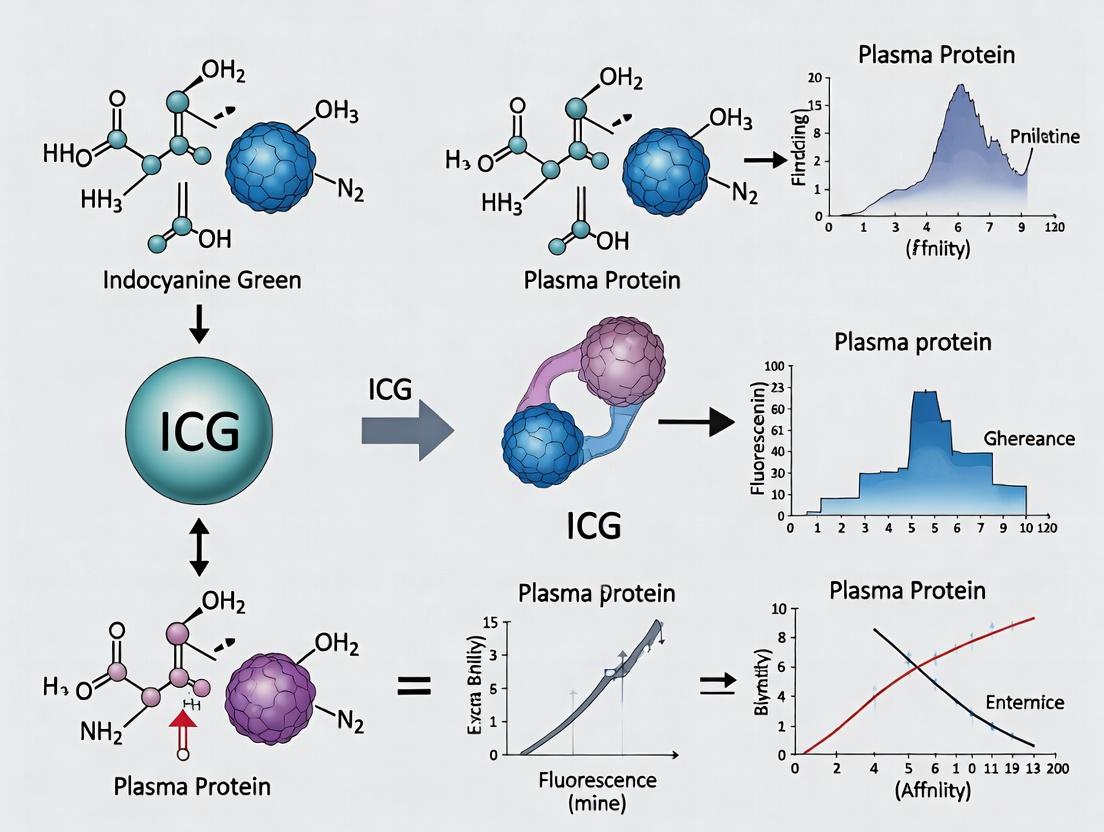
This article provides a comprehensive review of the critical interplay between Indocyanine Green (ICG) plasma protein binding and its resultant fluorescence properties.
ICG Plasma Protein Binding and Fluorescence Properties: Implications for Imaging and Drug Delivery
Abstract
This article provides a comprehensive review of the critical interplay between Indocyanine Green (ICG) plasma protein binding and its resultant fluorescence properties. Targeted at researchers and drug development professionals, we explore the foundational chemistry of ICG-protein interactions, detail current methodologies for quantifying binding and fluorescence, address common experimental challenges and optimization strategies, and validate findings through comparative analysis with other fluorophores. The synthesis of these insights underscores ICG's unique position in biomedical imaging and offers a roadmap for optimizing its application in clinical and pre-clinical settings.
The Science Behind ICG: Unpacking Protein Binding and Fluorescence Fundamentals
This whitepaper provides an in-depth technical analysis of Indocyanine Green (ICG), a near-infrared (NIR) fluorescent dye, focusing on its chemical structure and defining characteristics. The content is framed within a broader research thesis investigating the intricate relationship between ICG's plasma protein binding behavior and its resultant fluorescence quantum yield, photostability, and pharmacokinetics—critical parameters for its application in medical imaging and drug development.
Chemical Structure and Properties
ICG (C43H47N2NaO6S2) is a water-soluble, amphiphilic tricarbocyanine dye. Its core structure consists of two polycyclic lipophilic indolenine groups linked by a conjugated heptamethine chain, which is responsible for its NIR absorption. The dye also contains sulfonate groups, conferring hydrophilicity. This amphiphilicity is pivotal for its spontaneous binding to plasma proteins.
Table 1: Core Physicochemical Properties of ICG
| Property | Value / Description | Significance |
|---|---|---|
| Molecular Weight | 774.96 g/mol | Impacts diffusion and renal clearance. |
| Empirical Formula | C43H47N2NaO6S2 | Defines elemental composition. |
| Absorption Max (λabs) | 780-805 nm in blood/plasma | Shift from ~780 nm in aqueous solution due to protein binding. Enables deep tissue penetration. |
| Emission Max (λem) | 820-845 nm in blood/plasma | Minimizes autofluorescence and light scattering in biological tissues. |
| Molar Extinction Coefficient (ε) | ~1.3 x 10^5 M^-1cm^-1 in plasma | Indicates strong light absorption capability. |
| Fluorescence Quantum Yield (Φ) | ~0.028 in water, ~0.12-0.16 when HSA-bound | Dramatic increase upon protein binding is central to research thesis. |
| Primary Plasma Carrier | Human Serum Albumin (HSA) & lipoproteins | Binding dictates biodistribution and fluorescence enhancement. |
| Hydrodynamic Diameter (HSA-bound) | ~7-8 nm | Determines vascular permeability and extravasation behavior. |
Key Characteristics in the Context of Protein Binding and Fluorescence
The utility of ICG in biomedical applications is directly governed by its interaction with plasma proteins, primarily Human Serum Albumin (HSA).
Protein-Binding Induced Fluorescence Enhancement
In aqueous solution, ICG molecules undergo aggregation and torsional flexibility around the methine bridge, leading to non-radiative decay and low quantum yield. Upon binding to the hydrophobic pockets of HSA (Site I, primarily), the dye is monomerized and rigidified. This restricts internal rotation, reducing non-radiative energy loss and significantly enhancing fluorescence emission.
Spectral Shifts
Binding to HSA causes a characteristic bathochromic (red) shift of both absorption and emission spectra (~20-25 nm). This shift is a key diagnostic signature of successful protein complexation in experimental settings.
Table 2: Spectral and Quantum Yield Dependence on Binding Environment
| Environment | λabs (nm) | λem (nm) | Quantum Yield (Φ) | Notes |
|---|---|---|---|---|
| Aqueous Buffer | ~778 | ~806 | 0.028 | Low fluorescence, prone to aggregation. |
| Human Serum Albumin (HSA) | 800-810 | 830-840 | 0.12 - 0.16 | Primary research focus; optimal for imaging. |
| Lipoproteins (LDL) | ~790 | ~820 | Intermediate | Alters pharmacokinetics, targeting to liver. |
| Whole Blood/Serum | ~805 | ~835 | ~0.14 | Represents the in vivo operational state. |
Pharmacokinetics Governed by Binding
ICG's rapid hepatic clearance (t1/2 ~ 3-5 min in humans) is a direct consequence of its protein binding profile. The HSA-ICG complex is taken up by hepatocytes and excreted unchanged into bile, with no renal excretion or extrahepatic metabolism.
Experimental Protocols for Key Studies
Protocol: Determining Binding Affinity (Kd) via Fluorescence Titration
Objective: Quantify the binding affinity of ICG for HSA. Materials: See "The Scientist's Toolkit" below. Procedure:
- Prepare a 1 µM ICG solution in phosphate-buffered saline (PBS), pH 7.4.
- Prepare a stock HSA solution at 100 µM in PBS.
- Place 2 mL of the ICG solution in a quartz cuvette in a spectrofluorometer thermostatted at 37°C.
- Record the initial fluorescence emission spectrum (λex = 785 nm, λem = 800-900 nm).
- Titrate by sequentially adding small aliquots (e.g., 2-10 µL) of the HSA stock solution, mixing thoroughly.
- After each addition, record the fluorescence intensity at the emission maximum (~835 nm).
- Continue until no further increase in fluorescence is observed (saturation).
- Data Analysis: Fit the fluorescence intensity (F) vs. [HSA] data to a one-site binding model using software like Prism or self-derived equations to calculate the dissociation constant (Kd).
Protocol: Assessing Fluorescence Quantum Yield (Φ) Relative to a Standard
Objective: Measure the absolute fluorescence quantum yield of ICG in different protein-bound states. Materials: Reference dye (e.g., IR-26 in DCLM, Φ=0.0021), integrating sphere accessory. Procedure:
- Using an integrating sphere coupled to a NIR-sensitive spectrometer, measure the absorption and emission spectra of the sample (e.g., ICG-HSA complex in PBS) and the solvent blank.
- Repeat for the reference dye with known quantum yield.
- Calculation: Apply the formula Φsample = Φref * (Isample / Iref) * (Aref / Asample) * (nsample^2 / nref^2), where I is integrated fluorescence intensity, A is absorbance at excitation wavelength, and n is refractive index.
Protocol:In VivoPharmacokinetic and Imaging Analysis
Objective: Characterize the effect of protein binding on ICG circulation and tissue distribution. Procedure:
- Administer a bolus intravenous injection of ICG (standard clinical dose: 0.1-0.5 mg/kg) to an animal model (e.g., mouse).
- Use a NIR fluorescence imaging system to capture sequential images over time (e.g., 0, 1, 5, 15, 30, 60 min).
- Quantify fluorescence intensity in regions of interest (ROI) such as the heart (blood pool), liver, and kidneys.
- Plot time-fluorescence intensity curves for each ROI.
- Fit the blood pool curve to a bi-exponential decay model to calculate pharmacokinetic parameters: distribution half-life (t1/2α) and elimination half-life (t1/2β).
Visualizations
Diagram 1: ICG Fluorescence Modulation by Protein Binding
Diagram 2: ICG-HSA Binding Affinity Assay Workflow
The Scientist's Toolkit
Table 3: Essential Research Reagents and Materials for ICG-Protein Binding Studies
| Item | Function / Relevance | Typical Specification / Notes |
|---|---|---|
| ICG (lyophilized powder) | The core fluorescent probe. | >95% purity (HPLC), store dessicated at -20°C, protect from light. |
| Human Serum Albumin (HSA) | Primary binding partner for in vitro studies. | Fatty acid-free, ≥99% purity, for reproducible binding kinetics. |
| Phosphate Buffered Saline (PBS) | Physiological buffer for in vitro assays. | 1X, pH 7.4, isotonic. Filter sterilize. |
| Spectrofluorometer with NIR PMT | Measures fluorescence intensity and spectra. | Must have excitation capability to ~780 nm and detection to ~850 nm. |
| Quartz Cuvettes (1cm pathlength) | Holds samples for spectrophotometry. | Quartz transmits NIR light; glass does not. |
| Dynamic Light Scattering (DLS) Instrument | Measures hydrodynamic size of ICG-protein complexes. | Confirms monomerization and complex formation. |
| Small Animal NIR Fluorescence Imager | For in vivo pharmacokinetic and biodistribution studies. | Requires appropriate NIR filters (ex: ~780 nm, em: ~830 nm). |
| Analytical HPLC System | Assesses ICG purity and stability in solution. | Used with a C18 column and PDA detector. |
Within the comprehensive investigation of Indocyanine Green (ICG) plasma protein binding and fluorescence properties, understanding its primary plasma protein partners is foundational. ICG’s pharmacokinetics, biodistribution, and fluorescence quantum yield are profoundly modulated by its interaction with albumin and lipoproteins. This whitepaper provides an in-depth technical analysis of these interactions, serving as a critical reference for researchers leveraging ICG in imaging, pharmacokinetic modeling, and drug delivery system design.
Structural and Functional Profiles of Key Plasma Proteins
The binding of ICG is governed by the structural and physicochemical properties of its primary carriers.
Human Serum Albumin (HSA): A 66.5 kDa monomeric protein, HSA is the most abundant plasma protein (~35-50 g/L). Its structure comprises three homologous domains (I-III), each containing two subdomains (A and B), forming a heart-shaped molecule. The principal binding sites for hydrophobic anions are located in subdomains IIA (Sudlow site I) and IIIA (Sudlow site II). HSA’s intrinsic fluorescence (mainly from Trp-214 in subdomain IIA) is a key tool for studying ligand binding.
Lipoproteins: These are complex particles with a hydrophobic core of triglycerides and cholesteryl esters, surrounded by a monolayer of phospholipids, free cholesterol, and apolipoproteins.
- Low-Density Lipoprotein (LDL): Diameter ~18-25 nm, core rich in cholesteryl esters. Primary apolipoprotein: ApoB-100.
- High-Density Lipoprotein (HDL): Diameter ~5-12 nm, core rich in cholesteryl esters and triglycerides. Primary apolipoproteins: ApoA-I, ApoA-II.
Quantitative Binding Affinity Data
Binding parameters for ICG with plasma proteins, as determined by equilibrium dialysis, fluorescence quenching, and spectroscopic titration.
Table 1: Summary of ICG Binding Parameters to Plasma Proteins
| Protein | Association Constant (Ka) [M⁻¹] | Number of Binding Sites (n) | Primary Method | Reference Key Findings |
|---|---|---|---|---|
| Human Serum Albumin (HSA) | ~1.0 - 3.0 x 10⁵ | 1 - 2 (High Affinity) | Fluorescence Quenching | Primary binding site in subdomain IIA. Binding enhances fluorescence & stability. |
| Low-Density Lipoprotein (LDL) | ~1.0 x 10⁸ | Multiple (100-300 per particle) | Spectroscopic Titration | High-capacity partitioning into lipid core. Drastically red-shifts fluorescence. |
| High-Density Lipoprotein (HDL) | ~5.0 x 10⁷ | Multiple (50-150 per particle) | Ultracentrifugation | Efficient incorporation modulates hepatic clearance pathways. |
Experimental Protocols for Binding Analysis
Protocol 4.1: Fluorescence Quenching Titration for HSA-ICG Binding. Objective: Determine the Stern-Volmer quenching constant (Ksv) and binding constant (Ka). Reagents: Purified HSA (fatty-acid free), ICG, Phosphate Buffered Saline (PBS, pH 7.4). Procedure:
- Prepare an HSA solution (2.0 µM) in PBS.
- Prepare a stock ICG solution in DMSO and dilute serially in PBS.
- In a quartz cuvette, add 2 mL of HSA solution.
- Titrate with ICG stock (0-20 µL increments). Mix and incubate 2 min.
- Record fluorescence emission spectrum (excitation: 280 nm for protein, 780 nm for ICG; emission: 290-450 nm for protein, 800-900 nm for ICG).
- Analyze fluorescence intensity at λmax (for HSA: ~340 nm) vs. [ICG]. Plot Stern-Volmer (F₀/F vs. [Q]) and double-log plots (log[(F₀-F)/F] vs. log[Q]) to derive Ksv and Ka.
Protocol 4.2: Lipoprotein Partitioning Assay via Density Gradient Ultracentrifugation. Objective: Quantify ICG distribution among lipoprotein classes in native plasma. Reagents: Human plasma, ICG, KBr, Density gradient buffer (PBS, pH 7.4). Procedure:
- Incubate ICG (final conc. 10 µM) with fresh human plasma at 37°C for 15 min.
- Adjust plasma density to 1.225 g/mL using solid KBr.
- Layer density-adjusted plasma under a discontinuous KBr/PBS gradient (densities: 1.063, 1.019, 1.006 g/mL) in an ultracentrifuge tube.
- Centrifuge at 65,000 rpm (≈ 350,000 g) for 4 hours at 10°C.
- Fractionate the gradient top-to-bottom. Identify fractions by density (VLDL: <1.006 g/mL, LDL: 1.019-1.063 g/mL, HDL: 1.063-1.21 g/mL, albumin >1.21 g/mL).
- Quantify ICG in each fraction by measuring absorbance at 780 nm or fluorescence (ex/em: 780/820 nm).
Visualization of Pathways and Workflows
Diagram 1: ICG Plasma Distribution & Clearance Pathways
Diagram 2: Fluorescence Quenching Experiment Workflow
The Scientist's Toolkit: Key Research Reagent Solutions
Table 2: Essential Reagents for ICG-Protein Binding Research
| Reagent / Material | Function & Rationale | Key Consideration |
|---|---|---|
| Fatty-Acid Free HSA | Provides pure, defined albumin without endogenous ligands interfering with binding site occupancy. | Essential for accurate determination of intrinsic binding constants. |
| Human Plasma (Pooled) | Maintains natural lipoprotein composition and competitive binding environment for translational studies. | Use fresh or freshly frozen; avoid repeated freeze-thaw. |
| ICG, USP Grade | The clinical-grade fluorophore. Must be reconstituted per manufacturer specs to ensure monomeric form. | Protect from light. Use immediately after reconstitution for consistency. |
| Density Gradient Medium (KBr/NaCl) | Enables physical separation of lipoprotein classes by buoyant density for partitioning assays. | Solutions must be prepared with precise density validation via refractometry. |
| Fluorescence Cuvettes (Quartz, Low Volume) | Required for NIR fluorescence measurements. Quartz transmits excitation (780 nm) and emission (>800 nm) wavelengths. | Use matched cuvettes for titrations to minimize background drift. |
| Ultracentrifuge with Fixed-Angle Rotor | Generates high g-forces necessary to separate lipoproteins by density within a practical timeframe. | Temperature control (10°C) is critical to maintain lipoprotein integrity. |
Indocyanine green (ICG) is a near-infrared (NIR) fluorophore and diagnostic agent whose pharmacokinetics and fluorescence properties are intrinsically governed by its binding to plasma proteins. Within the context of a broader thesis on ICG plasma protein binding and fluorescence properties research, a mechanistic understanding of this interaction is fundamental. This whitepaper provides an in-depth technical guide on the core mechanisms driving ICG-protein complexation, focusing on hydrophobic interactions and specific binding sites, which directly influence its biodistribution, stability, and fluorescence quantum yield.
Hydrophobic Interactions: The Primary Driving Force
ICG is a hydrophobic, amphiphilic molecule with a polycyclic aromatic structure (a lipophilic heptamethine chain) and hydrophilic sulfate groups. In the aqueous plasma environment, this hydrophobicity drives its spontaneous incorporation into hydrophobic pockets or clefts of proteins. The interaction is entropy-driven: the release of ordered water molecules from the non-polar surfaces of both ICG and the protein upon binding results in a favorable increase in system entropy. This hydrophobic effect is the principal non-covalent force stabilizing ICG-protein complexes, explaining its rapid and high-affinity binding despite the lack of a specific covalent bond.
Primary Plasma Protein Binding Sites
ICG binds predominantly to serum albumin, with high-affinity binding also reported for lipoproteins and α1-acid glycoprotein.
- Human Serum Albumin (HSA): HSA is the major carrier. The primary binding site is located in subdomain IIA, known as the Sudlow site I or warfarin site. This site features a deep, predominantly hydrophobic cavity with strategically placed polar residues, accommodating ICG's hydrophobic backbone while allowing ionic interactions with its sulfonate groups. Secondary, lower-affinity interactions may occur at Sudlow site II (subdomain IIIA) or at the interface of domains.
- Lipoproteins: ICG's high lipid partition coefficient facilitates its incorporation into the phospholipid monolayer and core of lipoproteins, particularly high-density lipoprotein (HDL) and low-density lipoprotein (LDL). Binding here is mediated by intercalation into the lipid phase.
- α1-Acid Glycoprotein (AGP): This acute-phase protein provides an alternative binding site, potentially relevant in inflammatory conditions. Its binding pocket is also hydrophobic in character.
Table 1: Summary of Key ICG-Protein Binding Parameters
| Protein Target | Primary Binding Site | Approx. Binding Constant (Ka, M-1) | Proposed Driving Forces | Key Experimental Methods |
|---|---|---|---|---|
| Human Serum Albumin (HSA) | Sudlow Site I (Subdomain IIA) | 105 – 106 | Hydrophobic effect, possible ionic/van der Waals | Fluorescence quenching, ITC, CD, Molecular Docking |
| Lipoproteins (e.g., HDL) | Phospholipid monolayer/core | Varies with lipid composition | Hydrophobic partitioning, van der Waals | Ultracentrifugation, FRET, Gel Filtration |
| α1-Acid Glypoprotein (AGP) | Hydrophobic pocket core | ~104 – 105 | Hydrophobic effect, hydrogen bonding | Equilibrium dialysis, Spectrophotometry |
Experimental Protocols for Studying Binding Mechanisms
Fluorescence Quenching Titration (for Binding Constant & Sites)
Objective: Determine binding constant (Ka) and number of binding sites (n) for ICG-HSA interaction. Protocol:
- Prepare a 2 µM HSA solution in phosphate-buffered saline (PBS), pH 7.4.
- Prepare a stock ICG solution in DMSO (e.g., 1 mM) and dilute in PBS. Keep DMSO <0.5%.
- Titrate the HSA solution with incremental volumes of ICG stock (0-50 µM final range). Maintain constant volume.
- After each addition, incubate for 2 min, then measure fluorescence emission at ~820 nm (λex = 780 nm). Monitor quenching of HSA's intrinsic fluorescence (Trp-214 in site I) as ICG binds.
- Analyze data using the Stern-Volmer equation and modified double-log plot: log[(F0-F)/F] = logKa + n log[Q], where F0 and F are fluorescence intensities in the absence and presence of quencher (ICG).
Isothermal Titration Calorimetry (ITC)
Objective: Directly measure enthalpy change (ΔH), stoichiometry (N), and binding constant (Ka). Protocol:
- Degas all solutions. Load the sample cell with 10 µM HSA in PBS.
- Fill the syringe with 150 µM ICG in the same buffer.
- Set reference power and temperature (e.g., 25°C). Perform automated injections (e.g., 19 injections of 2 µL) with stirring.
- Integrate heat pulses, subtract dilution control, and fit the binding isotherm to a one-site binding model to derive ΔH, Ka, and N.
Competitive Displacement Assay (for Site Localization)
Objective: Identify the specific HSA binding site using site-specific probes. Protocol:
- Pre-incubate 2 µM HSA with a known site I binder (e.g., warfarin, 20 µM) or site II binder (e.g., ibuprofen, 20 µM) for 15 min.
- Titrate the pre-incubated HSA with ICG as in Protocol 4.1.
- Compare the quenching curves. A significant rightward shift (reduced apparent Ka) in the presence of warfarin indicates competition for site I.
Visualization of Workflow and Interactions
Diagram 1: Core ICG-protein binding mechanism
Diagram 2: Experimental workflow for binding studies
The Scientist's Toolkit: Key Research Reagent Solutions
Table 2: Essential Materials for ICG-Protein Binding Experiments
| Item / Reagent | Function / Role in Research | Key Considerations |
|---|---|---|
| High-Purity ICG | The fluorescent probe for binding studies. | Use pharmaceutical or analytical grade. Verify absorbance (A780/A700 >1.2) to check for aggregates. Store desiccated, in the dark. |
| Fatty-Acid Free HSA | The primary protein target. | Use defatted, essentially globulin-free HSA to eliminate interference from endogenous ligands. |
| Site-Specific Probes (Warfarin, Ibuprofen, Digitoxin) | Competitive ligands to map binding sites. | Prepare fresh stock solutions in appropriate solvents (e.g., NaOH for warfarin, ethanol for ibuprofen). |
| Phosphate Buffered Saline (PBS), pH 7.4 | Physiological buffer for experiments. | Use isotonic buffer to maintain protein conformation. Filter (0.22 µm) to remove particulates. |
| Isothermal Titration Calorimeter (ITC) | Instrument for direct thermodynamic measurement. | Requires careful degassing and precise concentration matching of protein and ligand. |
| Spectrofluorometer with NIR detection | Instrument for fluorescence quenching assays. | Must be equipped with PMT or InGaAs detector sensitive >800 nm. Use quartz cuvettes. |
| Molecular Docking Software (AutoDock, GOLD) | Computational tool for visualizing binding pose in protein sites. | Requires 3D protein structure (e.g., from PDB: 1AO6) and prepared ICG molecular file. |
Indocyanine green (ICG) is a near-infrared (NIR) fluorophore whose photophysical properties are profoundly altered upon binding to plasma proteins, primarily albumin and lipoproteins. This whitepaper, framed within a broader thesis on ICG-protein interactions, provides a technical guide on the mechanisms through which protein binding modulates ICG's fluorescence quantum yield, induces spectral shifts, and enhances its photostability. Understanding these modulations is critical for researchers and drug development professionals aiming to optimize ICG for diagnostic imaging, surgical guidance, and therapeutic applications.
ICG is a water-soluble, anionic tricarbocyanine dye. In aqueous solution, it exhibits aggregation, rapid degradation, and low fluorescence quantum yield. Upon intravenous injection, it binds non-covalently and with high affinity to plasma proteins (>98% bound). This binding event fundamentally changes its molecular environment, leading to the observed enhancements in its utility as a NIR contrast agent.
Core Modulatory Effects of Protein Binding
Enhancement of Fluorescence Quantum Yield
The fluorescence quantum yield (Φ) of ICG increases dramatically upon protein binding. In aqueous buffer, ICG Φ is typically ≤0.002-0.004 due to internal conversion, aggregation-caused quenching, and rotational deactivation. Protein binding provides a hydrophobic binding pocket that restricts these non-radiative decay pathways.
Mechanism: The protein pocket:
- Suppresses Molecular Rotation: Restricts free rotation of the poly-methine chain, reducing internal conversion.
- Prevents Aggregation: Isolates monomeric ICG molecules, preventing H-aggregate formation which quenches fluorescence.
- Reduces Solvent Interactions: Shields the dye from polar water molecules that promote non-radiative decay.
Spectral Shifts: Absorbance and Emission
Protein binding induces consistent red-shifts in both the absorption and emission maxima of ICG.
Mechanism: The shift is attributed to the change in the dielectric constant of the local microenvironment. The hydrophobic protein pocket is less polar than aqueous solution, stabilizing the excited-state dipole moment of ICG, which lowers the energy gap between the ground and excited states, resulting in a longer wavelength (red-shift).
Improvement of Photochemical and Aqueous Stability
ICG in aqueous solution is notoriously unstable, undergoing rapid hydrolysis, aggregation, and photobleaching. Protein binding significantly decelerates these degradation processes.
Mechanism:
- Photobleaching: The protein pocket acts as a physical shield, reducing exposure to reactive oxygen species (ROS) generated during irradiation.
- Hydrolysis: The binding site protects the dye's susceptible chemical bonds (e.g., central cyclohexenyl ring) from nucleophilic attack by water or hydroxide ions.
- Thermal Degradation: The constrained conformation reduces vibrational and rotational energy that can lead to bond breakage.
Table 1: Quantitative Modulation of ICG Properties by Protein Binding
| Photophysical Property | ICG in Aqueous Buffer | ICG Bound to Human Serum Albumin (HSA) | ICG Bound to Lipoproteins | Notes |
|---|---|---|---|---|
| Absorption λmax (nm) | ~780 nm | ~805-810 nm | ~795-800 nm | Red-shift of 25-30 nm with HSA. |
| Emission λmax (nm) | ~810 nm | ~830-835 nm | ~820-825 nm | Red-shift of 20-25 nm with HSA. |
| Quantum Yield (Φ) | 0.002 - 0.004 | 0.08 - 0.12 | 0.05 - 0.08 | ~20-30x enhancement with HSA. |
| Fluorescence Lifetime (τ) | ~0.2 - 0.3 ns | ~0.5 - 0.9 ns | ~0.4 - 0.7 ns | Multi-exponential decay; component increases. |
| Binding Constant (Kₐ) | N/A | 10⁵ - 10⁶ M⁻¹ | 10⁴ - 10⁵ M⁻¹ | High-affinity, primarily hydrophobic interactions. |
| Photobleaching Half-life | Minutes | Tens of Minutes | Tens of Minutes | Highly dependent on light flux. |
Detailed Experimental Protocols
Protocol: Determining Binding-Induced Spectral Shifts and Quantum Yield
Objective: To measure the absorbance/emission shifts and calculate the enhanced quantum yield of ICG upon addition of HSA.
Materials: See "The Scientist's Toolkit" below. Procedure:
- Sample Preparation:
- Prepare 1 µM ICG in phosphate-buffered saline (PBS), pH 7.4.
- Prepare an identical solution with 50 µM HSA (ensuring >99% binding).
- Incubate for 10 minutes at 25°C.
- Absorbance Spectroscopy:
- Record UV-Vis-NIR spectra (600-900 nm) for both samples.
- Identify λmax for the principal peak. Calculate the Δλmax (shift).
- Fluorescence Spectroscopy:
- Using the absorbance λmax as excitation, record emission spectra (800-900 nm).
- Identify the emission λmax.
- Quantum Yield Calculation (Comparative Method):
- Use a reference fluorophore with known Φ in the NIR (e.g., IR-26 in DMSO, Φ=0.005).
- Measure integrated fluorescence intensity (F) and absorbance (A) at the excitation wavelength for both reference and sample (ICG-HSA). Ensure A < 0.1 to avoid inner filter effects.
- Apply the formula: Φsample = Φref * (Fsample / Fref) * (Aref / Asample) * (ηsample² / ηref²), where η is the refractive index of the solvent.
Protocol: Assessing Binding-Enhanced Photostability
Objective: To quantify the rate of photobleaching for free vs. protein-bound ICG.
Procedure:
- Prepare 1 µM ICG in PBS and 1 µM ICG with 50 µM HSA.
- Load samples into a quartz cuvette.
- Place in a fluorometer and excite continuously at the isosbestic point (e.g., 780 nm).
- Monitor fluorescence emission at λmax over time (e.g., 30 minutes).
- Plot normalized fluorescence intensity (I/I₀) vs. time.
- Fit the decay curve to a single or double exponential model. Compare the decay time constants (τ_bleach) between the two samples.
Protocol: Determining Binding Affinity via Fluorescence Titration
Objective: To calculate the association constant (Kₐ) and stoichiometry (n) for ICG-HSA binding.
Procedure:
- Prepare a 0.5 µM HSA solution in PBS.
- In a fluorometer, titrate with a concentrated ICG stock solution (e.g., 50 µM). Add increments (e.g., 0.5 µL) and mix.
- After each addition, record the fluorescence emission intensity at 835 nm (excitation at 805 nm).
- Continue until no further increase in fluorescence is observed (saturation).
- Data Analysis: Correct for dilution. Fit the binding isotherm using a model for a single class of independent binding sites:
ΔF = ΔF_max * ( [ICG] / (K_d + [ICG]) )- where ΔF is the change in fluorescence, ΔFmax is the maximum change, and Kd is the dissociation constant (Kd = 1/Kₐ). Use non-linear regression to solve for Kd and n (from the x-intercept at saturation).
Visualizing the Modulation Pathways
Diagram Title: Mechanisms of Protein Binding Effects on ICG Photophysics
The Scientist's Toolkit: Essential Research Reagents and Materials
Table 2: Key Research Reagent Solutions for ICG-Protein Binding Studies
| Item | Function & Relevance in ICG-Protein Research | Example/Notes |
|---|---|---|
| High-Purity ICG | The fundamental fluorophore. Impurities significantly affect baseline fluorescence and binding kinetics. | Lyophilized powder, >95% purity (HPLC). Store dessicated, -20°C, protected from light. |
| Human Serum Albumin (HSA) | The primary binding protein. Essential for replicating in vivo conditions and studying the major modulation pathway. | Fatty acid-free grade to avoid competitive binding. Prepare fresh solutions in buffer. |
| Lipoprotein Fractions (LDL/HDL) | To study alternative binding targets for ICG, which can influence its biodistribution. | Isolated from human plasma via ultracentrifugation. |
| Phosphate-Buffered Saline (PBS), pH 7.4 | Standard physiological buffer for maintaining pH and ionic strength in in vitro experiments. | Use to dissolve ICG and proteins. Filter (0.22 µm) to remove particulates. |
| Reference Quantum Yield Standard | Required for the accurate calculation of ICG's fluorescence quantum yield. | e.g., IR-26 in DMSO (Φ=0.005), or other characterized NIR dye. |
| Quartz Cuvettes (Low Volume) | For UV-Vis-NIR spectroscopy. Glass or plastic absorbs in the NIR range. | Ensure pathlength is appropriate (e.g., 10 mm) for expected absorbance values. |
| Spectrofluorometer with NIR Detector | Instrument must be capable of exciting (~780 nm) and detecting emission (~800-900 nm) in the NIR range. | PMT or InGaAs detectors are suitable. Instrument response correction is critical. |
| Centrifugal Filters (e.g., 3 kDa MWCO) | To separate protein-bound ICG from free ICG in binding assays or to purify complexes. | Useful for equilibrium dialysis or microfiltration binding assays. |
| Software for Data Analysis | For fitting binding isotherms, calculating decay constants, and spectral deconvolution. | e.g., Origin, GraphPad Prism, or custom scripts in Python/R. |
The binding of ICG to plasma proteins is not a mere pharmacokinetic detail but a transformative event that activates its functionality as a fluorophore. The documented increases in quantum yield, red-shifted spectra for deeper tissue penetration, and improved stability are direct consequences of its non-covalent incorporation into hydrophobic protein pockets. For researchers, controlling or exploiting this interaction is paramount. This includes designing targeted ICG-protein complexes, developing competitive binding assays for diagnostic purposes, and accurately interpreting in vivo imaging data where binding status dictates signal intensity and localization. Future work in this thesis will explore the kinetics of these interactions in complex biological matrices and their impact on targeted imaging agent design.
This whitepaper, framed within a broader thesis on indocyanine green (ICG) plasma protein binding and fluorescence properties, details the fundamental photophysical principles by which a hydrophobic microenvironment enhances fluorescence upon ligand binding. For researchers in spectroscopy and drug development, understanding this phenomenon is crucial for designing and interpreting assays involving fluorescent probes, such as ICG's interaction with serum albumin.
Core Photophysical Principles
Fluorescence intensity depends on the quantum yield (Φ), the ratio of photons emitted to photons absorbed. Key non-radiative decay pathways that compete with emission include vibrational relaxation, internal conversion, and interactions with solvent molecules (e.g., water). A polar, aqueous environment quenches fluorescence through:
- Vibrational Energy Loss: High-frequency O-H bond vibrations facilitate non-radiative decay.
- Polarity-Induced Stabilization: Polar solvents stabilize the excited state's more polar charge distribution, leading to a red shift and increased susceptibility to non-radiative decay.
- Quencher Access: Solvent molecules like water can act as dynamic quenchers.
Upon binding to a hydrophobic protein pocket (e.g., ICG to Sudlow site II of HSA), the probe experiences:
- Reduced Polarity: The apolar environment decreases stabilization of the excited state.
- Restricted Motion: Dramatically reduced rotational and vibrational freedom, lowering the rate of non-radiative decay.
- Shielded from Quenchers: Water and dissolved oxygen are excluded from the binding site.
The net result is a significant increase in fluorescence quantum yield and often a blue shift in emission wavelength.
Table 1: Impact of Hydrophobic Binding on Fluorescence Parameters of ICG
| Parameter | Free in Aqueous Buffer | Bound to Human Serum Albumin (HSA) | Change |
|---|---|---|---|
| Quantum Yield (Φ) | 0.002 - 0.012 | 0.08 - 0.15 | 7-60x increase |
| Fluorescence Intensity | Baseline (Low) | 10-50 fold increase | 10-50x increase |
| Emission Max (λem) | ~820 nm | ~780 - 800 nm | 20-40 nm Blue Shift |
| Fluorescence Lifetime (τ) | ~0.2 - 0.3 ns | ~0.8 - 1.2 ns | 4-5x increase |
| Thermal & Photostability | Low | Significantly Enhanced | - |
Table 2: Key Binding Parameters for ICG-HSA Interaction
| Parameter | Value | Method |
|---|---|---|
| Binding Constant (Ka) | ~10^5 - 10^6 M⁻¹ | Fluorescence Titration |
| Number of High-Affinity Sites | 1 (Primary) | Scatchard Plot |
| Primary Binding Site | Sudlow Site II (Hydrophobic) | Competitive Displacement |
Detailed Experimental Protocols
Protocol 1: Fluorescence Titration to Determine Binding Constant
Objective: Determine the affinity (Ka) and stoichiometry of ICG binding to HSA. Reagents: ICG stock solution (in DMSO), HSA stock solution (in PBS, pH 7.4), Phosphate Buffered Saline (PBS). Procedure:
- Prepare a 2 µM ICG solution in PBS in a quartz cuvette.
- Record the fluorescence emission spectrum (excitation: 780 nm, emission: 800-850 nm) as the baseline.
- Titrate by sequentially adding small volumes of HSA stock solution (e.g., 0.5 µL to 10 µL increments of 100 µM HSA). Mix thoroughly and incubate for 2 min after each addition.
- Record the fluorescence spectrum after each addition. Monitor the increase in intensity at ~800 nm.
- Correct all readings for dilution and inner-filter effect.
- Data Analysis: Plot the corrected fluorescence intensity (F) or the change in intensity (ΔF) vs. [HSA]. Fit the data to a 1:1 binding isotherm model using non-linear regression software to derive Ka.
Protocol 2: Competitive Displacement Assay for Binding Site Identification
Objective: Identify the specific hydrophobic binding pocket on HSA. Reagents: ICG, HSA, known site-specific ligands: Ibuprofen (Site II), Warfarin (Site I), Digoxin (Site III), PBS. Procedure:
- Prepare a pre-bound complex of ICG (2 µM) and HSA (3 µM) in PBS.
- Record the fluorescence spectrum of the complex.
- Titrate the complex with a concentrated solution of a site-specific competitor (e.g., Ibuprofen).
- Observe changes in ICG fluorescence. A significant decrease indicates displacement from that specific site.
- Repeat with competitors for other binding sites. The competitor causing the greatest fluorescence decrease identifies the primary binding pocket.
Visualizations
Title: Mechanism of Fluorescence Enhancement in Hydrophobic Pockets
Title: Fluorescence Titration Protocol for Binding Constant
The Scientist's Toolkit
Table 3: Essential Research Reagents & Materials
| Item | Function/Benefit | Key Consideration for ICG Studies |
|---|---|---|
| Indocyanine Green (ICG) | Model near-infrared (NIR) fluorophore. | Prone to aggregation and photodegradation in water; use fresh DMSO stocks. |
| Human Serum Albumin (HSA) | Primary plasma binding protein; provides hydrophobic pockets. | Use fatty-acid free (defatted) HSA for consistent, defined binding studies. |
| Site-Specific Competitors (Ibuprofen, Warfarin, Digoxin) | To map the specific binding location on HSA. | Use high-purity compounds and pre-dissolve in appropriate solvent (DMSO/ethanol). |
| Phosphate Buffered Saline (PBS), pH 7.4 | Physiological buffer for in vitro binding assays. | Ensure no azide preservative is present, as it can interfere with protein function. |
| Quartz Cuvettes | For fluorescence spectroscopy in UV-Vis-NIR range. | Required for NIR measurements above 800 nm; glass or plastic cuvettes absorb. |
| Spectrofluorometer with NIR PMT | Instrument to measure fluorescence emission and excitation. | Must be equipped with a sensitive detector (e.g., InGaAs PMT) for ICG's weak NIR signal. |
| Data Fitting Software (e.g., Prism, Origin, Python SciPy) | To analyze titration data and derive binding constants. | Non-linear regression for 1:1 binding or more complex models is essential. |
Physiological and Pharmacokinetic Consequences of Protein Binding
This whitepaper provides an in-depth technical examination of the physiological and pharmacokinetic consequences of drug-protein binding. The discussion is framed within the context of a broader research thesis investigating the binding of Indocyanine Green (ICG) to plasma proteins and the consequential modulation of its fluorescence properties, a critical factor in its applications as a diagnostic and therapeutic agent.
Core Concepts of Protein Binding
The Protein Binding Equilibrium
Drugs in systemic circulation exist in a dynamic equilibrium between a free, unbound state and a state bound to plasma proteins, primarily albumin, alpha-1-acid glycoprotein, and lipoproteins. The reversible binding is characterized by the association constant (Ka) and the fraction unbound (fu).
Quantitative Parameters
The following table summarizes key quantitative parameters governing protein binding.
Table 1: Key Quantitative Parameters of Protein Binding
| Parameter | Symbol | Definition | Typical Range/Impact |
|---|---|---|---|
| Fraction Unbound | fu | Ratio of free drug concentration to total drug concentration. | 0.01 (highly bound) to 1.0 (unbound). Determines pharmacologically active concentration. |
| Association Constant | Ka | Measure of binding affinity (L/mol). | High Ka (>10^4) indicates strong binding. |
| Number of Binding Sites | n | Average number of independent binding sites per protein molecule. | Often 1-2 primary sites with varying affinity. |
| Volume of Distribution | Vd | Apparent volume in which the total drug is distributed. | High protein binding typically correlates with lower Vd (confined to plasma). |
| Clearance | CL | Volume of plasma cleared of drug per unit time. | For restrictively cleared drugs, CL is proportional to fu. |
Physiological and Pharmacokinetic Consequences
Influence on Pharmacokinetic Parameters
Protein binding is a primary determinant of a drug's absorption, distribution, metabolism, and excretion (ADME) profile.
Table 2: Consequences of Protein Binding on Key PK Parameters
| PK Parameter | Consequence of High Protein Binding | Rationale |
|---|---|---|
| Absorption | Can slow passive diffusion but minimal net effect. | Only free drug crosses most membranes; binding maintains concentration gradient. |
| Volume of Distribution (Vd) | Decreases Vd, confining drug to vascular compartment. | Bound drug is restricted to the plasma volume; extensive binding limits tissue penetration. |
| Clearance (Hepatic) | Impacts restrictively cleared drugs (e.g., warfarin). | Hepatic clearance is dependent on fu; only free drug is metabolized. |
| Clearance (Renal) | Impacts glomerular filtration. | Only free drug is filtered; extensive binding prolongs half-life. |
| Half-life (t1/2) | Generally increases half-life. | t1/2 = (0.693 * Vd) / CL. Decreased Vd and CL can have opposing effects, but reduced CL often dominates. |
Pharmacodynamic Impact
Only the free drug fraction is pharmacologically active, interacting with receptors, enzymes, or targets. Changes in fu due to disease states or drug interactions directly alter therapeutic and toxic effects.
Special Consideration: ICG and Fluorescence Modulation
ICG binds extensively to plasma proteins, primarily albumin and lipoproteins. This binding profoundly alters its fluorescent quantum yield, photostability, and emission spectrum compared to its free form in aqueous solution. In research, quantifying ICG's fu is essential for interpreting in vivo fluorescence imaging data and pharmacokinetic modeling. Displacement from binding sites by other drugs can lead to unexpected changes in its diagnostic signal and clearance.
Experimental Protocols for Studying Protein Binding
Equilibrium Dialysis (Gold Standard)
Principle: Separation of free drug from protein-bound drug across a semi-permeable membrane at equilibrium. Protocol:
- Preparation: Hydrate dialysis membrane (e.g., Spectra/Por, 12-14 kDa MWCO) in buffer. Load donor chamber (e.g., 200 µL) with drug-plasma/protein solution. Load receiver chamber with equal volume of buffer.
- Equilibration: Assemble dialysis device and incubate in a controlled environment (37°C, gentle agitation) for 4-24 hours, depending on the drug.
- Sampling & Analysis: Post-equilibration, sample from both chambers. Quantify drug concentration using HPLC-MS/MS or fluorescence spectroscopy (critical for ICG research).
- Calculation: fu = [Drug]~receiver~ / [Drug]~donor~.
Ultrafiltration
Principle: Rapid separation using centrifugal force to pass free drug through a protein-retaining filter. Protocol:
- Incubation: Incubate drug with plasma/protein solution at 37°C for 15-30 min.
- Filtration: Transfer mixture to a centrifugal filter unit (e.g., Amicon Ultra, 30 kDa MWCO). Centrifuge at 2000-3000 x g, 37°C, for ~15-30 min.
- Analysis: Analyze the concentration in the ultrafiltrate (free drug) and the original solution (total drug). fu = [Drug]~ultrafiltrate~ / [Drug]~total~. Note: Potential for nonspecific binding to the filter device must be assessed.
Fluorescence Probe Displacement (For ICG/Binding Studies)
Principle: Monitoring changes in fluorescence properties (intensity, anisotropy, wavelength) upon binding. Protocol:
- Titration: Prepare a fixed concentration of ICG (e.g., 1 µM in buffer). Titrate with increasing concentrations of human serum albumin (HSA) or plasma.
- Measurement: Record fluorescence emission spectra (excitation ~780 nm) after each addition. Monitor peak shift and intensity change.
- Data Fitting: Fit fluorescence enhancement or anisotropy data to a binding isotherm (e.g., Scatchard, Hill plot) to derive binding constants (Ka, n).
The Scientist's Toolkit: Research Reagent Solutions
Table 3: Essential Materials for Protein Binding Experiments
| Item | Function & Application |
|---|---|
| Human Serum Albumin (HSA) | The primary binding protein for most acidic/neutral drugs; used for fundamental binding studies. |
| Alpha-1-Acid Glycoprotein (AAG) | Acute phase reactant; binds basic drugs; essential for studying basic drug disposition. |
| Pooled Human Plasma | Provides physiologically relevant protein milieu for in vitro binding assays. |
| Equilibrium Dialysis Device (e.g., RED, HTDialysis) | Standardized system for reliable, low-volume equilibrium dialysis. |
| Ultrafiltration Devices (e.g., Amicon Ultra, Centrifree) | For rapid separation of free drug; available in various molecular weight cut-offs. |
| LC-MS/MS System | Gold standard for sensitive and specific quantification of drugs in binding matrices. |
| Fluorescence Spectrophotometer | Critical for studying binding of fluorescent probes like ICG; measures intensity, anisotropy, and spectra. |
| Physiological Buffer (PBS, pH 7.4) | Maintains physiological pH and ionic strength for binding experiments. |
Visualization of Concepts and Workflows
Diagram 1: Drug-Protein Binding Equilibrium & PK Impact (100 chars)
Diagram 2: ICG Binding & Fluorescence Modulation Workflow (88 chars)
Diagram 3: Equilibrium Dialysis Experimental Protocol (91 chars)
Quantifying and Leveraging ICG Interactions: From Bench to Bedside
Key Techniques for Measuring ICG Protein Binding (e.g., Equilibrium Dialysis, Ultrafiltration, Spectroscopy)
The study of Indocyanine Green (ICG) plasma protein binding is central to optimizing its diagnostic and therapeutic applications. ICG is a near-infrared (NIR) fluorophore that, upon intravenous injection, rapidly and almost exclusively binds to plasma proteins, primarily albumin and α1-lipoproteins. This binding is not a passive process; it critically modulates ICG's fluorescence quantum yield, circulation half-life, hepatic clearance, and tissue distribution. A detailed understanding of the binding kinetics, affinity, and stoichiometry is therefore essential for rational design in fluorescence-guided surgery, hepatic function testing, and emerging photodynamic/photothermal therapies. This whitepaper, framed within a broader thesis on ICG-protein interactions, provides an in-depth technical guide to the core experimental techniques used to quantify these binding parameters.
Core Techniques: Methodology and Protocols
Equilibrium Dialysis
Principle: This gold-standard method establishes equilibrium of free ICG across a semi-permeable membrane separating protein-containing and protein-free compartments. At equilibrium, the concentration of free (unbound) ICG is equal on both sides, while the protein-bound ICG remains in the donor chamber. The fraction bound is calculated from the total and free concentrations.
Detailed Protocol:
- Apparatus Setup: Use a dialysis chamber with two cells separated by a regenerated cellulose membrane (MWCO 10-14 kDa, sufficient to allow free passage of ICG but not albumin).
- Sample Preparation: Prepare a solution of Human Serum Albumin (HSA) in phosphate-buffered saline (PBS, pH 7.4) at physiological concentration (~40 g/L or 600 µM). Prepare a stock solution of ICG in pure DMSO (≤1% final DMSO concentration).
- Loading: Load the HSA solution into the donor chamber. Load an equal volume of PBS into the receiver chamber. Spike ICG into the donor chamber to achieve desired total concentrations (typically 0.1-10 µM).
- Equilibration: Place the assembled chamber in a temperature-controlled shaker (37°C, gentle agitation) for 4-8 hours. Preliminary kinetic experiments should confirm time to equilibrium.
- Sampling & Analysis: After equilibration, carefully sample from both chambers. Measure ICG concentration in the receiver chamber (free ICG, [F]) and in the donor chamber (total ICG, [T]). Use spectroscopic methods (see Section 2.3) for quantification.
- Calculation: Bound ICG concentration [B] = [T] - [F]. Fraction bound = [B]/[T].
Ultrafiltration
Principle: A rapid, pressure-driven method where a protein-ICG mixture is forced through a ultrafiltration membrane (MWCO ~30 kDa). The filtrate contains free ICG, while the retentate contains both bound and free ICG.
Detailed Protocol:
- Device Preparation: Use centrifugal ultrafiltration devices with a low-protein-binding regenerated cellulose membrane (MWCO 30 kDa). Pre-rinse the device with buffer to remove preservatives.
- Incubation: Incubate HSA (or plasma) with ICG at 37°C for 15-30 minutes to allow binding equilibrium.
- Centrifugation: Load the sample into the device. Centrifuge at a controlled temperature (37°C) at 2000-3000 x g for 10-15 minutes. Collect the filtrate.
- Analysis: Quantify ICG concentration in the filtrate ([F]) and in the initial sample ([T]) using absorbance at ~780 nm.
- Consideration: Correct for potential nonspecific binding of ICG to the filter device using a protein-free control. The applied force must be optimized to avoid the "Donnan effect" and concentration polarization, which can artifactually increase the free fraction.
Spectroscopic Methods
Principle: The fluorescence and absorbance properties of ICG change upon binding to proteins. These spectral shifts can be used to determine binding constants.
- Fluorescence Enhancement: ICG's quantum yield increases dramatically (up to 30-fold) upon binding to HSA.
- Absorbance Shift: The absorbance maximum (λmax) of ICG shifts from ~780 nm in buffer to ~805 nm in the presence of HSA.
Detailed Protocol for Titration (Fluorescence):
- Instrument Setup: Use a spectrophotometer with NIR capability. Set excitation to ~760-770 nm, and record emission from 790-850 nm. Use slit widths appropriate for signal-to-noise. Maintain temperature at 37°C.
- Titration: Prepare a cuvette with a fixed concentration of HSA (e.g., 1-5 µM) in PBS. Record the baseline fluorescence.
- Incremental Addition: Using a micro-syringe, add small aliquots of a concentrated ICG stock solution. After each addition (allowing for mixing and thermal equilibration), record the full emission spectrum or the intensity at the emission maximum (~820 nm).
- Data Fitting: Plot the fluorescence intensity (corrected for dilution and inner-filter effect) versus total ICG concentration. Fit the data to appropriate binding models (e.g., one-site specific binding with nonspecific component) using software like GraphPad Prism to derive the dissociation constant (Kd) and binding stoichiometry (n).
Data Presentation
Table 1: Comparison of Key Techniques for Measuring ICG-Protein Binding
| Technique | Key Measured Parameter | Typical Kd for ICG-HSA | Advantages | Disadvantages | Optimal Use Case |
|---|---|---|---|---|---|
| Equilibrium Dialysis | Free Fraction, Binding Isotherm | 0.2 - 1.0 µM | Gold standard; Unperturbed equilibrium; Low non-specific binding. | Time-consuming (hrs); Potential for ICG degradation; Membrane selection critical. | Definitive determination of free fraction and thermodynamic parameters. |
| Ultrafiltration | Free Fraction | N/A (provides fu%) | Rapid (mins); Uses minimal sample; Amenable to high-throughput. | Risk of disturbing equilibrium (Donnan effect, concentration polarization); Filter adsorption. | Rapid screening of binding under varied conditions (pH, temperature). |
| Spectroscopic Titration | Dissociation Constant (Kd), Stoichiometry (n) | 0.3 - 0.8 µM | Label-free; Provides real-time kinetics; Yields both Kd and n. | Requires spectral change; Complex data analysis (inner-filter correction); Lower precision at very high affinity. | Mechanistic studies of binding site occupancy and ligand competition. |
Table 2: Key Research Reagent Solutions for ICG Binding Studies
| Reagent/Material | Specification/Example | Primary Function in Experiment |
|---|---|---|
| Indocyanine Green (ICG) | Pharmaceutical grade, >95% purity, lyophilized. Avoid aqueous pre-stocks. | The fluorescent probe whose protein interaction is being quantified. |
| Human Serum Albumin (HSA) | Fatty acid-free, essentially globulin-free, >96% purity. | The primary binding protein; use to study specific, defined interactions. |
| Human Plasma | Pooled, citrate or heparin-stabilized, from healthy donors. | Provides physiologically relevant protein milieu (HSA, lipoproteins). |
| Phosphate Buffered Saline (PBS) | 10 mM phosphate, 150 mM NaCl, pH 7.4. Filter sterilized. | Standard physiological buffer for maintaining pH and ionic strength. |
| Dimethyl Sulfoxide (DMSO) | Anhydrous, >99.9% purity. | High-quality solvent for preparing stable, concentrated ICG master stocks. |
| Dialysis Membrane / Ultrafilter | Regenerated cellulose, MWCO 10-14 kDa (dialysis) or 30 kDa (ultrafiltration). | Separates free from protein-bound ICG based on molecular size. |
| NIR Spectrofluorometer | Equipped with PMT or InGaAs detector, capable of 750-850 nm excitation/emission. | Detects the characteristic fluorescence signal of bound and free ICG. |
Experimental and Conceptual Visualizations
Title: Equilibrium Dialysis Principle for ICG Binding
Title: Ultrafiltration Workflow for ICG Free Fraction
Title: ICG Binding Dictates Spectral Properties & Utility
Standard Protocols for Assessing Fluorescence Properties In Vitro and In Vivo
This whitepaper outlines standardized protocols for fluorescence assessment, framed within ongoing research into the plasma protein binding dynamics of Indocyanine Green (ICG) and its consequential impact on fluorescence properties. Accurate quantification is paramount for applications in imaging, drug delivery, and therapeutic monitoring.
Fundamental Fluorescence Metrics and Instrumentation
Fluorescence characterization relies on specific quantitative parameters, typically measured using a spectrofluorometer.
Table 1: Core Fluorescence Metrics and Their Significance
| Metric | Definition | Typical Measurement | Impact of ICG Protein Binding |
|---|---|---|---|
| Excitation (λex) & Emission (λem) Maxima | Wavelengths of peak absorption and emission. | Scan from 600-850 nm (Ex/Em). | Red-shift (~10-30 nm) upon binding to albumin/HSA. |
| Quantum Yield (Φ_f) | Efficiency of photon emission. | Relative method using reference dye (e.g., Cy7, Φ_f=0.28). | Increases significantly (e.g., from ~0.003 in water to ~0.12 in plasma). |
| Brightness | Product of molar absorptivity (ε) and Φ_f. | ε measured via absorbance spectroscopy. | Greatly enhanced in blood/plasma vs. aqueous buffer. |
| Fluorescence Lifetime (τ) | Average time molecule spends in excited state. | Time-Correlated Single Photon Counting (TCSPC). | Multi-exponential decay; lifetime increases with binding. |
Key Instrumentation: Plate readers (for high-throughput), spectrofluorometers (for spectral scans), integrating spheres (for absolute quantum yield), TCSPC systems (for lifetime), and IVIS or comparable systems (for in vivo imaging).
In Vitro Protocol: Quantifying ICG Fluorescence in Protein Solutions
This protocol assesses how plasma protein binding modulates ICG's photophysical properties.
Protocol 2.1: Determination of Spectral Properties and Quantum Yield
- Sample Preparation: Prepare ICG solutions (e.g., 1-10 µM) in:
- Phosphate-Buffered Saline (PBS) (control).
- Fraction V Human Serum Albumin (HSA) solution (e.g., 40-50 g/L).
- Undiluted human or murine plasma.
- Incubate for 10-15 min at 37°C.
- Absorbance Scan: Record absorbance from 600-850 nm. Determine peak λex and calculate ε at λex max.
- Emission Scan: Set λex to ~780 nm (for protein-bound ICG). Record emission from 800-900 nm. Determine λem max.
- Relative Quantum Yield: Using a reference fluorophore (e.g., IR-26 in DMSO), measure integrated emission intensity of ICG samples vs. reference at matched optical density (<0.1). Calculate using: Φfsample = Φfref × (Isample / Iref) × (Aref / Asample) × (ηsample² / ηref²), where I=integrated intensity, A=absorbance at λ_ex, η=refractive index.
Protocol 2.2: Fluorescence Lifetime Measurement via TCSPC
- Instrument Setup: Use a pulsed laser diode (e.g., 780 nm, 1 MHz rep rate) and single-photon detector.
- Data Acquisition: Collect photon counts until peak channel reaches 10,000 counts. Measure reference scatter (e.g., Ludox) for Instrument Response Function (IRF).
- Analysis: Fit decay curves to multi-exponential model: I(t) = Σ αi exp(-t/τi). Free and protein-bound ICG will display distinct τ_i components.
Research Reagent Solutions Toolkit
| Item | Function/Description |
|---|---|
| Indocyanine Green (ICG) | NIR fluorophore; subject of study. |
| Human Serum Albumin (HSA), Fraction V | Primary binding protein model. |
| Mouse/ Human Plasma | Complex biological medium for binding studies. |
| IR-26 Dye (or comparable) | NIR reference standard for quantum yield. |
| Ludox (Colloidal Silica) | Scattering agent for TCSPC IRF measurement. |
| 96-well Black-Walled Plates | For plate reader assays to minimize crosstalk. |
| Quartz Cuvettes (1 cm path) | For spectrophotometer and fluorometer use. |
In Vivo Protocol: Fluorescence Imaging in Murine Models
Standardized in vivo imaging quantifies biodistribution and pharmacokinetics, directly influenced by protein binding.
Protocol 3.1: Non-Invasive 2D Planar Fluorescence Imaging
- Animal Preparation: Anesthetize mouse (e.g., isoflurane). Administer ICG (2-5 mg/kg) via tail vein.
- Imaging System Setup (e.g., PerkinElmer IVIS):
- Set excitation filter: 745-785 nm.
- Set emission filter: 800-850 nm (for bound ICG).
- Set field of view, binning, f/stop. Use identical settings for an experiment.
- Image Acquisition: Acquire sequential images over time (e.g., 5 min, 1, 4, 24 h). Include an autofluorescence control (PBS-injected).
- Quantification: Use software (e.g., Living Image) to draw Regions of Interest (ROIs) over target organs/tumors. Report values as Radiant Efficiency [(p/s/cm²/sr) / (µW/cm²)] ± SD.
Protocol 3.2: Ex Vivo Biodistribution Analysis
- Tissue Harvest: At terminal timepoints, perfuse with saline. Excise organs of interest.
- Ex Vivo Imaging: Place organs in order on black plate and image using the same system settings.
- Data Normalization: Calculate % Injected Dose per Gram (%ID/g) using a standard curve of known ICG concentrations in homogenized tissue.
Data Presentation and Analysis
Table 2: Example In Vitro Data for ICG (5 µM) in Various Media
| Medium | λ_ex (nm) | λ_em (nm) | Φ_f | Apparent ε at λ_ex (M⁻¹cm⁻¹) | Brightness (ε*Φ_f) |
|---|---|---|---|---|---|
| PBS | 780 | 810 | 0.004 | 110,000 | 440 |
| HSA (50 g/L) | 805 | 835 | 0.12 | 130,000 | 15,600 |
| Mouse Plasma | 808 | 840 | 0.11 | ~125,000 | ~13,750 |
Visualization of Workflows and Concepts
Title: In Vitro Fluorescence Assessment Workflow
Title: ICG Protein Binding Enhances Fluorescence
Title: In Vivo Fluorescence Imaging & Analysis Workflow
This technical guide examines the critical role of indocyanine green (ICG) plasma protein binding in determining its biodistribution, pharmacokinetics, and ultimate efficacy for tumor delineation in fluorescence-guided surgery (FGS). Within the broader thesis context of ICG-protein binding research, we detail how binding interactions directly influence signal-to-background ratios, tumor margin definition, and surgical outcomes.
Fluorescence-guided surgery relies on contrast between target tissue and surrounding anatomy. For the near-infrared fluorophore ICG, this contrast is not merely a function of accumulation but is profoundly governed by its non-covalent binding to plasma proteins, primarily albumin and alpha-1-lipoprotein. This binding dictates the molecule's hydrodynamic radius, vascular permeability, cellular uptake, and interstitial diffusion—all factors culminating in the precision of tumor delineation.
Quantitative Analysis of ICG-Protein Binding & Pharmacokinetics
The following tables summarize key quantitative data linking binding affinity to pharmacokinetic parameters and surgical outcomes.
Table 1: ICG Binding Parameters to Human Plasma Proteins
| Protein Target | Association Constant (Ka) | Approximate % Bound | Primary Binding Site |
|---|---|---|---|
| Human Serum Albumin | ~1.4 x 10^6 M⁻¹ | 80-90% | Site I (Sudlow's site) |
| Alpha-1-Lipoprotein | ~3.0 x 10^5 M⁻¹ | 10-20% | Hydrophobic core |
| Free (Unbound) ICG | N/A | <5% | N/A |
Table 2: Impact of Binding on Pharmacokinetics and Tumor Delineation Metrics
| Parameter | High-Bound ICG (>95%) | Low-Bound ICG (<50%) | Clinical Implication for FGS |
|---|---|---|---|
| Plasma Half-life (t½) | 3-4 minutes | < 1 minute | Longer circulation allows for passive tumor accumulation via EPR. |
| Tumor Peak Time | 24-48 hours | 1-4 hours | Dictates optimal surgical timing window. |
| Signal-to-Background Ratio (SBR) | High (≥2.5) | Low (≤1.5) | Critical for clear intraoperative margin visualization. |
| Renal Clearance | Negligible | High | Binding prevents rapid renal loss, preserving vascular pool. |
| Bile Excretion | Primary route | Reduced | Affects liver background and hepatobiliary imaging. |
Experimental Protocols for Studying Binding & Delineation
Protocol: Equilibrium Dialysis for ICG-Protein Binding Affinity
Objective: Determine the fraction of ICG bound to specific plasma proteins under physiological conditions. Materials:
- Equilibrium dialysis cells with 1 kDa molecular weight cut-off membranes.
- ICG stock solution (1 mM in DMSO).
- Purified human serum albumin (HSA) and/or alpha-1-lipoprotein.
- Phosphate-buffered saline (PBS), pH 7.4.
- Fluorescence plate reader or spectrophotometer. Method:
- Prepare donor chamber with 1 µM ICG and 50 µM HSA in PBS.
- Prepare receiver chamber with PBS only.
- Assemble cells and incubate at 37°C with gentle agitation for 24 hours to reach equilibrium.
- Sample from both chambers. Measure ICG concentration via fluorescence (Ex/Em: 780/820 nm).
- Calculate bound fraction: % Bound = [C_donor - C_receiver] / C_donor * 100.
- Perform Scatchard or nonlinear regression analysis for Ka determination.
Protocol: In Vivo SBR Measurement in Murine Xenograft Models
Objective: Quantify the impact of protein binding status on tumor delineation clarity. Materials:
- Immunocompromised mice with subcutaneous tumor xenografts.
- ICG formulations (e.g., bound to HSA vs. liposomal or free ICG).
- Clinical-grade NIR fluorescence imaging system.
- Image analysis software (e.g., ImageJ, proprietary surgeon console software). Method:
- Inject mice intravenously with a standardized dose of ICG (0.1-0.3 mg/kg) in different binding formulations (n=5 per group).
- At predetermined time points (e.g., 5 min, 24h, 48h), anesthetize and image animals using identical exposure settings.
- Draw regions of interest (ROIs) over the tumor (T) and adjacent normal tissue (N).
- Calculate mean fluorescence intensity (MFI) for each ROI.
- Compute SBR: SBR = MFI_Tumor / MFI_Normal.
- Perform statistical comparison between high-bound and low-bound ICG groups.
Visualization of Core Concepts
Diagram Title: ICG Protein Binding Pathway to Tumor Delineation
Diagram Title: High vs. Low Binding Impact on FGS Outcome
The Scientist's Toolkit: Research Reagent Solutions
Table 3: Essential Reagents and Materials for ICG Binding & FGS Research
| Item | Function in Research | Key Consideration |
|---|---|---|
| Clinical-Grade ICG | The benchmark fluorophore for FGS studies. Must be reconstituted per manufacturer guidelines to ensure consistent aggregation state. | Use USP-grade for in vivo studies. Protect from light. |
| Human Serum Albumin (Fatty Acid-Free) | The primary binding partner. Used to create controlled, high-bound ICG complexes for comparative experiments. | Fatty acid-free grade ensures reproducible binding site availability. |
| Purified Alpha-1-Lipoprotein (HDL) | To study the secondary, high-affinity binding pathway of ICG, which influences liver clearance and background. | Sourcing consistent, non-oxidized preparations is critical. |
| Liposomal ICG or ICG-Loaded Nanoparticles | Research formulations designed to modulate binding and pharmacokinetics, acting as low-bound or alternative-carrier comparators. | Particle size and PEGylation dramatically affect biodistribution. |
| Near-Infrared Fluorescence Imaging System | For quantitative ex vivo and in vivo imaging. Must have sensitivity in the 800-850 nm emission range. | Calibrate with fluorescence standards for cross-experiment consistency. |
| Equilibrium Dialysis System | The gold-standard method for quantifying protein binding parameters under equilibrium conditions. | Ensure membrane integrity and adequate incubation time for high-molecular-weight complexes. |
| Fluorescence Spectrophotometer with NIR Capability | For measuring ICG concentration and assessing spectral shifts upon protein binding (e.g., peak emission shift from ~780 nm to ~820 nm). | Requires appropriate NIR-sensitive detector (e.g., InGaAs photodiode). |
| Tumor Xenograft Mouse Models | Essential in vivo model for studying delineation efficacy. Common cell lines: HT-29 (colon), MDA-MB-231 (breast). | Tumor volume must be standardized at injection (typically 150-300 mm³). |
This whitepaper is framed within a broader thesis investigating the intricate relationship between Indocyanine Green (ICG) and plasma proteins. The core premise posits that the spontaneous, high-affinity binding of ICG to serum albumin and other plasma proteins is not an experimental artifact but a foundational property that can be harnessed to create a versatile, endogenous carrier platform. This platform leverages the natural pharmacokinetics, biocompatibility, and multiple functionalization sites of proteins to overcome the inherent limitations of free ICG—such as aqueous instability, rapid clearance, and lack of target specificity—for advanced drug delivery and theranostic applications.
Core Mechanisms and Advantages of the Protein-Bound ICG Platform
The protein-bound ICG platform operates through several synergistic mechanisms:
- Enhanced Stability and Circulation: Binding to albumin (HSA) or other proteins (e.g., lipoproteins) shields the hydrophobic ICG molecule from aqueous aggregation and degradation, significantly extending its plasma half-life from minutes to hours (see Table 1).
- Passive and Active Targeting: The carrier protein facilitates the Enhanced Permeability and Retention (EPR) effect in tumors. Furthermore, the protein scaffold can be functionally modified with targeting ligands (e.g., peptides, antibodies) for active, receptor-mediated delivery.
- Multimodal Theranostics: The platform intrinsically provides:
- Deep-Tissue NIR-I/II Fluorescence Imaging: Utilizing ICG's fluorescence (λex ~780 nm, λem ~820 nm).
- Photothermal Therapy (PTT): ICG generates localized heat under near-infrared (NIR) laser irradiation.
- Photodynamic Therapy (PDT): ICG can produce singlet oxygen and reactive oxygen species (ROS) upon light activation.
- Co-delivery Capacity: The protein structure offers multiple binding sites for concurrent loading of therapeutic cargos (chemotherapeutics, nucleic acids, photosensitizers) alongside ICG, enabling combination therapy.
Diagram 1: Synergistic components of the protein-bound ICG platform.
Table 1: Pharmacokinetic and Physicochemical Comparison: Free ICG vs. Protein-Bound ICG Formulations
| Parameter | Free ICG | HSA-Bound ICG | LDL-Bound ICG | Engineered Protein-ICG Conjugate |
|---|---|---|---|---|
| Plasma Half-life (t½) | 2-4 min | 2-3 hours | 4-6 hours | 6-24 hours (varies) |
| Primary Binding Protein | Spontaneous to HSA, Lipoproteins | Pre-formed complex | Pre-formed complex | Covalent/High-affinity link |
| Quantum Yield (in serum) | ~0.003 (low) | ~0.05 (enhanced) | ~0.04 | Can be engineered for increase |
| Hydrodynamic Diameter | ~1.2 nm (monomer) | ~7-8 nm (HSA) | ~20-25 nm (LDL) | 10-50 nm (controlled) |
| Passive Tumor Targeting (EPR) | Poor | Good | Excellent (LDL receptor mediated) | Tunable |
| Drug Loading Capacity | None (itself is cargo) | High (multiple sites on HSA) | Moderate (lipid core) | Programmable |
| Key Advantage | FDA-approved, rapid clearance | Natural carrier, simple prep | Natural targeting, longer circulation | Precise control, multi-functionality |
Table 2: Representative Therapeutic Outcomes of Protein-Bound ICG Platforms in Preclinical Models
| Platform Description (Model) | Loaded Therapeutic | Key Outcome Metric | Result (vs. Control) |
|---|---|---|---|
| HSA-ICG Nanoparticle (4T1 mouse breast tumor) | Doxorubicin | Tumor Growth Inhibition (Day 14) | 89% vs. 45% (Free Dox) |
| LDL-ICG Complex (U87MG glioblastoma) | Temozolomide | Median Survival Time | 42 days vs. 28 days (Free TMZ) |
| Anti-EGFR Fab'-HSA-ICG (A431 epidermal tumor) | - (PTT only) | Tumor Ablation Rate (1 week post-laser) | 100% ablation vs. 20% (Free ICG+laser) |
| ICG/HSA/Aptamer Nanocomplex (MCF-7 breast tumor) | siRNA (Bcl-2) | Target Gene Knockdown | 85% knockdown vs. 15% (Scrambled) |
| ICG/Transferrin Nanoassembly (PC3 prostate tumor) | - (PDT only) | Singlet Oxygen Yield (ΦΔ) | 0.22 vs. 0.03 (Free ICG in water) |
Key Experimental Protocols
Protocol 1: Preparation and Characterization of HSA-ICG Nanocomplexes
This protocol details the simple incubation method for forming HSA-ICG complexes.
- Materials: ICG (powder), Human Serum Albumin (HSA, fatty acid-free), Dimethyl Sulfoxide (DMSO), Phosphate Buffered Saline (PBS, pH 7.4), 0.22 μm syringe filter.
- Procedure:
- Prepare a 1 mM ICG stock solution in DMSO. Protect from light.
- Dissolve HSA in PBS to a concentration of 10 mg/mL (≈150 μM).
- Add the ICG stock solution dropwise to the HSA solution under gentle vortexing to achieve desired molar ratios (typically 1:1 to 1:10 ICG:HSA).
- Incubate the mixture at room temperature, protected from light, for 1-2 hours to allow equilibrium binding.
- Filter the solution through a 0.22 μm filter to sterilize and remove potential aggregates.
- Characterization:
- Size & Zeta Potential: Use Dynamic Light Scattering (DLS).
- Binding Confirmation: Use Fluorescence Spectroscopy (quenching/enhancement of HSA tryptophan fluorescence upon ICG binding) or Isothermal Titration Calorimetry (ITC).
- Spectroscopic Properties: Measure UV-Vis-NIR absorbance and fluorescence emission spectra.
Protocol 2: Evaluating Photothermal EfficacyIn Vitro
This protocol measures the temperature rise induced by laser irradiation of the protein-bound ICG platform.
- Materials: Prepared HSA-ICG complexes, cell culture medium, 96-well plate, NIR laser (808 nm, 1-2 W/cm²), Infrared thermal camera or thermocouple probe.
- Procedure:
- Dispense 200 μL of solutions (PBS, free ICG, HSA-ICG at equivalent ICG concentrations) into wells of a 96-well plate.
- Place the plate on a dark surface to minimize reflection.
- Irradiate each well with the NIR laser (808 nm, 1.5 W/cm²) for 5 minutes. Maintain a fixed distance.
- Record the temperature of the solution using an infrared thermal camera every 30 seconds.
- Data Analysis: Plot temperature increase (ΔT) over time. Calculate the photothermal conversion efficiency using established models (e.g., Roper's method).
Diagram 2: Workflow for in vitro photothermal evaluation.
Protocol 3:In VivoFluorescence Imaging and Biodistribution Study
This protocol outlines a standard procedure for evaluating tumor targeting and biodistribution in a murine model.
- Materials: Tumor-bearing mice (e.g., subcutaneous xenograft), prepared protein-ICG formulation, IV injection setup, NIR fluorescence imaging system, anatomical dissection tools.
- Procedure:
- Randomize mice into groups (n=5): free ICG, protein-ICG formulation, PBS control.
- Inject each mouse via the tail vein with an equivalent dose of ICG (e.g., 2 mg/kg).
- Anesthetize mice and acquire whole-body fluorescence images at predetermined time points (e.g., 5 min, 1h, 4h, 24h post-injection) using standardized exposure settings.
- At the terminal time point (e.g., 24h), euthanize mice, collect major organs (heart, liver, spleen, lungs, kidneys) and tumor.
- Image ex vivo organs using the same imaging system to quantify fluorescence intensity.
- Data Analysis: Use region-of-interest (ROI) analysis to quantify average radiant efficiency ([p/s/cm²/sr] / [μW/cm²]) in tumors and organs. Calculate tumor-to-background ratios (TBR) and % injected dose per gram (%ID/g) tissue.
The Scientist's Toolkit: Key Research Reagent Solutions
Table 3: Essential Materials for Protein-Bound ICG Research
| Item | Function/Benefit | Example/Catalog Consideration |
|---|---|---|
| High-Purity ICG | Minimizes fluorescent contaminants; ensures reproducible photophysical properties. | Verdye ICG-NHS (for conjugation); Sigma-Aldrich 425303 (for binding studies). |
| Fatty Acid-Free HSA | Eliminates interference from endogenous lipids, ensuring consistent and defined ICG binding to Sudlow's sites I & II. | Sigma-Aldrich A3782 (lyophilized powder, ≥96%). |
| Human Low-Density Lipoprotein (LDL) | For studying natural lipoprotein-mediated delivery, relevant to tumor metabolism. | Kalen Biomedical 770200 (isolated from human plasma). |
| NIR Fluorescence Imaging System | Enables quantitative, deep-tissue imaging in vivo and ex vivo. | PerkinElmer IVIS Spectrum; LI-COR Pearl Impulse. |
| 808 nm Diode Laser System | Standard wavelength for ICG excitation in PTT and PDT studies; requires precise power calibration. | CNI Laser MDL-N-808 (0-3W adjustable). |
| Isothermal Titration Calorimetry (ITC) | Gold-standard for quantifying binding affinity (Kd), stoichiometry (n), and thermodynamics (ΔH, ΔS) of ICG-protein interaction. | Malvern MicroCal PEAQ-ITC. |
| Dynamic Light Scattering (DLS) System | Measures hydrodynamic size, polydispersity index (PDI), and zeta potential of nanoparticles in solution. | Malvern Zetasizer Ultra. |
| Reactive ICG Derivatives | Enables covalent conjugation to proteins, peptides, or targeting ligands (e.g., ICG-NHS ester, ICG-Maleimide). | BroadPharm BP-25600 (ICG-NHS); Lumiprobe 41910 (ICG-Maleimide). |
Diagram 3: Key pathways and effects of the protein-ICG platform in vivo.
This technical guide details the clinical application of Indocyanine Green (ICG) kinetics within the framework of a broader research thesis investigating ICG's plasma protein binding dynamics and fluorescence properties. The utility of ICG as a non-invasive diagnostic and prognostic tool hinges on its high-affinity binding to plasma proteins—primarily albumin and lipoproteins—which dictates its pharmacokinetic behavior. This binding confines ICG to the intravascular space in healthy tissues, while its fluorescence properties enable real-time, quantitative assessment of tissue perfusion and cellular function. Recent research aims to precisely characterize these interactions to refine kinetic models, improve diagnostic accuracy across organs, and develop novel applications in drug development and theranostics.
ICG Properties and Kinetic Principles
ICG is a water-soluble, tricarbocyanine dye. Upon intravenous injection, it rapidly and extensively (>97%) binds to plasma proteins. This binding is central to its kinetics:
- Hepatic Extraction: ICG is selectively taken up by hepatocytes via organic anion-transporting polypeptides (OATP1B1/B3) and excreted unchanged into bile via multidrug resistance-associated protein 2 (MRP2). It is not subject to enterohepatic recirculation.
- Fluorescence: ICG exhibits fluorescence (excitation ~780-810 nm, emission ~820-850 nm) in blood and tissue, allowing for detection by pulse spectrophotometry (blood) or near-infrared (NIR) imaging (tissue).
- Kinetic Parameters: Key derived parameters include Plasma Disappearance Rate (PDR), Retention Rate (R15, R20), Blood Clearance, and Hepatic Extraction Fraction.
Clinical Applications and Quantitative Data
Cardiac Function Assessment
ICG dye dilution is used for hemodynamic monitoring, providing parameters complementary to pulmonary artery catheterization.
Table 1: Key Hemodynamic Parameters from ICG Dye-Dilution
| Parameter | Formula/Normal Range | Clinical Significance |
|---|---|---|
| Cardiac Output (CO) | 4.0–8.0 L/min | Volume of blood pumped by the heart per minute. |
| Cardiac Index (CI) | CO / BSA; 2.5–4.2 L/min/m² | CO normalized to body surface area (BSA). |
| Systemic Vascular Resistance (SVR) | [(MAP – CVP) / CO] x 80; 800–1200 dyn·s·cm⁻⁵ | Resistance to blood flow in systemic circulation. |
| Intrathoracic Blood Volume (ITBV) | ~850–1000 mL/m² | Preload volume within the chest. |
| Dye Disappearance Rate (PDR) | >18 %/min | Overall rate of ICG clearance from plasma. |
Protocol: Transpulmonary Thermodilution & ICG Dye Dilution
- Setup: A central venous catheter (for injection) and a femoral artery catheter with an integrated thermistor and NIR spectrophotometer (for detection) are placed.
- Calibration: The system is calibrated via transpulmonary thermodilution using a bolus of cold saline.
- ICG Injection: A precise bolus of ICG (typically 0.25–0.5 mg/kg) is injected via the central venous line.
- Detection: The arterial sensor records the time-dependent concentration change (dye-dilution curve) and thermodilution curve.
- Analysis: Specialized algorithms (e.g., Stewart-Hamilton) analyze the first-pass dye curve to calculate CO, ITBV, and other volumetric parameters. The subsequent mono-exponential decay of the curve is used to calculate PDR.
Hepatic Function Assessment
The liver is the sole site of ICG metabolism, making it a sensitive marker of hepatic perfusion and functional reserve.
Table 2: ICG Kinetic Parameters in Hepatic Function Testing
| Parameter | Measurement Method | Normal Value | Clinical Implication (Abnormal) |
|---|---|---|---|
| PDR (Plasma Disappearance Rate) | Pulse Densitometry | >18 %/min | Impaired hepatic blood flow or function. |
| ICG-R15 (Retention at 15 min) | Blood Sampling / Pulse Densitometry | <10% | Quantifies liver dysfunction; critical in surgical risk assessment (e.g., hepatectomy). |
| ICG Clearance (K) | Mono-exponential decay of blood concentration | 0.14–0.24 /min | Reduced clearance indicates hepatocellular dysfunction. |
| Effective Hepatic Blood Flow (EHBF) | Continuous Infusion Method | ~0.8–1.5 L/min | Estimates functional liver perfusion. |
Protocol: Pulse Densitometry for ICG-R15/PDR
- Patient Preparation: Patient rests in supine position. A peripheral venous line and a pulse densitometry finger clip or earlobe sensor are attached.
- Baseline Measurement: Baseline blood light absorption is recorded.
- ICG Administration: A weight-based bolus of ICG (0.5 mg/kg) is injected intravenously.
- Continuous Monitoring: The pulse densitometer non-invasively monitors the changing ICG concentration in the arterial blood for at least 15 minutes.
- Calculation: The device software plots the disappearance curve. The percentage of ICG remaining at 15 minutes is the R15. The PDR is calculated from the slope of the curve between 3 and 9 minutes post-injection.
Ophthalmic Function Assessment
ICG angiography (ICGA) visualizes choroidal circulation, leveraging ICG's protein-binding property to leak less than fluorescein from normal choriocapillaris.
Table 3: Key Phases and Features in ICG Angiography
| Phase | Timing Post-Injection | Anatomical/Pathological Correlation |
|---|---|---|
| Early (Choroidal Arterial) | 1–3 seconds | Filling of choroidal arteries and choriocapillaris. |
| Early Mid (Choroidal Venous) | 3–15 seconds | Filling of choroidal veins. |
| Late Mid | 5–15 minutes | Diffuse choroidal fluorescence; identification of staining/leakage. |
| Late | >20–30 minutes | Washout from normal tissue; persistence in pathologic areas (e.g., CNV, plaques). |
Protocol: Standard ICG Angiography
- Patient Preparation: Pupils are dilated. A dedicated infrared fundus camera or confocal scanning laser ophthalmoscope is used.
- ICG Injection: A rapid bolus of ICG (typically 25–50 mg) is injected intravenously.
- Image Acquisition: Sequential digital images or video are captured starting immediately after injection. Early phases are captured rapidly (every 1–2 sec), followed by less frequent late-phase images.
- Analysis: Images are analyzed for filling delays, hyperfluorescence (leakage, staining, abnormal vessels), or hypofluorescence (blockage, filling defects). Quantitative analysis of fluorescence intensity over time is used in research settings.
Visualizations
Title: ICG Organ-Specific Kinetic Pathways
Title: Experimental Workflow for ICG-R15/PDR Measurement
The Scientist's Toolkit: Research Reagent Solutions
Table 4: Essential Research Materials for ICG Kinetics Studies
| Item / Reagent | Function / Application | Key Consideration |
|---|---|---|
| Clinical-Grade ICG | Diagnostic agent for in vivo human studies. Must be sterile, pyrogen-free. | Reconstitution stability is limited (~6-10 hours); protect from light. |
| Research-Grade ICG | For in vitro binding assays, cell culture, or animal studies. | Higher purity may be required for spectroscopic characterization. |
| Human Serum Albumin (HSA) | For in vitro studies of ICG-protein binding affinity and kinetics. | Use fatty acid-free HSA for consistent, defined binding conditions. |
| Lipoprotein Fractions (LDL/HDL) | To investigate ICG binding to alternative plasma carriers. | Critical for understanding partitioning in dyslipidemic states. |
| OATP/MRP Transporter Inhibitors (e.g., Rifampicin, Cyclosporine) | To dissect the role of specific transporters in cellular ICG uptake/efflux. | Validates mechanistic pathways in hepatocyte models. |
| Near-Infrared (NIR) Spectrofluorometer | Quantifies ICG fluorescence in solution for binding constant (Kd) determination. | Requires detection in ~800-850 nm range. |
| Pulse Densitometer / NIR Tissue Oximeter | For non-invasive, real-time [ICG] measurement in blood or tissue in vivo. | Essential for clinical PDR/R15 or tissue perfusion studies. |
| Confocal/NIR Fluorescence Microscope | Visualizes cellular uptake and subcellular localization of ICG in vitro. | Confocal capability reduces background for clear imaging. |
| Animal Model (e.g., Rat, Mouse) | For in vivo pharmacokinetic and biodistribution studies. | Surgical models (e.g., partial hepatectomy) for function testing. |
This whitepaper details the synergistic applications of photoacoustic imaging (PAI) and combined photothermal therapy (PTT)/photodynamic therapy (PDT), a convergence fundamentally enabled by the photophysical properties of exogenous contrast agents. Research into the plasma protein binding and fluorescence characteristics of Indocyanine Green (ICG) is pivotal to this field. ICG’s non-covalent binding to serum proteins, primarily albumin and lipoproteins, critically modulates its optical behavior, pharmacokinetics, and ultimately, its efficacy as a theranostic agent. Understanding this binding is not merely academic; it dictates aggregation state (monomer vs. dimer), fluorescence quantum yield, photostability, and singlet oxygen generation capacity—parameters that directly influence PAI contrast, PTT conversion efficiency, and PDT outcome. This guide explores the technical foundations, with methodologies and data contextualized within this essential framework.
Core Principles and Quantitative Data
Photoacoustic Imaging (PAI)
PAI combines optical excitation with ultrasonic detection. A short-pulsed laser illuminates tissue, causing transient thermoelastic expansion in light-absorbing chromophores (e.g., ICG-protein complexes), which generates broadband acoustic waves detected by an ultrasound transducer.
Key Parameters for ICG-based PAI:
| Parameter | Typical Value/Description | Impact of Protein Binding |
|---|---|---|
| Absorption Peak (Bound ICG) | ~800-810 nm (vs. ~780 nm in aqueous) | Hypsochromic shift upon albumin binding; crucial for laser wavelength selection. |
| Absorption Coefficient (ε) | ~1.3 x 10^5 M^-1 cm^-1 at 800 nm | Enhanced and stabilized in protein-bound form vs. aggregated free ICG. |
| Fluence Rate | < 20 mJ/cm² (FDA limit for skin) | Safe for diagnostic imaging. |
| Penetration Depth | 5-7 cm in tissue | Dependent on wavelength and local absorption contrast. |
| Lateral Resolution | 50-500 µm (scalable) | Determined by ultrasound transducer frequency. |
Photothermal Therapy (PTT)
PTT uses continuous-wave or pulsed lasers to excite agents like ICG, which convert absorbed light to heat, inducing localized hyperthermia (>42°C) for selective tumor ablation.
Key Parameters for ICG-based PTT:
| Parameter | Typical Value/Description | Impact of Protein Binding |
|---|---|---|
| Photothermal Conversion Efficiency (η) | 5-15% for ICG, can be higher in engineered nano-formulations | Protein binding can affect heat dissipation pathways and aggregation, altering η. |
| Laser Power Density | 0.3 - 1.5 W/cm² (NIR-I) | Must be optimized to avoid vaporization and ensure thermal confinement. |
| Temperature Increase (ΔT) | Target > 10-15°C above baseline | Protein-bound ICG provides more predictable heating profiles. |
| Exposure Time | 3-10 minutes | Dependent on power density and target volume. |
Photodynamic Therapy (PDT)
PDT employs a photosensitizer (e.g., ICG) excited by light to transfer energy to ambient oxygen, generating cytotoxic reactive oxygen species (ROS), primarily singlet oxygen (¹O₂).
Key Parameters for ICG-based PDT:
| Parameter | Typical Value/Description | Impact of Protein Binding |
|---|---|---|
| Singlet Oxygen Quantum Yield (ΦΔ) | ~0.01-0.04 for free ICG; can be quenched or enhanced by binding | Binding to specific protein sites can modulate intersystem crossing efficiency. |
| Oxygen Concentration ([O₂]) | > 10 µM required for efficacy | Tumor hypoxia is a major limiting factor. |
| Light Dose (Therapeutic) | 50-300 J/cm² | Lower doses may suffice if protein binding improves ΦΔ or targeting. |
| Drug-Light Interval | Minutes to 24 hours (highly variable) | Dictated by pharmacokinetics of the ICG-protein complex. |
Experimental Protocols
Protocol 1: Characterizing ICG-Protein Binding for PAI/PTT/PDT
Objective: Determine binding constants and resultant photophysical changes.
- Sample Preparation: Prepare ICG solutions in PBS (1-10 µM). Incubate with varying concentrations of human serum albumin (HSA) (0-100 µM) for 30 min at 37°C.
- Absorption Spectroscopy: Measure absorption spectra (600-900 nm). Plot absorbance shift vs. [HSA] to estimate binding constant via Scatchard or Benesi-Hildebrand analysis.
- Fluorescence Spectroscopy: Measure emission spectra (excitation 780 nm). Monitor fluorescence intensity enhancement/quenching. Calculate fluorescence quantum yield relative to a standard.
- PA Signal Measurement: In a photoacoustic imaging system, load samples in wells embedded in agar phantom. Irradiate with pulsed laser at 800 nm. Record PA amplitude and correlate with absorption data and binding ratio.
Protocol 2: In Vitro Combined PTT/PDT Efficacy Assay
Objective: Evaluate synergistic cell killing using ICG-HSA complex.
- Cell Treatment: Plate cancer cells (e.g., MCF-7) in 96-well plates. Incubate with ICG (5 µM) ± HSA (50 µM) for 4 hours.
- Light Irradiation: Wash cells. Irradiate with an 808 nm laser for PTT (0.8 W/cm², 3 min) and/or an 660 nm LED for PDT (50 J/cm²). Include dark controls.
- Viability Assessment: 24 hours post-irradiation, assess viability using MTT assay. Calculate IC₅₀ for light dose.
- ROS Detection: In parallel, use DCFH-DA probe during irradiation. Measure fluorescence immediately to quantify ROS generation.
Protocol 3: In Vivo PAI-Guided PTT
Objective: Use PAI to monitor ICG distribution and guide subsequent therapy.
- Animal Model: Establish subcutaneous tumor xenograft in murine model.
- Agent Administration: Inject ICG (2 mg/kg) via tail vein. Allow circulation (e.g., 24h for enhanced permeability and retention (EPR) effect).
- PAI Monitoring: Anesthetize animal. Acquire multi-wavelength PAI (e.g., 780, 800, 850 nm) at multiple time points. Use spectral unmixing to resolve ICG distribution from background.
- PTT Intervention: When tumor PA signal peaks, irradiate tumor region with 808 nm continuous-wave laser at 1 W/cm² for 5 minutes. Use infrared camera to monitor surface temperature.
- Post-Therapy PAI: Acquire post-PTT PA images to assess changes in vascularity and contrast.
Visualizations
Title: Photoacoustic Imaging Signal Generation Pathway
Title: ICG Protein Binding & Theranostic Application Workflow
The Scientist's Toolkit: Research Reagent Solutions
| Item | Function & Relevance to ICG Research |
|---|---|
| Indocyanine Green (ICG), lyophilized | The foundational NIR chromophore. Used to study intrinsic and protein-modulated photophysics. Must be stored dark, dry, and cold to prevent degradation. |
| Human Serum Albumin (HSA), Fatty Acid Free | The primary plasma binding partner. Used in in vitro experiments to simulate physiological binding conditions and study its stabilizing and modulating effects. |
| Lipoprotein Fractions (LDL, HDL) | Secondary carriers for ICG. Essential for studying biodistribution and cellular uptake pathways in different cell types. |
| Singlet Oxygen Sensor Green (SOSG) | Selective fluorescent probe for ¹O₂. Critical for quantifying the PDT efficacy of ICG-protein complexes, as ICG's own fluorescence is unreliable for this. |
| Photoacoustic Imaging Phantoms (Agarose/Gelatin) | Tissue-mimicking materials for calibrating PAI systems and measuring the PA signal intensity of ICG samples under controlled conditions. |
| Near-Infrared Diode Lasers (808 nm) | Standard excitation source for ICG-based PTT and a common wavelength for PAI. Power stability and calibration are crucial for reproducible experiments. |
| Tunable Pulsed OPO Laser System | Enables multi-wavelength PAI for spectral unmixing, allowing resolution of ICG from other absorbers like hemoglobin. |
| MTT or CellTiter-Glo Assay Kits | For quantifying cell viability after in vitro PTT/PDT treatments, determining phototoxicity and therapeutic windows. |
| DCFH-DA Fluorescent Probe | General indicator of reactive oxygen species (ROS), useful for initial screening of oxidative stress induced by ICG-PDT. |
| Infrared Thermal Camera | Non-contact method to monitor temperature rise during in vitro and in vivo PTT experiments, ensuring protocol safety and efficacy. |
Solving Common ICG Challenges: Maximizing Signal and Reproducibility
Addressing Fluorescence Quenching and Signal Instability
Within the broader thesis investigating the plasma protein binding dynamics and fluorescence properties of Indocyanine Green (ICG), the phenomena of fluorescence quenching and signal instability emerge as critical, interrelated challenges. ICG, a near-infrared (NIR) fluorophore, is extensively studied for its applications in medical imaging, sentinel lymph node mapping, and pharmacokinetic research. Its fluorescence quantum yield and lifetime are profoundly influenced by its binding to plasma proteins, primarily albumin and α1-lipoproteins. This binding can lead to both desirable enhancements and detrimental quenching effects, while environmental factors (pH, temperature, concentration) contribute to signal instability. This whitepaper provides a technical guide to diagnose, mitigate, and account for these issues, ensuring robust and reproducible experimental data.
Fundamental Mechanisms of Quenching and Instability
Quenching Mechanisms in Protein-Bound ICG
Quenching refers to any process that decreases the fluorescence intensity of a fluorophore. For ICG in a biological matrix, primary mechanisms include:
- Static Quenching: Formation of a non-fluorescent complex between ICG and a quencher molecule (e.g., certain ions, or specific molecular interactions upon protein binding). This is characterized by a decrease in the absorption spectrum.
- Dynamic (Collisional) Quenching: Contact-dependent deactivation of the excited-state ICG by a quencher (e.g., molecular oxygen, halide ions). Governed by the Stern-Volmer equation.
- Concentration-Dependent Self-Quenching/Inner Filter Effect: At high concentrations (>~25 µM in plasma), ICG molecules absorb their own emitted photons (inner filter effect A) or form non-fluorescent aggregates (self-quenching).
- Forster Resonance Energy Transfer (FRET): Non-radiative energy transfer from donor (ICG) to an acceptor molecule if spectral overlap and proximity conditions are met. This can occur in complex protein mixtures.
- Photobleaching: Irreversible photochemical degradation of ICG upon prolonged or intense light exposure.
- Thermal Degradation: ICG solutions are heat-sensitive; elevated temperatures accelerate decomposition.
- Solvent/Matrix Effects: Fluorescence is highly sensitive to solvent polarity, pH, and the presence of dispersing agents. Binding to different plasma proteins alters the local microenvironment.
- Chemical Degradation: Aqueous ICG solutions are unstable, undergoing hydrolysis and aggregation over time.
Experimental Protocols for Diagnosis and Analysis
Protocol 1: Stern-Volmer Analysis for Quenching Type Determination
Objective: To distinguish between static and dynamic quenching mechanisms. Method:
- Prepare a constant concentration of ICG-human serum albumin (HSA) complex (e.g., 5 µM ICG, 50 µM HSA in phosphate-buffered saline, pH 7.4).
- Titrate with a known quencher (e.g., potassium iodide, KI, for dynamic, or a specific drug/ion for static testing).
- Measure fluorescence intensity (λex ~780 nm, λem ~820 nm) after each addition.
- Plot the Stern-Volmer equation: F₀/F = 1 + K_{SV}[Q], where F₀ is initial fluorescence, F is fluorescence with quencher, K_{SV} is the Stern-Volmer constant, and [Q] is quencher concentration.
- Interpretation: A linear Stern-Volmer plot suggests a single quenching mechanism (dynamic). An upward-curving plot may indicate combined static/dynamic quenching. Complementary absorption spectroscopy measurements are required for confirmation: static quenching alters the absorption spectrum, while dynamic quenching does not.
Protocol 2: Fluorescence Lifetime Measurement to Confirm Dynamic Quenching
Objective: Dynamic quenching reduces fluorescence lifetime (τ), while static quenching does not affect the uncomplexed fluorophore's lifetime. Method:
- Using time-correlated single photon counting (TCSPC) or a phase-modulation fluorometer, measure the fluorescence lifetime of the ICG-protein complex.
- Repeat measurement in the presence of increasing concentrations of a suspected dynamic quencher (e.g., molecular oxygen, acrylamide).
- Plot τ₀/τ vs. [Q]. A linear relationship confirms dynamic quenching.
Protocol 3: Assessing Concentration-Dependent Effects
Objective: To determine the optimal ICG concentration range that avoids self-quenching and inner filter effects in a given matrix. Method:
- Prepare a dilution series of ICG (e.g., 0.1 µM to 100 µM) in both pure solvent (e.g., DMSO, then buffer) and in 100% human plasma (or a defined HSA solution at physiological concentration, ~40 g/L).
- Measure fluorescence intensity with a plate reader or fluorometer.
- Correct for the inner filter effect using the formula: F_{corr} = F_{obs} * antilog[(A_{ex} + A_{em})/2], where Aex and Aem are the absorbance values at the excitation and emission wavelengths, respectively.
- Plot corrected fluorescence versus concentration. Deviation from linearity indicates the onset of self-quenching.
Table 1: Influence of Environmental Factors on ICG Fluorescence in Plasma
| Factor | Typical Test Range | Effect on Fluorescence Intensity (vs. control) | Effect on Fluorescence Lifetime (τ) | Recommended Standard Condition |
|---|---|---|---|---|
| pH | 6.0 - 8.5 | Max at pH ~7.4 (HSA-bound); <6.5 or >8.0: sharp decline | Decreases significantly at non-physiological pH | pH 7.4 (phosphate buffer) |
| Temperature | 4°C - 50°C | Gradual decrease with increasing T (thermal decay) | Slight decrease with increasing T | 25°C or 37°C (controlled) |
| [O₂] (Dissolved) | 0% - 100% air sat. | Strong dynamic quenching at high [O₂] | Significant reduction at high [O₂] | De-gass with N₂/Ar for max signal |
| ICG Concentration (in Plasma) | 1 µM - 50 µM | Linear to ~25 µM, then plateaus/declines due to self-quenching | May decrease at high [ICG] due to aggregation | Use ≤ 10 µM for quant. studies |
| Albumin Concentration | 0 - 60 g/L | Increases sharply up to ~40 g/L (saturation) | Increases from ~0.3 ns (free) to ~0.8 ns (bound) | Use 40-50 g/L HSA for simulation |
Table 2: Common Quenchers of ICG-Protein Complexes & Mitigation Strategies
| Quencher Type | Example | Primary Mechanism | K_{SV} (M⁻¹) Approx. (ICG-HSA) | Mitigation Strategy |
|---|---|---|---|---|
| Halides | I⁻, Br⁻ | Dynamic (Collisional) | ~10 - 50 (I⁻) | Use chloride salts; exclude iodides. |
| Heavy Metals | Cu²⁺, Hg²⁺ | Static / Charge Transfer | Varies widely | Use metal chelators (e.g., EDTA). |
| Molecular Oxygen | O₂(aq) | Dynamic (Triplet State Quencher) | High | Sparge solutions with inert gas (N₂). |
| Other Dyes/Drugs | Methylene Blue, Warfarin | FRET / Competitive Binding | N/A | Purify components; assess binding sites. |
The Scientist's Toolkit: Key Research Reagent Solutions
Table 3: Essential Materials for ICG Fluorescence Stability Research
| Item | Function/Justification |
|---|---|
| High-Purity Human Serum Albumin (HSA) or Fetal Bovine Serum (FBS) | Provides the primary binding matrix for ICG in plasma. Essential for simulating in vivo conditions. Fatty-acid-free HSA is recommended for baseline studies. |
| Anaerobic Sealing Film or Gas Sparging Setup | Allows creation of oxygen-free environments to mitigate the dominant dynamic quenching effect of dissolved O₂, stabilizing signal and extending lifetime. |
| Temperature-Controlled Cuvette Holder/Fluorometer | Maintains consistent sample temperature to prevent thermal degradation and ensure reproducible fluorescence measurements, especially for kinetic binding studies. |
| Spectrophotometer (UV-Vis-NIR) | Required for accurate concentration determination (ICG ε ~121,000 M⁻¹cm⁻¹ in DMSO at 780 nm) and inner filter effect correction calculations. |
| Time-Correlated Single Photon Counting (TCSPC) System | Gold standard for measuring nanosecond fluorescence lifetimes, the key parameter for distinguishing quenching mechanisms and assessing microenvironment changes. |
| Controlled Atmosphere Glove Box (N₂) | Ideal for preparing and handling samples for long-term stability studies or highly oxygen-sensitive measurements without quenching interference. |
| Size-Exclusion Chromatography (SEC) Columns | Used to separate free ICG from protein-bound ICG and from aggregated ICG, allowing direct analysis of the fluorescent species of interest. |
Visualization of Relationships and Workflows
Diagnostic Workflow for Quenching Type
ICG State Equilibrium & Degradation Pathways
Addressing fluorescence quenching and signal instability is paramount for advancing research on ICG's plasma protein binding and fluorescence properties. The integration of lifetime-based measurements with intensity-based analyses provides a robust framework for deconvoluting complex quenching mechanisms. Key best practices include: (1) Standardizing environmental conditions (pH 7.4, controlled temperature, deoxygenation for maximal signal), (2) Operating within the linear concentration range (<10 µM in plasma) to avoid inner filter effects, (3) Using fluorescence lifetime as a primary, intensity-independent metric for binding and quenching studies, and (4) Characterizing the specific protein-binding site involved, as different binding pockets (e.g., HSA Sudlow sites I vs II) impart distinct photophysical stabilities. By rigorously applying these diagnostic protocols and controls, researchers can generate reliable data to model ICG behavior in vivo and optimize its application in drug development and clinical imaging.
Optimizing Solvent, Concentration, and Incubation Conditions for Consistent Binding
1. Introduction and Thesis Context
This technical guide details the critical optimization required for in vitro studies of Indocyanine Green (ICG) binding to plasma proteins, a cornerstone for reliable research into its fluorescence properties. The broader thesis posits that the quantum yield, fluorescence lifetime, and pharmacokinetic profile of ICG are directly governed by its specific binding milieu—primarily to albumin and lipoproteins. Inconsistent solvent preparation, concentration selection, or incubation protocols introduce significant experimental variance, leading to contradictory findings in the literature. This whitepaper provides a standardized framework to ensure reproducible and physiologically relevant binding data.
2. Core Optimization Parameters: Data Summary
The following tables consolidate key quantitative data from recent studies to guide experimental design.
Table 1: Solvent Systems for ICG Stock Preparation
| Solvent | Common Concentration | Key Advantages | Critical Drawbacks & Binding Impact |
|---|---|---|---|
| Dimethyl Sulfoxide (DMSO) | 1-10 mM | Excellent solubility, standard for lipophilic compounds. | Hygroscopic; aqueous dilution causes micelle/aggregate formation, leading to non-specific binding and artifactual fluorescence quenching. |
| Water (Deionized) | <1 mM | Avoids organic solvent interference. | Very poor solubility, promotes rapid aggregation and adsorption to labware, resulting in highly inconsistent binding. |
| Methanol or Ethanol | 1-5 mM | Good initial solubility, volatile. | Similar aggregation upon buffer addition; can denature proteins at high final concentrations (>1% v/v). |
| 5% Human Serum Albumin (HSA) in Buffer | 0.1-0.5 mM | Pre-solubilizes ICG in its primary binding partner, most physiologically relevant. | Complex stock solution; concentration determination requires correction for HSA background. Recommended for binding studies. |
Table 2: Optimization of Final Experimental Conditions
| Parameter | Recommended Range | Rationale & Effect on Consistency |
|---|---|---|
| ICG Working Concentration | 0.5 - 10 µM | Mirrors clinical plasma levels (~1-30 µM post-injection). Avoids inner-filter effect at high concentrations for fluorescence assays. |
| Protein Source & Concentration | HSA: 500-600 µM (30-40 g/L); Whole Plasma: 100% | Uses physiological protein levels. HSA is primary binder, but lipoproteins in whole plasma contribute significantly. |
| Incubation Temperature | 37°C | Maintains native protein conformation and kinetics. |
| Incubation Time | 15 - 30 minutes | Allows for binding equilibrium without significant ICG degradation. |
| Buffer & pH | Phosphate Buffered Saline (PBS), pH 7.4 | Simulates physiological pH and ionic strength. |
| Light Exposure | Minimize; use amber vials | ICG is photolabile. Light exposure degrades ICG, altering binding affinity and fluorescence. |
3. Detailed Experimental Protocols
Protocol 1: Preparation of Optimized ICG Stock in HSA
- Prepare a 5% (w/v) solution of Fatty-Acid-Free Human Serum Albumin (HSA) in pre-warmed (37°C) PBS, pH 7.4.
- Weigh ICG powder directly into a low-protein-binding microcentrifuge tube.
- Slowly add the 5% HSA solution to achieve a final ICG concentration of 0.5 mM. Vortex gently.
- Wrap tube in aluminum foil and incubate at 37°C for 15 minutes with gentle agitation.
- Filter the solution through a 0.2 µm low-protein-binding syringe filter. Aliquot and store at -20°C for up to 1 week. Avoid freeze-thaw cycles.
Protocol 2: Standardized Binding Incubation for Fluorescence Spectroscopy
- Dilution: Dilute the HSA-ICG stock or a control solvent stock into PBS or 100% human plasma in amber glass vials to achieve the desired final ICG concentration (e.g., 5 µM) and final HSA concentration (e.g., 600 µM).
- Incubation: Vortex mixtures gently and incubate in a water bath at 37°C for 25 minutes, protected from light.
- Measurement: Transfer samples to a quartz cuvette (path length 1 cm) and perform fluorescence emission scan (excitation: 780 nm, emission: 800-850 nm) on a spectrophotometer. Correct all spectra for background from matching protein/buffer blanks.
- Analysis: Plot corrected fluorescence intensity at λmax (~820 nm) versus ICG concentration or use quenching data to calculate binding constants via Stern-Volmer or Scatchard plots.
4. Visualization of Workflow and Binding Impact
Diagram Title: ICG Preparation Workflow & Impact on Binding Assay
Diagram Title: How Core Parameters Dictate ICG Fluorescence
5. The Scientist's Toolkit: Essential Research Reagent Solutions
Table 3: Key Materials for ICG-Protein Binding Studies
| Item | Function & Importance | Recommendation for Consistency |
|---|---|---|
| Fatty-Acid-Free HSA | Primary binding protein; fatty-acid-free ensures uniform binding sites are available. | Use high-purity (>99%), lyophilized powder. Reconstitute freshly or store aliquots at -80°C. |
| Human Plasma (Pooled) | Provides the full spectrum of physiological binding partners (lipoproteins, globulins). | Use citrated or heparinized pooled plasma from healthy donors. Aliquot and store at -80°C. |
| Anhydrous DMSO (High Purity) | For comparator solvent studies. Must be anhydrous to prevent ICG hydrolysis. | Use sealed, fresh bottles. Store under inert gas or with molecular sieves. |
| Phosphate Buffered Saline (PBS), pH 7.4 | Standard physiological buffer. | Use 1X formulation without calcium or magnesium to prevent precipitation. |
| Low-Protein-Binding Tubes & Filters | Minimizes loss of ICG and protein via adsorption to surfaces. | Use polypropylene tubes and PVDF or PES membrane filters (0.2 µm). |
| Amber Glass Vials/Cuvettes | Protects photolabile ICG from light-induced degradation during incubation and analysis. | Essential for all steps post-solubilization. |
| Fluorescence Spectrophotometer | Measures the primary output signal (fluorescence intensity/lifetime) linked to binding status. | Instrument must have capability for NIR detection (excitation ~780 nm, emission ~820 nm). |
Mitigating the Effects of Aggregate Formation on Optical Properties
1. Introduction Within the critical research on indocyanine green (ICG) plasma protein binding and its resultant fluorescence properties, a central confounding factor is molecular aggregation. ICG’s tendency to form H- and J-aggregates in aqueous environments drastically alters its photophysical behavior, leading to fluorescence quenching, shifts in absorption/emission maxima, and compromised accuracy in biodistribution and pharmacokinetic studies. This technical guide details strategies to mitigate these effects, ensuring reliable optical data for research and drug development applications.
2. Mechanisms and Impact of ICG Aggregation Aggregation is concentration and environment-dependent. Key impacts are summarized in Table 1.
Table 1: Photophysical Properties of ICG Monomer vs. Aggregates
| State | Absorption Peak (λ_max) | Emission Peak (λ_max) | Fluorescence Quantum Yield | Primary Condition |
|---|---|---|---|---|
| Monomer | ~780 nm | ~820 nm | High (~0.12 in plasma) | Low concentration, bound to albumin |
| H-Aggregate | ~700 nm (Hypsochromic) | Strongly Quenched | Very Low (<0.01) | High [ICG] in aqueous buffer |
| J-Aggregate | ~880 nm (Bathochromic) | ~910 nm | Moderate to Low | Specific [ICG], presence of salts/agents |
3. Mitigation Strategies and Experimental Protocols
3.1. Protein Binding to Stabilize the Monomer Principle: Rapid binding to plasma proteins, primarily albumin, encapsulates ICG, preventing self-aggregation. Protocol: Pre-complexation with Human Serum Albumin (HSA)
- Prepare a 1 mg/mL (≈1.3 mM) stock solution of HSA in phosphate-buffered saline (PBS), pH 7.4.
- Prepare a 100 µM ICG solution in pure DMSO.
- Rapidly inject the ICG/DMSO solution into the HSA/PBS solution under vigorous vortexing to achieve a final ICG concentration of 1-5 µM and a molar HSA:ICG ratio > 2:1 (e.g., 10 µM HSA for 5 µM ICG).
- Incubate the mixture at 37°C for 10 minutes before spectral analysis. This pre-complexation mimics the in vivo binding state.
3.2. Use of Surfactants and Delivery Vehicles Principle: Amphiphilic structures physically separate ICG molecules. Protocol: Encapsulation in Micellar Nanocarriers
- Dissolve a biocompatible surfactant (e.g., DSPE-mPEG2000) in chloroform at 10 mg/mL.
- Add ICG to the organic solution at a designated lipid:dye molar ratio (e.g., 100:1).
- Evaporate the chloroform under nitrogen to form a thin film.
- Hydrate the film with PBS, pH 7.4, at 60°C with vigorous sonication (bath sonicator, 30 min).
- Pass the solution through a 100 nm polycarbonate membrane extruder (21 cycles) to form uniform, dye-loaded micelles. Filter through a 0.22 µm syringe filter for sterility.
3.3. Control of Concentration and Solvent Environment Principle: Directly manipulating the thermodynamic drivers of aggregation. Protocol: Critical Aggregation Concentration (CAC) Determination via Absorption Spectroscopy
- Prepare a serial dilution of ICG in the solvent of interest (e.g., water, PBS, 1% HSA) across a range from 0.1 µM to 100 µM.
- Record the UV-Vis-NIR absorption spectrum for each sample immediately after preparation.
- Plot the absorbance at the monomer peak (~780 nm) and the aggregate peak (e.g., ~700 nm) versus the logarithm of ICG concentration.
- The CAC is identified as the inflection point where the absorbance at 780 nm deviates from linearity and aggregate peak appearance accelerates. All experimental concentrations should be kept below the determined CAC for monomeric studies.
3.4. Lyophilization with Stabilizing Excipients Principle: Preserves the dispersed state of ICG for reconstitution. Protocol: Formulation for Long-Term Storage
- Prepare an aqueous solution containing ICG (e.g., 50 µM), HSA (500 µM), and a cryo/lyoprotectant (e.g., 5% w/v trehalose).
- Filter sterilize (0.22 µm).
- Aliquot into glass vials and freeze at -80°C for 2 hours.
- Lyophilize using a primary drying cycle at -40°C for 24 hours under vacuum (<0.1 mBar) and secondary drying at 25°C for 12 hours.
- Reconstitute with sterile water for injection to the original volume; spectral properties should be compared to pre-lyophilization controls.
4. Research Reagent Solutions Toolkit Table 2: Essential Materials for Aggregation Mitigation Studies
| Item | Function & Rationale |
|---|---|
| ICG, USP Grade | High-purity dye minimizes fluorescent contaminants. |
| Human Serum Albumin (HSA), Fatty Acid Free | Provides defined, physiological binding partner to prevent aggregation. |
| DSPE-mPEG2000 | Phospholipid-PEG polymer for forming stable, stealth micellar carriers. |
| Trehalose, Dihydrate | Lyoprotectant; preserves nanoparticle integrity and dye dispersion during freeze-drying. |
| Spectrophotometric Cuvettes (Quartz, 1cm path) | For accurate UV-Vis-NIR absorption measurements in 600-900 nm range. |
| 0.22 µm Syringe Filters (PES membrane) | Sterile filtration of solutions and removal of large aggregates. |
| Liposome Extruder with 100 nm Membranes | Produces monodisperse population of nanocarriers for reproducible loading. |
| DMSO, Anhydrous | High-quality solvent for preparing concentrated, stable ICG stock solutions. |
5. Visualization of Pathways and Workflows
Diagram Title: ICG Aggregation Mitigation Strategy Map
Diagram Title: ICG-HSA Pre-complexation Workflow
6. Conclusion Effective mitigation of ICG aggregation is non-negotiable for producing valid, reproducible data in plasma protein binding and fluorescence studies. By systematically employing protein pre-complexation, nanocarrier formulation, environmental control, and lyoprotected storage, researchers can isolate and study the intrinsic optical properties of the ICG monomer. This rigor directly enhances the reliability of subsequent inferences regarding biodistribution, pharmacokinetics, and targeting efficiency in diagnostic and therapeutic applications.
Correcting for Background Autofluorescence and Light Scattering in Biological Samples
Within the broader investigation of indocyanine green (ICG) plasma protein binding and fluorescence properties, accurate quantification of its intrinsic signal is paramount. This technical guide details contemporary methods for correcting the pervasive confounding effects of background autofluorescence and light scattering in biological matrices such as plasma, serum, and tissue homogenates. These corrections are essential for deriving precise binding constants, quantum yield assessments, and pharmacokinetic parameters.
ICG fluorescence is studied to understand its binding affinity to human serum albumin (HSA), lipoprotein partitioning, and stability. However, biological samples intrinsically contribute signals that obscure the target fluorophore's readout.
- Autofluorescence: Endogenous fluorophores (e.g., NAD(P)H, flavins, aromatic amino acids, lipofuscin) emit across a broad spectrum, overlapping with ICG's emission (~820 nm), though typically stronger at lower wavelengths.
- Light Scattering: Rayleigh and Mie scattering from proteins, lipids, and particulates in plasma can cause significant signal attenuation and artificial elevation of background, especially in turbid samples.
Failure to correct for these artifacts leads to overestimated fluorescence intensity, inaccurate binding isotherms, and erroneous conclusions about ICG's behavior.
Quantitative Profile of Common Interferents
The table below summarizes key interferents relevant to ICG plasma studies.
Table 1: Spectral Characteristics of ICG and Common Background Sources
| Source | Primary Excitation (nm) | Primary Emission (nm) | Relative Contribution in Plasma/Serum | Notes |
|---|---|---|---|---|
| ICG (HSA-bound) | ~780 - 810 | ~820 - 850 | Target Signal | Peak shifts with binding state & concentration. |
| NAD(P)H | ~340 | ~450-470 | Moderate | Metabolic indicator; minimal direct overlap with ICG but affects broad baselines. |
| Flavoproteins | ~450 | ~515-550 | Moderate | |
| Tryptophan | ~280 | ~350 | High (Protein-bound) | Major contributor from plasma proteins. |
| Advanced Glycation End-products (AGEs) | ~370 | ~440 | Variable | Higher in certain pathologies. |
| Rayleigh Scattering | All wavelengths | Same as excitation | High in turbid samples | Intensity ∝ λ^(-4). |
| Mie Scattering | All wavelengths | Same as excitation | High in lipid-rich samples | Less wavelength-dependent. |
Core Correction Methodologies & Protocols
Experimental Protocol: Sample Preparation for Baseline Acquisition
- Matched Control Preparation: For every experimental sample (e.g., plasma spiked with ICG), prepare an identical matrix-matched blank. This is the same volume of plasma from the same source, subjected to identical handling (vortexing, incubation, temperature) but without the addition of ICG.
- Reagent Control: Prepare a buffer-only sample (e.g., PBS) with ICG at the same concentration to monitor fluorescence in the absence of biological matrix.
- Instrument Calibration: Perform standard instrument calibration (wavelength, intensity) using manufacturer protocols. Use a stable non-interfering fluorophore (e.g., NIST-traceable standard) for intensity verification.
Method 1: Digital Spectral Unmixing
This software-based approach is preferred when the full spectrum is acquired.
Protocol:
- Acquire emission spectra (e.g., 450-900 nm) for:
- The ICG sample in matrix (
S_sample). - The matrix-matched blank (
S_autofluo_scatter). - A reference ICG in buffer (
S_ICG_ref).
- The ICG sample in matrix (
- Scatter Correction: Model the scattering background (
I_scat) as a decaying exponential or power law function (I_scat = a * λ^(-k)). Fit this function to the regions of theS_autofluo_scatterspectrum where no true fluorescence occurs (e.g., >850 nm for ICG). Subtract this fitted curve from all spectra. - Unmixing: After scatter subtraction, treat the corrected
S_autofluo_scatteras a pure autofluorescence spectrum. Use linear unmixing algorithms (available in software like MATLAB, Python (scikit-learn), or FluorEssence) to solve:S_sample = a * S_ICG_ref + b * S_autofluo_scatterThe coefficientagives the corrected ICG intensity.
Method 2: Time-Resolved Fluorescence Lifetime Correction
ICG has a distinct fluorescence lifetime (~0.3-0.5 ns in water, increases upon HSA binding). Many autofluorophores have shorter or longer lifetimes.
Protocol:
- Use a time-correlated single-photon counting (TCSPC) system equipped with a pulsed NIR laser.
- Measure the fluorescence decay curve of the ICG-plasma sample.
- Measure the decay curve of the plasma blank.
- Fit the sample decay using a multi-exponential reconvolution model, including the instrument response function (IRF). The plasma blank decay can be used as a fixed component in the fit or to constrain the fit for short-lifetime components.
- The amplitude of the decay component corresponding to ICG's lifetime is proportional to its corrected intensity.
Experimental Protocol: The Empirical Blank Subtraction (With Scatter Management)
For steady-state plate readers or spectrophotometers.
- Load Plate: Load triplicates of:
- Experimental wells: Plasma + ICG.
- Blank wells: Plasma + vehicle (solvent for ICG, e.g., DMSO/saline).
- Control wells: Buffer + ICG.
- Buffer-only wells.
- Acquisition: Read fluorescence at ICG's λex/λem (e.g., 780/820 nm). Also, acquire a "scatter reference" at a wavelength pair where neither ICG nor strong autofluorescence emits (e.g., 780/780 nm or 600/650 nm).
- Calculation:
Net RFU = (RFU_sample - RFU_buffer_only) - (RFU_blank - RFU_buffer_only)- For turbid samples, apply an additional scatter subtraction: Subtract a fraction (empirically determined) of the
scatter referencesignal from bothRFU_sampleandRFU_blankbefore the above calculation.
Visualization of Workflows and Relationships
Title: Core Signal Correction Workflow
Title: Sources of Signal and Interference
The Scientist's Toolkit: Research Reagent Solutions
Table 2: Essential Materials for Background Correction in ICG Studies
| Item | Function in Correction Protocols | Example/Note |
|---|---|---|
| Matrix-Matched Blanks | Gold standard for autofluorescence subtraction. Must be identical to test sample minus the fluorophore. | Plasma from same donor; identical lot of fetal bovine serum. |
| Ultracentrifuge / Nanofilters | Clarifies turbid samples to reduce light scattering before reading. | 0.1 μm filters; 100,000 g ultracentrifugation for lipoprotein removal. |
| Fluorescence-Quenching Agents | Can selectively quench background without affecting target. Use with caution. | Potassium iodide (dynamic quencher), acrylamide. Requires Stern-Volmer analysis. |
| NIST-Traceable Fluor. Standards | Validates instrument performance across experiments, ensuring consistency in correction. | Rhodamine, Cresyl Violet, or specific NIR standards. |
| Specialized Cuvettes/Plates | Minimize intrinsic fluorescence and scattering from labware. | Black-walled, low-autofluorescence microplates; quartz cuvettes for UV. |
| Time-Resolved Fluorescence System | Enables lifetime-based discrimination of ICG from shorter-lived background. | TCSPC systems with pulsed diode lasers (~780 nm). |
| Spectral Unmixing Software | Performs mathematical separation of overlapping emission spectra. | Built-in on advanced spectrofluorometers; open-source (FLIMfit, SciPy). |
| Charcoal / Resin Stripping Agents | Creates low-fluorescence background matrix by removing endogenous fluorophores. | Dextran-coated charcoal treatment of serum; can also remove proteins. |
This whitepaper examines the critical challenge of inter-laboratory variability within the specific research context of Indocyanine Green (ICG) plasma protein binding and fluorescence properties. Discrepancies in experimental protocols across labs can lead to inconsistent data, hindering scientific consensus and translational drug development. Standardization is paramount for generating reproducible, reliable results that can accelerate innovation.
Quantitative analysis of literature reveals key sources of variability impacting ICG fluorescence and binding measurements.
Table 1: Key Sources of Inter-study Variability in ICG-Protein Binding Studies
| Variable Parameter | Typical Range in Literature | Impact on ICG Fluorescence/Binding | Recommended Standard |
|---|---|---|---|
| ICG Source & Purity | 74-98% (HPLC assay) | Impurities (especially sodium iodide) quench fluorescence, alter binding kinetics. | Source with ≥95% purity, certified by HPLC. Batch documentation required. |
| Solvent for Stock Solution | Water, Saline, DMSO, Plasma | Affects aggregation state; monomer (fluorescent) vs. dimer/H-aggregate (quenched). | Sterile water for injection. Prepare immediately before use, shield from light. |
| Final ICG Concentration | 0.1 µM to 100 µM | Concentration-dependent aggregation, inner filter effect, protein saturation. | Use within linear fluorescence range (e.g., 0.5-5 µM for plasma studies). |
| Plasma/Serum Source | Human, Bovine, Mouse; Fresh vs. Frozen | Species-specific protein composition and concentration (e.g., HSA levels). | Use fresh or single-thawed human plasma from defined donors/pools. |
| Sample Temperature | 4°C to 37°C | Affects binding affinity, equilibrium time, and fluorescence quantum yield. | 37°C (±0.5°C) with controlled pre-incubation. |
| pH of Medium | 6.8 to 7.8 | ICG fluorescence and protein binding are highly pH-sensitive. | Buffer to pH 7.4 (±0.05) with HEPES or phosphate buffer. |
| Excitation/Emission Slits | 2.5 nm to 15 nm | Alters signal intensity and spectral resolution. | Report exact bandwidths. Use consistent, narrow slits (e.g., 5 nm). |
| Data Analysis Method | Stern-Volmer, Scatchard, Double Logarithmic | Different assumptions can yield varying binding constants (Ka, n). | Report full methodology and fitting parameters (R², error). |
Detailed Standardized Experimental Protocols
Protocol A: Determination of ICG-Plasma Protein Binding Affinity via Fluorescence Quenching
Objective: To determine the binding constant (Ka) and number of binding sites (n) for ICG on human plasma proteins under standardized conditions.
Materials: See "The Scientist's Toolkit" below.
Methodology:
- ICG Stock Solution: Dissolve high-purity ICG powder in sterile water to a 1 mM concentration. Vortex for 30 seconds. Filter through a 0.2 µm syringe filter. Keep on ice, protected from light, and use within 2 hours.
- Plasma Preparation: Thaw frozen human pooled plasma in a 37°C water bath, then keep on ice. Dilute 1:10 in 50 mM HEPES buffer, pH 7.4.
- Titration Series: In a black-walled, clear-bottom 96-well plate, add 180 µL of diluted plasma to each well. Create a serial dilution of ICG stock in buffer to prepare 2X working solutions.
- Fluorescence Measurement: Add 20 µL of each 2X ICG solution to plasma wells (final volume 200 µL, final [ICG] = 0.5, 1, 2, 4, 8, 16 µM). Run in triplicate.
- Instrument Settings: Pre-well plate reader to 37°C. Set excitation to 780 nm, emission to 820 nm. Use 5 nm slit widths. Measure fluorescence (F) after a 5-minute incubation.
- Control Wells: Include wells with ICG in buffer only (Fo) and plasma only (background).
- Data Analysis: Correct F and Fo for background. Apply the modified Stern-Volmer equation:
(Fo/(Fo-F)) = 1/(f * Ka * [Q]) + 1/f, where [Q] is ICG concentration, f is the fractional maximum fluorescence. Plot Fo/(Fo-F) vs 1/[Q] to derive Ka from the slope.
Protocol B: Assessment of ICG Fluorescence Quantum Yield in Complex Matrices
Objective: To standardize the measurement of ICG's relative fluorescence quantum yield (ΦF) in plasma versus buffer.
Materials: Similar to Protocol A, with the addition of a reference dye (e.g., IR-26 in DCM, ΦF=0.0003).
Methodology:
- Sample Preparation: Prepare ICG at a fixed concentration (e.g., 2 µM) in (a) HEPES buffer and (b) 10% diluted plasma. Ensure absorbance at 780 nm is <0.1 to avoid inner filter effect.
- Absorbance Measurement: Record UV-Vis-NIR absorption spectra for all samples and the reference.
- Fluorescence Measurement: Record corrected emission spectra from 800-900 nm using 780 nm excitation under identical instrument settings (slits, gain, detector voltage).
- Calculation: Using the reference dye of known ΦF_ref, calculate the sample's quantum yield using the equation:
ΦF_sam = ΦF_ref * (Asam/Aref) * (Iref/Isam) * (η²sam/η²ref). Where A is absorbance at excitation, I is integrated fluorescence intensity, and η is the refractive index of the solvent. - Reporting: Report all instrument parameters, reference dye used, and solvent refractive indices.
Visualization of Workflows and Relationships
Diagram 1: ICG-Protein Binding Assay Workflow
Diagram 2: ICG States and Protein Binding Dynamics
The Scientist's Toolkit: Key Research Reagent Solutions
Table 2: Essential Materials for Standardized ICG Binding/Fluorescence Studies
| Item | Function & Importance | Recommended Specification / Brand Example |
|---|---|---|
| High-Purity ICG | The core fluorophore; purity directly dictates fluorescence quantum yield and binding reproducibility. | Pharmaceutical grade, ≥95% (HPLC), low sodium iodide content. Document Certificate of Analysis. |
| Human Pooled Plasma | Physiologically relevant protein source for binding studies. Consistency is critical. | Defined donor pool, single-donor lot for series, EDTA or heparin anticoagulant. |
| HEPES Buffer | Maintains physiological pH during experiments without significant metal ion chelation. | Molecular biology grade, 0.5-1.0 M stock, pH adjusted to 7.40 ± 0.01 at 37°C. |
| Black-Walled Microplates | Minimizes crosstalk and background fluorescence for sensitive NIR measurements. | Non-binding surface, clear flat bottom (e.g., Corning 3651). |
| Precision Microplate Reader | Measures fluorescence intensity with temperature control for kinetic studies. | Instrument with NIR capability (Ex/Em >800nm), temperature control (±0.5°C), adjustable slits. |
| Spectrofluorometer Cuvettes | For high-resolution spectral scans and quantum yield calculations. | Starna or Hellma, 10 mm pathlength, quartz for NIR range. |
| 0.2 µm Syringe Filters | Removes aggregates and particulates from ICG stock solutions. | PVDF or cellulose acetate membrane, low protein binding. |
| Reference Quantum Yield Dye | Essential for standardizing fluorescence intensity measurements across labs. | e.g., IR-26 in DCM (ΦF known), stored in sealed, light-tight vials. |
This whitepaper is framed within a broader research thesis investigating the fundamental interplay between Indocyanine Green (ICG) formulation, its binding to plasma proteins (primarily albumin, lipoproteins, and globulins), and the resultant fluorescence properties. Unmodified ICG rapidly and non-specifically binds to plasma proteins, leading to unpredictable pharmacokinetics, aggregation-caused quenching (ACQ), and rapid hepatic clearance. The core thesis posits that by engineering the physical and chemical presentation of ICG through advanced formulation strategies, we can exert precise control over its plasma protein binding profile. This control directly modulates critical parameters: fluorescence quantum yield, photostability, circulation half-life, and target tissue accumulation. This guide details the leading strategies to achieve this tailored control.
Core Formulation Strategies and Mechanisms
Liposomal ICG Encapsulation
Liposomes, spherical vesicles with aqueous cores and phospholipid bilayers, encapsulate ICG in either the aqueous interior or the lipid membrane. This physically sequesters the dye, preventing initial contact with plasma proteins.
- Mechanism of Binding Control: Encapsulation creates a kinetic barrier. Release is governed by liposome stability and permeability. Upon gradual release, ICG still binds to proteins, but the rate and extent are controlled. PEGylation of the liposome surface ("stealth" liposomes) further reduces opsonization and protein adsorption, prolonging circulation.
- Impact on Fluorescence: Encapsulation reduces dye aggregation, mitigating ACQ and enhancing initial fluorescence intensity. The local hydrophobic/hydrophilic environment within the liposome can also shift the emission spectrum.
Nanoparticle Conjugates and Encapsulation
ICG can be covalently conjugated to or physically adsorbed/encapsulated within inorganic (e.g., silica, gold) or polymeric (e.g., PLGA, chitosan) nanoparticles.
- Mechanism of Binding Control: Covalent conjugation permanently alters ICG's molecular structure, presenting a new surface to plasma. Protein adsorption occurs on the nanoparticle corona, not directly on ICG. The nanoparticle's size, surface charge (zeta potential), and functionalization (e.g., with targeting ligands) dictate the composition of this protein corona, thereby controlling subsequent biological interactions.
- Impact on Fluorescence: Nanoparticles can act as scaffolds to prevent ICG aggregation. Furthermore, certain materials (e.g., gold nanostructures) can be engineered for plasmonic enhancement, dramatically increasing fluorescence via local field effects, or for fluorescence quenching for activatable ("turn-on") probes.
Supramolecular Assemblies and Host-Guest Complexes
This strategy uses non-covalent chemistry to shield ICG. Examples include cyclodextrin inclusion complexes or self-assembly with polymers/dendrimers.
- Mechanism of Binding Control: The host molecule (e.g., cyclodextrin) engulfs the hydrophobic part of ICG, presenting a hydrophilic exterior. This changes the binding affinity for albumin, often reducing the association constant by orders of magnitude, favoring the complexed state.
- Impact on Fluorescence: The confined, less-polar environment of the host's cavity can significantly enhance fluorescence quantum yield and photostability by restricting molecular motion and isolating the dye.
Covalent Modification of ICG
Direct chemical synthesis alters the ICG molecule itself, modifying its amphiphilic structure and charge.
- Mechanism of Binding Control: Adding bulky groups (e.g., polyethylene glycol chains) or changing the net charge disrupts the specific binding sites on albumin (e.g., Sudlow's sites I & II). This can be used to fine-tune binding affinity or redirect binding to other plasma components like lipoproteins.
- Impact on Fluorescence: Intrinsic photophysical properties are altered. Modifications can redshift the absorption/emission spectra and improve chemical stability against nucleophilic attack.
Quantitative Comparison of Formulation Strategies
Table 1: Comparative Analysis of ICG Formulation Strategies on Key Parameters
| Formulation Strategy | Typical Size Range | Primary Mechanism of Binding Control | Effect on Plasma Half-Life (vs. free ICG) | Impact on Fluorescence Quantum Yield | Key Advantage | Key Challenge |
|---|---|---|---|---|---|---|
| Free ICG | ~1.2 nm | N/A (Rapid, nonspecific binding) | ~2-4 min (Baseline) | Low (Aggregation-caused quenching) | FDA-approved; simple | Uncontrolled; rapid clearance |
| Liposomal ICG | 80-200 nm | Kinetic barrier via encapsulation | Increase (5x to >20x) | Moderate Increase | High drug load; proven clinical tech | Potential leakage; complex manufacturing |
| Polymeric NP (e.g., PLGA) | 50-300 nm | Protein corona formation on NP surface | Significant Increase (10x to 50x) | Increase (if aggregation prevented) | Tunable release; functionalizable | Batch-to-batch variability |
| Inorganic NP (e.g., Silica) | 20-100 nm | Covalent conjugation; corona control | Significant Increase | Variable (Can be quenched or enhanced) | High stability; imaging multifunctionality | Long-term biocompatibility concerns |
| Cyclodextrin Complex | ~1.5 nm | Host-guest inclusion; altered affinity | Moderate Increase (3x to 10x) | High Increase | Molecular precision; simple preparation | Low capacity; competitive displacement |
| PEGylated ICG Derivative | ~5-10 nm | Steric hindrance of binding sites | Moderate Increase (5x to 15x) | Slight Modifications | Well-defined chemical entity | Multi-step synthesis; purification |
Experimental Protocols for Key Analyses
Protocol: Assessing Plasma Protein Binding via Fluorescence Quenching Titration
Objective: Determine the binding constant (Ka) and stoichiometry (n) of an ICG formulation to Human Serum Albumin (HSA). Reagents: ICG formulation (stock solution), HSA (fatty-acid free, 100 µM stock in PBS), Phosphate Buffered Saline (PBS, pH 7.4). Procedure:
- Prepare a 50 nM solution of the ICG formulation in PBS.
- Aliquot 2 mL into a quartz cuvette. Place in a fluorescence spectrophotometer with temperature control (25°C).
- Set excitation to 780 nm, record emission spectrum from 790-850 nm. Note intensity at emission maximum (I0).
- Titrate with HSA stock. Add small increments (e.g., 2-10 µL), mix gently, incubate 1 min, record emission intensity (I).
- Continue until no further change in intensity is observed (saturation).
- Data Analysis: Use the Stern-Volmer equation for static quenching: I0/I = 1 + Ksv[Q]. Plot I0/I vs. [HSA]. For a 1:1 binding model, further analyze using: log[(I0-I)/(I-I∞)] = logKa + n log[HSA], where I∞ is intensity at saturation.
Protocol: DeterminingIn VitroPlasma Stability and Release Kinetics
Objective: Measure the stability of a nanoparticulate ICG formulation in plasma and its release profile. Reagents: ICG formulation, Human plasma (heparinized), PBS, Centrifugal filters (100 kDa MWCO) or Size-Exclusion Chromatography (SEC) columns. Procedure:
- Dilute the ICG formulation in plasma to a clinically relevant concentration (e.g., 10 µM ICG equivalent). Incubate at 37°C.
- At predetermined time points (0, 5, 30, 60, 120, 240 min), aliquot 100 µL of the mixture.
- Separation Method A (Ultrafiltration): Load aliquot onto a pre-rinsed 100 kDa centrifugal filter. Centrifuge at 4000 x g for 10 min. Free ICG and small proteins pass through; nanoparticles are retained. Measure fluorescence of the filtrate (free ICG) and the retentate (nanoparticle-associated ICG).
- Separation Method B (SEC): Inject aliquot onto a PBS-equilibrated SEC column (e.g., Sepharose CL-4B). Collect fractions and measure fluorescence. Nanoparticles elute in the void volume; free ICG elutes later.
- Calculate the percentage of ICG remaining in the formulated state over time.
Visualizing Pathways and Workflows
Diagram Title: Contrasting Fates of Free vs. Formulated ICG in Plasma
Diagram Title: Key Experimental Workflow for ICG Formulation Research
The Scientist's Toolkit: Essential Research Reagents & Materials
Table 2: Key Research Reagent Solutions for ICG Formulation Studies
| Item | Function / Role in Research | Typical Specification / Note |
|---|---|---|
| Indocyanine Green (ICG) | The core fluorescent molecule for all studies. | ≥95% purity (HPLC); store desiccated, -20°C, protected from light. |
| Human Serum Albumin (HSA) | The primary plasma binding partner for binding affinity studies. | Fatty-acid free grade is critical to avoid interference. |
| Lipid Mix (e.g., HSPC, Cholesterol, DSPE-PEG) | Components for preparing liposomal ICG via thin-film hydration or microfluidics. | High purity (≥99%); store under inert atmosphere. |
| PLGA (Poly(lactic-co-glycolic acid)) | Biodegradable polymer for nanoparticle preparation via emulsion/solvent evaporation. | Defined lactide:glycolide ratio (e.g., 50:50) and molecular weight. |
| Aminosilane or Carboxylated Nanoparticles | Ready-made nanoparticles for conjugating ICG via carbodiimide (EDC/NHS) chemistry. | Silica or polystyrene, 50-100 nm, for proof-of-concept studies. |
| Sulfobutyl Ether-beta-Cyclodextrin | A common host molecule for forming inclusion complexes to enhance solubility and fluorescence. | Pharmaceutical excipient grade; analyze complexation by NMR or Job's plot. |
| Dialysis Membranes / Centrifugal Filters | For purification of formulations and separation of free vs. bound ICG in stability assays. | Appropriate MWCO (e.g., 3.5 kDa for free ICG, 100 kDa for NPs). |
| Simulated Body Fluid / Human Plasma | For in vitro stability and protein corona studies under physiologically relevant conditions. | Use pooled human plasma for highest relevance; note anticoagulant used. |
| Near-Infrared (NIR) Fluorescence Spectrophotometer | Essential instrument for quantifying fluorescence properties (quantum yield, lifetime, intensity). | Requires PMT or InGaAs detector sensitive in 800-850 nm range. |
| Dynamic Light Scattering (DLS) & Zeta Potential Analyzer | For characterizing formulation size (hydrodynamic diameter), PDI, and surface charge. | Surface charge (zeta potential) predicts nanoparticle-protein interaction strength. |
ICG in Context: Validation Strategies and Benchmarking Against Alternative Fluorophores
This guide is framed within a comprehensive thesis investigating the plasma protein binding and fluorescence properties of Indocyanine Green (ICG). Accurate validation of binding constants (e.g., Kd, Ka) and fluorescence metrics (quantum yield, lifetime, quenching) is paramount for reliable research and translation into clinical applications. This whitepaper details the requisite reference standards, control experiments, and protocols to ensure data integrity.
Reference Standards for Validation
The use of certified reference materials (CRMs) and well-characterized control systems is non-negotiable for method validation.
Table 1: Essential Reference Standards for Binding & Fluorescence Assays
| Standard/Control | Purpose/Function | Typical Source/Example |
|---|---|---|
| NIST-Traceable Fluorophore Standards | Calibrate wavelength & intensity of detectors; validate instrument response. | NIST SRM 2940 (Relative Intensity Standard), Quinine sulfate in 0.1M H₂SO₄ (for quantum yield). |
| Certified Buffer Reference Materials | Ensure consistent pH, ionic strength, and conductivity for binding studies. | NIST traceable pH buffers (e.g., pH 4, 7, 10). |
| Well-Characterized Protein Controls | Validate protein binding assay performance. | Fatty-acid-free Human Serum Albumin (HSA) with certified purity and concentration. |
| Known Affinity Ligand Pairs | Positive control for binding constant determination methods. | Warfarin-HSA (Kd ~2-6 µM), Dansylsarcosine-HSA. |
| Fluorescence Quencher Standards | Control for Stern-Volmer quenching experiments. | Acrylamide (dynamic quencher), Potassium Iodide. |
| Inner Filter Effect Correction Standards | Account for absorbance of light in concentrated samples. | Non-fluorescent absorber at excitation/emission wavelengths. |
Core Experimental Protocols & Controls
Protocol: Determining Binding Constant (Kd) via Fluorescence Titration
Objective: Quantify the affinity of ICG for HSA using fluorescence enhancement/quenching. Materials: Purified ICG, Fatty-acid-free HSA, Phosphate Buffered Saline (PBS, pH 7.4), Fluorometer. Procedure:
- Prepare a 1 µM ICG solution in PBS.
- In a quartz cuvette, add 2 mL of the ICG solution.
- Measure initial fluorescence intensity (F₀) at λex~780 nm, λem~820 nm.
- Titrate with small aliquots of concentrated HSA stock (e.g., 100 µM). Mix thoroughly and incubate 2 min for equilibrium.
- Record fluorescence intensity (F) after each addition. Correct for dilution and inner filter effect.
- Continue until no further change in fluorescence is observed (signal saturation).
- Fit corrected data to a 1:1 binding isotherm model:
F = F₀ + (ΔF_max * [P]) / (Kd + [P]), where [P] is free protein concentration. Use non-linear regression analysis. Critical Controls:
- Protein-Only Control: Measure HSA fluorescence across the same wavelength range without ICG to subtract background.
- Dye Self-Aggregation Control: Perform a reverse titration (add ICG to buffer) to confirm lack of aggregation at working concentrations.
- Buffer-Only Baseline: Confirm buffer produces no fluorescent signal.
Protocol: Measuring Fluorescence Quantum Yield (Φ) Relative to Reference
Objective: Determine the fluorescence efficiency of ICG bound to HSA relative to free ICG. Materials: ICG-HSA complex in solution, Reference standard (e.g., IR-26 dye in DCLM, Φ known), Integrating sphere or standard fluorometer, matched absorbance cuvettes. Procedure (Using Comparative Method):
- Ensure absorbance (A) of both sample (ICG-HSA) and reference (Ref) at the excitation wavelength (e.g., 780 nm) is below 0.05 to minimize inner filter effects.
- Record the corrected fluorescence emission spectrum of both samples (I(λ)) using identical instrument settings.
- Integrate the corrected fluorescence intensity across the emission band.
- Calculate using the formula:
Φ_sample = Φ_ref * (I_sample / I_ref) * (A_ref / A_sample) * (η_sample² / η_ref²), where η is the refractive index of the solvent. Critical Controls:
- Reference Standard Validation: Confirm the reference dye's Φ value is certified for your solvent and instrument type.
- Absorbance Matching: Precisely match low absorbances (<0.05) of sample and reference.
- Solvent Degassing: Degas solutions to minimize oxygen quenching, a key variable.
The Scientist's Toolkit: Research Reagent Solutions
Table 2: Essential Materials for ICG-Protein Binding & Fluorescence Studies
| Item | Function & Importance |
|---|---|
| Fatty-Acid-Free HSA | Eliminates interference from endogenous ligands, ensuring consistent, high-affinity binding sites for ICG. |
| Anhydrous DMSO (High Purity) | For preparing concentrated, stable stock solutions of ICG, minimizing aqueous aggregation prior to dilution. |
| Oxygen Scavenging System | (e.g., Protocatechuate Dioxygenase/Protocatechuic Acid) To remove dissolved O₂, stabilizing ICG fluorescence and preventing photobleaching in kinetics studies. |
| Microfluidic Dialysis Cassettes | For equilibrium dialysis, the gold-standard method to separate protein-bound from free ICG for direct concentration measurement. |
| Quartz Cuvettes (Low Fluorescence) | Essential for NIR fluorescence work to minimize background signal from the vessel itself. |
| NIST-Traceable Neutral Density Filters | For consistent attenuation of excitation light in photostability or lifetime measurement setups. |
Visualizing Workflows and Relationships
Diagram 1: Validation Workflow for Binding/Fluorescence Assays
Diagram 2: ICG-HSA Binding & Fluorescence Modulation Pathway
This whitepaper provides a technical comparison of Indocyanine Green (ICG) against other prominent near-infrared (NIR) fluorophores, framed within a broader research thesis investigating ICG's unique plasma protein binding characteristics and their direct impact on its fluorescence and pharmacokinetic properties. Understanding these distinctions is critical for selecting optimal contrast agents for surgical navigation, molecular imaging, and drug development.
Core Photophysical and Biochemical Properties
The fundamental differences between fluorophores are defined by their chemical structure and interaction with the biological environment.
Table 1: Core Properties of ICG, IRDye800CW, and a Model Cyanine Derivative (Cy7)
| Property | Indocyanine Green (ICG) | IRDye800CW | Cyanine 7 (Cy7) Derivatives |
|---|---|---|---|
| Peak Excitation/Emission | ~780 nm / ~820 nm | ~774 nm / ~789 nm | ~750 nm / ~773 nm |
| Extinction Coefficient (ε) | ~121,000 M⁻¹cm⁻¹ (in plasma) | ~240,000 M⁻¹cm⁻¹ | ~200,000 M⁻¹cm⁻¹ |
| Quantum Yield (Φ) | ~4% (aqueous), increases to ~13% in blood | ~15% | ~12% (varies with conjugate) |
| Primary Plasma Binding Partner | High-affinity to lipoproteins (HDL, LDL), albumin | Moderate, non-specific binding to albumin | Varies; often engineered for low binding |
| Hydrophilicity | Amphiphilic (anionic) | Hydrophilic, sulfonated | Can be tuned (often hydrophobic) |
| FDA Approval Status | Approved for clinical use (since 1959) | Research Use Only (RUO) | Research Use Only (RUO) |
| Metabolism/Excretion | Hepatic, biliary excretion | Renal/hepatic (depends on conjugate) | Renal/hepatic (depends on conjugate) |
Key Insight: ICG's dramatic fluorescence enhancement in blood (up to 3-4x) is a direct result of its specific, high-affinity binding to plasma lipoproteins, which reduces internal quenching mechanisms. This property is unique among common NIR dyes.
Experimental Protocols for Comparative Analysis
Protocol A: Fluorophore-Protein Binding Affinity Assay
Objective: Quantify binding constants (Kd) to human serum albumin (HSA) and individual lipoproteins. Methodology:
- Prepare serial dilutions of HSA or isolated lipoproteins (HDL, LDL) in PBS (pH 7.4).
- Add a fixed, low concentration (e.g., 1 µM) of ICG, IRDye800CW-NHS, or Cy7 derivative to each protein solution.
- Incubate at 37°C for 30 minutes protected from light.
- Measure fluorescence intensity (at respective λem) using a plate reader.
- Fit data (fluorescence vs. protein concentration) to a single-site binding model using non-linear regression to calculate Kd.
Protocol B: Serum-Enhanced Fluorescence Quantification
Objective: Measure the fold-increase in fluorescence quantum yield upon serum addition. Methodology:
- Prepare fluorophore solutions (1 µM) in PBS and in 100% fetal bovine serum (FBS) or human plasma.
- Record full emission spectra (λex according to dye) using a fluorometer with matched cuvettes.
- Integrate the area under the emission curve for each sample.
- Calculate fold-enhancement as (Areaserum / AreaPBS). Normalize to a reference standard if determining absolute quantum yield.
Protocol C: In Vivo Pharmacokinetics and Clearance Imaging
Objective: Compare circulation half-life and clearance pathways. Methodology:
- Administer equimolar doses of each fluorophore (IV) in an animal model (e.g., mouse).
- Acquire longitudinal NIR fluorescence images over 24-48 hours using a standardized imaging system.
- Define regions of interest (ROI) over major organs (liver, kidneys, bladder).
- Plot mean fluorescence intensity in the blood pool (heart ROI) over time to determine circulation half-life (t1/2, α and β phases).
Signaling Pathways and Biological Fate
The differential protein binding dictates the in vivo pathway and fate of these fluorophores.
Diagram 1: Comparative In Vivo Fate of NIR Fluorophores Post-IV Injection
The Scientist's Toolkit: Key Research Reagents & Materials
Table 2: Essential Reagents for Comparative Fluorophore Studies
| Item | Function/Application in Research | Example/Catalog Consideration |
|---|---|---|
| Clinical-Grade ICG | Gold standard for in vivo comparison and clinical translation studies. | PULSION (for clinical), Diagnostic Green LLC (for preclinical). |
| IRDye800CW-NHS Ester | Reactive dye for covalent conjugation to antibodies, peptides, or proteins for targeted imaging. | LI-COR Biosciences, 929-70020. |
| Cy7-NHS Ester | Flexible, hydrophobic cyanine dye for creating custom conjugates; baseline for derivative studies. | Lumiprobe, 23020. |
| Human Serum Albumin (HSA) | Essential for in vitro binding assays and mimicking physiological conditions. | Sigma-Aldrich, A1653 (fatty acid-free). |
| Isolated Lipoproteins (HDL, LDL) | Critical for elucidating ICG's unique binding mechanism and fluorescence enhancement. | Kalen Biomedical, 770200-2 (Human LDL). |
| NIR Fluorescence Plate Reader | Quantifying fluorescence intensity and spectral shifts in high-throughput binding assays. | LI-COR Odyssey CLx, or equivalent. |
| Small Animal NIR Imaging System | In vivo pharmacokinetics, biodistribution, and clearance pathway imaging. | PerkinElmer IVIS Spectrum, LI-COR Pearl Trilogy. |
| Size Exclusion Chromatography (SEC) Columns | Separating and analyzing fluorophore-protein complexes from free dye. | GE ÄKTA system with Superdex 200 Increase column. |
ICG's century-old clinical utility is rooted in its unique, strong interaction with plasma lipoproteins, which governs its enhanced fluorescence in blood, rapid hepatic clearance, and utility in angiography. In contrast, engineered dyes like IRDye800CW and Cy7 derivatives offer superior quantum yields, conjugation flexibility, and tunable clearance routes (renal vs. hepatic), making them preferable for targeted molecular imaging. The choice of fluorophore is thus hypothesis-driven: ICG for perfusion, vascular, and hepatic function studies linked to its intrinsic protein-binding thesis; synthetic NIR dyes for targeted biomarker detection and drug conjugate development. Future research should focus on creating novel fluorophores that combine the clinical safety profile of ICG with the modularity and brightness of synthetic dyes.
This technical guide is framed within a broader research thesis investigating the plasma protein binding characteristics and fluorescence properties of Indocyanine Green (ICG). A central pillar of this thesis is the rigorous assessment of agent specificity. Non-specific binding (NSB) to plasma proteins, cellular components, or off-target tissues represents a critical confounding variable that can severely compromise the performance and accurate interpretation of data for targeted imaging agents and therapeutics. This document provides an in-depth analysis of the principles, methodologies, and experimental frameworks for quantifying NSB and its impact on targeted agent performance, with a specific focus on fluorescence-based systems relevant to ICG research.
Core Concepts: Specificity, Affinity, and NSB
Targeted Agent Performance is governed by its Affinity (strength of interaction with the intended target) and Specificity (selectivity for the target versus other entities). Non-Specific Binding is the summation of all lower-affinity, non-target interactions with biological matrices (e.g., albumin, immunoglobulins, lipid membranes, extracellular matrix).
The Effective Signal-to-Noise Ratio (SNR) is the ultimate metric:
Effective SNR = (Target-Specific Signal) / (Background + NSB Signal)
High NSB elevates background, reducing SNR and obscuring true target engagement, leading to false positives in imaging and off-target toxicity in therapy.
Quantitative Data on Plasma Protein Binding and NSB
Table 1: Common Plasma Proteins and Their Role in NSB
| Plasma Protein | Typical Concentration (mg/mL) | Primary Ligands/Binding Motifs | Impact on NSB for Small Molecules/Probes |
|---|---|---|---|
| Serum Albumin (HSA) | 35-50 | Hydrophobic cavities, Sudlow sites I & II, fatty acids. | High. Major contributor for lipophilic/amphiphilic agents (e.g., ICG, warfarin). |
| Alpha-1-Acid Glycoprotein (AGP) | 0.6-1.2 | Basic, lipophilic drugs. | Moderate. Significant for cationic compounds. |
| Lipoproteins (LDL, HDL) | Variable | Cholesterol esters, triglycerides, lipophilic compounds. | High. Critical for highly lipophilic molecules. |
| Immunoglobulins (IgG) | ~10-15 | Fc region, hydrophobic patches. | Low-Moderate. Can bind via hydrophobic or charge interactions. |
| Fibrinogen | 2-4 | Not a primary drug binder. | Low. Potential for adhesion. |
Table 2: Comparative Performance Metrics of Targeted vs. Non-Specific Agents
| Agent Characteristic | High-Specificity Targeted Agent (e.g., mAb-drug conjugate) | Low-Specificity/High NSB Agent (e.g., free lipophilic dye) | ICG (Reference) |
|---|---|---|---|
| % Bound to Plasma Protein | High, but specific (e.g., to albumin for half-life extension). | Very High, non-specific (e.g., >95% to HSA). | >98% (Primarily to HSA, lipoproteins). |
| Equilibrium Dissociation Constant (Kd) | Low nM to pM (for target). | μM to mM (for non-target proteins). | N/A (non-specific binding). |
| Clearance Rate | Often slow, receptor-mediated. | Variable, often rapid hepatic clearance. | Rapid hepatic clearance (~2-5 min half-life). |
| Primary Confounding Factor | Target antigen sink, immunogenicity. | High background, off-target retention. | NSB dictates distribution; fluorescence quenching/amplification in bound state. |
Key Experimental Protocols for Assessing NSB
Protocol 1:In VitroPlasma Protein Binding Assay (Ultrafiltration/Centrifugation)
Purpose: To quantify the percentage of an agent bound to plasma proteins.
- Incubation: Spike the fluorescent agent or drug (at research concentration) into human or relevant species plasma (or purified protein solutions like HSA). Incolate at 37°C for 15-60 min.
- Separation: Load sample into a centrifugal ultrafiltration device (MW cut-off appropriate for free agent, e.g., 10 kDa for small molecules).
- Centrifugation: Centrifuge per manufacturer protocol (e.g., 2000 x g, 30 min, 37°C).
- Quantification: Measure the concentration of the agent in the filtrate (free fraction, [F]) and in the retentate (total, [T]). Use a fluorescence plate reader or HPLC.
- Calculation:
% Bound = (1 - [F]/[T]) * 100. Perform with varying protein concentrations for Scatchard analysis.
Protocol 2: Cell-Based Specificity and NSB Assay (Flow Cytometry)
Purpose: To differentiate cell-surface target binding from non-specific cellular adhesion.
- Cell Preparation: Use target-positive (Target+) and target-negative (Target-) cell lines. Harvest and wash cells in cold PBS/1% BSA.
- Staining:
- Experimental Tube: Cells + fluorescent targeted agent (e.g., ICG-conjugated antibody).
- Block Control Tube: Cells + excess unlabeled competitor (antibody or ligand) for 30 min, then add fluorescent agent.
- NSB Control Tube: Cells + fluorescent agent with irrelevant isotype/conjugate.
- Untreated Control: Cells only.
- Incubation: Incubate on ice for 30-60 min, wash twice with cold buffer.
- Analysis: Analyze by flow cytometry. Specific MFI = (Experimental MFI) - (Block Control MFI). NSB is approximated by the Block Control or Irrelevant Agent Control MFI.
Protocol 3:Ex VivoTissue Homogenate Binding Assay
Purpose: To measure non-specific retention in off-target tissues.
- Tissue Preparation: Post-administration in animal models, harvest target and non-target tissues (e.g., tumor, liver, muscle, kidney). Homogenize in buffer.
- Fractionation: Centrifuge homogenate to separate membrane, cytosolic, and nuclear fractions.
- Extraction: Extract the agent (and any metabolites) from each fraction using appropriate solvents (e.g., DMSO for ICG).
- Quantification: Measure agent concentration in each fraction via fluorescence spectroscopy, normalized to protein content (Bradford assay).
- Calculation: Determine Target-to-Off-Target Ratio (TOTR):
[Agent] in Target Tissue / [Agent] in Key Off-Target Tissue (e.g., Liver).
Visualization: Pathways and Workflows
Diagram 1: Mechanisms Influencing Agent Specificity & NSB
Diagram 2: Workflow for Comprehensive Specificity Assessment
The Scientist's Toolkit: Research Reagent Solutions
Table 3: Essential Materials for Specificity and NSB Research
| Item / Reagent | Function / Purpose in Specificity Research |
|---|---|
| Human Serum Albumin (HSA), Purified | Gold standard for in vitro NSB studies. Used to create binding isotherms and calculate association constants. |
| Species-Specific Plasma (Human, Mouse, Rat) | Provides physiologically relevant protein milieu for binding assays prior to in vivo studies. |
| Ultrafiltration Devices (e.g., Amicon Ultra, 10 kDa MWCO) | Physically separate protein-bound from free agent for quantitative binding assays. |
| Target-Positive & Isogenic Target-Negative Cell Lines | Critical for cell-based assays to differentiate specific binding from NSB cellular adhesion. |
| Recombinant Target Protein / Antigen | Used for surface plasmon resonance (SPR) or ELISA to measure pure in vitro affinity (Kd) without NSB interference. |
| Blocking Agents (BSA, Casein, Serum) | Reduce NSB in immunoassays and cell staining by saturating non-specific protein interaction sites. |
| Fluorescence Plate Reader with Near-Infrared (NIR) Capability | Essential for quantifying fluorescence of ICG and other NIR probes in binding and cell assays. |
| ICG (Indocyanine Green), Research Grade | The model amphiphilic probe for studying NSB to plasma proteins and its fluorescence modulation upon binding. |
| Density Gradient Media (e.g., Percoll, Ficoll) | For isolating specific blood cell populations to study agent binding to different cellular components. |
| Liquid Chromatography-Mass Spectrometry (LC-MS/MS) | The definitive tool for quantifying unlabeled drugs/agents and metabolites in complex biological matrices like tissue homogenates. |
Correlation Between In Vitro Binding Data and In Vivo Imaging Efficacy
This technical guide explores the critical relationship between in vitro binding parameters of Indocyanine Green (ICG) and its conjugates to plasma proteins and the resultant in vivo fluorescence imaging efficacy. Framed within a broader thesis on ICG's biophysical interactions, this paper underscores that the strength, specificity, and kinetics of plasma protein binding, primarily to albumin and lipoproteins, are fundamental determinants of pharmacokinetics, biodistribution, and target signal-to-background ratio in preclinical and clinical imaging.
The fluorescence quantum yield, stability, and circulatory half-life of ICG are profoundly modulated by its non-covalent interaction with plasma proteins. In vitro binding assays provide quantitative descriptors (e.g., Kd, Bmax, kon/koff) that predict in vivo behavior. This correlation is central to rational probe design for oncology, sentinel lymph node mapping, and angiography.
Key Quantitative Binding Parameters and TheirIn VivoCorrelates
The following table summarizes core in vitro binding metrics for ICG and representative derivatives, and their established impact on in vivo imaging endpoints.
Table 1: In Vitro Binding Parameters and Corresponding In Vivo Imaging Outcomes
| Probe / Formulation | Primary Binding Partner(s) | In Vitro Kd (µM) | In Vitro Bound Fraction (%) | Key In Vivo Efficacy Correlate | Impact on Imaging |
|---|---|---|---|---|---|
| Free ICG | Human Serum Albumin (HSA), Lipoproteins | ~0.5 - 3.0 (HSA) | >95% (in plasma) | Circulation half-life (~3-5 min in humans) | Rapid hepatic clearance limits tumor exposure. |
| ICG-HSA Pre-bound Complex | HSA (Covalent-like) | Effectively 0 | ~100% | Extended intravascular retention | Superior for angiography and blood pool imaging. |
| ICG-Loaded Nanoparticles | Apolipoproteins, HSA (opsonization) | Variable; surface-dependent | Variable | Tumor Accumulation (EPR effect) | Enhanced permeability and retention in tumors. |
| ICG-Conjugated Targeting Antibody | Target Antigen & HSA (non-specific) | nM range (target) | High for HSA | Target-to-Background Ratio (TBR) | High-specificity binding increases tumor signal. |
Detailed Experimental Protocols
Protocol: Equilibrium Dialysis for Plasma Protein Binding Assay
Objective: Determine the free fraction and bound fraction of ICG in plasma. Materials:
- ICG solution (100 µM in DMSO/saline).
- Human or relevant animal plasma (heparinized).
- Equilibrium dialysis device (e.g., 96-well Teflon dialyzer).
- Dialysis membrane (Molecular Weight Cut-Off: 10-14 kDa).
- Phosphate-Buffered Saline (PBS), pH 7.4.
- Fluorescence plate reader. Procedure:
- Spike ICG into plasma to a final concentration of 1-10 µM. Pre-incubate at 37°C for 10 min.
- Load 150 µL of spiked plasma into the donor chamber.
- Load 150 µL of PBS into the receiver chamber.
- Assemble the device and incubate at 37°C with gentle agitation for 4-6 hours (to reach equilibrium).
- Carefully sample from both chambers.
- Measure ICG fluorescence (ex/em: ~780/820 nm) in both samples. Account for potential matrix effects.
- Calculate: Bound Fraction = 1 - ([ICG]receiver / [ICG]donor).
Protocol:In VivoFluorescence Imaging for Efficacy Validation
Objective: Quantify tumor targeting and pharmacokinetics in a murine model. Materials:
- Animal model (e.g., tumor-bearing nude mouse).
- ICG formulation.
- Small animal fluorescence imaging system (e.g., PerkinElmer IVIS, LI-COR Pearl).
- Isoflurane anesthesia system.
- Analysis software (e.g., Living Image). Procedure:
- Administer ICG formulation via tail vein injection (standard dose: 2-5 mg/kg ICG equivalent).
- Anesthetize the animal at predetermined time points (e.g., 5 min, 1h, 4h, 24h).
- Acquire fluorescence images using standardized settings (excitation/emission filters for ICG, constant exposure time, FOV).
- Draw regions of interest (ROIs) over the tumor and a contralateral background tissue.
- Calculate the mean radiant efficiency ([p/s/cm²/sr] / [µW/cm²]) for each ROI.
- Derive Key Efficacy Metrics: Tumor-to-Background Ratio (TBR), signal kinetic curves, and clearance rates.
The Scientist's Toolkit: Essential Research Reagents & Materials
Table 2: Key Research Reagent Solutions for ICG Binding & Imaging Studies
| Item | Function / Relevance |
|---|---|
| Human Serum Albumin (Fatty Acid Free) | Gold-standard protein for in vitro binding studies; allows measurement of binding-induced fluorescence enhancement. |
| Lipoprotein-Deficient Serum (LPDS) | Used to isolate the contribution of lipoprotein vs. albumin binding to cellular uptake and imaging. |
| Size-Exclusion Chromatography (SEC) Columns (e.g., Sephadex G-25) | To separate free ICG from protein-bound ICG; validates binding fraction and complex stability. |
| Fluorescence Quenchers (e.g., Potassium Iodide, Acrylamide) | Used in Stern-Volmer quenching experiments to probe the accessibility of bound ICG, indicating binding site. |
| Near-Infrared (NIR) Fluorescence Plate Reader | Essential for high-throughput quantification of ICG in in vitro binding assays and cell uptake studies. |
| Dialysis Membranes (MWCO 10-14 kDa) | For equilibrium dialysis, the regulatory-accepted standard for protein binding determination. |
| Matrigel or ECM-Based Hydrogels | To create in vitro 3D tumor spheroid models for assessing binding-influenced penetration. |
| Commercial Plasma Protein Binding Kits (e.g., RED, Ultracentrifugation) | Standardized, ready-to-use kits for reliable, reproducible binding fraction measurement. |
Visualizing the Correlation Pathway
The following diagram illustrates the logical and experimental pathway connecting in vitro binding data to in vivo imaging outcomes.
Diagram 1: From Binding Assays to Imaging Efficacy Prediction
The binding-induced fluorescence modulation of ICG is a critical step linking in vitro data to in vivo signal.
Diagram 2: ICG-HSA Binding Enhances Fluorescence & Fate
A strong, quantitative correlation exists between in vitro plasma protein binding parameters of ICG-based agents and their in vivo imaging performance. Systematic measurement of binding affinity and fraction, coupled with an understanding of the resulting biophysical changes, enables the predictive design of optimized fluorescence imaging probes. This paradigm, central to our broader thesis on ICG, is essential for advancing translational optical imaging.
Regulatory and Commercial Considerations for ICG-Based Imaging Agents
This whitepaper examines the regulatory pathways and commercial landscape for imaging agents based on Indocyanine Green (ICG). The analysis is framed within the context of ongoing research into ICG's plasma protein binding dynamics and its resultant fluorescence properties, which are foundational to its mechanism of action and clinical utility. Understanding the non-covalent, high-affinity binding to serum proteins like albumin is critical for predicting biodistribution, clearance, and target tissue enhancement—factors directly influencing regulatory strategy and product differentiation.
Core Regulatory Pathways
The regulatory classification of an ICG-based agent dictates its development strategy. The primary considerations are whether it is deemed a new drug or a device, and the route to marketing authorization.
Title: Regulatory Pathways for ICG Agents
Quantitative Comparison of Key Regulatory Parameters
The following table summarizes critical regulatory requirements based on recent agency guidance and precedent.
Table 1: Key Regulatory Considerations for ICG-Based Agents
| Parameter | New Drug Application (NDA) | 510(k) Clearance | De Novo Classification |
|---|---|---|---|
| Typical Pathway For | Novel ICG formulation, new indication, new dosage. | Agent substantially equivalent to a predicate (e.g., legacy ICG). | First-of-its-kind low-to-moderate risk device with no predicate. |
| Clinical Data Requirement | Pivotal safety & efficacy trials (Ph III); PK/PD mandatory. | Often non-clinical/bench data; may require limited clinical data. | Sufficient valid scientific evidence to assure safety & effectiveness. |
| CMC Emphasis | Extensive: synthesis, impurity profiles, stability, binding assays. | Moderate: focus on performance specifications. | Moderate-to-extensive, depending on risk. |
| Review Timeline (FDA) | 6-10 months (Standard Review). | 90-150 days (Performance Goals). | 120 days (Review Goal). |
| Key Guidance Docs | FDA Guidance on Imaging Drug Development; ICH Q-Series. | FDA Guidance for 510(k) Submissions. | FDA De Novo Classification Process. |
Commercial Considerations: Market Access & Reimbursement
Successful commercialization hinges on demonstrating value to payers. The protein-binding characteristics of ICG directly influence its clinical performance, which is central to value arguments.
Title: From Research to Reimbursement
Table 2: Payer Evidence Requirements for ICG Imaging Agents
| Evidence Domain | Key Questions | Impact on ICG Agent Development |
|---|---|---|
| Clinical Utility | Does it change intraoperative decision-making? Improve oncologic outcomes (e.g., R0 resection)? | Requires trials with clinical (not just imaging) endpoints. |
| Comparative Effectiveness | Is it superior to standard of care (white light, other agents)? | Head-to-head trials against existing techniques are critical. |
| Economic Impact | Does it reduce OR time, re-operation rates, or long-term costs? | Health economic models built from clinical trial data. |
| Place in Therapy | For which specific patient populations is it necessary? | Narrow, well-defined indications often favored initially. |
Experimental Protocols: Key Methodologies
The following protocols are central to generating the data required for regulatory submissions and commercial claims, rooted in protein-binding research.
Protocol: Quantifying ICG-Albumin Binding Affinity (Ultrafiltration)
Objective: Determine the fraction of ICG bound to plasma proteins and its binding constant. Materials: See "The Scientist's Toolkit" below. Procedure:
- Prepare a 1 mg/mL stock solution of ICG in sterile water.
- Spike ICG into human plasma (or HSA solution in PBS) to achieve concentrations from 0.1 to 50 µM. Incubate at 37°C for 10 min.
- Load 500 µL of each sample into a pre-rinsed centrifugal filter unit (MWCO 30 kDa).
- Centrifuge at 2000 x g at 37°C for 15 min to obtain protein-free filtrate.
- Quantify free (unbound) ICG in the filtrate by measuring absorbance at 780 nm using a microplate reader, comparing to a standard curve in buffer.
- Calculate bound ICG concentration: [ICG]bound = [ICG]total - [ICG]_free.
- Analyze data using Scatchard or Langmuir binding isotherm to determine binding constant (Kd) and number of binding sites (n).
Protocol: In Vivo Fluorescence Imaging for Efficacy
Objective: Demonstrate target tissue enhancement and pharmacokinetic profile in an animal model. Procedure:
- Animal Model: Use an orthotopic or subcutaneous tumor model (e.g., breast cancer in mouse).
- Agent Administration: Inject ICG-based agent intravenously via tail vein at a standardized dose (e.g., 2.5 mg/kg).
- Imaging Time Course: Anesthetize animal and acquire fluorescence images at pre-determined time points (e.g., 5 min, 30 min, 1, 2, 4, 24 h) using a commercial fluorescence imager (e.g., PerkinElmer IVIS, LI-COR Pearl).
- Image Analysis: Use region-of-interest (ROI) analysis to quantify signal intensity in the target tissue (tumor) and background (muscle). Calculate Tumor-to-Background Ratio (TBR).
- Pharmacokinetics: Plot mean fluorescence intensity in blood pool (e.g., cardiac ROI) over time to derive clearance half-life.
- Ex Vivo Validation: Euthanize animals at terminal time points, excise tissues, and quantify fluorescence and/or ICG concentration via HPLC.
The Scientist's Toolkit
Table 3: Essential Research Reagent Solutions for ICG Agent Development
| Item | Function/Description | Example Vendor(s) |
|---|---|---|
| ICG (USP Grade) | High-purity active pharmaceutical ingredient for formulation. | Pulsion, Diagnostic Green |
| Human Serum Albumin (HSA) | Gold standard for in vitro protein binding studies. | Sigma-Aldrich, Millipore |
| Centrifugal Filters (30 kDa MWCO) | Separation of protein-bound from free ICG for binding assays. | Amicon (Millipore), Pall |
| Near-Infrared (NIR) Fluorescence Imager | Quantitative in vivo and ex vivo imaging of ICG fluorescence. | LI-COR Biosciences, PerkinElmer |
| Spectrofluorometer | High-sensitivity measurement of fluorescence quantum yield and spectral properties in solution. | Horiba, Agilent |
| PD-10 Desalting Columns | Rapid buffer exchange for purification of ICG formulations. | Cytiva |
| HPLC System with NIR Detector | Analytical method for quantifying ICG concentration and assessing purity/stability. | Agilent, Waters |
| Standardized Tissue Phantoms | Calibration and validation of imaging system performance. | Calimi, BioEMTech |
This whitepaper examines the future of near-infrared fluorescence imaging, framed within the critical research thesis that the plasma protein binding dynamics of Indocyanine Green (ICG) fundamentally dictate its pharmacokinetics, biodistribution, and ultimate fluorescence efficacy. While ICG's spontaneous non-covalent binding to serum albumin and lipoproteins is a well-known determinant of its first-window (NIR-I, ~800 nm) behavior, this thesis posits that deliberate manipulation of these interactions—and the engineering of novel protein-based probes—is the key to unlocking the second diagnostic window (NIR-II, 1000-1700 nm) and advancing precision surgery and molecular imaging.
The Second-Window ICG Opportunity: Beyond 1000 nm
Recent research validates that ICG, under specific conditions, can emit fluorescence in the NIR-II window. This shift offers superior imaging depth and resolution due to reduced photon scattering and tissue autofluorescence. Crucially, the emission profile is not intrinsic to the dye alone but is modulated by its micro-environmental context, primarily defined by its binding partner.
Table 1: Influence of ICG-Protein Binding on Fluorescence Properties
| ICG State / Complex | Primary Emission Peak (nm) | Quantum Yield (Relative) | Key Driving Factor | Implication for NIR-II |
|---|---|---|---|---|
| Free ICG in aqueous solution | ~780 nm | Very Low | Aggregation-caused quenching | Negligible |
| ICG:Human Serum Albumin (HSA) | ~800 nm (NIR-I) | High (Reference) | Stabilized monomeric form | Weak tail emission >1000nm |
| ICG:Low-Density Lipoprotein (LDL) | ~800 nm | Moderate | Hydrophobic core embedding | Enhanced NIR-II component |
| ICG in Supramolecular Assemblies | 800-1050 nm | Variable | Controlled aggregation/stacking | Engineered NIR-II shift |
| Protein-Engineered ICG Conjugate | Tunable (800-1100 nm) | Tunable | Defined covalent site & local environment | Predictable, enhanced NIR-II output |
Experimental Protocol: Quantifying NIR-II Emission from ICG-Protein Complexes
Objective: To measure the NIR-I and NIR-II fluorescence spectra of ICG bound to different plasma proteins. Materials:
- ICG (lyophilized powder)
- Purified Human Serum Albumin (HSA), LDL, HDL
- Phosphate Buffered Saline (PBS), pH 7.4
- NIR spectrophotometer (for absorption)
- NIR fluorescence spectrometer equipped with liquid N2-cooled InGaAs detector (900-1600 nm range)
- Quartz cuvettes (low fluorescence)
Method:
- Prepare 10 µM ICG solutions in PBS.
- Prepare separate solutions of HSA, LDL, and HDL at 50 µM (by protein concentration).
- Mix ICG with each protein solution at a 1:5 molar ratio (ICG:Protein). Incubate at 37°C for 15 min.
- Record absorption spectra (600-900 nm) to confirm complex formation (peak shift from ~780 nm to ~805 nm).
- For fluorescence, excite all samples at 785 nm laser (standardized power).
- Collect emission spectra in two windows: NIR-I (800-950 nm) using a PMT detector and NIR-II (950-1600 nm) using the InGaAs detector. Use a 850 nm long-pass filter for NIR-II to block scattered laser light.
- Integrate the total fluorescence intensity in each window. Normalize NIR-I intensity to the HSA complex standard. Report the NIR-II to NIR-I intensity ratio for each complex.
Diagram Title: Workflow for ICG-Protein Complex NIR-II Emission Assay
Advanced Protein-Engineered Probes: Rational Design
The next evolution moves beyond passive binding to active design. Protein engineering creates scaffolds where ICG or novel NIR fluorophores are covalently and site-specifically attached, enabling precise control over the photophysical properties predicted by our core thesis.
Design Principles:
- Site-Specific Conjugation: Attachment at a defined amino acid (e.g., cysteine, lysine) within the protein scaffold ensures batch-to-batch reproducibility and defined stoichiometry.
- Micro-Environment Tuning: Positioning the fluorophore in a hydrophobic pocket, near charged residues, or at a dimer interface can dramatically alter emission wavelength and quantum yield.
- Targeting Fusion: The protein scaffold can be engineered as an antibody, affibody, or designed ankyrin repeat protein (DARPin) to confer molecular specificity.
- Dual-Modality: Incorporation of tags for PET or SPECT radioisotopes creates hybrid agents.
Experimental Protocol: Creating a Site-Specific ICG-Protein Conjugate
Objective: To create a mutant cysteine-bearing albumin conjugate with ICG-maleimide for defined NIR-II emission.
The Scientist's Toolkit: Key Research Reagents
| Reagent / Material | Function in Protocol |
|---|---|
| HSA Expression Plasmid | Template for site-directed mutagenesis to introduce a surface-accessible cysteine (e.g., A34C). |
| ICG-Maleimide Derivative | Chemical handle for thiol-specific, covalent conjugation to engineered cysteine. |
| Fast Protein Liquid Chromatography (FPLC) with Size-Exclusion Column | Purification of mutant protein and separation of conjugate from free dye. |
| Matrix-Assisted Laser Desorption/Ionization Time-of-Flight (MALDI-TOF) Mass Spectrometry | Confirmation of protein molecular weight pre- and post-conjugation to verify labeling ratio. |
| NIR-II In Vivo Imaging System | Validation of probe performance in animal models (e.g., mouse with tumor xenograft). |
Method:
- Protein Engineering: Perform site-directed mutagenesis on a human serum albumin (HSA) gene to introduce a single cysteine residue at a selected solvent-accessible site (e.g., A34C). Express and purify the mutant HSA (HSA-Cys) using standard recombinant protein techniques (e.g., E. coli or HEK293 system, Ni-NTA affinity chromatography).
- Conjugation Reaction:
- Reduce HSA-Cys with 5 mM TCEP (tris(2-carboxyethyl)phosphine) for 30 min at RT to ensure free thiols.
- Purify reduced protein using a desalting column into conjugation buffer (PBS, pH 7.0-7.4, EDTA).
- React with a 3-5 molar excess of ICG-maleimide for 2 hours at 4°C in the dark.
- Purification: Load reaction mixture onto an FPLC size-exclusion column (e.g., Superdex 200) equilibrated with PBS. Collect the first major peak corresponding to the high molecular weight conjugate (HSA-ICG). Analyze fractions by absorbance at 280 nm (protein) and 780 nm (ICG).
- Characterization:
- Calculate degree of labeling (DOL) using absorbance: DOL = (A780 / ε780ICG) / (A280 - (A780 * CF280)) / ε280HSA), where CF280 is the correction factor for ICG absorbance at 280 nm.
- Confirm DOL and conjugate integrity via MALDI-TOF MS.
- Perform fluorescence spectroscopy as in Protocol 2.1 to establish its NIR-I/NIR-II signature.
Diagram Title: Protein-Engineered ICG Conjugate Synthesis Workflow
Signaling Pathway Visualization for Targeted Probes
For engineered probes targeting specific receptors (e.g., EGFR), the intracellular fate can influence signal interpretation.
Diagram Title: Intracellular Trafficking Pathway of Targeted Probe
The future of fluorescence-guided interventions lies in embracing the foundational principles of fluorophore-protein interaction. By moving from the passive, stochastic binding of ICG to rational protein engineering, researchers can create a new generation of probes with optimized NIR-II emission, defined pharmacokinetics, and molecular specificity. This direction, rooted in a deep understanding of plasma protein binding dynamics, will translate laboratory precision into clinical utility, enabling clearer visualization of deep structures and microscopic disease foci.
Conclusion
The intricate relationship between ICG's plasma protein binding and its fluorescence is not merely a biochemical curiosity but the cornerstone of its utility in modern biomedicine. From foundational principles to methodological applications, it is clear that controlling and understanding this interaction is paramount for optimizing image contrast, pharmacokinetics, and therapeutic efficacy. Troubleshooting common issues related to stability and reproducibility, alongside rigorous validation against emerging fluorophores, will ensure ICG's continued relevance. Future research should focus on engineering next-generation ICG derivatives with tunable protein affinity, developing standardized clinical protocols, and exploiting the ICG-protein complex as a multimodal platform for integrated diagnosis and therapy, thereby solidifying its role in the era of precision medicine.