Mastering FRET Imaging with CFP-YFP Pairs: A Comprehensive Guide for Biomedical Research and Drug Discovery
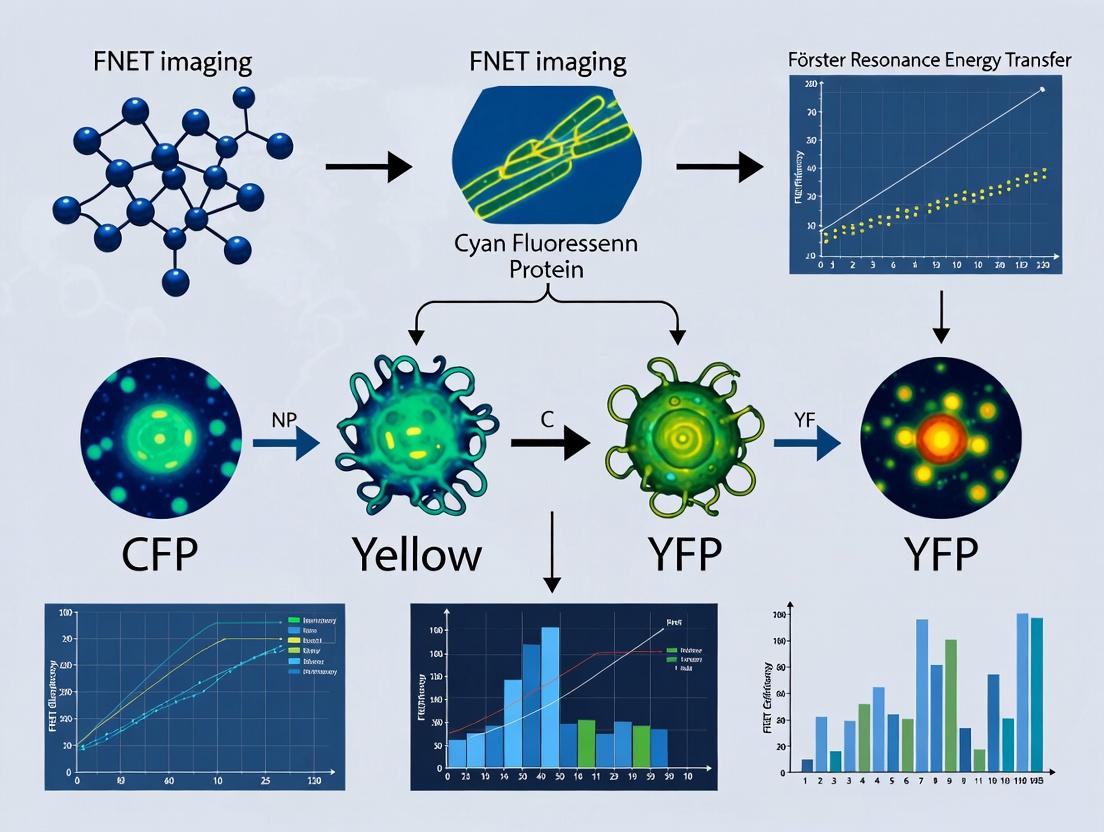
This definitive guide provides biomedical researchers and drug development professionals with a comprehensive framework for implementing and optimizing FRET (Förster Resonance Energy Transfer) imaging using CFP (Cyan Fluorescent Protein) and...
Mastering FRET Imaging with CFP-YFP Pairs: A Comprehensive Guide for Biomedical Research and Drug Discovery
Abstract
This definitive guide provides biomedical researchers and drug development professionals with a comprehensive framework for implementing and optimizing FRET (Förster Resonance Energy Transfer) imaging using CFP (Cyan Fluorescent Protein) and YFP (Yellow Fluorescent Protein) pairs. Covering foundational principles, practical methodologies, advanced troubleshooting, and comparative validation strategies, this article synthesizes current best practices to enable robust, quantitative analysis of protein-protein interactions, conformational changes, and cellular signaling events in living systems for therapeutic development.
CFP-YFP FRET Fundamentals: Understanding the Principles and Potential for Live-Cell Interaction Studies
Förster Resonance Energy Transfer (FRET) between Cyan and Yellow Fluorescent Proteins (CFP and YFP) is a cornerstone technique in molecular and cellular biology, enabling the real-time monitoring of protein-protein interactions, conformational changes, and biochemical events within living cells. Within the broader thesis on FRET imaging, this application note details the physical mechanism, quantitative parameters, and practical protocols for implementing CFP-YFP FRET assays, providing a foundational framework for researchers in drug development and biosciences.
The FRET Mechanism: Quantitative Foundations
FRET efficiency (E) is the probability of energy transfer from an excited donor (CFP) to an acceptor (YFP) and is governed by the Förster equation:
E = 1 / [1 + (r/R₀)^6]
Where r is the distance between donor and acceptor, and R₀ is the Förster distance at which transfer efficiency is 50%.
Table 1: Key Photophysical Parameters for CFP and YFP FRET Pair
| Parameter | CFP (Donor) | YFP (Acceptor) | Notes/Source |
|---|---|---|---|
| Excitation Peak (nm) | 433-458 | 514 | Primary excitation maxima |
| Emission Peak (nm) | 470-500 | 527-535 | |
| Extinction Coefficient (M⁻¹cm⁻¹) | ~43,000 | ~83,400 | Matured protein values |
| Quantum Yield (Φ) | 0.40 | 0.61 | Critical for R₀ calculation |
| Fluorescence Lifetime (ns) | ~2.7-3.1 | ~3.0-3.2 | Can be used for FLIM-FRET |
| Förster Distance, R₀ (Å) | 49 - 52 | Calculated for the pair; depends on spectral overlap | |
| Spectral Overlap Integral, J(λ) (M⁻¹cm⁻¹nm⁴) | (3.0 - 3.3) x 10¹⁵ | Defines dipole-dipole coupling strength |
Table 2: Measurable FRET Signals and Their Interpretation
| Signal Type | Measurement Method | High FRET Indicates | Low/No FRET Indicates |
|---|---|---|---|
| Acceptor Sensitized Emission | Donor excitation, Acceptor emission | Close proximity (<10 nm) & proper orientation | Distance > R₀, no interaction, poor orientation |
| Donor Quenching | Decrease in donor fluorescence intensity or lifetime | Energy transfer to acceptor | Lack of energy transfer |
| Acceptor Photobleaching | Increase in donor fluorescence after bleaching acceptor | Reversible quenching was due to FRET | Donor quenching was not FRET-based |
| Fluorescence Lifetime (FLIM) | Decrease in donor fluorescence lifetime | Energy transfer pathway exists | Donor is in a non-transferring state |
Diagram 1: CFP-YFP FRET Mechanism Logic Flow
Experimental Protocols
Protocol 1: Basic FRET Imaging in Live Cells using Filter-Based Microscopy (Acceptor Sensitized Emission)
This protocol quantifies protein-protein interactions via sensitized emission of YFP upon CFP excitation.
A. Materials & Reagent Preparation
- Plasmids: pECFP-C1 (donor), pEYFP-C1 (acceptor), and pECFP-pEYFP tandem construct (positive control).
- Cells: HEK293 or HeLa cells.
- Imaging Medium: Phenol red-free DMEM with 25mM HEPES.
- Transfection Reagent: Polyethylenimine (PEI) or Lipofectamine 3000.
- Imaging Dishes: Glass-bottom 35mm dishes, coated with poly-L-lysine.
B. Procedure
- Transfection: Co-transfect cells with CFP- and YFP-tagged protein constructs of interest. Include controls: donor-only, acceptor-only, and the CFP-YFP tandem construct.
- Expression: Incubate for 24-48 hours for optimal expression.
- Microscope Setup: Use an inverted epifluorescence or confocal microscope with the following filter sets:
- Donor Channel (CFP): Ex 430-460 nm / Em 470-500 nm.
- Acceptor Channel (YFP): Ex 490-510 nm / Em 520-550 nm.
- FRET Channel: Ex 430-460 nm / Em 520-550 nm.
- Image Acquisition:
- Maintain cells at 37°C/5% CO₂.
- Acquire sequential images in the three channels with identical exposure times and minimal illumination to avoid photobleaching.
- Acquire images from control samples first to set parameters and for correction calculations.
- Image Analysis & Correction: Process images using software (e.g., ImageJ/Fiji, Metamorph). Calculate the corrected FRET (NFRET) using the formula:
NFRET = (I_FRET - a * I_CFP - b * I_YFP) / sqrt(I_CFP * I_YFP)WhereI_FRET,I_CFP,I_YFPare raw intensities, anda(donor bleed-through) andb(acceptor cross-excitation) are correction factors derived from donor-only and acceptor-only samples.
Protocol 2: Acceptor Photobleaching FRET Assay
This protocol confirms FRET by observing an increase in donor fluorescence after selectively destroying the acceptor.
A. Materials: As per Protocol 1. B. Procedure:
- Pre-bleach Acquisition: Image a region of interest (ROI) in the donor (CFP) and acceptor (YFP) channels.
- Acceptor Photobleaching: Using high-intensity 514 nm light, bleach the YFP signal in the ROI until fluorescence decreases by 60-80%. Avoid bleaching the donor.
- Post-bleach Acquisition: Re-image the same ROI in the donor channel using identical settings.
- Analysis: Calculate FRET efficiency
Efrom the donor dequenching:E = 1 - (CFP_pre-bleach / CFP_post-bleach)A significant increase in CFP intensity post-bleach indicates FRET was occurring.
Protocol 3: Fluorescence Lifetime Imaging Microscopy (FLIM-FRET)
This gold-standard protocol measures the decrease in donor (CFP) fluorescence lifetime due to FRET.
A. Materials: Requires a time-correlated single-photon counting (TCSPC) confocal microscope system. B. Procedure:
- Sample Preparation: As per Protocol 1.
- Lifetime Acquisition: Excite CFP with a pulsed laser (e.g., 440 nm). Acquire lifetime decay curves for each pixel in the image from donor-only and experimental samples.
- Analysis: Fit decay curves to a multi-exponential model. Calculate the average lifetime (τ). FRET efficiency is calculated as:
E = 1 - (τ_DA / τ_D)Whereτ_DAis the lifetime of the donor in the presence of the acceptor, andτ_Dis the lifetime of the donor alone.
The Scientist's Toolkit: Essential Research Reagents & Materials
Table 3: Key Research Reagent Solutions for CFP-YFP FRET Imaging
| Item | Function/Application | Example/Notes |
|---|---|---|
| pECFP-C1 & pEYFP-C1 Vectors | Cloning and expression of proteins of interest as CFP/YFP fusions. | From Clontech/Takara; provide standard spectral properties. |
| FRET Positive Control Plasmid | Tandem CFP-linker-YFP construct. | Validates microscope setup and analysis; provides known high-FRET signal. |
| Poly-L-Lysine Solution | Coats glass-bottom dishes for improved cell adhesion. | Essential for stable imaging. |
| Phenol Red-Free Cell Culture Medium | Live-cell imaging medium. | Reduces autofluorescence background. |
| Lipofectamine 3000 Transfection Reagent | Efficient delivery of plasmid DNA into mammalian cells. | For consistent, moderate expression levels critical for FRET. |
| HEK293T Cell Line | Model cell line with high transfection efficiency. | Widely used for proof-of-concept FRET experiments. |
| Mounting Medium with DAPI | For fixed-cell FRET samples. | Contains antifade agents to preserve fluorescence. |
| FRET Analysis Software (e.g., PixFRET, Fiji FRET plugins) | Image processing, correction factor calculation, and FRET index computation. | Automates complex calculations and reduces user bias. |
Diagram 2: CFP-YFP FRET Experimental Workflow
Historical Context
The development of genetically encoded fluorescent proteins (FPs) revolutionized live-cell imaging. Following the cloning of Green Fluorescent Protein (GFP), the first engineered color variants emerged in the mid-1990s. Cyan (CFP) and Yellow (YFP) mutants were among the earliest spectrally distinct FPs derived from Aequorea victoria GFP. Their spectral profiles—CFP as a donor with emission overlapping YFP’s absorption—made them a natural candidate for Förster Resonance Energy Transfer (FRET) detection. The pair gained seminal status in the early 2000s with the creation of optimized, FRET-specialized variants like enhanced CFP (ECFP) and Venus (a fast-maturing YFP), and the design of unimolecular FRET-based biosensors (e.g., Cameleons for calcium). This established CFP-YFP as the prototypical FRET pair for genetically encoded reporters of protein-protein interactions and second-messenger dynamics.
Enduring Advantages
Despite the proliferation of newer FPs (e.g., mCerulean/mCitrine, GFP/RFP pairs), CFP-YFP retains specific, compelling advantages:
- Well-Characterized: Their photophysics, maturation times, and dimerization tendencies are extensively documented, reducing experimental uncertainty.
- Optimal Spectral Overlap: The spectral overlap integral for CFP-YFP is near-ideal for FRET, providing a strong Förster radius (R0 ~4.7-5.2 nm).
- Biosensor Legacy: A vast repository of validated, published biosensors (for Ca²⁺, cAMP, kinases, GTPases) is built on this pair, facilitating direct comparison to prior work.
- Instrument Compatibility: Their excitation/emission peaks align with standard FITC/CFP/YFP filter sets on most fluorescence microscopes and plate readers.
Table 1: Key Spectral and Photophysical Properties of Common CFP-YFP Variants
| Property | ECFP | Cerulean | Venus | Citrine |
|---|---|---|---|---|
| Excitation Peak (nm) | 434 | 433 | 515 | 516 |
| Emission Peak (nm) | 477 | 475 | 528 | 529 |
| Extinction Coefficient (M⁻¹cm⁻¹) | 32,500 | 43,000 | 92,200 | 77,000 |
| Quantum Yield | 0.40 | 0.62 | 0.57 | 0.76 |
| Brightness (% of EGFP) | 39 | 79 | 153 | 159 |
| Maturation t½ (37°C) | ~30 min | ~15 min | ~15 min | ~15 min |
| pKa | 4.7 | 4.7 | 6.0 | 5.7 |
| Notes | First-gen standard | Brighter, less pH-sensitive | Fast maturation, chloride insensitive | Reduced pH sensitivity |
Application Notes & Protocols
Protocol 1: Live-Cell FRET Imaging for a Generic CFP-YFP Biosensor
Objective: To measure FRET efficiency in cells expressing a unimolecular CFP-YFP biosensor (e.g., a Cameleon or kinase activity reporter).
I. Research Reagent Solutions & Materials
| Item | Function & Specification |
|---|---|
| Plasmid DNA | CFP-YFP FRET biosensor of interest (e.g., AKAR3 for PKA). |
| Transfection Reagent | Polyethylenimine (PEI) or Lipofectamine 3000 for mammalian cells. |
| Imaging Medium | HEPES-buffered, phenol-red-free medium, with or without serum. |
| Imaging Chamber | 35 mm glass-bottom dish or chambered coverglass. |
| Microscope System | Inverted epifluorescence or confocal microscope with: 1) 440 nm laser or LED, 2) Dual-emission filters: CFP (470-500 nm) & YFP (520-550 nm), 3) 40x or 60x oil-immersion objective. |
| Image Analysis Software | Fiji/ImageJ with FRET analysis plugins (e.g., PixFRET) or custom Matlab/Python scripts. |
II. Detailed Workflow
- Cell Preparation: Seed appropriate cells (e.g., HEK293, HeLa) in the imaging chamber 24-48h prior. Transfect at 60-80% confluency using manufacturer’s protocol.
- Expression Optimization: Image 24-48h post-transfection. Seek cells with moderate, uniform expression. High expression can cause artifactually low FRET due to non-specific crowding.
- Microscope Setup: Use a donor (CFP) excitation source (e.g., 440 nm). Configure sequential acquisition through two emission channels: CFP channel (donor emission, e.g., 470-500 nm) and FRET channel (acceptor emission, e.g., 520-550 nm).
- Image Acquisition: Maintain environmental control (37°C, 5% CO₂). Acquire time-lapse images with minimal exposure time/laser power to limit photobleaching. Include positive (saturated biosensor) and negative (CFP-only) control cells in the same experiment.
- Image Processing & Ratio Calculation:
- Background Subtraction: Subtract background intensity from a cell-free region.
- Calculate FRET Ratio (R): For each pixel or cell ROI, compute R = Intensity(FRET channel) / Intensity(CFP channel). This ratio increases with FRET efficiency.
- Correction for Bleed-Through (Critical): Acquire images from CFP-only and YFP-only cells to determine spectral bleed-through coefficients. Apply correction: Corrected FRET = I(FRET) - A * I(CFP) - B * I(YFP), where A and B are bleed-through constants.
- Normalization: Express data as ΔR/R0 or as a FRET efficiency (E) calculated from donor quenching if a fully saturated/unsaturated state can be defined.
Protocol 2: Acceptor Photobleaching FRET Assay
Objective: To directly quantify FRET efficiency by measuring donor dequenching after selective destruction of the acceptor.
- Prepare and Image: Prepare cells co-expressing CFP- and YFP-tagged proteins of interest. Capture a pre-bleach image set (CFP and YFP channels).
- Define ROI: Select a region containing both fluorophores.
- Bleach Acceptor: Illuminate the ROI with high-intensity light at YFP's excitation peak (e.g., 515 nm) for 30-60 seconds until YFP fluorescence is >70% depleted.
- Acquire Post-Bleach Image: Immediately capture a post-bleach image set using the same settings.
- Calculate FRET Efficiency (E): Measure donor (CFP) intensity in the bleached ROI before (Ipre) and after (Ipost) bleaching. Calculate: E = 1 - (Ipre / Ipost). A significant increase in CFP intensity post-bleach indicates FRET.
Visualizations
CFP-YFP Development & FRET Pair Genesis
Acceptor Photobleaching FRET Protocol
CFP-YFP Biosensor Signaling Logic
Application Notes and Protocols
Within the broader thesis on FRET imaging using CFP (Donor) and YFP (Acceptor) fluorescent proteins, this document provides essential methodologies for answering fundamental biological questions. FRET efficiency serves as a sensitive molecular ruler, reporting on interactions and conformational changes in the 1-10 nm range.
Protocol 1: Detecting Dynamic Protein-Protein Interactions (PPIs) in Live Cells
Objective: To quantify the real-time interaction between two putative binding partners, Protein A and Protein B.
Research Reagent Solutions:
| Reagent/Material | Function in Experiment |
|---|---|
| pCFP-Protein A Plasmid | Encodes the donor fluorophore (CFP) fused to the bait protein. |
| pYFP-Protein B Plasmid | Encodes the acceptor fluorophore (YFP) fused to the prey protein. |
| Lipofectamine 3000 Transfection Reagent | Delivers plasmid DNA into mammalian cells for transient expression. |
| Live-Cell Imaging Chamber | Maintains cells at 37°C and 5% CO₂ during microscopy. |
| FRET-positive control plasmid (e.g., CFP-YFP tandem dimer) | Provides a reference for maximum FRET efficiency. |
| FRET-negative control plasmid (e.g., CFP + YFP, unfused) | Provides a baseline for minimal FRET. |
| Phosphate-Buffered Saline (PBS) | For washing cells and reagent dilution. |
Methodology:
- Construct Preparation: Clone genes of interest into pCFP-C1 and pYFP-N1 vectors (or analogous), ensuring in-frame fusions.
- Cell Seeding & Transfection: Seed HeLa or HEK293 cells onto 35-mm glass-bottom dishes. At 60-70% confluency, co-transfect with 0.5 µg each of pCFP-Protein A and pYFP-Protein B plasmids using Lipofectamine 3000 per manufacturer's protocol. Include positive and negative controls.
- Expression: Incubate cells for 24-48 hours to allow for protein expression.
- Image Acquisition (Sensitized Emission Method): Acquire three sequential images using appropriate filter sets on a widefield or confocal microscope:
- Donor Channel (CFP): Excite at 433-455 nm, collect emission at 470-500 nm.
- FRET Channel: Excite at 433-455 nm, collect emission at 525-550 nm (YFP emission).
- Acceptor Channel (YFP): Excite at 500-520 nm, collect emission at 525-550 nm.
- Image Analysis & FRET Efficiency Calculation:
- Apply background subtraction and flat-field correction.
- Calculate corrected FRET (FRETC) using the formula: FRETC = IFRET - (a * IDonor) - (b * IAcceptor), where
aandbare spectral bleed-through coefficients determined from control cells. - Calculate FRET efficiency on a pixel-by-pixel basis: E = FRETC / (FRETC + G * IDonor), where
Gis an instrument calibration factor.
Quantitative Data Summary (Representative Experiment):
Table 1: FRET Efficiency for Protein-Protein Interaction Assay
| Sample (Co-transfection) | Average FRET Efficiency (E) ± SD | N (cells measured) | Interpretation |
|---|---|---|---|
| CFP-Protein A + YFP-Protein B | 0.18 ± 0.03 | 25 | Positive interaction |
| CFP + YFP (unfused) | 0.05 ± 0.02 | 25 | Baseline auto-FRET |
| CFP-YFP Tandem (linked) | 0.35 ± 0.04 | 25 | Maximum FRET reference |
Protocol 2: Measuring Real-Time Protease Activity via FRET-Based Sensor Cleavage
Objective: To visualize and quantify spatiotemporal protease activity in live cells using a cleavable FRET sensor.
Research Reagent Solutions:
| Reagent/Material | Function in Experiment |
|---|---|
| FRET Protease Sensor Plasmid (e.g., CFP-linker-YFP) | Encodes a substrate peptide linker specific to the target protease, flanked by CFP and YFP. |
| Protease Inhibitor (specific) | Serves as a negative control to abolish signal. |
| Protease Activator (e.g., drug, cytokine) | Induces cellular protease activity for kinetic measurements. |
| Cell-Permeable Calpain/Caspase Activator | Positive control for apoptosis-associated proteases. |
| Hanks' Balanced Salt Solution (HBSS) | For live-cell imaging in a physiological buffer. |
Methodology:
- Sensor Expression: Transfect cells with the CFP-linkerprotease site-YFP sensor construct as in Protocol 1.
- Baseline Acquisition: Acquire donor (CFP), FRET, and acceptor (YFP) channel images to establish baseline FRET.
- Experimental Perturbation: Add the protease activator or inhibitor directly to the imaging medium.
- Time-Lapse Imaging: Acquire the three-channel image set at 2-5 minute intervals for 1-2 hours.
- Data Analysis:
- Calculate the FRET/CFP or FRET/YFP ratio over time, as cleavage reduces FRET and increases donor (CFP) intensity.
- Plot the ratio versus time. A decrease indicates protease activity.
- Determine the cleavage rate from the initial slope of the ratio change.
Quantitative Data Summary (Representative Experiment):
Table 2: Kinetics of Caspase-3 Activity Measured by FRET Sensor Cleavage
| Condition | Initial FRET/CFP Ratio | Final FRET/CFP Ratio (at 60 min) | Cleavage Rate (ΔRatio/min) | % FRET Loss |
|---|---|---|---|---|
| Untreated Control | 1.50 ± 0.10 | 1.45 ± 0.12 | -0.001 | 3.3% |
| + Apoptosis Inducer | 1.52 ± 0.08 | 0.55 ± 0.15 | -0.016 | 63.8% |
| + Inducer + Caspase Inhibitor | 1.49 ± 0.09 | 1.40 ± 0.11 | -0.002 | 6.0% |
Visualization of Signaling Pathways and Workflows
Diagram 1: Comparative FRET Assay Workflows
Diagram 2: Protease Sensor FRET Principle
Förster Resonance Energy Transfer (FRET) imaging with Cyan and Yellow Fluorescent Proteins (CFP and YFP) is a cornerstone technique in modern cell biology and drug development. It enables the visualization of protein-protein interactions, conformational changes, and molecular signaling events in living cells with high spatial and temporal resolution. The efficiency of this non-radiative energy transfer is governed by fundamental photophysical parameters: the spectral overlap integral (J), the Förster distance (R₀), and the orientation factor (κ²). A precise understanding of these parameters is critical for designing robust biosensors, validating interactions, and accurately quantifying FRET data within the context of our broader thesis on developing quantitative FRET-based cellular assays.
Core Principles and Quantitative Data
Spectral Overlap Integral (J)
The spectral overlap integral quantifies the resonance condition between the donor emission and the acceptor absorption. It is calculated as: J = ∫ FD(λ) εA(λ) λ⁴ dλ where FD(λ) is the normalized donor emission spectrum, εA(λ) is the acceptor molar extinction coefficient (M⁻¹cm⁻¹), and λ is the wavelength.
Table 1: Spectral Overlap for Common FRET Pairs
| FRET Pair (Donor-Acceptor) | Peak Donor Emission (nm) | Peak Acceptor Absorption (nm) | Spectral Overlap, J (M⁻¹cm⁻¹nm⁴) | Reference |
|---|---|---|---|---|
| ECFP - EYFP | 475 | 514 | ~3.4 x 10¹⁵ | 1,2 |
| Cerulean - Venus | 475 | 515 | ~4.3 x 10¹⁵ | 3 |
| mTurquoise - SYFP2 | 474 | 515 | ~4.7 x 10¹⁵ | 4 |
| ECFP - mCherry | 475 | 587 | ~8.0 x 10¹⁴ | 5 |
Förster Distance (R₀)
The Förster distance (R₀) is the donor-acceptor separation at which FRET efficiency is 50%. It depends on the spectral overlap (J), the donor's quantum yield (ΦD), the acceptor's extinction coefficient (εA), and the orientation factor (κ²). R₀ = 0.0211 (κ² Φ_D J n⁻⁴)^{1/6} (in Å, where n is the refractive index).
Table 2: Calculated Förster Distances (R₀) for CFP-YFP Variants (n=1.33, κ²=2/3)
| FRET Pair | Donor Quantum Yield (Φ_D) | Acceptor Extinction Coefficient ε_A (M⁻¹cm⁻¹) | R₀ (Å) | R₀ (nm) |
|---|---|---|---|---|
| ECFP - EYFP | 0.40 | 83,400 | 49.2 | 4.92 |
| Cerulean - Venus | 0.62 | 92,200 | 54.1 | 5.41 |
| mTurquoise2 - cpVenus | 0.93 | 101,000 | 60.3 | 6.03 |
Orientation Factor (κ²)
κ² describes the relative orientation of the donor emission dipole and the acceptor absorption dipole: κ² = (cos θT - 3 cos θD cos θA)², where θT is the angle between dipoles, and θ_D/A are angles to the separation vector. The dynamic average in solution is often assumed to be 2/3.
Table 3: Impact of Orientation Factor on R₀
| Dipole Orientation Scenario | κ² Value | Effect on Calculated R₀ (vs. κ²=2/3) | Notes for CFP-YFP FPs |
|---|---|---|---|
| Dynamic, isotropic rotation | 2/3 | Reference value | Typical assumed value |
| Parallel, aligned | 4 | Increases by ~1.41x | Constrained linkers |
| Perpendicular | 0 | Reduces to 0 (No FRET) | Fixed, unfavorable fusion |
| Head-to-tail collinear | 1 | Decreases by ~0.91x | Rigid helix fusion |
Experimental Protocols
Protocol 1: Measuring Spectral Overlap for a Novel CFP-YFP Biosensor
Objective: To determine the spectral overlap integral (J) for a newly engineered CFP-YFP FRET biosensor in vitro. Materials: Purified biosensor protein, phosphate-buffered saline (PBS, pH 7.4), fluorometer with excitation monochromator. Procedure:
- Donor Emission Scan: Dilute the biosensor to an optical density <0.1 at 434 nm (CFP excitation). Excite at 434 nm with a 5 nm bandwidth. Record the emission spectrum from 450 nm to 600 nm with a 2 nm step size. Normalize this spectrum to an area of 1 (F_D(λ)).
- Acceptor Absorption Scan: Using the same sample, record the absorption spectrum from 400 nm to 600 nm. Convert absorbance to molar extinction coefficient ε_A(λ) using the known protein concentration.
- Data Calculation: For each wavelength λ in the overlap region (typically 460-520 nm for CFP-YFP), compute FD(λ) εA(λ) λ⁴. Integrate across the range using the trapezoidal rule to obtain J (units: M⁻¹cm⁻¹nm⁴).
Protocol 2: Determining R₀ via Acceptor Photobleaching FRET Microscopy
Objective: To empirically determine the Förster distance for a CFP-YFP pair in a cellular context. Materials: Cells expressing the FRET construct, fixed on a glass-bottom dish. Epifluorescence or confocal microscope with a 405 nm laser, 458/514 nm filter sets, and controlled acceptor photobleaching capability. Procedure:
- Image Pre-bleach: Acquire donor (CFP) and acceptor (YFP) channel images under low illumination to minimize bleaching. Calculate the initial donor intensity (IDpre) in the region of interest (ROI).
- Acceptor Photobleaching: Select the ROI and bleach the acceptor (YFP) using high-intensity 514 nm illumination until >90% of YFP fluorescence is depleted. Ensure no bleaching of CFP by monitoring the CFP channel.
- Image Post-bleach: Acquire donor channel image again under identical settings. Measure the donor intensity after bleaching (IDpost).
- Calculate FRET Efficiency (E): E = 1 - (IDpre / IDpost).
- Determine Distance (r): If the molecular structure provides an expected separation distance r (e.g., from linker length), calculate R₀ using: R₀ = r ( (1/E) - 1 )^{-1/6}. Alternatively, if E is known from independent measurements, R₀ can be back-calculated for a given r.
Protocol 3: Assessing the Validity of the κ²=2/3 Assumption via Time-Resolved Anisotropy
Objective: To evaluate donor and acceptor rotational freedom in a live-cell FRET experiment. Materials: Cells expressing the donor-only (CFP) construct and the full FRET biosensor. Time-correlated single photon counting (TCSPC) fluorescence lifetime system with polarizers. Procedure:
- Measure Donor Anisotropy: For cells expressing donor-only CFP, measure fluorescence lifetime decays in parallel (I∥(t)) and perpendicular (I⊥(t)) polarization orientations. Calculate the anisotropy decay r(t) = (I∥(t) - I⊥(t)) / (I∥(t) + 2I⊥(t)).
- Determine Rotational Correlation Time (φ): Fit r(t) to a model (e.g., single exponential: r(t) = r0 exp(-t/φ)). A short φ (ns range) compared to the donor lifetime (τD ~2.5-3 ns for CFP) indicates rapid, isotropic rotation, supporting the κ²=2/3 assumption.
- Measure FRET Sample Anisotropy: Repeat for the full CFP-YFP biosensor. A significantly altered or non-decaying anisotropy suggests constrained dipole orientations, warning that κ² may deviate from 2/3.
Diagrams and Workflows
Title: FRET Photophysics Drives CFP-YFP Signal
Title: Experimental Pipeline for FRET Parameterization
The Scientist's Toolkit: Research Reagent Solutions
Table 4: Essential Materials for CFP-YFP FRET Research
| Item | Function in FRET Research | Example/Notes |
|---|---|---|
| Plasmid Vectors: pFRET-based or pcDNA3.1 with CFP/YFP fusions | Expression of donor, acceptor, or biosensor constructs in mammalian cells. | Clontech's pECFP/pEYFP vectors; Addgene biosensors (e.g., AKAR, Cameleon). |
| Cell Line: HEK293T or HeLa | Robust, easily transfected cells for preliminary biosensor characterization. | Ensure low autofluorescence in CFP/YFP channels. |
| Transfection Reagent: Polyethylenimine (PEI) or Lipofectamine 3000 | Efficient delivery of plasmid DNA into cells for transient expression. | PEI is cost-effective for high-throughput; Lipofectamine for sensitive cells. |
| Imaging Medium: Phenol-red free DMEM with HEPES | Maintains pH during microscopy without interfering fluorescence. | Reduces background fluorescence for sensitive detection. |
| Microscope System: Widefield/Confocal with FRET filter sets | Image acquisition. Requires CFP ex/em, YFP ex/em, and FRET (CFP ex/YFP em) channels. | Filter sets: CFP (Ex436/Em480), FRET (Ex436/Em535), YFP (Ex500/Em535). |
| Acceptor Photobleaching Module | Integrated microscope tool for Protocol 2, enabling controlled YFP bleaching. | Often part of advanced FRET software packages (e.g., Zen, Metamorph). |
| Fluorometer with Polarizers | For in vitro spectral scans (Protocol 1) and anisotropy measurements (Protocol 3). | Requires temperature control and cuvette format for purified protein work. |
| Fluorescence Lifetime System (TCSPC) | Gold-standard for measuring donor lifetime decay and anisotropy decay for κ² assessment. | Essential for rigorous photophysical characterization beyond intensity-based FRET. |
| Analysis Software: FLII/ImageJ with FRET plugins, OriginPro | For calculating FRET efficiency, spectral overlap integrals, and fitting decay curves. | FRETcalc, Acceptor Photobleaching plugins; necessary for quantitative analysis. |
Application Notes
Fluorescence Resonance Energy Transfer (FRET) imaging is a powerful tool for quantifying molecular interactions and conformational changes in live cells. Within the context of CFP (Cyan Fluorescent Protein) and YFP (Yellow Fluorescent Protein) research, three primary modalities are employed, each with distinct advantages and limitations for drug development and mechanistic studies.
- Acceptor Photobleaching FRET: This method quantifies FRET efficiency by comparing donor (CFP) fluorescence intensity before and after selective and permanent photodestruction of the acceptor (YFP). An increase in donor fluorescence post-bleaching confirms FRET. It is a robust, intensity-based ratiometric method but is endpoint and destructive.
- Sensitized Emission FRET: This modality measures the direct emission from the excited acceptor (YFP) due to energy transfer from the donor (CFP). It allows for real-time, live-cell kinetic studies of protein-protein interactions. However, it requires meticulous correction for spectral bleed-through (SBT) and cross-excitation.
- FLIM-FRET (Fluorescence Lifetime Imaging Microscopy FRET): This technique measures the reduction in the fluorescence lifetime of the donor (CFP) in the presence of the acceptor (YFP). The lifetime is an intrinsic property, making FLIM-FRET independent of fluorophore concentration, excitation light path fluctuations, and acceptor photobleaching. It is considered the most quantitative modality but requires specialized, often slower, acquisition systems.
Comparative Quantitative Data Summary
Table 1: Comparison of Key FRET Modalities for CFP/YFP
| Parameter | Acceptor Photobleaching | Sensitized Emission | FLIM-FRET |
|---|---|---|---|
| Measured Signal | Donor (CFP) intensity change | Acceptor (YFP) sensitized emission | Donor (CFP) fluorescence lifetime (τ) |
| FRET Readout | Efficiency (E) | FRET Index or Corrected Ratio | Donor lifetime decrease (τD - τDA) |
| Live-Cell Kinetics | No (destructive) | Yes | Yes |
| Quantitation | Good | Moderate (requires correction) | Excellent (gold standard) |
| Key Artifacts | Incomplete bleaching, donor bleaching | Spectral bleed-through | Acceptor photoswitching, complex analysis |
| Throughput | Medium | High | Low to Medium |
| Instrument Cost | Moderate | Moderate | High |
Table 2: Typical CFP/YFP Photophysical Properties for FRET Calculations
| Fluorophore | Excitation Max (nm) | Emission Max (nm) | Extinction Coefficient (M⁻¹cm⁻¹) | Quantum Yield | Notes for FRET |
|---|---|---|---|---|---|
| CFP (Donor) | ~434 | ~474 | ~43,000 | ~0.40 | Prone to photobleaching; biexponential lifetime. |
| YFP (Acceptor) | ~514 | ~527 | ~83,400 | ~0.61 | pH sensitive; can be directly excited at ~440 nm. |
| CFP-YFP Pair | Förster Radius (R₀) | ~4.9 - 5.2 nm | Spectral Overlap Integral (J) | ~1.1 x 10¹⁵ M⁻¹cm⁻¹nm⁴ | Optimal for intracellular biosensors. |
Experimental Protocols
Protocol 1: Acceptor Photobleaching FRET for Validating CFP-YFP Fusion Protein Interaction Objective: To measure the fixed-endpoint FRET efficiency between CFP- and YFP-tagged proteins of interest. Materials: See The Scientist's Toolkit below.
- Sample Prep: Seed cells expressing CFP- and YFP-fusion constructs (test, donor-only, acceptor-only controls) on glass-bottom dishes.
- Image Acquisition: Using a confocal microscope with a 458 nm laser line and appropriate filters:
- Acquire a pre-bleach donor (CFP) channel image (emission: 460-500 nm).
- Acquire a pre-bleach acceptor (YFP) channel image (excitation: 514 nm, emission: 525-550 nm).
- Region of Interest (ROI) Selection: Define an ROI encompassing a region of high acceptor expression.
- Acceptor Photobleaching: Bleach the YFP in the selected ROI using high-intensity 514 nm laser illumination (e.g., 100% laser power, 5-30 iterations).
- Post-bleach Acquisition: Re-acquire donor and acceptor channel images under identical pre-bleach settings.
- Analysis: Quantify mean CFP intensity in the bleached ROI pre- (IDpre) and post-bleach (IDpost). Calculate apparent FRET efficiency: Eapp = 1 – (IDpre / ID_post). Correct using donor-only and acceptor-only controls for background and crosstalk.
Protocol 2: Corrected Sensitized Emission FRET for Live-Cell Kinetics Objective: To monitor real-time interaction dynamics between CFP- and YFP-tagged proteins.
- Microscope Setup: Configure sequential laser line scanning (458 nm for CFP, 514 nm for YFP). Establish three emission channels:
- Donor (CFP) Channel: 458 nm ex / 460-500 nm em.
- FRET (Sensitized Emission) Channel: 458 nm ex / 525-550 nm em.
- Acceptor (YFP) Channel: 514 nm ex / 525-550 nm em.
- Control Sample Imaging: Image cells expressing only CFP-donor and only YFP-acceptor to acquire spectral bleed-through coefficients (a: donor bleed-through into FRET channel; b: acceptor cross-excitation).
- Experimental Sample Imaging: Acquire time-lapse images of co-expressing cells in all three channels.
- Pixel-by-Pixel Correction: Apply the formula: Corrected FRET = IFRET – (a * ICFP) – (b * IYFP), where I denotes intensity from the respective channels. Calculate a normalized FRET ratio (e.g., Corrected FRET / IYFP or I_CFP).
Protocol 3: FLIM-FRET Measurement of CFP Lifetime Objective: To obtain quantitative, concentration-independent FRET efficiency from CFP-fusion constructs.
- System Calibration: Calibrate the time-correlated single-photon counting (TCSPC) or frequency-domain FLIM system using a reference standard with a known lifetime.
- Lifetime Image Acquisition: Excite the sample with a pulsed or modulated 440-458 nm laser. Acquire donor (CFP) lifetime decay curves for each pixel in cells expressing: a) CFP-donor alone, b) CFP-YFP fusion (positive control), c) experimental CFP/YFP pair.
- Data Fitting: Fit the fluorescence decay curves per pixel, typically to a biexponential model for CFP: I(t) = α₁ exp(-t/τ₁) + α₂ exp(-t/τ₂). Calculate the amplitude-weighted average lifetime: τ_avg = (α₁τ₁ + α₂τ₂).
- FRET Efficiency Calculation: Calculate FRET efficiency: E = 1 – (τDA / τD), where τDA is the average donor lifetime in the presence of acceptor, and τD is the average donor lifetime alone.
Visualizations
Diagram Title: Decision Flow for Selecting a FRET Modality
Diagram Title: Sensitized Emission FRET Correction Workflow
The Scientist's Toolkit
Table 3: Essential Research Reagent Solutions for CFP/YFP FRET Imaging
| Item | Function/Description | Example/Notes |
|---|---|---|
| CFP/YFP Fusion Constructs | Donor and acceptor-tagged proteins of interest. | pcDNA3.1-CFP, pEYFP vectors; linked CFP-YFP as positive control. |
| Live-Cell Imaging Medium | Phenol-red free medium for reduced background fluorescence. | Leibovitz's L-15 or FluoroBrite DMEM. |
| High-Quality Glass-bottom Dishes | Provide optimal optical clarity for high-resolution microscopy. | No. 1.5 cover glass thickness (0.17 mm). |
| Transfection Reagent | For introducing plasmid DNA into mammalian cells. | Polyethylenimine (PEI), Lipofectamine 3000. |
| Immersion Oil | Matches refractive index of glass for objective lens. | Type FF (for 37°C live-cell work). |
| Fluorescent Bead Standards | For aligning microscope channels and testing system performance. | Multispectral or TetraSpeck beads. |
| Lifetime Reference Standard | For calibrating and verifying FLIM system performance. | e.g., Coumarin 6 (lifetime ~2.5 ns). |
Step-by-Step Protocol: Implementing CFP-YFP FRET Imaging from Construct Design to Data Acquisition
Within the broader thesis on Förster Resonance Energy Transfer (FRET) imaging using Cyan and Yellow Fluorescent Proteins (CFP/YFP), the design of the molecular construct is paramount. The efficiency, specificity, and dynamic range of the FRET signal are not solely dictated by the fluorescent protein pair but are critically dependent on the architectural elements that connect them: linkers, tags, and the overall biosensor architecture. This document provides detailed application notes and protocols for designing, constructing, and validating genetically encoded FRET biosensors, with a focus on the canonical "Cameleon" calcium indicator.
Core Architectural Components: Function and Design Principles
Linkers
Linkers are short amino acid sequences that connect protein domains (e.g., CFP to a sensing domain, or the sensing domain to YFP). Their primary role is to ensure proper folding of individual domains while allowing for necessary conformational changes upon analyte binding.
Key Design Considerations:
- Flexibility: Glycine-rich (G) and Serine-rich (S) linkers (e.g., GGGGS) provide high flexibility, suitable for connecting domains that must move relative to each other.
- Rigidity: Alpha-helix-forming linkers (e.g., EAAAK) reduce entropy and can precisely separate domains, potentially increasing the dynamic range by minimizing basal FRET.
- Length: Optimal length is empirically determined but typically ranges from 5 to 25 amino acids. Too short may hinder folding; too long may increase basal FRET.
Tags
Tags are short peptide or protein sequences added to the construct to facilitate purification, detection, or subcellular localization.
Common Tags in FRET Biosensor Development:
- Purification Tags: His₆-tag, GST-tag, MBP-tag.
- Localization Tags: Nuclear Localization Signal (NLS), Nuclear Export Signal (NES), myristoylation/palmitoylation motifs for membrane targeting.
- Epitope Tags: FLAG, HA, c-Myc for immunodetection.
Biosensor Architecture: The Cameleon Paradigm
The "Cameleon" is a prototypical FRET biosensor architecture consisting of CFP and YFP flanking a sensing module. For calcium sensing, the module is Calmodulin (CaM) and the CaM-binding peptide M13. Calcium binding induces CaM to wrap around M13, bringing CFP and YFP closer, thereby increasing FRET efficiency.
Table 1: Common Linker Sequences and Their Properties
| Linker Sequence (AA) | Predicted Structure | Relative Flexibility | Common Application in FRET Biosensors |
|---|---|---|---|
| GGGGS₃ | Extended, unstructured | Very High | General flexible linker between sensor domains and FPs |
| EAAAK₃ | Alpha-helical | Low/Rigid | To reduce basal FRET by maintaining separation |
| PGP | Proline-rich, extended | Moderate | Introduces a stable, semi-rigid turn |
| (SG)₇ | Serine-Glycine repeat | High | Long, protease-resistant flexible linker |
Table 2: Performance Metrics of Representative Cameleon Variants (CFP/YFP-based)
| Biosensor Variant | Kd for Ca²⁺ (nM) | Dynamic Range (ΔR/R₀ %) | Optimal Linker (between CaM & YFP) | Primary Application |
|---|---|---|---|---|
| YC2.1 | ~60 | ~15% | Short (5 aa) | General cytosolic Ca²⁺ |
| YC3.3 | ~100 | ~30% | Modified flexible (GGTGGS) | Cytosolic, improved range |
| YC-Nano | ~15 | ~400% | CPVNG (circular permutant) | High-affinity, very large response |
| D3cpV | ~0.6 (low-aff) ~600 (high-aff) | ~600% | VNG (circular permutant) | Dual-affinity sensor (cameleon-N) |
Experimental Protocols
Protocol 1: Cloning a Novel FRET Biosensor Construct (Golden Gate Assembly)
This protocol details the construction of a new Cameleon variant with custom linkers.
Materials:
- DNA Parts: Entry vectors containing CFP (e.g., mCerulean3), sensing domain(s) (e.g., CaM, M13), YFP (e.g., cpVenus or mCitrine), and chosen linker sequences.
- Enzymes: Type IIS restriction enzyme (e.g., BsaI-HFv2), T4 DNA Ligase.
- Backbone: Destination vector with mammalian promoter (e.g., CMV) and antibiotic resistance.
- Cells: Chemically competent E. coli (DH5α).
Procedure:
- Design & Amplify: Design oligonucleotides encoding your chosen linker. Amplify FP and sensor domains via PCR with overhangs compatible for BsaI-mediated Golden Gate assembly.
- Golden Gate Reaction:
- Set up a 20 µL reaction: 50 ng of each DNA part (CFP-linker1-sensorA-linker2-sensorB-linker3-YFP in correct order), 100 ng destination vector, 1 µL BsaI-HFv2, 1 µL T4 DNA Ligase, 2 µL 10x T4 Ligase Buffer.
- Cycle: (37°C for 5 min, 16°C for 5 min) x 30 cycles, then 50°C for 5 min, 80°C for 10 min.
- Transformation: Transform 2 µL of the reaction into 50 µL competent E. coli. Plate on LB-agar with appropriate antibiotic.
- Screening: Pick colonies, perform colony PCR, and sequence the entire insert to verify assembly and linker sequence.
Protocol 2:In VitroCharacterization of FRET Biosensor (Fluorometer-based)
This protocol measures the purified biosensor's affinity (Kd) and dynamic range.
Materials:
- Purified biosensor protein (from E. coli or HEK293T).
- Spectrofluorometer (e.g., Horiba PTI QuantaMaster).
- Cuvettes.
- Calibration buffers for your analyte (e.g., Ca²⁺-EGTA buffers for precise free [Ca²⁺] from 0 to 39.8 µM).
Procedure:
- Dilution: Dilute purified biosensor to an absorbance of ~0.1 at the CFP excitation maximum (~434 nm) in a low-analyte (zero) buffer.
- Acquisition Settings: Set excitation to 434 nm (8 nm slit). Acquire emission spectra from 450 to 600 nm (4 nm slit).
- Titration: Add small volumes of high-concentration analyte buffer (or buffer with known analyte concentrations) to the cuvette. Mix and incubate 2 min. Record full emission spectrum after each addition.
- Data Analysis:
- Calculate the FRET ratio (R) for each point: Emission intensity at 527 nm (YFP) / Emission intensity at 475 nm (CFP).
- Plot R vs. free analyte concentration ([Analyte]).
- Fit data to the Hill equation: R = Rmin + (Rmax - Rmin) / (1 + (Kd/[Analyte])^n).
- Dynamic Range: Calculate as (Rmax / Rmin) or ΔR/R₀ = (Rmax - Rmin)/Rmin.
Visualization: Pathways and Workflows
Cameleon Calcium Sensor Mechanism
FRET Biosensor Construction and Validation Workflow
The Scientist's Toolkit: Research Reagent Solutions
Table 3: Essential Materials for FRET Biosensor Development
| Item | Example Product/Catalog # | Function in Research |
|---|---|---|
| Fluorescent Protein Plasmids | pRSET-mCerulean3, pmCitrine-N1 | Source of optimized, photostable CFP and YFP variants. |
| Type IIS Restriction Enzyme | BsaI-HFv2 (NEB #R3733) | Enables seamless, scarless Golden Gate assembly of multiple DNA fragments. |
| Mammalian Expression Vector | pcDNA3.1(+) (Thermo Fisher) | Standard backbone for transient or stable expression in mammalian cells for imaging. |
| Competent Cells (Cloning) | NEB 5-alpha (C2987) | High-efficiency E. coli for plasmid assembly and propagation. |
| Competent Cells (Protein Expr.) | BL21(DE3) (C2527) | E. coli strain for high-yield protein expression and purification. |
| Nickel-NTA Agarose | Qiagen #30210 | For immobilization-affinity purification of His-tagged biosensor proteins. |
| Ca²⁺ Calibration Buffer Kit | Invitrogen C3008MP (Calcium Calibration Kit) | Allows generation of precise free [Ca²⁺] for in vitro Kd determination. |
| Lipid Transfection Reagent | Lipofectamine 3000 (Thermo L3000001) | For efficient delivery of biosensor plasmid DNA into mammalian cell lines. |
| Glass-Bottom Imaging Dishes | MatTek P35G-1.5-14-C | Optimal dishes for high-resolution live-cell FRET microscopy. |
Best Practices for Cell Culture, Transfection, and Expression Level Optimization
Application Notes for FRET Imaging with CFP/YFP
Successful FRET (Förster Resonance Energy Transfer) imaging using CFP (Cyan Fluorescent Protein) and YFP (Yellow Fluorescent Protein) pairs is critically dependent on the health of the cell culture, the efficiency of transfection, and the precise optimization of fluorescent protein expression levels. Suboptimal conditions lead to poor signal-to-noise ratios, donor-acceptor stoichiometry imbalance, and false-positive or false-negative FRET signals. These application notes detail the integrated workflow from cell line selection to validated imaging, framed within a thesis focused on quantifying protein-protein interactions in live cells.
Key Considerations:
- Cell Health: Primary artifacts in FRET can arise from changes in cellular pH, metabolic stress, or autofluorescence, all of which are influenced by culture conditions.
- Expression Level: For FRET, a donor-to-acceptor expression ratio near 1:1 is often ideal. Overexpression can lead to non-specific aggregation and aberrant subcellular localization.
- Construct Design: The linker length and flexibility between the protein of interest and the fluorophore (CFP/YFP) significantly impact FRET efficiency. Use standard constructs like CFP/YFP linked by a flexible polypeptide (e.g., (GGGGS)n) for positive controls.
- Photostability: CFP and YFP are susceptible to photobleaching. Optimized imaging protocols must minimize light exposure to preserve signal integrity during time-lapse FRET experiments.
Detailed Protocols
Protocol 2.1: Maintenance of HEK293T Cells for FRET Imaging
HEK293T cells are a robust model for transfection and are widely used in FRET studies due to their flat morphology and high protein expression.
- Culture Medium: Maintain cells in Dulbecco’s Modified Eagle Medium (DMEM), high glucose, supplemented with 10% fetal bovine serum (FBS) and 1% penicillin-streptomycin.
- Passaging: Culture at 37°C with 5% CO₂. Passage cells at 80-90% confluence using 0.25% Trypsin-EDTA. Seed new flasks at a density of 2-3 x 10⁴ cells/cm².
- For Imaging: Seed sterile, glass-bottom dishes (e.g., 35 mm dish with #1.5 coverglass) 24-48 hours before transfection to achieve 60-70% confluence at the time of transfection. This optimizes cell adherence and health for microscopy.
Protocol 2.2: Transient Transfection for Optimal CFP/YFP Expression
This protocol uses polyethylenimine (PEI), a cost-effective cationic polymer, for high-efficiency transfection of adherent HEK293T cells.
- Day 1: Seed cells in imaging dishes as per Protocol 2.1.
- Day 2 (Transfection):
- Prepare two sterile tubes.
- Tube A (DNA): Dilute 1 µg of total plasmid DNA (e.g., a 1:1 molar ratio of CFP- and YFP-tagged constructs) in 50 µL of serum-free DMEM or Opt-MEM.
- Tube B (PEI): Dilute PEI (1 mg/mL stock) at a 3:1 PEI:DNA mass ratio in 50 µL of the same serum-free medium. Vortex briefly.
- Combine Tube B with Tube A, mix by vortexing for 10 seconds, and incubate at room temperature for 15-20 minutes to allow complex formation.
- Add the 100 µL mixture dropwise to the cells in a dish containing 1 mL of complete medium. Swirl gently.
- Incubate cells at 37°C, 5% CO₂ for 4-6 hours, then replace with fresh complete medium.
- Expression Time: For CFP/YFP constructs, analyze cells 24-48 hours post-transfection. A shorter time (e.g., 24h) often prevents excessive overexpression and cytotoxicity.
Protocol 2.3: Flow Cytometry-Based Expression Level Titration
Quantifying and adjusting donor/acceptor ratios is essential for reliable FRET.
- Sample Preparation: Transfect cells in a 6-well plate using Protocol 2.2, varying the CFP:YFP plasmid ratio (e.g., 1:3, 1:1, 3:1). Include single-transfected CFP and YFP controls for gating and spectral compensation.
- Harvesting: 24-48h post-transfection, wash cells with PBS, detach using gentle enzyme-free dissociation buffer, and resuspend in PBS + 2% FBS.
- Acquisition: Analyze on a flow cytometer equipped with 405nm and 488nm lasers. Use a 450/50 nm filter for CFP and a 530/30 nm filter for YFP.
- Analysis: Gate for live, single cells. Determine the median fluorescence intensity (MFI) for CFP and YFP channels for each transfection ratio. Use the singly transfected controls to correct for spectral bleed-through into the opposite channel. Select the transfection ratio yielding the most balanced MFI values for FRET experiments.
Protocol 2.4: Acceptor Photobleaching FRET Validation
This protocol validates FRET by measuring donor dequenching after selective bleaching of the acceptor.
- Imaging Setup: Use a confocal microscope with 458nm (CFP excitation) and 514nm (YFP excitation) laser lines, and appropriate emission filters.
- Pre-bleach Image: Acquire a donor (CFP) image and an acceptor (YFP) image of a cell co-expressing constructs. Use minimal laser power to avoid pre-bleaching.
- Acceptor Photobleaching: Define a region of interest (ROI) within the cell. Bleach YFP in that ROI using high-intensity 514nm laser illumination (e.g., 80-100% power, 30-60 seconds).
- Post-bleach Image: Immediately re-acquire donor (CFP) and acceptor (YFP) images using the pre-bleach settings.
- Analysis: Measure the mean CFP fluorescence intensity within the bleached ROI pre- and post-bleach. Calculate FRET efficiency: E = 1 - (CFPpre / CFPpost). A significant increase in CFP signal (E > 5-10%) confirms FRET.
Data Presentation
Table 1: Impact of Transfection Parameters on CFP/YFP Expression & FRET Efficiency in HEK293T Cells
| Transfection Reagent | DNA Amount (µg) | CFP:YFP Plasmid Ratio | Avg. CFP MFI* (a.u.) | Avg. YFP MFI* (a.u.) | FRET Efficiency (Acceptor Bleach) | Cell Viability (%) |
|---|---|---|---|---|---|---|
| PEI (3:1) | 1.0 | 1:3 | 15,250 | 48,700 | 8% ± 2 | 92% |
| PEI (3:1) | 1.0 | 1:1 | 32,100 | 35,200 | 22% ± 3 | 90% |
| PEI (3:1) | 1.0 | 3:1 | 45,500 | 12,100 | 9% ± 2 | 88% |
| Lipofectamine 3000 | 1.0 | 1:1 | 28,500 | 30,800 | 20% ± 4 | 95% |
| PEI (3:1) | 2.0 | 1:1 | 68,300 | 71,500 | 15% ± 5 | 78% |
*MFI = Median Fluorescence Intensity by flow cytometry. a.u. = arbitrary units.
Table 2: Critical Quality Control Checkpoints for FRET Experiments
| Stage | Checkpoint | Target Metric | Consequence of Deviation |
|---|---|---|---|
| Cell Culture | Confluence at Transfection | 60-70% | Low transfection efficiency; over-confluence induces stress |
| Transfection | Plasmid Purity | A260/A280 ≈ 1.8 | Reduced transfection efficiency & cell toxicity |
| Expression | Incubation Time Post-Transfection | 24-48 hours | Low signal (too short); aggregation/toxicity (too long) |
| Imaging | Acceptor Bleach Efficacy | >80% YFP signal loss | Underestimated FRET efficiency |
| Analysis | Background Subtraction | ROI in cell-free area | Artificially high or low intensity values |
Visualization: Diagrams and Workflows
Title: FRET Imaging Workflow from Transfection to Analysis
Title: Principle of CFP-YFP FRET for Protein Interaction
The Scientist's Toolkit: Research Reagent Solutions
Table 3: Essential Materials for FRET-based Protein Interaction Studies
| Item | Function & Rationale | Example Product/Brand |
|---|---|---|
| Glass-bottom Culture Dishes | Provide optimal optical clarity and high-resolution imaging for live-cell microscopy. | MatTek P35G-1.5-14-C |
| Polyethylenimine (PEI) | Cationic polymer transfection reagent; cost-effective and highly efficient for HEK293 cells. | Polysciences, linear PEI 25kDa |
| Endotoxin-free Plasmid Prep Kits | Ensure high-purity DNA for transfection, minimizing cytotoxicity and non-specific immune responses. | Qiagen EndoFree Plasmid Kits |
| Serum-free Medium | Used for diluting DNA/transfection complexes; absence of serum proteins improves complex formation. | Gibco Opt-MEM I |
| Trypsin-EDTA (0.25%) | Standard reagent for adherent cell detachment and routine passaging. | Corning Trypsin-EDTA |
| Fluorophore-tagged Constructs | Validated CFP/YFP FRET pairs with appropriate linkers; critical positive/negative controls. | Addgene (e.g., pECFP-C1, pEYFP-C1) |
| Immersion Oil (Type F/FIC) | High-performance oil for 40x-63x oil objectives; matched refractive index reduces spherical aberration. | Nikon Type F, Zeiss Immersol 518F |
| Live-Cell Imaging Medium | Phenol-red free, HEPES-buffered medium to maintain pH and reduce autofluorescence during imaging. | Gibco FluoroBrite DMEM |
This application note details the critical microscope configuration for acquiring quantitative Förster Resonance Energy Transfer (FRET) data in live cells expressing Cyan (CFP) and Yellow (YFP) fluorescent protein fusions. Precise optical setup and environmental control are paramount for detecting the small changes in emission intensity that signify protein-protein interactions, conformational changes, or cleavage events. The protocols herein support a broader thesis investigating signaling pathway dynamics via CFP-YFP FRET biosensors.
Optical Configuration for CFP-YFP FRET
The recommended setup is based on a widefield or confocal microscope system optimized for ratiometric FRET measurement (e.g., sensitized emission).
Filter Sets and Dichroics
A three-filter set strategy is required for donor (CFP) excitation, acceptor (YFP) excitation, and emission separation.
Table 1: Recommended Filter Specifications for CFP-YFP FRET
| Channel | Purpose | Excitation (nm) | Dichroic (nm) | Emission (nm) | Notes |
|---|---|---|---|---|---|
| Donor (CFP) | CFP Direct Excitation & Emission | 425-445 (BP) | 455 (LP) | 460-500 (BP) | Measures donor emission. |
| Acceptor (YFP) | YFP Direct Excitation & Emission | 490-510 (BP) | 515 (LP) | 520-550 (BP) | Measures acceptor emission; checks expression. |
| FRET | CFP Excitation, YFP Emission | 425-445 (BP) | 455 (LP) | 520-550 (BP) | Measures sensitized FRET emission. |
Laser Selection for Confocal Imaging
For laser-scanning confocal or multiphoton systems, laser lines must match filter sets.
Table 2: Laser Lines for Confocal CFP-YFP FRET
| Laser Type | Wavelength (nm) | Used For | Typical Power (at sample) |
|---|---|---|---|
| Diode | 405 | CFP Excitation (Donor/FRET) | 5-15 μW |
| Argon | 458 | CFP Excitation (Alternative) | 5-15 μW |
| Argon | 514 | YFP Direct Excitation (Acceptor) | 2-10 μW |
Protocol 2.1: Microscope Optical Alignment for FRET
- System Warm-up: Power on all lasers, detectors, and the environmental chamber for at least 30 minutes.
- Filter Cube Installation: Install the Donor (CFP) filter cube in the microscope turret.
- Laser Alignment (Confocal): Using a control sample (cells expressing CFP-only), engage the 405nm or 458nm laser. Adjust beam path alignment to center the illumination field and maximize signal.
- Pinhole Alignment (Confocal): Set pinhole to 1 Airy Unit (AU) for the CFP channel (e.g., ~480nm). Use a sub-resolution fluorescent bead to verify.
- Detector Gain Calibration: Image a control sample. Adjust detector gain (PMT or HV) so that the signal for the brightest region is just below saturation (e.g., at 95% of the dynamic range for a 12-bit detector, 4095 counts).
- Repeat for Channels: Repeat steps 3-5 for the Acceptor (YFP) channel using the 514nm laser and YFP-only cells, and the FRET channel using the donor laser and FRET-positive control cells (if available).
Detector Configuration
Choosing the correct detector is critical for signal-to-noise ratio and quantitative accuracy.
Table 3: Detector Options for Live-Cell FRET Imaging
| Detector Type | Modality | Quantum Efficiency (QE) | Read Noise | Best For | Considerations for FRET |
|---|---|---|---|---|---|
| sCMOS Camera | Widefield | 60-82% | 1-2 e- | Ratiometric, high-speed imaging. | High QE benefits weak signals. Ensure linear response. |
| PMT | Point-Scanning Confocal | 20-40% | Moderate | Standard confocal acquisition. | Adjust HV for linear range; can be less sensitive than GaAsP. |
| GaAsP PMT | Point-Scanning Confocal | 40-45% at 500-550nm | Low | Low-light, sensitive FRET detection. | Superior for detecting faint sensitized emission. |
| Hybrid Detector | Point-Scanning Confocal | 45-50% | <0.5 e- | Ultimate sensitivity, photon counting. | Essential for very low-expression biosensors or fast kinetics. |
Environmental Control for Live Cells
Maintaining cell viability is non-negotiable for time-lapse FRET experiments.
Protocol 4.1: Establishing Microscope Environmental Control
- Chamber Selection: Use a stage-top incubator or full enclosure. Ensure it is compatible with your objective lens and has ports for gas and perfusion.
- Temperature Control:
- Set controller to 37°C at least 1 hour prior to experiment.
- Place a calibrated thermometer in a dish with water/medium on the stage to verify stability (±0.5°C).
- Humidity & Gas Control:
- For open dishes (e.g., 35mm), use a humidified gas mix (5% CO₂, 95% air). Bubble gas through sterile water in a warmed flask before entering the chamber.
- For sealed chambers, pre-equilibrate medium with 5% CO₂.
- Medium & pH Stabilization:
- Use phenol-red free imaging medium buffered with 25mM HEPES.
- For CO₂-dependent systems, use sodium bicarbonate buffer.
- Consider adding an antioxidant (e.g., 1mM Trolox) to reduce phototoxicity.
The Scientist's Toolkit: Essential Reagents & Materials
Table 4: Key Research Reagent Solutions for Live-Cell CFP-YFP FRET
| Item | Function | Example/Notes |
|---|---|---|
| CFP-YFP FRET Biosensor Plasmid | Molecular tool to probe biological activity. | e.g., AKAR3 (for PKA activity), or a custom construct with CFP and YFP linked by a sensing domain. |
| Lipid-based Transfection Reagent | Introduces plasmid DNA into live cells. | Lipofectamine 3000, PEI. Optimize for cell type to minimize toxicity. |
| Phenol-red Free Imaging Medium | Maintains cells without autofluorescence. | Leibovitz's L-15 or FluoroBrite DMEM, supplemented as needed. |
| HEPES Buffer (1M stock) | Maintains physiological pH outside a CO₂ incubator. | Add to imaging medium for a final concentration of 10-25mM. |
| Fibronectin or Poly-L-Lysine | Coats imaging dishes to improve cell adhesion. | Critical for maintaining cell position during long timelapses. |
| Photostabilizing Reagent | Reduces photobleaching and phototoxicity. | ReadyProbes, Oxyrase, or Trolox. Essential for preserving FRET ratio fidelity. |
| Ionomycin/Forskolin (controls) | Pharmacological agents for positive/negative FRET controls. | Ionomycin (Ca²⁺ rise) for some biosensors; Forskolin (activates PKA) for AKAR. |
Experimental Protocols
Protocol 6.1: Three-Cube FRET Acquisition on a Widefield System Objective: Acquire corrected, ratiometric FRET data from live cells.
- Sample Prep: Seed cells expressing the CFP-YFP biosensor in a coated, glass-bottom dish. Image 24-48h post-transfection.
- Environmental Setup: Secure dish on pre-warmed stage (37°C). Initiate gas flow if using open dish.
- Focus: Using transmitted light, find a field of suitably expressing cells.
- Acquisition Settings: Set exposure times for CFP, FRET, and YFP channels to avoid saturation. Use identical settings for all samples in an experiment.
- Image Capture: Acquire sequentially: CFP channel -> FRET channel -> YFP channel. Use hardware autofocus (if available) between cycles for long timelapses.
- Bleed-Through Controls: Image cells expressing only CFP and only YFP under identical settings to determine spectral bleed-through coefficients.
Protocol 6.2: Confocal FRET Timelapse with Environmental Control Objective: Monitor FRET dynamics in a single optical section over time.
- System Setup: Complete Protocol 2.1 and 4.1.
- Define Region: Select a field of view with healthy, moderately expressing cells.
- Define Acquisition Parameters:
- Set scan speed to a balance of resolution and speed (e.g., 512x512, 1-2 lines/second).
- Set pinhole to 1 AU.
- Set sequential scanning mode: Line 1: 405nm ex / 460-500nm em (CFP); Line 2: 405nm ex / 520-550nm em (FRET); Line 3: 514nm ex / 520-550nm em (YFP).
- Timelapse Settings: Set interval (e.g., 30 seconds) and total duration (e.g., 30 minutes).
- Pre-experiment: Acquire 5 frames to ensure stability, then pause.
- Stimulus Addition: Carefully add drug/agonist to medium without moving the dish. Mix gently by pipetting nearby.
- Resume Acquisition: Start the timelapse sequence immediately.
Diagrams
Title: FRET Mechanism with CFP-YFP Biosensor
Title: Live-Cell FRET Imaging Workflow
A Detailed Acquisition Protocol for Rationetric and Sensitized Emission FRET
Förster Resonance Energy Transfer (FRET) between Cyan and Yellow Fluorescent Proteins (CFP and YFP) is a cornerstone technique for probing protein-protein interactions and conformational changes in living cells. Within the broader thesis on FRET imaging, this protocol details the acquisition, calibration, and analysis steps for two quantitative, widefield microscopy-based methods: Rationetric FRET and Sensitized Emission FRET. The rationetric method (often termed "three-cube" FRET) provides an internally controlled measure of FRET efficiency, while sensitized emission quantifies the net FRET signal. Used in tandem, they offer robust verification of molecular interactions in drug screening and mechanistic studies.
Essential Research Toolkit
Table 1: Key Research Reagent Solutions & Materials
| Item | Function & Specification |
|---|---|
| Plasmid Vectors | Expressing CFP/YFP-tagged proteins of interest (e.g., CFP-X, YFP-Y fusion constructs). Positive control (e.g., CFP-YFP tandem construct) and negative control (unfused CFP + YFP) are essential. |
| Cell Culture Reagents | Appropriate medium, sera, and transfection reagents (e.g., Lipofectamine 3000, PEI) for adherent cell lines (e.g., HEK293, HeLa). |
| Imaging Chamber | Glass-bottom dishes (e.g., µ-Dish 35 mm) for high-resolution, stable imaging. |
| PBS (Phosphate Buffered Saline) | For washing cells prior to imaging in a physiological buffer. |
| Live-Cell Imaging Buffer | HEPES-buffered saline solution (e.g., HBSS) or CO₂-independent medium, optionally with reduced phenol red. |
| Microscope System | Widefield epifluorescence microscope with stable light source (Xenon or LED), motorized filter wheels/stage, and a high-QE CCD/sCMOS camera. |
| Filter Sets (Critical) | CFP Excitation/CFP Emission (Ex/Em): Ex 430-450 nm / Em 460-500 nm (e.g., S430/25x, S470/30m). YFP Ex/Em: Ex 490-510 nm / Em 520-550 nm (S500/20x, S535/30m). FRET (Sensitized Emission) Ex/Em: Ex 430-450 nm / Em 520-550 nm. Dichroic mirrors must match. |
| Software | For image acquisition (e.g., MetaMorph, µManager) and analysis (ImageJ/FIJI with FRET plugins, Excel, Prism). |
Detailed Acquisition Protocol
Sample Preparation
- Transfection: Seed cells in glass-bottom dishes 24h prior. Transfect with optimal ratio of CFP- and YFP-construct DNA using preferred method. Include mandatory controls:
- FRET+ Control: CFP-YFP or CFP-linker-YFP tandem construct.
- FRET- Control: CFP-only and YFP-only expressed separately.
- Experimental: CFP-X + YFP-Y co-expression.
- Incubation: Culture cells for 24-48h to allow expression and interaction.
- Preparation for Imaging: Replace medium with pre-warmed live-cell imaging buffer. Equilibrate dish on microscope stage (37°C preferred).
Microscope Setup & Calibration
- System Warm-up: Turn on light source, camera, and microscope 30+ minutes prior.
- Filter Alignment: Ensure perfect registration between filter channels. Use multi-colored fluorescent beads to align and correct for chromatic aberration.
- Exposure Determination: For each sample type, set exposure times to avoid pixel saturation (<80% of camera dynamic range) using the most expressing sample. Fix exposures for all samples in an experiment.
Image Acquisition Workflow
For each microscopic field, acquire a sequential image triplet:
- CFP Channel: Excite with CFP filter set, collect CFP emission (
I_CFP). - FRET Channel: Excite with CFP filter set, collect YFP emission (
I_FRET). - YFP Channel: Excite with YFP filter set, collect YFP emission (
I_YFP).
Critical Acquisition Notes:
- Minimize light exposure to prevent photobleaching.
- Acquire controls first to establish calibration constants.
- Use identical acquisition settings for all samples in a given experiment.
Diagram Title: Sequential Image Acquisition Workflow for FRET
Spectral Cross-Talk Calibration Using Controls
Sensitized emission FRET requires correction for spectral bleed-through (SBT). Calculate correction factors from control cells.
Table 2: Calibration Factors from Control Samples
| Factor | Formula (from Controls) | Description | Typical Range* |
|---|---|---|---|
| a (CFP Bleed-Through) | a = I_FRET(CFP-only) / I_CFP(CFP-only) |
Fraction of CFP signal detected in FRET channel. | 0.30 - 0.50 |
| b (YFP Cross-Excitation) | b = I_FRET(YFP-only) / I_YFP(YFP-only) |
Fraction of YFP excited by CFP excitation, detected in FRET channel. | 0.01 - 0.10 |
| G (Apparent FRET Efficiency Factor) | G = [I_CFP(FRET+) - I_CFP(FRET-)] / [I_FRET(FRET+) - (a*I_CFP + b*I_YFP)] |
Instrument-specific factor relating sensitized emission to donor quenching. | 1.5 - 3.0 |
*Ranges depend on specific filter sets and fluorophore variants.
Data Processing & Analysis Protocol
Image Preprocessing
- Background Subtraction: Subtract average intensity from a cell-free region from all images.
- Registration: Align image triplet if any stage drift occurred (use template matching).
- Region of Interest (ROI) Definition: Draw ROIs around entire cells or specific subcellular regions.
Calculation of FRET Indices
Extract mean pixel intensity for each ROI from I_CFP, I_FRET, and I_YFP.
Table 3: Core FRET Calculation Formulas
| FRET Method | Formula | Output & Interpretation |
|---|---|---|
| Rationetric (Eapp) | E_app = 1 - (I_CFP(sample) / I_CFP(donor-only)) |
Apparent FRET efficiency based on donor quenching. Requires donor-only reference. |
| Sensitized Emission (IFRET-C) | I_FRET-C = I_FRET - (a * I_CFP) - (b * I_YFP) |
Corrected FRET signal. Raw value depends on expression. |
| Normalized FRET (NFRET) | NFRET = I_FRET-C / sqrt(I_CFP * I_YFP) |
Popular, expression-level normalized metric. |
| FRET Efficiency (E) via G-Factor | E = (I_FRET-C / G) / ((I_FRET-C / G) + I_CFP) |
Calculates theoretical FRET efficiency using G-factor. |
Diagram Title: FRET Image Analysis Data Processing Pipeline
Validation & Troubleshooting Protocol
- Positive Control Check: The CFP-YFP tandem must show high NFRET (>0.5) and clear donor quenching.
- Negative Control Check: Cells expressing unfused CFP and YFP should yield NFRET ~0.
- Bleaching Control: Acquire a time-series of the triplet from a static sample. Significant decay in
I_FRET-Crelative toI_YFPindicates acceptor photobleaching, validating a true FRET signal. - Expression Ratio: Maintain acceptor/donor ratio (from
I_YFP/I_CFPin controls) between 0.5 and 2 for optimal detection.
Application Notes for Drug Development
This protocol is directly applicable to high-content screening for modulators of protein-protein interactions. Stable cell lines expressing the FRET biosensor can be treated with compound libraries in 96- or 384-well plates. Automated acquisition of the image triplet followed by batch calculation of NFRET provides a quantitative dose-response readout for hit identification and validation.
Application Notes
FRET imaging using CFP-YFP donor-acceptor pairs provides a powerful platform for monitoring real-time protein-protein interactions and conformational changes in live cells, directly applicable to high-content drug screening campaigns. Within drug discovery, two critical and dynamically regulated processes amenable to FRET-based screening are G protein-coupled receptor (GPCR) dimerization and intracellular kinase activation.
GPCR Dimerization Screening: Many GPCRs function as homo- or heterodimers, a state that can modulate ligand affinity, signaling efficacy, and trafficking. Altered dimerization is implicated in diseases, making these interfaces novel drug targets. A CFP-tagged GPCR and a YFP-tagged GPCR co-expressed in cells exhibit FRET only upon close proximity (<10 nm) induced by dimerization. Drug candidates can be screened for their ability to promote or inhibit dimerization, identifying allosteric modulators or stabilizers of specific receptor complexes.
Kinase Activation Screening: For kinases like PKC, PKA, or AKT, activation often involves conformational changes or translocation. Genetically encoded FRET biosensors, where CFP and YFP flank a kinase-specific substrate domain and a phospho-amino acid binding domain, undergo a change in FRET efficiency upon phosphorylation. This allows direct, real-time readout of kinase activity in response to drug candidates or pathway modulators, enabling the identification of novel activators or inhibitors within physiological cellular contexts.
The quantitative, subcellularly resolved data from these assays moves beyond simple binding affinities, revealing functional, mechanistic insights into drug action on dynamic cellular processes.
Table 1: Key Quantitative Parameters for FRET-based Screening Assays
| Parameter | GPCR Dimerization Assay | Kinase Activation Biosensor Assay | Significance for Screening |
|---|---|---|---|
| Optimal FRET Efficiency Range | 5-15% | 10-30% (change upon activation) | Indicates robust, detectable interaction/conformational shift. |
| Signal-to-Background Ratio (S/B) | 3:1 to 8:1 | 2:1 to 5:1 (ratio change) | Higher S/B improves assay robustness and Z’-factor. |
| Assay Z’-Factor | 0.5 - 0.7 | 0.4 - 0.6 | Indicator of assay quality; >0.5 is excellent for HTS. |
| Temporal Resolution | Seconds to minutes | Seconds to minutes | Enables kinetic profiling of drug effects. |
| Throughput (Typical) | Medium-High (96/384-well) | High (384/1536-well) | Dictated by imaging and analysis speed. |
| Key Readout | FRET Efficiency or Donor/Acceptor Emission Ratio | Emission Ratio (YFP/CFP) | Ratiometric measurements minimize artifacts. |
Table 2: Example FRET Biosensor Responses to Pharmacological Modulators
| Biosensor / Assay Target | Stimulus / Drug (Example) | Typical FRET Ratio Change | Direction | Reference Application |
|---|---|---|---|---|
| GPCR Heterodimer (CFP-μOR / YFP-δOR) | Bivalent Ligand (e.g., KDN-21) | Increase of 25-40% | Promotion | Screening for dimer-stabilizing analgesics. |
| cAMP/PKA Activity (AKAR3) | Forskolin (adenylyl cyclase activator) | Increase of 20-30% | Activation | Screening for Gs-coupled GPCR agonists. |
| ERK Activity (EKAR) | EGF (Growth Factor) | Increase of 15-25% | Activation | Screening for kinase pathway inhibitors. |
| PKC Activity (CKAR) | PMA (Phorbol Ester) | Decrease of 20-35% | Activation* | Screening for PKC inhibitors or activators. |
*Note: Many kinase biosensors exhibit a decrease in FRET ratio upon substrate phosphorylation.
Detailed Protocols
Protocol 1: Screening for GPCR Dimerization Modulators Using CFP/YFP FRET
Objective: To identify small molecules that alter the dimerization state of a target GPCR in live cells.
Materials:
- HEK293T or appropriate cell line.
- Expression plasmids: GPCR-CFP and GPCR-YFP (or two different GPCRs for heterodimerization).
- Poly-L-lysine coated 96-well glass-bottom microplates.
- Transfection reagent (e.g., PEI, Lipofectamine 3000).
- HBSS/HEPES imaging buffer.
- Candidate compound library.
- Confocal microplate imager or epifluorescence microscope capable of rapid CFP/YFP FRET imaging.
Method:
- Cell Preparation & Transfection: Plate cells in 96-well plates at 50-60% confluence. Co-transfect with a 1:1 ratio of GPCR-CFP and GPCR-YFP plasmids using standard protocols. Include controls: CFP-only, YFP-only, and untransfected wells.
- Expression: Culture cells for 24-48 hours to allow optimal protein expression.
- Compound Addition: Using a liquid handler, add candidate compounds or vehicle control to wells. Pre-incubate for desired time (e.g., 15-30 min).
- FRET Imaging: Acquire images on a suitable imager using the following filter sets:
- Donor (CFP): Ex 430-450 nm / Em 460-480 nm.
- Acceptor (YFP): Ex 500-520 nm / Em 535-555 nm.
- FRET (Sensitized Emission): Ex 430-450 nm / Em 535-555 nm. Acquire images from multiple fields per well.
- Image Analysis: a. Perform background subtraction for each channel. b. Calculate the corrected FRET (Fc) using a standard method (e.g., bleed-through correction from CFP-only and YFP-only cells). c. Calculate FRET efficiency (E) or a normalized FRET ratio (e.g., FRET/CFP or FRET/YFP) on a per-cell or per-pixel basis.
- Data Analysis: Normalize FRET ratios to the vehicle control (set as 100%). Compounds causing a statistically significant increase or decrease in FRET (e.g., >20% change) are considered hits for dimer promotion or inhibition, respectively. Calculate Z’-factor using positive and negative controls.
Protocol 2: Screening Kinase Activators/Inhibitors Using FRET Biosensors
Objective: To quantify the real-time effect of compounds on intracellular kinase activity.
Materials:
- Cell line relevant to disease pathway (e.g., HeLa, primary cells).
- Plasmid for FRET-based kinase biosensor (e.g., AKAR for PKA, EKAR for ERK).
- 384-well black-walled, clear-bottom microplates.
- Transfection or viral transduction reagents.
- Serum-free/low-serum imaging medium.
- Reference agonist (e.g., Forskolin for PKA) and inhibitor (e.g., H-89 for PKA).
- Kinetic microplate reader with dual-emission capabilities or high-content imager.
Method:
- Cell Preparation: Stably express or transiently transduce/transfect cells with the kinase FRET biosensor. Seed into 384-well plates.
- Serum Starvation: Prior to assay, incubate cells in serum-free medium for 2-4 hours to reduce basal activity.
- Baseline Acquisition: Place plate in pre-warmed (37°C, 5% CO₂) reader. Acquire baseline CFP and YFP emissions for 5-10 cycles (1-min intervals). Excite at ~433 nm, collect emissions at 475 nm (CFP) and 527 nm (YFP).
- Compound Addition: Automatically add compounds (or vehicle/buffer control) after baseline. For inhibitor screening, a reference agonist can be added after a pre-incubation period with the compound.
- Kinetic Measurement: Continuously monitor the YFP/CFP emission ratio for 30-60 minutes post-addition.
- Data Processing & Analysis: a. Calculate the emission ratio (R = YFP/CFP) for each well over time. b. Normalize ratios to the initial baseline average (R/R₀) or as % change. c. Determine key parameters: maximum amplitude of response, EC₅₀/IC₅₀ from dose curves, and kinetics (t₁/₂ for activation/inhibition). d. Compare compound responses to controls to identify hits.
Visualizations
The Scientist's Toolkit: Research Reagent Solutions
Table 3: Essential Materials for FRET-based Screening Assays
| Item / Reagent | Function / Application in FRET Screening | Example / Notes |
|---|---|---|
| FRET-Compatible Fluorescent Protein Plasmids | Genetic encoding of donor (CFP variants: Cerulean, mTurquoise2) and acceptor (YFP variants: Venus, Citrine). | pcDNA3.1-Cerulean-GPCR; pLVX-Venus-KinaseSubstrate. Higher quantum yield & photostability improves S/N. |
| Validated FRET Biosensor Constructs | Ready-to-use plasmids for specific kinase/ pathway activity monitoring. | AKAR4 (PKA), EKAR-NLS (ERK), CKAR (PKC). Optimized for maximal dynamic range. |
| Live-Cell Imaging Microplates | Provide optimal optical clarity, cell adhesion, and compatibility with automation. | Greiner µClear 96/384-well, black-walled plates. Minimizes background fluorescence and cross-talk. |
| High-Content/FRET-Compatible Imaging System | Automated microscope or plate reader capable of fast, multi-wavelength acquisition. | PerkinElmer Opera Phenix, Molecular Devices ImageXpress, BMG Labtech CLARIOstar (with FRET module). |
| FRET Analysis Software | For image processing, bleed-through correction, and ratio metric calculation. | ImageJ with FRET plugins, Columbus Analysis Software, MetaMorph, in-built instrument software. |
| Positive & Negative Control Compounds | Validate assay performance and calculate Z’-factor. | For GPCR dimers: known dimerizer; bivalent ligand. For kinase assays: reference agonist/inhibitor (e.g., Forskolin/H-89 for PKA). |
| Transfection Reagents (for suspension) | For efficient, low-toxicity gene delivery in screening cell lines. | PEI MAX, Lipofectamine 3000, or viral transduction systems (lentivirus) for stable expression. |
| Live-Cell Imaging Buffer | Maintains cell viability and physiology during kinetic measurements. | HBSS or phenol-free medium with HEPES, optionally with probenecid to reduce dye sequestration. |
Solving Common CFP-YFP FRET Challenges: Artifact Reduction and Signal-to-Noise Enhancement
Identifying and Correcting Spectral Bleed-Through (Crosstalk) and Direct Excitation
1. Introduction and Context within FRET Imaging
In fluorescence resonance energy transfer (FRET) imaging research using cyan and yellow fluorescent proteins (CFP and YFP), accurate quantification of energy transfer is paramount. This broader thesis investigates protein-protein interactions in live cells using CFP-YFP FRET pairs. A fundamental challenge is the distortion of emission signals due to two distinct, yet often conflated, phenomena: Spectral Bleed-Through (SBT) or Crosstalk (the emission of the donor, CFP, in the acceptor, YFP, detection channel) and Direct Excitation (DE) (the excitation of the acceptor, YFP, by the donor excitation wavelength). Failure to identify and correct for these factors leads to overestimated FRET efficiencies and false-positive interaction data, compromising conclusions in molecular biology and drug development screening assays. This application note provides detailed protocols for their empirical determination and correction.
2. Quantitative Characterization of Contamination Factors
The core contamination factors are quantified as coefficients that describe signal leakage. These must be measured for each specific microscope, filter set, and biological sample preparation.
Table 1: Definitions and Target Values for Contamination Coefficients
| Coefficient | Definition | Typical Range (CFP-YFP, 458nm ex) |
|---|---|---|
| a (SBT/Direct Emission) | Fraction of donor (CFP) emission detected in the FRET (acceptor) channel. | 0.30 - 0.50 |
| b (Direct Excitation, DE) | Fraction of acceptor (YFP) emission due to excitation at the donor wavelength. | 0.01 - 0.05 |
| G (γ Factor) | Instrument- and sample-dependent factor relating sensitized acceptor emission to donor quenching. | 1.0 - 3.0 |
Table 2: Summary of Required Control Samples for Measurement
| Sample | Purpose | Required Measurement Channels |
|---|---|---|
| Donor-Only (e.g., CFP-fusion) | To determine coefficient a (SBT). | Donor (CFP) Channel, FRET (YFP) Channel |
| Acceptor-Only (e.g., YFP-fusion) | To determine coefficient b (DE). | FRET (YFP) Channel with Donor (458nm) and Acceptor (514nm) excitation. |
| Donor+Acceptor (Positive Control, e.g., linked CFP-YFP) | To determine correction factor G. | Donor, FRET, and Acceptor Channels. Requires acceptor photobleaching step. |
Diagram Title: Pathways of Signal Contamination in FRET
3. Detailed Experimental Protocols
Protocol 1: Measuring Spectral Bleed-Through (SBT) Coefficient (a)
- Objective: Determine the fraction of CFP emission detected in the YFP/FRET channel.
- Sample: Cells expressing the donor-only construct (CFP-fusion).
- Imaging Setup: Use a confocal or widefield microscope with controlled environment (37°C, 5% CO₂ if live). Set donor excitation (e.g., 458nm laser line, 440nm LED) and appropriate emission filters: CFP channel (470-500nm bandpass) and FRET channel (520-550nm bandpass).
- Procedure:
- Focus on a representative cell expressing moderate levels of CFP.
- Acquire an image using donor excitation and the CFP emission filter (IDD).
- Without moving the stage, acquire an image using the same donor excitation but the FRET/YFP emission filter (IDA).
- Repeat for 10-15 cells from at least 3 independent transfections.
- Analysis: For each cell, define a region of interest (ROI) in the expressing area. Calculate the mean intensity for IDD and IDA within the ROI.
- Calculation: The SBT coefficient a = IDA / IDD. Report the mean ± SD across all cells.
Protocol 2: Measuring Direct Excitation (DE) Coefficient (b)
- Objective: Determine the fraction of YFP emission excited by the donor excitation wavelength.
- Sample: Cells expressing the acceptor-only construct (YFP-fusion).
- Imaging Setup: Same as Protocol 1, but ensure you can also excite with the acceptor's optimal wavelength (e.g., 514nm laser line, 500nm LED).
- Procedure:
- Focus on a cell expressing YFP.
- Acquire an image using donor excitation (458nm) and the FRET/YFP emission filter (IAAdonEx).
- Acquire an image using acceptor excitation (514nm) and the FRET/YFP emission filter (IAAaccEx). Keep laser power and detector settings identical between steps 2 and 3, or note the ratio.
- Repeat for 10-15 cells.
- Analysis: Measure mean intensity in the same ROI across both images.
- Calculation: The DE coefficient b = (IAAdonEx / IAAaccEx), normalized for any differences in excitation power. If powers are equal, b = IAAdonEx / IAAaccEx.
Protocol 3: Acceptor Photobleaching Method to Determine Correction Factor (G)
- Objective: Empirically determine the γ factor for the sensitized emission correction method.
- Sample: Cells expressing a positive control construct with CFP and YFP linked by a short, flexible peptide (e.g., CFP-AAALinker-YFP).
- Imaging Setup: Configure for time-lapse imaging. Include a region for selective photobleaching.
- Procedure:
- Acquire a pre-bleach image set: IDDpre, IDApre, and IAApre (using acceptor excitation).
- Select an ROI containing the FRET pair and bleach the acceptor (YFP) completely using high-power 514nm illumination.
- Acquire a post-bleach image set immediately: IDDpost, IDApost, and IAApost.
- Analysis: Measure mean intensities in the bleached ROI.
- Calculation:
- ΔIDD = IDDpost - IDDpre
- IDAcorrectedpre = IDApre - (a * IDDpre) - (b * IAApre)
- G = - (ΔIDD / IDAcorrectedpre)
4. The Scientist's Toolkit: Research Reagent Solutions
Table 3: Essential Materials for SBT and DE Correction Experiments
| Item / Reagent | Function in the Protocol |
|---|---|
| CFP-Only Expression Plasmid (e.g., pECFP-C1) | Donor-only control sample for measuring spectral bleed-through coefficient (a). |
| YFP-Only Expression Plasmid (e.g., pEYFP-C1) | Acceptor-only control sample for measuring direct excitation coefficient (b). |
| Linked CFP-YFP Tandem Construct (e.g., pECFP-EYFP from a FRET standards kit) | Positive control sample with known, high FRET efficiency for determining correction factor (G) and validating the correction method. |
| Appropriate Cell Line (e.g., HEK293, HeLa) | A model cellular system with good transfection efficiency and flat morphology for imaging. |
| High-Fidelity Transfection Reagent (e.g., polyethylenimine, lipid-based) | For consistent, low-toxicity expression of fluorescent protein constructs in live cells. |
| Phenol Red-Free Imaging Medium | Minimizes background autofluorescence during live-cell imaging sessions. |
| Immersion Oil (Type F or equivalent) | Provides a consistent refractive index between the objective and coverslip for optimal, stable signal collection. |
Diagram Title: Sequential Workflow for Empirical FRET Correction
Within the context of FRET imaging research using CFP and YFP fluorescent proteins, achieving reliable and quantifiable results hinges on precise control of three interdependent variables: the donor-acceptor expression ratio, absolute protein expression levels, and photobleaching kinetics. Inefficient management leads to artifacts, false positives/negatives, and irreproducible data. These application notes provide current protocols and analytical frameworks to standardize experiments for researchers and drug development professionals screening molecular interactions or measuring conformational changes.
Critical Variable Analysis and Quantitative Benchmarks
Table 1: Optimal Ranges and Impact of Critical Variables
| Variable | Optimal Range / Target | Low Value Consequence | High Value Consequence | Primary Measurement Method |
|---|---|---|---|---|
| Donor-Acceptor Ratio (D:A) | 1:1 to 1:3 (Acceptor excess) | Low FRET efficiency; Poor signal-to-noise | Donor-only artifacts; Acceptor cross-excitation | Fluorescence spectrometry; Acceptor photobleaching |
| Expression Level | 10-100 µM intracellular concentration | Signal below detector noise | Cellular toxicity; Aggregation; Non-specific FRET | Quantification via purified protein standard curve |
| Donor Photobleaching Rate | Minimized (t1/2 > 60s under imaging) | N/A | Artificially elevated FRET efficiency; Loss of signal | Mono-exponential fitting of donor decay over time |
| Acceptor Photobleaching Rate | Critical for APB assay; Must be > Donor rate | Incomplete acceptor bleaching | Inaccurate ∆FRET calculation | Mono-exponential fitting of acceptor decay during bleach |
Table 2: Correction Factors and Formulas
| Calculation | Formula | Purpose |
|---|---|---|
| FRET Efficiency (E) | E = 1 - (τDA / τD) | Lifetime-based efficiency, less ratio-sensitive. |
| Corrected FRET (N-FRET) | N-FRET = (IFRET - αIDD - βIAA)/√(IDD * I_AA) | Normalizes for donor & acceptor concentration. |
| Apparent D:A Ratio | R = IDD / (QYA * εA) / (IAA / (QYD * εD)) | Estimates stoichiometry from intensities (simplified). |
| Bleach Correction Factor | C = ID(pre) / ID(post) [for donor] | Corrects for donor loss during acceptor bleach protocol. |
Detailed Experimental Protocols
Protocol 1: Establishing and Validating Donor-Acceptor Expression Ratio
Objective: To achieve and confirm a consistent 1:1 to 1:3 D:A expression ratio in live cells for reliable sensitized emission FRET.
- Co-transfection:
- Use a single plasmid with a 2A peptide linker for strict 1:1 expression OR a bidirectional promoter system.
- If using two plasmids, perform a transfection matrix. Keep total DNA constant (e.g., 2 µg) while varying the D:A plasmid ratio (e.g., 1:5, 1:3, 1:1, 3:1, 5:1).
- Validation via Fluorescence Intensity:
- 48h post-transfection, image cells in separate donor (CFP: Ex 433/25, Em 470/24) and acceptor (YFP: Ex 500/20, Em 535/30) channels.
- Subtract background from each channel. Calculate the intensity ratio (Acceptor/Donor) for each cell (n>50).
- Select the transfection condition yielding a median ratio of 1.5 - 3.0 (acceptor excess). See Workflow Diagram 1.
- Control Samples: Always include cells expressing Donor-only and Acceptor-only under identical conditions for spectral bleed-through (SBT) correction.
Protocol 2: Acceptor Photobleaching FRET (APB) Assay with Bleaching Controls
Objective: To measure FRET efficiency by selectively bleaching the acceptor and measuring donor dequenching, while controlling for donor photobleaching.
- Imaging Setup:
- Use a confocal microscope with a 405 nm laser for CFP excitation and a 515 nm laser for YFP bleaching/imaging.
- Define a Region of Interest (ROI) for bleaching (whole cell or subcellular).
- Pre-bleach Acquisition:
- Acquire 5 pre-bleach images: Donor channel (CFP ex/em) and Acceptor channel (YFP ex/em) at minimal laser power to avoid pre-bleaching.
- Acceptor Bleaching:
- Bleach the ROI using high-power 515 nm laser illumination (70-100% power, 5-15 iterations).
- Immediately acquire a post-bleach acceptor image to confirm >80% bleaching efficiency.
- Post-bleach Acquisition:
- Acquire donor channel image under identical settings as pre-bleach.
- Data Analysis & Correction:
- Calculate apparent FRET efficiency: Eapp = (IDpost - IDpre) / IDpost.
- Apply Donor Bleach Correction: Image a Donor-only sample with the same protocol. Calculate donor bleach factor: F = IDpost(control) / IDpre(control). Corrected IDpost = Measured IDpost / F.
- Use corrected IDpost in Eapp calculation. See Pathway Diagram 2.
Protocol 3: Monitoring and Mitigating Photobleaching During Time-Lapse FRET
Objective: To acquire kinetic FRET data while compensating for photobleaching-induced artifacts.
- Determine Bleaching Kinetics:
- Image Donor-only and Acceptor-only samples under your planned time-lapse conditions (interval, exposure, laser power).
- Fit intensity decay to a mono-exponential curve to determine bleaching half-time (t1/2).
- Optimize Acquisition:
- If t1/2 < total imaging time, reduce laser power, increase camera binning, or use a more sensitive detector.
- Employ a non-illuminated focus stabilization system to avoid repeated full-power focus searches.
- Apply In-Line Correction:
- During time-lapse FRET experiments, acquire reference donor and acceptor images at the start and end of the experiment.
- For each time point, linearly interpolate a bleach correction factor for donor and acceptor channels based on the reference decay, and apply to ratiometric FRET calculations (e.g., YFP/CFP ratio).
Diagrams and Workflows
Title: FRET Donor-Acceptor Ratio Validation Workflow
Title: Acceptor Photobleaching FRET Principle
The Scientist's Toolkit: Research Reagent Solutions
Table 3: Essential Materials for Controlled FRET Imaging
| Item / Reagent | Function in Managing Critical Variables | Example Product / Note |
|---|---|---|
| Tandem FRET Construct (e.g., CFP-2A-YFP) | Ensures strict 1:1 Donor:Acceptor expression ratio, eliminating transfection variability. | Custom gene synthesis; Available as empty backbone vectors (e.g., pCAGGS with P2A). |
| Fluorescent Protein Purification Kits | Allows creation of standard curves for absolute intracellular concentration quantification. | His-tag purification kits for CFP/YFP mutants. |
| Low-Bleach Mounting Medium | Reduces photobleaching during time-lapse imaging by scavenging free radicals. | ProLong Live Antifade, OR Oxygen scavenging systems (e.g., glucose oxidase/catalase). |
| Plasmid Transfection Kits (Lipid-based) | Enables reproducible co-transfection for expression level titration protocols. | Lipofectamine 3000, Polyethylenimine (PEI). |
| Cell Line with Low Autofluorescence | Minimizes background noise, improving signal-to-noise at lower, less toxic expression levels. | CHO-K1, HEK 293T (selected low-autofluorescence clones). |
| Spectral Bleed-Through (SBT) Controls | Essential for calculating correction factors in sensitized emission FRET. | Donor-only (CFP) and Acceptor-only (YFP) expressing cell lines. |
| Neutral Density Filter Set | Allows precise, repeatable reduction of excitation light intensity to manage photobleaching. | Microscope filter wheel compatible ND filters (e.g., 25%, 10%, 1%). |
In Förster Resonance Energy Transfer (FRET) imaging using fluorescent protein pairs like Cyan Fluorescent Protein (CFP) and Yellow Fluorescent Protein (YFP), the careful optimization of acquisition parameters is critical. This directly impacts the signal-to-noise ratio (SNR), spatial resolution, and the ability to resolve dynamic biological processes. This Application Note provides detailed protocols and data for optimizing exposure time, binning, and temporal resolution within the context of live-cell FRET-based biosensor imaging, a core methodology in modern cell biology and drug development research.
Core Parameter Relationships and Trade-offs
The three parameters—exposure time, binning, and temporal resolution—are intrinsically linked, creating a fundamental trade-off space between signal, spatial detail, and temporal fidelity.
Exposure Time: Longer exposures collect more photons, improving the SNR but increasing photobleaching and blurring of fast events. It is the primary driver of image quality in low-light conditions typical of FRET. Binning: Combining charge from adjacent camera pixels (e.g., 2x2) improves SNR and readout speed at the direct expense of spatial resolution. It is highly effective for dynamic imaging of dim samples. Temporal Resolution: The inverse of the total time required to acquire one complete image cycle (including exposure, readout, and any camera clearing delays). It defines how rapidly a process can be sampled.
Increasing any single parameter's performance typically compromises one or both of the others. The optimal configuration is experiment-specific.
Table 1: Parameter Trade-off Matrix for a Typical sCMOS Camera in CFP/YFP FRET
| Parameter Change | Effect on SNR | Effect on Spatial Resolution | Effect on Temporal Resolution | Recommended Use Case |
|---|---|---|---|---|
| Increase Exposure Time | Strong Increase | Slight Decrease (motion blur) | Decrease | Static or very slow events, dim samples |
| Increase Binning (e.g., 1x1 → 2x2) | Moderate Increase | Strong Decrease | Increase | Fast cytosolic biosensor dynamics |
| Increase Laser Power | Increase | No Direct Effect | No Direct Effect | Compensate for very short exposure; risks phototoxicity |
| Reduce ROI Size | No Direct Effect | No Change (per pixel) | Increase | Focusing on a specific subcellular region |
Table 2: Typical Acquisition Settings for Common FRET Biosensor Experiments
| Biosensor Type (CFP/YFP) | Target Process | Suggested Exposure (ms) | Suggested Binning | Target Frame Rate (fps) | Rationale |
|---|---|---|---|---|---|
| EKAR (Kinase Activity) | ERK Signaling | 50-100 | 1x1 or 2x2 | 0.1-1 | Slow nuclear translocation (minutes) |
| AKAR (PKA Activity) | cAMP Signaling | 100-200 | 2x2 | 0.5-2 | Cytosolic, moderate dynamics |
| GeCY (Ca²⁺) | Calcium Oscillations | 10-50 | 2x2 or 4x4 | 5-20 | Very fast, high-frequency transients |
Experimental Protocols
Protocol 1: Systematic Optimization of Exposure and Binning for a New FRET Biosensor
Objective: To determine the acquisition parameters that yield a sufficient SNR (>10) for reliable FRET ratio calculation while preserving necessary spatial and temporal resolution.
Materials: See "The Scientist's Toolkit" below.
Procedure:
- Sample Preparation: Plate cells expressing the CFP-YFP FRET biosensor of interest on an imaging-grade dish. Allow to adhere and express for 24-48 hours.
- Microscope Setup: Use an inverted epifluorescence or confocal microscope with a 40x or 60x oil-immersion objective, a stable environmental chamber (37°C, 5% CO₂), and appropriate CFP/YFP filter sets.
- Baseline Acquisition: Set binning to 1x1. Focus on a representative cell.
- Exposure Time Series: For the CFP channel (donor direct excitation), acquire images while incrementally increasing exposure time (e.g., 50, 100, 200, 500 ms). Keep laser/intensity light source power constant at a low level (e.g., 1-5% for lasers).
- Analyze SNR: For each exposure, measure the mean intensity in a region of interest (ROI) within the cell (Signal) and the standard deviation of intensity in a background ROI (Noise). Calculate SNR = (MeanSignal - MeanBackground) / SD_Background.
- Binning Optimization: Repeat steps 4-5 using 2x2 and 4x4 binning.
- Determine Minimum Viable Exposure: Identify the shortest exposure time per binning mode that yields an SNR >10 for the CFP channel. The FRET (YFP) channel typically requires similar or slightly longer exposure.
- Validate with FRET Ratio Imaging: Using the candidate parameters, perform a ratiometric FRET acquisition (CFP and FRET channels). Ensure the calculated ratio image is stable and free of excessive noise.
Protocol 2: Calibrating Temporal Resolution for Dynamic Measurements
Objective: To establish the maximum achievable frame rate without compromising critical spatial information or inducing photodamage.
Procedure:
- Using the optimized exposure and binning from Protocol 1, note the camera readout time (from camera specs).
- Calculate Minimum Cycle Time: Minimum Cycle Time = ExposureTime + ReadoutTime. The maximum frame rate = 1 / Cycle Time. Note: For multi-wavelength imaging (CFP, YFP, FRET), cycle time is multiplied by the number of channels.
- Test for Photobleaching: Acquire a time-lapse series at the target frame rate for the planned experiment duration. Plot the mean CFP intensity over time. A decay of >20% over the course of the experiment indicates excessive photobleaching; reduce exposure time or excitation intensity and re-optimize.
- Validate Temporal Aliasing: If observing oscillatory signals (e.g., Ca²⁺), ensure the sampling rate (frame rate) is at least twice the frequency of the oscillation (Nyquist criterion). If unknown, perform a pilot experiment at the fastest possible rate to identify the maximum frequency component.
Visualization Diagrams
Diagram 1: FRET Imaging Parameter Optimization Logic
Diagram 2: FRET Acquisition Optimization Workflow
The Scientist's Toolkit: Key Research Reagent Solutions
Table 3: Essential Materials for CFP/YFP FRET Imaging Optimization
| Item | Function & Relevance to Parameter Optimization |
|---|---|
| sCMOS or EMCCD Camera | High-quantum efficiency cameras are essential for low-exposure, low-light FRET imaging. sCMOS offers speed and large FOV; EMCCD offers ultimate sensitivity for very dim signals. |
| Precision Motorized Stage | Enables multi-position time-lapse, allowing parallel testing of parameters or conditions, improving statistical power and throughput. |
| Environmental Chamber (Live-Cell) | Maintains 37°C and 5% CO₂. Critical for cell health during longer exposures and time-lapses to avoid stress-induced artifacts. |
| CFP/YFP FRET Filter Set | A specific filter cube with CFP excitation/emission and a beam splitter that separates CFP and YFP emission for rationetric imaging. Quality dictates crosstalk and SNR. |
| Low-Autofluorescence Imaging Dishes | Minimizes background noise, allowing for shorter exposure times or lower excitation light, reducing phototoxicity. |
| Validated FRET Biosensor Plasmid (e.g., AKAR4) | The molecular tool. A well-characterized biosensor with known dynamic range and subcellular localization is required for meaningful optimization. |
| Transfection Reagent (e.g., PEI, Lipofectamine) | For efficient, low-toxicity delivery of biosensor plasmid into target cells. Consistent expression levels are key for reproducible SNR. |
| Positive/Negative Control Compounds | Pharmacological agents (e.g., Forskolin for PKA, Ionomycin for Ca²⁺) to validate biosensor functionality and create known dynamic signals for temporal resolution testing. |
| Image Analysis Software (e.g., FIJI, MetaMorph) | For automated calculation of SNR, background subtraction, ratio imaging (YFP/CFP), and generation of kinetic traces from time-lapse data. |
Application Notes
In Förster Resonance Energy Transfer (FRET) imaging using Cyan and Yellow Fluorescent Proteins (CFP/YFP), environmental factors, particularly intracellular pH, are critical determinants of data fidelity and biological interpretation. The fluorescence intensity and spectral profile of YFP (and its derivatives like Citrine, Venus) are highly sensitive to protonation events due to the nature of its chromophore. This sensitivity can confound FRET efficiency measurements, which are often calculated via acceptor (YFP) photobleaching or ratio-metric methods. Furthermore, perturbations in cell health—such as apoptosis, metabolic stress, or drug treatment—frequently alter cytoplasmic pH, creating a confounding variable where changes in YFP signal may reflect environmental shifts rather than true molecular interaction or expression level.
The pKa of classic YFP (e.g., YFP-H148Q) is approximately 6.9, meaning it is 50% protonated (and dimmer) at physiological pH (~7.4). More refined variants like Citrine (pKa ~5.7) and Venus (pKa ~6.0) offer improved stability but remain pH-sensitive within pathophysiological ranges. Therefore, rigorous experimental design must incorporate pH controls or calibration to distinguish authentic FRET signals from artifacts induced by pH fluctuations linked to cell health.
Table 1: pH Sensitivity of Common YFP Variants
| Fluorescent Protein | Approximate pKa | Relative Brightness at pH 7.4 | Primary Use in FRET Pair |
|---|---|---|---|
| YFP (e.g., EYFP) | ~6.9 | ~70% | Classic pair with ECFP |
| Citrine | ~5.7 | ~95% | Improved pH resistance |
| Venus | ~6.0 | ~90% | Brightness & faster maturation |
| cpVenus (circular permuted) | ~6.0 | Varies | Biosensor construction |
Table 2: Impact of Cytoplasmic pH Changes on FRET Measurements
| Cellular Condition | Typical ΔpH (Cytosol) | Effect on YFP Intensity | Potential FRET Artifact |
|---|---|---|---|
| Normal Health | 0 (pH ~7.4) | Baseline | N/A |
| Apoptosis | Acidification (~7.4 to ~6.8) | Decrease | False decrease in acceptor-based FRET signal |
| Metabolic Stress (e.g., Glycolysis) | Acidification | Decrease | False decrease |
| Alkalosis (Certain drug effects) | Alkalization | Increase | False increase |
Protocols
Protocol 1:In SitupH Calibration for YFP Signal Normalization
Objective: To generate a calibration curve relating YFP fluorescence intensity to precise intracellular pH. Materials: See "Research Reagent Solutions" below. Procedure:
- Cell Preparation: Plate cells transfected with your YFP- or FRET-biosensor construct on a glass-bottom imaging dish.
- Buffer Preparation: Prepare High-K⁺ calibration buffers (e.g., pH 6.0, 6.5, 7.0, 7.5, 8.0) containing 10 µM nigericin and 5 µM monensin. The high [K⁺] matches the intracellular [K⁺], and the ionophores equilibrate H⁺ across the membrane.
- Image Acquisition:
- Use a live-cell imaging system with controlled temperature and CO₂.
- For each pH buffer, gently replace the culture medium with 2 mL of the pre-warmed calibration buffer.
- Incubate for 5-10 minutes to ensure complete equilibration.
- Acquire YFP images (ex: 500/20 nm, em: 535/25 nm) using constant exposure time and gain across all samples.
- Data Analysis:
- Measure mean fluorescence intensity in a defined region of interest (ROI) for each cell at each pH.
- Plot Intensity (normalized to max) vs. pH. Fit with a sigmoidal (Hill) curve to determine the in situ pKa and dynamic range.
Protocol 2: Concurrent FRET and Rationetric pH Measurement
Objective: To simultaneously monitor FRET efficiency and intracellular pH, decoupling the two variables. Materials: Cells co-expressing the CFP-YFP FRET pair and a rationetric pH sensor (e.g., pHluorin, BCECF AM dye). Procedure:
- Dual-Sensor Loading: Transfect with your FRET construct. Load cells with 2-5 µM BCECF-AM in serum-free medium for 30 min at 37°C, followed by a wash and recovery period.
- Multi-Channel Imaging Setup:
- Channel 1 (CFP): Ex 430/24, Em 470/24.
- Channel 2 (FRET): Ex 430/24, Em 535/30.
- Channel 3 (BCECF Ratio): Ex 440/20 (or Ex 485/20), Em 535/30.
- Image Acquisition: Acquire time-series or treatment-series images in all three channels.
- Data Processing:
- Calculate FRET Ratio (FRET channel intensity / CFP channel intensity) per cell/ROI.
- Calculate BCECF Ratio (Intensity at Ex485 / Intensity at Ex440) per cell/ROI.
- Convert BCECF Ratio to pH using a separate calibration curve (see Protocol 1 principles).
- Plot FRET Ratio against the concurrent pH measurement. Correct FRET values if an inverse correlation unrelated to the biological event is observed.
Protocol 3: Viability-Controlled FRET Experiment
Objective: To ensure FRET measurements are conducted exclusively in cells with stable pH, indicative of good health. Procedure:
- Include a Viability/PHI Sensor: Co-transfect with a inert fluorescent protein marker (e.g., mCherry) or use a stable cell line. Include a cell-impermeable nuclear dye (e.g., Hoechst 33342 or propidium iodide) in the medium at a low concentration during imaging to identify dead/dying cells.
- Thresholding: During analysis, exclude any cells that:
- Show positive staining for the cell-impermeable dye.
- Exhibit abrupt, irreversible drops in YFP intensity not mirrored in CFP, suggesting acidification.
- Show gross morphological changes (blebbing, shrinkage).
- Report: Clearly state the percentage of cells excluded based on viability criteria in the methodology.
Diagrams
Title: pH Interference Pathway in CFP-YFP FRET
Title: pH-Corrected FRET Experimental Workflow
The Scientist's Toolkit: Research Reagent Solutions
| Reagent/Material | Function & Explanation |
|---|---|
| YFP Variants (Citrine, Venus) | Lower pKa fluorescent proteins that maintain consistent brightness across physiological pH ranges, reducing artifact in FRET measurements. |
| Rationetric pH Dye (BCECF-AM) | Cell-permeable dye whose excitation ratio (485/440 nm) correlates with pH. Allows simultaneous, independent pH measurement alongside FRET. |
| Ionophores (Nigericin & Monensin) | Used in in situ pH calibration buffers. Nigericin exchanges K⁺/H⁺ and Monensin exchanges Na⁺/H⁺, together clamping intracellular pH to the extracellular buffer pH. |
| High-K⁺ Calibration Buffers | Ionic composition (e.g., 140 mM KCl) mirrors cytosolic [K⁺], a prerequisite for accurate pH clamping by nigericin. |
| Cell-Impermeable Viability Dyes (Propidium Iodide) | Nucleic acid stain that only enters cells with compromised membranes. Used to identify and exclude dead/dying cells from FRET analysis. |
| FRET Image Acquisition Software (e.g., MetaMorph, NIS-Elements) | Enables precise sequential or simultaneous multi-wavelength image capture, ratio calculation, and time-series analysis for FRET and pH. |
| Glass-Bottom Culture Dishes | Provide optimal optical clarity for high-resolution live-cell fluorescence microscopy and rapid buffer exchanges during calibration. |
Within the broader thesis on FRET imaging with CFP and YFP fluorescent proteins, precise quantification is paramount. Spectral bleed-through (SBT), where CFP and YFP emission signals contaminate each other's detection channels, is a major confound. This application note details advanced correction methods utilizing reference samples and algorithmic linear unmixing to achieve quantitative accuracy in FRET biosensor studies, crucial for researchers and drug development professionals investigating protein-protein interactions and signaling dynamics.
Theoretical Foundation: The Need for Unmixing
In a typical three-cube FRET experiment, three images are acquired: a donor channel (CFP excitation/CFP emission), a FRET channel (CFP excitation/YFP emission), and an acceptor channel (YFP excitation/YFP emission). The signal in the FRET channel is a composite of genuine FRET, donor bleed-through (DBT), and acceptor cross-excitation (ACE). Linear unmixing operates on the principle that the measured signal in each pixel is a linear combination of the pure component spectra. Reference samples provide these pure spectral signatures.
Quantitative Reference Sample Data
Reference samples expressing donor-only (CFP) and acceptor-only (YFP) constructs must be prepared under identical experimental conditions (microscope, filters, gain, cell type). The following coefficients are derived from these samples.
Table 1: Standard Unmixing Coefficients Derived from Reference Samples
| Coefficient | Name | Formula (Typical Range) | Description |
|---|---|---|---|
| a | Donor Bleed-Through (DBT) | F(Donor in FRET Channel) / F(Donor in Donor Channel) (0.30 - 0.50) |
Fraction of CFP signal detected in the YFP emission channel. |
| b | Acceptor Cross-Excitation (ACE) | F(Acceptor in FRET Channel) / F(Acceptor in Acceptor Channel) (0.01 - 0.05) |
Fraction of YFP signal excited by the CFP excitation laser/lamp. |
| d | Acceptor Direct Excitation | F(Acceptor in Acceptor Channel under Donor Ex.) / F(Acceptor in Acceptor Channel under Acceptor Ex.) (Negligible with proper filters) |
Often considered negligible with optimized filter sets. |
Protocol 1: Preparing and Imaging Reference Samples
Objective: Generate donor-only and acceptor-only reference samples to calculate unmixing coefficients a and b.
Materials & Reagents:
- Plasmids: pECFP-N1 (Donor-only), pEYFP-N1 (Acceptor-only).
- Cell Line: HEK293T or relevant cell model for your thesis.
- Transfection Reagent: Polyethylenimine (PEI) or Lipofectamine 3000.
- Imaging Medium: Phenol-red free medium with HEPES.
- Microscope: Widefield epifluorescence or confocal microscope with standard CFP/YFP filter sets.
Procedure:
- Seed cells on 35-mm glass-bottom dishes 24 hours prior to transfection.
- Transfert cells separately with the donor-only (CFP) and acceptor-only (YFP) plasmids using manufacturer protocols. Include an untransfected control for autofluorescence.
- 24-48 hours post-transfection, image the samples.
- Acquire three images for each reference sample using identical camera/gain settings:
- IDD: Donor channel (CFP ex/CFP em).
- IDA: FRET channel (CFP ex/YFP em).
- I_AA: Acceptor channel (YFP ex/YFP em).
- Select regions of interest (ROIs) from 10-15 expressing cells with moderate, non-saturating intensity.
- Calculate average pixel intensities for each ROI in all three channels.
- Compute coefficients:
- a = Mean(
I_DAfrom donor-only cells) / Mean(I_DDfrom donor-only cells). - b = Mean(
I_DAfrom acceptor-only cells) / Mean(I_AAfrom acceptor-only cells).
- a = Mean(
Protocol 2: Applying Linear Unmixing to FRET Samples
Objective: Correct raw FRET images to calculate the corrected FRET efficiency (E).
Prerequisite: Coefficients a and b from Protocol 1.
Procedure:
- Image your FRET biosensor sample (e.g., CFP-YFP tandem construct) to acquire
I_DD,I_DA, andI_AAas in Protocol 1. - Perform pixel-by-pixel unmixing using the following equations to generate corrected images:
- Donor Corrected (Dcorr) =
I_DD - Acceptor Corrected (Acorr) =
I_AA - FRET Corrected (F_corr) =
I_DA- ( a *I_DD) - ( b *I_AA)
- Donor Corrected (Dcorr) =
- Calculate the Apparent FRET Efficiency (E_app) on a pixel or ROI basis:
E_app = F_corr / (F_corr + G * D_corr)- Note: The G factor is an instrument-specific calibration constant that accounts for the relative quantum yields and detection efficiencies of the channels. It must be determined separately, often using a known FRET standard.
- Validate using positive (high FRET) and negative (low FRET) control samples.
Visualization: FRET Correction Workflow
Workflow for FRET Correction with Reference Samples
The Scientist's Toolkit: Research Reagent Solutions
Table 2: Essential Materials for FRET Unmixing Experiments
| Item | Function in Protocol | Example/Description |
|---|---|---|
| CFP/YFP FRET Standards | Positive & negative controls for validation. | Cloned tandem constructs with known high/low FRET efficiency (e.g., CFP-YFP linker series). |
| Spectral Unmixing Software | Performs pixel-wise calculations. | Open-source (ImageJ/Fiji with PixFRET plugin) or commercial (MetaMorph, Zeiss Zen, Leica LAS X). |
| Polyethylenimine (PEI) | Transfection reagent. | Cost-effective, high-efficiency transfection for HEK293 cells. |
| Phenol-red Free Medium | Imaging medium. | Reduces background autofluorescence during live-cell imaging. |
| Validated Filter Sets | Precise spectral isolation. | Chroma Technology Corp. #89000 (CFP/YFP/FRET) set or equivalent. |
| G Factor Calibration Standard | Determines instrument factor G. | Sample with known, fixed FRET efficiency (e.g., calibrated tandem dimer). |
Validating Your FRET Data: Controls, Calibration, and Comparison to Alternative Techniques
Essential Positive and Negative Control Constructs for Rigorous Validation
In FRET imaging using CFP-YFP pairs, rigorous validation is critical to distinguish authentic molecular interactions from artifacts caused by probe concentration, pH sensitivity (particularly of YFP), spectral bleed-through (SBT), or random collisions. This protocol details the essential control constructs and their application within a broader thesis investigating protein-protein interactions via FRET-based biosensors.
Research Reagent Solutions Toolkit
| Reagent/Category | Example/Description | Primary Function in FRET Controls |
|---|---|---|
| FRET Positive Control | Covalently linked CFP-YFP tandem (e.g., CFP-10aa-YFP) | Provides maximum FRET efficiency for system calibration and normalization. |
| FRET Negative Control | Non-interacting CFP/YFP fusion pair (e.g., CFP-YFP targeted to different organelles) | Establishes baseline FRET from spectral bleed-through and random collision. |
| Acceptor Bleaching Control | Untagged target proteins; Acceptor-only (YFP) sample | Validates FRET by measuring donor de-quenching upon selective acceptor photodestruction. |
| Expression Vector | pcDNA3.1, pEGFP-N1/C1 derivatives | Ensures consistent promoter strength and cloning flexibility for control constructs. |
| Subcellular Targeting Tags | Nuclear localization signal (NLS), mitochondrial targeting sequence (MTS) | Creates enforced proximity or separation for negative controls. |
| Protease Cleavage Site | TEV or PreScission protease site | Incorporated into tandem construct to validate loss of FRET upon cleavage. |
Table 1: Characteristic FRET Efficiency Ranges for Control Constructs
| Construct Type | Example Configuration | Expected FRET Efficiency (E%) * | Purpose & Interpretation |
|---|---|---|---|
| Positive Control | CFP-(Gly/Ser linker)-YFP | 25% - 40% | Sets upper limit; system validation. |
| Negative Control (Separated) | CFP-NLS / YFP-MTS | 1% - 5% (near background) | Defines lower limit; measures SBT. |
| Negative Control (Co-localized) | Non-interacting CFP/YFP in cytosol | 5% - 10% | Measures collision-dependent background. |
| Experimental Positive | Validated interacting pair (e.g., CaM-M13) | 10% - 30% | Should fall between negative and positive control values. |
| Acceptor Bleach Control | Experimental pair pre/post bleach | ΔE > 5% (increase) | Confirms proximity; donor intensity should increase post-bleach. |
Note: Actual values depend on microscope setup, filter sets, and calculation method (e.g., sensitized emission vs. acceptor photobleaching).
Detailed Experimental Protocols
Protocol 1: Transfection and Sample Preparation for FRET Controls
Objective: To express control and experimental constructs in mammalian cells (e.g., HEK293) for subsequent imaging.
- Seed cells on poly-L-lysine coated glass-bottom dishes 24h prior to reach 60-70% confluency.
- Prepare transfection mixes:
- Tube A: 2 µg plasmid DNA + 100 µL serum-free Opt-MEM.
- Tube B: 5 µL PEI transfection reagent + 100 µL serum-free Opt-MEM.
- Incubate Tube B for 5 min, then combine with Tube A. Vortex and incubate 20 min at RT.
- Add mix dropwise to cells with 1.8 mL complete medium. Incubate 4-6h, then replace with fresh medium.
- Image 24-48h post-transfection. Include wells for: Positive Tandem, Negative Separated, Negative Co-localized, Acceptor-only, Donor-only, and Experimental pairs.
Protocol 2: Acceptor Photobleaching FRET (pbFRET) Validation
Objective: To confirm FRET by measuring donor de-quenching after selective YFP photobleaching.
- Identify a cell expressing moderate levels of both CFP and YFP fusions.
- Acquire pre-bleach images: Capture CFP channel (ex: 458nm, em: 470-500nm) and YFP channel (ex: 514nm, em: 525-550nm) using identical settings.
- Define Region of Interest (ROI) encompassing the interaction zone.
- Bleach YFP in ROI: Apply high-intensity 514nm laser light (60-100% power) for 30-60 iterations until YFP fluorescence is reduced by >70%.
- Acquire post-bleach images immediately using the same settings as step 2.
- Quantify: Measure mean CFP intensity in the ROI pre- and post-bleach.
- Calculate: FRET Efficiency (E) = 1 - (CFPpre / CFPpost). A significant increase (>5%) in donor fluorescence confirms FRET.
Protocol 3: Sensitized Emission FRET with Corrected FRET (cFRET)
Objective: To measure FRET in real-time, corrected for SBT and cross-excitation.
- Capture three images sequentially:
- Donor Channel (IDD): Ex 458nm / Em 470-500nm.
- FRET Channel (IFA): Ex 458nm / Em 525-550nm.
- Acceptor Channel (IAA): Ex 514nm / Em 525-550nm.
- Determine spectral correction factors using cells expressing only CFP or only YFP:
- Bleed-Through of Donor into FRET channel (a): IFA / IDD in CFP-only cells.
- Cross-Excitation of Acceptor by Donor laser (b): IFA / IAA in YFP-only cells.
- Calculate cFRET (IFC) for each pixel:
IFC = IFA - (a * IDD) - (b * IAA). - Normalize: Express final data as cFRET/IDD or cFRET/IAA ratio. Compare directly to values from Table 1 controls.
Pathway and Workflow Visualizations
Title: FRET Validation Experimental Workflow
Title: Control Constructs and Expected FRET Outcomes
Title: FRET Mechanism with CFP-YFP Pair
Within the broader thesis investigating CFP-YFP FRET imaging for probing protein-protein interactions in live cells, the accurate quantification of FRET efficiency is paramount. FRET efficiency (E) is a dimensionless parameter, typically expressed as a percentage, that quantifies the fraction of excited donor molecules that transfer energy to an acceptor. This application note details current methodologies for calculating E from microscopic images, interprets the resulting values, and provides practical protocols for researchers in cell biology and drug development.
Core Methods for Calculating FRET Efficiency
FRET efficiency can be derived using several methodologies, each with specific requirements, advantages, and interpretations. The choice of method depends on the instrumentation available and the biological question.
Acceptor Photobleaching (Donor Dequenching)
This method relies on the irreversible bleaching of the acceptor fluorophore (YFP), which should lead to an increase in donor (CFP) fluorescence if FRET was occurring.
Protocol:
- Cell Preparation: Plate cells expressing CFP- and YFP-tagged proteins of interest. Include controls: CFP-only, YFP-only, and linked CFP-YFP tandem construct.
- Image Acquisition Setup: Use a confocal or widefield microscope with stable laser/lamp intensity. Define two channels:
- Donor channel: CFP excitation (e.g., 458nm Argon laser), CFP emission (e.g., 470-500nm bandpass).
- Acceptor channel: YFP excitation (e.g., 514nm), YFP emission (e.g., 525-550nm).
- Pre-bleach Image Acquisition: Acquire a donor image and an acceptor image with minimal exposure to avoid pre-bleaching.
- Region of Interest (ROI) Selection: Select an ROI within a cell expressing both fluorophores.
- Acceptor Photobleaching: Bleach the YFP in the selected ROI using high-intensity 514nm laser illumination (typically 70-100% laser power, 5-20 iterations).
- Post-bleach Image Acquisition: Immediately re-acquire donor and acceptor images using the pre-bleach settings.
- Calculation: Measure mean donor fluorescence intensity in the bleached ROI before ((F{D}^{pre})) and after ((F{D}^{post})) bleaching. Calculate apparent FRET efficiency: (E{app} = 1 - (F{D}^{pre} / F_{D}^{post})) Correct for background and donor bleed-through into the acceptor channel if necessary.
Interpretation: A positive E value (typically 5-35% for specific interactions) indicates FRET. The maximum measurable E is limited by the completeness of acceptor bleaching and donor photostability.
Sensitized Emission (Ratioetric)
This method calculates FRET by measuring the increase in acceptor emission due to energy transfer upon donor excitation.
Protocol:
- Microscope Configuration: A filter-based system or spectral detector is required. Three images are needed:
- (I{DD}): Donor excitation, donor emission (CFP channel).
- (I{AA}): Acceptor excitation, acceptor emission (YFP channel).
- (I_{DA}): Donor excitation, acceptor emission (FRET channel).
- Image Acquisition: Capture all three images sequentially with identical exposure times and minimal delay. Include single-labeled controls (CFP-only, YFP-only) for correction factor determination.
- Determination of Correction Factors:
- Bleed-Through (a): From CFP-only cells, (a = I{DA} / I{DD}).
- Cross-Excitation (b): From YFP-only cells, (b = I{DA} / I{AA}).
- G-Factor (G): A system-dependent factor to normalize donor and acceptor quantum yields/detector efficiencies. Often determined using a linked CFP-YFP construct with known, fixed distance.
- Calculation (Pixel-by-Pixel):
- Corrected FRET: (F{corr} = I{DA} - a \times I{DD} - b \times I{AA})
- FRET Efficiency: (E = F{corr} / (F{corr} + G \times I_{DD}))
- Common Ratios: FRET/Donor ((N{FRET} = F{corr} / \sqrt{I{DD} \times I{AA}})) or FRET/ Acceptor are also used as proportional indicators of interaction.
Interpretation: Sensitized emission provides a spatial map of FRET efficiency. The absolute E value is reliable only if the G-factor is accurately determined. Relative changes in E within an experiment are robust.
Fluorescence Lifetime Imaging Microscopy (FLIM)
FLIM measures the reduction in the donor (CFP) fluorescence lifetime ((\tau)) due to energy transfer to the acceptor (YFP). This is considered the most robust method as it is independent of fluorophore concentration and excitation intensity.
Protocol:
- System Requirement: A time-correlated single-photon counting (TCSPC) or frequency-domain FLIM system coupled to a multiphoton or confocal microscope.
- Sample Preparation: As above. A donor-only sample is critical.
- Lifetime Acquisition:
- For CFP, excite with a pulsed laser (e.g., 440nm picosecond diode). Acquire photons across the image until sufficient counts for fitting are achieved (e.g., >1000 photons/pixel).
- Collect emission using a 470-500nm bandpass filter.
- Data Analysis:
- Fit the fluorescence decay curve for each pixel to a multi-exponential model. CFP in the absence of acceptor typically has a lifetime (\tau{D}) ~2.5-2.8 ns.
- In the presence of an acceptor, the average donor lifetime ((\tau{DA})) shortens.
- Calculation: (E = 1 - (\tau{DA} / \tau{D}))
Interpretation: FLIM provides a direct, quantitative readout of FRET efficiency. A bi-exponential fit can reveal the fraction of interacting vs. non-interacting donor molecules. E values are absolute and highly reliable.
Table 1: Comparison of FRET Quantification Methods for CFP-YFP
| Method | Principle | Key Measurements | Calculated FRET Efficiency (E) | Advantages | Limitations |
|---|---|---|---|---|---|
| Acceptor Photobleaching | Donor dequenching after acceptor destruction | (F{D}^{pre}), (F{D}^{post}) | (E{app} = 1 - (F{D}^{pre} / F_{D}^{post})) | Conceptually simple, internally controlled, no correction factors needed. | Destructive, single time-point, sensitive to donor photobleaching. |
| Sensitized Emission | Sensitized acceptor fluorescence | (I{DD}), (I{AA}), (I_{DA}) | (E = F{corr} / (F{corr} + G \times I_{DD})) | Fast, non-destructive, suitable for live-cell kinetics. | Requires careful calibration and controls; E is sensitive to correction factors. |
| FLIM | Donor lifetime shortening | Donor lifetime (\tau{D}) (no acceptor), (\tau{DA}) (with acceptor) | (E = 1 - (\tau{DA} / \tau{D})) | Gold standard. Independent of concentration, excitation intensity, and spectral bleed-through. | Expensive instrumentation, slower acquisition, complex data analysis. |
Table 2: Typical FRET Efficiency Values and Interpretation in CFP-YFP Studies
| Experimental Condition | Typical FRET Efficiency Range | Biological Interpretation |
|---|---|---|
| Free CFP + Free YFP (no interaction) | 0-3% (background/noise level) | No specific molecular interaction. |
| Linked CFP-YFP Tandem (positive control) | 25-40% | Maximum positive control efficiency for the pair given the linker length and flexibility. |
| Specific Protein-Protein Interaction (e.g., dimerization) | 5-30% | Indicates close proximity (<10 nm) and proper orientation. Value depends on interaction stoichiometry and geometry. |
| Inhibition of Interaction (e.g., with drug) | Decrease from baseline E | Drug efficacy can be quantified as % inhibition of FRET signal. |
| Conformational Change in a single biosensor | Increase or Decrease in E | E correlates with the distance/orientation change between the fused CFP and YFP domains. |
The Scientist's Toolkit: Research Reagent Solutions
Table 3: Essential Materials for CFP-YFP FRET Imaging Experiments
| Item | Function & Rationale | Example/Notes |
|---|---|---|
| CFP/YFP FRET Standards | Validated positive (linked tandem) and negative (non-interacting pair) control plasmids. Essential for system calibration, determining G-factor, and setting thresholds. | e.g., pECFP-C1/pEYFP-C1 vectors with a flexible linker (e.g., 15-20 aa) for tandem; CFP/YFP targeted to different compartments for negative control. |
| Live-Cell Imaging Medium | Phenol-red free medium buffered for ambient CO₂. Minimizes background fluorescence and maintains pH during imaging. | e.g., FluoroBrite DMEM or Leibovitz's L-15 medium. |
| High-N.A. Oil Immersion Objective | Collects maximal signal. Critical for dim signals and FLIM where photon count is limiting. | 60x or 63x, NA ≥ 1.4. |
| Specific Filter Sets | Optimized for CFP/YFP separation. Minimizes bleed-through/cross-talk. | CFP: Ex 436/20, Em 480/40; FRET: Ex 436/20, Em 535/30; YFP: Ex 500/20, Em 535/30. |
| Environmental Chamber | Maintains cells at 37°C and 5% CO₂. Essential for long-term live-cell FRET kinetics studies to ensure physiological health. | Stage-top or chamber-enclosed systems. |
| Image Analysis Software | For background subtraction, correction factor calculation, pixel-wise FRET efficiency mapping, and lifetime fitting (FLIM). | Fiji/ImageJ with FRET plugins, OriginPro for lifetime fits, or commercial software (MetaMorph, ZEN, SPCImage). |
Visual Protocols and Pathways
Diagram: Acceptor Photobleaching FRET Protocol
Diagram: FRET Mechanism & Competing Pathways
Diagram: Sensitized Emission FRET Calculation Workflow
This application note provides a contemporary comparison of the classic CFP-YFP Förster Resonance Energy Transfer (FRET) pair with modern alternatives, framed within a thesis investigating FRET-based biosensors. CFP (Cyan Fluorescent Protein) and YFP (Yellow Fluorescent Protein), derived from Aequorea victoria, were the pioneering genetically encoded FRET pair. Despite their historical importance, their photophysical limitations have driven the development of superior pairs. This document details the quantitative comparison, provides protocols for key experiments, and visualizes core concepts to guide researchers in selecting and implementing FRET pairs for dynamic molecular imaging in live cells.
Quantitative Comparison of FRET Pairs
Table 1: Photophysical Properties of Selected FRET Pairs
| FRET Pair (Donor → Acceptor) | Donor Ex (nm) | Donor Em (nm) | Acceptor Ex (nm) | Acceptor Em (nm) | Förster Radius (R0, in Å) | Brightness (Relative to EGFP) | Maturation Time (min, 37°C) | pH Sensitivity | Reference (PMID) |
|---|---|---|---|---|---|---|---|---|---|
| CFP (eCFP) → YFP (eYFP) | 434 | 477 | 514 | 527 | 49.2 | 0.40 / 0.61 | ~30 / ~30 | Moderate (YFP pKa ~6.9) | 10698693 |
| GFP (Clover) → RFP (mRuby2) | 505 | 515 | 559 | 600 | 57.0 | 0.76 / 0.41 | ~70 / ~110 | Low | 24118378 |
| mTurquoise2 → mNeonGreen | 434 | 474 | 506 | 517 | 53.0 | 0.93 / 0.80 | ~50 / ~40 | Low | 22743710, 24304827 |
| mCherry → mNeonGreen | 587 | 610 | 506 | 517 | 51.0* | 0.22 / 0.80 | ~40 / ~40 | Low | 24304827 |
| mCerulean3 → mCitrine | 433 | 475 | 516 | 529 | 53.0 | 0.87 / 0.76 | ~15 / ~15 | Moderate (Citrine pKa ~5.7) | 33621479 |
Note: mCherry-mNeonGreen is an unconventional pair with smaller spectral overlap; its utility is sensor-specific. R0 values are approximate and depend on the specific construct and environment. Brightness values are donor/acceptor.
Table 2: Suitability for Common FRET Applications
| Application | CFP-YFP | GFP-RFP (Clover-mRuby2) | mTurquoise2-mNeonGreen | mCerulean3-mCitrine | Key Considerations |
|---|---|---|---|---|---|
| Ratiometric Biosensors | Fair | Excellent | Good | Excellent | Dynamic range, brightness, and photostability are critical. |
| Protein-Protein Interaction | Fair | Good | Excellent | Good | Requires high photon yield for acceptor photobleaching or lifetime measurements. |
| High-Throughput Screening | Poor | Good | Good | Excellent | Brightness and rapid maturation reduce noise and assay time. |
| Multiplexing with Other Probes | Poor | Good | Fair | Fair | Requires clear spectral separation from other fluorophores in the experiment. |
Experimental Protocols
Protocol 3.1: Side-by-Side FRET Sensor Characterization
Objective: To compare the performance of different FRET pairs within the same biosensor scaffold (e.g., a cAMP or calcium sensor).
Key Research Reagent Solutions:
- Plasmids: FRET biosensors encoding the same sensing domain but different FP pairs (e.g., AKAR3 (CFP-YFP), AKAR4 (Clover-mRuby2)).
- Cell Line: HEK293T or other easily transfectable cell line.
- Transfection Reagent: Polyethylenimine (PEI) or Lipofectamine 3000.
- Imaging Buffer: Hanks' Balanced Salt Solution (HBSS) with 20 mM HEPES, pH 7.4.
- Agonists: Forskolin (for cAMP sensors, 10 µM) or Ionomycin (for calcium sensors, 1 µM).
Methodology:
- Cell Seeding & Transfection: Seed cells onto poly-D-lysine-coated 35 mm glass-bottom dishes. At 60-80% confluency, transfect with 1 µg of each FRET sensor plasmid using the manufacturer's protocol.
- Microscopy Setup: Image cells 24-48 hours post-transfection on an epifluorescence or confocal microscope equipped with:
- A 440/20 nm excitation filter and 480/40 nm emission filter for CFP/donor channel.
- A 500/20 nm excitation filter and 535/30 nm emission filter for YFP/mNeonGreen acceptor channel.
- A 560/25 nm excitation filter and 630/60 nm emission filter for mRuby2/mCherry.
- A dichroic mirror suitable for the chosen pairs.
- Image Acquisition: Acquire donor and acceptor emission images upon sequential donor and direct acceptor excitation. Use minimal exposure to minimize photobleaching. Acquire a baseline (5 time points), then add agonist and image for 10-15 minutes.
- Data Analysis: For each cell, define a region of interest (ROI). Calculate the background-subtracted FRET ratio (Donor emission upon Donor excitation / Acceptor emission upon Donor excitation). Normalize the time course to the pre-stimulus baseline (F/F0). Plot the mean ± SEM of the maximum response (% ΔR/R) for each sensor from multiple cells (n>20).
Protocol 3.2: Acceptor Photobleaching FRET Efficiency Measurement
Objective: To directly quantify the FRET efficiency of a constitutive dimer construct for each pair.
Methodology:
- Sample Preparation: Express a tandem dimer (e.g., donor-linker-acceptor) of each FRET pair in cells as in Protocol 3.1.
- Pre-bleach Acquisition: Acquire a high-signal donor channel image using donor excitation. Ensure no saturation.
- Acceptor Photobleaching: Define a small ROI within a cell expressing the construct. Use high-intensity laser light at the acceptor's excitation maximum (e.g., 514 nm for YFP/mNeonGreen, 560 nm for mRuby2) to fully bleach the acceptor in that ROI. Monitor the acceptor channel until fluorescence is reduced by >80%.
- Post-bleach Acquisition: Immediately acquire a post-bleach donor channel image under identical settings.
- Calculation: Measure the mean donor fluorescence intensity in the bleached ROI before (FDA) and after (FD) bleaching. Calculate FRET efficiency: E = 1 - (FDA / FD). Repeat for multiple cells and constructs.
Visualization of Key Concepts
Diagram 1: CFP-YFP FRET Biosensor Principle
Diagram 2: Decision Flow for FRET Pair Selection
The Scientist's Toolkit: Essential Research Reagents
Table 3: Key Reagents for FRET Imaging Experiments
| Item | Function & Description | Example Product/Catalog Number |
|---|---|---|
| mTurquoise2 & mNeonGreen Plasmids | Bright, stable, and fast-maturing donor/acceptor pair with excellent FRET properties. Ideal for new sensor development. | Addgene #54837, #54840 |
| Clover & mRuby2 Plasmids | Bright, red-shifted pair. Red emission reduces cellular autofluorescence and allows deeper tissue imaging. | Addgene #40259, #40260 |
| mCerulean3 & mCitrine Plasmids | Direct, optimized successors to CFP-YFP. Superior brightness and maturation, minimal oligomerization. | Addgene #160370, #160371 |
| Polyethylenimine (PEI) | Highly efficient, low-cost cationic polymer for transient transfection of plasmid DNA into mammalian cells. | Polysciences #23966 |
| Glass-Bottom Imaging Dishes | Provide optimal optical clarity for high-resolution live-cell microscopy. | MatTek P35G-1.5-14-C |
| FRET-Calibration Standards | Tandem dimers with known fixed distances for calibrating microscope FRET efficiency measurements. | Often must be constructed de novo from published sequences. |
| HBSS with HEPES Buffer | Physiological salt solution for maintaining cell health during live-cell imaging outside a CO₂ incubator. | Thermo Fisher #14025092 |
Within the broader thesis on Förster Resonance Energy Transfer (FRET) imaging using CFP and YFP fluorescent proteins for quantifying protein-protein interactions (PPIs) in live cells, a critical challenge is the validation of FRET data. Potential artifacts from spectral bleed-through, photobleaching, and variable expression levels necessitate cross-validation using orthogonal, non-microscopy-based biophysical methods. This application note details the integration of Bioluminescence Resonance Energy Transfer (BRET), Bimolecular Fluorescence Complementation (BiFC), and Surface Plasmon Resonance (SPR) to corroborate and enrich FRET-CFP/YFP findings, providing a robust, multi-platform framework for PPI analysis in drug discovery.
Research Reagent Solutions Toolkit
| Item | Function in Context |
|---|---|
| CFP/YFP FRET Pair Plasmids | Donor (CFP) and acceptor (YFP) tagged constructs for live-cell FRET imaging; the baseline system for spatial and temporal PPI analysis. |
| Nanoluc Luciferase (Nluc) Vector | Small, bright luciferase donor for BRET; fused to a protein of interest for high-sensitivity, low-background BRET assays. |
| YFP or GFP2 Acceptor for BRET | Accepts energy from Nluc; enables BRET quantification in plate readers, validating FRET results in a different energy transfer paradigm. |
| Split-YFP (e.g., YN/YC) Plasmids | Non-fluorescent fragments of YFP for BiFC; co-expression with target proteins drives complementation upon interaction, confirming complex formation. |
| Anti-GST/His Capture Chips (SPR) | Sensor chips functionalized for immobilizing GST- or His-tagged bait proteins, enabling kinetic analysis of purified protein interactions. |
| Recombinant Purified CFP/YFP Fusion Proteins | Purified, tagged proteins for in vitro validation via SPR, bypassing cellular environment variables. |
| Specific Pharmacological Modulators | Small molecules or drugs identified in the thesis; used across all platforms to test for PPI inhibition or stabilization. |
Application Notes & Comparative Data
The core hypothesis from FRET imaging—that Protein A and Protein B interact in response to a specific stimulus—was tested using three complementary techniques. The quantitative outcomes are summarized below.
Table 1: Cross-Validation Results for Protein A-Protein B Interaction
| Technique | Core Readout | Key Metric | Baseline (Unstimulated) | Stimulated Condition | Inhibited (w/ Drug X) | Primary Advantage |
|---|---|---|---|---|---|---|
| FRET (CFP/YFP) | Sensitized Emission | FRET Efficiency (%) | 5.2 ± 0.8 | 22.5 ± 3.1 | 7.1 ± 1.2 | Spatiotemporal resolution in live cells. |
| BRET (Nluc/YFP) | Luminescence Ratio | BRET Ratio (mBU) | 25 ± 10 | 150 ± 25 | 40 ± 15 | High sensitivity, no photobleaching, plate-based. |
| BiFC (Split-YFP) | Fluorescence Reconstitution | Fluorescence Intensity (AU) | 500 ± 200 | 8500 ± 1500 | 1200 ± 400 | Confirms direct, stable complex formation. |
| SPR (Purified Proteins) | Binding Kinetics | KD (nM) | N/A (No binding) | 12.4 ± 2.1 | N/A (No binding) | Provides absolute affinity & kinetics, label-free. |
Interpretation: The strong correlation between increased FRET efficiency, BRET ratio, and BiFC signal upon stimulation confirms the PPI in cellular environments. SPR data provides definitive biochemical proof of a direct, high-affinity interaction, which is pharmacologically disrupted by Drug X. This multi-method convergence validates the initial FRET imaging data and establishes a reliable model for drug screening.
Detailed Experimental Protocols
Protocol 1: BRET Saturation Assay for Validating FRET Partners
Objective: To confirm the FRET-observed interaction in a live-cell, plate-based format using a different donor (luciferase). Materials: HEK293T cells, Protein A-Nluc donor construct, increasing amounts of Protein B-YFP acceptor construct, furimazine substrate (Nano-Glo), white 96-well plate, plate reader. Procedure:
- Seed cells in a 96-well plate.
- Co-transfect a constant amount of Protein A-Nluc donor with increasing concentrations of Protein B-YFP acceptor plasmid (e.g., 1:0.2 to 1:10 donor:acceptor DNA ratio).
- 24h post-transfection, replace medium with PBS containing 1:500 dilution of furimazine.
- Immediately read luminescence in two sequential windows: Donor Emission (450 nm) and Acceptor Emission (530 nm).
- Calculate BRET Ratio: (Emission at 530 nm / Emission at 450 nm) for each sample. Subtract the ratio from cells expressing donor alone.
- Data Analysis: Plot net BRET ratio vs. Acceptor/Donor expression ratio (YFP/Luc). A hyperbolic curve reaching saturation validates a specific interaction.
Protocol 2: Bimolecular Fluorescence Complementation (BiFC) Assay
Objective: To provide visual and quantitative evidence of stable protein complex formation. Materials: Protein A-YN (YFP N-terminal fragment) and Protein B-YC (YFP C-terminal fragment) constructs, appropriate cell line, fluorescence microscope/plate reader. Procedure:
- Co-transfect cells with Protein A-YN and Protein B-YC constructs. Include controls: each fragment alone, and fragments with non-interacting partners.
- Incubate for 36-48 hours to allow for slow maturation of the complemented YFP fluorophore.
- Image cells using standard YFP filters. Positive interaction is indicated by fluorescent signal localized to the expected cellular compartment.
- For quantification, harvest cells in PBS and measure fluorescence intensity (Ex/Em: ~500/540 nm) via flow cytometry or a fluorescence plate reader.
Protocol 3: Surface Plasmon Resonance (SPR) Kinetic Analysis
Objective: To measure the binding affinity (KD) and kinetics (ka, kd) of the purified protein interaction. Materials: SPR instrument (e.g., Biacore), Series S Sensor Chip CMS, purified GST-Protein B, anti-GST antibody for capture, running buffer (e.g., HBS-EP+), purified CFP-Protein A as analyte. Procedure:
- Surface Preparation: Immobilize anti-GST antibody on a CMS chip via standard amine coupling. Capture purified GST-Protein B onto the antibody surface (~50-100 RU).
- Kinetic Titration: Dilute CFP-Protein A analyte in running buffer across a range of concentrations (e.g., 0.78 nM to 100 nM, 2-fold serial dilutions).
- Binding Cycle: Inject each analyte concentration over the captured Protein B surface for 120s (association phase), followed by running buffer for 300s (dissociation phase). Regenerate the surface with a brief glycine pH 2.0 pulse.
- Data Processing: Subtract signals from a reference flow cell. Fit the resulting sensograms globally to a 1:1 Langmuir binding model to calculate the association rate (ka, M⁻¹s⁻¹), dissociation rate (kd, s⁻¹), and equilibrium dissociation constant (KD = kd/ka).
Pathway and Workflow Visualizations
Diagram 1: Cross-Validation Workflow for FRET Research
Diagram 2: Signaling Node Leading to Validated PPI
This application note is framed within a broader thesis on Förster Resonance Energy Transfer (FRET) imaging utilizing Cyan (CFP) and Yellow (YFP) fluorescent proteins. It details the orthogonal validation of a novel small-molecule inhibitor's interaction with a hypothetical kinase target, "Oncokinase A" (OncA), a critical node in a cancer-relevant signaling pathway. Reliable target engagement data is paramount in drug development. Here, we demonstrate how two complementary FRET-based assays provide robust, quantitative confirmation of direct binding and functional inhibition.
Experimental Strategy & Signaling Context
The validation strategy employs two assays: a direct, intramolecular in vitro binding assay and a live-cell, intermolecular functional assay. Both exploit CFP-YFP FRET pairs. The targeted pathway involves OncA phosphorylation the transcription factor "Signal Effector X" (SEF-X), promoting its nuclear translocation and oncogenic gene expression.
Diagram 1: Targeted Signaling Pathway & Assay Strategy
Protocol 1:In VitroBinding Assay (Intramolecular Conformational FRET)
Objective: Quantify direct inhibitor binding to purified OncA protein using a conformational biosensor. Principle: OncA is tagged with CFP and YFP at specific domains. Ligand binding induces a conformational change, altering the FRET efficiency between the fluorophores.
Workflow:
- Protein Purification: Express and purify recombinant OncA-CFP-YFP biosensor from HEK293T cells.
- Plate Preparation: In a black 384-well plate, add 20 µL of 50 nM biosensor in assay buffer (50 mM HEPES pH 7.4, 100 mM NaCl, 5 mM MgCl₂, 0.01% Tween-20).
- Compound Addition: Add 20 nL of inhibitor (serial dilution, 10 µM top concentration in DMSO) or DMSO control. Incubate for 30 min at RT.
- FRET Measurement: Use a plate reader with dual emission. Excite CFP at 433 nm. Record emission intensities at 475 nm (CFP channel) and 527 nm (FRET/YFP channel). Calculate the FRET ratio (I527 / I475).
Diagram 2: In Vitro FRET Binding Assay Workflow
Protocol 2: Live-Cell Functional Assay (Intermolecular Phosphorylation-Dependent FRET)
Objective: Confirm target engagement and functional inhibition in a cellular context using a phosphorylation biosensor. Principle: CFP-tagged SEF-X (CFP-SEFX) and YFP-tagged phospho-SEF-X binding domain (FHA-YFP) are co-expressed. OncA phosphorylation of CFP-SEFX creates a docking site for FHA-YFP, inducing FRET. Inhibition prevents this interaction.
Workflow:
- Cell Culture & Transfection: Seed HEK293A cells in a 96-well glass-bottom plate. Co-transfect with plasmids encoding CFP-SEFX and FHA-YFP.
- Stimulation & Inhibition: At 24h post-transfection, pre-treat cells with inhibitor (1 µM) or vehicle for 1 hr. Stimulate cells with pathway ligand (50 ng/mL) for 15 min.
- Live-Cell Imaging: Using a widefield or confocal microscope with appropriate filters:
- Excite CFP at 433 nm.
- Collect CFP emission (475/40 nm) and FRET/YFP emission (535/30 nm).
- Image Analysis: Calculate FRET ratio images (I535 / I475) on a per-cell basis. Determine mean cytoplasmic FRET ratio.
Diagram 3: Live-Cell FRET Functional Assay Workflow
The novel inhibitor demonstrated potent, dose-dependent binding and functional inhibition in both orthogonal assays.
Table 1: In Vitro Binding Assay Results
| Inhibitor Concentration | FRET Ratio (Mean ± SD) | % Response (Normalized) |
|---|---|---|
| Vehicle (DMSO) | 2.10 ± 0.08 | 100% |
| 10 nM | 1.95 ± 0.07 | 93% |
| 100 nM | 1.45 ± 0.05 | 45% |
| 1 µM | 0.95 ± 0.04 | 0% (Full Inhibition) |
| 10 µM | 0.92 ± 0.03 | -2% |
| IC₅₀ | ~120 nM |
Table 2: Live-Cell Functional Assay Results
| Condition | Cytoplasmic FRET Ratio (Mean ± SEM) | % Inhibition vs. Stimulated Control |
|---|---|---|
| Unstimulated | 1.15 ± 0.04 | N/A |
| Stimulated (Vehicle) | 1.85 ± 0.06 | 0% |
| Stimulated + 1 µM Inhibitor | 1.25 ± 0.05 | 86% |
The Scientist's Toolkit: Research Reagent Solutions
| Item | Function in This Study |
|---|---|
| OncA-CFP-YFP Biosensor Plasmid | Encodes the purified intramolecular FRET sensor for in vitro binding studies. |
| CFP-SEFX & FHA-YFP Plasmid Pair | Enables expression of the intermolecular phosphorylation reporter in live cells. |
| HEK293A Cells | A robust, well-characterized cell line for protein expression and live-cell imaging. |
| Black 384-Well Microplates | Optimal for sensitive, low-volume fluorescence plate reader assays. |
| Glass-Bottom 96-Well Plates | Essential for high-resolution live-cell microscopy. |
| FRET-Optimized Filter Sets | Specific CFP excitation (433 nm) and dual emission (475/40 nm, 535/30 nm) filters. |
| Fluorescent Plate Reader | Instrument for high-throughput acquisition of in vitro FRET ratio data. |
| Inverted Fluorescence Microscope | Equipped with environmental control for time-lapse live-cell FRET imaging. |
Conclusion
CFP-YFP FRET imaging remains a powerful and accessible cornerstone for visualizing molecular interactions and dynamics in living cells, directly supporting mechanistic research and drug discovery. By mastering the foundational principles, implementing robust methodological protocols, proactively troubleshooting artifacts, and rigorously validating findings, researchers can extract quantitative, biologically meaningful data. Future directions include tighter integration with super-resolution microscopy, increased use of FRET-based high-content screening in phenotypic drug discovery, and the development of improved, photostable variants of these classic fluorescent proteins. The continued refinement of FRET methodologies ensures their vital role in translating cellular biochemistry into therapeutic insights.