NIR-II Brain Imaging: Deep-Tissue Microscopy Breakthroughs for Neuroscience & Drug Discovery
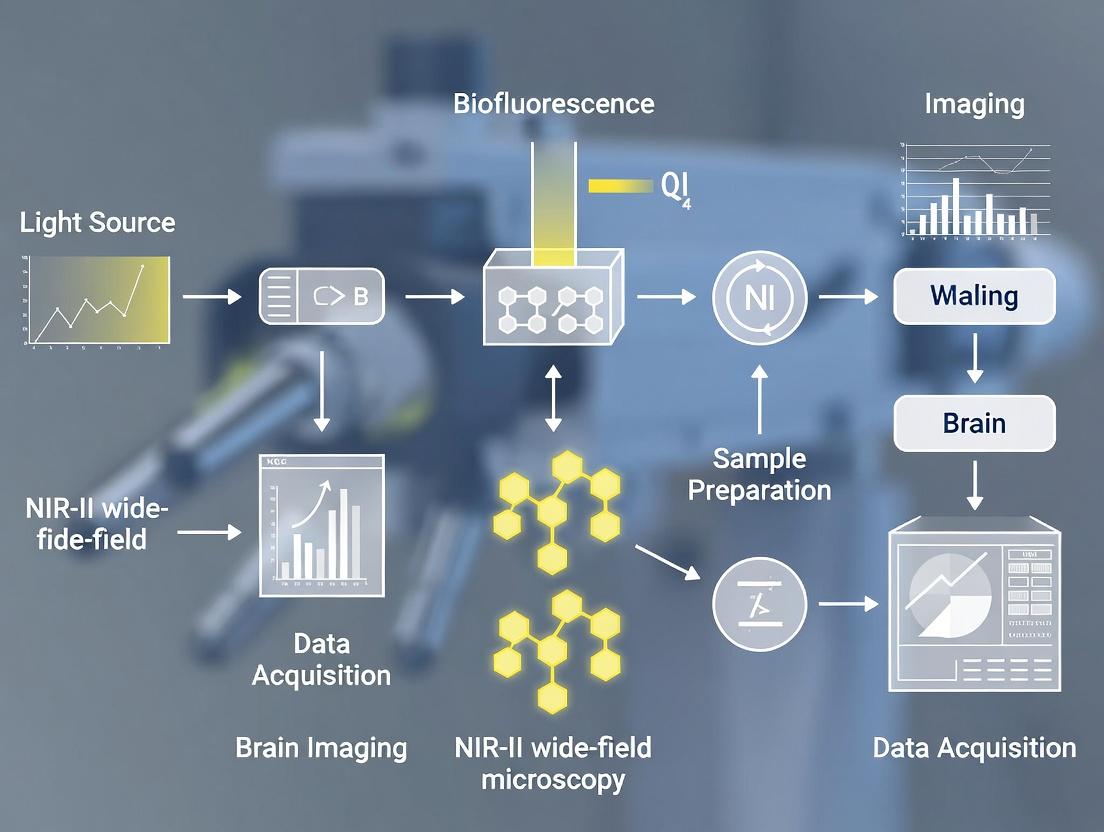
This article provides a comprehensive overview of Second Near-Infrared (NIR-II, 1000-1700 nm) wide-field microscopy for brain imaging.
NIR-II Brain Imaging: Deep-Tissue Microscopy Breakthroughs for Neuroscience & Drug Discovery
Abstract
This article provides a comprehensive overview of Second Near-Infrared (NIR-II, 1000-1700 nm) wide-field microscopy for brain imaging. Aimed at researchers, scientists, and drug development professionals, it explores the foundational principles of deep-tissue penetration and reduced scattering, details cutting-edge methodologies and live applications in neuroscience, offers practical troubleshooting and optimization strategies for implementation, and critically validates the technique against established modalities. The synthesis highlights NIR-II imaging's transformative potential for visualizing cerebrovascular dynamics, neural activity, and disease pathology in vivo, paving the way for new discoveries in brain function and therapeutic development.
The NIR-II Advantage: Unveiling the Principles of Deep-Tissue Brain Imaging
Spectral Definition and Physical Basis
The second near-infrared window (NIR-II) is defined as the spectral region from 1000 nm to 1700 nm. Within this range, two sub-windows are often distinguished due to differing water absorption profiles and detector availability: NIR-IIa (1300-1400 nm) and NIR-IIb (1500-1700 nm). The primary physical advantage of this window is the significant reduction in photon scattering and tissue autofluorescence compared to the visible and traditional NIR-I (700-900 nm) ranges.
Table 1: Optical Properties of Biological Tissues Across Spectral Windows
| Spectral Window | Wavelength Range (nm) | Reduced Scattering Coefficient (μs')* | Absorption Coefficient (μa) for Water* | Autofluorescence Intensity (Relative to NIR-I) |
|---|---|---|---|---|
| Visible | 400-700 | Very High | Low to Moderate | Very High |
| NIR-I | 700-900 | High | Low | High |
| NIR-II | 1000-1350 | Low | Moderate (Low in gaps) | Very Low to Negligible |
| NIR-IIa Gap | 1300-1400 | Very Low | High (Water peak) | Negligible |
| NIR-IIb | 1500-1700 | Low | Very High | Negligible |
*Representative approximate values for brain tissue. μs' and μa are in units of cm⁻¹.
Key Advantages forIn VivoBrain Imaging
The use of the NIR-II window for wide-field microscopy provides transformative benefits for brain imaging research, particularly within the context of large-field-of-view, deep-tissue observation of hemodynamics and neural activity.
1. Enhanced Penetration Depth: Reduced scattering allows photons to travel deeper into brain tissue. In wide-field macroscopy, this translates to clearer subcortical signal acquisition through the intact skull in rodent models. 2. Superior Spatial Resolution: The reduced scattering coefficient minimizes the "blurring" effect, improving the achievable spatial resolution at depth compared to NIR-I. 3. Minimal Autofluorescence: Biological fluorophores (e.g., flavins, NADH) exhibit negligible emission in the NIR-II, leading to an exceptionally high signal-to-background ratio (SBR) for targeted contrast agents. 4. High-Fidelity Hemodynamic Mapping: The low absorption of hemoglobin in the NIR-II (excluding specific water peaks) enables more accurate quantification of cerebral blood flow (CBF) and oxygen saturation (sO₂) with less interference from wavelength-dependent scattering.
Application Notes: NIR-II Wide-Field Microscopy for Brain Research
Cerebral Blood Flow (CBF) and Vasodynamics
Principle: Indocyanine green (ICG), an FDA-approved dye, exhibits fluorescence emission extending into the NIR-II range (>1000 nm). Its first-pass kinetics after intravenous bolus injection can be monitored through the thinned skull or intact skull in mice using an NIR-II-sensitive camera to map blood flow velocity and vessel architecture.
Protocol 1: NIR-II Wide-Field Imaging of ICG Bolus Tracking for Relative CBF Objective: To map relative cerebral blood flow using the temporal dynamics of an intravenously administered ICG bolus. Materials:
- Anesthetized and cranially prepared mouse (thinned-skull or intact skull).
- Tail vein catheter.
- ICG solution (1 mg/mL in sterile saline).
- NIR-II wide-field microscope: 808 nm or 980 nm laser for excitation, long-pass filter >1000 nm or >1200 nm, InGaAs camera (sensitive to 900-1700 nm).
- Data acquisition computer with time-series recording software.
Procedure:
- Secure the animal under the microscope objective. Focus on the dorsal cortical surface.
- Set acquisition parameters: 50-100 ms exposure, 5-10 Hz frame rate.
- Initiate continuous recording.
- At frame ~10, rapidly inject ICG bolus (0.1 mg/kg) via tail vein catheter.
- Record for 60-120 seconds post-injection.
- Process data: Align frames for motion artifacts. For each pixel, plot fluorescence intensity (F) over time.
- Calculate relative CBF parameters: Time-to-peak (TTP), maximum slope of the curve, or area under the initial wash-in curve.
Table 2: Comparison of Fluorescent Agents for NIR-II Brain Imaging
| Agent | Excitation Peak (nm) | NIR-II Emission Peak (nm) | Primary Application in Brain Imaging | Notes |
|---|---|---|---|---|
| ICG | ~780-810 | ~820-850 (tail to >1000) | Angiography, Blood Flow, Vascular Permeability | FDA-approved; fast kinetics; quantum yield drops in NIR-II. |
| IRDye 800CW | ~774 | ~794 (tail to >1000) | Receptor Targeting, Antibody Conjugation | Commercial; can be conjugated. |
| Single-Walled Carbon Nanotubes (SWCNTs) | 650-900 | 1000-1400 | Neurotransmitter Sensing, Deep-Tissue Imaging | Chemically functionalizable; environmentally sensitive emission. |
| Lanthanide-Based Nanoparticles (e.g., Er³⁺) | ~980 | ~1525 | High-Contrast Anatomical Imaging | Sharp emission peaks; no photobleaching; inert. |
| Quantum Dots (PbS/CdS) | ~800 | 1200-1600 | Long-Term Cell Tracking, Multiplexing | High quantum yield; size-tunable emission; heavy metal content. |
Functional Connectivity Imaging
Principle: NIR-II voltage-sensitive dyes or calcium indicators are under active development. Alternatively, NIR-II imaging can be combined with optogenetic actuators (which use visible/NIR-I light) to provide a clear, low-background window for observing hemodynamic responses to evoked neural activity without spectral crosstalk.
Protocol 2: Wide-Field NIR-II Imaging of Hemodynamic Response to Optogenetic Stimulation Objective: To record stimulus-evoked changes in cerebral blood volume (CBV) in the NIR-II window concurrently with optogenetic neuronal activation. Materials:
- Transgenic mouse expressing Channelrhodopsin-2 (ChR2) in specific neurons.
- Thinned-skull cranial window preparation.
- Intravenous injection of an NIR-II blood-pool agent (e.g., ICG-loaded liposomes or functionalized SWCNTs).
- Dual-optical setup: Blue (473 nm) laser for optogenetic stimulation, NIR excitation laser (e.g., 1064 nm) for NIR-II imaging, InGaAs camera.
- Synchronized pulse generators.
Procedure:
- Administer the NIR-II contrast agent and allow circulation (5-10 min).
- Position the animal. Define the optogenetic stimulation region (e.g., barrel cortex) and imaging field of view.
- Set NIR-II imaging to continuous acquisition at 20 Hz.
- Program a stimulation paradigm: e.g., 10 trials of 2-second 473 nm light pulses at 20 Hz, inter-trial interval 30 seconds.
- Synchronize and start acquisition and stimulation.
- Analyze data: Perform trial averaging. Generate maps of ΔF/F, where F is baseline fluorescence. Correlate the temporal dynamics of the NIR-II fluorescence increase (indicative of CBV increase) with the stimulation epoch.
The Scientist's Toolkit: Essential Research Reagent Solutions
Table 3: Key Reagents and Materials for NIR-II Wide-Field Brain Imaging
| Item | Function/Benefit | Example/Note |
|---|---|---|
| InGaAs Camera (Cooled) | Detects photons in the 900-1700 nm range. Essential for NIR-II signal acquisition. | Requires cooling (thermoelectric or liquid nitrogen) to reduce dark noise. Frame rate and sensor size are key parameters. |
| NIR-II Fluorescent Dyes | Provide contrast in the NIR-II window. | ICG (clinical), IR-12N3, IR-1061 (small molecules), or engineered nanomaterials like SWCNTs. |
| Long-Pass Emission Filters | Blocks excitation laser light and passes only NIR-II emission. | 1000 nm, 1200 nm, or 1300 nm long-pass filters are critical for achieving high SBR. |
| NIR-Compatible Optics | Lenses and objectives transparent beyond 1000 nm. | Use objectives corrected for NIR (e.g., Mitutoyo NIR series) or calcium fluoride lenses. Standard glass absorbs strongly >1500 nm. |
| Cranial Window Materials | Creates optical access to the brain with minimal NIR absorption. | Use fused silica or glass coverslips (#1.5) for chronic implants. Dental cement should be kept thin over the imaging area. |
| Laser Sources | Provides excitation light for NIR-II fluorophores. | Common wavelengths: 808 nm, 980 nm, 1064 nm. 1064 nm excitation is ideal for maximizing penetration and minimizing tissue autofluorescence. |
| Blood Pool Agents | Long-circulating NIR-II contrast agents for vascular imaging. | PEGylated SWCNTs, ICG encapsulated in liposomes, or albumin-bound NIR-II dyes. |
| Anesthesia System (Isoflurane) | Maintains stable physiological conditions during in vivo imaging. | Isoflurane (1-1.5% in O₂) is standard; level affects cerebral hemodynamics and must be carefully controlled. |
| Stereotaxic Frame & Heating Pad | Secures animal and maintains body temperature (37°C). | Critical for stable, long-duration imaging and animal welfare. |
Visualizations
Title: Why NIR-II Improves Brain Imaging
Title: Protocol: NIR-II CBF Imaging with ICG Bolus
Title: Pathway from Neural Activity to NIR-II Signal
Thesis Context: NIR-II Window for Brain Imaging
This document provides Application Notes and Protocols framed within a thesis on NIR-II (1000-1700 nm) wide-field microscopy. The core thesis posits that operating within the NIR-II biological window significantly mitigates the primary optical barriers to deep, high-fidelity brain imaging: light scattering, tissue absorption, and endogenous autofluorescence. This enables wide-field techniques to achieve unprecedented fields of view and penetration depths for mapping neural activity and vascular dynamics in vivo.
The following tables summarize key optical properties comparing the traditional NIR-I (700-900 nm) and NIR-II windows in rodent brain tissue.
Table 1: Reduced Scattering Coefficients (µs') in Brain Tissue
| Wavelength (nm) | Reduced Scattering Coefficient µs' (cm⁻¹) | Approximate Penetration Depth (mm) | Physical Basis |
|---|---|---|---|
| 800 nm (NIR-I) | 8 - 12 | 1 - 2 | Mie scattering dominant from organelles. |
| 1300 nm (NIR-II) | 3 - 6 | 3 - 5 | Reduced Rayleigh scattering (~λ⁻⁴ dependence). |
| 1550 nm (NIR-II) | 2 - 4 | 4 - 6 | Further reduction in scattering cross-section. |
Table 2: Major Chromophore Absorption in Brain Tissue
| Chromophore | Peak Absorption (nm) | Relative Absorption in NIR-II vs. NIR-I | Impact on Imaging |
|---|---|---|---|
| Hemoglobin (Hb/HbO₂) | ~400, 540-580, ~900-1000 | 10-100x lower | Drastically reduced vascular shadowing and signal loss. |
| Water (H₂O) | ~980, >1400 | Increases sharply after 1400 nm | Defines practical long-wavelength limit (~1650-1700 nm). |
| Lipids | ~930, 1200 | Moderate in NIR-II | Generally not a primary limiting factor in brain. |
Table 3: Autofluorescence Comparison Across Wavelengths
| Excitation (nm) | Primary Fluorophores | Emission Intensity (Relative) | Signal-to-Background Ratio (SBR) Impact |
|---|---|---|---|
| 488 nm / 532 nm | NADH, FAD, Lipofuscin | Very High | Low SBR, high background. |
| 800 nm (NIR-I) | Tissue matrix, pigments | Moderate | Improved but persistent background. |
| 1064 nm / 1300 nm (NIR-II) | Minimal endogenous sources | Very Low (< 10x NIR-I) | Exceptionally high SBR for probes. |
Experimental Protocols
Protocol 1: Measuring Effective Attenuation in Rodent Brain Slices
Objective: Quantify the combined effect of scattering and absorption (effective attenuation coefficient, µeff) across wavelengths. Materials: Vibratome, 500 µm thick acute brain slices, NIR spectrophotometer with integrating sphere, indocyanine green (ICG) as reference absorber. Procedure:
- Prepare coronal brain slices in ice-cold aCSF.
- Mount slice in a custom holder between glass coverslips with aCSF spacer.
- Acquire transmission (T) and diffuse reflectance (R) spectra from 800-1650 nm using the integrating sphere setup.
- Calculate the attenuation: A = -ln(T / I₀), where I₀ is incident light intensity.
- Fit data to diffusion theory model to extract µeff. Use a serial dilution of ICG in intralipid phantoms for calibration.
Protocol 2: Wide-Field NIR-II Microscopy for Cortical Hemodynamics
Objective: Image cerebral blood flow and oxygenation with high contrast using intrinsic signals. Materials: NIR-II-sensitive camera (InGaAs or HgCdTe), 1300 nm LED/laser, long-pass filter (>1250 nm), cranial window-installed mouse model. Procedure:
- Anesthetize and secure mouse under stereotaxic frame with exposed cortex via thinned skull or glass cranial window.
- Illuminate the cortical surface uniformly with 1300 nm light (≤ 50 mW/cm²).
- Collect reflected NIR-II light through a >1250 nm long-pass filter onto the NIR-II camera at 30 fps.
- For intrinsic hemodynamic imaging, calculate relative changes: ΔR/R = (R - R₀) / R₀, where R is reflectance and R₀ is baseline.
- Vessel segmentation and flow dynamics can be analyzed via spatial and temporal filters.
Protocol 3: Validating Reduced Autofluorescence with NIR-II Probes
Objective: Compare the signal-to-background ratio (SBR) of a fluorescent probe in NIR-I vs. NIR-II. Materials: Mouse injected with NIR-II fluorophore (e.g., IRDye 800CW, CH-4T), conventional NIR-I (Si camera) and NIR-II (InGaAs camera) microscopes. Procedure:
- Administer probe (2 nmol, IV) to the animal.
- 24 hours post-injection, image the same brain region first under 780 nm excitation / 820 nm emission (NIR-I setup).
- Immediately after, image under 980 nm excitation / 1250 nm long-pass emission (NIR-II setup). Keep laser power and acquisition time consistent.
- Quantify mean signal intensity from a region of interest (ROI) on a vessel and an adjacent background tissue ROI.
- Calculate SBR for each modality: SBR = (SignalIntensity - BackgroundIntensity) / Background_StdDev. NIR-II SBR typically exceeds NIR-I by >5-10x.
Diagrams
Title: Core Physics Advantages of the NIR-II Window
Title: NIR-II Wide-Field Hemodynamic Imaging Workflow
The Scientist's Toolkit: Essential Research Reagents & Materials
| Item | Function in NIR-II Brain Imaging |
|---|---|
| InGaAs or HgCdTe Camera | Essential detector for NIR-II photons (1000-1700 nm), with high quantum efficiency in this range. |
| 1300/1550 nm Lasers or LEDs | Optimal excitation/illumination sources within the NIR-II window for minimizing scattering. |
| Long-Pass Filters (>1250 nm) | Blocks excitation and NIR-I light, ensuring only NIR-II emission/signal reaches the detector. |
| IRDye 800CW, CH-4T | Common small-molecule NIR-II fluorophores for vascular labeling and biodistribution studies. |
| Quantum Dots (e.g., PbS/CdS) | Bright, tunable NIR-II emitters for high-resolution cellular and vascular imaging. |
| Intralipid Phantom | Standardized scattering medium for calibrating and validating system performance. |
| Indocyanine Green (ICG) | FDA-approved NIR-I/II dye for real-time vascular flow and perfusion imaging. |
| Cranial Window Kit | Chronic implant for long-term optical access to the cortex with minimal inflammation. |
Within the context of advancing NIR-II (1000-1700 nm) wide-field microscopy for in vivo brain imaging research, the selection of an appropriate fluorophore is paramount. This region offers superior penetration depth and reduced autofluorescence compared to visible and NIR-I wavelengths. This application note details the three primary classes of NIR-II fluorophores—organic dyes, quantum dots (QDs), and lanthanide-doped nanoparticles (LDNPs)—providing comparative data, protocols for their use in brain imaging, and essential toolkit resources.
Comparative Quantitative Data
Table 1: Key Characteristics of NIR-II Fluorophore Classes
| Property | Organic Dyes (e.g., CH1055, IR-1061) | Quantum Dots (e.g., Ag₂S, PbS/CdS) | Lanthanide Nanoparticles (e.g., NaYF₄:Yb,Er,Ce) |
|---|---|---|---|
| Emission Range (nm) | 900-1300 | 1000-1600 | 1450-1650 (Er³⁺), 1300-1400 (Nd³⁺) |
| Quantum Yield (%) | 0.1 - 5 | 5 - 20 | 0.1 - 10 (upconversion, low in NIR-II) |
| Extinction Coeff. (M⁻¹cm⁻¹) | ~10⁵ | 10⁵ - 10⁶ | ~10⁵ (depends on shell) |
| Stokes Shift (nm) | 10-50 | 200-400 | >200 |
| Excitation (nm) | ~800 | 808, 980 | 808, 980, 1530 |
| Hydrodynamic Size | ~1-2 nm | 5-15 nm | 20-100 nm |
| Biodegradability | High | Low/Non | Low/Non |
| Typical Coating | PEG, protein | PEG, polymers, silica | Silica, PEG, polymers |
| Primary Brain Imaging Use | Vascular mapping, rapid clearance | Long-term tracking, cell labeling | Deep-tissue, high-penetration imaging |
Table 2: Recent Performance Metrics in Rodent Brain Imaging Studies
| Fluorophore | Excitation (nm) | Emission (nm) | Injection Dose (nmol) | Key Brain Imaging Outcome (Reference Year) |
|---|---|---|---|---|
| CH-4T | 808 | 1000-1300 | 2 | High-resolution cortical vasculature imaging at >1.5 mm depth (2023) |
| PEGylated Ag₂S QDs | 808 | 1200-1400 | 0.5 | Real-time tracking of microglia for >4 weeks (2024) |
| NaYF₄:Yb,Er,Ce @NaYF₄ | 980 | 1525 | 10 | Deep-brain tumor detection with 0.5 mm resolution at 3 mm depth (2023) |
| IR-1061 Conjugate | 1064 | 1300-1500 | 3 | High-frame-rate functional imaging of hemodynamics (2024) |
Experimental Protocols
Protocol 1: NIR-II Wide-Field Microscopy of Cerebral Vasculature Using Organic Dye CH-4T
Objective: To acquire high-resolution, real-time images of the mouse cerebral vasculature. Materials: See "The Scientist's Toolkit" below. Procedure:
- Animal Preparation: Anesthetize a C57BL/6 mouse (8-10 weeks) using isoflurane (1.5-2% in O₂). Secure in a stereotaxic frame. Maintain body temperature at 37°C.
- Cranial Window: Perform a thinned-skull or transcranial window procedure. Clean the exposed skull with saline and cover with a glass coverslip using biocompatible adhesive.
- Dye Administration: Prepare CH-4T-PEG dye in sterile PBS (100 µM). Inject 200 µL via tail vein (final dose: ~2 nmol).
- Microscopy Setup: Configure a NIR-II wide-field microscope: 808 nm laser (100 mW/cm²), 1000 nm long-pass emission filter, InGaAs camera cooled to -80°C.
- Image Acquisition: Begin acquisition 2 minutes post-injection. Use exposure times of 50-200 ms. Capture a time-series for 20 minutes to map dynamic blood flow.
- Data Analysis: Process images using background subtraction. Calculate vascular width and blood flow velocity using line-scan analysis.
Protocol 2: Labeling and Longitudinal Imaging of Microglia with PEGylated Ag₂S QDs
Objective: To label and track microglial cells in the mouse brain over several weeks. Procedure:
- QD Conjugation: Conjugate amine-PEGylated Ag₂S QDs with a CD11b antibody via EDC/NHS chemistry. Purify using size-exclusion chromatography.
- Intracerebral Injection: Anesthetize and stereotaxically inject 2 µL of the QD-CD11b conjugate (1 µM) into the prefrontal cortex (coordinates: AP +1.9 mm, ML ±0.5 mm, DV -2.0 mm).
- In Vivo Imaging: At 1, 7, 14, and 28 days post-injection, anesthetize the mouse and image using the NIR-II wide-field microscope (808 nm excitation, 1300 nm long-pass filter).
- Histology Validation: Perfuse the mouse at the endpoint. Section the brain and perform IBA-1 immunofluorescence to confirm QD co-localization with microglia.
Protocol 3: Deep-Brain Tumor Imaging with Lanthanide Nanoparticles
Objective: To visualize a deep-seated glioblastoma using 1525 nm-emitting nanoparticles. Procedure:
- Nanoparticle Synthesis: Synthesize NaYF₄:Yb,Er,Ce core nanoparticles via thermal decomposition. Grow an inert NaYF₄ shell. Ligand exchange with PEG-COOH.
- Tumor Model: Implant U87-MG glioblastoma cells (1x10⁵ in 3 µL) into the striatum of an athymic nude mouse.
- Systemic Injection: At day 14 post-implantation, inject PEGylated nanoparticles (10 nmol in 150 µL PBS) via tail vein.
- Image Acquisition at 1525 nm: At 24 hours post-injection, image under 980 nm excitation (150 mW/cm²). Use a 1500 nm short-pass and a 1450 nm long-pass filter pair. Acquire z-stacks up to 3 mm depth.
- Signal Quantification: Draw regions of interest (ROIs) over the tumor and contralateral hemisphere to calculate signal-to-background ratio.
Visualization Diagrams
Title: Fluorophore Selection Logic for NIR-II Brain Imaging
Title: Generic NIR-II In Vivo Brain Imaging Workflow
The Scientist's Toolkit: Essential Research Reagent Solutions
Table 3: Key Reagents and Materials for NIR-II Brain Imaging Experiments
| Item | Function/Benefit | Example Supplier/Product |
|---|---|---|
| CH-4T-PEG-COOH Dye | Bright, renal-clearable organic dye for vascular imaging. | Lumiprobe, FFR-1080 |
| PEGylated Ag₂S Quantum Dots | High QY, photostable probes for longitudinal studies. | Sigma-Aldrich, QSA-800/1000 |
| NaYF₄:Yb,Er,Ce Nanoparticles | Excited at 980 nm, emits at 1525 nm for deep penetration. | NN-Labs, UCNP-1525 |
| Anti-CD11b Antibody | For targeting microglial cells during QD conjugation. | BioLegend, M1/70 |
| Isoflurane Anesthesia System | Safe, controllable anesthesia for rodent surgery/imaging. | VetEquip, Isotec 5 |
| Stereotaxic Instrument | Precise targeting for intracranial injections. | RWD Life Science, 68025 |
| 808 nm & 980 nm Diode Lasers | Common excitation sources for NIR-II fluorophores. | CNI Laser, MDL-N-808/980 |
| InGaAs Camera (Cooled) | High-sensitivity detector for 900-1700 nm light. | Teledyne Princeton Instruments, NIRvana:640 |
| 1000 nm & 1500 nm LP Filters | Block excitation light and select NIR-II emission. | Thorlabs, FEL1000, FEL1500 |
| Image Analysis Software | For quantifying signal, velocity, and colocalization. | Fiji/ImageJ, MATLAB |
Within the broader thesis on advancing NIR-II (1000-1700 nm) wide-field microscopy for in vivo brain imaging, selecting the appropriate imaging modality is foundational. The choice between wide-field epifluorescence, laser scanning confocal, and two-photon microscopy dictates the trade-offs between field of view (FOV), spatial resolution, optical sectioning (background rejection), imaging depth, and acquisition speed. This application note provides a comparative analysis and detailed protocols to guide researchers in defining the optimal modality for large-scale functional and structural imaging in neuroscience and drug development.
Quantitative Comparison of Imaging Modalities
The table below summarizes the key performance parameters for each modality in the context of NIR-II imaging, synthesized from recent literature and technical specifications.
Table 1: Comparative Performance of Imaging Modalities for Large FOV NIR-II Brain Imaging
| Parameter | NIR-II Wide-Field Epifluorescence | NIR-II Laser Scanning Confocal | NIR-II Two-Photon Microscopy |
|---|---|---|---|
| Typical FOV Diameter | 5 - 12 mm (up to whole mouse cortex) | 0.5 - 2 mm (with tiling) | 0.8 - 3 mm (with resonant scanning) |
| Lateral Resolution | 10 - 50 µm (diffraction-limited, but out-of-focus blur dominates) | 0.7 - 1.5 µm (diffraction-limited, pinhole-dependent) | 0.6 - 1.0 µm (diffraction-limited, excitation PSF) |
| Optical Sectioning | None (projects all fluorescence) | Excellent (mechanical/optical pinhole) | Excellent (inherent nonlinear excitation) |
| Imaging Depth (in brain) | Superficial (≤ 100 µm, limited by scattering & background) | Moderate (100 - 250 µm, limited by pinhole efficiency & scattering) | Deep (400 - 1000+ µm, benefits from reduced scattering in NIR-II) |
| Acquisition Speed (Frame Rate) | Very High (10 - 1000 fps, camera-limited) | Slow to Moderate (0.1 - 30 fps, pixel dwell time-limited) | Moderate to High (1 - 100 fps, scanner-dependent) |
| Excitation Volume | Large cone (entire sample volume illuminated) | Confined volume (diffraction-limited spot + pinhole) | Highly confined (~fL volume at focal plane) |
| Photobleaching/Phototoxicity | High (entire sample illuminated) | Moderate (confined to focal volume & plane) | Low (confined to focal volume; NIR-I/II causes less cellular damage) |
| Primary Strength for Large FOV | Maximizes FOV and speed for surface mapping of hemodynamics or global tracer distribution. | High-resolution cellular imaging over moderately large areas via tiling. | High-resolution, deep-tissue structural/functional imaging over modest FOV. |
| Primary Limitation for Large FOV | No depth resolution; signal contaminated by out-of-focus and background light. | Speed and photobleaching constraints when tiling large areas; depth penetration limited. | FOV fundamentally limited by objective design and scan geometry; complex/expensive. |
Experimental Protocols
Protocol 1: NIR-II Wide-Field Imaging of Cortical Hemodynamics in Mice
Objective: To capture large-scale cerebral blood flow dynamics and oxygenation changes across the mouse dorsal cortex.
Materials: See "The Scientist's Toolkit" below.
Procedure:
- Animal Preparation: Anesthetize a transgenic mouse expressing an NIR-II fluorescent vascular label (e.g., ICG-loaded nanoparticles) or administer a systemic NIR-II dye (e.g., IRDye 800CW). Perform a craniotomy or thinned-skull preparation over the dorsal cortex.
- Microscope Setup:
- Mount the animal under a macro-zoom lens (e.g., Navitar) or low-magnification air objective (2X, NA 0.1).
- Illuminate the cortex with a 808 nm or 980 nm laser diode, expanded to uniformly cover the entire FOV (>5mm).
- Collect emitted NIR-II light (>1000 nm) using an InGaAs camera (e.g., Princeton Instruments NIRvana). Place a long-pass emission filter (e.g., Semrock LP1000) before the camera.
- Data Acquisition:
- Set camera exposure time to 10-100 ms to achieve a frame rate of 10-100 Hz.
- Acquire a continuous video sequence for 2-5 minutes under baseline conditions and during a stimulus (e.g., whisker stimulation, drug infusion).
- Data Analysis: Process the time-series stack. For hemodynamics, calculate ΔF/F for regions of interest (ROIs) over vessels. Use spatial filters to reduce high-frequency noise. Generate temporal correlation maps or spatial activation maps.
Protocol 2: Tiled NIR-II Confocal Imaging for Cellular Atlas Generation
Objective: To create a high-resolution mosaic image of neuronal cell bodies and processes across a large cortical area.
Materials: See "The Scientist's Toolkit" below.
Procedure:
- Sample Preparation: Perfuse-fix a mouse brain expressing a cytoplasmic NIR-II protein (e.g., iRFP713) or stained with an NIR-II lipophilic dye. Section the brain into 300 µm thick coronal slices.
- Microscope Setup:
- Mount the cleared or hydrated tissue slice on a motorized stage.
- Use a high-NA water immersion objective (e.g., 20X, NA 1.0) on a point-scanning confocal system equipped with an NIR-sensitive PMT.
- Set excitation to 640 nm (for iRFP713) and detection window to 780-850 nm. Adjust the confocal pinhole to 1 Airy unit.
- Tiled Acquisition:
- Define the rectangular region covering the cortical area of interest.
- Set the tile overlap to 15%.
- For each tile, acquire a Z-stack with a step size of 2 µm.
- Automate the sequence using microscope software (e.g., Zeiss ZEN, Nikon NIS-Elements).
- Image Stitching & Analysis: Use built-in or offline stitching software (e.g., ImageJ Grid/Collection Stitching plugin) to fuse tiles into a single large image. Apply intensity blending at overlap regions. Perform cell detection using segmentation algorithms (e.g., Cellpose).
Visualization: Modality Decision Workflow
Title: Workflow for Selecting Large FOV Imaging Modality
The Scientist's Toolkit: Key Reagents & Materials
Table 2: Essential Research Reagent Solutions for NIR-II Brain Imaging Experiments
| Item (Example Product) | Function in Experiment |
|---|---|
| NIR-II Fluorescent Dyes (IRDye 800CW) | Synthetic small molecule that emits >1000 nm; used as a blood pool agent for vascular imaging and pharmacokinetic studies. |
| NIR-II Protein Labels (iRFP713/720) | Genetically encoded fluorophores; enable stable labeling of specific cell types (neurons, astrocytes) in transgenic animals. |
| ICG-loaded PEG-PLGA Nanoparticles | Biocompatible, long-circulating contrast agents for enhanced vascular and tumor imaging in the NIR-II window. |
| Skull Clearing Reagents (SeeDB2, Ce3D) | Optical clearing solutions that reduce scattering, enabling deeper and clearer imaging in thick brain sections. |
| Long-Pass Emission Filters (LP1000, LP1250) | Critical optical components that block excitation and short-wavelength light, allowing only NIR-II emission to reach the detector. |
| InGaAs Camera (NIRvana, ORCA-Quest) | High-sensitivity, low-noise camera essential for detecting faint NIR-II photons in wide-field and some confocal setups. |
| Tunable NIR Femtosecond Laser (Chameleon) | Provides ultrashort pulses for efficient two-photon excitation of fluorophores in the NIR-I/II range. |
| High-NA Long-Working Distance Objectives | Microscope objectives (e.g., 20X/1.0 NA, 25X/1.1 NA) designed for deep penetration and high resolution in NIR-II wavelengths. |
The evolution of biological imaging from the first near-infrared window (NIR-I, 700–900 nm) to the second near-infrared window (NIR-II, 1000–1700 nm) represents a paradigm shift in deep-tissue visualization. NIR-I imaging, pioneered by the use of indocyanine green (ICG) and other small-molecule dyes, enabled improved depth penetration over visible light due to reduced scattering and autofluorescence. However, significant photon scattering and tissue absorption within the NIR-I range limited resolution and depth in complex tissues like the brain.
The push into the NIR-II window, gaining major momentum in the 2010s, capitalized on a pronounced decrease in photon scattering and significantly lower tissue autofluorescence. This transition was enabled by the concurrent development of novel fluorophores—including inorganic nanomaterials (e.g., single-walled carbon nanotubes, quantum dots) and recently, organic small molecules and dyes—that emit within this longer-wavelength region. Within brain imaging research, this evolution directly addresses the critical need for high-resolution, wide-field imaging of cerebral vasculature, hemodynamics, and neural activity through the intact skull, forming the foundational context for advancing NIR-II wide-field microscopy.
Quantitative Comparison: NIR-I vs. NIR-II
The following table summarizes key performance metrics that distinguish NIR-II from NIR-I bioimaging, as established in recent literature.
Table 1: Comparative Performance of NIR-I and NIR-II Bioimaging Windows
| Parameter | NIR-I (700-900 nm) | NIR-II (1000-1700 nm) | Improvement Factor & Notes |
|---|---|---|---|
| Tissue Scattering Coefficient | ~0.7 mm⁻¹ at 800 nm | ~0.3 mm⁻¹ at 1300 nm | ~2.3x reduction, enabling deeper penetration. |
| Tissue Autofluorescence | High (from lipids, collagen) | Very Low | >10x reduction in background, enhancing SNR. |
| Optimal Imaging Depth | 1-2 mm (high-res) | 3-5 mm (high-res) | 2-3x increase in achievable depth for microscopic resolution. |
| Spatial Resolution at Depth | Degrades rapidly >1mm | Maintains sub-10 µm resolution at 3mm | Superior resolution preservation due to reduced scattering. |
| Typical Frame Rate (wide-field) | 30-100 Hz | 20-50 Hz (limited by sensor tech) | Comparable; NIR-II cameras (InGaAs) are improving in speed. |
| Common Fluorophores | ICG, Cy7, Alexa Fluor 790 | IR-1048, CH-4T, SWCNTs, Ag₂S QDs | NIR-II offers growing palette of organic and inorganic agents. |
| Signal-to-Background Ratio (SBR) in brain | 2-5 at 2mm depth | 10-50+ at 3mm depth | Order-of-magnitude improvement for vascular imaging. |
Key Experimental Protocols for NIR-II Wide-Field Brain Imaging
The following protocols are central to implementing NIR-II wide-field fluorescence microscopy for in vivo brain imaging in rodent models.
Protocol 3.1: Preparation and Administration of NIR-II Fluorescent Probes (Organic Dye: IRDye 800CW Analog)
This protocol details the use of a clinically translatable organic dye for cerebral vascular imaging.
Dye Solution Preparation:
- Obtain a lyophilized NIR-II organic dye (e.g., CH-4T, IR-FEP).
- Reconstitute in sterile 1x PBS or DMSO per manufacturer's instructions to create a 1 mM stock solution. Aliquot and store at -20°C in the dark.
- On the day of imaging, dilute the stock in sterile saline to a working concentration of 100-200 µM. Filter sterilize using a 0.22 µm syringe filter.
Animal Preparation and Dye Administration:
- Anesthetize the mouse/rat using a recommended regimen (e.g., 1.5% isoflurane in O₂).
- Secure the animal in a stereotaxic frame. Maintain body temperature at 37°C.
- For vascular labeling, perform a tail vein or retro-orbital injection.
- Injection: Slowly administer the dye solution at a dose of 2-5 nmol per gram of animal body weight. Use a total injection volume of 100-200 µL for a mouse.
- Allow 1-2 minutes for systemic circulation before initiating imaging.
Protocol 3.2:In VivoWide-Field NIR-II Microscopy of Mouse Cerebral Vasculature
This protocol describes the setup and acquisition for transcranial or thinned-skull imaging.
Surgical Preparation (Thinned-Skull Cranial Window):
- After anesthesia and fixation, perform a midline scalp incision.
- Gently retract soft tissue to expose the skull over the region of interest (e.g., somatosensory cortex).
- Use a high-speed drill with a fine burr to thin the skull uniformly to a thickness of ~20-50 µm. Continuously irrigate with chilled PBS to prevent heat damage.
- Apply a thin layer of transparent cyanoacrylate glue or a coverslip with saline to create an optical seal.
Microscope Setup and Image Acquisition:
- System: Inverted or upright microscope equipped with:
- Laser Excitation: 808 nm or 980 nm continuous-wave laser, adjusted to provide uniform wide-field illumination.
- Emission Filter: A long-pass filter with a sharp cut-on at 1200 nm or 1300 nm (e.g., Semrock FF01-1200/LP).
- Objective: Long-working-distance air objective (5x-10x, NA 0.2-0.3) or water-immersion objective.
- Detector: Two-dimensional InGaAs camera (e.g., NIRvana 640ST, Xenics Xeva) cooled to -80°C.
- Acquisition Parameters:
- Set laser power density at the sample to 50-100 mW/cm².
- Set camera integration time to 50-200 ms per frame.
- Acquire sequential images or video at 5-10 Hz for dynamic blood flow studies.
- For high-SNR static images, average 20-50 frames post-acquisition.
- System: Inverted or upright microscope equipped with:
Data Processing:
- Subtract camera dark current (frame acquired with laser off).
- Apply flat-field correction if illumination is non-uniform.
- For video, use image stabilization algorithms to correct for motion artifacts.
- Generate maximum intensity projections (MIP) for time-series data.
Visualization of Concepts and Workflows
Title: NIR-II Brain Vasculature Imaging Workflow
Title: Key Properties of NIR-I vs. NIR-II Windows
The Scientist's Toolkit: Essential Reagents and Materials
Table 2: Key Research Reagent Solutions for NIR-II Wide-Field Brain Imaging
| Item | Function/Benefit | Example Product/Chemical |
|---|---|---|
| NIR-II Organic Dyes | Small-molecule fluorophores with high quantum yield in NIR-II; often biocompatible and excretable. Ideal for dynamic vascular imaging. | CH-4T, IR-FEP, IR-1061, FD-1080 |
| NIR-II Nanomaterials | Inorganic agents (QDs, nanotubes) with high brightness and photostability for long-term tracking. | PbS/CdS QDs, Ag₂S QDs, Single-Walled Carbon Nanotubes (SWCNTs) |
| Long-Pass Emission Filters | Critically blocks excitation laser light and NIR-I/visible light, collecting only pure NIR-II emission. | Semrock FF01-1200/LP, Thorlabs FELH1200 |
| InGaAs FPA Camera | Two-dimensional array sensor sensitive from 900-1700 nm. Essential for wide-field detection. | Princeton Instruments NIRvana 640ST, Teledyne Xenics Xeva-1.7-640 |
| 980 nm Diode Laser | Common excitation source for many NIR-II fluorophores, offering good tissue penetration. | CNI Laser MDL-N-980, Intelite SSL-980 |
| Cranial Window Kit | Tools for creating a stable, optically clear window for chronic brain imaging. | Thinned-skull drill bits, coverslips, cyanoacrylate glue, dental cement. |
| Sterile Saline (0.9%) | Vehicle for diluting and injecting fluorophores; maintains physiological osmolarity. | Pharmaceutical-grade sterile saline solution. |
| Anesthetic System | For humane animal restraint and stable physiological conditions during imaging. | Isoflurane vaporizer, induction chamber, nose cone. |
Implementing NIR-II Microscopy: Protocols and Live-Brain Applications
Within the rapidly advancing field of in vivo brain imaging, Near-Infrared Window II (NIR-II, 1000-1700 nm) wide-field microscopy has emerged as a transformative modality. It enables deep-tissue penetration, reduced scattering, and minimal autofluorescence compared to visible or NIR-I imaging. The practical realization of this technique hinges on the precise integration and optimization of three core hardware components: excitation lasers, InGaAs cameras for detection, and tailored emission filters. These components collectively determine the sensitivity, resolution, and specificity of deep-brain functional and structural observations, critical for neuroscience research and the evaluation of neurotherapeutic candidates.
Core Components: Specifications & Selection Criteria
NIR-II imaging primarily utilizes lasers targeting specific fluorophore absorption peaks (e.g., ~808 nm, ~980 nm, ~1064 nm). A 1064 nm laser is particularly advantageous for reducing tissue scattering and water absorption, enabling deeper penetration.
Table 1: Laser Specifications for NIR-II Brain Imaging
| Parameter | Typical Specification | Rationale |
|---|---|---|
| Wavelength | 808 nm, 980 nm, 1064 nm | Matches absorbance of NIR-II fluorophores (e.g., IRDye800CW, CH-4T) while minimizing light scattering. |
| Power Output | 50 - 500 mW (adjustable) | Sufficient for transcranial illumination; must be controllable to adhere to ANSI safety limits and prevent tissue heating. |
| Beam Profile | TEM00 (Gaussian) | Ensures even, predictable illumination for quantitative intensity analysis. |
| Modulation | CW or Pulsed (MHz) | CW for intensity imaging; pulsed for fluorescence lifetime imaging (FLIM) applications. |
| Spectral Purity | >95% | Minimizes bleed-through and sample heating from out-of-band emission. |
InGaAs Cameras
Indium Gallium Arsenide (InGaAs) sensors are essential for detecting faint NIR-II fluorescence. They offer high quantum efficiency (QE) in the 900-1700 nm range, far superior to silicon-based detectors.
Table 2: InGaAs Camera Performance Metrics
| Metric | Scientific-Grade Camera | High-Speed Camera | Application Fit |
|---|---|---|---|
| Sensor Type | Cooled InGaAs FPA | InGaAs CMOS | FPA for high sensitivity; CMOS for speed. |
| Quantum Efficiency (QE) @ 1300 nm | 80-85% | 70-75% | Higher QE yields better signal-to-noise ratio (SNR) for weak signals. |
| Cooling | Deep thermoelectric (<-80°C) | Moderate thermoelectric (-20°C) | Cooling drastically reduces dark current for long exposures. |
| Frame Rate (Full Frame) | 10 - 100 Hz | 500 Hz - 1 kHz | High speed for capturing dynamic cerebral blood flow. |
| Pixel Size | 15 - 25 µm | 10 - 15 µm | Larger pixels often have higher full-well capacity and sensitivity. |
| Resolution | 640 x 512 pixels | 1280 x 1024 pixels | Higher resolution for detailed wide-field vasculature mapping. |
Emission Filters
Emission filters are critical for isolating the specific NIR-II fluorescence signal from reflected excitation light and autofluorescence.
Table 3: Emission Filter Characteristics
| Characteristic | Longpass (LP) Filter | Bandpass (BP) Filter | Usage Guideline |
|---|---|---|---|
| Cut-on/Center Wavelength | e.g., LP1250, LP1500 | e.g., BP1300/40, BP1550/50 | LP for broad spectral collection; BP for specific channel isolation in multiplexing. |
| Optical Density (OD) | OD >6 at laser line | OD >6 at laser line | Essential for complete blocking of intense excitation light. |
| Transmission | >90% in passband | >85% in passband | Maximizes signal collection of faint fluorescence. |
| Substrate | Fused Silica, CaF₂ | Fused Silica | Low autofluorescence, high durability under laser illumination. |
Application Notes for Brain Imaging
Component Synergy for Optimal SNR
The system's signal-to-noise ratio is dictated by the chain: Laser Power → Fluorophore Brightness → Filter Efficiency → Camera QE/Dark Noise. Key considerations:
- Laser Power Adjustment: Start with low power (e.g., 50 mW/mm²) and increase until a clear signal is obtained, ensuring compliance with safety limits (typically <300 mW/cm² for skin).
- Filter Strategy: For discovery-based imaging, a longpass filter (e.g., 1250 nm LP) captures the full NIR-II spectrum. For multiplexed studies with two probes, use bandpass filters (e.g., 1300/40 nm and 1550/50 nm) to separate signals.
- Camera Settings: Maximize exposure time within motion artifact constraints. Use highest gain setting only if necessary, as it amplifies noise. Deep cooling is non-negotiable for exposure times >100 ms.
Protocol: Calibration and Alignment for Wide-Field Imaging
- Objective: To align laser illumination and optimize filter/camera settings for uniform, high-sensitivity NIR-II imaging.
- Materials: NIR-II reflectance standard (e.g., Spectralon disc), dilute solution of reference fluorophore (e.g., IR-26 in DCE), power meter, alignment target.
- Procedure:
- Laser Path Alignment: Without the emission filter, project the laser onto an alignment target at the sample plane. Use steering mirrors to center and slightly defocus the beam for wide, even field illumination.
- Uniformity Check: Place the NIR-II reflectance standard in the sample plane. Acquire an image with the camera using a temporary visible-blocking/shortpass filter. The intensity profile should vary by <15% across the central 80% of the field.
- Filter Installation & Check: Install the selected emission filter. Illuminate the reference fluorophore solution in a cuvette. Acquire an image; signal should be uniform. Verify no laser leakage by imaging a water sample.
- Camera Optimization: Image a low-concentration fluorophore sample. Adjust exposure time and gain so that the mean signal intensity is >10x the standard deviation of a background region-of-interest (ROI).
- System Validation: Image a prepared brain phantom with embedded NIR-II capillaries to validate depth penetration and resolution.
Protocol: In Vivo Wide-Field Cerebral Blood Flow Imaging
- Objective: To visualize real-time cerebral blood flow dynamics in a rodent model using intravascular NIR-II fluorophores.
- Materials: Anesthetized mouse/rat with cranial window, NIR-II fluorescent dye (e.g., IRDye 800CW PEG, 2 nmol in PBS), tail vein catheter, stereotaxic frame, heating pad, NIR-II imaging system as configured above.
- Procedure:
- Animal Preparation: Secure the anesthetized animal in a stereotaxic frame. Maintain body temperature at 37°C. Ensure the cranial window is clean and moist.
- Baseline Acquisition: Set camera to high-speed mode (e.g., 200 Hz, reduced region-of-interest). Acquire 5 seconds of baseline video with laser illumination.
- Dye Administration: Via the tail vein catheter, rapidly inject the dye bolus. Start a continuous video acquisition 2 seconds pre-injection.
- Data Acquisition: Record for 60-120 seconds post-injection until the first pass circulation is complete.
- Data Analysis: Use motion correction algorithms. Generate time-projection maps (maximum intensity, time-to-peak) to visualize vascular architecture and hemodynamics.
The Scientist's Toolkit: Research Reagent Solutions
Table 4: Essential Materials for NIR-II Brain Imaging Experiments
| Item | Function & Rationale |
|---|---|
| NIR-II Fluorophores (e.g., CH-4T, IR-26, LZ-1105) | Fluorescent probes with emission tails extending >1000 nm; used as labels for antibodies, peptides, or as free vascular agents. |
| PBS (Phosphate Buffered Saline) | Standard vehicle for dissolving and diluting fluorophores for intravenous injection. |
| Dichloroethane (DCE) | Organic solvent for preparing stock solutions of certain hydrophobic NIR-II dyes (e.g., IR-26) for reference measurements. |
| Spectralon Diffuse Reflectance Standard | Provides >99% diffuse reflectance in NIR-II; critical for flat-field correction and system uniformity calibration. |
| Matrigel or Agarose Phantoms | Tissue-mimicking phantoms embedded with capillary tubes for validating 3D resolution and penetration depth. |
| Tail Vein Catheter (27-30G) | Allows rapid, reliable bolus injection of contrast agents for dynamic imaging studies. |
| Cranial Window Kit (Glass/Quartz coverslip, dental cement) | Creates a stable, optical-quality viewing port for chronic brain imaging studies. |
| Animal Heating Pad with Feedback Control | Maintains core body temperature during anesthesia, which is critical for stable physiology and hemodynamics. |
System Integration & Data Interpretation Pathways
NIR-II Wide-Field Imaging Data Pathway
NIR-II Brain Imaging Experimental Workflow
This protocol is framed within a broader thesis on advancing in vivo brain imaging research using NIR-II (1000-1700 nm) wide-field microscopy. The primary thesis posits that NIR-II wide-field macroscopy offers superior deep-tissue penetration and reduced scattering compared to visible or NIR-I imaging, enabling high-contrast, real-time monitoring of cerebral vasculature, hemodynamics, and targeted probe kinetics through chronic cranial windows in rodent models. This application note provides a detailed guide for constructing and validating a cost-effective NIR-II wide-field setup for cranial window imaging, aimed at accelerating research in neuroscience and neurovascular drug development.
System Components & Assembly
Optical Layout and Key Components
A schematic of the essential optical path is provided below.
Diagram Title: NIR-II Wide-Field Optical Path
The Scientist's Toolkit: Essential Materials & Reagents
This table lists critical components for building and using the NIR-II wide-field setup.
| Item Name | Function & Specification | Key Considerations |
|---|---|---|
| InGaAs Camera | Detects NIR-II (900-1700 nm) light. Requires thermoelectric cooling to reduce dark noise. | Frame rate, sensor size (e.g., 640x512 px), and quantum efficiency >70% at 1500 nm are critical. |
| NIR-II Excitation Laser | Provides illumination in the NIR-II window (e.g., 1064 nm, 1310 nm, or 1500 nm). | Power stability and wavelength purity are vital for consistent imaging and safety. |
| Long-Pass Emission Filters | Blocks excitation light and passes only NIR-II emission (e.g., LP1100 nm, LP1250 nm). | Optical density (OD >5) at laser wavelength prevents sensor damage. |
| Chronic Cranial Window | Provides optical transparency for long-term brain imaging. Usually a glass coverslip sealed over a thinned-skull or removed-skull preparation. | Biocompatible cement and sterile technique are mandatory for longevity and animal welfare. |
| NIR-II Fluorescent Probes | Contrast agents that emit in the NIR-II region. | Include organic dyes (e.g., CH-4T), quantum dots, or single-walled carbon nanotubes. Target specificity and pharmacokinetics vary. |
| Kinesthetic Stereotaxic Frame | Securely positions the animal's head during window implantation and imaging sessions. | Must be compatible with your microscope stage and allow precise angular adjustments. |
| Anesthesia Delivery System | Maintains stable isoflurane (1-2%) or ketamine/xylazine anesthesia during procedures. | Precise gas mixing and scavenging are required for humane and reproducible physiological conditions. |
Detailed Experimental Protocols
Protocol A: Chronic Cranial Window Implantation in Mice
This protocol is adapted from recent methodological papers (2023-2024) for compatibility with NIR-II imaging.
Objective: To create a stable, transparent cranial window for repeated NIR-II wide-field imaging over weeks to months.
Materials:
- Adult mouse (C57BL/6J)
- Sterile surgical tools (scalpel, forceps, biopsy punch)
- High-speed drill with 0.5 mm burr
- Sterile saline and cotton swabs
- 5-mm circular cover glass
- Dental cement (e.g., C&B-Metabond)
- Cyanoacrylate glue (Vetbond)
Procedure:
- Anesthesia & Preparation: Induce anesthesia (4% isoflurane) and maintain at 1.5-2% in O₂. Place mouse in stereotaxic frame. Apply ophthalmic ointment. Shave scalp and disinfect with alternating betadine and 70% ethanol scrubs (3x).
- Craniotomy: Make a midline scalp incision. Gently retract soft tissue. Using a high-speed drill, thin a ~5 mm diameter circle over the region of interest (e.g., somatosensory cortex). Continuously irrigate with sterile saline to prevent heat damage. Use forceps to lift the bone flap once thinned, ensuring the dura remains intact.
- Window Sealing: Immediately place a sterile 5-mm circular cover glass onto the exposed dura. Seal the edges first with a thin layer of cyanoacrylate glue, then build a robust, protective well using dental cement, anchoring it to the surrounding skull.
- Post-op Care: Administer analgesia (buprenorphine SR, 1.0 mg/kg) and allow recovery on a heating pad. Monitor for 72 hours. Imaging can commence after a 1-2 week recovery period.
Protocol B: System Alignment &In VivoVascular Imaging
Objective: To align the NIR-II wide-field system and acquire baseline cerebral vasculature images.
Materials:
- Assembled NIR-II setup (as per Section 2)
- Mouse with healed cranial window
- Indocyanine Green (ICG) or IRDye 800CW (as NIR-I/NIR-II control agent)
- Tail vein catheter (for bolus injection)
Procedure:
- System Calibration:
- Turn on the laser and InGaAs camera, allowing 30 minutes for temperature stabilization.
- Place a reflective target (e.g., piece of paper) at the sample plane. Adjust the collimating and tube lenses to achieve a uniform, focused illumination spot.
- Remove the target and ensure the emission filter (e.g., LP1250 nm) is securely in place.
- Animal Preparation: Anesthetize the mouse and secure its head under the objective/lens. Maintain body temperature at 37°C.
- Background Image Acquisition: Acquire an image with the laser on but before probe injection. Set exposure time (typically 50-200 ms) to use 60-70% of the camera's dynamic range.
- Contrast Agent Administration: Inject a bolus of ICG (2.5 mg/kg in 100 µL saline) via the tail vein catheter.
- Dynamic Image Acquisition: Begin continuous image acquisition (2-5 fps) immediately post-injection for 2-5 minutes to capture the first-pass bolus dynamics.
Protocol C: Quantifying Pharmacokinetic Parameters
Objective: To extract quantitative hemodynamic parameters from time-lapse NIR-II data.
Procedure:
- Data Processing: Load the image stack. Subtract the pre-injection background image from each frame.
- Region-of-Interest (ROI) Selection: Define ROIs over major vessels (e.g., Middle Cerebral Artery) and parenchymal regions.
- Generate Time-Intensity Curves (TICs): Plot the average signal intensity within each ROI vs. time.
- Parameter Calculation: Fit the TICs with a gamma-variate function or use established models to extract key parameters. Representative data from a recent study is summarized below.
Table 1: Representative Pharmacokinetic Parameters from NIR-II Wide-Field Imaging
| Parameter | Arterial ROI | Parenchymal ROI | Significance |
|---|---|---|---|
| Time-to-Peak (s) | 3.2 ± 0.5 | 6.8 ± 1.2 | Indicates blood flow velocity and vascular resistance. |
| Full Width at Half Max (s) | 4.1 ± 0.7 | 12.5 ± 2.3 | Reflects vascular dispersion and bolus transit time. |
| Relative Cerebral Blood Volume (rCBV) | 100% (Ref) | 58% ± 8% | Proportional to regional vascular density and blood volume. |
Data Analysis Workflow
The logical flow from raw data to interpretable results is depicted below.
Diagram Title: NIR-II Data Analysis Pipeline
Concluding Remarks
This application note provides a foundational guide for constructing and applying a NIR-II wide-field macroscopy system for brain imaging through a cranial window. The protocols enable researchers to capture high-fidelity, real-time data on cerebral hemodynamics and probe kinetics, directly supporting thesis research focused on optimizing NIR-II methodologies for basic neuroscience and pre-clinical drug development applications. The modular design allows for integration with targeted NIR-II probes for molecular imaging.
Within the broader thesis on NIR-II (1000-1700 nm) wide-field microscopy for brain imaging, this document details application notes and protocols for real-time cerebrovascular imaging and hemodynamic analysis. The NIR-II window offers superior tissue penetration and reduced scattering compared to visible or NIR-I light, enabling high-resolution, non-invasive imaging of the cortical vasculature in live animals. This is critical for neuroscience research and for evaluating drug candidates targeting neurovascular function in diseases like stroke, Alzheimer's, and hypertension.
Research Reagent Solutions & Essential Materials
| Item Name | Function/Brief Explanation |
|---|---|
| NIR-II Fluorescent Dyes (e.g., IRDye 800CW, CH-4T) | Injected intravenously to label blood plasma. Their emission in the NIR-II window minimizes absorption and scattering, maximizing signal-to-background for vasculature. |
| PEGylated Quantum Dots (e.g., PbS/CdS QDs) | Provides bright, photostable emission in NIR-II for long-term imaging and particle tracking for blood flow analysis. |
| Dextran-Fluorescein (FITC) | A standard for concurrent validation of vascular integrity and leakage in the visible spectrum. |
| Vessel Dilation/Constriction Agents (e.g., Acetylcholine, L-NNA) | Pharmacological tools to modulate cerebral blood flow and assess vascular reactivity. |
| Cranial Window Installation Kit | Includes a titanium ring, dental cement, coverslips, and sterile tools for creating a chronic, optically clear imaging port over the cortex. |
| Physiological Monitoring System | Monitors and maintains core body temperature, respiration rate, and anesthesia depth (e.g., isoflurane) during in vivo imaging. |
| Stereotaxic Frame | Provides precise, stable head fixation for high-resolution microscopy over extended periods. |
| NIR-II Wide-Field Microscope | Custom or commercial system equipped with a 1064 nm or 1310 nm continuous-wave laser, InGaAs or SWIR camera, and appropriate emission filters. |
Key Experimental Protocols
Protocol 3.1: Chronic Cranial Window Installation for NIR-II Imaging
Objective: To prepare a mouse for long-term, high-resolution cortical imaging. Procedure:
- Anesthetize the mouse (e.g., using 1.5-2% isoflurane in O₂) and fix its head in a stereotaxic frame.
- Perform a midline scalp incision and retract the skin. Gently remove the periosteum.
- Using a dental drill, perform a ~5 mm diameter circular craniotomy over the region of interest (e.g., somatosensory cortex), taking care not to damage the underlying dura.
- Immediately irrigate the exposed area with sterile artificial cerebrospinal fluid (aCSF).
- Place a sterile, circular coverslip over the craniotomy and secure it in place using a thin layer of cyanoacrylate glue, followed by dental cement anchored to a titanium head-plate.
- Administer post-operative analgesics and allow the animal to recover for at least 2 weeks before imaging sessions.
Protocol 3.2: Intravenous Tracer Injection for Vascular Imaging
Objective: To label the intravascular space for structural and functional imaging. Procedure:
- Tail-vein or retro-orbital catheterize the mouse under brief anesthesia.
- Prepare a solution of NIR-II fluorophore (e.g., 100 µL of 100 µM IRDye 800CW in PBS).
- With the animal positioned under the microscope, slowly inject the tracer bolus via the catheter.
- Begin image acquisition immediately prior to injection to capture the first-pass kinetics and steady-state filling.
Protocol 3.3: Wide-Field NIR-II Image Acquisition for Blood Flow Analysis
Objective: To capture real-time video of cerebrovascular dynamics. Procedure:
- Secure the head-plated mouse under the NIR-II microscope objective. Maintain anesthesia at 1% isoflurane.
- Set imaging parameters: Laser power (≤50 mW/mm² at sample), exposure time (5-50 ms), frame rate (20-100 Hz), and field of view.
- Acquire a high-signal static image stack for 3D vascular morphology.
- Switch to high-speed acquisition mode (≥50 Hz) at a single plane containing vessels of interest. Record a 30-60 second video for spatiotemporal analysis.
- For pharmacological challenge, administer agent (e.g., 1 mg/kg acetylcholine, i.p.) and continue acquisition for 10-15 minutes.
Protocol 3.4: Blood Flow Velocity Analysis via Temporal Correlation
Objective: To quantify red blood cell (RBC) velocity from dynamic image sequences. Procedure:
- Preprocessing: Perform spatial filtering and drift correction on the acquired video.
- Line-Scan Analysis: For a chosen vessel segment, plot the image intensity over time (kymograph) along a line parallel to the vessel axis.
- Velocity Calculation: Measure the slope of diagonal streaks in the kymograph, which correspond to moving RBCs. Velocity = (Pixel Distance / Slope) / Magnification.
- Spatio-Temporal Correlation: Alternatively, use particle image velocimetry (PIV) algorithms on consecutive frames to generate vector maps of flow speed and direction.
Table 1: Comparison of NIR-I vs. NIR-II Imaging Performance in Mouse Cortex
| Parameter | NIR-I (e.g., 800 nm) | NIR-II (e.g., 1300 nm) |
|---|---|---|
| Optimal Imaging Depth | ~500 µm | ~800-1000 µm |
| Spatial Resolution at 500 µm depth | ~4.5 µm | ~3.0 µm |
| Signal-to-Background Ratio (SBR) in vasculature | ~8 | ~25 |
| Typical Frame Rate for Flow Imaging | 30-100 Hz | 20-100 Hz |
Table 2: Representative Hemodynamic Parameters Measured via NIR-II Wide-Field Imaging
| Parameter | Typical Value in Mouse Cortex | Measurement Method |
|---|---|---|
| Baseline RBC Velocity (Arteriole) | 5 - 15 mm/s | Temporal correlation / Kymograph |
| Functional Hyperemia (Velocity Increase) | +20% to +50% | Response to whisker stimulation |
| Vessel Diameter (Pial Arteriole) | 20 - 50 µm | Full-width at half-maximum (FWHM) |
| Capillary Transit Time | 0.5 - 2.0 s | Fluorescent tracer passage tracking |
Visualization Diagrams
Title: NIR-II Cerebrovascular Imaging & Analysis Workflow
Title: Neurovascular Coupling Pathway Imaged via NIR-II
Monitoring Neural Activity and Calcium Signaling with NIR-II Indicators
Application Notes
NIR-II (1000-1700 nm) fluorescent indicators represent a transformative advance for in vivo brain imaging. Operating within the second near-infrared window, they enable deeper tissue penetration and significantly higher spatial resolution compared to visible-light (e.g., GCaMP) or NIR-I (< 900 nm) probes. This is due to reduced scattering and minimal autofluorescence in biological tissue within the NIR-II range. When deployed with NIR-II wide-field microscopy, these indicators facilitate large-scale, real-time monitoring of neural activity and calcium signaling dynamics in the intact mammalian brain, crucial for mapping circuit-level function and evaluating pharmacological interventions.
Key Advantages:
- Superior Imaging Depth: Achieves visualization beyond 1 mm in brain tissue, accessing subcortical structures.
- High Spatial Resolution: Enables discrimination of fine neuronal processes (e.g., dendrites and spines) at depth.
- Reduced Background: Minimized photon scattering and autofluorescence yield a high signal-to-background ratio (SBR).
- High Temporal Resolution: Compatible with video-rate (>30 Hz) imaging of neural population dynamics.
Current Generation of Indicators: Recent developments have produced both synthetic dye-based and genetically encoded calcium indicators (GECIs) for the NIR-II range. Synthetic probes (e.g., calcium-responsive fluorophores) often offer high brightness but require invasive delivery. NIR-II GECIs, while typically dimmer, provide cell-type-specific targeting and stable, long-term expression.
Quantitative Performance Comparison of Representative NIR-II Calcium Indicators:
| Indicator Name | Type | Peak Ex/Em (nm) | Dynamic Range (ΔF/F) | Brightness | Reference |
|---|---|---|---|---|---|
| NIR-GECO2 | Genetically Encoded (GE) | 640/900, ~1100 | ~15 | Moderate | [1] |
| CaNR2 | GE (FRET-based) | 980/1080 | ~2.5 | Low | [2] |
| ICG-APTS-Ca | Synthetic Dye | 808/1060 | ~3.0 | High | [3] |
| XCaMP | GE (Single FP) | 980/1040 | ~6.5 | Moderate | [4] |
Table 1: Representative NIR-II calcium indicators. Ex/Em: Excitation/Emission; ΔF/F: Fluorescence change to baseline ratio.
Experimental Protocols
Protocol 1:In VivoWide-Field NIR-II Imaging of Cortical Calcium Dynamics
Objective: To record spontaneous and evoked calcium transients from a population of neurons in the mouse cerebral cortex using a NIR-II GECI and a wide-field NIR-II microscope.
Materials & Reagents:
- Animal Model: Adult transgenic mouse expressing NIR-II GECI (e.g., under CaMKIIα promoter) or wild-type mouse for viral delivery.
- Virus: AAV9-CaMKIIα-XCaMP (if needed, titer > 1e13 vg/mL).
- Surgical Supplies: Sterilized tools, stereotaxic frame, dental cement, coverslip.
- Imaging System: NIR-II wide-field microscope with 980 nm laser excitation, InGaAs camera, and appropriate bandpass filter (e.g., 1000-1100 nm).
- Software: Acquisition software (e.g., Micro-Manager) and analysis suite (e.g., Suite2p, custom MATLAB/Python scripts).
Procedure:
A. Cranial Window Implantation & Viral Injection (if required):
- Anesthetize the mouse and secure it in a stereotaxic frame.
- Perform a craniotomy (e.g., 3 mm diameter) over the region of interest (e.g., somatosensory cortex).
- For viral transduction: Using a glass micropipette, inject 300-500 nL of AAV9-CaMKIIα-XCaMP at a depth of 200-300 µm at 2-3 sites. Wait 10 minutes before withdrawing the pipette.
- Place a sterile coverslip over the craniotomy and seal it with dental cement.
- Allow 3-4 weeks for viral expression and full recovery.
B. NIR-II Wide-Field Imaging Session:
- Head-restrain the awake, habituated mouse under the microscope objective.
- System Setup: Turn on the 980 nm laser, ensuring power density at the sample is ≤ 50 mW/mm². Configure the camera to acquire at 20-30 Hz with an exposure time of 30-50 ms.
- Focus: Adjust focus to the plane of interest (e.g., layer 2/3) using the vasculature pattern as a guide.
- Acquisition: Record a 10-minute baseline video of spontaneous activity. For evoked activity, apply a stimulus (e.g., whisker deflection, visual stimulus) during acquisition according to a pre-defined paradigm.
- Save data in an uncompressed or lossless format.
C. Data Processing & Analysis:
- Motion Correction: Align video frames using a rigid-body registration algorithm to correct for motion artifacts.
- Region of Interest (ROI) Extraction: Use a constrained non-negative matrix factorization (CNMF) approach to identify active, spatially distinct neuronal ROIs.
- Trace Extraction: Calculate the fluorescence signal (F) over time for each ROI.
- ΔF/F Calculation: Compute ΔF/F₀ = (F - F₀) / F₀, where F₀ is the baseline fluorescence (typically the 8th percentile or mode of the trace).
- Event Detection: Identify significant calcium transients using a deconvolution algorithm (e.g., OASIS) to infer spike probabilities.
Protocol 2: Pharmacological Modulation Assessment Using a NIR-II Synthetic Dye
Objective: To evaluate the effect of a neuromodulatory drug on calcium signaling in a mouse model using a bolus-injected NIR-II synthetic calcium indicator.
Materials & Reagents:
- Animal Model: Wild-type adult mouse.
- NIR-II Dye: ICG-APTS-Ca (1 mM solution in PBS).
- Test Compound: e.g., NMDA receptor antagonist (MK-801, 0.5 mg/kg in saline).
- Control: Sterile saline.
- Imaging System: As in Protocol 1.
- Surgical Setup: Procedures for acute cranial window or thinned-skull preparation.
Procedure:
- Prepare an acute cranial window or perform a thinned-skull preparation over the target cortex.
- Dye Loading: Systemically inject (tail vein) or topically apply the ICG-APTS-Ca dye solution according to the manufacturer's recommendation.
- Wait 15-30 minutes for circulation and clearance of unbound dye.
- Acquire a 5-minute pre-drug baseline NIR-II video (20 Hz).
- Intraperitoneally inject the test compound (MK-801) or saline control.
- After a 10-minute post-injection interval, acquire a 10-minute post-drug NIR-II video.
- Data Analysis: Process the videos as in Protocol 1, C. Compare the frequency, amplitude, and propagation patterns of calcium transients between the pre- and post-drug conditions across multiple animals using statistical tests (e.g., paired t-test, Mann-Whitney U test).
Diagrams
NIR-II Calcium Imaging Signaling Pathway
NIR-II Wide-field Imaging Workflow
The Scientist's Toolkit: Research Reagent Solutions
| Item | Function & Role in Experiment |
|---|---|
| AAV9-CaMKIIα-NIR-II GECI | Function: Enables cell-type-specific (e.g., excitatory neurons), stable, and long-term expression of the NIR-II indicator in the mouse brain. Role: Critical for chronic imaging studies with genetic targeting. |
| ICG-APTS-Ca (Synthetic Dye) | Function: A small-molecule calcium-sensitive NIR-II fluorophore. Role: Provides an alternative for acute imaging experiments without the need for viral transduction, often offering higher initial brightness. |
| NIR-II Wide-Field Microscope | Function: Imaging system with a 980 nm laser for excitation and a sensitive InGaAs camera for detecting >1000 nm emission. Role: The core platform for acquiring large-field-of-view, real-time NIR-II fluorescence videos. |
| InGaAs Camera (Cooled) | Function: A camera sensor specifically sensitive in the 900-1700 nm wavelength range. Role: Detects the inherently weak NIR-II fluorescence emission from deep tissue with low noise. |
| Rigid Cranial Window | Function: A glass-sealed opening in the skull providing optical access to the brain. Role: Maintains a stable, clear imaging plane for high-resolution, repeated imaging sessions over weeks. |
| Suite2p / CNMF-E Software | Function: Computational pipeline for motion correction, ROI segmentation, and fluorescence trace extraction from calcium imaging data. Role: Essential for transforming raw video data into quantitative neuronal activity traces. |
Tracking Gliosis, Tumors, and Inflammation in Disease Models
Near-infrared-II (NIR-II, 1000-1700 nm) wide-field microscopy has emerged as a transformative tool for in vivo brain imaging, enabling deep-tissue, high-resolution visualization of dynamic pathological processes. This application note details protocols for leveraging this technology to simultaneously track gliosis, tumor progression, and neuroinflammation in rodent disease models, providing quantitative metrics for preclinical research and therapeutic development.
Conventional in vivo imaging techniques are limited by shallow penetration depth and low spatial resolution due to light scattering and autofluorescence in the visible range. NIR-II wide-field microscopy overcomes these barriers. Photons in the NIR-II window experience significantly reduced scattering and minimal autofluorescence, allowing for clear imaging through the intact skull or thinned cranial windows. This enables longitudinal, non-invasive monitoring of cellular and molecular events in the brain with micron-scale resolution at depths exceeding 1 mm.
Key Disease Processes and NIR-II Biomarkers
The following table summarizes the primary pathological targets, their cellular drivers, and corresponding NIR-II imaging probes.
Table 1: Disease Processes and Corresponding NIR-II Imaging Targets
| Disease Process | Key Cellular Drivers | Molecular/Cellular Target | Example NIR-II Probe/Strategy | Readout |
|---|---|---|---|---|
| Gliosis | Reactive Astrocytes, Microglia | GFAP, Iba1, Gliosis-Associated Enzymes | PEGylated NIR-II Dyes Conjugated to Targeting Ligands | Increased fluorescence at injury site |
| Glioblastoma | Glioma Cells, Tumor-Associated Macrophages | EGFR, Integrins αvβ3, MMPs | Targeted Nanoprobes (e.g., IRDye800CW-EGF) | Tumor volume, infiltration margin |
| Neuroinflammation | Activated Microglia, Peripheral Immune Cells | TSPO, COX-2, Reactive Oxygen Species | Small Molecule TSPO Ligands in NIR-II | Signal intensity correlating with activation |
| Metastatic Tumors | Metastatic Cells (e.g., Breast, Lung) | Tumor-Specific Antigens, Vascular Leak | Non-Targeted NIR-II Dyes (e.g., IR-1061) | Delineation of metastatic foci |
Detailed Experimental Protocols
Protocol 1: Longitudinal Tracking of Gliosis in a Traumatic Brain Injury (TBI) Model
Objective: To monitor the spatiotemporal dynamics of astrogliosis and microgliosis post-TBI.
Materials:
- Animal Model: Adult C57BL/6 mice.
- Surgery: Controlled cortical impact (CCI) device.
- Cranial Window: A thinned-skull or glass-reinforced cranial window is prepared over the impact site.
- NIR-II Probe: Intravenous injection of a dual-targeted nanoprobe (e.g., anti-GFAP & anti-Iba1 antibodies conjugated to CH-4T dye).
- Imaging System: NIR-II wide-field microscope with a 1064 nm laser excitation and an InGaAs camera.
Procedure:
- Model Induction: Perform CCI surgery to induce a focal TBI.
- Window Preparation: At the time of injury or post-recovery, prepare a chronic imaging cranial window over the lesion site.
- Baseline Imaging: Acquire pre-contrast NIR-II images at Day 0 (post-surgery).
- Probe Administration: Inject the targeted NIR-II probe (2 nmol in 100 µL PBS) via the tail vein.
- Image Acquisition: At 24h post-injection, and weekly thereafter for 4-8 weeks, anesthetize the mouse and acquire NIR-II images. Use consistent laser power and exposure times.
- Data Analysis: Quantify the fluorescence intensity within a region-of-interest (ROI) around the lesion. Calculate the gliosis index as (Fluorescence Intensity ROI / Contralateral Hemisphere Intensity).
Protocol 2: Evaluating Anti-Inflammatory Drug Efficacy in a Glioblastoma Model
Objective: To assess the effect of a candidate drug on tumor-associated inflammation in real-time.
Materials:
- Animal & Tumor Model: Nude mice implanted with U87-MG human glioblastoma cells expressing GFP (for tumor core) via intracranial injection.
- Inflammation Probe: TSPO-targeted NIR-II small molecule probe (e.g., Emissive Dye-Labeled PK11195 analog).
- Therapeutic: Candidate drug (e.g., CSF-1R inhibitor).
- Imaging System: As above.
Procedure:
- Tumor Implantation: Stereotactically inject 5x10^5 U87-MG cells into the right striatum.
- Grouping: Randomize mice into Vehicle and Drug Treatment groups (n=5/group).
- Baseline Imaging (Day 14): Administer TSPO-NIR-II probe. After 6h, acquire NIR-II images to establish baseline inflammation levels surrounding the GFP-visible tumor.
- Treatment Phase: Administer drug or vehicle daily for 14 days.
- Endpoint Imaging (Day 28): Repeat probe administration and NIR-II imaging.
- Analysis: Coregister GFP (tumor) and NIR-II (inflammation) channels. Measure the NIR-II signal intensity in a 100 µm peri-tumoral ring. Calculate the percentage change from baseline for each group.
Table 2: Example Quantitative Data from Drug Efficacy Study
| Treatment Group | Baseline Peri-Tumoral NIR-II Signal (A.U.) | Endpoint Peri-Tumoral NIR-II Signal (A.U.) | % Change from Baseline | Tumor Volume (mm³) at Endpoint |
|---|---|---|---|---|
| Vehicle | 15,250 ± 1,100 | 32,400 ± 2,850 | +112.5% | 45.6 ± 5.2 |
| CSF-1R Inhibitor | 14,980 ± 950 | 18,560 ± 1,430 | +23.9%* | 28.3 ± 3.8* |
*P < 0.01 vs. Vehicle group (Student's t-test).
The Scientist's Toolkit: Research Reagent Solutions
Table 3: Essential Materials for NIR-II Brain Imaging Studies
| Item | Function/Description |
|---|---|
| CH-4T or IR-1061 Dye | Organic fluorophores with high quantum yield in the NIR-IIb (1500-1700 nm) region, used as the core for constructing probes. |
| Anti-GFAP / Iba1 Antibodies | Targeting ligands for specific conjugation to NIR-II dyes to label reactive astrocytes and microglia, respectively. |
| TSPO Ligand (PK11195) | Small molecule for targeting the translocator protein, highly upregulated on activated microglia and macrophages. |
| PEG Linkers | Polyethylene glycol chains used to functionalize and solubilize NIR-II dyes, improving biocompatibility and circulation time. |
| Dialysis Kits (MWCO 3.5 kDa) | For purifying conjugated probe formulations from unreacted dyes and ligands. |
| InGaAs NIR Camera | Essential detector sensitive to 900-1700 nm light, typically cooled to reduce dark noise. |
| 1064/1310 nm Laser | Long-wavelength excitation sources that minimize scattering and are within the "biological transparency window." |
| Chronic Cranial Windows | Titanium or glass implants that allow repeated optical access to the same brain region over weeks to months. |
| Stereotaxic Injector System | For precise delivery of tumor cells, viral vectors, or probes into specific brain coordinates. |
Visualization of Workflows and Pathways
Diagram 1 Title: NIR-II Brain Imaging and Probe Targeting Workflow
Diagram 2 Title: Disease Processes and NIR-II Probe Targeting Strategy
Optimizing NIR-II Signal: Solutions for Common Challenges in Brain Imaging
Within the broader thesis on NIR-II (1000-1700 nm) wide-field microscopy for brain imaging, optimizing the Signal-to-Noise Ratio (SNR) is paramount. This application note details two critical, interdependent experimental parameters for in vivo functional imaging: scientific CMOS (sCMOS) camera cooling and laser excitation power balancing. Effective management of these factors is essential for maximizing sensitivity to faint hemodynamic and calcium signals while minimizing phototoxicity and background noise.
Core Principles & Quantitative Data
Camera Cooling for Dark Current Reduction
Dark current, the thermally generated charge in camera sensors, is a dominant noise source in long-exposure brain imaging. Cooling the sCMOS sensor exponentially reduces this dark current, effectively lowering the noise floor (Read Noise remains largely unaffected). The relationship is governed by the approximate rule: dark current doubles for every 5-6°C increase in sensor temperature.
Table 1: Impact of sCMOS Sensor Cooling on Dark Current & SNR
| Sensor Temperature (°C) | Typical Dark Current (e-/pixel/s) | Relative Dark Noise (e-) for 100ms exposure | Suitability for NIR-II Brain Imaging |
|---|---|---|---|
| +20 (Ambient) | ~5 - 15 | ~0.7 - 1.2 | Poor; high background noise. |
| 0 | ~0.5 - 1.5 | ~0.22 - 0.39 | Moderate; for high-signal scenarios. |
| -20 | ~0.05 - 0.15 | ~0.07 - 0.12 | Good; standard for most protocols. |
| -40 | ~0.005 - 0.015 | ~0.022 - 0.039 | Excellent; optimal for low-light, high-fidelity imaging. |
| -60 (Deep Cooling) | <0.001 | <0.01 | Specialized; for ultimate sensitivity. |
Laser Power Balancing for Signal and Phototoxicity
Laser power directly governs the emitted fluorescence signal (approximately linear at low powers) but also influences three key noise and damage sources: 1) Shot noise from the signal (increases with sqrt(Power)), 2) Shot noise from tissue autofluorescence (increases with Power), and 3) Photobleaching & Phototoxicity (increase non-linearly with Power). The optimal power maximizes the specific label signal against these combined noise and damage sources.
Table 2: Laser Power Effects on Imaging Parameters
| Parameter | Relationship with Laser Power (P) | Consequence for SNR & Experiment |
|---|---|---|
| Fluorescence Signal (S) | ~ Linear (S ∝ P) | Higher signal increases SNR. |
| Signal Shot Noise (N_signal) | ∝ √S ∝ √P | Fundamental noise limit. |
| Autofluorescence Background (B) | ∝ P | Increases background noise floor. |
| Background Shot Noise (N_bg) | ∝ √B ∝ √P | Further degrades SNR. |
| Photobleaching Rate | ∝ P^n (n≥1) | Reduces signal over time. |
| Tissue Phototoxicity | ∝ P^m (m≥1, often >1) | Compromises physiology, induces artifacts. |
Experimental Protocols
Protocol 1: Characterizing Camera Noise & Determining Optimal Cooling
Objective: Quantify camera noise components (Read Noise, Dark Current) at various operating temperatures to establish the required cooling for your NIR-II imaging setup.
Materials: sCMOS camera with cooling control, camera control software, dark enclosure (lens cap).
Method:
- Setup: Connect and initialize the sCMOS camera. Ensure the sensor is protected from all light.
- Temperature Series: Set the camera to a series of stable temperatures (e.g., +20°C, 0°C, -20°C, -40°C). Allow 15-30 minutes for thermal equilibration at each point.
- Dark Frame Acquisition: At each temperature, acquire a sequence of 100 dark frames using your typical exposure time for brain imaging (e.g., 50-200 ms). Keep gain/EMCCD settings constant.
- Analysis:
- Calculate the mean pixel value for a central ROI across the frame stack. This is the bias offset.
- Calculate the temporal standard deviation for each pixel across the 100 frames. Compute the median of this standard deviation map—this is the total temporal noise.
- The Read Noise (RN) is relatively temperature-independent. Estimate it from the -40°C data, where dark current is negligible: RN ≈ total temporal noise at -40°C.
- At warmer temperatures, solve for Dark Current (DC):
Total Noise^2 = RN^2 + (DC * Exposure Time). Derive DC in e-/pixel/s.
- Decision: Choose an operating temperature where dark current noise is less than ~1/4 of the read noise. For most NIR-II imaging, -30°C to -40°C is optimal.
Protocol 2: Empirical Optimization of Laser Power forIn VivoSNR
Objective: Determine the laser excitation power that yields the highest practical SNR for your specific NIR-II label and brain preparation without inducing acute phototoxicity.
Materials: NIR-II wide-field microscope, tunable laser source (808, 980, 1064 nm), live animal preparation with expressed NIR-II reporter (e.g., jRGECO1b, FIR-mRuby) or injected dye (e.g., indocyanine green), temperature-controlled stage.
Method:
- Baseline Imaging: Select a field of view with labeled structures. Set laser to a very low power (e.g., 1 mW/mm² at sample plane). Acquire a 30-second baseline video.
- Power Ramp: Incrementally increase laser power (e.g., 1, 2, 5, 10, 20, 50 mW/mm²). At each power, acquire a 60-second video. Monitor animal physiology (heart rate, movement).
- Post-Experiment Viability Check: After the high-power exposure, return to the initial low power and acquire another 30-second video to assess irreversible signal loss (photobleaching) or physiological decline.
- SNR Calculation per Power Level:
- Signal (S): Mean intensity in a labeled Region of Interest (ROI) minus mean intensity in a background (vessel-free) ROI.
- Noise (N): Temporal standard deviation of the signal in the labeled ROI over the stable imaging period.
- SNR = S / N.
- Plot & Analyze: Plot SNR vs. Laser Power. The curve typically peaks at a moderate power. The optimal power is the point just before the SNR plateaus or begins to drop. Critically, the highest power that does not induce physiological artifacts (e.g., abnormal vasodynamics) in the viability check is the maximum allowable power.
Visualization of Workflows and Relationships
Diagram Title: SNR Optimization Workflow for NIR-II Imaging
Diagram Title: Laser Power Trade-Offs for SNR
The Scientist's Toolkit: Key Research Reagent Solutions
Table 3: Essential Materials for NIR-II Wide-Field Brain Imaging SNR Optimization
| Item | Function & Relevance to SNR |
|---|---|
| Deep-Cooled sCMOS Camera (e.g., Teledyne Photometrics Prime BSI, Hamamatsu Orca Fusion BT) | Provides -40°C to -60°C active cooling, drastically reducing dark current noise essential for low-light, long-exposure NIR-II detection. |
| NIR-II Fluorescent Reporters (e.g., jRGECO1b, iRFP713, FIR-mRuby; or dyes like IRDye 800CW) | Genetically encoded or injectable probes with excitation/emission in the NIR window, minimizing tissue scattering and autofluorescence to boost specific signal. |
| High-Power, Wavelength-Stable Diode Lasers (808 nm, 940 nm, 1064 nm) | Deliver high, stable excitation flux to the sample plane. Tunable power is critical for the balancing protocol. |
| NIR-Optimized Optics (e.g., CaF2 lenses, NIR-coated objectives, 1100 nm LP emission filters) | Maximize light transmission in the NIR-II window, collecting more signal photons to improve the signal component of SNR. |
| Temperature-Controlled Animal Stage/Headplate | Maintains physiological stability during imaging, reducing motion artifacts (a major noise source) and ensuring results are physiologically relevant. |
| Data Acquisition Software with Real-Time Display (e.g., Micromanager, ScanImage) | Allows for immediate assessment of signal strength and noise during power balancing protocols, enabling rapid iterative optimization. |
Mitigating Skull Scattering and Reflection Artifacts in Transcranial Imaging
Within the broader thesis on advancing in vivo NIR-II (1000-1700 nm) wide-field microscopy for brain imaging research, a central technical challenge is the degradation of image quality due to the turbid, layered structure of the cranial bone. The skull introduces severe scattering, absorption, and specular reflection artifacts that attenuate signal, distort spatial resolution, and generate structured background noise. This document outlines application notes and protocols for mitigating these artifacts, enabling clearer visualization of cortical vasculature, neural activity, and drug pharmacokinetics in intact animal models.
Quantitative Analysis of Skull Optical Properties
The efficacy of any mitigation strategy is grounded in the wavelength-dependent optical properties of bone. The following table summarizes key quantitative parameters critical for planning transcranial NIR-II imaging experiments.
Table 1: Optical Properties of Murine Skull in the NIR Window
| Parameter | NIR-I (750-900 nm) | NIR-IIa (1000-1300 nm) | NIR-IIb (1500-1700 nm) | Measurement Notes |
|---|---|---|---|---|
| Reduced Scattering Coefficient (μs'), cm⁻¹ | ~20-30 | ~10-15 | ~8-12 | Measured from thinned but intact skull; significantly lower scattering in NIR-II. |
| Absorption Coefficient (μa), cm⁻¹ | ~0.2-0.4 | ~0.1-0.3 | Higher than IIa due to water | Primary absorbers: hemoglobin (NIR-I), water (rising in IIb). |
| Anisotropy Factor (g) | ~0.9 | ~0.9 | ~0.9 | Scattering remains highly forward-directed. |
| Total Transmission through Intact Skull | <1-5% | 5-15% | 3-8% (varies) | Highly dependent on skull thickness and age. NIR-IIa offers optimal balance. |
| Specular Reflection Loss at Interface | ~4-7% per surface | ~3-5% per surface | ~3-5% per surface | At air/skull interface; can be mitigated with index-matching. |
Research Reagent Solutions Toolkit
Table 2: Essential Materials for Artifact Mitigation
| Item | Function & Rationale |
|---|---|
| NIR-II Fluorescent Dyes/Probes (e.g., IRDye 800CW, CH-4T, Ag2S QDs) | Emit in the NIR-II window where tissue scattering is minimized, enabling deeper penetration and higher contrast through bone. |
| Optical Index-Matching Gels/Media (e.g., Ultrasound gel, Glycerol, TiO2-silicone composites) | Reduces refractive index mismatch at air/skull and skull/brain interfaces, minimizing Fresnel reflections and scattering at the surface. |
| Skull-Thinning/Polishing Tools | High-speed dental drill with spherical burrs (for thinning), precision abrasive films (for polishing). Creates an optically transparent cranial window with minimal disruption. |
| Transparent Skull Replacement (e.g., Cyanoacrylate glue, Dental cement, Coverslips) | After craniotomy, provides a flat, clear optical interface, eliminating scattering from bone matrix entirely. |
| Computational Software Packages (e.g., MATLAB with Image Processing Toolbox, Python SciKit-Image) | For implementing post-processing algorithms like background subtraction, turbulence correction, and deconvolution to remove residual artifacts. |
| Wide-Field NIR-II Microscope | Equipped with InGaAs or cooled SWIR cameras, 1064/1310 nm excitation lasers. Enables low-fluence, high-SNR imaging through bone. |
Experimental Protocols
Protocol 3.1: Skull Polishing and Index-Matching for Wide-Field Imaging
Objective: To reduce surface roughness and refractive index discontinuities, thereby suppressing specular reflection and superficial scattering.
Materials:
- Anesthetized mouse with cranial window preparation.
- Stereotaxic frame.
- Automated drill with 0.5 mm spherical burr.
- Progressive grit silicone polishing sheets (5 µm to 0.3 µm grit).
- Phosphate-buffered saline (PBS).
- High-refractive-index matching gel (n ≈ 1.5).
Procedure:
- Secure the anesthetized mouse in a stereotaxic frame. Keep the skull moist with PBS.
- Initial Thinning: Using a dental drill, carefully thin the skull over the region of interest to a residual thickness of ~50-100 µm. Continuously irrigate with PBS to prevent heat damage.
- Polishing: Sequentially polish the thinned skull area using progressively finer abrasive sheets (5 µm, 1 µm, 0.3 µm). Perform under PBS lubrication.
- Cleaning: Gently rinse the polished skull with PBS to remove bone debris.
- Index-Matching: Apply a generous layer of optical gel (n ≈ 1.5) directly onto the polished skull. Place a coverslip on top to create a flat interface.
- Imaging: Inject NIR-II probe intravenously. Position the animal under the NIR-II wide-field microscope. The objective lens should be immersed into the gel above the coverslip. Acquire images.
Protocol 3.2: Computational Reflection Artifact Subtraction
Objective: To remove structured reflection patterns (e.g., from skull vasculature or surface imperfections) from in vivo fluorescence data.
Materials:
- Raw in vivo NIR-II fluorescence image stack (
I_raw(x, y, t)). - Ex vivo skull autofluorescence/reflectance image (
I_reflection(x, y)). - Image processing software (e.g., MATLAB).
Procedure:
- Acquire Reference Image: After the in vivo imaging session, perfuse the animal transcardially with PBS to remove intravascular dye. Using the same optical setup and parameters, acquire an image of the skull under the same excitation. This captures the static reflection/autofluorescence pattern (
I_reflection). - Normalize Intensities: Normalize
I_reflectionto the background (non-vascular) region of a baseline in vivo image. - Background Subtraction: For each frame in the in vivo stack, perform pixel-wise subtraction:
I_corrected(t) = I_raw(t) - k * I_reflection, wherekis a scaling factor (typically 0.8-1.2) determined from control regions. - Post-Processing: Apply a mild rolling-ball background subtraction or high-pass filter to
I_correctedto remove any low-frequency residual unevenness.
Visualization of Methodologies and Effects
Title: Artifact Mitigation Strategy Decision Flow
Title: Index-Matching Reduces Surface Reflection
Within the broader thesis on advancing NIR-II (1000-1700 nm) wide-field microscopy for in vivo brain imaging research, selecting the optimal fluorophore is paramount. This application note details the critical trade-offs between brightness, photostability, and biocompatibility for common NIR-II fluorophore classes, providing protocols for their evaluation and use in cerebral vasculature and functional imaging.
Quantitative Comparison of NIR-II Fluorophores
The following table summarizes key performance metrics for leading fluorophore classes, as per current literature (2023-2024).
Table 1: NIR-II Fluorophore Performance Metrics for Brain Imaging
| Fluorophore Class | Example(s) | Peak Emission (nm) | Quantum Yield (QY) | Molar Extinction Coefficient (ε, M⁻¹cm⁻¹) | Photostability (T₅₀ in vivo) | Biocompatibility Notes |
|---|---|---|---|---|---|---|
| Organic Dyes | IR-26, IR-1061 | ~1050-1300 | <0.01% | ~2.4 x 10⁴ | Low (minutes) | Low solubility; often requires encapsulation. |
| Cyclic Peptide-Dye Conjugates | cRGD-CH-4T | ~1050 | ~5.3% | ~2.1 x 10⁴ | Moderate | Good targeting; improved renal clearance. |
| Single-Walled Carbon Nanotubes (SWCNTs) | (6,5)-SWCNT | ~990-1300 | 1-3% | ~10⁷ per tube | Very High (hours) | Long-term retention; surface coating critical. |
| Quantum Dots (QDs) | Ag₂S, Ag₂Se | ~1200-1350 | 4-15% | ~1 x 10⁵ | High | Potential heavy metal leakage; requires PEGylation. |
| Rare-Earth Doped Nanoparticles (RENPs) | NaYF₄:Yb,Er,Ce @NaYF₄ | ~1550 | 5-10% | N/A (upconversion) | Extremely High | Inert shell essential; larger hydrodynamic size. |
| Synthetic Polymer Dyes | p-FE | ~1080 | ~6.5% | ~3.8 x 10⁴ | High | Tunable pharmacokinetics; high brightness index. |
Application Notes: Trade-off Analysis for Brain Imaging
Brightness vs. Signal-to-Noise Ratio (SNR)
Brightness, defined as the product of ε and QY, directly dictates the achievable SNR in rapid wide-field acquisition. While SWCNTs and RENPs offer superior photostability, synthetic polymer dyes (e.g., p-FE) currently provide the best balance of high ε and moderate QY for visualizing capillary-level blood flow in the NIR-IIa (1300-1400 nm) window, where tissue scattering is minimized.
Stability vs. Longitudinal Studies
For chronic imaging studies over weeks (e.g., monitoring tumor progression or plasticity), photostability and in vivo chemical stability are critical. SWCNTs and RENPs are preferred, but their long-term biodistribution must be considered. Organic dyes, despite lower stability, are suitable for acute pharmacokinetic studies due to rapid clearance.
Biocompatibility vs. Imaging Fidelity
The requirement for low toxicity and efficient clearance often conflicts with performance. Heavily PEGylated Ag₂S QDs offer a compromise. The trend is towards "brighter organic" fluorophores with engineered renal clearance (e.g., CH-4T derivatives) to reduce potential neuroinflammatory responses in sensitive brain tissue.
Experimental Protocols
Protocol: In Vitro Photostability Assay for NIR-II Fluorophores
Objective: Quantify photobleaching half-life (T₅₀) under simulated imaging conditions. Materials: Fluorophore solution (in PBS or serum), NIR-II spectrometer or home-built wide-field microscope, 808 nm or 980 nm laser source, quartz cuvette or glass-bottom dish, power meter. Procedure:
- Prepare a 100 µL sample of fluorophore at an optical density (OD) of ~0.1 at the excitation wavelength.
- Place sample in the imaging/measurement chamber. Maintain constant temperature (37°C).
- Using the NIR-II imaging system, acquire a time-lapse sequence with constant laser excitation (e.g., 100 mW/cm² at 808 nm). Frame rate: 1 Hz.
- Plot mean fluorescence intensity (ROI) versus time.
- Fit the curve to a single-exponential decay: I(t) = I₀ * exp(-t/τ).
- Calculate T₅₀ (time to 50% decay) as τ * ln(2). Report laser power density.
Protocol: In Vivo Brain Vasculature Imaging in Mouse Model
Objective: Perform wide-field NIR-II imaging of cerebral blood vessels. Materials: C57BL/6 mouse, anesthesia setup (isoflurane), tail vein catheter, selected NIR-II fluorophore (e.g., 200 µL of 100 µM p-FE in saline), stereotaxic frame, cranial window or thinned skull preparation, NIR-II wide-field microscope with 1064 nm long-pass emission filter, heating pad. Procedure:
- Anesthetize the mouse and secure it in a stereotaxic frame. Maintain anesthesia at 1-2% isoflurane.
- Surgically prepare a cranial window or thin the skull over the region of interest (e.g., somatosensory cortex).
- Place the animal under the microscope objective. Focus on pial vasculature using white light.
- Switch to NIR-II imaging mode. Start continuous acquisition.
- Via the tail vein catheter, inject the fluorophore solution as a bolus.
- Record the first-pass dynamics and subsequent steady-state for up to 30 minutes. Adjust laser power to maximize SNR while minimizing photobleaching.
- Analyze vessel sharpness, contrast-to-noise ratio (CNR), and perfusion kinetics.
Visualization: Diagrams & Pathways
Diagram Title: Fluorophore Selection Decision Logic for NIR-II Brain Imaging
Diagram Title: In Vivo NIR-II Brain Vasculature Imaging Workflow
The Scientist's Toolkit: Research Reagent Solutions
Table 2: Essential Materials for NIR-II Brain Imaging Experiments
| Item | Function & Rationale | Example Vendor/Product |
|---|---|---|
| NIR-II Organic Dye (p-FE) | High-brightness benchmark for acute vascular imaging; renal clearable. | Lumiprobe, Sigma-Aldrich (custom synthesis often required). |
| PEGylated Ag₂S Quantum Dots | Bright, photostable nanoprobes for deep-tissue imaging; PEG reduces toxicity. | NN-Labs, Ocean NanoTech. |
| Functionalized SWCNTs | Ultra-stable, single-chirality tubes for chronic studies; surface coating enables targeting. | NanoIntegris, Sigma-Aldrich. |
| cRGD-CH-4T Conjugate | Targeted dye for molecular imaging of integrin αvβ3 in tumor angiogenesis. | Custom synthesis from specialized CROs. |
| 1064 nm Long-Pass Filter | Critical optical component to block excitation light and pass only NIR-II emission. | Thorlabs, Semrock. |
| InGaAs Camera | Sensitive detector for NIR-II light; essential for wide-field microscopy. | Hamamatsu (C14941-512), Princeton Instruments. |
| Cranial Window Kit | Provides a stable, optically clear implant for chronic brain imaging. | NeuroTar, Warner Instruments. |
| Isoflurane Anesthesia System | Provides stable, reversible anesthesia for rodent in vivo imaging. | Harvard Apparatus, VetEquip. |
Spatial Resolution Limits and Strategies for Improvement in Thick Tissue
In the context of a broader thesis on NIR-II (1000-1700 nm) wide-field microscopy for in vivo brain imaging, overcoming spatial resolution degradation in thick, scattering tissue is paramount. While NIR-II light offers superior penetration due to reduced scattering and autofluorescence compared to visible wavelengths, resolution still suffers from tissue-induced optical aberrations and scattering as imaging depth increases. This application note details the fundamental limits and practical strategies to enhance spatial resolution for deep-tissue neuroimaging and drug distribution studies.
Quantitative Analysis of Spatial Resolution Limits
The spatial resolution in thick tissue is governed by scattering and aberration. The effective resolution ((R_{eff})) degrades with depth ((z)) according to a modified form of the classic diffraction limit.
Table 1: Key Factors Limiting Spatial Resolution in Thick Tissue
| Factor | Mathematical Description | Typical Impact at 1 mm Depth (Mouse Cortex) |
|---|---|---|
| Diffraction Limit | (R{lat} \approx \frac{0.61 \lambda}{NA}); (R{ax} \approx \frac{2 \lambda}{NA^2}) | Lateral: ~1.2 µm (λ=1300nm, NA=0.6) |
| Scattering Mean Free Path (ls) | (I = I0 e^{-z/ls}) | ls ~ 200-400 µm in brain tissue at NIR-II. Signal attenuates to ~8% at z=1mm (ls=350µm). |
| Aberration-Induced Blur | Wavefront error > λ/4 degrades point spread function (PSF). | Strehl ratio can fall below 0.1, effectively doubling PSF width. |
| Effective Resolution (Empirical) | (R{eff}(z) \approx R0 \sqrt{1 + (z/z_d)^2}) | R0=1.2µm, diffraction depth zd~300µm → Reff(1mm) ~ 4.2µm. |
Table 2: Comparison of Resolution Enhancement Strategies
| Strategy | Principle | Max Achievable Lateral Resolution (at 1mm depth) | Key Trade-offs |
|---|---|---|---|
| Hardware: Adaptive Optics (AO) | Corrects wavefront distortions using a deformable mirror. | ~1.5 - 2.0 µm | Requires guide star, complex setup, limited field of view correction. |
| Computational: Deconvolution | Algorithmically reverses blur using a measured/estimated PSF. | ~2.0 - 3.0 µm | Noise amplification, requires accurate PSF model. |
| Optical: Structured Illumination (SIM) | Modulates high-frequency info into measurable passband. | ~1.8 - 2.5 µm (2x gain) | Requires multiple acquisitions, sensitive to scattering. |
| Physical: Tissue Clearing | Reduces scattering by refractive index matching. | Near-surface resolution (~1.2 µm) | Not for in vivo applications, chemical processing alters tissue. |
| Hybrid: AO + Deconvolution | Combines optical correction and computational refinement. | ~1.3 - 1.8 µm | Highest complexity, best practical performance. |
Detailed Experimental Protocols
Protocol 1: Adaptive Optics Integration for NIR-II Wide-Field Microscopy
Objective: To integrate a closed-loop adaptive optics system to correct aberrations in thick brain tissue imaging.
Materials: See "Scientist's Toolkit" (Table 3).
Workflow:
- System Alignment:
- Align the NIR-II wide-field microscope (e.g., Ti-Sapphire laser tuned to 1100 nm with InGaAs camera).
- Insert the deformable mirror (DM) conjugate to the objective's pupil plane. Insert the Shack-Hartmann wavefront sensor (SHWS) in the detection path.
Guide Star Creation:
- In the target brain region (e.g., mouse cortical layer V), inject 1 µL of NIR-II emitting dye (e.g., IR-1061) or express a fluorescent protein (e.g., miRFP70).
- Use a focused beam to transiently create a point source or use a naturally sparse neuronal label as a guide star.
Wavefront Sensing and Correction:
- Acquire reference wavefront from a thin fluorescent slide at the coverslip.
- Image the in vivo guide star. Record the distorted wavefront pattern on the SHWS.
- Compute the wavefront error map. Use the control software to calculate the actuator voltages for the DM to flatten the wavefront.
- Iterate (3-5 cycles) until the wavefront error is minimized (typically to < 50 nm RMS).
Image Acquisition:
- With the correction applied, perform the wide-field imaging of the region of interest.
- Save the applied correction profile for subsequent imaging sessions in the same plane.
Protocol 2: PSF Measurement and 3D Deconvolution for Thick Tissue
Objective: To acquire a depth-dependent Point Spread Function (PSF) and use it for computational resolution enhancement.
Workflow:
- Experimental PSF Measurement:
- Prepare a brain slice sample with sparse, sub-resolution (≤ 100 nm) NIR-II fluorescent beads embedded at varying depths.
- Using the same microscope settings as for in vivo imaging, acquire z-stacks (e.g., 0.5 µm steps) of beads at depths of 0 µm, 250 µm, 500 µm, and 750 µm from the surface.
- For each depth, average 10-20 bead images to create a noise-reduced, depth-specific PSF library.
Image Acquisition of Biological Sample:
- Acquire a 3D stack of the in vivo or cleared brain tissue labeled with an NIR-II probe.
Blind Deconvolution Processing:
- Use software (e.g., Huygens, DeconvolutionLab2 in ImageJ).
- Input the raw image stack and, if available, the experimental PSF from a similar depth. Alternatively, use a theoretically generated PSF model incorporating scattering.
- Set parameters: Classic Maximum Likelihood Estimation (MLE) algorithm, 40 iterations, signal-to-noise ratio estimated from background.
- Process. The algorithm iteratively estimates the true object and refines the PSF model to maximize likelihood.
Validation:
- Measure the full-width half-maximum (FWHM) of distinct sub-cellular features before and after deconvolution.
- Compare line profiles across sharp edges to assess resolution recovery.
Visualization of Workflows and Relationships
Title: Adaptive Optics Closed-Loop Correction Workflow
Title: Resolution Degradation Causes and Improvement Strategies
The Scientist's Toolkit: Key Research Reagent Solutions
Table 3: Essential Materials for High-Resolution NIR-II Thick-Tissue Imaging
| Item | Function / Role | Example Product/Type |
|---|---|---|
| NIR-II Fluorophores | Provides high contrast, deep-penetrating emission signal beyond 1000 nm. | Organic Dyes: IR-1061, CH-4T. Quantum Dots: PbS/CdS QDs (emission tunable). Proteins: miRFP70. |
| Deformable Mirror (DM) | Corrects wavefront aberrations by dynamically reshaping its reflective surface. | MEMS DM: Boston Micromachines Multi-DM. Liquid Crystal SLM: For phase modulation. |
| Shack-Hartmann Wavefront Sensor | Measures the local wavefront slopes to quantify optical distortions. | Thorlabs WFS150-5C or similar, with NIR-sensitive microlens array. |
| Guide Star Agents | Creates a point source for wavefront sensing within scattering tissue. | Injected Beads: NIR-II fluorescent nanobeads. Viral Vectors: AAVs expressing NIR-II fluorescent proteins in sparse neurons. |
| Index-Matching Immersion Fluid | Reduces spherical aberration at the objective-sample interface. | Liquid: Glycerol/water mixes, commercial immersion oils optimized for NIR. |
| Tissue Clearing Reagents | Renders tissue transparent by homogenizing refractive indices (for ex vivo). | Hydrophobic: Ethyl cinnamate (ECi). Hydrophilic: SeeDB2, FRUIT. |
| Deconvolution Software | Computationally restores images by reversing blur using a PSF model. | Commercial: Huygens Professional. Open-Source: DeconvolutionLab2 (ImageJ). |
| Sparse Labeling Vectors | Enables isolation of individual structures for PSF measurement and clearer imaging. | Low-titer AAVs: AAV-PHP.eB with synapsin promoter, diluted to ~10¹² GC/mL. |
This protocol is framed within a broader thesis on advancing NIR-II wide-field microscopy for high-fidelity, real-time brain imaging in preclinical research. The ability to visualize dynamic neurovascular events and drug biodistribution in the intact brain through the intact skull is a key advantage of NIR-II imaging. However, the resulting video data is often compromised by low signal-to-noise ratios (SNR) and complex background fluorescence, necessitating robust computational pipelines for denoising and enhancement to extract biologically relevant information. These application notes detail a standardized workflow for processing raw NIR-II wide-field video data to produce quantifiable, publication-ready results for researchers and drug development professionals.
Research Reagent Solutions
| Item | Function in NIR-II Brain Imaging |
|---|---|
| NIR-II Fluorescent Dyes (e.g., IRDye 800CW, CH-4T) | High-quantum-yield molecular probes that emit light in the 1000-1700 nm range, enabling deep-tissue penetration and reduced scattering for cerebral vasculature mapping. |
| Intracranial Window Chamber | A surgically implanted cranial window providing optical access for chronic, longitudinal imaging of the murine brain cortex. |
| NIR-II Coated Optics | Lenses and filters specifically optimized for high transmission in the NIR-II spectral region to maximize signal collection. |
| Anesthesia Delivery System (Isoflurane) | For maintaining stable physiological conditions and minimizing motion artifact during in vivo brain imaging sessions. |
| Sterile Artificial Cerebrospinal Fluid (aCSF) | Used to keep the brain tissue hydrated and maintain physiological ionic balance during acute imaging procedures. |
Table 1: Performance Comparison of Denoising Algorithms on Synthetic NIR-II Brain Video Data (SNR=2).
| Algorithm | Computational Time (s/frame) | Peak Signal-to-Noise Ratio (PSNR) Improvement | Structural Similarity Index (SSIM) Improvement |
|---|---|---|---|
| Classical Non-Local Means | 0.45 | 8.2 dB | 0.15 |
| Deep Learning (U-Net) | 0.12* | 12.7 dB | 0.31 |
| Block-matching 3D (BM3D) | 0.85 | 10.5 dB | 0.24 |
| Temporal PCA | 0.30 | 9.1 dB | 0.19 |
| Inference time after training. |
Table 2: Effect of Processing on Vessel Segmentation Metrics in Mouse Cerebral Cortex.
| Processing Pipeline | Vessel Detection Accuracy (%) | Vessel Diameter Error (µm) | Processing Time per Minute of Video |
|---|---|---|---|
| Raw Data | 68.5 | 12.4 | N/A |
| Denoising Only | 79.2 | 9.1 | 45 s |
| Denoising + Contrast Enhancement | 92.7 | 4.3 | 68 s |
| Denoising + Contrast + Deconvolution | 94.5 | 3.8 | 120 s |
Experimental Protocols
Protocol 1: Acquisition of Raw NIR-II Wide-Field Brain Video Data
Objective: To capture a time-series of NIR-II fluorescence from the murine brain through an intact or thinned skull.
- Animal Preparation: Anesthetize a transgenic or dye-injected mouse (e.g., tail-vein injection of 2 nmol IRDye 800CW PEG). Secure in a stereotaxic frame. Maintain body temperature at 37°C.
- Cranial Preparation: For chronic imaging, use a pre-implanted glass-sealed cranial window. For acute imaging, carefully thin the skull over the region of interest (e.g., somatosensory cortex) with a saline-cooled drill until optically transparent.
- Microscope Setup: Use a NIR-II-optimized wide-field microscope. Set excitation laser (e.g., 808 nm) to appropriate power density (<100 mW/cm²). Use a 1000 nm long-pass emission filter and an InGaAs camera (e.g., 320 x 256 pixels).
- Acquisition Parameters: Set frame rate to 10-30 Hz depending on the biological process (e.g., 10 Hz for blood flow, 1 Hz for drug accumulation). Acquire video for required duration (e.g., 5 minutes). Save data in a lossless format (e.g., .tiff stack).
Protocol 2: Implementation of a Hybrid Denoising Pipeline
Objective: To apply a sequential denoising strategy combining temporal and spatial filtering.
- Pre-processing & Stabilization:
- Load the raw video stack into a computational environment (Python/Matlab).
- Apply a simple intensity normalization:
I_norm = (I - I_min) / (I_max - I_min). - Perform video stabilization using a phase-correlation or feature-based algorithm to correct for rigid motion artifacts. Crop the stabilized video to remove edge artifacts.
- Temporal Denoising:
- For each pixel, model its intensity over time.
- Apply a low-pass temporal filter (e.g., Gaussian filter with σ=2 frames) to suppress high-frequency noise. Alternatively, use a running average over 3 frames.
- Spatial Denoising (BM3D):
- For each stabilized and temporally-smoothed frame, apply the BM3D algorithm.
- Parameters: Use a hard-thresholding profile, patch size of 8x8, and a search window of 39x39. Estimate noise standard deviation from a flat, non-fluorescent region of the image.
- Output: Save the denoised video stack for subsequent enhancement and analysis.
Protocol 3: Deep Learning-Based Enhancement for Vessel Segmentation
Objective: To use a pre-trained convolutional neural network (CNN) to enhance microvasculature contrast.
- Data Preparation for Inference:
- Take the denoised video from Protocol 2.
- Extract individual frames and partition into overlapping tiles of 256x256 pixels to match the network's input size.
- Normalize tile intensities to the range [0, 1].
- Model Inference:
- Load a pre-trained U-Net model architecture trained on paired NIR-II noisy/clean vessel image patches.
- Feed the image tiles through the network to generate enhanced output tiles where vessel-background contrast is amplified.
- Stitch the enhanced tiles back together to form a complete, enhanced frame.
- Post-processing:
- Apply a mild contrast-limited adaptive histogram equalization (CLAHE) to the stitched image to further improve local contrast.
- Use a Frangi vesselness filter to generate a preliminary segmentation map from the enhanced frame, which can be used for quantitative analysis of vessel diameter and density.
Visualized Workflows and Pathways
NIR-II Video Processing Pipeline
U-Net Enhancement Core Pathway
NIR-II Microscopy vs. Established Techniques: A Critical Performance Analysis
This application note provides a detailed comparison of two fundamental deep-tissue imaging modalities: traditional Two-Photon Microscopy (2PM) and the emerging technique of NIR-II (1000-1700 nm) wide-field fluorescence microscopy. The analysis is framed within a broader thesis advocating for NIR-II wide-field microscopy as a complementary, and in some scenarios superior, tool for in vivo brain imaging and drug development research. The core trade-off lies in the mechanistic approach to achieving penetration depth: 2PM uses nonlinear excitation and longer excitation wavelengths (~700-1100 nm) to reduce scattering, while NIR-II wide-field imaging primarily leverages reduced scattering of emitted photons in the second near-infrared window to enable wide-field detection through millimeters of tissue.
Quantitative Comparison: Key Performance Metrics
Table 1: Head-to-Head Performance Comparison
| Parameter | Two-Photon Microscopy (2PM) | NIR-II Wide-Field Microscopy | Implications for Brain Imaging |
|---|---|---|---|
| Typical Excitation Wavelength | 700-1100 nm (NIR-I) | 808 nm, 980 nm, or 1064 nm (for NIR-II dye excitation) | 2PM uses longer-excitation than visible light; NIR-II uses similar or longer wavelengths for excitation. |
| Emission Detection Window | Visible to NIR-I (400-850 nm) | NIR-II (1000-1700 nm) | Key Differentiator: NIR-II emission scatters significantly less than visible/NIR-I light in biological tissue. |
| Primary Depth Mechanism | Nonlinear Excitation: Confined to focal plane, reducing out-of-focus background. | Reduced Scattering of Emission: Enables detection of photons from deep focal planes through thick, scattering tissue. | 2PM achieves clarity via optical sectioning; NIR-II achieves depth via emission transparency. |
| Max. Imaging Depth (Mouse Brain) | ~1 mm (with cranial window) | 1.5 - 3+ mm (with intact skull or thinned skull) | NIR-II can image through the intact murine skull, minimizing invasive preparation. |
| Field of View & Speed | Limited by point-scanning (Hz frame rate). High resolution within FOV. | Wide-field, single-shot illumination. Very high frame rates (10s-100s Hz) possible. | NIR-II is superior for monitoring large-scale neural dynamics or vascular flow across brain regions. |
| Lateral Resolution | High (sub-micron, diffraction-limited). | Moderate to High (diffraction-limited, but typically pixels binned for speed/signal). | 2PM is preferred for subcellular structures. NIR-II resolves capillaries and neuronal somata. |
| Axial Resolution | High (inherent optical sectioning). | Low in raw wide-field; requires computational deblurring or structured illumination. | 2PM provides innate 3D resolution. NIR-II often provides 2D projective or computationally refined 3D data. |
| Key Contrast Agents | Genetically encoded indicators (GCaMP), organic dyes (e.g., Texas Red), fluorescent proteins. | NIR-II Fluorescent Dyes (e.g., IRDye 800CW, CH-4T), single-walled carbon nanotubes (SWCNTs), quantum dots. | NIR-II agent development is active; 2PM has a mature molecular toolbox. |
| Phototoxicity & Photobleaching | High peak power at focus can cause photodamage. Photobleaching confined to focal plane. | Lower peak power, but whole field is illuminated. Can cause broad but mild heating. | Both require optimization. NIR-II's wide-field illumination may heat tissue more uniformly. |
Experimental Protocols
Protocol A: Two-Photon Microscopy for Cortical Calcium Imaging in Mouse Brain
Objective: To image neuronal calcium activity in Layer 2/3 of the somatosensory cortex in a transgenic Thy1-GCaMP6f mouse.
Materials:
- Anesthetized or awake, head-fixed mouse with cranial window implantation.
- Two-photon microscope with tunable Ti:Sapphire laser (~920 nm for GCaMP6f).
- High-sensitivity photomultiplier tubes (PMTs) or GaAsP detectors.
- Data acquisition computer with imaging software (e.g., ScanImage, Prairie View).
Methodology:
- Animal Preparation: Stabilize the mouse on a custom head-fixing stage under the microscope objective.
- System Setup: Turn on the Ti:Sapphire laser and set wavelength to 920 nm. Align laser path and optimize detector gains and offsets.
- Find Field of View: Using low laser power (<20 mW at sample), locate the cranial window and navigate to the region of interest (e.g., barrel cortex).
- High-Resolution Z-stack: Acquire a high-resolution z-stack (e.g., 512x512 pixels, 1 µm steps over 200 µm) at minimal laser power to define the anatomy.
- Functional Time-Series: Switch to a resonant scanner for high-speed acquisition. Image a single plane at 30 Hz frame rate. Set laser power to the minimum required for a detectable signal-to-noise ratio (typically 30-80 mW at sample). Acquire a 5-10 minute time-series during a stimulus paradigm (e.g., whisker deflection).
- Data Analysis: Motion-correct time-series using cross-correlation algorithms. Extract regions of interest (ROIs) corresponding to neuronal somata. Calculate ΔF/F and identify calcium transients.
Protocol B: NIR-II Wide-Field Imaging of Cerebral Blood Flow through the Intact Skull
Objective: To visualize dynamic cerebral blood flow and vascular architecture in a mouse administered with an NIR-II fluorescent dye, without performing a craniotomy.
Materials:
- Anesthetized mouse.
- NIR-II fluorescent agent (e.g., IRDye 800CW PEG, 2 nmol in 100 µL PBS).
- NIR-II wide-field microscope: 808 nm or 980 nm laser for excitation, InGaAs camera for detection (>1000 nm emission filter).
- Stereotaxic frame for head fixation.
Methodology:
- Animal Preparation: Anesthetize the mouse and secure its head in a stereotaxic frame. Gently remove hair from the scalp and clean the skin.
- Dye Administration: Intravenously inject the NIR-II dye via a tail vein catheter.
- System Setup: Turn on the NIR excitation laser and InGaAs camera. Set appropriate excitation power density (e.g., 50 mW/cm²) and camera exposure time (e.g., 20-100 ms).
- Focusing: Using real-time video feedback, focus the wide-field objective onto the brain vasculature through the intact skull. The high transparency of the skull to NIR-II light will make vessels clearly visible.
- High-Speed Acquisition: Record a video of the blood flow at 50 Hz for 60 seconds to capture dynamic flow.
- Vascular Architecture Mapping: Acquire a high signal-to-noise static image by averaging 100 frames.
- Data Analysis: Use particle image velocimetry (PIV) algorithms on the high-speed video to calculate blood flow velocity. Use the static image to map vessel diameter and density.
Visualization Diagrams
Diagram Title: Decision Flowchart for Microscope Selection
Diagram Title: Side-by-Side Mechanism & Workflow of 2PM and NIR-II
The Scientist's Toolkit: Key Research Reagent Solutions
Table 2: Essential Materials for Featured Experiments
| Item | Category | Function in Experiment | Example Product/Brand |
|---|---|---|---|
| GCaMP6f Expressing Mouse Line | Genetically Encoded Indicator | Provides neuron-specific calcium sensitivity for functional imaging in 2PM. | Jackson Laboratory (Thy1-GCaMP6f) |
| IRDye 800CW PEG | NIR-II Fluorescent Dye | Blood-pooling agent for high-contrast visualization of cerebral vasculature. | LI-COR Biosciences |
| SWIR-1.7 InGaAs Camera | Detector | Captures low-light NIR-II emission with high quantum efficiency >1000 nm. | Princeton Instruments (NIRvana) |
| Ti:Sapphire Tunable Laser | Excitation Source (2PM) | Provides femtosecond pulses for efficient two-photon excitation (700-1040 nm). | Coherent (Chameleon Vision) |
| 808 nm Diode Laser | Excitation Source (NIR-II) | Cost-effective continuous-wave (CW) light source for exciting NIR-II dyes. | Thorlabs |
| High-NA Objective Lens | Microscope Objective | For 2PM: Focuses excitation light and collects emission. For NIR-II: Collects scattered NIR-II photons. | Olympus (XLPlan N 25x/1.05) |
| Tail Vein Catheter | Surgical Supply | Enables precise, repeated intravenous injection of contrast agents (dyes, drugs). | SARSTEDT (outer diameter 0.8 mm) |
| Dental Acrylic Cement | Surgical Supply | Used to create a stable, sealed cranial window for chronic 2PM imaging. | C&B Metabond |
| Image Analysis Software | Data Analysis | For motion correction, ROI extraction, ΔF/F calculation (2PM) and PIV, deconvolution (NIR-II). | ImageJ/FIJI, MATLAB, Python (SciKit-Image) |
Within the broader thesis advocating for NIR-II (1000-1700 nm) wide-field microscopy as a transformative tool for in vivo brain imaging, a critical evaluation against established gold standards is required. This application note provides a quantitative benchmark of spatial (lateral and axial resolution) and temporal resolution (acquisition frame rate) for NIR-II wide-field microscopy against point-scanning confocal and light-sheet fluorescence microscopy (LSFM). The protocols detail the experimental procedures used to generate these benchmarks.
The following tables summarize typical performance metrics for high-end implementations of each modality in the context of live brain imaging in rodent models.
Table 1: Spatial Resolution Benchmarks
| Microscopy Modality | Lateral Resolution (µm) | Axial Resolution (µm) | Field of View (Typical) | Penetration Depth (in Brain) |
|---|---|---|---|---|
| Confocal (Point-Scanning) | ~0.2 - 0.5 | ~0.5 - 1.5 | ~800 x 800 µm | ~100 - 200 µm |
| Light-Sheet (LSFM) | ~0.3 - 0.8 | ~2.0 - 6.0 | ~1.5 x 1.5 mm | Up to whole organ (cleared) |
| NIR-II Wide-Field | ~0.5 - 1.5 | N/A (Wide-field) | ~5 x 5 mm to >10 x 10 mm | >500 µm - 2 mm |
Table 2: Temporal Resolution & Photonic Impact
| Microscopy Modality | Max Frame Rate (Full FOV) | Volumetric Rate (512x512x50 µm³) | Photobleaching/Phototoxicity | Primary Depth Limitation |
|---|---|---|---|---|
| Confocal (Point-Scanning) | ~1 - 5 Hz | ~0.1 - 0.5 Hz | High (Point illumination/detection) | Optical Scattering |
| Light-Sheet (LSFM) | ~10 - 100 Hz (per plane) | ~1 - 20 Hz | Low (Selective plane illumination) | Scattering, Sheet Geometry |
| NIR-II Wide-Field | >100 - 1000 Hz | N/A (2D technique) | Very Low (NIR photons, wide-field) | Scattering (Minimized by NIR-II) |
Experimental Protocols
Protocol 1: Resolution Target Imaging for Spatial Benchmarking
Objective: Quantify the lateral resolution of each microscope system. Materials: USAF 1951 resolution target, fluorescent solution (e.g., IR-26 dye for NIR-II, Alexa Fluor 488 for visible modalities). Procedure:
- Prepare a slide by sandwiching a thin layer of fluorescent solution between the resolution target and a coverslip.
- Mount the slide on each microscope stage.
- Confocal: Use a 488 nm laser, 20x/0.8 NA objective. Set pinhole to 1 Airy unit. Acquire a 1024x1024 image.
- LSFM: Use a 488 nm laser light-sheet and a 20x/1.0 NA detection objective. Acquire an image of the target plane.
- NIR-II Wide-field: Use a 1064 nm continuous-wave laser for excitation and an SWIR camera. Use a 25x/0.95 NA objective. Acquire a wide-field image.
- Determine the smallest resolvable group/element for each system. Calculate lateral resolution using the known line spacing.
Protocol 2: Bead Phantom Imaging for Axial Resolution
Objective: Measure the axial point spread function (PSF) for confocal and LSFM. Materials: 0.1 µm fluorescent microspheres, agarose gel (1%). Procedure:
- Embed sparse beads in liquid agarose and set on a coverslip to form a gel.
- Confocal: Image a single bead with a 63x/1.4 NA oil objective. Perform a Z-stack with 0.1 µm steps. Plot intensity versus Z-position to measure axial FWHM.
- LSFM: Rotate the sample to align a bead with the light-sheet. Perform a thin Z-stack across the bead using the detection objective. Measure the axial FWHM from the profile.
- Note: Axial resolution for wide-field is not defined in the same way; it is governed by the depth of field, which is large.
Protocol 3: In Vivo Temporal Resolution & Penetration Benchmark
Objective: Record cortical capillary blood flow in a mouse brain through a thinned-skull or cranial window. Materials: Anesthetized mouse, tail-vein injected with NIR-II dye (e.g., IRDye 800CW) or visible dye (FITC-dextran). Procedure:
- Stabilize the mouse on a heated stage under the microscope.
- Confocal: Set to line-scan mode (512 x 10 pixels) across a capillary. Achieve >500 Hz line rate to resolve flowing RBCs.
- LSFM: Image a single plane containing the capillary at maximum camera frame rate (often >100 Hz).
- NIR-II Wide-field: Illuminate the entire FOV (e.g., 3 mm x 3 mm). Acquire video at >500 fps with the SWIR camera.
- Analyze the spatiotemporal image (kymograph) to calculate flow velocity. Note the visible contrast and depth of the resolved capillaries in each modality.
Visualization Diagrams
Title: Experimental Workflow for Microscope Benchmarking
Title: NIR-II Advantage for Deep Brain Imaging
The Scientist's Toolkit: Key Research Reagent Solutions
| Item | Function in Benchmarking | Example/Specification |
|---|---|---|
| NIR-II Fluorescent Dye (IR-26) | A stable, inorganic fluorophore with broad NIR-II emission. Used as a resolution standard and for in vivo vascular labeling. | In DMSO or encapsulated in nanoparticles. |
| Visible Fluorescent Dye (Alexa Fluor 488) | High-quantum-yield standard for confocal and LSFM resolution calibration. | Conjugated to dextran or as free dye for bead phantoms. |
| Fluorescent Microspheres (0.1 µm) | Sub-diffraction limit point sources for empirical measurement of the microscope's Point Spread Function (PSF). | TetraSpeck or similar, with excitation/emission matched to modality. |
| USAF 1951 Resolution Target | Standardized test pattern with known feature sizes to quantify lateral resolution across imaging systems. | Chrome on glass, positive or negative contrast. |
| FITC-Dextran (500 kDa) | High-molecular-weight vascular contrast agent for visible light in vivo hemodynamics benchmarks. | Tail-vein injection for plasma labeling. |
| IRDye 800CW PEG | Commercially available, biocompatible NIR-I/NIR-II dye for in vivo vascular imaging benchmarks. | Tail-vein injection. |
| Low-Melt Agarose (1-2%) | Used for embedding bead phantoms or stabilizing samples during imaging without inducing scattering. | For sample preparation and immobilization. |
Quantifying Contrast and SNR Gains Over Traditional NIR-I and GFP Imaging
This application note details the quantitative advantages of Near-Infrared II (NIR-II, 1000-1700 nm) wide-field microscopy over traditional NIR-I (700-900 nm) and GFP-based imaging for in vivo brain imaging. Operating within the broader thesis of advancing deep-tissue neuroimaging, we present empirical data demonstrating superior signal-to-noise ratio (SNR) and contrast, alongside standardized protocols for validation.
Traditional brain imaging relies heavily on visible-light fluorophores like GFP (emission ~509 nm) and NIR-I dyes. However, scattering and autofluorescence significantly limit penetration depth and contrast. NIR-II imaging exploits reduced photon scattering and minimal tissue autofluorescence in the second biological window, enabling clearer visualization of cerebrovascular dynamics and neural structures.
Quantitative Comparison Data
Table 1: Performance Metrics Comparison of Imaging Windows
| Metric | GFP Imaging | NIR-I Imaging | NIR-II Wide-field Imaging |
|---|---|---|---|
| Typical Excitation (nm) | 488 | 750-800 | 808, 980, 1064 |
| Emission Range (nm) | ~509 | 780-900 | 1000-1700 |
| Penetration Depth (in brain tissue) | < 0.5 mm | 1-2 mm | 3-6 mm |
| Tissue Autofluorescence | Very High | Moderate | Negligible |
| Typical SNR Gain (vs. GFP) | 1x (Baseline) | 5-10x | 20-50x |
| Spatial Resolution at Depth (FWHM) | > 5 µm at 0.5mm | ~3-4 µm at 1mm | < 2.5 µm at 2mm |
| Contrast-to-Noise Ratio (CNR) Gain | 1x (Baseline) | 4-8x | 15-30x |
Table 2: Example Dye Performance in Murine Brain Imaging
| Dye / Protein | Class | Peak Emission (nm) | Recommended For | SNR vs. Tissue BG (NIR-II) |
|---|---|---|---|---|
| GFP | Genetic Encoder | 509 | Superficial cortical labeling | (Baseline in Vis) |
| ICG | NIR-I Dye | 820 | Vascular imaging | 8x (in NIR-I window) |
| IRDye 800CW | NIR-I Dye | 790 | Receptor targeting | 10x (in NIR-I window) |
| IR-12N3 | NIR-II Dye | 1015 | Wide-field angiography | 45x |
| CH-4T | NIR-II Dye | 1065 | Deep cortex imaging | 52x |
| Rare Earth Doped NPs | NIR-II Probe | ~1550 | Multiplexed imaging | 60x |
Experimental Protocols
Protocol 1: Validating SNR & Contrast Gains in a Murine Cortical Window Model
Objective: Quantify SNR and CNR improvements of NIR-II over NIR-I/GFP using a chronic cranial window. Materials: See "Scientist's Toolkit" below. Procedure:
- Animal Preparation: Implant a chronic cranial window over the somatosensory cortex in a transgenic mouse (e.g., Thy1-GFP-M) or a wild-type mouse.
- Dye Administration:
- For NIR-I: Inject 2 nmol of ICG via tail vein.
- For NIR-II: Inject 2 nmol of IR-12N3 (or equivalent) via tail vein.
- For GFP: Use the endogenous expression in the transgenic model.
- Image Acquisition:
- Use a wide-field epi-fluorescence microscope configured with:
- Laser Diodes: 488 nm (GFP), 785 nm (NIR-I), 980 nm (NIR-II).
- Detectors: sCMOS camera (GFP), InGaAs camera (NIR-I & NIR-II with appropriate long-pass filters).
- Acquire image stacks of the same vessel network and parenchyma region under each modality. Maintain consistent laser power and integration time normalized to safe exposure limits.
- Use a wide-field epi-fluorescence microscope configured with:
- Quantitative Analysis:
- SNR Calculation:
SNR = (Mean Signal in ROI - Mean Background) / SD of Background. Calculate for selected vessels and parenchymal regions. - CNR Calculation:
CNR = |Mean Signal_ROI1 - Mean Signal_ROI2| / sqrt(SD_ROI1^2 + SD_ROI2^2). Use vessel vs. parenchyma as ROIs. - Plot SNR and CNR values for each modality and compute the gain factor (NIR-II / NIR-I and NIR-II / GFP).
- SNR Calculation:
Protocol 2: Deep-Tissue Functional Imaging of Cerebral Hemodynamics
Objective: Monitor stimulus-evoked hemodynamic responses in deep cortical layers. Procedure:
- Prepare mouse with cranial window as in Protocol 1. Administer NIR-II vascular dye (e.g., CH-4T).
- Use a NIR-II wide-field microscope with 1064 nm excitation and a 1300 nm long-pass emission filter.
- Apply a controlled forepaw stimulus (e.g., 5Hz electrical pulse for 10s).
- Record dynamic video at 30 fps for 60 seconds (20s baseline, 10s stimulus, 30s recovery).
- Data Processing: Generate time-course maps of fluorescence intensity. Calculate fractional change (ΔF/F0). Compare the temporal SNR (tSNR) of the evoked response to the baseline noise with values obtained from literature using NIR-I intrinsic signal imaging.
The Scientist's Toolkit: Key Research Reagent Solutions
| Item / Reagent | Function in NIR-II Brain Imaging |
|---|---|
| CH-4T or IR-12N3 Dye | Small-molecule organic NIR-II fluorophore for high-contrast vascular labeling. |
| PEGylated Rare-Earth Doped Nanoparticles (e.g., NaYF4:Yb,Er) | Bright, photostable probes for long-term, multiplexed imaging. |
| Anti-ICAM-1 NIR-II Conjugate | Targeted probe for imaging inflammatory endothelial activation. |
| Chronic Cranial Window (Glass or PDMS) | Provides optical access to the brain for longitudinal studies. |
| High-Sensitivity InGaAs Camera | Detects faint NIR-II photons (1000-1700 nm) with low noise. |
| 1064 nm or 980 nm Laser Diode | Optimal excitation sources for NIR-II probes, offering deep tissue penetration. |
| 1300 nm Long-Pass Emission Filter | Blocks excitation and NIR-I light, ensuring pure NIR-II signal detection. |
| Stereotaxic Frame with Heating Pad | Ensures precise, stable animal positioning and physiological maintenance during imaging. |
Visualized Workflows and Pathways
Title: NIR-II Brain Imaging Experimental Workflow
Title: Photon Interaction Comparison: Vis, NIR-I, NIR-II
Application Notes: Cross-Modal Validation of Neurovascular Imaging
Integrating NIR-II (1000-1700 nm) wide-field fluorescence microscopy with established hemodynamic modalities is a cornerstone thesis strategy for establishing quantitative, high-fidelity brain vasculature maps. NIR-II offers unparalleled spatial resolution and field-of-view for superficial cortical vasculature but lacks inherent quantitative flow velocity data. Validation against Doppler Optical Coherence Tomography (OCT) and Magnetic Resonance Imaging (MRI) bridges this gap, confirming hemodynamic measurements and extending physiological relevance.
Case Study 1: NIR-II Angiography vs. Doppler OCT for Cortical Blood Flow This study directly compares vascular morphology and relative flow velocity in the murine somatosensory cortex.
Table 1: Comparative Metrics: NIR-II vs. Doppler OCT in Rodent Cortex
| Metric | NIR-II Angiography (Indocyanine Green) | Doppler OCT | Validation Outcome |
|---|---|---|---|
| Spatial Resolution | ~10-20 µm (lateral) | ~5-10 µm (lateral) | OCT validates capillary patency identified by NIR-II. |
| Field of View | Up to ~10 mm diameter | ~2 mm diameter | NIR-II provides wide-field context for OCT's detailed scan. |
| Penetration Depth | ~500-800 µm (cortical surface) | ~1-2 mm (cortical surface) | Good correlation in overlapping layers (Surface to Layer IV). |
| Measurable Parameter | Vascular morphology, perfusion timing | Absolute flow velocity (mm/s) | Linear correlation (R²=0.89) of relative signal intensity (NIR-II) vs. velocity (OCT) in arterioles. |
| Temporal Resolution | ~5-20 fps (high-speed) | ~50-200 fps (ultra-high-speed) | OCT validates dynamic flow changes post-stimulus captured by NIR-II. |
| Key Advantage | High-throughput, wide-field functional imaging. | Quantitative velocimetry, depth-resolved. | Combined approach yields morpho-functional maps. |
Case Study 2: NIR-II vs. MRI for Hemodynamic Changes in Ischemic Stroke This study validates NIR-II-derived perfusion deficits against the clinical gold standard, MRI, in a middle cerebral artery occlusion (MCAO) model.
Table 2: Comparative Metrics: NIR-II vs. MRI in a Murine Stroke Model
| Metric | NIR-II Perfusion Imaging | MRI (DSC-PWI/DWI) | Validation Outcome |
|---|---|---|---|
| Spatial Resolution | ~25-50 µm (in vivo) | ~100-150 µm (in vivo, small animal) | NIR-II delineates penumbral capillaries beyond MRI resolution. |
| Field of View | Whole-hemisphere cortex | Whole brain | NIR-II cortical data aligns with cortical MRI findings. |
| Penetration Depth | Superficial cortex (<1 mm) | Whole brain | MRI confirms NIR-II-observed deficits correspond to core ischemic zone. |
| Measurable Parameter | Time-to-peak (TTP), relative cerebral blood volume (rCBV) | Absolute CBF, CBV, Apparent Diffusion Coefficient (ADC) | Strong correlation (Pearson's r = -0.92) between NIR-II TTP delay and MRI-derived CBF reduction. |
| Temporal Resolution | ~1-5 sec/frame (for kinetics) | ~1-3 sec/volume (DSC-MRI) | NIR-II offers superior temporal sampling of rapid bolus passage. |
| Key Advantage | Real-time, microscopic perfusion monitoring. | Whole-brain, clinically translatable quantitative benchmarks. | NIR-II provides microscopic validation of MRI-identified at-risk tissue. |
Experimental Protocols
Protocol 1: Concurrent NIR-II and Doppler OCT Imaging of Cortical Hemodynamics Objective: To acquire co-registered structural angiograms and blood flow velocity maps from the same cortical region.
Materials:
- Anesthetized and craniotomized transgenic mouse or rat (e.g., Thy1-GFP-M for vasculature).
- NIR-II microscope equipped with a 1300 nm excitation laser and InGaAs camera.
- Spectral-domain Doppler OCT system.
- Intravenous catheter for dye administration (ICG, 5 mg/mL in saline).
- Stereotaxic frame with multimodal mounting adapters.
- Physiological monitoring equipment (e.g., temperature, ECG).
Procedure:
- Animal Preparation: Secure the animal in a stereotaxic frame. Maintain core temperature at 37°C. Cannulate the tail vein.
- Craniotomy: Perform a standard cranial window (~5x5 mm) over the region of interest (e.g., somatosensory cortex). Keep the dura intact or carefully remove it.
- System Co-alignment:
- Mount the animal under the NIR-II objective. Acquire a wide-field green fluorescent protein (GFP) or reflectance image to define the region of interest (ROI).
- Using a calibrated translation stage, move the animal to the identical focal plane under the OCT scan head. Use fiduciary marks (vasculature branch points) to achieve precise co-registration.
- Sequential Imaging:
- Phase 1 (Baseline): Acquire Doppler OCT volumetric scan over the ROI (e.g., 2x2 mm, 512 A-scans x 512 B-scans). Process to generate an angiogram and a color-coded Doppler velocity map.
- Phase 2 (NIR-II): Administer a bolus of ICG (2.5 mg/kg) via the tail vein catheter. Immediately begin NIR-II video-rate recording (≥20 fps) at 1300 nm excitation/1450 nm emission. Continue until the bolus passage is complete (~2-3 minutes).
- Data Analysis:
- Co-registration: Use affine transformation to align the OCT maximum intensity projection (MIP) angiogram with the peak ICG intensity NIR-II image.
- Velocity Correlation: On co-registered images, segment major arterioles. Extract average flow velocity from Doppler OCT and plot against the inverse of time-to-peak (1/TTP) or peak intensity from the NIR-II ICG kinetic curve.
Protocol 2: Sequential NIR-II and MRI in a Preclinical Stroke Model Objective: To validate NIR-II-imaged cortical perfusion deficits with MRI-derived parameters in a longitudinal MCAO study.
Materials:
- Mouse model of transient (30-60 min) filament-induced MCAO.
- NIR-II microscope with a sterile, closed cranial window chamber.
- Small animal MRI system (e.g., 7T or 9.4T).
- MRI contrast agent (Gadolinium-based, e.g., Gd-DOTA).
- Animal ventilator and MRI-compatible monitoring for longitudinal studies.
Procedure:
- Chronic Cranial Window Implantation: At least one week prior to experiments, implant a sterile, sealed cranial window over the MCA territory.
- Baseline Pre-Stroke Imaging:
- NIR-II Baseline: Under light anesthesia, acquire baseline NIR-II angiograms using ICG.
- MRI Baseline (Optional): Acquire baseline T2-weighted and time-of-flight (TOF) angiographic MRI scans.
- Induction of Ischemia & Acute Imaging:
- Induce MCAO via the intraluminal filament method.
- At 30-60 minutes post-occlusion, transport animal to the NIR-II setup. Rapidly acquire ICG perfusion maps to delineate the perfusion deficit.
- Immediately afterward, transport the animal to the MRI suite. Acquire Dynamic Susceptibility Contrast (DSC)-MRI during a bolus of Gd-DOTA to generate CBF/CBV maps, followed by Diffusion-Weighted Imaging (DWI) to identify the ischemic core.
- Reperfusion & Longitudinal Imaging:
- Withdraw the filament to induce reperfusion.
- Repeat NIR-II ICG perfusion imaging at 24h and 72h post-reperfusion.
- Corresponding MRI (DSC-PWI and T2) should be performed at matching time points.
- Data Analysis:
- ROI Definition: Use the acute DWI lesion on MRI to define the "core." The surrounding hypoperfused tissue on DSC-MRI defines the "penumbra."
- Correlative Mapping: Coregister the cortical surface from the MRI to the NIR-II FOV using vascular landmarks. Extract mean NIR-II perfusion parameters (e.g., TTP, rCBV) from the MRI-defined core and penumbral ROIs. Perform linear regression against quantitative MRI CBF values.
Visualizations
Title: Thesis Validation Strategy for NIR-II Brain Imaging
Title: NIR-II and Doppler OCT Co-Imaging Protocol
Title: Longitudinal Stroke Validation Workflow
The Scientist's Toolkit: Research Reagent Solutions
| Item | Function/Justification |
|---|---|
| Indocyanine Green (ICG) | FDA-approved NIR-II fluorophore (~800-850 nm excitation, emission >1000 nm). Enables real-time, high-contrast angiography and perfusion kinetics in vivo. |
| PEGylated IRDye 800CW | Bright, stable commercial NIR-I/NIR-II dye; often used for antibody conjugation for molecular imaging alongside vascular labeling. |
| CH-4 Tracer (or similar) | Novel synthetic NIR-II dye with high quantum yield and tailored pharmacokinetics for extended vascular imaging windows. |
| Gadolinium-Based Contrast Agent (e.g., Gd-DOTA) | Standard MRI contrast agent for Dynamic Susceptibility Contrast (DSC)-MRI, essential for obtaining quantitative CBF/CBV maps for validation. |
| Fluorescent Microspheres (NIR-labeled) | Used as a reference standard for absolute flow measurement validation in ex vivo studies or terminal experiments. |
| Artificial Cerebrospinal Fluid (aCSF) | Used to maintain cortical surface physiology during craniotomy and imaging sessions. |
| Cranial Window Seal (e.g., Agarose & Coverslip) | Creates a stable, optically clear interface for repeated in vivo cortical imaging over days to weeks. |
| Vessel Diameter Analysis Software (e.g., ImageJ Vessel Analysis) | Essential for quantifying NIR-II-derived morphological parameters (diameter, tortuosity, density) for correlation with flow data. |
Conclusion
NIR-II wide-field microscopy represents a paradigm shift for in vivo brain imaging, offering unprecedented capabilities for deep-tissue, large-field visualization with minimal scattering. By mastering its foundational principles, implementing robust methodologies, optimizing for challenging biological environments, and critically validating its outputs, researchers can unlock new vistas in neuroscience. This technology is poised to accelerate drug discovery by enabling longitudinal studies of vascular dysfunction, neuroinflammation, and treatment efficacy in intact brains. Future directions hinge on developing brighter, target-specific NIR-II probes, integrating multimodal imaging platforms, and translating these insights toward understanding human brain pathophysiology, ultimately bridging the gap between laboratory innovation and clinical application.