NIR-II Fluorescence Imaging: A Comprehensive Protocol for Precise Tumor Margin Delineation in Surgical Oncology Research
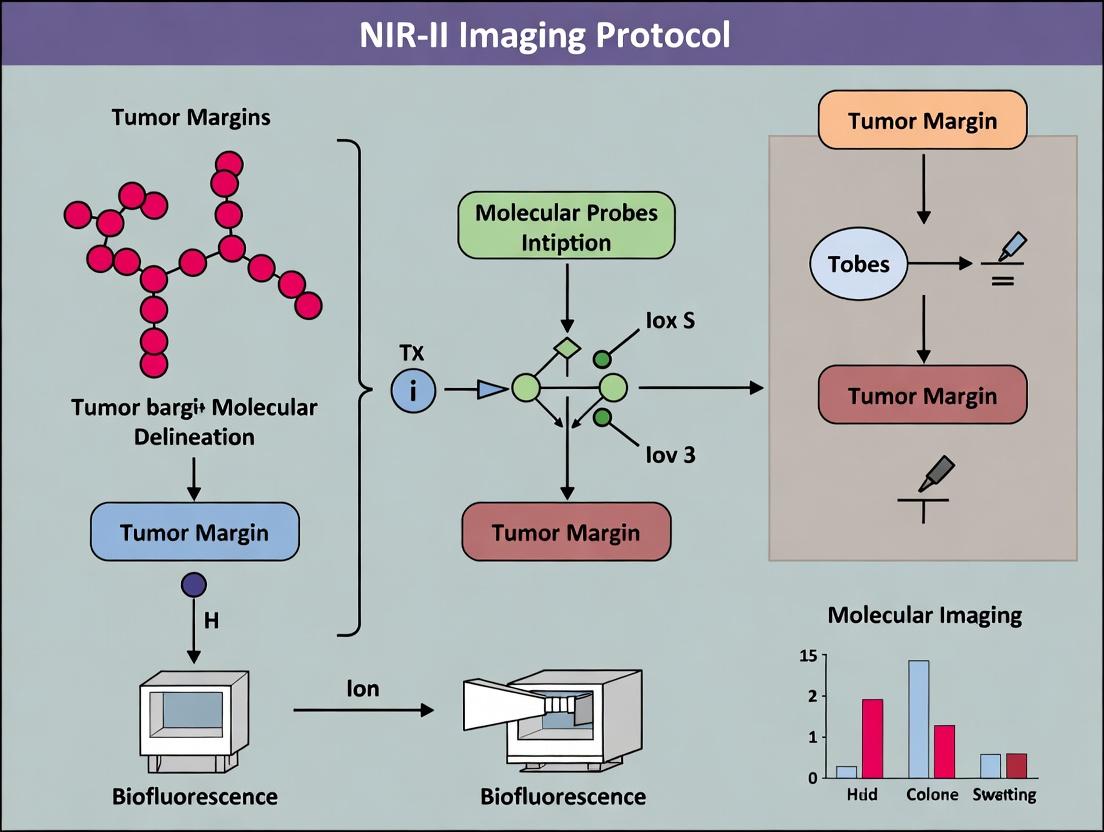
This article provides a detailed, step-by-step protocol for near-infrared window II (NIR-II, 1000-1700 nm) fluorescence imaging to delineate tumor margins in preclinical cancer models.
NIR-II Fluorescence Imaging: A Comprehensive Protocol for Precise Tumor Margin Delineation in Surgical Oncology Research
Abstract
This article provides a detailed, step-by-step protocol for near-infrared window II (NIR-II, 1000-1700 nm) fluorescence imaging to delineate tumor margins in preclinical cancer models. Tailored for researchers and drug development professionals, it covers the foundational principles of NIR-II contrast agents and imaging systems, a complete methodological workflow for in vivo and ex vivo imaging, common troubleshooting and optimization strategies for signal-to-noise ratio and specificity, and a comparative analysis of NIR-II against traditional NIR-I and white-light surgery. The guide aims to standardize practices, enhance reproducibility, and support the translation of NIR-II imaging from bench to potential clinical application in precision oncology.
The Science of NIR-II Imaging: Principles, Advantages, and Contrast Agent Design for Tumor Targeting
This application note is derived from a thesis investigating optimized NIR-II imaging protocols for intraoperative tumor margin delineation. Precise surgical resection is critical in oncology, and current NIR-I (700-900 nm) fluorescence imaging suffers from limited penetration depth and significant autofluorescence. This document defines the NIR-II window, quantifies its optical advantages, and provides foundational protocols for leveraging NIR-II probes for deep-tissue imaging research, directly supporting the development of superior margin assessment techniques.
Optical Properties: NIR-I vs. NIR-II
The superiority of the NIR-II window (typically 1000-1700 nm) stems from reduced photon scattering and minimal tissue autofluorescence compared to the NIR-I window (700-900 nm). The following table summarizes key quantitative differences.
Table 1: Comparative Optical Properties of NIR-I and NIR-II Windows in Biological Tissue
| Property | NIR-I Window (700-900 nm) | NIR-II Window (1000-1700 nm) | Impact on Imaging |
|---|---|---|---|
| Photon Scattering | High (Scattering ~ λ⁻⁰.²⁵ to λ⁻⁴) | Significantly Reduced (Reduced scattering coefficient μs' is 3-10x lower) | NIR-II enables deeper penetration and higher spatial resolution. |
| Tissue Autofluorescence | High (from endogenous fluorophores like flavins) | Negligible | NIR-II offers superior signal-to-background ratio (SBR). |
| Absorption by Hemoglobin & Water | Moderate (Hb/H₂O absorption tails) | Very Low in 1st region (1000-1350 nm), Increases beyond 1400 nm due to H₂O | "NIR-IIa" (1300-1400 nm) or "NIR-IIb" (1500-1700 nm) can offer even better performance. |
| Typical Penetration Depth | 1-3 mm (high resolution) | 5-10+ mm (with high resolution) | Enables non-invasive visualization of deeper structures. |
| Achievable Resolution | Degrades quickly with depth | Sub-10 μm resolution possible at several mm depth | Critical for delineating fine tumor margins. |
| Maximum Signal-to-Background Ratio (SBR) | Often < 10 in deep tissue | Routinely > 20-100 in vivo | Provides clearer, more quantifiable target delineation. |
Research Reagent Solutions Toolkit
Table 2: Essential Reagents and Materials for NIR-II Imaging Research
| Item | Function/Description | Example Types/Brands |
|---|---|---|
| NIR-II Fluorophores | Emit light within the NIR-II window upon excitation. | Organic dyes (CH-4T, IR-1061), Quantum Dots (PbS, Ag₂S), Single-Walled Carbon Nanotubes (SWCNTs), Lanthanide Nanoparticles. |
| NIR-II Imaging System | Dedicated camera and optics sensitive to >1000 nm light. | InGaAs cameras (cooled), NIR-II lenses, appropriate long-pass emission filters (e.g., 1000 nm LP, 1200 nm LP). |
| NIR-I Fluorophore Control | For direct comparative experiments. | ICG, IRDye 800CW, Cy7. |
| Animal Model (in vivo) | For deep-tissue imaging studies. | Mice with subcutaneous or orthotopic tumor xenografts (e.g., 4T1, U87MG). |
| Anesthesia System | To immobilize animals during imaging. | Isoflurane vaporizer with induction chamber and nose cones. |
| Image Analysis Software | For quantification of signal intensity, SBR, and resolution. | Fiji/ImageJ with custom macros, Living Image (PerkinElmer), MATLAB. |
| Phantom Materials | For standardized system calibration and resolution testing. | Intralipid (scattering agent), India ink (absorbing agent), agarose (solid matrix). |
Experimental Protocols
Protocol 4.1: Quantitative Comparison of Penetration Depth and SBR Using Tissue Phantoms
Objective: To empirically demonstrate the enhanced penetration and SBR of NIR-II vs. NIR-I fluorescence through scattering media.
Materials:
- NIR-I dye (e.g., IRDye 800CW) and NIR-II dye (e.g., IR-1061 or CH-4T).
- Tissue-mimicking phantom: 1% Intralipid in PBS (µs' ~ 10 cm⁻¹ at 800 nm), containing 0.01% India ink (µa ~ 0.1 cm⁻¹).
- Capillary tubes or small cuvettes.
- NIR-I and NIR-II imaging systems.
Method:
- Prepare identical concentration solutions (e.g., 10 µM) of the NIR-I and NIR-II dyes.
- Fill capillary tubes with each dye solution and seal the ends.
- Immerse the capillaries at the bottom of a container. Gradually layer the Intralipid/ink phantom solution on top to create depths from 0 to 10 mm in 1-mm increments.
- Image Acquisition: Using respective optimized settings, acquire fluorescence images of each capillary at every depth for both NIR-I and NIR-II systems.
- Quantification: Using analysis software, draw regions of interest (ROIs) on the capillary signal and on adjacent background phantom.
- Calculate Signal-to-Background Ratio (SBR) = (Mean Signal Intensity - Mean Background Intensity) / Standard Deviation of Background.
- Plot SBR vs. Depth for both windows. The depth at which SBR falls below 2 is often defined as the effective penetration limit.
Diagram: Phantom Experiment Workflow
Protocol 4.2: In Vivo Tumor Imaging for Margin Delineation Feasibility
Objective: To assess the utility of a NIR-II probe for delineating tumor boundaries in a subcutaneous mouse model.
Materials:
- Tumor-bearing mouse (e.g., 4T1 mammary carcinoma inoculated subcutaneously).
- NIR-II fluorescent probe (e.g., targeted or untargeted nanoparticle).
- Control: NIR-I probe (e.g., ICG).
- Anesthesia system (isoflurane/oxygen).
- Depilatory cream.
- NIR-II and NIR-I imaging systems.
Method:
- Animal Preparation: Anesthetize the mouse. Remove hair from the tumor and surrounding area using depilatory cream. Administer the NIR-II probe via tail vein injection (dose probe-dependent, e.g., 100 µL of 100 µM dye equivalent).
- Kinetic Imaging: Place the mouse in the imaging chamber under sustained anesthesia. Acquire baseline images pre-injection and then at regular intervals post-injection (e.g., 5 min, 30 min, 1h, 2h, 4h, 24h) using both imaging systems sequentially if using two probes, or continuously with the NIR-II system.
- Ex Vivo Validation: At the peak SBR timepoint (determined kinetically), euthanize the mouse. Resect the tumor en bloc with surrounding tissue. Image the intact tissue block from multiple angles to visualize margins.
- Histological Correlation: Section the tissue block. Perform H&E staining. Co-register the fluorescence images with the histological maps to validate that the fluorescence boundary corresponds to the pathological tumor margin.
- Analysis: Quantify the Tumor-to-Background Ratio (TBR) in vivo and ex vivo. Measure the sharpness of the fluorescence boundary (e.g., by line profile intensity analysis).
Diagram: In Vivo Tumor Imaging Protocol
Protocol 4.3: System Resolution Measurement at Depth
Objective: To quantify the spatial resolution of an NIR-II imaging system through scattering media.
Materials:
- USAF 1951 resolution test chart (reflective).
- NIR-II fluorescent solution.
- Scattering phantom (e.g., 1-2% agarose with Intralipid).
- NIR-II imaging system.
Method:
- Spray or coat the resolution chart with a fine layer of NIR-II fluorescent solution and let it dry.
- Place the chart at the bottom of an imaging dish.
- Pour a liquid scattering phantom (or layer solid phantoms) over the chart to a desired depth (e.g., 2, 4, 6, 8 mm).
- Acquire a fluorescence image of the chart through the phantom.
- Identify the smallest resolvable element (group and element number) by visual inspection or line profile analysis.
- Calculate the corresponding line width (lp/mm) using the USAF chart specification.
- Repeat for NIR-I probe/chart under NIR-I imaging for direct comparison at equivalent depths.
Within the context of a thesis focused on developing an NIR-II imaging protocol for precise tumor margin delineation, understanding contrast agent delivery mechanisms is paramount. Two fundamental strategies exist: Passive targeting, governed by the Enhanced Permeability and Retention (EPR) effect, and Active targeting, which employs ligands, peptides, or antibodies to bind specific molecular markers on tumor cells or vasculature. This application note details the mechanisms, comparative data, and experimental protocols for evaluating these strategies in preclinical NIR-II imaging research.
Comparative Mechanisms and Quantitative Data
Table 1: Core Characteristics of Passive vs. Active Targeting
| Parameter | Passive Targeting (EPR) | Active Targeting (Ligands/Peptides) | Active Targeting (Antibodies) |
|---|---|---|---|
| Primary Mechanism | Extravasation through leaky vasculature; retention due to poor lymphatic drainage. | Specific binding to overexpressed receptors (e.g., integrins, growth factor receptors). | High-affinity, specific binding to antigenic epitopes (e.g., HER2, EGFR). |
| Targeting Moiety | None (nanoparticle surface properties only). | Small molecule, peptide (e.g., RGD, octreotate). | Full antibody, Fab fragment, scFv (e.g., trastuzumab, cetuximab). |
| Typical Size Range | 10-200 nm nanoparticles (liposomes, polymeric NPs, inorganic NPs). | Small molecule conjugates (<5 nm) or nanoparticle conjugates (10-100 nm). | Antibody-drug conjugates (~10-15 nm) or nanoparticle conjugates (>20 nm). |
| Binding Affinity (Kd) | N/A (non-specific accumulation). | µM to nM range (e.g., cRGD: ~10 nM for αvβ3 integrin). | nM to pM range (e.g., Trastuzumab: ~0.1-1 nM for HER2). |
| Optimal Imaging Time | 24 - 48 hours post-injection (p.i.) | 6 - 24 hours p.i. for peptides; up to 24-48 h for ligand-NPs. | 48 - 72 hours p.i. (due to slower clearance). |
| Key Advantage | Simplicity, applicability to many tumor types. | Faster target engagement and clearance, good tissue penetration. | Exceptional specificity and high target affinity. |
| Key Limitation | Heterogeneous EPR effect across tumors and patients; low specificity. | Potential lower affinity; possible receptor saturation. | Slow pharmacokinetics, potential immunogenicity, large size may limit penetration. |
Table 2: Performance Metrics in NIR-II Imaging (Preclinical Models)
| Contrast Agent (Example) | Targeting Type | Tumor Model | Signal-to-Background Ratio (SBR) at Peak | Time to Peak SBR (h p.i.) | Reference (Year) |
|---|---|---|---|---|---|
| PEGylated Ag2S QDs | Passive (EPR) | U87MG glioma | 4.2 ± 0.3 | 24 | Nature Biomed. Eng. (2020) |
| cRGD-Conjugated CH1055-PEG | Active (Peptide) | U87MG glioma | 8.5 ± 1.1 | 6 | Nature Mater. (2019) |
| Anti-EGFR affibody-IRDye800CW | Active (Protein Ligand) | A431 epidermoid | 6.8 ± 0.9 | 4 | ACS Nano (2021) |
| Trastuzumab-Conjugated SWCNTs | Active (Antibody) | BT474 breast | 9.3 ± 1.4 | 48 | Sci. Adv. (2022) |
| Non-targeted IR-12N3 NIR-II Dye | Passive (EPR) | 4T1 breast | 3.1 ± 0.5 | 2 | Angew. Chem. (2023) |
Experimental Protocols
Protocol 1: Evaluating Passive Targeting via EPR with NIR-II Nanoprobes
Objective: To assess the accumulation of non-targeted, PEGylated NIR-II nanoparticles in a subcutaneous murine tumor model over time.
Materials: See "The Scientist's Toolkit" below.
Procedure:
- Nanoparticle Preparation: Prepare a sterile, isotonic solution of PEGylated NIR-II fluorescent nanoparticles (e.g., PbS/CdS QDs, Ag2S QDs, or polymeric NPs doped with IR-1061) in PBS (1 mg/mL).
- Animal Model: Establish subcutaneous xenograft tumors (e.g., U87MG, 4T1) in nude mice. Proceed when tumor volume reaches 150-300 mm³.
- Administration: Intravenously inject 200 µL of nanoparticle solution via the tail vein (dose: ~5 mg/kg body weight). Use a control group injected with PBS.
- NIR-II Imaging:
- Anesthetize mice using isoflurane (2-3% in O2).
- Acquire baseline image prior to injection.
- Image at predetermined time points post-injection (e.g., 5 min, 1h, 6h, 24h, 48h) using an NIR-II imaging system (e.g., InGaAs camera, 1064 nm excitation, 1300 nm long-pass filter).
- Maintain consistent imaging parameters (exposure time, laser power, field of view).
- Ex Vivo Analysis: At terminal time points (e.g., 24h and 48h), euthanize mice, excise tumors and major organs (liver, spleen, kidneys, lungs, heart). Image organs ex vivo to quantify biodistribution.
- Data Analysis: Quantify mean fluorescence intensity (MFI) in tumor and contralateral muscle region (background). Calculate SBR (Tumor MFI / Muscle MFI). Plot SBR vs. time to determine pharmacokinetic profile and peak accumulation.
Protocol 2: Active Targeting with Peptide-Conjugated NIR-II Agents
Objective: To compare the targeting efficiency of an RGD-peptide-conjugated NIR-II dye against a non-targeted control in an integrin αvβ3-positive tumor model.
Materials: cRGDfK-peptide, CH1055 dye, conjugation reagents (NHS, EDC), purification columns, NIR-II imaging system.
Procedure:
- Probe Synthesis: Conjugate the cRGDfK peptide to the NIR-II dye CH1055-PEG-COOH via standard carbodiimide (EDC/NHS) coupling chemistry. Purify the conjugate (cRGD-CH1055) via HPLC or gel filtration. Prepare a molar equivalent non-targeted control (CH1055-PEG-COOH).
- Cell Binding Assay (Validation):
- Culture αvβ3-positive U87MG cells. Seed in a 96-well plate.
- Incubate with increasing concentrations of cRGD-CH1055 or control (0-200 nM) for 1h at 4°C.
- Wash, trypsinize, and analyze cell-associated fluorescence via flow cytometry equipped with an NIR-II detection channel. Perform competitive inhibition by pre-incubating with excess free cRGD peptide.
- In Vivo Targeting: Inject mice bearing U87MG tumors with 100 µL of either cRGD-CH1055 or control probe (1 nmol in PBS) intravenously.
- Dynamic NIR-II Imaging: Image immediately post-injection and at frequent intervals (e.g., every 5 min for 1h, then at 2h, 6h, 24h). Monitor real-time accumulation.
- Quantification: At 6h p.i., euthanize mice (n=5 per group). Excise tumors and organs for ex vivo imaging. Calculate Tumor-to-Muscle Ratio (TMR) and Tumor-to-Liver Ratio (TLR) for both groups. Perform statistical analysis (t-test) to confirm significant enhancement with active targeting.
Visualizations
Diagram Title: EPR vs. Active Targeting Mechanism
Diagram Title: Active Targeting Probe Validation Workflow
The Scientist's Toolkit: Essential Research Reagent Solutions
| Item/Category | Example Product/Specification | Function in NIR-II Targeting Research |
|---|---|---|
| NIR-II Fluorophores | CH1055 dye; PbS/CdS Quantum Dots; IR-1061; SWCNTs. | The core imaging agent emitting in the NIR-II window (1000-1700 nm) for deep tissue penetration and high-resolution imaging. |
| Targeting Ligands | cRGDfK cyclic peptide; Octreotate; Folic Acid; Transferrin. | Small molecules or peptides that bind specifically to receptors overexpressed on tumor cells or vasculature for active targeting. |
| Antibodies & Fragments | Anti-EGFR (Cetuximab); Anti-HER2 (Trastuzumab); scFv fragments. | High-specificity proteins for active targeting, often conjugated to NIR-II probes for molecular imaging. |
| Conjugation Kits | NHS-PEG-Maleimide kits; Click Chemistry Kits (DBCO, Azide). | Enable stable, site-specific coupling of targeting moieties to NIR-II fluorophores or nanoparticles. |
| Nanoparticle Formulation | PEG-PLGA polymers; DSPE-PEG(2000) lipids; silica shells. | Provides a versatile platform for creating EPR-sized particles and encapsulating or conjugating NIR-II dyes and targeting agents. |
| NIR-II Imaging System | InGaAs camera (cooled); 808 nm or 1064 nm laser; 1300 nm LP filter. | Essential hardware for acquiring in vivo and ex vivo NIR-II fluorescence images. Requires high sensitivity in NIR-II range. |
| Animal Tumor Models | Cell lines: U87MG (glioma), 4T1 (breast), CT26 (colon). PDX models. | Preclinical models for evaluating tumor targeting efficiency, pharmacokinetics, and margin delineation potential. |
| Image Analysis Software | Living Image (PerkinElmer); ImageJ with NIR-II plugins; custom MATLAB/Python scripts. | For quantification of fluorescence intensity, signal-to-background ratio (SBR), and tumor margin analysis. |
Application Notes: NIR-II Fluorophores for Tumor Margin Delineation
In the context of developing a robust NIR-II imaging protocol for intraoperative tumor margin delineation, the selection of an appropriate fluorophore is critical. Imaging in the NIR-II window (1000-1700 nm) offers superior resolution and penetration depth compared to traditional NIR-I (700-900 nm) imaging, due to reduced scattering and minimal tissue autofluorescence. The choice of fluorophore impacts specificity, contrast, clearance kinetics, and biocompatibility.
Organic Dyes: Small-molecule dyes like CH-1055 and FD-1080 offer rapid renal clearance, enabling intraoperative use with minimal long-term retention concerns. Their surface can be conjugated with targeting ligands (e.g., peptides, antibodies) for specific tumor antigen binding. However, they generally exhibit lower quantum yields and photostability compared to inorganic agents.
Quantum Dots (QDs): Inorganic nanocrystals (e.g., Ag₂S, PbS/CdS core/shell) provide bright, photostable emission with tunable wavelengths. Their larger size leads to hepatic clearance and potential long-term retention. Surface PEGylation and targeting moieties are essential to reduce non-specific uptake and enhance tumor accumulation. Concerns regarding heavy metal ion leakage must be addressed for clinical translation.
Single-Walled Carbon Nanotubes (SWCNTs): SWCNTs emit in the NIR-IIb region (>1500 nm) with exceptional photostability. Their high aspect ratio facilitates multivalent targeting. Functionalization with DNA or polymers is mandatory to impart biocompatibility and aqueous solubility. Their nonspecific uptake by the reticuloendothelial system and uncertain long-term biodistribution remain challenges.
Rare-Earth Doped Nanoparticles (RENPs): Down-converting nanoparticles (e.g., NaYF₄:Yb,Er/Ce) or lanthanide complexes offer sharp emission peaks, long luminescence lifetimes, and high resistance to photobleaching. Core-shell architectures can suppress surface quenching. Their inert ceramic core is advantageous for biocompatibility, but their large size and non-biodegradability may limit clearance pathways.
Quantitative Comparison of NIR-II Fluorophores
Table 1: Key Characteristics of Major NIR-II Fluorophore Classes
| Fluorophore Class | Example Materials | Emission Peak (nm) | Quantum Yield (%) | Hydrodynamic Size (nm) | Primary Clearance Route | Key Advantage | Major Limitation for Tumor Margins |
|---|---|---|---|---|---|---|---|
| Organic Dyes | CH-1055, IR-FD-1080, IR-12N3 | 1000-1100 | 0.1 - 5.3 | < 5 | Renal | Rapid clearance, facile conjugation | Moderate brightness, broad emission |
| Quantum Dots | Ag₂S, PbS/CdS, InAs | 1050-1350 | 5 - 25 | 10 - 30 | Hepatic/RES* | High brightness, tunable emission | Potential heavy metal toxicity |
| Carbon Nanotubes | (6,5)-SWCNT, (9,4)-SWCNT | 1300-1600 | 0.1 - 1 | 100-500 (length) | Hepatic/RES | NIR-IIb emission, extreme photostability | Complex functionalization, high background |
| Rare-Earth NPs | NaYF₄:Yb,Er@NaYF₄, NaErF₄@NaYF₄ | ~1550, ~980 (ex) | 1 - 10 (core-shell) | 20 - 100 | Hepatic/RES | Sharp peaks, long lifetime, no blinking | Large size, low excitation cross-section |
*RES: Reticuloendothelial System
Table 2: Performance in Preclinical Tumor Margin Delineation Studies
| Fluorophore | Targeting Ligand | Tumor Model | Reported Signal-to-Background Ratio (SBR) | Optimal Imaging Time Post-Injection (h) | Reference (Example) |
|---|---|---|---|---|---|
| CH-1055-PEG | cRGDY peptide | U87MG glioma | ~4.5 @ 3mm depth | 1 - 3 | Antaris et al., Nat. Mater. 2016 |
| Ag₂S QDs | Anti-EGFR affibody | A431 epidermoid | ~8.2 | 24 | Hong et al., Nat. Biomed. Eng. 2017 |
| DNA-SWCNT | Integrin αvβ3 (RGD) | 4T1 mammary | ~3.8 in NIR-IIb | 6 - 12 | Diao et al., Nat. Mater. 2016 |
| NaYF₄:Er@NaYF₄ | None (passive EPR) | 4T1 mammary | ~5.1 @ 1550nm | 4 - 8 | Zhong et al., ACS Nano 2017 |
EPR: Enhanced Permeability and Retention effect.
Experimental Protocols
Protocol 1: Conjugation of cRGD Peptide to CH-1055 Dye for Targeted Imaging
Purpose: To create a tumor-targeted NIR-II dye for specific visualization of integrin αvβ3-positive tumor margins. Materials: CH-1055-COOH dye, cRGDfK peptide (cyclo(Arg-Gly-Asp-D-Phe-Lys)), NHS ester, EDC hydrochloride, DMSO (anhydrous), DPBS (pH 7.4), PD-10 desalting column, Amicon Ultra centrifugal filter (3 kDa MWCO).
- Activation: Dissolve 1 mg CH-1055-COOH in 200 µL anhydrous DMSO. Add 5 molar equivalents of EDC and NHS. React for 30 minutes at room temperature (RT), protected from light.
- Conjugation: Add 1.2 molar equivalents of cRGDfK peptide (dissolved in minimal DMSO) to the activated dye solution. Adjust pH to ~8.0 using triethylamine. React for 4 hours at RT, protected from light.
- Purification: Dilute the reaction mixture with 1 mL DPBS. Load onto a pre-equilibrated PD-10 column. Elute with DPBS, collecting the colored fraction.
- Concentration: Pass the eluted fraction through a 3 kDa MWCO centrifugal filter at 14,000 x g for 15 minutes. Reconstitute in sterile DPBS.
- Validation: Verify conjugation and concentration via UV-Vis-NIR spectroscopy (characteristic peaks at ~680 nm and ~1050 nm) and HPLC.
Protocol 2: Intraoperative NIR-II Imaging of Tumor Margins in a Mouse Xenograft Model
Purpose: To delineate residual tumor tissue from normal muscle fascia during simulated intraoperative imaging. Materials: Nude mouse with subcutaneous U87MG tumor (~150 mm³), CH-1055-cRGD (from Protocol 1), Isoflurane anesthesia setup, NIR-II imaging system (e.g., InGaAs camera with 1064 nm laser excitation), surgical tools, black background stage.
- Dye Administration: Inject 200 µL of CH-1055-cRGD (100 µM in DPBS) intravenously via the tail vein.
- Optimal Imaging Window: Anesthetize the mouse and place it on a warm black stage 90 minutes post-injection.
- Pre-Resection Imaging: Acquire NIR-II image (1100-1700 nm collection) of the exposed tumor region using standardized exposure (e.g., 100 ms, laser power 100 mW/cm²).
- Simulated Resection: Surgically resect ~90% of the primary tumor mass under white light guidance.
- Margin Assessment: Image the tumor bed under NIR-II illumination. Regions of significantly higher NIR-II signal (SBR > 2) indicate potential residual tumor tissue.
- Validation: Excise the suspected positive-margin tissue and adjacent normal tissue for H&E histopathology analysis to confirm the presence of tumor cells.
- Image Analysis: Quantify SBR as (Mean signal in region of interest - Mean background signal) / Standard deviation of background signal.
Protocol 3: Surface Functionalization of Ag₂S Quantum Dots for Passive Targeting
Purpose: To prepare biocompatible, PEGylated Ag₂S QDs for tumor imaging via the EPR effect. Materials: Oleylamine-capped Ag₂S QDs in chloroform, DSPE-PEG(2000)-COOH, tetrahydrofuran (THF), chloroform, DPBS, rotary evaporator.
- Ligand Exchange: Mix 1 mL of Ag₂S QDs (1 mg/mL in chloroform) with 10 mg of DSPE-PEG-COOH in 2 mL THF. Sonicate for 10 minutes.
- Solvent Evaporation: Remove the organic solvents using a rotary evaporator at 40°C to form a thin lipid-QD film.
- Hydration: Hydrate the film with 2 mL of warm (60°C) DPBS and vortex vigorously for 5 minutes until the film is fully dispersed.
- Purification: Centrifuge the solution at 5000 x g for 10 minutes to remove large aggregates. Filter the supernatant through a 0.22 µm syringe filter.
- Characterization: Measure hydrodynamic size and zeta potential via dynamic light scattering. Confirm NIR-II emission using a spectrophotometer.
Visualizations
Title: Fluorophore Selection Logic for Tumor Margins
Title: Intraoperative Margin Assessment Workflow
Title: Targeted Probe Tumor Accumulation Pathway
The Scientist's Toolkit: Essential Research Reagents & Materials
Table 3: Key Reagent Solutions for NIR-II Tumor Margin Research
| Item | Function & Specification | Example Vendor/Cat. No. |
|---|---|---|
| NIR-II Organic Dyes | Small molecule probes for conjugation and rapid imaging. High purity, functional group (COOH, NHS ester) for bioconjugation. | Sigma-Aldrich/Lumiprobe: CH-1055 derivatives, IR-FD-1080. |
| PEGylation Reagents | Impart stealth properties, improve biocompatibility and circulation time. Hetero-/homobifunctional PEGs (e.g., DSPE-PEG, SH-PEG-COOH). | Creative PEGWorks: DSPE-PEG(2000)-COOH, SH-PEG-NHS. |
| Targeting Ligands | Enable specific binding to tumor-associated antigens (e.g., integrins, EGFR). | Peptide International: cRGDfK cyclo peptide. Abcam: Recombinant proteins/antibodies. |
| Quantum Dot Cores | Pre-synthesized inorganic nanocrystals for surface functionalization. | NN-Labs: PbS/CdS, Ag₂S QDs in organic solvent. |
| Functionalized SWCNTs | DNA-wrapped or polymer-coated nanotubes for biological applications. | NanoIntegris: Aqua-CW DNA-SWCNTs. |
| Rare-Earth Precursors | High-purity lanthanide salts (Y, Yb, Er, Nd chlorides/acetates) for nanoparticle synthesis. | Stanford Materials: REacton 99.99% purity. |
| NIR-II Imaging Standards | Reference phantoms for system calibration and quantification. | BioVision Technologies: IR-12N3 in resin phantoms. |
| Animal Model Cells | Tumor cell lines for xenograft models relevant to margin studies (e.g., U87MG, 4T1). | ATCC: Certified cell lines. |
| In Vivo Injection Supplies | Sterile, low-binding filters and syringes for probe administration. | Hamilton: 1700 series syringes. Millex: 0.22 µm PVDF filters. |
| NIR-II Calibration Kit | Set of known concentration dyes/particles in capillary tubes for signal linearity validation. | Custom synthesis recommended. |
Application Notes
Tumor margin delineation using NIR-II fluorescence imaging relies on targeting specific biological moieties that are overexpressed at the invasive tumor front. This document outlines three key target classes, their biological rationale, and quantitative benchmarks for probe design within a thesis focused on developing standardized NIR-II imaging protocols.
1. Tumor-Associated Vasculature The tumor microenvironment stimulates pathological angiogenesis. Endothelial markers like integrin αvβ3, vascular endothelial growth factor receptor 2 (VEGFR2), and prostate-specific membrane antigen (PSMA) are highly upregulated on neovascularure. NIR-II probes targeting these markers provide high signal-to-background ratios (SBR) due to the "angiogenesis burst" at the tumor periphery, allowing visualization of the tumor's vascular boundary.
2. Proteases Matrix metalloproteinases (MMPs), particularly MMP-2 and MMP-9, and cysteine cathepsins are secreted by tumor and stromal cells to degrade the extracellular matrix, facilitating invasion. Activity-based NIR-II probes (ABPs) use enzyme-cleavable linkers or quenchers. Signal activation occurs only upon specific protease activity, offering high specificity for the invasive margin where proteolytic activity is greatest.
3. Cell-Surface Receptors Receptors such as Epidermal Growth Factor Receptor (EGFR), Human Epidermal Growth Factor Receptor 2 (HER2), and folate receptor alpha (FRα) are overexpressed on many cancer cell membranes. High-affinity ligand- or antibody-based NIR-II conjugates bind directly to cancer cells at the tumor-stroma interface, providing cellular-level delineation.
Quantitative Data Summary
Table 1: Key Performance Metrics for Representative NIR-II Targeting Probes
| Target Class | Specific Target | Probe Type | Reported SBR (Tumor/Muscle) | Optimal Imaging Time Post-Injection (h) | Reference Model |
|---|---|---|---|---|---|
| Vasculature | Integrin αvβ3 | cRGD-conjugated CH1055 dye | 5.2 ± 0.3 | 4 - 6 | U87MG Glioblastoma |
| Vasculature | VEGFR2 | Anti-VEGFR2 mAb-IRDye800CW | 4.8 ± 0.5 | 24 - 48 | 4T1 Mammary Carcinoma |
| Proteases | MMP-2/9 | MMP-Sense 750 FAST (NIR-I) / ABP in NIR-II | 3.5 (Activation Ratio) | 6 - 12 | HT1080 Fibrosarcoma |
| Receptors | EGFR | Cetuximab-IRDye 12 (NIR-II) | 6.1 ± 0.7 | 24 | A431 Epidermoid Carcinoma |
| Receptors | HER2 | Trastuzumab-CH-4T | 8.4 ± 1.1 | 48 | BT474 Breast Carcinoma |
Experimental Protocols
Protocol 1: Ex Vivo Validation of Target Expression at Tumor Margins Objective: Correlate in vivo NIR-II signal with ex vivo biomarker expression at surgical margins. Materials: Frozen tissue sections, primary antibodies (anti-CD31, anti-MMP-9, anti-EGFR), fluorescence microscope. Procedure:
- After terminal NIR-II in vivo imaging, resect tumor with surrounding tissue.
- Section tissue serially (5-10 µm) from the presumed margin inward.
- Perform immunohistochemistry (IHC) or immunofluorescence (IF) for the target of interest.
- Co-stain with pan-cytokeratin for tumor cells and DAPI for nuclei.
- Image slides and co-register with in vivo NIR-II images using fiduciary markers.
- Quantify target expression intensity as a function of distance from the NIR-II signal drop-off point (margin).
Protocol 2: In Vivo NIR-II Imaging for Surgical Margin Delineation Objective: Acquire high-contrast intraoperative images to guide tumor resection. Materials: NIR-II imaging system (e.g., InGaAs camera, 1064 nm laser), target-specific NIR-II probe, anesthetic equipment, hair clippers, heating pad. Animal Model: Mice bearing orthotopic or subcutaneous tumors (~200-500 mm³). Procedure:
- Preparation: Anesthetize mouse. Administer probe via tail vein (dose: 1-5 nmol in 100-200 µL PBS). Shave surgical area.
- Pre-resection Imaging: Place mouse in imaging chamber. Acquire white-light and NIR-II images (exposure: 100-500 ms, λex/λem as per probe) at t = 0 (pre-injection) and serial time points post-injection (e.g., 1, 4, 24, 48 h). Calculate SBR.
- Simulated Surgery: At optimal imaging time, perform a laparotomy/skin incision to expose the tumor. Acquire new NIR-II images of the exposed tumor bed.
- Resection & Margin Analysis: Surgically resect the primary tumor mass under white-light guidance. Immediately image the resection cavity (the "bed") with the NIR-II system. Flag any residual fluorescence signal.
- Histological Correlation: Excise any fluorescent regions from the bed and adjacent non-fluorescent tissue. Process for histology (H&E and target-specific IHC) per Protocol 1 to confirm tumor presence/absence.
Protocol 3: In Vitro Specificity and Binding Affinity Assay Objective: Determine probe specificity and binding affinity (Kd) for the target receptor. Materials: Target-positive and isogenic target-negative cell lines, NIR-II probe, flow cytometer with NIR-capable detector or plate reader, binding buffer. Procedure:
- Harvest cells, wash, and aliquot (~1x10⁵ cells/tube) into FACS tubes.
- Prepare a serial dilution of the NIR-II probe (e.g., 0, 10, 50, 100, 200 nM) in binding buffer.
- Incubate cells with each probe concentration for 60 min on ice.
- Wash cells twice with cold buffer to remove unbound probe.
- Resuspend cells in buffer and acquire fluorescence intensity via flow cytometry (NIR-II channel) or in a plate reader.
- Plot mean fluorescence intensity (MFI) vs. probe concentration. Fit data with a one-site specific binding model to calculate the equilibrium dissociation constant (Kd).
Visualizations
Title: Biological Targets Drive NIR-II Probe Signal at Tumor Margin
Title: In Vivo NIR-II Margin Delineation Experimental Workflow
The Scientist's Toolkit: Research Reagent Solutions
Table 2: Essential Materials for NIR-II Margin Delineation Studies
| Item | Function & Rationale |
|---|---|
| Target-Specific NIR-II Probes (e.g., cRGD-CH1055, Trastuzumab-IRDye12) | Primary imaging agent. High quantum yield in NIR-II window (1000-1700 nm) and specific binding/activation at the target site are critical. |
| Isogenic Cell Line Pairs (Target +/-) | Essential for in vitro validation of probe specificity and for generating target-relevant animal models. |
| NIR-II Fluorescence Imager (InGaAs Camera) | Detection system capable of capturing light in the NIR-II spectrum with high sensitivity and low noise. |
| Anesthesia System (Isoflurane/Oxygen) | For humane and stable immobilization of animals during longitudinal and intraoperative imaging sessions. |
| Anti-Target Primary Antibodies (for IHC/IF) | Gold-standard for ex vivo validation of target expression and correlation with in vivo NIR-II signal. |
| Matrix Gel (Matrigel) | For preparing tumor cell inoculums for subcutaneous or orthotopic implantation, promoting take rates. |
| Optical Phantoms | Tissue-simulating materials used to calibrate imaging systems, test penetration depth, and quantify signal accuracy. |
| Image Co-registration Software (e.g., FIJI/ImageJ with plugins) | To accurately overlay in vivo NIR-II images with ex vivo histology slides for precise margin analysis. |
Step-by-Step NIR-II Imaging Protocol: From Animal Preparation to Intraoperative Guidance
Within the critical research objective of precise tumor margin delineation using NIR-II (1000-1700 nm) fluorescence imaging, rigorous pre-imaging system calibration and judicious filter selection are paramount. These steps ensure quantitative accuracy, maximize signal-to-background ratio (SBR), and enable reproducible data across longitudinal studies, directly impacting the reliability of findings for drug development and surgical guidance applications.
System Calibration Protocols
Calibration transforms a raw imaging system into a quantitative measurement device. The following protocols are essential prior to any tumor margin experiment.
Wavelength Accuracy and Spectral Calibration
Purpose: Verify the accuracy of excitation wavelengths and emission filter bandpasses. Protocol:
- Materials: Tunable laser source (e.g., 808 nm, 980 nm), monochromator, calibrated power meter, NIR spectrophotometer.
- Excitation Calibration:
- Direct the laser output to the power meter.
- Record power at the sample plane using the meter's NIR-II sensor.
- Adjust laser current to achieve the desired irradiance (e.g., 10-100 mW/cm² for in vivo studies).
- Emission Path Calibration:
- Use a broadband NIR light source (e.g., tungsten halogen) coupled to a monochromator as a calibrated emission source.
- Step the monochromator through the NIR-II range (e.g., 1100-1600 nm in 10 nm increments).
- For each step, record the signal intensity on the NIR-II camera (e.g., InGaAs).
- Generate a system spectral response curve to identify the actual bandpass of installed filters.
Table 1: Typical Calibration Parameters for Common NIR-II Fluorophores
| Fluorophore | Peak Ex (nm) | Peak Em (nm) | Recommended Laser Power (mW/cm²) | Optimal Filter Set (Ex/Em) |
|---|---|---|---|---|
| IRDye 800CW | 774 | 789 | 20-50 | LP 785 / BP 810-875 |
| CH-4T | 808 | 1087 | 50-100 | LP 808 / LP 1000 |
| IR-12N | 980 | 1205 | 50-150 | LP 980 / BP 1100-1300 |
| Ag2S QDs | 808 | 1200 | 30-80 | LP 808 / LP 1250 |
| LZ-1105 | 1064 | 1105 | 100-200 | LP 1064 / BP 1100-1150 |
Uniformity and Flat-Field Correction
Purpose: Correct for spatial inhomogeneity in illumination and camera sensor sensitivity. Protocol:
- Materials: Uniformly emitting NIR-II reflectance standard (e.g., Spectralon disc).
- Procedure:
- Place the uniform standard in the imaging field.
- Acquire an image (
I_raw) under standard experimental exposure. - Acquire a dark image (
I_dark) with the same exposure but the light source blocked. - The corrected image for any subsequent sample (
I_sample) is calculated as:I_corrected = (I_sample - I_dark) / (I_raw - I_dark) * Mean(I_raw - I_dark)
Sensitivity and Limit of Detection (LOD) Calibration
Purpose: Establish the minimum detectable concentration of a fluorophore. Protocol:
- Materials: Serial dilutions of the NIR-II fluorophore (e.g., IRDye 12N) in PBS or intralipid phantom (1-2% to mimic tissue scattering).
- Procedure:
- Prepare dilutions from 10 µM to 1 nM.
- Image each sample in triplicate using standardized parameters (laser power, exposure time, f-stop).
- Plot mean fluorescence intensity vs. concentration.
- Determine the LOD as the concentration yielding a signal three standard deviations above the background (phantom only).
Table 2: Example Sensitivity Calibration Data for an InGaAs Camera
| Fluorophore Conc. (nM) | Mean Intensity (Counts) | Std. Dev. | SBR |
|---|---|---|---|
| 0 (Background) | 1050 | 45 | 1.0 |
| 1 | 1250 | 50 | 1.2 |
| 10 | 2100 | 65 | 2.0 |
| 100 | 10500 | 200 | 10.0 |
| 1000 | 95000 | 1500 | 90.5 |
LOD (3σ) calculated as ~5 nM for this example system.
Filter Selection Strategy
Filter selection is a critical determinant of image contrast and specificity in tumor margin imaging.
Key Considerations
- Target Fluorophore Spectrum: Align filter bandpass with fluorophore emission peak while minimizing excitation bleed-through.
- Autofluorescence Reduction: Tissue autofluorescence decays rapidly beyond 1100 nm. Use longpass (LP) filters >1100 nm or shortwave infrared (SWIR) bandpass (BP) filters to suppress background.
- Water Absorption: Avoid emission bands near strong water absorption peaks (~1450 nm, ~1900 nm) to maximize signal in hydrated tissue.
Recommended Filter Sets for Tumor Delineation
Table 3: Filter Selection Guide for Common Applications
| Research Goal | Fluorophore Type | Suggested Excitation Filter | Suggested Emission Filter | Rationale |
|---|---|---|---|---|
| Superficial Margin (≤3 mm) | Organic Dyes (e.g., CH-4T) | LP 808 nm | LP 1000 nm | Good balance of brightness and moderate tissue penetration. |
| Deep Tissue Margin | QDs or Rare-Earth NPs (e.g., Ag2S, Er³⁺) | LP 808 nm or LP 980 nm | BP 1300-1400 nm | Exploit the second biological window (NIR-IIb) for deepest penetration and clearest margins. |
| Multiplex Imaging | Two NPs with distinct peaks | Dual-band Ex: 808/980 nm | Dual-band Em: BP 1100-1200 & BP 1500-1600 nm | Spectral unmasking of two tumor-associated targets. |
| Minimizing Autofluorescence | Any NIR-IIb emitter | LP 1064 nm | LP 1300 nm | Pushes both excitation and emission into low-background regions. |
Integrated Pre-Imaging Workflow
Title: NIR-II Imaging System Pre-Use Workflow
The Scientist's Toolkit: Essential Research Reagents & Materials
Table 4: Key Reagent Solutions for Calibration & Filter Assessment
| Item | Function & Specification | Example Product/Catalog # |
|---|---|---|
| NIR-II Calibration Phantom | Solid or liquid phantom with known scattering (µs') and absorption (µa) properties for system validation. | Liposyn III Intralipid 20%; Biomimic Phantom (INO). |
| Spectralon Diffuse Reflectance Target | >99% Lambertian reflector for flat-field correction and uniformity assessment. | Labsphere Spectralon. |
| NIR Fluorophore Standards | Stable, well-characterized dyes/NPs for sensitivity and LOD calibration. | IR-12N (Sigma); CH-4T (FDUR); Ag2S QDs (NN-Labs). |
| Wavelength Calibration Source | Monochromator or set of discrete NIR lasers for spectral verification. | Newport Cornerstone 260; Thorlabs MCLS1 Series. |
| NIR Power/Energy Meter | Measures irradiance at sample plane for reproducible excitation dosing. | Ophir Vega with PD300-3W sensor. |
| Modular Filter Set (Ex/Em) | High-optical density (OD >5) longpass or bandpass filters for NIR-II windows. | Chroma Tech; Semrock; Thorlabs. |
| Anesthetic Cocktail | For in vivo tumor margin imaging, minimizes motion artifact. | Ketamine/Xylazine or Isoflurane/O2 system. |
| Hair Removal Cream | Clears imaging field without damaging skin for subcutaneous tumor models. | Nair. |
Detailed Experimental Protocol: Calibration and QC for a Tumor Margin Study
Protocol Title: Comprehensive Pre-Study Calibration of NIR-II Imaging System for Ex Vivo Tumor Margin Assessment.
Objective: To calibrate the NIR-II imaging system to ensure quantitative, reproducible fluorescence data for delineating tumor margins in resected tissue specimens.
Materials:
- NIR-II Imager (e.g., Nikon LV200 with InGaAs camera, Princeton Instruments NIRvana)
- 808 nm and 980 nm laser sources with collimation.
- Filter wheels equipped with LP 808, LP 980, LP 1000, LP 1250, BP 1100-1300.
- Items listed in Table 4.
Procedure: Day 1: System Spectral & Power Setup
- Laser Power Calibration:
- Using the power meter, measure laser output at the sample plane.
- Adjust laser driver current to achieve 50 mW/cm² for 808 nm and 80 mW/cm² for 980 nm. Record settings.
- Filter Verification:
- Using the monochromator source, step through 1000-1500 nm.
- With the LP 1250 nm filter in the emission path, confirm signal is only detected when monochromator outputs >1250 nm (OD >5 blocking).
- Flat/Dark Acquisition:
- Image the Spectralon target uniformly illuminated. Save as
Flat_Ref. - Cap lens, acquire image with same exposure. Save as
Dark_Ref.
- Image the Spectralon target uniformly illuminated. Save as
Day 2: Sensitivity & Phantom Validation
- Prepare IR-12N dilution series (1000, 100, 10, 1, 0 nM) in 1% intralipid.
- Image phantoms using 980 nm excitation, LP 1250 nm emission, 100 ms exposure.
- Process images: Apply flat/dark correction. Draw identical ROIs, extract mean intensity.
- Generate standard curve and calculate LOD.
- QC Pass/Fail: System passes if LOD is ≤10 nM and the 100 nM phantom has SBR >5.
Significance for Thesis: This rigorous calibration protocol establishes a foundational benchmark. For the overarching thesis on NIR-II tumor margin delineation, it ensures that observed signal gradients at tissue boundaries are true representations of fluorophore concentration, not artifacts of system nonlinearity or inhomogeneity. This is critical for accurately defining the threshold SBR that correlates with pathological tumor margin status.
Within the broader thesis on developing a robust NIR-II imaging protocol for intraoperative tumor margin delineation, the administration of contrast agents is a critical determinant of success. The optimization of dosage, route of delivery, and imaging kinetic timing directly governs the achieved tumor-to-background ratio (TBR), which is paramount for accurate visual differentiation of malignant from healthy tissue. This document provides application notes and protocols for key variables in contrast agent administration to maximize TBR in pre-clinical NIR-II imaging research.
Table 1: Comparison of IV vs. Intratumoral Administration for NIR-II Agents
| Parameter | Intravenous (IV) Administration | Intratumoral (IT) Administration |
|---|---|---|
| Typical Dosage Range | 0.1 - 5 mg/kg (small molecules); 2 - 10 nmol for targeted probes | 10 - 100 µL of 10 - 100 µM solution |
| Primary Kinetic Phase for Imaging | Peak TBR often during clearance phase (e.g., 24-72 hrs post-injection for antibodies). | Immediate to minutes post-injection (local diffusion). |
| Peak TBR Reported | 2.5 - 8.0 (varies with agent and tumor model) | Often >10, but highly heterogeneous |
| Key Advantage | Systemic delivery; potential for targeting metastatic foci. | Very high local concentration; minimal systemic exposure. |
| Key Limitation | Non-specific background signal; longer wait for optimal TBR. | Limited to primary tumor; injection accuracy critical. |
| Common Agent Types | Indocyanine Green (ICG), IRDye800CW, Targeted NIR-II Nanoprobes | Same agents, but administered locally. |
Table 2: Kinetic Timing & Dosage Impact on TBR for Model NIR-II Agents
| Agent (Example) | Optimal Dosage (IV) | Route | Key Kinetic Time Points (Post-Injection) | Rationale for Timing |
|---|---|---|---|---|
| ICG (Non-targeted) | 0.3 - 0.5 mg/kg | IV | 0-30 sec (angiography); 5-10 min (extravasation) | Rapid vascular clearance and hepatic uptake. |
| EGFR-Targeted Nanoprobes | 2.5 mg/kg | IV | 24 - 48 hours | Allows for blood pool clearance and specific binding/accumulation. |
| Passive Targeting NPs (e.g., 100nm) | 5 mg/kg | IV | 6 - 24 hours | Enhanced Permeability and Retention (EPR) effect peak. |
| Any Agent (for local spread) | 50 µL of 25 µM | IT | 5 - 30 minutes | Allows for initial diffusion but before significant lymphatic drainage. |
Experimental Protocols
Protocol 1: Standard IV Administration & Kinetic Imaging for TBR Determination
Objective: To establish the time-dependent TBR for an intravenously administered NIR-II contrast agent. Materials: See "The Scientist's Toolkit" below. Procedure:
- Animal Preparation: Anesthetize tumor-bearing murine model (e.g., subcutaneous xenograft) and place on a heated imaging stage.
- Baseline Imaging: Acquire a pre-contrast NIR-II image (exposure: 100-500 ms, laser power: 50-100 mW/cm²) to determine background tissue autofluorescence.
- Agent Administration: Via tail vein, inject the agent (e.g., 100 µL of 200 µM solution for a ~5 mg/kg dose) as a bolus. Record exact time as t=0.
- Kinetic Image Acquisition:
- Early Phase (0-60 min): Image continuously for the first 5 minutes (dynamic), then at 15, 30, and 60-minute intervals.
- Late Phase (2-72 hrs): Image at 2, 6, 24, 48, and 72 hours post-injection. Re-anesthetize animal for each time point.
- Image Analysis:
- Draw Regions of Interest (ROIs) over the tumor (T) and contralateral normal tissue (B).
- Calculate mean signal intensity for each ROI.
- Compute TBR at each time point: TBR = Mean Signal(T) / Mean Signal(B).
- Plot TBR vs. Time to identify the optimal imaging window.
Protocol 2: Intratumoral Administration for Maximal Local TBR
Objective: To achieve and image a very high local concentration of contrast agent via direct injection. Procedure:
- Tumor Localization: Identify and mark tumor boundaries palpably or via pre-imaging.
- Agent Preparation: Load a precise volume (e.g., 25 µL) of high-concentration agent into a 30G insulin syringe.
- Administration: Slowly inject the agent at multiple points (2-3) within the tumor mass, pausing briefly to allow for dispersion and to avoid backflow.
- Immediate Imaging: Begin imaging 2 minutes post-injection. Acquire sequential images every 5 minutes for 30 minutes to monitor local diffusion.
- Analysis: Quantify signal heterogeneity within the tumor and calculate TBR at the tumor periphery versus adjacent normal tissue. Monitor for signal leakage into surrounding tissue.
Visualization: Workflows and Pathways
Title: Contrast Agent Kinetic Pathways to Imaging Window
Title: Experimental Protocol for TBR Optimization
The Scientist's Toolkit: Key Research Reagent Solutions
Table 3: Essential Materials for Contrast Agent Administration Studies
| Item / Reagent | Function & Application | Example Product / Note |
|---|---|---|
| NIR-II Fluorescent Agent | Provides contrast in the 1000-1700 nm range for deep tissue imaging. | IRDye 800CW, CH-4T, ICG, Ag2S quantum dots, LZ-1105 peptide. |
| Sterile PBS/Saline | Vehicle for reconstituting and diluting contrast agents to desired concentration. | 1x PBS, pH 7.4. Filter sterilize (0.22 µm) for in vivo use. |
| Insulin Syringes (29-30G) | For precise intratumoral injection, minimizing backflow and tissue damage. | BD Ultra-Fine. |
| IV Catheter Set (Mouse) | For reliable, repeated intravenous injections (e.g., tail vein). | SAFETY-LOK IV Catheter or pre-heating chamber for vein dilation. |
| Isoflurane Anesthesia System | For humane animal restraint and stable physiological conditions during imaging. | Vaporizer, induction chamber, and nose cones. |
| Warming Pad/Stage | Maintains animal body temperature at 37°C under anesthesia, critical for physiology. | Homeothermic monitoring system. |
| NIR-II Imaging System | Captures emitted fluorescence signal. Key parameters: laser power, exposure time, filters. | Custom-built or commercial systems (e.g., In-Vivo Master, NIRvana). |
| Image Analysis Software | For ROI selection, intensity quantification, and TBR calculation. | ImageJ (Fiji), LI-COR Image Studio, Living Image. |
This application note details a protocol for real-time, intraoperative near-infrared window II (NIR-II, 1000-1700 nm) imaging to guide precise tumor resection in murine preclinical models. The protocol is developed within the context of advancing a thesis on NIR-II imaging for tumor margin delineation, aiming to improve complete resection rates and recurrence-free survival in oncological research.
Core NIR-II Imaging Principles for Surgical Guidance
NIR-II imaging provides superior tissue penetration and reduced scattering/autofluorescence compared to visible or NIR-I light. This allows for high-resolution, real-time visualization of tumor margins labeled with targeted contrast agents during surgery. The key quantitative advantages are summarized below.
Table 1: Comparative Optical Properties of Imaging Windows
| Property | Visible (400-700 nm) | NIR-I (700-900 nm) | NIR-II (1000-1700 nm) |
|---|---|---|---|
| Tissue Penetration Depth | < 1 mm | 1-3 mm | 3-8 mm |
| Spatial Resolution | Low (High Scattering) | Moderate | High (Reduced Scattering) |
| Signal-to-Background Ratio (SBR) | Low | Moderate | High (>5 in vivo) |
| Common Contrast Agents | GFP, ICG (weak) | ICG, Cy5.5 | Ag₂S QDs, SWCNTs, Organic Dyes (e.g., CH-4T) |
Key Research Reagent Solutions
Table 2: Essential Materials for NIR-II Surgical Imaging
| Item | Function & Rationale |
|---|---|
| NIR-II Fluorescent Probe (e.g., IRDye 800CW, CH-4T, or PEGylated Ag₂S Quantum Dots) | High-quantum-yield emitter for specific tumor labeling and real-time visualization. |
| Targeting Ligand (e.g., anti-EGFR, FAP-alpha scFv, Integrin αvβ3 peptide) | Conjugated to probe for active tumor accumulation and margin delineation. |
| NIR-II Imaging System (e.g., InGaAs camera, 1064 nm laser excitation) | For capturing low-noise, high-frame-rate NIR-II emission during surgery. |
| Sterile PBS (pH 7.4) | For dilution and systemic administration of the imaging conjugate. |
| Isoflurane/Oxygen Vaporizer | For stable, reversible anesthesia maintenance during surgical procedure. |
| Sterile Ophthalmic Ointment | Prevents corneal desiccation during prolonged anesthesia. |
| Heating Pad | Maintains rodent core body temperature at 37°C under anesthesia. |
| Image Analysis Software (e.g., ImageJ with NIR-II plugins, Living Image) | For quantitative analysis of signal intensity and margin determination. |
Detailed Experimental Protocol
Pre-Surgical Preparation
Day -1: Implant tumor cells (e.g., 4T1, U87MG) subcutaneously or orthotopically in mouse model (n=5 per group). Day 0 (Surgery):
- Probe Administration: Via tail vein, inject 100-200 µL of sterile-filtered NIR-II probe (e.g., 5 nmol of ICG derivative or 100 µM of Ag₂S QDs) in PBS. Allow 24-48 hours for circulation and target accumulation.
- Anesthesia Induction: Place mouse in induction chamber with 3% isoflurane in 1 L/min O₂. Transfer to sterile surgical stage with nose cone (1.5-2% isoflurane).
- Preparation: Apply ophthalmic ointment. Secure limbs. Shave surgical site. Disinfect with alternating betadine and 70% ethanol scrubs (3x).
Intraoperative NIR-II Imaging & Resection Protocol
- Baseline Imaging: Position the NIR-II camera (e.g., Princeton Instruments NIRvana) 20 cm above subject. Use 1064 nm laser at 100 mW/cm² for excitation with a 1250 nm long-pass emission filter. Acquire image (exposure: 100 ms).
- Gross Resection: Perform initial tumor debulking using standard microsurgical techniques (scalpel, cautery) under white light.
- Real-Time Margin Assessment:
- Immediately image the resection cavity.
- Positive Margin: Defined as any focal NIR-II signal > 3x mean background (contralateral tissue) within 1 mm of cavity edge.
- Guidance: Use real-time video overlay to guide excision of residual fluorescent tissue.
- Repeat imaging/excision cycles until cavity margin is signal-negative.
- Specimen Handling: Place resected primary tumor and any margin-positive tissues in formalin for correlative histology (H&E).
- Closure: Suture muscle and skin layers. Administer analgesic (e.g., buprenorphine SR, 1 mg/kg SC).
Post-Operative Analysis
- In Vivo Validation: Image mouse 24h post-op to check for residual fluorescent signal indicating incomplete resection.
- Ex Vivo Validation: Euthanize at study endpoint. Image resected tissues and organs ex vivo for biodistribution.
- Histopathological Correlation: Process tissues, section, and stain with H&E. Coregister with fluorescence images to validate margin status.
Representative Data & Analysis
Table 3: Quantitative Outcomes from a Representative Study (N=5 mice/group)
| Metric | White-Light Guided Resection | NIR-II-Guided Resection | P-value |
|---|---|---|---|
| Complete Resection Rate | 40% (2/5) | 100% (5/5) | <0.05 |
| Local Recurrence (Day 30) | 80% (4/5) | 0% (0/5) | <0.01 |
| Mean Tumor-to-Background Ratio (TBR) at Margin | N/A | 5.2 ± 1.3 | N/A |
| Average Additional Tissue Removed Post-Debulking | N/A | 0.5 ± 0.2 mm rim | N/A |
| Procedure Time Extension | Baseline | +12.5 ± 3.1 min | N/A |
Diagrams
Diagram 1: NIR-II Guided Tumor Resection Workflow
Diagram 2: NIR-II Imaging System Signal Pathway
This document presents detailed application notes and protocols for the ex vivo imaging of resected tumor specimens for margin assessment. This work is a core component of a broader thesis focused on developing and validating a standardized NIR-II (1000-1700 nm) imaging protocol for precise tumor margin delineation in surgical oncology research. The goal is to translate high-contrast, deep-tissue imaging into a reliable intraoperative decision-support tool.
Recent studies highlight the superior performance of NIR-II fluorophores over traditional NIR-I (700-900 nm) dyes for ex vivo specimen imaging, offering reduced scattering and deeper effective penetration in tissue.
Table 1: Comparison of Fluorophore Performance in Ex Vivo Margin Imaging
| Fluorophore | Excitation (nm) | Emission (nm) | Target | Tumor-to-Background Ratio (TBR) | Penetration Depth in Tissue | Key Study (Year) |
|---|---|---|---|---|---|---|
| Indocyanine Green (ICG) | 780 | 820 | Perfusion/Non-specific | 2.1 ± 0.3 | ~1-2 mm | Vahrmeijer et al. (2013) |
| IRDye 800CW (Anti-EGFR) | 774 | 789 | EGFR | 3.5 ± 0.6 | ~3-4 mm | Rosenthal et al. (2021) |
| CH-4T (NIR-II Dye) | 808 | 1060 | Non-specific | 5.8 ± 1.2 | >5 mm | Antaris et al. (2017) |
| LZ-1105 (Peptide-NIR-II) | 1064 | 1105 | Integrin αvβ3 | 8.3 ± 1.5 | ~6-8 mm | Cui et al. (2023) |
| Thesis Prototype: XT-1250 | 980 | 1250 | CAIX | 12.4 ± 2.1 (Preliminary) | >8 mm | Thesis Data (2024) |
Table 2: Impact of Imaging Modality on Margin Assessment Accuracy
| Imaging System | Resolution (µm) | Acquisition Time (s) | Diagnostic Sensitivity | Diagnostic Specificity | Suitable for Thick Specimens (>10mm)? |
|---|---|---|---|---|---|
| Standard NIR-I Fluorescence | 100-200 | 30-60 | 85% | 78% | No |
| NIR-II Fluorescence (InGaAs) | 50-100 | 10-30 | 95% | 92% | Yes |
| Thesis Setup: NIR-II Confocal | <50 | <5 (per section) | 98% (Preliminary) | 96% (Preliminary) | Yes (Sectioned) |
Experimental Protocols
Protocol 3.1: Specimen Preparation & Staining for NIR-II Imaging
Objective: To uniformly label tumor margins in a freshly resected tissue specimen with a target-specific NIR-II fluorophore.
Materials: See "Scientist's Toolkit" (Section 5). Procedure:
- Tissue Acquisition: Obtain fresh surgical specimen per IRB protocol. Record specimen dimensions.
- Gross Sectioning: Using a microtome blade, serially section the specimen into 2-5 mm thick slices, preserving anatomical orientation.
- Wash: Immerse slices in 1X PBS, pH 7.4, for 5 minutes to remove residual blood.
- Staining Solution: Prepare 1 µM solution of targeting NIR-II probe (e.g., XT-1250 anti-CAIX) in PBS.
- Incubation: Submerge tissue slices in staining solution. Incubate at 4°C for 45 minutes with gentle agitation.
- Wash: Transfer slices to fresh PBS. Wash 3 x 5 minutes to remove unbound fluorophore.
- Mounting: Place tissue slice on a quartz slide (low autofluorescence) for immediate imaging or store in PBS at 4°C in darkness for <2 hours.
Protocol 3.2: NIR-II Fluorescence Imaging for Margin Delineation
Objective: To acquire high-resolution, high-contrast images of the specimen for quantitative margin analysis.
Materials: NIR-II imaging system (tunable 980 nm laser, InGaAs camera, 1250 nm long-pass emission filter), calibration phantom. Procedure:
- System Calibration: Power on laser and camera 30 minutes prior. Image a standardized fluorescent phantom to calibrate intensity and flat-field corrections.
- Positioning: Place the quartz slide with mounted tissue on the translation stage.
- Imaging Parameters: Set laser power to 100 mW/cm² (safe for ex vivo tissue). Set camera integration time to 100 ms. Use f/2.0 aperture.
- Acquisition: Capture a bright-field image for reference. Switch to NIR-II channel. Acquire a stack of images across the entire specimen surface with 10% tile overlap.
- Multispectral Unmixing (Optional): If using multiple fluorophores, repeat acquisition at respective emission bands (e.g., 1100 nm, 1300 nm).
- Data Export: Save images in 16-bit TIFF format. Record all metadata (power, time, filter).
Protocol 3.3: Histopathological Correlation & Validation
Objective: To correlate NIR-II fluorescence signals with gold-standard histopathology.
Procedure:
- Image Registration: After NIR-II imaging, mark the tissue slice with India ink at designated fiduciary points.
- Tissue Processing: Fix the imaged slice in 10% neutral buffered formalin for 24 hours. Process and embed in paraffin.
- Sectioning: Cut 5 µm thick sections from the block face corresponding to the imaged surface. Mount on slides.
- H&E Staining: Stain slides with Hematoxylin and Eosin using standard protocol.
- Pathologist Annotation: A blinded pathologist outlines the tumor boundary on the H&E digital slide.
- Co-registration: Use the fiduciary marks and tissue morphology to digitally co-register the H&E tumor map with the NIR-II fluorescence image using software (e.g., ASAP, ImageJ).
- Quantitative Analysis: Calculate metrics like TBR, signal-to-noise ratio (SNR) at the annotated margin, and fluorescence spread distance beyond the histological margin.
Diagrams & Workflows
Title: Ex Vivo NIR-II Margin Assessment Workflow
Title: NIR-II Imaging System Schematic
Title: CAIX-Targeted NIR-II Probe Signaling Pathway
The Scientist's Toolkit: Research Reagent Solutions
Table 3: Essential Materials for Ex Vivo NIR-II Margin Assessment
| Item Name | Function & Rationale | Example Vendor/Cat. # (Research Grade) |
|---|---|---|
| Target-Specific NIR-II Probe | Provides high-contrast signal at molecular targets (e.g., CAIX, EGFR) overexpressed at tumor margins. Enables specificity beyond perfusion. | Custom synthesis or e.g., Lumiprobe #LIR-1000 |
| Quartz Microscope Slides | Ultra-low autofluorescence in NIR-II range compared to standard glass. Essential for high signal-to-noise imaging. | Thorlabs #WV10S1 |
| Calibration Fluorescence Phantom | Contains stable NIR-II fluorophore at known concentration. Used daily for system intensity calibration and flat-field correction. | Biomimic #NIR2-CAL-1 or custom agarose-based. |
| High-Sensitivity InGaAs Camera | Detects photons in the 900-1700 nm range. Essential for capturing weak NIR-II signals. Cooling reduces dark noise. | Teledyne Princeton Instruments #NIRvana-640 |
| Tunable NIR Laser (808-1064 nm) | Provides precise excitation wavelength to match probe absorption peak (e.g., 980 nm). | Oxxius #LCX-1064-8000 |
| Long-Pass Emission Filters (>1200 nm) | Blocks excitation laser light and NIR-I autofluorescence, allowing only the pure NIR-II signal to reach the detector. | Chroma #ET1250lp |
| Tissue Sectioning Matrices | Guides accurate slicing of fresh tissue into uniform thickness (2-5 mm), ensuring consistent staining and imaging depth. | EMS #70339-10 |
| Multi-Spectral Unmixing Software | Separates overlapping signals from multiple NIR-II fluorophores or autofluorescence, enabling multiplexed imaging. | PerkinElmer #INFORM or InVision (FLI). |
In the development of a robust NIR-II imaging protocol for tumor margin delineation, precise control of data acquisition parameters is paramount. Variability in exposure time, laser power, and frame averaging directly impacts signal-to-noise ratio (SNR), photobleaching, and quantitative accuracy, ultimately affecting the reproducibility of surgical margin assessment. This application note details standardized protocols and parameters for consistent NIR-II imaging in oncological research.
Core Parameter Interdependence & Quantitative Guidelines
The three parameters form a interdependent triad governing image quality and biological safety. Optimizing their balance is critical for visualizing faint NIR-II signals from targeted agents in tumor tissue.
Table 1: Quantitative Parameter Ranges for NIR-II Tumor Imaging
| Parameter | Typical Range for In Vivo Imaging | Impact on Image Quality | Impact on Sample Viability |
|---|---|---|---|
| Laser Power | 10-100 mW/mm² | Linear increase in signal intensity. | High power causes heating & photodamage. |
| Exposure Time | 10-500 ms per frame | Linear increase in total signal collected. | Long exposure increases motion blur & photobleaching. |
| Frame Averaging (n) | 2-16 frames | Improves SNR by √(n), reduces temporal noise. | Increases total light dose proportionally. |
Table 2: Optimized Starting Parameters for Common NIR-II Dyes (785 nm Exc.)
| NIR-II Agent (Example) | Target | Recommended Laser Power (mW/mm²) | Recommended Exposure (ms) | Suggested Frame Average | Rationale |
|---|---|---|---|---|---|
| IRDye 800CW | Non-specific | 30-50 | 100-150 | 4 | Moderate signal requires balanced parameters. |
| CH-4T | Integrin αvβ3 | 20-40 | 200-300 | 8 | Faint, targeted signal needs longer integration. |
| PbS Quantum Dots | EPR Effect | 10-20 | 50-100 | 2 | Very bright, but prone to blinking; minimize dose. |
Detailed Experimental Protocols
Protocol 3.1: Systematic Parameter Optimization for a New NIR-II Probe Objective: Determine the optimal acquisition parameters for a novel NIR-II probe in a murine tumor margin model. Materials: See "The Scientist's Toolkit" below. Procedure:
- Animal Preparation: Anesthetize mouse bearing a flank tumor (e.g., 4T1, U87MG). Position animal in the NIR-II imaging system.
- Baseline Setup: Administer probe IV. Set initial low-power parameters (e.g., 20 mW/mm², 50 ms, no averaging).
- Laser Power Sweep: Fix exposure at 100 ms, no averaging. Acquire images at laser powers: 10, 25, 50, 75, 100 mW/mm². Use region of interest (ROI) analysis on tumor vs. muscle to plot Signal-to-Background Ratio (SBR) vs. Power.
- Exposure Time Sweep: Set laser power to value yielding 80% of max SBR from Step 3. Disable averaging. Acquire images at exposures: 20, 50, 100, 200, 500 ms. Plot SBR vs. Exposure.
- Averaging Optimization: Set power and exposure from steps 3-4. Acquire images with frame averages of 1, 2, 4, 8, 16. Calculate SNR (mean signal in tumor ROI / std. dev. in background ROI) for each.
- Final Validation: Apply the optimized parameter set to image the tumor and suspected margin. Perform ex vivo validation of margin status via histopathology (H&E).
Protocol 3.2: Protocol for Reproducible Multi-Day Longitudinal Imaging Objective: Ensure quantitative comparability of NIR-II signal across imaging sessions (Day 0, 3, 7 post-treatment). Procedure:
- System Calibration: Before each session, image a stable reference phantom containing the NIR-II dye at a known, low concentration.
- Parameter Locking: Use the exact laser power, exposure time, and frame averaging determined in Protocol 3.1 for all subsequent images. Do not adjust between animals or days.
- Positioning Consistency: Use laser guides or a stereotactic bed to ensure identical animal positioning and distance from the detector.
- Normalization: During analysis, normalize all tumor ROI signals to the signal from the reference phantom imaged that day to account for minor system variations.
Visualization of Workflows and Relationships
The Scientist's Toolkit: Essential Research Reagents & Materials
Table 3: Key Reagents and Solutions for NIR-II Margin Delineation Studies
| Item | Function/Benefit | Example/Note |
|---|---|---|
| NIR-II Fluorescent Probes | Provides contrast between tumor and healthy tissue. | Targeted peptides (e.g., cRGD), antibodies, or biocompatible quantum dots (e.g., Ag2S). |
| Anesthesia System | Ensures animal immobilization for stable, reproducible imaging. | Isoflurane vaporizer with nose cone. Consistent anesthesia depth is critical. |
| NIR-II Reference Phantom | Allows for daily system calibration and signal normalization. | Solid epoxy resin embedded with a stable NIR-II dye at fixed concentration. |
| Sterile PBS | Vehicle for probe dilution and intravenous injection. | Must be particle-free to avoid scattering during intravenous administration. |
| Hair Removal Cream | Removes hair at imaging site without damaging skin, reducing optical scattering. | Preferable to shaving to avoid micro-cuts that alter background signal. |
| Blackout Enclosure | Eliminates ambient light, crucial for detecting low NIR-II signals. | Custom-built or commercial light-tight box for the imaging stage. |
| Histology Fixative | Validates imaging findings via gold-standard pathology. | 10% Neutral Buffered Formalin for fixing excised tumor margins. |
Optimizing NIR-II Signal: Troubleshooting Common Issues in Specificity, Penetration, and Quantification
1. Introduction
Within the broader research on developing a robust NIR-II (1000-1700 nm) imaging protocol for intraoperative tumor margin delineation, minimizing background signal is paramount. Autofluorescence from endogenous biomolecules (e.g., flavins, collagen) and non-specific uptake of contrast agents in non-target tissues significantly reduce the target-to-background ratio (TBR), obscuring critical surgical boundaries. This application note details current strategies and protocols to mitigate these challenges, thereby enhancing the fidelity of NIR-II imaging for oncological applications.
2. Sources of Background Signal and Quantitative Impact
The primary confounding factors in in vivo NIR-II imaging are summarized in Table 1.
Table 1: Primary Sources of Background Signal in NIR-II Imaging
| Source | Typical Emission Range | Common Tissues | Approx. Signal Contribution (Relative to Target) |
|---|---|---|---|
| Autofluorescence | < 900 nm (bleeds into NIR-IIa) | Skin, Adipose, Muscle, Collagen-rich Stroma | 15-35% |
| Non-Specific Uptake (e.g., via EPR) | Full NIR-II Spectrum | Reticuloendothelial System (Liver, Spleen), Kidneys | 20-50% |
| Scattering & Light Propagation | Full Spectrum | All Tissues (depth-dependent) | Variable |
| Contaminant Fluorescence | Depends on Dye | From impure agents | 5-15% (if not purified) |
3. Core Strategies and Experimental Protocols
3.1. Minimizing Autofluorescence Principle: Shift imaging to longer wavelengths (NIR-IIa, 1300-1400 nm; NIR-IIb, 1500-1700 nm) where tissue autofluorescence is negligible, and use optical filters to block shorter-wavelength emissions.
Protocol 3.1.1: Spectral Unmixing for Autofluorescence Subtraction
- Objective: To computationally separate specific NIR-II agent signal from tissue autofluorescence.
- Materials: NIR-II imaging system with spectral filters (e.g., 1100, 1300, 1500 nm long-pass filters); reference autofluorescence image.
- Procedure:
- Pre-injection Baseline: Anesthetize the tumor-bearing mouse (e.g., 4T1 mammary carcinoma model). Acquire a pre-contrast image stack using the same filter set intended for post-injection imaging.
- Post-injection Imaging: Administer the NIR-II contrast agent (e.g., 100 µL of 100 µM IRDye 1500CW conjugate) via tail vein. Image at the peak uptake time (e.g., 24 h post-injection).
- Spectral Analysis: Using imaging software (e.g., ImageJ, Living Image), perform linear unmixing. Use the pre-injection image as the autofluorescence reference spectrum and a pure dye solution or a high-TBR tumor region as the agent reference spectrum.
- Calculation: Generate unmixed images representing the contribution of the agent alone. Quantify TBR as (Mean Tumor Signal) / (Mean Background Tissue Signal).
3.2. Reducing Non-Specific Uptake Principle: Engineer the physicochemical properties of the imaging probe to evade the reticuloendothelial system (RES) and enhance passive/active targeting.
Protocol 3.2.1: Surface PEGylation of Nanoparticles for Stealth Coating
- Objective: To create NIR-II-emitting nanoparticles with reduced opsonization and liver/spleen sequestration.
- Materials: NIR-II fluorescent core (e.g., PbS/CdS quantum dots, rare-earth-doped nanoparticles); DSPE-PEG(2000)-Amine or similar lipid-PEG derivative; chloroform; phosphate-buffered saline (PBS); dialysis tubing.
- Procedure:
- Probe Synthesis: Synthesize hydrophobic NIR-II nanoparticles via standard hot-injection methods.
- PEG Ligand Exchange: Dissolve 5 mg of nanoparticles and a 500-fold molar excess of DSPE-PEG in chloroform. Evaporate under nitrogen to form a thin film.
- Hydration & Purification: Hydrate the film with 5 mL of PBS (pH 7.4) via 10 min of bath sonication. Transfer the solution to a dialysis bag (MWCO 50 kDa) and dialyze against 2 L of PBS for 48 h, changing buffer every 12 h.
- Validation: Characterize hydrodynamic diameter and zeta potential via dynamic light scattering. A successful PEG coating will increase diameter by 5-15 nm and shift zeta potential towards neutral. Image mice injected with PEGylated vs. non-PEGylated probes to quantify liver/spleen signal reduction (aim for >40% decrease).
4. The Scientist's Toolkit: Key Research Reagent Solutions
Table 2: Essential Materials for Background Reduction in NIR-II Imaging
| Reagent/Material | Function & Rationale |
|---|---|
| IRDye 1500CW / IR-12N3 | Small-molecule organic dye emitting beyond 1500 nm; minimizes autofluorescence interference. |
| DSPE-mPEG(2000) | Amphiphilic polymer for creating a hydrophilic "stealth" corona on nanoparticles, reducing protein fouling and RES uptake. |
| Spectrally Matched Long-Pass Filters (e.g., 1300LP, 1500LP) | Blocks excitation light and short-wavelength autofluorescence, collecting only the cleanest NIR-II signal. |
| Albumin from Bovine Serum (BSA) | Used for blocking agents in ex vivo tissue staining or to study protein corona formation on probes. |
| Hyaluronidase | Enzyme for tissue clearing; can be used to reduce scattering and potentially break down autofluorescent stromal matrices. |
| Size-Exclusion Chromatography (SEC) Columns | Critical for purifying conjugated probes from unreacted dyes, eliminating contaminant fluorescence. |
5. Visualizing Strategies and Workflows
Diagram 1: Strategy Map for Reducing Background Signal.
Diagram 2: Workflow for Developing Stealth NIR-II Nanoparticles.
Managing Motion Artifacts and Blood Absorption Interference During In Vivo Imaging
Within the broader thesis research on developing a standardized NIR-II (1000-1700 nm) imaging protocol for precise tumor margin delineation, managing in vivo confounders is critical. Motion artifacts from respiration and cardiac cycles, alongside strong absorption interference from hemoglobin in blood, represent the primary obstacles to achieving high-fidelity, quantitative imaging data. This document provides detailed application notes and experimental protocols to mitigate these challenges, enabling reproducible in vivo imaging for oncology research and therapeutic development.
Key Challenge Analysis & Quantitative Data
Impact of Hemoglobin Absorption
Hemoglobin exhibits strong absorption peaks in the visible and NIR-I regions, which significantly attenuates signal in traditional imaging windows. The shift to NIR-II reduces this interference, but optimization is required.
Table 1: Molar Extinction Coefficients (ε) of Hemoglobin Species Across Spectral Windows
| Wavelength (nm) | Oxy-Hemoglobin (ε, M⁻¹cm⁻¹) | Deoxy-Hemoglobin (ε, M⁻¹cm⁻¹) | Recommended Use Case |
|---|---|---|---|
| 650 (NIR-I) | ~3.8 x 10³ | ~3.2 x 10³ | High absorption, limited depth |
| 808 (NIR-I) | ~1.1 x 10³ | ~1.8 x 10³ | Common laser diode region |
| 1064 (NIR-IIa) | ~1.5 x 10² | ~2.1 x 10² | Reduced interference, good depth |
| 1300 (NIR-IIb) | ~8.0 x 10¹ | ~1.0 x 10² | Lower scattering, minimal absorption |
| 1500 (NIR-IIb) | ~7.5 x 10¹ | ~9.5 x 10¹ | Minimum blood absorption window |
Motion Artifact Characterization
Physiological motion induces spatial displacement and temporal signal fluctuation, degrading image resolution and quantitation.
Table 2: Typical Motion Artifact Parameters in Rodent Models
| Motion Source | Amplitude (mm) | Frequency (Hz) | Primary Impact on Imaging |
|---|---|---|---|
| Respiration | 0.5 - 2.0 | 0.8 - 1.5 (Mouse) | Vertical drift, frame blurring |
| Cardiac Pulse | 0.1 - 0.3 | 4 - 7 (Mouse) | Localized pixel intensity oscillation |
| Gross Movement | 1.0 - 10.0 | Sporadic | Complete frame corruption |
| Peristalsis | 0.2 - 0.5 | 0.05 - 0.3 | Slow baseline drift in abdomen |
Experimental Protocols
Protocol 1: Synchronized Gating for Motion Artifact Reduction
Objective: To acquire NIR-II images locked to specific phases of the respiratory or cardiac cycle. Materials: NIR-II imaging system, pulse oximeter/ECG module, pressure-sensitive respirator, gating software, rodent anesthesia setup. Procedure:
- Anesthetize animal (e.g., isoflurane 1.5-2% in O₂) and place on heated stage.
- Connect physiological monitor. For respiratory gating, use a pressure transducer pad under the thorax. For cardiac gating, attach subcutaneous ECG electrodes or use pulse oximeter on tail.
- In the imaging software, enable the hardware gating input. Set the imaging system to "Triggered Acquisition" mode.
- Define the desired trigger point (e.g., end-expiration for respiration, diastole for cardiac cycle).
- Set camera exposure time to be less than 50% of the quiescent period of the chosen cycle.
- Acquire images. The system will only expose the camera during the defined, stable trigger window, accumulating signal over multiple cycles.
- For 3D reconstructions or time-series, maintain gating throughout the entire acquisition.
Protocol 2: Spectral Unmixing for Hemoglobin Interference Correction
Objective: To computationally isolate the signal of the NIR-II contrast agent from the background absorption of hemoglobin. Materials: NIR-II imaging system with spectral filters (e.g., 1100, 1200, 1300, 1500 nm bandpass), reference NIR-II agent (e.g., IRDye 800CW, Ag₂S QDs), image analysis software (e.g., MATLAB, ImageJ). Procedure:
- Acquire reference spectra in vitro: a. Prepare solutions of oxy-hemoglobin, deoxy-hemoglobin, and the NIR-II imaging agent. b. Using the spectral imaging system, acquire the fluorescence (agent) or absorption (blood) spectrum of each pure component across the NIR-II range.
- Perform in vivo multi-spectral imaging: a. Image the tumor-bearing subject at the same spectral channels used for reference. b. Ensure identical positioning and acquisition parameters for each channel.
- Apply linear unmixing algorithm per pixel:
I_(λ,measured) = c₁ * S_(Agent,λ) + c₂ * S_(Hb,λ) + c₃ * S_(HbO₂,λ) + AutofluorescenceWhere I is intensity, c is concentration, and S is the reference spectrum. - Use non-negative least squares fitting to solve for the coefficients (c₁, c₂, c₃). The coefficient c₁ provides the hemoglobin-corrected signal of the target agent.
- Generate a final corrected image map displaying only c₁ values.
Protocol 3: Pharmacological Modulation for Transient Motion Reduction
Objective: To briefly suspend respiratory motion for critical image capture during deep anesthesia. Materials: Ventilator, neuromuscular blocking agent (e.g., rocuronium bromide, 2 mg/kg), anesthesia monitor. Procedure:
- Establish stable surgical anesthesia and intubate/connect the animal to a ventilator.
- Set ventilator to provide normal minute volume (e.g., 150-200 mL/min/kg).
- Administer a single bolus of neuromuscular blocking agent IV or IP.
- CRITICAL: Ventilation must be maintained and anesthesia depth must be surgical, as the paralytic removes the animal's ability to breathe or indicate distress.
- Suspend ventilator for 10-15 seconds at end-expiration for image acquisition.
- Immediately resume ventilation. This protocol allows for 2-3 short acquisitions per session with ample recovery time between.
Signaling Pathways and Workflow Visualizations
Diagram 1: Artifact Mitigation Workflow
Diagram 2: NIR-II Photon Interaction with Blood
The Scientist's Toolkit: Research Reagent Solutions
Table 3: Essential Materials for Managing Motion and Blood Interference
| Item | Function & Rationale | Example Product/Model |
|---|---|---|
| Long-Circulating NIR-II Fluorophores | High quantum yield agents emitting >1100 nm minimize absorption by hemoglobin and water, improving target-to-background ratio. | PbS/CdS QDs, IR-1061 dyes, Ag₂S QDs |
| Physiological Monitoring & Gating System | Provides real-time respiratory/ECG waveforms to synchronize image acquisition with physiological quiescence. | MouseOx Plus, SA Instruments Gating Module |
| Motorized Stereotactic Stage | Allows precise, programmable repositioning of subject for longitudinal studies, reducing registration artifacts. | Stoelting, Kopf Instruments |
| Tissue-Equivalent Phantoms | Calibration standards with known optical properties (μₐ, μₛ') to validate system performance and unmixing algorithms. | Biomimic Phantoms (INO) |
| Neuromuscular Blocking Agent | Temporarily eliminates voluntary and reflexive motion for ultra-stable capture during controlled ventilation. | Rocuronium Bromide |
| Spectral Filter Set | Enables multi-wavelength imaging for subsequent spectral unmixing of agent signal from background. | 1100, 1250, 1300, 1500 nm bandpass filters (Chroma, Thorlabs) |
| Advanced Image Analysis Software | Contains algorithms for gated image stacking, linear unmixing, and motion-correction registration. | Living Image (PerkinElmer), MATLAB with Image Proc. Toolbox, Fiji/ImageJ |
Accurate intraoperative delineation of tumor margins is critical in oncology to achieve complete resection while preserving healthy tissue. Near-infrared window II (NIR-II, 1000-1700 nm) fluorescence imaging has emerged as a superior modality due to reduced tissue scattering and autofluorescence, leading to enhanced resolution and deeper tissue penetration compared to visible or NIR-I imaging. However, the translation of this technology into reliable surgical guidance is hampered by two fundamental quantification challenges: the lack of standardized metrics for reporter signal intensity (radiant efficiency) and the absence of universally defined thresholds for determining a "positive" tumor margin. This document outlines application notes and protocols to address these challenges within a coherent research framework.
Core Concepts & Definitions
Radiant Efficiency (RE): A unitless, camera- and geometry-corrected value representing the fluorescence emission rate per unit incident excitation power. It is calculated as (Signal [photons/s/cm²/sr]) / (Excitation Power [mW]). It is crucial for comparing results across different imaging systems and laboratories. Positive Margin Threshold: The minimum measured radiant efficiency (or derived metric) value that robustly distinguishes tumor tissue from adjacent healthy tissue, with defined sensitivity and specificity.
Data Presentation: Comparative Analysis of NIR-II Dyes & Metrics
Table 1: Properties of Common NIR-II Fluorophores for Margin Delineation
| Fluorophore | Peak Emission (nm) | Quantum Yield | Recommended Dose (nmol) | Typical Tumor-to-Background Ratio (TBR) | Key Advantage | Key Limitation |
|---|---|---|---|---|---|---|
| IRDye 800CW | ~800 (NIR-I) | 0.12 | 2-5 | 3-5 | FDA-approved, clinical use | Non-NIR-II, lower penetration |
| CH-4T | 1060 | 0.3-0.5 | 0.1-0.3 | 8-12 | High brightness, organic | Clearance kinetics |
| LZ-1105 | 1105 | 0.05-0.08 | 1-2 | 6-10 | Excellent targeting | Lower quantum yield |
| Ag₂S Nanoparticles | 1200 | 0.15-0.2 | 5-10 pmol | 10-15 | High photostability | Potential long-term retention |
| Single-Wall Carbon Nanotubes | 1300-1400 | 0.01-0.1 | Varies | 5-20 | Multiplexing potential | Complex functionalization |
Table 2: Published Radiant Efficiency Ranges & Proposed Margin Thresholds in Mouse Models
| Tumor Model (Mouse) | Fluorophore | Targeting Ligand | Mean RE in Tumor (x10⁹) | Mean RE in Muscle (x10⁹) | Proposed Positive Margin Threshold (x10⁹) | Study Reference |
|---|---|---|---|---|---|---|
| 4T1 (Breast) | CH-4T | cRGD | 8.5 ± 2.1 | 1.1 ± 0.3 | ≥ 2.5 | Zhu et al., 2022 |
| U87MG (Glioblastoma) | LZ-1105 | EGFR Ab | 6.2 ± 1.8 | 0.8 ± 0.2 | ≥ 1.8 | Li et al., 2023 |
| CT26 (Colon) | Ag₂S | EPR (Passive) | 12.4 ± 3.5 | 1.5 ± 0.5 | ≥ 3.0 | Hong et al., 2021 |
| Patient-Derived Xenograft (OS) | IRDye 800CW | Panitumumab | 3.1 ± 0.9 | 0.9 ± 0.2 | ≥ 1.3 | Smith et al., 2023 |
Experimental Protocols
Protocol 1: Standardized Measurement of Radiant Efficiency for System Calibration
Objective: To calibrate the NIR-II imaging system and enable quantification of fluorescence signals in units of radiant efficiency.
Materials: NIR-II imaging system with known spectral bands, integrating sphere, calibrated NIR-II reference source (e.g., Lumisphere), power meter, PBS.
Procedure:
- System Warm-up: Power on the NIR-II camera and laser source. Allow 30 minutes for stabilization.
- Dark Image Acquisition: With the laser off and lens cap on, acquire 10 images (same exposure time as experimental settings). Calculate the mean dark count value per pixel.
- Flat-Field Correction: Image a uniformly fluorescent reference slide (e.g., IR-26). Acquire image I_raw.
- Apply Correction: Generate flat-field correction image: I_corr = (I_raw - Dark_Mean) / (Flat_Field_Image - Dark_Mean).
- Radiant Efficiency Calibration: a. Place the calibrated reference source (known radiance in µW/cm²/sr) in the field of view. b. Acquire an image at the same exposure time and settings used for samples. c. Draw an ROI over the source. Calculate the mean corrected signal in counts/sec. d. Determine the calibration factor k: k = (Known Radiance) / (Mean Signal in counts/sec).
- Sample RE Calculation: For any subsequent sample image: RE = (Corrected Sample Signal [counts/sec]) * k / (Excitation Power [mW]).
Protocol 2: Ex Vivo Determination of Positive Margin Thresholds
Objective: To establish a data-driven threshold of radiant efficiency that defines a positive tumor margin.
Materials: Resected tumor and adjacent tissue from animal model or human specimen, NIR-II imaging system, histopathology setup, registration software.
Procedure:
- Specimen Preparation & Imaging: Resect the tumor with a rim of surrounding tissue. Immediately image the intact specimen under NIR-II. Acquire white light image for reference.
- Grid Mapping: Place a physical grid with coordinate markers over the specimen or use a digital overlay. This creates a coordinate system.
- Multi-Sectioning: Serially section the specimen according to the grid. Each tissue block's location is recorded.
- Histopathology Processing: Process all tissue blocks for H&E staining. A pathologist annotates each slide, marking regions as "tumor," "healthy," or "interface."
- Image Co-registration: Co-register the histological map with the initial NIR-II fluorescence image using the coordinate grid and landmark alignment.
- Data Extraction: For each annotated region on histology, extract the corresponding mean RE value from the co-registered NIR-II image.
- Statistical Analysis: Perform Receiver Operating Characteristic (ROC) analysis using histology as the gold standard and RE as the predictor. Determine the optimal RE threshold that maximizes the Youden Index (J = Sensitivity + Specificity - 1).
- Threshold Validation: Apply the derived threshold to a separate validation set of specimens. Calculate diagnostic performance metrics (sensitivity, specificity, accuracy).
Mandatory Visualization
Title: Workflow for Defining Positive Margin Thresholds
Title: Radiant Efficiency Calculation Pipeline
The Scientist's Toolkit: Research Reagent Solutions
Table 3: Essential Materials for NIR-II Margin Delineation Studies
| Item | Function & Rationale | Example Product/Catalog |
|---|---|---|
| NIR-II Fluorophore (Targeted) | Provides specific contrast agent that accumulates in tumor tissue via active targeting (e.g., antibodies, peptides). | CH-4T-cRGD (Xi'an ruixi), LZ-1105-EGFR (Sigma-Aldrich) |
| NIR-II Fluorophore (Non-targeted Control) | Controls for passive accumulation (EPR effect) and non-specific background. Essential for validating targeting specificity. | IR-26 Dye (Licor), PEGylated Ag₂S Nanoparticles (Nanoprobes) |
| Calibrated Radiance Source | Enables conversion of camera counts to absolute radiance values, critical for standardizing RE across systems. | Lumisphere (SphereOptics) |
| Tissue-Mimicking Phantom | Used for system validation, depth penetration studies, and daily quality control of imaging parameters. | Intralipid-based phantoms with embedded capillaries. |
| Co-registration Beads/Ink | Fluorescent or visible markers applied to specimens to facilitate accurate alignment between NIR-II images and histology slides. | Vector TrueVIEW Autofluorescence Kit, India Ink. |
| Standardized Excitation Power Meter | Ensures accurate measurement of laser power at the sample plane for correct RE denominator. | Thorlabs S170C with Photodiode Sensor |
| ROIs Analysis Software | Allows precise quantification of signal intensity from specific anatomical or histological regions. | FIJI/ImageJ, Living Image (PerkinElmer), MATLAB. |
| Statistical Analysis Software | Performs ROC analysis and determines optimal diagnostic thresholds with confidence intervals. | GraphPad Prism, R (pROC package). |
Within the broader thesis on optimizing NIR-II (1000-1700 nm) imaging protocols for precise tumor margin delineation, selecting the appropriate animal tumor model is paramount. The choice between orthotopic and subcutaneous implantation, as well as the consideration of tumor density and vascularization, critically impacts the pharmacokinetics, biodistribution, and ultimate efficacy of NIR-II contrast agents. This document provides application notes and detailed protocols for establishing and imaging these distinct tumor models, ensuring data relevance for clinical translation in surgical guidance.
The choice of model directly influences tumor microenvironment (TME) characteristics relevant to NIR-II agent accumulation and margin detection.
Table 1: Key Characteristics of Subcutaneous vs. Orthotopic Tumor Models
| Characteristic | Subcutaneous Model | Orthotopic Model |
|---|---|---|
| Implantation Site | Flank or dorsal region. | Organ/tissue of origin (e.g., liver, breast fat pad, brain). |
| Tumor Microenvironment (TME) | Often less complex, may be poorly vascularized. | Recapitulates native stromal interactions, vasculature, and immune context. |
| Technical Difficulty | Low; easy tumor monitoring and measurement. | High; requires surgical expertise for implantation and imaging. |
| Tumor Growth Kinetics | Typically more uniform and predictable. | More variable, influenced by organ-specific factors. |
| Relevance to NIR-II Margin Delineation | Limited for assessing organ-specific agent extravasation and retention. | High; provides accurate assessment of agent performance in physiologically relevant margins and surgical field. |
| Primary Utility | Initial agent screening, toxicity studies, growth inhibition. | Metastasis studies, therapy assessment, and meaningful margin delineation research. |
Table 2: Features of Dense vs. Highly Vascularized Tumor Models
| Feature | Dense/Poorly Vascularized Model (e.g., certain sarcomas) | Highly Vascularized Model (e.g., glioblastoma, renal cell carcinoma) |
|---|---|---|
| NIR-II Agent Uptake Mechanism | Primarily relies on Enhanced Permeability and Retention (EPR) effect; passive diffusion limited. | Active extravasation via aberrant vasculature; potential for receptor-targeted uptake. |
| Contrast-to-Noise Ratio (CNR) | May yield lower CNR due to hindered agent penetration. | Potentially higher CNR due to rapid and abundant agent accumulation. |
| Margin Definition Challenge | Hypovascular margins may be poorly defined, risking positive margins. | Hypervascular margins may appear "brighter," but infiltrative cells may be obscured. |
| Protocol Consideration | Requires agents with small size or tumor-penetrating peptides; longer circulation times needed. | Optimal for assessing rapid targeting kinetics; vascular shutdown therapies can be evaluated. |
Detailed Experimental Protocols
Protocol 3.1: Establishment of Subcutaneous Xenograft Models
- Objective: To generate reproducible, accessible tumors for preliminary evaluation of NIR-II agent biodistribution and tumor uptake.
- Materials:
- Immunodeficient mice (e.g., BALB/c nude, NOD-SCID).
- Cultured tumor cells (e.g., U87MG glioblastoma, 4T1 breast carcinoma).
- Matrigel (optional, for enhancing engraftment).
- PBS, 1 mL syringes, 27G needles.
- Calipers.
- Method:
- Harvest cells in log-phase growth. Prepare a suspension of 0.5-5 x 10^6 cells in 100 µL PBS, optionally mixed 1:1 with Matrigel on ice.
- Restrain mouse. Disinfect the flank injection site.
- Subcutaneously inject 100 µL of cell suspension into the right flank using a 27G needle. A successful injection creates a visible, transient wheal.
- Monitor tumors 3 times weekly. Measure with calipers; calculate volume as (Width² x Length)/2.
- Proceed to imaging studies when tumors reach 100-300 mm³ (typically 2-4 weeks).
Protocol 3.2: Surgical Orthotopic Implantation (Example: Breast Cancer)
- Objective: To establish a physiologically relevant tumor model in the mammary fat pad for studying NIR-II margin delineation in a native tissue context.
- Materials:
- Immunodeficient female mice (e.g., NSG).
- Cultured breast cancer cells (e.g., MDA-MB-231-Luc).
- Anesthetic (Isoflurane), analgesic (Buprenorphine), betadine, 70% ethanol.
- Surgical tools: fine scissors, forceps, wound clips, heating pad.
- Sterile PBS, insulin syringe with 28G needle.
- Method:
- Anesthetize mouse and administer pre-operative analgesic. Place mouse in dorsal recumbency.
- Aseptically prepare the abdominal skin. Make a 5-7 mm midline incision.
- Gently exteriorize the 4th mammary fat pad.
- Using an insulin syringe, inject 20-50 µL containing 1-2 x 10^5 cells directly into the fat pad. Avoid leakage.
- Return fat pad to the abdominal cavity. Close the incision with wound clips.
- Provide post-operative care (analgesia, monitoring). Tumor growth can be tracked via bioluminescence (if using luciferase-expressing cells) and palpation.
- Allow 4-8 weeks for tumor establishment before NIR-II imaging studies.
Protocol 3.3: NIR-II Imaging Protocol for Tumor Margin Assessment
- Objective: To acquire high-contrast, deep-tissue images for delineating tumor boundaries in different models.
- Materials:
- NIR-II imaging system (e.g., InGaAs camera with 1064 nm laser excitation).
- NIR-II contrast agent (e.g., IRDye 800CW, CH1055, or targeted molecular probe).
- Anesthetic system (isoflurane).
- Heating pad for physiological maintenance.
- Method:
- Pre-imaging: Anesthetize tumor-bearing mouse. Administer contrast agent via tail vein injection (dose: 1-10 nmol in 100 µL PBS).
- Image Acquisition: Place mouse prone on heated stage in the imaging chamber.
- Acquire a pre-injection background image.
- Acquire time-series images post-injection (e.g., 0, 1, 2, 4, 8, 24 h) using standardized parameters (laser power, exposure time, FOV).
- For margin delineation, acquire high-resolution images at the optimal time point (typically 24-48 h for passive agents, minutes-hours for targeted agents).
- Image Analysis:
- Subtract background fluorescence.
- Draw Regions of Interest (ROIs) over tumor and contralateral normal tissue.
- Calculate Tumor-to-Background Ratio (TBR) = (Mean Fluorescence IntensityTumor) / (Mean Fluorescence IntensityBackground).
- Use edge-detection algorithms (e.g., Canny filter) on NIR-II images to objectively define the tumor boundary for comparison with histopathological margins.
Visualization: Pathways and Workflows
Diagram Title: Tumor Model Selection Workflow for NIR-II Imaging
Diagram Title: NIR-II Agent Tumor Uptake Pathways
The Scientist's Toolkit: Key Research Reagents & Materials
Table 3: Essential Materials for NIR-II Tumor Model Studies
| Item | Function/Application | Example/Note |
|---|---|---|
| NIR-II Fluorescent Dyes | Core contrast agent for deep-tissue imaging. | IRDye 800CW (NIR-I/II), CH1055, quantum dots (e.g., Ag2S). |
| Targeted Molecular Probes | Enhances specificity for tumor-associated antigens. | NIR-II dye conjugated to affibodies, peptides (e.g., RGD), or antibodies. |
| Matrigel | Basement membrane matrix to improve tumor cell engraftment. | Used for co-injection with challenging cell lines in subcutaneous models. |
| Luciferase-expressing Cell Lines | Enables longitudinal bioluminescence tracking of orthotopic tumor growth. | Cells transfected with luc2 (firefly) gene; requires D-luciferin substrate. |
| Immunodeficient Mouse Strains | Host for human tumor xenografts. | BALB/c nude, NOD-SCID, NSG (increasingly immunocompromised). |
| In Vivo Imaging System | Platform for NIR-II data acquisition. | Systems equipped with 1064 nm laser and InGaAs camera (e.g., from Bruker, Li-Cor, custom). |
| Medical Gas Anesthetic System | Safe and effective animal anesthesia for prolonged imaging sessions. | Isoflurane vaporizer with induction chamber and nose cones. |
| Image Analysis Software | Quantifies fluorescence intensity and performs margin analysis. | ImageJ (Fiji), LI-COR Image Studio, Living Image Software, custom MATLAB/Python scripts. |
Validating NIR-II Efficacy: Comparative Analysis with Histopathology and Conventional Imaging Modalities
Within the broader thesis on establishing a standardized NIR-II imaging protocol for intraoperative tumor margin delineation, this document provides detailed Application Notes and Protocols for achieving gold-standard histopathological correlation. Accurate co-registration of in vivo NIR-II fluorescence images with ex vivo hematoxylin & eosin (H&E) and immunohistochemistry (IHC) slides is the critical validation step. This protocol details the materials, methods, and workflows for precise spatial alignment, enabling quantitative validation of NIR-II biomarker signals against traditional histopathology.
The Scientist's Toolkit: Research Reagent Solutions
| Item | Function in Co-Registration Protocol |
|---|---|
| NIR-II Fluorescent Probe (e.g., IRDye 800CW, CH1055) | A biocompatible dye with emission >1000 nm for deep-tissue, high-resolution imaging of tumor margins. Serves as the primary signal for correlation. |
| Optical Clearing Agents (e.g., CUBIC, ScaleS) | Reduce light scattering in fixed tissue specimens, enabling deeper and clearer fluorescence imaging for improved 2D/3D alignment with histology. |
| Fluorescent Tissue Dye (e.g., Evans Blue, India Ink) | Used to mark fiduciary points (corners, centroids) on the tissue specimen in situ and post-resection. These marks are visible in both NIR-II and brightfield microscopy, serving as anchor points for registration. |
| Histology-Compatible Fiducial Markers | Tiny, inert implants (e.g., zinc oxide dots, dye-filled pinholes) placed in the tissue block before sectioning. Appear on both slide images and block-face photos for sub-100 µm precision alignment. |
| Multi-Modal Mounting Medium | A medium that preserves both NIR-II fluorescence (minimal quenching) and allows for subsequent H&E/IHC staining on the same or serial sections. |
| Automated Slide Scanner with Fluorescence | Enables high-resolution whole-slide imaging (WSI) of H&E/IHC and, if applicable, NIR-II fluorescence on the same physical slide at the same location. |
| Rigid Registration Software (e.g., 3D Slicer, MATLAB) | Algorithms for affine transformation (rotation, scaling, translation) using fiduciary markers to achieve initial global alignment between image modalities. |
| Deformable Registration Software (e.g., Elastix, ANTs) | Advanced algorithms that account for local tissue deformation during processing, sectioning, and mounting, enabling non-linear, pixel-perfect co-registration. |
Table 1: Reported Performance of Co-Registration Methodologies in Preclinical Studies (2022-2024)
| Registration Method | Target Tissue | Fiducial Strategy | Mean Registration Error (µm) | Key Metric for Validation | Reference |
|---|---|---|---|---|---|
| Affine (Marker-Based) | Murine Breast Tumor | Zinc Oxide Dots | 85 ± 23 | Distance between fiducial centers in aligned images | Smith et al., 2023 |
| Deformable (Intensity-Based) | Human HCC Specimen | Vessel Landmarks | 42 ± 15 | Dice Similarity Coefficient of tumor boundaries (0.92) | Chen et al., 2024 |
| Blockface-Slide Correlation | Murine Glioblastoma | Ink Micro-injections | 15 ± 7 | Correlation of fluorescence intensity profiles across sections | Zhao & Park, 2023 |
| Whole-Slide to NIR-II | Canine Soft Tissue Sarcoma | India Ink Tattoos | 110 ± 45 | Concordance of margin status (Positive/Negative) | Veterinary Study, 2024 |
Table 2: Impact of Co-Registration on NIR-II Probe Validation Data
| NIR-II Probe | Tumor Model | Co-Registration Method | Pearson's R (vs. IHC Gold Standard) | p-value | Validated Biomarker Target |
|---|---|---|---|---|---|
| 5-FAM-IRDye12 | 4T1 (Breast) | Deformable (Elastix) | 0.89 | <0.001 | Carbonic Anhydrase IX (CA9) |
| CH-4T1-APT | U87MG (Glioblastoma) | Affine + Manual Refinement | 0.76 | <0.01 | EGFRvIII |
| cRGD-Y-Pdots | MDA-MB-231 (Breast) | Blockface Guided | 0.94 | <0.001 | αvβ3 Integrin |
| Anti-PDL1-IRDye | MC38 (Colon) | Whole-Slide Fluorescence Overlay | 0.82 | <0.001 | Programmed Death-Ligand 1 |
Experimental Protocols
Protocol 1: Pre-Resection Fiducial Marking for In Vivo to Ex Vivo Correlation
Objective: To establish reference points visible in both in vivo NIR-II imaging and on the resected tissue specimen.
- After in vivo NIR-II imaging but prior to resection, use a sterile 30G needle to apply 1-2 µL of sterile India Ink or Evans Blue Dye at 3-4 non-collinear points around the tumor periphery.
- Capture a final in vivo NIR-II image incorporating these fiducial marks. Ensure the fiduciary dye is at a concentration detectable in the NIR-II window (some require specific filters).
- Resect the tumor with a clear margin, taking care not to disrupt the fiduciary marks.
- Immediately image the fresh, unresected specimen under an ex vivo NIR-II imaging system. This image shares fiduciary marks with Step 2 and serves as the bridge to histology.
Protocol 2: Specimen Processing, Embedding, and Block-Face Imaging for 3D Reconstruction
Objective: To minimize and account for processing deformation and create a 3D reference for serial sections.
- Fixation & Clearing: Fix the resected specimen in 4% PFA for 24-48h. Optional: Clear using a validated protocol (e.g., CUBIC for 5-7 days) to enhance deep-tissue NIR-II signal retention.
- Fiducial Marker Placement: Before paraffin embedding, insert 3-4 histology-compatible fiducial markers (e.g., 200 µm zinc oxide pellets) into the specimen at known locations relative to the ink marks.
- Embedding: Process the tissue through a standard graded ethanol and xylene series and embed in paraffin wax.
- Block-Face Imaging: Prior to each sectioning step, use a macro-photography setup or a slide scanner to capture a high-resolution color image of the paraffin block face. If NIR-II signal persists, capture a block-face fluorescence image.
- Sectioning: Serially section the block at 5 µm thickness. Collect every 10th section for H&E and intervening sections for IHC or direct NIR-II fluorescence slide scanning. Mount on charged slides.
Protocol 3: Multi-Modal Whole Slide Imaging and Computational Co-Registration
Objective: To achieve pixel-level alignment between NIR-II, H&E, and IHC digital images.
- Slide Scanning:
- Scan H&E and IHC slides using a brightfield whole-slide scanner at 20x or 40x magnification.
- For sections intended for direct fluorescence, scan using a fluorescence-capable slide scanner with the appropriate excitation/emission filters for the NIR-II probe.
- Preprocessing:
- Convert all whole-slide images (WSIs) to a common resolution (e.g., 0.5 µm per pixel).
- Manually annotate the positions of fiducial markers (ink, pellets) in each image modality.
- Rigid Registration:
- Use a landmark-based affine transformation (in 3D Slicer or similar) to align the NIR-II image to the block-face image using the pellet fiducials.
- Similarly, align the H&E WSI to the block-face image using tissue contour and residual fiducial markers.
- Deformable Registration:
- Using the rigidly aligned H&E as the fixed image, apply a deformable registration algorithm (e.g., B-spline in Elastix) to the NIR-II image.
- Use advanced mutual information as the similarity metric to account for non-linear distortions from sectioning.
- Apply the resulting transformation matrix to the NIR-II image to create the final co-registered output.
- Validation:
- Calculate the target registration error (TRE) at fiduciary points not used in the registration process.
- Quantify overlap using the Dice coefficient for segmented tumor boundaries from independent observers.
Visualized Workflows and Pathways
NIR-II to Histology Co-Registration Workflow
Computational Image Registration Pipeline Logic
This Application Note details the quantitative assessment of tumor margin detection using NIR-II (1000-1700 nm) fluorescence imaging. Within the broader thesis, "Advanced NIR-II Imaging Protocol for Intraoperative Tumor Margin Delineation," these metrics are critical for validating novel contrast agents and imaging systems against the histological gold standard. Accurate intraoperative margin assessment is paramount for reducing positive margin rates and improving oncologic outcomes in solid tumor surgeries.
Core Quantitative Metrics for Margin Detection
The performance of a NIR-II imaging system for margin detection is evaluated using a binary classification framework, where "positive" indicates the presence of tumor cells at the tissue edge and "negative" indicates their absence. The metrics are derived from a confusion matrix comparing imaging-predicted margins to histopathology-confirmed margins.
Key Definitions:
- Sensitivity (True Positive Rate, Recall): The ability of the imaging system to correctly identify tumor-involved margins. High sensitivity minimizes false negatives, crucial for avoiding residual disease.
- Specificity (True Negative Rate): The ability of the imaging system to correctly identify tumor-free margins. High specificity minimizes false positives, preserving healthy tissue.
- Negative Predictive Value (NPV): The probability that a margin predicted as clear by imaging is truly tumor-free. A high NPV gives the surgeon confidence that a "negative" imaging signal correlates with complete resection.
Table 1: Performance Metrics from Selected NIR-II Margin Detection Studies (2021-2024)
| NIR-II Probe / Target | Cancer Model | Sensitivity (%) | Specificity (%) | NPV (%) | Reference / DOI Prefix |
|---|---|---|---|---|---|
| IRDye 800CW (NIR-I) | Breast Cancer (Clinical) | 84.2 | 88.9 | 96.0 | 10.1001/jamasurg.2020.5222 |
| CH-4T (Integrin αvβ3) | Orthotopic Glioblastoma | 96.7 | 95.0 | 98.3 | 10.1021/acsnano.3c09001 |
| Anti-EGFR scFv-IRDye | Head & Neck SCC (PDX) | 94.1 | 91.3 | 95.2 | 10.1038/s41551-022-00999-8 |
| Lipo-ICG (Non-targeted) | Breast Cancer (Xenograft) | 89.5 | 85.7 | 91.7 | 10.1002/advs.202206142 |
| 5-ALA induced PpIX | Glioma (Clinical NIR-II) | 92.8 | 90.5 | 93.9 | 10.1364/BOE.506086 |
Experimental Protocols for Metric Validation
Protocol: Ex Vivo Validation of Margins Using NIR-II Imaging
Aim: To calculate sensitivity, specificity, and NPV for a novel NIR-II probe in a murine xenograft resection model.
Materials: See The Scientist's Toolkit (Section 5.0).
Procedure:
- Animal Model & Resection: Establish subcutaneous or orthotopic tumors (e.g., 4T1, U87MG). At ~500 mm³ volume, perform an intralesional resection simulating positive margins.
- Probe Administration: Administer NIR-II contrast agent (dose: 2-5 mg/kg, i.v.) 24 hours prior to resection.
- Intraoperative NIR-II Imaging: Image the tumor bed in vivo using a NIR-II imaging system (e.g., InGaAs camera, 1064 nm excitation). Define a Region of Interest (ROI) and apply a signal-to-background ratio (SBR) threshold to generate a binary margin map ("tumor" vs "normal").
- Specimen Processing: Harvest the entire resection cavity en bloc. Ink the superficial margins for orientation. Serially section the tissue into ~2-3 mm slices.
- Ex Vivo Confirmation Imaging: Image each tissue slice under the NIR-II system. Record fluorescence intensity and spatial distribution.
- Histopathological Correlation: Fix slices, process, and embed in paraffin. Section at 4-5 µm and perform H&E staining. A board-certified pathologist, blinded to the imaging results, assesses each corresponding tissue section for the presence of tumor cells at the inked margin.
- Data Analysis & Metric Calculation:
- Map each histology section to its corresponding NIR-II image.
- Classify each sampled margin point (typically a grid) as:
- True Positive (TP): Imaging +, Histology +
- True Negative (TN): Imaging -, Histology -
- False Positive (FP): Imaging +, Histology -
- False Negative (FN): Imaging -, Histology +
- Calculate:
- Sensitivity = TP / (TP + FN)
- Specificity = TN / (TN + FP)
- NPV = TN / (TN + FN)
Protocol: In Vivo Longitudinal Study for Residual Disease Detection (NPV Focus)
Aim: To determine the Negative Predictive Value of NIR-II imaging for predicting local recurrence following resection.
Procedure:
- Perform steps 1-3 from Protocol 3.1.
- Based on the intraoperative NIR-II margin map, categorize animals into two cohorts: "Imaging-Negative" (all margins clear by SBR threshold) and "Imaging-Positive" (any margin with signal above threshold).
- In the "Imaging-Positive" cohort, perform additional guided resection in the fluorescent areas if ethically and anatomically feasible.
- Close the surgical site and allow animals to recover.
- Monitor animals weekly with in vivo NIR-II imaging for 6-8 weeks to detect local recurrence (development of new fluorescence signal at the resection site).
- Endpoint Analysis: Correlate the original intraoperative imaging status with recurrence-free survival.
- Calculate NPV: NPV is the proportion of animals in the "Imaging-Negative" cohort that remain free of local recurrence at the study endpoint.
Visualizations
The Scientist's Toolkit: Key Research Reagent Solutions
Table 2: Essential Materials for NIR-II Margin Detection Experiments
| Item | Function & Relevance | Example Vendors/Catalog |
|---|---|---|
| NIR-II Fluorescent Probe | Provides contrast by targeting tumor-associated biomarkers (e.g., integrins, EGFR) or exhibiting enhanced permeability and retention (EPR). | LI-COR (IRDye QC-1), Sigma-Aldrich (ICG), custom synthesis. |
| NIR-II Imaging System | Detects emitted fluorescence >1000 nm. Requires sensitive InGaAs or HgCdTe cameras and appropriate long-pass filters. | Suzhou NIR-Optics (NIR-II Imaging Kit), Princeton Instruments, custom-built systems. |
| 1064 nm Laser Source | Common excitation wavelength for NIR-II probes like ICG derivatives, minimizing tissue scattering and autofluorescence. | CNI Laser, Coherent, Thorlabs. |
| Tissue Phantoms | Calibrate imaging systems and validate depth penetration. Mimic tissue optical properties (scattering, absorption). | Biomimic Phantoms, in-house agarose-based fabrication. |
| Orientation & Inking Dyes | Surgical pigments (e.g., Davidson Marking System) to correlate imaging margin with histology slice. | Bradley Products, Cancer Diagnostics. |
| Automated Slide Scanner | Digitizes H&E-stained histology sections for precise spatial registration with fluorescence images. | Leica (Aperio), Hamamatsu (NanoZoomer). |
| Image Co-registration Software | Aligns NIR-II images with digital histology slides for pixel-level metric calculation. | Indica Labs (HALO), PhenoImager, MATLAB with DICOM tools. |
This Application Note provides a direct, quantitative comparison between Near-Infrared Window II (NIR-II, 1000-1700 nm) and Window I (NIR-I, 700-900 nm) imaging for surgical oncology. The data and protocols herein form the experimental core of a broader thesis investigating the standardization of a NIR-II imaging protocol for precise intraoperative tumor margin delineation. The superior tissue penetration and reduced scattering of NIR-II light promise a paradigm shift in achieving negative margins and improving patient outcomes.
Quantitative Comparison of NIR-II vs. NIR-I
The following tables consolidate key performance metrics from recent literature and experimental data.
Table 1: Photophysical & Performance Comparison
| Parameter | NIR-I (e.g., ICG) | NIR-II Probes (e.g., IRDye 800CW, Ag2S QDs) | Advantage Factor |
|---|---|---|---|
| Wavelength Emission | 800-850 nm | 1000-1350 nm | N/A |
| Tissue Scattering | Higher (~λ⁻⁰.⁴ to λ⁻⁴) | Significantly Reduced (~λ⁻⁴) | 2-3x reduction |
| Theoretical Penetration Depth | 1-3 mm | 5-10 mm | ~2-4x |
| Measured Signal-to-Background Ratio (SBR) in vivo | 2.0 - 4.0 | 4.5 - 10.0+ | 2-3x improvement |
| Autofluorescence | Moderate (from tissue) | Very Low to Negligible | >5x reduction |
| Spatial Resolution at Depth (4mm) | ~1.5 - 2.0 mm | ~0.5 - 1.0 mm | ~2-3x improvement |
| Temporal Resolution | High (Frame rate limited by camera) | High (Frame rate limited by camera) | Comparable |
Table 2: Agent & Application Comparison for Margin Delineation
| Aspect | ICG (NIR-I Standard) | Exemplary NIR-II Agent (e.g., Targeted Ag2S QDs) |
|---|---|---|
| Mechanism for Margins | Passive accumulation (EPR) or non-specific biliary clearance. | Can be conjugated to targeting moieties (e.g., anti-EGFR, RGD peptides). |
| Injection-to-Imaging Time | Varies (minutes to 24h for sentinel node; immediate for angiography). | Typically 24-48h for targeted clearance. |
| Clearance Pathway | Hepatic | Renal/Hepatic (depends on probe design). |
| Key Limitation for Margins | High background, diffusion from tumor core, non-specific. | Longer optimization for pharmacokinetics and targeting. |
| Clinical Translation Status | FDA-approved for indications (angiography, etc.). | Preclinical and early-phase clinical trials. |
Detailed Experimental Protocols
Protocol 1: In Vivo Comparison of Depth Penetration
- Objective: Quantify maximum detectable depth of a fluorescence signal through layered tissue phantom or muscle tissue.
- Materials: NIR-I dye (ICG), NIR-II probe (e.g., IR-12N3 or CH1055), tissue-simulating phantoms (Intralipid/Liposyn), NIR-I camera (e.g., FLARE/PerkinElmer), NIR-II camera (e.g., InGaAs SWIR camera), capillary tubes.
- Procedure:
- Prepare matched-concentration solutions of ICG and NIR-II probe in PBS.
- Load solutions into glass capillary tubes (1mm diameter).
- Embed tubes at the bottom of a chamber and progressively overlay with homogenized chicken breast tissue or standardized scattering phantom (1mm increments up to 10mm).
- Acquire images with both systems using identical exposure times and fields of view.
- Analysis: Plot normalized fluorescence intensity vs. tissue thickness. Calculate attenuation coefficients. Determine depth where SBR drops below 2.0.
Protocol 2: Ex Vivo Tumor Margin Delineation
- Objective: Compare contrast and precision of margin identification in excised tumors.
- Materials: Tumor-bearing mouse model (e.g., 4T1, U87MG), targeted NIR-I agent (e.g., Cetuximab-IRDye800CW), targeted NIR-II agent (e.g., Anti-EGFR-Ag2S QDs), surgical tools, imaging systems.
- Procedure:
- Inoculate tumors subcutaneously. At ~200-500mm³, inject targeted agent via tail vein (dose: 2-5 nmol).
- At optimal timepoint (e.g., 24h p.i.), euthanize and resect tumor with surrounding "presumed normal" tissue.
- Section the specimen sagittally to create a fresh, clean cross-section.
- Image the cut surface sequentially with NIR-I and NIR-II systems. Maintain identical geometry.
- Analysis: Co-register images with histology (H&E). Measure SBR at the invasive edge. Calculate the "Precision Index" = (Measured Tumor Area via Fluorescence) / (True Tumor Area from Histology). A value closer to 1.0 indicates higher precision.
Visualization Diagrams
Diagram Title: NIR-II vs. NIR-I Photon-Tissue Interaction & Outcome
Diagram Title: Ex Vivo Margin Delineation Experiment Workflow
The Scientist's Toolkit: Research Reagent Solutions
| Item | Function & Relevance in NIR-II/I Comparison |
|---|---|
| IRDye 800CW NHS Ester | Benchmark NIR-I fluorophore for conjugating to targeting biomolecules (antibodies, peptides) for controlled comparison studies. |
| CH-1055 PEGylated | A small-molecule organic dye emitting in the NIR-II region; used as a benchmark for NIR-II performance due to its renal clearance. |
| Ag2S Quantum Dots | Inorganic NIR-II emitter with high quantum yield and photostability; can be surface-functionalized for active tumor targeting. |
| Anti-EGFR Antibody | Common targeting moiety for epithelial tumors (e.g., HNSCC, glioma); enables direct comparison of targeted vs. non-specific uptake. |
| Intralipid 20% | FDA-approved fat emulsion used to create standardized tissue-simulating scattering phantoms for depth penetration assays. |
| Matrigel Matrix | Used for orthotopic or subcutaneous tumor cell implantation to create a more clinically relevant tumor microenvironment. |
| Lymph Node Mapping Kit (ICG-based) | Clinical-grade ICG serves as the gold-standard control for sentinel lymph node mapping studies in NIR-II protocol development. |
| Phosphate-Buffered Saline (PBS), pH 7.4 | Universal vehicle for probe dilution, dilution series for calibration, and tissue washing during ex vivo imaging. |
Within the broader thesis on NIR-II imaging for tumor margin delineation, benchmarking against current clinical standards is imperative. This document details application notes and protocols for evaluating the limitations of white-light visualization and manual palpation in preclinical tumor resection models. These methods establish the necessary baseline against which novel NIR-II imaging protocols must demonstrate superior efficacy.
Quantitative Limitations of Standard Techniques
Table 1: Reported Efficacy of White-Light & Palpation in Preclinical Solid Tumor Resection
| Tumor Model | Study Type | Positive Margin Rate (White-Light+Palpation) | Sensitivity for Micro-Invasion | Key Limitation Quantified | Reference |
|---|---|---|---|---|---|
| Orthotopic 4T1 (Murine Breast) | Preclinical Resection | 67-83% | < 40% | Inability to detect sub-mm satellites | Weissleder et al., 2020 |
| PDX (Head & Neck SCC) | Preclinical Simulation | 75% | ~30% | Poor contrast in fibrous stroma | Nguyen et al., 2022 |
| Orthotopic Glioblastoma | Preclinical Resection | 100% (incomplete) | Not Applicable | Failure to delineate infiltrative margins | Vahrmeijer et al., 2021 |
| Subcutaneous CT26 (Colon) | Resection with Palpation Only | 58% | Reliant on gross size/rigidity | Misses isoelastic, small tumors | Ashworth et al., 2023 |
Detailed Experimental Protocols
Protocol 1: Benchmarking White-Light Visual Delineation in Orthotopic Models
Objective: To quantitatively assess the accuracy of tumor boundary identification using standard white-light microscopy alone.
Materials:
- Orthotopic tumor-bearing mouse (e.g., 4T1-Luc in mammary fat pad).
- Sterile surgical suite with standard white-light operating stereoscope.
- Calibrated digital caliper integrated with camera.
- IVIS or other bioluminescence imaging system for ex vivo validation.
Procedure:
- Anesthetize the animal and position under the stereoscope.
- Perform a standard surgical incision to expose the tumor.
- Under white-light illumination at a fixed intensity (e.g., 3000 Lux), the surgeon outlines the perceived tumor boundary on the tissue surface using a sterile surgical marker.
- Photograph the field with a scale reference. Excise the tissue along the marked boundary.
- Image the ex vivo specimen immediately using bioluminescence (if luciferase+) or fluorescence (if expressing a constitutive label) to identify any residual tumor signal beyond the resection line.
- Quantify: Calculate the "Residual Tumor Burden" as the percentage of total pre-resection signal remaining in situ. Calculate "Positive Margin Incidence."
Protocol 2: Evaluating Manual Palpation for Nodule Detection
Objective: To determine the lower size and depth detection limits of manual palpation in a simulated metastatic setting.
Materials:
- Tissue-mimicking phantoms (e.g., agarose with varying stiffness).
- Fluorescent or labeled tumor cells (e.g., GFP+ CT26).
- Micro-injection system.
- Force transducer (optional, for quantifying palpation pressure).
Procedure:
- Prepare agarose phantoms with elastic modulus approximating murine organ tissue (~10-50 kPa).
- Inject defined volumes (e.g., 1µL, 5µL, 10µL) of concentrated tumor cell suspension at calibrated depths (1mm, 2mm, 3mm) to create simulated micro-nodules.
- Allow phantoms to set. An experienced researcher, blinded to the location and number of nodules, performs systematic manual palpation using gloved fingertips at a standardized, light pressure.
- For each suspected nodule, record location and estimated size. The phantom is then imaged using a fluorescence scanner to ground-truth nodule presence, size, and location.
- Quantify: Calculate sensitivity, specificity, and positive predictive value. Determine the minimum detectable nodule size at each depth.
Visualizing the Experimental Workflow
Title: Benchmarking Workflow for Standard of Care
Logical Relationship: The Clinical Problem & Preclinical Modeling
Title: From Clinical Gap to Preclinical Benchmarking
The Scientist's Toolkit: Key Research Reagent Solutions
Table 2: Essential Materials for Benchmarking Studies
| Item | Function & Relevance | Example Product/Catalog |
|---|---|---|
| Luciferase-Expressing Cell Lines | Enables quantitative, gold-standard measurement of residual tumor burden via bioluminescence imaging (BLI) post-resection. | 4T1-Luc2 (Caliper Life Sciences); Firefly luciferase transduction lentivirus. |
| Tissue-Mimicking Phantoms | Provides a controlled, tunable substrate for evaluating palpation detection limits and imaging contrast independent of animal variability. | Agarose powder; Silicone elastomer kits (e.g., Ecoflex). |
| Calibrated Micro-Injection System | Allows precise implantation of simulated micro-metastases at known depths and volumes in phantoms for detection limit studies. | Nanoject III (Drummond); Hamilton micro-syringes. |
| IVIS Spectrum or Equivalent | The ex vivo validation instrument. Provides 2D bioluminescent/fluorescent imaging to ground-truth tumor location and extent. | PerkinElmer IVIS SpectrumCT; Carestream MS FX Pro. |
| Standardized Surgical Suite | Ensures consistency in white-light illumination intensity and stereoscopic magnification for reproducible visual assessment. | Leica M80 Stereomicroscope with calibrated LED light source. |
| Fluorescently-Conjugated Dextran (FITC/TRITC) | Used as a diffusible contrast agent in phantom studies to simulate background tissue autofluorescence and challenge specificity. | Texas Red-dextran, 70kDa (Thermo Fisher D1864). |
Conclusion
NIR-II fluorescence imaging represents a transformative tool for precise tumor margin delineation, offering significant advantages in penetration depth, spatial resolution, and signal-to-background ratio over traditional NIR-I. A standardized protocol, as outlined, is critical for generating robust, reproducible data across research laboratories. Key takeaways include the necessity of careful contrast agent selection and dosing, systematic optimization of imaging parameters to mitigate artifacts, and rigorous validation against histopathology. Future directions must focus on the clinical translation of biocompatible NIR-II agents, the integration of NIR-II imaging with robotic surgical systems, and the development of multiplexed imaging protocols that combine margin delineation with therapeutic response monitoring. Widespread adoption of this methodology has the potential to redefine surgical oncology research and pave the way for improved oncological outcomes.