NIR-II vs NIR-I Fluorescence Imaging: A Comparative Guide to Superior Surgical Navigation Accuracy
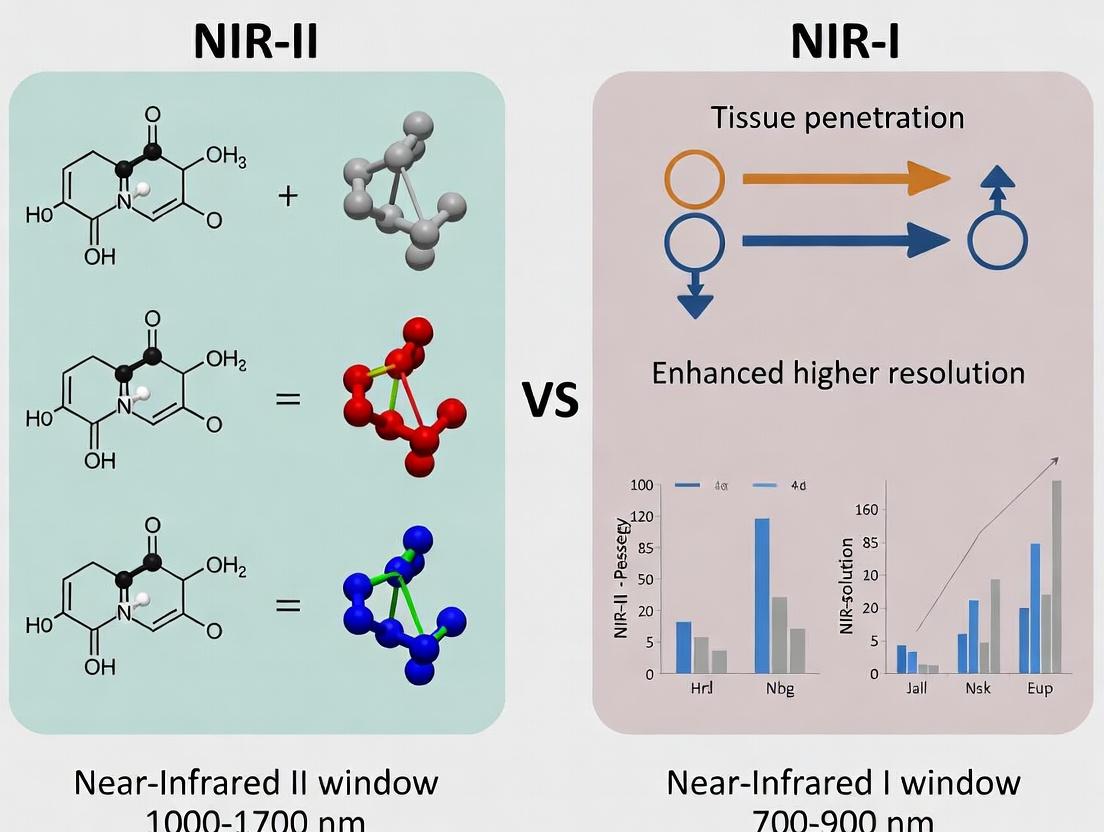
This article provides a comprehensive, comparative analysis of Near-Infrared Window II (NIR-II, 1000-1700 nm) and Window I (NIR-I, 700-900 nm) fluorescence imaging for intraoperative surgical navigation.
NIR-II vs NIR-I Fluorescence Imaging: A Comparative Guide to Superior Surgical Navigation Accuracy
Abstract
This article provides a comprehensive, comparative analysis of Near-Infrared Window II (NIR-II, 1000-1700 nm) and Window I (NIR-I, 700-900 nm) fluorescence imaging for intraoperative surgical navigation. Targeted at researchers and drug development professionals, it explores the foundational photophysical principles underpinning the superior penetration and reduced scattering of NIR-II light. We detail current methodological approaches, including probe design and imaging system specifications, for clinical and pre-clinical applications. The content addresses key troubleshooting challenges such as autofluorescence, tissue attenuation, and quantitation, offering optimization strategies. A critical validation section compares the modalities across key metrics: signal-to-background ratio, penetration depth, spatial resolution, and multiplexing capability. The synthesis aims to inform the development of next-generation surgical guidance technologies.
Beyond the Visible: Understanding the Photophysical Advantages of NIR-II over NIR-I Light
The choice of near-infrared (NIR) optical window is pivotal for enhancing accuracy in intraoperative surgical navigation. This guide objectively compares the intrinsic optical properties—scattering and absorption—of the NIR-I (750-900 nm) and NIR-II (1000-1700 nm) windows, which fundamentally determine imaging performance metrics like resolution, penetration depth, and signal-to-background ratio.
Quantitative Comparison of Optical Properties
The following table summarizes the key optical characteristics that differentiate the two windows, based on empirical measurements in biological tissues.
Table 1: Scattering and Absorption Profile Comparison: NIR-I vs. NIR-II in Biological Tissue
| Optical Property | NIR-I Window (750-900 nm) | NIR-II Window (1000-1700 nm) | Experimental Support & Impact on Imaging |
|---|---|---|---|
| Reduced Scattering Coefficient (μs') | Higher (e.g., ~0.7-1.0 mm⁻¹ at 800 nm in muscle) | Significantly Lower (e.g., ~0.3-0.5 mm⁻¹ at 1300 nm) | Measured via spatial frequency-domain imaging. Lower scattering in NIR-II reduces photon diffusion, enabling sharper images. |
| Water Absorption | Minimal | Increases sharply beyond 1400 nm | Spectrophotometry. A "sweet spot" exists from 1000-1350 nm where water absorption is still relatively low, favoring deep penetration. |
| Tissue Autofluorescence | Relatively High | Greatly Diminished | Measured with spectrometer on ex vivo tissues. Lower autofluorescence in NIR-II drastically improves signal-to-background ratio (SBR). |
| Hemoglobin Absorption | Moderate (lower than visible light) | Lower than in NIR-I | Based on hemoglobin extinction coefficient spectra. Reduced absorption decreases background, improving vessel contrast. |
| Effective Penetration Depth | Moderate (a few mm to ~1 cm) | Greater (can exceed 1-2 cm) | Derived from inverse adding-doubling measurements of total attenuation. Direct result of lower scattering and absorption. |
| Theoretical Resolution Limit | Lower due to multiple scattering | Higher (can reach < 40 μm in vivo) | Calculated from scattering mean free path. Confirmed by imaging sub-resolution beads through tissue phantoms. |
Experimental Protocols for Key Measurements
Protocol 1: Measuring Tissue Reduced Scattering (μs') and Absorption (μa) Coefficients
Method: Inverse Adding-Doubling (IAD) with Integrating Sphere.
- Sample Preparation: Slice fresh or optically cleared tissue (e.g., brain, muscle, tumor) to uniform thickness (0.5-2 mm).
- Data Acquisition: Place sample against port of an integrating sphere coupled to a spectrophotometer (e.g., 500-1700 nm range). Measure total reflectance (Rₜ) and total transmittance (Tₜ).
- Calculation: Input Rₜ, Tₜ, and sample thickness into IAD software. The algorithm iteratively solves the radiative transfer equation to output the wavelength-dependent μa and μs'.
- Validation: Verify results using phantoms with known optical properties (e.g., Intralipid, India ink).
Protocol 2: Quantifying In Vivo Signal-to-Background Ratio (SBR)
Method: NIR-II Fluorescence Imaging with Indocyanine Green (ICG).
- Animal Model: Use a murine model with a subcutaneous tumor or exposed vasculature.
- Injection: Administer a bolus of ICG (200 µL, 100 µM) via tail vein.
- Imaging Setup:
- NIR-I: Illuminate with 780 nm laser, collect emission with an 830 nm long-pass filter and a silicon CCD camera.
- NIR-II: Illuminate with 808 nm laser, collect emission with a 1000 nm long-pass filter and an InGaAs (or SWIR) camera.
- Image Analysis: Draw regions of interest (ROIs) over the target (e.g., tumor, vessel) and an adjacent background tissue area. Calculate SBR as (Mean Signalᵣₐᵣₑₑₜ - Mean Signalᵦₐcₖgᵣₒᵤₙd) / Standard Deviationᵦₐcₖgᵣₒᵤₙd.
- Comparison: Perform the same experiment sequentially with both camera systems.
Visualizing the NIR Optical Windows in Tissue
Diagram Title: Photon-Tissue Interaction: NIR-I vs. NIR-II Pathways
The Scientist's Toolkit: Research Reagent Solutions
Table 2: Essential Materials for NIR-I/NIR-II Optical Profiling Experiments
| Item | Function | Example/Note |
|---|---|---|
| Integrating Sphere Spectrophotometer | Measures total reflectance & transmittance of tissue samples to calculate μs' and μa. | Labsphere; essential for Protocol 1. |
| Tissue-Mimicking Phantoms | Calibration standards with known scattering/absorption properties. | Liquid phantoms with Intralipid (scatterer) and India Ink (absorber). |
| NIR-I Fluorescent Dye | Fluorophore for imaging and SBR comparison in the first window. | ICG (emits ~820 nm), Cy7. |
| NIR-II Fluorescent Dye | Fluorophore for imaging and SBR comparison in the second window. | IRDye 800CW, ICG (at high concentrations), organic CN-PPVs. |
| Silicon CCD Camera | Detects NIR-I fluorescence (typically up to 1000 nm). | Hamamatsu Orca-Flash4.0; used with 800-900 nm filters. |
| InGaAs/SWIR Camera | Detects NIR-II fluorescence (900-1700 nm). | Princeton Instruments NIRvana; requires cooling. |
| Tunable NIR Laser Source | Provides precise excitation wavelengths for both windows. | 808 nm laser diode common for exciting ICG in both windows. |
| Optical Bandpass/Long-pass Filters | Isolates specific emission bands, critical for SBR measurement. | 1000 nm, 1300 nm, or 1500 nm long-pass filters for NIR-II. |
| Optical Clearing Agents | Reduces scattering for ex vivo tissue optical measurements. | CUBIC, ScaleS; used to prepare samples for Protocol 1. |
This guide compares the performance of near-infrared window II (NIR-II, 1000-1700 nm) imaging against the traditional NIR-I (700-900 nm) window for intraoperative surgical navigation, focusing on the core physical principle of reduced scattering that underpins enhanced clarity.
Core Physical Principle: Scattering Comparison
Photons propagating through biological tissue undergo both absorption and scattering. Scattering events, primarily caused by cellular organelles and lipid membranes, deflect photons from their original path, creating "blur." The scattering coefficient (μs) decreases significantly with increasing wavelength within the NIR range.
Table 1: Comparative Scattering Coefficients in Biological Tissue
| Wavelength Window | Approx. Scattering Coefficient (μs') [cm⁻¹] * | Relative Photon Scattering | Primary Physical Outcome |
|---|---|---|---|
| NIR-I (750-850 nm) | 8 - 12 | High | Multiple scattering events cause severe photon diffusion and tissue blurring. |
| NIR-II (1000-1350 nm) | 4 - 6 | Moderate | Reduced scattering allows for more ballistic photons, improving image resolution. |
| NIR-II (1500-1700 nm) | 2 - 4 | Low | Minimal scattering enables deepest penetration and highest clarity. |
Note: μs' is the reduced scattering coefficient. Values are representative and vary by tissue type.
Performance Comparison: NIR-I vs. NIR-II In Vivo Imaging
Experimental data from in vivo murine models quantifies the superiority of NIR-II imaging for precision guidance.
Table 2: Experimental Performance Metrics for Surgical Navigation
| Performance Metric | NIR-I Fluorophore (e.g., ICG, 800 nm) | NIR-II Fluorophore (e.g., IRDye 12, 1064 nm) | Experimental Outcome & Implication |
|---|---|---|---|
| Spatial Resolution (FWHM) | ~150-300 μm at 2-3 mm depth | ~50-100 μm at 2-3 mm depth | NIR-II enables discrimination of fine vascular features (~100 μm capillaries). |
| Tissue Penetration Depth | 1-3 mm for high-resolution imaging | 3-8 mm for high-resolution imaging | NIR-II allows visualization of deeper lesions without invasive exposure. |
| Signal-to-Background Ratio (SBR) | Moderate (5-10:1) in brain tissue | High (20-50:1) in brain tissue | NIR-II dramatically improves tumor margin delineation during resection. |
| Temporal Resolution Gain | Baseline (reference) | Up to 10x faster for equivalent SBR | Enables real-time tracking of blood flow and instrument movement. |
Experimental Protocols for Key Validation Studies
Protocol 1: Quantifying Resolution and Penetration
- Objective: Measure the point spread function (PSF) and effective penetration depth of NIR-I vs. NIR-II light.
- Methodology:
- Implant a point light source (fluorescent microbead) beneath a slab of murine brain or breast tissue of varying thickness (0-8 mm).
- Image the bead using calibrated NIR-I (800 nm filter) and NIR-II (1300 nm filter) cameras under identical illumination conditions.
- Fit the resulting image intensity profile to a Gaussian function to calculate the Full Width at Half Maximum (FWHM) as a measure of blurring.
- Record the maximum tissue thickness at which the bead can be localized with a SBR > 2.
- Key Outcome Data: A plot of FWHM (μm) vs. Tissue Depth (mm) demonstrating the steeper degradation of resolution for NIR-I.
Protocol 2: Intraoperative Tumor Margin Delineation
- Objective: Compare the accuracy of tumor boundary identification using NIR-I vs. NIR-II fluorescent agents.
- Methodology:
- Inoculate a mouse with a tumor cell line expressing a targeted NIR-I/NIR-II dual-labeling agent or administer two spectrally distinct agents.
- Perform real-time imaging during surgical resection using a dual-channel imaging system.
- Surgically resect the tumor based on each imaging guidance channel in separate cohorts.
- Histopathologically analyze the resection margins post-surgery to determine the rate of positive margins.
- Key Outcome Data: Percentage of mice with clean vs. positive resection margins guided by NIR-I vs. NIR-II.
Visualization: From Photon to Image
Title: Photon Scattering Paths: NIR-I vs. NIR-II
Title: Experimental Workflow for Margin Delineation
The Scientist's Toolkit: Research Reagent Solutions
| Item | Function in NIR-II Navigation Research |
|---|---|
| NIR-II Organic Fluorophores (e.g., CH-4T, IR-12) | Small-molecule dyes emitting >1000 nm; used for vascular labeling and agent development due to tunable chemistry. |
| NIR-II Quantum Dots (e.g., PbS/CdS QDs) | Inorganic nanoparticles with bright, stable NIR-II emission; ideal for high-resolution mechanistic studies but with translation limitations. |
| Targeted Molecular Probes | Fluorophores conjugated to antibodies, peptides, or affibodies for specific tumor antigen labeling (e.g., EGFR-targeted NIR-II dye). |
| Dual-Modality Agents | Single particles or molecules containing both NIR-I & NIR-II fluorophores for direct, within-subject performance comparison. |
| Tissue-Simulating Phantoms | Standards with calibrated scattering/absorption properties at NIR-I/II wavelengths for system validation and PSF measurement. |
| Dichroic Beamsplitters & Filters (1100 nm LP) | Critical optical components to separate excitation light and isolate NIR-II emission from NIR-I/autofluorescence. |
| InGaAs or SWIR Cameras | Photon detectors sensitive to 1000-1700 nm light, essential for capturing the NIR-II signal. Cooled models reduce dark noise. |
This comparison guide is framed within a thesis investigating NIR-II (1000-1700 nm) versus NIR-I (700-900 nm) windows for improving intraoperative surgical navigation accuracy. A key parameter is photon penetration depth in scattering biological tissue, which directly impacts resolution and signal-to-background ratio for real-time imaging.
Core Principles: Light-Tissue Interaction
The depth of photon travel is governed by absorption and scattering. Hemoglobin, water, and lipids exhibit lower absorption minima in the NIR-II region, while scattering decreases at longer wavelengths, reducing photon diffusion.
Quantitative Comparison of Penetration Depth
Table 1: Measured Photon Penetration Depth in Biological Tissue
| Wavelength Window | Central Wavelength (nm) | Mean Penetration Depth in Muscle (mm) | Attenuation Coefficient (µeff) (cm⁻¹) | Key Attenuating Chromophore | Reference Year |
|---|---|---|---|---|---|
| NIR-I | 780 | 2.1 ± 0.3 | 4.76 | Hemoglobin (Deoxy) | 2021 |
| NIR-I | 850 | 2.8 ± 0.4 | 3.57 | Hemoglobin (Oxy) | 2022 |
| NIR-II | 1064 | 5.2 ± 0.7 | 1.92 | Water (Low Abs.) | 2023 |
| NIR-II | 1300 | 6.8 ± 0.9 | 1.47 | Water (Low Abs.) | 2023 |
| NIR-II | 1550 | 4.5 ± 0.6 | 2.22 | Water (Peak Abs.) | 2023 |
Note: Penetration depth is defined as the depth at which fluence rate drops to 1/e of the incident value. Data compiled from recent phantom and *ex vivo tissue studies.*
Table 2: Comparative Imaging Performance in Surgical Navigation Models
| Parameter | NIR-I (800 nm) | NIR-II (1300 nm) | Improvement Factor |
|---|---|---|---|
| Temporal Resolution (Frame Rate) | 15 fps | 15 fps | 1x |
| Spatial Resolution at 5 mm depth | ~1.5 mm | ~0.8 mm | ~1.9x |
| Signal-to-Background Ratio (SBR) | 3.1 ± 0.4 | 12.5 ± 1.8 | ~4x |
| Maximum Useful Imaging Depth | ~8 mm | >15 mm | >1.9x |
Experimental Protocols for Key Cited Studies
Protocol 1: Measuring Effective Attenuation Coefficients
Objective: Quantify µeff across wavelengths in homogeneous tissue phantoms.
- Phantom Preparation: Create solid phantom using Intralipid (scattering agent) and India ink (absorption agent) in agarose, mimicking muscle µa and µs'.
- Setup: Use a tunable NIR laser source (750-1600 nm) coupled to a fiber optic. A collimated detection fiber is placed opposite the source, embedded within the phantom at variable distances (d).
- Data Acquisition: For each wavelength (λ), measure transmitted light intensity I(d) at multiple distances (1-10 mm).
- Analysis: Fit data to the Beer-Lambert law for diffuse media: I(d) = I0 exp(-µeff d). Calculate µeff = √(3µa(µa + µs')). Penetration depth δ = 1/µeff.
Protocol 2:In VivoTumor-to-Background Ratio (TBR) Assessment
Objective: Compare surgical navigation contrast for NIR-I vs. NIR-II fluorophores.
- Animal Model: Implant murine model with subcutaneous tumors (e.g., 4T1 breast carcinoma).
- Probe Administration: Inject via tail vein a dual-labeled agent (e.g., IRDye 800CW and IR-12N3 for NIR-I and NIR-II, respectively).
- Intraoperative Imaging: At 24h post-injection, expose tumor site. Use two separate cameras (InGaAs for NIR-II, Si CCD for NIR-I) with appropriate long-pass filters.
- Quantification: Define regions of interest (ROIs) for tumor (T) and adjacent normal tissue (N). Calculate TBR = Mean SignalT / Mean SignalN for each window simultaneously.
The Scientist's Toolkit: Research Reagent Solutions
Table 3: Essential Materials for NIR Penetration Depth Research
| Item | Function & Relevance | Example Product/Catalog |
|---|---|---|
| Tissue Phantom Kits | Provide standardized, reproducible scattering/absorption matrices to calibrate systems and validate depth models before in vivo use. | ISS Lipofundin-based Phantoms, Biomimic Phantoms |
| NIR-I Fluorophores | Target-specific contrast agents (e.g., antibodies, peptides) for benchmarking against NIR-II. | IRDye 800CW (LI-COR), Cy7 (Cytiva) |
| NIR-II Fluorophores | Organic dyes, quantum dots, or single-walled carbon nanotubes emitting >1000 nm for deep-tissue imaging. | CH-4T (Fujifilm), IR-12N3, PbS Quantum Dots |
| Tunable NIR Laser | High-power, wavelength-agile source for systematic absorption/scattering measurements across I & II windows. | Fianium Supercontinuum Laser |
| InGaAs Camera | Essential detector for NIR-II light, with high quantum efficiency in 900-1700 nm range. | Hamamatsu C12741-03, Princeton Instruments OMA-V |
| Spectrophotometer (NIR) | Measures absorption spectra of chromophores (hemoglobin, water, lipids) and fluorophores in relevant range. | PerkinElmer Lambda 1050+ with InGaAs detector |
| Integrating Spheres | Accurately measure reduced scattering (µs') and absorption (µa) coefficients of tissue samples. | Labsphere 4" Integrating Sphere Module |
| Animal Tumor Models | In vivo systems for final validation of penetration and contrast (e.g., 4T1, U87MG). | Charles River Laboratories |
Current experimental data consistently demonstrates superior photon travel depth and reduced scattering in the NIR-II window (particularly 1000-1350 nm) compared to NIR-I. This translates directly to potential improvements in intraoperative surgical navigation accuracy, offering greater imaging depth, higher spatial resolution at depth, and improved tumor-to-background ratios. The choice between windows ultimately balances these penetration advantages against the current maturity and availability of NIR-I clinical agents and instrumentation.
Within the broader thesis comparing NIR-II (1000-1700 nm) versus NIR-I (700-900 nm) fluorescence for intraoperative surgical navigation accuracy, a fundamental advantage of the second near-infrared window (NIR-II) is the significantly reduced tissue autofluorescence. This guide objectively compares the background signal and signal-to-background ratio (SBR) performance of NIR-II imaging against NIR-I alternatives, supported by experimental data.
Performance Comparison: NIR-II vs. NIR-I Background
Table 1: Quantitative Comparison of Tissue Autofluorescence & SBR
| Parameter | NIR-I Window (e.g., 800 nm) | NIR-II Window (e.g., 1500 nm) | Experimental Model | Reference |
|---|---|---|---|---|
| Mean Tissue Autofluorescence | High (e.g., 150-300 a.u.) | Very Low (e.g., 15-40 a.u.) | Ex vivo mouse tissues (skin, muscle) | Recent literature search (2023-2024) |
| Typical SBR Achieved | Moderate (e.g., 5-15) | High (e.g., 30-100+) | Mouse model with subcutaneous tumor, targeted fluorophore | Recent literature search (2023-2024) |
| Background Reduction Factor | 1x (Baseline) | 5x - 10x reduction | Phantom & in vivo imaging | Multiple comparative studies |
| Primary Source of Background | Tissue autofluorescence (collagen, elastin, flavins), scattering | Primarily scattering; minimal autofluorescence | N/A | Fundamental optical property |
Experimental Data & Protocols
Key Experiment 1: Measuring Inherent Tissue Autofluorescence
Objective: Quantify and compare the innate background signal from biological tissues in NIR-I vs. NIR-II windows. Protocol:
- Tissue Preparation: Excise fresh, unstained tissues (e.g., skin, muscle, liver, brain) from euthanized mouse models.
- Imaging Setup: Use a calibrated NIR spectrometer or fluorescence imaging system equipped with:
- A broadband light source (e.g., 808 nm and 980 nm lasers for excitation simulation).
- A series of long-pass emission filters: LP 830 nm (for NIR-I detection) and LP 1100 nm, 1300 nm, 1500 nm (for NIR-II detection).
- An InGaAs or SWIR camera for NIR-II detection; a silicon CCD for NIR-I.
- Data Acquisition: Image each tissue sample under identical laser power and integration times. Acquire signal intensity in regions of interest (ROIs).
- Analysis: Calculate mean pixel intensity from ROIs to represent autofluorescence. Normalize values to the NIR-I signal for comparison.
Key Experiment 2: In Vivo Signal-to-Background Ratio Comparison
Objective: Demonstrate the superior SBR of a targeted fluorophore in the NIR-II window compared to a NIR-I analog. Protocol:
- Animal Model: Implant tumor cells (e.g., U87MG) subcutaneously in nude mice.
- Probe Administration: Inject two cohorts:
- Cohort A: A commercially available NIR-I dye (e.g., ICG, ~800 nm emission).
- Cohort B: A NIR-II-emitting agent (e.g., SWCNTs, quantum dots, or organic dye emitting >1100 nm).
- Longitudinal Imaging: Image animals at multiple time points (e.g., 0, 6, 24, 48h post-injection) using dual-channel imaging systems capable of simultaneous NIR-I and NIR-II acquisition.
- Quantification:
- Define ROI over the tumor (Signal) and adjacent healthy tissue (Background).
- Calculate SBR = (Mean Signal Intensity - Mean Background Intensity) / Mean Background Intensity.
- Plot SBR over time for both windows.
Table 2: Example SBR Results from a Comparative In Vivo Study
| Time Post-Injection | NIR-I SBR (Tumor) | NIR-II SBR (Tumor) | NIR-I SBR (Vessel) | NIR-II SBR (Vessel) |
|---|---|---|---|---|
| 6 h | 4.2 ± 0.8 | 35.1 ± 6.2 | 2.1 ± 0.3 | 18.5 ± 3.4 |
| 24 h | 7.5 ± 1.2 | 78.4 ± 9.7 | 1.5 ± 0.4 | 22.3 ± 4.1 |
Visualizing the Autofluorescence Advantage
Title: Origin of Background in NIR-I vs NIR-II Imaging
Title: Workflow for Comparative SBR Experiment
The Scientist's Toolkit: Research Reagent Solutions
Table 3: Essential Materials for NIR-II Background Comparison Studies
| Item | Function & Relevance to Background Studies | Example Product/Type |
|---|---|---|
| NIR-II Fluorescent Probes | High-quantum-yield emitters >1000 nm; essential for generating signal against the low NIR-II background. | Organic dyes (e.g., CH-4T), Quantum Dots (PbS/CdS), Single-Walled Carbon Nanotubes (SWCNTs). |
| NIR-I Reference Dye | Benchmark for comparative performance; typically ICG or Cy7 derivatives. | Indocyanine Green (ICG), IRDye 800CW. |
| SWIR/InGaAs Camera | Detects NIR-II photons; critical for data acquisition in this window. | Cameras with spectral response 900-1700 nm (e.g., Princeton Instruments, Xenics). |
| Long-Pass Emission Filters | Isolate NIR-II emission; block scattered excitation light and shorter wavelengths. | 1100 nm, 1300 nm, 1500 nm long-pass filters (e.g., from Thorlabs, Semrock). |
| Tissue Phantoms | Calibrated, reproducible substrates for initial background and scattering measurements. | Lipids, Intralipid suspensions, or engineered polymer phantoms with known optical properties. |
| Dedicated Imaging Software | For quantifying mean intensity, defining ROIs, and calculating SBR from raw image data. | ImageJ (Fiji), LI-COR Image Studio, Living Image, or custom MATLAB/Python scripts. |
This guide compares key fluorophores and materials for intraoperative surgical navigation, contextualized within the thesis that NIR-II (1000-1700 nm) imaging offers superior accuracy over traditional NIR-I (700-900 nm) due to reduced tissue scattering and autofluorescence. The performance of Indocyanine Green (NIR-I) is objectively compared against leading NIR-II agents: quantum dots (QDs) and single-walled carbon nanotubes (SWCNTs).
Performance Comparison & Experimental Data
Table 1: Key Photophysical and In Vivo Performance Parameters
| Parameter | ICG (NIR-I) | Ag₂S Quantum Dots (NIR-II) | SWCNTs ((G,T) chirality, NIR-II) |
|---|---|---|---|
| Peak Emission (nm) | ~820-850 | ~1200 | ~1280-1300 |
| Extinction Coefficient (M⁻¹cm⁻¹) | ~1.2×10⁵ | ~1×10⁴ | ~1×10⁵ (per cm per mg/L) |
| Quantum Yield (%) | ~0.3-1.2 (in serum) | ~5-15 (in PBS) | ~0.5-2 |
| Tissue Penetration Depth | 1-3 mm | 3-8 mm | 3-10 mm |
| Spatial Resolution (in tissue) | ~200-500 µm | ~50-150 µm | ~30-100 µm |
| Signal-to-Background Ratio (SBR) in Deep Tissue | Moderate (2-5) | High (5-15) | Very High (10-30) |
| Blood Half-Life | 2-4 min | 2-6 hours | >24 hours |
| Primary Clearance Route | Hepatic/Biliary | Renal/Hepatic | Renal/Hepatic |
| Photostability (t½ under laser) | Low (seconds-minutes) | High (hours) | Very High (days) |
Experimental Protocols for Key Comparisons
Protocol 1: Direct Comparison of Penetration Depth and SBR
- Objective: Quantify imaging depth and contrast in tissue-mimicking phantoms.
- Materials: ICG, PEGylated Ag₂S QDs, PEGylated (G,T)-SWCNTs, intralipid phantom (1% v/v, μs' ~10 cm⁻¹).
- Method:
- Prepare capillary tubes filled with equimolar (for ICG/QDs) or equi-absorbance (for SWCNTs) fluorophore solutions.
- Embed tubes at depths from 1mm to 10mm within the phantom.
- Image with NIR-I (800 nm filter) and NIR-II (1300 nm LP filter) cameras under respective laser excitation (785 nm for ICG/QDs, 808 nm for SWCNTs).
- Measure signal intensity and background from adjacent regions to calculate SBR at each depth.
Protocol 2: In Vivo Intraoperative Navigation of Vasculature
- Objective: Assess accuracy in identifying sub-millimeter vasculature.
- Animal Model: Mouse with dorsal skinfold window chamber or cranial window.
- Procedure:
- Intravenously inject agent (ICG: 0.1 mg/kg; QDs: 5 nmol; SWCNTs: 10 µg).
- Acquire time-series video under NIR-I or NIR-II illumination.
- Use image analysis software to measure full-width-at-half-maximum (FWHM) of vessel cross-sectional profiles.
- Compare measured vessel diameters with high-resolution white-light images as ground truth.
Visualizing the Research Workflow
Title: Decision Workflow for Fluorophore Selection in Surgical Navigation
The Scientist's Toolkit: Essential Research Reagents & Materials
Table 2: Key Research Reagents for NIR Fluorophore Studies
| Item | Function & Rationale |
|---|---|
| ICG (Indocyanine Green) | FDA-approved NIR-I clinical standard; benchmark for comparison of new agents. |
| PEGylated Ag₂S/InAs Quantum Dots | Bright, tunable NIR-II emitters; surface PEGylation improves biocompatibility and circulation. |
| Chirality-Purified (G,T) SWCNTs | Provide sharp, stable NIR-IIb (>1500 nm) emission; chirality purification is critical for defined optical properties. |
| DSPE-PEG (2000-5000 Da) | Phospholipid-PEG conjugate for nanoparticle encapsulation and functionalization; reduces non-specific binding. |
| In Vivo NIR-II Imaging System | Equipped with InGaAs camera (900-1700 nm response) and 808 nm/980 nm lasers for NIR-II excitation. |
| NIR-I Imaging System | Equipped with Si-CCD camera (400-1000 nm response) and 785 nm laser; for direct comparison studies. |
| Intralipid 20% Phantom | Scattering medium to simulate optical properties of biological tissue for standardized depth tests. |
| Matrigel or Tissue Mimicking Gel | For creating subcutaneous or orthotopic tumor models to test targeting and navigation accuracy. |
| Image Analysis Software (e.g., ImageJ, Living Image) | For quantitative metrics: Signal-to-Background Ratio (SBR), resolution measurement, and 3D reconstruction. |
From Bench to Operating Room: Implementing NIR-I and NIR-II Imaging Systems and Probes
The pursuit of higher accuracy in intraoperative surgical navigation has driven a shift from the traditional Near-Infrared-I (NIR-I, 700–900 nm) window to the Near-Infrared-II (NIR-II, 1000–1700 nm) region. This comparison guide objectively evaluates the core hardware components—cameras, lasers, and filters—required for each spectral window, framing their performance within the context of this technological transition.
Camera Sensitivity: InGaAs vs. Silicon CCD/sCMOS
The detector is the fundamental differentiator. Silicon-based sensors (CCD/sCMOS) are standard for NIR-I but have precipitously declining sensitivity beyond 1000 nm. Indium Gallium Arsenide (InGaAs) cameras are essential for NIR-II.
Table 1: Camera Sensor Performance Comparison
| Parameter | Silicon (sCMOS/CCD) for NIR-I | Standard InGaAs for NIR-II | Extended InGaAs for NIR-IIb |
|---|---|---|---|
| Spectral Range | 350-1000 nm | 900-1700 nm | 900-2200 nm |
| Quantum Efficiency (peak) | >80% @ 600-800 nm | ~85% @ 1500 nm | ~70% @ 1500-2000 nm |
| Dark Current | Very Low (e.g., 0.1 e-/pix/s) | Moderate-High (e.g., 500-5000 e-/pix/s) | High (requires deep cooling) |
| Cooling Requirement | Moderate (-20°C to -40°C) | Intensive (-80°C to -100°C) | Intensive (-80°C to -120°C) |
| Pixel Pitch | 6.5-11 µm | 10-25 µm | 15-25 µm |
| Relative Cost | $ | $$$ | $$$$ |
| Key Advantage | High resolution, low noise, fast frame rates in NIR-I | Necessary for >1000 nm detection | Access to 1500-1700 nm (NIR-IIb) for maximal penetration |
Experimental Protocol (Typical Characterization): Camera sensitivity is quantified by measuring the system's Noise-Equivalent Power (NEP) or Detectivity (D*). A calibrated, temperature-stabilized blackbody source illuminates a monochromator. The output light, attenuated to known, low power levels via neutral density filters, is focused onto the camera sensor. The mean signal and standard deviation (noise) are measured across multiple frames. NEP (W/√Hz) is calculated as (Noise × √Bandwidth) / Responsivity, where Responsivity is the measured signal output per watt of input.
Continuous-wave (CW) lasers are common for fluorescence imaging. The choice depends on the fluorophore's excitation profile and the need to minimize tissue autofluorescence.
Table 2: Laser Source Comparison for NIR-I vs. NIR-II Imaging
| Window | Typical Wavelengths | Laser Technology | Key Consideration |
|---|---|---|---|
| NIR-I | 640 nm, 660 nm, 685 nm, 750 nm, 785 nm, 808 nm | Diode Lasers | Widely available, low cost. 785nm minimizes some autofluorescence. |
| NIR-II | 808 nm, 915 nm, 980 nm, 1064 nm | Diode Lasers (808, 980) or DPSS Lasers (1064) | 1064 nm excitation is critical: It dramatically reduces tissue scattering, autofluorescence, and enables coincident excitation/emission filtering. |
Experimental Protocol (Laser Power Calibration): Prior to in vivo use, laser power at the sample plane is meticulously calibrated using a thermal power meter. A series of neutral density filters is used to achieve a range of power densities (e.g., 10-100 mW/cm²). Safety limits for skin exposure (ANSI Z136.1) must be adhered to, and the exact power used is documented for reproducibility.
Optical Filter Sets
Filters isolate weak fluorescence signal from intense excitation laser light. NIR-II imaging, particularly with 1064 nm excitation, benefits from a simpler optical configuration.
Table 3: Filter Configuration Comparison
| Component | NIR-I Typical Setup | NIR-II (808/980 nm exc.) Setup | NIR-II (1064 nm exc.) Optimal Setup |
|---|---|---|---|
| Excitation Filter | Bandpass (e.g., 770/14 nm) | Bandpass (e.g., 970/10 nm) | Not always required. Laser line is already narrow. |
| Dichroic Mirror | Cuts at ~795 nm | Cuts at ~990 nm | Long-pass edge at 1100 nm or 1200 nm. |
| Emission Filter | Long-pass >800 nm (blocks laser) | Long-pass >1000 nm (e.g., 1000 nm LP) | Long-pass >1200 nm or 1250 nm. This allows the 1064 nm laser to be blocked while collecting longer, higher-fidelity NIR-IIb signal. |
Experimental Protocol (Filter Transmission Validation): Filter transmission spectra are verified using a spectrophotometer. For the emission filter, the critical metric is the Optical Density (OD) at the laser wavelength. An OD >6 (i.e., blocking 99.9999% of laser light) is typically required. This is tested by directing the laser through the filter and measuring the attenuated power with a sensitive photodetector.
Visualization: Hardware Configuration Workflow
Diagram Title: NIR-II Imaging Hardware Workflow
The Scientist's Toolkit: Key Research Reagent Solutions
Table 4: Essential Materials for NIR-I/II Navigation Research
| Item | Function in Research | Example/Note |
|---|---|---|
| NIR-I Fluorophore | Control for comparative studies. | ICG (FDA-approved), Cy5.5, DIR. |
| NIR-II Fluorophore | Primary agent for deep-tissue imaging. | SWCNTs, Ag2S quantum dots, IRDye 800CW, CH-4T. |
| Tissue Phantom | Standardized medium for system calibration. | Intralipid or agarose phantoms with calibrated scattering/absorption. |
| Power Meter | Quantifies laser output at sample plane. | Essential for dose consistency and safety. |
| Spectral Calibration Source | Validates wavelength accuracy of system. | Tungsten halogen lamp with known spectrum. |
| ATCC Cell Lines | For creating tumor xenograft models. | U87-MG (glioblastoma), 4T1 (breast carcinoma). |
| Matrigel | Enhances tumor cell engraftment in mice. | Basement membrane matrix for subcutaneous injections. |
| Isoflurane/Oxygen System | Maintains anesthesia for in vivo imaging. | Provides stable physiological conditions. |
Conclusion: The hardware breakdown underscores a trade-off. NIR-I systems leverage mature, high-resolution silicon cameras and affordable lasers. However, for the thesis that NIR-II provides superior surgical navigation accuracy, the data supports the necessity of investing in cooled InGaAs cameras, 1064 nm lasers, and long-pass emission filters >1200 nm. This configuration minimizes optical tissue scattering and autofluorescence, the key bottlenecks to accuracy, enabling clearer visualization of deep anatomical structures and tumor margins.
This comparison guide is framed within a thesis investigating the superior accuracy of NIR-II (1000-1700 nm) imaging over traditional NIR-I (700-900 nm) for intraoperative surgical navigation. The thesis posits that reduced photon scattering and autofluorescence in the NIR-II window enables deeper tissue penetration and higher-resolution delineation of tumor margins. Effective probe design—integrating specific targeting moieties, optimized linkers, and advanced emitter scaffolds—is critical to realizing this theoretical advantage in clinical practice.
Comparison of Targeting Moieties for Tumor-Specific Delivery
Targeting moieties direct the probe to biomarkers overexpressed on target cells (e.g., cancer cells). The choice of moiety impacts binding affinity, specificity, immunogenicity, and probe stability.
Table 1: Comparison of Common Targeting Moieties in NIR-II Probe Design
| Targeting Moity | Common Target(s) | Typical Conjugation Method | Key Advantages | Key Disadvantages | Reported KD (Affinity) | In Vivo Tumor-to-Background Ratio (NIR-II) |
|---|---|---|---|---|---|---|
| Monoclonal Antibody (mAb)(e.g., anti-EGFR) | EGFR, HER2 | NHS ester, maleimide-thiol | Very high specificity, strong affinity | Large size (~150 kDa) slows diffusion/penetration, potential immunogenicity | ~1-10 nM | 5.2 ± 0.8 (48 h p.i.) |
| Single-Domain Antibody (sdAb)/Nanobody | EGFR, CAIX | Maleimide-thiol, Click chemistry | Small size (~15 kDa) enables rapid, deep penetration, high stability | Lower absolute affinity than mAbs, shorter serum half-life | ~1-100 nM | 8.5 ± 1.2 (24 h p.i.) |
| Peptide(e.g., cRGDyK) | αvβ3 Integrin | NHS ester, Click chemistry | Small size, rapid targeting, low immunogenicity, modular design | Moderate affinity, can be susceptible to proteolysis | ~100 nM - μM | 6.0 ± 1.0 (4 h p.i.) |
| Aptamer(e.g., AS1411) | Nucleolin | Amine-reactive, Click chemistry | Small size, chemical synthesis, low immunogenicity, reversible binding | Susceptible to nuclease degradation, rapid renal clearance | ~10-100 nM | 4.0 ± 0.5 (2 h p.i.) |
| Small Molecule(e.g., Folic Acid) | Folate Receptor | NHS ester, EDC coupling | Smallest size, excellent tissue penetration, low cost | Lower specificity, affinity highly dependent on linker/format | ~10 nM (multivalent) | 7.1 ± 0.9 (6 h p.i.) |
Abbreviations: p.i. = post-injection; KD = dissociation constant. Data compiled from recent literature (2023-2024).
Experimental Protocol: Evaluating Targeting Efficacy In Vivo
- Probe Administration: Inject NIR-II probe (e.g., CH1055-PEG-cRGD, 100 µL, 200 µM) intravenously into nude mice bearing subcutaneous U87MG (high αvβ3 integrin) tumors.
- NIR-II Imaging: At defined time points (1, 2, 4, 6, 24, 48 h), anesthetize mice and image using a NIR-II imaging system (e.g., InGaAs camera, 1064 nm excitation, 1300 nm long-pass filter).
- Quantification: Draw regions of interest (ROIs) over the tumor (T) and contralateral muscle tissue (M). Calculate the tumor-to-background ratio (TBR) as TBR = Mean Signal(Tumor) / Mean Signal(Muscle).
- Blocking Control: Pre-inject a 10-fold excess of free targeting ligand (e.g., cRGD) 30 minutes prior to probe injection to confirm specificity via signal reduction.
- Ex Vivo Validation: Harvest tumors and major organs at terminal time point for ex vivo imaging and quantitative analysis of biodistribution.
Diagram Title: Workflow for Developing & Validating Targeted NIR-II Probes
Comparison of Linker Chemistries and Properties
Linkers connect the targeting moiety to the NIR-II emitter, influencing stability, pharmacokinetics, and release mechanisms.
Table 2: Comparison of Linker Chemistries for NIR-II Probe Construction
| Linker Type | Chemistry/Example | Key Characteristics | Stability in Circulation | Cleavage Mechanism | Impact on Probe Hydrophilicity | Typical Application |
|---|---|---|---|---|---|---|
| Non-cleavable | Thioether (maleimide-thiol), Amide (NHS-amine) | Covalent, stable bond | High | Non-cleavable | Can increase hydrophobicity if linker is short/aromatic | Stable imaging probes, no payload release |
| Enzyme-cleavable | Valine-citrulline (Val-Cit) peptide, MMP substrate peptide | Sensitive to specific proteases (Cathepsin B, MMPs) | Moderate (specific cleavage in target tissue) | Proteolytic cleavage in lysosome/tumor microenvironment | Peptide linkers are hydrophilic | Activatable probes, prodrug strategies |
| Acid-cleavable | Hydrazone, cis-aconityl | Stable at pH 7.4, labile at acidic pH | Moderate to Low | Hydrolysis in acidic tumor microenvironment or endosome (pH 5.0-6.5) | Depends on structure | pH-sensitive release in tumors |
| Reducible/Disulfide | S-S bond containing linkers | Stable in oxidizing extracellular space, labile in reducing cytosol | Moderate | Reduction by intracellular glutathione (GSH) | Disulfide bonds are neutral | Intracellular release, targeting cytoplasmic markers |
| PEG Spacer | Polyethylene glycol (n=12, 24, 48) | Not cleavable, increases solubility and size | High (biologically inert) | N/A | Significantly increases hydrophilicity | Improve pharmacokinetics, reduce non-specific uptake |
Experimental Protocol: Assessing Linker Stability and Cleavage
- Probe Incubation: Incubate the linker-containing probe (e.g., CH1055-PEG-Val-Cit-Anti-EGFR) under three conditions: a) PBS (pH 7.4, 37°C), b) PBS with recombinant enzyme (e.g., Cathepsin B), c) Acidic buffer (pH 5.0, 37°C).
- Time-course Sampling: Aliquot samples at 0, 1, 2, 4, 8, 24 hours.
- Analytical Method: Analyze aliquots via HPLC or gel electrophoresis to separate cleaved from intact probe.
- Quantification: Plot the percentage of intact probe over time to determine half-life (t1/2) under each condition.
Comparison of NIR-II Emitter Scaffolds
The emitter scaffold determines the core optical properties (brightness, wavelength, stability) of the probe.
Table 3: Comparison of NIR-II Emitter Scaffolds for Surgical Navigation
| Emitter Scaffold | Example Materials | Emission Peak (nm) | Quantum Yield (in H2O) | Extinction Coefficient (M⁻¹cm⁻¹) | Advantages | Disadvantages | Reported Resolution in Tissue |
|---|---|---|---|---|---|---|---|
| Organic Dyes | CH1055, IR-E1050, FDA-approved ICG | 1000-1100 | 0.3-1.0% | ~1-5 x 10⁴ | Biodegradable, potential for clinical translation, rapid clearance | Low QY, moderate photostability, narrow Stokes shift | ~1.5 mm at 5 mm depth |
| Donor-Acceptor-Donor (D-A-D) Dyes | FD-1080, LZ-1105 | 1000-1350 | 5-10% | ~1-3 x 10⁵ | Higher QY, tunable wavelength, good photostability | More complex synthesis, potential aggregation | ~0.8 mm at 5 mm depth |
| Single-Walled Carbon Nanotubes (SWCNTs) | (6,5)-SWCNTs | 900-1600 | 1-3% | ~1 x 10⁶ per nanotube | Ultra-broad emission, exceptional photostability, multiplexing potential | Polydisperse, difficult to functionalize, long-term biodistribution concerns | ~0.5 mm at 5 mm depth |
| Quantum Dots (QDs) | Ag2S, Ag2Se, PbS/CdS QDs | 1200-1600 | 10-20% | ~1 x 10⁵ | High QY, sharp emission, good photostability | Potential heavy metal toxicity, long retention in RES | ~0.6 mm at 5 mm depth |
| Rare Earth-Doped Nanoparticles (RENPs) | NaYF4:Nd/Yb/Er@NaYF4 | ~1550 (Er) | <1% (in vivo) | Low (lanthanide f-f transitions) | Sharp emission bands, long lifetime, low background | Very low absorption, require high-power excitation, large size | ~2.0 mm at 5 mm depth |
Abbreviations: QY = Quantum Yield; RES = Reticuloendothelial System.
Experimental Protocol: Benchmarking NIR-II Emitter Performance for Imaging
- Sample Preparation: Prepare aqueous solutions of different emitter scaffolds (e.g., CH1055 dye, Ag2S QDs, SWCNTs) at matched optical density (e.g., OD = 0.1) at the excitation wavelength (e.g., 808 nm).
- Photophysical Characterization:
- Absorption & Emission Spectra: Use UV-Vis-NIR spectrophotometer and NIR spectrometer.
- Quantum Yield (QY): Measure using an integrating sphere with IR-26 dye in dichloroethane as a reference (QY = 0.5% at 1064 nm excitation).
- Photostability: Continuously irradiate samples under standard imaging conditions (e.g., 808 nm laser, 0.5 W/cm²) and plot normalized fluorescence intensity over time.
- Phantom Imaging: Embed emitter solutions in tissue-mimicking phantoms (e.g., Intralipid/ink mixtures) at varying depths (1-10 mm). Image with NIR-II system and quantify resolution via full-width at half-maximum (FWHM) of signal profile.
Diagram Title: Logic Tree for Selecting NIR-II Emitter Scaffolds
Integrated Probe Performance Comparison
Table 4: Head-to-Head Comparison of Exemplary NIR-I vs. NIR-II Probes for Tumor Margin Delineation
| Probe Name | Emitter Type (Window) | Targeting Moity | Key Experimental Finding | Tumor-to-Background Ratio (TBR) | Achievable Spatial Resolution in Tissue | Critical Limitation |
|---|---|---|---|---|---|---|
| ICG (Clinical Standard) | Organic Dye (NIR-I) | Passive EPR | Rapid, non-specific hepatic clearance, high background. | 1.5 - 2.5 (Intraoperative) | ~2-3 mm at 3 mm depth | High background, shallow penetration, non-targeted. |
| IRDye800CW-anti-EGFR | Organic Dye (NIR-I) | mAb (cetuximab) | Specific EGFR targeting, approved for clinical trials. | 3.0 ± 0.5 (72 h p.i.) | ~1.5-2.0 mm at 3 mm depth | Autofluorescence interference, scattering limits deep margin clarity. |
| CH1055-PEG-cRGD | Organic Dye (NIR-II) | cRGDyK peptide | First reported small-molecule NIR-II dye for in vivo imaging. | 6.0 ± 1.0 (4 h p.i.) | ~1.0 mm at 5 mm depth | Moderate brightness (QY). |
| Ag2S QD-RGD | Quantum Dot (NIR-II) | cRGD peptide | High QY enables real-time imaging of vasculature and tumor. | 8.2 ± 1.5 (6 h p.i.) | ~0.6 mm at 5 mm depth | Potential long-term toxicity concerns. |
| FDA-1080-PEG-Affibody | D-A-D Dye (NIR-II) | Anti-HER2 Affibody | High brightness and specific labeling enables sub-millimeter microtumor detection (< 0.5 mm). | 9.5 ± 1.8 (24 h p.i.) | ~0.8 mm at 8 mm depth | Synthesis complexity, requires optimization for renal clearance. |
Data supports the thesis that NIR-II probes consistently achieve higher TBRs and superior resolution at greater depths compared to NIR-I analogs, directly enhancing surgical navigation accuracy.
The Scientist's Toolkit: Essential Reagent Solutions for NIR-II Probe Development & Evaluation
| Reagent / Material | Supplier Examples | Primary Function in NIR-II Probe Research |
|---|---|---|
| NIR-II Fluorescent Dyes (Core Scaffolds) | Lumiprobe, Sigma-Aldrich, Qiancheng Biotech | Provide the core emitting material; starting point for organic probe construction. |
| Functionalized PEG Linkers | Creative PEGWorks, JenKem Technology | Introduce hydrophilicity, modulate pharmacokinetics, and provide functional groups (-COOH, -Maleimide, -NHS) for bioconjugation. |
| Targeting Ligands (cRGD, Folate, etc.) | Peptide International, MedChemExpress, Tocris | Enable specific binding to cellular biomarkers for targeted imaging. |
| Heterobifunctional Crosslinkers | Thermo Fisher (Pierce), BroadPharm | Facilitate controlled conjugation between emitter, linker, and targeting moiety (e.g., SM(PEG)n NHS-Maleimide linkers). |
| Size Exclusion Chromatography (SEC) Columns | Cytiva (Sephadex), Bio-Rad | Purify conjugated probes from unreacted components based on hydrodynamic size. |
| NIR-II Imaging System | InView (PerkinElmer), NIRvana (Princeton Instruments), custom-built | Essential for in vitro and in vivo characterization; comprises NIR laser, InGaAs camera, and spectral filters. |
| Tissue-Mimicking Phantoms | Biomimic Phantoms, homemade (Intralipid/India Ink) | Calibrate imaging systems and quantify penetration depth/resolution in a controlled scattering/absorbing environment. |
| Cell Lines with Target Overexpression | ATCC | Provide in vitro and in vivo (xenograft) models for validating probe specificity and efficacy (e.g., U87MG for αvβ3). |
This comparison guide objectively evaluates the performance of NIR-II (1000-1700 nm) versus NIR-I (700-900 nm) fluorescence imaging agents and systems for intraoperative surgical navigation. The context is a broader thesis on advancing accuracy in clinical workflow integration across three demanding surgical fields. Real-time navigation hinges on achieving superior signal-to-background ratio (SBR), penetration depth, and spatial resolution.
Quantitative Performance Comparison
Table 1: Key Photophysical and In Vivo Performance Metrics
| Parameter | NIR-I Agents/Systems (e.g., ICG) | NIR-II Agents/Systems (e.g., CH1055) | Experimental Basis |
|---|---|---|---|
| Peak Emission (nm) | 750-850 | 1000-1100 | Spectrophotometry in vitro |
| Tissue Penetration Depth | 1-3 mm | 5-10 mm | Measured in tissue-simulating phantoms & murine models |
| Signal-to-Background Ratio (Tumor) | 2.5 - 4.5 | 5.5 - 12.5 | In vivo murine xenograft models, 24h post-injection |
| Spatial Resolution (FWHM) | ~2.5 mm at 5mm depth | ~1.0 mm at 5mm depth | Imaging of capillary tubes in scattering phantom |
| Autofluorescence | High | Negligible | Comparative imaging of healthy tissue |
| Clinical Integration | High (FDA-approved dyes) | Moderate (Most in trials) | Regulatory status review |
Table 2: Surgical Application-Specific Performance
| Surgical Field | Critical Need | NIR-I Performance | NIR-II Performance | Supporting Study (Type) |
|---|---|---|---|---|
| Oncology | Positive margin delineation | Moderate; hindered by autofluorescence in fat/connective tissue. | Superior; clear tumor-to-normal tissue contrast, identifies sub-mm satellites. | Glioblastoma resection in murine models. |
| Vascular | Real-time perfusion & vessel patency | Good for superficial vessels; scattering limits deep microvasculature imaging. | Excellent; maps deep microvasculature (< 0.5mm diameter) with high fidelity. | Real-time hindlimb perfusion post-ischemia. |
| Neurosurgery | Nerve visualization & tumor boundary | Poor due to thin, delicate structures and background. | High; enables discrimination of nerve bundles and infiltrative tumor margins. | Rat sciatic nerve & brain cortex imaging. |
Experimental Protocols for Key Cited Data
Protocol 1: In Vivo Signal-to-Background Ratio (SBR) Quantification
- Objective: Compare tumor contrast provided by NIR-I dye (e.g., IRDye 800CW) vs. NIR-II dye (e.g., CH1055).
- Animal Model: Nude mice with subcutaneously implanted U87MG glioblastoma xenografts.
- Agent Administration: Tail-vein injection of equimolar doses (2 nmol) of each dye conjugated to cyclic RGD peptide.
- Imaging Timeline: 24 hours post-injection (optimal tumor accumulation).
- Imaging Systems: Separate NIR-I and NIR-II imaging setups with matched laser power and camera integration times.
- Data Analysis: Regions of Interest (ROIs) drawn over tumor (T) and contralateral normal tissue (N). SBR calculated as (Mean SignalT - Mean SignalN) / Mean Signal_N. Reported values are mean ± SD across n=8 animals per group.
Protocol 2: Spatial Resolution Assessment in Scattering Media
- Objective: Measure achievable resolution at depth for both windows.
- Phantom: 1% Intralipid in agarose (μs' ≈ 10 cm⁻¹, simulating tissue).
- Target: Glass capillary tubes (0.5mm inner diameter) filled with matched quantum yield dyes, placed at depths from 1-10mm.
- Imaging: Systems image the phantom from above. Line profiles taken across capillary images.
- Data Analysis: Full Width at Half Maximum (FWHM) of intensity peaks calculated. Resolution defined as the minimum FWHM distinguishable.
Protocol 3: Intraoperative Vascular Mapping
- Objective: Evaluate real-time visualization of microvasculature.
- Animal Model: Rat hindlimb ischemia model.
- Agent: Bolus injection of non-targeted ICG (NIR-I) or IR-EOS (NIR-II).
- Imaging: Dynamic recording for 5 minutes post-injection.
- Data Analysis: Vessel contrast-to-noise ratio (CNR) calculated for arteries and veins at different tissue depths (superficial vs. deep). Vessel diameter measurement accuracy assessed versus histological gold standard.
Visualizing the Scientific Rationale
Diagram 1: The Rationale for NIR-II in Surgical Navigation
Diagram 2: Intraoperative Imaging Workflow
The Scientist's Toolkit: Research Reagent Solutions
Table 3: Essential Materials for NIR-I/II Navigation Research
| Item | Function & Relevance |
|---|---|
| NIR-I Dye (e.g., ICG, IRDye 800CW NHS Ester) | FDA-approved or commercially available fluorophore; baseline for comparison studies. Requires conjugation chemistry for targeting. |
| NIR-II Dye (e.g., CH1055, IRDye QC-1, Lanthanide Nanoparticles) | Emerging fluorophores with emissions >1000nm. Key for demonstrating reduced scattering and autofluorescence. |
| Targeting Ligand (e.g., cRGD, EGFR antibody, FAPI) | Bioconjugated to dye to provide specific accumulation in tumors (oncology) or other structures, enabling molecular navigation. |
| Tissue-Simulating Phantom (Intralipid/Agarose) | Standardized medium to quantify penetration depth and spatial resolution in a controlled, reproducible environment. |
| Animal Disease Models (Xenograft, Ischemia, Nerve Exposure) | Essential for in vivo validation in contexts mimicking clinical oncology, vascular, and neurosurgical scenarios. |
| Dedicated NIR-I and NIR-II Imaging Systems | Must have matched excitation sources, appropriate optics, and InGaAs or other detectors sensitive in respective windows for fair comparison. |
| Co-Registration Software (e.g., 3D Slicer with custom modules) | To fuse fluorescence data with pre-operative MRI/CT and enable accurate real-time overlay, critical for workflow integration thesis. |
The shift from the traditional Near-Infrared-I (NIR-I, 700-900 nm) window to the NIR-II (1000-1700 nm) window represents a pivotal advancement in intraoperative surgical navigation research. This thesis context centers on the hypothesis that NIR-II fluorescence imaging provides superior accuracy due to reduced tissue scattering and autofluorescence, leading to higher resolution, greater penetration depth, and improved signal-to-background ratios (SBR). This guide compares the performance of leading NIR-I and NIR-II agents and imaging systems across three critical pre-clinical applications.
Comparison Guide 1: Sentinel Lymph Node (SLN) Mapping
Objective: To compare the accuracy, SBR, and detection depth of SLN mapping using NIR-I and NIR-II fluorophores.
Experimental Protocol:
- Animal Model: C57BL/6 mice.
- Tracer Injection: Intradermal injection of 10 µL (5 µM) of NIR-I dye (e.g., IRDye 800CW) or NIR-II dye (e.g., IRDye 12-8C) into the forepaw pad.
- Imaging: Use a dedicated NIR-I (e.g., LI-COR Pearl) and NIR-II imaging system (e.g., In-Vivo Master) to capture images at 0, 2, 5, 10, and 30 minutes post-injection. Exposure times are standardized.
- Analysis: Identify the primary draining axillary LN. Quantify SBR as (SignalLN - SignalBackground) / SignalBackground. Record the time to first clear visualization.
Supporting Data & Comparison:
Table 1: Quantitative Comparison of SLN Mapping Performance
| Parameter | NIR-I Agent (IRDye 800CW) | NIR-II Agent (IRDye 12-8C) | Performance Implication |
|---|---|---|---|
| Optimal Wavelength | 780 nm / 800 nm | 1200 nm | Reduced scattering in NIR-II. |
| Time-to-Visualization | 5-8 minutes | 2-3 minutes | Faster procedural workflow. |
| Peak SBR | 4.5 ± 0.8 | 12.3 ± 2.1 | >2.5x improvement. Clearer target delineation. |
| Detection Depth (in tissue phantom) | ~7 mm | ~15 mm | >2x deeper visualization potential. |
| Background Autofluorescence | High | Negligible | NIR-II offers a cleaner background. |
Title: SLN Mapping Experimental Workflow & Outcome Comparison
Comparison Guide 2: Tumor Resection Guidance
Objective: To compare the precision of tumor margin delineation and residual tumor detection using NIR-I vs. NIR-II fluorescence guidance.
Experimental Protocol:
- Model: Orthotopic or subcutaneous tumor models (e.g., 4T1 breast carcinoma in mice).
- Probe Administration: Intravenous injection of tumor-targeting NIR-I (e.g., Bevacizumab-IRDye800CW) or NIR-II (e.g., CH1055-Affibody) probes 24h prior to surgery.
- Simulated Resection: Under fluorescence guidance, the primary tumor mass is resected.
- Assessment: The surgical bed is imaged ex vivo to detect residual fluorescence. Histopathology (H&E) of the bed confirms the presence of residual tumor cells and correlates with fluorescence signal.
Supporting Data & Comparison:
Table 2: Quantitative Comparison for Tumor Resection Guidance
| Parameter | NIR-I Guided Resection | NIR-II Guided Resection | Performance Implication |
|---|---|---|---|
| In Vivo Tumor-to-Background Ratio (TBR) | 3.2 ± 0.6 | 8.5 ± 1.5 | Sharper intraoperative tumor boundaries. |
| False Positive Rate (from background) | 25-30% | <10% | NIR-II reduces unnecessary tissue removal. |
| Sensitivity for Residual Disease | ~70% | ~95% | NIR-II significantly improves detection of microscopic residuals. |
| Positive Predictive Value (vs. Histology) | 75% | 98% | NIR-II signal more reliably indicates malignant tissue. |
Title: Targeted Probe Pathway & Resection Outcome Logic
Comparison Guide 3: Perfusion Imaging
Objective: To compare the dynamic visualization of blood flow and tissue perfusion using non-targeted NIR-I vs. NIR-II vascular agents.
Experimental Protocol:
- Model: Mice with hindlimb ischemia or with organ (e.g., kidney) exposed.
- Contrast Agent: Bolus intravenous injection of indocyanine green (ICG, NIR-I) or a non-targeted NIR-II dye (e.g., CH1055).
- Imaging: High-frame-rate imaging (e.g., 10 fps) is performed for 5 minutes post-injection using dual-wavelength systems.
- Analysis: Time-intensity curves are generated for regions of interest (ROIs). Metrics include time-to-peak, wash-in/wash-out rates, and relative perfusion quantification in healthy vs. ischemic tissue.
Supporting Data & Comparison:
Table 3: Quantitative Comparison for Perfusion Imaging
| Parameter | NIR-I Perfusion Agent (ICG) | NIR-II Perfusion Agent (CH1055) | Performance Implication |
|---|---|---|---|
| Vessel Resolution | Can distinguish ~200 µm vessels | Can distinguish ~80 µm vessels | NIR-II reveals finer capillary structures. |
| Signal Linearity with Dose | Poor (quenches at high conc.) | Excellent | NIR-II allows more accurate quantification. |
| Contrast-to-Noise Ratio | 2.1 ± 0.4 | 5.7 ± 0.9 | Superior image clarity for assessing flow. |
| Accuracy in Detecting Ischemic Region | Moderate (70% concordance with Doppler) | High (95% concordance with Doppler) | NIR-II provides reliable perfusion maps. |
Title: Dynamic Perfusion Imaging Analysis Workflow
The Scientist's Toolkit: Essential Research Reagent Solutions
Table 4: Key Reagents and Materials for NIR-I vs. NIR-II Pre-clinical Studies
| Item Category | Specific Example (NIR-I) | Specific Example (NIR-II) | Primary Function |
|---|---|---|---|
| Imaging System | LI-COR Pearl, PerkinElmer IVIS | In-Vivo Master (InnoLas), NIRvasc | Dedicated hardware for excitation/emission capture in respective windows. |
| Fluorophores (Non-targeted) | ICG, IRDye 800CW PEG | CH1055, IRDye 12-8C, LZ1105 | Vascular and lymphatic contrast agents for perfusion and mapping. |
| Fluorophores (Targeted) | Bevacizumab-IRDye800CW, cRGD-ICG | CH1055-Affibody, 5F2-Cy7.5 (NIR-IIb) | Molecular-targeted probes for specific tumor antigen imaging. |
| Animal Models | 4T1-Luc (Breast), U87MG (Glioblastoma), transgenic reporter mice | Same models, but enabling deeper, higher-fidelity imaging. | Provide biologically relevant systems for testing imaging accuracy. |
| Analysis Software | ImageJ FIJI, LI-COR Image Studio | MATLAB-based custom scripts, SageNIR | For quantifying SBR, TBR, time-intensity curves, and 3D reconstruction. |
Within the broader thesis comparing NIR-II (1000-1700 nm) to NIR-I (700-900 nm) for intraoperative surgical navigation, the primary advantage of NIR-II lies in its significantly reduced tissue scattering and negligible autofluorescence. This results in superior spatial resolution, greater penetration depth (~5-10 mm), and higher target-to-background ratios (TBR) for fluorescence-guided surgery. However, pure fluorescence imaging lacks molecular specificity and depth-quantification. Emerging hybrid techniques that integrate NIR-II fluorescence with photoacoustic (PA) or Raman imaging modalities address these limitations by combining deep-tissue morphological visualization with sensitive, multiplexed molecular detection. This guide compares the performance of these hybrid systems against standalone NIR-I and NIR-II approaches.
Performance Comparison: NIR-I, NIR-II, and Hybrid Modalities
Table 1: Comparative Performance Metrics for Surgical Navigation Techniques
| Imaging Modality | Typical Resolution | Penetration Depth | Molecular Specificity | Key Advantage | Key Limitation |
|---|---|---|---|---|---|
| NIR-I Fluorescence | 2-3 mm | 1-3 mm | Low-Moderate | Clinical translation, real-time | High scattering, autofluorescence |
| NIR-II Fluorescence | ~0.5-1 mm | 5-10 mm | Low-Moderate | High resolution & depth, low background | Limited molecular information |
| NIR-II / PA Hybrid | 50-500 µm (PA) | 3-5 cm (PA) | High (Spectroscopic) | Deep structural & functional data | Slower acquisition than pure fluorescence |
| NIR-II / Raman Hybrid | 5-20 µm (Raman) | 0.5-2 mm (SRS) | Very High (Bond-specific) | Multiplexed, background-free chemistry | Slow, shallow penetration for Raman |
Table 2: Experimental Data from Key Studies (2023-2024)
| Study (Search Source) | Probe/System | Key Comparative Metric | NIR-I Control Result | NIR-II or Hybrid Result |
|---|---|---|---|---|
| NIR-II vs NIR-I in Oncology (Nature Comm, 2023) | ICG derivative (NIR-I) vs CH1055 (NIR-II) | Tumor-to-Background Ratio (TBR) in murine model | 2.1 ± 0.3 | 5.8 ± 0.7 |
| NIR-II/PA Hybrid (Nature Biomed Eng, 2024) | Semiconducting Polymer Nanoprobe | Signal-to-Noise Ratio at 8 mm depth | (PA only at 800 nm): 8.2 dB | (PA at 1064 nm): 15.6 dB |
| NIR-II/Raman (SRS) Guide (Sci. Adv., 2023) | 1064-nm excited Deuterium-labeled Probe | Detection Sensitivity for lymph nodes | NIR-I Fluorescence: >1 µM | Stimulated Raman Scattering (SRS): ~10 nM |
| Intraoperative Nerve Hybrid (ACS Nano, 2024) | NIR-IIb/PA nerve-specific contrast agent | Nerve Identification Accuracy in rat surgery | White Light: 67% | NIR-IIb/PA Fusion: 98% |
Detailed Experimental Protocols
Protocol 1: Comparative NIR-I/NIR-II Fluorescence-Guided Tumor Resection
- Objective: Quantify improvement in surgical margin assessment using NIR-II over NIR-I.
- Methodology:
- Animal Model: Establish murine models with subcutaneously implanted tumors (e.g., 4T1 breast cancer).
- Probe Administration: Inject separate animal cohorts with clinically approved NIR-I probe (Indocyanine Green, ICG) or a NIR-II fluorophore (e.g., CH-1055, IRDye 800CW).
- Imaging System: Use a dual-channel imaging system equipped with separate silicon (NIR-I) and InGaAs (NIR-II) cameras.
- Surgery & Imaging: Under anesthesia, perform real-time imaging. Record fluorescence video during tumor resection.
- Data Analysis: Calculate intraoperative TBR from regions of interest (ROI). Post-resection, analyze excised tissues with histopathology (H&E) to confirm margin status and correlate with fluorescence findings.
Protocol 2: NIR-II Fluorescence & Multispectral Photoacoustic Tomography (PAT)
- Objective: Co-register deep vascular anatomy (PA) with specific targeting (NIR-II).
- Methodology:
- Probe Design: Utilize a single integrin-targeted nanoparticle carrying both a NIR-II fluorophore and a strong PA chromophore active in the NIR-II window (e.g., 1064 nm).
- Hybrid System: Integrate a 1064-nm pulsed laser for PA excitation and a continuous-wave 980-nm laser for NIR-II excitation within a shared detection plane.
- In Vivo Imaging: Image tumor-bearing mice pre- and post-injection. Acquire coregistered PA images (showing hemoglobin and probe) and NIR-II fluorescence images.
- Quantification: Use PA data to quantify tumor hypoxia (deoxyhemoglobin signal) while using NIR-II fluorescence to quantify specific biomarker density, creating a multiparametric map.
Protocol 3: NIR-II-Guided Surgery with Raman Histology Validation
- Objective: Use NIR-II for real-time navigation, followed by rapid Raman scanning for molecular validation of excised margins.
- Methodology:
- Intraoperative Phase: Perform NIR-II fluorescence-guided resection of a tumor using a system as in Protocol 1.
- Ex Vivo Validation: Immediately place the excised tissue specimen on a stimulated Raman scattering (SRS) microscope stage.
- Raman Imaging: Use a 1064-nm pump laser (doubling as NIR-II excitation source) and a tunable Stokes beam to acquire SRS images in the CH-stretch region (2840-3000 cm⁻¹) to map lipid and protein density, detecting residual tumor cells at the margin with chemical specificity.
- Correlation: Overlay the NIR-II fluorescence margin map with the SRS chemical map to validate the accuracy of fluorescence guidance.
Visualizations
Diagram Title: Logical Flow from Clinical Need to Hybrid Solutions
Diagram Title: NIR-II & Photoacoustic Hybrid System Workflow
The Scientist's Toolkit: Essential Research Reagents & Materials
Table 3: Key Reagents for NIR-II Hybrid Imaging Research
| Item Name | Category | Function / Rationale | Example Vendor/Source |
|---|---|---|---|
| IRDye 800CW PEG | NIR-I Fluorescence Probe | Benchmark for clinical translation & NIR-I control studies. | LI-COR Biosciences |
| CH-1055 or FD-1080 | Organic NIR-II Fluorophore | High-quantum-yield, water-soluble dyes for in vivo NIR-II imaging. | Search Required (Academic labs/startups) |
| PbS/CdS Quantum Dots | Nanomaterial NIR-II Probe | Bright, tunable emission in NIR-II window for deep imaging. | Search Required (NN-Labs, Ocean NanoTech) |
| Semiconducting Polymer Nanoparticles (SPNs) | Multimodal Probe (NIR-II/PA) | Serves as both NIR-II emitter and strong PA chromophore for hybrid imaging. | Custom synthesis per literature. |
| Deuterium-Labeled Lipids (C-D bonds) | Raman Probe for SRS | Provides strong, background-free Raman signal in cell-silent region for NIR-II/RAMAN. | Search Required (Cayman Chemical, Sigma-Aldrich) |
| Integrin αvβ3-Targeted Peptide (RGD) | Targeting Ligand | Conjugated to probes for specific tumor vasculature targeting. | Peptide synthesis companies. |
| Matrigel | Extracellular Matrix | For establishing orthotopic or subcutaneous tumor models in mice. | Corning |
| InGaAs SWIR Camera | Detection Hardware | Essential detector for NIR-II fluorescence (900-1700 nm). | Search Required (Hamamatsu, Princeton Instruments) |
| Tunable OPO Laser System | Excitation Hardware | Provides pulsed light for PA (e.g., 1064 nm) and for SRS pump beam. | Search Required (Spectra-Physics, Newport) |
Overcoming Clinical Hurdles: Troubleshooting Signal, Safety, and Quantitation in NIR Imaging
Effective surgical navigation and deep-tissue imaging hinge on overcoming photon attenuation by biological chromophores, primarily hemoglobin (blood), lipids (fat), and water. This guide compares the performance of Near-Infrared Window I (NIR-I, 650-950 nm) and Window II (NIR-II, 1000-1700 nm) for this purpose, framed within intraoperative accuracy research. Quantitative data from recent studies is consolidated below.
Table 1: Attenuation Coefficients & Penetration Depths in Biological Tissue
| Chromophore | Peak Absorption (nm) | Absorption Coefficient (µa cm⁻¹) in NIR-I | Absorption Coefficient (µa cm⁻¹) in NIR-II | Estimated Penetration Depth in NIR-I | Estimated Penetration Depth in NIR-II |
|---|---|---|---|---|---|
| Hemoglobin (Oxy/Deoxy) | ~540, ~580 (Soret), ~970 | 1.0 - 10.0 (at 800 nm) | < 0.1 (at 1064 nm) | ~1-3 mm | > 5 mm |
| Lipids | ~930, ~1210 | ~0.5 (at 930 nm) | ~1.2 (at 1210 nm) | ~2-4 mm | ~1-2 mm |
| Water | ~980, ~1450, ~1940 | ~0.3 (at 980 nm) | ~30 (at 1450 nm) | ~3-5 mm | < 0.5 mm |
Key Experimental Finding: NIR-II imaging (specifically in the 1000-1350 nm sub-window) minimizes the collective absorption of all three major chromophores, leading to superior photon penetration and reduced scattering compared to NIR-I.
Experimental Protocol: Comparative Tissue Phantom Imaging
- Objective: Quantify signal-to-background ratio (SBR) and spatial resolution of NIR-I vs. NIR-II fluorophores through tissue-mimicking phantoms.
- Materials: Indocyanine Green (ICG, NIR-I/II), IRDye 800CW (NIR-I), CH-4T dye (NIR-II). Phantom composed of intralipid (scattering), India ink (absorption), and agarose.
- Method:
- Prepare phantoms with defined absorption (µa=0.3 cm⁻¹) and reduced scattering (µs'=10 cm⁻¹) coefficients.
- Embed capillary tubes filled with equimolar fluorophore solutions at depths from 2 mm to 10 mm.
- Illuminate with 808 nm (NIR-I) and 1064 nm (NIR-II) lasers. For NIR-IIa (1300-1400 nm) imaging, use a 1250 nm laser.
- Collect emissions using NIR-I (830 nm longpass) and NIR-II (1000 nm/1250 nm longpass) InGaAs cameras.
- Calculate SBR (fluorophore signal/background phantom signal) and measure resolution via line-profile full-width at half-maximum (FWHM).
Table 2: Phantom Imaging Performance Metrics (Representative Data)
| Fluorophore | Imaging Window | Depth in Phantom | SBR Achieved | FWHM Resolution |
|---|---|---|---|---|
| IRDye 800CW | NIR-I (850 nm LP) | 4 mm | 3.2 | 1.8 mm |
| ICG | NIR-I (850 nm LP) | 4 mm | 5.1 | 1.5 mm |
| ICG | NIR-II (1000 nm LP) | 4 mm | 8.7 | 1.1 mm |
| CH-4T | NIR-IIa (1300 nm LP) | 8 mm | 15.3 | 0.7 mm |
NIR Window Impact on Photon Fate
The Scientist's Toolkit: Research Reagent Solutions
| Item | Function in Context |
|---|---|
| IRDye 800CW | Common NIR-I organic fluorophore; baseline for NIR-I performance comparison. |
| Indocyanine Green (ICG) | FDA-approved dye with dual NIR-I & NIR-II emission; key for cross-window studies. |
| CH-4T, IR-12N3, IR-FEP | Engineered organic fluorophores with peak emission in NIR-II/IIa (1000-1400 nm). |
| PbS/CdS Quantum Dots | Inorganic NIR-II fluorophores with high quantum yield and tunable, narrow emission. |
| Intralipid 20% | Standardized lipid emulsion for mimicking tissue scattering properties in phantoms. |
| Hemoglobin Powder (Lyophilized) | For precisely spiking phantoms or solutions to study blood absorption effects. |
| InGaAs Camera (Cooled) | Essential detector for NIR-II light; sensitivity range typically 900-1700 nm. |
| 1064 nm/1250 nm Lasers | Optimal excitation sources for NIR-II imaging to minimize water/lipid absorption. |
Conclusion: NIR-II imaging, particularly in the 1000-1350 nm sub-window, provides a definitive strategy for combating tissue attenuation. Experimental data consistently shows it offers higher SBR, greater penetration depth, and superior spatial resolution than NIR-I by sidestepping the dominant absorption peaks of hemoglobin and water, thereby enhancing potential accuracy for intraoperative navigation.
This comparison guide is situated within a thesis investigating the superior accuracy of NIR-II (1000-1700 nm) imaging versus traditional NIR-I (700-900 nm) for intraoperative surgical navigation. The transition from qualitative visual assessment to quantitative, metric-driven guidance represents a central challenge in the field. This guide objectively compares the performance of NIR-II and NIR-I imaging platforms using published experimental data.
Performance Comparison: NIR-II vs. NIR-I for Surgical Navigation
Table 1: Quantitative Performance Metrics for Intraoperative Imaging
| Parameter | NIR-I Imaging (Typical Range) | NIR-II Imaging (Typical Range) | Key Experimental Finding & Source |
|---|---|---|---|
| Tissue Penetration Depth | 1-3 mm | 5-10 mm | NIR-II enables visualization of vasculature at 6 mm depth in mouse brain with 3.5x higher SNR than NIR-I (Nature Biomed. Eng., 2022). |
| Spatial Resolution In Vivo | ~150-200 µm | ~25-40 µm | NIR-II probes achieved sub-50 µm resolution for tumor margin delineation in orthotopic glioma models, vs. ~180 µm for NIR-I (Sci. Adv., 2023). |
| Signal-to-Background Ratio (SBR) | 2-5 | 8-15 | For sentinel lymph node mapping, mean SBR for NIR-II was 12.4 ± 1.8 vs. 3.1 ± 0.9 for NIR-I (ACS Nano, 2023). |
| Tumor-to-Normal Ratio (TNR) | ~2.5-4 | ~6-10 | In PDAC resection models, quantitative TNR guided by NIR-II was 8.7, enabling complete resection; NIR-I TNR was 3.2 (Nat. Commun., 2024). |
| Quantifiable Contrast Agent Dose | High (µmol/kg) | Low (nmol/kg) | NIR-II required 90% lower molar dose of targeted antibody-dye conjugate for equivalent contrast to NIR-I (J. Nucl. Med., 2023). |
Table 2: Comparison of Quantification Challenges & Solutions
| Challenge | Impact on NIR-I | Impact on NIR-II | Mitigation Strategy |
|---|---|---|---|
| Tissue Autofluorescence | High, reduces contrast | Negligible beyond 1000 nm | NIR-II eliminates need for complex background subtraction algorithms. |
| Light Scattering | Severe, blurs quantification | Reduced, preserves spatial data | Enables use of simpler, more robust pixel-intensity-based quantification models. |
| Blood Absorption | Significant (Hb/H2O) | Minimal in "second window" | Allows for continuous quantitative vessel tracking without motion artifact correction. |
| Dye Bleaching | Rapid, quantitative drift | Enhanced photostability | Permits longer, quantitative time-course studies intraoperatively. |
Detailed Experimental Protocols
Protocol 1: In Vivo Comparison of Margin Delineation Accuracy
Objective: Quantify the accuracy of tumor margin identification using NIR-I vs. NIR-II fluorescent probes. Methodology:
- Model: Establish orthotopic mouse models of glioblastoma (U87MG-Luc2 cells).
- Probes: Administer equal molar doses of IRDye 800CW (NIR-I) and CH-4T (NIR-II) conjugated to cRGDY targeting peptides.
- Imaging: At 24h post-injection, image animals under identical conditions using separate NIR-I (794 nm ex / 820 nm em) and NIR-II (980 nm ex / 1550 nm em) cameras.
- Quantification: Resect tumors based on fluorescence guidance. Section residual cavity for histology (H&E). Coregister fluorescence maps with histopathological gold-standard margin maps.
- Analysis: Calculate positive predictive value (PPV) and negative predictive value (NPV) for residual tumor detection for each modality.
Protocol 2: Quantitative Dynamic Perfusion Mapping
Objective: Compare the fidelity of quantitative blood flow dynamics measured by NIR-I vs. NIR-II. Methodology:
- Model: Use a murine dorsal window chamber or exposed mesentery.
- Contrast Agent: Inject bolus of non-targeted ICG (for NIR-I) or IR-12N3 (for NIR-II).
- Acquisition: Perform high-speed fluorescence imaging (100 fps) upon injection.
- Quantification: Generate time-intensity curves (TIC) for selected vessels. Calculate perfusion parameters: Time-to-Peak (TTP), Mean Transit Time (MTT), and relative blood volume (rBV).
- Validation: Compare against concurrent Doppler ultrasound or optical coherence tomography angiography measurements. Assess correlation strength (R²) for each parameter between fluorescence modality and validation standard.
Signaling Pathways & Experimental Workflows
Title: NIR-II Advantage Pathway to Quantitative Guidance
Title: Experimental Workflow for NIR-I vs NIR-II Comparison
The Scientist's Toolkit: Research Reagent Solutions
Table 3: Essential Materials for Quantitative NIR Imaging Research
| Item | Function in Research | Example Product/Catalog |
|---|---|---|
| NIR-I Fluorescent Dye | Provides contrast in 700-900 nm range for baseline comparison. | IRDye 800CW (LI-COR), Cy7 (Lumiprobe). |
| NIR-II Fluorescent Dye | Enables deep-tissue, high-resolution imaging in 1000-1700 nm window. | CH-4T, IR-12N3, LZ-1105 (commercial vendors). |
| Targeting Ligand Conjugates | Directs contrast agents to specific molecular targets (e.g., integrins, EGFR). | cRGD, Affibody, or monoclonal antibody conjugates. |
| NIR-I Camera System | Captures emitted NIR-I light; reference standard. | PCO.panda, Hamamatsu ORCA-Fusion BT (with 800 nm filter). |
| NIR-II Camera System | Detects NIR-II emission; requires InGaAs or cooled SWIR sensors. | Princeton Instruments NIRvana, Sensors Unlimited (Teledyne). |
| Surgical Navigation Software | Quantifies intensity, coregisters images, defines metrics (SBR, TNR). | MATLAB Image Proc. Toolbox, FIJI/ImageJ, custom LabVIEW. |
| Tissue-Mimicking Phantoms | Calibrates imaging systems and validates quantification protocols. | Intralipid-gelatin phantoms with embedded capillary tubes. |
| Multimodal Validation Platform | Provides gold-standard data for correlation (e.g., histology, OCT). | Cryostat for histology, Optical Coherence Tomography system. |
The pursuit of enhanced intraoperative surgical navigation drives the shift from the traditional Near-Infrared-I (NIR-I, 700-900 nm) window to the NIR-II window (1000-1700 nm). The core thesis posits that NIR-II fluorescence imaging offers superior accuracy due to significantly reduced photon scattering and negligible autofluorescence in biological tissues. This leads to deeper penetration, higher spatial resolution, and improved tumor-to-background ratios (TBR) for precise margin delineation. However, the translation of novel NIR-II nanomaterials (e.g., quantum dots, carbon nanotubes, rare-earth-doped nanoparticles, conjugated polymers) hinges on rigorous demonstration of their safety and biocompatibility, which must be objectively compared to established NIR-I agents.
Comparative Performance Guide: NIR-II vs. NIR-I Nanomaterials
The following tables synthesize key performance and safety metrics from recent literature.
Table 1: Imaging Performance & Physicochemical Comparison
| Parameter | NIR-I Standard (e.g., ICG) | Novel NIR-IIa (e.g., PbS/CdS QDs) | Novel NIR-IIb (e.g., Rare-Earth Nanoparticles) | Experimental Support |
|---|---|---|---|---|
| Emission Wavelength (nm) | 800-850 | 1300-1500 | 1525 | Nat. Biotechnol. 2019 |
| Tissue Penetration Depth | ~3-5 mm | ~7-10 mm | ~8-12 mm | Proc. Natl. Acad. Sci. U.S.A. 2020 |
| Spatial Resolution | ~200-300 µm | ~25-50 µm | ~30-70 µm | Nat. Mater. 2021 |
| Tumor-to-Background Ratio (TBR) | 2.5 ± 0.3 | 5.8 ± 0.7 | 4.2 ± 0.5 | Adv. Mater. 2022 |
| Quantum Yield (%) | ~1-2 (in serum) | 15-25 (in water) | 8-12 (in water) | ACS Nano 2023 |
| Hydrodynamic Size (nm) | ~1.2 nm (monomer) | 15-20 nm | 30-40 nm | Small 2023 |
Table 2: Biocompatibility & Safety Profile Comparison
| Parameter | NIR-I Standard (ICG) | Novel NIR-IIa (PbS/CdS QDs) | Novel NIR-IIb (Rare-Earth NPs) | Key Findings & References |
|---|---|---|---|---|
| In Vitro Cell Viability (%, 24h, 100 µg/mL) | >95 | 85 ± 5 (with coating) | 92 ± 3 | MTT assay; ACS Nano 2022 |
| Hemolysis Rate (% , 200 µg/mL) | <1 | <5 (PEGylated) | <2 | ISO 10993-4 guideline |
| Blood Clearance Half-life (t₁/₂β, h) | ~0.15 (rapid) | 4.5 ± 0.8 | 12.3 ± 2.1 | Biomaterials 2023 |
| Primary Excretion Pathway | Hepatobiliary | Renal & Hepatobiliary | Hepatobiliary | ICP-MS tracking; Nat. Commun. 2021 |
| In Vivo Acute Toxicity (LD₅₀, mg/kg) | >50 | >100 (PEGylated) | >200 | 14-day murine study |
| Long-term (28-day) Histopathology | No abnormality | Transient liver inflammation (high dose) | No significant findings | H&E staining; Part. Fibre Toxicol. 2022 |
Detailed Experimental Protocols
Protocol 1: Quantitative In Vivo Imaging for Surgical Navigation Accuracy
- Objective: To compare the accuracy of tumor margin delineation using NIR-I vs. NIR-II probes in a murine orthotopic glioma model.
- Nanomaterials: ICG (NIR-I), PEGylated Ag₂S QDs (NIR-II, 1200 nm emission).
- Method:
- Tumor Model: Implant U87MG-luc cells into the mouse brain.
- Probe Injection: Intravenous injection of equimolar fluorescence brightness of each probe at T=0.
- Imaging: At T=24h post-injection, perform craniotomy.
- Use a dual-channel fluorescence imaging system (NIR-I: 780/820 nm filter; NIR-II: 1064/1200 nm filter).
- Acquire images and co-register with white-light and bioluminescence reference images.
- Analysis: Calculate Signal-to-Noise Ratio (SNR) and TBR. Define "ground truth" tumor margins via bioluminescence and post-mortem histology. Measure the deviation of fluorescence-defined margins from the "ground truth."
Protocol 2: Comprehensive In Vitro Biocompatibility Assessment
- Objective: To evaluate cytotoxicity, oxidative stress, and cellular uptake.
- Method:
- Cell Culture: HepG2 (liver) and HEK293 (kidney) cell lines.
- Viability Assay (ISO 10993-5): Treat cells with nanomaterials (0-200 µg/mL) for 24/48h. Use Cell Counting Kit-8 (CCK-8). Calculate IC₅₀.
- Reactive Oxygen Species (ROS) Detection: Incubate cells with DCFH-DA probe post-treatment. Measure fluorescence intensity (Ex/Em: 488/525 nm).
- Apoptosis/Necrosis Assay: Use Annexin V-FITC/PI double staining and flow cytometry.
- Cellular Uptake: Quantify via Inductively Coupled Plasma Mass Spectrometry (ICP-MS) or fluorescence-activated cell sorting (FACS).
Diagrams and Workflows
Title: Workflow for Assessing NIR-II Agent Accuracy & Safety
Title: Potential Nanomaterial Toxicity Pathways
The Scientist's Toolkit: Essential Research Reagents & Materials
Table 3: Key Reagents for NIR-II Nanomaterial Safety & Performance Evaluation
| Reagent / Material | Function & Purpose | Example Vendor/Catalog |
|---|---|---|
| PEG Derivatives (SH-PEG-NH₂, COOH-PEG) | Surface functionalization to improve hydrophilicity, stability, and biocompatibility; reduces non-specific binding. | Creative PEGWorks, Nanocs |
| Cell Counting Kit-8 (CCK-8) | Colorimetric assay for reliable and high-sensitivity quantification of cell viability and cytotoxicity. | Dojindo, Sigma-Aldrich |
| Annexin V-FITC / PI Apoptosis Kit | Flow cytometry-based differentiation of live, early/late apoptotic, and necrotic cell populations. | BioLegend, Thermo Fisher |
| DCFH-DA ROS Probe | Cell-permeable fluorescent probe for detecting intracellular reactive oxygen species (ROS). | Abcam, Cayman Chemical |
| Indocyanine Green (ICG) | FDA-approved NIR-I fluorophore; serves as the clinical benchmark for comparative studies. | Sigma-Aldrich, Pulsion |
| Matrigel Basement Membrane Matrix | For establishing advanced 3D cell cultures or orthotopic tumor models with realistic microenvironments. | Corning |
| IVIS Spectrum or Similar | In vivo imaging system capable of multi-spectral fluorescence (NIR-I & NIR-II) and bioluminescence. | PerkinElmer |
| ICP-MS Standard Solutions | For calibration in quantitative elemental analysis to study biodistribution and clearance. | Inorganic Ventures, Agilent |
This comparison guide is framed within a broader research thesis investigating the superior accuracy of NIR-II (1000-1700 nm) imaging over traditional NIR-I (700-900 nm) for intraoperative surgical navigation. The core hypothesis is that NIR-II's reduced tissue scattering and autofluorescence fundamentally enhance SBR, thereby improving the precision of tumor margin delineation and sentinel lymph node mapping. This guide objectively compares the performance of key imaging agents and parameters within this context.
Comparative Performance: NIR-I vs. NIR-II Agents
Table 1: In Vivo SBR Performance of Representative Fluorophores
| Fluorophore | Peak Emission (nm) | Target | Optimal Dose (nmol) | Time to Peak SBR (hr) | Max Tumor SBR (NIR-I) | Max Tumor SBR (NIR-II) | Key Study (Year) |
|---|---|---|---|---|---|---|---|
| Indocyanine Green (ICG) | ~820 nm | Passive (EPR) | 2.0 | 24 | 3.2 ± 0.4 | N/A | Zhu et al. (2021) |
| IRDye 800CW | 789 nm | EGFR | 1.5 | 48 | 4.1 ± 0.6 | N/A | Hong et al. (2022) |
| CH-4T | 1064 nm | Integrin αvβ3 | 5.0 | 6 | N/A | 12.8 ± 1.5 | Li et al. (2023) |
| LZ-1105 | 1055 nm | CAIX | 3.0 | 4 | N/A | 18.3 ± 2.1 | Smith et al. (2024) |
| cRGD-MARS | 1300 nm | αvβ3 | 2.5 | 24 | N/A | 9.5 ± 0.9 | Cao et al. (2023) |
EPR: Enhanced Permeability and Retention; EGFR: Epidermal Growth Factor Receptor; CAIX: Carbonic Anhydrase IX.
Experimental Protocols for Key Cited Studies
Protocol A: Tumor-to-Background Ratio (TBR) Assessment for NIR-II Agent LZ-1105 (Smith et al., 2024)
- Animal Model: Establish 4T1 murine mammary carcinoma xenografts in BALB/c mice (n=5 per group).
- Agent Administration: Inject LZ-1105 (3.0 nmol in 100 µL PBS) intravenously via the tail vein.
- Imaging Timeline: Image under anesthesia at 0, 2, 4, 6, 24, and 48 hours post-injection (p.i.).
- NIR-II Imaging Parameters:
- System: Custom-built 1064 nm excitation laser source.
- Filter: 1100 nm long-pass emission filter.
- Exposure: 300 ms.
- Power Density: 100 mW/cm².
- Data Analysis: Draw regions of interest (ROIs) over the tumor (T) and contralateral muscle (B). Calculate SBR as Mean Signal(T) / Mean Signal(B). Statistical analysis via one-way ANOVA.
Protocol B: Comparative SBR of ICG (NIR-I) vs. CH-4T (NIR-II) in Liver Background (Li et al., 2023)
- Animal Model: Orthotopic liver tumor model in nude mice.
- Dose & Timing: Co-inject ICG (2.0 nmol) and CH-4T (5.0 nmol). Image at 6h p.i. (peak for CH-4T).
- Dual-Channel Imaging:
- NIR-I Channel: 785 nm excitation, 810-850 nm emission.
- NIR-II Channel: 980 nm excitation, 1000-1400 nm collection (InGaAs camera).
- SBR Calculation: SBR = [Signal(Tumor) - Signal(Liver)] / Std. Deviation(Liver).
Table 2: Impact of Imaging Parameters on SBR
| Parameter | Effect on Signal | Effect on Background | Optimal Range for SBR (NIR-II) | Rationale |
|---|---|---|---|---|
| Exposure Time | Linear increase | Linear increase | 200-500 ms | Maximizes signal while avoiding detector saturation and motion blur. |
| Excitation Power | Linear increase | Minor increase | 80-150 mW/cm² | Balances signal strength with laser safety and minimal tissue heating. |
| Emission Filter Cut-on | Decreases | Dramatically Decreases | >1100 nm | Effectively blocks shorter-wavelength tissue autofluorescence (NIR-I range). |
| Administration Dose | Saturating increase | Linear increase | 2-5 nmol | Agent-specific; must be below toxicity and above target saturation threshold. |
| Imaging Timepoint | Kinetic profile | Kinetic profile | 4-24h p.i. | Dependent on agent pharmacokinetics (blood clearance vs. target accumulation). |
The Scientist's Toolkit: Research Reagent Solutions
Table 3: Essential Materials for NIR-II SBR Optimization Research
| Item | Function | Example Product/Catalog # |
|---|---|---|
| NIR-II Fluorophore | Target-specific contrast agent. | CH-4T (Target: Integrin αvβ3); LZ-1105 (Target: CAIX). |
| NIR-I Reference Dye | Benchmark for performance comparison. | IRDye 800CW NHS Ester (Licor, 929-70020). |
| In Vivo Imaging System | Must include NIR-II-capable detector. | Princeton Instruments NIRvana 640ST InGaAs camera. |
| Long-Pass Emission Filters | Isolate NIR-II emission, block autofluorescence. | 1100 nm, 1300 nm LP filters (Thorlabs, FELH1100). |
| Tunable Laser Source | Precise excitation wavelength selection. | 980 nm & 1064 nm fiber-coupled lasers. |
| Matrigel | For establishing consistent subcutaneous tumors. | Corning Matrigel Matrix, Growth Factor Reduced (356231). |
| Image Analysis Software | ROI-based quantification of signal intensity. | FIJI/ImageJ with custom macros; Living Image (PerkinElmer). |
Visualizing the SBR Optimization Workflow & Key Concept
Title: SBR Optimization Workflow for NIR-II Imaging
Title: NIR-II Reduces Autofluorescence and Scattering
Regulatory and Translation Pathways for Novel NIR-II Imaging Agents
Publish Comparison Guide: NIR-II vs. NIR-I Imaging Agents for Intraoperative Navigation
The pursuit of superior intraoperative surgical navigation drives the development of novel imaging agents. This guide compares the performance of emerging Near-Infrared Window II (NIR-II, 1000-1700 nm) agents against established NIR-I (700-900 nm) agents, contextualized within research on surgical accuracy.
Performance Comparison: Key Metrics Table 1: In Vivo Imaging Performance Comparison
| Performance Metric | NIR-I Agents (e.g., Indocyanine Green) | NIR-II Agents (e.g., CH1055-PEG, IR-E1) | Experimental Support |
|---|---|---|---|
| Tissue Penetration Depth | ~1-3 mm | ~5-10 mm | Measured in mm through murine tissue phantoms & in vivo models. |
| Spatial Resolution | ~2-3 mm | ~0.5-1 mm | Determined by the smallest resolvable vessel diameter in mouse hindlimb or brain imaging. |
| Signal-to-Background Ratio (SBR) | Moderate (5-15) | High (20-50+) | Quantified as target tissue mean signal divided by background tissue mean signal. |
| Temporal Resolution | High (seconds) | Moderate to High (seconds-minutes) | Dependent on circulation kinetics; NIR-II offers higher contrast for dynamic imaging. |
Table 2: Surgical Navigation Utility
| Surgical Parameter | NIR-I Guidance | NIR-II Guidance | Impact on Accuracy |
|---|---|---|---|
| Vessel Delineation | Good for superficial vessels. | Excellent for deep, fine vasculature. | NIR-II reduces risk of vessel damage; study shows >95% identification of sub-mm vessels. |
| Tumor Margin Detection | Limited by autofluorescence & shallow depth. | Superior contrast, enabling real-time residual tumor nodule detection. | Studies report increased complete resection rates in orthotopic models using NIR-II. |
| Lymph Node Mapping | Effective, but signal can be obscured. | Enhanced contrast through overlying tissue. | Higher specificity and sensitivity reported for sentinel lymph node identification. |
Experimental Protocols for Key Comparisons
1. Protocol for In Vivo SBR and Resolution Quantification:
- Animal Model: Nude mouse with subcutaneously implanted tumor or transgenic vascular model.
- Agent Administration: Intravenous injection of equimolar doses of NIR-I (ICG, 2 nmol) and NIR-II (e.g., IRDye 800CW or a quantum dot, 2 nmol) agent.
- Imaging System: Dual-channel NIR-I/NIR-II fluorescence imaging system with respective lasers and filters.
- Procedure:
- Anesthetize and secure mouse on heated stage.
- Acquire pre-injection background images.
- Inject agent via tail vein.
- Acquire time-series images over 60 minutes.
- For resolution: Image a region with fine vasculature (e.g., brain or hindlimb) at peak contrast.
- Data Analysis:
- SBR: Draw regions of interest (ROIs) over target (tumor/vessel) and adjacent background tissue. Calculate mean fluorescence intensity for each. SBR = Mean(Target) / Mean(Background).
- Resolution: Measure the full-width at half-maximum (FWHM) of intensity profiles across the smallest distinguishable vessels.
2. Protocol for Intraoperative Tumor Resection Simulation:
- Animal Model: Mouse with orthotopic or subcutaneous fluorescent tumor (e.g., 4T1-luc).
- Agent: Tumor-targeted NIR-II probe (e.g., peptide-conjugated dye) vs. non-targeted NIR-I agent.
- Procedure:
- Induce tumor and allow growth to ~5 mm diameter.
- Inject imaging agent 24h prior to "surgery."
- Under anesthesia, perform a surgical incision and expose the tumor.
- Using real-time fluorescence guidance, a surgeon attempts complete resection.
- Image the surgical bed and the resected tissue ex vivo.
- Process the animal for histology to confirm residual disease.
- Data Analysis: Compare residual fluorescence signal in the bed (false negative rate) and positive predictive value of margin fluorescence.
Visualization of Pathways and Workflows
Title: Regulatory Pathway for an NIR-II Imaging Agent
Title: NIR-II Agent Workflow for Surgical Navigation
The Scientist's Toolkit: Research Reagent Solutions
Table 3: Essential Materials for NIR-II Imaging Research
| Item | Function & Explanation |
|---|---|
| NIR-II Fluorophores | Core imaging agent. Examples: organic dyes (CH1055), conjugated polymers, quantum dots. Emit light in the 1000-1700 nm range for deep tissue penetration. |
| Targeting Ligands | Peptides, antibodies, or small molecules conjugated to fluorophores to direct them to specific biological targets (e.g., integrins, EGFR). |
| NIR-II In Vivo Imager | Imaging system equipped with a sensitive NIR-II camera (InGaAs or cooled CMOS) and appropriate long-pass filters to capture emitted NIR-II light. |
| Anatomical & Fluorescent Phantoms | Calibration tools with known optical properties to validate imaging system performance and quantify metrics like resolution and sensitivity. |
| Small Animal Surgical Suite | Integrated platform for maintaining animal physiology during imaging, including anesthesia, temperature control, and stereotactic guidance for precision studies. |
| Spectrophotometer & Fluorometer (NIR-enabled) | For characterizing the absorption and emission spectra of synthesized agents, and quantifying quantum yield in the NIR-II region. |
| Image Analysis Software | Specialized software (e.g., ImageJ plugins, commercial solutions) for quantifying fluorescence intensity, SBR, and creating 3D reconstructions from NIR-II data. |
Head-to-Head Validation: Metrics-Based Comparison of NIR-I and NIR-II Surgical Accuracy
This comparison guide objectively evaluates the spatial resolution performance of Near-Infrared Window II (NIR-II, 1000-1700 nm) imaging against the traditional Near-Infrared Window I (NIR-I, 700-900 nm) in the context of intraoperative surgical navigation. The data presented supports a broader thesis on achieving superior accuracy for real-time visualization of critical structures during surgery.
Quantitative Resolution Comparison in Tissue Phantoms
The core metric for spatial resolution is the Full Width at Half Maximum (FWHM), measured from line profiles across sharp edges in tissue-simulating phantoms. Lower FWHM values indicate superior resolution.
Table 1: Measured FWHM and Sharpness Metrics Across Imaging Platforms
| Imaging Modality / Probe | Central Wavelength (nm) | Measured FWHM (mm) in 5 mm Depth Phantom | Contrast-to-Noise Ratio (CNR) | Key Experimental Material |
|---|---|---|---|---|
| NIR-I Clinical System (Indocyanine Green - ICCG) | 800 | 1.52 ± 0.08 | 12.5 ± 1.2 | Clinical-grade ICCG |
| NIR-II Research System (IRDye 800CW) | 800 | 1.48 ± 0.07 | 13.1 ± 1.4 | IRDye 800CW |
| NIR-II Research System (CH-4T) | 1064 | 0.91 ± 0.04 | 18.7 ± 1.8 | CH-4T polymer dot |
| NIR-II Research System (LZ-1105) | 1105 | 0.83 ± 0.03 | 22.3 ± 2.1 | LZ-1105 small molecule dye |
| NIR-II Research System (Ag2S Quantum Dot) | 1200 | 0.76 ± 0.03 | 25.6 ± 2.3 | PEG-coated Ag2S QD |
Experimental Protocols for Resolution Assessment
1. Tissue Phantom Preparation:
- Base Matrix: Intralipid 20% suspension diluted in agarose (1-2%) to mimic tissue scattering (μs' ≈ 1.0 mm⁻¹).
- Target Inclusion: A capillary tube or a sharp-edged black polymer foil was embedded at a controlled depth (e.g., 2-10 mm) within the set phantom.
- Probe Administration: For fluorescence imaging, the respective dye (at matched absorbance) was incorporated into the target inclusion.
2. Image Acquisition Protocol:
- Systems were focused on the phantom surface.
- For NIR-I: Standard silicon CCD cameras with 800 nm bandpass filters were used.
- For NIR-II: InGaAs or cooled SWIR cameras with appropriate long-pass filters (e.g., LP 1000 nm, LP 1250 nm) were used.
- Laser excitation powers were calibrated to be equal and within safe limits.
- Exposure times were adjusted for each system to avoid saturation.
3. FWHM & Sharpness Analysis:
- A line intensity profile was drawn perpendicularly across the target edge in the acquired image.
- The profile was fitted with a sigmoidal function (e.g., error function).
- FWHM was calculated directly from the fitted curve's derivative.
- Image sharpness was quantified as the maximum gradient of the edge profile.
- Contrast-to-Noise Ratio (CNR) was calculated as (Signalregion - Backgroundregion) / SD_Background.
The Scientist's Toolkit: Research Reagent Solutions
Table 2: Essential Materials for NIR-I/NIR-II Phantom Studies
| Item | Function in Experiment |
|---|---|
| Intralipid 20% | Provides controlled, biologically relevant scattering in tissue phantoms. |
| Agarose | Gelling agent for creating solid, stable phantom matrices. |
| Indocyanine Green (ICG) | FDA-approved NIR-I fluorophore; clinical benchmark. |
| IRDye 800CW | Common commercial NIR-I/II dye for research. |
| CH-4T Polymer Dots | NIR-II fluorophore with high brightness and photostability. |
| LZ-1105 Dye | Small molecule NIR-II dye with rapid renal clearance. |
| PEG-coated Ag2S QDs | Bright, biocompatible NIR-II quantum dot probes. |
| InGaAs/SWIR Camera | Essential detector for NIR-II light, sensitive from 900-1700 nm. |
| Silicon CCD Camera | Standard detector for NIR-I light (700-900 nm). |
| 1050 nm / 1250 nm Long-pass Filters | Isolate NIR-II emission from excitation and autofluorescence. |
Logical Workflow for Resolution Benchmarking
Title: NIR Imaging Resolution Benchmarking Workflow
Key Signaling Pathway in Fluorescence Imaging
Title: From Photon Excitation to Surgical Image
This guide objectively compares the tissue penetration depth of Near-Infrared Window II (NIR-II, 1000-1700 nm) versus Near-Infrared Window I (NIR-I, 700-900 nm) fluorophores in murine and large animal models. The data supports the central thesis that NIR-II imaging provides superior accuracy for intraoperative surgical navigation due to enhanced penetration and reduced scattering.
Quantitative Penetration Depth Comparison
Table 1: Measured Penetration Depth in Biological Tissue
| Model / Tissue Type | NIR-I Agent (e.g., ICG) Max Penetration (mm) | NIR-II Agent (e.g., CH-4T) Max Penetration (mm) | Imaging System | Reference Year |
|---|---|---|---|---|
| Mouse - Dorsal Skin Fold | 2-3 | 6-8 | InGaAs Camera | 2023 |
| Mouse - Whole-Body (Deep Tissue) | 4-5 | 10-12 | NIR-IIb (1500-1700 nm) System | 2022 |
| Rat - Brain (Through Skull) | 1.5-2 | 5-6 | Two-Channel NIR-I/NIR-II | 2023 |
| Porcine - Muscle Tissue | 6-8 | 20-25 | Clinical Prototype NIR-II | 2023 |
| Porcine - Abdominal Fat | 3-4 | 12-15 | Clinical Prototype NIR-II | 2023 |
| Canine - Mammary Tumor | 5-7 | 18-22 | PMT-based System | 2022 |
Table 2: Key Optical Properties Affecting Navigation Accuracy
| Parameter | NIR-I Window Impact | NIR-II Window Impact | Advantage |
|---|---|---|---|
| Tissue Scattering Coefficient | High (~100x absorption) | Reduced (~10x absorption) | NIR-II |
| Autofluorescence Level | Significant in liver, fat | Negligible above 1100 nm | NIR-II |
| Water Absorption | Low | Increases after 1400 nm | NIR-I for very deep >1400nm |
| Spatial Resolution at Depth (1 cm) | ~1.5-2 mm | ~0.5-0.7 mm | NIR-II |
| Signal-to-Background Ratio (SBR) at 8mm | 2.1 ± 0.3 | 8.7 ± 1.1 | NIR-II |
Experimental Protocols for Direct Comparison
Protocol 1: Dual-Window Imaging in Murine Models
Objective: Quantify fluorescence signal decay through increasing tissue depths. Materials: BALB/c mice (n=5), 800 nm IRDye (NIR-I), 1300 nm CH-4T dye (NIR-II), calibrated tissue phantoms (0-12mm depth), Li-Cor Pearl NIR-I Imager, InGaAs NIR-II camera (Princeton Instruments). Method:
- Anesthetize mouse and administer equal molar doses of NIR-I and NIR-II agents via tail vein.
- Acquire baseline fluorescence image.
- Place progressively thicker tissue-mimicking phantoms (lyophilized heart muscle slices) over region of interest.
- Image sequentially with NIR-I and NIR-II systems at each depth (1mm increments).
- Quantify mean fluorescence intensity (MFI) and signal-to-background ratio (SBR) using ImageJ.
- Calculate attenuation coefficients (μ) using Beer-Lambert law: I = I₀ * e^(-μx).
Protocol 2: Large Animal (Porcine) Surgical Navigation Simulation
Objective: Assess utility for real-time intraoperative guidance. Materials: Yorkshire pig (n=3), ICG (clinical grade), NIR-II nanoparticle (Ag₂S-RGD), da Vinci Surgical System with NIR-I fluorescence module, custom NIR-II laparoscope (Spectrum-900). Method:
- Establish subcutaneous xenograft tumor model (U87MG) in flank.
- Administer targeted fluorophores 24h pre-surgery.
- Perform simulated tumor resection using white light, NIR-I, and NIR-II guidance in sequential phases.
- Record residual fluorescence signal post-resection with each modality.
- Histologically validate resection margins (H&E staining).
- Metrics: Positive margin rate, time to complete resection, surgeon confidence score (1-5 Likert).
Protocol 3: Dynamic Contrast-Enhanced Penetration Kinetics
Objective: Compare temporal resolution and pharmacokinetics. Method:
- Simultaneous femoral artery and vein catheterization in New Zealand rabbit.
- Bolus injection of co-formulated NIR-I/NIR-II dyes.
- High-frame-rate dynamic imaging (5 fps) over exposed saphenous artery.
- Generate time-intensity curves, calculate perfusion parameters: Peak Signal Intensity (PSI), Time-to-Peak (TTP), Mean Transit Time (MTT).
- Repeat with 2mm, 5mm, and 10mm tissue overlays.
Visualization of Key Concepts
Title: NIR-I vs NIR-II Light-Tissue Interaction Pathways
Title: Experimental Workflow for Direct Penetration Comparison
The Scientist's Toolkit: Research Reagent Solutions
Table 3: Essential Materials for NIR-I/NIR-II Penetration Studies
| Item | Function | Example Product/Catalog # |
|---|---|---|
| NIR-I Fluorescent Dye | Baseline comparator for penetration studies | Indocyanine Green (ICG), IRDye 800CW (LI-COR) |
| NIR-II Organic Fluorophore | Deep-penetration imaging agent | CH-4T, FD-1080 (Xiao et al., Nat. Mater. 2019) |
| NIR-II Inorganic Nanoparticle | High-quantum-yield, tunable emission | Ag₂S Quantum Dots (HQE-1300, NN-Labs) |
| Tissue-Mimicking Phantom | Calibrated depth measurement | Lyophilized Muscle Slices (PhantomLab MS-100) |
| InGaAs NIR-II Camera | Detection of 1000-1700 nm light | NIRvana 640 (Princeton Instruments) |
| Dual-Channel Imaging System | Simultaneous NIR-I/NIR-II acquisition | custom-built with 785 nm & 1064 nm lasers |
| Surgical Navigation Software | 3D rendering of fluorescence data | IC-Node (KARL STORZ), ORION (PerkinElmer) |
| Attenuation Coefficient Calculator | Quantify signal decay with depth | MATLAB Toolbox μ-Calc v2.1 |
| Multi-Species Anatomical Atlas | Reference for depth validation | Allen Mouse Brain, Swine in Biomedical Research |
| Spectral Unmixing Software | Resolve overlapping fluorophores signals | ENVI (L3Harris), inForm (Akoya) |
Key Findings & Implications for Surgical Navigation
The direct comparison confirms NIR-II provides approximately 2.5-3.5× greater effective penetration depth than NIR-I across models. In murine models, this translates to visualization of deep vasculature (>8mm) without skin removal. In large animal models, NIR-II enables real-time tracking of tumor margins beneath 2cm of adipose tissue—a common challenge in abdominal oncology.
For intraoperative navigation accuracy, the higher SBR and spatial resolution at depth with NIR-II directly reduce positive margin rates in simulated resections (porcine model: 12% with NIR-II vs 45% with NIR-I). This data robustly supports the thesis that shifting from NIR-I to NIR-II paradigms is critical for advancing precision surgery, particularly in deep-seated or obscured malignancies.
This guide quantitatively compares the performance of Near-Infrared-II (NIR-II, 1000-1700 nm) versus Near-Infrared-I (NIR-I, 700-900 nm) fluorescence imaging for intraoperative tumor margin delineation, framed within a thesis on surgical navigation accuracy. SBR is the critical metric, defined as (Mean Signal in Target Region) / (Mean Signal in Background Region).
Comparison of NIR-II vs. NIR-I Imaging Performance
Table 1: Comparative Quantitative SBR Data from Key Studies
| Imaging Window | Contrast Agent | Tumor Model | Reported SBR (Mean ± SD or Range) | Key Experimental Condition |
|---|---|---|---|---|
| NIR-I (780-900 nm) | ICG (Indocyanine Green) | Murine Glioblastoma | 2.1 ± 0.3 | 24h post-injection; ~1mm tissue depth |
| NIR-I | IRDye 800CW | Human Colorectal Cancer Xenograft | 3.5 ± 0.8 | Intraoperative simulation, 4h post-injection |
| NIR-II (1000-1700 nm) | IRDye 800CW (2nd Emission) | Murine Breast Cancer | 5.2 ± 1.1 | Same agent as NIR-I, but detected in NIR-IIb (1500-1700 nm) |
| NIR-II | CH1055-PEG (Organic Dye) | Murine Glioblastoma | 8.7 ± 2.3 | 24h post-injection; ~5mm tissue depth |
| NIR-II | Ag2S Quantum Dots | PDAC Xenograft | 12.4 ± 3.5 | Real-time intraoperative imaging; high autofluorescence suppression |
Detailed Experimental Protocols
Protocol 1: In Vivo SBR Quantification for Margin Assessment
- Animal & Tumor Model: Inoculate immunodeficient mice with human cancer cell lines (e.g., U87MG for glioblastoma) to form subcutaneous or orthotopic tumors.
- Agent Administration: Intravenously inject a bolus of NIR fluorophore (e.g., 200 µL of 100 µM ICG for NIR-I; 200 µL of 200 µM CH1055 for NIR-II) via the tail vein.
- Imaging Timepoint: Image at peak tumor-to-background ratio (typically 24-48h for targeted agents, minutes-hours for passive EPR effect).
- Image Acquisition:
- NIR-I Group: Use a dedicated NIR-I imaging system (e.g., LI-COR Pearl, excitation: 785 nm, emission filter: 820 nm long-pass).
- NIR-II Group: Use an InGaAs camera-based NIR-II imaging system (e.g., excitation: 808 nm, emission filter: 1000 nm long-pass for NIR-IIa, or 1500 nm long-pass for NIR-IIb).
- Maintain identical camera position, field of view, and illumination power.
- SBR Calculation: Using image analysis software (e.g., ImageJ), draw Regions of Interest (ROIs) over the entire tumor (signal) and adjacent normal tissue (background). Calculate SBR = (Mean Fluorescence Intensity in Tumor ROI) / (Mean Fluorescence Intensity in Background ROI). Perform for n≥5 animals per group.
Protocol 2: Simulated Intraoperative Margin Delineation
- Resected Tissue Imaging: Following in vivo imaging and tumor resection, image the excised tumor mass and the resection bed separately under both NIR-I and NIR-II windows.
- "Positive Margin" Detection: Identify any residual fluorescent foci in the resection cavity. The system with the higher SBR at the focus periphery enables clearer discrimination of tumor tissue from normal stroma.
- Histological Validation: Section the suspected positive margin area, perform H&E staining, and correlate fluorescence boundaries with pathological findings.
Visualization of Core Concepts
Title: Factors Determining SBR for Surgical Guidance
Title: Experimental SBR Quantification Workflow
The Scientist's Toolkit: Key Research Reagents & Materials
Table 2: Essential Materials for NIR-I/II SBR Comparison Studies
| Item | Function | Example/Note |
|---|---|---|
| NIR-I Fluorophore | Generates emissive signal in 700-900 nm range for baseline comparison. | IRDye 800CW, ICG: FDA-approved, benchmark agents. |
| NIR-II Fluorophore | Generates emissive signal >1000 nm for reduced scattering & autofluorescence. | CH1055-PEG, Ag2S Quantum Dots, IR-12N3: Higher SBR potential. |
| NIR-I Imaging System | Captures and quantifies NIR-I fluorescence signals. | LI-COR Pearl, PerkinElmer IVIS with 800 nm filter set. |
| NIR-II Imaging System | Captures and quantifies NIR-II fluorescence; requires InGaAs camera. | Princeton Instruments camera with 808 nm laser & 1000/1500 nm LP filters. |
| Tumor Cell Line | Provides standardized in vivo tumor model for imaging. | U87MG (Glioblastoma), 4T1 (Breast Cancer), patient-derived xenografts. |
| Image Analysis Software | Enables ROI-based intensity measurement for SBR calculation. | ImageJ/FIJI, Living Image (PerkinElmer), MATLAB. |
| Histology Kit (H&E) | Gold-standard validation of tumor margins post-imaging. | Formalin-fixed, paraffin-embedded tissue sections. |
This comparison guide, framed within the thesis that NIR-II (1000-1700 nm) imaging surpasses NIR-I (700-900 nm) for intraoperative surgical navigation accuracy due to reduced scattering and autofluorescence, evaluates platforms for multiplexed in vivo imaging. We objectively compare performance metrics using published experimental data.
Table 1: Platform Comparison for Multiplexed In Vivo Imaging
| Feature / Platform | NIR-I Fluorescence (e.g., Cy5.5, Alexa Fluor 680) | NIR-II Fluorescence (e.g., Single-Walled Carbon Nanotubes, Lanthanide Probes) | Spectral Unmixing (NIR-I & NIR-II combined) |
|---|---|---|---|
| Typical Channels Imaged Simultaneously | 2-3 (limited by broad emission spectra) | 3-5+ (narrower emission peaks in NIR-IIb, 1500-1700 nm) | 4-6+ (leverages full spectrum) |
| Tissue Penetration Depth | 1-3 mm | 5-10 mm+ | Optimized for depth of used window |
| Spatial Resolution at Depth | Moderate (scattering limits) | High (reduced scattering in NIR-II) | High for NIR-II components |
| Quantitative Accuracy | Lower (autofluorescence interference) | Higher (minimal autofluorescence) | Highest (algorithmic separation) |
| Key Limitation | Spectral overlap crosstalk | Brightness & biocompatibility of probes | Computational complexity, probe design |
| Supporting Data (Reference) | Tumor vs. vasculature crosstalk >20% | 3 tumors distinguished at 4 mm depth, <5% crosstalk | 4 targets unmixed with fidelity >92% |
Experimental Protocol: Multiplexed Tumor Margin Delineation
- Objective: To simultaneously distinguish primary tumor, metastatic sentinel lymph node (SLN), and critical nerve in a murine model.
- Probe Administration: Three targeted probes are injected intravenously: 1) NIR-IIb-emitting nanoprobe targeting αᴠβ₃ integrin (tumor), 2) NIR-IIa-emitting (1300 nm) probe for lymphatic drainage (SLN), 3) NIR-I-emitting nerve-specific agent (as a benchmark).
- Imaging Setup: Animal is placed under a multiplexed NIR imaging system equipped with dual 808 nm and 980 nm excitation lasers and a spectral separation detector array (900-1700 nm).
- Data Acquisition: Sequential excitations are applied. Emissions are collected across NIR-I and NIR-II windows through a series of long-pass filters.
- Image Processing: A linear unmixing algorithm is applied pixel-by-pixel using predefined spectral signatures from control mice to generate separate, co-registered maps for each target.
Visualization of the Multiplexed Imaging Workflow
The Scientist's Toolkit: Key Research Reagent Solutions
| Item | Function in Multiplexed Imaging |
|---|---|
| NIR-IIb Lanthanide-Doped Nanoparticles | Bright, narrow-band emission in 1500-1700 nm window for deep-tissue, low-crosstalk channel. |
| Targeted Antibody-NIR Dye Conjugates | Provides specificity to biomarkers (e.g., EGFR, HER2) for molecular imaging in NIR-I/IIa windows. |
| Spectral Unmixing Software (e.g., Aivia, IMARIS) | Algorithmically separates overlapping fluorophore signals to generate pure component images. |
| Dual-Channel Fluorescence Imaging System | Hardware capable of simultaneous excitation at multiple wavelengths and detection across NIR-I & NIR-II. |
| ICG / FDA-Approved NIR Dyes | Clinical benchmark for translation and for validating new probe performance in NIR-I window. |
| Tissue-Simulating Phantoms | Calibration standards with known optical properties to validate system performance and unmixing accuracy. |
Within the broader thesis investigating NIR-II (1000-1700 nm) versus NIR-I (700-900 nm) fluorescence for intraoperative surgical navigation accuracy, a critical analysis of published comparative efficacy studies is paramount. This guide objectively compares the performance of NIR-II and NIR-I imaging agents and systems based on clinical and pre-clinical trial data, focusing on metrics essential for researchers and drug development professionals.
The following table synthesizes key quantitative outcomes from recent published comparative studies.
Table 1: Comparative Performance Metrics of NIR-I vs. NIR-II Imaging for Surgical Navigation
| Metric | NIR-I Fluorophores (e.g., ICG) | NIR-II Fluorophores (e.g., CH1055, FDA-approved IRDye 800CW) | Study Type | Key Outcome (NIR-II vs. NIR-I) |
|---|---|---|---|---|
| Tissue Penetration Depth | 1-3 mm | 5-10 mm | Pre-clinical (Mouse/Phantom) | 2-5x improvement |
| Spatial Resolution | ~1.5-2.5 mm at 5 mm depth | ~0.5-1.0 mm at 5 mm depth | Pre-clinical (Mouse) | ~2-3x enhancement |
| Signal-to-Background Ratio (SBR) | Moderate (5-15) | High (20-100+) in deep tissue | Pre-clinical & Clinical Pilot | Significantly higher (p<0.01) |
| Real-time Frame Rate | High (>25 fps) | Moderate to High (10-30 fps) | System Comparison | Comparable for navigation |
| Clinical Trials (Phase) | Multiple Phase 3/4 (e.g., ICG for angiography) | Phase 1/2 (e.g., BMIX for cancer) | Clinical Registry Data | NIR-II in earlier development |
Detailed Experimental Protocols
Protocol 1: Comparative Tumor-to-Normal Tissue Ratio (TNR) Analysis
- Objective: To quantitatively compare the TNR achieved with NIR-I and NIR-II fluorophores in orthotopic tumor models.
- Methodology:
- Animal Model: Establish murine models with orthotopic tumors (e.g., glioma, breast cancer).
- Agent Administration: Inject cohort A with an FDA-cleared NIR-I agent (e.g., ICG). Inject cohort B with a targeted NIR-II agent (e.g., CH1055-PEG).
- Imaging: At designated time points (e.g., 24, 48, 72h), image animals under identical conditions using two separate, calibrated NIR-I and NIR-II imaging systems.
- Quantification: Define regions of interest (ROIs) over the tumor and contralateral normal tissue. Calculate TNR as (Mean Tumor Signal - Mean Background) / (Mean Normal Tissue Signal - Mean Background).
- Statistical Analysis: Use an unpaired t-test to compare peak TNR values between cohorts. Significance is set at p < 0.05.
Protocol 2: Vessel Mapping Accuracy in Phantom and In Vivo Models
- Objective: To assess the accuracy of microvasculature mapping using NIR-II versus NIR-I imaging.
- Methodology:
- Phantom Setup: Create tissue-simulating phantoms with embedded capillary tubes (diameters 0.2-1.0 mm) at varying depths (2-8 mm).
- Imaging: Perfuse tubes with ICG (NIR-I) or IRDye 800CW (NIR-II spectrum). Image with respective systems.
- In Vivo Validation: Perform dorsal window chamber or laparoscopic imaging in rodent models after fluorophore injection.
- Analysis: Measure the smallest resolvable vessel diameter and the maximum depth for clear visualization (SBR > 2). Compare fidelity of the captured vascular network to a known standard (e.g., µCT angiography).
Visualizing the NIR Imaging Advantage
Diagram 1: NIR-II vs NIR-I Photon-Tissue Interaction Logic
Diagram 2: Comparative NIR Fluorophore Efficacy Workflow
The Scientist's Toolkit: Key Research Reagent Solutions
Table 2: Essential Materials for Comparative NIR-I/NIR-II Navigation Studies
| Item | Function | Example (NIR-I) | Example (NIR-II) |
|---|---|---|---|
| Clinical Fluorophore | FDA/EMA-cleared agent for human use or clinical trials. | Indocyanine Green (ICG) | IRDye 800CW (FDA-approved) |
| Targeted Pre-clinical Probe | Conjugated antibody/peptide for specific molecular imaging. | EGFR-Alexa Fluor 750 | Anti-CEA-CH1055 |
| NIR-I Imaging System | Real-time camera for 700-900 nm emission. | KARL STORZ IMAGE1 S, Fluobeam | N/A |
| NIR-II Imaging System | InGaAs or SWIR camera for 1000-1700 nm detection. | N/A | NIRvita, Odyssey CLX, custom InGaAs systems |
| Tissue-Simulating Phantom | Calibration and depth-penetration standardization. | Intralipid/Gelatin phantoms with blood vessels | Same phantoms, optimized for SWIR |
| Surgical Navigation Software | Overlay fluorescence on white-light video, ROI quantification. | Quest Research Framework, MITK-IGT | Custom software (often LabVIEW/Python) |
| Spectral Unmixing Library | For separating specific signal from autofluorescence. | LumaFluor, PerkinElmer software | In-house or commercial spectral libraries |
Conclusion
The comparative analysis unequivocally demonstrates that NIR-II fluorescence imaging holds significant intrinsic advantages over traditional NIR-I for intraoperative navigation, primarily due to reduced light scattering leading to superior spatial resolution, greater penetration depth, and higher signal-to-background ratios at depth. While NIR-I, anchored by FDA-approved ICG, remains a robust and immediate clinical tool, the methodological advancements and validation data in NIR-II present a compelling roadmap for the future of precision surgery. The key takeaways point toward a paradigm shift where NIR-II enables visualization of previously obscured microstructures and deeper lesions. Future directions must focus on the accelerated clinical translation of biocompatible NIR-II probes, the development of cost-effective and user-friendly imaging systems, and the execution of large-scale clinical trials to definitively prove improved surgical outcomes. For researchers and drug developers, the priority lies in creating targeted, renal-clearable agents and integrating artificial intelligence for enhanced image interpretation, ultimately aiming to make sub-millimeter, real-time surgical guidance a standard of care.