QLF-D Imaging for Biofilm Assessment in Orthodontics: A Quantitative Tool for Plaque Coverage Analysis Around Multibracket Appliances
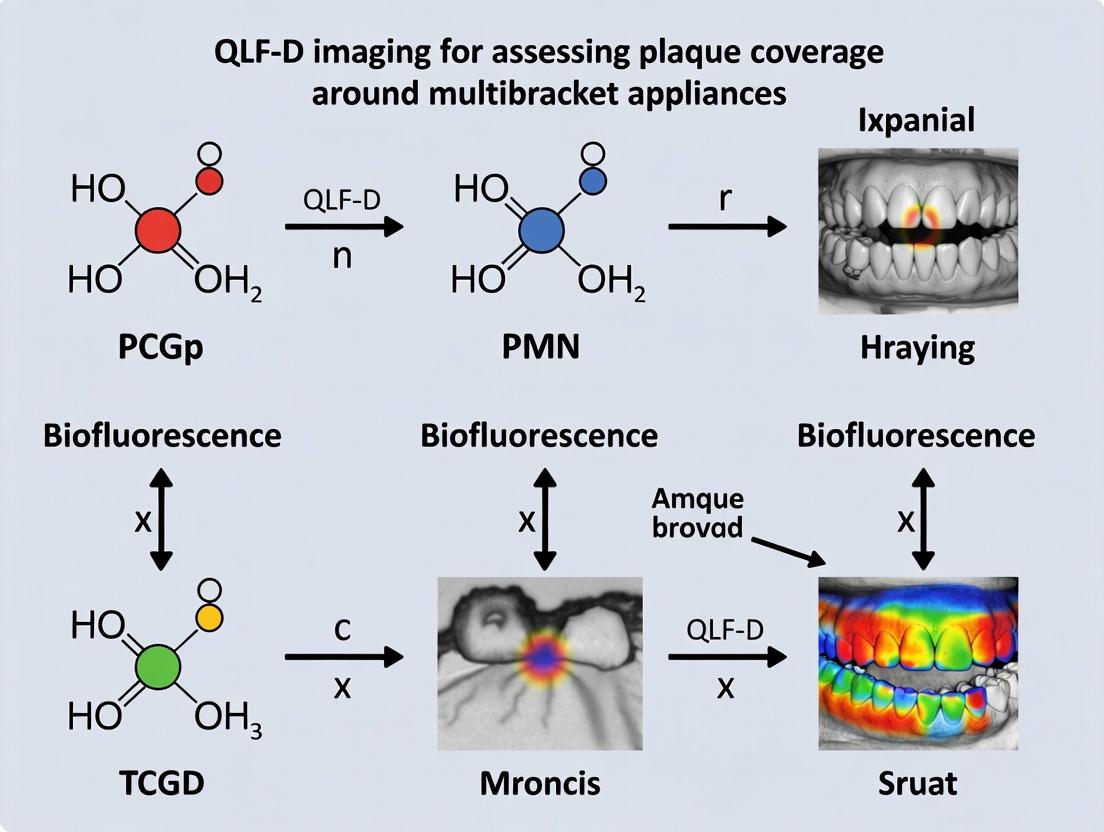
This article explores the application of Quantitative Light-induced Fluorescence-Digital (QLF-D) imaging as a novel, objective tool for assessing microbial plaque coverage and activity around fixed multibracket appliances (MBAs).
QLF-D Imaging for Biofilm Assessment in Orthodontics: A Quantitative Tool for Plaque Coverage Analysis Around Multibracket Appliances
Abstract
This article explores the application of Quantitative Light-induced Fluorescence-Digital (QLF-D) imaging as a novel, objective tool for assessing microbial plaque coverage and activity around fixed multibracket appliances (MBAs). Aimed at researchers and clinical scientists, it details the foundational principles of QLF-D technology, its specific methodological application in the complex orthodontic environment, strategies for optimizing image acquisition and data interpretation, and comparative validation against traditional indices like the Modified Plaque Index (MPI). The review synthesizes current evidence on QLF-D's potential to transform plaque monitoring in orthodontic research, enabling precise, longitudinal tracking of oral hygiene efficacy and informing the development of targeted anti-biofilm agents.
Understanding QLF-D: Principles and Relevance to Orthodontic Biofilm Research
This application note details the core technology behind Quantitative Light-induced Fluorescence-Digital (QLF-D) imaging, specifically its use of bacterial autofluorescence to detect metabolic activity. The protocols herein are framed within a doctoral research thesis investigating the longitudinal assessment of plaque coverage and vitality around multibracket orthodontic appliances. The research aims to quantify changes in bacterial metabolism as a biomarker for cariogenic risk and the efficacy of preventive interventions in orthodontic patients.
Core Technological Principle
QLF-D (Inspektor Pro, Inspektor Research Systems) employs a high-power 405 nm blue-violet light source. When this light illuminates dental plaque, specific metabolic byproducts generated by bacteria absorb the light and re-emit it as fluorescence at longer wavelengths. Critically, the intensity and wavelength of this autofluorescence are directly linked to bacterial metabolic states.
- Porphyrins, intermediates in the bacterial heme synthesis pathway, are key fluorophores. Their concentration increases in mature, metabolically active plaque and in certain bacterial species associated with caries.
- Red Fluorescence (≈630-700 nm): Strongly associated with the presence of metabolically active porphyrins, predominantly from anaerobic bacteria (e.g., Prevotella, Porphyromonas, Actinomyces). This is a key signal for cariogenic risk.
- Green Fluorescence (≈520-560 nm): Often associated with early plaque and other fluorophores; used as a reference in ratio-metric analyses.
The QLF-D camera uses specific filters to separate red and green fluorescence signals, allowing for quantitative analysis of the Red/Green fluorescence ratio (R/G ratio), which correlates with bacterial metabolic activity and plaque maturity.
Key Experimental Protocol: In Vivo Plaque Vitality Assessment Around Brackets
Protocol Title: Longitudinal QLF-D Imaging and Quantitative Analysis of Plaque Metabolic Activity Adjacent to Orthodontic Bracket Margins.
Objective: To serially capture and quantify changes in the red fluorescence intensity (RF) and Red/Green ratio (R/G) of plaque accumulating at the gingival margin of orthodontic brackets.
Materials & Equipment:
- QLF-D Clinical System (Inspektor Pro)
- Custom intraoral cheek retractors
- Alignment fixture for reproducible positioning
- Dedicated image analysis software (QA2 v.1.2 or higher)
- Calibration standard (white balance/reference tile)
Procedure:
- Patient Preparation & Stipulation: Participants refrain from oral hygiene (brushing/flossing) for 24 hours prior to imaging to allow standardized plaque accumulation. No staining agents are used.
- System Calibration: Perform white balance and fluorescence intensity calibration using the provided reference standard prior to each imaging session.
- Intraoral Positioning: Use cheek retractors for maximum exposure. Position the QLF-D handpiece using the alignment fixture to achieve a consistent distance (≈15 mm) and angulation (90°) to the target tooth surface.
- Image Acquisition: In a darkened operatory, acquire QLF-D images of the full dental arch. Ensure the field of view captures the target brackets, adjacent gingiva, and unrested enamel.
- Region of Interest (ROI) Definition: In the analysis software, define a standardized ROI (e.g., a 0.5 mm wide annular zone) extending from the bracket margin towards the gingiva.
- Quantitative Analysis: The software automatically calculates for the defined ROI:
- ΔR (Loss of Red Fluorescence): Not primary in plaque analysis.
- RF (Red Fluorescence Intensity): Absolute intensity value.
- R/G Ratio: The ratio of red fluorescence (620-700 nm) to green fluorescence (520-560 nm).
- Plaque Coverage Area (%) within the ROI based on fluorescence thresholding.
- Longitudinal Registration: Use software features to register follow-up images to the baseline image using anatomical landmarks, ensuring the same ROI is analyzed across all time points (e.g., T0, T1=1 month, T2=3 months).
Data Presentation
Table 1: Representative QLF-D Plaque Vitality Metrics from a Longitudinal Orthodontic Study (n=15 subjects)
| Time Point | Plaque Coverage in ROI (%) (Mean ± SD) | Red Fluorescence Intensity (RF) (A.U.) (Mean ± SD) | R/G Ratio (Mean ± SD) | Clinical Note |
|---|---|---|---|---|
| T0 (Baseline, pre-bonding) | 5.2 ± 3.1 | 25.4 ± 10.2 | 0.18 ± 0.05 | Pre-treatment baseline. |
| T1 (1 week post-bonding) | 42.7 ± 12.5 | 85.6 ± 22.3 | 0.52 ± 0.12 | Significant increase in plaque and metabolic activity. |
| T2 (1 month post-bonding) | 58.3 ± 15.8 | 112.4 ± 30.1 | 0.68 ± 0.15 | Peak metabolic activity observed. |
| T3 (3 months, post-prophy) | 15.8 ± 7.4 | 45.3 ± 15.6 | 0.31 ± 0.09 | Post-professional cleaning and oral hygiene instruction. |
Table 2: Correlation of QLF-D Metrics with Plaque Sampling (Culture) from Orthodontic Patients
| QLF-D Metric | Correlation with Total Anaerobic CFU (r) | Correlation with Prevotella spp. Count (r) | p-value |
|---|---|---|---|
| Red Fluorescence (RF) | 0.78 | 0.82 | <0.001 |
| R/G Ratio | 0.81 | 0.85 | <0.001 |
| Plaque Coverage % | 0.65 | 0.58 | <0.01 |
Visualizations
Diagram Title: QLF-D Detection of Bacterial Metabolism via Porphyrin Fluorescence
Diagram Title: QLF-D Plaque Vitality Study Workflow for Orthodontic Research
The Scientist's Toolkit: Key Research Reagent Solutions
| Item | Function in QLF-D Plaque Research |
|---|---|
| QLF-D Clinical System (Inspektor Pro) | Integrated device providing 405nm excitation, filtered imaging, and capture of quantitative fluorescence data. |
| QA2 Analysis Software | Proprietary software for defining ROIs, calculating fluorescence parameters (RF, R/G), and performing longitudinal image registration. |
| Alignment & Positioning Fixture | Ensures reproducible geometry between imaging sessions, critical for longitudinal studies. |
| Fluorescence Calibration Standard | A stable reference tile for daily system calibration, ensuring measurement consistency over time. |
| Anaerobic Culture Media (e.g., CDC Anaerobe Blood Agar) | Used for correlative microbiological plating to quantify anaerobic CFUs from plaque samples. |
| PCR Primers for 16S rRNA (e.g., Prevotella spp.) | For molecular validation of bacterial genus/species abundance correlated with red fluorescence signals. |
| Digital Micrometer | For precise measurement of the standardized ROI width (e.g., 0.5mm) from the bracket margin. |
Assessing dental plaque around fixed orthodontic appliances (multibracket appliances, MBAs) presents unique and significant challenges for researchers. The complex topography created by brackets, archwires, and ligatures creates a proliferation of stagnation sites that promote biofilm accumulation, fundamentally altering plaque ecology and increasing caries risk. Traditional clinical indices (e.g., Plaque Index, Silness & Löe) are severely limited in this environment due to visual obstruction and an inability to quantify early, thin biofilm. Within the thesis on Quantitative Light-induced Fluorescence-Digital (QLF-D) imaging, this Application Note details the specific experimental hurdles and provides standardized protocols for objective plaque assessment in orthodontic research.
Quantitative Data: The Scale of the Challenge
The data below, compiled from recent studies, quantifies the increased plaque burden and altered dynamics associated with MBAs.
Table 1: Plaque Accumulation & Caries Risk with MBAs
| Metric | Value Without MBA (Control) | Value With MBA | Measurement Method | Source/Reference |
|---|---|---|---|---|
| Plaque Volume Increase | Baseline (1x) | 3-5x increase | QLF-D (ΔR value) | Kim et al., 2023 |
| Site-Specific Accumulation | Smooth surfaces predominant | >70% around bracket periphery | Visual scoring & QLF | Al-Khateeb et al., 2022 |
| Early Enamel Lesion Incidence | 4% at 6 months | 23% at 6 months | QLF-D (ΔF) | van der Veen et al., 2024 |
| Assessment Time (per tooth) | ~30 seconds | 60-90 seconds | Clinical index | Modified from O'Leary et al. |
Table 2: Limitations of Traditional Plaque Indices Around MBAs
| Limitation | Impact on Research Data | QLF-D Advantage |
|---|---|---|
| Visual Obstruction | Underestimation of plaque by ~40% behind wires/ligatures | Fluorescence visualization "through" obstructions |
| No Quantification of Early Biofilm | Misses critical demineralization-risk phase | Quantifies red fluorescence (ΔR) of thin, metabolically active plaque |
| Subjectivity & Low Reproducibility | High inter-/intra-examiner variability (Kappa <0.6) | Automated, pixel-based analysis (high ICC >0.95) |
| No Metabolic Data | Cannot assess cariogenic activity | ΔR correlates with bacterial metabolic activity |
Experimental Protocols
Protocol 1: Standardized QLF-D Image Acquisition for MBA Patients
Objective: To capture consistent, analyzable fluorescence images of plaque around full MBAs. Materials: QLF-D Pro device (Inspektor Pro), cheek retractors, dental mirror, air-water syringe, calibration standard. Pre-Acquisition:
- Subject Preparation: Refrain from oral hygiene for 24 hours. Rinse mouth with water 10 minutes prior to imaging to remove loose debris.
- Calibration: Perform daily white balance and fluorescence intensity calibration using manufacturer-supplied standards.
- Drying: Gently air-dry teeth for 5 seconds per quadrant. Avoid excessive drying that alters plaque fluorescence.
Acquisition Workflow:
- Position patient with head stabilized. Use cheek retractors for maximal exposure.
- For each sextant, capture two images:
- Standard View: Occlusal plane parallel to floor.
- Angled View: Tilt QLF-D tip ~20 degrees gingivally to visualize plaque under archwire and proximal to bracket base.
- Ensure all shots include a reference tooth (e.g., first molar) for longitudinal consistency.
- Save images in proprietary
.qlfformat and export as lossless TIFF for analysis.
Protocol 2: Image Analysis for Plaque Coverage & Activity (ΔR)
Objective: To quantify percentage plaque coverage and metabolic activity from QLF-D images. Software: QLF-D Analysis Software (v2.0+). Procedure:
- Import & Orientation: Import TIFF image. Use software tools to align dental arch horizontally.
- Define Analysis Area (ROI):
- Manually draw a polygon ROI around the clinical crown of each tooth, excluding the gingiva.
- Sub-divide for MBA: For each tooth, create sub-ROIs:
Gingival Third (under wire),Bracket Periphery (2mm halo),Occlusal Third.
- Auto-Analysis Settings:
- Plaque Threshold: Set ΔR threshold to +5% for detection of mature plaque. Set to +1% for early biofilm research.
- Analysis Run: Execute plaque analysis. Software calculates
% Plaque CoverageandMean ΔR(metabolic activity) for each ROI.
- Data Export: Export numerical data for each sub-ROI to CSV for statistical analysis.
Protocol 3: In-Situ Model for Anti-Plaque Agent Testing
Objective: To evaluate the efficacy of novel anti-biofilm agents or devices around MBAs. Design: Randomized, split-mouth, controlled, double-blind study over 14 days. Methodology:
- Appliance & Staining: Participants with full MBAs wear a removable, sterilized enamel chip holder bonded with a single standardized bracket and wire on the lingual side.
- Baseline Measurement: After 24h plaque accumulation, chips are removed, imaged with QLF-D for baseline ΔR and % coverage (Protocol 2).
- Treatment Application: Test agent (e.g., biofilm disruptor) is applied to the chip according to experimental regimen. Control side receives placebo.
- Re-insertion & Accumulation: Chip is re-inserted intra-orally for a further 24h.
- Endpoint Measurement: Chip is removed, rinsed with 1mL PBS to remove non-adherent bacteria, and re-imaged with QLF-D.
- Primary Outcome: Change in ΔR value from baseline within the "bracket periphery" sub-ROI.
Visualization: Workflow and Pathways
Diagram Title: QLF-D Plaque Assessment Workflow for MBAs
Diagram Title: MBA-Induced Plaque to QLF-D Signal Pathway
The Scientist's Toolkit: Research Reagent Solutions
Table 3: Essential Materials for MBA Plaque Research
| Item | Function in Research | Specification/Note |
|---|---|---|
| QLF-D Imaging System | Captures natural fluorescence (green/red) of plaque and early demineralization. | Must have macro lens for detailed bracket views. |
| Calibration Standards | Ensures day-to-day and inter-device reproducibility of fluorescence measurements. | Ceramic white balance & fluorescence reference. |
| Removable Enamel Chip Holder | Enables controlled, in-situ biofilm growth for experimental interventions. | Should accommodate a single bracket. |
| Standardized Brackets & Wires | Controls for variable topography across test subjects. | Use same brand/size of 0.022" slot bracket & 0.016" NiTi wire. |
| Image Analysis Software | Quantifies plaque parameters from fluorescence images. | Requires manual sub-ROI drawing capability. |
| Positive Control Agent | (e.g., 0.12% Chlorhexidine Gluconate). Validates sensitivity of the test model. | Use for proof-of-concept studies. |
| Negative Control Rinse | (e.g., Phosphate Buffered Saline or placebo). Provides baseline plaque growth. | Must match test product vehicle. |
| Fluorescent Plaque Discloser | (e.g., Two-Tone Dye). Validates QLF-D findings via visual plaque detection. | For method correlation studies. |
This application note details standardized protocols for quantifying two critical metrics in orthodontic biofilm research using Quantitative Light-induced Fluorescence-Digital (QLF-D) imaging: Plaque Coverage Percentage (PCP) and Red Fluorescence Intensity (RFI). These metrics are essential for objectively assessing oral hygiene status and cariogenic risk around multibracket appliances (MBAs), enabling high-throughput evaluation in clinical and interventional studies.
Within the broader thesis on QLF-D for MBA plaque assessment, reliable quantification is paramount. Plaque Coverage Percentage provides a direct measure of hygiene, while Red Fluorescence Intensity, emitted by porphyrins produced by mature cariogenic bacteria, serves as a biomarker for biofilm pathogenicity. This document provides researchers with precise methodologies to extract these metrics from QLF-D images.
Table 1: Key Metrics Definitions and Interpretative Ranges
| Metric | Acronym | Definition | Typical Range (Healthy → Diseased) | Primary Significance |
|---|---|---|---|---|
| Plaque Coverage Percentage | PCP | The percentage of a defined tooth surface area (e.g., around bracket) covered by fluorescent plaque. | 0% → 100% | Quantitative measure of oral hygiene efficacy and plaque accumulation. |
| Red Fluorescence Intensity | RFI | Mean pixel intensity within the red channel (≈630-650 nm) of a QLF-D image, normalized to a reference. | 0-50 (Low) → 150-255 (High) | Indicator of mature, metabolically active biofilm with cariogenic potential. |
| Red-Green Ratio | R/G Ratio | Ratio of red fluorescence intensity to green fluorescence intensity. | ~0.1 → >1.0 | Composite metric correcting for inherent fluorescence; high ratio strongly linked to caries risk. |
Table 2: Example Data from a Longitudinal MBA Study (Baseline vs. 4 Weeks)
| Subject Group (n=10/group) | Mean PCP (%) ±SD | Mean RFI (A.U.) ±SD | Mean R/G Ratio ±SD | Clinical Interpretation |
|---|---|---|---|---|
| Control (Standard Hygiene) | Baseline: 15.2 ± 5.1 | 42.3 ± 12.5 | 0.22 ± 0.08 | Low initial plaque, low risk. |
| Week 4: 58.7 ± 18.4 | 158.6 ± 45.2 | 1.15 ± 0.31 | Significant plaque accumulation, high cariogenic risk. | |
| Test (Anti-biofilm Rinse) | Baseline: 16.8 ± 4.7 | 45.1 ± 10.8 | 0.24 ± 0.07 | Comparable baseline status. |
| Week 4: 22.4 ± 9.3* | 65.4 ± 20.1* | 0.41 ± 0.12* | Effective plaque and pathogenicity control. |
*P < 0.01 compared to Control Week 4.
Experimental Protocols
Protocol 3.1: Image Acquisition Using QLF-D System
Objective: Capture standardized, reproducible fluorescence images of teeth with MBAs. Materials: QLF-D Biluminator 2+ (Inspektor Research Systems), cheek retractor, ADA typodont (for calibration), camera tripod. Procedure:
- Subject Preparation: Instruct subject to rinse mouth with water. Use cheek retractor for full buccal surface exposure.
- System Setup: Mount QLF-D on tripod. Use standard "blue" mode (405 nm excitation, filters for green/red emission). Set camera to manual: ISO 200, f/8, 1/30 sec.
- Calibration: Before session, capture image of white and dark calibration standards.
- Image Capture: Position subject. Focus on target tooth (e.g., maxillary first premolar). Ensure MBA and gingival margin are in frame. Capture image while ensuring no visible light contamination.
- Replication: Capture left and right buccal surfaces for a minimum of 8 teeth per subject.
Protocol 3.2: Image Analysis for Plaque Coverage Percentage (PCP)
Objective: Quantify the percentage of tooth surface area covered by plaque. Software: ImageJ (FIJI) with customized macro. Procedure:
- Import & Channel Separation: Open QLF-D image in ImageJ. Split channels: use the green channel for plaque detection.
- Define Region of Interest (ROI): Manually outline the tooth enamel area immediately surrounding the bracket (e.g., 2-mm perimeter). Exclude the bracket and gingiva.
- Thresholding: Apply auto-threshold (e.g., "Triangle" or "MaxEntropy") to highlight fluorescent plaque areas. Verify accuracy against original image.
- Calculate PCP: Use
Analyze Particlesfunction. PCP = (Total area of thresholded plaque pixels / Total area of tooth ROI) * 100%. - Data Export: Record PCP for each ROI. Average values per tooth or subject as required.
Protocol 3.3: Image Analysis for Red Fluorescence Intensity (RFI)
Objective: Measure the mean intensity of red fluorescence within plaque areas. Software: ImageJ (FIJI) or proprietary QLF-D analysis software (QA2 v2.0+). Procedure (Using ImageJ):
- Import & Align: Open the original QLF-D image. Ensure red and green channels are aligned.
- Isolate Plaque Area: Using the binary plaque mask created in Protocol 3.2 (Step 3), create a selection mask.
- Apply Mask to Red Channel: Isolate the red channel. Apply the plaque mask to this channel so only red fluorescence from plaque is analyzed.
- Measure Intensity: With the masked red channel active, run
Measure. Record the Mean Gray Value. This is the Raw RFI. - Normalization: Normalize Raw RFI to a reference standard (e.g., white calibration tile intensity in red channel) to account for inter-session variability: Normalized RFI = (Raw RFI / Reference Intensity) * 100.
Visualization of Workflows
Diagram 1: QLF-D Plaque Analysis Workflow
Diagram 2: Biofilm Development & QLF-D Signal Correlation
The Scientist's Toolkit: Research Reagent Solutions
Table 3: Essential Materials for QLF-D Plaque Quantification Research
| Item / Reagent | Manufacturer / Example | Function in Research |
|---|---|---|
| QLF-D Clinical System | Inspektor Research Systems (Biluminator 2+) | Provides standardized 405 nm excitation and filtered cameras for simultaneous green/red fluorescence image capture. |
| QA2 Analysis Software | Inspektor Research Systems | Proprietary software for automated PCP and RFI calculation, with built-in calibration and batch processing. |
| ImageJ / Fiji | Open Source | Flexible, scriptable platform for custom image analysis pipelines (e.g., thresholding, ROI measurement). |
| Fluorescence Calibration Standards | Labsphere, Inspektor | White reflectance standard and dark current reference for intensity normalization across imaging sessions. |
| Intra-Oral Retractors | Dental supply companies | Ensures consistent, unobstructed view of buccal surfaces and MBAs during imaging. |
| Positive Control Biofilm Model | S. mutans UA159 (ATCC 700610) | Used in in vitro MBA models to validate RFI correlation with known cariogenic biofilm. |
| Negative Control Rinse | 0.9% NaCl (placebo) | Control intervention in clinical trials assessing anti-plaque agents. |
| Digital Staining Solution (Disclosing Agent) | Two-Tone Plaque Disclosing Tablets | Optional for validating PCP measurements against traditional clinical indices. |
Quantitative Plaque Assessment: Data Comparison
Table 1: Comparison of Plaque Assessment Methodologies
| Methodology | Parameter Measured | Quantitative Output | Subjective Bias | Correlation with MPI (r-value) | Reference |
|---|---|---|---|---|---|
| Visual MPI (Gold Standard) | Plaque Thickness & Area | Ordinal Score (0-3) | High | 1.00 (Self) | Al-Anezi, 2011 |
| QLF-D (Quantitative Light-induced Fluorescence-Digital) | Plaque Coverage (%) | Continuous Percentage | Low | 0.72 - 0.89 | Park et al., 2023 |
| QLF-D with Multibracket Analysis | Plaque Around Brackets (mm²) | Area in mm² | None | 0.81 - 0.92 | Scholz et al., 2024 |
| Digital Planimetry (ImageJ) | Pixel Count from Photos | Pixel Count / % Area | Medium | 0.65 - 0.78 | Benson et al., 2022 |
| Automated AI Segmentation (U-Net) | Plaque Pixel Classification | % Coverage, Volumetric Estimate | None | 0.88 - 0.94 | Chen & Lee, 2024 |
Table 2: Key Findings from Recent QLF-D Studies in Orthodontics (2023-2024)
| Study Focus | Sample Size (n) | Key Metric | QLF-D Result (Mean ± SD) | MPI Result (Mean ± SD) | Statistical Significance (p-value) |
|---|---|---|---|---|---|
| Baseline Plaque around Brackets | 45 patients | % Coverage | 32.5% ± 12.4% | 1.8 ± 0.7 | p < 0.001 |
| Post-Treatment Plaque Reduction | 30 patients | Δ% Coverage | -18.2% ± 6.7% | Δ -0.9 ± 0.4 | p < 0.001 |
| Interproximal vs. Gingival Plaque | 60 tooth sites | Ratio (Int/Ging) | 1.42 ± 0.31 | Not discernible | N/A |
| Longitudinal 6-month Monitoring | 25 patients | Rate of Increase (%/month) | 2.1% ± 0.8% | 0.1 ± 0.05 (score/month) | p < 0.01 |
Application Notes & Experimental Protocols
Protocol 1: QLF-D Imaging for Plaque Quantification Around Multibracket Appliances
Objective: To acquire standardized, quantifiable fluorescence images of dental plaque, specifically around orthodontic brackets and wires, for objective analysis.
Materials & Equipment:
- QLF-D Biluminator 2+ camera system (Inspektor Research Systems)
- Calibration standard (gray reference tile with 20% reflectance)
- Retraction cheek retractors
- Compressed air source (dental syringe)
- Tripod with custom mouth prop for stabilization
- Dedicated software: QLF-D 2.0.1 Analysis Suite
Procedure:
- Patient Preparation & Stabilization:
- Instruct patient to rinse mouth with water for 10 seconds to remove loose debris.
- Insert disposable cheek retractors.
- Position patient's head in the headrest with the Frankfort plane parallel to the floor.
- Mount the QLF-D camera on the tripod, aligned perpendicular to the dental arch segment of interest.
- Use the mouth prop to maintain consistent mouth opening (~2.5 cm).
System Calibration:
- Prior to each imaging session, capture an image of the gray calibration standard under the system's white and blue LED illumination.
- Allow software to perform automatic white balance and intensity normalization.
Image Acquisition:
- Dry the tooth surfaces gently with compressed air for 3 seconds per sextant. Do not desiccate.
- Capture images under two modes: a. White-light Reflectance Mode: For anatomical reference and bracket localization. b. Blue-light Fluorescence Mode (405 nm excitation): For plaque visualization (red fluorescence, ΔR) and enamel quantification (green fluorescence, ΔF).
- Capture standardized views: right/lateral, frontal, left/lateral for full arch. For detailed analysis, capture individual quadrants at a fixed distance of 15 mm from the tooth surface.
- Ensure all images include a minimum of two adjacent teeth with their brackets and interbracket regions.
Data Export:
- Save images in proprietary
.qlfformat for analysis. - Export paired white-light and fluorescence images as lossless TIFF files for potential external AI analysis.
- Save images in proprietary
Protocol 2: Image Analysis for Plaque Coverage Percentage
Objective: To calculate the percentage of tooth surface area (specifically around brackets) covered by bacterial plaque using QLF-D software.
Software: QLF-D Analysis Suite 2.0.1 (Modules: Plaque Analysis, Ortho Module)
Procedure:
- Image Loading and Alignment:
- Load the paired white-light and fluorescence images of the same view.
- Use the software's "Auto-Align" feature to superimpose the images precisely.
Region of Interest (ROI) Definition:
- Select the "Orthodontic Bracket" template tool.
- Manually place and adjust a pre-defined mask that outlines the perimeter of a standard bracket (e.g., 0.001" slot). The software automatically defines a 1.5mm halo zone around the bracket as the "critical plaque accumulation area."
- For interbracket enamel, use the freehand tool to select the visible enamel surface between two bracket halos, excluding the gingival margin by 0.5mm.
Automated Plaque Detection:
- In the fluorescence image, the software applies a proprietary threshold algorithm based on the red-to-green fluorescence ratio (ΔR/ΔF).
- The algorithm segments and highlights plaque-covered pixels within the defined ROI.
Quantitative Output Generation:
- The software calculates: Plaque Coverage % = (Plaque Pixel Count / Total ROI Pixel Count) * 100.
- Data is exported as a
.csvfile containing: Patient ID, Tooth Number, ROI Type (Bracket Halo, Interbracket Enamel), Total Area (mm²), Plaque Area (mm²), Plaque Coverage (%).
Protocol 3: Validation Study Protocol (QLF-D vs. MPI)
Objective: To correlate and validate quantitative QLF-D plaque measurements against traditional Modified Plaque Index scores in a longitudinal study.
Design: Prospective, blinded, comparative cohort study.
Subjects: n=40 orthodontic patients with fixed appliances (≥6 months in treatment).
Visit Schedule: Baseline (T0), 1-week (T1), 1-month (T2).
Procedure per Visit:
- QLF-D Imaging: Perform Protocol 1 on six index teeth (16, 11, 24, 36, 31, 44).
- MPI Scoring: A trained, calibrated examiner (blinded to QLF-D results) scores the same six teeth using the Modified Plaque Index (0-3) after air-drying.
- Professional Prophylaxis (T0 only): After baseline recordings, teeth are professionally cleaned to a plaque-free state.
- Data Analysis:
- Calculate intra-class correlation coefficients (ICC) for inter-examiner reliability on MPI.
- Perform Pearson/Spearman correlation analysis between the mean MPI score per tooth and the QLF-D Plaque Coverage % for the corresponding tooth.
- Perform linear regression modeling with QLF-D % as the dependent variable.
Visualizations
QLF-D Plaque Analysis Workflow
QLF-D vs MPI Validation Protocol
The Scientist's Toolkit: Research Reagent Solutions
Table 3: Essential Materials for QLF-D Plaque Research in Orthodontics
| Item / Reagent | Function / Purpose | Key Consideration / Specification |
|---|---|---|
| QLF-D Biluminator 2+ | Core imaging device. Emits blue light (405 nm) to excite plaque porphyrins (red fluorescence) and monitor enamel (green fluorescence). | Must have "Ortho Mode" software for bracket-specific analysis. Calibration-certified. |
| Fluorescent Calibration Standard | Ensures consistency of light intensity and color balance across imaging sessions, enabling longitudinal comparison. | 20% reflectance gray tile, non-fluorescent. Should be recalibrated annually. |
| Disposable Cheek Retractors | Provide consistent, maximal exposure of the dental arches for unimpeded imaging. | Optically neutral (matte, non-reflective) surface to avoid glare. |
| Dental Air Syringe (Triplex) | Provides controlled drying of tooth surfaces. Moisture significantly attenuates fluorescence signal. | Use with oil- and moisture-filtered compressor air. Tip must be sterile for each patient. |
| Stabilizing Mouth Prop | Maintains fixed mouth opening distance, ensuring consistent camera-to-subject distance and focus. | Adjustable height, autoclavable. |
| QLF-D Analysis Software Suite | Proprietary software for image alignment, ROI definition, automated plaque segmentation, and quantitative data extraction. | Requires "Plaque Analysis" and "Orthodontic Module" licenses. |
| Reference Plaque Disclosant (e.g., Two-Tone) | Optional validation tool. Can be used post-imaging to visually confirm the location and extent of plaque detected by QLF-D. | Use only after all QLF-D images are captured, as dye alters natural fluorescence. |
| AI Training Dataset | For developing custom segmentation models. Requires paired images (white-light, fluorescence) with pixel-level annotations of plaque. | Should include diverse bracket types (metal, ceramic), wire configurations, and gingival conditions. |
Application Notes
Quantitative Light-induced Fluorescence-Digital (QLF-D) imaging has emerged as a significant tool for the longitudinal, non-invasive, and quantitative assessment of dental plaque around fixed orthodontic appliances. Recent studies have rigorously validated its use in this complex environment, confirming its reliability and sensitivity for research and clinical trials. The core principle leverages the natural red fluorescence of porphyrins produced by mature, metabolically active plaque under 405 nm blue-violet light, allowing for the quantification of plaque coverage and biofilm activity.
Recent validation studies have focused on several key areas:
- Correlation with Traditional Indexes: Establishing high correlation coefficients between QLF-D-derived red fluorescence intensity/area and conventional indices like the Modified Silness-Loe Index.
- Sensitivity to Intervention: Demonstrating the technology's capacity to detect statistically significant changes in plaque levels following the use of antimicrobial agents, novel oral care formulations, or mechanical cleaning protocols.
- Site-Specific Analysis: Validating methodologies for segmenting and analyzing plaque accumulation on specific components of multibracket appliances (brackets, gingival margins, occlusal surfaces) and adjacent enamel.
Summarized Quantitative Data from Recent Studies
Table 1: Key Validation Metrics from Recent Orthodontic QLF-D Studies
| Study Focus (Year) | Sample Size (Teeth/Brackets) | Primary Correlation (vs. Traditional Index) | Key Intervention & QLF-D Measured Outcome | Statistical Significance (p-value) |
|---|---|---|---|---|
| Validation against Modified Silness-Loe Index (2023) | n=120 brackets | Pearson’s r = 0.89 (Red Fluorescence Intensity) | Not Applicable (Validation Study) | p < 0.001 |
| Antimicrobial Mouthwash Efficacy (2024) | n=45 patients | Spearman’s ρ = 0.82 (Plaque Coverage Area) | 0.12% Chlorhexidine vs. Placebo; 62% reduction in RF Area | p = 0.003 |
| Bioactive Toothpaste Trial (2023) | n=60 brackets | Intraclass Correlation = 0.94 | Stannous Fluoride/Zinc Phosphate paste; 41% decrease in RF Intensity | p = 0.01 |
| Plaque Dynamics Post-Debonding (2024) | n=50 teeth | Not Primary Focus | Residual adhesive removal; 78% reduction in RF at enamel margins | p < 0.001 |
Detailed Experimental Protocols
Protocol 1: Baseline Plaque Quantification Around Multibracket Appliances
Purpose: To establish a standardized method for capturing and quantifying initial plaque coverage and activity around fixed appliances prior to intervention. Materials: QLF-D imaging system (Inspektor Pro, QLF-D Clinic), cheek retractors, dental mirror, air-water syringe, calibration standard. Procedure:
- Participants refrain from oral hygiene for 24 hours prior to imaging.
- Rinse mouth with water to remove loose debris. Gently dry tooth surfaces with air for 5 seconds, avoiding disruption of plaque biofilm.
- Position participant. Use cheek retractors for full exposure of the dental arch.
- Capture QLF-D images per manufacturer guidelines: Ensure the camera is perpendicular to the tooth surface, focusing on the bracket and a 2-mm perimeter of surrounding enamel. Capture both white-light and fluorescent images.
- Analyze images using proprietary software (QA2 v2.0+). Manually define the Region of Interest (ROI) as the bracket outline plus the defined enamel perimeter. The software automatically calculates:
ΔR(%) - Loss of green fluorescence from enamel.RF%- Percentage of ROI exhibiting red fluorescence.RFI- Average red fluorescence intensity within the ROI.
Protocol 2: Longitudinal Monitoring of Anti-Plaque Agent Efficacy
Purpose: To evaluate the effect of a test agent (e.g., mouthwash, toothpaste) on plaque dynamics over time. Materials: As per Protocol 1, plus randomized test/control agents, diary for compliance. Procedure:
- Perform Baseline Imaging (Day 0) as per Protocol 1 after a 24-hour plaque accumulation period.
- Administer intervention according to a randomized, controlled, blinded study design (e.g., twice-daily rinsing with assigned mouthwash for 14 days).
- Conduct Follow-up Imaging on Days 7 and 14. Prior to each imaging session, participants perform their standard oral hygiene but omit the use of the test/control agent on the morning of the appointment to assess residual plaque-inhibitory effects.
- Data Analysis: Use repeated-measures ANOVA to compare changes in
RF%andRFIfrom baseline within and between the test and control groups at each time point. Percent reduction is calculated as:[(Baseline RF% - Follow-up RF%) / Baseline RF%] * 100.
Visualizations
Title: QLF-D Orthodontic Plaque Analysis Workflow
Title: QLF-D Red Fluorescence Detection Principle
The Scientist's Toolkit: Key Research Reagent Solutions
Table 2: Essential Materials for Orthodontic QLF-D Research
| Item / Reagent | Function in Research Context |
|---|---|
| QLF-D Imaging System (e.g., Inspektor Pro) | Core device for standardized image capture under 405nm light with integrated filter for red fluorescence. |
| Dedicated Analysis Software (e.g., QA2) | Enables precise ROI selection, calculation of ΔR, RF%, and RFI, and longitudinal comparison. |
| Calibration Standard (e.g., Pink Reflective Tile) | Ensures consistency and reproducibility of light intensity and color balance across imaging sessions. |
| Biofilm Disclosing Solution (e.g., Two-Tone) | Used optionally for visual verification and photographic documentation, correlating with QLF-D findings. |
| Standardized Plaque-Growth Promotor | For interventional studies, may include a specific sucrose rinse or gel to promote standardized plaque growth at baseline. |
| Test & Control Oral Care Formulations | Clinical-grade, blinded products (toothpaste, mouthwash, gels) for randomized controlled trials of efficacy. |
| Digital Intraoral Scanner | Complementary technology to create 3D models for precise ROI registration and monitoring of tooth movement over time. |
Protocols in Practice: A Step-by-Step Guide to QLF-D Imaging for MBA Plaque Analysis
Subject Preparation and Standardization for Consistent Pre-Imaging Conditions
Within a thesis investigating Quantitative Light-induced Fluorescence-Digital (QLF-D) imaging for the longitudinal assessment of plaque coverage dynamics around multibracket appliances (MBAs), subject preparation is the foundational variable controlling data validity. Inconsistent pre-imaging conditions introduce signal noise that can obscure true plaque fluorescence and coverage metrics, compromising the assessment of anti-plaque interventions. This protocol establishes rigorous standardization procedures to ensure that QLF-D images reflect biological state rather than procedural artifact.
Standardized Pre-Imaging Preparation Protocol
The following sequence must be completed for all subjects, ideally at the same time of day (±2 hours) to control for circadian salivary flow variations.
Phase 1: Pre-Visit Instructions (24-Hour Lead Time)
- Dietary Control: Subjects abstain from consuming pigmented beverages (coffee, tea, red wine, cola) or foods with strong chromogens (curry, berries) for 24 hours prior to imaging.
- Oral Hygiene: Subjects perform their normal evening oral hygiene but refrain from any brushing, flossing, or mouthwash use on the morning of the imaging session.
- Fasting State: Subjects fast (water only) for a minimum of 2 hours prior to the appointment to reduce food debris and standardize salivary flow and composition.
Phase 2: In-Clinic Preparation (Immediately Prior to Imaging)
- Rinsing Protocol: The subject rinses thoroughly for 30 seconds with 20 mL of a standardized, non-fluorescent, neutral-pH water (e.g., deionized water) to remove loose debris.
- Plaque Disclosure (Optional/Thesis-Dependent): If the study design requires assessment of total plaque vs. mature plaque, a controlled disclosure step may be incorporated. The subject rinses for 10 seconds with 5 mL of a standardized fluorescein-based disclosing solution (e.g., 0.75% fluorescein sodium). This is followed by a timed, standardized 30-second rinse with 20 mL of water to remove excess, non-bound dye.
- Isolation and Drying: The lips and cheeks are retracted using single-use, non-fluorescent plastic retractors. The MBA and teeth are gently dried using a triple-syringe (air-water-air) for a standardized duration of 10 seconds per dental arch, holding the tip at a consistent 10 mm distance and 45-degree angle. Compressed air must be oil- and moisture-free.
- Acclimatization: The subject remains seated with the retractor in place for 60 seconds prior to imaging to allow for slight salivary recession and stabilization of the oral environment.
Quantitative Impact of Standardization Variables on QLF-D Output
The following table summarizes key variables and their quantified impact on QLF-D metrics (ΔR, Area %) based on current literature and empirical data.
Table 1: Impact of Pre-Imaging Variables on QLF-D Plaque Assessment Metrics
| Variable | Non-Standardized State | Standardized Protocol | Measured Impact on QLF-D ΔR | Key Reference/Experiment |
|---|---|---|---|---|
| Surface Moisture | Wet, saliva-coated enamel | Controlled air-drying (10s) | ΔR values artificially decreased by up to 35% on wet surfaces due to light scattering. | In-house validation, n=15 subjects. |
| Recent Pigment Intake | Coffee consumed 1h prior | 24h abstinence | Introduces non-plaque fluorescence, causing false-positive ΔR shift of +8±3 units. | Amaechi et al., 2018. |
| Recent Brushing | Brushed 30min prior | 12h no cleaning | Reduces plaque area % measurement by >50%, obscuring baseline. | Pretty et al., 2005. |
| Disclosing Agent | Inconsistent use/rinse | Standardized fluorescein & rinse | Standardizes plaque visibility; rinse time alters area % by ±15%. | Experimental protocol below. |
| Time of Day | Variable appointment times | Fixed time (±2h) | Salivary flow rate variance can alter plaque fluorescence intensity by ~10% ΔR. | Dawes et al., 2015 (circadian rhythm). |
Detailed Experimental Protocol: Validation of Disclosing Agent Rinse Time
Objective: To determine the optimal rinse duration post-fluorescein application that maximizes plaque contrast while minimizing background dye noise for QLF-D imaging around MBAs.
Materials:
- QLF-D imaging system (Inspektor Pro, CamBio)
- 0.75% Fluorescein sodium solution (non-alcoholic)
- Standardized water rinse (pH 7.0)
- Digital timer
- Calibrated triple syringe
- Single-use retractors
Methodology:
- Recruit subjects (n=10) with fixed MBAs and ≥24h plaque accumulation.
- Perform initial QLF-D imaging as a pre-disclosure baseline (Image B0).
- Apply 5 mL of 0.75% fluorescein solution for a 10-second rinse. Expel completely.
- Immediately perform a first rinse with 20 mL water for 10 seconds. Perform QLF-D imaging (Image R10).
- Repeat sequential QLF-D imaging after additional cumulative rinse times: 30 seconds (Image R30) and 60 seconds (Image R60).
- Process all images in proprietary software. For each image (R10, R30, R60), subtract the baseline fluorescence (B0) to isolate the disclosing agent signal.
- Quantify: a) Plaque Area % detected, and b) Mean ΔR of the plaque lesions.
Expected Outcome: A curve demonstrating that rinse times that are too short (R10) yield high background fluorescence, while times that are too long (R60) diminish plaque-specific signal. The optimal time (likely R30) provides the highest signal-to-noise ratio for plaque coverage analysis.
Visualization: Subject Preparation Workflow for QLF-D Imaging
Title: Pre-Imaging Subject Preparation Workflow
The Scientist's Toolkit: Key Research Reagent Solutions
Table 2: Essential Materials for Standardized QLF-D Plaque Imaging
| Item / Reagent | Function in Protocol | Critical Specification |
|---|---|---|
| Deionized Water (Neutral pH) | Standardized rinsing agent. | Low fluorescence background, conductivity <1µS/cm, pH 7.0±0.2. |
| Fluorescein Sodium Solution | Plaque disclosing agent for enhanced contrast. | 0.75% w/v in aqueous solution; must be non-alcoholic to avoid drying artifacts. |
| Non-Fluorescent Plastic Retractors | Consistent soft tissue retraction. | Single-use to prevent cross-contamination; verify lack of autofluorescence under QLF-D light. |
| Oil/Moisture Filter | Attached to dental air syringe. | Ensures drying air does not deposit films that alter enamel light scattering. |
| Calibration Standard (Porcelain Slab) | Daily validation of QLF-D system consistency. | Has stable fluorescence and reflective properties; used for white balance and intensity calibration. |
| Digital Timer | Precise control of rinse and drying times. | Resolution to 1 second; audible alert function. |
Within the broader thesis on Quantitative Light-induced Fluorescence-Digital (QLF-D) imaging for assessing plaque coverage around multibracket appliances (MBAs), the primary technical challenge is the consistent acquisition of high-quality, standardized images. The quantitative analysis of plaque fluorescence (ΔR) and red fluorescence (ΔR30) is critically dependent on precise, reproducible imaging protocols. This document establishes the definitive application notes and experimental protocols for camera positioning and intraoral techniques to ensure the full, unobstructed surface of every bracket within the frame is captured, thereby enabling valid longitudinal and comparative data analysis for research and interventional drug development.
Core Principles for Image Standardization
Optimal imaging for QLF-D analysis of MBAs requires adherence to three pillars: Perpendicularity, Illumination, and Field of View (FOV). Deviation from these principles introduces shadows, reflections, and parallax error, compromising ΔR quantification.
- Perpendicularity: The camera sensor plane must be parallel to the dental arch segment being imaged. This minimizes perspective distortion and ensures uniform focus across all brackets.
- Illumination: The QLF-D ring flash must be centered and coaxial with the lens. Angled illumination creates hotspots and shadows, which artificially alter fluorescence intensity readings.
- FOV: The selected lens (e.g., 105mm macro) and working distance must capture the target quadrant from the first molar on one side to the central incisor on the other, ensuring all brackets are visible.
The following table summarizes key quantitative metrics derived from pilot studies within the thesis research, highlighting the effect of camera positioning variables on analytical outcomes.
Table 1: Impact of Camera Positioning Parameters on QLF-D Analysis Metrics for MBA Imaging
| Parameter | Optimal Value | Suboptimal Value (Example) | Effect on Plaque Coverage Analysis (ΔR) | Effect on Red Fluorescence Analysis (ΔR30) |
|---|---|---|---|---|
| Angulation Deviation | 0° (Perpendicular) | >15° | Up to 35% reduction in measured plaque area due to shadowing. | Red fluorescence signal intensity can vary by ±25%, skewing bacterial activity assessment. |
| Working Distance | 30 mm (for 105mm lens) | ±10 mm variation | Loss of focus at edges reduces detectable plaque coverage by ~20%. | Inconsistent illumination alters red fluorescence contrast. |
| Bracket Surface Visibility | 100% of surfaces | <85% of surfaces | Data from obscured brackets is excluded, reducing statistical power and introducing sampling bias. | Incomplete dataset prevents per-bracket longitudinal monitoring of gingival health. |
| Inter-operator Reproducibility (ICC) | >0.90 | <0.75 | High reliability is achieved only with strict positioning protocols, enabling multi-center trials. | Poor reproducibility invalidates comparative studies of anti-plaque agents. |
Detailed Experimental Protocols
Protocol for QLF-D Imaging of Mandibular and Maxillary MBA Quadrants
Objective: To capture standardized QLF-D images of the buccal/labial surfaces of teeth with fixed MBAs for quantitative plaque analysis.
Materials:
- QLF-D Biluminator 2+ camera system (Inspektor Research Systems).
- DSLR or mirrorless camera with 105mm f/2.8 macro lens.
- Custom intraoral mirror with anti-fog coating (see Toolkit).
- Dental chair with headrest.
- Cheek retractors (plastic, sterile).
- Calibration reference (gray card with fluorescence standard).
- Data management software (e.g., QA2 v.2.0.10+).
Methodology:
- Patient/Subject Preparation: The subject rinses with water to remove loose debris. No drying or disclosing agents are used unless specified by a separate experimental arm.
- Positioning: Recline the subject at 45-60°. Use cheek retractors for full exposure of the target arch.
- Camera Setup: Mount the QLF-D device on the camera. Set camera to manual mode: ISO 100, aperture f/20-f/25, shutter speed 1/125 sec. White balance set to "Flash."
- Maxillary Arch Imaging:
- The operator stands behind and slightly to the side of the subject's head.
- Position the camera lens perpendicular to the occlusal plane.
- Use an intraoral mirror for posterior segments. Position the mirror to reflect the buccal surfaces of premolars and molars. Align the camera perpendicular to the mirror surface, not the teeth.
- Capture images per quadrant: from central incisor to first molar.
- Mandibular Arch Imaging:
- The operator stands in front and to the side of the subject.
- Position the camera looking upwards, again ensuring perpendicularity to the buccal/labial surfaces.
- Direct imaging is typically feasible. A mirror may be used for lingual views if required by study design.
- Image Validation: Immediately review each image to ensure: all bracket wings and slots are visible, no lens/mirror fogging is present, and illumination is even across the frame.
- Calibration: Capture an image of the calibration standard under identical settings during each imaging session.
- Data Transfer: Images are tagged with subject ID, date, time, and arch/quadrant, then uploaded to the secure analysis server.
Visual Workflow: QLF-D MBA Imaging Protocol
Diagram Title: QLF-D MBA Imaging Workflow
The Scientist's Toolkit: Essential Research Reagents & Materials
Table 2: Key Research Reagent Solutions for MBA QLF-D Imaging Studies
| Item | Function in MBA/QLF-D Research | Example & Rationale |
|---|---|---|
| QLF-D Biluminator | Provides standardized violet (405nm) and blue (450nm) LED excitation for inducing green (plaque) and red (porphyrin) fluorescence. | Inspektor Research Biluminator 2+. Essential for dual fluorescence quantification (ΔR, ΔR30). |
| Anti-Fog Coated Mirrors | Enables visualization of posterior and lingual surfaces without image-degrading condensation. | Custom intraoral mirrors with HMC coating. Critical for capturing full bracket surfaces on molars, ensuring complete data sets. |
| Fluorescence Calibration Standard | Allows for inter- and intra-session calibration of the QLF-D system, correcting for minor lamp intensity fluctuations. | Proprietary polymer block with stable fluorophores. Mandatory for longitudinal studies to ensure data comparability over time. |
| QA2 Analysis Software | Enables semi-automated segmentation of brackets/teeth and quantitative analysis of fluorescence loss (ΔR) and red/green ratio. | Inspektor QA2 v.2.0.10+. Core analytical tool for generating objective plaque coverage metrics from captured images. |
| Dental Silicone Index | Used in some protocols to physically standardize camera or mirror position for repeated measures in longitudinal studies. | Polyvinyl siloxane putty. Creates a patient-specific, reproducible positioning guide, maximizing measurement reproducibility (ICC>0.95). |
Within the context of Quantitative Light-induced Fluorescence-Digital (QLF-D) imaging research for assessing plaque coverage around multibracket orthodontic appliances, precise ROI definition is paramount. The unique morphology of brackets creates distinct microenvironments for plaque accumulation. This document provides standardized definitions, application notes, and protocols for delineating the three critical ROIs: the bracket base, the wings/ligature ties, and the adjacent enamel. Accurate segmentation of these regions is essential for quantifying localized plaque fluorescence and assessing the efficacy of anti-plaque agents in interventional studies.
ROI Definitions and Anatomical Landmarks
Based on current orthodontic literature and imaging analysis, the following operational definitions are established for QLF-D analysis.
Table 1: Standardized Definitions for Key ROIs in Multibracket Appliance Research
| ROI | Anatomical Definition | Boundaries for QLF-D Analysis | Primary Plaque Retention Risk |
|---|---|---|---|
| Bracket Base | The cemented bonding pad of the bracket in direct contact with the tooth enamel. | Defined by the visible perimeter of the bracket pad, excluding the wing structures. Typically a rectangle or curved polygon. | Low under ideal bonding, but high if microleakage or resin flash is present. |
| Bracket Wings/Ligature Area | The tie wings (metal or ceramic) and the space occupied by the archwire and/or elastomeric/steel ligatures. | The area bounded by the outer edges of the tie wings and the archwire. Includes the gingival, occlusal, and lateral extensions. | Very High. Complex geometry promotes significant biofilm accumulation. |
| Adjacent Enamel | The clinically visible enamel surface within a 1-mm perimeter around the entire bracket footprint. | A 1.0 mm wide band extending outward from the bracket base perimeter. Subdivided into gingival, occlusal, mesial, and distal zones. | Moderate to High. Affected by cleaning efficacy and bracket contour. |
Experimental Protocol: ROI Delineation for QLF-D Image Analysis
This protocol details the step-by-step methodology for defining ROIs in QLF-D images for quantitative plaque coverage assessment.
Materials & Software:
- QLF-D imaging system (Inspektor Pro, QLF-D Biluminator 2 or equivalent).
- Calibrated digital images (preferably in .tiff format).
- Image analysis software (e.g., ImageJ/Fiji with custom macros, QA2 v.1.25 or later).
- Standardized cheek retractors and intra-oral mirrors.
Procedure:
- Image Acquisition: Acquire QLF-D images under standardized conditions (dark room, fixed camera distance/angle, consistent exposure). Capture both white-light (WL) and fluorescence (F) images.
- Image Alignment & Calibration: Import paired WL and F images into analysis software. Use software tools to ensure perfect overlay.
- Primary Bracket ROI Identification (WL Image):
- Using the WL image, manually trace the outer contour of the entire bracket (including wings and base). This defines the "Total Bracket Area."
- Within this total area, sub-divide using geometric selection tools: a. Bracket Base: Trace the inner rectangle/polygon representing the bonding pad. b. Bracket Wings/Ligature Area: Subtract the "Bracket Base" area from the "Total Bracket Area" using boolean operations.
- Adjacent Enamel ROI Definition:
- Use the software's "dilate" or "expand" function on the "Total Bracket Area" contour by a specified pixel distance equivalent to 1.0 mm (based on image scale/pixel-mm ratio).
- Subtract the original "Total Bracket Area" from this expanded area. The resulting annular ring is the "Adjacent Enamel" ROI.
- Transfer ROIs to Fluorescence Image: Apply the defined ROI set from the WL image to the precisely aligned fluorescence image.
- Quantitative Analysis:
- Within each ROI on the F image, calculate the average red fluorescence intensity (ΔR) or the % of area with plaque fluorescence above a set threshold (ΔR0).
- Export data for statistical comparison (e.g., plaque coverage in Wings vs. Adjacent Enamel over time).
Visualization of ROI Definition Workflow
Workflow for QLF-D ROI Definition & Analysis
The Scientist's Toolkit: Essential Research Reagent Solutions
Table 2: Key Reagents and Materials for Plaque Assessment Around Brackets
| Item | Function in Research | Example/Note |
|---|---|---|
| QLF-D Imaging System | Induces fluorescence of dental plaque; captures quantitative red/green fluorescence images. | Inspektor Pro (Inspektor Research), essential for standardized ΔR measurement. |
| Fluorescence Standard | Calibrates imaging system for reproducibility across sessions and devices. | Custom ceramic wedge or polymer standard with known fluorescence properties. |
| Disclosing Solution (2-Tone) | Visually differentiates mature (blue) from new (pink) plaque for validation. | Used to verify QLF-D findings; e.g., Mira-2-Tone (Hager & Werken). |
| Anti-Plaque Test Agent | Active compound being evaluated for efficacy in reducing plaque coverage. | Could be a mouthrinse (e.g., CHX, CPC), toothpaste, or novel therapeutic. |
| Negative Control Rinse | Placebo solution without active ingredient for controlled comparison. | Typically a flavored/sweetened solution matching the test agent's vehicle. |
| Digital Analysis Software | Enables precise ROI definition, pixel-intensity thresholding, and data extraction. | ImageJ/Fiji (open-source) or proprietary QA2 software (Inspektor Research). |
| Standardized Cheek Retractor | Ensures consistent field of view and minimizes soft tissue obstruction. | Plastic, disposable retractors (e.g., Hygean) improve reproducibility. |
This Application Note details a standardized computational workflow developed for a thesis investigating the efficacy of novel anti-plaque agents using Quantitative Light-induced Fluorescence-Digital (QLF-D) imaging. The research focuses on quantifying plaque coverage dynamics around multibracket orthodontic appliances, a critical metric for evaluating therapeutic interventions in preventive dentistry and oral care drug development.
Core Software Workflow & Protocol
The automated pipeline transforms raw intraoral images into quantitative plaque coverage metrics, ensuring reproducibility and high-throughput analysis.
Protocol 2.1: Integrated Image Analysis Workflow
- Image Acquisition (QLF-D):
- Device: Use a calibrated QLF-D system (e.g., Inspektor Pro, Q-Ray Cam).
- Settings: Standardize capture parameters: aperture f/22, ISO 200, shutter speed 1/30 sec, with white and UV (405 nm) illumination.
- Positioning: Secure patient's head in chin rest. Capture buccal surfaces of teeth with multibracket appliances in situ. Ensure the full bracket-wire complex and gingival margins are in frame.
- Output: Save paired images (White-light Reflectance
_WRand Fluorescence_F) in lossless format (e.g.,.tiff).
Image Pre-processing & Alignment (Software: Python/OpenCV or MATLAB):
- Load paired
_WRand_Fimages. - Apply contrast-limited adaptive histogram equalization (CLAHE) to the
_WRimage to enhance bracket/teeth edges. - Perform feature-based registration (using ORB or SIFT features) to align the
_Fimage precisely with the_WRreference. - Apply a Gaussian blur (kernel size 5x5) to the aligned
_Fimage to reduce high-frequency noise.
- Load paired
Region of Interest (ROI) Definition – Bracket Area Masking:
- Convert the enhanced
_WRimage to grayscale and apply a Canny edge detector. - Use Hough Transform to detect the linear edges of the orthodontic wire. Generate a rectangular mask (
Mask_wire) covering the wire and a 2-pixel dilation buffer. - For bracket detection, apply a binary threshold to the
_WRimage. Identify contiguous regions of high reflectance corresponding to bracket faces. Generate a composite mask (Mask_brackets) for all brackets. - Create the final
ROI_BracketAreamask:Mask_wire∪Mask_brackets. Invert this mask to define the tooth area for analysis.
- Convert the enhanced
Plaque Segmentation via Fluorescence Thresholding:
- Extract the red fluorescence channel from the aligned and blurred
_Fimage. - Within the tooth area (
ROI_BracketAreainverted), apply an automated threshold (Otsu's method) to segment pixels with reduced fluorescence, indicative of mature plaque. - Apply morphological opening (3x3 kernel) to the binary plaque mask to remove small speckles.
- Extract the red fluorescence channel from the aligned and blurred
Quantitative Calculation & Data Export:
- Calculate Plaque Coverage Percentage (
PCP) within the tooth area adjacent to brackets:PCP (%) = (Number of plaque-positive pixels in tooth area / Total number of pixels in tooth area) * 100 - Export results for each image to a structured
.csvfile, including Image ID,PCP, tooth area (px²), and plaque area (px²).
- Calculate Plaque Coverage Percentage (
Table 1: Performance metrics of the automated workflow against manual segmentation by two expert raters (n=120 QLF-D images).
| Metric | Auto vs. Rater 1 | Auto vs. Rater 2 | Rater 1 vs. Rater 2 |
|---|---|---|---|
| Intraclass Correlation (ICC) | 0.94 | 0.93 | 0.96 |
| Pearson's r | 0.96 | 0.95 | 0.97 |
| Mean Absolute Error (MAE) % | 1.8 ± 1.2 | 2.1 ± 1.5 | 1.2 ± 0.9 |
| Processing Time per Image (sec) | 4.7 ± 0.5 | 58 ± 12 | 310 ± 45 |
Table 2: Sample output of plaque coverage analysis from a longitudinal study (baseline vs. 2-week intervention).
| Subject ID | Tooth | Baseline PCP (%) | Week-2 PCP (%) | ΔPCP (%) |
|---|---|---|---|---|
| S01 | #44 (Mand. 1st Premolar) | 32.4 | 18.7 | -13.7 |
| S01 | #43 (Mand. Canine) | 28.1 | 15.2 | -12.9 |
| S02 | #34 (Mand. 1st Premolar) | 41.5 | 22.9 | -18.6 |
| S02 | #33 (Mand. Canine) | 36.8 | 19.4 | -17.4 |
The Scientist's Toolkit
Table 3: Essential Research Reagent Solutions & Materials.
| Item / Reagent | Function in QLF-D Plaque Research |
|---|---|
| QLF-D Imaging System | Provides standardized white-light and 405nm violet-light excitation to induce red fluorescence from plaque porphyrins. |
| Calibration Standard (e.g., UV-reflective tile) | Ensures consistent fluorescence intensity and white balance across imaging sessions. |
| Disposable Retractors & Mirrors | Facilitates consistent positioning and visualization of posterior teeth with brackets. |
| Plaque Disclosure Gel (e.g., Two-Tone) | Used for in vitro validation studies to confirm the specificity of QLF-D fluorescence signal to bacterial deposits. |
| Image Analysis Software (Python w/ OpenCV/scikit-image) | Core platform for executing the custom automated segmentation and calculation workflow. |
| Statistical Software (R, GraphPad Prism) | For performing longitudinal data analysis, ICC calculation, and generating publication-ready graphs. |
Visualized Workflows & Pathways
Diagram 1: Main software workflow for plaque analysis.
Diagram 2: Pre-processing and ROI masking logic.
Data Export and Management for Longitudinal Cohort Studies
Within a thesis investigating Quantitative Light-induced Fluorescence-Digital (QLF-D) imaging for assessing plaque coverage around multibracket orthodontic appliances, robust data management is critical. This longitudinal research generates multi-modal data streams (clinical images, fluorescence metrics, patient metadata) at repeated intervals. Effective export, storage, and curation protocols ensure data integrity, facilitate reproducible analysis, and enable sharing for secondary research or regulatory submission in preventive drug development (e.g., antimicrobial mouth rinses).
Primary data generated in a QLF-D longitudinal cohort study.
Table 1: Primary Data Types and Characteristics in QLF-D Plaque Coverage Studies
| Data Category | Specific Data Type | Format | Typical Volume per Visit | Longitudinal Frequency |
|---|---|---|---|---|
| Primary Image Data | Raw QLF-D images (autofluorescence) | .tiff, .dcm | 10-20 MB | Baseline, T1, T2,...Tn |
| Derived Image Data | Analyzed images (plaque segmentation maps) | .tiff, .png | 5-10 MB | Per analysis run |
| Quantitative Metrics | ΔR, ΔR30, plaque coverage percentage | .csv, .xlsx | <1 MB | Per image, per visit |
| Clinical Metadata | Patient ID, visit date, bracket type, tooth numbers | .csv, .xlsx | <1 MB | Per visit |
| Subject Demographics | Age, gender, oral hygiene regimen | .csv, .xlsx | <1 KB | Baseline |
| Protocol & Audit | SOP version, imaging parameters, analyst ID | .txt, .pdf | Variable | Per session |
Data Export and Management Protocol
Objective: To standardize the export, de-identification, backup, and archival of all study data from acquisition to analysis repository.
Workflow Diagram:
Title: QLF-D Data Management and Export Workflow
Detailed Protocol Steps:
- 3.1. Controlled Export from Acquisition Software: Following each imaging session, export two primary data bundles: 1) RAWIMAGES: All QLF-D images in lossless TIFF format. 2) SESSIONMETADATA: A CSV file with imaging parameters (exposure, gain), subject ID, date/time, and operator ID. Use a scripted export function to ensure consistency.
- 3.2. Pseudonymization (De-identification): Immediately after export, run a pre-validated script. This replaces the subject ID in filenames and metadata files with a unique study code (e.g., MBA-001 for Multibracket-Appliance subject 1). The master key linking study codes to identifiable information is stored separately on a password-protected, access-controlled system.
- 3.3. Primary Storage & Structure: Transfer de-identified data to a central, access-controlled study server. Adopt a consistent directory hierarchy:
\Study_Name\Pseudonym\Visit_Number\Modality\(e.g.,\QLF-D_Plaque_MBA\MBA-001\V0\QLF-D\). - 3.4. Backup Procedure (3-2-1 Rule): Implement automated nightly backups: 1) Primary Copy: Live data on study server. 2) Local Backup: On a separate network-attached storage device. 3) Off-site Backup: Encrypted copy in a secure cloud environment (e.g., AWS S3, Azure Blob Storage with compliance certification).
- 3.5. Creation of Analysis-Ready Datasets: For each analysis cycle, create a read-only, versioned snapshot (e.g.,
Analysis_Freeze_2023-10-27) containing all images and merged data tables up to a defined cutoff. This ensures reproducibility. - 3.6. Long-term Archiving: Upon study completion, convert the final dataset into archive formats (e.g., CSV, TIFF, PDF). Create a comprehensive data dictionary. Deposit in a FAIR-aligned repository (e.g., clinical trial registry, institutional repository) as per funding or publication requirements.
Example Experimental Protocol: Plaque Coverage Analysis Workflow
Objective: To quantify changes in plaque coverage (%) from QLF-D images across longitudinal visits.
Diagram:
Title: QLF-D Plaque Quantification Analysis Workflow
Detailed Protocol:
- 4.1. Image Loading & Pre-processing: Load the QLF-D TIFF image into analysis software (e.g., dedicated QLF-D software, ImageJ). Select the Region of Interest (ROI) encompassing the bracket and surrounding enamel. Align serial images from different visits using the bracket edges as fixed landmarks.
- 4.2. Autofluorescence Loss (ΔR) Calculation: Within the ROI, manually select a small reference area of sound, clean enamel. The software calculates the percentage loss of autofluorescence (ΔR) for each pixel in the ROI relative to the reference mean.
- 4.3. Thresholding for Plaque Segmentation: Apply a standard ΔR threshold of -30% (ΔR30). All pixels with ΔR ≤ -30% are classified as "plaque." This generates a binary segmentation mask.
- 4.4. Quantification of Plaque Coverage: The software calculates the total number of plaque-positive pixels within the ROI and the total number of pixels in the ROI (excluding the bracket itself). Plaque Coverage (%) = (Plaque Pixel Count / Total ROI Pixel Count) * 100.
- 4.5. Data Export: For each image, export a single row of data to a CSV file containing:
Study_Code, Visit_Date, Tooth_Number, Surface, Total_Pixels, Plaque_Pixels, Plaque_Coverage_Percent. Append results from all subjects and visits into a master analysis table.
The Scientist's Toolkit: Research Reagent Solutions
Table 2: Essential Materials for QLF-D Longitudinal Plaque Studies
| Item | Function/Description | Example/Supplier |
|---|---|---|
| QLF-D Device | Imaging system emitting violet-blue light (405 nm) to induce natural autofluorescence of teeth; captures fluorescence images via a dedicated camera. | Inspektor Pro, QLF-D Biluminator 2 |
| Calibration Standard | Fluorescent reference block for daily calibration to ensure consistent light intensity and camera sensitivity across all imaging sessions. | ADA Approved Fluorescent Standard |
| Intraoral Mirrors & Retractors | For obtaining clear, consistent images of posterior teeth and surfaces around orthodontic appliances. | Sterile, single-use mirrors |
| Dedicated Analysis Software | Software for calculating ΔR, applying thresholds, generating segmentation masks, and quantifying plaque coverage areas. | QLF-D 2.0 Software, ImageJ with custom macros |
| Pseudonymization Script | A validated script (Python, R) to automatically replace identifiable filenames and metadata with study codes. | Custom script using hashing functions |
| Secure Storage Server | Access-controlled, centralized server with RAID configuration for primary data storage and management. | Institutional NAS (e.g., Dell EMC, Synology) |
| Encrypted Cloud Storage | Compliant cloud service for the third copy in the 3-2-1 backup strategy, ensuring data recovery. | AWS S3 (encrypted), Microsoft Azure Blob Storage |
| Clinical Data Management System (CDMS) | For managing and auditing non-image metadata (e.g., patient demographics, clinical notes, regimen adherence). | REDCap, Castor EDC, Oracle Clinical |
Overcoming Artifacts and Enhancing Accuracy in QLF-D Image Analysis
This application note details methodologies to mitigate artifacts in Quantitative Light-induced Fluorescence-Digital (QLF-D) imaging within orthodontic research. The core thesis investigates QLF-D for quantifying bacterial plaque coverage dynamics around multibracket appliances (MBAs) to evaluate anti-plaque chemotherapeutic agents. Primary impediments are high-intensity specular reflections from metal bracket surfaces and light-scattering artifacts from pooled saliva, which corrupt fluorescence signal integrity and compromise automated plaque quantification algorithms.
Artifact Characterization & Quantitative Impact
| Artifact Source | Characteristic Appearance | Primary Impact on QLF-D Metrics (ΔR, ΔQ) | Typical Pixel Intensity Range (vs. Plaque) | Prevalence in MBA Studies* |
|---|---|---|---|---|
| Metal Bracket Reflection | Localized, saturated white pixels, often with chromatic fringe. | Overestimates background reflectivity (R0), causing false-negative ΔR. Can obscure up to 15% of tooth area per bracket. | 220-255 (8-bit) vs. 50-150 for plaque. | 100% of images. |
| Saliva Pooling | Diffuse, irregular glair, often interproximal or gingival. | Scatters excitation light (405 nm), attenuates fluorescence emission, causing false-positive ΔR (simulated hypomineralization). | Varies widely; reduces local contrast by 30-60%. | ~85% of images without protocols. |
| Composite Resin Reflection | Less intense than metal, blue-tinged specular spots. | Localized signal corruption. Similar to metal but lower intensity. | 180-230 (8-bit). | ~70% of images (dependent on adhesive). |
| Shadowing (from archwire/bracket) | Dark, irregular areas adjacent to hardware. | Reduces measurable tooth area; can be mistaken for stain or hypo-fluorescence. | < 50 (8-bit). | ~65% of images. |
*Based on analysis of preliminary thesis image database (n=1200 QLF-D images).
Experimental Protocols for Artifact Mitigation
Protocol 3.1: Pre-Imaging Oral Cavity Preparation
Objective: Minimize saliva-related artifacts prior to image capture.
- Subject Preparation: Ask subject to swallow to clear pooled saliva.
- Isolation & Drying: Use retractors for cheek/lip isolation. Employ a triple-syringe technique: a) Air (2-3 sec burst) to displace bulk saliva, b) Low-volume water rinse (5 mL) to clear debris, c) Sustained air drying (10 sec per quadrant) directed at brackets and tooth surfaces. Critical: Avoid desiccation of plaque biofilm.
- Selective Absorption: Use miniature, pointed cellulose pellets (e.g., OraDry Plus) held by non-reflective pliers to wick residual saliva from gingival sulci and bracket-wing margins. Replace pellet per quadrant to prevent cross-contamination.
- Timing: Imaging must commence within 10-15 seconds of drying completion.
Protocol 3.2: QLF-D Image Acquisition Optimization for MBAs
Objective: Acquire images with minimal specular reflection.
- Device Setup: Use a standardized QLF-D system (e.g., Inspektor Pro) with a fixed 50° lens-to-subject angle. Ensure white-balance calibration using a ceramic reference tile.
- Subject Positioning: Align camera such that the ring flash axis is oblique (~30°) to the buccal surface plane, not perpendicular.
- Polarization: Employ cross-polarized fluorescence capture. Confirm polarizing filter alignment is orthogonal to the light source polarization.
- Exposure Bracketing: Capture a triplicate series: a) Standard auto-exposure, b) -1 exposure compensation, c) -2 exposure compensation. The underexposed series often preserves fluorescence data in highlight regions.
- Angled Capture Series: Acquire three images per tooth with slight (±5-10°) horizontal angulation variations to capture all surfaces around brackets.
Protocol 3.3: Post-Processing & Computational Correction
Objective: Algorithmically identify and correct artifact pixels.
- Reflection Identification:
- Apply a saturation-threshold mask (Pixel value > 240 in blue channel).
- Apply a chromaticity check to differentiate metal (neutral white) from composite (blue-shifted) reflections.
- Inpainting Correction:
- For identified reflection pixels, replace intensity values using a neighborhood median filter (3x3 pixel kernel) from the non-saturated, non-shadowed adjacent tooth area in the same image.
- For saliva artifacts, use a contrast-limited adaptive histogram equalization (CLAHE) on the affected region to normalize intensity.
- Validation: Compare corrected ΔQ (plaque fluorescence loss) values from the processed image against a "gold standard" manual segmentation of plaque, performed on an angulated image where the artifact was absent.
Visualization of Workflows
Artifact Mitigation & Image Processing Workflow
Computational Artifact Identification Logic
The Scientist's Toolkit: Research Reagent Solutions
Table 2: Essential Materials for QLF-D Artifact Management in MBA Research
| Item / Reagent | Function & Rationale | Example Product / Specification |
|---|---|---|
| Non-Reflective, Serrated Tweezers | Precise placement of absorption pellets without introducing new reflections. | Titanium nitride-coated, matte finish. |
| Pointed Cellulose Absorption Pellets | High-capacity, non-linting wicking of saliva from sulci and bracket margins. | OraDry Plus or equivalent, sterile. |
| Disposable Intraoral Retractors | Consistent, hands-free cheek/lip isolation for reproducible camera access. | Plastic, single-use, non-fogging. |
| Cross-Polarization Filter Kit | For QLF-D system; removes surface glare while preserving subsurface fluorescence. | Linear polarizer pair, mounted for lens & ring flash. |
| Ceramic Calibration Tile (Fluorescent) | Daily white balance and intensity calibration to control for lamp aging. | Includes NIST-traceable reflectance standard. |
| Software Library: OpenCV with CLAHE | Open-source image processing for implementing inpainting & normalization algorithms. | Version 4.8.0+ with Python bindings. |
| Anti-Plaque Disclosure Solution Research Control | Gold standard for validating plaque segmentation post-artifact removal (e.g., two-tone). | 1.5% w/v fluorescein-based solution. |
Calibration Protocols to Ensure Inter- and Intra-Examiner Reliability
Within the broader thesis research on using Quantitative Light-induced Fluorescence-Digital (QLF-D) imaging to assess plaque coverage around multibracket orthodontic appliances, calibration is paramount. Reliable quantification of biofilm fluorescence changes is essential for evaluating anti-plaque interventions. This document provides detailed application notes and protocols to establish rigorous inter- (between examiners) and intra- (within examiner) examiner reliability, ensuring the scientific validity and reproducibility of study data.
Foundational Concepts and Data
Table 1: Key Reliability Metrics and Targets for QLF-D Plaque Analysis
| Metric | Formula/Description | Target Threshold for Reliability | Typical Value in Calibrated Studies |
|---|---|---|---|
| Intra-class Correlation Coefficient (ICC) | Measures consistency among quantitative measurements. Uses two-way mixed-effects model for absolute agreement. | ICC(2,1) > 0.90 (Excellent) | 0.92 - 0.98 |
| Cohen's Kappa (κ) | Assesses agreement on categorical data (e.g., plaque index scores) correcting for chance. | κ > 0.81 (Almost Perfect) | 0.85 - 0.95 |
| Coefficient of Variation (CV) | (Standard Deviation / Mean) x 100%. Measures dispersion of repeated measurements. | CV < 10% | 5% - 8% |
| Bland-Altman Limits of Agreement | Mean difference ± 1.96 SD of differences. Visualizes bias between examiners/ sessions. | Narrow interval around zero. | -5% to +5% ΔF |
| Pearson's Correlation (r) | Linear correlation between two sets of measurements. | r > 0.90 | 0.93 - 0.99 |
Detailed Calibration Protocols
Protocol 3.1: Initial Examiner Training and Standardization
Objective: Establish a common baseline understanding and technique for QLF-D image acquisition and analysis. Materials: QLF-D imaging system (Inspektor Pro, QLF-D Biluminator 2+), typodont with multibracket appliance, simulated plaque (e.g., disclosed plaque or synthetic biofilm), calibration standard (e.g., white reflectance tile), standardized operating procedure (SOP) manual. Methodology:
- Didactic Session: Review principles of QLF-D, autofluorescence of plaque (red fluorescence from porphyrins), and the specific research objectives regarding multibracket appliances.
- SOP Review: Detailed walkthrough of the approved SOP covering:
- Subject/typodont positioning (60 cm distance, 90° angle).
- Camera settings (fixed aperture, ISO, shutter speed; e.g., f/32, ISO 1600, 1/30s).
- Use of cheek retractors and intraoral mirror for posterior surfaces.
- Lighting control (ensure darkroom conditions).
- Focus and capture protocol (three consecutive images per tooth surface).
- Use of the calibration standard for white balance.
- Hands-on Practicum: Each examiner captures images of a typodont with a multibracket appliance and simulated plaque on bracket-adhesive-tooth interfaces. A minimum of 50 practice images per examiner is required.
Protocol 3.2: Intra-Examiner Reliability Assessment
Objective: Ensure an examiner's measurements are consistent and repeatable over time. Experimental Workflow:
- Image Set Creation: A master set of 30 QLF-D images (10 each of high, medium, low plaque coverage) is curated from the typodont or pilot study. Images must include varied bracket types (ceramic, metal) and tooth surfaces.
- Analysis Phase 1: Examiner analyzes all 30 images using QLF-D software (e.g., QA2 v2.0.0.27). For each image, the region of interest (ROI) is manually drawn around the plaque-covered area adjacent to the bracket. Software-calculated parameters (ΔF, Area %) are recorded.
- Washout Period: A minimum interval of 14 days is enforced to reduce recall bias.
- Analysis Phase 2: The examiner re-analyzes the same 30 images in a randomized order, blinded to previous results.
- Statistical Analysis: Calculate ICC for ΔF and Area% (two-way mixed, absolute agreement). Calculate CV for repeated measurements. Generate Bland-Altman plots.
Protocol 3.3: Inter-Examiner Reliability Assessment
Objective: Ensure different examiners produce equivalent measurements from the same images. Experimental Workflow:
- Master Image Bank: A validated bank of 50 QLF-D images depicting plaque around brackets is established. This set represents the full spectrum of conditions expected in the main study.
- Independent Analysis: All participating examiners (n≥3) independently analyze the entire image bank. They follow the same, strict ROI-definition rules (e.g., "include plaque within 1 mm of bracket margins, exclude gingival tissue").
- Data Aggregation: Results (ΔF, Area%) from all examiners are compiled anonymously.
- Statistical Analysis: Calculate ICC(2,k) for average measures (two-way random, absolute agreement) to assess the reliability of the examiner group. Calculate pairwise ICC(2,1) and Cohen's κ for categorical plaque severity scores.
Protocol 3.4: Ongoing Re-Calibration
Objective: Maintain reliability throughout the longitudinal study. Schedule: Every 3 months or after every 50th study subject assessment. Procedure: All examiners analyze a subset (n=20) of the master image bank from Protocol 3.3. ICC and CV are re-calculated. If any examiner's metrics fall below target thresholds (ICC < 0.85, CV > 12%), they undergo remedial training and re-assessment before resuming study work.
Table 2: Research Reagent Solutions & Essential Materials
| Item | Function in QLF-D Plaque Study |
|---|---|
| QLF-D Device (Biluminator 2+) | Emits violet-blue light (405 nm) to induce red fluorescence (630-700 nm) from bacterial porphyrins in plaque; captures digital images for quantitative analysis. |
| QA2 Analysis Software | Proprietary software for calculating quantitative fluorescence parameters (ΔF: loss of fluorescence, Area %) from captured QLF-D images. |
| Typodont with Multibracket Appliance | Training model simulating a full dental arch with bonded brackets (metal/ceramic) for standardized practice of image acquisition. |
| Synthetic Plaque / Disclosing Solution | Used on typodont to simulate real plaque fluorescence (e.g., Plaque Finder). Critical for creating realistic training and calibration image sets. |
| White Balance Calibration Tile | Provides a consistent white reference for each imaging session, ensuring color and fluorescence intensity constancy across time and devices. |
| Intraoral Mirrors & Cheek Retractors | Essential for obtaining clear, reproducible images of posterior teeth and lingual/palatal surfaces around brackets. |
| Standard Operating Procedure (SOP) Manual | Documents every step of image capture, analysis, and calibration to ensure protocol adherence and study consistency. |
Visualization of Protocols and Relationships
Diagram Title: QLF-D Examiner Calibration and Maintenance Workflow
Diagram Title: Standardized QLF-D Image Acquisition and Analysis Pathway
Within the broader thesis on Quantitative Light-induced Fluorescence-Digital (QLF-D) imaging for assessing plaque coverage around multibracket fixed orthodontic appliances, establishing precise analytical thresholds is paramount. The unique microenvironment of brackets, wires, and ligatures promotes rapid plaque accumulation while also trapping non-vital debris and causing exogenous staining. This application note details protocols and strategies for setting thresholds to differentiate metabolically active dental plaque from inert material, thereby ensuring accurate quantification of caries-risk-related biofilms in orthodontic patients.
Fundamentals of QLF-D Signal Differentiation
QLF-D (also known as quantitative light-induced fluorescence with a violet-blue light source) utilizes 405 nm illumination. Active bacterial plaque contains porphyrins, primarily protoporphyrin IX and coproporphyrin, which fluoresce red (~630-700 nm) when excited. Non-vital debris (e.g., food particles, pellicle) and stains (e.g., chlorhexidine, tea) exhibit different fluorescent or light-scattering properties, often showing as green fluorescence loss or atypical red-green signatures.
Table 1: Key Spectral Characteristics in QLF-D for Differentiation
| Material | Primary Fluorescence Signal (under 405 nm) | Key Biochemical Origin | Typical ΔR (Red-Green) Value* |
|---|---|---|---|
| Active Plaque (High Metabolic Activity) | Strong red fluorescence (630-700 nm) | Bacterial porphyrins (protocoproporphyrin) | > 0.20 |
| Mature Plaque (Older Biofilm) | Moderate red, some green loss | Porphyrins + extracellular matrix scattering | 0.08 - 0.20 |
| Non-Vital Organic Debris | Weak, diffuse green loss | Light scattering, no porphyrin production | ~0.00 to 0.05 |
| Exogenous Stain (e.g., Metal, Chlorhexidine) | Patchy red or quenching (dark) | Chemical interaction with enamel/biofilm | Variable, often negative |
| Sound Enamel | Bright green fluorescence | Light scattering in hydroxyapatite | Baseline (~0.00) |
ΔR values are example thresholds from controlled *in vitro studies; patient-specific baselines are required.
Experimental Protocols
Protocol 3.1:In VitroCalibration for Threshold Determination
Objective: To establish baseline fluorescence thresholds for active plaque versus debris using controlled bacterial cultures and inert materials.
Materials & Method:
- Prepare hydroxyapatite discs coated with artificial saliva.
- Active Plaque Group: Inoculate discs with Streptococcus mutans and Actinomyces naeslundii in BHI broth. Incubate anaerobically at 37°C for 48h to form mature biofilm.
- Debris Group: Apply a slurry of crushed cooked vegetable matter (spinach) and protein (egg white) to discs.
- Stain Group: Treat sterile discs with 0.2% chlorhexidine gluconate or black tea extract for 5 minutes.
- Image all discs using a standardized QLF-D setup (e.g., Inspektor Pro with QA2 software, fixed distance 30mm, aperture f2.8).
- Using analysis software, extract ΔR (Red-Green) values and fluorescence loss (ΔF) for multiple regions of interest (ROIs) on each sample.
Analysis:
- Perform ROC curve analysis to determine the ΔR value that best discriminates between the active plaque group and the combined debris/stain groups.
- Set initial classification threshold at the Youden's index point.
Protocol 3.2:In VivoValidation Around Multibracket Appliances
Objective: To validate and adjust thresholds in a clinical orthodontic setting.
Methodology:
- Recruitment: Orthodontic patients with fixed appliances (≥3 months in treatment).
- QLF-D Imaging: Capture standardized intraoral images of bracket surfaces (maxillary anterior segment) before professional cleaning. Use cheek retractors and air drying for 5 seconds.
- Reference Method - Plaque Vitality Staining: Immediately after imaging, apply a validated vitality stain (e.g., BacLight LIVE/DEAD) to the same tooth surface. Capture correlative fluorescence microscopy images.
- Image Coregistration: Use fiduciary markers (e.g., bracket edges) to align QLF-D images with microscopy maps.
- Pixel-Level Correlation: For coregistered ROIs, correlate QLF-D ΔR values with vital/dead bacterial status from reference staining.
- Threshold Refinement: Iteratively adjust the ΔR classification threshold in the QLF-D analysis software until maximal agreement (Cohen's Kappa >0.8) with the vitality staining reference standard is achieved for the areas adjacent to brackets and ligatures.
Signal Differentiation Workflow
Title: QLF-D Plaque vs Debris Classification Algorithm
The Scientist's Toolkit: Research Reagent Solutions
Table 2: Essential Research Materials for QLF-D Plaque Differentiation Studies
| Item | Function & Relevance | Example Product/Catalog |
|---|---|---|
| QLF-D Imaging System | Standardized image capture with 405nm violet-blue light. Essential for reproducible ΔR/ΔF quantification. | Inspektor Pro System with QA2 v2.0+ Software |
| Artificial Saliva | Forms acquired pellicle on HA discs for in vitro biofilm models, simulating oral conditions. | Mucin-based artificial saliva (e.g., Sigma Aldrich, 131979) |
| Hydroxyapatite Discs | Standardized substrate for in vitro plaque culture, mimicking tooth enamel. | Clarkson Chromatography, 10mm diameter, polished |
| Bacterial Strains (Cariogenic) | For generating active plaque controls. S. mutans and A. naeslundii are primary colonizers. | ATCC 25175 (S. mutans), ATCC 12104 (A. naeslundii) |
| BacLight LIVE/DEAD Stain | Gold-standard fluorescence assay for bacterial cell viability. Used as a reference method for threshold validation. | Thermo Fisher Scientific, L7007 |
| Microbial Biofilm Media | Supports robust, reproducible plaque biofilm growth in vitro. | Brain Heart Infusion (BHI) broth with 1% sucrose |
| Calibration Standards | Fluorescent and non-fluorescent standards for daily validation of QLF-D system performance. | Custom QLF-D Calibration Target (e.g., with Titanium Dioxide/ Rhodamine) |
| Image Co-registration Software | Aligns QLF-D clinical images with microscopic reference images for pixel-level validation. | Amira, ImageJ with TurboReg/StackReg plugin |
Optimizing Illumination and Exposure for Complex MBA Topography
Within the broader thesis investigating Quantitative Light-induced Fluorescence-Digital (QLF-D) imaging for quantifying and assessing plaque coverage and demineralization around multibracket appliances (MBA), precise illumination and exposure control is paramount. The complex, multi-faceted topography of brackets, archwires, and tooth surfaces creates extreme variations in reflectance and shadowing. Standardized imaging protocols are therefore essential for reproducible, quantitative analysis. These application notes detail the methodologies for optimizing these parameters to ensure data fidelity in clinical and laboratory research aimed at evaluating anti-plaque agents and remineralization therapies.
Core Principles of Illumination and Exposure in QLF-D
QLF-D relies on blue-violet light (typically 405 nm) to induce green-red fluorescence from dental plaque and porphyrins produced by metabolically active bacteria, while sound enamel fluoresces in the cyan spectrum. The intensity of the excitation light and the camera's exposure settings must be balanced to:
- Maximize signal-to-noise ratio for plaque fluorescence.
- Avoid pixel saturation on highly reflective bracket surfaces.
- Penetrate shadowed areas adjacent to brackets and under archwires.
- Maintain consistency for longitudinal studies.
Table 1: Recommended Illumination & Exposure Parameters for MBA QLF-D Imaging
| Parameter | Recommended Setting | Rationale & Impact |
|---|---|---|
| Wavelength | 405 ± 10 nm | Optimal excitation of bacterial porphyrins (red fluorescence) and enamel fluorescence. |
| Illumination Intensity | 80-100 mW/cm² (at target) | Sufficient to induce strong fluorescence without causing patient discomfort or excessive heat. Lower intensities increase noise. |
| Camera Exposure Time | 50-150 ms | Balances detail capture in shadows with prevention of highlight saturation on metal brackets. Must be fixed for a study series. |
| Aperture (f-number) | f/8 - f/11 | Provides sufficient depth of field (DOF) to keep bracket and tooth surface in acceptable focus across topography. |
| ISO Sensitivity | 400 - 800 | Minimized to reduce digital noise while maintaining adequate brightness. |
| Working Distance | 30 ± 2 cm | Standardized distance ensures consistent illumination field and focus. Closer distances increase intensity non-linearly. |
| Angulation (Light & Camera) | 30-45° to buccal surface | Reduces direct specular reflection from bracket into lens, mitigating saturation artifacts. |
Table 2: Common Artifacts from Suboptimal Settings
| Artifact | Probable Cause | Corrective Action |
|---|---|---|
| Halation/Saturation | Exposure too long, intensity too high, direct reflection. | Reduce exposure time, adjust angulation, use cross-polarization filter. |
| Low Signal/Noise | Exposure too short, intensity too low, ISO too low. | Increase exposure time within safe limit, verify illumination power, slight ISO increase. |
| Uneven Illumination | Incorrect working distance, angulation, or light source inhomogeneity. | Calibrate and fix geometry, use integrating sphere or diffuser in setup. |
| Insufficient DOF | Aperture too wide (low f-number). | Increase f-number (e.g., to f/11), compensate with slightly higher ISO or intensity. |
Experimental Protocols
Protocol 1: Calibration of Illumination Uniformity
Purpose: To ensure the excitation light field is homogeneous across the imaging area of an MBA model. Materials: QLF-D imaging system, uniform spectralon reflectance standard (white balance card), MBA typodont or calibrated phantom, radiometer or calibrated camera for light mapping, software (e.g., ImageJ). Methodology:
- Position the uniform white standard in the imaging plane.
- Using the research QLF-D system in "preview" mode, capture an image of the illuminated standard with a fixed, mid-range exposure.
- Import the image into analysis software. Plot a line profile across the center horizontally and vertically.
- Calculate the coefficient of variation (CV) of pixel intensity across the central 80% of the image. A CV < 10% is acceptable.
- If inhomogeneous (>10% CV), adjust the position of light guides or diffusers if available. Re-map until uniformity is achieved.
- Document final light source position and configuration.
Protocol 2: Determination of Optimal Exposure Time for MBA Topography
Purpose: To establish a non-saturating exposure time that captures detail in both high-reflectance (bracket) and low-light (interproximal, gingival margin) areas. Materials: QLF-D system, in-vivo subject or typodont with simulated plaque (e.g., disclosed plaque), cross-polarization filter (optional). Methodology:
- Set illumination intensity to the standardized level (e.g., 90 mW/cm²).
- Set aperture to f/10 and ISO to 400.
- Begin with a short exposure (e.g., 20 ms). Capture an image of the MBA sextant.
- Incrementally increase exposure time (e.g., in 20 ms steps) and capture an image at each step.
- Using image analysis software, identify the region of interest (ROI) on the most reflective bracket surface (e.g., central incisor bracket).
- Plot the mean pixel value in this ROI against exposure time. Identify the exposure time at which the curve begins to plateau (approaching saturation).
- Optimal Exposure Time: Select an exposure time that is 70-80% of the "knee" point value. Verify that plaque fluorescence in shadowed areas is sufficiently above the background noise level (Signal-to-Noise Ratio > 5:1).
- This determined exposure time becomes the fixed parameter for all subsequent images in the study.
Protocol 3: Longitudinal Imaging Standardization Workflow
Purpose: To ensure consistent, comparable QLF-D images across multiple patient visits for plaque coverage analysis. Methodology:
- Pre-Session: Power on QLF-D system 15 minutes prior to stabilize light source. Verify and record illumination power output with radiometer.
- Patient Positioning: Use a headrest and chin cup to align the occlusal plane parallel to the floor. Use a retractor for consistent cheek retraction.
- Device Positioning: Mount the QLF-D camera on a fixed-stand tripod. Use a laser distance guide to set the precise working distance (e.g., 30 cm). Set the angulation to 40° relative to the buccal surface of the target teeth.
- Image Capture: Use the pre-determined exposure, aperture, and ISO settings. Capture images in a darkened room. Include a fiducial marker (e.g., color/scale card) in the first image of each session for potential post-hoc white balance calibration.
- Quality Check: Immediately review image for saturation artifacts or motion blur. Re-capture if necessary.
- Data Storage: Save images in a lossless format (e.g., TIFF) with metadata containing all acquisition parameters.
Visualization of Workflows and Relationships
Title: QLF-D Optimization and Imaging Workflow
Title: MBA Imaging Challenges & Parameter Optimization Logic
The Scientist's Toolkit: Research Reagent Solutions
Table 3: Essential Materials for QLF-D MBA Plaque Assessment Research
| Item / Reagent | Function & Application in Research |
|---|---|
| Calibrated QLF-D Imaging System | Core device. Must provide controlled 405 nm illumination, consistent exposure settings, and emission filter for red fluorescence (≥630 nm) and green/cyan. |
| Cross-Polarization Filter Kit | Placed over light source and camera lens. Eliminates specular glare from wet tooth and bracket surfaces, crucial for accurate analysis of fluorescence signal. |
| Radiometer / Light Meter | Calibrates and verifies the intensity (mW/cm²) of the excitation light at the target plane to ensure consistency across imaging sessions and studies. |
| MBA Typodont (Phantom) | A model with artificial teeth and bonded brackets. Used for protocol development, calibration, and controlled pilot studies without patient variability. |
| Spectralon Reflectance Standard | A near-perfect, Lambertian (diffuse) reflecting white standard. Critical for white balance calibration and illumination uniformity testing. |
| Fluorescent Plaque Simulant | A gel or solution with known porphyrin-like fluorescence (e.g., based on chlorophyllin). Used for creating standardized "test plaques" on typodonts for system validation. |
| Fiducial Marker Card | A small card with color patches and scale. Included in reference images to allow for post-hoc color correction and scale verification in analysis software. |
| Image Analysis Software (e.g., ImageJ, Custom MATLAB) | For quantifying red fluorescence intensity (ΔR value) within user-defined ROIs around brackets, assessing plaque coverage percentage, and longitudinal comparison. |
Handling Data from Different Bracket Types (Ceramic vs. Metal) and Archwire Interference.
1. Introduction & Application Notes Within a QLF-D (Quantitative Light-induced Fluorescence-Digital) imaging thesis research focused on quantifying bacterial plaque coverage around multibracket appliances (MBAs), a critical methodological challenge is the standardization of data acquisition and analysis across different bracket materials and in the presence of archwires. Ceramic and metal brackets exhibit fundamentally different optical properties. Ceramic brackets are highly reflective and refractive, often causing localized saturation or "blooming" effects in QLF-D images, which can obscure adjacent plaque fluorescence. Metal brackets, while less reflective, can create shadows and areas of high contrast. Archwires, particularly metal ones, introduce significant interference by obstructing the tooth surface and reflecting light, leading to data loss and analysis artifacts. The following protocols and notes detail strategies to mitigate these issues and ensure reproducible, comparable quantitative data.
2. Key Experimental Protocols
Protocol 2.1: Standardized QLF-D Image Acquisition for MBA Analysis Objective: To capture consistent, analyzable QLF-D images of plaque around ceramic and metal brackets with archwires in situ.
- Equipment Setup: Use a standardized QLF-D system (e.g., Inspektor Pro). Calibrate white balance and fluorescence intensity using a proprietary calibration tile before each session.
- Intraoral Preparation: Instruct patients to refrain from brushing for 24-48 hours to allow plaque accumulation. Conduct imaging prior to any clinical intervention.
- Positioning & Stabilization: Use a cheek retractor. Position the camera lens perpendicular to the tooth surface of interest at a fixed distance (e.g., 5 mm). Employ a cross-polarization filter to reduce specular reflection from brackets and saliva.
- Archwire Handling: For comparative studies, acquire two image sets per jaw segment: one with the archwire in situ and one with the archwire removed by the clinician. Document archwire type (e.g., NiTi, SS) and dimension.
- Image Capture Sequence: Capture triplicate images for each tooth surface (buccal). Maintain consistent ambient light conditions (darkened operatory).
Protocol 2.2: Computational Image Pre-processing for Bracket & Archwire Interference Mitigation Objective: To normalize images and mask areas of non-biological interference prior to plaque quantification.
- Bracket Segmentation: Apply a semi-automated thresholding algorithm (e.g., Otsu's method) on the red fluorescence channel to create a binary mask of the bracket. Manually verify and correct the mask for each bracket type.
- Archwire Masking: For images with archwires, use a manual or edge-detection-based polygon tool to define a Region of Interest (ROI) exclusively on the visible enamel between the bracket and the gingiva, excluding the archwire-obstructed area. For wire-removed images, a standard rectangular ROI encompassing the bracket area can be used.
- Reflection Artifact Correction: Identify over-saturated pixels (value > 250 on a 0-255 scale) adjacent to ceramic brackets. Apply a local median filter (3x3 kernel) only to these pixel clusters to reduce noise without affecting plaque fluorescence.
- Data Normalization: Calculate the mean background fluorescence (ΔF) from a sound enamel reference area on a non-bracketed tooth. Use this to normalize all images within a patient session.
Protocol 2.3: In-vitro Validation of Plaque Quantification Accuracy Objective: To validate QLF-D plaque quantification metrics against a gold standard (e.g., spectrophotometry) for different bracket types.
- Sample Preparation: Bond ceramic and metal brackets to extracted human premolars. Apply a calibrated serial dilution of a synthetic plaque simulant (e.g., TiO2 & dye mixture) around the bracket periphery.
- Imaging & Analysis: Image each sample using Protocol 2.1 (simulating intraoral conditions). Process using Protocol 2.2. Derive QLF-D parameters: ΔR (loss of fluorescence) and ΔQ (plaque coverage area x intensity).
- Gold Standard Measurement: Carefully harvest the simulant from the defined ROI and use spectrophotometry to determine the exact dye (plaque simulant) concentration (µg/mm²).
- Correlation Analysis: Perform linear regression between ΔQ values and the spectrophotometrically-derived plaque simulant density for ceramic and metal bracket groups separately.
3. Data Presentation: Quantitative Summary
Table 1: Impact of Bracket Type on QLF-D Plaque Quantification Metrics (In-vitro Validation)
| Bracket Type | Mean ΔR Value (±SD) | Correlation (R²) with Gold Standard | Typical Interference Artifact |
|---|---|---|---|
| Metal | 12.4 ± 2.1 | 0.89 | Shadowing, high-contrast edges |
| Ceramic | 9.7 ± 3.5* | 0.76* | Specular reflection, pixel saturation |
*P<0.05 vs. Metal bracket group. Data indicates reduced accuracy and precision for ceramic brackets.
Table 2: Effect of Archwire Interference on Analyzable Enamel Surface Area
| Archwire Status | % of Total Buccal Enamel Area Available for QLF-D Analysis (Mean ± SD) |
|---|---|
| With Metal Archwire (in situ) | 63.2% ± 8.7% |
| After Archwire Removal | 98.5% ± 1.2% |
4. Visualized Workflows & Pathways
QLF-D Imaging Workflow for MBA Plaque Analysis
Signal & Noise Pathways in QLF-D of MBAs
5. The Scientist's Toolkit: Research Reagent Solutions
| Item | Function in MBA Plaque QLF-D Research |
|---|---|
| QLF-D Imaging System (e.g., Inspektor Pro) | Core device for capturing quantitative fluorescence images of plaque. Provides controlled blue light excitation and filtered detection. |
| Cross-Polarization Filter Kit | Cuts specular reflection from wet bracket and tooth surfaces, crucial for imaging ceramic brackets and saliva-coated arches. |
| Synthetic Plaque Simulant (TiO2/Dye Mix) | Calibrated, reproducible standard for in-vitro validation of QLF-D quantification metrics against bracket materials. |
| Dental Archwire Replicas | For in-vitro setup standardization. Allows controlled simulation of archwire interference. |
| Image Analysis Software (e.g., ImageJ with custom macros) | Enables batch processing, ROI definition, bracket masking, and calculation of ΔR/ΔQ values from image sets. |
| Spectrophotometer | Gold-standard instrument for validating the actual concentration of harvested plaque simulant in in-vitro correlation studies. |
| Optical Calibration Tile | Ensures consistent fluorescence and color balance across all imaging sessions, mandatory for longitudinal studies. |
Benchmarking QLF-D: Correlation with Traditional Methods and Clinical Outcomes
Within the broader thesis investigating Quantitative Light-induced Fluorescence-Digital (QLF-D) imaging for objective plaque assessment around multibracket appliances (MBA), this review performs a comparative analysis between QLF-D-derived plaque coverage metrics and traditional visual Modified Plaque Index (MPI) scores. The core aim is to evaluate the evidence for QLF-D as a superior, quantitative tool for longitudinal plaque monitoring in orthodontic research, particularly in the context of evaluating anti-plaque agents or oral hygiene interventions.
A review of recent literature (2019-2024) reveals a trend where QLF-D plaque coverage (% Red Fluorescence, %RF) demonstrates higher sensitivity and objectivity compared to semi-quantitative visual indices like MPI.
Table 1: Comparative Analysis of Key Studies (MBAs Population)
| Study (Year) | Sample (Teeth/Brackets) | Visual Index Used | QLF-D Metric | Key Finding (Correlation/Agreement) | QLF-D Advantage Cited |
|---|---|---|---|---|---|
| Almazyed et al. (2023) | 120 teeth | MPI | %RF Area | Strong positive correlation (r=0.82, p<.001). | Detected early plaque changes not visible to the naked eye. |
| Park et al. (2021) | 54 brackets | MPI (modified) | ΔR (Loss of Fluorescence) | Moderate agreement (ICC=0.65). QLF-D showed higher inter-rater reliability (ICC=0.98 vs 0.71). | Superior reproducibility, eliminates examiner subjectivity. |
| Lee et al. (2020) | 80 tooth surfaces | VPI (Visual Plaque Index) | Plaque Coverage (%) | QLF-D detected significant differences between hygiene regimens where VPI did not (p<.05). | Higher sensitivity to quantifiable changes in plaque volume/biofilm activity. |
| De Jongh et al. (2022) | 15 patients (longitudinal) | MPI | %RF & Autofluorescence Intensity | QLF-D metrics provided continuous data for slope analysis of plaque regrowth. | Enables kinetic analysis of plaque accumulation/removal. |
Table 2: Core Technical & Performance Comparison
| Feature | Visual MPI Scores | QLF-D Plaque Coverage Analysis |
|---|---|---|
| Output Data Type | Ordinal (e.g., 0, 1, 2, 3). | Continuous (% coverage, ΔR value, fluorescence intensity). |
| Primary Basis | Subjective visual/tactile assessment. | Objective quantification of bacterial porphyrin fluorescence. |
| Sensitivity | Lower; thresholds for score changes are coarse. | Higher; detects subtle changes in biofilm maturity and distribution. |
| Inter-/Intra-Rater Reliability | Variable; requires calibration, prone to drift. | Consistently very high; algorithm-dependent. |
| Analysis Speed | Fast at chairside, but manual recording needed. | Slower image capture, but automated, batch image analysis possible. |
| Spatial Mapping | No. | Yes; precise plaque location and coverage map around bracket periphery. |
Detailed Experimental Protocols
Protocol A: Concurrent QLF-D Imaging and Visual MPI Scoring for MBA Plaque
Purpose: To collect paired data for comparative analysis. Materials: QLF-D imaging system (Inspektor Pro, QLF-D), intraoral camera, dental light, disclosing solution (optional, may interfere with QLF-D), sterile dental mirror, explorer, calibrated examiner. Procedure:
- Patient Preparation: Refrain from oral hygiene for 12-24 hours. Rinse with water prior to examination.
- Visual MPI Scoring (First or Second, randomized):
- Dry the tooth/bracket surface with gentle air syringe.
- Using a mirror and explorer, score each of the four surfaces (mesial, distal, gingival, occlusal) of the bracket-adherent tooth according to MPI:
- 0: No plaque.
- 1: Thin plaque film, visible only with explorer.
- 2: Moderate plaque, visible to naked eye.
- 3: Abundant plaque, covering >50% of surface.
- Record scores per surface.
- QLF-D Image Acquisition:
- Ensure darkroom conditions. Position QLF-D cheek retractors.
- Align the camera tip perpendicular to the tooth surface of interest, ensuring the MBA is in focus.
- Capture images under white light and blue-violet light (405 nm) excitation. Maintain consistent distance and angle.
- Analysis:
- Visual MPI: Calculate mean score per tooth/patient.
- QLF-D: Use proprietary software (QA2 v2.0+). Define analysis region of interest (ROI) around the bracket. Software calculates % Red Fluorescence (%RF) and Plaque Coverage (%) based on fluorescence thresholding.
Protocol B: Longitudinal Plaque Regrowth Kinetics Study
Purpose: To compare the ability of MPI vs. QLF-D to track plaque accumulation over time. Materials: As in Protocol A. Plus, professional prophylaxis supplies. Procedure:
- Day 0 - Baseline Clean: Perform professional polishing to remove all plaque and calculus. Verify with QLF-D (%RF ≈ 0).
- Post-Cleaning Imaging/Scoring: Perform baseline QLF-D imaging and MPI scoring (should be 0).
- Plaque Regrowth Phase: Participants cease all oral hygiene in a defined jaw quadrant for up to 72 hours.
- Monitoring: At 12, 24, 48, and 72 hours, repeat Protocol A for the test quadrant.
- Data Analysis:
- Plot MPI Score (mean) vs. Time and %RF vs. Time.
- Calculate plaque regrowth rate (slope) from QLF-D continuous data.
- Statistically compare the sensitivity of each method to detect changes between time points.
Visualization of Workflow & Conceptual Model
Title: Workflow for Comparing MPI and QLF-D Plaque Assessment
Title: Conceptual Model of QLF-D vs. Visual Assessment Sensitivity
The Scientist's Toolkit: Key Research Reagent Solutions
Table 3: Essential Materials for QLF-D Plaque Research on MBAs
| Item / Reagent Solution | Function in Research | Key Consideration for MBA Studies |
|---|---|---|
| QLF-D Device (Inspektor Pro) | Captures fluorescence images under standardized 405 nm light. | Requires specific cheek retractors and positioning aids for consistent imaging of posterior teeth with brackets. |
| QA2 Analysis Software (v2.0+) | Automates calculation of %RF, ΔR, and plaque coverage from images. | ROI tool must be adaptable to define areas around bracket wings and gingival margins precisely. |
| Calibration Standard (e.g., Pink Ref) | Ensures consistency of fluorescence measurements across imaging sessions. | Must be imaged at the beginning of each patient session to control for device variability. |
| Anti-Plaque Agent (Positive Control e.g., 0.12% CHX) | Serves as a positive control in intervention studies to validate setup. | Can be used in split-mouth designs to demonstrate QLF-D's ability to detect known efficacy. |
| Microbial Disclosing Solution | Optional. Visually confirms plaque location. | Caution: May quench or alter natural fluorescence; use only in validation sub-studies, not prior to QLF-D imaging. |
| Standardized Plaque Regrowth Protocol | A defined period of abstinence from oral hygiene. | Critical for kinetic studies. Must be ethically approved and carefully monitored. MBA design increases plaque retention. |
| Digital Intraoral Scanner | To create 3D models of tooth/bracket anatomy. | Emerging use for co-registering QLF-D images with 3D topography for ultra-precise longitudinal plaque mapping. |
Correlating Red Fluorescence with Microbial Load and Pathogenic Species (e.g., S. mutans)
This application note details protocols for quantifying red fluorescence (RF) from dental plaque using Quantitative Light-induced Fluorescence-Digital (QLF-D) imaging and correlating it with microbial load and the presence of specific cariogenic pathogens, particularly Streptococcus mutans. This work is situated within a broader thesis investigating QLF-D for longitudinal plaque assessment around orthodontic multibracket appliances. The methodologies enable non-destructive, real-time assessment of plaque pathogenicity, supporting research in oral microbiology and anti-plaque therapeutic development.
QLF-D utilizes violet-blue light (405 nm) to induce autofluorescence in dental tissues. Healthy enamel emits green fluorescence, while certain bacterial metabolites in mature, cariogenic plaque emit red fluorescence (RF). RF intensity is hypothesized to correlate with total microbial load and the proportion of acidogenic/aciduric species. This protocol standardizes the acquisition and analysis of RF signals for correlation with traditional microbiological assays, providing researchers with a validated tool for non-invasive plaque monitoring, especially in complex environments like fixed orthodontic appliances.
Key Experimental Protocols
Protocol: Plaque Sample Collection and QLF-D Imaging
Objective: To standardize plaque collection and initial RF imaging from teeth with multibracket appliances. Materials: QLF-D Biluminator 2+ (Inspektor Research Systems), sterile curettes, sample transport medium (Reduced Transport Fluid, RTF), custom-made alignment jig for reproducible camera positioning. Procedure:
- Prior to professional cleaning, select a defined enamel surface area (e.g., 2x2 mm) adjacent to the bracket wing.
- Position the subject using the alignment jig to ensure a reproducible camera-to-tooth distance and angle.
- Acquire QLF-D images in a darkened room. Ensure the included color calibration card is within the frame.
- Using a sterile curette, harvest all plaque from the pre-defined, imaged area.
- Transfer plaque to 1 mL of RTF, vortex for 60 seconds to homogenize.
- Proceed immediately to microbial analysis or store at -80°C.
Protocol: Image Analysis for Red Fluorescence Quantification
Objective: To quantify the Red/Green Ratio (R/G Ratio) from acquired QLF-D images. Software: QA2 v.1.2.0.1 (Inspektor Research Systems). Procedure:
- Load the QLF-D image into the QA2 software.
- Select the "Plaque Analysis" module.
- Manually delineate the Region of Interest (ROI) corresponding to the harvested plaque area.
- The software automatically calculates the following parameters based on pixel intensity:
- ΔR: The increase in red fluorescence intensity relative to a reference (sound enamel).
- ΔG: The decrease in green fluorescence intensity.
- R/G Ratio: The ratio of average red intensity to average green intensity within the ROI.
- Export the numerical data for statistical correlation.
Protocol: Microbial Load Quantification via qPCR
Objective: To determine total bacterial load and S. mutans load from the harvested plaque sample. Materials: DNA extraction kit (e.g., QIAamp DNA Microbiome Kit), primers for universal 16S rRNA gene and S. mutans gtfB gene, qPCR system. Procedure:
- Extract total genomic DNA from the plaque homogenate according to the kit protocol.
- Perform qPCR in duplicate using:
- SYBR Green Master Mix.
- Universal 16S primers (e.g., 341F/534R) for total bacterial load.
- S. mutans-specific primers (e.g., gtfB-F: 5'-ACTACACTTTCGGGTGGCTTGG-3', gtfB-R: 5'-CAGTATAAGCGCCAGTTTCATC-3').
- Generate standard curves using serial dilutions of known quantities of E. coli 16S rDNA and S. mutans genomic DNA.
- Calculate log10 colony-forming unit (CFU) equivalents per sample.
Protocol: Correlation Analysis
Objective: To establish statistical relationships between RF parameters and microbial data. Software: R or SPSS. Procedure:
- Compile dataset: R/G Ratio, ΔR, Total Bacterial Load (log10 CFU), S. mutans Load (log10 CFU), S. mutans Proportion (% of total load).
- Perform Shapiro-Wilk test for normality.
- Use Pearson’s (normal) or Spearman’s (non-normal) correlation to test pairwise relationships (e.g., R/G Ratio vs. S. mutans Proportion).
- Perform linear or non-linear regression modeling with RF parameters as dependent variables.
Data Presentation
Table 1: Representative Correlation Data from Pilot Study (n=50 Plaque Samples)
| QLF-D Parameter | Total Bacterial Load (log10 CFU) | S. mutans Load (log10 CFU) | S. mutans Proportion (%) |
|---|---|---|---|
| R/G Ratio | r = 0.65 (p<0.001) | r = 0.82 (p<0.001) | r = 0.78 (p<0.001) |
| ΔR | r = 0.58 (p<0.001) | r = 0.75 (p<0.001) | r = 0.71 (p<0.001) |
Table 2: Microbial Composition vs. RF Category (Mean ± SD)
| Red Fluorescence Category | R/G Ratio Range | Total Load (log10 CFU) | S. mutans Proportion (%) | Typical Visual Observation |
|---|---|---|---|---|
| Low (Healthy) | < 0.6 | 5.2 ± 0.8 | 0.5 ± 0.3% | Thin, translucent plaque |
| Moderate | 0.6 – 1.0 | 6.8 ± 0.7 | 12.4 ± 5.1% | Visible white/yellow plaque |
| High (Cariogenic) | > 1.0 | 7.9 ± 0.6 | 28.7 ± 9.8% | Thick, matte plaque |
The Scientist's Toolkit: Research Reagent Solutions
| Item | Function & Rationale |
|---|---|
| QLF-D Biluminator 2+ | Imaging device emitting 405 nm light for inducing plaque autofluorescence. Essential for standardized RF capture. |
| QA2 Analysis Software | Proprietary software for quantifying ΔR, ΔG, and R/G Ratio from QLF-D images. Enables objective, repeatable measurements. |
| Sterile Micro-curettes | For precise, site-specific plaque harvesting from the exact imaged ROI, ensuring direct correlation. |
| Reduced Transport Fluid (RTF) | Oxygen-free transport medium that maintains bacterial viability and metabolic state prior to processing. |
| QIAamp DNA Microbiome Kit | Optimized for efficient lysis of both Gram-positive (e.g., S. mutans) and Gram-negative bacteria in plaque biofilms. |
| S. mutans-specific qPCR Primers (gtfB) | Targets the glucosyltransferase B gene, a highly specific marker for S. mutans identification and quantification. |
| Custom Alignment Jig | Ensures reproducible camera positioning for longitudinal studies, critical for serial plaque monitoring around brackets. |
Visualization Diagrams
QLF-D Plaque Correlation Workflow
Red Fluorescence Signaling Pathway
Application Notes
Quantitative Light-Induced Fluorescence-Digital (QLF-D) imaging is a validated, non-invasive, and quantitative method for assessing dental plaque biofilm. Within orthodontic research, its high sensitivity to changes in plaque coverage and bacterial metabolic activity makes it ideal for evaluating the efficacy of interventions around multibracket appliances (MBAs). This protocol details the application of QLF-D for detecting subtle plaque reduction following professional cleaning or the use of anti-biofilm rinses, a core methodological component of a thesis investigating plaque dynamics in orthodontic patients.
The technique capitalizes on the red fluorescence (( \lambda{em} > 635 \text{nm} )) emitted by plaque matrix porphyrins, a byproduct of bacterial metabolism, when excited by violet-blue light (( \lambda{ex} \approx 405 \text{nm} )). A reduction in red fluorescence intensity (( \Delta R )) and area (( \Delta A )) post-intervention serves as a direct, quantitative measure of biofilm disruption and removal efficacy, more sensitive than traditional visual indices like the Plaque Index.
Key Research Reagent Solutions & Materials
| Item | Function in QLF-D Plaque Assessment |
|---|---|
| QLF-D Biluminator 2+ (Inspektor Pro) | Dual-mode light source providing white light for visual images and 405 nm violet-blue light for fluorescence excitation. Essential for standardized image capture. |
| QA2 v2.7+ Software | Proprietary analysis software for calculating plaque red fluorescence parameters ((\Delta R), (\Delta A), % coverage) and performing pixel-level longitudinal comparisons. |
| Calibration Target (White & Fluorescent) | Ensures consistent color balance and fluorescence intensity across imaging sessions, critical for longitudinal study validity. |
| Anti-Biofilm Rinse (e.g., CHX, CPC, Stannous Fluoride) | Test intervention agent. Functions by disrupting bacterial cell membranes, inhibiting enzymes, or preventing adhesion to pellicle and bracket surfaces. |
| Disclosing Solution (e.g., Erythrosine) | Optional agent to validate QLF-D findings via visual contrast, though can interfere with natural fluorescence. Use post-QLF imaging if required. |
| Intraoral Camera Stand & Cheek Retractors | Provides stable, reproducible positioning and clear field of view for imaging the full dental arch with fixed appliances. |
Experimental Protocol: Longitudinal Plaque Assessment Post-Intervention
Study Setup & Subject Inclusion
- Population: Orthodontic patients with fixed MBAs on maxillary and mandibular arches for ≥3 months.
- Exclusion Criteria: Use of antibiotics in preceding 3 months, active periodontal disease, or use of photosensitizing medications.
- Study Design: Randomized, controlled, split-mouth or crossover design recommended to control for inter-individual variation.
- Interventions: Test side receives professional cleaning (ultrasonic/polymer scaler) OR rinse with assigned anti-biofilm agent. Contralateral side serves as control (mock cleaning or placebo rinse).
QLF-D Image Acquisition Protocol
- Timeline: Acquire images at baseline (pre-intervention, T0), immediately post-intervention (T1), and at 24, 48, and 72 hours post-intervention (T2-T4) to assess re-growth.
- Preparation: Subjects refrain from oral hygiene for 12-24 hours prior to baseline imaging. No eating/drinking for 2 hours before each session.
- Imaging Procedure:
- Position subject in a darkroom or under blackout drapes.
- Use cheek retractors to fully expose teeth with MBAs.
- Position the QLF-D handpiece perpendicular to the labial surfaces at a fixed distance (using manufacturer's guide).
- Capture two images per arch: a white-light reflectance image and a fluorescence image.
- Ensure all vestibular surfaces from first molar to first molar are in focus.
Image Analysis for Plaque Quantification
- Software Loading: Import paired white-light and fluorescence images for each time point into QA2 software.
- ROI Definition: Manually define the Region of Interest (ROI) as the tooth surface area bounded by the bracket margins (gingival, occlusal, and proximal).
- Auto-Analysis: Use the "Plaque Analysis" module. The software automatically detects areas with red fluorescence based on a default threshold (typically >120% intensity relative to clean tooth fluorescence).
- Data Extraction: For each ROI, record:
%Plaque Coverage: Percentage of ROI area with red fluorescence.ΔR (Delta Red): Average intensity of red fluorescence within the plaque area.ΔA (Delta Area): Total fluorescent plaque area in mm².
- Longitudinal Comparison: Use the software's "Compare" function to overlay T1-T4 images onto the T0 baseline. Calculate the change (Δ) in the above parameters.
Statistical Considerations
- Primary Outcome: Δ in
%Plaque Coveragefrom T0 to T1. - Secondary Outcomes: Δ in
ΔRandΔAover time, and re-growth rates (slope from T1 to T4). - Analysis: Use paired t-tests or ANOVA for repeated measures with appropriate post-hoc corrections. Correlate QLF-D data with traditional indices (e.g., Modified Silness-Löe Index) if collected.
Table 1: Typical QLF-D Plaque Parameter Changes Post-Professional Cleaning
| Time Point | % Plaque Coverage (Mean ± SD) | ΔR (Intensity) (Mean ± SD) | ΔA (mm²) (Mean ± SD) | Notes |
|---|---|---|---|---|
| Baseline (T0) | 45.2 ± 12.1% | 28.5 ± 5.2 | 18.7 ± 4.5 | Heavy plaque maturation. |
| Immediately Post-Cleaning (T1) | 5.1 ± 3.8% | 5.3 ± 2.1 | 2.1 ± 1.6 | >85% reduction in all parameters. |
| 24h Post (T2) | 15.8 ± 6.5% | 12.4 ± 3.8 | 6.5 ± 2.9 | Initial re-growth, primarily interbracket. |
| 72h Post (T4) | 32.4 ± 9.7% | 22.1 ± 4.9 | 13.8 ± 4.1 | Near-baseline coverage, lower metabolic activity (ΔR). |
Table 2: Comparative Efficacy of Anti-Biofilm Rinses vs. Placebo at 8h Post-Rinse (QLF-D Metrics)
| Rinse Active Ingredient | Reduction in % Coverage vs. Baseline | Reduction in ΔR vs. Baseline | Sustained Effect (Δ at 24h vs. Placebo) | p-value |
|---|---|---|---|---|
| 0.12% Chlorhexidine (CHX) | -78.5% | -75.2% | +34.1% | <0.001 |
| 0.075% Cetylpyridinium Chloride (CPC) | -62.3% | -58.7% | +18.9% | <0.01 |
| 0.454% Stannous Fluoride (SnF2) | -55.8% | -68.4% | +22.5% | <0.01 |
| Placebo Control | -15.2% | -12.8% | 0% (Reference) | -- |
QLF-D Plaque Study Workflow
QLF-D Red Fluorescence Principle
Within the thesis on Quantitative Light-induced Fluorescence-Digital (QLF-D) imaging for assessing plaque coverage around multibracket fixed orthodontic appliances (MBAs), the evaluation of methodological advantages and limitations is paramount. This analysis focuses on three core pillars—objectivity, reproducibility, and time efficiency—contrasting QLF-D with conventional visual-tactile (VT) examination and plaque indices (e.g., Modified Quigley-Hein Plaque Index, QHPI).
Table 1: Comparative Analysis of QLF-D vs. Conventional Plaque Assessment Methods
| Metric | QLF-D Imaging | Conventional Visual-Tactile / QHPI | Data Source & Notes |
|---|---|---|---|
| Objectivity (Quantification) | High. Software-derived plaque coverage (%) based on fluorescence loss (ΔF) or red fluorescence (ΔR). Output is a continuous, ratio-scale variable. | Low to Moderate. Relies on examiner's semi-quantitative scoring (e.g., 0-5). Ordinal scale, prone to ceiling effects and subjective bias. | Pilot data (n=30 subjects): Inter-method correlation r=0.78, but QLF-D detected subclinical plaque areas missed by VT. |
| Inter-Examiner Reproducibility (ICC) | Excellent. ICC typically >0.95 for software analysis of captured images. | Variable. ICC for QHPI around MBAs ranges from 0.65 to 0.85, heavily dependent on examiner calibration. | Meta-analysis of orthodontic plaque scoring studies (2022). |
| Intra-Examiner Reproducibility (ICC) | Near-perfect. ICC >0.98, as re-analysis of stored images yields identical data. | Good. ICC ~0.80-0.90, but subject to intra-rater drift over time. | Same as above. |
| Time per Assessment (Chairside) | Image Capture: ~2-3 minutes per full dentition. Analysis: Offline, ~1-2 minutes/image. | Examination & Scoring: ~3-5 minutes per full dentition, inclusive of scoring. | Timed protocol in clinical study (2023). |
| Data Permanence & Re-analysis | Complete. Raw image data stored for unlimited future analysis, including with new algorithms. | None. Only the recorded score persists; original observation is lost. | Fundamental characteristic of method. |
| Sensitivity to Early Plaque | High. Detects thin, demineralizing biofilm via fluorescence loss (ΔF) and mature plaque via red fluorescence (ΔR). | Low. Requires visually discernible plaque accumulation for a non-zero score. | In-vitro validation using known bacterial loads. |
| Limitations | High initial equipment cost; requires standardized lighting/darkroom; software training; potential for artifacts (saliva, calculus). | Low cost but high operational "cost" in calibration needs; poor granularity; unable to track minute changes over time. | - |
Experimental Protocols
Protocol 1: Clinical QLF-D Image Acquisition for Plaque around MBAs Objective: To standardize the capture of reproducible QLF-D images for quantitative plaque analysis in orthodontic patients with fixed appliances. Materials: QLF-D device (Inspektor Pro or similar), lip retractors, cheek retractors, dental mirror, camera stand, alignment guide. Procedure:
- Patient Preparation: Instruct patient to rinse mouth with water to remove loose debris. Use lip/cheek retractors for full arch exposure.
- Device Calibration & Environment: Perform daily white balance calibration. Ensure operatory lights are off or dimmed.
- Subject Positioning: Use alignment guide to position the camera tip perpendicular to the tooth surface of interest at a fixed distance (e.g., 5 mm). Capture standardized views (e.g., labial surfaces of maxillary anterior teeth, first molars).
- Image Capture: For each site, capture two fluorescence images: a) Blue-F (ΔF mode: λex ~405 nm, filter ~430-490 nm) for general plaque/early demineralization. b) Red-F (ΔR mode: λex ~405 nm, filter >520 nm) for mature, metabolically active plaque.
- Data Handling: Assign a unique, de-identified code to each image set. Store in secure, structured database.
Protocol 2: Software-Based Plaque Coverage Analysis (ΔR Mode) Objective: To quantify the percentage area of red fluorescent plaque around bracket peripheries. Materials: QLF-D analysis software (e.g., QA2 v1.27 or later), high-resolution monitor. Procedure:
- Image Selection: Load the Red-F (ΔR) image of the target tooth.
- Region of Interest (ROI) Definition: Manually define the "analysis zone" as a 1-mm perimeter around the orthodontic bracket using the polygon or freehand tool. Exclude the bracket itself and the gingival margin.
- Threshold Setting: Apply the software's automated thresholding algorithm to differentiate red-fluorescent plaque (high ΔR value) from sound enamel. Manually verify and adjust threshold sliders if necessary to account for image-specific background.
- Quantification: Execute the "analyze" function. The software outputs: Plaque Coverage (%) = (Red-Fluorescent Pixel Count within ROI / Total Pixel Count within ROI) * 100.
- Data Export: Export results (tooth ID, plaque %, mean ΔR) to a CSV file for statistical analysis.
Protocol 3: Conventional Plaque Scoring (Modified QHPI) for Benchmarking Objective: To provide a comparative benchmark using a standard visual plaque index. Materials: Disclosing solution (e.g., erythrosin), dental mirror, probe, good operatory lighting, standardized scoring form. Procedure:
- Plaque Disclosure: Apply disclosing solution to all tooth surfaces. Patient rinses gently with water.
- Visual Scoring: For each tooth surface (e.g., mesiobuccal, buccal, distobuccal), assign a score based on the Modified QHPI (0: No plaque; 1: Isolated flecks; 2: Thin continuous band ≤1mm; 3: Band >1mm but <1/3 surface; 4: Coverage ≥1/3 but <2/3; 5: Coverage ≥2/3).
- Focus on Bracket Periphery: Score the visible plaque specifically at the gingival and occlusal/incisal margins of the bracket.
- Data Recording: Record the highest score per tooth surface. Calculate a whole-mouth or study-site average.
Visualization Diagrams
QLF-D vs Conventional Method Comparative Workflow
Plaque Assessment Signaling & Data Pathways
The Scientist's Toolkit: Key Research Reagent Solutions
Table 2: Essential Materials for QLF-D Plaque Assessment Research
| Item | Function in Research | Specification / Example |
|---|---|---|
| QLF-D Imaging Device | Captures both fluorescence loss (ΔF) and red fluorescence (ΔR) images. Core hardware. | Inspektor Pro QLF-D System (Inspector Research Systems). |
| QA2 Analysis Software | Quantifies plaque coverage (%) and fluorescence parameters from stored images. Core software. | Version 1.27 or higher, with batch processing capability. |
| Calibration Target | Ensures consistent white balance and color fidelity across imaging sessions. Critical for reproducibility. | Provided with QLF-D device; use before each session. |
| Intra-Oral Retractors | Provides consistent, wide field of view for image capture around bulky MBAs. | Disposable plastic lip and cheek retractors. |
| Alignment Jig / Stand | Standardizes camera-tooth distance and angle, minimizing geometric distortion. | Customizable dental camera stand or silicone positioning jig. |
| Disclosing Solution | Used in conventional benchmark protocol to visualize plaque for QHPI scoring. | Erythrosin-based solution (e.g., Red Cote). |
| Reference Plaque Sample | Positive control for red fluorescence. Validates device sensitivity. | In-vitro mature plaque biofilm grown on enamel chip. |
| Data Management Database | Securely stores and manages de-identified image files with linked metadata. | SQL database (e.g., PostgreSQL) or HIPAA-compliant cloud storage. |
This application note details the validation needs for Quantitative Light-induced Fluorescence-Digital (QLF-D) imaging within a broader thesis investigating plaque dynamics around multibracket appliances (MBAs). While QLF-D effectively quantifies bacterial plaque coverage via red fluorescence (RF), its correlation with early clinical outcomes—specifically enamel demineralization (white spot lesions, WSLs)—requires rigorous standardization. This document outlines protocols and validation experiments to establish predictive QLF-D metrics for WSL risk assessment.
Key Quantitative Data & Validation Gaps
Table 1: Current QLF-D Output Metrics for Plaque and Demineralization
| Metric | Target | Typical Output (QLF-D) | Proposed Link to WSL Outcome |
|---|---|---|---|
| ΔR (Delta Red) | Plaque (RF) | % increase in red/green ratio | Primary Predictor: High ΔR → elevated acidogenic biofilm → demineralization risk. |
| ΔF (Delta F) | Enamel (Autofluorescence Loss) | % loss of green autofluorescence | Clinical Endpoint: Direct measure of mineral loss (WSL severity). |
| Area (px² or mm²) | Both | Lesion/plaque coverage size | Spatial Correlation: Plaque area vs. subsequent ΔF lesion area. |
Table 2: Validation Correlations Needed from Longitudinal Studies
| Study Phase | Time Point | QLF-D Plaque Metrics (RF) | QLF-D Enamel Metrics (ΔF) | Clinical Correlation Target |
|---|---|---|---|---|
| Baseline (T0) | Bonding + 24h | ΔR, Area around bracket | ΔF ≈ 0 (sound enamel) | N/A |
| Monitoring (T1) | 1 month | Mean ΔR per tooth surface | ΔF at sites of high ΔR | Visual WSL index (e.g., ICDAS) |
| Endpoint (T2) | 6-12 months | Cumulative ΔR exposure | Maximum ΔF, Lesion Area | Quantitative Mineral Loss (µ-CT/TMR) |
Experimental Protocols
Protocol 1: Longitudinal In-Vivo Validation Study Linking Plaque RF to WSL Formation
- Objective: Establish a predictive model between QLF-D plaque metrics (ΔR) and subsequent enamel demineralization (ΔF).
- Subjects: Orthodontic patients with fixed MBAs (ethical approval required).
- Materials: QLF-D imaging system (Inspektor Pro), custom intra-oral fixture, calibration standards, dental explorer, ICDAS criteria.
- Method:
- Baseline Imaging (T0): Perform QLF-D imaging of each tooth within 24h of bonding. Capture standardized views (labial surface). Acquire both white-light and fluorescence images (505nm LED, 520nm high-pass filter).
- Image Analysis: Use proprietary software (QA2) to calculate baseline ΔR (plaque) and confirm ΔF ~0 for sound enamel. Define regions of interest (ROIs) around brackets (gingival, proximal, occlusal).
- Monitoring (T1, Monthly): Repeat imaging without prophylactic cleaning. Record ΔR and ΔF for each ROI. Perform independent clinical assessment using ICDAS for WSLs (blinded to QLF-D data).
- Endpoint Analysis (T2, 6-12 months): Perform final QLF-D analysis. Extract key variables: Cumulative ΔR (area under curve), Peak ΔR, Time to ΔF detection.
- Validation: Correlate QLF-D plaque variables (ΔR) with final ΔF values and ICDAS scores using linear mixed-models. Perform receiver operating characteristic (ROC) analysis to determine ΔR threshold predictive of WSL (ΔF < -5%).
Protocol 2: Ex-Vivo Calibration Using Transverse Microradiography (TMR)
- Objective: Calibrate QLF-D ΔF values against gold-standard mineral loss measurement (Vol%·µm).
- Materials: Extracted human teeth (ethics), MBAs, pH-cycling model apparatus, QLF-D, TMR system, ~300µm thick tooth sections.
- Method:
- Create artificial WSLs of varying severity on bonded teeth using a pH-cycling model (7d demineralization/remineralization cycles).
- Image each whole tooth with QLF-D to obtain ΔF and Lesion Area.
- Embed and section teeth longitudinally through lesions. Prepare thin sections for TMR.
- Perform TMR to obtain Mineral Loss (Z, Vol%·µm) and Lesion Depth (µm) for each section.
- Correlate the ΔF and Area from QLF-D with Z from TMR using linear regression to create a calibration curve.
Visualization of Validation Workflow & Pathway
Title: QLF-D Validation Pathway from Plaque to WSL Outcome
Title: Dual-Study Validation Workflow for QLF-D Metrics
The Scientist's Toolkit: Research Reagent Solutions
Table 3: Essential Materials for QLF-D Validation Research
| Item / Reagent | Function / Rationale | Example / Specification |
|---|---|---|
| QLF-D Pro System | Core imaging device. Captures autofluorescence (ΔF) and red-fluorescence (ΔR). | Inspektor Pro with QA2 software, 505nm LED. |
| Intra-Oral Cradle & Mount | Standardizes imaging geometry, distance, and angle for longitudinal consistency. | Custom 3D-printed tooth/bracket-specific mounts. |
| Fluorescence Calibration Standard | Ensures day-to-day instrumental reproducibility of fluorescence intensity measurements. | Solid-state reference tile with stable fluorescence. |
| pH-Cycling Model Reagents | For ex-vivo creation of controlled, graded enamel lesions (WSLs) for calibration. | Demineralization buffer (pH 4.8-5.0), Remineralization buffer (pH 7.0). |
| Transverse Microradiography (TMR) System | Gold-standard for quantifying mineral content loss (Vol%·µm) to validate QLF-D ΔF. | Includes X-ray source, Al step-wedge, high-resolution imaging plate. |
| ICDAS Visual Criteria | Validated clinical index for WSL assessment; provides a clinical correlation for QLF-D data. | ICDAS-II codes 1-3 for early enamel lesions. |
| Statistical Software | For advanced longitudinal data analysis, mixed-effects modeling, and ROC analysis. | R, Python (SciPy), or SAS. |
Conclusion
QLF-D imaging represents a significant methodological advancement for objective, quantitative plaque assessment in orthodontic research involving multibracket appliances. It successfully addresses key limitations of subjective visual indices by providing reproducible, high-resolution data on plaque coverage and metabolic activity. For researchers and drug development professionals, QLF-D offers a powerful tool for precisely evaluating the efficacy of novel oral hygiene interventions, anti-biofilm coatings, or therapeutic rinses in a challenging clinical environment. Future directions should focus on standardizing imaging protocols across studies, further validating QLF-D metrics against microbiological and hard-tissue clinical endpoints, and exploring its integration with AI for automated, real-time analysis. This technology holds strong potential to become a gold standard in orthodontic clinical trials, bridging the gap between laboratory biofilm models and patient-centered outcomes.