The Evolution of Biofluorescence in Marine Vertebrates: From Coral Reef Origins to Biomedical Innovation
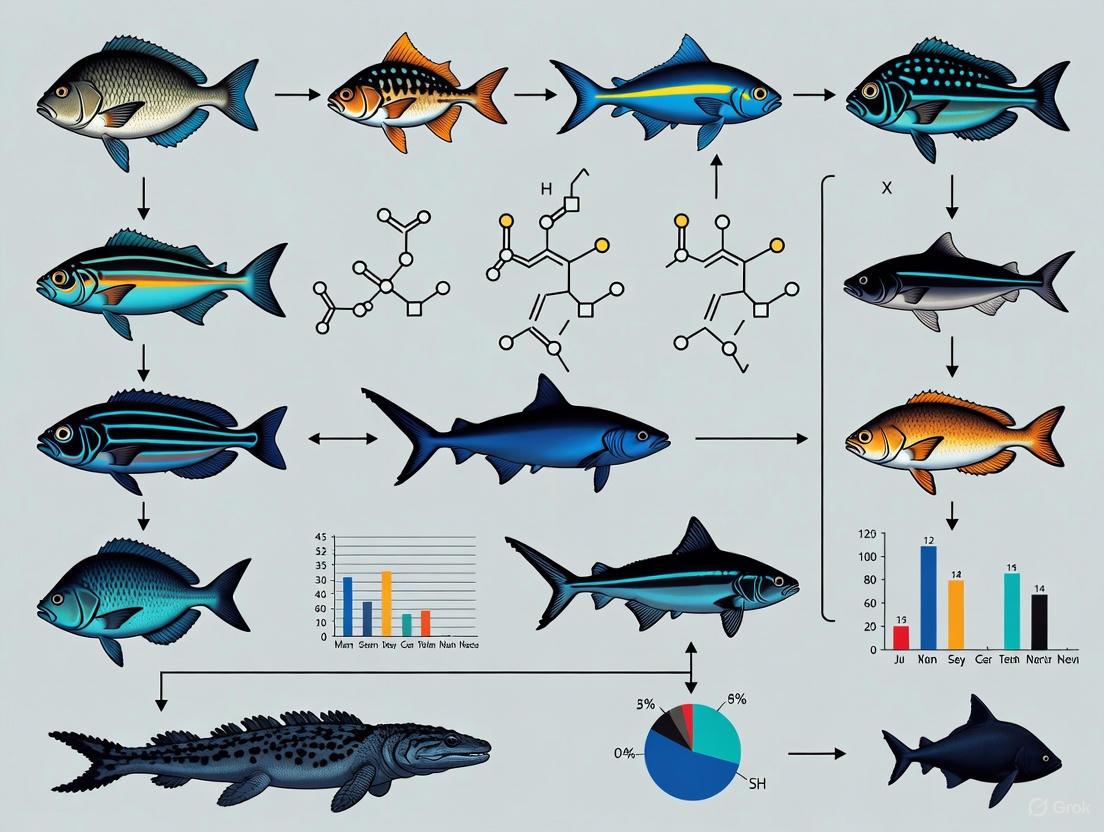
This article synthesizes current research on the evolution and mechanisms of biofluorescence in marine vertebrates, particularly teleost fishes.
The Evolution of Biofluorescence in Marine Vertebrates: From Coral Reef Origins to Biomedical Innovation
Abstract
This article synthesizes current research on the evolution and mechanisms of biofluorescence in marine vertebrates, particularly teleost fishes. We explore its ancient origins dating back ~112 million years, its repeated independent evolution across lineages, and its correlation with coral reef ecosystems. For researchers and drug development professionals, the article details methodologies for studying fluorescent proteins and spectra, addresses key research challenges, and highlights validated biomedical applications of these natural biomarkers in drug discovery and biosensor technologies, offering a comprehensive resource for leveraging marine biofluorescence in scientific innovation.
Ancient Origins and Repeated Evolution of Marine Biofluorescence
Biofluorescence and bioluminescence are two distinct forms of light emission observed in marine vertebrates and other organisms. While both phenomena result in visible glow, they operate on fundamentally different physical and chemical principles. Biofluorescence involves the absorption and re-emission of external light at different wavelengths, whereas bioluminescence involves the biological generation of light through internal chemical reactions [1] [2]. This technical guide examines the mechanisms distinguishing these phenomena, with particular focus on their evolution and diversity in marine vertebrates, especially teleost fishes.
Recent research has revealed that biofluorescence is phylogenetically widespread across marine fish lineages, with studies documenting 459 biofluorescent teleost species spanning 87 families and 34 orders [3]. The evolutionary history of this trait dates back approximately 112 million years, with evidence suggesting it has evolved independently more than 100 times in marine teleosts [3] [4]. This repeated independent evolution highlights the significant adaptive value of biofluorescence in marine environments, particularly in the chromatic environment of coral reefs.
Fundamental Mechanisms and Physical Principles
The Physics of Biofluorescence
Biofluorescence is a photophysical process where a molecule, known as a fluorophore, absorbs high-energy light at shorter wavelengths and subsequently emits lower-energy light at longer wavelengths. This process involves three key stages [1] [5]:
Photon Absorption: A fluorophore absorbs photons from an external light source, typically in the ultraviolet or blue spectrum, causing electrons to jump to an excited, higher-energy state.
Energy State Transition: The excited electrons rapidly relax to the lowest vibrational level of the excited state, losing a small amount of energy as heat.
Photon Emission: The electrons return to the ground state, emitting the remaining energy as photons of longer wavelength (lower energy) than those absorbed.
This emission ceases almost immediately when the external light source is removed. In marine environments, where blue light (470-480 nm) dominates due to water's absorption of longer wavelengths, biofluorescence typically involves absorption of ambient blue light and re-emission as green, orange, or red light [3].
The Chemistry of Bioluminescence
In contrast, bioluminescence is a chemiluminescent reaction that occurs within an organism through the oxidation of light-emitting molecules called luciferins, catalyzed by enzymes known as luciferases [1] [2]. The fundamental reaction can be summarized as:
Luciferin + O₂ + ATP → Oxyluciferin + CO₂ + Light
This reaction produces very little heat, making it a highly efficient "cold light" source [1]. Unlike biofluorescence, bioluminescence does not require an external light source and can be produced in complete darkness. The light generated typically falls within the blue-green spectrum (440-550 nm), which transmits best in marine environments [6].
Table 1: Comparative Mechanisms of Biofluorescence and Bioluminescence
| Characteristic | Biofluorescence | Bioluminescence |
|---|---|---|
| Light Source | Requires external light absorption | Self-generated via chemical reaction |
| Energy Input | Photons from external light | Chemical energy (Luciferin oxidation) |
| Key Molecules | Fluorescent proteins (e.g., GFP), metabolites | Luciferin, Luciferase, ATP, Oxygen |
| Emission Duration | Only while external light is present | Can continue while chemicals are available |
| Thermal Output | Minimal heat generation | "Cold light" with minimal heat |
| Marine Emission Colors | Green, red, orange [3] | Typically blue-green (440-550 nm) [6] |
Evolutionary History and Diversity in Marine Vertebrates
Phylogenetic Distribution and Evolutionary Origins
Comprehensive phylogenetic analyses indicate that biofluorescence first evolved in marine teleosts approximately 112 million years ago in Anguilliformes (true eels), with subsequent origins in Syngnathiformes (~104 mya) and Perciformes (~87 mya) [3]. The phenomenon has evolved repeatedly across diverse lineages, with stochastic character mapping estimating approximately 101 transitions from absence to presence of biofluorescence throughout teleost evolutionary history [3].
Research documenting 459 biofluorescent teleost species reveals distinct patterns of emission colors across lineages [3]. Ancestral state reconstruction suggests that green biofluorescence first evolved in Anguilliformes, while multiple other lineages evolved predominantly red emissions or both red and green emissions. These patterns indicate independent evolutionary trajectories in different taxonomic groups.
Table 2: Evolutionary Patterns of Biofluorescence in Marine Teleosts
| Taxonomic Group | Emission Color Pattern | Estimated Origin (mya) | Notable Features |
|---|---|---|---|
| Anguilliformes (eels) | Primarily green | ~112 | First evolution of biofluorescence in teleosts |
| Syngnathiformes | Mixed | ~104 | Includes seahorses, pipefishes |
| Perciformes | Primarily red | ~87 | Largest order of vertebrates |
| Labriformes (wrasses) | Red in Pseudocheilinus + Cirrhilabrus; Green in Cheilinus | Multiple origins | Sexual dimorphism in some species |
| Scorpaeniformes | Mixed | Multiple origins | Used for camouflage |
| Lophiiformes (anglerfishes) | Primarily red | Multiple origins | Bioluminescence more common |
Coral Reefs as Evolutionary Hotspots
Strong correlations exist between biofluorescence and coral reef habitats. Reef-associated teleost species evolve biofluorescence at approximately ten times the rate of non-reef species [3] [4]. This diversification accelerated following the Cretaceous-Paleogene (K-Pg) extinction approximately 66 million years ago, coinciding with the recovery and expansion of modern coral reefs [3]. The complex structural environment and specific light conditions of coral reefs likely provided ecological opportunities that drove the repeated evolution and diversification of biofluorescent capabilities.
The chromatic environment of coral reefs, characterized by downwelling blue light, creates ideal conditions for biofluorescence to function effectively. This environment may have facilitated the co-evolution of visual systems capable of detecting fluorescent signals and the biofluorescent traits themselves [3].
Measurement Methodologies and Experimental Protocols
Quantifying Biofluorescence: Fluorescence Spectrophotometry
The primary instrument for measuring biofluorescence is the fluorescence spectrophotometer (fluorometer), which detects fluorescent light emitted by a sample at various wavelengths [1]. The standard experimental protocol involves:
Excitation Source: The spectrometer uses a photon source (laser, xenox lamp, or LED) to emit ultraviolet or visible light, typically matching environmental relevant wavelengths such as blue (470 nm) for marine applications.
Wavelength Selection: Light passes through a monochromator that selects specific excitation wavelengths.
Sample Excitation: Monochromatic light is directed toward the sample at a specific angle.
Emission Detection: The sample emits wavelength-shifted light that travels to a detector, typically positioned at a 90-degree angle to minimize interference from transmitted excitation light.
Signal Processing: Emitted photons strike a photodetector, and connected software generates graphical depictions of emission spectra.
Measurements are recorded in Relative Fluorescence Units (RFU), and modern fluorometers can feature multiple channels for monitoring different-colored fluorescent signals simultaneously [1].
Field Observation and Documentation Techniques
Field-based documentation of biofluorescence in marine vertebrates employs specialized equipment and protocols [4]:
Excitation Lighting: High-intensity blue LED lights (typically 440-470 nm) to stimulate fluorescence in natural habitats.
Emission Filtering: Cameras equipped with yellow long-pass filters (blocking wavelengths below 500 nm) to isolate fluorescent emissions from excitation light.
Spectral Documentation: Hyperspectral imaging or sequential imaging with different emission filters to characterize emission spectra.
Visual System Modeling: Custom cameras simulating the visual systems of target species (e.g., "sharks-eye" cameras) to understand biological relevance [5].
This approach has been successfully deployed across diverse environments, from tropical coral reefs to Arctic waters, revealing previously undocumented biofluorescent capabilities across numerous fish species [4].
Diagram 1: Biofluorescence Measurement Workflow
Research Reagent Solutions and Essential Materials
Table 3: Essential Research Materials for Biofluorescence Studies
| Item | Function | Technical Specifications |
|---|---|---|
| Fluorescence Spectrophotometer | Quantitative measurement of emission spectra | Multiple channels (green/blue, UV/blue); Small sample size capability; 90° detector orientation [1] |
| Blue LED Excitation Source | Field stimulation of biofluorescence | 440-470 nm wavelength; High intensity for aquatic environments [4] |
| Emission Filters | Isolation of fluorescent signals | Yellow long-pass (blocking <500 nm); Multi-bandpass for simultaneous multi-color detection [5] |
| Hyperspectral Imaging System | Spectral characterization of emissions | Wavelength resolution <5 nm; Sensitivity 400-700 nm range [3] |
| Species-Specific Visual Models | Biological relevance assessment | Based on known visual pigments and ocular filters of target species [3] |
Functional Significance and Biomedical Applications
Biological Functions in Marine Ecosystems
Biofluorescence serves multiple potential functions in marine vertebrates, with varying roles across species [3]:
Intraspecific Communication: Sexual dimorphism in fluorescent patterns, as observed in the Pacific spiny lumpsucker (Eumicrotremus orbis), suggests roles in mate identification and courtship [3].
Camouflage: Numerous species, including scorpionfishes (Scorpaenidae) and threadfin breams (Nemipteridae), exhibit fluorescence matching their background environments, suggesting use for cryptsis [3].
Species Recognition: Closely related species of reef lizardfishes (Synodontidae) appear nearly identical under white light but exhibit significant variation in fluorescent patterning, potentially facilitating species differentiation [3].
Prey Attraction: Some species may use fluorescence to lure prey, analogous to the use of fluorescence by carnivorous pitcher plants to attract insect prey [3].
These functional hypotheses require that fluorescent emissions fall within the spectral sensitivity ranges of relevant signal receivers (conspecifics, predators, or prey) [3]. Many marine fishes possess visual adaptations such as yellow intraocular filters that may enhance their ability to detect longer-wavelength fluorescent emissions [3].
Biomedical Applications and Future Directions
The discovery and characterization of novel fluorescent proteins from marine vertebrates have significant implications for biomedical applications [3] [4]. Potential applications include:
Fluorescence-Guided Surgery: Novel fluorescent proteins with emissions in the far-red spectrum could improve tissue penetration and contrast in surgical applications.
Cellular Imaging: Development of new fluorescent tags for tracking cellular processes and protein localization.
Disease Diagnosis: Fluorescence-based biosensors for detecting disease biomarkers.
Drug Discovery: High-throughput screening assays utilizing novel fluorescent proteins.
The diversity of emission wavelengths discovered in biofluorescent fishes suggests a rich resource for identifying novel fluorescent molecules with optimized properties for these applications [3].
Biofluorescence represents a distinct biological phenomenon from bioluminescence, both in mechanism and evolutionary history. The repeated independent evolution of biofluorescence across marine fish lineages, particularly in coral reef environments, highlights its significant adaptive value in marine ecosystems. Ongoing research continues to reveal new biofluorescent species, novel fluorescent molecules, and unexpected functional roles, making this field particularly promising for both evolutionary biology and biomedical applications. The integration of advanced optical techniques with phylogenetic approaches provides powerful tools for unraveling the complexities of this remarkable biological phenomenon.
Biofluorescence, the physiological phenomenon where organisms absorb high-energy light and re-emit it at lower energy, longer wavelengths, represents a remarkable case of convergent evolution in marine vertebrates [7]. This in-depth technical guide documents the extensive phylogenetic breadth of biofluorescence across teleost fishes, framing this diversity within the broader evolutionary history of marine vertebrates. The discovery of 459 biofluorescent teleost species demonstrates this trait has evolved independently more than 100 times throughout evolutionary history, with the earliest origins dating back approximately 112 million years to ancient Anguilliformes (true eels) [7] [8] [4].
The evolution of biofluorescence is intimately linked with major ecological events in Earth's history. Research indicates a significant increase in biofluorescence diversification followed the Cretaceous-Paleogene (K-Pg) extinction approximately 66 million years ago, coinciding with the rise of modern coral-dominated reefs and rapid colonization by fishes [8] [4]. This correlation suggests that the emergence of complex reef ecosystems provided an ideal environment for the evolution and diversification of biofluorescence, with reef-associated species evolving this trait at 10 times the rate of non-reef species [7]. The remarkable phylogenetic distribution and functional diversity of biofluorescence across teleosts offers insights into evolutionary adaptation, sensory biology, and the potential for biomedical applications through discovery of novel fluorescent molecules.
Quantitative Analysis of Biofluorescent Teleost Diversity
Comprehensive Species Documentation
Recent research has significantly expanded documentation of biofluorescent teleosts, culminating in the identification of 459 species exhibiting this phenomenon across 87 families and 34 orders [7]. This comprehensive survey includes 48 previously unreported biofluorescent teleost species, with emissions characterized as red only (11 species), green only (32 species), and both red and green (5 species) [7]. When combined with previously known species from literature, the total diversity encompasses 261 species with red-only fluorescence, 150 with green-only fluorescence, and 48 exhibiting both red and green emissions [7].
Table 1: Taxonomic Distribution of Biofluorescent Teleosts
| Taxonomic Level | Number | Notes |
|---|---|---|
| Total Species | 459 | 48 newly documented |
| Families | 87 | Spanning 34 orders |
| Red Fluorescence Only | 261 | |
| Green Fluorescence Only | 150 | |
| Red & Green Fluorescence | 48 |
Emission Spectrum Diversity
Advanced imaging techniques utilizing specialized photography setups with ultraviolet and blue excitation lights and emission filters have revealed exceptional variation in biofluorescent emission spectra across teleost species [4] [9]. This diversity extends beyond previously recognized ranges, with some families exhibiting at least six distinct fluorescent emission peaks corresponding with wavelengths across multiple colors including green, yellow, orange, and red [8]. The remarkable spectral variation suggests these animals utilize diverse and elaborate signaling systems based on species-specific fluorescent emission patterns, potentially facilitating complex visual communication in marine environments [4].
Table 2: Biofluorescent Emission Characteristics
| Emission Type | Number of Species | Characteristics |
|---|---|---|
| Red Only | 261 | Longer wavelength emissions |
| Green Only | 150 | Shorter wavelength emissions |
| Red & Green Combined | 48 | Multiple emission peaks |
| Spectral Peaks | Up to 6 per family | Green, yellow, orange, red |
Evolutionary History and Ancestral State Reconstruction
Phylogenetic Origins and Divergence Times
Ancestral state reconstructions using time-calibrated phylogenies indicate the root node of the teleost tree (approximately 192.8 million years ago) likely exhibited an absence of fluorescence, with only a 33.6% posterior probability for biofluorescence presence [7]. The oldest node with confirmed fluorescence (66.8% posterior probability) was the ancestor of all Anguilliformes (~112 million years ago) [7]. Subsequent evolutionary origins include ~104 million years ago in Syngnathiformes and ~87 million years ago in Perciformes, with posterior probabilities of 79.3% and 82.5% for biofluorescence presence, respectively [7].
Stochastic character mapping analyses revealed a mean of 178.9 changes between fluorescent states across teleost phylogeny, with approximately 101 transitions from absence to presence of biofluorescence, and approximately 78 reversions from presence to absence [7]. The total evolutionary time spent in each state was distributed 55% (12,921.24 million years) with biofluorescence present and 45% (10,571.26 million years) with biofluorescence absent, indicating substantial evolutionary persistence of this trait once evolved [7].
Coral Reefs as Evolutionary Hotspots
The evolutionary history of biofluorescence is profoundly influenced by coral reef ecosystems, with statistical analyses revealing that reef-associated teleost species evolve biofluorescence at 10 times the rate of non-reef species [7] [8]. Of the 459 documented biofluorescent teleosts, the majority are associated with coral reefs [7]. The chromatic and biotic conditions of coral reefs appear to have provided an ideal environment to facilitate the evolution and diversification of biofluorescence in teleost fishes [7].
The correlation between reef colonization and biofluorescence diversification is further strengthened by temporal patterns showing increased rates of biofluorescence evolution following the end-Cretaceous extinction approximately 66 million years ago, which coincided with the rise of modern coral-dominated reefs and rapid fish colonization of these ecosystems [8] [4]. This suggests that the structural complexity, light environment, and ecological interactions characteristic of coral reefs created selective pressures favoring the repeated evolution of biofluorescence across diverse teleost lineages.
Experimental Methodologies for Biofluorescence Documentation
Specimen Collection and Imaging Protocols
The documentation of biofluorescent teleosts relies on specialized imaging methodologies optimized for detecting and quantifying fluorescent emissions. Research expeditions to diverse geographic locations including the Solomon Islands, Greenland, and Thailand have collected specimens using standardized protocols [4]. Specimens are typically collected via SCUBA diving using hand nets, with immediate documentation of live fluorescence when possible, followed by preservation for further analysis in controlled laboratory settings [4].
The core imaging methodology employs a specialized photography setup with ultraviolet (UV) and blue excitation lights paired with appropriate emission filters to detect fluorescent wavelengths [4] [9]. This system is designed to isolate and capture the specific emission spectra of biofluorescent compounds, allowing for quantitative analysis of emission peaks across multiple colors. For consistent results, imaging parameters including exposure time, aperture, ISO sensitivity, and filter configurations must be standardized across specimens to enable comparative analyses [4].
Quantitative Image Analysis and Spectral Measurement
Advanced quantitative processing of fluorescence images requires careful optimization of acquisition parameters based on the specific research objectives [10]. For documentation and spectral analysis of biofluorescence, sampling density should be determined by the size of the structures of interest rather than maximum system resolution to avoid unnecessary file sizes and potential photobleaching [10]. The Nyquist criterion provides guidance for determining minimal sampling density, typically requiring 2-2.3 times the highest frequency of the signal of interest [10].
For spectral analysis of fluorescent emissions, images are processed to reduce background noise and segment fluorescent regions using computational approaches [10]. Emission wavelengths are calibrated using standardized reference materials, with peak emissions recorded and categorized across the visible spectrum. This approach has revealed previously undocumented diversity in teleost biofluorescence, with emissions spanning multiple distinct peaks across green, yellow, orange, and red wavelengths [8] [4].
Research Reagent Solutions for Biofluorescence Studies
Table 3: Essential Research Reagents and Equipment for Biofluorescence Studies
| Reagent/Equipment | Function | Application Notes |
|---|---|---|
| UV Excitation Light Source | Activates fluorescent compounds | Typically 365-400 nm range |
| Blue Excitation Light Source | Primary activation for marine biofluorescence | 470-480 nm optimal for marine environment |
| Long-Pass Emission Filters | Isolate fluorescent emissions | Critical for separating signal from excitation |
| Spectral Calibration References | Standardize wavelength measurements | Essential for quantitative comparisons |
| Antibody Stains (e.g., Tyrosine Hydroxylase) | Neural structure identification | Useful for studying visual systems [10] |
| Protein Markers (e.g., Synapsin) | Neural terminal identification | Employed in visual system research [10] |
| Mounting Media with DAPI | Nuclear counterstaining | Reference for tissue structure [10] |
| Confocal Microscopy Systems | High-resolution imaging | Enables detailed morphological analysis [10] |
Functional Implications and Research Applications
Proposed Biological Functions
Biofluorescence in teleosts serves multiple potential functions that vary across species and ecological contexts. Research suggests these include camouflage, communication, species identification, mating signals, and prey attraction [7]. In coral reef environments, where biofluorescence is most prevalent, fishes may utilize fluorescent corals and marine algae for background matching, as observed in Scorpionfishes (Scorpaenidae) and threadfin breams (Nemipteridae) that reside on or near substrates with similar fluorescent emission wavelengths to their bodies [7].
Biofluorescence also facilitates intraspecific signaling, particularly in closely related species that appear nearly identical under white light but exhibit significant variation in fluorescent patterning [7]. Examples include reef lizardfishes (Synodontidae) that are morphologically similar but display distinct fluorescent patterns, potentially serving as species recognition signals [7]. Sexual dimorphism in biofluorescence, documented in species like the Pacific spiny lumpsucker (Eumicrotremus orbis), where males and females exhibit different fluorescent emission colors, may enhance mate identification and reproductive success [7].
Biomedical and Biotechnology Applications
The diversity of biofluorescent compounds in teleosts holds significant promise for biomedical applications. Novel fluorescent molecules isolated from marine fishes have potential utility in fluorescence-guided disease diagnosis and therapy [4] [9]. While green fluorescent proteins (GFP) similar to those first isolated from the hydrozoan Aequorea victoria have been characterized in only three species of Anguilliformes to date, the extensive variety of emission spectra observed across teleosts suggests a rich source of undiscovered fluorescent proteins and metabolites [7].
The prevalence of red fluorescence across Teleostei is particularly noteworthy from an applied perspective, as longer wavelength fluorophores often provide superior tissue penetration for biomedical imaging [7]. Despite the prevalence of red biofluorescence in fishes, the specific molecular basis for these emissions remains largely uncharacterized, representing a promising avenue for future research with significant translational potential [7].
The documentation of 459 biofluorescent teleost species provides compelling evidence for the repeated and widespread evolution of this phenomenon across marine fish lineages. The phylogenetic breadth of biofluorescence, with origins dating back approximately 112 million years and more than 100 independent evolutionary origins, underscores the adaptive significance of this trait in marine environments, particularly in coral reef ecosystems [7] [8] [4].
Future research directions should focus on characterizing the molecular basis of biofluorescence across diverse teleost lineages, elucidating the visual capabilities and perceptual ecology of species possessing this trait, and exploring the potential applications of novel fluorescent proteins and metabolites in biomedical and biotechnological contexts. The extensive phylogenetic distribution of biofluorescence in teleosts provides a robust framework for comparative studies of visual ecology, sensory evolution, and molecular adaptation in marine vertebrates.
The evolutionary history of biofluorescence in marine vertebrates represents a compelling narrative of adaptive innovation, with recent research tracing its origins to approximately 112 million years ago (mya) in Anguilliformes (true eels). Comprehensive phylogenetic analyses of 459 biofluorescent teleost species reveal that biofluorescence has evolved independently more than 100 times across marine fishes, with reef-associated species exhibiting 10-fold higher evolutionary rates than non-reef species. This whitepaper synthesizes current scientific understanding of the molecular mechanisms, evolutionary patterns, and ecological drivers of biofluorescence, with a focused examination of its foundational emergence in eels. We provide detailed methodological frameworks for studying biofluorescent phenomena and discuss potential applications for novel fluorescent proteins in biomedical research and drug development.
Biofluorescence, the absorption of higher-energy ambient light and its re-emission at longer, lower-energy wavelengths, is a widespread optical phenomenon across marine and terrestrial lineages [3]. Unlike bioluminescence, which generates light via chemical reactions, biofluorescence requires an external light source and functions through fluorescent proteins (FPs) and pigments that transform the predominantly blue spectrum of marine environments into a diverse palette of visual signals [11]. The discovery and subsequent development of Green Fluorescent Protein (GFP) from the hydrozoan Aequorea victoria revolutionized biomedical science, enabling unprecedented advances in cellular imaging and molecular tracking [11]. However, the evolutionary origins and ecological functions of biofluorescence in natural systems have only recently been systematically investigated.
The identification of biofluorescence in two species of false moray eels (Kaupichthys hyoproroides and an undescribed congener) during a 2011 expedition marked a pivotal moment in the field, representing the first recorded instance of green fluorescent fish in the wild [12]. This discovery prompted extensive phylogenetic surveys that have since identified biofluorescence in nearly 500 fish species. This whitepaper examines the foundational role of eels in the evolutionary history of piscine biofluorescence, detailing the methodological approaches for characterizing fluorescent phenomena, and discussing the implications of these natural innovations for biomedical research and therapeutic development.
Evolutionary Timeline and Phylogenetic Distribution
Comprehensive Phylogenetic Analysis
A landmark analysis of biofluorescence across teleost fishes examined 459 biofluorescent species spanning 87 families and 34 orders, incorporating 48 previously undocumented species [3] [9]. Ancestral state reconstruction using stochastic character mapping on a time-calibrated phylogeny revealed that biofluorescence has evolved repeatedly and independently across marine lineages, with an estimated 178.9 state changes throughout teleost evolutionary history. Of these transitions, approximately 101 represented gains of biofluorescence, while ~78 represented losses [3].
Table 1: Evolutionary History of Biofluorescence in Major Teleost Lineages
| Taxonomic Group | Estimated Origin (mya) | Predominant Fluorescence Colors | Posterior Probability for Ancestral State |
|---|---|---|---|
| Anguilliformes (eels) | ~112 | Green, Red | 66.8% |
| Syngnathiformes | ~104 | Red, Green | 79.3% |
| Perciformes | ~87 | Red | 68.9% |
| Labriformes (wrasses) | ~50 | Red | 83.4% |
The Basal Position of Eels
The phylogenetic analysis identified the ancestor of all Anguilliformes as the oldest lineage with evidenced biofluorescence, dating to approximately 112 million years ago [3] [9] [13]. The most recent common ancestor of eels exhibited a 62% likelihood of green fluorescence, with additional probabilities for both red and green fluorescence (22.2%) and red-only fluorescence (14.6%) [3]. This basal position establishes eels as the foundational lineage for biofluorescence in marine vertebrates, with subsequent diversification yielding the remarkable variety of fluorescent emissions observed in modern teleosts.
The evolutionary timing of biofluorescence emergence in eels corresponds with major geological and ecological transformations during the Middle Cretaceous period, including the development of modern coral reef ecosystems and the diversification of teleost fishes following the end-Cretaceous mass extinction event [3] [9]. The correlation between reef colonization and fluorescence diversification suggests that the complex visual environments of coral reefs may have served as an evolutionary catalyst for biofluorescent adaptations.
Methodological Framework for Biofluorescence Research
Specimen Collection and Documentation
Field Collection Protocols: Biofluorescent eel specimens were initially documented and collected during scientific expeditions to Caribbean coral reefs (Little Cayman Island) and the Bahamas (Lee Stocking Island) [12]. Specimens were located during nocturnal surveys when fluorescent phenomena are most visible, using specialized blue-light excitation systems with emission filters to detect fluorescence. Specimens were collected using hand nets and maintained in chilled, aerated seawater until processing [12] [9].
Imaging and Spectral Analysis: Researchers employ a specialized photography setup incorporating ultraviolet (395 nm) and blue (470 nm) excitation lights with appropriate emission filters to capture the full range of fluorescent emissions [9]. For spectral analysis, spectrophotometry is used to quantify excitation and emission peaks, revealing exceptional diversity in eel fluorescence with multiple distinct emission peaks corresponding to various wavelengths across the visible spectrum [9].
Table 2: Key Research Reagents and Equipment for Biofluorescence Studies
| Research Tool | Specification/Type | Primary Function in Biofluorescence Research |
|---|---|---|
| Blue LED excitation light | 470 nm wavelength | Activates fluorescent proteins by providing appropriate excitation energy |
| Barrier emission filters | Long-pass (495 nm, 510 nm) | Blocks reflected blue light while transmitting fluorescent emissions |
| Spectrophotometer | Fluorescence-capable | Quantifies precise excitation and emission wavelengths of FPs |
| GFP-specific antibodies | Monoclonal, anti-GFP | Identifies and localizes GFP-like proteins in tissue samples |
| Biliverdin/Bilirubin | Fluorescent chromophores | Identifies UnaG-like fluorescent proteins through binding assays |
| Histology reagents | Formalin, paraffin, dyes | Processes tissues for microscopic analysis of FP distribution |
| PCR/Sequencing tools | Custom primers, sequencing | Amplifies and sequences genes encoding fluorescent proteins |
Molecular Characterization of Fluorescent Proteins
The molecular analysis of fluorescent proteins in eels revealed a previously unknown family of FPs that had migrated from brain tissue to musculature during evolutionary history [12]. Tissue samples from eel muscle were subjected to protein extraction and purification followed by spectral characterization and gene sequencing to identify the unique amino acid sequences responsible for the fluorescent properties [12]. In certain eel species, researchers identified UnaG, a fatty acid binding protein that binds endogenous bilirubin to trigger green fluorescence, representing a distinct molecular mechanism from the GFP family found in other biofluorescent organisms [11].
Patterns and Drivers of Biofluorescent Evolution
Coral Reefs as Evolutionary Catalysts
The exceptional diversification of biofluorescence in reef-associated fishes represents a central finding of recent research. Phylogenetic comparative analyses demonstrate that reef-associated species evolve biofluorescence at approximately 10 times the rate of non-reef species [3] [9]. This pattern aligns with the sensory drive hypothesis, which proposes that environmental conditions shape the evolution of sensory signals and perception. The chromatically complex environment of coral reefs, described as "Times Square of the ocean" [13], provides both the ecological opportunity and necessity for sophisticated visual communication.
The expansion of biofluorescence in reef fishes shows a notable correlation with the rise of modern coral-dominated ecosystems following the end-Cretaceous extinction approximately 66 million years ago [3] [9]. This period of ecosystem reorganization and niche diversification created optimal conditions for the evolution of complex visual signaling systems, with biofluorescence potentially functioning in cryptic camouflage, species recognition, predator avoidance, and reproductive signaling [3] [11].
Functional Hypotheses for Eel Biofluorescence
Several non-mutually exclusive hypotheses have been proposed to explain the evolutionary maintenance of biofluorescence in eels:
Reproductive Signaling: The reclusive nature of false moray eels and their hypothesized spawning aggregations during full moon periods suggest biofluorescence may facilitate mate location and recognition in low-light conditions [12]. The concentration of fluorescent proteins in musculature and skin may create visible signals that help conspecifics locate spawning partners while minimizing detection by predators lacking appropriate visual sensitivity.
Environmental Camouflage: Some researchers hypothesize that eels may use biofluorescence to match ambient fluorescent backgrounds provided by coral and other biofluorescent organisms, effectively employing a form of fluorescent crypsis [12]. This would parallel observations in scorpionfishes and threadfin breams that reside on substrates with similar emission wavelengths to their body patterns [3].
Visual Contrast Enhancement: In the monochromatic blue environment of mesophotic reefs, where longer wavelengths are rapidly attenuated, biofluorescence may serve to increase contrast between individuals and their background or between different body patterns, facilitating intraspecific communication while remaining inconspicuous to predators [3] [11].
Biomedical Applications and Future Research Directions
Potential for Novel Fluorescent Molecules
The discovery of previously unknown fluorescent protein families in eels [12] and the remarkable diversity of emission spectra across marine fishes [9] suggest substantial potential for identifying novel fluorescent molecules with applications in biomedical research. The unique properties of eel-derived fluorescent proteins, including their specific chromophore interactions and spectral characteristics, may offer advantages for specialized imaging applications, particularly in deep-tissue imaging where longer wavelength emissions provide superior penetration.
The UnaG protein identified in marine eels represents a particularly promising candidate for biomedical development, as its activation through binding with endogenous bilirubin offers a novel mechanism for fluorescent labeling that could be exploited for hepatic function monitoring or jaundice detection [11]. Similarly, the novel GFP-like proteins identified in eels may expand the available toolkit for multicolor imaging and FRET-based biosensors.
Future Research Priorities
While significant advances have been made in documenting the diversity and evolutionary history of biofluorescence in eels and other marine fishes, several critical research questions remain unresolved:
Functional Validation: Rigorous behavioral experiments are needed to test hypotheses regarding the ecological functions of biofluorescence in eels, particularly its potential role in reproductive behaviors [12] [11].
Molecular Diversity: Comprehensive characterization of the molecular properties of eel fluorescent proteins, including their quantum yield, extinction coefficients, and structural characteristics, would facilitate their development as biomedical tools [11].
Sensory Physiology: Detailed investigation of the visual capabilities of eels, including their spectral sensitivity and potential for long-wavelength perception, is essential for understanding the functional significance of their biofluorescent emissions [3] [11].
Developmental Regulation: Research into the ontogenetic expression of fluorescent proteins throughout eel life history could provide insights into their functional roles across different life stages and environmental contexts.
The continued investigation of biofluorescence in eels and other marine vertebrates promises to yield not only fundamental insights into evolutionary processes and sensory ecology but also practical advances in biomedical imaging and diagnostic technologies. As the foundational lineage for vertebrate biofluorescence, eels represent a particularly promising system for interdisciplinary research spanning evolutionary biology, ecology, and biomedical science.
Biofluorescence, the phenomenon where organisms absorb high-energy light and re-emit it at lower-energy, longer wavelengths, represents a compelling frontier in evolutionary biology and biotechnology [3]. This trait is phylogenetically pervasive, especially among marine teleosts (bony fishes), where it has been implicated in functions ranging from camouflage and communication to prey attraction and mate identification [3]. Recent research has significantly expanded our understanding of its diversity and multifunctionality, leading to a pivotal discovery: biofluorescence has evolved repeatedly and independently across numerous fish lineages over a deep evolutionary timescale [3] [9] [8]. This whitepaper synthesizes the latest scientific findings on the evolutionary patterns of biofluorescence in marine vertebrates, detailing the quantitative evidence for its convergent origins, the methodological frameworks used to trace its history, and its potential implications for applied biomedical research.
Evolutionary History and Quantitative Analysis
Comprehensive phylogenetic surveys have cataloged 459 biofluorescent teleost species spanning 87 families and 34 orders [3] [9]. This diversity includes 261 species exhibiting only red fluorescence, 150 with only green fluorescence, and 48 species displaying both red and green emissions [3]. Ancestral state reconstruction, model-averaged from best-fit Mk models, indicates that biofluorescence first evolved in marine teleosts approximately 112 million years ago (mya) in the order Anguilliformes (true eels) [3]. The analysis estimates that biofluorescence subsequently evolved independently on more than 100 separate occasions [9] [8] [14].
Table 1: Key Evolutionary Metrics of Biofluorescence in Marine Teleosts
| Evolutionary Metric | Value | Source/Context |
|---|---|---|
| Total Known Biofluorescent Species | 459 species | [3] [9] |
| First Evolution of Trait | ~112 million years ago | in Anguilliformes (eels) [3] |
| Number of Independent Origins | >100 times | [9] [8] [14] |
| Rate of Evolution in Reef vs. Non-Reef Species | 10x higher | Reef-associated species [3] [8] |
| Fluorescence Color Distribution | 261 red-only, 150 green-only, 48 both | [3] |
A striking pattern emerged concerning habitat: the majority of biofluorescent teleosts are associated with coral reefs [3] [8]. Statistical models reveal that reef-associated species evolve biofluorescence at a rate ten times greater than that of non-reef species [3]. This diversification accelerated following the end-Cretaceous (K-Pg) mass extinction approximately 66 million years ago, a period that coincided with the rise of modern coral-dominated reefs [9] [8]. This correlation suggests that the complex chromatic and biotic conditions of coral reefs provided an ideal environment that facilitated the repeated evolution and diversification of this trait [3].
Table 2: Ancestral State Reconstruction of Fluorescence in Major Lineages
| Clade / Node | Estimated Age (mya) | Reconstructed Ancestral State (Posterior Probability) |
|---|---|---|
| Anguilliformes (eels) | ~112 | Biofluorescence present (66.8%) [3] |
| Syngnathiformes | ~104 | Biofluorescence present (79.3%) [3] |
| Perciformes | ~87 | Biofluorescence present (82.5%) [3] |
| Antennariidae (frogfishes) | Not specified | Red fluorescence (94.3%) [3] |
| Nemipteridae (threadfin breams) | Not specified | Green fluorescence (91.2%) [3] |
The evolutionary history of biofluorescence is not solely defined by its gain. The stochastic character mapping analysis indicates a dynamic pattern with an estimated ~101 transitions from absence to presence and ~78 transitions from presence to absence of biofluorescence, suggesting that the trait has also been lost multiple times in various lineages [3].
Experimental Methodologies for Detection and Analysis
The advancement in understanding biofluorescence relies on a suite of specialized experimental protocols designed for both field observation and rigorous laboratory analysis.
Field Survey and In Vivo Detection
Field-based surveys are crucial for discovering and documenting biofluorescence. The standard methodology involves:
- Light Excitation: Using high-intensity light sources emitting specific wavelengths, typically in the ultraviolet (360-380 nm), violet (400-415 nm), and royal blue (440-460 nm) ranges, to excite potential fluorescent compounds [15].
- Emission Filtering: Employing barrier filters that block the reflected excitation light while transmitting the longer-wavelength fluorescent emissions, allowing the observer or camera to capture the biofluorescent signal [15]. Without such filters, low-intensity fluorescence can be drowned out by reflected light, leading to false negatives [15].
- Spectral Measurement: Using portable spectrometers to quantitatively measure the peak excitation and emission wavelengths and the maximum percent biofluorescence emission from specific body regions [15]. This provides critical data on the signal's intensity and color properties.
Laboratory Analysis of Specimens
For a more detailed analysis of emission properties, researchers utilize specimens from natural history collections. The protocol followed by Carr et al. (2025) involves:
- Specialized Photography Setup: A controlled system using ultraviolet and blue excitation lights with appropriate emission filters to photograph specimens in a dark environment [9] [8] [14].
- Emission Spectrum Mapping: This setup allows for the precise measurement of fluorescent emissions across different wavelengths, revealing a greater diversity of colors than previously known. Some teleost families exhibit at least six distinct fluorescent emission peaks, corresponding to multiple colors [9] [14].
Phylogenetic and Evolutionary Analysis
To reconstruct the evolutionary history of the trait, researchers employ computational phylogenetic methods:
- Data Matrix Construction: Compiling a comprehensive dataset of biofluorescent species and their emission characteristics (e.g., presence/absence, color) alongside a time-calibrated phylogeny, such as the one published by Rabosky et al. (2018) [3].
- Model Selection and Ancestral State Reconstruction: Using software like
corHMMin R to find the best-fit model (e.g., equal-rates or all-rates-different Mk models) for trait evolution [3]. Subsequently, stochastic character mapping is used to simulate evolutionary histories and estimate the number of independent gains and losses of biofluorescence across the phylogeny [3].
Research workflow for analyzing biofluorescence evolution.
The Scientist's Toolkit: Research Reagent Solutions
The study of biofluorescence requires specific tools and reagents for detection, analysis, and potential biomedical application.
Table 3: Essential Research Reagents and Materials for Biofluorescence Studies
| Tool/Reagent | Function/Application | Technical Notes |
|---|---|---|
| Ultraviolet (UV) Light Source (360-380 nm) | Excites fluorophores in specimens; used for initial detection. | Essential for field surveys. Must be paired with an emission filter [15]. |
| Royal Blue Light Source (440-460 nm) | Primary excitation wavelength for many marine fish fluorophores. | Often produces the most intense fluorescent emission in fishes [15]. |
| Long-Pass Emission Filters | Blocks reflected excitation light, allowing only fluorescent emissions to pass. | Critical for visualizing and photographing fluorescence without signal washout [15] [9]. |
| Portable Spectrometer | Precisely measures the peak excitation and emission wavelengths and intensity. | Provides quantitative data for ecological and evolutionary analysis [15]. |
| Green Fluorescent Protein (GFP) Antibodies | Isolating and characterizing fluorescent proteins from model species. | GFP has been isolated from hydrozoans and some eels [3]. |
| cDNA Libraries | Gene identification and sequencing of fluorescent proteins. | Allows for the study of the genetic basis of biofluorescence [3]. |
Implications for Biomedical and Drug Development
The repeated evolution of biofluorescence in fishes is not merely an evolutionary curiosity; it has significant practical implications. The diversity of fluorescent emissions indicates the existence of a wide array of novel fluorescent molecules [9] [8]. These molecules are of intense interest for biomedical applications, as they can be used as optical biomarkers and contrast agents [9] [14].
The discovery of new fluorescent proteins and metabolites from fish could lead to tools for:
- Fluorescence-guided disease diagnosis and therapy, where specific fluorescent tags can help surgeons delineate tumor margins in real-time [9].
- Advanced cellular and molecular imaging, enabling researchers to track biological processes within living cells and organisms with high specificity and low background noise [8].
The "natural library" of fluorescent compounds found in marine fishes, refined through millions of years of evolution, provides a rich resource for screening and developing next-generation bio-optical tools for medicine and research.
The evolutionary narrative of biofluorescence in marine fishes is one of remarkable convergence, with over 100 independent origins spanning the past 112 million years. This pattern, driven largely by the unique selective pressures of coral reef environments, underscores the adaptive significance of this trait for visual communication and survival. The methodological synthesis of field observation, spectral analysis, and phylogenetic modeling provides a robust framework for understanding complex trait evolution. Furthermore, the exceptional variation in biofluorescent emissions across fishes represents an untapped reservoir of biochemical diversity, holding substantial promise for driving innovation in biomedical imaging and diagnostic technologies. Future research focused on isolating the underlying fluorescent compounds and linking their specific properties to ecological function will be crucial for fully leveraging this natural phenomenon for scientific and medical advancement.
The phenomenon of biofluorescence—where organisms absorb high-energy light and re-emit it at lower energy wavelengths—provides a powerful model for studying evolutionary innovation. Recent research has established that the rich sensory environment of coral reefs has served as a primary catalyst for the evolution of this trait in marine vertebrates [7]. This whitepaper examines the quantitative evidence establishing coral reefs as engines of evolutionary change, with specific analysis of biofluorescence in marine fishes demonstrating evolution rates an order of magnitude higher than in non-reef environments [7] [4] [9].
Understanding these evolutionary dynamics provides crucial insights for diverse scientific fields. For evolutionary biologists, these patterns reveal how specific ecological conditions repeatedly drive trait development. For biomedical researchers, the diverse fluorescent compounds evolved in reef fishes represent novel molecules with potential applications in disease diagnosis and therapy [9].
Quantitative Analysis of Evolutionary Patterns
Documented Prevalence of Biofluorescence
Comprehensive surveys of teleost fishes have documented 459 species exhibiting biofluorescence, spanning 87 families and 34 orders [7]. This diversity provides a robust dataset for analyzing evolutionary patterns across marine ecosystems.
Table 1: Distribution of Biofluorescent Teleost Species
| Category | Number of Species | Percentage |
|---|---|---|
| Total documented biofluorescent species | 459 | 100% |
| Reef-associated species | Majority | >50% [7] |
| Red fluorescence only | 261 | 56.9% |
| Green fluorescence only | 150 | 32.7% |
| Both red and green | 48 | 10.5% |
| Previously unknown species (recently documented) | 48 | 10.5% |
Evolutionary Timeline and Rates
Ancestral state reconstructions indicate biofluorescence first evolved in marine teleosts approximately 112 million years ago (mya) in Anguilliformes (true eels) [7] [4]. The trait has since evolved independently more than 100 times across teleost lineages [4] [9].
Table 2: Evolutionary History of Biofluorescence in Marine Fishes
| Evolutionary Metric | Finding | Time Period |
|---|---|---|
| First appearance | Anguilliformes (true eels) [7] | ~112 mya (Early Cretaceous) |
| Subsequent appearances | Syngnathiformes [7] | ~104 mya |
| Perciformes [7] | ~87 mya | |
| Number of independent origins | >100 times [4] [9] | 112 mya to present |
| Reef vs. non-reef evolution rate | 10x higher in reef species [7] | Throughout history |
| Major diversification pulse | Following end-Cretaceous extinction [9] | Post-66 mya |
The most significant finding is that reef-associated teleost species evolve biofluorescence at 10 times the rate of non-reef species [7]. This accelerated evolutionary rate coincided with the rise of modern coral-dominated reefs following the end-Cretaceous mass extinction approximately 66 million years ago [9].
Experimental Methodologies for Biofluorescence Research
Field Documentation and Spectral Analysis
Protocol 1: In situ Biofluorescence Documentation
- Equipment: Specialized photographic setup with ultraviolet (UV) and blue excitation lights and emission filters [4] [9].
- Procedure: Researchers conduct nocturnal dives or dark-phase observations, illuminating subjects with blue light (typically 470 nm). Camera systems equipped with yellow long-pass filters capture emitted fluorescence while blocking reflected excitation light [7].
- Validation: Specimens are collected for spectral analysis to confirm field observations and quantify emission peaks [9].
Protocol 2: Spectral Emission Characterization
- Apparatus: Fluorescence spectrophotometer or hyperspectral imaging systems.
- Methodology: Excitation with specific wavelengths (commonly 365-470 nm) with scanning across emission spectra (500-700 nm) [7].
- Outcomes: This methodology has revealed exceptional variation, with some fish families exhibiting at least six distinct fluorescent emission peaks across multiple colors [9].
Evolutionary Reconstruction Methods
Protocol 3: Ancestral State Reconstruction
- Phylogenetic Framework: Time-calibrated phylogenies incorporating fossil data, such as the Rabosky et al. tree used in recent analyses [7].
- Character Mapping: Biofluorescence presence/absence and emission color characters mapped onto phylogeny using stochastic character mapping [7].
- Model Selection: Implementation of Mk models (equal-rates and all-rates-different) with model-averaging proportional to Akaike weights [7].
- Analysis: Calculation of posterior probabilities for ancestral states and estimation of transition rates between character states [7].
Research Workflow: Tracing Evolutionary History
The Coral Reef Environment as an Evolutionary Driver
The unique ecological conditions of coral reefs create selective pressures and opportunities that drive the evolution of biofluorescence.
Optical Environment of Reef Ecosystems
Coral reefs present a specific light environment where water rapidly absorbs longer wavelengths (red, orange, yellow), creating a predominantly blue-shifted (470-480 nm), monochromatic environment [7]. This spectral filtering provides the consistent high-energy light source necessary to excite fluorescent compounds.
Proposed Biological Functions
Multiple functional hypotheses explain the adaptive value of biofluorescence in reef environments:
- Intraspecific Communication: Fluorescent patterns facilitate species recognition and mating rituals in visually complex environments [7]. Labridae species exhibiting sexual dimorphism in fluorescence support this function [7].
- Camouflage: Many species use fluorescence to match their background; scorpionfishes (Scorpaenidae) reside on substrates with similar emission wavelengths [7].
- Predator-Prey Interactions: Biofluorescence may serve in prey attraction or predator avoidance through disruptive coloration [7].
- Mate Identification: Sexually dichromatic fluorescence, as observed in Pacific spiny lumpsuckers (Eumicrotremus orbis), enhances mate identification [7].
Reef Conditions Favoring Biofluorescence
Parallel Evolutionary Radiations in Reef Systems
The pattern of accelerated evolution in reef environments extends beyond biofluorescence. Genomic studies of wrasses and parrotfishes (family Labridae) reveal an explosive diversification during the early Miocene (~20 mya) [16] [17]. This radiation resulted in more than 650 species and was driven by changes within reef systems rather than specific morphological innovations [17].
These parallel cases provide compelling evidence that coral reefs consistently function as evolutionary incubators, driving both taxonomic and phenotypic diversification across multiple lineages.
Research Reagent Solutions for Biofluorescence Studies
Table 3: Essential Research Tools for Biofluorescence Investigation
| Reagent/Equipment | Function/Application | Technical Specifications |
|---|---|---|
| Blue/UV Excitation Lights | Field excitation of biofluorescence | 470-480 nm for blue light; 365 nm for UV [4] |
| Long-Pass Emission Filters | Blocking reflected light; capturing fluorescence | Yellow filters (>500 nm) for blue excitation [7] |
| Fluorescence Spectrophotometer | Quantifying emission spectra | Capable of scanning 500-700 nm range [9] |
| Luciferase Reporters | Monitoring gene expression in evolutionary studies | Firefly luciferase (FLuc), Renilla luciferase (RLuc) [18] |
| Custom DNA Probes | Phylogenetic marker development | Targeting visual opsin genes and fluorescent protein genes [7] |
| Hyperspectral Imaging Systems | Spatial mapping of fluorescence emissions | High spectral resolution across visible spectrum [9] |
Biomedical Applications and Future Research Directions
The evolutionary diversity of biofluorescence in reef fishes has significant translational potential. The numerous wavelength emissions found across species could identify novel fluorescent molecules for biomedical applications, including fluorescence-guided disease diagnosis and therapy [9]. Similarly, bioluminescence systems are being harnessed for drug discovery, particularly for developing theranostic agents that combine therapeutic and diagnostic functions [19].
Future research priorities include:
- Isolating and characterizing novel fluorescent proteins from diverse reef fishes
- Conducting behavioral experiments to confirm proposed functions of biofluorescence
- Investigating the genetic and developmental mechanisms underlying fluorescent trait development
- Exploring the eco-evolutionary dynamics of biofluorescence in changing reef ecosystems
Coral reefs function as exceptional evolutionary accelerators for biofluorescence, driving trait evolution at rates 10 times higher than non-reef environments. This pattern is evidenced by the independent evolution of biofluorescence in numerous reef fish lineages following the establishment of modern coral reefs. The rich sensory environment, complex spatial structure, and biological diversity of reefs create ideal conditions for the development and diversification of visual adaptations like biofluorescence. Understanding these evolutionary dynamics provides valuable insights for both evolutionary biology and biomedical research, particularly in the development of novel fluorescent tools for medical applications.
From Spectral Analysis to Biosensors: Techniques and Translational Applications
Advanced Imaging and Spectrophotometry for Emission Spectral Analysis
Biofluorescence, the absorption of higher-energy light and its re-emission at longer, lower-energy wavelengths, is a phylogenetically widespread phenomenon that has evolved independently numerous times in marine vertebrates [7] [20]. In the marine environment, where sunlight rapidly attenuates to a monochromatic blue field, biofluorescence serves critical ecological functions including intraspecific signaling, camouflage, prey attraction, and mate identification [7] [21]. The evolutionary history of biofluorescence in teleosts dates back approximately 112 million years to the Anguilliformes (true eels), with repeated origins across diverse lineages [7]. Coral reef environments, in particular, have served as evolutionary hotspots for biofluorescence, with reef-associated species evolving this trait at ten times the rate of non-reef species [7].
Advanced imaging and spectrophotometry have become indispensable tools for characterizing the remarkable diversity of biofluorescent emissions in marine vertebrates. These techniques reveal that fluorescent emissions are not uniform but exhibit exceptional variation across taxa, body regions, and even within individuals [21]. This technical guide provides researchers with comprehensive methodologies for capturing and analyzing this diversity, framing these techniques within the context of evolutionary biology and ecological function.
Technical Foundations of Biofluorescence Detection
Physical Principles of Marine Biofluorescence
Biofluorescence in marine environments fundamentally differs from bioluminescence. While bioluminescence generates light through chemical reactions, biofluorescence requires the absorption of ambient light, primarily in the blue spectrum, which dominates the marine environment below certain depths [20]. As sunlight penetrates water, longer wavelengths (yellow, orange, red) are rapidly absorbed, creating a monochromatic blue environment of 470-480 nm, particularly below 150 meters in clear oceanic waters [7] [21]. Fluorophores in marine organisms absorb this high-energy blue light and re-emit it at longer wavelengths in the green to red spectrum [7].
The chromatic environment of coral reefs appears to have been particularly favorable for the evolution of biofluorescence. The structural complexity of reefs creates microhabitats with varied light conditions, while the presence of fluorescent corals and other substrates may provide both camouflage backgrounds and environmental triggers for the development of visual systems capable of detecting fluorescent signals [7].
Instrumentation and Research Reagent Solutions
Table 1: Essential Research Reagents and Equipment for Biofluorescence Studies
| Item Name | Function/Application | Technical Specifications |
|---|---|---|
| ECO Puck Fluorometer | In situ chlorophyll-a measurements | Measures chl-a (0 to 75 µg Chl/L); can be interfaced with satellite transmitters [22] |
| Blue Interference Bandpass Filters | Selective excitation of fluorescence | 490 nm ± 5 nm; blocks unwanted wavelengths [21] |
| Long-Pass Emission Filters | Isolation of fluorescent emissions | 514 nm LP and 561 nm LP blocks excitation light [21] |
| Ocean Optics USB2000+ Spectrophotometer | Portable emission spectra recording | Fiber optic probe for precise anatomical measurements [21] |
| Scientific-Grade DSLR Cameras | High-resolution fluorescence imaging | Nikon D800/D4 or Sony A7SII/A7RV with macro lenses [21] |
| Royal Blue LED Lights | Controlled excitation source | Collimated to ensure perpendicular incidence [21] |
Experimental Methodologies for Emission Spectral Analysis
Specimen Handling and Preparation
Research, collecting, and export permits must be obtained from relevant authorities before specimen collection [21]. Both live and freshly frozen specimens are suitable for fluorescence analysis, with no significant degradation of fluorescent properties observed in properly preserved specimens. Specimens collected over a decade prior maintain their fluorescent capabilities if frozen promptly after capture [21].
For imaging, specimens should be placed in a narrow photographic tank and gently held flat against a thin glass front. Nearly all specimens should be imaged for fluorescence prior to freezing when possible, though frozen specimens retain fluorescent properties effectively [21].
Imaging System Configuration
The imaging system requires careful configuration to accurately capture biofluorescent emissions:
Diagram 1: Biofluorescence imaging system workflow.
For fluorescence imaging, a dark room environment is essential. The recommended camera setup includes a Nikon D800 or D4 DSLR camera outfitted with a Nikon 60 or 105 mm macro lens, or a Sony A7SII or A7RV camera with a Sony 90 mm macro lens [21]. Flashes (such as Nikon SB910 Speedlights) should be covered with blue interference bandpass excitation filters (490 nm ± 5 nm) to elicit fluorescence [21]. Long-pass emission filters must be attached to the camera lens to block any blue excitation light and record only emitted fluorescence.
The lighting should be positioned approximately two feet from the tank at 45-degree angles to the specimen. Multiple LP filter pairs may be necessary to capture all fluorescent emissions, particularly when specimens exhibit multiple fluorescent colors with overlapping wavelengths [21].
Spectrophotometry Protocols
Emission spectra should be recorded using a portable spectrophotometer such as the Ocean Optics USB2000+ equipped with a hand-held fiber optic probe [21]. Excitation light can be provided by Royal Blue LED lights collimated to ensure perpendicular incidence on scientific grade 490 nm (±5 nm) interference filters, thereby minimizing transmission of out-of-band energy [21]. Alternative excitation sources include Sola NightSea lights set on full power in flood mode [21].
The excitation lights should be placed 15-20 cm from the specimen, located rostrally and caudally at 45-degree angles. Emission spectra are recorded by placing the fiber optic probe proximate to specific anatomical regions exhibiting biofluorescence. This process should be repeated several times for each specimen and each anatomical region to ensure accuracy and repeatability [21].
Data Analysis and Interpretation
Spectral Diversity and Taxonomic Patterns
Advanced spectrophotometry has revealed remarkable diversity in biofluorescent emissions across marine teleosts. Research demonstrates that fluorescent emission spectra vary significantly among teleost families, within genera, and across different body regions within individuals [21].
Table 2: Diversity of Biofluorescent Emissions in Marine Teleosts
| Taxonomic Group | Emission Characteristics | Evolutionary Context |
|---|---|---|
| Anguilliformes (true eels) | Green fluorescence only | Most ancient origin (~112 mya) [7] |
| Synodontidae (lizardfishes) | Both red and green fluorescence | Spectral variation aids species differentiation [7] |
| Labridae (wrasses) | Red fluorescence in some clades (Pseudocheilinus + Cirrhilabrus); Green in others (Cheilinus) | Intraspecific signaling and mate identification [7] [21] |
| Gobiidae, Oxudercidae, Bothidae | At least six distinct non-overlapping emission peaks | Exceptional spectral diversity within closely related groups [21] |
| Antennariidae (frogfishes) | Predominantly red fluorescence | Specialized for specific ecological functions [7] |
Of 459 known biofluorescent teleost species, fluorescent emissions are red only in 261 species, green only in 150 species, and both red and green in 48 species [7]. This diversity suggests multiple independent evolutionary origins of different fluorescent compounds and visual adaptations.
Evolutionary Analysis of Emission Spectra
Diagram 2: Evolutionary pathways of biofluorescence in marine teleosts.
Ancestral state reconstructions indicate that biofluorescence has evolved repeatedly across teleost lineages, with at least 101 independent transitions from absence to presence of biofluorescence [7]. The oldest evolutionary origin appears in Anguilliformes (~112 million years ago), followed by origins in Syngnathiformes (~104 mya) and Perciformes (~87 mya) [7].
The evolution of different emission colors follows distinct phylogenetic patterns. Green fluorescence first evolved in the ancestor of Anguilliformes, while the most recent common ancestor of Synodus (Synodontidae) exhibited both red and green fluorescence [7]. Different lineages have evolved distinct fluorescent emission strategies, with some clades specializing in single-color emissions and others developing complex multi-color patterns.
Advanced Applications and Integrated Approaches
In Situ Measurement Technologies
Recent technological advances have enabled the development of satellite-linked fluorometers for marine vertebrates, allowing researchers to collect in situ phytoplankton fluorescence data relative to animal movements and behavior [22]. These instruments can be deployed on marine animals, transforming them into autonomous ocean profilers that provide information about the water column and prey resources influenced by oceanographic processes [22].
The AM-A320A-AU Fluorometer represents one such advancement, incorporating an ECO Puck fluorometer with a SPLASH10 satellite transmitter [22]. This instrument successfully transmitted chlorophyll-a and temperature data from a Steller sea lion, demonstrating the feasibility of animal-borne fluorometry for understanding the relationship between marine vertebrates and their environment [22].
Integration with Visual Ecology
The ecological functionality of biofluorescence depends critically on the visual capabilities of signal receivers. Many reef fishes possess visual adaptations that may enhance the detection of fluorescent signals, including long-wavelength sensitivity (LWS) opsins that allow visualization of orange and red wavelengths, and yellow intraocular filters that function as long-pass filters to enhance perception of longer wavelength fluorescent emissions [21].
Behavioral experiments have confirmed functional roles for fluorescence in some species. For example, green fluorescence in catsharks significantly increases contrast at depth, facilitating conspecific recognition [21]. Similarly, sexually dichromatic fluorescent patterns in the Pacific spiny lumpsucker may enhance mate identification [7].
Future Directions in Biofluorescence Research
The field of biofluorescence research continues to evolve with emerging technologies and approaches. Future research directions should include:
Molecular Characterization: Despite the prevalence of red fluorescence, no red fluorescent molecules have yet been isolated from fishes, representing a significant gap in our understanding [7]. Green fluorescent proteins similar to GFP from Aequorea victoria have been isolated from only three species of Anguilliformes, while smaller fluorescent metabolites are responsible for emissions in elasmobranchs [7].
Visual System Integration: Further research is needed to understand how fluorescent signals are processed by the visual systems of marine organisms and how this influences behavior and ecology.
Evolutionary Developmental Biology: Investigating the genetic and developmental mechanisms underlying the repeated evolution of biofluorescence across diverse lineages will provide insights into the evolutionary constraints and opportunities shaping this trait.
Advanced Imaging Technologies: Continued development of more sensitive, portable, and integrated imaging systems will enable more comprehensive surveys of biofluorescent diversity across habitats and taxonomic groups.
Advanced imaging and spectrophotometry remain fundamental tools for unraveling the evolutionary history, ecological significance, and mechanistic basis of biofluorescence in marine vertebrates. As these technologies continue to advance, they will undoubtedly reveal new dimensions of this remarkable biological phenomenon.
Documenting Exceptional Phenotypic Variation in Fluorescent Emission Peaks
Biofluorescence, the absorption of high-energy light and its re-emission at longer, lower-energy wavelengths, represents a widespread and phenotypically diverse phenomenon in marine vertebrates [21]. Research over the past decade has significantly expanded our understanding of its diversity and potential multifunctionality in fish lineages [3]. This technical guide synthesizes current methodologies and findings on the exceptional variation in biofluorescent emission spectra across marine teleosts, framing this diversity within the broader context of evolutionary adaptation. Recent comprehensive accounts estimate that biofluorescence has evolved numerous times in marine teleosts, dating back approximately 112 million years in Anguilliformes (true eels), with reef-associated species evolving biofluorescence at ten times the rate of non-reef species [3]. The chromatic and biotic conditions of coral reefs are hypothesized to have provided an ideal environment to facilitate the evolution and diversification of this trait [3]. Documenting the precise emission spectra is crucial for understanding the potential functions of biofluorescence, which may include intraspecific signaling, camouflage, visual enhancement, and species recognition [21] [3]. This guide provides a detailed framework for the quantitative assessment of this remarkable phenotypic variation.
Methodologies for Imaging and Spectral Analysis
Standardized protocols for imaging and spectrophotometry are fundamental for generating comparable, high-quality data on biofluorescent emissions. The following section details established experimental workflows.
Fluorescence Imaging Protocol
Imaging biofluorescence requires specific equipment to provide excitation light, block reflected light, and capture only the emitted fluorescence [21].
- Specimen Handling: Live or freshly frozen specimens should be placed in a narrow photographic tank and gently held flat against a thin glass front. Fluorescence is generally stable post-collection if specimens are frozen promptly [21].
- Excitation Light Source: Illumination is provided by flashes or LED lights covered with blue interference bandpass excitation filters (e.g., 490 nm ± 5 nm) to elicit fluorescence [21].
- Emission Filtering: Long-pass (LP) emission filters are attached to the camera lens to block any blue excitation light, allowing only the longer-wavelength emitted fluorescence to be recorded. Commonly used filters include a 514 nm LP to capture green-red emissions and a 561 nm LP to isolate longer yellow-red wavelengths [21].
- Camera Systems: The process is conducted in a darkroom using DSLR or mirrorless cameras (e.g., Nikon D800, Sony A7SII) outfitted with macro lenses (60-105 mm) [21].
Fluorescent Spectra Measurement Protocol
Quantifying the emission spectra is essential for documenting phenotypic variation [21].
- Instrumentation: Emission spectra are recorded using a portable spectrophotometer (e.g., Ocean Optics USB2000+) equipped with a hand-held fiber optic probe.
- Excitation Setup: Specimens are illuminated with light sources, such as Royal Blue LEDs collimated through a 490 nm interference filter or commercial Sola NightSea lights, set at full power and placed approximately 15-20 cm from the specimen at 45-degree angles [21].
- Data Collection: The fiber optic probe is placed proximate to specific fluorescent anatomical regions. Readings should be repeated multiple times per region to ensure accuracy and repeatability [21].
The following diagram illustrates the core experimental workflow for documenting biofluorescence, from specimen preparation to data analysis.
Research Reagent Solutions and Essential Materials
A suite of specialized equipment and reagents is required for comprehensive documentation of biofluorescence. The table below details key items and their functions.
Table 1: Essential Research Materials for Biofluorescence Documentation
| Item | Function/Application | Representative Examples |
|---|---|---|
| Blue Interference Bandpass Filter | Filters light source to provide specific wavelength excitation light (e.g., 490 nm ±5 nm) to elicit fluorescence. | Omega Optical 490 nm filter; Semrock 490 nm filter [21] |
| Long-Pass (LP) Emission Filter | Attached to camera lens to block reflected excitation light; allows only longer-wavelength fluorescence to pass. | Semrock 514 nm LP filter; Semrock 561 nm LP filter [21] |
| Portable Spectrophotometer with Probe | Quantifies the precise emission spectrum (peak wavelength, intensity) from specific anatomical regions. | Ocean Optics USB2000+ spectrophotometer with ZFQ-12135 probe [21] |
| Biofluorescence-Enabled Camera | Specialized imaging system for clinical or laboratory-based quantitative fluorescence detection. | Qraypen CⓇ intraoral camera (for dental calculus); adapted for other biofluorescent surfaces [23] |
| Excitation Light Source (LED) | Provides high-power, stable light within the excitation range of the target fluorophores. | Royal Blue LED lights (440-460 nm); Sola NightSea lights [21] [15] |
Quantitative Data on Emission Peak Variation
Documenting the range of emission peaks is critical for understanding the scope of phenotypic diversity. The data reveal far more variation than previously recognized.
Diversity Across Taxa
Recent research has uncovered remarkable diversity in fluorescent emission spectra among teleost families, as well as within genera and across different body regions within individuals [21].
- Family-Level Variation: A study of 18 teleost families found that members of the families Gobiidae, Oxudercidae, and Bothidae exhibit at least six distinct, non-overlapping fluorescent emission peaks. Nine of the 18 families examined were found to have at least four distinct and non-overlapping peaks [21].
- Multiple Discrete Peaks: Several families exhibit multiple discrete emission peaks for a single fluorescent color, including multiple distinct peaks within the green and red portions of the spectrum [21].
- Evolutionary History: Ancestral state reconstructions indicate that green fluorescence first evolved in the ancestor of Anguilliformes (~112 mya), while red fluorescence is prevalent in other lineages like Antennariidae (94.3% node likelihood for red) [3].
Table 2: Documented Variation in Biofluorescent Emission Peaks Across Selected Teleost Lineages
| Taxonomic Group | Documented Emission Peak Diversity | Predominant Colors | Evolutionary Notes |
|---|---|---|---|
| Anguilliformes (Eels) | Limited data from isolated GFP studies; ancestral state. | Green | Oldest lineage with biofluorescence (~112 mya); GFP proteins characterized [3]. |
| Gobiidae, Oxudercidae, Bothidae | At least six distinct, non-overlapping emission peaks [21]. | Green, Red | High intrafamily diversity suggests potential for complex signaling [21]. |
| Synodontidae (Lizardfishes) | Variation among species; some exhibit both red and green. | Red, Green | Ancestral node for Synodus suggests both red & green fluorescence (54.1% likelihood) [3]. |
| Labridae (Wrasses) | Varies by genus: Cirrhilabrus (red), Cheilinus (green). | Red, Green | Evidence for sexual dichromatism and signaling in some species [3]. |
| Perciformes (Diverse Group) | Wide variation across families; some clades have both colors. | Red, Green | Ancestor of the order likely exhibited red fluorescence (68.9% likelihood) [3]. |
Intra-Species and Intra-Individual Variation
Phenotypic variation occurs not only among species but also within individual organisms, adding a layer of complexity to the documentation and interpretation of fluorescent patterns.
- Body Region Variation: Fluorescent emissions can vary across different body regions within some individuals, suggesting localized production of different fluorescent molecules or structures [21].
- Pattern Diversity: The interplay between different fluorescent emission wavelengths and the notable variation in the distribution of fluorescence on the body could allow for a wide array of fluorescent patterns to be produced by an individual or among closely related species [21].
- Ecological Tuning: In other vertebrate classes, such as amphibians, evidence suggests biofluorescent signals can be "ecologically tuned," where the excitation peak matches the dominant environmental wavelengths (e.g., twilight) [15]. This principle may also apply to marine fishes, whose signals are tuned to the blue-shifted light environment of their depth.
Functional Implications and Evolutionary Context
The documented diversity in emission peaks is not merely a taxonomic curiosity; it has profound implications for the visual ecology and evolution of marine fishes.
Visual Ecology and Signal Function
For biofluorescence to serve a biological function, the emitted signals must be perceptible to relevant receivers, whether conspecifics, prey, or predators [21] [3].
- Spectral Sensitivity: Many reef fishes possess long-wavelength sensitivity (LWS) opsins and yellow intraocular filters, which may enhance their perception of longer wavelength fluorescent emissions (green-red) against the dominant blue ambient background [21] [3].
- Contrast Enhancement: The primary visual benefit of biofluorescence may be to increase contrast. In the monochromatic blue environment below 150 m depth, fluorescent emissions can restore longer wavelengths, creating a private communication channel or enhancing the visibility of patterns [21] [3]. This has been demonstrated experimentally in catsharks, where green fluorescence increased conspecific contrast [3].
- Multifunctionality: Proposed functions include intraspecific signaling, species recognition, camouflage against fluorescent backgrounds (e.g., corals), and mate identification, as seen in the sexually dichromatic Pacific spiny lumpsucker [3].
Evolutionary Drivers
The repeated evolution of biofluorescence points to strong selective pressures, particularly in specific marine environments.
- Coral Reef Association: Of the 459 known biofluorescent teleosts, the majority are associated with coral reefs. Reef-associated species evolve biofluorescence at 10x the rate of non-reef species, suggesting the chromatic complexity and structural heterogeneity of reefs are key drivers [3].
- Repeated Evolution: Biofluorescence is estimated to have evolved independently over 100 times across the teleost phylogeny, indicating a high degree of evolutionary lability and convergent evolution [3].
- Sensory Drive: The variation in emission peaks and patterns across lineages is consistent with the sensory drive hypothesis, whereby signals evolve to maximize their transmission and detection in specific environmental light conditions and through the sensory systems of receivers [15].
The following diagram summarizes the proposed evolutionary pathway and functional significance of biofluorescence in marine teleosts.
Identifying Novel Fluorescent Proteins like GFPs and FABPs
The marine environment has served as a crucible for the evolution of novel biofluorescent molecules, driven by the unique optical characteristics of oceanic waters. Below approximately 150 meters depth, seawater filters sunlight to a narrow, monochromatic blue band (470–490 nm), creating a selective pressure for organisms to exploit this limited light spectrum [24]. Biofluorescence, the absorption of higher-energy light and its re-emission at longer, lower-energy wavelengths, has evolved repeatedly across metazoan lineages as a solution to this constraint [11]. Recent research has revealed that biofluorescence in marine teleosts is not merely a rare curiosity but a widespread phenomenon with ancient origins, dating back approximately 112 million years to the early ancestors of true eels (Anguilliformes) [3] [8]. This evolutionary timeline suggests that fluorescent proteins have undergone extensive diversification alongside marine life, particularly in the biodiverse environments of coral reefs.
The evolutionary significance of fluorescent proteins extends beyond their original biological contexts. The discovery that Green Fluorescent Protein (GFP) from the jellyfish Aequorea victoria could be expressed as a functional fluorescent marker in evolutionarily distant organisms revolutionized molecular and cellular biology [25]. Similarly, the recent identification of a completely distinct class of fluorescent proteins derived from Fatty Acid Binding Proteins (FABPs) in marine eels demonstrates that nature has evolved multiple molecular solutions to achieve biofluorescence [24] [26]. These independent evolutionary origins highlight the potential for discovering additional novel fluorescent protein families through continued exploration of marine biodiversity, particularly in reef environments where biofluorescence has evolved at rates approximately ten times higher than in non-reef habitats [3].
Evolutionary History and Diversity of Natural Fluorescent Proteins
Phylogenetic Distribution and Independent Origins
Comprehensive surveys of biofluorescence across teleost fishes have documented 459 biofluorescent species spanning 87 families and 34 orders [3]. This phylogenetic distribution reveals that biofluorescence has evolved numerous times independently throughout evolutionary history, with estimates exceeding 100 independent origins in marine teleosts alone [3] [8]. The phenomenon first appeared in Anguilliformes (true eels) approximately 112 million years ago, followed by subsequent emergence in Syngnathiformes (~104 million years ago) and Perciformes (~87 million years ago) [3]. This pattern of repeated evolution suggests strong selective pressures favoring the emergence and maintenance of biofluorescence in marine environments.
The diversity of fluorescent emissions across marine fishes is remarkably varied, with species exhibiting red-only (261 species), green-only (150 species), or both red and green fluorescence (48 species) [3]. This spectral diversity exceeds earlier estimates and indicates sophisticated visual communication systems in marine environments. Ancestral state reconstructions indicate that different fish lineages have preferentially evolved specific fluorescent colors. For example, labrid wrasses predominantly exhibit red fluorescence, while nemipterid breams primarily display green fluorescence [3]. This phylogenetic patterning suggests that fluorescent color evolution may be linked to ecological factors, visual system capabilities, or both.
Coral Reefs as Evolutionary Hotspots
The correlation between biofluorescence and coral reef habitats is particularly striking. Reef-associated teleost species evolve biofluorescence at ten times the rate of non-reef species [3]. This accelerated evolutionary rate coincides with the rise of modern coral-dominated reefs following the Cretaceous-Paleogene (K-Pg) mass extinction approximately 66 million years ago [8]. The structural and chromatic complexity of reef environments appears to have created ecological opportunities for the evolution and diversification of biofluorescent signals, potentially functioning in:
- Camouflage: Matching fluorescent backgrounds provided by corals and algae
- Communication: Species recognition and intraspecific signaling
- Predation: Prey attraction and luring
- Reproduction: Sexual dimorphism and mate identification [11] [3]
Table 1: Evolutionary History of Biofluorescence in Major Marine Teleost Groups
| Taxonomic Group | Estimated Origin (mya) | Predominant Fluorescence Colors | Reef Association |
|---|---|---|---|
| Anguilliformes (eels) | ~112 | Green | Mixed |
| Syngnathiformes | ~104 | Red, Green | High |
| Perciformes | ~87 | Red, Green, Both | High |
| Lophiiformes | ~60 | Red | Moderate |
| Labriformes | ~50 | Red | High |
GFP-like Proteins: Structure, Function, and Evolution
Structural Characteristics and Chromophore Formation
The canonical Green Fluorescent Protein (GFP) derived from the jellyfish Aequorea victoria represents the foundational discovery in fluorescent protein research. GFP consists of 238 amino acids arranged in an 11-stranded β-barrel structure with a central α-helix containing the chromophore [25]. This robust cylindrical scaffold protects the fluorophore from environmental quenching and provides the structural framework necessary for fluorescence. The chromophore itself forms spontaneously through an autocatalytic cyclization of three consecutive amino acids (Ser65-Tyr66-Gly67 in wild-type GFP) followed by oxidation by molecular oxygen [25].
The maturation process involves a series of precise molecular events: (1) folding of the polypeptide into the β-barrel structure, (2) cyclization of the tripeptide sequence to form an imidazolin-5-one heterocyclic ring, and (3) oxidation of the tyrosine α-β carbon bond to extend electron conjugation [25]. The result is a highly conjugated π-electron resonance system that accounts for the protein's spectral properties. This self-catalyzed chromophore formation without requiring external enzymatic components (except molecular oxygen) makes GFP and its homologs particularly valuable as genetic tags.
Diversity and Spectral Tuning in GFP-like Proteins
Following the discovery of GFP, homologs with diverse spectral properties have been identified across numerous marine species, particularly in anthozoan corals. Natural diversity of GFP-like proteins encompasses emission colors across the visible spectrum, including cyan (CFP), yellow (YFP), and red (RFP) fluorescent proteins [11]. The spectral differences arise from modifications to the chromophore environment and structure. For instance, red fluorescent proteins (RFPs) typically feature an extended conjugated system through an acylimine group added to the GFP chromophore structure [27].
Table 2: Spectral Characteristics of Major GFP-like Protein Families
| Protein Type | Excitation Maximum (nm) | Emission Maximum (nm) | Originating Organisms | Structural Features |
|---|---|---|---|---|
| GFP (Green) | 395, 475 | 509 | Aequorea victoria | Ser-Tyr-Gly chromophore |
| CFP (Cyan) | 433 | 475 | GFP mutants | Try-Tyr-Gly chromophore |
| YFP (Yellow) | 514 | 527 | GFP mutants | Thr-Tyr-Gly chromophore |
| RFP (Red) | 558 | 583 | Discosoma spp. | Acylimine-extended chromophore |
| Photoactivatable GFP | 400→504 | 517 | Engineered variants | Reversible photoswitching |
Directed evolution and protein engineering have further expanded the palette of GFP-like proteins, yielding variants with enhanced brightness, photostability, and novel spectral properties [27] [28]. The combination of natural diversity and engineering optimization has produced fluorescent proteins tailored for specific applications, including photoactivatable proteins for super-resolution microscopy, pH-sensitive variants for organelle imaging, and biosensors for detecting cellular signaling events [27] [25].
FABP-derived Fluorescent Proteins: A Distinct Evolutionary Solution
Discovery and Characterization of FABP-based Fluorescent Proteins
A remarkable example of convergent evolution in biofluorescence is the discovery that Fatty Acid Binding Proteins (FABPs) have been co-opted as fluorescent proteins in marine eels. Unlike the canonical GFP β-barrel structure, these fluorescent FABPs belong to the intracellular lipid-binding protein family and typically function in fatty acid transport [24] [26]. The first identified member of this family, UnaG, was isolated from the Japanese freshwater eel Anguilla japonica and exhibits bright green fluorescence upon binding bilirubin [24].
Subsequent research has identified additional FABP-based fluorescent proteins, including Chlopsid FP I and Chlopsid FP II from false moray eels (genus Kaupichthys) [26]. These proteins represent a structurally distinct solution to biological fluorescence that evolved independently from GFP-like proteins. Phylogenetic analysis of 210 FABPs across 163 vertebrate taxa indicates that fluorescent FABPs form a monophyletic clade sister to brain-specific FABPs, suggesting their origin through gene duplication and functional divergence [24].
Molecular Evolution and Adaptive Changes
The evolution of fluorescence in FABPs required specific molecular adaptations. Comparative analysis of fluorescent and non-fluorescent FABPs reveals a signature tripeptide motif (Gly-Pro-Pro) inserted in a loop between two β-strands, which is absent in non-fluorescent FABPs [24] [26]. This motif appears to have arisen from a duplication event in brain FABP isoforms and has been maintained under strong purifying selection, indicating its functional importance. Residues adjacent to this motif show evidence of positive selection, suggesting ongoing refinement of fluorescent properties [24].
The molecular mechanism of fluorescence in FABPs differs fundamentally from GFP-like proteins. While GFP chromophores form through autocatalytic cyclization, FABP-based fluorescence requires binding of small molecule ligands—bilirubin for UnaG and unidentified ligands for Chlopsid FPs [24]. This ligand-dependent activation represents a novel regulatory mechanism for biological fluorescence with potential advantages for biomedical imaging applications.
Experimental Approaches for Identifying Novel Fluorescent Proteins
Field Collection and Fluorescence Documentation
The initial identification of novel fluorescent proteins begins with systematic documentation of biofluorescence in natural habitats. Proper experimental workflow involves several critical steps:
Diagram 1: Workflow for identifying novel fluorescent proteins from marine organisms
Field imaging employs specialized photographic systems with controlled excitation light sources (typically blue or UV) and long-pass emission filters to isolate fluorescent signals [24] [26]. For example, researchers studying fluorescent eels used excitation filters (450-500 nm or 500-550 nm) paired with appropriate emission filters (514 nm, 555 nm, or 561 nm long-pass) to document fluorescence [26]. Specimens should be processed immediately after collection, with tissue preserved in RNAlater or flash-frozen in liquid nitrogen for subsequent transcriptomic and proteomic analyses [26].
Transcriptomic Analysis and Gene Identification
Transcriptome sequencing provides a powerful approach for identifying genes encoding novel fluorescent proteins. The standard methodology includes:
- RNA Extraction: High-quality total RNA isolation from fluorescent tissues using TRIzol or similar reagents [26]
- Library Preparation and Sequencing: Illumina-based RNA-seq library preparation and high-throughput sequencing
- De Novo Assembly: Reconstruction of transcriptomes using software such as Trinity or Trans-ABySS [26]
- Homology Screening: Identification of candidate fluorescent protein genes using known FPs as queries
- Phylogenetic Analysis: Reconstruction of evolutionary relationships to determine novelty
For the discovery of Chlopsid FPs, this approach yielded assemblies with >74,000 transcripts, N50 values of 610-880 bp, and maximum contig lengths exceeding 13,000 bp [26]. The identification of FABP-derived fluorescent proteins requires particular attention to conserved structural features and the characteristic Gly-Pro-Pro motif [24].
Protein Characterization and Biochemical Analysis
Following gene identification, comprehensive biochemical characterization validates fluorescent properties and determines potential applications:
Diagram 2: Protein characterization pipeline for novel fluorescent proteins
Key characterization steps include:
- Heterologous Expression: Cloning candidate genes into expression vectors (e.g., pVSV102 for GFP, pVSV208 for RFP) and transforming into model organisms like E. coli [29]
- Protein Purification: Affinity chromatography (e.g., His-tag purification) followed by size-exclusion chromatography
- Spectral Analysis: Determination of excitation and emission maxima using fluorescence spectroscopy
- Quantum Yield Measurement: Absolute or relative fluorescence quantum yield determination
- Molar Extinction Coefficient: Calculation from absorbance measurements of purified protein
- Ligand Binding Assays: For FABP-derived FPs, assessment of bilirubin or fatty acid binding affinity [24]
Table 3: Key Biochemical Properties of Representative Novel Fluorescent Proteins
| Protein | Source Organism | Excitation λ (nm) | Emission λ (nm) | Quantum Yield | Molar Extinction Coefficient (M⁻¹cm⁻¹) | Ligand Dependency |
|---|---|---|---|---|---|---|
| UnaG | Anguilla japonica | 498 | 527 | 0.51 | 77,500 | Bilirubin |
| Chlopsid FP I | Kaupichthys hyoproroides | N/A | N/A | N/A | N/A | Unknown |
| Chlopsid FP II | Kaupichthys n. sp. | N/A | N/A | N/A | N/A | Unknown |
| DsRed | Discosoma sp. | 558 | 583 | 0.79 | 75,000 | None |
| EGFP | Engineered | 488 | 507 | 0.60 | 55,000 | None |
Research Applications and Tool Development
The Scientist's Toolkit: Essential Research Reagents
Table 4: Essential Research Reagents for Novel Fluorescent Protein Studies
| Reagent/Category | Specific Examples | Function and Application |
|---|---|---|
| Expression Vectors | pVSV102 (GFP), pVSV208 (RFP) | Plasmid systems for heterologous expression in bacterial systems [29] |
| Antibiotics | Kanamycin, Chloramphenicol, Ampicillin | Selection markers for maintaining plasmids in bacterial strains [29] |
| Chromophore Ligands | Bilirubin, Fatty Acids | Activate fluorescence in FABP-based proteins like UnaG [24] |
| Bacterial Strains | E. coli DH5α λpir, Vibrio harveyi strains | Host organisms for protein expression and functional studies [29] |
| Chromatography Media | Ni-NTA Agarose, Size-exclusion resins | Protein purification via affinity tags and separation by size [26] |
| Spectroscopy Tools | Fluorometers, Spectrophotometers | Spectral characterization and quantification of fluorescent properties [27] |
| Microscopy Systems | Fluorescence microscopes with UV/blue excitation | Validation of cellular localization and function [29] [25] |
Advanced Applications in Bioimaging and Biomedicine
Novel fluorescent proteins continue to expand technical capabilities across biological research and drug development. Key applications include:
- Multicolor Imaging: Simultaneous tracking of multiple cellular components using FPs with distinct spectral profiles [28]
- Super-Resolution Microscopy: Photoactivatable and photoswitchable FPs enabling nanoscale cellular imaging [27]
- Biosensor Development: FP-based reporters for monitoring pH, ion concentrations, enzyme activity, and metabolic status [25]
- Host-Pathogen Interactions: FP-tagged pathogens (e.g., GFP/RFP-tagged Vibrio harveyi) for visualizing infection dynamics [29]
- Drug Screening: FP-based assays for high-throughput screening of therapeutic compounds [28]
- Surgical Guidance: Tumor-specific fluorescent markers for improved surgical precision [8]
The distinctive properties of FABP-derived fluorescent proteins offer particular advantages for biomedical applications. For example, the bilirubin-dependent fluorescence of UnaG provides a built-in regulation mechanism that could enable precise temporal control in imaging applications [24]. Additionally, the mammalian origin of FABP scaffolds may improve compatibility and reduce immunogenicity in therapeutic contexts.
The search for novel fluorescent proteins continues to yield valuable tools for biological research while providing insights into evolutionary adaptation. Several promising directions merit emphasis:
First, underexplored marine environments, particularly mesophotic coral ecosystems (30-150 m depth) where fluorescence may be especially advantageous, likely harbor organisms with novel fluorescent proteins [3] [8]. Targeted investigations of these environments using advanced imaging technologies should be prioritized.
Second, microbial sources of fluorescent proteins remain largely unexplored despite their potential for biotechnology applications [30]. The diversity of fluorescent microbes in both marine and terrestrial environments represents a virtually untapped resource for novel fluorophores.
Third, computational approaches are increasingly valuable for predicting protein structure-function relationships and guiding engineering efforts [27]. Combining evolutionary analysis with molecular dynamics simulations can identify residues critical for fluorescence and suggest targeted mutations for improving brightness, photostability, and spectral properties.
In conclusion, the continuing discovery of novel fluorescent proteins like GFPs and FABPs demonstrates the power of evolutionary solutions to inspire technological innovation. By integrating field biology, comparative genomics, protein engineering, and biomedical applications, researchers can both illuminate fundamental biological processes and develop transformative tools for science and medicine. The remarkable evolutionary history of biofluorescence in marine vertebrates provides both a roadmap for discovery and a testament to nature's ingenuity in solving optical challenges in aquatic environments.
Bioluminescence Resonance Energy Transfer (BRET) in High-Throughput Drug Screening
Bioluminescence Resonance Energy Transfer (BRET) is a powerful mechanism describing energy transfer between a light-emitting molecule (typically a luciferase) and a light-sensitive molecule (typically a fluorescent protein), which has become an invaluable tool for high-throughput screening (HTS) in drug discovery [31]. This technology involves the fusion of donor (luciferase) and acceptor (fluorescent) molecules to proteins of interest, enabling their interactions to be studied in real-time in a quantitative manner in living cells [32]. Energy is transferred through nonradiative dipole-dipole coupling from the donor to the acceptor when in close proximity (typically within 10 nm), resulting in fluorescence emission at a specific wavelength [31].
The fundamental advantage of BRET over fluorescence-based techniques lies in its independence from external light excitation. Unlike Fluorescence Resonance Energy Transfer (FRET), BRET does not require an external light source to excite the donor, thereby eliminating issues often associated with FRET like autofluorescence, light scattering, or photobleaching [31]. This property makes BRET particularly valuable for HTS applications where intrinsic fluorescence of test compounds can interfere with results, potentially causing efficacious compounds to be missed or miscategorized [33]. The ratiometric nature of BRET signal measurement (comparing intensities at two wavelengths) further minimizes interferences from assay conditions and provides more reliable data for drug screening applications [33] [31].
BRET in Evolutionary Context: Lessons from Marine Systems
The development of BRET technology finds its inspiration in natural biological systems, particularly the widespread phenomenon of bioluminescence in marine environments. Bioluminescence has evolved independently numerous times across marine species, with scientists estimating that in the deep ocean where sunlight cannot reach, 90% of animals can produce some kind of light [34]. This evolutionary adaptation serves critical functions including signaling, predator avoidance, prey attraction, and mate recognition [34].
The evolutionary significance of bioluminescence is particularly evident in marine invertebrates. Recent research on deep-sea shrimp (Oplophoroidea) reveals that these organisms have evolved visual systems with a diversity of special light-detecting proteins (opsins) that can help them navigate their bioluminescent world [35]. Some shrimp species possess multiple opsin proteins that allow them to see a range of colors including environmental and bioluminescent blue light, potentially enabling them to differentiate between their own glow and the bioluminescence of others [35]. This sophisticated natural system for detecting and discriminating bioluminescent signals mirrors the principles behind engineered BRET systems.
The fundamental chemical reaction of bioluminescence involves a substrate (luciferin) and an enzyme (luciferase) resulting in light emission [36]. This natural phenomenon has been optimized through evolution over hundreds of millions of years, with evidence suggesting bioluminescence first evolved in animals at least 540 million years ago during the Cambrian explosion [35]. The scattered distribution of bioluminescence across divergent life forms suggests multiple independent evolutionary origins, indicating intense selective pressures favoring this trait [36]. This evolutionary history provides a rich repository of optimized systems that inform the continuing development of BRET technology for pharmaceutical applications.
BRET Methodologies and Technical Variations
Several BRET methodologies have been developed, each with distinct characteristics, advantages, and limitations. The table below summarizes the key BRET methods and their properties:
Table 1: Comparison of BRET Methodologies
| Method | Donor | Substrate | Donor Emission (nm) | Acceptor | Acceptor Emission (nm) | Key Characteristics |
|---|---|---|---|---|---|---|
| BRET 1 | RLuc | Coelenterazine | 480 | eYFP | 530 | Strong signals and long lifetime [31] |
| BRET 2 | RLuc | Coelenterazine 400a | 395 | GFP | 510 | Better separation between donor and acceptor emission peaks [31] |
| eBRET 2 | RLuc8 | Coelenterazine 400a | 395 | GFP | 510 | Up to 5-fold better signal than BRET 2 [31] |
| BRET 3 | Firefly | Luciferin | 565 | DsRed | 583 | Lower cellular autofluorescence but weak signals [31] |
| QD-BRET | RLuc/RLuc8 | Coelenterazine | 480 | QDot | 605 | Clear emission separation but genetic coding not possible [31] |
| NanoBRET | NanoLuc | Furimazine | 460 | HaloTag Ligand | 618 | Excellent separation between emissions [31] |
The development of NanoBRET represents a significant advancement, utilizing the NanoLuc luciferase which is 100 to 150 times brighter than other luciferases, resulting in an excellent signal-to-noise ratio [33] [31]. This enhanced brightness is particularly valuable for HTS applications where detection sensitivity and assay robustness are critical. Furthermore, researchers have explored various luciferase substrates to optimize BRET signals for specific applications, with coelenterazine 400a (1-bisdeoxycoelenterazine) showing particular promise for extending signal duration in HTS contexts [33].
BRET Assay Development for High-Throughput Screening
Sensor Design and Optimization
The development of effective BRET sensors requires careful consideration of multiple design parameters. A prime example is the CalfluxCTN sensor, a BRET Ca²⁺ sensor consisting of NanoLuc luciferase and the fluorescent protein Clover connected by linkers and a Ca²⁺-sensitive troponin C (TnC) sequence [33]. This configuration underwent extensive optimization, with researchers testing several configurations of Clover, NanoLuc, and the troponin sequence before determining that the CloverΔC9-T-N configuration (CalfluxCTN) was optimal in terms of BRET ratio response to Ca²⁺ changes [33].
The selection of appropriate donor and acceptor pairs is crucial for successful BRET assay development. The ideal BRET pair requires sufficient overlap between the bioluminescent protein (donor) emission spectrum with the excitation spectrum of the fluorescent protein (acceptor) [32]. For instance, Renilla luciferase (RLuc) catalyzes the oxidation of its substrate, coelenterazine, to produce blue light at 482 nm, which overlaps well with the excitation spectra of yellow fluorescent protein (YFP) variants that emit light at approximately 527 nm [32]. The optimal configuration must be determined empirically, as the location of the luciferase tag relative to the protein of interest significantly impacts energy transfer efficiency [32].
Experimental Protocol for BRET-Based HTS
A standardized protocol for BRET-based high-throughput screening involves several critical steps:
Cell Preparation and Transfection:
- Seed appropriate cell lines (e.g., HEK 293 cells) in multi-well plates, typically at 8 × 10⁵ cells per well in six-well plates in 2 mL medium per well [32].
- Grow cells in a humidified incubator at 37°C overnight with 5% CO₂ [32].
- Transfert cells with donor and acceptor plasmids using appropriate transfection reagents such as polyethylenimine (PEI) [32].
- For initial optimization, transfert with a constant amount of donor plasmid (e.g., 5 ng) and varying amounts of acceptor plasmid (e.g., 0, 10, 50, 100, 250, and 500 ng) to determine optimal expression ratios [32].
- Allow cells to grow for 1-2 days post-transfection to ensure adequate protein expression [32].
BRET Signal Measurement:
- Prepare luciferase substrate (e.g., coelenterazine H) by diluting stock solution to working concentration (e.g., 50 μM) in appropriate buffer (e.g., Tyrode's solution) at room temperature [32].
- Aspirate transfection medium and add BRET buffer to cells [32].
- Plate cells in triplicate into white-bottomed 96-well or higher-density microplates [32].
- Load plate into microplate reader capable of measuring luminescence with high sensitivity using filters for both donor and acceptor emission wavelengths [32].
- Measure fluorescence levels (excitation: 485 nm, emission: 530 nm) followed by luminescence measurements at both donor and acceptor emission wavelengths [32].
Data Analysis:
- Calculate BRET ratio as the emission intensity at the acceptor wavelength divided by the emission intensity at the donor wavelength [32].
- Determine net BRET by subtracting the BRET ratio from cells expressing only the donor construct [32].
- For HTS applications, calculate Z' factor to validate assay quality and robustness [37].
Table 2: Essential Research Reagents for BRET-Based HTS
| Reagent Category | Specific Examples | Function in BRET Assay |
|---|---|---|
| Luciferase Enzymes | NanoLuc, RLuc, RLuc8, Firefly luciferase | Energy donor; catalyzes substrate to produce light [33] [31] |
| Fluorescent Acceptors | Clover, YFP, Venus, GFP, HaloTag ligand | Energy acceptor; emits light upon energy transfer [33] [31] |
| Luciferase Substrates | Furimazine, Coelenterazine, Coelenterazine 400a, Luciferin | Enzyme substrate; produces light when catalyzed by luciferase [33] [31] |
| Cell Lines | HEK 293, CHO cells | Cellular expression system for target proteins [33] [32] |
| Expression Vectors | phRLuc-N2, pcDNA3.1 | Plasmid vectors for donor and acceptor fusion constructs [32] |
| Transfection Reagents | Polyethylenimine (PEI) | Delivery of genetic material into cells [32] |
| Buffer Systems | Tyrode's solution, DMEM without phenol red | Maintain cell viability during measurements [32] |
Addressing Technical Challenges in HTS Implementation
Successful implementation of BRET in HTS requires addressing several technical challenges. A primary concern with luciferase-based assays has been signal stability, as substrates for coelenterazine-based luciferases tend to be unstable, causing signal intensity to decay over 30 minutes to 1 hour [33]. This complication is particularly problematic when screening hundreds of test plates simultaneously. Research has shown that using a blocked luciferase substrate can stabilize signals, with coelenterazine 400a generating long-lasting BRET signals that enable results to be reliably compared among replicate samples for hours [33].
Assay miniaturization presents another significant consideration in HTS implementation. While initial HTS utilized 96-well plates, current systems typically employ higher-density microplates with up to 1586 wells per plate, with working volumes as low as 2.5 to 10 μL per well [38]. This miniaturization enables screening of up to 100,000 compounds per day through typical HTS, with Ultra High-Throughput Screening (UHTS) capable of conducting 100,000 assays per day [38]. However, this miniaturization introduces technical hurdles including long design and implementation time, non-stable robotic operation, and limited error recovery abilities [38].
Applications in Drug Discovery and Development
BRET technology has found particularly valuable applications in the field of G-protein coupled receptor (GPCR) research. GPCRs represent one of the most important target classes in drug discovery, with approximately 30% of current drugs targeting these receptors [31]. Despite this success, only 5% of known receptors are targeted with drugs, indicating substantial potential for future drug development [31]. BRET offers the opportunity to establish homogeneous, universal, and functional assays for GPCR activity, taking advantage of the fact that ß-arrestin naturally binds to the intracellular part of activated receptors as part of desensitization mechanisms [31].
The application of BRET extends beyond basic protein-protein interaction detection to dynamic monitoring of receptor activation by intra- or extra-molecular conformational changes within receptors and activated complexes in mammalian cells [37]. This capability enables real-time observation of protein-protein interactions in live cells over time courses or for fixed time intervals in response to cellular treatments such as exposure to GPCR agonists, growth factors, or other drugs [32]. This temporal control, afforded by the experimenter's ability to initiate the assay through addition of the cell-permeant substrate coelenterazine, provides significant advantage over techniques requiring external excitation [32].
The versatility of BRET is demonstrated by its application to monitor interactions between various classes of protein partners in diverse cellular compartments. This includes interactions between two soluble proteins, two transmembrane proteins, or one transmembrane and one soluble protein, with interactions taking place in cytoplasm, nucleus, and cytoplasmic or internal membranes [37]. This flexibility makes BRET suitable for studying a wide range of therapeutically relevant targets.
BRET Signaling Pathway in Drug Screening
Advantages Over Fluorescence-Based Techniques in HTS
BRET technology offers distinct advantages over fluorescence-based techniques, particularly in high-throughput screening applications where compound interference can significantly impact results. The intrinsic fluorescence of samples confounds the use of fluorescence-based sensors, which is of particular concern in HTS applications using large chemical libraries containing intrinsically fluorescent compounds [33]. Many compounds within small-molecule libraries used for HTS, especially xanthines, curcumins, and coumarins, exhibit intrinsic fluorescence emission [33]. These potentially therapeutic compounds may be missed or miscategorized using fluorescent sensors.
Research has demonstrated that BRET sensors reliably report changes in intracellular Ca²⁺ concentrations evoked by receptor agonists and antagonists even in the presence of fluorescent compounds that interfere with standard fluorescent HTS sensors [33]. In direct comparative studies using a chemical library containing fluorescent compounds, BRET-based sensors accurately identified agonists and antagonists that were missed or miscategorized using Fluo-8, a standard fluorescent HTS sensor [33]. This capability ensures that potentially effective compounds with intrinsic fluorescence are not discarded in initial screening phases.
The fundamental operational difference between BRET and fluorescence-based techniques underlies this advantage. Unlike FRET, where donor and acceptor are both fluorophores requiring external excitation, BRET utilizes a bioluminescent donor that generates light through enzymatic reaction with its substrate [37]. This eliminates the problem of direct acceptor excitation by the excitation light source, which complicates FRET measurements and interpretation [37]. Additionally, BRET avoids issues of photobleaching of the donor and cellular autofluorescence associated with external excitation sources [37].
HTS Workflow Comparison: BRET vs Fluorescence
The evolution of BRET technology continues to advance its application in drug discovery. Recent developments include the creation of more sensitive luciferase variants, improved substrates with enhanced stability and brightness, and novel acceptor molecules with optimized spectral properties [33] [31]. The ongoing miniaturization of HTS platforms further enhances the utility of BRET, enabling screening of increasingly large compound libraries with reduced reagent costs and higher throughput [38].
The intersection between basic biological research and technology development promises to yield additional advances in BRET methodology. The study of naturally evolved bioluminescent systems in marine environments continues to reveal new luciferase enzymes and substrates with novel properties [35] [34]. These biological resources provide a rich source of molecular components that may be harnessed to improve BRET technology, potentially leading to sensors with greater sensitivity, different spectral characteristics, or enhanced stability.
In conclusion, BRET technology represents a powerful approach for high-throughput drug screening that overcomes significant limitations associated with fluorescence-based methods. Its independence from external excitation sources eliminates problems of compound autofluorescence and photobleaching, enabling more accurate identification of therapeutic compounds in large chemical libraries. The continuous refinement of BRET methodologies, inspired in part by naturally evolved bioluminescent systems, ensures its expanding role in drug discovery and development. As HTS platforms continue to evolve toward higher throughput and greater sensitivity, BRET-based assays will likely play an increasingly important role in identifying novel therapeutic agents targeting protein-protein interactions, particularly in the challenging but therapeutically important area of GPCR drug discovery.
Bioluminescent Reporters for Monitoring Blood-Brain Barrier Penetration
The study of biofluorescence in marine vertebrates has revealed a remarkable evolutionary tapestry, with this trait having evolved independently more than 100 times in marine teleosts and dating back approximately 112 million years [3] [9]. This natural phenomenon, particularly prevalent in coral reef species, demonstrates how organisms have evolved sophisticated molecular mechanisms to manipulate light in complex biological environments [3] [20]. The evolutionary success of these natural systems provides a compelling foundation for developing advanced biomedical tools, particularly for addressing one of the most significant challenges in neurology and drug development: non-invasively monitoring compound penetration across the blood-brain barrier (BBB).
The BBB serves as a formidable gatekeeper, blocking nearly 100% of macromolecular drugs and over 98% of small-molecule therapeutics from entering the brain [39]. This protective mechanism significantly impedes the development of treatments for brain cancers, neurodegenerative diseases, and other neurological disorders. Traditional methods for assessing brain penetration involve invasive tissue sampling or complex imaging techniques that provide limited temporal resolution [39]. In response to these limitations, researchers have turned to bioluminescent reporter systems, which leverage the same fundamental principles of photon emission that marine organisms have evolved over millions of years.
Bioluminescence offers distinct advantages over fluorescence for in vivo imaging applications. While fluorescence relies on external light excitation that generates substantial background autofluorescence in biological tissues, bioluminescence produces light through enzymatic reactions, resulting in virtually background-free signals with superior signal-to-noise ratios [40]. This characteristic makes bioluminescent reporters particularly valuable for detecting the low-level signals indicative of BBB penetration events, enabling real-time, non-invasive monitoring of drug delivery to the brain.
Fundamental Principles: Bioluminescence Versus Fluorescence
Physical Mechanisms and Evolutionary Context
Biofluorescence and bioluminescence represent two distinct photon emission mechanisms with different evolutionary histories and biomedical applications. Biofluorescence, widespread in marine fishes [3], involves the absorption of higher-energy light and its re-emission at longer, lower-energy wavelengths [20]. This phenomenon depends on an external light source and has evolved repeatedly in coral reef environments where it may function in camouflage, communication, and predator-prey interactions [3]. In contrast, bioluminescence generates light through enzymatic biochemical reactions, typically involving luciferase enzymes and luciferin substrates [40]. This intrinsic light production does not require external excitation, making it particularly valuable for deep-tissue imaging where background-free detection is essential.
The evolutionary distinction between these mechanisms is profound. Biofluorescence in marine organisms primarily involves fluorescent proteins or pigments that have diversified across numerous fish lineages [3] [20], while bioluminescence represents an ancient biochemical pathway conserved across diverse taxa from fireflies to marine organisms. From a biomedical perspective, this fundamental difference in light production mechanisms directly impacts their application in BBB research, with bioluminescence offering particular advantages for sensitive detection in complex living systems.
Technical Comparison for Biomedical Imaging
Table 1: Comparison of Bioluminescence and Fluorescence for Biological Imaging
| Characteristic | Bioluminescence | Fluorescence |
|---|---|---|
| Energy Source | Chemical reaction (enzyme-substrate) | Photons (external light source) |
| Background Signal | Very low (virtually no autoluminescence) | High (tissue autofluorescence) |
| Sensitivity | High (can detect <10,000 molecules) | Limited by background fluorescence |
| Signal-to-Noise Ratio | Excellent | Moderate to poor |
| Spectral Range | Typically 500-600 nm | Broad spectrum (UV to NIR) |
| Tissue Penetration | Limited by emission wavelength | Can use NIR for better penetration |
| Quantitative Capability | Excellent (6-8 log dynamic range) | Limited by photobleaching and variability |
| Instrument Requirements | Luminometer (no excitation filters needed) | Requires specific excitation/emission filters |
The superior sensitivity of bioluminescence stems from its minimal background interference [40]. In fluorescent imaging, the requirement for external excitation illumination causes endogenous fluorophores in tissues to emit autofluorescence, obscuring specific signals. Comparative studies have demonstrated that bioluminescent imaging typically provides significantly better signal-to-background ratios than fluorescence in the green to red spectrum, though fluorescence sensitivity improves in the far-red to near-infrared range [41]. This advantage is particularly relevant for BBB studies where the detection of low-abundance compounds against complex biological backgrounds is essential.
Current Bioluminescent Technologies for BBB Assessment
Kinase-Modulated Bioluminescent Indicators (KiMBIs)
Recent advances in bioluminescent reporter technology have led to the development of kinase-modulated bioluminescent indicators (KiMBIs) that enable real-time imaging of drug activity in the brain [39]. These innovative tools are based on an engineered version of NanoLuc luciferase that functions independently of ATP, unlike traditional firefly luciferase systems. The KiMBI architecture typically consists of a topology with LgBiT-FHA (Forkhead-associated) domain connected via an optimized linker to a substrate-SmBiT, creating a system where bioluminescence emission correlates directly with kinase activity [39].
The development of KiMBIs specifically optimized for brain imaging represents a significant breakthrough. For monitoring ERK inhibition, researchers created bKiMBI, which demonstrated a greater than 10-fold bioluminescence response to ERK inhibition. Further optimization led to tKiMBI, which incorporates a fluorescent protein with long-wave emission to improve tissue penetration capabilities [39]. This advanced reporter enables non-invasive characterization of kinase inhibitor activities in the brain, providing crucial information about both BBB permeability and pharmacodynamic effects simultaneously.
d-Luciferin as a Specific ABCG2 Transporter Probe
The fundamental substrate for firefly luciferase, d-luciferin, has been identified as a specific substrate for the ABCG2 efflux transporter at the BBB [42]. This discovery has enabled the development of a direct method for imaging ABCG2 function in vivo using transgenic mice expressing firefly luciferase in the brain. The approach capitalizes on the natural function of ABC transporters at the BBB, which maintain chemical homeostasis by actively effluxing xenobiotics from capillary endothelial cells back into the bloodstream [42].
Research has demonstrated that d-luciferin accumulation in the brain increases significantly when co-administered with ABCG2 inhibitors such as Ko143, gefitinib, and nilotinib, but not with ABCB1 inhibitors [42]. This specificity provides a powerful tool for investigating the individual contribution of ABCG2 to the overall BBB efflux system, particularly since ABCG2 works in tandem with ABCB1 (P-glycoprotein) to limit brain penetration of therapeutic compounds [42]. The ability to specifically monitor ABCG2 function addresses a critical gap in BBB research, as no other specific probes were previously available for this transporter.
Table 2: Key Bioluminescent Reporter Systems for BBB Studies
| Reporter System | Mechanism | Application in BBB Research | Key Features |
|---|---|---|---|
| Firefly Luciferase | ATP-dependent oxidation of D-luciferin | General reporter gene expression; ABCG2 substrate | Broadly available; well-characterized |
| NanoLuc-based KiMBIs | ATP-independent; modular design with FHA and SmBiT domains | Imaging kinase inhibition and drug activity | >10-fold response to inhibition; optimized for brain |
| d-Luciferin ABCG2 Probe | Specific ABCG2 transport substrate | Direct measurement of ABCG2 function at BBB | Pharmacokinetic inhibition studies |
| Engineered PKA Reporters | cAMP regulation of PKA activity modulating bioluminescence | G-protein coupled receptor activity at BBB | Measures downstream signaling events |
The Scientist's Toolkit: Essential Research Reagents
Table 3: Key Research Reagents for Bioluminescent BBB Studies
| Reagent | Function | Application Examples |
|---|---|---|
| d-Luciferin | Firefly luciferase substrate; ABCG2 probe | ABCG2 transport studies; reporter gene assays |
| NanoLuc Luciferase | Engineered luciferase with optimized brightness | KiMBI construction; bright bioluminescent signals |
| ABCG2 Inhibitors (Ko143, Gefitinib) | Specific ABCG2 transporter inhibition | Validation of ABCG2-mediated transport |
| PEG-PBAE Nanoparticles | Biodegradable nucleic acid delivery vehicles | Systemic delivery of luciferase-encoding nucleic acids |
| Focused Ultrasound System | Non-invasive BBB opening device | Enhancing nanoparticle access to brain parenchyma |
| Codon-Optimized Luciferase Vectors | Enhanced expression in mammalian cells | Reporter gene assays with improved dynamics |
Experimental Protocols for BBB Penetration Studies
Protocol 1: Assessing ABCG2 Function Using d-Luciferin
Principle: This protocol utilizes d-luciferin as a specific substrate for ABCG2 efflux transport at the BBB in firefly luciferase-expressing transgenic models [42].
Materials:
- Firefly luciferase-expressing transgenic mice
- d-Luciferin substrate (150 mg/kg in PBS)
- ABCG2 inhibitors (e.g., Ko143 at 5 µM, gefitinib, or nilotinib)
- Control inhibitors (e.g., ABCB1 inhibitor verapamil at 20 µM)
- In vivo bioluminescence imaging system
- Anesthesia equipment and isoflurane
- Heating pad for maintaining body temperature
Procedure:
- Anesthetize mice using isoflurane and place in the imaging chamber.
- Administer d-luciferin intravenously at 150 mg/kg either alone or co-administered with ABCG2 inhibitors or control compounds.
- Acquire sequential bioluminescence images of the head region every 2-5 minutes for 30-40 minutes post-injection.
- Quantify signal intensity in the brain region using region-of-interest analysis.
- Compare peak signals and area-under-the-curve values between inhibitor-treated and control groups.
Validation: The specificity of the approach should be confirmed using multiple ABCG2 inhibitors with different chemical structures. The method demonstrates specificity when ABCG2 inhibitors increase bioluminescence signal while ABCB1 inhibitors do not produce significant effects [42].
Protocol 2: Evaluating Kinase Inhibitor Activity with KiMBIs
Principle: This method employs kinase-modulated bioluminescent indicators to monitor target engagement and inhibition of kinase activity in the brain [39].
Materials:
- tKiMBI-expressing cells or transgenic models
- NanoLuc substrate (furimazine or optimized analogs)
- Kinase inhibitors of interest (e.g., Vx-11e for ERK inhibition)
- Control compounds without kinase inhibitory activity
- In vivo bioluminescence imaging system with sensitive CCD camera
Procedure:
- Establish tKiMBI expression in the brain through stereotactic injection of viral vectors or use of transgenic animals.
- Administer kinase inhibitor candidate systemically at therapeutically relevant doses.
- Inject NanoLuc substrate and acquire bioluminescence images at predetermined time points.
- Quantify signal changes relative to pre-dose baseline measurements.
- Correlate bioluminescence changes with drug concentrations in plasma and brain tissue.
- Validate target engagement through ex vivo analysis of phosphorylation status.
Interpretation: A significant increase in bioluminescence signal (>10-fold for bKiMBI with ERK inhibitors) indicates successful inhibition of the target kinase [39]. The timing and magnitude of the response provide information about both BBB penetration and pharmacodynamic activity.
Protocol 3: Combined FUS and Bioluminescent Reporter System
Principle: This advanced protocol combines focused ultrasound-mediated BBB opening with long-circulating nanoparticles carrying luciferase-encoding nucleic acids to assess enhanced delivery to the brain [43].
Materials:
- PEG-PBAE nanoparticles loaded with luciferase-encoding mRNA or pDNA
- Microbubble contrast agent (FDA-approved)
- Focused ultrasound system with precise targeting capabilities
- In vivo bioluminescence imaging system
- Animals with luciferase reporter genes
Procedure:
- Prepare PEG-PBAE nanoparticles (60-65 nm) carrying luciferase-encoding nucleic acids.
- Intravenously administer nanoparticles followed by microbubble contrast agent.
- Apply FUS to predetermined coordinates in the brain to transiently open the BBB.
- Image bioluminescence at 24, 48, and 72 hours post-administration.
- Quantify signal intensity specifically in the FUS-targeted region compared to contralateral control regions.
- Confirm luciferase expression pattern through immunohistochemistry.
Key Considerations: The colloidal stability of nanoparticles is crucial for this application. PEG-PBAE nanoparticles retain hydrodynamic diameters <100 nm for at least 8 hours in artificial cerebrospinal fluid, unlike non-PEGylated formulations that aggregate rapidly [43].
Integration with Complementary Technologies
Focused Ultrasound for Enhanced Delivery
The combination of bioluminescent reporters with focused ultrasound (FUS) represents a powerful synergistic approach for evaluating BBB modulation strategies. FUS-mediated BBB opening involves the application of targeted acoustic energy to oscillate intravascular microbubbles, generating mechanical forces that temporarily disrupt tight junctions between endothelial cells [43]. This technique has been well-tolerated in clinical studies and significantly enhances the delivery of systemically administered therapeutics, including nanoparticles, across the BBB [43] [44].
When integrated with bioluminescent reporter systems, FUS enables real-time assessment of enhanced drug delivery to specific brain regions. The methodology allows researchers to quantify the relationship between FUS parameters and the magnitude of BBB opening by measuring subsequent bioluminescent signals precisely in the targeted areas [43]. This approach provides spatial and temporal information critical for optimizing FUS-mediated drug delivery protocols.
Advanced Nanoparticle Formulations
Engineered nanoparticle systems have emerged as essential components in advanced BBB penetration studies. Recent developments in biodegradable poly(β-amino ester) (PBAE) polymer-based nanoparticles engineered with dense poly(ethylene glycol) (PEG) surface coatings demonstrate exceptional stability during systemic circulation [43]. These long-circulating nanoparticles (60-65 nm diameter) retain their colloidal properties in physiological conditions and, when combined with FUS-mediated BBB opening, enable efficient nucleic acid delivery to specific brain regions [43].
The integration of these nanoparticle systems with bioluminescent reporters creates a powerful platform for evaluating novel BBB penetration strategies. By packaging luciferase-encoding nucleic acids within optimized nanoparticles, researchers can quantitatively compare delivery efficiency across different formulation parameters, providing crucial data for designing future therapeutic carriers intended to cross the BBB.
Diagram 1: Integrated workflow combining focused ultrasound and bioluminescent reporters for assessing blood-brain barrier penetration. The process begins with systemic administration of luciferase-encoding nanoparticles combined with focused ultrasound application to temporarily open the BBB, enabling quantitative assessment of delivery efficiency through bioluminescence imaging.
Data Analysis and Interpretation
Quantitative Parameters and Normalization
The analysis of bioluminescence data from BBB penetration studies requires careful normalization to account for experimental variables. Key quantitative parameters include:
- Peignal Intensity: The maximum bioluminescence value achieved in the region of interest, typically expressed as photons/sec/cm²/steradian.
- Time to Peak: The interval between substrate administration and peak signal intensity, providing information about the kinetics of substrate delivery and enzymatic conversion.
- Area Under the Curve (AUC): The integrated bioluminescence signal over time, representing total exposure.
- Signal-to-Background Ratio: The ratio of signal in the target region compared to a reference region without expected activity.
Normalization strategies should include:
- Baseline Correction: Subtraction of pre-dose background signals.
- Cross-animal Normalization: Using reference standards or normalizing to control regions.
- Kinetic Modeling: Applying compartmental models to describe the distribution and clearance processes.
Troubleshooting Common Issues
Several technical challenges may arise in bioluminescent BBB studies:
- Low Signal Intensity: May result from insufficient substrate delivery, poor reporter expression, or inadequate imaging parameters. Potential solutions include optimizing substrate formulation, verifying reporter gene functionality, and adjusting imaging settings.
- High Background Signal: Can occur due to substrate accumulation in non-target tissues or light scattering. Using spectral unmixing techniques and appropriate background subtraction methods can mitigate this issue.
- Variable Kinetics: May stem from differences in animal physiology or administration techniques. Standardizing procedures and including internal controls improves consistency.
- Spatial Localization Challenges: Can arise from light diffusion in tissue. Combining with anatomical imaging modalities like MRI provides improved spatial context.
Future Perspectives and Applications
The convergence of bioluminescent reporter technology with insights from the evolutionary history of biofluorescence in marine organisms presents exciting future directions. The remarkable diversification of fluorescent proteins in marine teleosts, with some families exhibiting at least six distinct fluorescent emission peaks [9], suggests the potential for developing a broader palette of bioluminescent reporters with varied spectral characteristics optimized for different imaging applications.
Emerging opportunities include the development of:
- Multiplexed Reporter Systems: Allowing simultaneous monitoring of multiple BBB transport processes using spectrally distinct luciferases.
- Activity-Based Reporters: Providing real-time information about therapeutic target engagement in addition to compound distribution.
- Advanced Substrate Formulations: With improved pharmacokinetic properties for enhanced brain penetration.
- Integrated Imaging Platforms: Combining bioluminescence with complementary modalities like MRI and PET for correlative anatomical and functional assessment.
The extensive evolutionary history of biofluorescence in marine vertebrates, particularly its association with coral reef environments [3], demonstrates how biological systems have repeatedly evolved solutions for optimizing light emission in complex environments. These natural optimization processes can inspire the development of more sophisticated reporter systems for biomedical applications, continuing the translation of fundamental biological discoveries into advanced tools for addressing the challenges of drug delivery to the brain.
Addressing Research Challenges and Optimizing Fluorescent Protein Utility
Differentiating True Biofluorescence from Contamination and Autofluorescence
Biofluorescence, the absorption of high-energy light and its re-emission at longer, lower-energy wavelengths, is a widespread phenomenon in marine vertebrates, especially fishes [3]. Research into its evolution—with over 100 independent origins dating back approximately 112 million years in teleosts—relies fundamentally on the accurate detection and interpretation of genuine fluorescent signals [3] [21]. However, the reliable identification of true biofluorescence is often confounded by two major challenges: background autofluorescence from inherent biological components and potential contamination from external sources. This guide details the technical strategies and experimental protocols necessary to differentiate true biofluorescence from these confounding factors, providing a critical foundation for evolutionary and biomedical research.
Defining the Types of Fluorescence
True Biofluorescence
Biofluorescence is an active optical phenomenon where specific fluorescent proteins or metabolites within an organism absorb ambient light (typically high-energy blue light) and re-emit it at a longer, lower-energy wavelength (e.g., green, yellow, or red) [3] [21]. In marine fishes, this phenomenon has been implicated in communication, camouflage, species identification, and mate selection [3]. Its evolution is strongly associated with coral reef environments, where reef species evolve biofluorescence at ten times the rate of non-reef species [3].
Autofluorescence
Autofluorescence is the passive, non-specific fluorescence emitted by endogenous biomolecules such as collagen, flavins, and lipofuscin when excited by light [45] [46]. This signal is characterized by a broad emission spectrum and short fluorescence lifetimes, typically ranging from sub-nanoseconds to a few nanoseconds [45]. Autofluorescence is a significant source of background noise that can obscure specific biofluorescent signals.
Contamination
Contamination refers to fluorescence from exogenous sources, such as fixatives, dust, or microbial growth on specimens. This can be introduced during sample collection, preservation, or handling.
Table 1: Key Characteristics of Different Fluorescence Types
| Feature | True Biofluorescence | Autofluorescence | Contamination |
|---|---|---|---|
| Origin | Endogenous fluorescent proteins/metabolites | Endogenous structural biomolecules | Exogenous substances |
| Spectral Profile | Distinct, narrow emission peaks | Broad, non-specific emission | Variable, often atypical |
| Lifetime | Typically longer (e.g., ~15 ns for ADOTA dye) [45] | Short (0.1-5 ns) [45] [46] | Highly variable |
| Biological Relevance | Functional (e.g., signaling, camouflage) [3] | Incidental byproduct | Non-biological artifact |
| Spatial Distribution | Often localized to specific anatomical structures [21] | Widespread in tissues like skin and connective tissue | Irregular, often on surfaces |
Methodologies for Detection and Differentiation
Accurately isolating true biofluorescence requires a multi-faceted approach that leverages spectral, temporal, and spatial information.
Spectral Unmixing and Signal Analysis
This technique utilizes the distinct emission spectra of different fluorophores. By capturing the full emission spectrum at every image point, the unique spectral signature of a target biofluorophore can be mathematically separated from the broad background of autofluorescence [45]. However, this method requires prior knowledge of the pure spectra of all components and can be computationally intensive [45].
Time-Gated Detection and Long-Lived Probes
This method exploits the difference in fluorescence lifetime between autofluorescence and specific probes. Autofluorescence decays very quickly after the excitation pulse, while many synthetic fluorescent probes and some biofluorophores have longer lifetimes [45].
Experimental Protocol (Time-Gated Detection) [45]:
- Excitation: Use a pulsed laser source for excitation.
- Gating: Implement a delayed detection window, only collecting photons that arrive after a fixed delay (e.g., 10-20 ns) following the excitation pulse.
- Analysis: The signal from short-lived autofluorescence will have largely decayed within this delay, while the signal from a long-lived probe (e.g., an ADOTA dye with a ~15 ns lifetime) remains relatively strong.
- Validation: This method has been shown to improve the signal-to-background ratio by fivefold, eliminating over 96% of autofluorescence [45].
Phasor Analysis for Fluorescence Lifetime Imaging Microscopy (FLIM)
Fluorescence Lifetime Imaging Microscopy (FLIM) is a powerful technique that maps the spatial distribution of fluorescence lifetimes within a sample. Phasor analysis provides a robust, fit-free graphical method for analyzing FLIM data, ideal for separating multiple fluorescent species.
Experimental Protocol (High-Speed FLIM with Phasor Analysis) [46]:
- Sample Preparation: Prepare tissue sections or live specimens. For immunofluorescence, use fluorophore-conjugated antibodies.
- Data Acquisition: Image the sample using a high-speed FLIM system equipped with a pulsed laser and time-resolved detector. GPU acceleration enables rapid data processing [46].
- Reference Collection: Acquire FLIM data from control samples: a) unstained tissue (autofluorescence reference) and b) pure antibody-fluorophore solution (immunofluorescence reference).
- Phasor Transformation: Transform the lifetime decay curve of each pixel into a phasor plot using sine and cosine transformations. Each fluorescent species occupies a specific position on the plot [46].
- Signal Separation: For each pixel in the sample image, the phasor will lie on a line between the reference phasors of autofluorescence and the specific probe. The fractional contribution of the specific immunofluorescence signal is calculated as:
Fraction of IF = d_a / (d_a + d_i)
where
d_ais the distance from the pixel's phasor to the autofluorescence reference, andd_iis the distance to the immunofluorescence reference [46]. - Image Generation: Generate a new, autofluorescence-free image based on the calculated immunofluorescence fractions.
Diagram 1: FLIM Phasor Analysis Workflow.
The Scientist's Toolkit: Essential Research Reagents and Materials
Successful differentiation of biofluorescence relies on a specific set of reagents and instruments.
Table 2: Key Research Reagent Solutions for Biofluorescence Studies
| Reagent/Instrument | Function | Application Example |
|---|---|---|
| Triangulenium Dyes (e.g., ADOTA) | Long-lived (~15 ns) synthetic fluorophores for time-gated detection [45]. | Conjugated to antibodies for immunofluorescence; allows separation from short-lived autofluorescence via time-gating [45]. |
| Bandpass Excitation Filters | Filters light source to provide specific wavelengths (e.g., 490 ±5 nm) to excite fluorescence [21]. | Used in imaging setups to ensure consistent, precise excitation of biofluorophores in fish specimens [21]. |
| Long-Pass (LP) Emission Filters | Blocks reflected excitation light and allows only emitted fluorescence to pass to the detector [21]. | Essential for all biofluorescence imaging. Using multiple LPs (e.g., 514 nm vs. 561 nm) can isolate different fluorescent colors [21]. |
| Pulsed Laser Systems | Provides ultrashort light pulses for time-resolved fluorescence techniques like FLIM and time-gating [45] [46]. | Enables measurement of fluorescence lifetimes, the key parameter for distinguishing signals via FLIM or time-gating [46]. |
| Spectrophotometer with Fiber Optic Probe | Measures the precise emission spectrum of fluorescence from specific body regions [21]. | Used to record emission peaks from fish specimens, revealing diversity (e.g., multiple distinct green and red peaks) [21]. |
| GPU-Accelerated Computing System | Enables real-time processing of large FLIM datasets and phasor transformations [46]. | Critical for high-throughput, high-speed FLIM, making the technique viable for routine imaging workflows [46]. |
Evolutionary Context and Case Studies in Marine Vertebrates
The methodological rigor outlined above is crucial for accurately mapping the evolutionary history of biofluorescence. For instance, a comprehensive 2025 study identified 459 biofluorescent teleost species and used phylogenetic models to determine that biofluorescence evolved independently over 100 times, first appearing in Anguilliformes (true eels) around 112 million years ago [3]. This research depended on the careful differentiation of true biofluorescence from background signals across a vast number of specimens.
Furthermore, detailed spectral analysis has revealed that biofluorescence in marine fishes is far more diverse than previously known. Studies show that some families, like Gobiidae and Bothidae, exhibit at least six distinct, non-overlapping fluorescent emission peaks, which can vary across different body regions within a single individual [21]. This complex phenotypic variability, which may function in species-specific signaling, can only be characterized and interpreted correctly using the stringent differentiation methods described in this guide.
Diagram 2: Biofluorescence Validation Logic.
Distinguishing true biofluorescence from autofluorescence and contamination is not merely a technical exercise but a foundational requirement for advancing our understanding of its evolution and function in marine vertebrates. The integration of multiple techniques—spectral imaging, lifetime-based separation with FLIM, and time-gated detection—provides a robust framework for achieving this goal. As these methodologies become more accessible and high-throughput, they will unlock deeper insights into the evolutionary drivers behind the remarkable and repeated emergence of biofluorescence across the tree of life and further its applications in biomedical research.
Overcoming Limitations in Visual Capability and Signal Detection Studies
Biofluorescence, the absorption of high-energy light and its reemission at longer, lower-energy wavelengths, is a widespread phenomenon across marine vertebrates, especially teleost fishes [3] [21]. Research over the past decade has significantly increased our understanding of its diversity and potential multifunctionality, implicating it in camouflage, communication, species identification, mating, and prey attraction [3]. However, a critical gap exists between documenting the presence of biofluorescence and understanding its biological relevance. This relevance is contingent upon the visual capabilities of signal receivers—conspicuous, predators, or prey—to detect fluorescent emissions [3] [21].
Studies of visual capability and signal detection in this context are fraught with limitations. The marine light environment is a monochromatic, blue-shifted space where longer wavelengths (red, orange) are rapidly absorbed, creating a challenging milieu for visual contrast [3]. Furthermore, the visual systems of marine fishes, while often possessing sophisticated adaptations like long-wavelength sensitivity and yellow intraocular filters, are not uniformly characterized across species [21]. This technical guide outlines the core experimental methodologies and analytical frameworks for overcoming these limitations, thereby moving beyond mere observation to functional understanding within the evolutionary trajectory of biofluorescence in marine vertebrates.
Quantitative Data in Biofluorescence and Vision
A foundational step is the systematic quantification of biofluorescent properties and their relationship to the visual environment. The following tables synthesize key quantitative data essential for this field.
Table 1: Documented Biofluorescent Emission Peaks in Marine Teleosts
| Taxonomic Group/Family | Number of Documented Emission Peaks | Primary Emission Colors (Wavelength Range) | Notable Variation |
|---|---|---|---|
| Gobiidae, Oxudercidae, Bothidae | At least 6 distinct, non-overlapping peaks [21] | Green, Red, and others | Multiple discrete peaks within a single color range (e.g., multiple greens) [21] |
| 9 of 18 Families Surveyed | At least 4 distinct, non-overlapping peaks [21] | Green, Red | Significant variation among genera and across body regions within individuals [21] |
| Teleostei (Overall) | 2 predominant colors [3] | Green (~520-560 nm), Red (>580 nm) [3] [21] | 261 species red-only, 150 green-only, 48 both red and green [3] |
Table 2: Marine Environmental and Visual Physiology Parameters
| Parameter | Condition/Value | Impact on Signal Detection |
|---|---|---|
| Ambient Light at Depth | Monochromatic blue (470–480 nm) by ~150 m depth [3] | Fluorescence restores longer wavelengths (green-red), increasing potential contrast [3] |
| Fish Visual Sensitivity (Many Reef Species) | Sensitivity to shorter wavelengths (Blue, Green) & some with Long-Wavelength Sensitivity (LWS) opsins up to ~600 nm [21] | Dictates whether a fluorescent signal is within the detectable spectrum of the receiver [3] |
| Yellow Intraocular Filters | Act as long-pass filters in many species [3] [21] | May enhance perception of longer-wavelength fluorescent emissions by blocking ambient blue light [3] |
Experimental Protocols for Biofluorescence Research
Protocol 1: Imaging and Spectra Measurement of Biofluorescence
Objective: To accurately document and quantify the biofluorescent emissions from marine vertebrate specimens [21].
Materials:
- Live or freshly frozen specimens (fluorescence is stable in frozen specimens) [21]
- Darkroom environment
- Photographic tank with thin glass front
- DSLR camera (e.g., Nikon D800, Sony A7SII) with macro lens (60-105 mm)
- Blue excitation light source: Flashes with blue interference bandpass excitation filters (490 nm ± 5 nm) [21] or Royal Blue LED lights with collimators and interference filters [21]
- Emission filters: Long-pass (LP) filters (e.g., 514 nm LP, 561 nm LP) attached to camera lens
- Spectrophotometer: Ocean Optics USB2000+ with a hand-held fiber optic probe [21]
Methodology:
- Specimen Preparation: Gently hold the specimen flat against the glass front of the photographic tank [21].
- Excitation Setup: Position excitation lights approximately 15-20 cm from the specimen at 45-degree angles, both rostrally and caudally, to ensure even illumination [21].
- Fluorescence Imaging:
- Conduct all imaging in a dark room to eliminate ambient light contamination.
- Use a 514 nm LP filter to image all longer (green-red) wavelength fluorescence.
- For specimens with multiple fluorescent colors, use a 561 nm LP filter to block emitted green fluorescence and isolate longer-wavelength (yellow-red) emissions [21].
- Record multiple images for each filter set to ensure accuracy.
- Spectral Measurement:
- With the specimen under excitation light, place the fiber optic probe of the spectrophotometer proximate to specific anatomical regions exhibiting fluorescence.
- Record emission spectra from each fluorescent body region.
- Repeat this process several times per region to ensure accuracy and repeatability of the readings [21].
Protocol 2: Behavioral Assay for Signal Detection
Objective: To determine if and how conspecifics or heterospecifics detect and respond to biofluorescent signals, testing hypotheses about their function [3].
Materials:
- Experimental aquarium with controlled lighting conditions (able to simulate depth-related blue light)
- Laminar flow system for precise chemical cue control (if testing predation)
- High-speed cameras for behavioral tracking
- Stimulus presentation apparatus (e.g., for displaying biofluorescent vs. non-fluorescent models)
Methodology:
- Stimulus Preparation: Create realistic models of the study species, including:
- Biofluorescent Model: Incorporating pigments or proteins to match the natural fluorescent emission of the species.
- Non-fluorescent Control: Visually identical under white light, but lacking fluorescence.
- Spectrally Altered Control: Emitting a different fluorescent wavelength to test color specificity.
- Experimental Setup:
- For Intraspecific Signaling: Place a test subject in the experimental aquarium. Use a two-choice design to present a conspecific's biofluorescent model versus a control model, measuring the subject's association time, latency to approach, or display behaviors.
- For Predator-Prey Interactions: Present a biofluorescent model prey and a control model prey to a predator simultaneously, recording the rate of attack for each.
- Data Collection:
- Record all trials with high-speed cameras.
- Measure key behavioral metrics: for mating contexts (e.g., frequency of courtship displays, copulation attempts); for predation (e.g., strike latency, target choice); for camouflage (e.g., time to detection by predator).
- Data Analysis: Use statistical tests (e.g., chi-squared tests for choice experiments, t-tests for latency measures) to determine if responses to biofluorescent stimuli differ significantly from controls.
Visualizing Signaling Pathways and Workflows
The following diagrams, generated with Graphviz, illustrate the conceptual framework of biofluorescence and the experimental workflow for its study.
Biofluorescence Signaling Pathway
Experimental Research Workflow
The Scientist's Toolkit: Research Reagent Solutions
Table 3: Essential Materials for Biofluorescence and Visual Ecology Research
| Research Reagent / Tool | Function / Application |
|---|---|
| Blue Interference Bandpass Filter (490 nm ±5 nm) [21] | Precisely filters light sources to provide the optimal wavelength for exciting biofluorescence in marine specimens. |
| Long-Pass (LP) Emission Filters (e.g., 514 nm, 561 nm) [21] | Blocks reflected blue excitation light, allowing only the longer, emitted fluorescent wavelengths to be captured by the camera or sensor. |
| Portrait Spectrophotometer with Fiber Optic Probe [21] | Precisely measures the peak emission wavelength and intensity of fluorescence from specific anatomical regions. |
| LWS Opsin Probes / Antibodies | For molecular and histological studies to map and quantify the expression of long-wavelength sensitive visual pigments in retinal tissues of potential signal receivers. |
| Yellow Intraocular Filter Material Analysis | Enables the study of the spectral transmission properties of ocular filters in fish eyes to determine how they shape the perception of fluorescent signals. |
Navigating the Unpredictable Molecular Basis of Red Fluorescence
The phenomenon of red biofluorescence in marine vertebrates represents a frontier in evolutionary and molecular biology, characterized by its complex and unpredictable mechanistic basis. Biofluorescence describes the process where organisms absorb high-energy light and re-emit it at longer, lower-energy wavelengths [3] [47]. In marine environments, where blue light (470-480 nm) predominates, this process transforms the ambient monochromatic light into vivid visual displays, particularly in the green and red spectra [3]. While green fluorescence has been partially explained through green fluorescent protein (GFP)-like proteins in some species, the molecular foundations of red fluorescence remain notably elusive despite its widespread occurrence across diverse teleost lineages [3].
This technical guide examines the current understanding of red biofluorescence within the broader context of evolutionary adaptation in marine ecosystems. The unpredictable nature of its molecular basis presents both a challenge and opportunity for researchers seeking to understand evolutionary innovation and develop novel biomedical tools. We synthesize recent findings on the distribution, evolution, and molecular mechanisms of red fluorescence, providing experimental frameworks and technical resources for advancing research in this rapidly evolving field.
Molecular Mechanisms of Red Biofluorescence
Known Fluorescent Molecules in Marine Fishes
The biochemical basis of biofluorescence in marine fishes demonstrates remarkable evolutionary innovation, though significant gaps remain in our understanding of red fluorescence specifically. Current knowledge of fluorescent molecules in marine fishes can be summarized as follows:
Table 1: Known Fluorescent Molecules in Marine Fishes
| Molecule Type | Documentated In | Emission Characteristics | Status in Red Fluorescence |
|---|---|---|---|
| Green Fluorescent Proteins (GFPs) | Three species of Anguilliformes (true eels) [3] | Green emissions | Not responsible for red fluorescence |
| Smaller fluorescent metabolites | Elasmobranchs (catsharks, swell sharks) [3] | Green emissions | Not responsible for red fluorescence |
| Red fluorescent molecules | Currently unidentified across Teleostei [3] | Red emissions (≥580 nm) | Remain unisolated and uncharacterized |
Despite the prevalence of red fluorescence across 261 teleost species [3], the specific molecular structures responsible for red emission peaks remain unisolated and uncharacterized. This represents a significant knowledge gap in the field, particularly given the diversity of red fluorescent emissions observed in nature.
Spectral Diversity and Complexity
Recent investigations have revealed astonishing diversity in red fluorescent emissions across teleost families, suggesting multiple independent molecular origins or highly versatile biochemical systems. Research across 18 biofluorescent teleost families demonstrates that:
- Families including Gobiidae, Oxudercidae, and Bothidae exhibit at least six distinct, non-overlapping fluorescent emission peaks [47]
- Nine of the 18 families examined show at least four distinct and non-overlapping fluorescent emission peaks [47]
- Several families exhibit multiple discrete emission peaks within the red portion of the spectrum alone [47]
- Emission spectra vary significantly across different body regions within individual specimens, suggesting localized molecular expression or modification [47]
This spectral diversity far exceeds previous estimates and indicates that the molecular basis of red fluorescence may involve numerous distinct compounds or complex regulatory mechanisms controlling their expression and distribution.
Evolutionary Context and Patterns
Phylogenetic Distribution and Timing
Biofluorescence has evolved repeatedly across marine teleosts, with recent analyses identifying 459 biofluorescent teleost species spanning 87 families and 34 orders [3]. The evolutionary history of this trait reveals several key patterns:
Table 2: Evolutionary Patterns of Biofluorescence in Marine Teleosts
| Evolutionary Parameter | Finding | Implication |
|---|---|---|
| First appearance | ~112 million years ago in Anguilliformes (true eels) [3] | Deep evolutionary origin of fluorescence |
| Number of independent origins | Approximately 100 independent gains across teleosts [3] [48] | Extensive convergent evolution |
| Reef vs. non-reef evolution | Reef species evolve biofluorescence at 10x the rate of non-reef species [3] [48] | Ecological driver in trait evolution |
| Trait reversals | Multiple losses of fluorescence in various lineages [48] | Evolutionary flexibility despite complexity |
The concentration of biofluorescent lineages in coral reef ecosystems suggests that the chromatic and biotic conditions of reefs provided an ideal environment for the evolution and diversification of this trait [3]. The Cretaceous-Paleogene (K-Pg) extinction event appears to have accelerated the evolution of biofluorescence, particularly in reef habitats, with a notable increase in fluorescent species following this period [48].
Functional Hypotheses and Selective Pressures
The persistence and repeated evolution of red biofluorescence across diverse lineages suggests substantial adaptive value, though the precise selective pressures remain actively debated. Several functional hypotheses have been proposed:
- Intraspecific signaling: Red fluorescence may facilitate species identification and mate selection, particularly in lineages where species appear nearly identical under white light but exhibit distinct fluorescent patterning [3]
- Visual enhancement: The conversion of ambient blue light to longer wavelengths may increase contrast and visibility in dimly lit marine environments, functioning as a "private communication channel" [47]
- Camouflage: Some species may use fluorescence to match the background fluorescence of corals and marine algae, effectively blending into their surroundings [3]
- Prey attraction: Similar to carnivorous pitcher plants that fluoresce to attract insect prey [3], some fishes may use red fluorescence to lure potential food sources
These functional hypotheses all require that fluorescent emissions fall within the spectral sensitivity of relevant signal receivers, creating an evolutionary interplay between visual systems and fluorescent signals [3]. Many reef fishes possess visual adaptations such as long-wavelength sensitivity opsins and yellow intraocular filters that may enhance their perception of fluorescent emissions [3] [47].
Experimental Approaches and Methodologies
Fluorescence Imaging and Spectral Analysis
Standardized protocols for imaging and measuring biofluorescence are essential for comparative analyses across species and experimental conditions. The following methodology has been validated across multiple studies of marine teleost fluorescence:
Imaging Protocol:
- Specimen preparation: Use live or freshly frozen specimens placed in a narrow photographic tank against thin glass. Freezing does not degrade fluorescence if specimens are frozen promptly after collection [47]
- Excitation light: Illuminate specimens with blue light using flashes covered with blue interference bandpass excitation filters (490 nm ± 5 nm) [47]
- Emission capture: Attach long-pass emission filters to camera lenses to block blue excitation light and record only emitted fluorescence. Use multiple filter pairs (514 nm LP and 561 nm LP) to distinguish between overlapping fluorescent wavelengths [47]
- Camera systems: DSLR cameras with macro lenses (e.g., Nikon D800/D4 with 60-105 mm macro, Sony A7SII/A7RV with 90 mm macro) provide sufficient resolution and sensitivity [47]
Spectral Measurement Protocol:
- Instrumentation: Use a portable spectrophotometer (e.g., Ocean Optics USB2000+) equipped with a hand-held fiber optic probe [47]
- Excitation sources: Royal Blue LED lights collimated through 490 nm (±5 nm) interference filters or commercial Sola NightSea lights set on full power flood mode [47]
- Measurement technique: Position the fiber optic probe proximate to specific anatomical regions exhibiting fluorescence. Repeat measurements multiple times per specimen and region to ensure accuracy and repeatability [47]
- Peak identification: Define fluorescent emission peaks (lambda-max) as wavelengths corresponding to highest intensity values. Report all local maxima when multiple distinct emission peaks occur within a single spectrum [47]
Molecular Characterization Techniques
Isolating and characterizing the molecular basis of red fluorescence requires specialized biochemical approaches, though success has been limited to date. Recommended protocols include:
Protein Isolation and Characterization:
- Apply GFP-like protein extraction methods modified for red-emitting compounds
- Use fluorescent-guided fractionation during purification processes
- Employ mass spectrometry and nuclear magnetic resonance (NMR) for structural analysis
- Utilize transcriptomic and proteomic approaches to identify genes and proteins associated with fluorescent tissues
Validation Experiments:
- Express candidate genes in model systems to confirm fluorescent properties
- Localize expression patterns in tissues via in situ hybridization and immunohistochemistry
- Knock down or knock out candidate genes using CRISPR/Cas9 to validate their role in fluorescence
- Test spectral properties of purified compounds under various physiological conditions
The technical challenges in isolating red fluorescent molecules may stem from their potential nature as small metabolites rather than proteins, their instability under laboratory conditions, or complex co-factor requirements [3].
Research Tools and Reagent Solutions
A specialized toolkit is required for comprehensive investigation of red biofluorescence in marine organisms. The following table details essential research reagents and their applications:
Table 3: Research Reagent Solutions for Biofluorescence Studies
| Category | Specific Tools/Reagents | Function/Application | Technical Notes |
|---|---|---|---|
| Excitation Light Sources | Royal Blue LED lights with collimation; Sola NightSea lights [47] | Provide specific wavelength light to excite fluorescence | Use with interference filters for precise wavelength control |
| Excitation Filters | Blue interference bandpass filters (490 nm ± 5 nm; Omega Optical, Semrock) [47] | Restrict excitation light to specific wavelengths | Critical for standardized excitation across experiments |
| Emission Filters | Long-pass filters (514 nm, 561 nm; Semrock) [47] | Block excitation light and transmit only fluorescent emissions | Multiple filters help distinguish overlapping emissions |
| Detection Systems | DSLR cameras (Nikon D800/D4, Sony A7SII/A7RV) with macro lenses [47] | Capture high-resolution fluorescent images | RAW format recommended for quantitative analysis |
| Spectral Measurement | Ocean Optics USB2000+ spectrophotometer with fiber optic probe [47] | Precisely measure emission spectra | Multiple measurements per region ensure accuracy |
| Tissue Preservation | Liquid nitrogen; specialized fixatives | Maintain fluorescent compounds post-collection | Prompt freezing preserves fluorescence [47] |
| Molecular Analysis | Protein extraction kits; chromatography systems; mass spectrometry | Isolate and characterize fluorescent molecules | Modified protocols needed for potential metabolites |
Biomedical Applications and Future Directions
The unexplored diversity of red fluorescent molecules presents significant potential for biomedical applications. Recent research has highlighted several promising directions:
- Novel fluorescent markers: The diverse emission peaks and wavelengths found in marine teleosts could yield new fluorescent tags for multicolor imaging in biomedical research [47] [48]
- Disease diagnosis and therapy: Fluorescence-guided systems represent emerging tools for surgical guidance and therapeutic monitoring [48]
- Molecular tools: Unique photophysical properties of marine-derived fluorescent proteins may enable new applications in super-resolution microscopy and molecular tracking
Future research priorities should include:
- Systematic screening of red-fluorescent species for novel compounds
- Development of improved expression systems for marine fluorescent proteins
- Exploration of the biosynthetic pathways underlying red fluorescence
- Investigation of potential biomedical applications in imaging and sensing
The molecular basis of red fluorescence in marine vertebrates remains a compelling and unpredictable research domain, characterized by remarkable evolutionary convergence and biochemical diversity. Despite significant advances in documenting the taxonomic distribution and spectral variation of this phenomenon, the fundamental molecular mechanisms underlying red emission remain largely uncharacterized. This gap presents both a challenge and opportunity for interdisciplinary research integrating evolutionary biology, biochemistry, and biophysics.
The repeated evolution of red biofluorescence across distantly related teleost lineages suggests strong selective pressures and potentially multiple molecular solutions to the challenge of generating long-wavelength fluorescence in marine environments. Future research in this field promises not only to illuminate fundamental aspects of evolutionary innovation but also to provide novel molecular tools for biomedical applications. The technical frameworks and experimental approaches outlined in this guide provide a foundation for systematic investigation of this complex and visually spectacular biological phenomenon.
Challenges in Maintaining Biosensor Stability in Complex Microenvironments
The study of biofluorescence in marine vertebrates, a trait estimated to have evolved over 100 times throughout history with origins dating back approximately 112 million years, relies heavily on advanced biosensing technologies [3] [8]. These biosensors enable researchers to decode the molecular mechanisms behind fluorescent signals used for camouflage, communication, and predation in complex marine environments [11]. However, a significant technical challenge persists: maintaining biosensor stability within the intricate and often hostile microenvironments where these biological phenomena occur. This stability is crucial for obtaining reliable data on the molecular evolution of fluorescent proteins and pigments across diverse marine species.
The stability of biosensors directly impacts the quality of research on biofluorescent marine organisms. Instabilities can lead to inaccurate measurements of fluorescent protein expression, erroneous interpretation of spectral emission patterns, and ultimately, flawed evolutionary conclusions. This technical guide examines the core challenges in biosensor stability and presents advanced methodologies to enhance reliability in field and laboratory studies of marine biofluorescence.
Core Stability Challenges in Complex Microenvironments
Biosensors deployed for studying biofluorescence face multiple stability challenges in complex marine and biological environments. The table below summarizes these primary challenges and their specific impacts on research outcomes.
Table 1: Key Biosensor Stability Challenges in Biofluorescence Research
| Challenge Category | Specific Environmental Factors | Impact on Biosensor Function | Consequence for Biofluorescence Research |
|---|---|---|---|
| Biofouling | Microbial colonization, organic matter adsorption | Reduced sensitivity, signal drift, decreased selectivity | Inaccurate quantification of fluorescent protein expression |
| Chemical Degradation | Variable pH, high salt concentrations, reactive oxygen species | Electrode corrosion, membrane degradation, component failure | Flawed measurement of fluorescence intensity and spectral characteristics |
| Physical Stress | Fluid shear forces, pressure changes, temperature fluctuations | Delamination of sensitive layers, mechanical damage | Unreliable long-term monitoring of fluorescent signals in marine organisms |
| Molecular Interference | Non-specific binding, complex biological matrices | Reduced selectivity, false positives/negatives | Compromised detection of specific fluorescent molecules in complex tissues |
Specific Environmental Challenges in Marine Biofluorescence Studies
Research on biofluorescence evolution requires sampling from diverse marine microenvironments, particularly coral reefs where biofluorescence evolves at 10 times the rate of non-reef environments [3]. These environments present unique challenges:
- High Ionic Strength: The conductive nature of seawater complicates electrochemical measurements and accelerates electrode degradation through corrosion processes [49].
- Variable Light Conditions: The monochromatic blue-shifted light environment of marine habitats (470-480 nm) necessitates precise optical biosensor calibration that must remain stable despite environmental fluctuations [3] [11].
- Complex Biological Matrices: Tissue samples from biofluorescent organisms contain numerous interfering compounds that can foul sensor surfaces and reduce operational lifetime [50].
Advanced Materials and Nanotechnologies for Enhanced Stability
Recent advancements in nanomaterial engineering have yielded promising solutions for biosensor stability challenges. These materials offer enhanced properties that address specific destabilizing factors in complex microenvironments.
Table 2: Nanomaterial Solutions for Biosensor Stability Challenges
| Nanomaterial Platform | Key Stabilizing Properties | Targeted Stability Challenge | Reported Performance Metrics |
|---|---|---|---|
| Graphene-based Nanocomposites | High chemical inertness, exceptional conductivity, mechanical strength | Chemical degradation, molecular interference | Lead ion detection at 0.01 ppb LOD; high resistivity and stability in aqueous environments [51] |
| Gold Nanoparticles | Superior biocompatibility, surface functionalization versatility, optical properties | Biofouling, molecular interference | Mercury ion detection at 0.005 ppb LOD; maintains sensitivity in complex matrices [51] |
| Nanostructured Porous Gold with Polyaniline | High surface area, controlled porosity, enhanced electron transfer | Biofouling, chemical degradation | Glucose sensing with sensitivity of 95.12 ± 2.54 µA mM−1 cm−² and excellent stability in interstitial fluid [50] |
| Molecularly Imprinted Polymers | Selective recognition cavities, polymer matrix stability | Molecular interference, biofouling | Picomolar detection limits for pharmaceuticals; high selectivity against interfering species [52] |
Material Integration Strategies for Marine Environments
For biofluorescence research specifically, material selection must consider the unique optical requirements of detecting fluorescent proteins and pigments. Graphene-based immunosensors offer exceptional stability for detecting specific fluorescent protein biomarkers, while gold nanoparticles provide versatile platforms for surface-enhanced Raman scattering (SERS) applications in characterizing novel fluorescent molecules [51]. The integration of highly porous gold with polymer matrices like polyaniline has demonstrated particular promise for maintaining sensor function in biological fluids similar to those found in marine organisms [50].
Experimental Protocols for Stability Assessment
Rigorous assessment of biosensor stability is essential for validating performance in biofluorescence research applications. The following protocols provide standardized methodologies for evaluating stability parameters.
Protocol for Long-Term Stability Testing in Simulated Marine Environments
Objective: To evaluate biosensor performance maintenance under simulated marine conditions over extended durations.
Materials:
- Artificial seawater (standard formulation)
- Temperature-controlled flow chamber
- Reference electrodes (Ag/AgCl)
- Potentiostat/Galvanostat instrumentation
- pH meter and conductivity meter
- Specimen samples from biofluorescent organisms (e.g., fish scales, coral tissue)
Procedure:
- Condition biosensors in artificial seawater at 25°C for 24 hours before testing
- Mount sensors in flow chamber with continuous artificial seawater flow (0.5 mL/min)
- Perform continuous amperometric measurements at set potential with hourly voltammetric scans
- Introduce controlled pulses of target analytes (e.g., fluorescent protein solutions) every 6 hours
- Monitor key parameters (sensitivity, baseline current, response time) over 30-day period
- Characterize sensor surfaces pre- and post-testing using SEM/EDX to assess fouling and degradation
Data Analysis:
- Calculate signal drift as % change from initial baseline
- Determine sensitivity decay rate using linear regression of calibration data
- Assess selectivity changes via interference response ratios
Protocol for Anti-Fouling Coating Efficacy Evaluation
Objective: To quantify the effectiveness of anti-fouling strategies for biosensors deployed in marine environments.
Materials:
- Marine microbial cultures (mixed species)
- Fluorescence microscopy setup
- Quartz crystal microbalance with dissipation monitoring (QCM-D)
- Polyethylene glycol (PEG) coatings, zwitterionic polymer solutions
- Specimen holders for marine testing
Procedure:
- Functionalize sensor surfaces with different anti-fouling coatings
- Expose coated sensors to continuous flow of marine microbial culture (10⁶ cells/mL) for 72 hours
- Monitor microbial adhesion using QCM-D frequency and dissipation shifts
- Perform fluorescence microscopy with LIVE/DEAD staining at 24-hour intervals
- Measure biosensor response to target analytes before and after fouling exposure
- Compare performance retention across different coating strategies
Data Analysis:
- Quantify fouling resistance as % reduction in microbial adhesion compared to uncoated controls
- Calculate correlation between adhesion mass and signal degradation
- Determine optimal coating thickness for fouling prevention without compromising sensitivity
Figure 1: Biosensor Stability Assessment Workflow. This diagram outlines the comprehensive testing protocol for evaluating biosensor stability in complex microenvironments.
The Scientist's Toolkit: Essential Research Reagent Solutions
Successful biosensor implementation for biofluorescence research requires specialized reagents and materials. The following table catalogs essential solutions for maintaining biosensor stability.
Table 3: Research Reagent Solutions for Biosensor Stability
| Reagent/Material | Composition/Type | Primary Function in Stability Maintenance | Application Notes |
|---|---|---|---|
| Zwitterionic Surface Coatings | Carboxybetaine, sulfobetaine polymers | Forms hydration layer to prevent non-specific protein adsorption | Critical for marine applications; reduces biofouling by 70-90% in microbial-rich environments |
| Cross-linking Reagents | Glutaraldehyde, EDC-NHS chemistry | Stabilizes enzyme/recognition element immobilization | Extends operational stability from days to months in continuous monitoring |
| Nanoparticle Stabilizers | Citrate, PEG-thiol, chitosan | Prevents aggregation of metallic nanoparticles in high-ionic-strength solutions | Maintains SERS enhancement for fluorescent molecule detection |
| Redox Mediators | Ferrocene derivatives, organic salts, Prussian Blue | Facilitates electron transfer, lowers operating potential | Reduces interference from electroactive species in biological samples |
| Blocking Agents | BSA, casein, synthetic blocking peptides | Minimizes non-specific binding on sensor surfaces | Essential for applications in complex tissue homogenates |
| Polymer Matrix Materials | Nafion, polypyrrole, polyaniline | Provides selective permeability, reduces fouling | Significantly improves selectivity in complex marine biological samples |
Future Perspectives and Concluding Remarks
As research into the evolution of biofluorescence in marine vertebrates continues to advance, the demand for highly stable biosensors will intensify. Future developments will likely focus on several key areas:
Intelligent Biosensing Systems: Integration of machine learning algorithms for real-time drift correction and adaptive calibration will enhance data reliability in fluctuating marine environments [52]. These systems could automatically adjust for temperature, pH, and biofouling effects based on predictive models.
Multi-analyte Detection Platforms: Next-generation biosensors capable of simultaneously monitoring multiple fluorescent biomarkers will provide more comprehensive insights into the evolutionary relationships among biofluorescent species [50]. Such platforms require sophisticated stability management for all recognition elements simultaneously.
Biomimetic Antifouling Strategies: Drawing inspiration from marine organisms themselves, novel antifouling approaches based on natural surface structures (e.g., shark skin, dolphin epidermis) may provide more effective prevention of microbial adhesion without environmental toxicity [49].
The continued refinement of biosensor stability directly enhances our ability to decode the evolutionary history of biofluorescence. As these technologies advance, they will illuminate not only the molecular mechanisms of this fascinating biological phenomenon but also its ecological significance and evolutionary trajectory across marine vertebrate lineages.
Optimizing Signal-to-Noise Ratio for In Vivo and Longitudinal Imaging
The study of biofluorescence in marine vertebrates has emerged as a critical field for understanding ecological interactions, evolutionary adaptations, and behavioral communication in oceanic environments. This phenomenon, wherein organisms absorb high-energy light and reemit it at longer, lower-energy wavelengths, is phylogenetically pervasive across marine fish lineages, having evolved independently more than 100 times over approximately 112 million years [3]. Research in this domain increasingly relies on advanced imaging technologies to capture and quantify fluorescent signals in vivo and track their expression across developmental and evolutionary timescales.
A fundamental challenge in these investigations involves optimizing the signal-to-noise ratio (SNR) in imaging systems to detect subtle fluorescent patterns against the background noise inherent to underwater imaging environments. SNR optimization proves particularly crucial for longitudinal studies tracking biofluorescent expression in individual marine vertebrates over time, where consistent measurement quality is essential for valid inference [53]. The monochromatic blue-shifted lighting conditions of marine environments, where longer wavelengths (yellow, orange, red) are rapidly absorbed, create unique constraints for imaging biofluorescent phenomena [3]. This technical guide provides comprehensive methodologies for enhancing SNR in studies of biofluorescence evolution in marine vertebrates, with specific applications for in vivo and longitudinal imaging paradigms.
SNR Fundamentals in Marine Biofluorescence Imaging
In the context of biofluorescence imaging, SNR represents the ratio of the meaningful fluorescent signal from the marine organism to the background noise that obscures it. The primary sources of noise in underwater imaging include optical properties of water (scattering and absorption), limited ambient light at depth, sensor thermal noise, and readout electronics noise [54] [55]. In longitudinal studies, where images are captured repeatedly over time, maintaining high SNR is essential for distinguishing true biological variation from measurement error [53].
The mathematical foundation for SNR follows fundamental principles where the measured signal is directly proportional to the phenomenon of interest (e.g., fluorescent emission), while noise represents random fluctuations that obscure this signal [54]. For biofluorescence studies, the relevant signal stems from fluorescent proteins or metabolites absorbed by fish tissues, with emissions mainly occurring in the green to red portions of the visible spectrum (approximately 500-600 nm) [3]. The diversity of fluorescent emissions – with some species exhibiting only red (261 species), only green (150 species), or both red and green fluorescence (48 species) – necessitates flexible imaging approaches capable of optimizing SNR across different spectral ranges [3].
Table 1: Common Noise Sources in Marine Biofluorescence Imaging
| Noise Category | Source | Impact on SNR |
|---|---|---|
| Environmental | Optical water quality | Scatters and absorbs fluorescent signals |
| Ambient light variability | Creates inconsistent exposure between sessions | |
| Instrumentation | Sensor thermal noise | Increases with exposure time and water temperature |
| Readout electronics | Introduces pattern noise in image sensors | |
| Biological | Subject movement | Creates motion blur during capture |
| Non-fluorescent background | Adds competing visual information |
Acquisition Strategies for SNR Enhancement
Prospective optimization during image acquisition represents the most effective approach for enhancing SNR, as it addresses noise sources before they enter the imaging pipeline. For marine biofluorescence studies, specialized equipment and capture protocols are essential for maximizing the inherent fluorescent signals while minimizing environmental and technical noise.
Imaging System Configuration
Marine biofluorescence imaging requires specific equipment configurations to detect the often-subtle fluorescent emissions. The imaging system must include appropriate excitation light sources (typically blue light around 470-480 nm), emission filters matched to the expected fluorescent wavelengths (green to red), and sensors with high quantum efficiency in these spectral ranges [3]. The system should be calibrated to the monochromatic blue-shifted environment of oceanic waters, where ambient light is limited to a narrow bandwidth of blue light (470-480 nm) by around 150 meters depth [3].
For longitudinal studies, maintaining identical equipment configurations across imaging sessions is critical for SNR consistency. The iFDO (image FAIR Digital Object) standard provides a framework for documenting imaging parameters to ensure consistency and reproducibility across timepoints [56]. Key parameters to standardize include camera positioning, illumination intensity and angle, exposure settings, and environmental conditions.
Sampling and Capture Protocols
Efficient k-space sampling strategies, though originally developed for magnetic resonance imaging, offer valuable principles for optimizing sampling efficiency in optical imaging contexts. Techniques such as non-Cartesian sampling and optimized trajectory design can maximize the information content per unit acquisition time [54]. For video sequences of marine vertebrate behavior, strategic temporal sampling can capture fluorescent signaling patterns while minimizing motion artifacts.
The sampling duty cycle (Tsampling) directly influences SNR efficiency according to the fundamental relationship [54]:
Where ∆x∆y∆z represents the voxel volume (or spatial resolution in optical imaging), Navg is the number of signal averages, Nphase is the number of encoding phases, and Tsampling is the data acquisition window time. For fluorescent imaging, this translates to strategic balancing of spatial resolution, frame averaging, and exposure time to maximize SNR without introducing motion blur or photobleaching effects.
Table 2: Acquisition Parameters for SNR Optimization in Biofluorescence Imaging
| Parameter | SNR Relationship | Practical Application |
|---|---|---|
| Spatial Resolution | ∝ Voxel volume | Lower resolution increases SNR but reduces detail |
| Exposure Time | ∝ √Tsampling | Longer exposure increases signal but risks motion blur |
| Frame Averaging | ∝ √Navg | Multiple frames reduce noise but increase acquisition time |
| Illumination Intensity | ∝ Signal strength | Higher intensity excites more fluorescence but may stress subjects |
| Spectral Filtering | Reduces background | Matched to emission spectrum blocks non-fluorescent light |
Reconstruction and Processing Techniques
Post-acquisition processing provides powerful tools for enhancing SNR after image capture, particularly valuable when acquisition parameters are suboptimal due to field constraints common in marine research.
Denoising Algorithms
Modern denoising approaches can significantly improve SNR while preserving biological details in biofluorescent images. Patch-based methods like MPPCA (Manifold-Adapted Patches and Principal Component Analysis) have demonstrated effectiveness for complex imaging data, successfully maintaining structural integrity while removing noise [57]. For marine imaging applications, these algorithms must be adapted to address the specific noise characteristics of underwater environments, including light scattering and absorption artifacts.
Deep learning-based denoising represents an advanced approach that can leverage neural networks trained on marine image datasets. Convolutional Neural Networks (CNNs) have shown particular promise for enhancing SNR in low-light imaging conditions similar to those encountered in deep-sea environments [54]. These methods can be specifically trained to recognize and preserve the spectral signatures of biofluorescent patterns while suppressing common underwater noise patterns.
Super-Resolution and Image Enhancement
Super-resolution techniques defy the traditional SNR-resolution trade-off by enhancing spatial resolution without the conventional SNR penalty [54]. For biofluorescence studies, these approaches can reveal fine-scale patterning crucial for understanding functions such as species recognition and mating displays in marine fishes. Multi-frame super-resolution combines information from multiple slightly offset images to reconstruct higher-resolution details, while single-image approaches use learned priors to enhance resolution.
Image enhancement methods specifically tailored to fluorescent signals can further improve SNR by leveraging known spectral characteristics. Techniques such as spectral unmixing can separate overlapping fluorescent signals from multiple sources or separate specific fluorescent emissions from background autofluorescence [3]. For marine vertebrates exhibiting both red and green fluorescence (5% of biofluorescent teleosts), these approaches are particularly valuable for distinguishing functional signal patterns from anatomical byproducts [3].
Longitudinal Imaging Framework
Longitudinal biomarker analysis in marine vertebrates presents unique SNR challenges due to the need for consistent measurement across multiple timepoints separated by substantial intervals. Specialized methodologies and analytical frameworks are required to maintain SNR consistency while accounting for biological development and environmental variation.
Temporal Consistency Protocols
Maintaining consistent imaging conditions across temporal sampling points is essential for valid longitudinal analysis of biofluorescence. The iFDO (image FAIR Digital Object) standard provides a comprehensive framework for documenting imaging metadata to ensure consistency and reproducibility [56]. Implementation includes standardized protocols for camera calibration, illumination intensity measurement, positioning references, and environmental monitoring during each imaging session.
For long-term studies tracking biofluorescence across life history stages in marine vertebrates, embedded reference standards can provide internal calibration for SNR assessment. Fluorescent markers with stable known emission properties can be included in each imaging session to control for technical variation across timepoints. This approach mirrors methodologies successfully applied in longitudinal biomarker studies in other marine vertebrates, where incrementally grown tissues like opercula or whiskers provide biological archives for time-series analysis [53].
Longitudinal Data Analysis
Advanced analytical approaches are required to extract meaningful biological signals from longitudinal biofluorescence data while accounting for technical noise sources. Mixed-effects models can separate biological trends from measurement error by modeling both within-subject and between-subject variability [53] [58]. For marine biofluorescence studies, these models can distinguish true developmental changes in fluorescent patterning from stochastic fluctuations in imaging conditions.
Temporal registration algorithms ensure precise alignment of imaging data across timepoints, correcting for variations in subject positioning and orientation. These approaches are particularly important for tracking specific body regions or fluorescent patterns across development in marine vertebrates. Automated landmark detection and nonlinear registration can compensate for growth and morphological changes that otherwise complicate longitudinal analysis of fluorescent patterns.
Experimental Protocols for Marine Biofluorescence
Standardized experimental protocols ensure reproducible SNR optimization across different research groups and imaging platforms, facilitating comparison between studies of biofluorescence evolution across marine vertebrate taxa.
Protocol 1: In Vivo Biofluorescence Capture
This protocol describes standardized procedures for capturing biofluorescent signals from living marine vertebrates while maximizing SNR, adapted for both field and laboratory settings.
Materials:
- Blue light source (470-480 nm) with calibrated intensity output
- Camera system with high quantum efficiency in green-red spectrum
- Matched emission filters (longpass or bandpass appropriate for target fluorescence)
- Spectral calibration standards (fluorescent references with known emission)
- Neutral density filters for illumination adjustment
- iFDO metadata template for documentation [56]
Procedure:
- Acclimate subject to imaging environment to minimize stress-induced movement
- Position excitation light source at consistent angle and distance (typically 45°)
- Set camera to manual mode with fixed white balance, ISO, and aperture
- Conduct test exposures to determine optimal exposure time without saturation
- Capture image sequence with frame averaging (minimum 5 frames)
- Include spectral calibration standards in field of view
- Document all acquisition parameters using iFDO metadata standards
- Repeat with different filter configurations for multi-spectral fluorescence
SNR Optimization Notes:
- Maintain water clarity through filtration or open-water positioning
- Use raw image format to maximize post-processing flexibility
- Employ image stabilization to minimize motion artifacts
- Schedule imaging sessions consistent with natural behavioral periods
Protocol 2: Longitudinal Biofluorescence Monitoring
This protocol extends the capture protocol for repeated measurements of individual marine vertebrates across multiple timepoints, with specific controls for maintaining SNR consistency.
Materials:
- All materials from Protocol 1
- Physical markers for subject positioning consistency
- Reference standards with stable fluorescence across time
- Data management system for organizing temporal sequences
Procedure:
- Establish baseline imaging within standardized temporal framework
- Apply individual identification system for subject tracking
- Implement consistent pre-imaging acclimation period at each timepoint
- Use fixed positioning aids to maintain consistent imaging geometry
- Include identical reference standards in all imaging sessions
- Monitor and record environmental conditions (temperature, turbidity)
- Capture control images of non-fluorescent conspecifics when possible
- Verify SNR consistency using quality metrics from reference standards
- Document all deviations from standard protocol for covariance analysis
Longitudinal Quality Control:
- Calculate intraclass correlation coefficients for SNR metrics across timepoints
- Monitor for systematic drift in fluorescence intensity measurements
- Implement periodic recalibration of imaging system components
- Use mixed-effects models to account for technical variation in analyses
Research Reagent Solutions
Specific reagents and materials are essential for optimizing SNR in marine biofluorescence studies. The following table details key solutions for experimental implementation.
Table 3: Research Reagents for SNR Optimization in Biofluorescence Studies
| Reagent/Material | Function | Application Notes |
|---|---|---|
| Green Fluorescent Protein (GFP) Standards | Quantitative fluorescence reference | Isolated from Aequorea victoria; used for calibration [3] |
| Spectral Emission Filters | Block excitation light; transmit fluorescence | Matched to emission spectra (green: ~510nm, red: ~580nm+) |
| Longpass Filter Sets | Broad-spectrum fluorescence capture | Enable simultaneous imaging of multiple fluorescent emissions |
| Stable Blue LED Arrays | Consistent excitation illumination | 470-480nm optimal for marine biofluorescence [3] |
| Neutral Density Filters | Illumination intensity control | Prevent sensor saturation while maintaining optimal exposure |
| iFDO Metadata Templates | Standardized acquisition documentation | Ensure reproducibility and FAIR data principles [56] |
| Operculum/Whisker Sections | Longitudinal biomarker analysis | Incrementally grown tissues provide temporal records [53] |
Visualization Framework
The following diagrams illustrate key concepts, relationships, and workflows for SNR optimization in marine biofluorescence imaging.
Diagram 1: SNR Optimization Pathways in Biofluorescence Imaging
Diagram 2: Marine Biofluorescence Imaging Workflow
Optimizing SNR for in vivo and longitudinal imaging of biofluorescence in marine vertebrates requires integrated approaches spanning acquisition strategies, reconstruction algorithms, and specialized processing techniques. The remarkable evolutionary history of biofluorescence in marine fishes – with independent origins dating back approximately 112 million years in Anguilliformes and repeated evolution across diverse lineages – underscores the importance of high-quality imaging data for understanding the pattern and process of this adaptation [3]. Implementation of the standardized protocols and methodologies outlined in this guide will enable researchers to extract maximal biological information from fluorescent signals while minimizing technical artifacts.
The future of biofluorescence research in marine vertebrates will increasingly rely on computational approaches for SNR enhancement, particularly as studies expand to include finer temporal resolution and larger taxonomic scope. Integration of machine learning methods with standardized imaging protocols will further advance our ability to detect and interpret subtle fluorescent patterns across diverse marine environments. Through continued refinement of these SNR optimization strategies, researchers can elucidate the functional significance and evolutionary dynamics of biofluorescence across the tree of life.
Validating Ecological Functions and Comparing Biomedical Efficacy
Behavioral Experiments Validating Roles in Camouflage and Communication
Biofluorescence, the absorption of high-energy light and its re-emission at longer, lower-energy wavelengths, represents a widespread evolutionary adaptation across marine vertebrates, particularly fishes [3]. The pervasive evolution of this trait, documented in at least 459 teleost species, underscores its potential significance in marine visual ecology [3]. This whitepaper synthesizes current behavioral experimental evidence validating the functional roles of biofluorescence in camouflage and communication, framing these findings within the broader context of marine vertebrate evolution. For researchers and drug development professionals, understanding these biological phenomena provides not only insights into evolutionary adaptation but also potential pathways for biomedical innovation, as fluorescent proteins have historically revolutionized cellular and molecular imaging.
The marine environment presents unique visual challenges, with depth filtering sunlight to a narrow blue spectrum (470-480 nm) by approximately 150 meters [3]. This monochromatic background creates selective pressures for organisms to develop enhanced visual signaling and concealment strategies. Biofluorescence has evolved repeatedly to meet these challenges, with coral reef species exhibiting particularly high diversification rates—approximately 10 times that of non-reef species [3]. The correlation between modern reef expansion and fluorescence diversification following the end-Cretaceous extinction suggests that ecological opportunity drove functional adaptation [9].
Experimental Approaches in Biofluorescence Research
Field Observation and Documentation
Initial detection of biofluorescence employs specialized imaging systems capable of exciting and capturing fluorescent emissions. Standardized protocols utilize bright LED light sources equipped with excitation filters (typically 450-500 nm or 500-550 nm bands) with corresponding long-pass or band-pass emission filters (514 LP or 561 LP) attached to digital single-lens reflex cameras [59]. This method allows documentation of species-specific emission patterns in natural habitats, providing critical baseline data for formulating hypotheses about function.
Spectroscopic analysis supplements imaging studies, quantifying emission peaks with fiber-optic spectrometers. Research has revealed exceptional diversity in emission spectra across teleost families, with some exhibiting at least six distinct fluorescent emission peaks corresponding to multiple colors [9]. This spectral variation suggests sophisticated visual communication systems beyond initial assumptions.
Visual Capability Assessments
A critical prerequisite for validating communication functions involves establishing signal reception capabilities. Marine fishes inhabiting fluorescent-rich environments often possess visual adaptations that facilitate fluorescence detection. Behavioral experiments frequently incorporate microspectrophotometry to determine spectral sensitivity ranges of photoreceptors, revealing that many reef fishes possess visual pigments sensitive to longer wavelengths (up to 600 nm) [3]. Additionally, many species exhibit yellow intraocular filters that function as long-pass filters, enhancing contrast of fluorescent signals against the blue-dominated background [3] [59].
Table 1: Quantified Diversity of Biofluorescent Marine Fishes
| Taxonomic Level | Number Documented | Primary Emission Colors | Reef Association |
|---|---|---|---|
| Orders | 34 | Red (261 species) | 10x higher evolution rate |
| Families | 87 | Green (150 species) | Majority of 459 species |
| Genera | 105+ | Both (48 species) | Correlation with reef expansion |
| Species | 459+ | Multiple emission peaks | Enhanced diversification |
Behavioral Experiments Validating Camouflage Function
Background Matching Strategies
Crypsis represents a primary proposed function of biofluorescence, particularly for cryptically patterned species inhabiting fluorescent-rich environments. Experimental approaches have tested whether fluorescence enables organisms to match their background when viewed by predators or prey with appropriate visual capabilities.
In scorpionfishes (Scorpaenidae) and threadfin breams (Nemipteridae), field observations document individuals residing on or near substrates with similar fluorescent emission wavelengths to their bodies [3]. Controlled laboratory experiments place fluorescent species against both matching and mismatching fluorescent backgrounds while monitoring detection rates by potential predators (e.g., larger fish species) or prey organisms. These experiments measure latency to detection and successful strike rates, with preliminary evidence supporting reduced detection against matching fluorescent backgrounds [59].
The swamp bass (Lates calcarifer) represents a case where fluorescence is hypothesized to function as a camouflage mechanism in murky waters containing fluorescent organic matter [20]. Behavioral assays in controlled aquaria with varying fluorescent backgrounds quantify predation success rates, though comprehensive published studies remain limited.
Counter-Illumination and Depth-Dependent Camouflage
In mesophotic reef environments, where downwelling light creates a gradient from above, some species may utilize fluorescence for counter-illumination. Experimental approaches involve positioning predators at different depths and angles relative to fluorescent prey items and measuring detection thresholds. In sharks, fluorescence has been shown to increase luminosity contrast with the background environment at depth [3]. Behavioral experiments with the swell shark (Cephaloscyllium ventriosum) and chain catshark (Scyliorhinus rotifer) demonstrated that fluorescent patterning creates contrast that may function in horizon matching when viewed from below [3] [20].
Table 2: Experimental Evidence for Camouflage Functions
| Species/Group | Experimental Approach | Measured Outcome | Support Level |
|---|---|---|---|
| Scorpionfishes | Background choice & predator inspection | Preference for matching substrates | Observational [3] |
| Swell shark | Visual modeling at depth | Enhanced luminance contrast | Experimental [3] |
| Threadfin breams | Field observation | Residency on matching backgrounds | Observational [3] |
| Cryptic reef fishes | Spectrometry & habitat analysis | Spectral match to environment | Indirect [59] |
Experimental Workflow: Camouflage Validation
The following diagram illustrates a standardized experimental approach for validating camouflage functions of biofluorescence:
Behavioral Experiments Validating Communication Function
Intraspecific Signaling and Species Recognition
Biofluorescence potentially facilitates intraspecific communication, particularly in environments where pattern-based visual signals face transmission challenges. Experimental evidence comes from several fish groups where closely related species appear nearly identical under white light but exhibit substantial variation in fluorescent patterning.
Lizardfishes (Synodontidae) represent a compelling case study, where species with nearly identical morphological appearances display distinct fluorescent patterns [3]. Behavioral experiments test conspecific preference by presenting live or model specimens with natural versus altered fluorescent patterning in choice chambers. Preliminary evidence suggests fluorescent patterns mediate species recognition, though comprehensive quantitative studies remain limited [59].
The Pacific spiny lumpsucker (Eumicrotremus orbis) exhibits sexually dichromatic fluorescence, with differing emission colors between males and females [3]. Mate choice experiments measuring association time or direct pairing with manipulated fluorescent signals provide evidence for sexual selection functions. In fairy wrasses (Cirrhilabrus spp.), fluorescent signals are implicated in mating displays, with experimental manipulation of fluorescence affecting courtship success [3].
Agonistic Displays and Social Signaling
Social contexts beyond mating may also drive fluorescence evolution. Agonistic interactions between conspecifics often incorporate visual signals, and fluorescence may enhance signal detectability or deterrence. Experimental paradigms measure aggression levels toward conspecifics with natural versus experimentally suppressed fluorescence using filters or pharmacological agents that temporarily diminish fluorescence without altering other visual characteristics.
In the false moray eel (Kaupichthys hyoproroides), which exhibits bright green fluorescence via duplicated fatty-acid-binding proteins, the conspicuous patterning suggests communicative rather than cryptic functions [20]. Field observations note increased fluorescence display during interspecific encounters, though controlled behavioral experiments remain limited.
Experimental Workflow: Communication Validation
The following diagram illustrates a standardized experimental approach for validating communication functions of biofluorescence:
Table 3: Experimental Evidence for Communication Functions
| Species/Group | Experimental Approach | Behavioral Context | Support Level |
|---|---|---|---|
| Fairy wrasses | Mate choice experiments | Courtship & mating | Experimental [3] [9] |
| Pacific spiny lumpsucker | Sexual dichromatism analysis | Mate identification | Observational [3] |
| Lizardfishes | Pattern variation analysis | Species recognition | Comparative [3] |
| Cryptic eels | Field observation | Interspecific encounters | Anecdotal [20] |
Evolutionary Patterns and Future Research Directions
Evolutionary History of Functional Adaptation
The evolutionary trajectory of biofluorescence reveals repeated independent origins dating back approximately 112 million years to Anguilliformes (true eels), with subsequent diversification in multiple lineages [3]. Ancestral state reconstruction indicates approximately 101 transitions from non-fluorescent to fluorescent states across teleost phylogeny [3]. The concentration of biofluorescent lineages in coral reef environments, with their complex visual backgrounds and diverse light regimes, suggests ecological opportunity driving functional specialization.
The timing of fluorescence diversification correlates with the rise of modern coral-dominated reefs following the end-Cretaceous mass extinction [9]. This parallel radiation indicates that the structural and spectral complexity of reef habitats created selective pressures for enhanced visual communication and camouflage strategies. Functional studies aligned with phylogenetic frameworks will further elucidate how ecological opportunities shaped the evolution of fluorescent-based behaviors.
Critical Knowledge Gaps and Methodological Challenges
Despite significant advances, the field faces several methodological challenges and knowledge gaps:
- Visual Capability Limitations: Comprehensive visual system data exist for only a fraction of biofluorescent species, limiting interpretation of signal function.
- Field Behavior Observation: Difficulty observing natural behaviors in dim light conditions requiring excitation illumination.
- Signal Manipulation Techniques: Limited methods for reversibly manipulating fluorescence without affecting other visual characteristics.
- Multimodal Integration: Fluorescent signals often co-occur with pigment-based coloration and bioluminescence, creating complex interactions.
- Molecular Diversity: Most fluorescent molecules in fishes remain uncharacterized, hindering functional understanding.
Integrated Conceptual Framework
The following diagram illustrates the integrated conceptual framework for understanding the evolution and function of biofluorescence in marine environments:
Research Reagent Solutions and Technical Tools
Table 4: Essential Research Materials for Biofluorescence Studies
| Reagent/Tool | Function | Application Example |
|---|---|---|
| LED excitation lights (450-500nm) | Fluorescence excitation | Field observation & laboratory assays |
| Long-pass emission filters (514LP, 561LP) | Isolation of fluorescent signals | Imaging & behavioral experiments |
| Fiber-optic spectrometer | Emission spectrum quantification | Signal characterization |
| Microspectrophotometry | Visual pigment characterization | Receiver capability assessment |
| CRISPR/Cas9 gene editing | Fluorescent protein knockout | Functional validation |
| Green Fluorescent Protein (GFP) | Molecular tracer & reporter gene | Biomedical applications [20] |
| Dendra & Dronpa proteins | Photoactivatable tracking | Cell biology & development [20] |
Behavioral experiments have established compelling evidence for both camouflage and communication functions of biofluorescence in marine vertebrates, though significant research opportunities remain. The repeated evolution of this trait across disparate lineages, particularly in coral reef environments, highlights its adaptive significance in marine visual ecology. For researchers and drug development professionals, continued investigation of biofluorescence not only addresses fundamental questions in sensory ecology and evolution but also promises discovery of novel fluorescent molecules with biomedical applications. The integrated experimental approaches outlined herein provide a framework for advancing this rapidly evolving field.
Comparative Analysis of Fluorescence vs. Bioluminescence for Deep-Tissue Imaging
Optical imaging has become an indispensable tool in biological research and drug development, providing precise subcellular and molecular information with high resolution. However, its application in deep tissue imaging has been fundamentally limited by signal attenuation caused by light scattering and absorption by tissue components such as hemoglobin, pigments, and water. The signal strength of single-scattered waves carrying object information decreases exponentially with depth, reducing to just 13.5% at the depth of the scattering mean free path, typically hundreds of microns in biological tissues [60]. For researchers studying the evolution of biofluorescence in marine vertebrates or developing therapeutic agents, understanding the capabilities and limitations of fluorescence and bioluminescence imaging is crucial for experimental design and data interpretation.
This technical analysis provides a comprehensive comparison of fluorescence and bioluminescence imaging modalities, with particular emphasis on their performance in deep-tissue applications. We examine their fundamental mechanisms, sensitivity profiles, instrumentation requirements, and emerging technological advances that enhance their utility in biomedical research. Furthermore, we contextualize these imaging techniques within the fascinating evolutionary framework of biofluorescence in marine ecosystems, where nature has optimized light-based signaling over millions of years.
Fundamental Mechanisms: How Light is Generated
Fluorescence Principles
Fluorescence is a photophysical process that relies on an external light source for excitation. When a fluorophore absorbs high-energy light at a specific wavelength, electrons become excited to higher energy states. As these electrons return to their ground state, they emit light at longer, lower-energy wavelengths. This Stokes shift between excitation and emission wavelengths enables separation of the signal from excitation light using optical filters [61].
In biological systems, fluorescence can occur naturally (biofluorescence) or be introduced via synthetic probes. Biofluorescence is widespread in marine teleosts, with 459 species across 87 families and 34 orders identified as biofluorescent, with emissions ranging from green to red spectra [3]. This natural phenomenon has evolved independently more than 100 times in marine teleosts, dating back approximately 112 million years to ancient eels (Anguilliformes) [3] [8]. The prevalence of biofluorescence in coral reef species, which evolve this trait at 10 times the rate of non-reef species, suggests its functional importance in complex visual environments [8].
Bioluminescence Principles
Bioluminescence operates on a fundamentally different principle—it generates light through enzymatic biochemical reactions rather than depending on external excitation. This process typically involves a luciferase enzyme oxidizing a small molecule substrate (luciferin), resulting in light emission. Unlike fluorescence, bioluminescence does not require excitation light, making it inherently free from autofluorescence background [61] [62].
The most commonly used luciferase systems in biomedical research include:
- Firefly luciferase (Fluc): Uses D-luciferin substrate, requires ATP, emits green-yellow light (~562 nm)
- Renilla luciferase (Rluc): Uses coelenterazine substrate, ATP-independent, emits blue light (~480 nm)
- NanoLuc: Engineered from deep-sea shrimp, uses furimazine analogs, emits blue light with high intensity [62] [63]
Recent advances in substrate engineering have produced optimized molecules like cephalofurimazine (CFz), which when paired with Antares luciferase generates >20-fold more signal from the brain compared to the standard Fluc/D-luciferin combination [63].
Critical Performance Comparison
Sensitivity and Signal-to-Background Ratio
The most significant difference between fluorescence and bioluminescence imaging lies in their sensitivity profiles, primarily determined by their signal-to-background ratios.
Fluorescence Limitations:
- Moderate to high background from autofluorescence (cells, media, plasticware)
- Excitation light scattering contributes to background noise
- Photobleaching reduces signal intensity over time
- Challenging for detecting low-abundance targets in complex tissues [61]
Bioluminescence Advantages:
- Minimal background since no excitation light is required
- Most biological systems lack endogenous bioluminescent activity
- High signal-to-noise ratio ideal for low-abundance targets
- Superior for live-cell kinetics and dynamic response monitoring [61]
Direct comparisons have verified the superiority of bioluminescence over fluorescence in signal-to-background ratio for detecting cells through >1 mm of tissue [63]. This sensitivity advantage makes bioluminescence particularly valuable for tracking weak signals in live cells or monitoring dynamic processes in real time.
Imaging Depth and Tissue Penetration
Both modalities face challenges with light attenuation in biological tissues, though strategies to overcome these limitations differ.
Fluorescence Depth Enhancement:
- Near-Infrared-II (NIR-II) Imaging: Using wavelengths of 1000-1700 nm reduces scattering and absorption, enabling deeper penetration with lower autofluorescence [60]
- Tissue Clearing Methods: Techniques like CLARITY, iDISCO, and CUBIC render tissues transparent by matching refractive indices, allowing >10-fold increase in imaging depth compared to conventional methods [64] [65]
- Non-linear Microscopy: Multiphoton techniques improve depth penetration by using longer excitation wavelengths
Bioluminescence Depth Considerations:
- Emission wavelength affects tissue penetration; red-shifted emissions (>600 nm) penetrate deeper due to reduced scattering and absorption by hemoglobin [62]
- Substrate bioavailability and blood-brain barrier penetration significantly impact signal detection from deep tissues [63]
- Engineered luciferase systems like Antares with emission peaks at 589 nm improve deep-tissue detection [63]
Table 1: Quantitative Comparison of Fluorescence vs. Bioluminescence Imaging
| Parameter | Fluorescence | Bioluminescence |
|---|---|---|
| Signal Source | External excitation light | Enzymatic reaction (luciferase + substrate) |
| Background Signal | Moderate to high (autofluorescence, scatter) | Low |
| Sensitivity | Moderate to high | High |
| Tissue Penetration | Limited (improved with NIR-II) | Moderate (depends on substrate delivery) |
| Temporal Resolution | High (real-time possible) | Lower (limited by reaction kinetics) |
| Spatial Resolution | High (subcellular) | Moderate to high |
| Multiplexing Capability | Excellent (multiple fluorophores) | Limited (multiple luciferase-substrate pairs) |
| Photobleaching | Yes | No |
| Phototoxicity | Yes | Minimal |
| Instrumentation | Complex (excitation source, filters) | Luminometer or sensitive CCD |
Evolutionary Context: Biofluorescence in Marine Vertebrates
Understanding the natural evolution of biofluorescence in marine ecosystems provides valuable insights for optimizing imaging approaches in biomedical research. The repeated and widespread evolution of biofluorescence in marine fishes demonstrates nature's solution to optical challenges in complex environments.
Evolutionary History and Patterns
Biofluorescence has evolved independently in marine teleosts more than 100 times over the past 112 million years, with the earliest origins in Anguilliformes (true eels) [3]. This convergent evolution suggests strong selective pressures and functional advantages for light transformation in aquatic environments.
Ancestral state reconstructions indicate that:
- Green fluorescence first evolved in the ancestor of Anguilliformes
- Red fluorescence emerged later, with multiple independent origins
- Some lineages evolved both red and green fluorescence capabilities
- Reef-associated species show accelerated evolution of biofluorescence [3]
Functional Adaptations in Marine Environments
In the monochromatic blue environment of deeper waters (where longer wavelengths are rapidly absorbed), biofluorescence functions to:
- Enhance visual contrast against the background
- Facilitate species identification and intraspecific communication
- Provide camouflage against fluorescent backgrounds
- Aid in prey attraction and mate selection [3] [13]
The recent discovery of exceptional variation in biofluorescent emission spectra across marine fishes—with some families exhibiting at least six distinct fluorescent emission peaks—suggests these animals utilize sophisticated signaling systems that could inspire novel imaging probe development [8].
Experimental Methodologies and Protocols
Advanced Fluorescence Imaging Techniques
CLARITY Tissue Processing for Deep-Tissue Imaging:
- Tissue Fixation and Hydrogel Embedding: Perfuse with hydrogel solution (4% PFA, 4% acrylamide, 0.05% bis-acrylamide, 0.25% VA044 initiator in PBS)
- Polymerization: Incubate 24-72 hours at 4°C, then thermally initiate polymerization
- Lipid Clearing: Use SDS-based clearing buffer (200 mM sodium borate, 4% SDS, pH 8.5) with electrophoretic tissue clearing at 20V for 3-5 days
- Refractive Index Matching: Incubate in 80% glycerol for 6-24 hours to achieve tissue transparency
- Immunostaining: Label with primary antibodies for 1-7 days, then secondary antibodies with fluorescent tags
- Image Acquisition: Use confocal or light sheet microscopy for 3D reconstruction [64] [65]
This process enables imaging depths exceeding 2000 μm with subcellular resolution, compared to ~200 μm limits with conventional intravital imaging [64].
NIR-II Fluorescence Imaging Protocol:
- Probe Administration: Inject NIR-II fluorophores (e.g., SH1, quantum dots) intravenously
- Wavelength Selection: Use excitation at 808-980 nm, collect emission at 1000-1700 nm
- Image Acquisition: Utilize InGaAs cameras or superconducting detectors optimized for NIR-II
- Quantitative Analysis: Calculate tumor-to-background ratios (TBR >9 achievable) [60]
Optimized Bioluminescence Imaging Protocols
Non-Invasive Brain Imaging with CFz:
- Animal Preparation: Use transgenic mice expressing Antares luciferase in specific neuronal populations
- Substrate Formulation: Prepare cephalofurimazine (CFz) in poloxamer-407 excipient for improved solubility
- Substrate Administration: Inject intraperitoneally at 1.3 μmol dose for optimal brain delivery
- Image Acquisition: Begin imaging immediately post-injection using cooled CCD cameras
- Signal Quantification: Capture photon counts over time for kinetic analysis [63]
Bundled-Fiber Bioluminescence Imaging for Deep Organs:
- Fiber Optic Setup: Use bundled-fiber optics with 54,000 single fibers (1.8 μm diameter each)
- Organ Exposure: Surgically expose target organs or create cranial windows for brain access
- Substrate Delivery: Administer luciferin intravenously or intraperitoneally
- Signal Detection: Use fiber bundle coupled to highly sensitive cooled CCD camera (-90°C)
- Coregistration: Combine with reflectance imaging for anatomical context [66]
Research Reagent Solutions Toolkit
Table 2: Essential Research Reagents for Deep-Tissue Optical Imaging
| Reagent Category | Specific Examples | Function and Applications |
|---|---|---|
| Fluorescent Proteins | GFP, RFP, CyOFP1 | Gene expression reporting, protein localization, BRET acceptors |
| Synthetic Fluorophores | SH1 (NIR-II), ICG, IR-780 | Deep-tissue imaging, tumor detection, vascular mapping |
| Luciferase Enzymes | Firefly luciferase (Fluc), NanoLuc, Antares | Bioluminescence reporting, cell tracking, gene regulation studies |
| Luciferin Substrates | D-luciferin, Coelenterazine, Furimazine, Cephalofurimazine (CFz) | Luciferase enzyme substrates optimized for different applications |
| Tissue Clearing Reagents | CLARITY hydrogel, SDS clearing buffer, 80% glycerol | Tissue transparency for deep imaging, refractive index matching |
| Immunostaining Reagents | Primary antibodies (pan-CK, CD3), fluorescent secondary antibodies | Protein detection, cellular phenotyping, tumor microenvironment analysis |
| Bioluminescent Reporters | Per1-luc transgenic mice, CAG-LSL-Antares | Circadian rhythm studies, neuronal activity monitoring, gene expression |
Applications in Biomedical Research and Drug Development
Preclinical Therapeutic Evaluation
Bioluminescence imaging has become indispensable in oncology research for:
- Tumor burden monitoring: Tracking cancer cell proliferation and metastasis
- Therapy response assessment: Evaluating treatment efficacy in real-time
- Immune cell trafficking: Monitoring adoptive cell therapies like CAR-T cells
- Drug biodistribution: Visualizing compound delivery to target tissues [62]
Fluorescence imaging excels in:
- Intraoperative guidance: Delineating tumor margins during surgery
- Cellular heterogeneity mapping: Characterizing complex tumor microenvironments
- Multiplexed biomarker analysis: Simultaneous detection of multiple targets
- High-resolution spatial analysis: Subcellular localization studies [65]
Neuroscience Applications
Recent advances have enabled unprecedented neural activity monitoring:
- Non-invasive calcium imaging: Using bioluminescent indicators like Antares-CFz for sensory-evoked activity recording
- Neuronal circuit mapping: Tracing connectivity patterns in intact cleared brains
- Gene expression dynamics: Monitoring circadian rhythms with Per1-luc reporters
- Neurovascular coupling: Visualizing vascular changes during neural activation [66] [63]
Future Perspectives and Emerging Technologies
The convergence of insights from evolutionary biology and engineering innovation continues to drive advances in deep-tissue imaging. Promising directions include:
- Novel luciferase-substrate pairs with red-shifted emissions for improved tissue penetration
- Multi-modal imaging probes combining bioluminescent and fluorescent properties
- Miniaturized endoscopic systems for clinical translation of deep-tissue imaging
- Machine learning-enhanced reconstruction to overcome physical limitations of light scattering
- Expanded palette of NIR-II fluorophores with improved quantum yields and targeting specificity
The remarkable diversity of biofluorescent molecules found in marine organisms represents an untapped resource for developing novel imaging probes with unique spectral properties and enhanced performance characteristics [8] [13].
Fluorescence and bioluminescence imaging offer complementary strengths for deep-tissue applications. Fluorescence provides superior spatial resolution and multiplexing capabilities, particularly when enhanced with tissue clearing and NIR-II technologies. Bioluminescence offers unparalleled sensitivity for low-abundance targets and longitudinal monitoring in live animals due to its inherently low background. The evolutionary innovations in marine biofluorescence provide both inspiration and natural templates for further optimization of these imaging modalities.
Understanding the fundamental principles, practical considerations, and appropriate application contexts for each technology enables researchers to select the optimal approach for their specific experimental needs in basic research and drug development. As both modalities continue to advance, their synergistic application will undoubtedly yield new insights into biological processes and accelerate therapeutic discovery.
The pursuit of high-sensitivity imaging techniques is crucial for advancing our understanding of biological processes, particularly in the context of in vivo studies. This whitepaper provides a comprehensive technical assessment of the sensitivity advantages offered by bioluminescence imaging (BLI) over fluorescence imaging. Framed within evolutionary research on biofluorescence in marine vertebrates, we explore the fundamental mechanisms that account for the significantly lower background and higher signal-to-noise ratio of bioluminescence. The document presents quantitative comparisons, detailed experimental methodologies, and practical guidance for researchers seeking to apply these technologies in biomedical research and drug development.
Bioluminescence and fluorescence, while both emitting light, are fundamentally distinct phenomena with different mechanisms of light production and consequent implications for in vivo sensitivity.
Bioluminescence is a form of chemiluminescence where light is generated through an enzymatic reaction. This process involves the oxidation of a substrate (luciferin) catalyzed by an enzyme (luciferase), often requiring oxygen and sometimes co-factors like ATP or Mg²⁺ [62] [67]. The light is produced as a direct byproduct of this chemical reaction without the need for external excitation.
Fluorescence, in contrast, relies on an external light source (e.g., laser or high-intensity lamp) to excite a fluorophore. When excited, the fluorophore absorbs light at one wavelength and emits it at a longer, lower-energy wavelength. Filters are required to separate the excitation light from the emitted light to detect the signal of interest [61].
This fundamental distinction in mechanism is the primary origin of their differential sensitivity profiles. Bioluminescence generates its own light internally, whereas fluorescence depends on external illumination, which invariably causes background noise through tissue autofluorescence and light scattering.
Quantitative Sensitivity Comparison
Direct comparisons in animal models reveal that the low background of bioluminescence typically results in superior signal-to-background ratios, despite fluorescent signals often being initially brighter [41]. Although a precise 500-fold difference is highly dependent on experimental conditions (e.g., tissue depth, reporter brightness, and instrumentation), the consistent finding across studies is that bioluminescence offers a dramatic sensitivity advantage for in vivo applications.
Table 1: Key Parameter Comparison Between Bioluminescence and Fluorescence Imaging
| Parameter | Bioluminescence | Fluorescence |
|---|---|---|
| Signal Source | Enzymatic reaction (luciferase + luciferin) [61] | External excitation light [61] |
| Background Signal | Very Low (Minimal endogenous background) [61] [41] | Moderate to High (Due to autofluorescence and scatter) [61] [41] |
| In Vivo Sensitivity | High (Detection of ~100 cells in vivo reported) [68] | Lower (Detection limit of ~1,000,000 cells in vivo reported) [68] |
| Signal-to-Background Ratio | Superior, especially in visible spectrum [41] | Inferior, improves in far-red/NIR [41] |
| Photobleaching | Not applicable [61] | Can occur, reducing signal over time [61] |
| Tissue Penetration | Better for red-shifted emissions (>600 nm) [68] | Generally poorer, especially for GFP-like proteins [68] |
| Multiplexing Capability | Limited [61] | Excellent [61] |
The exceptional sensitivity of bioluminescence is further enhanced by ongoing protein engineering. For instance, the development of novel luciferase mutants like Akaluc, paired with a luciferin analog (AkaLumine-HCl), emits near-infrared light (peak at 677 nm) and can exhibit up to a 1000-fold increase in brightness in vivo compared to wild-type systems, enabling single-cell detection in deep tissues [67].
Evolutionary Context: Biofluorescence in Marine Vertebrates
The sensitivity requirements for biological imaging can be informed by studying naturally occurring optical phenomena in marine ecosystems. Biofluorescence, distinct from bioluminescence, is widespread in marine teleosts, having evolved numerous times over an estimated 112 million years [3].
In biofluorescence, organisms absorb higher-energy ambient blue light (prevalent in marine environments due to water's filtering effect) and re-emit it at longer, lower-energy wavelengths (e.g., green, orange, or red) [3]. This phenomenon is particularly prevalent in coral reef species, which evolve biofluorescence at 10 times the rate of non-reef species [3]. Proposed functions include:
- Camouflage: Matching the fluorescent emissions of their background [3].
- Communication & Mate Identification: Sexual dimorphism in fluorescent patterns, as seen in the Pacific spiny lumpsucker (Eumicrotremus orbis) and fairy wrasses (Cirrhilabrus) [3].
- Prey Attraction: As utilized by carnivorous pitcher plants [3].
The evolution of complex visual systems in reef fishes, including sensitivity to long wavelengths, facilitated the biological utility of fluorescence [3]. This natural precedent underscores the importance of high signal-to-background ratios—a principle that directly informs the superior performance of bioluminescence in experimental settings, where its internally generated signal faces minimal biological background.
Experimental Protocols for Sensitivity Assessment
To empirically validate the comparative sensitivity of bioluminescence and fluorescence in vivo, researchers can employ the following detailed protocol using dual-reporter systems.
Model Preparation and Labeling
- Cell Line Engineering: Stably transduce target cells (e.g., PC-3M or HeLa) with both a bioluminescent reporter (e.g., firefly luciferase, Fluc) and a fluorescent reporter (e.g., DsRed2) [41].
- Animal Models: Use immunocompromised mice (e.g., nude or SCID) as hosts for xenograft studies. House animals on a low-chlorophyll diet for at least one week prior to fluorescence imaging to reduce gut autofluorescence [41].
- Cell Implantation: Inject dual-labeled cells subcutaneously or orthotopically into the animal. Include a control group implanted with unlabeled cells to measure background signals.
Image Acquisition and Data Collection
- Instrumentation: Use a calibrated, cooled CCD camera system capable of detecting both bioluminescence and fluorescence, housed in a light-tight chamber [41].
- Bioluminescence Imaging:
- Fluorescence Imaging:
- Use appropriate excitation and emission filters for the fluorophore (e.g., green excitation for DsRed2).
- Acquire images with the same animal positioning as for bioluminescence.
- To mitigate autofluorescence, also acquire images with blue-shifted excitation filters for background subtraction [41].
Data Analysis and Sensitivity Calculation
- Quantification: Use imaging software to measure the total radiance (for BLI) or fluorescence efficiency (for fluorescence) from the region of interest (ROI) and an equivalent background ROI.
- Calculate Signal-to-Background Ratio (SBR):
SBR = (Signal_ROI - Background_ROI) / Background_ROI - Determine Detection Limit: Serially dilute the number of implanted cells and identify the minimum number of cells that produces a statistically significant SBR (typically SBR > 2). The ratio of these minimum cell numbers between the two modalities provides a quantitative measure of relative sensitivity.
Diagram 1: Experimental workflow for comparing bioluminescence and fluorescence sensitivity.
The Scientist's Toolkit: Essential Research Reagents
Successful implementation of high-sensitivity bioluminescence imaging requires a suite of specialized reagents and tools.
Table 2: Essential Research Reagents for Bioluminescence Imaging
| Reagent / Tool | Function / Description | Key Considerations |
|---|---|---|
| Luciferase Reporters | Enzymes that catalyze light-emitting reaction. Common types: Firefly (Fluc), Renilla (Rluc), Gaussia (Gluc), NanoLuc [62] [67]. | Fluc is glow-type, uses D-luciferin. Rluc/Gluc are flash-type, use coelenterazine. NanoLuc is small, bright, and uses furimazine [62] [67]. |
| Luciferin Substrates | The substrate oxidized by luciferase to produce light. Available as free acid or salts (potassium/sodium) [68]. | Salt forms are water-soluble and more biocompatible for in vivo use. Standard dose is 150 mg/kg for IP injection in mice [68]. |
| Spectral Reporters | Engineered luciferases emitting red-shifted light for deeper tissue penetration. | Akaluc/AkaLumine system emits at 677 nm [67]. Railroad worm luciferase naturally emits red light [62]. |
| Cooled CCD Camera | Instrument for detecting low-level bioluminescent photons. | Cooling to -105°C reduces electronic noise. Essential for detecting weak signals from deep tissues [68]. |
| Split-Luciferase Systems | Luciferase fragments that reconstitute only upon a specific biological event (e.g., protein-protein interaction) [69]. | Enables ultra-high sensitivity and specificity for detecting biomarkers or cellular events. |
Advanced Applications and Signaling Pathways
The high sensitivity of bioluminescence makes it indispensable for monitoring dynamic cellular and molecular processes in living animals. Key applications and the pathways they interrogate include:
Imaging Gene Expression and Signaling Pathways
Bioluminescent reporters can be placed under the control of gene promoters or response elements for specific transcription factors. This allows real-time monitoring of signaling pathway activity in vivo [62]. For example, a promoter containing binding sites for Nuclear Factor kappa B (NF-κB) can be used to drive luciferase expression, enabling imaging of inflammatory responses or the effects of cancer treatments that modulate this pathway [62].
Diagram 2: Signaling pathway for luciferase reporter gene imaging.
Monitoring Protein-Protein Interactions
Techniques such as Bioluminescence Resonance Energy Transfer (BRET) leverage the sensitivity of bioluminescence. In a typical BRET assay, one protein of interest is fused to a luciferase (e.g., Rluc) and the other to a fluorescent protein (FP). If the two proteins interact, the energy from the luciferase-emitted light is transferred to the FP, which then fluoresces at its characteristic wavelength. The change in the emission ratio indicates an interaction [62].
The empirical evidence consolidated in this whitepaper substantiates the profound sensitivity advantage of bioluminescence over fluorescence for in vivo imaging. This advantage, rooted in the fundamental mechanism of internal signal generation that minimizes background noise, is a powerful asset for research. Drawing inspiration from the evolutionary refinement of optical signaling in marine vertebrates, technological advancements in luciferase engineering and substrate chemistry are set to further expand the boundaries of detectable biological phenomena. For researchers in oncology, drug discovery, and molecular biology, the strategic adoption of bioluminescence imaging is paramount for achieving the sensitivity required to answer complex biological questions in living systems.
The development of effective therapeutics for brain cancers, such as glioblastoma, represents one of the most formidable challenges in oncology. The primary obstacle lies in the blood-brain barrier (BBB) and blood-tumor barrier (BTB), which selectively restrict the passage of most systemically administered drugs, leading to subtherapeutic concentrations at the tumor site [70]. Direct measurement of spatial-temporal drug penetration and exposure in the human central nervous system (CNS) and brain tumors is often difficult or infeasible in clinical settings, necessitating the development of advanced predictive tools [70]. This guide examines the validation pathway for temuterkib, an investigational mitogen-activated protein kinase (MAPK) inhibitor, within the broader context of mechanistic modeling and imaging technologies—tools whose development has intriguing parallels with research on biofluorescence in marine vertebrates.
Temuterkib Profile and Mechanism of Action
Temuterkib (also known as LY-3214996) is a small molecule inhibitor targeting the MAPK signaling pathway, specifically inhibiting MAPK1 and MAPK3 [71]. This pathway is frequently dysregulated in various cancers, including brain cancers, making it a promising therapeutic target. The drug is currently in Phase II trials for cancer, pancreatic cancer, and solid tumors, with earlier-phase investigation for colorectal cancer, non-small cell lung cancer, and glioblastoma [71].
Table 1: Temuterkib Drug Profile
| Characteristic | Description |
|---|---|
| Alternative Names | LY-3214996, LY3518429 |
| Developer | Eli Lilly and Company, Dana-Farber Cancer Institute, Netherlands Cancer Institute, The Lustgarten Foundation |
| Molecular Class | 2 ring heterocyclic compounds, Amines, Morpholines, Pyrazoles, Pyrimidines, Pyrrolidinones, Thiophenes |
| Mechanism of Action | Mitogen-activated protein kinase 1 (MAPK1) inhibitor, Mitogen-activated protein kinase 3 (MAPK3) inhibitor |
| Highest Development Phase | Phase II (Cancer, Pancreatic cancer, Solid tumours) |
| Orphan Drug Status | Yes |
Diagram 1: Temuterkib inhibits the MAPK signaling pathway, which is frequently dysregulated in cancer cells, thereby reducing tumor growth.
Mechanistic Modeling of CNS Pharmacokinetics
The 9-CNS Physiologically-Based Pharmacokinetic Model
A groundbreaking approach to predicting temuterkib distribution in the CNS involves the nine-compartment CNS (9-CNS) physiologically-based pharmacokinetic model [70]. This innovative platform accounts for the general anatomical structure and pathophysiological heterogeneity of the human CNS and brain tumors, enabling quantitative prediction of spatial pharmacokinetics of systemically administered drugs.
Table 2: 9-CNS Model Compartments and Drug Exposure Predictions
| CNS Region | Subregion | Key Characteristics | Temuterkib Exposure Relative to Plasma |
|---|---|---|---|
| Brain Parenchyma | Parenchyma adjacent to CSF | Higher perfusion, closer to CSF exchange | Intermediate |
| Deep parenchyma | Lower perfusion, limited exchange | Lower | |
| Tumors | Tumor rim | Well-vascularized, permeable | Higher |
| Bulk tumor | Moderate vascularization | Moderate | |
| Tumor core | Poorly vascularized, necrotic | Lower | |
| CSF | Ventricular CSF | Rapid turnover | Variable |
| Cranial & spinal subarachnoid CSF | Slower turnover | Variable |
The model operates on the principle that drug distribution into and within the CNS and tumors is driven by plasma concentration-time profiles and governed by drug-specific properties and CNS pathophysiology [70]. For temuterkib, this model has been rigorously validated against clinically observed data in glioblastoma patients, demonstrating reliable prediction of spatial pharmacokinetics across different brain regions [70].
Protocol: 9-CNS PBPK Model Implementation
Objective: To predict spatial distribution of temuterkib in human CNS and brain tumors.
Methodology:
- Input Parameters: Incorporate temuterkib-specific properties including molecular weight, lipophilicity, plasma protein binding, and permeability data.
- Physiological Parameters: Include human CNS physiological parameters such as regional blood flow rates, tissue volumes, and barrier permeabilities.
- Pathophysiological Adjustments: Account for tumor-specific alterations in vascularization, permeability, and tissue composition.
- Plasma PK Profile: Integrate temuterkib plasma concentration-time data from clinical studies.
- Model Simulation: Execute simulations to predict drug concentrations in each of the nine CNS compartments over time.
- Validation: Compare model predictions with clinically observed data when available, using metrics such as prediction error and root mean square error [70].
Experimental Validation Using 3D Models and Fluorescence Imaging
Advanced 3D Cellular Models for Drug Screening
Conventional two-dimensional (2D) cellular assays fall short in recapitulating the complex microenvironment and cell-cell interactions of actual tissues [72]. For validating candidates like temuterkib, three-dimensional (3D) cell cultures provide more physiologically relevant models that mimic the avascular tumor nodule with regard to oxygen and nutrient gradients, ECM- and cell-cell contacts [72].
Protocol: Establishment of 3D Multicellular Tumor Spheroids
- Culture Method: Utilize low-adherence plates or scaffold-based systems to promote self-assembly of cells into 3D structures.
- Cell Seeding: Seed appropriate glioblastoma cell lines at optimized densities (typically 1,000-10,000 cells per well) in appropriate media.
- Spheroid Formation: Allow 72-96 hours for spheroid formation, monitoring size and morphology.
- Quality Control: Ensure size uniformity (typically 200-500 μm diameter) for standardized analysis; larger spheroids may develop necrotic cores.
- Drug Treatment: Apply temuterkib across a concentration range (e.g., 0.1 nM-10 μM) for efficacy assessment.
- Co-culture Models: For enhanced physiological relevance, establish mixed co-culture models incorporating stromal cells to better mimic the tumor microenvironment [72].
Fluorescence Imaging in Drug Validation
Fluorescence imaging using chemical probes provides powerful tools for visualizing drug target interactions and cellular responses. High-resolution microscopy with fluorescent probes enables investigation of individual cell structure and function, cell subpopulations, and mechanisms underlying cellular responses to drugs [72].
Protocol: Fluorescence Imaging of Drug Response in 3D Models
- Sample Preparation: Fix 3D spheroids at appropriate timepoints post-temuterkib treatment or image live cultures.
- Staining: Apply fluorescent probes for key biomarkers:
- Cell viability markers (e.g., calcein AM for live cells, propidium iodide for dead cells)
- Apoptosis markers (e.g., Annexin V)
- Proliferation markers (e.g., EdU)
- Target engagement markers specific to MAPK pathway inhibition
- Image Acquisition: Use confocal microscopy for optimal 3D resolution, acquiring z-stacks through entire spheroid.
- Image Analysis: Employ specialized software for 3D image analysis to quantify fluorescence intensity, spatial distribution, and morphological changes.
Diagram 2: Experimental workflow for validating temuterkib using 3D models and fluorescence imaging.
The Scientist's Toolkit: Essential Research Reagents
Table 3: Research Reagent Solutions for Temuterkib Validation
| Reagent/Category | Function in Validation | Examples/Specifications |
|---|---|---|
| 3D Culture Systems | Mimic in vivo tumor architecture and drug response | Low-adherence plates, extracellular matrix scaffolds, spheroid culture media |
| Fluorescent Probes | Visualize drug effects and target engagement | Viability markers (calcein AM/PI), apoptosis markers (Annexin V), proliferation markers (EdU) |
| Specialized Microscopy | High-resolution imaging of 3D models | Confocal microscopy systems with environmental control for live imaging |
| MAPK Pathway Assays | Measure target modulation | Phospho-ERK antibodies, MAPK activity assays, pathway reporter cell lines |
| Chemical Probes for Imaging | Label drug target proteins | Peptide-functionalized fluorogenic materials for biomarker detection [73] |
| Bioluminescence Imaging | Monitor cellular processes in live cells | Color-tunable bioluminescence imaging portfolio with coelenterazine analogues [74] |
Connection to Marine Biofluorescence Research
The tools and approaches used in temuterkib validation share an unexpected connection with research on the evolution of biofluorescence in marine vertebrates. Fluorescent proteins (FPs) originally discovered in marine organisms like the jellyfish Aequorea victoria have revolutionized biomedical research [20]. The evolutionary history of these proteins reveals their extensive diversification in marine environments—biofluorescence has evolved independently more than 100 times in marine teleosts, with origins dating back at least 112 million years [8] [4].
This independent evolution of fluorescent systems in marine vertebrates parallels the development of increasingly sophisticated molecular tools for drug validation. For instance, the discovery of GFP-like genes in diverse cnidarians and the characterization of non-GFP fluorescent proteins in vertebrates like the freshwater eel (Anguilla japonica) have expanded the palette of available fluorescent markers [20]. These tools now enable sophisticated drug validation approaches, including:
Multiplexed Imaging: The remarkable color variation observed in biofluorescent marine fishes—with at least six distinct fluorescent emission peaks across multiple colors—has driven the development of multicolor imaging systems for simultaneously tracking multiple cellular events [8] [74].
Advanced Reporter Systems: Engineering of photoactivatable fluorescent proteins (PAFPs) like Dendra (from octocoral Dendronephthya sp.) and Dronpa (from coral Echinophyllia sp.) enables precise spatiotemporal monitoring of drug effects [20].
Novel Imaging Platforms: The discovery of diverse fluorescent proteins and pigments in marine organisms continues to inspire new imaging technologies. For example, the identification of bromo-kynurenin yellow metabolites in catsharks (Cephaloscyllium ventriosum and Scyliorhinus rotifer) reveals alternative fluorescence sources that could lead to novel imaging applications [20].
The parallel between the natural evolution of fluorescence systems in marine vertebrates and the directed evolution of drug validation tools in biomedical research highlights how fundamental biological discoveries can drive technological innovation in seemingly unrelated fields.
The validation of novel drug candidates like temuterkib for brain cancers requires integrated approaches combining mechanistic computational modeling, physiologically relevant 3D culture systems, and advanced imaging technologies. The 9-CNS PBPK model represents a significant advancement in predicting CNS drug exposure, while 3D models and fluorescence imaging provide experimental validation of efficacy and mechanism of action. Interestingly, many of these advanced tools trace their origins to basic research on biofluorescence in marine organisms, demonstrating how fundamental biological discoveries can unexpectedly advance human health. As both fields continue to evolve, this interdisciplinary cross-fertilization will likely yield even more powerful approaches for developing effective brain cancer therapies.
Functional Comparative Studies of Visual Systems in Biofluorescent Fishes
Biofluorescence, the absorption of high-energy light and its reemission at longer, lower-energy wavelengths, represents a widespread and phylogenetically diverse phenomenon across marine teleost fishes [3]. The functional significance of this trait—whether for camouflage, intraspecific communication, prey attraction, or predator avoidance—is intrinsically linked to the visual capabilities of the signal receivers [75]. The marine environment, particularly at depth, presents a unique lighting environment where longer wavelengths (red, orange) are rapidly absorbed, creating a monochromatic blue background [3] [75]. Biofluorescence can generate visual contrast in this environment by converting the predominant blue ambient light into longer wavelength emissions (green, yellow, red) [47]. Comprehensive phylogenetic analyses indicate that biofluorescence has evolved more than 100 times independently in marine teleosts, with the earliest origins dating back approximately 112 million years to the true eels (Anguilliformes) [3] [9] [8]. A major driver of this diversification appears to be the coral reef environment, where reef-associated species evolve biofluorescence at ten times the rate of non-reef species [3]. This correlation suggests that the complex chromatic conditions of modern coral reefs, which expanded significantly after the end-Cretaceous mass extinction, provided an ideal ecological theater for the evolution and diversification of biofluorescent signaling systems [3] [8].
The Visual Environment and Perceptual Challenges
The functional analysis of biofluorescence must be grounded in the physical constraints of the marine light environment. In clear oceanic water, the light spectrum narrows dramatically with increasing depth. Longer wavelengths (red, orange) are absorbed most efficiently, resulting in a predominantly blue light environment (peak ~465-480 nm) below approximately 50-100 meters [3] [75]. This creates a fundamental challenge for visual communication using long wavelengths. However, this same constraint may have driven the evolution of biofluorescence as a mechanism to "restore" these lost wavelengths [47]. Furthermore, the rapid attenuation of longer wavelengths with distance means that red fluorescent signals are likely functional only over very short distances, a factor that necessarily influences their potential roles in communication and camouflage [75]. The visual tasks for fishes in this environment can be summarized as follows:
- Signal Detection: Discriminating a fluorescent emission from the ambient blue background light.
- Signal Localization: Determining the spatial origin of the signal against a potentially cluttered background.
- Signal Interpretation: Decoding the information contained within the signal (e.g., species identity, sex, fitness).
These tasks must be accomplished by visual systems that are themselves adapted to the dominant blue-shifted light field, creating a fascinating system of co-adaptation between signal production and perception.
Anatomy and Physiology of Fish Visual Systems
The visual systems of teleost fishes exhibit several key adaptations that are highly relevant to the detection of biofluorescent signals.
Opsin Diversity and Spectral Sensitivity
Shallow water reef fishes often possess complex color vision, facilitated by multiple visual pigments (opsins) [3]. While their spectral sensitivity is often tuned to the abundant blue-green light, many species, including members of the families Pomacentridae, Gobiidae, and Labridae, express long-wavelength sensitive (LWS) opsins [47] [75]. These opsins can confer sensitivity to wavelengths as high as 600 nm (red), which is crucial for perceiving the red biofluorescence that is common in many lineages [3] [47]. The presence of LWS opsins in these cryptically patterned, often fluorescent, reef fishes supports the hypothesis that fluorescence has a visual function [47].
Intraocular Filters
A critical adaptation for visualizing biofluorescence is the presence of yellow intraocular filters in the lenses or corneas of many marine fish species [3] [47] [76]. These pigmented structures function as long-pass filters, absorbing shorter-wavelength blue light that would otherwise overwhelm the retina, while transmitting longer wavelengths (green to red) [3] [75]. This filtering process is hypothesized to enhance the contrast of fluorescent emissions against the blue ambient background, effectively allowing the fish to see the "glow" of fluorescence more clearly [3] [47]. This mechanism is analogous to the use of emission filters in scientific imaging of fluorescence.
Table 1: Key Adaptations of the Visual System in Biofluorescent Fishes
| Adaptation | Anatomical Structure | Hypothesized Function | Example Taxa |
|---|---|---|---|
| Long-Wavelength Sensitive (LWS) Opsins | Retinal photoreceptor cells | Enables perception of orange-red fluorescent emissions (up to ~600 nm) | Pomacentridae, Labridae, Gobiidae [47] |
| Yellow Intraocular Filters | Lens or cornea | Acts as a long-pass filter to block ambient blue light, enhancing contrast of fluorescent signals [3] | Widespread across many reef families [3] |
| Multiple Visual Pigments | Retina (multiple cone types) | Provides the basis for color vision, allowing discrimination between fluorescent colors [3] | Common in shallow-water reef fishes [3] |
Experimental Methodologies for Visual System Analysis
A multi-faceted approach is required to functionally link biofluorescent signals with visual perception. The following protocols outline key methodologies for characterizing both the signals and the visual systems.
Imaging and Characterizing Biofluorescent Emissions
Objective: To document and quantify the spatial patterning and spectral properties of biofluorescence in live or freshly preserved specimens.
Protocol:
- Excitation: Illuminate specimens in a darkroom using a high-intensity light source (e.g., Royal Blue LEDs, Sola NightSea lights) passed through a blue interference bandpass filter (490 nm +/- 5 nm) [47]. This mimics the dominant ambient light at depth and efficiently excites fluorescent molecules.
- Emission Filtering: Attach a long-pass (LP) emission filter (e.g., 514 nm LP or 561 nm LP) to the camera lens to block reflected blue excitation light and record only the emitted fluorescence [47] [76].
- Image Acquisition: Use a high-sensitivity DSLR or scientific CMOS camera. The use of multiple LP filters (e.g., 514 nm and 561 nm) can help isolate and identify multiple, overlapping fluorescent colors on a single individual [47].
- Spectral Measurement: Using a fiber-optic spectrophotometer (e.g., Ocean Optics USB2000+), record emission spectra from specific body regions. The hand-held probe should be positioned close to the fluorescent tissue, with the same excitation light source [47]. Multiple readings per region ensure accuracy.
- Data Analysis: Identify the lambda-max (λmax) for each spectrum, defined as the wavelength of peak emission intensity. Spectra can exhibit multiple distinct peaks, which should be recorded as local maxima [47].
Diagram 1: Workflow for imaging and spectral analysis of fish biofluorescence.
Analyzing Visual Capabilities
Objective: To determine the spectral sensitivity of a species and model its perception of fluorescent signals.
Protocol:
- Microspectrophotometry (MSP): This is the gold standard for directly measuring the absorption spectra of visual pigments in retinal photoreceptor cells.
- Dissect the retina under dim red light.
- Isolate individual photoreceptor cells or use retinal tissue sections.
- Pass a monochromatic beam of light through the cell and measure the transmitted light to determine the absorption spectrum and identify the λmax of the visual pigment [75].
- Molecular Genetics (qPCR/RNA-Seq): Identify the complement of expressed opsin genes.
- Extract RNA from the retina.
- Use quantitative PCR (qPCR) to quantify the expression levels of different opsin genes. Alternatively, use RNA sequencing (RNA-Seq) to profile the entire retinal transcriptome [75].
- Visual Modeling: Integrate data on the light environment, fluorescent signal, and receiver's visual sensitivity to model perceptual contrast.
- Inputs: Ambient light spectrum, fluorescence emission spectrum, ocular media transmission, and photoreceptor sensitivity spectra.
- Model: Use a color vision model (e.g., receptor noise-limited models) to calculate the discriminability of the fluorescent signal from the background or from other signals, in the perceptual space of the receiver [75].
Behavioral Assays
Objective: To test the biological relevance of biofluorescence in a controlled context.
Protocol:
- Experimental Tank: Use a controlled aquarium system that can simulate relevant light environments (e.g., full spectrum vs. blue-shifted "depth" conditions).
- Stimulus Presentation: Present live conspecifics, mirrors, or artificial models (e.g., 3D-printed models with and without accurate fluorescent patterning) to test subjects.
- Response Metrics: Quantify behavioral responses such as:
- Approach/Avoidance: Time spent near the stimulus, closest approach distance.
- Agonistic Displays: Frequency of threat displays or attacks.
- Courtship Behaviors: Frequency of mating dances or other reproductive behaviors [75].
- Filter Manipulation: A powerful method involves placing filters between the test subject and the stimulus. For example, a filter that blocks the fluorescent wavelengths while transmitting other light can determine if the removal of the fluorescent signal alters behavior [75].
Diagram 2: Logical flow for testing biofluorescence function via behavioral assays.
Key Research Reagents and Solutions
The following table details essential materials and reagents for conducting research in this field.
Table 2: Research Reagent Solutions for Biofluorescence and Visual System Studies
| Category | Item / Reagent | Specification / Function | Application Example |
|---|---|---|---|
| Excitation Light Source | Royal Blue LEDs; Sola NightSea lights | High-intensity source for exciting fluorescence; often collimated [47] [76] | Field and lab-based fluorescence imaging [47] |
| Optical Filters | Blue bandpass filter (490 nm ±5 nm); Long-pass emission filters (514 nm, 561 nm) | Selectively provides blue excitation light; blocks excitation light and allows only fluorescence emission to pass to sensor [47] | Isolating and photographing specific fluorescent colors (green vs. red) [47] |
| Image Acquisition | High-sensitivity DSLR (Nikon D800/D4) or scientific camera (Red Digital Cinema) | Capable of capturing low-light fluorescent emissions; scientific cameras allow for quantitative analysis [47] [76] | Documenting spatial patterns of biofluorescence [47] |
| Spectral Analysis | Portable spectrophotometer (Ocean Optics USB2000+) with fiber optic probe | Precisely measures the emission spectrum (lambda-max) of fluorescent tissues [47] | Quantifying variation in fluorescent emissions within and among species [47] |
| Molecular Biology | RNA stabilization solution (e.g., RNAlater); reagents for qPCR/RNA-Seq | Preserves tissue RNA for downstream genetic analysis of opsin gene expression [76] [77] | Determining the complement of expressed visual pigments in the retina [77] |
| Visual System Analysis | Microspectrophotometry (MSP) apparatus | Directly measures absorption spectra of individual retinal photoreceptor cells [75] | Establishing the spectral sensitivity of the study species' visual system [75] |
Evolutionary Patterns and Functional Correlates
The repeated, independent evolution of biofluorescence across 87 teleost families provides a powerful system for comparative analysis [3]. Ancestral state reconstructions indicate that the earliest biofluorescence was green and appeared in the common ancestor of Anguilliformes ~112 million years ago [3]. Since then, numerous transitions between green, red, and combined red/green fluorescence have occurred. For example, in wrasses (Labridae), the ancestors of some clades exhibited predominantly red fluorescence, while others exhibited green fluorescence [3].
Comparative phylogenetic analyses controlling for shared ancestry have tested correlations between fluorescence and ecology [75]. Key findings include:
- Camouflage: Fluorescence with a patchy body distribution is more common in sit-and-wait predators or sedentary fishes, consistent with background matching against a fluorescing substrate of corals and algae [75].
- Prey Attraction: Small, predatory fishes often display red fluorescent irises, which may function to illuminate prey or startle it into movement [75].
- Sexual Communication: Fluorescence is often found on the fins of sexually dimorphic species, suggesting a role in mate recognition or courtship displays [75]. Behavioral experiments with the fairy wrasse (Cirrhilabrus solorensis) confirm they can perceive and respond to red fluorescent signals [3] [76].
Table 3: Quantitative Overview of Biofluorescent Teleost Diversity (based on Carr et al., 2025 [3])
| Category | Metric | Count / Value |
|---|---|---|
| Total Known Biofluorescent Species | All teleosts | 459 species |
| Newly Reported Species | This study | 48 species |
| Phylogenetic Breadth | Orders / Families | 34 orders / 87 families |
| Fluorescent Color Distribution | Red only / Green only / Both | 261 / 150 / 48 species |
| Evolutionary Origins | Independent evolutionary events | >100 times |
| Deepest Recorded Origin | Anguilliformes (true eels) | ~112 million years ago |
| Reef Association | Rate of evolution in reef vs. non-reef | 10x higher in reef species |
Functional comparative studies of visual systems in biofluorescent fishes sit at a compelling intersection of sensory ecology, evolutionary biology, and biochemistry. The evidence strongly supports a history of repeated evolution and adaptation, tightly linked to the visual conditions of coral reef environments. Future research should prioritize several key areas:
- Linking Molecules to Function: The biochemical basis of fluorescence is known for only a handful of species (e.g., GFP-like proteins in eels, metabolites in sharks) [3] [76]. Isolating and characterizing the fluorescent molecules from a wider phylogenetic range is crucial.
- Integrated Visual Ecology: Combining detailed visual modeling with robust behavioral experiments across multiple species will be essential to move beyond correlations and definitively establish the functions of specific fluorescent signals.
- Biomedical Potential: The diverse fluorescent emission peaks discovered in fishes [47] [8] represent a largely untapped resource for identifying novel fluorescent proteins and metabolites with applications in fluorescence-guided surgery, disease diagnosis, and cellular imaging [47] [8].
The continued exploration of this "secret rainbow" of marine biofluorescence will not only illuminate the evolutionary dynamics of animal communication but also promises to yield new tools for biomedical science.
Conclusion
The study of biofluorescence in marine vertebrates reveals a phenomenon of remarkable evolutionary plasticity, originating over 112 million years ago and proliferating extensively on coral reefs. The exceptional spectral diversity of emitted light, documented across numerous teleost families, underscores a vast untapped resource of novel fluorescent molecules. Methodologically, the transition from ecological observation to biomedical application is well underway, with bioluminescent and fluorescent biosensors now playing pivotal roles in drug discovery, offering superior sensitivity for in vivo imaging and high-throughput screening. Future research must focus on isolating the molecular basis of red fluorescence, understanding the complex visual ecology of signal receivers, and further engineering these natural proteins to overcome current challenges in stability and specificity. For biomedical researchers, marine vertebrate biofluorescence represents a promising frontier for developing next-generation diagnostic tools and targeted therapies, particularly for challenging diseases like brain cancer, demonstrating that the continued exploration of this natural phenomenon will illuminate paths to significant clinical advancements.
References
- 1. The Difference Between Biofluorescence and ... [https://www.hunterlab.com/blog/biofluorescence-vs-bioluminescence/]
- 2. Biofluorescence Vs Bioluminescence: What's The ... [https://www.iflscience.com/biofluorescence-vs-bioluminescence-whats-the-difference-78046]
- 3. Repeated and widespread evolution of biofluorescence in ... [https://www.nature.com/articles/s41467-025-59843-7]
- 4. Studies Reveal Fish Biofluorescence Dates Back 112 ... [https://www.amnh.org/explore/news-blogs/fish-biofluorescence]
- 5. Biofluorescence: Sea Creatures Glow with Invisible Ink [https://cimi.org/blog/biofluorescence-sea-creatures-glow-with-invisible-ink/]
- 6. Simulating and Analyzing Bioluminescence in TracePro for ... [https://lambdares.com/news/simulating-and-analyzing-bioluminescence-in-tracepro]
- 7. Repeated and widespread evolution of biofluorescence in ... [https://pmc.ncbi.nlm.nih.gov/articles/PMC12103494/]
- 8. Rainbow reefs revealed: The secret 112-million-year saga ... [https://www.sciencedaily.com/releases/2025/06/250617014149.htm]
- 9. Two New Studies Shed Light on Ancient Origins of ... [https://www.sci.news/biology/fish-biofluorescence-13994.html]
- 10. A Practical Approach to Quantitative Processing and Analysis ... [https://pmc.ncbi.nlm.nih.gov/articles/PMC4866578/]
- 11. Sea as a color palette: the ecology and evolution of fluorescence [https://pmc.ncbi.nlm.nih.gov/articles/PMC7288533/]
- 12. Move Over, Glowing Turtle—Meet the Glowing Eels [https://www.nationalgeographic.com/animals/article/151111-glowing-eels-science-animals-turtles-oceans]
- 13. Tide Bite – August 2025 - Friday Harbor Laboratories [https://fhl.uw.edu/about/news-and-events/2025/07/25/tide-bite-august-2025/]
- 14. Fish Biofluorescence Dates Back 112 Million Years [https://www.technologynetworks.com/applied-sciences/news/fish-biofluorescence-dates-back-112-million-years-401178]
- 15. Evidence for ecological tuning of anuran biofluorescent ... [https://www.nature.com/articles/s41467-024-53111-w]
- 16. What makes a coral reef such a biodiversity hotspot? [https://oceanographicmagazine.com/news/what-makes-a-coral-reef-such-a-biodiversity-hotspot/]
- 17. Explosive evolution: Study reveals rapid diversification of coral ... [https://news.yale.edu/2025/05/07/explosive-evolution-study-reveals-rapid-diversification-coral-reef-fishes]
- 18. Harnessing bioluminescence for drug discovery and ... [https://www.frontiersin.org/journals/drug-discovery/articles/10.3389/fddsv.2023.1249507/full]
- 19. The Evolution of Fluorescein into A Potential Theranostic ... [https://pmc.ncbi.nlm.nih.gov/articles/PMC12172605/]
- 20. Sea as a color palette: the ecology and evolution of fluorescence [https://zoologicalletters.biomedcentral.com/articles/10.1186/s40851-020-00161-9]
- 21. Marine fishes exhibit exceptional variation in biofluorescent ... [https://journals.plos.org/plosone/article?id=10.1371/journal.pone.0316789]
- 22. Development and field testing a satellite-linked fluorometer for ... [https://animalbiotelemetry.biomedcentral.com/articles/10.1186/s40317-015-0070-7]
- 23. Biofluorescence imaging as a valid alternative for dental ... [https://www.sciencedirect.com/science/article/pii/S1572100025002704]
- 24. Adaptive Evolution of Eel Fluorescent Proteins from Fatty Acid ... [https://journals.plos.org/plosone/article?id=10.1371/journal.pone.0140972]
- 25. Introduction to Fluorescent Proteins - Zeiss Campus [https://zeiss-campus.magnet.fsu.edu/print/probes/fpintroduction-print.html]
- 26. Adaptive Evolution of Eel Fluorescent Proteins from Fatty Acid ... [https://pmc.ncbi.nlm.nih.gov/articles/PMC4641735/]
- 27. Editorial: Mechanisms of Fluorescent Proteins - PMC [https://pmc.ncbi.nlm.nih.gov/articles/PMC8187757/]
- 28. Comprehensive Guide to Fluorescent Proteins [https://probes.bocsci.com/resources/comprehensive-guide-to-fluorescent-proteins-and-their-uses-in-research.html]
- 29. Development and Characterization of Fluorescent Protein ... [https://pmc.ncbi.nlm.nih.gov/articles/PMC11944735/]
- 30. Unlocking the potential of fluorescent microbes [https://www.sciencedirect.com/science/article/abs/pii/S0734975025001144]
- 31. BRET (Bioluminescence Resonance Energy Transfer) [https://www.berthold.com/en-us/bioanalytics/knowledge/glossary/bret-bioluminescence-resonance-energy-transfer/]
- 32. Bioluminescence Resonance Energy Transfer to Detect ... [https://pmc.ncbi.nlm.nih.gov/articles/PMC4682348/]
- 33. A BRET Ca2+ sensor enables high-throughput screening ... [https://pmc.ncbi.nlm.nih.gov/articles/PMC9930640/]
- 34. CUriosity: How do sea creatures make light? [https://www.colorado.edu/today/2025/01/08/curiosity-how-do-sea-creatures-make-light]
- 35. Deep-sea shrimp have evolved enhanced vision for the ... [https://news.fiu.edu/2025/deep-sea-shrimp-evolve-enhanced-vision-for-bioluminescent-world]
- 36. The Evolutionary Status of Bioluminescence [https://www.icr.org/article/15596/]
- 37. Setting Up a Bioluminescence Resonance Energy Transfer ... [https://www.frontiersin.org/journals/endocrinology/articles/10.3389/fendo.2012.00100/full]
- 38. Adaptation of High-Throughput Screening in Drug Discovery ... [https://pmc.ncbi.nlm.nih.gov/articles/PMC3269696/]
- 39. Engineered Bioluminescent Indicator Enables the Brain ... [https://pmc.ncbi.nlm.nih.gov/articles/PMC10141589/]
- 40. The Bioluminescence Advantage [https://www.promega.com/resources/pubhub/enotes/the-bioluminescence-advantage/]
- 41. Quantitative Comparison of the Sensitivity of Detection ... [https://pubmed.ncbi.nlm.nih.gov/15142408/]
- 42. Bioluminescent imaging of drug efflux at the blood–brain ... [https://pmc.ncbi.nlm.nih.gov/articles/PMC3870704/]
- 43. Focused Ultrasound-Mediated Blood-Brain Barrier Opening ... [https://pmc.ncbi.nlm.nih.gov/articles/PMC11792178/]
- 44. Low-frequency ultrasound-mediated blood-brain barrier ... [https://www.sciencedirect.com/science/article/pii/S016836592500639X]
- 45. Elimination of autofluorescence background from ... [https://pmc.ncbi.nlm.nih.gov/articles/PMC3566262/]
- 46. A robust method for autofluorescence-free ... [https://www.nature.com/articles/s41598-025-89142-6]
- 47. Marine fishes exhibit exceptional variation in biofluorescent ... [https://pmc.ncbi.nlm.nih.gov/articles/PMC12169565/]
- 48. What Is Biofluorescence, and Did It Evolve? – CEH [https://crev.info/2025/06/biofluorescence-evolution/]
- 49. Biosensors in environmental analysis of microplastics and ... [https://www.sciencedirect.com/science/article/pii/S1944398624004909]
- 50. Biosensors, Volume 15, Issue 9 (September 2025) [https://www.mdpi.com/2079-6374/15/9]
- 51. Next-generation nanomaterials-based biosensors: Real- ... [https://www.sciencedirect.com/science/article/pii/S2589234724004044]
- 52. a state-of-the-art review and future perspectives [https://enveurope.springeropen.com/articles/10.1186/s12302-025-01138-1]
- 53. Longitudinal biomarker and chemical analyses in marine ... [https://baylor-ir.tdl.org/items/87f06eeb-11a7-4a26-92bc-cb2a0373eba2]
- 54. MRI at low field: A review of software solutions for improving ... [https://pmc.ncbi.nlm.nih.gov/articles/PMC11605168/]
- 55. High-resolution diffusion-weighted imaging at 7 Tesla [https://www.sciencedirect.com/science/article/pii/S1053811923003105]
- 56. Making marine image data FAIR | Scientific Data [https://www.nature.com/articles/s41597-022-01491-3]
- 57. (ISMRM 2025) Optimizing MPPCA for Complex Sodium MRI [https://archive.ismrm.org/2025/5041.html]
- 58. Cross-sectional and longitudinal Biomarker extraction ... [https://pmc.ncbi.nlm.nih.gov/articles/PMC12172794/]
- 59. The Covert World of Fish Biofluorescence: A Phylogenetically ... [https://pmc.ncbi.nlm.nih.gov/articles/PMC3885428/]
- 60. Recent advances in optical imaging through deep tissue [https://biomaterialsres.biomedcentral.com/articles/10.1186/s40824-022-00303-4]
- 61. Bioluminescence vs. Fluorescence: Choosing the Right ... [https://www.promegaconnections.com/bioluminescence-fluorescence-choosing-the-right-assay-for-your-experiment/]
- 62. BIOLUMINESCENCE IMAGING: PROGRESS AND ... [https://pmc.ncbi.nlm.nih.gov/articles/PMC4314955/]
- 63. An optimized bioluminescent substrate for non-invasive ... [https://www.nature.com/articles/s41589-023-01265-x]
- 64. Optical clearing and fluorescence deep-tissue imaging for ... [https://pmc.ncbi.nlm.nih.gov/articles/PMC5660146/]
- 65. Three-dimensional imaging and quantitative analysis in ... [https://www.nature.com/articles/s41598-019-41957-w]
- 66. In vivo bioluminescence and reflectance imaging of multiple ... [https://pmc.ncbi.nlm.nih.gov/articles/PMC4866468/]
- 67. Bioluminescent and Fluorescent Proteins - PubMed Central [https://pmc.ncbi.nlm.nih.gov/articles/PMC9820413/]
- 68. Bioluminescence Imaging: A Powerful Tool for Real-Time, In ... [https://www.yeasenbio.com/blogs/cell/bioluminescence-imaging-a-powerful-tool-for-real-time-in-vivo-research]
- 69. Bioluminescence Technologies [https://synthelis.com/en/technologies-bioluminescence/]
- 70. Mechanistic Modeling of Spatial Heterogeneity of Drug Penetration and... [https://pubmed.ncbi.nlm.nih.gov/39575553/]
- 71. - Eli Lilly and Company - AdisInsight Temuterkib [https://adisinsight.springer.com/drugs/800047262?error=cookies_not_supported&code=2ddbb8bb-9c66-4c5f-8468-baa49ad00329]
- 72. High throughput fluorescence imaging approaches for drug ... [https://pmc.ncbi.nlm.nih.gov/articles/PMC4863443/]
- 73. Fluorescence imaging of a potential diagnostic biomarker ... [https://pubs.rsc.org/en/content/articlelanding/2019/cc/c9cc06399d]
- 74. Color-tunable bioluminescence imaging portfolio for cell ... [https://www.nature.com/articles/s41598-021-81430-1]
- 75. Diversity and Ecological Correlates of Red Fluorescence in ... [https://www.frontiersin.org/journals/ecology-and-evolution/articles/10.3389/fevo.2016.00126/full]
- 76. First Report of Biofluorescence in Arctic Snailfishes and ... [https://bioone.org/journals/american-museum-novitates/volume-2020/issue-3967/3967.1/First-Report-of-Biofluorescence-in-Arctic-Snailfishes-and-Rare-Occurrence/10.1206/3967.1.full]
- 77. Evolution and genetic adaptation of fishes to the deep sea [https://www.sciencedirect.com/science/article/pii/S0092867425000315]