Validating Fluorescence Lifetime Imaging: A Quantitative Framework for Biomedical Research and Drug Development
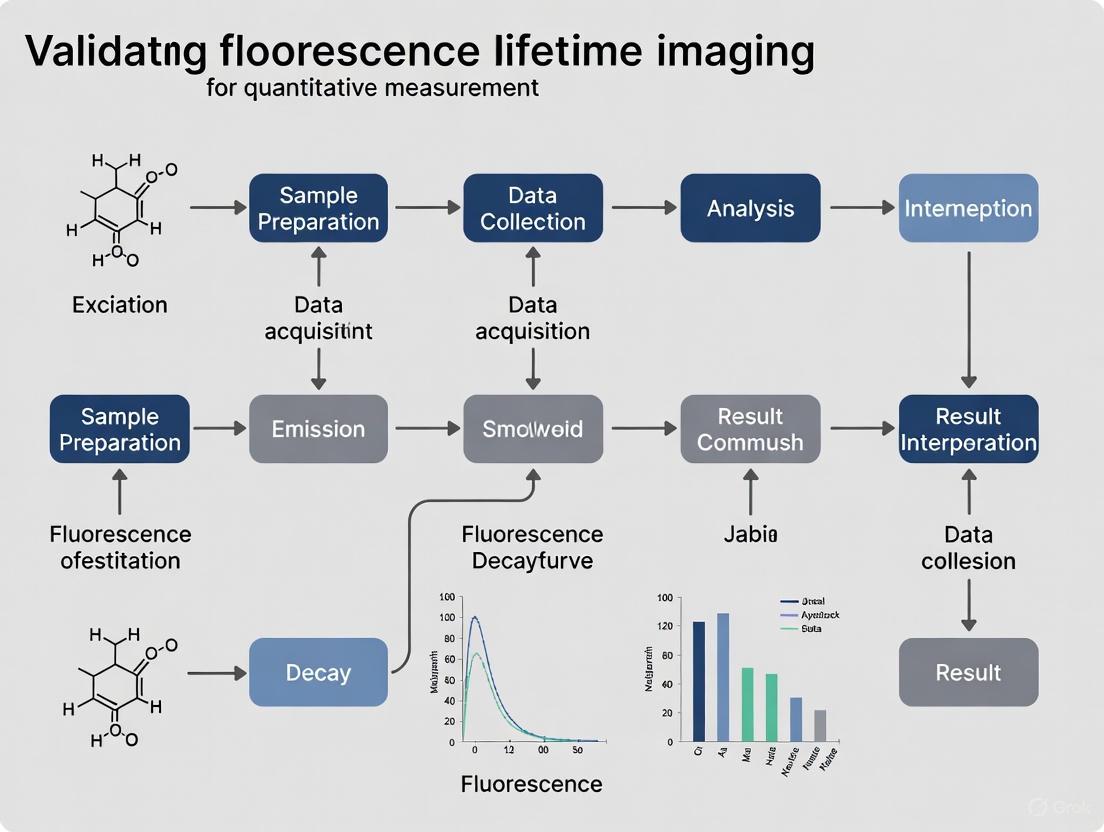
Fluorescence Lifetime Imaging Microscopy (FLIM) provides unparalleled quantitative insights into cellular metabolism, protein interactions, and drug efficacy by measuring the nanosecond-scale persistence of fluorophores in an excited state.
Validating Fluorescence Lifetime Imaging: A Quantitative Framework for Biomedical Research and Drug Development
Abstract
Fluorescence Lifetime Imaging Microscopy (FLIM) provides unparalleled quantitative insights into cellular metabolism, protein interactions, and drug efficacy by measuring the nanosecond-scale persistence of fluorophores in an excited state. This article offers a comprehensive framework for validating FLIM as a robust quantitative tool, moving from foundational principles to advanced applications. We explore the core advantages of lifetime over intensity-based measurements, detail cutting-edge methodologies and instrumentation for high-speed data acquisition, and address critical challenges like noise, autofluorescence, and data analysis. By presenting rigorous validation strategies and comparative analyses with emerging computational techniques like deep learning, this guide empowers researchers and drug development professionals to harness the full potential of quantitative FLIM for preclinical studies and clinical translation.
The Quantitative Advantage: Why Fluorescence Lifetime Outshines Intensity
Fluorescence lifetime imaging microscopy (FLIM) is rapidly transforming quantitative cellular imaging by providing measurements independent of fluorescence intensity, which are often compromised by experimental artifacts. This review establishes the core principles of fluorescence lifetime through the Jablonski diagram framework and validates its quantitative advantages for biomedical research. We present a comparative analysis of intensity-based versus lifetime-based imaging methodologies, detailing experimental protocols for implementing FLIM across diverse biological systems. Recent breakthroughs in genetically encoded fluorescence lifetime indicators and computational simulation tools are examined for their ability to accurately quantify metabolic and signaling molecules in live cells and tissues. The integration of FLIM with advanced analysis techniques creates a powerful platform for investigating disease mechanisms, cellular heterogeneity, and therapeutic efficacy, positioning fluorescence lifetime as an essential quantitative parameter in modern biological research.
Fluorescence microscopy provides indispensable molecular contrast for biomedical research, yet traditional intensity-based measurements face significant challenges for quantitative analysis. Variations in fluorophore concentration, excitation light intensity, photobleaching, and focus drift introduce artifacts that hamper reliable quantification [1]. Fluorescence lifetime imaging microscopy (FLIM) addresses these limitations by measuring the average time a fluorophore remains in an excited state before emitting a photon, typically on the nanosecond timescale [2] [3]. This parameter is intrinsic to each fluorophore and largely independent of concentration, making it ideally suited for quantitative imaging.
The validation of fluorescence lifetime for quantitative measurement research represents a critical advancement for studying dynamic cellular processes. Unlike intensity-based signals, fluorescence lifetime provides absolute measurements that enable direct comparison across experiments, timepoints, and laboratory settings [4] [5]. This review establishes the fundamental principles of fluorescence lifetime through the framework of the Jablonski diagram, compares methodological approaches for FLIM implementation, details experimental protocols for quantitative applications, and examines emerging technologies that expand FLIM's capabilities for drug development and clinical research.
Core Principles: The Jablonski Diagram and Fluorescence Lifetime
The Jablonski Diagram: Energy State Transitions
The Jablonski diagram, developed by Polish physicist Aleksander Jablonski, provides a schematic representation of the electronic energy states and transitions that occur during fluorescence phenomena [6] [7]. This diagram organizes energy vertically, with horizontal lines representing distinct electronic states (S0, S1, S2, etc.) and vibrational energy levels within each electronic state.
The fluorescence process begins when a photon of appropriate energy excites a molecule from its ground electronic state (S0) to a higher electronic excited state (S1, S2,...). This absorbance transition occurs on an extremely fast timescale (approximately 10-15 seconds) [7]. Following excitation, the molecule rapidly undergoes vibrational relaxation and internal conversion to the lowest vibrational level of the first excited electronic state (S1) through non-radiative energy loss to the environment. Fluorescence emission then occurs as the molecule returns from the S1 state to the ground state, emitting a photon with longer wavelength (lower energy) than the excitation photon - a phenomenon known as the Stokes shift [6] [2].
Defining Fluorescence Lifetime
Fluorescence lifetime (τ) is defined as the average time a fluorophore remains in the excited state before returning to the ground state [2]. Mathematically, for a population of excited molecules, the fluorescence intensity decay follows first-order kinetics:
I(t) = I₀e^(-t/τ)
where I(t) is the intensity at time t, I₀ is the initial intensity after excitation, and τ is the fluorescence lifetime [2]. The lifetime represents the time required for the fluorescence intensity to decay to 1/e (approximately 36.8%) of its initial value. This parameter depends on the fluorophore's molecular structure and its immediate environment, including factors such as pH, ion concentration, temperature, and molecular interactions [6] [3].
Table 1: Fluorescence Lifetimes of Selected Biological Fluorophores
| Fluorophore | Lifetime (ns) | Excitation (nm) | Emission (nm) | Application |
|---|---|---|---|---|
| NAD(P)H (free) | 0.4 | 340 | 470 | Cellular metabolism |
| NAD(P)H (bound) | 1.0-5.0 | 340 | 470 | Cellular metabolism |
| FAD | 2.3-2.9 | 450 | 535 | Cellular metabolism |
| Collagen | 1.2-4.0 | 360-400 | 400-500 | Tissue structure |
| GFP | 2.6-3.0 | 488 | 507 | Protein tagging |
| qMaLioffG (-ATP) | ~2.9 | 512 | 525 | ATP sensing |
| qMaLioffG (+ATP) | ~1.8 | 512 | 525 | ATP sensing |
Methodological Comparison: Intensity-Based vs. Lifetime-Based Imaging
Limitations of Intensity-Based Fluorescence Measurements
Conventional intensity-based fluorescence measurements face several challenges for quantitative biological imaging:
- Concentration Dependence: Signal intensity scales with fluorophore concentration, making it difficult to distinguish between changes in molecular concentration versus environmental effects [1].
- Experimental Artifacts: Variations in excitation source intensity, microscope alignment, sample thickness, and focus drift introduce measurement errors [1] [3].
- Photobleaching: Irreversible fluorophore degradation during imaging causes signal loss that confounds quantitative measurements over time [1].
- Spectral Crosstalk: In multicolor experiments, overlapping emission spectra complicate signal separation and quantification [3].
Even ratiometric intensity measurements, which use two emission channels to normalize for concentration effects, remain vulnerable to variations in microscope settings that hamper reproducibility between laboratories [1].
Advantages of Fluorescence Lifetime Measurements
FLIM overcomes these limitations by exploiting the temporal characteristics of fluorescence:
- Concentration Independence: Fluorescence lifetime is largely independent of fluorophore concentration, enabling direct comparison between samples with different expression levels [4] [5] [3].
- Environmental Sensitivity: Lifetime measurements detect molecular environment changes (pH, ion concentration, binding interactions) that intensity measurements may miss [2] [3].
- Reduced Artifact Susceptibility: Lifetime is minimally affected by excitation intensity variations, photobleaching (within limits), and focus drift [1].
- Multiple Parameter Resolution: FLIM can distinguish multiple fluorescent species with overlapping spectra based on their distinct lifetimes [3].
Table 2: Comparison of Intensity-Based vs. Lifetime-Based Imaging Approaches
| Characteristic | Intensity-Based Imaging | Fluorescence Lifetime Imaging (FLIM) |
|---|---|---|
| Quantitative Accuracy | Limited by artifacts | High, due to environmental sensitivity |
| Concentration Dependence | Strong | Minimal |
| Photobleaching Sensitivity | High | Moderate |
| Experimental Reproducibility | Variable between systems | High between systems |
| Multiplexing Capability | Limited by spectral overlap | Enhanced by lifetime contrast |
| Technical Complexity | Low | High |
| Measurement Speed | Fast | Moderate to slow |
| Photon Efficiency | High | Moderate |
| Environmental Sensing | Limited | Excellent |
| Instrument Cost | Low to moderate | High |
FLIM Implementation Methodologies
FLIM can be implemented through two primary technical approaches:
Time-Domain FLIM: The sample is excited with short laser pulses, and the fluorescence decay is measured directly by recording photon arrival times relative to the excitation pulse [2] [3]. Common implementations include time-correlated single photon counting (TCSPC) and gated detection.
Frequency-Domain FLIM: The sample is excited with intensity-modulated light, and the phase shift and demodulation of the fluorescence signal relative to the excitation are measured to calculate lifetime [2].
Each approach offers distinct advantages: time-domain provides direct lifetime visualization and handles complex multi-exponential decays well, while frequency-domain typically enables faster data acquisition [2].
Experimental Validation: Quantitative FLIM Applications
ATP Quantification with qMaLioffG Sensor
Recent breakthroughs in genetically encoded biosensors have dramatically expanded FLIM's quantitative capabilities. The qMaLioffG indicator represents a significant advancement for ATP measurement, addressing a fundamental metabolite in cellular energy metabolism [8] [1].
Sensor Design and Mechanism: qMaLioffG was developed by engineering a single green fluorescent protein with an inserted bacterial FoF1-ATP synthase ε subunit as the ATP-binding domain [1]. Upon ATP binding, conformational changes alter the chromophore environment, producing a substantial fluorescence lifetime shift (Δτ = 1.1 ns) within physiologically relevant ATP concentrations (Kd = 2.0 mM at room temperature, 11.4 mM at 37°C) [1]. This dynamic range exceeds conventional FRET-FLIM indicators (typically 0.1-0.6 ns) [1].
Experimental Protocol for ATP Imaging:
- Cell Preparation: Culture cells expressing qMaLioffG (cytoplasmic or mitochondrial targeted) on imaging-appropriate dishes.
- FLIM Acquisition: Image using a confocal microscope equipped with FLIM capability and 488 nm or 512 nm excitation.
- Lifetime Calculation: Apply fluorescence lifetime imaging microscopy (FLIM) to measure lifetime values pixel-by-pixel.
- Calibration Curve: Generate a calibration curve by measuring fluorescence lifetime in permeabilized cells with defined ATP concentrations.
- Quantitative Analysis: Convert lifetime values to ATP concentrations using the calibration curve [1].
Biological Applications: Researchers have applied qMaLioffG to quantify ATP distribution heterogeneity in various model systems. In HeLa cell spheroids, FLIM revealed spatial gradients of ATP levels reflecting metabolic heterogeneity [1]. Studies of patient-derived fibroblasts with DNM1L mutations demonstrated significantly reduced mitochondrial ATP levels, illustrating FLIM's capability to detect pathological metabolic alterations [1]. In mouse embryonic stem cells, qMaLioffG detected higher cytoplasmic ATP levels in naïve pluripotent cells maintained with 2i/LIF compared to primed states, revealing metabolic reprogramming during pluripotency regulation [1].
Addressing FLIM Limitations with FLiSimBA
While FLIM offers significant advantages for quantitative imaging, real-world biological applications face challenges including autofluorescence, background signals, and instrumentation artifacts that can compromise lifetime measurements [4] [5]. The recently developed FLiSimBA (Fluorescence Lifetime Simulation for Biological Applications) framework addresses these limitations by providing a computational tool for simulating realistic FLIM data.
FLiSimBA Simulation Approach:
- Signal Components: Models four key contributors: sensor fluorescence, tissue autofluorescence, PMT afterpulse, and background signals [4] [5].
- Photon Sampling: Generates realistic lifetime histograms by sampling from ideal sensor lifetime distributions convolved with instrument response functions [5].
- Noise Incorporation: Adds experimentally determined autofluorescence and background parameters to create biologically relevant noise conditions [4] [5].
Experimental Design Optimization: FLiSimBA enables researchers to determine minimum photon requirements for detecting lifetime differences, establish error estimates for measurements, and define expression level thresholds where lifetime remains insensitive to concentration variations [4] [5]. This computational framework supports rigorous experimental design and accurate data interpretation by quantifying how factors like autofluorescence impact the apparent fluorescence lifetime in biological systems [5].
The Scientist's Toolkit: Essential Research Reagents and Materials
Table 3: Essential Research Reagents for Quantitative FLIM
| Reagent/Material | Function | Example Applications | Key Characteristics |
|---|---|---|---|
| qMaLioffG | Genetically encoded ATP indicator | ATP quantification in cytoplasm and mitochondria | 1.1 ns lifetime dynamic range, 488 nm excitation [8] [1] |
| FLIM-AKAR | FRET-based kinase activity reporter | PKA signaling dynamics in brain slices | Double exponential decay, activity-dependent lifetime changes [4] [5] |
| FLiSimBA Software | FLIM simulation framework | Experimental design optimization | MATLAB/Python implementation, models biological noise [4] [5] |
| Sodium Fluoride (NaF) | Glycolysis inhibitor | ATP depletion experiments | Enolase inhibition, reduces cytoplasmic ATP [1] |
| Oligomycin | OXPHOS inhibitor | Mitochondrial ATP production assessment | ATP synthase inhibition, reduces mitochondrial ATP [1] |
| NAD(P)H | Endogenous metabolic fluorophore | Cellular metabolism monitoring | Lifetime changes with protein binding [2] |
| FAD | Endogenous metabolic fluorophore | Oxidative metabolism assessment | Shorter lifetime when protein-bound [2] |
Future Perspectives and Concluding Remarks
The integration of fluorescence lifetime measurements with advanced biosensors and computational analysis represents a powerful platform for quantitative biological research. Future developments will likely focus on expanding the palette of FLIM-compatible biosensors, particularly those compatible with conventional 488 nm laser systems [1]. Additionally, combining FLIM with deep learning approaches enhances data analysis capabilities, enabling automated classification of cancer types [9] and extraction of subtle metabolic signatures from complex tissue environments.
Technical advancements in FLIM instrumentation continue to address current limitations in acquisition speed and photon efficiency [2] [9]. The establishment of annual Quantitative Fluorescence Lifetime Imaging (QFLIM) meetings highlights the growing importance of this methodology and provides a venue for disseminating new developments [10]. As these technologies mature and become more accessible, fluorescence lifetime imaging is poised to become an indispensable tool for drug development, clinical diagnostics, and fundamental biological research.
The validation of fluorescence lifetime as a quantitative parameter through the framework of the Jablonski diagram provides researchers with a powerful approach to overcome the limitations of intensity-based imaging. By implementing the experimental protocols and methodologies detailed in this review, scientists can leverage the full potential of FLIM for precise, reproducible quantitative measurements in complex biological systems.
Fluorescence Lifetime Imaging Microscopy (FLIM) is increasingly recognized as a transformative quantitative tool in biomedical research and drug development. Unlike intensity-based fluorescence measurements, FLIM provides a robust, self-referencing readout that remains unaffected by common experimental variables that typically compromise quantitative accuracy. This guide systematically evaluates FLIM's core advantages—specifically its independence from fluorophore concentration, photobleaching, and excitation intensity fluctuations—against traditional intensity-based methods. Through experimental data and protocol details, we demonstrate how these properties establish FLIM as a superior technique for quantifying molecular interactions, cellular metabolism, and microenvironmental parameters in living systems.
Fluorescence lifetime refers to the average time a fluorophore remains in its excited state before returning to the ground state, typically occurring on the nanosecond timescale [2] [11]. This parameter is an intrinsic molecular property that depends primarily on the fluorophore's immediate molecular environment, including factors like pH, ion concentration, viscosity, and molecular binding events [2]. Fluorescence Lifetime Imaging Microscopy (FLIM) generates spatial maps of this lifetime parameter, providing a quantitative dimension beyond what traditional intensity-based fluorescence microscopy can offer.
The fundamental distinction between FLIM and intensity-based approaches lies in their relationship to common experimental variables. While fluorescence intensity depends directly on fluorophore concentration, excitation light intensity, and can be drastically affected by photobleaching, fluorescence lifetime remains largely independent of these factors [12]. This independence forms the basis of FLIM's superior quantitative capabilities, particularly for applications requiring precise measurement of molecular interactions and microenvironmental parameters in living cells and tissues.
Core Advantages: Comparative Analysis
The quantitative superiority of FLIM emerges from its fundamental independence from three key experimental variables that routinely compromise intensity-based measurements.
Independence from Fluorophore Concentration
In intensity-based fluorescence measurements, signal strength correlates directly with fluorophore concentration, making it difficult to distinguish between changes in molecular environment and changes in the number of fluorescent molecules. FLIM overcomes this limitation because fluorescence lifetime is an intrinsic property of the fluorophore in its specific microenvironment.
Table 1: Comparative Analysis: Concentration Independence
| Aspect | Intensity-Based Imaging | FLIM |
|---|---|---|
| Fundamental Basis | Signal proportional to number of fluorophores | Decay rate independent of fluorophore number |
| Quantitative Impact | Cannot distinguish environment from concentration | Direct readout of molecular environment regardless of concentration |
| Experimental Consequence | Requires careful control of expression/loading levels | Enables comparison across samples with variable expression |
| FRET Applications | Requires correction for donor concentration | Direct measurement via donor lifetime alone [12] |
The concentration-independent nature of FLIM is particularly valuable in biological systems where controlling exact expression levels of fluorescent proteins or maintaining precise concentrations of exogenous dyes is challenging. This property enables meaningful quantitative comparisons across different cells, tissue regions, or experimental conditions where fluorophore concentration may vary significantly.
Resistance to Photobleaching Effects
Photobleaching presents a major challenge in time-lapse imaging, as it causes a continuous decline in fluorescence intensity that can be misinterpreted as biological phenomena. Since fluorescence lifetime is largely unaffected by photobleaching until very late stages, FLIM provides more reliable data in longitudinal experiments.
Table 2: Comparative Analysis: Photobleaching Resistance
| Aspect | Intensity-Based Imaging | FLIM |
|---|---|---|
| Photobleaching Effect | Progressive signal loss | Lifetime largely unaffected until severe bleaching |
| Quantitative Impact | Declining intensity confounds quantification | Stable lifetime measurements throughout time series |
| Data Integrity | Compromised over extended imaging | Maintained across acquisition period |
| Corrective Measures | Complex normalization required | Minimal correction needed |
This bleaching resistance is especially beneficial for extended live-cell imaging, where maintaining quantitative accuracy throughout the experiment is crucial. While the absolute number of fluorescent molecules decreases during photobleaching, the lifetime of the remaining intact fluorophores remains unchanged, allowing FLIM to provide consistent environmental readouts even as overall intensity declines [12].
Variations in laser power, illumination field homogeneity, and light path characteristics create significant challenges for quantitative intensity measurements. FLIM effectively bypasses these issues because the measured lifetime is independent of the excitation intensity, provided sufficient photons are detected for accurate lifetime determination.
Experimental data from FLIM-FRET studies demonstrates this advantage clearly. In protein-protein interaction studies using FRET, FLIM can quantify interaction strengths without requiring careful adjustment of laser power across samples, a necessity for intensity-based FRET measurements [12]. This independence also makes FLIM more robust for clinical translation, where controlling illumination conditions precisely may be challenging.
Experimental Validation and Protocols
FLIM-FRET for Protein-Protein Interactions
Förster Resonance Energy Transfer (FRET) measured via FLIM provides a powerful method for quantifying molecular interactions, leveraging FLIM's concentration independence.
Diagram: FLIM-FRET Experimental Workflow for quantifying protein-protein interactions via donor fluorescence lifetime changes.
Experimental Protocol: FLIM-FRET
- Reference Measurement: Determine the donor fluorescence lifetime (τ) in a donor-only control sample using FLIM acquisition [12].
- FRET Sample Measurement: Measure the donor lifetime (τ_quench) in the experimental sample containing both donor and acceptor fluorophores.
- FRET Efficiency Calculation: Calculate FRET efficiency using the formula: E = 1 - (τ_quench/τ) [12].
- Distance Calculation: For known FRET pairs, convert efficiency to intermolecular distance using the Förster equation: E = 1/[1 + (r/R₀)⁶], where r is the distance and R₀ is the Förster radius [12].
This approach eliminates the need for complex corrections for donor concentration, acceptor concentration, and excitation intensity that plague intensity-based FRET methods [12]. The direct measurement of donor lifetime reduction provides a more reliable quantification of molecular interactions.
Metabolic Imaging via NADH/FAD Autofluorescence
FLIM of endogenous fluorophores enables label-free metabolic imaging, particularly using the metabolic coenzymes NAD(P)H and FAD.
Experimental Protocol: Metabolic FLIM
- Sample Preparation: Cells or tissues require no fluorescent labeling, leveraging inherent autofluorescence [2].
- Two-Photon Excitation: Typically using 740 nm for NAD(P)H and 890 nm for FAD to minimize photodamage [2].
- Lifetime Data Acquisition: Collect time-domain or frequency-domain FLIM data using appropriate detectors (PMTs or SPAD arrays).
- Lifetime Component Analysis: Fit decay curves to extract short and long lifetime components corresponding to free and protein-bound states of coenzymes.
- Metabolic Index Calculation: Compute the fluorescence lifetime-derived redox ratio: FLIM-Redox Ratio = (FAD fluorescence lifetime)/(NAD(P)H fluorescence lifetime).
This label-free approach enables non-invasive monitoring of cellular metabolic states in living samples, with applications ranging from cancer research to neurodegenerative disease studies. The concentration independence is particularly valuable as endogenous fluorophore levels can vary significantly between cells and conditions.
Research Reagent Solutions
Table 3: Essential Research Reagents and Materials for FLIM
| Category | Specific Examples | Function/Application |
|---|---|---|
| Endogenous Fluorophores | NAD(P)H, FAD, Collagen | Label-free metabolic and structural imaging [2] |
| Genetically Encoded Biosensors | FRET-based PKA/Akt sensors, GFP variants | Monitoring specific signaling pathways and molecular interactions [13] |
| Synthetic Dyes | Coumarin-6, Rhodamine derivatives | Environmental sensing (pH, viscosity, ions) with lifetime sensitivity [14] [15] |
| FLIM-FRET Pairs | CFP-YFP, GFP-RFP | Quantifying protein-protein interactions and conformational changes [12] [16] |
| Reference Standards | Coumarin-6 (τ ≈ 2.5 ns) | System calibration and lifetime validation [15] |
Technological Implementation
Modern FLIM systems typically employ one of two primary technical approaches, each with distinct advantages for quantitative imaging:
Time-Domain FLIM
- Utilizes pulsed lasers (ti:sapphire, diode) with pulse widths of picoseconds or femtoseconds
- Employs time-correlated single photon counting (TCSPC) or gated detection
- Builds fluorescence decay histograms pixel-by-pixel for precise lifetime determination [2] [16]
Frequency-Domain FLIM
- Uses intensity-modulated continuous-wave lasers or high-repetition-rate pulsed lasers
- Measures phase shift and demodulation of fluorescence relative to excitation
- Enables faster acquisition suitable for dynamic live-cell imaging [2]
Both approaches successfully decouple lifetime information from intensity variations, achieving the fundamental quantitative advantages described in this guide. Current technological advances are making FLIM more accessible through integrated commercial systems, miniaturized components, and improved data analysis workflows.
FLIM represents a paradigm shift in quantitative fluorescence microscopy, addressing fundamental limitations of intensity-based approaches. Its independence from fluorophore concentration, photobleaching, and excitation intensity fluctuations provides a robust foundation for reliable quantification of molecular interactions, metabolic states, and microenvironmental parameters in living systems. As FLIM technology continues to evolve toward more user-friendly implementations and standardized analysis protocols, its adoption is poised to expand significantly across biological research and drug development. The experimental data and protocols presented in this guide provide a foundation for researchers to leverage FLIM's unique advantages in their quantitative imaging studies.
Fluorescence Lifetime Imaging Microscopy (FLIM) has emerged as a transformative analytical technique in biomedical research, enabling quantitative measurement of cellular metabolism and tissue microenvironment through label-free detection of endogenous fluorophores. Unlike intensity-based fluorescence methods, FLIM measures the exponential decay rate of fluorescence emission following excitation, providing a robust parameter that is independent of fluorophore concentration, excitation light intensity, and photobleaching [8] [1]. This quantitative capability makes FLIM particularly valuable for investigating the metabolic reprogramming associated with disease states, particularly cancer, where altered cellular energetics serve as a hallmark of pathogenesis [17] [18].
The primary endogenous fluorophores exploited for quantitative metabolic imaging include the metabolic co-enzymes NAD(P)H (reduced nicotinamide adenine dinucleotide phosphate) and FAD (flavin adenine dinucleotide), along with structural proteins such as collagen. These molecules provide intrinsic contrast without requiring exogenous labeling, allowing non-invasive assessment of cellular function in living tissues and engineered disease models [19] [20]. NAD(P)H functions as a key electron carrier in glycolytic pathways and cellular redox reactions, while FAD serves as a crucial component in the electron transport chain for oxidative phosphorylation [17] [19]. Collagen, the most abundant protein in the extracellular matrix, provides structural support and its organization reflects tissue remodeling in various pathological conditions [19].
The fluorescence lifetimes of these endogenous fluorophores are exquisitely sensitive to their molecular environment and protein-binding status. For NAD(P)H, the protein-bound state (associated with enzymatic activity) exhibits a longer fluorescence lifetime (~1-6 ns) compared to the free state (~0.4 ns) [20]. Conversely, for FAD, the protein-bound state displays a shorter lifetime (~0.2-2 ns) compared to the free state (~2.8 ns) [20]. These lifetime differences enable FLIM to quantify the relative proportions of free and protein-bound species, providing insights into cellular metabolic activity that correlate with conventional metabolic assays [18] [20]. The integration of FLIM with advanced computational analysis, including phasor analysis and deep learning approaches, has further enhanced its capability to resolve subtle metabolic heterogeneity within complex tissue architectures [21] [14].
Metabolic Pathways and Biomarker Significance
NAD(P)H and FAD in Cellular Energetics
The metabolic co-factors NAD(P)H and FAD serve as central regulators of cellular energy production and redox homeostasis. NAD(P)H exists in both phosphorylated (NADPH) and non-phosphorylated (NADH) forms, with NADH primarily involved in ATP production through glycolysis and oxidative phosphorylation, while NADPH functions as a key reducing agent for antioxidant defense and biosynthetic pathways [20]. In the glycolytic pathway, glucose is converted to pyruvate with concomitant reduction of NAD+ to NADH. Subsequently, during the citric acid cycle, additional NADH molecules are generated along with the reduction of FAD to FADH2. These reducing equivalents then fuel the electron transport chain, where oxidative phosphorylation generates the majority of cellular ATP [17].
The relative balance between glycolysis and oxidative phosphorylation is frequently altered in pathological conditions, most notably in cancer. The "Warburg effect" describes the propensity of many cancer cells to favor glycolysis over oxidative phosphorylation even in normoxic conditions [17] [18]. This metabolic reprogramming results in characteristic changes in the levels and binding states of NAD(P)H and FAD that can be quantified through FLIM. Specifically, a shift toward glycolysis typically corresponds with increased free NAD(P)H and a higher free/bound ratio, while increased oxidative phosphorylation is associated with greater protein-bound NAD(P)H [18] [20]. The fluorescence lifetime of NAD(P)H has been shown to positively correlate with cellular oxygen consumption rate, confirming its utility as a biomarker for mitochondrial function [20].
The redox ratio, calculated as the intensity ratio of NAD(P)H to FAD or their respective lifetime parameters, provides a quantitative measure of the cellular metabolic state [19]. However, researchers must exercise caution when comparing studies, as different formulations of this ratio exist in the literature (e.g., NAD(P)H/FAD, FAD/NAD(P)H, or NAD(P)H/[NAD(P)H+FAD]) [19]. The FLIM-derived redox ratio (FLIRR), based on the relative proportions of bound NAD(P)H to bound FAD, has emerged as a promising optical biomarker, with higher values typically indicative of a shift toward oxidative phosphorylation and lower values associated with enhanced glycolysis [18].
Collagen in Tissue Structure and Disease
Collagen represents the most abundant autofluorescent protein in the extracellular matrix and serves as a critical structural component in connective tissues. Its fluorescence properties differ from those of metabolic co-factors, with emission primarily in the blue-green spectrum when excited by ultraviolet light [19]. Beyond its structural role, collagen organization and content are increasingly recognized as important biomarkers in various pathological processes, including cancer progression, fibrosis, and tissue regeneration.
In cancer research, collagen deposition and alignment have been correlated with tumor progression and metastatic potential. The tumor microenvironment often exhibits characteristic collagen reorganization, with increased density and straightened fibers facilitating cancer cell invasion [18]. In stem cell research and regenerative medicine, collagen production serves as a key indicator of differentiation, particularly in chondrogenesis where mesenchymal stem cells generate collagen-rich extracellular matrix resembling cartilage [19]. Multispectral autofluorescence imaging enables simultaneous monitoring of collagen alongside metabolic co-factors, providing complementary information about tissue structure and cellular function within the same sample [19].
Table 1: Key Endogenous Fluorophores and Their Characteristics
| Fluorophore | Primary Function | Excitation/Emission Maxima | Free Lifetime | Bound Lifetime | Key Metabolic Significance |
|---|---|---|---|---|---|
| NAD(P)H | Metabolic co-factor, electron carrier | ~350-740 nm/~450-470 nm | ~0.4 ns [20] | ~1-6 ns [20] | Glycolytic activity, redox state |
| FAD | Metabolic co-factor, electron transport | ~450 nm/~535 nm | ~2.8 ns [20] | ~0.2-2 ns [20] | Oxidative phosphorylation |
| Collagen | Structural extracellular matrix protein | ~325-370 nm/~400-465 nm | N/A | N/A | Tissue architecture, fibrosis, differentiation |
Signaling Pathways Involving Endogenous Fluorophores
The diagram below illustrates the interconnected metabolic pathways involving NAD(P)H and FAD, and how their fluorescence properties provide readouts of cellular metabolism.
Quantitative Comparison of FLIM Biomarkers
FLIM provides multiple quantitative parameters for assessing cellular metabolism and tissue microenvironment. The table below summarizes key FLIM-derived metrics for NAD(P)H, FAD, and collagen, along with their reported changes in various experimental models.
Table 2: Quantitative FLIM Parameters of Endogenous Fluorophores in Experimental Models
| Experimental Model | Fluorophore | Key FLIM Parameters | Reported Changes | Biological Interpretation |
|---|---|---|---|---|
| Breast cancer spheroids (MDA-MB-231) [18] | NAD(P)H | τm (mean lifetime), α1/α2 (fraction free/bound) | Migrating cells: ↑ bound NAD(P)H fraction | Metabolic shift toward OXPHOS in invading cells |
| Breast cancer spheroids (MDA-MB-231) [18] | FAD | τm (mean lifetime), α1/α2 (fraction free/bound) | Migrating cells: ↑ bound FAD fraction | Metabolic shift toward OXPHOS in invading cells |
| Breast cancer spheroids (MDA-MB-231) [18] | NAD(P)H & FAD | FLIRR (Fluorescence Lifetime Imaging Redox Ratio) | Higher collagen density: ↑ FLIRR | ECM stiffness promotes OXPHOS |
| Reconstructed human skin (UVA exposure) [20] | NAD(P)H | fB (bound fraction) | Post-UVA: ↑ bound NAD(P)H in fibroblasts | Oxidative stress response |
| Reconstructed human skin (UVA exposure) [20] | FAD | fB (bound fraction) | Post-UVA: ↓ bound FAD in keratinocytes | Dose-dependent oxidative damage |
| MSC differentiation [19] | Collagen | Intensity, Spectral signature | Chondrogenesis: ↑ collagen intensity | Extracellular matrix production |
| MSC differentiation [19] | NAD(P)H & FAD | Redox Ratio (NAD(P)H/FAD) | Adipogenesis: initial ↑ then ↓ redox ratio | Dynamic metabolic shifts during differentiation |
| Mouse breast cancer model [17] | NAD(P)H | Intensity, Lifetime | Tumor regions: ↑ intensity & ↑ lifetime | Altered metabolism in carcinoma |
The quantitative data reveal several consistent trends across experimental models. In cancer systems, tumor cells frequently display increased NAD(P)H intensity and longer fluorescence lifetime compared to normal adjacent tissue [17]. The FLIRR metric has proven particularly valuable for identifying spatial metabolic heterogeneity within tumor spheroids, with migrating cells at the invasive front exhibiting higher FLIRR values consistent with increased oxidative phosphorylation [18]. In stem cell differentiation, chondrogenic induction leads to increased collagen production detectable through autofluorescence intensity, while adipogenic differentiation produces characteristic temporal changes in the redox ratio [19].
Environmental stressors, such as UVA exposure, trigger cell-type-specific metabolic responses measurable through FLIM. Fibroblasts in reconstructed human skin demonstrate increased bound NAD(P)H fraction following UVA exposure, indicating an oxidative stress response, while keratinocytes show a dose-dependent decrease in bound FAD fraction [20]. These findings highlight the sensitivity of FLIM parameters to both intrinsic metabolic reprogramming and extrinsic environmental challenges.
Experimental Protocols and Methodologies
FLIM Instrumentation and Data Acquisition
FLIM systems for endogenous fluorophore imaging typically utilize multiphoton excitation with mode-locked Ti:Sapphire lasers (tuning range ~700-1000 nm) to achieve sufficient penetration depth in tissue samples and minimize photodamage [17] [18]. For simultaneous NAD(P)H and FAD imaging, wavelength mixing approaches have been developed where two synchronous femtosecond laser beams (e.g., 760 nm and 1045 nm) are temporally overlapped to create a virtual two-photon excitation wavelength (e.g., 880 nm) that efficiently excites both fluorophores [20]. This strategy enables independent control of NAD(P)H and FAD signal levels while ensuring all fluorescence originates from the same diffraction-limited focal volume [20].
Fluorescence lifetime detection is typically accomplished through time-correlated single photon counting (TCSPC) systems, which provide high temporal resolution for recording fluorescence decay curves [17] [20]. The instrument response function (IRF) of the optical system should be measured (typically using second harmonic generation from a β-BaB2O4 crystal) to account for system limitations in lifetime calculations [17]. For spectral separation of autofluorescence signals, systems may incorporate spectral detectors (e.g., 16-channel photomultiplier tubes) covering emission ranges from 350-720 nm [17]. During imaging, samples should be maintained in physiological conditions using temperature and CO₂-controlled chambers to preserve viability, particularly for longitudinal studies [20].
Sample Preparation Protocols
Tissue Section Preparation: For ex vivo tissue imaging, samples are typically fixed in formalin, paraffin-embedded, and sectioned using standard histopathological techniques [17]. Sections may be de-paraffinized and maintained unstained or stained with histological dyes like eosin. Mounting with appropriate media and coverslipping follows standard protocols. For NAD(P)H and FAD imaging, unstained sections are preferred to avoid interference from exogenous fluorophores [17].
3D Cell Culture Models: Tumor spheroids can be generated by seeding cells (approximately 1×10³ cells/well) in ultra-low attachment plates with addition of extracellular matrix components like Matrigel (2.5% v/v) and allowing 48 hours for spheroid formation [18]. Individual spheroids are then embedded in collagen gels at desired concentrations (e.g., 1 mg/ml vs. 4 mg/ml to mimic low and high-density ECM) within specialized chambers like polydimethylsiloxane (PDMS) wells created in glass-bottom dishes [18].
Reconstructed Human Skin: Tissue-engineered skin models containing differentiated epidermis and dermal fibroblasts embedded in collagen matrix can be used for metabolic studies. These are typically reconstructed over 12-14 days of differentiation before imaging [20].
Data Processing and Analysis Methods
Phasor Analysis: This fit-free approach transforms FLIM data into Fourier space, mapping per-pixel intensity decay onto orthogonal vectors [20] [14]. The phasor plot allows graphical determination of free and bound fluorophore fractions by measuring the distance of experimental pixels from reference positions of free NAD(P)H and free FAD. This method facilitates visualization of metabolic clusters and reduces computational load compared to exponential fitting [20].
Noise-Reduction Techniques: Fluorescence lifetime data, particularly from autofluorophores with weak signals, often benefits from noise reduction algorithms. Recent advances include noise-corrected principal component analysis (NC-PCA), which selectively identifies and removes noise while preserving biological signals [14]. This approach has demonstrated up to 5.5-fold decrease in uncertainty and over 50-fold reduction in data loss compared to conventional thresholding methods [14].
Lifetime Calculation: Fluorescence decay curves are typically fitted with multi-exponential models using specialized software to extract lifetime components (τ₁, τ₂) and their relative amplitudes (α₁, α₂). The mean lifetime (τm) can be calculated as τm = α₁τ₁ + α₂τ₂ [18]. For NAD(P)H, the bound fraction (fB) is often represented by α₂, while for FAD, the bound fraction is represented by α₁ [20].
The diagram below illustrates a typical workflow for FLIM experiments, from sample preparation to data analysis.
The Scientist's Toolkit: Research Reagent Solutions
Successful FLIM investigation of endogenous fluorophores requires specific reagents, instrumentation, and analysis tools. The table below summarizes key components of the research toolkit for quantitative FLIM studies.
Table 3: Essential Research Reagents and Tools for Endogenous Fluorophore FLIM
| Category | Specific Product/Model | Key Features | Application Notes |
|---|---|---|---|
| Microscopy Systems | Custom multiphoton workstation [17] | Ti:Sapphire mode-locked laser (~700-1000 nm), TCSPC electronics | Enables deep tissue imaging with sub-micron resolution |
| Detection Systems | Becker & Hickl SPC-830 [17] | Time-correlated single photon counting | High temporal resolution for fluorescence decay recording |
| Spectral Detectors | Hamamatsu PML-16 PMT [17] | 16-channel, detection range 350-720 nm | Spectral unmixing of autofluorescence signals |
| Cell Culture Models | MCF-10A, MDA-MB-231 [18] | Normal and cancerous breast epithelial lines | Well-characterized models for cancer metabolism studies |
| 3D Culture Systems | Ultra-low attachment plates [18] | Spheroid formation with Matrigel support | Recapitulates tumor microenvironment heterogeneity |
| Extracellular Matrix | Rat tail collagen I [18] | Tunable concentration (1-4 mg/ml) | Mimics physiological and stiffened tissue environments |
| Tissue Models | Reconstructed human skin (T-Skin) [20] | Contains epidermis and dermis with living fibroblasts | Suitable for UV exposure studies and dermatological research |
| Analysis Software | Phasor analysis algorithms [20] [14] | Fit-free approach for lifetime calculation | User-friendly visualization of metabolic clusters |
| Advanced Analytics | NC-PCA denoising [14] | Noise-corrected principal component analysis | Enhances signal fidelity in low-photon-count data |
Comparative Performance and Applications
Biomarker Performance Across Disease Models
The diagnostic performance of endogenous fluorophores varies across disease models and experimental conditions. In cancer detection, NAD(P)H and FAD FLIM parameters have demonstrated high sensitivity for discriminating transformed from normal tissue. In mouse models of breast cancer, carcinoma regions exhibited significantly higher NAD(P)H intensity and longer fluorescence lifetime compared to adjacent normal tissue [17]. Similarly, in 3D breast cancer spheroids, migrating cells displayed characteristic FLIM signatures consistent with metabolic shifts toward oxidative phosphorylation, particularly in high-density collagen environments [18].
In stem cell research, multispectral autofluorescence imaging of NAD(P)H, FAD, and collagen has enabled non-invasive monitoring of differentiation dynamics over extended time periods (21 days) without compromising cell viability [19]. Chondrogenic differentiation produced increased collagen levels, while adipogenic differentiation showed characteristic temporal patterns in the redox ratio. However, researchers caution against assuming consistent metabolic shifts during differentiation, as the relationship between metabolic programming and lineage specification appears context-dependent [19].
For environmental stress assessment, FLIM of endogenous fluorophores has proven valuable in quantifying oxidative damage in skin models. Following UVA exposure, NAD(P)H and FAD biomarkers demonstrated unique temporal dynamics and cell-type-specific sensitivity, with fibroblasts responding more prominently to NAD(P)H lifetime changes and keratinocytes showing dose-dependent FAD alterations [20]. These findings highlight the importance of multi-parameter FLIM assessment across different cell types within complex tissues.
Advantages Over Conventional Methods
FLIM of endogenous fluorophores offers several advantages over traditional analytical methods for assessing cellular metabolism. Compared to immunohistochemical approaches for protein expression analysis, FLIM provides functional information about metabolic activity rather than mere molecular presence [22]. Unlike bulk metabolic assays (e.g., Seahorse extracellular flux analysis), FLIM preserves spatial information at subcellular resolution, enabling investigation of metabolic heterogeneity within tissues and 3D models [18].
The label-free nature of autofluorescence imaging eliminates potential artifacts introduced by exogenous dyes or fluorescent proteins, which can themselves alter cellular metabolism [20]. Furthermore, FLIM parameters are inherently quantitative and less susceptible to variations in fluorophore concentration, excitation intensity, and detection efficiency compared to intensity-based measurements [1]. This quantitative reliability facilitates direct comparison between experiments and laboratories when standardized protocols are implemented.
Recent technological advances have further enhanced FLIM capabilities. The integration of deep learning approaches has improved image analysis speed and accuracy, enabling automated classification of metabolic states and identification of subtle patterns that may escape manual analysis [21]. Additionally, the development of novel fluorescence lifetime-based indicators, such as qMaLioffG for ATP imaging, expands the range of metabolic parameters that can be quantified alongside endogenous fluorophores [8] [1].
FLIM of endogenous fluorophores represents a powerful methodology for quantitative assessment of cellular metabolism and tissue microenvironment in various physiological and pathological contexts. The metabolic co-factors NAD(P)H and FAD provide sensitive indicators of energetic and redox states, while collagen serves as a marker of extracellular matrix remodeling. The quantitative parameters derived from FLIM, including fluorescence lifetimes, free/bound fractions, and redox ratios, offer unique insights into metabolic reprogramming associated with disease processes such as cancer, stem cell differentiation, and environmental stress responses.
The continuing evolution of FLIM technology, including improved instrumentation, advanced data processing algorithms, and integration with complementary imaging modalities, promises to further enhance our understanding of metabolic regulation in complex biological systems. As standardization and accessibility of FLIM methodologies improve, clinical translation of these approaches for diagnostic applications and therapeutic monitoring appears increasingly feasible. The quantitative nature, label-free implementation, and spatial resolution of FLIM position it as an indispensable tool in the expanding toolkit for metabolic research and precision medicine.
Förster Resonance Energy Transfer (FRET) is a powerful physical phenomenon that serves as a "molecular ruler" for quantifying biomolecular interactions and microenvironmental parameters. FRET involves the non-radiative transfer of energy from an excited donor fluorophore to a nearby acceptor fluorophore through dipole-dipole interactions [23] [24]. This energy transfer is highly dependent on the distance between the fluorophores, typically occurring within 1-10 nanometers, making it exquisitely sensitive to molecular-scale changes [24] [25]. The efficiency of FRET (E) follows an inverse sixth-power relationship with the distance (r) between donor and acceptor: E = 1/[1 + (r/R₀)⁶], where R₀ is the Förster radius representing the distance at which energy transfer efficiency is 50% [24] [26]. This fundamental distance dependence enables researchers to precisely monitor dynamic changes in protein conformations, protein-protein interactions, and localized microenvironmental conditions in real-time within living systems [23] [24].
FRET biosensors have emerged as indispensable tools in modern biological research, particularly for applications requiring high spatiotemporal resolution. Unlike traditional biochemical methods such as co-immunoprecipitation, yeast two-hybrid assays, or pull-down assays, FRET biosensors enable non-invasive monitoring of molecular events in live cells with exceptional precision [25]. These sensors can detect instant mechanotransduction processes that occur within seconds, revealing cell-to-cell variability that would be masked in ensemble measurements [27] [24]. The versatility of FRET biosensors extends to diverse applications including cellular imaging, drug discovery, pathogen detection, and cancer diagnosis, establishing them as foundational tools for advancing quantitative measurement research in biomedical sciences [26].
FRET Biosensor Design and Variants
Fundamental Architecture and Engineering Principles
The architecture of FRET biosensors typically incorporates several key domains organized into a single polypeptide chain. A standard design includes: (1) a donor fluorophore, (2) a sensing domain that responds to the target analyte or molecular event, (3) an acceptor fluorophore, and (4) specialized linker regions that connect these components [24] [28]. The strategic engineering of these linkers is particularly crucial for biosensor performance. Recent advancements have introduced rigid, helical ER/K linkers—comprised of alternating repeats of four glutamate residues and four arginines or lysines—which form extended α-helices with hinge-like properties [28]. These structured linkers significantly enhance dynamic range by properly separating affinity binding domains and FRET partners in the unbound state, thereby reducing baseline FRET signals [26] [28]. The length and composition of these linkers directly impact the biosensor's dynamic range, with longer ER/K linkers (up to 30 nm) demonstrating substantial improvements in signal response [28].
The performance of FRET biosensors is quantified through several key parameters. The dynamic range refers to the maximum observable signal difference between active and inactive states, while gain represents the percentage change in FRET ratio following stimulation [24]. Sensitivity is defined as the concentration of stimulants that increases the FRET ratio to 50% of the dynamic range [24]. Optimizing these parameters often requires empirical testing of various geometries, including alterations in linker length, fluorophore selection, and domain organization [28]. Single-chain biosensor designs maintain a 1:1 ratio of donors to acceptors, simplifying FRET imaging and data analysis while ensuring consistent stoichiometry [28].
Advanced FRET Modalities and Their Applications
Recent technological advancements have expanded the FRET toolbox beyond conventional intensity-based measurements, enabling more sophisticated quantitative applications:
FLIM-FRET (Fluorescence Lifetime Imaging Microscopy-FRET): This technique measures the fluorescence decay rate of the donor fluorophore, which decreases when FRET occurs. FLIM-FRET provides quantitative measurements independent of fluorophore concentration, excitation light intensity, or focus drift, making it particularly valuable for precise quantification [29] [1] [22]. For example, the qMaLioffG ATP indicator exploits FLIM-FRET to enable quantitative imaging of ATP levels in living cells by converting ATP concentration into measurable fluorescence lifetime changes [29] [1].
smFRET (Single-Molecule FRET): This approach detects FRET at the level of individual molecules, revealing conformational heterogeneities and transient intermediate states that are obscured in ensemble measurements [25] [26]. smFRET has been particularly valuable for studying RNA structural dynamics, where it guides the selection of 3D structures consistent with experimental distance constraints [30].
TR-FRET (Time-Resolved FRET): Utilizing long-lifetime probes such as lanthanide chelates with time-gated detection, TR-FRET effectively eliminates background fluorescence, significantly enhancing detection sensitivity for low-abundance targets [25] [28]. This approach enables robust screening protocols for protein-protein interaction modulators even at low protein concentrations [25].
FCCS-FRET (Fluorescence Cross-Correlation Spectroscopy FRET): This technique enables quantitative analysis of molecular interactions in live cells by monitoring the correlated diffusion of two fluorescently labeled molecules within a femtoliter-scale observation volume [25].
Table 1: Comparison of Advanced FRET Modalities
| Technique | Key Principle | Spatial Resolution | Key Applications | Advantages |
|---|---|---|---|---|
| FLIM-FRET | Measures donor fluorescence lifetime decay | Subcellular | Quantitative metabolite imaging (e.g., ATP), protein interaction studies [29] [1] [22] | Independent of fluorophore concentration; minimizes artifacts from cellular morphology [1] |
| smFRET | Detects FRET at individual molecule level | Single-molecule | RNA conformational dynamics, protein folding, molecular mechanisms [25] [30] | Reveals heterogeneities and transient states; high temporal resolution [30] |
| TR-FRET | Uses long-lifetime probes with time-gated detection | Molecular | High-throughput screening, PPI modulator identification [25] [28] | Eliminates background; enhanced sensitivity for low-abundance targets [25] |
| FCCS-FRET | Monitors correlated diffusion of labeled molecules | Single-molecule in live cells | Protein complex formation in live cells [25] | Quantitative analysis in physiological environments [25] |
Quantitative Comparison of FRET Biosensor Performance
Performance Metrics Across Biosensor Designs
The quantitative performance of FRET biosensors varies significantly based on their design specifications, fluorophore pairs, and target applications. Systematic engineering approaches have yielded substantial improvements in dynamic range, sensitivity, and reliability. For instance, in the development of Rac1 biosensors, incorporation of ER/K helical linkers of varying lengths (10 nm, 20 nm, and 30 nm) demonstrated a direct correlation between linker length and dynamic range in LRET-based sensors, with the 30 nm linker achieving an exceptional 1100% increase in dynamic range [28]. In contrast, conventional FRET biosensors with fluorescent protein pairs showed more modest but still significant improvements of up to 125% with ER/K linkers compared to unstructured linkers [28].
The choice of fluorophore pairs profoundly impacts biosensor performance. The CFP-YFP pair remains widely used due to favorable spectral overlap, with derivatives such as ECFP and YPet showing improved sensitivity for single-cell imaging [24]. Alternative pairs including mCerulean/YPet and cpTFP1/cpVenus offer varying dynamic ranges and spectral characteristics suitable for different experimental needs [28]. Lanthanide-based FRET (LRET) with Tb(III) complexes as donors provides exceptionally long excited-state lifetimes (~milliseconds), enabling time-gated detection that eliminates short-lived background fluorescence and significantly enhances signal-to-background ratios [28].
Table 2: Quantitative Performance Metrics of Representative FRET Biosensors
| Biosensor | FRET Pair | Target | Dynamic Range | Key Features | Application Context |
|---|---|---|---|---|---|
| Rac1 LRET Sensor | Tb(III)/EGFP | Rac1 GTPase activity | Up to 1100% | 30 nm ER/K linker; time-gated detection [28] | Cell-based screening in 96-well plates [28] |
| Rac1-2G | cpTFP1/cpVenus | Rac1 GTPase activity | ~70% | Circularly permuted FPs; optimized linkers [28] | Live-cell imaging of membrane dynamics [28] |
| qMaLioffG | Single FP FLIM | ATP | 1.1 ns lifetime change | Fluorescence lifetime-based; 488 nm laser compatible [1] | Quantitative ATP imaging in cytoplasm and mitochondria [29] [1] |
| Kinase Biosensors | CFP-YFP variants | Various kinases | 50-150% | Conformational change upon phosphorylation [27] [24] | Monitoring signaling dynamics in live cells [27] |
| MaLionG | Citrine-based | ATP | 390% ΔF/F₀ | Intensity-based turn-on sensor [1] | ATP monitoring with high intensity change [1] |
Experimental Validation and Calibration Approaches
Robust calibration methodologies are essential for ensuring quantitative accuracy in FRET measurements, particularly for comparing results across different experimental sessions and instrumentation. A significant challenge in conventional FRET imaging is the sensitivity of the FRET ratio (acceptor-to-donor signal ratio) to imaging parameters such as laser intensity, detector sensitivity, and optical path variations [27]. Recent innovations address this limitation through the incorporation of calibration standards into experimental designs.
The barcoded calibration approach introduces engineered "FRET-ON" and "FRET-OFF" standards into subsets of cells, enabling normalization of fluorescence signals against these reference points [27]. Theoretical modeling and experimental validation have demonstrated that including both high- and low-FRET standards, along with donor-only and acceptor-only controls, allows for precise determination of actual FRET efficiency independent of imaging conditions [27]. This calibration strategy restores expected reciprocal changes in donor and acceptor signals that are often obscured by imaging fluctuations and photobleaching, facilitating reliable cross-experimental comparisons and long-term studies [27].
For FLIM-FRET applications, quantitative imaging relies on establishing calibration curves that correlate fluorescence lifetime with analyte concentration. In the case of the qMaLioffG ATP sensor, researchers created calibration curves in membrane-permeabilized cells, demonstrating slight differences compared to solution-based measurements but providing crucial reference data for interpreting intracellular ATP concentrations [1]. These calibration approaches are particularly important for applications requiring precise quantification, such as monitoring metabolic changes in disease models or evaluating drug effects on cellular energy states [29] [1].
Experimental Protocols for Key Applications
FLIM-FRET Protocol for Quantitative ATP Imaging
The qMaLioffG system represents a cutting-edge approach for quantitative ATP monitoring using FLIM-FRET methodology [29] [1]. Below is a detailed experimental protocol:
Sensor Expression and Sample Preparation:
- Construct Design: The qMaLioffG indicator employs a single green fluorescent protein scaffold with an inserted ε subunit of a bacterial FoF1-ATP synthase ATP-binding domain, optimized with specific peptide linkers to enhance transmission of ATP-induced conformational changes [1]. The sensor exhibits a substantial fluorescence lifetime shift (1.1 ns) within physiologically relevant ATP concentrations (Kₓ of 2.0 mM at room temperature and 11.4 mM at 37°C) [1].
- Cell Culture and Transfection: Culture appropriate cell lines (e.g., HeLa cells, human skin fibroblasts, mouse embryonic stem cells) under standard conditions. Transfect with qMaLioffG expression vector using preferred transfection method; generate stable cell lines for consistent expression [1].
- Sample Preparation for Validation: For 2D cultures, plate cells on glass-bottom dishes 24-48 hours before imaging. For 3D systems, prepare HeLa cell spheroids or tissue samples such as Drosophila brain [1].
FLIM Image Acquisition and Analysis:
- Microscope Setup: Utilize a fluorescence lifetime imaging microscope equipped with a 488 nm laser source, pulsed laser system, and time-correlated single-photon counting (TCSPC) detection capabilities [1].
- Image Acquisition Parameters: Set optimized laser power to minimize photobleaching and phototoxicity during time-lapse experiments (typically 1-hour duration). Maintain consistent temperature (37°C with CO₂ supplementation for live cells) [1].
- Lifetime Calculation: Acquire fluorescence decay curves for each pixel. Fit decay profiles to appropriate models (e.g., multi-exponential decay) to calculate fluorescence lifetime values [29] [1].
- ATP Concentration Calibration: Generate a calibration curve by measuring fluorescence lifetime in membrane-permeabilized cells with controlled ATP concentrations. Use this curve to convert experimental lifetime values to absolute ATP concentrations [1].
Validation and Perturbation Experiments:
- Pharmacological Inhibition: Apply metabolic inhibitors to validate sensor responsiveness. Use sodium fluoride (NaF, 10-50 mM) to inhibit glycolysis and oligomycin (1-5 µM) to inhibit oxidative phosphorylation. Monitor ATP depletion in cytoplasm and mitochondria [1].
- Disease Modeling: Compare ATP levels in normal versus diseased cells (e.g., fibroblasts with DNM1L mutations causing mitochondrial dysfunction) to reveal pathological metabolic alterations [1].
- Data Analysis: Quantify ATP concentrations in different cellular compartments (cytoplasm vs. mitochondria). Perform statistical comparisons between experimental conditions using appropriate tests [1].
Figure 1: Experimental workflow for quantitative ATP imaging using qMaLioffG FLIM-FRET
LRET Biosensor Protocol for Rac1 Activity Screening
This protocol details the implementation of LRET biosensors with ER/K linkers for quantitative analysis of Rac1 GTPase activity in cell lysates, suitable for 96-well plate screening applications [28]:
Biosensor Design and Expression:
- Construct Assembly: Design the biosensor with domain order: (N- to C-terminus) EGFP (acceptor), Rac1 binding domain (PBD, residues 68-150), ER/K linker (10, 20, or 30 nm length), eDHFR domain, and full-length Rac1. The extended helical linkers ensure proper separation in the inactive state [28].
- Vector Preparation: Clone the construct into appropriate mammalian expression vectors. Include control constructs with flexible linkers for performance comparison [28].
- Cell Culture and Transfection: Culture HEK293T or other suitable cells. Transfect with biosensor construct using polyethyleneimine (PEI) or similar transfection reagent. Harvest cells 48 hours post-transfection [28].
Lysate Preparation and LRET Measurement:
- Lysate Preparation: Lyse cells in appropriate buffer (e.g., 50 mM Tris-HCl, pH 7.5, 100 mM NaCl, 5 mM MgCl₂, 1% Triton X-100, plus protease inhibitors). Clarify lysates by centrifugation at 15,000 × g for 15 minutes at 4°C [28].
- Tb(III) Complex Labeling: Incubate cell lysates with TMP-Tb(III) conjugate (100-500 nM final concentration) for 30-60 minutes at room temperature to allow specific binding to the eDHFR domain [28].
- Time-Gated Luminescence Measurement: Transfer samples to black 96-well plates. Use a plate reader with time-gated detection capabilities: set delay time = 0.1 ms, gate time = 0.2-0.5 ms, excitation = 340 nm, emission = 520 nm (Tb donor) and 515 nm (EGFP acceptor) [28].
- LRET Ratio Calculation: Calculate the LRET ratio as the acceptor emission (515 nm) divided by the donor emission (520 nm). Normalize values to donor-only controls [28].
Rac1 Modulation and Validation:
- Rac1 Activation: Treat lysates with GTPγS (100 µM) in the presence of EDTA (10 mM) to maximally activate Rac1. Include control samples with GDP (100 µM) to maintain inactive state [28].
- Inhibitor Screening: Test Rac1 inhibitors (e.g., NSC23766) at varying concentrations (0.1-100 µM) to demonstrate dose-responsive changes in LRET signal [28].
- Data Analysis: Calculate Z' factors to assess assay quality for high-throughput screening. Determine dynamic range as: [(LRET ratioactive - LRET ratioinactive)/LRET ratio_inactive] × 100% [28].
Figure 2: LRET biosensor workflow for Rac1 activity screening
Research Reagent Solutions for FRET Biosensing
The successful implementation of FRET-based quantification requires specific research reagents and materials optimized for various experimental scenarios. The following table details essential solutions for different FRET applications:
Table 3: Essential Research Reagents for FRET Biosensor Applications
| Reagent Category | Specific Examples | Function and Application | Key Characteristics |
|---|---|---|---|
| Fluorescent Proteins | CFP/YFP pairs [24], cpTFP1/cpVenus [28], ECFP/YPet [24] | Donor-acceptor pairs for genetically encoded FRET biosensors | Spectral overlap, quantum yield, maturation efficiency, photostability [24] [28] |
| Lanthanide Complexes | Tb(III) complexes with TMP conjugates [28] | LRET donors for time-gated detection | Long excited-state lifetime (~ms); enables background-free detection [28] |
| Specialized Linkers | ER/K helical linkers [26] [28] | Spatial separation of biosensor domains | Rigid α-helical structure; tunable length (10-30 nm); enhances dynamic range [28] |
| Sensing Domains | Pak1 PBD (Rac1 binding) [28], ε subunit of FoF1-ATP synthase (ATP binding) [1] | Target recognition elements | Specific binding affinity; conformational change upon ligand interaction [1] [28] |
| Calibration Standards | FRET-ON and FRET-OFF constructs [27], donor-only and acceptor-only controls [27] | Signal normalization and quantification | Reference values for FRET efficiency; enables cross-experiment comparison [27] |
| Metabolic Modulators | Sodium fluoride (glycolysis inhibitor) [1], oligomycin (OXPHOS inhibitor) [1] | Perturbation agents for validation | Induce controlled changes in metabolic parameters [1] |
Emerging Applications and Future Perspectives
Advanced Applications in Biomedicine
FRET biosensing technologies continue to expand into increasingly sophisticated biomedical applications. In immuno-oncology, FLIM-FRET has emerged as a powerful approach for quantifying immune checkpoint interactions, particularly the PD-1/PD-L1 axis, providing superior predictive value for immunotherapy response compared to traditional immunohistochemistry [22]. This application leverages the ability of FRET to directly measure molecular interactions rather than mere co-localization, offering functional insights into immune cell-tumor cell interactions within the tumor microenvironment [22].
In mechanobiology, FRET biosensors enable real-time monitoring of cellular mechanical forces and their transduction into biochemical signals. These applications reveal how cells sense and respond to biomechanical properties of their extracellular matrix, with implications for understanding fibrosis, atherosclerosis, and cancer progression [24]. The development of genetically encoded tension sensors (GETS) based on FRET pairs has enabled precise measurement of molecular-scale forces in living systems, opening new avenues for investigating mechanopharmacological interventions [26].
The integration of FRET with super-resolution microscopy techniques has further expanded its applications to nanoscale cellular organization, while combinations with other spectroscopic methods like FCS (Fluorescence Correlation Spectroscopy) enable comprehensive analysis of molecular dynamics across spatial and temporal scales [25] [26]. These advanced applications demonstrate how FRET biosensing continues to evolve beyond traditional boundaries, providing increasingly refined tools for quantitative biological research.
Technological Innovations and Future Directions
The future of FRET biosensing is marked by several promising technological trajectories. The integration of artificial intelligence and machine learning with FRET data analysis is enhancing the precision and throughput of biosensor calibration and quantification [23] [27]. AI-assisted approaches facilitate automated identification of FRET efficiency patterns and enable more sophisticated analysis of complex multiparameter FRET data [23].
The development of novel fluorophore pairs with improved spectral characteristics, reduced photobleaching, and enhanced brightness continues to address current limitations in FRET biosensing [26]. Particularly valuable are far-red and near-infrared FRET pairs that minimize autofluorescence and enable deeper tissue imaging, expanding applications to in vivo and clinical settings [26].
The incorporation of advanced nanomaterials such as quantum dots, upconverting nanoparticles, and conjugated polymers as FRET donors or acceptors offers enhanced photostability, tunable spectral properties, and improved signal amplification [23] [26]. These materials potentially address limitations associated with traditional fluorescent proteins, including limited brightness and susceptibility to photobleaching [23].
Miniaturization and multiplexing represent another frontier, with developments in biosensor barcoding enabling simultaneous monitoring of multiple analytes or activities in the same cell [27] [26]. This approach, combined with microfluidic platforms, supports high-content screening applications for drug discovery and systems biology research [27] [26]. As these technological innovations mature, FRET biosensing is poised to deliver increasingly powerful capabilities for quantitative analysis of protein interactions and microenvironmental parameters in complex biological systems.
Fluorescence lifetime imaging microscopy (FLIM) has emerged as a transformative quantitative technique in biological research, enabling scientists to probe cellular environments, protein interactions, and metabolic states with exceptional precision. Unlike fluorescence intensity measurements, which are susceptible to variations in probe concentration, excitation light intensity, and optical path length, fluorescence lifetime provides an inherent molecular property that is largely independent of these factors, making it particularly valuable for quantitative cellular imaging [29] [31]. The lifetime (τ) of a fluorophore represents the average time a molecule remains in its excited state before returning to the ground state by emitting a photon, typically occurring on the nanosecond timescale.
The accurate interpretation of FLIM data hinges on selecting appropriate decay models and lifetime calculation methods. Fluorescence decay profiles generally fall into two primary categories: single-exponential decay, characterized by a uniform population of fluorophores in identical environments, and multi-exponential decay, which arises from multiple distinct fluorescent species or a single fluorophore population experiencing different microenvironments [32]. The choice between these models carries significant implications for quantitative biological applications, including the accurate determination of Förster Resonance Energy Transfer (FRET) efficiency, quantification of metabolite concentrations, and assessment of dynamic quenching behaviors. This guide provides a comprehensive comparison of these fundamental approaches, supported by experimental data and methodological protocols relevant to research scientists and drug development professionals engaged in validating FLIM for quantitative measurement research.
Single vs. Multi-Exponential Decay Models
Mathematical Foundations and Theoretical Background
The mathematical description of fluorescence decay begins with the fundamental principle of exponential decay. A single-exponential decay model represents the simplest case, where the fluorescence intensity I(t) at time t after instantaneous excitation is described by the equation:
I(t) = I₀e^(-t/τ)
where I₀ is the initial intensity at t=0, and τ is the fluorescence lifetime. This model implies a single, homogeneous population of fluorophores where de-excitation occurs through first-order kinetics with a single characteristic lifetime [33] [32]. In practice, the single-exponential model is most applicable to purified fluorophores in homogeneous solutions where all molecules experience identical environmental conditions.
In contrast, biological systems frequently exhibit multi-exponential decay behavior due to molecular heterogeneity. The multi-exponential model is described by:
I(t) = I₀∑qᵢe^(-t/τᵢ)
where qᵢ and τᵢ represent the amplitude fraction and lifetime of the i-th component, respectively, with the constraint that ∑qᵢ = 1 [34]. This complex decay profile arises from several biological scenarios: multiple fluorophore species with distinct lifetimes, a single fluorophore species existing in different conformational states, environmental heterogeneity around fluorophores (e.g., varying pH, viscosity, or ion concentrations), or FRET processes where only a fraction of donor molecules interact with acceptors [35] [36]. For fluorescent proteins and biological samples specifically, multi-exponential decays are "the norm rather than the exception" [35].
Comparative Analysis of Model Characteristics
Table 1: Key Characteristics of Single vs. Multi-Exponential Decay Models
| Feature | Single-Exponential Decay | Multi-Exponential Decay |
|---|---|---|
| Mathematical Form | I(t) = I₀e^(-t/τ) | I(t) = I₀∑qᵢe^(-t/τᵢ) |
| Number of Parameters | 2 (I₀, τ) | 2p (I₀, q₁...qₚ, τ₁...τₚ) |
| Photophysical Interpretation | Single uniform fluorophore population | Multiple distinct populations or environments |
| Common Applications | Purified dyes in solution, simple systems | Biological samples, FRET, fluorescent proteins, complex environments |
| Data Requirements | Lower photon counts sufficient | High photon counts required for reliable fitting |
| Computational Complexity | Low | High, increases with number of components |
| Common in Biological Imaging? | Rare | Very common |
The choice between these models carries significant implications for quantitative biological applications. Multi-exponential analysis provides more detailed information about molecular heterogeneity but requires higher data quality and more complex computational approaches. As noted in research on FLIM limitations, "the availability of detailed decay functions is critical for multi-exponential FLIM analysis" [36], with advanced time-correlated single-photon counting systems and maximum-likelihood estimation techniques improving the feasibility of resolving multiple exponential components.
Impact on Biological Interpretation
The distinction between single and multi-exponential decay models profoundly affects biological interpretation of FLIM data. For instance, in FRET experiments, a double-exponential decay often indicates that only a fraction of donor molecules participates in energy transfer, while the remainder exists in a non-interacting state [36]. Treating such a system with a single-exponential model obscures this heterogeneity and can lead to inaccurate FRET efficiency calculations. Similarly, in metabolic imaging using autofluorescence from NAD(P)H and FAD, multi-exponential analysis can resolve protein-bound and free populations of these cofactors, providing insights into cellular metabolic states that would be lost with single-exponential fitting [9].
Recent advances in FLIM-compatible biosensors further highlight the importance of appropriate decay modeling. The development of qMaLioffG, a genetically encoded ATP indicator, demonstrates how fluorescence lifetime changes can enable quantitative metabolite imaging [29] [1]. Given the complex intracellular environment, such sensors often exhibit multi-exponential behavior that must be properly characterized for accurate concentration measurements.
Mean Lifetime Calculations in Quantitative FLIM
Amplitude-Weighted vs. Intensity-Weighted Average Lifetimes
For multi-exponential decays, researchers often calculate average lifetimes to simplify data interpretation and comparison. The two most prevalent averaging methods—amplitude-weighted and intensity-weighted—serve distinct purposes in quantitative FLIM and yield different values for the same decay profile.
The amplitude-weighted average lifetime (τₐ or ⟨τ⟩ₐₘₚ) is calculated as:
τₐ = ∑qᵢτᵢ
where qᵢ are the normalized amplitude components (∑qᵢ = 1) and τᵢ are the individual lifetime components [32] [34]. This parameter weights each lifetime component by its relative amplitude proportion, making it particularly valuable for FRET efficiency calculations and dynamic quenching studies according to the Stern-Volmer relationship [34].
The intensity-weighted average lifetime (τᵢ or ⟨τ⟩ᵢₙₜ) is defined as:
τᵢ = ∑(qᵢτᵢ²) / ∑(qᵢτᵢ)
This alternative formulation places greater emphasis on longer-lived components due to the squared lifetime term in the numerator [32] [34]. The intensity-weighted lifetime is particularly relevant for quantifying average collisional constants in quenching experiments and characterizing ensembles of emitters with size-dependent fluorescence, such as semiconductor nanocrystals [32].
Table 2: Comparison of Average Lifetime Calculation Methods
| Characteristic | Amplitude-Weighted Average (τₐ) | Intensity-Weighted Average (τᵢ) |
|---|---|---|
| Calculation | τₐ = ∑qᵢτᵢ | τᵢ = ∑(qᵢτᵢ²)/∑(qᵢτᵢ) |
| Weighting Basis | Relative proportion of each decay component | Integrated intensity of each component |
| Sensitivity | More sensitive to changes in short lifetimes | More sensitive to changes in long lifetimes |
| Primary Applications | FRET efficiency, dynamic quenching | Ensemble emitters, quantum dots, semiconductor nanocrystals |
| Relationship to Intensity | Directly proportional to steady-state intensity | Not directly proportional to steady-state intensity |
| FRET Relevance | Correct for efficiency calculations [36] [34] | Can lead to erroneous efficiency values |
Practical Implications for Quantitative Biology
The distinction between these averaging methods has profound implications for quantitative biological applications. In FRET experiments, using the amplitude-weighted average lifetime is essential for accurate efficiency calculations:
E = 1 - (τₐ,DA / τₐ,D)
where E is the FRET efficiency, τₐ,DA is the amplitude-weighted lifetime of the donor in the presence of acceptor, and τₐ,D is the amplitude-weighted lifetime of the donor alone [36] [34]. As emphasized in technical literature, a common mistake in lifetime-based FRET measurements is using intensity-weighted lifetimes, which "do not make sense" for this application and yield incorrect efficiency values [36].
Similarly, for dynamic quenching studies, the Stern-Volmer relationship relies on amplitude-weighted lifetimes:
I₀/I = 1 + K_D[Q] = τₐ,₀/τₐ,₁
where I₀ and I are fluorescence intensities, τₐ,₀ and τₐ,₁ are amplitude-weighted lifetimes in the absence and presence of quencher, respectively, K_D is the Stern-Volmer quenching constant, and [Q] is quencher concentration [34].
The development of advanced analysis tools like the τₐ/τᵢ ratio further enhances the utility of these complementary average lifetime measures. Research indicates that "τₐ/τᵢ is an intuitive tool for visualizing multi-exponential decays" [34], providing a model-free approach to identifying lifetime heterogeneity in biological samples.
Experimental Protocols and Validation
Lifetime Unmixing of Multiexponential Decays
Quantitative analysis of multi-exponential decays presents significant challenges, particularly in complex biological systems. Single-frequency FLIM lifetime unmixing provides a methodological framework for determining the fractional contributions of two spectrally identical fluorescent species with multi-exponential decay characteristics [35]. This approach utilizes phase shift (Δφ) and demodulation (M) data rather than attempting to resolve complete lifetime distributions.
The experimental protocol involves several key steps. First, the phase shift and demodulation (or corresponding apparent lifetimes τφ and τₘ) must be determined for each purified fluorophore individually under identical imaging conditions. For a binary mixture, the apparent phase shift (Δφ') and demodulation (M') of the combined signal are measured. The fractional contribution (α) of the first fluorescent species can then be calculated using the derived relationship:
α = (A·τ′φ + B) / (C·τ′φ + D)
where A, B, C, and D are constants defined by the phase shift and demodulation properties of the isolated fluorophores [35]. This method has been successfully applied to unmix binary mixtures of spectrally identical cyan or green fluorescent proteins, each exhibiting multi-exponential decay, enabling quantitative imaging of relative molecular abundance independent of microscope light path variations [35].
FLIM-Based ATP Quantification Protocol
Recent advances in genetically encoded fluorescence lifetime indicators have enabled quantitative metabolite imaging, as demonstrated by qMaLioffG, a single green fluorescent protein-based ATP indicator [29] [1]. The experimental protocol for quantitative ATP imaging involves several critical steps:
Sensor Expression and Calibration: Introduce qMaLioffG into target cells (e.g., HeLa cells, mouse embryonic stem cells, or Drosophila brain tissue). Generate a calibration curve by measuring fluorescence lifetime against known ATP concentrations in membrane-permeabilized cells at room temperature [1].
FLIM Data Acquisition: Perform fluorescence lifetime imaging using a system compatible with conventional 488 nm laser excitation. Acquire time-resolved decay data at each pixel using time-correlated single-photon counting (TCSPC) or similar methodology.
Lifetime Analysis: Fit decay curves to appropriate models (single or multi-exponential) depending on system complexity. qMaLioffG exhibits a substantial fluorescence lifetime shift of 1.1 ns across physiologically relevant ATP concentrations (0-10 mM) [1].
Quantitative Mapping: Convert fluorescence lifetime values to ATP concentrations using the established calibration curve, generating quantitative spatial maps of ATP distribution.
This methodology has revealed compartment-specific ATP regulation, demonstrating higher cytoplasmic ATP levels in naïve pluripotent stem cells compared to those without pluripotency maintenance factors, while mitochondrial ATP levels remained unchanged [1]. Such applications highlight the power of quantitative FLIM for investigating metabolic heterogeneity in biological systems.
Visualization of FLIM Workflows and Analysis
FLIM Experimental and Analysis Workflow
The following diagram illustrates the complete workflow from sample preparation through data acquisition and analysis in quantitative FLIM experiments:
FRET Efficiency Calculation Pathway
For FRET experiments, the accurate calculation of energy transfer efficiency requires careful attention to decay models and lifetime averaging methods, as illustrated in this specialized workflow:
Research Reagent Solutions for FLIM
Table 3: Essential Research Reagents and Tools for Quantitative FLIM
| Reagent/Tool | Function/Application | Example/Notes |
|---|---|---|
| FLIM-Compatible Biosensors | Quantitative metabolite and signaling molecule detection | qMaLioffG (ATP sensing) [1], FLIM-AKAR (PKA activity) [31] |
| Fluorescent Proteins | Genetically encoded labeling for biological imaging | SCFP3A/SCFP1 (CFPs with different lifetimes) [35] |
| FLIM Analysis Software | Data processing and lifetime calculation | FLiSimBA (simulation framework) [31], Fluoracle (commercial solution) [32] |
| TCSPC Systems | High-precision lifetime data acquisition | Becker & Hickl systems [36], specialized PMT detectors |
| Reference Fluorophores | System calibration and validation | 9-aminoacridine (single-exponential reference) [32] |
| Cell Culture Reagents | Biological sample preparation | Media, transfection reagents, metabolic inhibitors (NaF, oligomycin) [1] |
The selection between single and multi-exponential decay models, coupled with appropriate average lifetime calculations, forms the foundation of rigorous quantitative FLIM research. Single-exponential models provide simplicity but are rarely adequate for complex biological systems where molecular heterogeneity prevails. Multi-exponential analysis, while computationally demanding, captures this heterogeneity and enables more accurate biological interpretation, particularly for FRET experiments and environmental sensing applications.
The critical distinction between amplitude-weighted and intensity-weighted average lifetimes cannot be overstated, as these metrics serve fundamentally different purposes in quantitative biology. The amplitude-weighted lifetime (τₐ) remains essential for FRET efficiency calculations and dynamic quenching studies, while the intensity-weighted lifetime (τᵢ) finds utility in characterizing heterogeneous emitter ensembles. Emerging methodologies like lifetime unmixing and advanced biosensors such as qMaLioffG continue to expand FLIM's capabilities for quantitative metabolic imaging and drug development applications.
As FLIM technology evolves with improved detectors, faster analysis algorithms, and more sophisticated biosensors, the rigorous application of these fundamental metrics will remain paramount for validating fluorescence lifetime imaging as a robust platform for quantitative measurement research across biological and biomedical disciplines.
From Theory to Practice: FLIM Instrumentation and Biomedical Applications
Fluorescence Lifetime Imaging Microscopy (FLIM) is an advanced technique that generates images based on the spatial distribution of fluorescence decay times from emitting molecular species, typically with nanosecond or microsecond temporal resolution [37]. Unlike conventional fluorescence intensity imaging, FLIM measures the excited-state lifetime of a fluorophore, which is highly sensitive to its local molecular environment but independent of its concentration. This makes FLIM particularly valuable for quantitative biological research, as it minimizes artifacts caused by variations in indicator concentration, excitation light intensity, and focus drift that often plague intensity-based measurements [1] [8].
The quantitative potential of FLIM is especially valuable for investigating cellular metabolism, protein interactions, and disease mechanisms. For instance, FLIM can detect subtle changes in ion concentrations, oxygen levels, pH, and temperature within living cells and tissues [38] [37]. A significant application is the quantification of Förster resonance energy transfer (FRET), enabling nanometer-scale distance measurements between molecular species [37]. The recent development of genetically encoded fluorescence lifetime-based indicators, such as the qMaLioffG ATP indicator, further expands FLIM's potential for quantitative imaging of intracellular metabolites and signaling molecules [1].
FLIM implementations are primarily categorized into two domains: time-domain and frequency-domain systems. Each approach employs distinct instrumentation, data acquisition methods, and analysis techniques, leading to different performance characteristics suited to specific research applications.
Fundamental Principles and Instrumentation
Time-Domain FLIM Systems
Time-domain FLIM systems utilize a pulsed light source with precise detection of photon arrival times. The two primary detection methods in time-domain FLIM are Time-Correlated Single Photon Counting (TCSPC) and time-gated detection using fast-gated image intensifiers [37].
- TCSPC Method: This technique employs fast-detecting circuits with short, high-intensity excitation pulses. It records a histogram of photon arrival times at each spatial point within the sample using Photo Multiplier Tubes (PMTs) or single-photon counting detectors. Lifetimes are subsequently determined from exponential fits to the decay data [37]. TCSPC is known for its high precision but is intrinsically low-throughput due to its dependence on point detectors and sequential scanning [39].
- Time-Gated Detection: This wide-field approach uses fast-gated image intensifiers to measure fluorescence intensity across a series of successive time windows following excitation. Recent advancements utilize time-gated single-photon cameras (such as SPAD arrays) that monolithically integrate gating capability, offering better robustness and temporal resolution [39]. These systems can implement acquisition schemes like the rapid lifetime determination method, which alternates between two gate positions to calculate lifetimes efficiently [39].
Frequency-Domain FLIM Systems
Frequency-domain FLIM systems employ a sinusoidally modulated light source and detect the phase shift and demodulation of the fluorescence signal relative to the excitation [37].
- In frequency-domain FLIM, the full field of view is excited semi-continuously using relatively broad excitation pulses and read out simultaneously [37]. This is typically achieved using a modulated single-element detector for scanning or a sinusoidally modulated intensified CCD detector for wide-field imaging [37].
- The primary measured parameters are the phase shift (τφ) and demodulation (τm) of the fluorescence emission compared to the excitation light. These measurements allow calculation of the fluorescence lifetime at each image pixel [40].
- A key advantage of frequency-domain FLIM is its rapid lifetime image capture capability, making it particularly suitable for dynamic applications such as live-cell research [37].
Table 1: Core Instrumentation Components for Time-Domain and Frequency-Domain FLIM
| Component Type | Time-Domain FLIM | Frequency-Domain FLIM |
|---|---|---|
| Light Source | Pulsed lasers (diode, Ti:Sapphire) [39] | Sinusoidally modulated lasers/LEDs [37] |
| Detector | PMTs, SPAD arrays, time-gated intensifiers [39] [37] | Modulated ICCD cameras, PMTs [37] |
| Core Measurement | Photon arrival time/histogram [39] [37] | Phase shift and demodulation [40] |
| Data Acquisition | Sequential (TCSPC) or parallel (gated) [39] | Typically parallel (wide-field) [37] |
The diagram below illustrates the fundamental operational principles and data acquisition workflows for both time-domain and frequency-domain FLIM systems.
Performance Comparison and Experimental Data
Quantitative Performance Metrics
When selecting a FLIM system for quantitative research, understanding the performance characteristics of each approach is crucial. The table below summarizes key performance metrics based on current technological capabilities.
Table 2: Performance Comparison of Time-Domain vs. Frequency-Domain FLIM Systems
| Performance Metric | Time-Domain FLIM | Frequency-Domain FLIM | Experimental Support |
|---|---|---|---|
| Temporal Resolution | Excellent (picosecond scale) [39] | Good (nanosecond scale) [37] | Single-molecule precision ~3× less than ideal TCSPC [39] |
| Acquisition Speed | Slower (sequential scanning) [39] | Faster (wide-field, parallel detection) [37] | Frequency-domain ideal for dynamic live-cell applications [37] |
| Photon Efficiency | Moderate to high (TCSPC very efficient) [39] | Moderate | 2-gate scheme photon efficiency lower than TCSPC [39] |
| Lifetime Precision | High (ideal for single-molecule) [39] | Good for ensemble measurements | F-value metric used to quantify spread: F=√N × Δτ/τ [39] |
| Multiplexing Capacity | Lower (sequential) [39] | Higher (parallel wide-field) [37] | Time-gated SPAD cameras image >3000 molecules simultaneously [39] |
| Target Separability | Superior for multiple lifetime targets [40] | Good | Time-domain offers better separability in turbid media [40] |
| Data Analysis Complexity | Higher (exponential fitting) [38] | Lower (phasor analysis possible) | Fit-free phasor analysis reduces computational load [38] |
Experimental Validation in Biological Research
Protocol 1: Quantitative ATP Imaging with qMaLioffG
The development and application of genetically encoded fluorescence lifetime-based indicators represent a significant advancement for quantitative FLIM. The qMaLioffG indicator enables quantitative imaging of intracellular ATP levels, with experimental validation conducted across various biological systems [1].
Experimental Methodology:
- Indicator Expression: qMaLioffG, a single green fluorescent protein-based ATP indicator, was expressed in target cells (HeLa cells, patient-derived fibroblasts, mouse embryonic stem cells) using standard transfection protocols [1].
- FLIM Imaging: Cells were imaged using FLIM systems compatible with conventional 488 nm lasers. Time-domain FLIM was employed to capture lifetime data [1].
- Metabolic Perturbation: To validate ATP monitoring capability, cells were treated with metabolic inhibitors:
- Lifetime Calibration: For quantitative ATP concentration determination, a calibration curve was prepared using membrane-permeabilized cells with known ATP concentrations at room temperature and 37°C [1].
- Data Analysis: Fluorescence lifetime values were converted to ATP concentrations using the established calibration curve, enabling quantitative comparison of ATP levels across different cellular compartments and conditions [1].
Key Findings:
- qMaLioffG exhibited a substantial fluorescence lifetime shift (1.1 ns) within physiologically relevant ATP concentrations [1].
- Apparent Kd values were 2.0 mM at room temperature and 11.4 mM at 37°C, with the dynamic range at 37°C reduced to half of that at RT [1].
- In mouse embryonic stem cells, cytoplasmic ATP levels were higher in the presence of 2iLIF (maintaining naïve pluripotency) than in its absence, while mitochondrial ATP levels showed no significant difference [1].
- Fibroblasts from patients with DNM1L mutation showed significantly lower mitochondrial ATP levels compared to normal human dermal fibroblasts [1].
Protocol 2: High-Throughput Single-Molecule FLIM
Recent advancements in time-gated SPAD cameras have enabled high-throughput single-molecule FLIM (smFLIM), dramatically accelerating lifetime measurements for large molecular populations [39].
Experimental Methodology:
- Sample Preparation: Labeled aerolysin proteins (bacterial pore-forming toxins) were embedded in supported lipid bilayers at a density of approximately one labeled complex per μm² [39].
- Imaging Setup: A fluorescence microscopy setup using a SPAD512 camera with total internal reflection illumination was implemented. A pulsed supercontinuum light source (26 MHz repetition rate) provided wide-field illumination [39].
- Data Acquisition: The rapid lifetime determination scheme was implemented using two alternating gate positions:
- First gate: Positioned at the beginning of the decay to collect nearly all photons
- Second gate: Offset by a delay T to reject early emitted photons [39]
- Lifetime Calculation: For each molecule, fluorescence lifetime (τ) was calculated as: τ = T / ln[(N₀ - B₀)/(N₁ - B₁)], where N₀ and N₁ are photon counts in the first and second gates, and B₀ and B₁ are respective background counts [39].
- Molecule Validation: A Python-based analysis pipeline identified single molecules through detection of single-step photobleaching events, ensuring analyzed spots corresponded to individual molecules [39].
Key Findings:
- The system achieved parallelized lifetime measurements of over 3000 molecules within a 51 × 51 μm² field of view [39].
- Acquisition time was reduced approximately 300-fold compared to sequential point scanning approaches (10 seconds vs. 3000 seconds for 3000 molecules) [39].
- This high-throughput approach enables screening of large molecular populations and identification of rare events among fluorescent traces [39].
Research Reagent Solutions for FLIM Experiments
Successful implementation of FLIM research requires specific reagents and materials tailored to the experimental goals. The table below details essential research reagent solutions for FLIM studies, particularly focusing on metabolic imaging and quantitative biosensing.
Table 3: Essential Research Reagents and Materials for FLIM Experiments
| Reagent/Material | Function/Application | Example/Specification |
|---|---|---|
| Genetically Encoded Indicators | Enable quantitative imaging of specific metabolites and ions | qMaLioffG (ATP indicator) [1] |
| Metabolic Inhibitors | Perturb metabolic pathways for functional studies | Sodium fluoride (glycolysis inhibitor) [1] |
| Cell Culture Reagents | Maintain specialized cell states for metabolic research | 2i/LIF (for naïve pluripotent stem cells) [1] |
| Fluorescent Dyes | Labeling for single-molecule studies | LD555, Cy3B, AF488 [39] |
| Lipid Membrane Systems | Provide biomimetic environments for protein studies | Supported lipid bilayers [39] |
| Sample Preparation Kits | Standardize sample mounting and immobilization | Commercial mounting media and chambered coverslips |
| Lifetime Reference Standards | Calibrate and validate FLIM system performance | Solutions with known fluorescence lifetimes |
Analysis Methods and Data Processing Challenges
FLIM data analysis presents distinct challenges that vary between time-domain and frequency-domain approaches. Time-domain analysis traditionally relies on exponential fitting methods, where a linear combination of exponentials is used to fit per-pixel intensity decays [38]. While this approach can quantitatively determine lifetimes and contribution fractions in large datasets, it has high computational costs and susceptibility to noise, potentially leading to inaccuracies or convergence errors [38].
Frequency-domain data and some time-domain implementations increasingly utilize fit-free analysis methods such as phasor analysis [38]. This strategy translates FLIM data into Fourier space, mapping the per-pixel intensity decay onto orthogonal vectors. Any combination of these components corresponds directly to the pixels and represents a unique lifetime combination [38]. Phasor analysis reduces computational load and can reveal single or multiple dominating lifetimes through clustering in distinct regions on the phasor histogram plot [38].
A significant challenge in FLIM analysis is noise sensitivity, particularly with low-photon-count data common in dynamic biological imaging [38]. The noise distribution in FLIM data is primarily Poisson noise (shot noise), with standard deviation proportional to the square root of photon counts [38]. Recent advancements include the development of noise-corrected principal component analysis (NC-PCA), which selectively identifies and removes noise to isolate the signal of interest [38]. This approach has demonstrated substantial improvements in data quality, with SNR increasing nearly threefold and MSE dropping over an order of magnitude in synthetic validation studies [38].
The diagram below illustrates a representative FLIM data analysis workflow incorporating both traditional and advanced denoising approaches.
Application Scenarios and System Selection Guidelines
Recommended Applications for Each FLIM Approach
The choice between time-domain and frequency-domain FLIM should be guided by specific research requirements and experimental constraints:
Time-Domain FLIM is preferable for:
- Single-molecule studies requiring high temporal precision [39]
- Multiplexed lifetime measurements of multiple targets with similar spectral properties [40]
- Research requiring maximum lifetime precision and ability to resolve multi-exponential decays [37]
- Applications where photon efficiency is paramount (particularly with TCSPC) [39]
Frequency-Domain FLIM is preferable for:
- Dynamic live-cell imaging requiring rapid acquisition speeds [37]
- High-throughput screening applications where parallel detection provides significant time savings [39]
- Studies focusing on ensemble measurements rather than single-molecule detection [38]
- Labs seeking simpler data analysis workflows with phasor approaches [38]
Emerging Trends and Future Directions
The FLIM field continues to evolve with several promising developments:
- Hybrid Systems: Combining strengths of both time-domain and frequency-domain approaches for improved performance across diverse applications [41]
- Advanced Detectors: Ongoing improvements in SPAD array technology, increasing pixel counts, photon detection efficiency, and timing resolution [39]
- Machine Learning Integration: Application of deep learning methods for enhanced data analysis, noise reduction, and lifetime extraction [41] [38]
- Multimodal Integration: Combining FLIM with complementary techniques such as atomic force microscopy or super-resolution imaging to provide correlated structural and functional information [41]
- Miniaturization and Accessibility: Development of more compact and affordable FLIM systems to broaden adoption beyond specialized microscopy facilities [42]
The global FLIM market reflects these technological trends, with projected growth from approximately $336.70 million in 2024 to $599.57 million by 2034, driven by increasing applications in cancer research, drug discovery, and cell biology studies [37].
For researchers validating fluorescence lifetime imaging for quantitative measurement research, the selection between time-domain and frequency-domain FLIM involves careful consideration of temporal resolution requirements, acquisition speed needs, sample characteristics, and analytical capabilities. Both approaches offer powerful, complementary pathways to quantitative biological imaging with continuing technological advancements expanding their applications across biomedical research.
Fluorescence Lifetime Imaging Microscopy (FLIM) has emerged as a powerful quantitative technique that transcends conventional intensity-based imaging by measuring the nanosecond timescale a fluorophore remains in its excited state. This lifetime parameter provides a robust, concentration-independent metric for probing cellular microenvironment, protein interactions, and metabolic states [41] [43]. The pursuit of high-speed FLIM techniques represents a critical frontier in biological imaging, aiming to capture dynamic cellular processes at video-rate temporal resolution while maintaining quantitative accuracy. This comparison guide evaluates current advanced FLIM methodologies enabling real-time investigation of transient biological phenomena, from signaling dynamics in living neurons to metabolic fluctuations in cancer cells. We objectively analyze the performance of cutting-edge FLIM implementations against traditional approaches, providing researchers with a framework for selecting appropriate technologies based on their specific speed, sensitivity, and resolution requirements.
FLIM Fundamentals and the Need for Speed
Core Principles of Fluorescence Lifetime Imaging
Fluorescence lifetime (τ) is defined as the average time a molecule remains in its excited state before returning to the ground state by emitting a photon. Unlike fluorescence intensity, which depends on fluorophore concentration, excitation power, and light path, lifetime is an intrinsic property of the fluorophore that provides information about its molecular environment, including pH, ion concentration, molecular binding, and Förster Resonance Energy Transfer (FRET) [41]. FLIM measures this parameter spatially, creating maps of lifetime distributions within cells and tissues.
Two primary technical approaches dominate FLIM implementations:
- Time-domain FLIM: Uses pulsed lasers and measures the time delay between excitation and emission, typically via Time-Correlated Single Photon Counting (TCSPC) [44] [43].
- Frequency-domain FLIM: Modulates the excitation light at high frequencies and measures the phase shift and demodulation of the emitted fluorescence [41].
The Drive Toward Video-Rate Imaging
Traditional FLIM acquisitions often require seconds to minutes to collect sufficient photons for accurate lifetime determination, preventing observation of dynamic cellular processes. The push for video-rate imaging (≥20 frames per second) addresses this limitation, enabling researchers to:
- Monitor rapid signaling transduction events
- Track metabolic fluctuations in real-time
- Observe fast structural dynamics in living cells
- Conduct high-throughput screening applications
The primary challenge in high-speed FLIM lies in balancing the photon budget - acquiring sufficient photons for accurate lifetime fitting while minimizing photodamage to living samples [43] [4]. Recent technological innovations aim to optimize this trade-off through improved detectors, advanced scanning strategies, and computational enhancements.
Advanced High-Speed FLIM Techniques: A Comparative Analysis
Adaptive FLIM with Intelligent Scanning
Fluorescence Lifetime Intensity-Inverted Imaging Microscopy (FLI³M) represents a significant advancement in high-speed FLIM by implementing an adaptive imaging strategy that dynamically optimizes acquisition parameters. This technique uses a two-pass approach: first, a rapid pre-scan identifies regions of interest and characterizes intensity variations; second, an adaptive scan allocates pixel dwell times proportionally to local fluorescence intensity [43].
Table 1: Performance Comparison of FLI³M Against Conventional FLIM
| Parameter | Conventional FLIM | FLI³M Adaptive FLIM | Improvement |
|---|---|---|---|
| Acquisition Speed | Fixed dwell time per pixel | Adaptive dwell time | 27-53% faster [43] |
| Signal-to-Noise in Low Signal Regions | Poor without overexposure | Targeted signal enhancement | 56% reliability improvement [43] |
| Photon Efficiency | Uniform across image | Optimized for heterogeneity | Up to 8x enhancement [43] |
| Photodamage Risk | High in bright regions | Reduced through optimized exposure | Significant reduction [43] |
The core innovation of FLI³M lies in its ability to achieve uniform SNR across heterogeneous samples by assigning longer dwell times to weakly fluorescent areas and shorter times to bright regions. This approach demonstrates particular value for biological samples with significant intrinsic heterogeneity, such as human lung tissue imaged in the referenced study [43].
Interferometric Excitation FLIM (ixFLIM) introduces a novel approach that extends FLIM capabilities by correlating excitation spectra with fluorescence decay within a single measurement. This technique employs broadband excitation pulses split into two phase-stable replicas with variable time delay, creating spectral interference that enables simultaneous resolution of excitation spectra and emission lifetime [45].
The ixFLIM technique provides significant advantages for FRET measurements, where information about transfer efficiency is present in two complementary forms: as a rise of the acceptor signal after donor excitation, and as donor excitation spectrum detected by the acceptor emission. This dual-information approach enables measurement of both highly efficient and highly inefficient energy transfer using the same donor-acceptor pair [45].
FLIM/PIE-FRET for Dynamic Single-Molecule Studies
The combination of FLIM with Pulsed Interleaved Excitation FRET (PIE-FRET) provides a robust platform for investigating nanoscale distances and conformational dynamics in living cells. This approach uses rapidly alternating laser pulses at nanosecond timescales to sequentially excite donor and acceptor molecules, enabling multiplexed detection of dynamic processes including molecular diffusion and conformational changes [44].
This methodology has been successfully applied to diverse biological systems:
- DNA standards reproducing expected FRET values
- RNA/DNA hybrids reporting on substrate dynamics
- Liposome-encapsulated enzymes enabling single-enzyme conformational probing
- Live Saccharomyces cerevisiae imaging revealing transient protein-protein interactions during ribosome biogenesis [44]
Table 2: Technical Specifications of Commercial FLIM/PIE-FRET Systems
| Component | Specification | Biological Application |
|---|---|---|
| Laser System | 485, 531, 636 nm picosecond pulsed diodes (up to 80 MHz) | Multicolor single-molecule imaging [44] |
| Detection Method | Time-Correlated Single Photon Counting (TCSPC) | Photon arrival timing with nanosecond resolution [44] |
| Temporal Resolution | 10 ps | Accurate lifetime determination [44] |
| Spatial Resolution | 60× 1.2 NA water immersion objective | Subcellular structure resolution [44] |
Experimental Protocols for High-Speed FLIM Implementation
FLI³M Adaptive Imaging Workflow
The implementation of FLI³M follows a structured protocol designed for commercial confocal systems:
System Configuration: Employ a time-correlated single-photon counting (TCSPC) setup with an array of 23 single-photon avalanche diodes (SPADs), each paired with an individual time-to-digital converter (TDC) for time-resolved fluorescence lifetime imaging [43].
Pre-scan Acquisition: Perform a rapid initial scan of the region of interest using conventional raster scanning with uniform pixel dwell time to capture fluorescence intensity profiles and photon timing data [43].
Intensity Analysis: Calculate target-to-original intensity ratios for each pixel to determine optimal dwell time allocation.
Adaptive Scan Pattern Generation: Create a non-uniform scan pattern where:
- Dim regions receive longer exposure times
- Bright regions have reduced exposure times
- Non-fluorescent regions are skipped entirely [43]
Data Acquisition: Execute the adaptive scan pattern using non-resonant galvanometer scanners synchronized with the detection system.
Lifetime Reconstruction: Process the photon arrival data using lifetime determination algorithms (LDAs) to generate FLIM images with optimized SNR across all intensity regions.
Figure 1: FLI³M Adaptive Imaging Workflow - This diagram illustrates the two-pass scanning strategy that enables optimized photon collection based on sample heterogeneity.
Quantitative ATP Imaging with qMaLioffG Protocol
The genetically encoded ATP indicator qMaLioffG enables quantitative monitoring of cellular energy levels through fluorescence lifetime changes:
Sensor Expression: Transfert cells with qMaLioffG constructs targeted to specific subcellular compartments (cytoplasm or mitochondria) using appropriate vectors [29] [1].
FLIM Acquisition: Image cells using a standard confocal microscope equipped with 488 nm laser excitation and TCSPC detection capabilities. Collect sufficient photons (typically 500-1000 photons per pixel) for accurate lifetime determination [29] [1].
Lifetime Calibration: Generate a calibration curve by measuring fluorescence lifetime in membrane-permeabilized cells with defined ATP concentrations at room temperature [1].
Experimental Intervention: Apply metabolic inhibitors to manipulate ATP levels:
- Sodium fluoride (NaF) to inhibit glycolysis
- Oligomycin to inhibit oxidative phosphorylation [1]
Lifetime Analysis: Convert fluorescence lifetime measurements to ATP concentrations using the established calibration curve.
Data Validation: Confirm specific ATP depletion effects by comparing cytoplasmic and mitochondrial ATP dynamics in response to inhibitors [1].
The Scientist's Toolkit: Essential Research Reagents and Materials
Table 3: Key Research Reagent Solutions for High-Speed FLIM
| Reagent/Material | Function | Application Example |
|---|---|---|
| qMaLioffG Indicator | Genetically encoded ATP sensor with 1.1 ns lifetime dynamic range | Quantitative ATP imaging in cytoplasm and mitochondria [29] [1] |
| FLIM-AKAR | FRET-based biosensor for PKA activity monitoring | Signaling dynamics in brain slices and freely moving animals [4] |
| SPAD Array Detectors | 23-element single-photon avalanche diode array | High-throughput photon counting with 90M counts/second capacity [43] |
| Pulsed Laser Diodes | 485, 531, 636 nm picosecond pulsed sources | Excitation for multicolor FLIM/PIE-FRET experiments [44] |
| Oxonol VI Dye | Environment-sensitive redistribution probe | Membrane potential and protein binding studies via ixFLIM [45] |
Technical Considerations and Implementation Challenges
Limitations of Current High-Speed FLIM Approaches
While advanced FLIM techniques offer significant improvements in speed and sensitivity, several challenges remain:
Photon Budget Constraints: Despite improvements in detection efficiency, high-speed FLIM remains fundamentally limited by the need to collect sufficient photons for accurate lifetime determination, particularly in live-cell applications where phototoxicity must be minimized [43] [4].
Autofluorescence Interference: Biological autofluorescence introduces significant noise and bias in lifetime measurements, particularly at low sensor expression levels. The FLiSimBA simulation framework reveals that the presumed concentration-independence of FLIM breaks down in the presence of autofluorescence, requiring careful experimental design and data interpretation [4].
Computational Demands: Advanced processing techniques such as phasor analysis and deep learning require substantial computational resources, potentially limiting real-time application [41].
Future Directions in High-Speed FLIM Technology
Emerging trends point toward several promising developments in high-speed FLIM:
Multimodal Integration: Combining FLIM with other techniques such as super-resolution microscopy, light-sheet imaging, and Brillouin microscopy provides complementary information while addressing limitations of individual modalities [41].
Deep Learning Enhancement: Artificial intelligence approaches are being developed to extract accurate lifetime information from fewer photons, potentially revolutionizing high-speed FLIM by overcoming traditional photon budget constraints [41].
Expanded Biosensor Palette: Development of new FLIM-compatible biosensors for diverse analytes continues to broaden the application scope of high-speed FLIM, particularly for multiplexed imaging of multiple signaling pathways simultaneously [1] [4].
Figure 2: Cellular Signaling Pathway Accessible to FLIM Biosensors - This diagram illustrates a generalized signaling cascade that can be quantitatively monitored using FLIM-compatible biosensors, highlighting multiple intervention points for metabolic inhibitors.
High-speed FLIM techniques have fundamentally expanded the capabilities of quantitative biological imaging, enabling researchers to monitor dynamic cellular processes with unprecedented temporal resolution. The comparative analysis presented herein demonstrates that while each advanced FLIM methodology offers distinct advantages, the selection of an appropriate technique must consider specific experimental requirements including speed, sensitivity, and multiplexing needs. Adaptive approaches like FLI³M provide significant benefits for heterogeneous samples, while spectral techniques like ixFLIM offer enhanced molecular discrimination. The ongoing development of sophisticated biosensors such as qMaLioffG continues to broaden the application scope of high-speed FLIM, particularly for metabolic imaging. As these technologies mature and integrate with complementary modalities, high-speed FLIM is poised to become an indispensable tool for unraveling complex biological dynamics in real-time, ultimately advancing both basic research and drug development applications.
Fluorescence Lifetime Imaging Microscopy (FLIM) has emerged as a transformative analytical technique for quantifying cellular metabolism in cancer research. Unlike intensity-based measurements, FLIM measures the average time a fluorophore spends in the excited state before returning to the ground state, providing a robust, concentration-independent metric of molecular environment and activity [9]. This capability is particularly valuable for investigating cancer-specific metabolic reprogramming, where the fluorescence lifetimes of intrinsic metabolic cofactors NAD(P)H and FAD serve as natural biomarkers for cellular energy pathways [46] [18]. The integration of FLIM with advanced computational approaches addresses a critical need in quantitative measurement research by enabling precise, label-free assessment of metabolic states within complex tumor environments [9] [47]. This guide provides a comprehensive comparison of FLIM methodologies, experimental protocols, and analytical frameworks essential for validating FLIM as a quantitative tool in cancer metabolism research.
Technical Foundations of FLIM for Metabolic Analysis
Principles of Metabolic Cofactor Imaging
The quantitative capability of FLIM in metabolism research primarily leverages the autofluorescent properties of key metabolic cofactors. Nicotinamide adenine dinucleotide (NAD(P)H) and flavin adenine dinucleotide (FAD) serve as natural indicators of cellular redox state and metabolic pathway utilization. Their fluorescence lifetimes change depending on whether they are free in the cytoplasm or bound to enzymes, providing a sensitive measure of enzymatic activity and metabolic status [46]. The bound fraction of NAD(P)H typically correlates with oxidative phosphorylation, while the free fraction associates with glycolytic activity, enabling researchers to non-invasively quantify the metabolic phenotype of cancer cells [18].
The quantification is often expressed through the Fluorescence Lifetime Imaging Redox Ratio (FLIRR), defined as NAD(P)H-a₂%/FAD-a₁% (representing the bound fractions of each cofactor) [47]. Higher FLIRR values typically indicate a shift toward oxidative phosphorylation, while lower values suggest a more glycolytic phenotype, providing researchers with a quantifiable metric for comparative analysis of metabolic states across different experimental conditions [47] [18].
FLIM Instrumentation and Modalities
FLIM systems operate primarily in two domains: time-domain and frequency-domain, each with distinct advantages for metabolic imaging. Time-domain systems typically use time-correlated single photon counting (TCSPC), which provides high temporal resolution and is well-suited for resolving multiple lifetime components [48]. Frequency-domain systems measure phase shifts and demodulation of fluorescence emission relative to modulated excitation light, often enabling faster acquisition times [48].
For metabolic cofactor imaging, multiphoton excitation FLIM has become the gold standard, particularly for 3D tissue models and spheroids. Multiphoton excitation provides superior depth penetration and reduced phototoxicity compared to single-photon UV excitation, which is critical for longitudinal studies of living systems [18]. The implementation includes both sequential excitation at specific wavelengths (740 nm for NAD(P)H and 890 nm for FAD) and simultaneous excitation at 800 nm for both coenzymes, with the latter approach offering advantages in temporal coherence and reduced laser exposure [47].
Table 1: Comparison of FLIM Excitation Modalities for Metabolic Imaging
| Excitation Method | Wavelength(s) | Advantages | Limitations | Best Applications |
|---|---|---|---|---|
| Sequential 2P | 740 nm (NAD(P)H) & 890 nm (FAD) | Optimal excitation for each cofactor | Time lag (45-60s) between scans; potential spatial drift | High-precision single cofactor studies |
| Simultaneous 2P | 800 nm (both cofactors) | Spatial/temporal coherence; reduced scan time & laser exposure | Compromise in excitation efficiency | Dynamic processes; live cell imaging |
| One-photon (UV) | ~350 nm (NAD(P)H) & ~450 nm (FAD) | Lower equipment costs | Phototoxicity; limited depth penetration | 2D cultures; fixed samples |
Comparative Analysis of FLIM Methodologies and Performance
FLIM versus Intensity-Based Imaging
FLIM provides significant advantages over conventional intensity-based fluorescence imaging for quantitative metabolic measurements. While intensity-based methods suffer from artifacts related to variations in indicator concentration, excitation light intensity, photobleaching, and focus drift, FLIM measurements are largely independent of these factors, providing more reliable quantitative data [1]. This is particularly evident in the development of genetically encoded indicators like qMaLioffG for ATP imaging, where fluorescence lifetime changes (Δτ = 1.1 ns) provide a more robust quantitative measurement compared to intensity-based approaches that are susceptible to technical variations [1].
The phasor analysis approach has further enhanced the accessibility of FLIM for quantitative analysis by providing an intuitive graphical representation of lifetime data that avoids complex fitting routines [48]. This method transforms lifetime data into a polar coordinate system where distinct molecular species form clusters, enabling visual interpretation of complex lifetime distributions and facilitating the quantification of FRET efficiency and molecular interactions without a priori knowledge of the system [48].
Advanced FLIM Integration with Machine Learning
The integration of FLIM with machine learning (ML) represents a significant advancement in quantitative metabolic analysis. Traditional analysis methods like FLIRR utilize only a subset of available FLIM parameters (typically NAD(P)H-a₂%/FAD-a₁%), potentially limiting sensitivity [47]. In contrast, ML approaches can incorporate up to 14 FLIM parameters simultaneously, including τ₁ and τ₂, a₁% and a₂%, a₁ and a₂, and photon counts for both coenzymes, providing a more comprehensive analysis of cellular metabolic states [47].
Comparative studies have demonstrated that autoencoder (AE) models for dimensionality reduction and principal component analysis (PCA) provide statistically more robust results in detecting early drug responses compared to traditional FLIRR analysis [47] [49]. These ML approaches maintain similar biological conclusions but with enhanced sensitivity, enabling more precise detection of subtle metabolic alterations in response to therapeutic interventions at single-cell resolution [47].
Table 2: Performance Comparison of FLIM Data Analysis Methods
| Analysis Method | Parameters Utilized | Computational Demand | Sensitivity | Interpretability |
|---|---|---|---|---|
| FLIRR | 2 (NAD(P)H-a₂%, FAD-a₁%) | Low | Moderate | High |
| Phasor Analysis | All lifetime components | Moderate | High | Moderate |
| PCA | 14 parameters | Moderate | High | Moderate |
| Autoencoder (AE) | 14 parameters | High | Very High | Lower |
Experimental Protocols for FLIM in Cancer Metabolism
Standardized Workflow for 2P-FLIM of Metabolic Cofactors
A validated protocol for quantitative metabolic imaging involves the following steps:
Sample Preparation: Culture cancer cells in appropriate media. For 3D studies, generate spheroids using ultra-low attachment plates with 2.5% v/v Matrigel, allowing 48 hours for spheroid formation [18]. Embed spheroids in collagen matrices (1-4 mg/ml concentration) in glass-bottom dishes for microscopy.
FLIM Acquisition: Utilize a two-photon microscope with TCSPC capability. For simultaneous NAD(P)H and FAD imaging, set excitation wavelength to 800 nm [47]. Adjust laser power to optimize signal while minimizing phototoxicity (typically 5-20 mW average power at sample). Collect photons until sufficient counts are achieved for reliable fitting (typically 1,000-10,000 photons per pixel for SPCImageNG).
Lifetime Analysis: Fit decay curves using a two-component model in SPCImageNG or FLIMFit software. Extract lifetime components (τ₁, τ₂) and their amplitudes (a₁, a₂) for both NAD(P)H and FAD [47]. Calculate FLIRR as NAD(P)H-a₂%/FAD-a₁% for each pixel.
Machine Learning Integration: For enhanced sensitivity, extract all 14 FLIM parameters and process through autoencoder networks for dimensionality reduction followed by statistical analysis of the encoded features [47].
This workflow has been successfully applied to track metabolic changes in cancer cells in response to doxorubicin treatment, revealing early metabolic shifts toward oxidative phosphorylation within 30 minutes of treatment [47].
3D Spheroid Metabolic Gradient Analysis
For investigating spatial metabolic heterogeneity in tumor models, the following specialized protocol is recommended:
Spheroid Embedding: Transfer individual spheroids to PDMS wells in 35 mm glass-bottom dishes and cover with 200 μl of ice-cold rat-tail collagen I solution at concentrations of 1 mg/ml (low density) and 4 mg/ml (high density) to mimic different ECM densities [18].
Time-Course Imaging: Image spheroids immediately after collagen polymerization (Day 0) and after 3 days of culture (Day 3) using multiphoton FLIM to assess metabolic changes associated with growth and invasion [18].
Spatial Analysis: Divide spheroids into concentric regions (core, intermediate, edge) or track individual migrating cells. Calculate FLIM parameters for each spatial region to identify metabolic gradients [18].
Data Interpretation: Correlate spatial metabolic patterns with invasive behavior. Studies using this approach have revealed that MDA-MB-231 invasive breast cancer spheroids show a pronounced shift toward oxidative phosphorylation in cells at the invading edge, particularly in high-density collagen matrices [18].
Research Reagent Solutions for FLIM Metabolic Studies
Table 3: Essential Research Reagents and Tools for FLIM Metabolic Imaging
| Reagent/Tool | Function/Application | Key Characteristics | Example Use Cases |
|---|---|---|---|
| qMaLioffG [1] | Genetically encoded ATP indicator | Fluorescence lifetime-based (Δτ = 1.1 ns); compatible with 488 nm laser; Kd = 2.0 mM (RT), 11.4 mM (37°C) | Quantitative ATP imaging in cytoplasm and mitochondria |
| MaLionG [1] | Intensity-based ATP indicator | Turn-on property (ΔF/F₀ = 390%); smaller lifetime change (0.17 ns) | Relative ATP measurements when FLIM unavailable |
| NAD(P)H & FAD [47] [46] | Endogenous metabolic cofactors | Label-free metabolic biomarkers; lifetime changes reflect bound/free states | Redox state assessment; metabolic pathway analysis |
| SPCImageNG [47] | FLIM data analysis software | Two-component fitting; maximum likelihood estimation | Standard FLIM parameter extraction |
| Collagen I Matrix [18] | 3D cell culture substrate | Physiologically relevant ECM (1-4 mg/ml concentrations) | 3D spheroid models; invasion studies |
| Doxorubicin [47] | Chemotherapeutic agent | Induces metabolic shifts toward OXPHOS | Drug response studies; metabolic plasticity |
Applications in Cancer Research and Therapeutic Development
Metabolic Heterogeneity and Drug Response Assessment
FLIM has proven invaluable in quantifying metabolic heterogeneity and early therapeutic responses in cancer models. Studies tracking individual HeLa cells over time have revealed substantial heterogeneity in basal metabolic states, with FLIM capable of detecting consistent metabolic shifts toward oxidative phosphorylation within 30 minutes of doxorubicin treatment [47]. This rapid assessment of drug response at single-cell resolution provides critical insights for therapeutic development, particularly in understanding variable treatment responses within heterogeneous tumor populations.
In the context of 3D cancer models, FLIM has enabled the identification of spatial metabolic gradients that correlate with invasive behavior. Research on breast cancer spheroids has demonstrated that MCF-10A spheroids develop distinct metabolic zones, with edge cells shifting toward oxidative phosphorylation while core cells maintain glycolytic metabolism [18]. Conversely, highly invasive MDA-MB-231 spheroids show a more uniform shift toward oxidative phosphorylation, particularly in high-density collagen environments that promote invasion [18]. These findings highlight how FLIM-based metabolic quantification can reveal functionally significant spatial organization within tumor models.
Integration with Metabolic Modeling for Target Identification
The combination of FLIM with computational metabolic modeling represents a powerful approach for identifying therapeutic targets. Recent work in colorectal cancer has integrated constraint-based modeling of central carbon metabolism with experimental FLIM validation to identify hexokinase (HK) as a crucial metabolic dependency in cancer cells exposed to cancer-associated fibroblast (CAF)-conditioned media [50]. This systems biology approach enabled researchers to simulate network-wide effects of metabolic perturbations and prioritize targets for experimental validation.
FLIM served as a key validation tool in this workflow, confirming that patient-derived tumor organoids (PDTOs) cultured in CAF-conditioned media showed increased sensitivity to HK inhibition [50]. This demonstrates how FLIM can bridge computational predictions and therapeutic applications by providing quantitative, spatially resolved metabolic data in physiologically relevant model systems.
The comprehensive analysis of FLIM methodologies presented in this guide demonstrates robust validation of FLIM as a quantitative tool for measuring cellular metabolism in cancer research. The technique's unique ability to provide concentration-independent, spatially resolved metabolic data positions it as an essential platform for investigating metabolic reprogramming in cancer. While challenges remain in standardization and computational analysis, the integration of FLIM with machine learning approaches and metabolic modeling represents a promising direction for future innovation. As FLIM technology continues to advance with improved instrumentation, analysis software, and genetically encoded indicators, its role in quantitative measurement research is poised to expand, offering unprecedented insights into metabolic dynamics for basic cancer biology and therapeutic development.
Monitoring Drug Efficacy and Therapeutic Response in Patient-Derived Organoids
Fluorescence Lifetime Imaging Microscopy (FLIM) has emerged as a transformative quantitative imaging technique for assessing drug efficacy in patient-derived organoids. Unlike intensity-based measurements, FLIM measures the average time a fluorophore spends in the excited state before emitting a photon, providing a robust, concentration-independent metric of molecular environment and activity [48]. This capability is particularly valuable for monitoring therapeutic response through several mechanistic pathways: detecting changes in metabolic cofactors (NAD(P)H and FAD) via autofluorescence, quantifying Förster Resonance Energy Transfer (FRET) in biosensor assays, and monitoring target engagement with targeted fluorescent probes [51] [9]. The application of FLIM to patient-derived organoids creates a powerful preclinical platform that preserves patient-specific tumor heterogeneity and microenvironmental complexity, enabling more accurate prediction of treatment outcomes and facilitating personalized therapeutic strategies [14] [9].
Table: Key Advantages of FLIM for Organoid-Based Drug Screening
| Advantage | Mechanistic Basis | Application in Therapeutic Monitoring |
|---|---|---|
| Concentration Independence | Fluorescence lifetime is unaffected by fluorophore concentration, excitation light intensity, or light path length [48] | Enables accurate measurement in heterogeneous organoid structures with variable probe uptake |
| Environmental Sensitivity | Lifetime changes reflect molecular binding, ion concentration, pH, and hydrophobicity [48] [9] | Detects subtle metabolic alterations and molecular interactions in response to targeted therapies |
| Multiple Contrast Mechanisms | Can measure autofluorescence, FRET, and targeted probes within the same system [51] [9] | Permits multiplexed assessment of drug effects on different signaling pathways simultaneously |
| Quantitative Precision | Provides absolute lifetime values (nanoseconds) suitable for statistical comparison and longitudinal tracking [14] [9] | Enables rigorous quantification of treatment response magnitude and kinetics |
FLIM Technologies and Performance Comparison
Various FLIM technological implementations offer distinct advantages for organoid-based drug screening, with choice dependent on specific experimental requirements including throughput, resolution, and compatibility with live-cell imaging.
Time-Domain FLIM Systems
Time-domain FLIM systems, typically employing Time-Correlated Single Photon Counting (TCSPC), measure the exponential decay of fluorescence following pulsed excitation. This approach provides high accuracy for lifetime determination and is particularly well-suited for investigating heterogeneous lifetime distributions in complex samples like organoids [48] [9]. The phasor analysis method has simplified quantitative analysis of time-domain FLIM data by transforming complex exponential decays into intuitive graphical coordinates, enabling visualization of lifetime components without fitting procedures [48]. This capability is particularly valuable for detecting subtle metabolic heterogeneity in drug-treated organoids and identifying subpopulations with differential treatment sensitivity [48] [14].
Frequency-Domain FLIM Systems
Frequency-domain FLIM modulates the excitation light at high frequencies and measures the phase shift and demodulation of the emission signal relative to excitation [52]. This approach has been successfully integrated into flow cytometry systems for high-throughput analysis, with recent demonstrations achieving rates exceeding 10,000 cells per second [53]. While traditionally applied to suspended cells, emerging implementations are being adapted for dissociated organoid screening. Frequency-domain systems can utilize continuous-wave lasers, potentially reducing system complexity and cost compared to pulsed laser sources required for time-domain systems [53].
Fluorescence Lifetime Flow Cytometry (FLFC)
FLFC combines the statistical power of flow cytometry with the environmental sensitivity of lifetime measurements, enabling high-throughput single-cell analysis within dissociated organoid preparations [53] [54]. Recent technological advances have addressed previous speed limitations through innovative approaches such as dual intensity-modulated continuous-wave beam arrays, permitting high-precision lifetime measurements at flow speeds of 1-3.5 m/s [53]. This platform is particularly valuable for detecting rare drug-resistant subpopulations within heterogeneous organoid cultures that might be missed in bulk measurements [53].
Table: Comparative Performance of FLIM Technologies for Organoid Research
| Parameter | Time-Domain FLIM (TCSPC) | Frequency-Domain FLIM | Fluorescence Lifetime Flow Cytometry |
|---|---|---|---|
| Lifetime Accuracy | High (picosecond resolution) [9] | Moderate to High [52] | Moderate (sub-nanosecond resolution) [53] |
| Imaging Speed | Moderate (limited by photon counting statistics) [9] | Fast (video rate) [53] | Very Fast (>10,000 events/second) [53] |
| Spatial Resolution | High (subcellular) [9] | High (subcellular) | Limited (single-cell) [53] |
| Throughput for Drug Screening | Low to Moderate (limited field of view) | Moderate (larger fields possible) | High (massive single-cell statistics) [53] |
| Best Application in Organoid Research | High-content 3D imaging of intact organoids [14] | Rapid screening of larger organoid areas | Profiling cellular heterogeneity within dissociated organoids [53] |
| Compatibility with Live-Cell Imaging | Excellent | Excellent | Excellent (for dissociated cells) [54] |
Advanced FLIM Integration and Analysis
Recent innovations have significantly enhanced FLIM capabilities for organoid research. Integration with deep learning approaches has improved image analysis precision, enabled automated data processing, and facilitated biomarker identification from complex FLIM datasets [9]. Additionally, novel noise-reduction algorithms like Noise-Corrected Principal Component Analysis (NC-PCA) have been developed specifically to address the challenges of low-photon-count FLIM data, improving signal-to-noise ratio by up to 5.5-fold and reducing data loss by over 50-fold in patient-derived colorectal cancer organoids [14]. These computational advances are particularly valuable for detecting subtle drug-induced metabolic changes and for longitudinal studies where minimizing light exposure is critical to preserve organoid viability.
Experimental Protocols for FLIM-Based Therapeutic Monitoring
Monitoring Targeted Therapy Efficacy with FLIM
The following protocol, adapted from a study investigating HER2-targeted therapy, demonstrates FLIM application for monitoring receptor tyrosine kinase inhibitor efficacy in cancer organoids:
Step-by-Step Methodology:
- Organoid Culture and Probe Loading: Generate patient-derived organoids from biopsy specimens and culture using standard 3D matrices. Incubate organoids with HER2-specific Affibody molecules conjugated to AlexaFluor 750 (10-100 nM) for 4-24 hours to allow target binding [51].
- Drug Treatment: Apply therapeutic agents (e.g., 17-DMAG HSP90 inhibitor at clinically relevant concentrations) to organoid cultures. Include vehicle controls and reference compounds with known mechanism of action [51].
- FLIM Image Acquisition: Acquire fluorescence lifetime images using a time-domain FLIM system with pulsed NIR excitation (e.g., 750 nm). Collect sufficient photons per pixel (>1000) for precise lifetime determination. Maintain consistent environmental conditions (37°C, 5% CO₂) throughout imaging [51].
- Data Analysis: Calculate average fluorescence lifetimes in regions of interest corresponding to organoid structures. For HER2-targeted probes, decreased fluorescence lifetime indicates successful target engagement and receptor internalization. Compare lifetime differences (Δτ) between treated and control organoids [51].
- Validation: Correlate FLIM measurements with orthogonal assays of drug efficacy including organoid viability, Western blotting for target protein degradation, and immunohistochemistry [51].
Key Technical Considerations:
- The difference in fluorescence lifetime between tumor and control sites decreased from ~0.13 ns to 0.03 ns following effective HER2-targeted therapy, demonstrating the sensitivity of this approach [51].
- Optimal results are obtained when FLIM measurements are performed 12-48 hours after drug treatment, coinciding with maximal target degradation [51].
- Control experiments with non-targeted fluorescent probes should be included to account for non-specific lifetime changes due to microenvironmental alterations [51].
Quantitative Metabolic Imaging with Genetically Encoded FLIM Biosensors
This protocol utilizes the recently developed qMaLioffG biosensor for quantitative monitoring of ATP levels, a key indicator of treatment-induced metabolic disruption:
Step-by-Step Methodology:
- Biosensor Expression: Transduce patient-derived organoids with lentiviral vectors encoding qMaLioffG, a genetically encoded GFP-based ATP biosensor with a fluorescence lifetime dynamic range of 1.1 ns between ATP-bound and unbound states [1] [29].
- Organoid Selection and Expansion: Apply antibiotic selection to establish stable biosensor-expressing organoid lines. Expand organoids for 1-2 weeks to ensure robust expression before drug screening experiments [1].
- Drug Treatment and FLIM Acquisition: Treat organoids with therapeutic compounds and acquire FLIM data using standard 488 nm laser excitation. Collect sufficient photons for precise lifetime determination (typically >1000 photons/pixel) [1] [29].
- ATP Quantification: Convert fluorescence lifetime values to ATP concentrations using a pre-established calibration curve. The apparent Kd of qMaLioffG for ATP is 2.0 mM at room temperature and 11.4 mM at 37°C, necessitating temperature-matched calibration [1].
- Metabolic Analysis: Compare ATP distribution and concentration changes between treatment conditions. Monitor both cytoplasmic and mitochondrial ATP pools by targeting the biosensor to specific subcellular compartments [1].
Key Technical Considerations:
- qMaLioffG shows minimal pH sensitivity in the physiological range, making it particularly suitable for monitoring metabolic changes in acidic tumor microenvironments [1].
- The biosensor can resolve ATP concentration differences in various biological contexts, including distinguishing mitochondrial dysfunction in patient-derived fibroblasts and detecting metabolic changes during stem cell differentiation [1].
- For longitudinal studies, minimize laser power to prevent phototoxicity while maintaining sufficient signal-to-noise ratio through optimized acquisition parameters [1].
The Scientist's Toolkit: Essential Research Reagents and Materials
Table: Key Research Reagent Solutions for FLIM-Based Therapeutic Monitoring
| Reagent/Material | Function | Application Example | Considerations |
|---|---|---|---|
| HER2-Affibody-Alexa750 | Targeted molecular probe for receptor tyrosine kinases | Monitoring HER2-targeted therapy efficacy in breast cancer organoids [51] | Conjugation with ABD domain improves blood residence time; ~0.13 ns lifetime change indicates binding [51] |
| qMaLioffG Biosensor | Genetically encoded ATP indicator | Quantitative imaging of metabolic response to therapeutics [1] [29] | 1.1 ns lifetime dynamic range; Kd = 11.4 mM at 37°C; compatible with 488 nm excitation [1] |
| 17-DMAG (HSP90 Inhibitor) | Therapeutic agent inducing HER2 degradation | Positive control for targeted protein degradation studies [51] | Maximum lifetime change observed 12 hours post-treatment; effective concentration ~50-100 nM [51] |
| NAD(P)H & FAD (Autofluorescence) | Endogenous metabolic cofactors | Label-free metabolic imaging of treatment response [9] | Requires two-photon excitation for deep imaging; lifetime changes reflect protein-binding status [9] |
| Calcein-AM | Cell viability and general fluorescence marker | Control for cell viability and compound penetration [53] | Lifetime ~2.78 ns in live cells; useful for system calibration and viability normalization [53] |
| Noise-Corrected PCA Algorithm | Computational denoising method | Enhancing signal quality in low-photon-count FLIM data [14] | Improves SNR by ~20 dB; reduces MSE by ~90x; critical for weak autofluorescence signals [14] |
FLIM provides a versatile and quantitative platform for evaluating therapeutic response in patient-derived organoids, offering multiple contrast mechanisms including targeted probes, genetically encoded biosensors, and autofluorescence of endogenous metabolic cofactors. The technology's concentration independence and environmental sensitivity make it particularly valuable for tracking subtle molecular changes in response to treatment within complex 3D organoid structures. Recent advances in high-throughput FLIM flow cytometry, genetically encoded biosensors with large dynamic ranges, and sophisticated computational analysis methods have significantly enhanced the precision, throughput, and applicability of FLIM for drug screening applications. Implementation of the standardized protocols and analytical frameworks presented here will facilitate robust quantification of drug efficacy across diverse organoid models, accelerating preclinical drug development and advancing personalized medicine approaches.
FRET-FLIM for Validating Protein-Protein Interactions in Drug Target Engagement
Protein-protein interactions (PPIs) govern fundamental biological processes, including signal transduction, transcriptional regulation, and metabolic pathways, making them promising yet challenging therapeutic targets [55]. Disruptions in PPIs can drive pathological conditions such as cancer and neurodegenerative diseases, highlighting their importance in pharmaceutical development [55]. Traditional methods for studying PPIs, including yeast two-hybrid (Y2H) assays and co-immunoprecipitation (Co-IP), suffer from significant limitations such as false positives, inability to detect transient interactions in living cells, and restricted interaction zones [55]. Among advanced techniques, Förster Resonance Energy Transfer combined with Fluorescence Lifetime Imaging Microscopy (FRET-FLIM) has emerged as a powerful approach for validating direct molecular interactions within their physiological context, offering unprecedented spatial and temporal resolution for drug target engagement studies [55] [12].
Technical Comparison: FRET-FLIM Versus Alternative PPI Methodologies
Limitations of Conventional PPI Techniques
Traditional techniques for investigating PPIs each present significant constraints for drug discovery applications. Yeast two-hybrid systems are limited by high false-positive rates and inability to detect membrane-associated proteins or cytoplasmic complexes [55]. Co-immunoprecipitation and pull-down assays operate under non-physiological conditions and cannot capture dynamic interaction kinetics or transient binding events [55]. Surface plasmon resonance (SPR), while providing quantitative binding data, lacks spatial resolution and requires purified proteins, removing interactions from their cellular context [55]. These limitations become particularly problematic when validating drug target engagement, where precise quantification of interaction modulation within live cells is essential.
The FRET-FLIM Advantage
FRET-FLIM overcomes many limitations of conventional techniques by providing a "molecular ruler" that operates at the 1-10 nanometer scale, perfectly suited for measuring direct molecular interactions [55] [12]. The technique functions reliably in live-cell environments, providing sensitive and accurate readouts resistant to background noise and environmental fluctuations [55]. Unlike intensity-based FRET measurements, FLIM measures the fluorescence lifetime of the donor fluorophore, an intrinsic property that is independent of fluorophore concentration, excitation laser intensity, and path length [12]. This independence makes FLIM-FRET particularly valuable for quantitative measurements in drug discovery, where expression levels often vary between cellular models and experimental conditions.
Table 1: Comparison of PPI Investigation Techniques
| Technique | Physiological Conditions | Dynamic Monitoring | Spatial Resolution | Quantitative Precision | Live-Cell Compatibility |
|---|---|---|---|---|---|
| Y2H | Good | Conditional | Limited | Limited | No |
| Co-IP | Good | Limited | Limited | Limited | Conditional |
| SPR | Limited | Good | Limited | Excellent | No |
| Intensity FRET | Excellent | Excellent | Excellent | Conditional | Excellent |
| FRET-FLIM | Excellent | Excellent | Excellent | Good | Excellent |
Table 2: Performance Characteristics of FRET-Based Techniques
| FRET Modality | Key Principle | Quantitative Accuracy | Live-Cell Compatibility | Susceptibility to Artifacts |
|---|---|---|---|---|
| Sensitized Emission | Acceptor emission intensity | Conditional | Excellent | High (concentration-dependent) |
| Acceptor Photobleaching | Donor recovery after bleaching | Limited | Yes (destructive) | Medium (photobleaching effects) |
| FLIM-FRET | Donor fluorescence lifetime | Good | Excellent | Low (lifetime is intrinsic) |
Fundamental Principles of FRET-FLIM
The Förster Resonance Energy Transfer Mechanism
FRET is a non-radiative energy transfer process that occurs through dipole-dipole coupling between a donor fluorophore in its excited state and an acceptor fluorophore in close proximity [55]. For FRET to occur, three conditions must be met: (1) significant spectral overlap between the donor emission spectrum and acceptor excitation spectrum, (2) close proximity between donor and acceptor molecules (typically <10 nanometers), and (3) appropriate relative orientation of donor and acceptor transition dipoles [12]. The efficiency (E) of the FRET process exhibits an inverse sixth-power relationship with the distance between fluorophores (r), described by the equation E = 1/[1 + (r/R₀)⁶], where R₀ is the Förster radius representing the distance at which FRET efficiency is 50% [12]. This strong distance dependence makes FRET exquisitely sensitive to molecular interactions occurring at spatial scales relevant to PPIs.
Fluorescence Lifetime as a Robust Readout
Fluorescence lifetime refers to the average time a fluorophore remains in its excited state before emitting a photon and returning to its ground state, typically occurring on the nanosecond timescale for most fluorophores used in biological imaging [12] [2]. When FRET occurs, the excited donor fluorophore can transfer energy to the acceptor through a non-radiative process, creating an additional pathway for depopulation of the excited state [12]. This results in a measurable decrease in the donor fluorescence lifetime [12]. Critically, fluorescence lifetime is an intrinsic property of each fluorophore that is independent of concentration, excitation intensity, and photon pathlength, making it a particularly robust parameter for quantitative measurements in biological systems [12] [4].
Diagram 1: FRET-FLIM Principle. The diagram illustrates the competing de-excitation pathways for a donor fluorophore, leading to measurable lifetime changes when FRET occurs.
Experimental Implementation of FRET-FLIM
Instrumentation and Detection Methodologies
FRET-FLIM instrumentation typically employs time-domain or frequency-domain detection systems coupled with laser scanning microscopes [2] [56]. In time-domain FLIM, the sample is excited with a short pulsed laser, and the fluorescence decay is measured using time-correlated single photon counting (TCSPC) or gated detection [2]. TCSPC provides excellent photon efficiency and temporal resolution, making it particularly suitable for live-cell imaging where photon budgets are limited [56]. Recent advancements include multi-beam parallelized excitation systems that significantly increase acquisition speeds while maintaining low peak excitation powers, reducing phototoxicity during longitudinal experiments [56]. For example, one implemented system uses 64 beamlets with average powers of 1-2 μW per beamlet, enabling time-lapse FLIM measurements at up to 0.5 frames per second while maintaining sufficient temporal and spatial resolution to capture dynamic cellular processes [56].
Optimal Fluorophore Pair Selection
Selecting appropriate FRET pairs is critical for successful experiments. Optimal donor and acceptor fluorophores should exhibit substantial spectral overlap between donor emission and acceptor excitation, high photostability, minimal spectral crosstalk, and compatibility with the biological system under investigation [57]. While CFP-YFP pairs have been historically popular, newer fluorophores such as mTurquoise2 (donor) with mNeonGreen or mVenus (acceptors) provide improved quantum yields, photostability, and better separation from cellular autofluorescence [57]. For studies in plant systems or highly autofluorescent tissues, red-shifted pairs like mCherry (acceptor) with eGFP or mVenus (donors) may be preferable to minimize background interference [57]. Online resources such as FPbase (www.fpbase.org) provide comprehensive databases of fluorescent protein properties to guide optimal FRET pair selection for specific experimental needs [57].
Table 3: Research Reagent Solutions for FRET-FLIM
| Reagent Category | Specific Examples | Function and Application Notes |
|---|---|---|
| Donor Fluorophores | mTurquoise2, mCerulean, eGFP | Bright, monophasic lifetime decay ideal for FLIM quantification |
| Acceptor Fluorophores | mVenus, mNeonGreen, mCherry | High extinction coefficient, optimal spectral overlap with donor |
| FRET Biosensors | Epac-based cAMP sensors, AKAR kinase sensors | Allosteric constructs that change conformation upon activation |
| Expression Systems | Agrobacterium (plants), lentivirus (mammalian) | Ensure appropriate expression levels to avoid artifacts |
| Control Constructs | Donor-only, acceptor-only, fused standards | Essential for system calibration and data validation |
Detailed Experimental Protocol for FRET-FLIM
The following protocol outlines a standardized approach for implementing FRET-FLIM to investigate PPIs in live cells, based on established methodologies [57] [56]:
Molecular Construct Design: Design fusion proteins linking proteins of interest to selected FRET pair fluorophores using flexible linkers (typically 10-15 amino acids). Include control constructs expressing donor-only and acceptor-only fusions.
Sample Preparation and Transfection: For mammalian cells, use transfection methods that achieve moderate, consistent expression levels. For plant systems, Agrobacterium-mediated transformation of Nicotiana benthamiana leaves provides robust transient expression [57]. Plate cells on #1.5 coverslips (170 μm thickness) for optimal imaging.
Microscope Calibration:
- Perform donor-only measurements to establish the reference fluorescence lifetime (τ)
- Verify absence of acceptor emission in the donor detection channel
- Measure instrument response function (IRF) using a reflective sample or known instantaneous fluorophore
Data Acquisition Parameters:
- Set excitation power to the minimum necessary for sufficient signal (typically 1-10 μW for confocal systems)
- Adjust acquisition time to collect 1000-5000 photons per pixel for reliable lifetime fitting
- For dynamic studies, balance temporal resolution with photon statistics (e.g., 2-60 second frame intervals)
Lifetime Analysis:
- Fit fluorescence decay curves using multi-exponential models: I(t) = Σαᵢe^(-t/τᵢ)
- Calculate FRET efficiency using: E = 1 - (τDA/τD), where τDA is donor lifetime in presence of acceptor, τD is donor-only lifetime
- For complex interactions, use phasor analysis for model-free visualization of lifetime distributions [56]
Diagram 2: FRET-FLIM Experimental Workflow. The diagram outlines the key stages in implementing FRET-FLIM for PPI studies, from molecular construct design to data validation.
Applications in Drug Target Engagement and Signaling Pathways
Monitoring Second Messenger Dynamics
FRET-FLIM enables quantitative imaging of intracellular second messenger concentrations and signaling dynamics using genetically encoded FRET biosensors. A prominent application involves monitoring cyclic adenosine monophosphate (cAMP) levels using Epac-based biosensors, where cAMP binding induces a conformational change that alters the distance between fused donor and acceptor fluorophores [56]. In one implementation, HeLa cells expressing mTurquoise2-Epac1-tddVenus biosensors were imaged at 0.5 frames per second following stimulation with forskolin and IBMX, revealing spatially heterogeneous cAMP increases that reached maximum levels within approximately 40 seconds before returning toward baseline [56]. The fluorescence lifetime changes provided a quantitative measure of FRET efficiency that directly correlated with the fraction of biosensors in the active conformation, enabling precise determination of signaling dynamics without the concentration-dependent artifacts that plague intensity-based measurements.
Investigating Cell Cycle Regulation
The spindle assembly checkpoint (SAC), which ensures accurate chromosome segregation during mitosis, represents another key application where FRET-FLIM has provided critical insights into PPIs relevant to cancer therapeutics [58]. The SAC mechanism relies on the formation of an inhibitory complex comprising BUBR1, BUB3, MAD2, and CDC20 proteins [58]. FRET-FLIM has been employed to characterize interactions between these components in live cells, revealing checkpoint architecture and dynamics that would be difficult to capture using traditional biochemical methods. Similar approaches can be applied to validate engagement of therapeutic compounds targeting cell cycle regulators, providing direct evidence of drug-induced modulation of specific PPIs within their native cellular environment.
Quantifying Drug-Induced PPI Modulation
A critical application of FRET-FLIM in drug discovery involves quantifying the extent to which small molecule inhibitors or stabilizers modulate target PPIs. For example, interactions among Bcl-2 family proteins (Bad, Bcl-xL, and tBid) that regulate mitochondrial apoptosis have been simultaneously monitored using FRET-FLIM, demonstrating utility in studying interaction stoichiometry and affinity within apoptotic signaling pathways [55]. Such applications enable direct assessment of drug target engagement and facilitate determination of compound efficacy based on the degree of PPI inhibition or stabilization, providing valuable data for structure-activity relationship optimization during lead compound development.
Limitations and Methodological Considerations
Technical Challenges and Mitigation Strategies
Despite its significant advantages, FRET-FLIM presents several technical challenges that require careful consideration in experimental design and data interpretation. Sample autofluorescence can introduce artifacts, particularly when working with plant tissues or primary mammalian cells with high flavin or NAD(P)H content [57] [4]. This challenge can be mitigated by selecting FRET pairs with spectra minimally overlapping with autofluorescence, using red-shifted fluorophores, or applying computational correction methods [4]. Protein expression heterogeneity represents another concern, as extreme overexpression can cause mislocalization or non-specific interactions [57]. Using endogenous promoter systems or titrating expression levels to near-physiological concentrations helps maintain biological relevance. Photodamage during extended time-lapse acquisitions can be minimized through the use of parallelized acquisition systems that distribute excitation across multiple beamlets at lower peak powers [56].
Quantitative Limitations and Recent Advances
The assumption that fluorescence lifetime is completely independent of fluorophore concentration breaks down in biological contexts where autofluorescence, background light, and detector noise contribute significantly to the total signal [4]. Computational tools such as FLiSimBA (Fluorescence Lifetime Simulation for Biological Applications) provide frameworks for modeling these effects and determining the regime in which lifetime comparisons remain valid [4]. Recent technological innovations continue to address FRET-FLIM limitations. Interferometric Excitation FLIM (ixFLIM) adds spectral resolution to the excitation dimension, enabling separation of multiple fluorescent species with overlapping emissions and similar lifetimes [45]. This advancement is particularly valuable for complex biological environments where multiple interactions or conformational states coexist, enhancing the specificity of drug target engagement measurements.
FRET-FLIM represents a powerful methodology for validating protein-protein interactions in drug target engagement studies, offering unique capabilities for quantitative, dynamic measurements in live cells. Its advantages over alternative techniques include independence from fluorophore concentration, compatibility with physiological conditions, and capacity for spatial and temporal resolution of interaction dynamics. While considerations regarding autofluorescence, expression levels, and photon statistics require attention, ongoing methodological advancements continue to expand its applications and robustness. As drug discovery increasingly targets the "undruggable" space of PPIs, FRET-FLIM stands as an essential tool for confirming compound efficacy at the molecular level, providing critical insights that bridge in vitro assays and cellular phenotypes.
Overcoming Quantitative Hurdles: Noise, Artifacts, and Analysis Optimization
Fluorescence Lifetime Imaging Microscopy (FLIM) has emerged as a powerful technique for quantifying cellular metabolism, therapeutic efficacy, and disease progression in biological research [15] [2]. Unlike conventional fluorescence intensity measurements, FLIM analyzes the exponential decay rate of photon emission from fluorophores, providing information about the local molecular microenvironment that is independent of fluorophore concentration, excitation light intensity, and other experimental variables [2] [59]. This unique capability makes FLIM particularly valuable for quantitative measurement research, including studies of protein-protein interactions, changes in pH or temperature, molecular dynamics, and cellular energy metabolism [15] [29] [1].
However, the accuracy and precision of quantitative FLIM are compromised by several noise sources that introduce uncertainty in lifetime measurements. Photon shot noise, autofluorescence background, and instrumental background represent three fundamental challenges that researchers must address when validating FLIM for quantitative applications [14] [60]. These noise sources broaden phasor distributions, increase measurement error, and complicate the identification of distinct clusters and subtle shifts in FLIM data [15] [14]. Understanding, quantifying, and mitigating these noise sources is therefore essential for advancing FLIM from a qualitative imaging tool to a robust quantitative methodology.
This comparison guide objectively examines the characteristics, impacts, and mitigation strategies for these major noise sources in FLIM, providing researchers with experimental data and protocols to validate FLIM for their quantitative measurement research.
Noise Source Characteristics and Impacts
Photon Shot Noise
Photon shot noise originates from the fundamental quantum nature of light, where photons arrive at the detector at random intervals following Poisson statistics [61]. In FLIM measurements, this statistical fluctuation manifests as uncertainty in the recorded decay curves, ultimately affecting the precision of lifetime estimates [14]. The magnitude of shot noise is proportional to the square root of the signal intensity (√signal), meaning it becomes particularly problematic in low-light conditions common in autofluorescence imaging and high-speed acquisitions [61].
The impact of photon shot noise on FLIM data quality is substantial. In synthetic FLIM datasets with photon counts ranging from 200-1000 photons per pixel, the median signal-to-noise ratio (SNR) can be as low as 1.87 dB, with a mean square error (MSE) of 0.875 relative to ground truth [14]. This noise level complicates the identification of distinct clusters in phasor analysis and increases uncertainty in detecting subtle biological responses [15]. The effect is especially pronounced in dynamic studies where acquisition speed limits photon counts, and in autofluorescence imaging where signal levels are inherently weak to minimize phototoxicity [14].
Autofluorescence Background
Autofluorescence background arises from endogenous fluorophores present in biological samples, creating a confounding signal that interferes with target fluorophores [60]. Key contributors include metabolic coenzymes (NAD(P)H, FAD), structural proteins (keratin, collagen, elastin), and aromatic amino acids (tryptophan, tyrosine, phenylalanine) [2] [60]. This autofluorescence presents a particular challenge because it shares spectral characteristics with many exogenous fluorophores and exhibits lifetime values that can overlap with target signals.
The interference from autofluorescence is quantitatively demonstrated in keratinocytes, where keratin proteins contribute significantly to the FLIM signal typically assigned to NADH, exhibiting a fluorescence lifetime of approximately 1.5 ns [60]. This overlap occurs despite different excitation and emission spectra, leading to potential misinterpretation of metabolic states. The complexity increases in tissue environments where multiple autofluorescent species coexist, creating a heterogeneous background that varies spatially and temporally [60]. When performing multiphoton FLIM on keratinocytes, the substantial keratin concentration (~40 mg/ml in basal keratinocytes) can dominate the signal, particularly at excitation wavelengths between 700-760 nm [60].
Instrumental Background
Instrumental background encompasses various equipment-related noise sources, including detector dark current, readout noise, timing jitter in time-correlated single-photon counting (TCSPC) systems, and the instrument response function (IRF) [62] [59]. The IRF represents the temporal broadening introduced by the excitation source, optical components, and detector, which becomes convolved with the true fluorescence decay [59]. This convolution must be accurately characterized and accounted for in lifetime calculations.
In TCSPC-FLIM systems, timing jitter and detector dead time can introduce systematic errors, particularly at high photon count rates [59]. The instrumental background typically requires a minimal signal threshold of approximately 1000 photons per pixel to achieve acceptable data quality, necessitating extended acquisition times that may cause sample damage through phototoxicity [62]. Additionally, variations in the instrument response between systems and over time can compromise the reproducibility of quantitative FLIM measurements across instruments and laboratories.
Table 1: Quantitative Comparison of Major Noise Sources in FLIM
| Noise Source | Origin | Impact on FLIM Data | Typical Magnitude | Dependence |
|---|---|---|---|---|
| Photon Shot Noise | Quantum nature of light | Uncertainty in decay curves, broadened phasor distributions | SNR: 1.87 dB (200 photons) to >21 dB (1000+ photons) [14] | √(Signal intensity), acquisition time |
| Autofluorescence Background | Endogenous fluorophores (NADH, FAD, keratin, etc.) | Spectral crosstalk, lifetime overlap, erroneous signal assignment | Keratin: ~1.5 ns lifetime [60]; NADH: 0.4-6.5 ns depending on bound/free state [2] | Sample type, excitation wavelength |
| Instrumental Background | Detector dark current, IRF, timing jitter | Convolution with true decay, systematic errors in lifetime fits | Requires ~1000 photons/pixel for acceptable quality [62] | Equipment quality, calibration |
Experimental Mitigation Strategies and Performance Comparison
Noise-Corrected Principal Component Analysis (NC-PCA)
Noise-Corrected Principal Component Analysis (NC-PCA) has emerged as a powerful denoising approach that selectively identifies and removes noise while retaining structured data through transformation into a new orthogonal basis set [15] [14]. This data-driven technique leverages singular value decomposition to isolate the signal of interest from noise components without requiring a priori knowledge, thereby minimizing potential bias [14].
The experimental protocol for NC-PCA FLIM involves:
- Acquiring time-domain FLIM data with sufficient time bins (typically 256)
- Organizing the data into a matrix where each row represents a pixel and each column a time bin
- Performing mean-centering and covariance matrix calculation
- Applying singular value decomposition to identify principal components
- Retaining components with significant variance while discarding noise-dominated components
- Reconstructing the denoised dataset for phasor analysis [15] [14]
Validation using synthetic FLIM data demonstrates that NC-PCA decreases uncertainty by up to 5.5-fold compared to conventional analysis methods, with data loss reduction exceeding 50-fold [14]. Quantitative metrics show SNR improvements from 1.87 dB to 21.2 dB and MSE reduction from 0.875 to 0.0101 for low-photon-count data (200 photons) [14]. In studies of patient-derived colorectal cancer organoids, NC-PCA enabled identification of multiple metabolic states in response to therapeutics that remained obscured by noise in conventional analyses [15].
Threshold Phasor Analysis (TPA) and Filtered Phasor Analysis (FPA)
Threshold Phasor Analysis (TPA) and Filtered Phasor Analysis (FPA) represent conventional approaches for mitigating noise in FLIM data [15] [14]. TPA applies intensity-based thresholding to eliminate pixels with low photon counts, while FPA utilizes spatial filters (median, Gaussian, or exponential) to smooth the data [15].
The experimental protocol for TPA involves:
- Calculating photon counts per pixel from FLIM data
- Setting an intensity threshold (typically based on histogram analysis)
- Excluding pixels below the threshold from further analysis
- Performing phasor transformation on remaining pixels [15]
For FPA:
- Selecting an appropriate filter type and kernel size based on noise characteristics
- Applying spatial filtering to the time-domain or phasor-domain data
- Iteratively adjusting filter parameters to balance noise reduction and signal preservation [15]
While these methods can be effective for small datasets with low-noise signals, they face limitations including the need for adaptive thresholding in large datasets and susceptibility to smoothing errors that introduce artifacts [15]. Comparative studies show that NC-PCA reduces error by approximately 58% compared to TPA and 45% compared to FPA when analyzing metabolic activity in patient-derived organoids [14].
Spectral Separation and Lifetime Filtering
Spectral separation and lifetime filtering leverage the distinct spectral and temporal characteristics of target fluorophores versus background signals [60]. This approach is particularly valuable for addressing autofluorescence interference.
The experimental protocol involves:
- Acquiring FLIM data in multiple spectral channels (e.g., 498-560 nm and 560-720 nm)
- Measuring reference lifetime values for pure fluorophores and autofluorescence sources
- Applying lifetime-based filtering or unmixing algorithms to separate contributions
- Validating with control samples lacking the target fluorophore [60]
In keratinocyte studies, this approach revealed that keratin contributes significantly to signals typically assigned to NADH, with a characteristic lifetime of approximately 1.5 ns [60]. By utilizing spectral channels that separate NADH (peak emission ~470 nm) from FAD (peak emission ~530 nm) and keratin (broad emission overlapping both), researchers can better resolve individual contributions [60].
Table 2: Performance Comparison of FLIM Noise Mitigation Techniques
| Technique | Mechanism | Advantages | Limitations | Error Reduction vs. Conventional Methods |
|---|---|---|---|---|
| NC-PCA [15] [14] | Dimensionality reduction and noise component removal | Data-driven, no a priori knowledge needed, preserves signal structure | Computational complexity, requires parameter optimization | 58% vs. TPA; 45% vs. FPA [14] |
| TPA [15] | Intensity-based pixel exclusion | Simple implementation, computationally efficient | Discards data, requires adaptive thresholding for diverse datasets | Baseline method |
| FPA [15] | Spatial filtering | Reduces noise while maintaining spatial resolution | Introduces smoothing errors, requires parameter tuning | Reference method |
| Spectral Separation [60] | Multi-channel acquisition and analysis | Directly addresses autofluorescence, provides validation | Requires specialized hardware, complex analysis | Enables identification of keratin interference with NADH signal [60] |
Visualization of Noise Relationships and Mitigation Workflows
NC-PCA Denoising Workflow Diagram
The Scientist's Toolkit: Essential Research Reagents and Materials
Table 3: Research Reagent Solutions for FLIM Noise Management
| Category | Specific Items | Function in Noise Management | Example Applications |
|---|---|---|---|
| FLIM Systems | Time-correlated single-photon counting (TCSPC) systems [62] [59] | High-temporal-resolution lifetime measurement with minimal instrumental background | Quantitative ATP imaging [1], metabolic studies [15] |
| Analysis Software | SPCImage, FLIO-Reader, FLIMX [62] | Phasor analysis, lifetime fitting, and noise filtering | Clinical FLIO studies [62], organoid metabolic analysis [15] |
| Reference Standards | Coumarin-6 dye [15] | Instrument calibration and validation of lifetime measurements (known lifetime: 2.43-2.60 ns) | System validation [15] |
| Genetically Encoded Indicators | qMaLioffG ATP indicator [29] [1] | Quantitative metabolite imaging via lifetime changes, minimizing concentration artifacts | ATP mapping in Drosophila brain [29], cellular energy studies [1] |
| Biological Models | Patient-derived organoids [15] [14] | Physiologically relevant systems for validating FLIM in heterogeneous tissues | Cancer therapeutic response [15] [14] |
| Spectral Separation Tools | Short (498-560 nm) and long (560-720 nm) spectral channel detectors [62] | Isolation of specific fluorophores from autofluorescence background | Retinal FLIO imaging [62], keratin interference studies [60] |
The validation of FLIM for quantitative measurement research requires systematic addressing of three major noise sources: photon shot noise, autofluorescence background, and instrumental background. Each source presents distinct challenges that impact measurement accuracy through different mechanisms. Photon shot noise introduces statistical uncertainty that dominates in low-signal conditions, autofluorescence creates spectral and temporal interference from endogenous fluorophores, and instrumental limitations impose fundamental constraints on measurement precision.
Advanced computational approaches like Noise-Corrected Principal Component Analysis demonstrate superior performance in mitigating these noise sources, reducing uncertainty by up to 5.5-fold compared to conventional methods while minimizing data loss [14]. The integration of robust experimental design with sophisticated analysis techniques enables researchers to overcome traditional limitations in FLIM, particularly for challenging applications such as monitoring metabolic states in patient-derived organoids and performing quantitative ATP imaging in complex tissues [15] [1].
As FLIM technology continues to evolve, the development of standardized protocols for noise characterization and mitigation will be essential for advancing its application in quantitative biomedical research. Future directions include the refinement of genetically encoded lifetime indicators compatible with conventional microscopy systems, the integration of machine learning approaches for noise reduction, and the establishment of consensus guidelines for validating FLIM measurements across instrumentation platforms [29] [1]. Through continued method development and rigorous validation against the noise sources examined in this guide, FLIM is poised to become an increasingly powerful tool for quantitative measurement in biological research and drug development.
Fluorescence Lifetime Imaging Microscopy (FLIM) has emerged as a transformative tool in biological research, particularly for quantifying cellular metabolism, assessing therapeutic efficacy, and monitoring disease progression [14] [63]. This technique measures the fluorescence lifetime of intrinsic metabolic co-factors like NADH and FAD, providing label-free insights into cellular metabolic states [21]. However, the accurate quantification of fluorescence lifetimes is fundamentally limited by photon-counting shot noise, which introduces moderate-to-high uncertainty in detecting subtle biological changes [14] [15]. This noise challenge is particularly pronounced when imaging dynamic processes or weak autofluorescence signals where photon counts are inherently low.
In response to these limitations, advanced computational denoising techniques have been developed to enhance FLIM data quality. Two prominent approaches are Total Variation (TV)-based denoising methods and Noise-Corrected Principal Component Analysis (NC-PCA). TV-based methods excel at preserving edges and structural features while removing noise [64], whereas NC-PCA operates as a data-driven denoising scheme that selectively identifies and removes noise components while retaining biologically relevant signals [14] [15]. This comparison guide objectively evaluates the performance characteristics, experimental validation, and practical implementation of these distinct approaches within the context of validating FLIM for quantitative measurement research.
Theoretical Foundations and Mechanisms
Total Variation Denoising Models
Total Variation-based denoising operates on the fundamental principle of minimizing the variation in an image while preserving essential edges and structures. This approach is particularly valuable for microscopy images affected by various noise types, including Poisson, Gaussian, and salt-and-pepper noise [64]. The mathematical foundation of TV denoising involves functional minimization that allows solutions with discontinuities, which typically correspond to object boundaries in imaging data.
Several TV implementations have been developed with distinct characteristics. The standard TV-L¹ model effectively removes noise while preserving edges but may sometimes promote staircasing artifacts. The Huber-ROF model has demonstrated remarkable flexibility across diverse microscopy applications, while TGV-L¹ has proven particularly suitable for general denoising tasks [64]. A significant advantage of TV minimization is its immunity to image boundary effects caused by conventional filtering schemes, making it robust for practical microscopy applications.
Noise-Corrected Principal Component Analysis (NC-PCA)
NC-PCA represents a sophisticated adaptation of traditional Principal Component Analysis specifically engineered for FLIM data. This technique performs singular value decomposition on the mean-centered covariance matrix of FLIM datasets, transforming the data into a new orthonormal basis set composed of eigenvectors and eigenvalues [15]. These principal components are systematically sorted in decreasing variance order, enabling precise identification of important data features with the highest variance.
The "noise-corrected" aspect of NC-PCA involves the selective retention of principal components corresponding to genuine biological signals while discarding those representing noise [14]. This data-driven approach requires no a priori knowledge of the system, thereby eliminating potential analyst bias [15]. The method specifically targets shot noise reduction while preserving the correlated linearity of corresponding pixels in FLIM datasets [14] [15]. This capability is particularly valuable for analyzing dynamic biological systems where acquisition speed prioritization results in low photon counts.
Computational Workflows
The diagram below illustrates the core computational workflow for the NC-PCA denoising method:
The diagram below illustrates the general workflow for Total Variation-based denoising:
Experimental Performance Comparison
Quantitative Performance Metrics
Table 1: Denoising Performance Comparison on Synthetic FLIM Data
| Performance Metric | NC-PCA | Total Variation | Conventional Methods |
|---|---|---|---|
| SNR Improvement | ~20 dB improvement (from 1.87 dB to 21.2 dB) [14] | Not specifically quantified for FLIM | Limited by inherent noise integration |
| MSE Reduction | ~90× reduction (from 0.875 to 0.0101) [14] | Effective but FLIM-specific data unavailable | Significant smoothing errors |
| Data Retention | ~50× improvement over conventional methods [14] | Varies by implementation | Substantial data loss with thresholding |
| Uncertainty Reduction | Up to 5.5× reduction [14] | General edge preservation | High uncertainty in subtle changes |
| Photon Count Flexibility | Effective from 80-1800 photons [14] | Applicable across techniques | Limited to high SNR conditions |
Table 2: Experimental Validation on Biological Samples
| Validation Aspect | NC-PCA | Total Variation | Conventional Methods |
|---|---|---|---|
| Biological Sample Tested | Patient-derived colorectal cancer organoids [14] | STM, AFM, SEM images [64] | Various fluorescent samples |
| Metabolic State Resolution | Identifies multiple metabolic states [14] | Not specifically demonstrated | Limited by noise interference |
| Lifetime Accuracy | <0.3% deviation from ground truth [15] | Structural accuracy maintained | Deviation under low photon counts |
| Application Flexibility | Optimized for FLIM phasor analysis [14] | Broad microscopy applicability [64] | Technique-specific adaptations |
| Experimental Error Reduction | 58% vs TPA; 45% vs FPA [15] | General quality improvement | Native error levels |
Experimental Protocols and Methodologies
NC-PCA Validation Protocol
The validation of NC-PCA followed a rigorous methodology employing both synthetic and experimental FLIM data. Researchers generated a synthetic time-series dataset based on a 540 × 720 pixel image of a cell containing distinct geometric features representing cellular structures [14]. Each nonzero pixel was assigned a fluorescence lifetime governing its exponential decay, creating a 256-frame time-series with pixel intensities decaying over time to model fluorescence lifetime behavior [14].
To simulate experimental conditions, researchers introduced Poisson noise (shot noise) by applying a randomized Poisson distribution to each pixel, using the corresponding time-bin photon count as the mean value [14]. Background pixels with no assigned lifetime used a mean of 0.8 to ensure nonzero noise, based on experimental observations [14]. The synthetic data encompassed photon counts ranging from 80 to 1000 photons to reflect variations encountered in experimental datasets.
For experimental validation, FLIM images of patient-derived colorectal cancer organoids were acquired using both 10-frame and 100-frame acquisitions, with the latter serving as a reference standard [15]. The method was further validated using Coumarin-6, a standard fluorophore with known lifetime characteristics (2.43-2.60 ns) [15]. This comprehensive validation approach enabled quantitative assessment of performance metrics including Signal-to-Noise Ratio (SNR), Mean Square Error (MSE), and phasor plot distributions.
Total Variation Denoising Protocol
Total Variation denoising was evaluated across multiple microscopy techniques, including Atomic Force Microscopy (AFM), Scanning Tunneling Microscopy (STM), and Scanning Electron Microscopy (SEM) [64]. The methodology involved restoring images by extracting unwanted signal components and subtracting them from raw data, or through direct denoising [64].
Researchers compared multiple TV implementations including TV-L¹, Huber-ROF, and TGV-L¹ models [64]. The evaluation utilized experimentally acquired images exhibiting various artifacts and noise types characteristic of each microscopy technique. For AFM, this included thermal drift effects and sporadic low-frequency background changes; for STM, typical scanning noises; and for SEM, charging artifacts and conventional noise patterns [64].
Performance assessment focused on qualitative evaluation of feature preservation, structural integrity maintenance, and noise reduction effectiveness across different sample topographies and noise characteristics [64]. The Python code implementation for these methods is publicly available as part of the AiSurf package, designed for both single-image and multiple-image denoising scenarios [64].
The Scientist's Toolkit: Essential Research Reagents and Materials
Table 3: Key Research Materials for FLIM Denoising Validation
| Item | Function | Example Application |
|---|---|---|
| Patient-derived organoids | Biologically relevant disease models | Colorectal cancer metabolic studies [14] |
| Standard fluorophores | Validation reference standards | Coumarin-6 for lifetime calibration [15] |
| FLIM imaging systems | Fluorescence lifetime data acquisition | Metabolic co-factor imaging [21] |
| Synthetic data algorithms | Controlled performance evaluation | Ground truth comparison [14] |
| Python computational packages | Implementation of denoising algorithms | AiSurf for TV denoising [64] |
Discussion and Research Implications
The comparative analysis reveals that NC-PCA and Total Variation denoising offer complementary strengths for FLIM data analysis. NC-PCA demonstrates specialized optimization for FLIM applications, with robust validation in quantifying metabolic states in biologically complex systems such as patient-derived cancer organoids [14] [15]. Its capacity to reduce uncertainty by up to 5.5-fold while improving data retention by approximately 50-fold addresses critical limitations in conventional FLIM analysis [14]. These advantages are particularly valuable for detecting subtle metabolic heterogeneities and therapeutic responses in biomedical research.
Total Variation methods exhibit broader applicability across diverse microscopy techniques but lack FLIM-specific validation in the available literature [64]. The edge-preservation characteristics of TV denoising make it potentially valuable for maintaining structural integrity in FLIM images, though its performance in phasor analysis remains unexplored. The flexibility of Huber-ROF and denoising capability of TGV-L¹ suggest potential for adaptation to FLIM data, particularly for structural feature preservation [64].
For researchers validating fluorescence lifetime imaging for quantitative measurement research, NC-PCA currently offers more thoroughly demonstrated benefits specifically for FLIM applications. However, TV methods may provide advantages in specialized scenarios requiring precise structural preservation or when analyzing multimodal datasets combining FLIM with other microscopy techniques. The integration of these computational approaches with emerging deep learning methods [21] represents a promising direction for further enhancing FLIM's quantitative capabilities in drug development and basic research.
Optimal Gating and Acquisition Strategies for Maximizing Precision in Low-Light Conditions
Fluorescence Lifetime Imaging Microscopy (FLIM) has emerged as a transformative technique for quantitative measurement in biological research and drug development, offering significant advantages over intensity-based imaging through its concentration-independent readouts of cellular microenvironment and metabolic state [4] [21]. However, its application in low-light conditions—such as when imaging autofluorescence, monitoring dynamic processes with limited photon budgets, or working with light-sensitive live samples—presents substantial challenges for maintaining measurement precision [14] [43]. The fundamental advantage of FLIM, its independence from fluorophore concentration, can be compromised in biological settings by factors including autofluorescence, background light, dark current, and detector afterpulse [4] [5]. This comparative guide objectively evaluates current acquisition strategies and computational approaches for maximizing precision in low-light FLIM, providing researchers with experimental data and methodologies to validate these techniques within their quantitative research frameworks.
Comparative Analysis of FLIM Precision Enhancement Strategies
Table 1: Performance Comparison of FLIM Precision Enhancement Strategies
| Technique | Core Principle | Reported Precision Improvement | Optimal Application Context | Key Limitations |
|---|---|---|---|---|
| FLI3M Adaptive Acquisition [43] | Frame-based feedback adjusting pixel dwell times using pre-scan intensity data | 56% average improvement in lifetime estimation reliability in low-SNR regions; 27-53% increase in imaging speed | Heterogeneous samples with varying fluorophore density; photon-budget limited live cell imaging | Requires additional pre-scan time; complex implementation |
| NC-PCA Denoising [14] | Principal component analysis with noise correction for post-acquisition processing | ~5.5-fold uncertainty reduction vs conventional analysis; ~50-fold reduction in data loss; ~20 dB SNR improvement | Low photon count data (80-1000 photons); autofluorescence imaging; metabolic state analysis | Dependent on photon count statistics; requires parameter optimization |
| FLiSimBA Simulation Framework [4] [5] | Realistic simulation of fluorescence lifetime data with empirical parameters | Enables determination of photon requirements for minimum detectable lifetime differences | Experimental design optimization; defining insensitivity limits to sensor expression | Effectiveness depends on suitability of two-component exponential model |
Experimental Protocols and Methodologies
FLI3M Adaptive Acquisition Implementation
The FLI3M (Fluorescence Lifetime Intensity-Inverted Imaging Microscopy) system implements an adaptive imaging approach based on confocal laser scanning microscopy with dynamic adjustment of pixel dwell times [43]. The methodology proceeds through these stages:
Pre-scan Acquisition: A conventional raster scan is performed to collect initial intensity information across the entire field of view using uniform pixel dwell times.
Intensity Analysis and Dwell Time Calculation: The fluorescence intensity from the pre-scan is analyzed per pixel. A target intensity value is established, and dwell time ratios are calculated as the ratio of this target intensity to the original measured intensities.
Adaptive Scanning: A second scanning pass is performed with non-uniform dwell times, allocating longer exposures to low-signal regions and shorter exposures to high-signal regions. Pixels with no fluorescence can be skipped entirely to reduce total acquisition time.
Data Collection and Lifetime Calculation: Fluorescence lifetime data is collected during the adaptive scan and processed using standard TCSPC (Time-Correlated Single Photon Counting) algorithms.
The core hardware configuration utilizes a super-continuum laser (pulse width <100 ps, 20 MHz repetition rate), non-resonant galvanometer scanners, and a 23-SPAD (Single-Photon Avalanche Diode) array detector with individual time-to-digital converters for time-resolved detection [43].
Figure 1: FLI3M Adaptive Acquisition Workflow - The process combines an initial optimization phase with an adaptive acquisition phase to maximize SNR efficiency.
NC-PCA Denoising Methodology
The Noise-Corrected Principal Component Analysis (NC-PCA) method provides a post-processing approach to enhance FLIM precision through these computational steps [14]:
Data Organization: FLIM time-domain data is organized into a 2D matrix where each row represents a pixel's decay profile across time bins, and columns represent time points.
Mean Centering: The mean decay curve is calculated and subtracted from each pixel's decay profile to center the data.
Covariance Matrix Construction: The covariance matrix is computed from the mean-centered data to capture variance relationships between time points.
Eigenvalue Decomposition: The covariance matrix is decomposed into eigenvectors (principal components) and eigenvalues, sorted in decreasing variance order.
Noise Correction and Component Selection: The principal components corresponding to noise are identified using statistical criteria and removed, retaining only components representing true signal.
Data Reconstruction: The denoised FLIM data is reconstructed using the retained principal components, then the mean decay is added back.
Lifetime Calculation: Fluorescence lifetimes are calculated from the denoised decay curves using standard fitting or phasor analysis.
Validation experiments conducted on patient-derived colorectal cancer organoids demonstrated that NC-PCA maintains performance across a photon count range of 80-1800 photons, with consistent improvement in SNR and mean square error (MSE) metrics [14].
FLiSimBA Simulation Framework for Experimental Design
The FLiSimBA (Fluorescence Lifetime Simulation for Biological Applications) computational framework enables researchers to optimize acquisition parameters through realistic simulation before conducting experiments [4] [5]. The implementation protocol includes:
Parameter Definition: Specify experimental parameters including expected sensor photon count (Fsensor), autofluorescence level (FautoF), afterpulse fraction, and background signal (Fbackground).
Sensor Fluorescence Modeling: Generate ideal fluorescence decay histograms using a double exponential model:
F(t) = F₀ × (P₁ × e^(-t/τ₁) + P₂ × e^(-t/τ₂))where τ₁ and τ₂ represent lifetime distributions of donor fluorophore states, and P₁ and P₂ are their proportions.Experimental Noise Incorporation: Convolve the ideal histogram with the instrument response function (IRF), then add empirically determined autofluorescence, afterpulse, and background contributions.
Photon Sampling: Sample photons from the combined distribution using Poisson statistics to simulate photon counting noise.
Lifetime Calculation and Analysis: Process simulated histograms using empirical lifetime calculations or fitting algorithms to determine measurement precision under the specified conditions.
This framework allows researchers to establish photon requirements for detecting specific lifetime differences and define the limits of sensor expression insensitivity in their experimental systems [4].
The Scientist's Toolkit: Essential Research Reagents and Materials
Table 2: Key Research Reagent Solutions for Low-Light FLIM Applications
| Reagent/Material | Function in FLIM Experiments | Example Application Context |
|---|---|---|
| FLIM-AKAR Biosensor [4] [5] | FRET-based biosensor for measuring protein kinase A (PKA) activity with fluorescence lifetime changes | Monitoring signaling dynamics in brain slices and freely moving animals |
| NADH/FAD Cofactors [21] | Endogenous fluorophores for autofluorescence-based metabolic imaging | Assessing cancer metabolic reprogramming via optical redox ratio |
| SPAD Array Detectors [43] | High-throughput single-photon detection with 23 individual SPADs and TDCs | Time-resolved FLIM with enhanced photon counting capability |
| Super-Continuum Laser Source [43] | Tunable excitation (400-700 nm) with pulse width <100 ps at 20 MHz repetition rate | Multi-wavelength FLIM experiments with precise temporal resolution |
| Patient-Derived Organoids [14] | Physiologically relevant 3D tissue models for therapeutic response studies | Evaluating metabolic changes in colorectal cancer in response to treatments |
Technical Implementation Considerations
Hardware Optimization for Low-Light Performance
The integration of advanced detection systems is critical for maximizing FLIM precision in low-light conditions. The SPAD 23 array detector technology enables photon throughput of up to 90 million counts per second, effectively mitigating the "pile-up" effect that limits conventional single-channel detectors in TCSPC configurations [43]. This enhanced detection capability must be paired with appropriate excitation sources—super-continuum lasers providing tunable wavelengths with pulse widths below 100 ps enable optimal temporal resolution while maintaining flexibility for multi-fluorophore experiments [43]. For researchers working with extremely photon-sparse samples, camera selection also significantly impacts performance; specialized low-light scientific cameras including EMCCD, qCMOS, and sCMOS platforms each present distinct trade-offs in architecture and noise characteristics that must be evaluated for specific application requirements [65].
Computational Framework Integration
The effective implementation of precision enhancement strategies requires seamless integration between acquisition hardware and computational frameworks. The FLiSimBA platform, available in both MATLAB and Python implementations, provides a critical bridge between experimental design and data interpretation by modeling realistic biological conditions often overlooked in conventional simulations [4] [5]. This framework specifically accounts for autofluorescence, background signals, and detector artifacts that become increasingly significant as photon counts decrease. For post-processing, the NC-PCA algorithm demonstrates particular value in autofluorescence-based metabolic imaging, where it reduces the uncertainty inherent in phasor analysis of noisy data by selectively identifying and removing noise components while preserving biologically relevant signals [14].
Figure 2: NC-PCA Denoising Data Flow - Computational workflow for noise reduction in fluorescence lifetime data using principal component analysis.
The quantitative comparison presented in this guide demonstrates that modern FLIM precision enhancement strategies fall into two complementary categories: acquisition-focused techniques like FLI3M that optimize photon collection efficiency, and computational approaches like NC-PCA and FLiSimBA that enhance information extraction from existing data. For drug development professionals and researchers validating FLIM for quantitative measurement, the strategic selection and implementation of these approaches should be guided by specific experimental constraints—whether limited by photon budget, temporal resolution, or sample viability.
The integration of these methodologies with emerging deep learning applications in FLIM [21] presents a promising direction for further enhancing precision in low-light conditions. As fluorescence lifetime imaging continues to evolve as a validation tool in biomedical research, the rigorous experimental frameworks and quantitative performance metrics provided here will support researchers in selecting appropriate gating and acquisition strategies to maximize measurement precision within their specific technical and biological contexts.
Fluorescence Lifetime Imaging Microscopy (FLIM) has emerged as a powerful technique for quantifying cellular metabolites, molecular interactions, and dynamic cellular processes in biological research. Its principal advantage over intensity-based imaging lies in its insensitivity to fluorophore concentration, enabling comparison of signaling dynamics across different animals, body regions, and timeframes despite variations in sensor expression levels [4] [66]. This capability allows researchers to potentially measure absolute values of biological signals, making FLIM particularly valuable for quantitative biological research.
However, this critical advantage is compromised in biological experiments by the presence of autofluorescence—the natural emission of light by biological tissues after light absorption—along with other confounding factors including background light, dark current, and afterpulse of photomultiplier tubes [4] [5]. As sensor expression varies, the relative contribution of sensor fluorescence versus these noise sources shifts correspondingly, leading to apparent changes in measured fluorescence lifetime that do not reflect biological phenomena [31]. This autofluorescence challenge fundamentally limits FLIM's reliability for quantitative measurements in biological systems, necessitating advanced strategies for identification and mitigation.
FLiSimBA: A Computational Framework for Realistic FLIM Simulation
FLiSimBA (Fluorescence Lifetime Simulation for Biological Applications) represents a flexible computational framework designed specifically for realistic simulation of fluorescence lifetime data with empirically determined parameters through time-correlated single photon counting (TCSPC) [4] [5]. This MATLAB and Python-available tool enables researchers to model experimental limitations in FLIM by incorporating multiple realistic noise sources that were previously overlooked in simulation approaches.
The key innovation of FLiSimBA lies in its ability to quantitatively define the potential and limitations of fluorescence lifetime experiments in biological settings [31]. Prior simulation tools typically assumed ideal conditions with only sensor fluorescence present, making them useful for in vitro applications but inadequate for biological contexts where autofluorescence and other noise sources significantly impact measurements [5]. FLiSimBA addresses this critical gap by incorporating empirically measured parameters from actual biological experiments.
Simulation Methodology and Workflow
FLiSimBA realistically mimics fluorescence lifetime in biological tissue by simulating contributions from four key components:
Sensor Fluorescence: A specific number of photons (Fsensor) are sampled from an ideal distribution of photon lifetimes. For demonstrated examples, FLiSimBA uses the lifetime distribution of FLIM-compatible A Kinase Activity Reporter (FLIM-AKAR), a FRET-based biosensor that measures protein kinase A (PKA) activity. The fluorescence lifetime follows a double exponential decay defined by:
F(t) = F0 * (P1 * e^(-t/τ1) + P2 * e^(-t/τ2))where τ1 and τ2 are time constants corresponding to lifetime distributions of the donor fluorophore that is either free or undergoing FRET, and P1 and P2 are the proportions of the donor fluorophores in these two states [4] [5].Autofluorescence: A specific number of sampled photons (FautoF) are added from an autofluorescence curve, with distribution determined through fluorescence measurements in brain tissue without any sensor expression [4].
Afterpulse: PMT afterpulse is modeled as an even lifetime distribution with the amount of signal as a fraction of sensor fluorescence [5].
Background Signals: A specific number of background signals (Fbackground) empirically determined from measurements account for ambient light leakage and PMT dark current [4].
The following diagram illustrates the FLiSimBA simulation workflow and its application to evaluating the autofluorescence challenge:
Figure 1: FLiSimBA Simulation Workflow and Autofluorescence Impact Analysis
Experimental Strategies for Autofluorescence Mitigation
FLiSimBA-Enabled Experimental Design
Using FLiSimBA simulations, researchers can determine precise photon requirements for minimum detectable differences in fluorescence lifetime, providing realistic estimates of signal-to-noise ratios in biological tissue and necessary quantification of measurement uncertainty for correct data interpretation [4]. The framework establishes quantitative limits to the insensitivity of fluorescence lifetime to sensor expression, clearly defining when and how autofluorescence compromises this key FLIM advantage [5].
FLiSimBA further propels innovation by assessing the impact of hardware improvements on SNR, quantifying the value of developing sensors with spectra unaffected by autofluorescence, and specifying sensor characteristics that expand the power of simultaneous real-time measurements of multiple signals through multiplexing with both intensity and lifetime properties [31]. This enables researchers to design experiments that either operate within validated parameters or implement appropriate countermeasures for autofluorescence.
Empirical Validation and Protocol Guidance
The FLiSimBA framework has been empirically validated against experimental data, with simulated histograms closely matching experimental histograms [4]. Following histogram generation, researchers can evaluate simulated data using two common fluorescence lifetime metrics:
Empirical Lifetime: Calculated as the average lifetime of all photons using the formula:
empirical lifetime = ∑(F(t) * t) / ∑F(t)where t is the lifetime of photons arriving at a specific time channel, and F(t) is the photon count from that time channel [5].Fitted Parameters: Simulated histograms are fitted with a double exponential decay equation using Gauss-Newton nonlinear least-square fitting algorithm:
F(t) = [F0 * (P1 * e^(-t/τ1) + P2 * e^(-t/τ2)) + SHG] ⊗ IRF + Fbackgroundwhere F0 is photon count from sensor fluorescence at time 0, Fbackground is background signal, SHG is second harmonic generation, and ⊗ represents convolution [5].
For researchers implementing FLIM experiments in biological systems, the following experimental protocol is recommended:
Pre-experimental Simulation: Use FLiSimBA to simulate expected experimental conditions, including estimated autofluorescence based on tissue type and sensor expression levels.
Photon Collection Requirements: Determine minimum photon counts required for statistical significance based on simulation outcomes.
Control Measurements: Characterize autofluorescence in control tissues without sensor expression to establish baseline parameters.
Validation Experiments: Conduct pilot experiments to validate simulation predictions and refine parameters.
Lifetime Analysis: Apply both empirical and fitted lifetime analysis to confirm consistency of results.
Comparative Analysis: FLiSimBA vs. Alternative Approaches
Performance Comparison with Traditional Methods
Table 1: Comparative Analysis of FLIM Analysis Approaches
| Analysis Method | Key Features | Autofluorescence Handling | Implementation Requirements | Best Use Cases |
|---|---|---|---|---|
| FLiSimBA | Models multiple noise sources; Quantitative limits of detection; Simulation-guided experimental design | Explicit modeling of autofluorescence as separate component | MATLAB/Python; Empirical autofluorescence measurements | Complex biological tissues; Low signal-to-noise environments; Quantitative comparison studies |
| Phasor Analysis | Graphical representation; Avoids fitting routines; Visual data mining [48] | Indirect through pattern recognition in phasor plot | Widefield or scanning microscopes; Frequency or time-domain systems [48] | Heterogeneous samples; Rapid screening; FRET efficiency determination [48] |
| Traditional Double Exponential Fitting | Nonlinear least-squares fitting; Discrete lifetime components | Assumed negligible or uniform across samples | Standard FLIM systems; Processing software | Controlled environments; High signal-to-noise samples; In vitro applications |
| FRET-FLIM | Direct measurement of donor lifetime; Insensitive to acceptor concentration [66] | Can be mitigated through spectral separation | Donor-acceptor FRET pairs; FLIM-capable systems [66] | Protein-protein interactions; Molecular activity sensing; Conformational changes [66] |
Quantitative Performance Metrics
Table 2: Quantitative Performance Metrics for Autofluorescence Management
| Performance Metric | FLiSimBA-Enabled FLIM | Traditional FLIM (No Correction) | Intensity-Based Imaging |
|---|---|---|---|
| Concentration Independence | Quantitative limits defined [4] | Compromised by autofluorescence [5] | Highly dependent [66] |
| Signal-to-Noise Requirements | Precisely determined via simulation [31] | Empirically determined | Lower but less quantitative |
| Multiplexing Capability | Enhanced via intensity-lifetime combination [4] | Limited by lifetime overlap | Limited by spectral overlap |
| Absolute Quantification Potential | High (with proper experimental design) [5] | Limited | Low |
| Experimental Validation | Simulation-guided, reduced trial-and-error | Post-hoc interpretation | Extensive controls required |
The Scientist's Toolkit: Essential Research Reagents and Materials
Table 3: Essential Research Reagents and Materials for FLIM Autofluorescence Studies
| Reagent/Material | Function/Application | Example Specifications |
|---|---|---|
| FLIM-Compatible Biosensors | Molecular sensing with lifetime changes | FLIM-AKAR (PKA activity) [4]; FRET-FLIM biosensors [66] |
| Tissue Preparation Reagents | Preservation of native autofluorescence properties | Fresh tissue preservation buffers; Cryopreservation media |
| Reference Standards | Instrument calibration and validation | Fluorescent dyes with known lifetimes (e.g., Fluorescein, Rhodamine) |
| Cell Culture Materials | Biosensor expression and validation | Transfection reagents; Cell culture media; Expression vectors |
| Optical Components | Signal collection and processing | High-sensitivity PMTs; TCSPC electronics; Appropriate emission filters |
| Analysis Software | Data processing and lifetime calculation | FLiSimBA (MATLAB/Python) [4]; Phasor analysis tools [48] |
Advanced Applications and Future Directions
Multiplexed Dynamic Imaging
FLiSimBA enables innovative approaches to multiplexed dynamic imaging that combine fluorescence intensity and lifetime measurements [4]. This approach can significantly transform the number of signals that can be simultaneously monitored, enabling a systems approach to studying signaling dynamics [31]. By using both dimensions of fluorescence information, researchers can overcome traditional limitations in multiplexing caused by spectral overlap, particularly valuable in complex biological environments where autofluorescence presents persistent challenges.
Clinical Translation and Biomedical Applications
The principles underlying FLiSimBA's approach to addressing autofluorescence have significant implications for clinical translation of FLIM technologies. In cancer research, for example, fiber-based FLIM systems have demonstrated the ability to discriminate between ex vivo lung cancer tissue and adjacent non-cancerous tissue based on autofluorescence lifetime changes, with reported 81.0% sensitivity and 71.4% specificity [67]. This suggests that proper characterization and accounting for autofluorescence can transform it from a confounding factor into a valuable diagnostic signal in certain contexts.
The relationship between FLIM analysis techniques and their clinical applications can be visualized as follows:
Figure 2: FLIM Analysis Techniques and Biomedical Applications Addressing Autofluorescence
The integration of simulation frameworks like FLiSimBA with experimental FLIM represents a significant advancement in addressing the persistent challenge of autofluorescence in biological imaging. By providing a quantitative framework for evaluating fluorescence lifetime results, FLiSimBA enables researchers to distinguish between true biological signals and artifacts introduced by autofluorescence and other noise sources [4]. This approach supports rigorous experimental design, facilitates accurate data interpretation, and paves the way for technological advancements in fluorescence lifetime imaging [31].
For the research community, adopting simulation-guided experimental strategies represents a paradigm shift from qualitative observation to quantitative measurement in fluorescence microscopy. As FLIM continues to expand into clinical diagnostics, drug development, and systems biology, tools like FLiSimBA will play an increasingly critical role in validating fluorescence lifetime imaging for quantitative measurement research, ultimately enhancing the reliability and reproducibility of scientific findings across biological disciplines.
Fluorescence Lifetime Imaging Microscopy (FLIM) has emerged as a powerful quantitative technique in biomedical research, capable of probing the molecular environment of fluorophores to inform on metabolic states, protein interactions, and disease mechanisms. Unlike intensity-based measurements, fluorescence lifetime is independent of fluorophore concentration, photobleaching, and excitation light intensity, making it particularly valuable for quantitative imaging. As FLIM gains traction in drug development and basic research, the choice of analysis method—traditional fit-based approaches, phasor analysis, or emerging machine learning techniques—has significant implications for data accuracy, computational efficiency, and biological insight. This guide objectively compares these three analytical frameworks, providing researchers with the experimental data and methodological context needed to select the optimal approach for their quantitative imaging challenges.
Fundamentals of FLIM Analysis
Core Principles of Fluorescence Lifetime
Fluorescence lifetime (τ) is defined as the average time a fluorophore remains in an excited state before emitting a photon and returning to the ground state. In time-domain FLIM, the fluorescence decay curve is typically modeled as a multi-exponential function:
[I(t) = \sumi αi e^{-t/τ_i}]
where (αi) represents the amplitude fraction of each component with lifetime (τi) [2]. The mean lifetime ((τm)) is calculated as the sum of each species' lifetime weighted by its fractional contribution: (τm = Στiαi) [2]. This fundamental parameter is highly sensitive to molecular environment, enabling detection of changes in temperature, pH, ion concentrations, and molecular interactions such as FRET (Förster Resonance Energy Transfer).
The Quantitative Challenge in FLIM
Traditional intensity-based fluorescence measurements face challenges for quantitative analysis due to variations in indicator concentration, excitation light amplitude, photobleaching, and focus drift [1]. Even ratiometric indicators, which measure intensities at two different channels, struggle to reproduce consistent values between different researchers due to variations in microscopy settings [1]. FLIM addresses these limitations by measuring lifetime rather than intensity, providing a more robust foundation for quantitative imaging.
Comparative Analysis of FLIM Methods
Fit-Based Analysis Methods
Fit-based analysis employs iterative computational algorithms to fit experimental fluorescence decay data to mathematical models, typically exponential decay functions.
Table 1: Technical Specifications of Fit-Based FLIM Analysis
| Parameter | Specification | Implementation Considerations |
|---|---|---|
| Algorithm Foundation | Non-linear least squares (Levenberg-Marquardt, trust-region-reflective) | Requires initial parameter estimates |
| Processing Speed | Computationally intensive; slower for multi-exponential decays | Processing time increases with model complexity |
| Data Requirements | High photon counts for robust fitting (>10,000 photons/pixel recommended) | Limited to small image pixel sizes and long integration times |
| Key Outputs | Lifetime values (τ₁, τ₂...), amplitude fractions (α₁, α₂...), goodness-of-fit metrics | Provides direct quantitative parameters |
| Multiplexing Capacity | Limited by model complexity | Becomes computationally prohibitive with 3+ unknown components |
Experimental Protocol: In a typical fit-based analysis of NAD(P)H and FAD autofluorescence, the fluorescence decay curve is fitted to a two-component exponential model: (I(t) = α₁e^{-t/τ₁} + α₂e^{-t/τ₂} + C), where τ₁ and τ₂ are the short and long lifetimes respectively, α₁ and α₂ are their corresponding fractions, and C accounts for background noise [68]. The average fluorescence lifetime is then calculated as (τ_m = α₁τ₁ + α₂τ₂) [68]. This protocol was successfully applied to discriminate macrophage phenotypes (M0, M1, M2) and metabolically perturbed MCF7 breast cancer cells, with machine learning models achieving approximately 88% classification accuracy using features extracted from curve fitting [68].
Phasor Analysis
Phasor analysis represents a fit-free approach that transforms FLIM data into a graphical representation using Fourier transformation.
Table 2: Technical Specifications of Phasor Analysis
| Parameter | Specification | Implementation Considerations |
|---|---|---|
| Algorithm Foundation | Fourier transformation of decay data; no fitting required | Eliminates need for model assumptions |
| Processing Speed | Fast computation; suitable for large datasets | Approximately 4ms for parameter calculation [69] |
| Data Requirements | Works with lower photon counts than fitting | Less dependent on high signal-to-noise ratio |
| Key Outputs | Phasor coordinates (G, S); visual clustering of lifetime components | Enables intuitive data visualization |
| Multiplexing Capacity | High; naturally handles multiple fluorophores | Linear combination rules simplify complex mixtures |
The phasor approach calculates coordinates G and S according to: [g{i,j}(ω) = \frac{\int0^T I{i,j}(t)cos(ωt)dt}{\int0^T I{i,j}(t)dt}] [s{i,j}(ω) = \frac{\int0^T I{i,j}(t)sin(ωt)dt}{\int0^T I{i,j}(t)dt}] where ω is the laser repetition angular frequency [68]. Data with a single lifetime plot on the unit circle, with shorter lifetimes on the right, while multi-exponential decays plot within the circle along a trajectory between the lifetime values of the components [68].
Experimental Protocol: Phasor analysis has been effectively applied to autofluorescence imaging of metabolic coenzymes NAD(P)H and FAD. In studies comparing macrophage phenotypes, phasor coordinates were computed from fluorescence lifetime images and used as input for machine learning classifiers [68]. The method has also been integrated with convolutional neural networks to improve accuracy in low light conditions, where pre-trained networks denoise phasor images before segmentation using K-means clustering [70]. This approach has successfully identified biologically relevant structures in challenging imaging conditions such as in vivo mouse kidney tissue and highly scattering plant samples [70].
Machine Learning Integration
Machine learning approaches leverage computational algorithms to extract patterns and relationships from FLIM data without explicit physical models.
Table 3: Performance Comparison of FLIM Analysis Methods
| Performance Metric | Fit-Based Analysis | Phasor Analysis | Machine Learning Integration |
|---|---|---|---|
| Classification Accuracy | ~88% (cell phenotype) [68] | ~88% (cell metabolism) [68] | >88% (improved with preprocessing) |
| Processing Speed | Slow (iterative fitting) | Fast (fit-free) | Variable (training: 15min-30min; inference: milliseconds) [69] [70] |
| Signal-to-Noise Robustness | Requires high SNR | Moderate tolerance | High tolerance (denoising capabilities) [70] |
| Multi-Component Resolution | Limited with >3 components | Naturally handles multiple components | Excellent with proper training |
| User Expertise Required | High (parameter tuning) | Low (intuitive visualization) | Moderate (model selection) |
Experimental Protocol: The "Phasor-Net" implementation demonstrates a typical machine learning workflow for FLIM analysis. This architecture uses a simple neural network with fully connected layers (11 hidden layers optimal) that takes four parameters as input: phasor coordinates (g, s), mean lifetime (τₘ), and amplitude-weighted lifetime (<τ>) [69]. The network outputs biexponential decay components (a₁, τ₁, and τ₂) without iterative fitting. Training requires approximately 15 minutes on standard hardware, and the network demonstrates superior performance to standard fitting methods for realistic signal-to-noise ratio data, particularly in FRET experiments [69]. For image segmentation, Gaussian Mixture Models (GMM) have shown advantages over K-means clustering for phasor data, as they better handle normally distributed noise and overlapping clusters commonly encountered in experimental data [71].
Figure 1: FLIM Analysis Workflow Decision Pathway. This diagram illustrates the sequential process from data acquisition to quantitative results, highlighting key decision points for method selection based on experimental priorities.
Advanced Applications and Validation
Quantitative ATP Imaging with qMaLioffG
The development of genetically encoded indicators highlights the advancing potential of FLIM for quantitative measurement. The qMaLioffG indicator enables quantitative imaging of ATP levels through fluorescence lifetime changes rather than intensity [8] [1]. This single green fluorescent protein-based ATP indicator exhibits a substantial fluorescence lifetime shift (1.1 ns) within physiologically relevant ATP concentrations and is compatible with conventional 488 nm laser systems [1]. The indicator has been validated in diverse biological systems, including HeLa cells, mouse embryonic stem cells, and Drosophila brains, demonstrating its ability to reveal spatially heterogeneous ATP levels and differentiate metabolic states in normal versus diseased cells [1].
In Vivo and Clinical Translation
FLIM has shown significant promise for in vivo applications and clinical translation. Autofluorescence FLIM of endogenous metabolic cofactors NAD(P)H and FAD provides a label-free method for detecting cellular metabolism and phenotypes, enabling discrimination between glycolytic and oxidative phosphorylation states in cancer cells and macrophages [68]. Recent advances in electro-optic FLIM (EO-FLIM) have enabled imaging of genetically encoded voltage indicators in vivo, opening possibilities for quantitative measurements of neural activity [72]. In cancer research, FLIM integrated with deep learning has emerged as a transformative approach for analyzing cancer-specific metabolic reprogramming, tumor microenvironments, and therapeutic responses [9]. Intraoperative margin assessment in oral and oropharyngeal cancer using label-free fluorescence lifetime imaging and machine learning has demonstrated potential for clinical impact [9].
Figure 2: Metabolic Sensing Pathway via FLIM. This diagram illustrates the biological signaling pathway from metabolic changes to quantifiable FLIM measurements, showing how cellular redox states manifest as detectable lifetime changes.
Research Reagent Solutions
Table 4: Essential Research Reagents and Materials for FLIM Studies
| Reagent/Material | Function/Application | Example Implementation |
|---|---|---|
| qMaLioffG ATP Indicator | Genetically encoded sensor for quantitative ATP imaging | Cytoplasmic and mitochondrial ATP mapping in live cells [8] [1] |
| NAD(P)H & FAD (Endogenous) | Autofluorescence metabolic imaging | Label-free detection of cellular metabolism; free/bound conformation ratios [68] [2] |
| Chemical Inhibitors (2-DG, NaCN) | Metabolic pathway perturbation | Inhibition of glycolysis (2-deoxy-d-glucose) and OXPHOS (sodium cyanide) [68] |
| Polarization Cytokines (LPS, IFN-γ, IL-4) | Macrophage phenotype modulation | Generation of M1 (LPS+IFN-γ) and M2 (IL-4) macrophages for phenotypic studies [68] |
| Commercial Organelle Probes | Subcellular localization references | Co-staining for validation of organelle-specific lifetime signatures [71] |
The selection between fit-based, phasor, and machine learning approaches for FLIM analysis depends critically on experimental priorities, including the need for quantitative precision, processing speed, sample characteristics, and available computational resources. Fit-based methods provide rigorous quantitative parameters for well-characterized systems but demand higher signal quality and computational time. Phasor analysis offers intuitive visualization and rapid processing for high-throughput applications and complex biological systems. Machine learning integration enhances both approaches, enabling robust analysis of noisy data, automated classification, and discovery of subtle patterns in complex biological systems. As FLIM continues to evolve toward greater clinical relevance in cancer research, metabolic studies, and drug development, the strategic selection and integration of these analytical frameworks will be essential for maximizing the quantitative potential of fluorescence lifetime measurements.
Ensuring Rigor and Reproducibility: Validation Frameworks and Comparative Tools
Fluorescence Lifetime Imaging Microscopy (FLIM) has emerged as a powerful technique for quantitative biological measurement, offering significant advantages over intensity-based approaches due to its insensitivity to fluorophore concentration, excitation light intensity, and photobleaching [1]. This capability enables direct comparison of signaling dynamics across different animals, body regions, and extended timeframes [4]. However, the very advantage of FLIM can be compromised in biological settings by factors including autofluorescence, background light, dark current, and photomultiplier tube afterpulse [4]. These challenges necessitate robust validation pipelines that integrate computationally-generated synthetic data with empirically-established biological standards to ensure measurement accuracy and reliability.
The emergence of sophisticated synthetic data generation frameworks and novel biological standards is transforming FLIM from a qualitative observational tool to a rigorous quantitative methodology. This comparison guide objectively evaluates the performance of key technological solutions across this validation pipeline, providing researchers with experimental data and protocols to implement these approaches in their quantitative measurement research.
Comparative Analysis of FLIM Validation Approaches
Computational & Synthetic Data Solutions
Table 1: Comparative Performance of Computational Frameworks for FLIM Validation
| Solution | Primary Function | Key Performance Metrics | Photon Requirements | Uncertainty Reduction |
|---|---|---|---|---|
| FLiSimBA [4] | Realistic simulation of FLIM data with biological noise | Models sensor fluorescence, autofluorescence, afterpulse, background | Determines minimum photon counts for detectable differences | Provides measurement uncertainty quantification with error bars |
| NC-PCA [15] [14] | Denoising of experimental FLIM data | Signal-to-Noise Ratio (SNR) improvement, Mean Square Error (MSE) reduction | Effective even at low counts (80-200 photons) | 3-5.5x uncertainty reduction vs. conventional methods |
| Synthetic Data Generation [73] [74] | Creates artificial datasets mimicking statistical properties of real data | Privacy preservation, data augmentation for rare scenarios | N/A | Enables validation without compromising patient privacy |
Biological Standards & Reagent Solutions
Table 2: Performance Comparison of Biological Standards for FLIM Validation
| Solution | Target Analyte | Dynamic Range | Lifetime Change | Key Applications | Specificity & Limitations |
|---|---|---|---|---|---|
| qMaLioffG [1] [29] | ATP | 2.0 mM Kd (RT) to 11.4 mM Kd (37°C) | 1.1 ns (purified protein) | Cytoplasmic & mitochondrial ATP mapping, metabolic studies | Specific for ATP over other nucleotides; reduced dynamic range at physiological temperature |
| FLIM-AKAR [4] | PKA activity | N/A | Double exponential decay | Kinase activity monitoring in brain slices, freely moving animals | Requires two-component discrete exponential model |
Experimental Protocols for Validation Pipeline Implementation
FLiSimBA Simulation Protocol for Experimental Design
FLiSimBA (Fluorescence Lifetime Simulation for Biological Applications) provides a computational framework for modeling experimental limitations in FLIM. The protocol involves sampling photons from an ideal lifetime distribution following a double exponential decay equation: F(t) = F0 × (P1 × e^(-t/τ1) + P2 × e^(-t/τ2)), where τ1 and τ2 are time constants corresponding to lifetime distributions, and P1 and P2 are proportions of fluorophores in these states [4]. Following sampling, the lifetime histogram is convolved with the instrument response function (IRF) probability density function to account for instrument noise. Subsequently, realistic biological noise factors are added: (1) autofluorescence photons sampled from empirical curves measured in native tissue, (2) afterpulse modeled as an even lifetime distribution representing a fraction of sensor fluorescence, and (3) background signals from ambient light leakage and PMT dark current [4]. This protocol typically involves generating 500 simulated fluorescence lifetime histograms for each parameter set to determine photon requirements for minimum detectable lifetime differences and quantify measurement uncertainty.
NC-PCA Denoising Protocol for Experimental Data
The Noise-Corrected Principal Component Analysis (NC-PCA) method denoises time-domain FLIM signals through a multi-step process. First, the FLIM data matrix is mean-centered, followed by computation of the covariance matrix. Singular Value Decomposition (SVD) then transforms the data into a new orthonormal basis set composed of eigenvectors (principal components) sorted by decreasing variance [14]. Components representing noise are selectively identified and removed based on variance thresholds. The denoised data is reconstructed from the remaining components, effectively enhancing the phasor domain accuracy by reducing shot noise while preserving the correlated linearity of corresponding pixels [14]. Validation experiments demonstrate this protocol improves SNR by approximately 20 dB and reduces MSE by ~90x, even with photon counts as low as 80-200 photons [14].
qMaLioffG Validation Protocol for ATP Quantification
For validating FLIM measurements of cellular ATP levels, qMaLioffG implementation follows a standardized protocol. The genetically encoded indicator is expressed in target cells (HeLa cells, patient-derived fibroblasts, or Drosophila brain tissue). FLIM imaging is performed using conventional 488 nm laser systems with optimized laser power to minimize phototoxicity during time-lapse experiments (validated for up to 1 hour) [1]. For absolute quantification, a calibration curve is generated by measuring fluorescence lifetime in membrane-permeabilized cells with controlled ATP concentrations at room temperature, showing slight differences from solution-based measurements [1]. Experimental validation includes monitoring ATP depletion through treatment with sodium fluoride (NaF, an enolase inhibitor) and oligomycin (OXPHOS inhibitor), which should increase fluorescence lifetime consistent with reduced ATP levels [1]. The specificity is confirmed through halide ion controls showing minimal lifetime alteration [1].
Integrated Workflow for FLIM Validation
The relationship between synthetic data generation, computational tools, and biological standards in establishing a robust FLIM validation pipeline is illustrated below.
FLIM Validation Pipeline Workflow
The Scientist's Toolkit: Essential Research Reagents & Materials
Table 3: Essential Research Reagents and Materials for FLIM Validation
| Item | Function in Validation Pipeline | Specific Examples | Key Characteristics |
|---|---|---|---|
| Genetically Encoded FLIM Indicators | Convert analyte concentration to measurable lifetime changes | qMaLioffG (ATP), FLIM-AKAR (PKA) | Large dynamic range (≥1.1 ns), specific binding domains, compatibility with standard lasers (e.g., 488 nm) |
| Biological Reference Standards | Provide known lifetime values for instrument calibration | Coumarin-6 [14] | Well-characterized lifetime (2.43-2.60 ns), photostability, consistent performance |
| Metabolic Modulators | Perturb biological systems for validation studies | Sodium fluoride (glycolysis inhibitor), Oligomycin (OXPHOS inhibitor) [1] | Specific mechanism of action, appropriate cellular toxicity profiles |
| Cell Culture Models | Provide biological context for validation | Patient-derived colorectal cancer organoids [14], HeLa cells, mouse embryonic stem cells [1] | Relevance to biological questions, genetic tractability, physiological representation |
| Software Platforms | Data analysis, simulation, and denosing | FLiSimBA (Python/MATLAB) [4], NC-PCA algorithms [14] | Open-source availability, robust documentation, compatibility with existing workflows |
The integration of synthetic data approaches with biological standards establishes a robust validation pipeline that transforms FLIM from a qualitative technique to a rigorous quantitative methodology. FLiSimBA provides critical pre-experimental guidance for design and power analysis, while NC-PCA enables post-acquisition denoising that significantly enhances data quality, particularly in photon-limited conditions common in biological imaging [4] [14]. The development of genetically encoded indicators with large lifetime dynamic ranges, exemplified by qMaLioffG for ATP imaging, provides biological standards that enable absolute quantification of cellular metabolites [1] [29].
This multi-layered validation approach addresses the fundamental challenge in FLIM bioimaging: distinguishing true biological signals from artifacts introduced by complex cellular environments and instrumental limitations. As FLIM continues to advance toward broader clinical application in areas such as cancer diagnostics and drug development [9], establishing standardized validation pipelines becomes increasingly critical. The solutions compared in this guide provide researchers with a toolkit to implement these rigorous approaches, enabling reliable quantitative measurement that can accelerate biomedical discovery and therapeutic development.
Fluorescence Lifetime Imaging Microscopy (FLIM) has emerged as a powerful analytical technique in biological research and drug development, revolutionizing the analysis of signaling dynamics in living systems. Its principal advantage over fluorescence intensity imaging lies in its ability to measure absolute signal levels independent of sensor concentration, enabling meaningful comparison of signaling dynamics across different animals, body regions, and extended timeframes [4] [31]. However, this inherent advantage can be compromised by biological and instrumental factors including autofluorescence, background light, detector dark current, and photomultiplier tube afterpulse [4] [5]. These factors introduce noise and bias that are often overlooked in traditional simulation approaches, potentially leading to misinterpretation of biological data.
The FLiSimBA (Fluorescence Lifetime Simulation for Biological Applications) computational framework addresses these limitations by providing a robust platform for realistic simulation of fluorescence lifetime data. This framework incorporates empirically determined parameters through time-correlated single photon counting (TCSPC) to recapitulate experimental conditions with unprecedented fidelity [4] [75]. By quantitatively defining the potential and limitations of fluorescence lifetime experiments in biological settings, FLiSimBA enables researchers to design more rigorous experiments, interpret data more accurately, and push the technological boundaries of FLIM applications.
FLiSimBA Framework: Architecture and Core Capabilities
Computational Foundation and Simulation Approach
FLiSimBA is designed as a flexible computational framework that moves beyond idealized simulations by incorporating multiple realistic contributors to fluorescence lifetime measurements. The architecture simulates four key components: (1) sensor fluorescence, representing the signal from FLIM-compatible biosensors; (2) autofluorescence from biological tissues; (3) afterpulse effects from photomultiplier tubes; and (4) background signals from ambient light leakage and detector dark current [4] [5].
For sensor fluorescence, FLiSimBA samples a specified number of photons (Fsensor) from an ideal distribution of photon lifetimes. In its implementation, the framework uses the lifetime distribution of FLIM-compatible A Kinase Activity Reporter (FLIM-AKAR), a Förster resonance energy transfer (FRET)-based biosensor that measures protein kinase A (PKA) activity. The fluorescence lifetime follows a double exponential decay defined by the equation:
F(t) = F₀ × (P₁ × e^(-t/τ₁) + P₂ × e^(-t/τ₂)) [4] [5]
where F(t) represents the number of photons arriving at time t, F₀ is the number of photons at time 0, τ₁ and τ₂ are time constants corresponding to lifetime distributions of the donor fluorophore that is either free or undergoing FRET, and P₁ and P₂ are the proportions of donor fluorophores in these two states [4].
Following sampling, the lifetime histogram is convolved with the probability density function of an instrument response function to account for instrument noise. The framework then adds empirically determined amounts of autofluorescence, afterpulse, and background signals to generate simulated fluorescence lifetime histograms that closely match experimental data [4] [75].
Key Analytical Outputs and Validation Metrics
FLiSimBA employs two commonly used fluorescence lifetime metrics to evaluate simulated data. First, it calculates empirical lifetime, defined as the average lifetime of all photons using the equation:
Empirical lifetime = Σ(F(t) × t) / ΣF(t) [5] [75]
where t is the lifetime of photons arriving at a specific time channel, and F(t) is the photon count from that time channel. Additionally, simulated histograms are fitted with a double exponential decay equation using a Gauss-Newton nonlinear least-square fitting algorithm [5] [75].
The framework generates 500 simulated fluorescence lifetime histograms for each P1 and sensor photon count combination, enabling robust statistical analysis of measurement uncertainty and providing necessary error bars for lifetime measurements [4]. This approach allows researchers to determine photon requirements for minimum detectable differences in fluorescence lifetime and obtain realistic estimates of signal-to-noise ratios in biological tissue.
Table 1: Core Components of the FLiSimBA Simulation Framework
| Component | Description | Implementation in FLiSimBA |
|---|---|---|
| Sensor Fluorescence | Signal from FLIM-compatible biosensors | Sampled from ideal lifetime distribution (e.g., FLIM-AKAR) following double exponential decay |
| Autofluorescence | Natural light emission by biological tissue | Added from empirically measured curves in brain tissue without sensor expression |
| Afterpulse | Long-lasting signals from PMT ionization | Modeled as even lifetime distribution as a fraction of sensor fluorescence |
| Background Signals | Ambient light leakage and detector dark current | Added as specific counts determined from empirical measurements |
| Instrument Response | System-specific temporal response | Accounted for via convolution with IRF probability density function |
Comparative Performance Analysis: FLiSimBA vs. Alternative Approaches
Methodological Comparison with Traditional FLIM Analysis
Traditional FLIM analysis approaches often assume the presence of sensor fluorescence only, without considering critical biological factors such as autofluorescence and PMT afterpulse [4]. These simplified simulations, while useful for in vitro applications, lack applicability to biological settings where multiple confounding factors simultaneously influence measurements.
FLiSimBA fundamentally differs by incorporating these realistic parameters, resulting in qualitatively different conclusions about fluorescence lifetime behavior in biological contexts. Where traditional approaches maintain the conventional view that fluorescence lifetime is completely insensitive to sensor expression levels, FLiSimBA establishes quantitative limits to this insensitivity, revealing conditions under which this fundamental advantage breaks down [4] [31].
Another significant advancement is FLiSimBA's ability to quantify measurement uncertainty under realistic conditions. While previous work has provided insights into signal-to-noise ratios, these have typically focused on ideal conditions without biological noise contributors [4]. FLiSimBA enables researchers to determine how many photons are required to achieve a specific SNR in biological settings, providing crucial guidance for experimental design.
Performance Benchmarking and Quantitative Comparisons
The performance advantages of FLiSimBA become evident when examining its capabilities in detecting lifetime differences under realistic biological conditions. Through extensive simulations, the framework provides quantitative guidance on photon requirements for distinguishing between different lifetime states, directly impacting experimental design decisions.
Table 2: Performance Comparison of FLiSimBA vs. Traditional FLIM Analysis Methods
| Analysis Capability | Traditional FLIM Analysis | FLiSimBA Framework |
|---|---|---|
| Autofluorescence Handling | Typically not incorporated | Empirically measured and incorporated |
| Instrumental Noise Sources | Limited or idealized | Comprehensive (afterpulse, dark current, background) |
| Sensor Expression Insensitivity | Assumed to be absolute | Quantitative limits established |
| Measurement Uncertainty | Estimated under ideal conditions | Quantified for biological contexts |
| Photon Requirement Guidance | Based on theoretical limits | Based on realistic biological conditions |
| Multiplexing Capabilities | Limited | Enhanced via intensity-lifetime combinations |
When compared to phasor-based analysis approaches, which offer an intuitive graphical representation of lifetime data without complex fitting routines [48], FLiSimBA provides complementary strengths. While phasor methods excel at visualizing lifetime heterogeneity and identifying FRET efficiencies, FLiSimBA offers superior capabilities in predicting measurement performance under specific experimental conditions before data acquisition.
For uncertainty quantification, FLiSimBA provides a comprehensive framework that addresses limitations in both traditional fitting approaches and more recent phasor methods. Whereas earlier error estimation methods for fluorescence lifetime faced challenges with asymmetric distributions and parameter correlation [76], FLiSimBA incorporates realistic noise sources to provide more accurate uncertainty estimates specific to biological applications.
Experimental Protocols and Validation Methodologies
Core Simulation Protocol for FLiSimBA
Implementing FLiSimBA simulations involves a structured protocol that ensures biologically relevant results:
Parameter Definition: Establish key simulation parameters including sensor photon count (Fsensor), autofluorescence level (FautoF), afterpulse fraction, and background signal (Fbackground) based on empirical measurements or experimental setup specifications [4] [5].
Sensor Fluorescence Simulation: Sample Fsensor photons with replacement from an ideal distribution of photon lifetimes. For FLIM-AKAR, this follows the double exponential decay equation with appropriate τ and P values for the biological system under investigation [4].
Noise and Background Incorporation:
- Convolve the lifetime histogram with the instrument response function probability density function
- Add FautoF photons sampled from an empirically determined autofluorescence curve
- Incorporate afterpulse as an even lifetime distribution with specified fraction of sensor fluorescence
- Add Fbackground counts representing ambient light leakage and detector dark current [4] [5]
Histogram Generation: Create 500 simulated fluorescence lifetime histograms for each parameter combination to enable robust statistical analysis [4].
Lifetime Calculation: Evaluate simulated data using both empirical lifetime calculations and double exponential fitting with Gauss-Newton nonlinear least-square algorithms [5] [75].
Experimental Validation Approaches
The validation of FLiSimBA simulations against experimental data follows a rigorous methodology:
Experimental Data Acquisition: Collect FLIM data from biological samples (e.g., brain slices) expressing FLIM-compatible biosensors such as FLIM-AKAR, using TCSPC systems with appropriate excitation sources and detection parameters [4].
Parameter Extraction: Empirically determine autofluorescence curves from control tissue without sensor expression, measure background signals, and characterize instrument-specific parameters including IRF and afterpulse characteristics [4] [5].
Quantitative Comparison: Compare simulated and experimental histograms using goodness-of-fit metrics, analyzing both the shape of decay curves and statistical distributions of lifetime values [4].
Performance Validation: Assess FLiSimBA's accuracy in predicting measurement uncertainty by comparing simulated confidence intervals with experimental variance across multiple biological replicates [4] [76].
Advanced Applications and Innovation Pathways
Multiplexed Dynamic Imaging Capabilities
FLiSimBA enables a transformative approach to multiplexed imaging by combining fluorescence intensity and lifetime measurements. This innovation significantly expands the number of signals that can be simultaneously monitored, facilitating a systems-level approach to studying signaling dynamics [4] [31]. Through simulation, FLiSimBA specifies sensor characteristics that maximize multiplexing capabilities, guiding the development of next-generation biosensors.
The framework allows researchers to explore the theoretical limits of multiplexing by modeling different combinations of biosensors with distinct intensity and lifetime properties. This capability is particularly valuable for drug development applications where monitoring multiple signaling pathways simultaneously provides crucial insights into mechanism of action and potential off-target effects [4].
Hardware Optimization and Sensor Development Guidance
Beyond experimental design and data interpretation, FLiSimBA serves as a powerful tool for guiding technological advancements in FLIM. The framework can simulate the impact of hardware improvements on signal-to-noise ratios, providing quantitative metrics to evaluate the potential benefits of new detector technologies, excitation sources, or optical designs [4].
Similarly, FLiSimBA enables in silico testing of proposed biosensor designs, quantifying the value of developing sensors with spectra less affected by autofluorescence or with optimized lifetime characteristics for specific biological applications [4] [31]. This capability accelerates the biosensor development cycle by prioritizing promising designs before costly empirical testing.
Research Reagent Solutions and Essential Materials
Table 3: Key Research Reagents and Materials for FLiSimBA-Assisted FLIM Research
| Reagent/Material | Function/Application | Implementation Notes |
|---|---|---|
| FLIM-AKAR | FRET-based biosensor for PKA activity measurement | Used as example sensor in FLiSimBA; applicable in brain slices and freely moving animals |
| TCSPC Systems | Time-correlated single photon counting for lifetime detection | Required for empirical parameter determination and experimental validation |
| Mode-Locked Lasers | Excitation source for time-domain FLIM | Typically 70-100 MHz repetition rate; consideration needed for incomplete decay effects |
| PMT Detectors | Photon detection with timing resolution | Source of afterpulse effects; requires characterization for accurate simulation |
| Biological Tissue Samples | System for validating FLIM measurements | Autofluorescence characterization requires control tissue without sensor expression |
| FLiSimBA Software | Simulation of fluorescence lifetime data | Available in MATLAB and Python implementations |
Visualizing the FLiSimBA Framework and FLIM Validation
FLiSimBA Simulation Workflow
FLiSimBA Simulation Workflow
FLIM Validation Framework
FLIM Validation Framework
FLiSimBA represents a significant advancement in fluorescence lifetime imaging by providing a computational framework that bridges the gap between theoretical idealizations and experimental realities in biological systems. By incorporating realistic noise sources and biological factors, the tool challenges conventional assumptions about fluorescence lifetime insensitivity to sensor expression and establishes quantitative limits for reliable comparison of lifetime measurements across experiments [4] [31].
The framework's ability to determine photon requirements for detecting lifetime differences, quantify measurement uncertainty, and guide hardware and sensor development positions it as an essential tool for researchers validating fluorescence lifetime imaging for quantitative measurement research. As FLIM continues to gain adoption in biological research and drug development, FLiSimBA provides the necessary quantitative foundation to ensure rigorous experimental design, accurate data interpretation, and continued technological innovation in the field.
For research scientists and drug development professionals, FLiSimBA offers a critical validation platform that enhances the reliability of FLIM-based measurements, ultimately supporting more confident conclusions about signaling dynamics in health and disease.
Fluorescence Lifetime Imaging Microscopy (FLIM) has emerged as a powerful tool for quantifying cellular metabolism, therapeutic efficacy, and disease progression by measuring the exponential decay rate of fluorophore emission [14] [15]. Unlike conventional fluorescence intensity-based imaging, FLIM provides information independent of fluorophore concentration, making it invaluable for applications ranging from cancer research to stem cell biology [77]. However, FLIM data quality is fundamentally constrained by low photon counts, which introduce significant shot noise that distorts accurate lifetime measurements [77]. This noise challenge is particularly problematic for quantitative biological research, where subtle lifetime variations can indicate critical metabolic shifts.
The development of robust denoising algorithms has therefore become essential for advancing FLIM applications in quantitative measurement research. This review provides a comprehensive comparative analysis of contemporary denoising approaches specifically evaluated on FLIM data, with emphasis on their performance metrics, underlying methodologies, and suitability for different experimental contexts in biomedical research and drug development.
FLIM Denoising Algorithm Comparative Performance
The table below summarizes the key performance characteristics of recently developed denoising methods as applied to FLIM data:
Table 1: Comparative Performance of FLIM Denoising Algorithms
| Algorithm | Core Methodology | Reported Performance Metrics | Validation Approach | Key Advantages |
|---|---|---|---|---|
| NC-PCA [14] [15] | Noise-corrected Principal Component Analysis | • SNR improvement: ~20 dB• MSE reduction: ~90x• Uncertainty decrease: Up to 5.5x vs conventional analysis• Data loss reduction: >50x vs thresholding methods | Synthetic data & patient-derived colorectal cancer organoids | • Data-driven, no priori knowledge needed• Preserves correlated linearity of pixels• Effective even at low photon counts (80-200 photons) |
| Zero-Shot Denoising with Intensity-Guided Learning [77] | Deep learning framework using intensity channel as structural prior | • Superior noise reduction & lifetime preservation vs existing methods• Maintains physical relationships between intensity & lifetime channels | Real-world FLIM-acquired biological samples | • No paired training data required• Preserves biologically meaningful correlations• Adaptable to various FLIM modalities |
| Conventional Phasor Analysis Methods (TPA/FPA) [14] [15] | Thresholding & filtering of phasor-transformed data | • High susceptibility to noise• Significant data loss (up to 50x more than NC-PCA)• Moderate-to-high uncertainty in detecting subtle changes | Patient-derived colorectal cancer organoids | • Computational simplicity• Established methodology• Direct phasor interpretation |
Experimental Protocols and Methodologies
Validation Using Synthetic Data
The NC-PCA method was rigorously validated using synthetic time-series datasets created from a 540 × 720 pixel cell image containing distinct geometric features representing cellular structures [14] [15]. The validation protocol involved:
- Ground Truth Establishment: Each nonzero pixel was assigned a known fluorescence lifetime governing its exponential decay behavior across 256 time-bin frames [14].
- Noise Introduction: Experimental noise conditions were simulated by applying randomized Poisson distribution to each pixel, with total photon counts varying from 80 to 1000 photons to represent realistic FLIM conditions [14].
- Algorithm Application: NC-PCA was applied to the synthetic noisy data, and its reconstruction quality was quantified using Signal-to-Noise Ratio (SNR) and Mean Square Error (MSE) metrics compared to ground truth [14] [15].
- Performance Quantification: Analysis of the entire dataset (388,800 pixels over 256 time bins) showed median SNR improved from 1.87 dB to 21.2 dB, while median MSE reduced from 0.875 to 0.0101, demonstrating approximately 90x improvement in MSE [15].
Biological Validation with Patient-Derived Organoids
The biological relevance of denoising algorithms was tested using FLIM images of patient-derived colorectal cancer organoids [14] [15]:
- Sample Preparation: Colorectal cancer organoids were derived from patient tissues and treated with various therapeutics to induce metabolic changes [14].
- FLIM Acquisition: Images were captured using both 10-frame and 100-frame acquisitions, with the 100-frame data serving as reference for evaluating 10-frame denoising performance [15].
- Metabolic State Analysis: Phasor transformations of FLIM data were performed to analyze G and S coordinates, which represent fluorescence lifetime characteristics correlated with metabolic activity [15].
- Performance Assessment: NC-PCA demonstrated less than 0.3% difference in G and S coordinates compared to reference data, significantly outperforming conventional threshold phasor analysis (TPA) and filtered phasor analysis (FPA) with error reduction of ~58% and ~45%, respectively [14] [15].
Intensity-Guided Zero-Shot Denoising Protocol
The zero-shot denoising approach employed a novel methodology leveraging correlations between FLIM channels [77]:
- Framework Design: Separate processing paths for each FLIM channel with a pre-trained intensity denoising model guiding the refinement of lifetime components [77].
- Correlation Preservation: A specialized loss function design maintained physical relationships between intensity and lifetime channels during denoising [77].
- Validation: Testing on real-world FLIM-acquired biological samples demonstrated superior performance in both noise reduction and lifetime preservation compared to existing methods [77].
FLIM Denoising Experimental Workflows
The diagram below illustrates the typical experimental workflow for developing and validating FLIM denoising algorithms:
Figure 1: FLIM Denoising Algorithm Development and Validation Workflow
Advanced FLIM Denoising Algorithm Processing
The following diagram details the internal processing architecture of advanced FLIM denoising algorithms, particularly highlighting the intensity-guided approach:
Figure 2: Intensity-Guided FLIM Denoising Algorithm Architecture
The Scientist's Toolkit: Essential Research Reagents and Materials
Table 2: Key Research Reagent Solutions for FLIM Denoising Validation
| Reagent/Material | Function in FLIM Denoising Research | Example Applications |
|---|---|---|
| qMaLioffG ATP Indicator [78] [1] | Genetically encoded fluorescence lifetime-based ATP sensor enabling quantitative imaging in living cells | • Monitoring ATP dynamics in cytoplasm and mitochondria• Validating denoising algorithms on real cellular energy measurements |
| Patient-Derived Organoids [14] [15] | Biologically relevant 3D tissue models for evaluating denoising performance on complex biological systems | • Assessing metabolic state detection in cancer organoids• Testing algorithm performance on heterogeneous tissues |
| Standard Fluorophores (e.g., Coumarin-6) [15] | Reference compounds with known fluorescence lifetimes for algorithm validation | • Establishing ground truth for synthetic validation• Calibrating FLIM system performance |
| Metabolic Inhibitors (NaF, Oligomycin) [1] | Compounds that modulate cellular ATP production for creating controlled biological variations | • Inducing predictable metabolic changes for algorithm testing• Validating sensitivity to biologically relevant lifetime shifts |
The comparative analysis presented herein demonstrates significant advances in FLIM denoising algorithms, with modern approaches like NC-PCA and intensity-guided zero-shot learning substantially outperforming conventional methods. The critical importance of rigorous validation using both synthetic data and biologically relevant systems is evident, as each approach provides complementary insights into algorithm performance.
For quantitative FLIM research, particularly in drug development and metabolic studies, the selection of appropriate denoising algorithms directly impacts measurement reliability and biological conclusions. Methods that preserve the physical relationships between FLIM channels while effectively suppressing noise have shown particular promise for advancing FLIM from a qualitative technique to a robust quantitative measurement platform.
As FLIM applications continue to expand into more complex biological systems and clinical translation, the development and validation of specialized denoising algorithms will remain essential for extracting meaningful biological insights from inherently noisy fluorescence lifetime data.
Integrating Deep Learning for Enhanced Classification and Biomarker Discovery
Fluorescence Lifetime Imaging Microscopy (FLIM) has emerged as a powerful quantitative imaging technique that measures the fluorescence decay characteristics of fluorophores, providing unique insights into the molecular microenvironment of biological samples. Unlike fluorescence intensity-based measurements, fluorescence lifetime is a robust parameter that is concentration-independent and highly sensitive to molecular changes such as pH, ion concentration, and protein-protein interactions [2]. This technique facilitates the label-free identification of endogenous fluorophores, including metabolic coenzymes like NAD(P)H and FAD, which serve as natural biomarkers for cellular metabolic states [2] [79]. The application of FLIM in biomedical research, particularly in oncology and neurodegenerative disease research, has grown substantially due to its ability to detect disease-specific metabolic reprogramming and oxidative stress non-invasively [79] [9].
The integration of deep learning (DL) with FLIM represents a paradigm shift in how researchers analyze and interpret complex fluorescence lifetime data. FLIM generates high-dimensional datasets that traditional analysis methods struggle to process efficiently, especially when distinguishing subtle phenotypic changes in heterogeneous biological systems. Deep learning algorithms, particularly convolutional neural networks (CNNs), excel at pattern recognition within complex image data, enabling automated classification, enhanced spatial resolution, and the discovery of previously unrecognized biomarkers [9]. This synergistic combination addresses critical challenges in FLIM data analysis, including processing speed, reproducibility, and the extraction of biologically meaningful information from noisy or complex samples, ultimately advancing FLIM's potential for quantitative measurement validation in preclinical and clinical research.
Comparative Analysis of Deep Learning-Enhanced FLIM Methodologies
Performance Comparison of FLIM-DL Integration Approaches
Table 1: Comparison of Deep Learning Approaches for FLIM Analysis
| Deep Learning Approach | Primary Application in FLIM | Key Advantages | Reported Performance Metrics | Limitations/Challenges |
|---|---|---|---|---|
| Convolutional Neural Networks (CNNs) | Cancer cell classification [9] | Automated feature extraction from raw FLIM data; High accuracy in distinguishing cell types | >90% accuracy in lung cancer discrimination from endomicroscopy images [9] | Requires large training datasets; Computationally intensive |
| Phasor-FLIM with Cloud-Based DL Analysis | Cellular metabolism studies [80] | Simplified analysis workflow; Accessibility via cloud platforms (Google Colab); CPU/GPU processing support | Enables population density modeling of cell heterogeneity [2] [80] | Dependent on internet connectivity; Data security concerns for clinical data |
| FLIM-FRET with Machine Learning | Protein-protein interaction studies [81] | Direct measurement of molecular interactions within 10nm proximity; High specificity for target identification | FRET efficiency threshold >5% for target identification; Enhanced therapeutic outcomes in combination therapy [81] | Limited to interactions between labeled molecules; Complex experimental setup |
| Random Forest Classifiers | Intraoperative tumor margin assessment [9] | Handles heterogeneous data well; Less prone to overfitting than deep networks | High sensitivity/specificity in distinguishing cancerous from normal tissue [9] | May not capture complex spatial relationships as effectively as DL |
| Recurrent Neural Networks (RNNs) | Temporal analysis of metabolic changes | Models time-dependent FLIM variations | Research still in early stages; Limited published performance data | Requires sequential data collection; Complex implementation |
Experimental Protocols for Key Applications
Protocol 1: FLIM-FRET Screening for Epigenetic Biomarker Discovery
The FLIM-FRET methodology enables precise screening of molecular interactions at the nanoscale level, particularly valuable for identifying epigenetic therapeutic targets. The protocol begins with sample preparation of ER-positive breast cancer cells (e.g., MCF7 cell line) or patient-derived tissue sections fixed and immunostained with specific antibodies against the target of interest (e.g., ERα) and epigenetic markers (e.g., H3K27ac, H4K12ac) conjugated with appropriate fluorophores [81]. FLIM data acquisition is performed using a multiphoton microscope equipped with time-correlated single photon counting (TCSPC) capabilities, with excitation at 740-760 nm and emission collected through appropriate bandpass filters (e.g., 440/40 nm for ALEXA488) [81].
For FRET efficiency calculation, the fluorescence lifetime of the donor (ERα–ALEXA488 complex) is measured both in the presence and absence of the acceptor. A minimum threshold of 5% FRET efficiency is established to indicate positive molecular interactions, corresponding to co-localization within 10 nm [81]. Data analysis incorporates the phasor approach, which simplifies the identification of interacting species through Fourier transformation of decay data without requiring prior knowledge of fluorescence lifetime components [79]. Validation experiments should include combination therapy assessments, where identified targets (e.g., H4K12ac) are inhibited using specific compounds (e.g., anacardic acid) in combination with standard treatments (e.g., tamoxifen), followed by measurement of cell viability and tumor growth suppression in vitro and in vivo [81].
Protocol 2: Deep Learning-Assisted Cancer Diagnosis Using FLIM
This protocol outlines an integrated FLIM-DL workflow for automated cancer detection and classification. Sample preparation involves collecting fresh tissue specimens (e.g., lung cancer biopsies or surgical resections) and preparing thin sections (5-10 μm) for FLIM imaging without staining to leverage endogenous fluorophores [9]. FLIM data acquisition is performed using a multiphoton microscope with TCSPC detection, exciting at 740 nm for NAD(P)H imaging and 890 nm for FAD imaging, with emission filters set to 460/60 nm and 550/100 nm, respectively [9]. Multiple fields of view should be captured to ensure representative sampling of tissue heterogeneity.
The deep learning workflow begins with data preprocessing, including fluorescence lifetime calculation (biexponential fitting for NAD(P)H), followed by feature extraction (mean lifetime, fractional contributions, etc.). A convolutional neural network architecture (e.g., U-Net or ResNet variants) is implemented using Python frameworks (TensorFlow or PyTorch), with input layers designed to accept FLIM parameter maps [9]. The model is trained using a dataset of FLIM images with corresponding histopathological confirmation, employing data augmentation techniques (rotation, flipping, intensity variations) to enhance generalizability. Performance validation includes k-fold cross-validation, receiver operating characteristic (ROC) analysis, and comparison against pathologist annotations, with metrics including accuracy, sensitivity, specificity, and area under the curve (AUC) values [9].
Table 2: Research Reagent Solutions for FLIM-DL Integration
| Reagent/Resource | Function/Application | Specifications/Alternatives |
|---|---|---|
| NAD(P)H (Endogenous) | Metabolic coenzyme; biomarker for cellular metabolic state | Excitation: 340 nm (max); Emission: 470 nm (max); Lifetime: 0.4 ns (free), 1-5 ns (bound) [2] |
| FAD (Endogenous) | Metabolic coenzyme; biomarker for oxidative metabolism | Excitation: 450 nm (max); Emission: 535 nm (max); Lifetime: 2.3-2.9 ns (free) [2] |
| MCF7 Cell Line | Model system for ER-positive breast cancer studies | Available from ATCC; Used in FLIM-FRET screening of epigenetic biomarkers [81] |
| Anacardic Acid | Histone acetyltransferase inhibitor (HATi) | Used at 100 μM in combination with tamoxifen (10-20 μM) for enhanced therapeutic outcome [81] |
| Anti-H4K12ac Antibody | Immunostaining for specific epigenetic marker | Identified via FLIM-FRET as potential epigenetic therapeutic target in ER+ breast cancer [81] |
| Google Colaboratory | Cloud-based platform for phasor-FLIM analysis | Supports CPU/GPU processing; Enables advanced FLIM analysis without local hardware limitations [80] |
| TCSPC Module | Fluorescence lifetime detection | Essential for high-precision lifetime measurements; Synced with pulsed laser source |
Visualization of FLIM-DL Workflows and Analytical Approaches
FLIM-DL Integrated Analysis Workflow
(Diagram 1: Integrated FLIM and Deep Learning Workflow for Biomarker Discovery)
Phasor-FLIM Analysis Approach
(Diagram 2: Phasor-FLIM Analysis Methodology with Cloud Integration)
Discussion and Future Perspectives
The integration of deep learning with FLIM represents a transformative advancement in quantitative biomedical imaging, effectively addressing longstanding challenges in biomarker discovery and classification. The comparative analysis presented in this guide demonstrates that DL-enhanced FLIM methodologies consistently outperform traditional analysis approaches in accuracy, speed, and ability to detect subtle phenotypic changes in complex biological systems. Specifically, CNN-based classification of FLIM data has shown remarkable efficacy in cancer diagnostics, with reported accuracy exceeding 90% in distinguishing cancerous from normal tissues [9]. Similarly, the combination of FLIM-FRET with machine learning screening has enabled identification of novel epigenetic therapeutic targets with significant implications for combination therapy development in oncology [81].
Future developments in FLIM-DL integration will likely focus on several key areas. Standardization of imaging protocols and analysis workflows across different platforms remains essential for clinical translation and multi-center validation studies [9]. Additionally, the emergence of cloud-based analysis platforms, such as Google Colaboratory for phasor-FLIM data, represents a significant step toward democratizing advanced FLIM analysis, making these powerful techniques accessible to researchers without specialized instrumentation or computational resources [80]. Further innovation in DL architectures specifically designed for fluorescence lifetime data, coupled with the development of novel FLIM-sensitive contrast agents, will continue to expand the applications of this integrated approach in drug discovery, preclinical testing, and ultimately clinical diagnostics.
Fluorescence Lifetime Imaging Microscopy (FLIM) has emerged as a powerful quantitative technique in biomedical research, enabling the investigation of cellular metabolism, molecular interactions, and microenvironmental changes. Unlike intensity-based measurements, fluorescence lifetime is inherently quantitative, reporting on molecular states independent of fluorophore concentration, excitation light intensity, or photon pathlength. This property makes FLIM particularly valuable for detecting subtle physiological changes in complex biological systems, from cancer metabolism to stem cell differentiation.
However, the quantitative potential of FLIM can only be realized with rigorous benchmarking and standardization. Recent multisite assessments have revealed that technical variability between laboratories represents a major challenge for reproducibility. In high-content cell phenotyping studies, lab-to-lab variability was identified as the largest technical variance component, sometimes exceeding biological variability and differences between experimental conditions. This variability stems from multiple sources: differences in instrumentation, analytical pipelines, environmental conditions, and operator expertise. Without standardized benchmarking protocols, direct meta-analysis of FLIM data from different sources remains challenging, hindering the validation of FLIM for quantitative measurement research.
This guide systematically compares current FLIM benchmarking methodologies, provides detailed experimental protocols for cross-platform validation, and establishes a framework for reproducible FLIM measurements across research laboratories and commercial platforms.
Current Landscape of FLIM Benchmarking Approaches
Multi-Laboratory Reproducibility Assessments
Recent initiatives have quantified the sources of variability in high-content imaging through structured multi-laboratory studies. These assessments employ a nested experimental design involving multiple laboratories, persons, experiments, and technical replicates to disentangle different variance components. A key finding from such studies is that while biological variability (between cells and over time) is substantial, technical variability—particularly between laboratories—can dominate the total variance. This has profound implications for FLIM benchmarking, suggesting that standardized protocols alone are insufficient without inter-laboratory calibration.
- Variance Source Analysis: Linear Mixed Effects (LME) modeling of high-content cell migration data revealed that laboratory identity contributed the largest technical variance component (median 32% of total variance across all variables), followed by person-to-person and experiment-to-experiment variability [82].
- Batch Effect Correction: Importantly, this technical variability can be mitigated through batch effect removal approaches, enabling reliable meta-analyses of image-based datasets from different sources after appropriate correction [82].
Table 1: Sources of Technical Variability in Multi-Laboratory Imaging Studies
| Variability Source | Relative Contribution | Primary Mitigation Strategy |
|---|---|---|
| Laboratory-to-laboratory | Highest technical variance | Batch effect correction algorithms |
| Person-to-person | Moderate technical variance | Standardized operator training |
| Experiment-to-experiment | Lower technical variance | Protocol harmonization |
| Technical replicates | Lowest technical variance | Instrument calibration |
Emerging Benchmarking Methodologies
Quantum Standard Approaches
Novel approaches are leveraging quantum optics to establish more robust FLIM standards. One recent method utilizes time-frequency correlated photons generated by continuous-wave sources rather than conventional pulsed illumination. This quantum approach demonstrated benchmarking of IR-140 fluorescence lifetime with improved figure-of-merit compared to state-of-the-art FLIM, suggesting potential for more reproducible lifetime measurements [83].
Deep Learning-Enhanced FLIM
Deep learning methods are increasingly applied to address FLIM reproducibility challenges:
- AUTO-FLI: A convolutional neural network that performs end-to-end 3D fluorescence lifetime tomography reconstructions from raw 2D fluorescence decays. This approach addresses the "double ill-posed problem" of 3D FLIM in scattering media by incorporating accurate physical models through in silico training data generation [84].
- FLIM with DL Analysis: Integration of FLIM with deep learning enables automated data analysis and biomarker identification in cancer research, enhancing both precision and reproducibility of lifetime-based diagnostics [9].
Standardized Experimental Protocols for FLIM Benchmarking
FLIM/PIE-FRET for Biomolecular Standardization
Combining FLIM with Pulsed Interleaved Excitation Förster Resonance Energy Transfer (PIE-FRET) provides a robust framework for validating FLIM performance through well-characterized biomolecular standards. This approach enables accurate distance measurements and dynamic studies across diverse sample types, from DNA constructs to live cells [16].
Experimental Workflow
The FLIM/PIE-FRET methodology employs a time-resolved confocal microscope system with these core components:
- Excitation Sources: Multiple picosecond pulsed diode lasers (e.g., 485, 531, and 636 nm) operating at high repetition rates (up to 80 MHz) in PIE mode.
- Detection System: Time-correlated single photon counting (TCSPC) electronics with high-temporal-resolution detectors.
- Spectral Separation: Dichroic mirrors and bandpass filters to isolate donor and acceptor emissions.
- Timing Electronics: Precose time-tagging of each photon with both nanotime (relative to laser pulse) and macrotime (relative to experiment start) [16].
FLIM/PIE-FRET Experimental Workflow
DNA Standard Validation
Benchmark DNA constructs with known FRET efficiencies serve as calibration standards for FLIM validation:
- Sample Preparation: Surface-immobilized DNA duplexes with fluorophore pairs (e.g., Cy3B-Cy5) at precisely controlled distances.
- Data Acquisition: FLIM/PIE-FRET imaging with simultaneous intensity and lifetime-based FRET efficiency calculation.
- Validation Metrics: Comparison of measured FRET efficiencies against established benchmark values with deviation quantification [16].
Table 2: FLIM Validation Using DNA Standards
| DNA Standard | Expected FRET Efficiency | FLIM-Measured Efficiency | Interlaboratory Variance |
|---|---|---|---|
| Low-FRET construct | 0.15-0.25 | 0.18 ± 0.03 | ± 0.04 |
| Medium-FRET construct | 0.45-0.55 | 0.49 ± 0.05 | ± 0.06 |
| High-FRET construct | 0.75-0.85 | 0.81 ± 0.04 | ± 0.05 |
Metabolic Imaging with qMaLioffG ATP Standard
The genetically encoded ATP indicator qMaLioffG provides a biological standard for FLIM validation in live cells. This green fluorescence lifetime-based indicator exhibits a substantial lifetime shift (1.1 ns) across physiologically relevant ATP concentrations, enabling quantitative imaging of cellular energy metabolism [1] [29].
qMaLioffG Calibration Protocol
- Expression System: Transient transfection of qMaLioffG into reference cell lines (e.g., HeLa, fibroblasts).
- Lifetime Acquisition: FLIM imaging with 488 nm excitation, recording lifetime changes in response to ATP depletion (NaF/oligomycin treatment).
- Calibration Curve: Determination of lifetime-ATP concentration relationship in permeabilized cells at controlled ATP concentrations [1].
- Validation Applications: Mitochondrial vs. cytoplasmic ATP measurement in disease models (e.g., DNM1L-mutant fibroblasts) and pluripotency states (mouse embryonic stem cells) [1].
Computational Validation and Data Analysis Standards
Deep Learning for FLIM Reconstruction
The AUTO-FLI framework demonstrates how deep learning can address fundamental challenges in FLIM reproducibility:
- In Silico Training: A carefully designed data generation workflow using Monte-Carlo eXtreme (MCX) simulation with anatomically accurate phantoms creates training data with known ground truth lifetimes.
- Dual-Stream Architecture: Separate network pathways for quantum yield (ModAM network) and lifetime reconstruction (FLI-NET), constrained by physical models.
- Experimental Validation: Performance assessment on tissue-mimicking phantoms with comparison to state-of-the-art 2D lifetime estimation software (AlliGator) [84].
AUTO-FLI Deep Learning Workflow for 3D FLIM
Batch Effect Correction for Multi-Laboratory FLIM
Standardized computational approaches can mitigate inter-laboratory variability:
- Data Harmonization: Application of batch effect removal algorithms inspired by RNA-seq analysis to FLIM data from different sources.
- Feature Standardization: Z-score transformation of FLIM parameters prior to cross-study comparison.
- Dimensionality Reduction: Principal Component Analysis (PCA) to visualize and correct for technical variance components [82].
Essential Research Reagent Solutions
Table 3: Key Reagents for FLIM Benchmarking and Standardization
| Reagent/Standard | Function | Application Context |
|---|---|---|
| qMaLioffG ATP indicator | Fluorescence lifetime-based ATP sensing | Metabolic FLIM validation; cytoplasmic & mitochondrial ATP quantification [1] [29] |
| DNA FRET standards | Biomolecular rulers with known distances | FLIM/PIE-FRET system calibration; FRET efficiency validation [16] |
| IR-140 dye | Reference fluorophore with characterized lifetime | Quantum benchmarking approaches; system performance validation [83] |
| Tissue-mimicking phantoms | Scattering standards with embedded inclusions | 3D FLIM validation; deep-tissue performance assessment [84] |
| NADH/FAD | Endogenous metabolic cofactors | Metabolic FLIM standardization; assessment of cancer metabolic states [9] |
The establishment of robust FLIM benchmarking standards is essential for realizing the potential of fluorescence lifetime as a quantitative biomarker in biomedical research. Current evidence suggests that a multi-faceted approach is required, combining:
- Physical Standards: Well-characterized biomolecular references (DNA FRET standards, qMaLioffG ATP calibration).
- Computational Harmonization: Batch effect correction and deep learning reconstruction to address inter-laboratory variability.
- Protocol Standardization: Detailed experimental workflows for cross-platform validation.
- Quantum Metrology: Emerging approaches using quantum optical principles for fundamental standardization.
As FLIM continues to advance toward clinical applications in cancer diagnosis and therapeutic monitoring, these benchmarking frameworks will be crucial for validating lifetime-based biomarkers and ensuring reproducible findings across research institutions and commercial platforms. The integration of physical standards with computational correction methods offers a promising path toward this goal, potentially enabling the widespread adoption of quantitative FLIM in both basic research and translational medicine.
Conclusion
The validation of Fluorescence Lifetime Imaging as a rigorous quantitative modality marks a significant advancement for biomedical research and drug development. By integrating robust foundational principles, optimized methodological approaches, strategies to overcome noise and biological artifacts, and rigorous validation frameworks, researchers can confidently deploy FLIM to generate reproducible, quantitative data. The future of quantitative FLIM is intrinsically linked to technological and computational convergence. Advancements in high-speed instrumentation, sophisticated simulation tools like FLiSimBA, and the integration of deep learning and PCA denoising will further solidify its role. This progression promises to unlock new frontiers in personalized medicine, from intraoperative diagnosis and real-time therapy monitoring to the systems-level analysis of complex signaling dynamics, ultimately translating quantitative optical measurements into impactful clinical outcomes.
References
- 1. qMaLioffG: a genetically encoded green fluorescence ... [https://www.nature.com/articles/s41467-025-64946-2]
- 2. Fluorescence lifetime imaging microscopy: fundamentals ... [https://pmc.ncbi.nlm.nih.gov/articles/PMC7219965/]
- 3. Fluorescence Lifetime Imaging – Light Microscopy Training ... [https://pressbooks.lib.jmu.edu/microscopytutorial/chapter/fluorescence-lifetime-imaging/]
- 4. The promise and peril of comparing fluorescence lifetime in ... [https://elifesciences.org/articles/101559]
- 5. The promise and peril of comparing fluorescence lifetime in ... [https://pmc.ncbi.nlm.nih.gov/articles/PMC12367299/]
- 6. What is the Jablonski Diagram? [https://www.horiba.com/usa/scientific/technologies/fluorescence-spectroscopy/what-is-the-jablonski-diagram/]
- 7. Jablonski diagram - Chemistry LibreTexts [https://chem.libretexts.org/Bookshelves/Physical_and_Theoretical_Chemistry_Textbook_Maps/Supplemental_Modules_(Physical_and_Theoretical_Chemistry)/Spectroscopy/Electronic_Spectroscopy/Jablonski_diagram]
- 8. Kanazawa University research: Scientists develop a new ... [https://finance.yahoo.com/news/kanazawa-university-research-scientists-develop-020500801.html]
- 9. Application of fluorescence lifetime imaging-integrated ... [https://www.light-am.com/article/doi/10.37188/lam.2025.049]
- 10. 2025 Quantitative Fluorescence Lifetime Imaging (QFLIM) [https://www.becker-hickl.com/events/2025-quantitative-fluorescence-lifetime-imaging-qflim/]
- 11. Fluorescence Lifetime - an overview [https://www.sciencedirect.com/topics/engineering/fluorescence-lifetime]
- 12. What is FRET with FLIM (FLIM-FRET)? | Learn & Share [https://www.leica-microsystems.com/science-lab/life-science/what-is-fret-with-flim/]
- 13. The promise and peril of comparing fluorescence lifetime in ... [https://elifesciences.org/reviewed-preprints/101559/reviews]
- 14. Denoising of fluorescence lifetime imaging data via ... [https://www.nature.com/articles/s41598-025-24022-7]
- 15. Enhanced fluorescence lifetime imaging microscopy ... [https://pmc.ncbi.nlm.nih.gov/articles/PMC11888454/]
- 16. Quantitative single-molecule FLIM and PIE-FRET imaging of ... [https://bmcmethods.biomedcentral.com/articles/10.1186/s44330-025-00048-1]
- 17. Fluorescence Lifetime Imaging of Endogenous ... [https://pmc.ncbi.nlm.nih.gov/articles/PMC5575754/]
- 18. Fluorescence Lifetime Imaging Microscopy (FLIM) reveals ... [https://www.nature.com/articles/s41598-023-30403-7]
- 19. Multispectral Imaging of Collagen, NAD(P)H and Flavin ... [https://pmc.ncbi.nlm.nih.gov/articles/PMC11505937/]
- 20. Simultaneous NAD(P)H and FAD fluorescence lifetime ... [https://www.nature.com/articles/s41598-021-00126-8]
- 21. Application of fluorescence lifetime imaging-integrated ... [https://www.light-am.com/en/article/doi/10.37188/lam.2025.049]
- 22. Predicting immune checkpoint inhibitors response via ... [https://pmc.ncbi.nlm.nih.gov/articles/PMC12535979/]
- 23. FRET Based Biosensor: Principle Applications Recent ... [https://pmc.ncbi.nlm.nih.gov/articles/PMC10136898/]
- 24. Application of FRET Biosensors in Mechanobiology and ... [https://www.frontiersin.org/journals/bioengineering-and-biotechnology/articles/10.3389/fbioe.2020.595497/full]
- 25. Progress and Prospects in FRET for the Investigation of ... [https://www.mdpi.com/2079-6374/15/9/624]
- 26. Expanding Horizons in Advancements of FRET Biosensing ... [https://www.mdpi.com/2079-6374/15/7/452]
- 27. Robust calibration and quantification of FRET signals using ... [https://pmc.ncbi.nlm.nih.gov/articles/PMC12595091/]
- 28. Förster resonance energy transfer biosensors for ... [https://www.nature.com/articles/s41598-022-09364-w]
- 29. Kanazawa University research: Scientists develop a new ... [https://www.prnewswire.com/news-releases/kanazawa-university-research-scientists-develop-a-new-method-to-measure-cellular-energy-in-real-time-302622634.html]
- 30. FRET-guided selection of RNA 3D structures [https://arxiv.org/html/2509.18301v1]
- 31. The promise and peril of comparing fluorescence lifetime in ... [https://elifesciences.org/reviewed-preprints/101559]
- 32. Determining Fluorescence Lifetimes [https://www.edinst.com/resource/determining-fluorescence-lifetimes/]
- 33. Exponential decay [https://en.wikipedia.org/wiki/Exponential_decay]
- 34. Investigations on Average Fluorescence Lifetimes for ... [https://www.frontiersin.org/journals/physics/articles/10.3389/fphy.2020.576862/full]
- 35. Quantitative Lifetime Unmixing of Multiexponentially ... [https://pmc.ncbi.nlm.nih.gov/articles/PMC2426628/]
- 36. A Common Mistake in Lifetime-Based FRET Measurement [https://www.becker-hickl.com/literature/application-notes/a-common-mistake-in-lifetime-based-fret-measurement/]
- 37. Fluorescence Lifetime Imaging Microscopy Market Size, ... [https://www.precedenceresearch.com/fluorescence-lifetime-imaging-microscopy-market]
- 38. Denoising of fluorescence lifetime imaging data via principal ... [https://pmc.ncbi.nlm.nih.gov/articles/PMC12623853/]
- 39. Wide-field fluorescence lifetime imaging of single ... [https://www.nature.com/articles/s41377-025-01901-2]
- 40. Comparison of frequency-domain and time ... [https://opg.optica.org/abstract.cfm?msid=90394]
- 41. Emerging trends of fluorescence lifetime imaging ... [https://www.biophysics-reports.org/article/doi/10.52601/bpr.2025.250024]
- 42. Global Fluorescence Lifetime Imaging (FLIM) System and ... [https://infinitymarketresearch.com/report/fluorescence-lifetime-imaging-system-and-components-market/13077]
- 43. Adaptive fluorescence lifetime imaging with per-pixel signal ... [https://pmc.ncbi.nlm.nih.gov/articles/PMC12532327/]
- 44. Quantitative single-molecule FLIM and PIE-FRET imaging of ... [https://pmc.ncbi.nlm.nih.gov/articles/PMC12580441/]
- 45. Interferometric excitation fluorescence lifetime imaging ... [https://www.nature.com/articles/s41467-024-52333-2]
- 46. Fluorescence lifetime imaging microscopy of endogenous ... [https://pubmed.ncbi.nlm.nih.gov/39946024/]
- 47. Measuring Metabolic Changes in Cancer Cells Using Two‐ ... [https://pmc.ncbi.nlm.nih.gov/articles/PMC11700696/]
- 48. Quantitative analysis of fluorescence lifetime imaging made ... [https://pmc.ncbi.nlm.nih.gov/articles/PMC2640995/]
- 49. Measuring Metabolic Changes in Cancer Cells Using Two ... [https://pubmed.ncbi.nlm.nih.gov/39587841/]
- 50. Merging metabolic modeling and imaging for screening ... [https://www.nature.com/articles/s41540-025-00494-1]
- 51. In-vivo fluorescence lifetime imaging for monitoring the ... [https://pmc.ncbi.nlm.nih.gov/articles/PMC4776631/]
- 52. Digital Analysis and Sorting of Fluorescence Lifetime by ... [https://pmc.ncbi.nlm.nih.gov/articles/PMC2930036/]
- 53. High-throughput fluorescence lifetime imaging flow cytometry [https://www.nature.com/articles/s41467-024-51125-y]
- 54. Fluorescence Lifetime Flow Cytometry (FLFC) [https://www.swabianinstruments.com/applications/fluorescence-lifetime-flow-cytometry/]
- 55. Progress and Prospects in FRET for the Investigation of ... [https://pmc.ncbi.nlm.nih.gov/articles/PMC12467375/]
- 56. Quantitative real-time imaging of intracellular FRET ... [https://www.nature.com/articles/s41598-020-61478-1]
- 57. a comprehensive guide to FRET-FLIM in plants [https://www.degruyterbrill.com/document/doi/10.1515/mim-2024-0019/html?lang=en&srsltid=AfmBOopciKm47MBCEEi4ScpD2JYS3E_aYX0SSwgdb1u1Z25mZH0sYYka]
- 58. FRET-FLIM for the Study of Protein-Protein Interactions ... [https://pubmed.ncbi.nlm.nih.gov/39614049/]
- 59. Fluorescence-lifetime imaging microscopy [https://en.wikipedia.org/wiki/Fluorescence-lifetime_imaging_microscopy]
- 60. Contribution of autofluorescence from intracellular proteins ... [https://www.nature.com/articles/s41598-022-20857-6]
- 61. What is photon shot noise? [https://camera.hamamatsu.com/jp/en/learn/technical_information/thechnical_guide/photon_shot_noise.html]
- 62. Fluorescence lifetime imaging ophthalmoscopy [https://pmc.ncbi.nlm.nih.gov/articles/PMC7852552/]
- 63. Denoising of fluorescence lifetime imaging data via ... [https://pubmed.ncbi.nlm.nih.gov/41249821/]
- 64. Total Variation-Based Image Decomposition and ... [https://arxiv.org/html/2505.08843v1]
- 65. Optimising image capture for low-light widefield ... [https://arxiv.org/abs/2410.19210]
- 66. Quantitative Imaging of Genetically Encoded Fluorescence ... [https://www.mdpi.com/2079-6374/13/10/939]
- 67. Fibre-based fluorescence-lifetime imaging microscopy: a real ... [https://tlcr.amegroups.org/article/view/83599/html]
- 68. Comparison of phasor analysis and biexponential decay ... [https://pmc.ncbi.nlm.nih.gov/articles/PMC10342207/]
- 69. Simple phasor-based deep neural network for ... [https://www.nature.com/articles/s41598-021-03060-x]
- 70. Improving fluorescence lifetime imaging microscopy ... [https://www.frontiersin.org/journals/bioinformatics/articles/10.3389/fbinf.2023.1335413/full]
- 71. Phasor-based image segmentation: machine learning ... [https://opg.optica.org/boe/abstract.cfm?uri=boe-12-6-3410]
- 72. Fluorescence Lifetime Imaging of Neural Activity in Vivo [https://opg.optica.org/abstract.cfm?uri=brain-2025-BM1B.5]
- 73. Synthetic data can benefit medical research — but risks ... [https://www.nature.com/articles/d41586-025-02869-0]
- 74. A Framework for Generating Realistic Synthetic Tabular ... [https://pmc.ncbi.nlm.nih.gov/articles/PMC12345405/]
- 75. The promise and peril of comparing fluorescence lifetime in ... [https://pmc.ncbi.nlm.nih.gov/articles/PMC10769356/]
- 76. Mean fluorescence lifetime and its error [https://www.sciencedirect.com/science/article/abs/pii/S0022231312001718]
- 77. Zero-Shot Denoising for Fluorescence Lifetime Imaging ... [https://arxiv.org/html/2503.13779v1]
- 78. Kanazawa University research: Scientists develop a new ... [https://www.prnewswire.co.uk/news-releases/kanazawa-university-research-scientists-develop-a-new-method-to-measure-cellular-energy-in-real-time-302622636.html]
- 79. Fluorescence lifetime imaging of endogenous biomarker ... [https://www.nature.com/articles/srep09848]
- 80. A cloud-based analysis of phasor-FLIM data on Python ... [https://www.sciencedirect.com/science/article/pii/S2667074723000368]
- 81. Epigenetic biomarker screening by FLIM-FRET for ... [https://pmc.ncbi.nlm.nih.gov/articles/PMC6354376/]
- 82. Multisite assessment of reproducibility in high‐content cell ... [https://pmc.ncbi.nlm.nih.gov/articles/PMC10258559/]
- 83. [2501.08870] Benchmarking of Fluorescence Lifetime ... [https://arxiv.org/abs/2501.08870]
- 84. A Novel Technique for Fluorescence Lifetime Tomography [https://pmc.ncbi.nlm.nih.gov/articles/PMC11430024/]